Rubio Says He Sees Indications that Iran’s New Supreme Leader is ‘Engaged’ with US Talks

(Headline USA) Secretary of State Marco Rubio is facing questions about the Trump administration’s fragile or stalling diplomatic efforts around the world in back-to-back hearings on Capitol Hill for the first time since the Iran war began.

He testified that U.S. negotiators have seen signs that Iran’s new supreme leader has been engaged with negotiations despite not being seen publicly.

In a tense back-and-forth, Democratic Sen. Cory Booker and Rubio argued over who has the upper-hand in the more than two month war between United Staes and Iran.

The New Jersey lawmaker pointed to the unsteady ceasefire between Washington and Tehran, which has been further tested in recent days by back-and-forth attacks.

“We are the strongest nation on the planet Earth, and we’re in a stalemate with Iran,” Booker said to the secretary. “And now we’re begging to get back into a deal that you all trashed in the first place.”

“There’s no one begging,” Rubio responded, detailing what he called the dire situation of Iran’s economy. “I don’t know where you’re getting this perception that Iran is stronger.”

Detailing the fractured Iranian leadership, Rubio says U.S. negotiators have seen signs that Mojtaba Khamenei, who succeeded his father to become the country’s new supreme leader, has been engaged with negotiations despite not being seen publicly.

“I would imagine, given what’s happened to multiple leaders in that system, being very public is probably not something that’s recommended for them internally,” he said. “But that said, I think there are indications out there that he is increasingly engaging at some level, although all of his communications have been in writing and through intermediaries.”

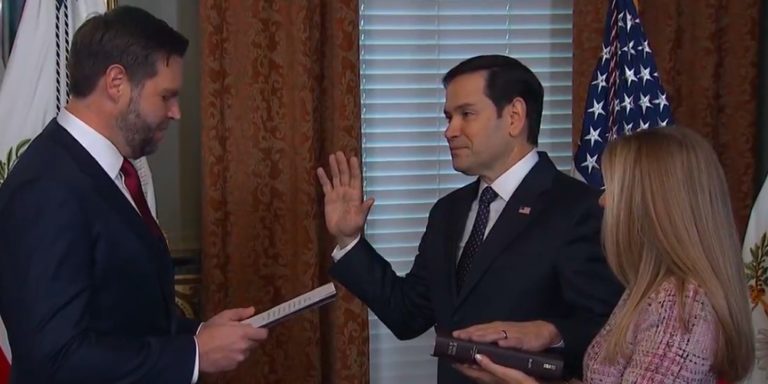
Democratic Sen. Chris Murphy pushed Rubio to see what incentives, if any, Washington is willing to offer Tehran in exchange for a deal.

Rubio said that any sanctions relief would have to come after major concession on the nuclear issue and the enriched uranium.

“Will they receive relief just in exchange for reopening the strait?” Murphy asked.

Rubio responded, “No, that’s not been discussed. That’s not been offered.”

Pressed by Democrats and Republicans on the status of negotiations with Tehran, Rubio tried to present a more optimistic view on the progress Washington has made with the Iranian regime.

“They have agreed to negotiate aspects of their nuclear program that just a month ago, just a year ago, they were refusing to even mention,” he said. But he added that it’s “not a guarantee that ultimately it will lead to a deal that’s acceptable” by Congress. He said these negotiations have been made difficult by the instability of Iran’s leadership.

Adapted from reporting by the Associated Press.
Trump Assassination Attempt Victims Sue US Gov’t over Secret Service Failures

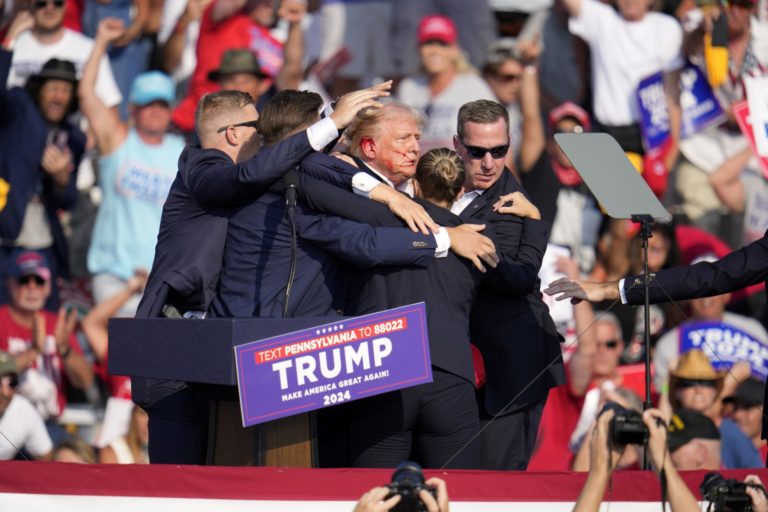
(Ken Silva, Headline USA) The two men who survived gunshot wounds from the July 13, 2024, Trump assassination attempt have sued the U.S. government for the egregious security failures from that fateful event.

The victims, Butler rallygoers Jim Copenhaver and David Dutch and their wives, seek over $150,000 apiece in damages for their injuries, which are still ongoing. Copenhaver was shot twice: once in his left triceps, and once in the abdomen. Dutch, who was standing about five feet to Copenhaver’s left, was shot once in the chest. The bullet split his liver and exited his side.

According to court records, Copenhaver was required to undergo numerous surgeries, including closure of traumatic abdominal wall hernia, laparotomy, laceration repair, and transection of his colon. There are still bullet fragments in his body, which will require continued monitoring.

Dutch also had multiple surgeries, including for the repair of his liver. Like Copenhaver, he’ll have to continue to undergo rehabilitation for the rest of his life.

The Secret Service’s failures are well documented, and are detailed in this writer’s book on the subject.

In short, the agency didn’t secure the ARG building that was eventually used as a perch by the alleged gunman, Thomas Crooks. Secret Service command center Jeffrey Burr also never put it out over the radios that there was a suspicious person with a rangefinder in the area. Perhaps most inexplicably, Secret Service counter-sniper David King waited over 15 seconds before returning fire, despite seeing Crooks “crawling” with an AR-15-style rifle before his attack.

As a result, Dutch and Copenhaver were permanently injured, Trump was grazed in the ear by a bullet and nearly killed, and firefighter Corey Comperatore was murdered. There’s no word on whether Comperatore’s widow, Helen, is going to sue the government, too.

Meanwhile, the FBI has withheld thousands of records on the alleged gunman, Crooks. The FBI has admitted to holding over 75,000 such records, but has only produced about 150 or so in response to a lawsuit from the transparency organization Judicial Watch.

Ken Silva is the editor of Headline USA. Follow him at x.com/jd_cashless.

Under the Fed’s Tightrope All Roads Lead to Gold

(Mike Maharrey, Money Metals News Service) For months, I’ve argued that the Federal Reserve is in a Catch-22. Now, some more prominent people in the mainstream are echoing this warning.

In a recent interview with Kitco News, Sprott Inc. President Ryan McIntyre said the Fed is “walking a tightrope” and has few viable policy options. He said that scenario will ultimately drive investors to gold.

Most mainstream analysts assume the central bank will hold rates higher for longer due to the inflationary pressure introduced by the U.S-Iran war. There is even growing speculation that the Fed will raise rates this year. Several Fed officials have started laying the groundwork for a rate hike.

However, it’s not as simple as that.

An economy dominated by a Debt Black Hole doesn’t function very well in a high (or even a normal) interest rate environment.

The central bankers at the Federal Reserve face a tough choice. They can either keep monetary policy tight – holding rates higher for longer or even raising rates – to tamp down price inflation, or they can ease monetary policy to take pressure off this debt-riddled bubble economy.

They can’t do both.

And that, ladies and gentlemen, is the Catch-22.

McIntyre said we’ve never faced a situation “where everything is like walking a tightrope.

“You don’t want inflation, so you have to keep rates somewhat high. Conversely, you don’t want the economy to slow down too much, so you’ve got to keep rates somewhat low.”

He emphasized that this is a precarious situation, and it puts the Fed in “a tough spot.”

“And by the way, if either of those goes too far out of range, then you risk losing control of bigger things.”

McIntyre said it was a “coin flip” whether the central bank would hike rates before the end of the year.

The U.S.-Iran conflict has created stiff headwinds for gold. After an initial safe-haven bid that sent the yellow metal over $5,000 an ounce as the war kicked off, gold has faced selling pressure that has driven the price to the $4,500 range with significant volatility. The gold price swings with every war headline.

History is playing out once again, as wars have typically had little impact on the gold price after the initial bump. Other factors take control, and in this case, it is interest rate expectation.

Before the war, most people expected additional easing by the Fed. Now, a rate hike seems more likely due to rising prices stemming from the oil shock. McIntyre indicated he was surprised by the speed of the shift in sentiment.

“People shifted from asking how many cuts we are going to get to whether there could actually be rate increases this year. It’s incredible how expectations have shifted in a couple of months.”

McIntyre said he thinks pressure on gold from the threat of higher yields is temporary. He argues the structural bull market remains intact because there is a bigger problem than inflation – the aforementioned debt black hole.

“To me, the most existential threat remains the sovereign debt risk.”

He called the U.S. government’s debt situation one of the “most underappreciated risks” in global markets, noting that debt-to-GDP has climbed above 100 percent and is close to levels last seen during World War II. He warned, “We will cross the threshold where the net interest expense as a percentage of GDP exceeds the nominal growth rate in GDP, meaning the growth rate can’t even cover the net interest.”

Interest on the national debt set a record last year, costing $1.2 trillion. The federal government is forking out more for interest payments each month than it is for national defense or Medicare. The only spending category bigger than interest on the debt is Social Security.

The debt-inflation duo leaves policymakers with little flexibility. If it raises rates, it could further destabilize a shaky bond market and crush equity valuations. On the other hand, cutting rates could unleash more price inflation.

It also creates a “conundrum” for investors. They will require higher real yields to invest in increasingly riskier equities. But rising yields put strain on the broader financial system.

“If yields start getting higher, that is going to be very difficult for equities — meaning the S&P 500 — to do well. You start discounting those future cash flows at higher rates, and it accentuates the punishment.”

The bond market is already flashing warning signs, with yields rising even without a Fed hike.

“You start to get these warning signs from the bond markets saying we need more yield to compensate for the financial outlook here. Because the fiscal picture doesn’t look great — and they’re right.”

What’s the alternative?

McIntyre said, “All roads lead to gold.

“The longer we spend not addressing our spending problem, the tougher the road is going to be. And again, there’s only one thing that’s sort of at the end of that equation, and that is gold.”

He noted that despite the two-year bull market, most Western investors “remain dramatically underallocated to the precious metals sector.” Meanwhile, gold ETF holdings remain below all-time highs.

McIntyre concluded that gold is one of the few assets positioned to benefit no matter what the Fed does.

“The options narrow in terms of what you can do. And that’s why we continue to think all roads will lead to gold.”


Mike Maharrey is a journalist and market analyst for Money Metals with over a decade of experience in precious metals. He holds a BS in accounting from the University of Kentucky and a BA in journalism from the University of South Florida.

ECB Confirms Gold Has Overtaken Treasuries as Top Global Reserve Asset

(Mike Maharrey, Money Metals News Service) In January, World Gold Council data indicated that gold had replaced U.S. Treasuries as the world’s top reserve asset. A report released by the European Central Bank this week confirms that data.

According to the ECB, as of the end of 2025, gold accounted for 27 percent of central bank reserve assets. That was up 7 percent from a year earlier.

Meanwhile, the share of Treasuries in central bank reserves fell from 25 percent to 22 percent.

The share of euro-denominated assets remained steady at 15 percent.

Despite the drop in Treasury holdings, the dollar remains the primary reserve asset, with dollar-denominated assets accounting for 42 percent of global reserves.

However, that share is slowly shrinking.

The Financial Times asserted that this is part of a broader global de-dollarization effort.

“The shifting composition of reserve assets — highly liquid holdings that central banks use to support their currencies, meet international payment obligations and provide liquidity in times of financial turmoil — reflects an attempt by many countries to seek alternatives to the U.S. dollar, the world’s de facto reserve currency.”

The Times noted that de-dollarization has accelerated since 2022, when the U.S. and its Western allies aggressively sanctioned Russia and effectively locked it out of the global SWIFT payment system after the invasion of Ukraine. This weaponization of the dollar has made some countries wary of holding dollar-denominated assets.

ECB President Christine Lagarde said, “Geopolitical tensions continue to drive strong central bank demand for gold.

The pace of central bank purchases moderated in 2025 but remained far above the recent historical average. Official net full-year buying came in at 863.3 tonnes. That was down 21 percent year-on-year, charting the lowest level since 2021.

However, while central bank gold purchases declined last year, they remained well above the 2010-2021 annual average of 473 tonnes.

To put that into context, central bank gold reserves increased by an average of just 473 tonnes annually between 2010 and 2021.

Last year was the fourth-largest expansion of central bank gold reserves on record. The all-time high was set in 2022 (1,136 tonnes). It was the highest level of net purchases on record, dating back to 1950, including since the suspension of dollar convertibility into gold in 1971.

According to the Financial Times, central banks globally hold 36,000 tonnes of gold. That is nearly as much as the peak of the Bretton Woods era, when the dollar was tied to gold (38,000 tonnes).

The weaponization of the dollar is just one factor driving the de-dollarization trend. Many countries are becoming wary of the U.S. fiscal situation. The national debt has surged to over $39 trillion and has eclipsed 100 percent of GDP.

At some point, people stop loaning their drunk Uncle money.

The dollar doesn’t have to lose its reserve status for de-dollarization to become a significant problem for the U.S., because it depends on the global demand for dollars to underpin its massive government.

The only reason Uncle Sam can borrow, spend, and run massive budget deficits to the extent that it does is the dollar’s role as the world’s reserve currency. It creates a built-in global demand for dollars and dollar-denominated assets. This absorbs the Federal Reserve’s money creation and helps maintain dollar strength despite the Federal Reserve’s inflationary policies.

If the world needs fewer dollars, they will begin to return to the U.S., causing a dollar glut. This will increase inflationary pressure domestically as the value of the U.S. currency further depreciates. In the worst-case scenario, the dollar could collapse completely, leading to hyperinflation.


Mike Maharrey is a journalist and market analyst for Money Metals with over a decade of experience in precious metals. He holds a BS in accounting from the University of Kentucky and a BA in journalism from the University of South Florida.

National Security Group Urges Congress to Investigate Airwallex Ties to CCP

(The Center Square) A national security group wants Congress to investigate Airwallex over its ties to China.

State Armor Chief Executive Officer Michael Lucci sent a letter to several congressional leaders urging action.

The letter went to U.S. Sen. Mike Crapo, R-Idaho, U.S. Sen. Ron Wyden, D-Oregon, U.S. Rep. French Hill, R-Arkansas, U.S. Rep. Maxine Waters, D-California, and others.

“I write to respectfully urge Congress to open a formal investigation into Airwallex, a global payments company that has become deeply embedded in the U.S. financial technology ecosystem while reportedly maintaining substantial ownership, operational, and workforce ties to the People’s Republic of China,” Lucci wrote.

Airwallex provides payment services to businesses. The company started in Australia and now has headquarters in Singapore and San Francisco.

State Armor says Congress should examine whether China-based employees or affiliates can access financial or personal data of U.S. customers.

“Airwallex markets itself as an Australian-founded fintech company, yet a significant portion of its workforce and technical operations reportedly remain concentrated in mainland China and Hong Kong,” Lucci wrote.

The letter says that about 40% of the company’s employees reportedly work in mainland China and Hong Kong. That includes employees tied to engineering, payments operations and compliance.

“Airwallex’s access to highly sensitive American financial and personal data must be coupled with absolute data security against the insidious Chinese Communist Party. Airwallex should not manage any information connected to our national security and defense-related companies through operations or employees in China,” Lucci said in a statement provided to The Center Square.

“The company operates invisibly in the backend infrastructure of applications and payment systems Americans rely upon every day, meaning that if Airwallex is handing over American data to Communist China, it is being done without the knowledge or knowing consent of American consumers. We cannot allow Americans’ sensitive data to be placed within reach of the Chinese government or entities subject to Chinese intelligence laws. Congress and federal regulators must investigate this immediately.”

Lucci also pointed to China’s National Intelligence Law. The law requires Chinese organizations and citizens to support the country’s intelligence work.

“If Airwallex personnel or affiliated entities in China can access customer systems or data, then sensitive information involving U.S. companies could be exposed to adversary foreign government demands,” Lucci wrote.

State Armor also raised concerns about Tencent Holdings’ investment in Airwallex. Tencent landed on the U.S. Department of Defense’s list of Chinese military companies in January 2025.

Airwallex has recently moved some employees out of China as it expands in the United States, FStech reported last week, citing The Financial Times.

A company spokesman told The Financial Times that data security drove the moves.

“When US Executive Order 14117 established new requirements around cross-border data flows in 2024, employee realignment became part of our growth plan, in line with broader industry practice,” the spokesman said.

The spokesman added that Airwallex still has a “significant presence in Shanghai and Hong Kong” and recruits from China’s “world-class engineering and technical talent.”

State Armor wants Congress to launch a bipartisan investigation. The group also wants Congress to examine Airwallex’s work with U.S. artificial intelligence and defense companies and request a review by the Committee on Foreign Investment in the United States.

U.S. Sen. Tom Cotton, R-Arkansas, also raised concerns about Airwallex last December.

“I respectfully request that the Department open a full investigation into whether Airwallex data is being accessed by the Chinese Communist Party,” Cotton wrote in a letter to then-U.S. Attorney General Pam Bondi.

Cotton said Airwallex processes sensitive data for major U.S. companies.

Airwallex has also faced scrutiny in Australia.

In January, AUSTRAC, Australia’s financial intelligence agency, ordered Airwallex to appoint an outside auditor. The auditor will review whether the company has followed anti-money laundering and counter-terrorism financing rules.

“We take this action where we suspect serious non-compliance, because we expect businesses to be actively managing their AML/CTF obligations,” AUSTRAC Chief Executive Officer Brendan Thomas said.

Airwallex said it would cooperate with the audit.

“Airwallex is committed to the highest standards of regulatory compliance and we welcome this audit as a transparent opportunity to independently validate our AML/CTF program,” the company said.

Trump Loyalist Replaces Tulsi Gabbard as Acting National Intelligence Director

(Headline USAPresident Donald Trump has tapped Bill Pulte, head of the Federal Housing Finance Agency, to be the acting director of national intelligence — putting a real estate scion and fierce Trump loyalist in a key national security post as the U.S. remains at war with Iran.

Trump made the surprise announcement Tuesday on social media that Pulte would be replacing Tulsi Gabbard, the former Hawaii congresswoman who served as the director of national intelligence.

The Republican president cited Pulte’s work at the FHFA and his role as chair of the mortgage giants Fannie Mae and Freddie Mac, saying that the 38 year-old “has deep experience managing the most sensitive matters in America, the safety and soundness of the Markets, and over 10 Trillion Dollars at Fannie Mae/Freddie Mac, a substantial increase from where it was just 12 months ago.”

As the grandson of the founder of PulteGroup, one of the country’s largest homebuilders, Pulte has cut a combative streak on social media and used his post at the FHFA to attack perceived opponents of the Trump administration.

His time overseeing mortgage finance has been linked with criminal referrals for mortgage fraud, including New York Attorney General Letitia James, a Democrat; Sen. Adam Schiff, D-Calif.; and Lisa Cook, a member of the Federal Reserve, who was nominated by a Democratic president, Joe Biden.

Trump said Pulte will keep his other positions even as he fills in for Gabbard, who resigned last month after revealing her husband’s cancer diagnosis.

If formally nominated, Pulte would need to be confirmed by the Senate to hold the position full time.

Adapted from reporting by the Associated Press

Jill Biden Fumbles Post-White House Interviews

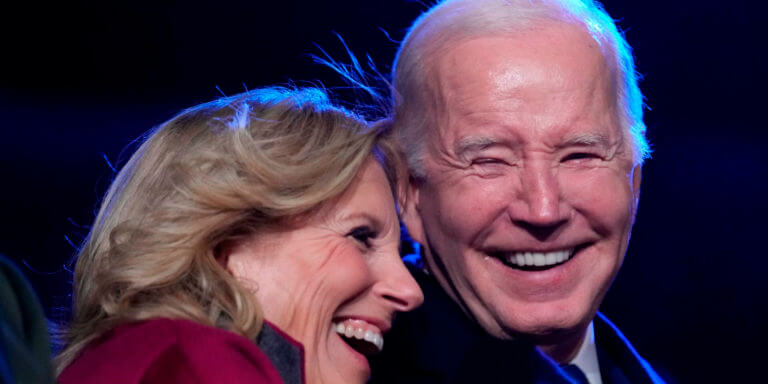
(Luis CornelioHeadline USA) Former First Lady Jill Biden has made seemingly contradictory statements about her husband’s disastrous performance in the first presidential debate of the 2024 election cycle.

In the immediate aftermath of the debate, Jill publicly claimed that then-President Joe Biden had done “great.” However, in a Sunday interview promoting her new book, Jill revealed that she wondered whether he had suffered a stroke.

Those remarks resurfaced Monday during an interview on NBC News’s Today, where host Craig Melvin pressed her on the apparent contradiction.

“How do you square thinking that he may have had a stroke with what you were saying in the days and weeks after? How do you square those?” Melvin asked.

In response, Jill claimed she wanted to “lift” her husband up and added that while he had a humiliating debate performance, he answered all the questions.

“I’ve got to lift him up,” Jill recalled thinking. “So, we go to the next event, and I’m thinking saying, what do I say that will lift him up that is true? I want to say things that are true. So, I said, you answered every question. My mind was racing.”

Apparently unconvinced by Jill’s line of defense, Melvin replied: “That’s a pretty low bar.”

Jill nevertheless doubled down, arguing it was her role to defend her husband.

“Well — so, I had to sort of lift him up. I’m his wife. I’m not going to get out on the stage there and say, Joe, you really screwed that up. I mean — and we have all of our supporters, you know, so that’s who we are. I had to support him. I couldn’t come out and — I mean, really, publicly, say, Joe, you did a terrible job in a debate?”

The tough exchange unfolded as Jill promotes her forthcoming memoir, View from the East Wing, which is scheduled for release June 2.

Key Hearing for Alleged Charlie Kirk Assassin to be Public

(Headline USAReporters and the public will be allowed to attend a key upcoming hearing for the man accused of killing Charlie Kirk, after a Utah judge on Monday denied a defense request to restrict access.

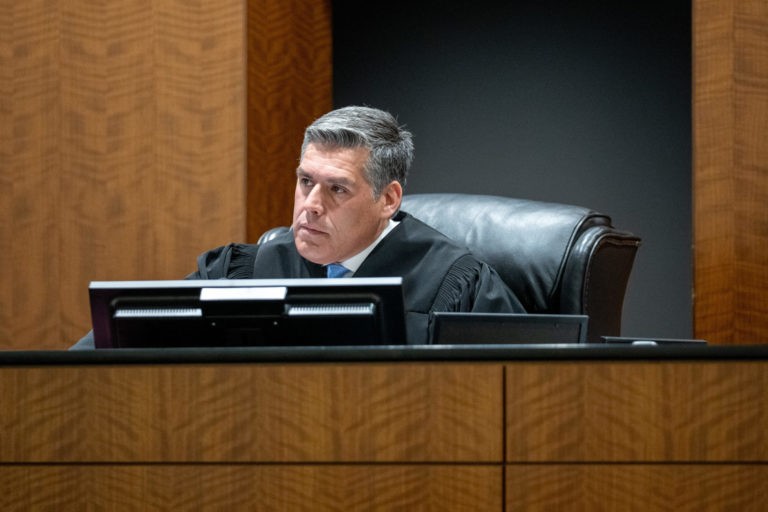
Tyler Robinson’s defense team had asked Judge Tony Graf to close portions of the preliminary hearing on July 6-10, when prosecutors must show they have enough evidence to warrant a trial. It will mark the most significant presentation of evidence to date in a case that has so far focused on matters of media access.

“The public and the media enjoy a presumptive right to access court proceedings, including preliminary hearings,” Graf said during his ruling. He said the defense hadn’t shown that presenting the evidence publicly would deny Robinson a fair trial.

Robinson’s lawyers have tried to guard against media coverage that they say sometimes misrepresents their client, as his case has drawn tremendous public attention. The 23-year-old from southwestern Utah is charged with aggravated murder in the Sept. 10 assassination of Kirk on the Utah Valley University campus.

Prosecutors intend to seek the death penalty if Robinson is convicted. He has not yet entered a plea.

Prosecutors argued that the preliminary hearing should remain open, but they agreed with the defense that media should be limited from viewing or copying some exhibits that could be used in a future trial. They plan to introduce forensic analyses, surveillance video, recordings of witness statements, autopsy findings and alleged messages from Robinson admitting to the crime.

Authorities have said DNA consistent with Robinson’s was found on the trigger of the rifle used to kill Kirk, the fired cartridge casing, two unfired cartridges and a towel used to wrap the rifle. Prosecutors also have said Robinson left a note for his romantic partner that read, “I had the opportunity to take out Charlie Kirk and I’m going to take it.”

Graf also granted defense attorneys’ request for a hearing on June 12 in which they will argue that prosecutors should be punished for comments they made in the media. Robinson’s lawyers have said one prosecutor, Christopher Ballard, essentially went on a “media tour” in which he made “expressions of opinion as to Mr. Robinson’s guilt.”

Prosecutors responded to the claims last month, saying Ballard had a right to correct misinformation in the media about an inconclusive, preliminary finding by ballistics experts, which led to speculation about Robinson’s possible exoneration. They said Ballard did not make any statement of opinion about guilt.

Adapted from reporting by the Associated Press

Trump Canceling Weaponization Fund, Critics Claim

(Luis CornelioHeadline USA) The Trump administration was accused Monday of backing away from its highly touted $1.776 billion fund for victims of government weaponization after a federal judge blocked the DOJ from moving forward with the program.

The accusations stemmed from a DOJ statement posted on X in which the department said it would “abide by the Court’s ruling.” The restrained response contrasted with the administration’s previous forceful reactions to decisions issued by left-wing judges.

Some social media users and legacy media outlets interpreted that statement as a suggestion that the DOJ was abandoning the anti-weaponization fund completely, though the department did not explicitly say so. Axios also reported that the Trump administration will “drop” the initiative.

Acting Attorney General Todd Blanche announced the fund on May 18, the same day Trump voluntarily withdrew his $10 billion civil lawsuit against the IRS. Trump had sued the agency before taking office in 2025, directly accusing the IRS of failing to prevent the leak of his confidential tax returns to the legacy media.

However, before the settlement could move forward, U.S. District Judge Kathleen M. Williams, an Obama appointee, revived the case on May 29 after a group of little-known former federal judges filed a petition urging her to scrutinize the settlement.

“The Court was deceived,” the former judges argued in an amici curiae filing. Without citing definitive evidence, they claimed the settlement was negotiated outside the court process and suggested the judge may not have been properly informed.

Williams’s extraordinary decision to reopen the matter came even after the underlying civil lawsuit had already been voluntarily dismissed.

In her order, Williams cited the former judges’ filing and directed attorneys for both Trump and the IRS to respond by June 12.

Separately, U.S. District Judge Leonie Brinkema, a Clinton appointee, temporarily blocked the DOJ from moving forward with the fund in a lawsuit brought by a former prosecutor who claimed he was fired because of his role in the aggressive prosecution of Jan. 6 defendants.

Brinkema’s order specifically prohibited the DOJ “from taking any further action pursuant to the creation or operation of the Anti-Weaponization Fund, which includes the transferring of money to the Fund; the consideration of any claims submitted to the Fund; and the disbursing of any funds from the Fund.”

Colorado’s Left-Leaning AG Targets Newly Freed Tina Peters

(Luis CornelioHeadline USA) Colorado Attorney General Phil Weiser issued a chilling threat Monday to former Mesa County Clerk Tina Peters even after Gov. Jared Polis commuted her sentence and ordered her release from prison.

In a statement posted on X, Weiser voiced what he claimed were “concerns” about Peters’s conduct following her return to Mesa County, suggesting that state officials would continue closely monitoring her activities.

“Tina Peters may be free from prison, but she isn’t free from the crimes she committed tampering with her county’s election equipment,” Weiser wrote.

Referring to Peters as a “convicted felon,” Weiser added that he remained “concerned about her conduct upon returning to Mesa County given her lack of remorse for her crimes.”

Weiser did not identify what specific conduct he was concerned Peters might engage in.

Weiser’s remarks came shortly after Peters appeared on Steve Bannon’s War Room, where she defended herself and said that “no one is really addressing the problem that I spent my time in prison as retribution for.”

Before her release, Peters, a 70-year-old grandmother, was the only person still behind bars in connection with efforts to investigate or challenge the results of the 2020 presidential election.

Notably, Peters certified Mesa County’s 2020 election results. Prosecutors nevertheless accused her of improperly allowing a third party access to sensitive election-system information.

Colorado officials never proved that any election was jeopardized by Peters’s actions. Her defenders point to a separate controversy involving the office of Colorado Secretary of State Jena Griswold.

Griswold, a radical Democrat, later acknowledged that election-system passwords had been publicly leaked online, which supporters say demonstrates a double standard in the state’s approach to election-security matters.

Peters was sentenced to nine years in prison despite having no prior criminal record. Her sentence was later overturned in part after an appellate court found that protected speech was illegally considered during sentencing.

Among the leading officials involved in Peters’s prosecution are Weiser and Griswold, both of whom are now pursuing higher office as candidates for governor and attorney general, respectively.

Polis, who is term-limited from seeking a third term, commuted Peters’s sentence after President Donald Trump publicly called for her release. The Democratic governor said he reached his decision independently after concluding that Peters may have been unfairly targeted and unlawfully sentenced.