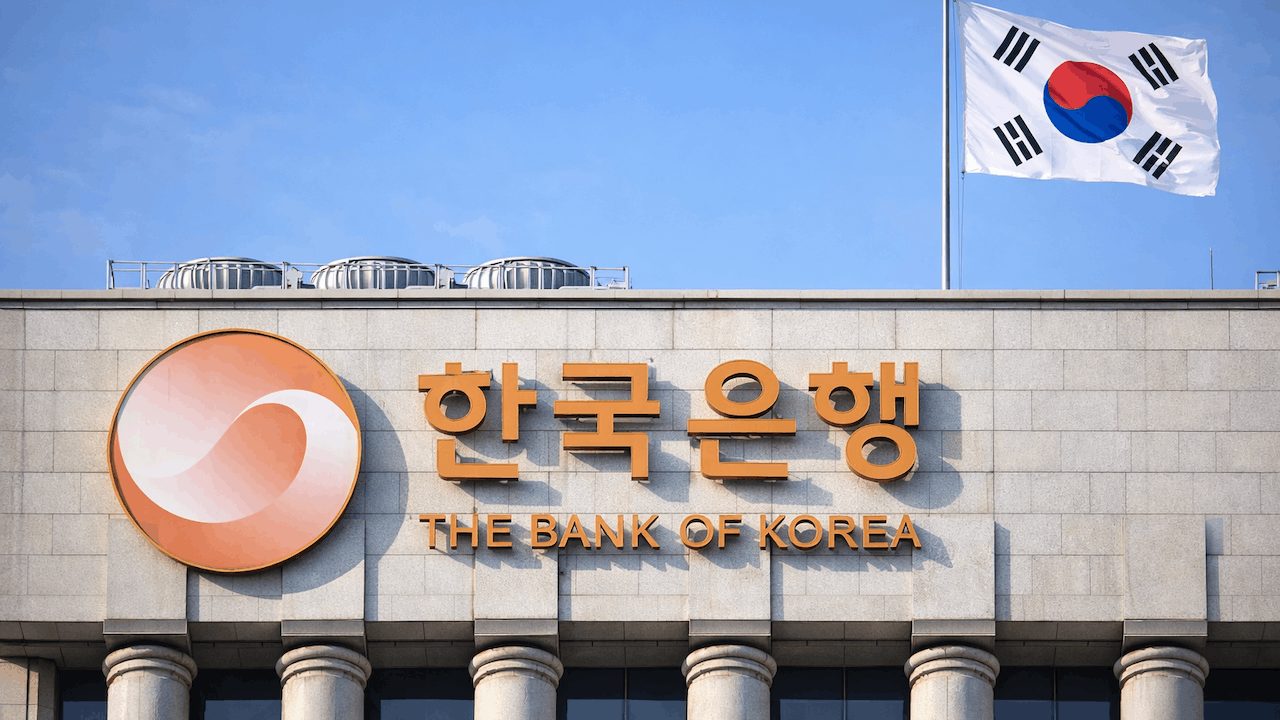
(Mike Maharrey, Money Metals News Service) South Korea plans to boost its gold holdings for the first time since 2013. However, it will take an unusual approach. According to an announcement, the Bank of Korea will incorporate overseas-listed gold ETFs into its foreign reserve portfolio.
Bank of Korea official Heung-Soon Jung announced plans for additional gold purchases last fall.
The Korean central bank holds around 104 tonnes of physical gold, making up around 4 percent of its total reserves. The country holds all its physical gold in London.
As the World Gold Council noted, using ETFs to gain exposure to gold is “uncommon,” and none of the respondents in its Central Bank Gold Reserves Survey had opted for this approach.
A gold ETF is backed by a trust company that holds metal owned and stored by the trust. In most cases, investing in an ETF does not entitle you to any amount of physical gold. You own a share of the ETF, not gold itself. ETFs are a convenient way for investors to play the gold market, but owning ETF shares is not the same as holding physical gold.
According to a report published by Seoul Economics Daily, the central bank chose ETFs due to their liquidity.
“The BOK had previously determined that gold has lower liquidity and convertibility compared to other assets such as bonds and stocks, and lacks cash flows from interest or dividends, making it less efficient for asset management. … In contrast, physical gold ETFs track the price of physical gold while being immediately tradable in the market, offering high liquidity and no storage cost burden. The assessment is that they align with foreign exchange reserve management principles as they can be quickly converted to cash during periods of heightened foreign exchange market volatility.”
But while the central bank will gain the advantage of ease and liquidity, it is introducing counterparty risk, which is one of the characteristics that make gold a safe reserve asset.
What exactly is counterparty risk?
In simple terms, it is the possibility that the party on the other side of a transaction might not fulfill its obligation. For instance, if I loan you $200, there is always a chance that you won’t pay me back.
When you invest in a gold ETF, there is no guarantee it has enough gold to back the fund. That introduces a significant level of counterparty risk.
South Korean officials are not unaware of counterparty risk. Worries about the dollar were part of the decision to add more gold to the country’s reserves. When he announced plans to increase gold reserves last fall, Jung specifically categorized gold as a reserve alternative to the greenback.
“Given gold’s role as an inflation hedge and its potential as an alternative investment to the U.S. dollar, it’s evident that gold should be considered as one of the viable assets from a medium- to long-term perspective.”
Central banks globally have been on a gold-buying spree for over four years.
Last year was the fourth-largest expansion of central bank gold reserves on record, with reserves growing by 863 tonnes. The all-time high was set in 2022 (1,136 tonnes). It was the highest level of net purchases on record, dating back to 1950, including since the suspension of dollar convertibility into gold in 1971.
To put these numbers into perspective, central bank gold buying averaged 473 tonnes annually between 2010 and 2021.
Mike Maharrey is a journalist and market analyst for Money Metals with over a decade of experience in precious metals. He holds a BS in accounting from the University of Kentucky and a BA in journalism from the University of South Florida.