(Ken Silva, Headline USA) On the heels of Donald Trump publicly calling for peace in Gaza, the New York Times revealed Monday that Vice President Kamala Harris refused interview request about Israel’s war there.
Trump’s comments about Gaza came at a rally over the weekend in Dearborn, Michigan.
“It’s got to stop. We’ve got to really do something that makes everything come back to peace. What we want is peace. All over, we want peace,” Trump said in response to a question about Gaza.
Given the support among Democratic voters for Palestine, one might think that Harris would also be pushing for peace in the Middle East. But as the Biden-Harris administration continues to support Israel’s war there, NYT reported Monday that Harris won’t even discuss the topic.
According to NYT, media personality Kareem Rahma asked the Harris campaign to interview her about Gaza three times, but was refused.
“As a Muslim and an Arab, he objected to the Biden administration’s support for Israel’s war in Gaza, which has killed more than 41,000 Palestinians — including many women and children — since Hamas’s attack on Israel last October, in which 1,200 people were killed and over 200 were kidnapped,” NYT reported.
Holee sh*t. The NYT waits until the day before the election to bust Kamala Harris campaign for refusing to discuss Gaza on a popular Muslim influencer's show.
“In three phone calls with Harris’s staff and the Democratic National Committee, he said, he had proposed raising the conflict with the vice president — perhaps at the end of the episode — but was rejected.”
There have been several reports in recent weeks that Trump wants Israeli Prime Minister Benjamin Netanyahu to accept a cease-fire deal in Gaza before he takes office in January.
In August, Axios reported that Trump called Netanyahu on August 14 to discuss the Gaza hostage and ceasefire deal. Netanyahu’s office has denied that any phone call took place or that ceasefire discussions took place.
Trump also said in a July interview with Fox News that Israel needs to end the war in Gaza as soon as possible and bring back the hostages.
Trump reportedly told Fox News the war should end fast “because they are getting decimated with this publicity, and you know Israel is not very good at public relations.”
Ken Silva is a staff writer at Headline USA. Follow him at x.com/jd_cashless.
(Ken Silva, Headline USA) In a documentary released Friday on Fox Nation, Adams Township Police Department Sgt. Aaron Zaliponi spoke for the first time publicly about taking the first shot at would-be assassin Thomas Crooks at the July 13 Trump rally.
Zaliponi’s heroics were first revealed by Rep. Clay Higgins, R-La., who identified him at a Sept. 26 congressional hearing. According to Higgins, Zaliponi’s shot may have hit Crooks’s rifle—which stopped him after eight shots, allowing the Secret Service to put the kill shot in him about 10 seconds later.
Fox Nation released an extraordinary documentary on the Trump shooting, featuring new radio recordings and interviews with the Butler ESU members—including the first ever interview with Aaron Zaliponi, who thinks he shot Crooks first. Highly recommended! Raises more questions too pic.twitter.com/17F4vYiro2
Crooks could have arguably shot 10 or more times if not for Zaliponi.
On the new Fox Nation documentary, Zaliponi, a member of the Butler ESU, recounted what he did to stop the Trump shooter.
“I fired the ninth shot. After the first volley, that’s when I was able to see Crooks up on the rooftop. At that point, I shouldered my rifle and engaged the threat. He immediately goes down—staggered, slumped over. There’s a very distinct movement: Based on my experience, he wasn’t retreating or getting out of the way,” he said.
“I knew I hit him and mortally wounded him. At that point, I could still see the top of his head moving around the roofline. As he slowly came back up, I was still on target, but not enough to engage yet. Once he got to about his mouth level, just as I was about to press the second round off, the Secret Service Hercules Unit engaged in that one shot,” he said.
While Zaliponi is convinced he hit Crooks, the medical examiner who conducted the autopsy on Crooks have both denied that Zaliponi hit the gunman. The FBI has also stated that it has “no forensic evidence indicating that [the round fired by the local officer] either struck our subject or the subject’s rifle.”
But in the Fox Nation documentary, Butler ESU Commander Ed Lenz noted the obvious: Crooks stopped shooting after Zaliponi returned fire, so his shot must have hit something.
“You don’t shoot ‘one, two, three, four, five, six, seven, eight—and then just stop,” Lenz said.
Ken Silva is a staff writer at Headline USA. Follow him at x.com/jd_cashless.
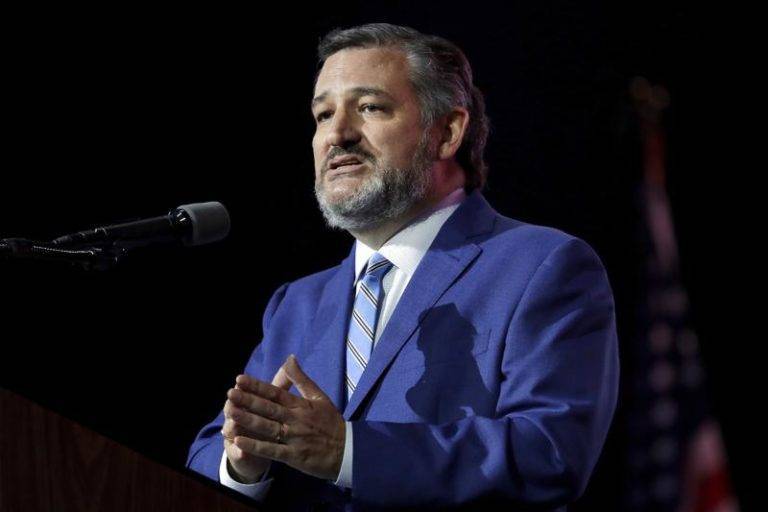
(Julianna Frieman, Headline USA) Sen. Ted Cruz, R-Texas, predicted what the first 100 days of a potential second Trump administration would be like versus those of a prospective President Kamala Harris on Monday’s episode of his podcast.
The Republican lawmaker, who faces a contentious race against challenger Rep. Colin Allred, D-Texas, to keep his Senate seat, said he believes Trump has a “60/40” chance of winning back the White House.
If Donald Trump wins, our border will be secured immediately. He will end catch-and-release, enforce our border laws, and protect Americans.
Cruz predicted Trump will make “a lot of things happen” come his inauguration on Jan. 20 if he is elected.
“If Trump wins, which you and I both hope and pray is what happens,” the senator said. “We’re going to see a lot of things happen, starting on January 20.”
Cruz said border security would be the first issue Trump tackles.
“We will secure the border and understand this is not going to take a year,” Cruz continued. “I don’t even believe it’s going to take six months.”
Cruz said Harris, who he believes has a “panicking” campaign, will cause illegal immigration numbers to surge if she ends up as president.
“On the flip side, Kamala, we’ve seen a decrease in illegal immigration over the last couple of months, because, frankly, Kamala and Biden they’re really cynical,” Cruz noted. “They think the voters are stupid that they know the press will dutifully report, ‘oh, the numbers are down.'”
Election Day Eve: Where Things Stand & What the Stakes Are for America.
Cruz warned that illegal immigration will more than double under Harris, saying the goal of the Democrats is to invade the U.S. with an onslaught of people who will undoubtedly vote for their party’s candidates.
The senator added the surge would began shortly after the election.
“If Kamala wins, then they’re like, ‘All right, no need to pretend anymore. Let’s go,'” Cruz said.
The senator encouraged Americans to come out and vote because he believes fraud only matters marginally.
“Historically, voter fraud only matters at the margin,” Cruz continued. “They say it only matters when it’s close. What that means is we’ve got to win by a big enough margin.”
Cruz discussed how important it is for voters to show up in battleground states when margins are incredibly slim.
“If we win by five points, we’ll be fine,” the senator added. “And so, we just need to make sure people turn out in big enough numbers that the election cannot be stolen.”
Julianna Frieman is a freelance writer published by the Daily Caller, Headline USA, The Federalist, and The American Spectator. Follow her on Twitter at @JuliannaFrieman.
(Mike Maharrey, Money Metals News Service) While President Biden and talking heads in mainstream media talk about the amazing robust economy, retail stores are closing at a frenetic pace.
According to Coresight Research, 6,189 stores have already closed in 2024. That puts retail store closures at the fastest pace since 2020, when government shutdowns decimated the retail sector.
Store closures are up 60 percent year over year.
Some of the major chains shuttering stores include Walgreens (259 stores), Family Dollar (677 stores), Big Lots (360 stores), and LL Flooring (all stores).
Conn’s HomePlus, Rue21, and Express have also announced closures.
According to S&P Global, more than 80 companies that sell discretionary goods had filed for bankruptcy through September. That represents a 27 percent increase from 2023.
The restaurant sector is also feeling the pain. Red Lobster, Roti, Tijuana Flats, and Buca di Beppo have all filed for bankruptcy this year, closing hundreds of restaurants. Denny’s recently announced plans to shutter 150 restaurants.
A CBS News report on the Family Dollar closures cited inflationary pressures on consumers’ wallets as a prime reason sales have sagged.
ABC News noted closures have picked up because “the retail sector’s sugar high of 2021 and 2022 — when consumers were snapping up new couches, televisions, and clothing — has ended.”
“Companies have raised prices higher than many consumers can afford, and interest rates have soared, making it more expensive to borrow money for big-ticket items or to get a mortgage or a car loan. Consumers have reached their breaking point and are pulling back on items they don’t absolutely need.”
With the pandemic-era stimulus long gone, savings depleted, and credit cards maxed out, retailers are back to where they were in 2019 when efforts to normalize monetary policy had cracked the economic foundation.
Retailers closed a record 9,800 stores that year, with Payless, Gymboree, Charlotte Russe, and Shopko all filing for bankruptcy.
More than a decade of artificially low interest rates created all kinds of malinvestment and distorted the economy. When the Fed started trying to normalize rates and unwind the monetary stimulus injected into the economy after the 2008 Financial Crisis, the stock market crashed, and the economy got rickety.
At that point, the Federal Reserve gave up on normalizing interest rates and returned to quantitative easing in an effort to prop up the sagging economy. The massive stimulus during the COVID years papered over the problem.
It’s clear the economy isn’t so great for everyday people. While Wall Street bankers and bigwigs may be doing just fine, the average person on Main Street is struggling, and the stores on Main Street are locking their doors. This may well be the worst “great” economy ever.
(Mike Maharrey, Money Metals News Service) Are we already in the early stages of World War III? JPMorgan CEO Jamie Dimon thinks we might be, with conflicts boiling in Ukraine and the Middle East.
During a recent talk at the Institute of International Finance, he said a broader conflict might not be a matter of if but when.
“World War III has already begun. You already have battles on the ground being coordinated in multiple countries.”
Dimon pointed out the tightening alliance between Russia, North Korea, and Iran. He previously dubbed these countries an “evil axis.” During his talk, he warned that with the cooperation of China, they are actively seeking to dismantle current global structures and are a threat to Western stability.
“And they’re talking about doing it now. They’re not talking about waiting 20 years. And so, the risk of this is extraordinary if you read history.”
Dimon insisted that the United States should consider more aggressive intervention.
“What we should be thinking about is we can’t take the chance this will resolve itself. We have to make sure that we are involved in doing the right things to get it resolved properly.”
Of course, the U.S. doesn’t have the best track record when it comes to resolving things “properly.” This strategy comes with its own risks of escalation.
Whether the U.S. becomes more actively involved or not, geopolitical risk is certainly something investors should be aware of.
Dimon said concerns about a potential economic hard landing are “teeny” compared to the threat of these localized conflicts in the Middle East and Ukraine escalating into a global war.
“Look at how we tripped into World War II. When Czechoslovakia was split up — sounds a little like Ukraine — that was the end of it. Until they invaded Poland.”
Dimon said JPMorgan analysts run scenarios involving an escalating war. He said some of those scenarios “would shock you.”
“I don’t even want to mention them.”
Apparently, some of those scenarios involved things escalating to nuclear warfare. He pointed out that Russian President Vladimir Putin has threatened “nuclear blackmail”
“If that doesn’t scare you, it should.”
Dimon said nuclear war was the biggest threat to humankind.
“It’s not climate change; it’s nuclear proliferation. We’ve got to be very careful about what we’re trying to accomplish in the next couple of years.”
CEO Today noted that this kind of messaging from the head of one of the world’s largest and most influential financial institutions “underscores the depth of concern over coordinated military moves and escalating tensions that threaten to ignite wider conflict.”
CEO Today also pointed out the potential economic ramifications of a broader global conflict.
“Financial markets, already jittery from inflationary pressures and fluctuating interest rates, would be especially vulnerable. Supply chains could face new disruptions, particularly if key shipping lanes or trade routes become conflict zones. Industries ranging from tech to energy would not escape unscathed. Oil prices, which are often volatile during geopolitical crises, could skyrocket, worsening inflationary pressures worldwide. For everyday consumers, this could mean not only higher gas prices but also more expensive goods and services as costs ripple through supply chains. For investors, Dimon’s warning may be an unwelcome harbinger that signals a shift in portfolio strategies and global investment patterns.”
We may already be seeing these shifting strategies.
According to the World Gold Council, safe-haven buying due to “geopolitical turbulence” was a significant factor in record third-quarter gold demand that pushed prices to a series of record highs.
Dimon may well be overstating his case, but there is undeniably a high level of geopolitical uncertainty bubbling around the globe. Whether we’re bumbling toward a global war or if these conflicts play out on a regional level, it is always wise to be prepared for potential economic fallout. Wars disrupt supply chains. They also boost government spending and money creation, introducing more inflationary pressure into the economy.
So, even if you think Dimon has hit the panic button too early, you should still consider how to hedge your portfolio for these worst-case scenarios.
(Clint Siegner, Money Metals News Service) How will tomorrow’s election impact gold and silver markets? Bullion investors who support Donald Trump may get what they hope for. The polls mostly favor a Trump win in key battleground states, though Kamala Harris appears to have a slight edge in the popular vote.
While Election Day is tomorrow, there is no certainty a winner will be declared before Americans wake up on Wednesday. Officials in many swing states have told voters not to expect results on election night. Arizona bureaucrats are warning Americans that counting may take “10-13 days.”
The long delay in counting is just one of the concerns many Americans harbor regarding election integrity.
For a percentage of Americans, Joe Biden’s victory four years ago remains questionable. People increasingly lack confidence in U.S. elections. PBS reports that 58% of Americans are concerned about voter fraud.
The nation is even more polarized now than in 2020. A peaceful and routine transfer of power would come as a pleasant surprise to many Americans, who are expecting dirty tricks from the other side.
Some Democrat leaders have questioned Trump’s eligibility for office, claiming the former president led the January 6th “insurrection” and is therefore barred from office according to the 14th Amendment.
If Harris should be declared the winner, objections from the Trump campaign are all but certain. Cases brought in the courts last time around did not result in rulings that found widespread election fraud. Judges dismissed many of the cases on technicalities.
The Babylon Bee, a satire website, sums it up well with a headline that hardly seems satirical: “Nation Anxiously Waits To See Which Side Will Be Denying Election Results.”
The uncertainty over the election has already crept into the bullion markets. Buying activity picked up significantly in October. Safe-haven demand for gold and silver could continue rising in the event of election turmoil or other outcomes that rattle the markets.
The conversation explored the growing movement to eliminate taxes and regulations on gold and silver, paving the way for the remonetization of sound money.
A Decade of Sound Money Advocacy
Cortez, a graduate of Auburn University and a frequent visitor to the Mises Institute, highlighted his journey and the Sound Money Defense League’s mission. Founded in 2014 as a project of Money Metals Exchange, the organization has made significant strides in reducing obstacles to using gold and silver as money.
“We focus on eliminating taxes and regulations that create friction,” Cortez explained. He also discussed efforts at both state and federal levels, such as working with Congressman Alex Mooney from West Virginia to introduce bills auditing America’s gold reserves and removing federal capital gains taxes on gold and silver.
Historical Lessons and Founding Wisdom
Dr. Paul emphasized the historical lessons the United States should heed. He recalled the Founders’ mistrust of fiat currency, such as the Continental dollar, which became worthless during the Revolutionary War.
“The Founders knew the dangers of paper money,” Paul stated, referencing writings by James Madison and others condemning fiat currency.
Cortez echoed this sentiment, stressing that sound money facilitates long-term planning and acts as a bulwark against reckless government spending.
Taxing Money: A Persistent Issue
A major focus of the Sound Money Defense League is the elimination of sales and capital gains taxes on precious metals. Cortez provided an update:
“Today, only five states still charge sales tax on precious metals—Kentucky, Hawaii, New Mexico, Vermont, and Maine. We’re expecting legislative action soon to change this.” However, capital gains taxes remain an issue in 37 states, further complicating the use of gold and silver as money. Cortez described these taxes as “government-imposed shackles” that make precious metals unworkable as a currency alternative.
State-Level Initiatives and Depositories
The interview also touched on state-level initiatives. Texas, for instance, once held $1 billion in physical gold for its teacher pension fund and established a state depository to store gold domestically, though it later divested from the position.
Meanwhile, states like Ohio hold gold in the form of ETFs, and Utah has authorized an $80 million purchase of physical gold. “States are exploring ways to safeguard taxpayer money,” Cortez said, emphasizing the importance of physical gold ownership.
The Push for Accountability
Cortez and Dr. Paul discussed efforts to audit America’s gold reserves, which are supposedly stored at Fort Knox and other locations. Congressman Mooney’s bill seeks to verify the physical presence of the gold and determine if any of it is encumbered by leases or swaps.
Dr. Paul reminisced about previous attempts to push for transparency, noting that resistance to auditing the gold reserves has been longstanding.
A Global Perspective and Waning Trust
The conversation concluded with a discussion about the international ramifications of a declining dollar. Cortez pointed out that even U.S. states and adversarial nations like those in the BRICS coalition are seeking alternatives to the dollar, which they view as increasingly unstable.
“Trust in the dollar is waning,” Cortez asserted. Both he and Dr. Paul emphasized the need for public education on monetary policy and the importance of preparing for potential economic upheavals.
How to Get Involved
Cortez encouraged viewers to support sound money initiatives through the Sound Money Defense League website, where they can sign up for alerts and participate in advocacy efforts. “We make it easy for people to get involved and have an impact in their state,” Cortez said.
Dr. Paul concluded by expressing his appreciation for Cortez’s work, emphasizing that the fight for sound money is both an economic and moral issue. “Your work has inspired many, including me,” he said, underscoring the significance of the movement.
For more information on how to join the fight for sound money, visit soundmoneydefense.org and follow Jp Cortez on Twitter at @JpCortez27.
Key Questions & Answers
The following are the primary key questions and answers from this profound interview with Dr. Ron Paul and Sound Money Defense League’s executive director Jp Cortez:
What is the primary mission of the Sound Money Defense League?
The primary mission of the Sound Money Defense League is to eliminate taxes and regulations that hinder the use of gold and silver as money. They work at both state and federal levels to promote the remonetization of sound money.
How long has the Sound Money Defense League been active, and who supports it?
The Sound Money Defense League has been active for ten years, since 2014, and is supported as a project of Money Metals Exchange, a leading national bullion dealer with the largest precious metals depository in North America.
What obstacles prevent gold and silver from being used as money today?
Obstacles that prevent gold and silver from being used as money today include government-imposed taxes and regulations. These obstacles, such as sales taxes and capital gains taxes, create friction and make gold and silver unworkable as money despite their historical role as sound money.
What legislative efforts have been made at the federal level?
Legislative efforts at the federal level include working with Congressman Alex Mooney from West Virginia on bills to audit America’s gold reserves and remove federal capital gains taxes on gold and silver.
How many states still impose sales taxes on precious metals?
Only five states—Kentucky, Hawaii, New Mexico, Vermont, and Maine—still impose sales taxes on precious metals, though legislation is expected to change this soon.
What is the status of capital gains taxes on precious metals?
The status of capital gains taxes on precious metals is that only 13 states have eliminated these taxes, meaning 37 states still impose them. This complicates the use of gold and silver as money.
What initiatives have states like Texas and Utah undertaken regarding gold ownership?
Initiatives that states like Texas and Utah have undertaken regarding gold ownership include Texas storing $1 billion in physical gold for its teacher pension fund and establishing a state depository for gold storage, although it later divested from the position. Utah has approved an $80 million purchase of physical gold, which will be stored within the state.
Why is there a push to audit America’s gold reserves?
There is a push to audit America’s gold reserves to ensure that they are physically present, unencumbered, and not pledged in leases or swaps. The current state of America’s gold reserves is unclear, and a thorough audit is needed for transparency.
What historical events emphasize the need for sound money?
Historical events that emphasize the need for sound money include the collapse of the Continental dollar during the Revolutionary War and the closure of the gold window in 1971. The Founders understood the dangers of fiat currency, which has led to economic instability.
How can people get involved in the sound money movement?
People can get involved in the sound money movement by visiting soundmoneydefense.org to sign up for alerts, participate in advocacy efforts, and stay informed about key legislative battles. The organization provides resources and pre-written messages to make advocacy easy.
(Money Metals News Service) In a recent Money Metals podcast episode, host Mike Maharrey sat down with renowned precious metals analyst David Morgan, the author of The Silver Manifesto and publisher of The Morgan Report. Their discussion touched on critical global financial issues, including the BRICS Summit, precious metals markets, and central bank digital currencies (CBDCs).
(Interview Begins Around 4:40 Mark)
BRICS Summit: Hype vs. Reality
Morgan began by sharing his skepticism about the recent BRICS Summit in Kazan, Russia. He echoed Maharrey’s impression that, despite significant attention, the event yielded more rhetoric than actionable progress. Russian President Vladimir Putin’s display of a mock currency, Morgan humorously compared to the promotional currency he distributed at investment conferences, underscored the lack of substance behind some BRICS initiatives.
Morgan highlighted two major hurdles for BRICS countries: the dominance of global debt denominated in U.S. dollars and the lack of a unified, widely accepted alternative currency. He mentioned that real progress would require greater currency diversification among participating nations. Nonetheless, he acknowledged the potential impact of a BRICS-backed precious metals exchange modeled after the Shanghai Gold Exchange, emphasizing that this could disrupt traditional price discovery dominated by institutions like the LBMA and COMEX.
The Dollar’s Global Influence and Changing Dynamics
Maharrey and Morgan explored the diminishing role of the U.S. dollar. Morgan pointed out that a decade ago, the dollar accounted for 68% of global trade, but that number has dropped to 58%. He cited the gradual decline in the dollar’s dominance, noting that energy markets, once exclusively reliant on the petrodollar, now accept other currencies for oil transactions.
Despite this trend, Morgan doesn’t foresee an imminent currency crisis but acknowledges the potential for significant changes as global players adopt alternative settlement methods. The long-term strategy, he argued, likely involves the implementation of a global currency or a network of digitized systems governed by ISO 20022 standards.
CBDCs and the Push for Digital Control
Morgan voiced strong concerns about CBDCs, particularly their implications for privacy and government surveillance. He shared insights from his travels, recalling an early 2000s meeting between the Rockefellers and Chinese banks in Beijing. He sees China’s mature digital currency and social credit systems as a potential model for global implementation.
Morgan warned about the increasing likelihood of private banks, like JPMorgan, issuing government-sanctioned digital currencies, bypassing legislative obstacles. Maharrey expressed concerns about consumer-level CBDCs, noting potential abuses, such as transaction monitoring and the ability to disable accounts.
Silver and Gold Market Analysis
Turning to the metals market, Morgan addressed recent silver price movements, noting a high near $35 before a pullback to $32.87. He believes that $40 silver is plausible in 2025, provided there are no significant market disruptions. He explained that $32.50 serves as a crucial support level and that breaking below it would signal weakness. However, silver’s notorious volatility often surprises investors, he cautioned.
When Maharrey asked which milestone is more likely, $3,000 gold or $40 silver, Morgan leaned towards gold, citing central banks’ growing gold reserves. He emphasized gold’s status as a “monetary hitching post,” noting central banks’ reluctance to tie currencies to it despite stockpiling it as a hedge.
Gold-Silver Ratio and Historical Perspective
Morgan explained the historically high gold-silver ratio, which remains in the 80s. Historically, before the demonetization of silver, the ratio hovered around 20. He believes silver’s monetary role has diminished but maintains it will eventually outperform gold in percentage terms. Despite skepticism, he expects silver to regain some monetary appeal, especially as people seek alternatives to CBDCs and digital currencies.
Russia’s Silver Strategy and Global Implications
Maharrey inquired about Russia’s recent announcement to add silver to its wealth fund. Morgan shared a cautious but intrigued outlook. He recounted images of Putin walking through pallets of silver, emphasizing silver’s strategic importance for technological and military applications. Morgan also referenced China’s past efforts to re-refine gold into kilo bars to ensure purity, highlighting long-term strategic thinking in the East compared to the West’s short-term financial focus.
Final Thoughts and Looking Ahead
The episode concluded with Morgan discussing the upcoming U.S. presidential election. While historically, precious metals perform better under Democratic administrations, he emphasized that macroeconomic trends, like BRICS developments and ISO 20022, will be more influential than the election outcome.
Morgan encouraged listeners to join his mailing list for The Morgan Report and teased his upcoming documentary, SilverSunrise, set to release around Christmas. He hopes the film will educate viewers about systemic financial issues and inspire individual action to preserve financial freedom.
As Morgan noted, “Honest money is tied directly to freedom,” a principle he believes must be defended against increasing financial control mechanisms.
Key Questions & Answers
The following are the key questions and answers from the Money Metals Podcast with host Mike Maharrey and David Morgan:
What were your impressions of the recent BRICS Summit in Kazan, Russia?
It was very similar to yours, Michael. I’m a show me, don’t tell me kind of a guy. That’s a lot of talk but not a lot of action. And then of course Putin held up this … the currency. Well, that was just a mock-up, I mean, I could have given one of my million-dollar bills. The main thing that the BRICS have as an issue is how to make it a viable currency when it’s outside the US system. Because most of global debt is in US dollars, which most of these countries or all of them at this point in time, are not going to be able to get out of those debts by paying it off in a different currency.
Do you think the rise of BRICS could start to erode the influence of the dollar or create a currency crisis?
Yeah, I don’t know about the currency crisis. But no, you’re spot on, Michael. If you go back, I think a decade, I think it was 68% of all world trade was settled in the US dollars. Now it’s like 58%. So that’s the trend, and that will continue. But it doesn’t mean that the BRICS is going to be a head-to-head competitor with the dollar.
Do you think we could see $40 silver in the near future?
Yes, I do. I mean, 32.50 is more or less the line that most technical analysts draw. And I’ll use that one. Now we’re still above that. But I think 40 next year, I don’t think it’s this year. But there’s so much out there that could change things quickly, like two black swans doing a head-on collision.
What do you think is more likely to happen first: $3,000 gold or $40 silver?
I think it’s more likely $3,000 gold. The reason is that gold really is establishment. Look at what the central banks do. They’ve been collecting gold for quite some time and know it’s a money of last resort.
Why is the gold-silver ratio so high, and what does it mean?
The demonetization of silver took place a long time ago. The gold-silver ratio never got above 20 for centuries until the late 1800s. The highest purpose of silver was as money. Now, when it became more of an industrial commodity, the ratio increased to 40s, 50s, 80s, and even 125 in March 2020. So, the ratio being high reflects silver’s diminished role as money.
Did you make anything out of Russia announcing plans to add silver to its wealth fund?
I’m very conservative, as you know. But yeah, I’m looking at it carefully and think it has the potential to move the market. Putin knows silver is strategic, especially for technology and war efforts. But I want more data before making strong conclusions.
How do you think the upcoming U.S. election will affect precious metals markets?
If we get a Democrat in office, history shows that the metals do better than with a Republican. But that doesn’t necessarily mean it’ll happen this time. Overall, it’s more important to look at global developments like BRICS and ISO 20022, which influence finance beyond election outcomes.
These questions and answers capture David Morgan’s key insights from his conversation with Mike Maharrey on the Money Metals podcast.
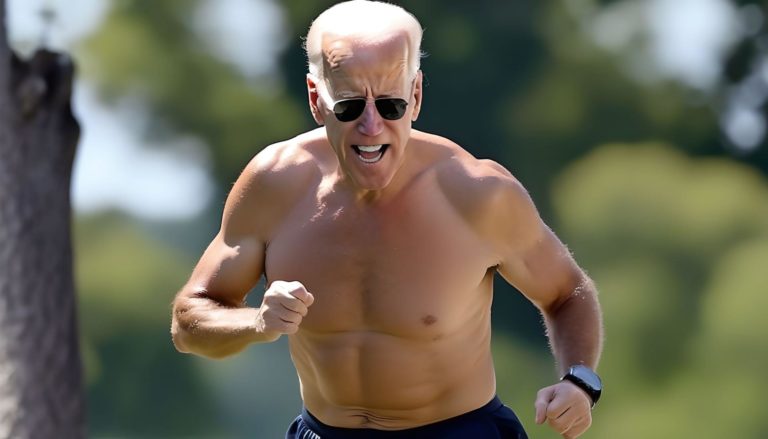
(Ken Silva, Headline USA) In what could be perceived as Joe Biden’s final gift to the Trump campaign, the sitting President said Sunday that he’d like to slap Donald Trump and his “Republican friends” in the ass.
Biden’s comments were spreading Sunday as Democrats insisted that they were being taken out of context. But investigative reporter Ken Kippenstein published Biden’s complete comment, showing that he indeed made the bizarre comments about Trump’s buttox.
“There’s one more thing Trump and his Republican friends want to do. They want another giant tax cut for the wealthy. Now, I know some of you guys are tempted to think it’s macho, guys. I’ll tell you what, man,” he said.
“When I was in Scranton, I used to, we used to have a little trouble going down the plot once in a while. But I’m serious. These are the kind of guys you like to smack in the ass.”
The bizarre remark was Biden’s latest assist to the Trump campaign since Kamala Harris allegedly helped oust him in a White House coup..
In the wake of Trump’s debate with Harris—where he told the world that Biden “hates her”—Biden donned a MAGA cap.
More recently, Biden took the air out of the Democrats’ attempt to capitalize on a Trump rally comedian’s vulgar remarks about Puerto Rico.
After comedian Tony Hinchcliffe’s joke referred to Puerto Rico as a “floating island of garbage” at Trump’s Madison Square Garden rally on Oct. 27, Biden referred to all Trump supporters as the same.
WATCH: President Joe Biden: "The only garbage I see floating out there is [Trump] supporters." pic.twitter.com/9teSUOytqC
“The only garbage I see floating out there is his supporters,” Biden said.
Biden’s comments hit news airwaves simultaneously as Vice President Kamala Harris delivered her closing pitch to voters at the Ellipse that evening in Washington, D.C.—leading to jokes among Trump supporters that Biden’s secretly trying to sabotage Harris.
Ken Silva is a staff writer at Headline USA. Follow him at x.com/jd_cashless.
(Ken Silva, Headline USA) The Biden-Harris administration partnered with foreign United Nations workers to bypass the Southwest border and quietly send thousands of immigrants to the U.S.—on the American taxpayer dime, no less, according to a new report from the House Judiciary Committee.
The Biden-Harris’s partnership with the UN came through a program launched in June 2023 called the Safe Mobility Initiative, which allows aliens outside the U.S. to consult with foreign national employees from UN and the International Organization for Migration.
🚨🚨 INSIDE KAMALA HARRIS’S OPEN-BORDERS ALLIANCE WITH UNITED NATIONS BUREAUCRATS:
U.S. taxpayer dollars were spent on foreign nationals’ salaries so they could advise other foreign nationals on the easiest way to migrate to the United States.
According to the House Judiciary report, foreigners can simply apply online with the UN for refugee status. If the foreigners meet the definition of a refugee and are approved for resettlement, then “they receive taxpayer-provided travel loans to facilitate their travel to the United States”—allowing them to avoid going through Mexico and the Southwest border, the report said.
Moreover, once they’re in the country, the foreigners are eligible for numerous public benefits, including cash assistance, medical assistance, employment preparation, job placement, English language training, and other services offered through the Department of Health and Human Service’s Office of Refugee Resettlement, the report added.
As of mid-October, 66,758 aliens have been referred to the U.S. for “potential resettlement”—and 18,154 aliens have departed to be resettled, according to the report.
Along with documenting the number of aliens entering the country, the Judiciary report also focused heavily on the foreign nationals facilitating this program—finding that only 14% of the UN workers involved are U.S. citizens.
“At the behest of the Biden-Harris Administration, therefore, U.S. taxpayers are paying for foreign nationals to advise other foreign nationals on the best means to travel to the United States,” the report said.
The taxpayer bill is hefty: The UN High Commissioner for Refugees and IOM have devoted a combined $81.7 million of U.S. taxpayer funding to the Safe Mobility Initiative, the report said.
“By devising the Safe Mobility Initiative and partnering with open-borders international organizations at the United Nations, the Biden-Harris Administration has only sought to mask the true magnitude of the border catastrophe,” the report concluded.
“In the name of discouraging irregular migration, President Biden and Vice President Harris have used Safe Mobility Offices to allow aliens to circumvent the southwest border and enter the United States through various other means, including the USRAP and unlawful parole programs, away from the public scrutiny that would accompany their arrival at the border.”
Ken Silva is a staff writer at Headline USA. Follow him at x.com/jd_cashless.