(Headline USA) President Donald Trump on Saturday said he is nominating Lance Schroyer, a former Oklahoma state trooper, as the next director of Immigration and Customs and Enforcement.
Trump said on his Truth Social platform that his new pick for the immigration enforcement agency is a “PATRIOT with real operational experience, and proven leader with DECADES of experience locking up the worst of the worst.”
President Trump has nominated Lance Schroyer to serve as the ICE Director.
With over 29 years of law enforcement experience, Lance will play a vital role in helping deliver on the President’s mandate from the American people to target, arrest, and deport illegal aliens.
— Secretary Markwayne Mullin (@SecMullinDHS) June 27, 2026
The nomination comes after former ICE director Todd Lyons resigned at the end of May. David Venturella, a former executive at a private prison operator, has been serving as the acting head of the agency.
Department of Homeland Security Secretary Markwayne Mullin, also from Oklahoma and a former congressman for the state, is still settling into his role atop the Cabinet agency overseeing ICE. Mullin has promised to keep his department out of the headlines and has indicated a softer tone on immigration, although he is expected to align with the president’s priorities on mass deportations.
Mullin quickly praised Schroyer’s nomination on X.
“With over 29 years of law enforcement experience, Lance will play a vital role in helping deliver on the President’s mandate from the American people to target, arrest, and deport illegal aliens,” he wrote.
(Money Metals News Service) The U.S. economy may appear resilient on the surface, but beneath the headlines, Michael Pento believes serious problems are building.
During a recent appearance on the Money Metals podcast with host Mike Maharrey, the founder and president of Pento Portfolio Strategies argued that mounting debt, inflated asset prices, and misguided monetary policy have created conditions that could produce an economic crisis larger than the 2008 financial meltdown.
While many investors remain focused on inflation, interest rates, and geopolitical tensions, Pento believes the biggest risks are structural—and they’re only getting worse.
(Interview Starts Around 8:37 Mark)
The Economy Is Built on Unsustainable Debt
Pento believes America’s debt burden has reached a point where the economy can no longer function normally.
Federal debt continues to climb while businesses and consumers remain heavily leveraged. According to Pento, these obligations have grown so large that the Federal Reserve has far fewer options than it did during previous downturns.
He argued that the next recession isn’t simply a question of if, but when. Once economic growth contracts, tax revenues will fall, government spending will rise automatically, and annual deficits could explode.
That, he says, would almost certainly pressure the Federal Reserve into creating even more money to finance government borrowing, further weakening confidence in the dollar and the broader financial system.
Three Bubbles Could Burst at Once
Unlike 2008, when housing was at the center of the crisis, Pento believes today’s risks are spread across multiple sectors.
He described the current environment as three major bubbles occurring simultaneously: stocks, real estate, and credit.
Years of historically low interest rates encouraged excessive borrowing while pushing investors into increasingly risky assets. More recently, massive investment surrounding artificial intelligence has added another layer of speculation to already expensive markets.
Pento warned that if one of these bubbles begins to unravel, the others could quickly follow, creating a much broader financial crisis than investors experienced during the Global Financial Crisis.
Why He Doesn’t Expect More Rate Hikes
One of the interview’s most surprising arguments centered on the Federal Reserve.
Although many investors expect policymakers to continue raising interest rates, Pento believes the opposite is more likely. In his view, inflation is already beginning to cool while economic growth slows, making future rate cuts far more probable than additional hikes.
He also questioned whether policymakers could realistically maintain restrictive monetary policy given the enormous amount of government debt that must be financed.
If growth weakens as he expects, Pento believes the Federal Reserve will once again prioritize supporting the economy over aggressively fighting inflation.
Gold Could Be Positioned to Benefit
That outlook helps explain why Pento has become increasingly optimistic about precious metals after their recent correction.
He argued that many investors have become overly pessimistic on gold because they expect inflation to remain elevated and interest rates to continue climbing.
If those assumptions prove wrong, slowing growth and easier monetary policy could create a much more favorable environment for gold prices.
Pento also pointed to gold mining companies as an area of opportunity, noting that lower energy prices could improve mining profitability while higher gold prices boost revenues.
He recommends that investors maintain a permanent allocation to physical gold that they personally control, viewing it as long-term financial insurance rather than a short-term investment.
Additional exposure to gold and mining stocks can then be adjusted as economic conditions evolve, but he believes every investor should have some physical bullion outside the traditional financial system.
Looking Beyond the Headlines
Pento also cautioned against relying solely on headline economic data.
He argued that recent employment reports appear stronger than they really are, with much of the job growth concentrated in temporary hiring related to the FIFA World Cup and government employment rather than broad private-sector expansion.
Likewise, he criticized the Federal Reserve for continuing to expand its balance sheet despite public discussions about tighter monetary policy, suggesting actions speak louder than rhetoric.
Active Investing for a More Volatile Future
As markets become increasingly dependent on government intervention and monetary policy, Pento believes investors should rethink traditional buy-and-hold strategies.
Rather than assuming markets will continue delivering strong long-term returns, he expects greater volatility, more frequent policy interventions, and larger economic swings than investors have experienced over the past decade.
That environment, he argues, rewards active portfolio management and greater diversification—including meaningful exposure to precious metals.
He believes decades of debt accumulation, easy money, and inflated asset prices have created an economy that has become increasingly fragile. While policymakers may attempt to delay the inevitable through additional monetary stimulus, Pento argues that those actions ultimately increase the risks facing investors.
For those looking to prepare, he believes the answers remain the same: reduce exposure to overvalued assets, stay diversified, and own physical gold as a hedge against the financial uncertainty that may lie ahead.
(Chris Wade, The Center Square) A federal judge has tossed out a Trump administration lawsuit challenging ‘sanctuary’ policies in several New Jersey cities that restrict local cooperation with immigration crackdowns.
The ruling by U.S. District Court Judge Evelyn Padin, issued Thursday, rejected claims by the Department of Justice that laws in Newark, Jersey City, Paterson and Hoboken prohibiting local police from working with Immigration and Customs Enforcement agents to apprehend suspected undocumented immigrants violate the U.S. Constitution and are preempted by federal law.
In her decision, Padin said the federal government’s complaint is flawed because it doesn’t challenge a long-established statewide sanctuary policy, codified into law by Democratic Gov. Mikie Sherrill earlier this year.
Because of that, she wrote in the 38-page ruling, those cities would still be bound by the state’s ‘sanctuary’ law, even if the court granted the federal government’s request. She noted that New Jersey’s Immigrant Trust Directive has been upheld by numerous court rulings.
“The Federal Government’s case has a fundamental flaw — it treats the Challenged Policies as though they operate in isolation. They do not,” Padin wrote in the 38-page ruling.
Padin — a Biden appointee — dismissed the case without prejudice, allowing the Trump administration 45 days to file a new complaint. It wasn’t immediately clear if the DOJ planned to file a new lawsuit.
The DOJ’s initial legal challenge, filed in U.S. District Court in May, argued that sanctuary laws in the state’s four largest cities are “not only unlawful but dangerous” and called the federal court to rule the restrictions are unconstitutional.
“Where inaction crosses into obstruction, local governments break federal law,” the complaint reads. “That is what is happening across New Jersey right now. It is past time it ends.”
Jersey City Mayor James Solomon, a Democrat, called the ruling “a victory for our values and cements our place as America’s Golden Door,” and vowed to continue enforcing the city’s sanctuary policies.
“Jersey City has always welcomed immigrants, our city was built by immigrants, and we will always protect our immigrant neighbors,” he said in a statement.
New Jersey is also facing a lawsuit from the DOJ challenging an executive order signed by Sherrill that bars ICE agents from using state-owned property as staging areas for operations, among other provisions. The DOJ said the directive violates federal laws and accuses her administration of “harboring criminal offenders” from law enforcement.
(The Center Square) An unsolicited letter from a data center developer that dangles $10,000 for every household in a northeastern Pennsylvania township – but only if the data center gets built – calls the money a “grant” but Ed Parks and Ed Negra call it a “bribe.”
The fact that the letter is about the marquee project in Gov. Josh Shapiro’s “Fast Track” permitting program makes their distaste worse. The two homeowners live in Hazle Township, Luzerne County, and will be among the closest neighbors if the 15 data center buildings of “Project Hazelnut” become a reality.
“It’s ridiculous,” said Parks, referring to letter with the $10,000 offer. “They are trying to drive a wedge between Hazle Township residents who are directly affected by the data center, like myself, and people who might live a couple of miles away.”
Shapiro went to Luzerne County in late 2024 to publicly announce the Pennsylvania Permit Fast Track Program, intended to streamline permit-issuing for high-impact economic development and infrastructure projects. As of Friday, nine of the 17 projects shown on the state’s public Fast Track “dashboard” were data centers.
Concern about data center development has mushroomed in the state Legislature, although no comprehensive plan to regulate it has cleared both the House qnd Senate.
Hazle Township, with slightly more than 10,000 residents, surrounds the city of Hazleton and straddles Interstate 81 about 80 miles north of Philadelphia.
NorthPoint Development, a privately held real estate development firm that is based in Kansas City and is behind the Hazelnut proposal, took part in Shapiro’s late-2024 announcement.
A year later, though, following many complaints from residents, township supervisors voted unanimously to reject a land application from NorthPoint tied to the project. Last month, a Luzerne County judge denied an appeal filed by NorthPoint.
The recent letter signed by Nathaniel Hagedorn, NorthPoint CEO and founder, began arriving in local mailboxes about a week ago. It referred to “misinformation and fear that has circulated about data centers and our project” and sought to alleviate concerns about water, the environment, setbacks, light and power.
It also listed potential community benefits like a $105 million payout over 15 years for township initiatives like forming a police department and reducing trash fees.
Most eye-catching for individual homeowners, though, was the description of a “$45 million direct resident grant fund.” It said the grants would be available to each household in the township and could be spent on anything.
“This $10,000 will be paid to each household on the issuance of the certificate of occupancy of our first data center building,” the letter from Hagedorn said.
On Friday, a spokesperson for NorthPoint said letters were sent to all Hazle Township households, a total of more than 4,000.
“The letters are just starting to land in mailboxes, so we have not heard from many residents yet,” the spokesperson said.
Ed Parks and Annmarie Palumbo-Parks at their home in northeastern Pennsylvania holding a letter from a data center developer offering $10,000 to local households if the project is built. Photo: Ford Turner / The Center Square
Both Negra and Parks live in Eagle Rock with their wives and both were harshly critical of the letter.
“They can’t just throw their money around and think they can go where ever they want, disrupting people’s quality of life,” said Negra, a retired building materials manager for a contracting company. He described the attempted start of the project as sneaky.
“When people have to resort to bribing people to get something passed, that’s what it is. That’s pretty poor that that has to happen,” Negra said.
Parks and his wife, Annmarie Palumbo-Parks, live near Negra in a somewhat remote and wooded part of Eagle Rock.
Palumbo-Parks said people in the well-established community volunteer and donate money for causes in nearby Hazleton. Living in the beautiful, wooded area, for many, is the payoff after a lifetime of work and planning.
“How can you put a price on your well-being?” she said.
Her husband, a retired software company vice president, was blunt.
“They are trying to bribe people,” Ed Parks said. “They are being very disingenuous in this letter. Plus, it is not a contract.”
He, too, believes the start of the project seemed shrouded in secrecy at the local level.
He said, “It should never have been fast-tracked.”
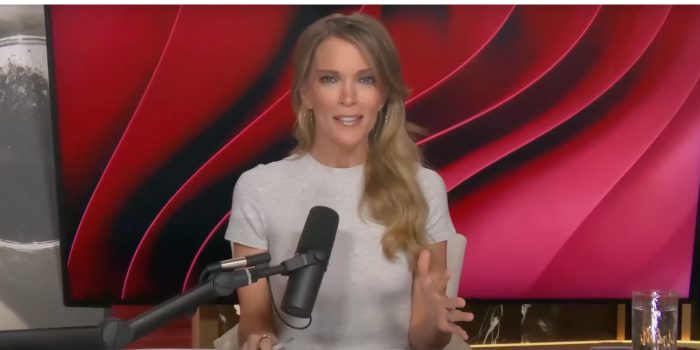
(Luis Cornelio, Headline USA) Popular podcast host Megyn Kelly delivered a scathing rebuke of Haitian Temporary Protected Status recipients after the Supreme Court cleared the way for President Donald Trump to terminate the infamous program.
Speaking on her podcast Thursday, Kelly urged Haitian TPS recipients to “go back to f***ing Haiti,” while accusing many of failing to assimilate into American culture.
“Go home! Get out! We know our country is better than yours! That’s because we filled it with our work ethic and our culture and our values,” Kelly said. “You being here only dilutes it for us, those who built it and live it.”
Her remarks came shortly after the Supreme Court ruled 6-3 that the Trump administration has the authority to end TPS.
The decision, arising from Mullin v. Doe, overturned a lower court ruling that had found Trump’s termination of TPS for Haitian and Syrian nationals violated the Administrative Procedure Act.
The Supreme Court concluded that federal courts lack authority to review the executive branch’s decisions on TPS terminations.
Previous administrations stretched TPS far beyond its original legislative purpose, allowing foreign nationals from certain countries to reside in the U.S. lawfully indefinitely.
Kelly also sounded the alarm about what she described as a lack of assimilation among some Haitian migrants.
“Half of you people, more than half of you, won’t assimilate,” Kelly said, seemingly referring to Haitians. “We don’t want you. We don’t care if you’re offended. Get out. Go home. Go back to f***ing Haiti.”
The former Fox News anchor also pointed to several high-profile incidents involving Haitian nationals that have caused national condemnation.
In 2023, Haitian national Hermanio Joseph crashed into a school bus in Ohio, killing 11-year-old Aiden Clark. A Clark County jury found him guilty of involuntary manslaughter and vehicular homicide and sentenced him to 13 years in prison.
Kelly also referenced reports that Haitian migrants had stolen and eaten pets.
Headline USA has also reported that related allegations emerged in the Dominican Republic, which shares an Island with Haiti.
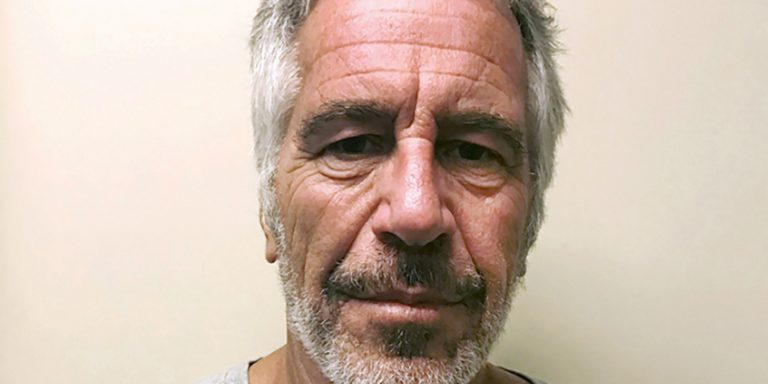
(Ken Silva, Headline USA) Billionaire investor Leon Black told members of Congress on Friday that he never paid deceased sex criminal Jeffrey Epstein for access to women—but the House Oversight Committee is now issuing subpoenas for nondisclosure agreements he signed with women after he refused to answer questions about the matter.
“During today’s voluntary transcribed interview, Mr. Black stated he wouldn’t answer questions about NDAs. Answers about the terms and substance of these NDAs are critical to our investigation. For this reason, today I issued subpoenas to Mr. Black for NDAs and to appear for a deposition in the near future,” Rep. James Comer, R-Ky., said Friday after the interview with Black.
The New York Times published an investigation last October into Black, revealing that the former Apollo Global CEO paid millions of dollars to at least eight women, including some alleged victims of Epstein.
“For reasons that are unknown, Mr. Black wired hundreds of thousands of dollars to at least three women who were associated with Mr. Epstein,” the Times reported, citing court documents and notes taken by congressional investigators, who discovered that “Black had paid millions of dollars to eight women.”
🚨 Chairman @RepJamesComer served two subpoenas to Leon Black during his transcribed interview today as part of our Epstein investigation.
The Times further reported that authorities in the U.S. Virgin Islands, where Epstein had his infamous private island, also investigated Black for sex crimes.
“Lawyers working for the territory’s attorney general interviewed at least two women who claimed they had been sexually abused by Mr. Black after Mr. Epstein introduced them,” the newspaper reported. “It is unclear whether the attorney general’s office substantiated those allegations. In 2023, Mr. Black agreed to pay the territory $62.5 million to end the investigation.”
Most of the Times’s investigation focused on Black’s financial relationship with Epstein, revealing that Epstein often demanded payment from his client in a bullying manner.
Sen. Ron Wyden investigated Black’s connections to Epstein for years. In July, Wyden said he handed the Justice Department with “actionable” information about Epstein’s relationship with a prominent billionaire and an untold number of Wall Street banks—but the DOJ hasn’t doing anything with the info. Wyden didn’t mention who the billionaire client was, but his description matched Black.
“I’ve handed the Trump administration a ready-made Epstein case involving a billionaire financier and Wall Street banks, and they have done nothing with it,” Wyden told All Rise News.
“I know for a fact that the Trump administration is sitting on an Epstein file that contains new actionable information,” Wyden reportedly added. “So I don’t blame anybody for asking what’s going on.”
Ken Silva is the editor of Headline USA. Follow him at x.com/jd_cashless.
(Ken Silva, Headline USA) More than 31 years after the Oklahoma City bombing, state officials say an investigation into one of the case’s enduring mysteries is still technically open.
The mystery in question stems from a left leg that was found in the rubble of the Murrah federal building in the wake of the April 19, 1995, terror attack. That leg was eventually matched to OKC bombing victim Lakesha Levy. However, Levy had already been buried with another left leg in her coffin.
To this day, the leg initially matched to Levy remains unidentified. This has led researchers surmise that it may belong to an unknown victim, or perhaps an accomplice to OKC bombers Timothy McVeigh and Terry Nichols. Given the government’s apparent reluctance to identify the leg, some have speculated that the leg may have belonged to an FBI informant or undercover agent. McVeigh himself once told his attorneys the limb would “fuel conspiracy theories for years.”
For over two decades, investigators maintained that they were unable to extract DNA from the leg that was retrieved from Levy’s coffin because it has been embalmed. But in December 2015, Oklahoma Chief Toxicologist Dr. Byron Curtis told the Washington Times that the Office of the Chief Medical Examiner did, in fact, have DNA from the mystery leg.
“Dr. Curtis said, ‘DNA was extracted’ in 1997 and ‘we maintain samples of the leg,’” the Times reported in December 2015. “The DNA results are filed with the chief medical examiner, he said.”
🚨NEW: Officials say one of the OKC bombing's enduring mysteries is still an open investigation. Attorneys Jesse Trentadue and Ben Wetmore filed a FOIA for records on the mysterious unidentified leg from the attack–only to be told that the case is still open. STORY BELOW🧵 pic.twitter.com/jbbAwQ2GdU
Fast forward nearly another 11 years: Attorneys Jesse Trentadue and Ben Wetmore are still working to obtain information about the leg, referred to in OKC medical records as specimen “P-71.” Wetmore recently filed a request with the state for “records concerning the recovery, examination, storage, identification, DNA testing, chain of custody, disposition, and ultimate attribution of specimen P-71”—only to be told on Thursday that he can’t have the records because, among other reasons, the case is still open.
“Since ‘P-71’ has not been identified, it remains an open case and investigation,” Madalynn Martin, the counsel for Oklahoma’s Office of the Chief Medical Examiner, said in a letter Thursday, which Trentadue provided to this publication. “Further, Oklahoma provides that ‘the Chief Medical Examiner shall produce records, documents, evidence or other material of any nature only upon the order of a court.”
Trentadue told Headline USA that he intends to file a lawsuit over the matter.
The Utah attorney added that he believes the leg may have belonged to an accomplice who served in the military with McVeigh, who was executed for his part in the attack in June 2001. The FBI may have thought that at one point, too. An FBI memo provided by Trentadue says that agents found eight military deserters and roughly 60 other missing persons when investigating possible matches to the leg.
According to the book Oklahoma City: What the Investigation Missed, and Why it Matters, the FBI later surmised that the missing limb belonged to Cynthia Campbell Brown, a Secret Service agent killed in the bombing. However, the FBI didn’t want to test its theory because “doing so could raise the question of whose leg she was buried with—and perhaps set off an uncontrollable chain reaction of exhumations and mistaken body-part re-identifications,” the book said.
“If the extra leg did belong to a coconspirator, he was never investigated, much less identified,” the book added.
Ken Silva is the editor of Headline USA. Follow him at x.com/jd_cashless.
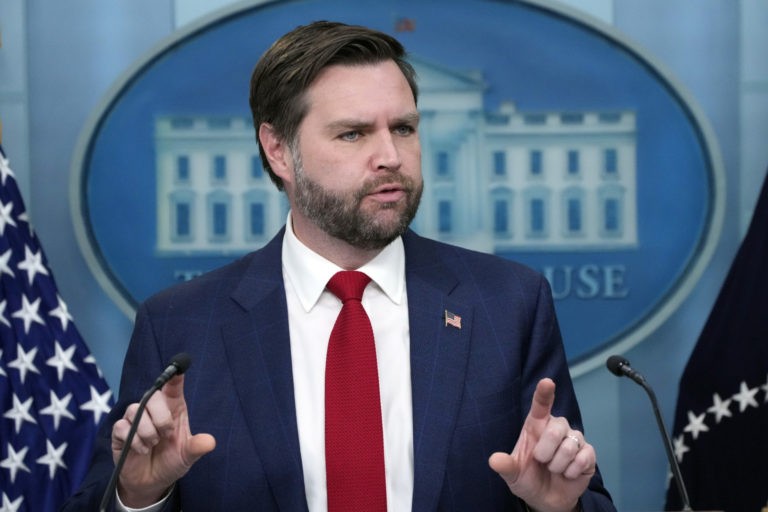
(Dave DeCamp, Antiwar.com) Vice President JD Vance has said that during talks in Switzerland, Iranian officials agreed to establish a direct line of communication between Iran’s Islamic Revolutionary Guard Corps (IRGC) and the US military.
Vance told Sohrab Ahmari, the US editor for UnHerd, that one of the things the US wanted to “come out” of the talks with was a “channel on the Iranian side” for reducing conflict.
“Which we did. They were like, ‘OK, fine, we’ll send somebody from the IRGC to go hang out in Doha with somebody from CENTCOM,’ and that’s how we’re going to settle a lot of these disputes,” the US vice president said during an interview conducted aboard Air Force Two on the flight home from Switzerland.
Flare-ups between the United States and Iran remain possible, as the US hasn’t reduced its forces in the region and there appear to be differences between the two sides’ views on the situation in the Strait of Hormuz. A direct communication channel between the two militaries, if implemented, could help de-escalate tensions after any flare-up to prevent the region from plunging back into full-scale war.
Vance also told Ahmari that Arab states like the US-Iran Memorandum of Understanding “because of the conversations they’re having with the Iranians.”
“The Emiratis — by far the most hawkish, by far the most pro-Israel country in the [Gulf Cooperation Council] — they’re having conversations with the Iranians that have never happened before, including with the IRGC, about various types of economic incentives — ‘Here’s what we’d need to see to make your country investable’ — and the Iranians come back and say, ‘Okay, yeah, we’re willing to do all those things,’” Vance said.
The UAE had taken a much more offensive role in the US-Israeli war against Iran than the other Gulf Arab states, and as a result, it was pounded by Iranian missiles and drones. While more hawkish than other regional countries, Abu Dhabi, like the other Gulf countries, would likely prefer a diplomatic solution to a return to full-scale war since it would likely involve an escalation of Iranian attacks on oil infrastructure in the region.
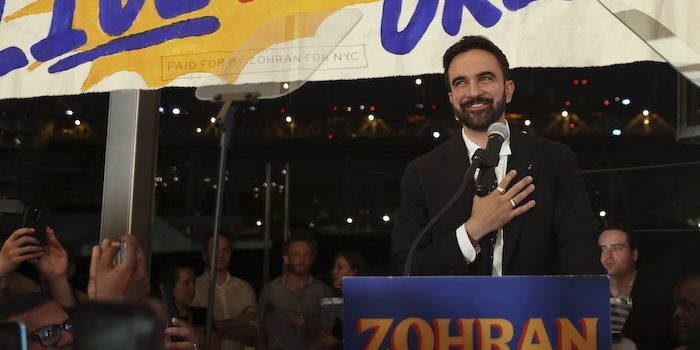
(Chris Wade, The Center Square) A New York City board that sets the rent for city-subsidized apartments has fulfilled a key campaign pledge of Mayor Zohran Mamdani to freeze rents, drawing outrage from the city’s landlords.
The New York City Rent Guidelines Board voted 7-1 Thursday night to set a two year rent freeze for one-year and two-year leases or subsidized housing. The move, which goes into effect Oct. 1, affects more than 1 million tenants in taxpayer-subsidized apartments across the city.
“This is a historic victory for New York City tenants,” Mamdani said in a statement. “This is the relief that working people across our city deserve.”
One of the panel’s property owner representatives, Lawyer Christina Smyth, resigned from the board ahead of the vote, saying in a statement that the move “crossed a legal line” and that fellow board members were ignoring data showing the negative impacts of freezing rents.
“The Rent Guidelines Board has stopped being a fact-finding body,” Smyth said. “It has become a body that starts with an answer and vibe codes its way backward to justify it.”
The New York Apartment Association, which represents landlords, blasted the decision saying it was the first time the board has ever chosen to freeze rents for one and two year leases.
“Our message is clear: this freeze will destroy the living conditions for hundreds of thousands of New Yorkers,” Kenny Burgos, the association’s CEO, said in a statement. “This was supported with study after study, including RGB data finding rent needed to increase just to run a building.
The association pointed to data published by the board in April that projected NYC landlords would need increases of 4.5% on one-year leases and 8.5% on two-year leases, just to cover their operating costs.
Freezing rents was a key campaign pledge for Mamdani, a democratic socialist who made New York City’s high housing costs and deteriorating conditions in rent-subsidized apartments a key plank of his mayoral bid. Shortly after taking office in January, Mamdani appointed five new members to the rent control board in a sweep aimed at packing it with supporters of his rent freeze plan.
Last month, the board voted to consider a range of options, from a two-year freeze to a 2% increase on one-year leases and a 4% increase on two-year leases.
“The Rent Guidelines Board ignored its own data and made a terrible decision tonight,” Real Estate Board of New York President James Whelan said in a statement. “Tonight’s vote may be politically popular, but it will make New York’s housing crisis worse.”
The city’s rent stabilization law, first enacted in 1969, restricts annual rent increases for specific apartments, with any increases set annually by the rent board. It affects roughly 1 million apartments in the city and has survived dozens of legal challenges over the past several decades.
Critics have described the rent control system as “welfare for the rich” and said New York City is losing millions of dollars a year in potential revenue from the costly housing regulatory system.
Supporters say it’s a crucial safety net in a city with some of the highest rents in the nation and a lack of affordable housing that is contributing to people leaving the state.
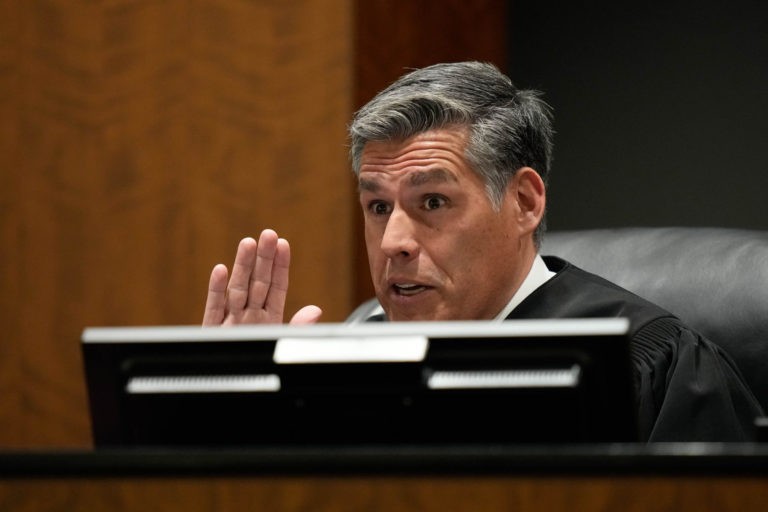
(Headline USA) The Utah judge in the murder case over Charlie Kirk’s killing held prosecutors in contempt of court on Friday over comments they made to media organizations about defendant Tyler Robinson’s guilt.
Judge Tony Graf said the comments violated his restrictions on what the two sides can say about the case outside of court.
But Graf denied a defense request to take the death penalty off the table as a sanction for the violation. He said the problem could instead be resolved through the screening and questioning process for potential jurors, which is intended to weed out people who could be biased about the case.
Robinson has not yet entered a plea. The 23-year-old from southwestern Utah is charged with aggravated murder in the Sept. 10 assassination of Kirk, an ally of President Donald Trump who was shot in the neck while addressing a crowd of thousands at Utah Valley University.
Defense attorneys had accused Deputy Utah County Attorney Christopher Ballard of trying to influence potential jurors by going on a “media tour” to talk about ballistics evidence in the case. Ballard also said prosecutors had enough evidence to show Robinson murdered Kirk.
Legal experts had said blocking the death penalty would have been an extreme remedy. Graf said it would have been “grossly disproportionate” to the misconduct.
Ballard argued that he had a right to speak to the press to correct misinformation about a preliminary finding by ballistics experts.
Those experts’ initial tests did not match the bullet fragment with a gun that investigators believe was used to kill Kirk. That spurred stories by some publications raising questions about the prosecution’s case: A March 30 headline in the U.K.-based Daily Mail reported that the bullet that killed Kirk “did NOT match” the rifle investigators say was used to kill Kirk.
Ballard said he was trying to “set the record straight,” when he told media organizations the ballistics tests were inconclusive to determine whether the bullet was fired from the suspected murder weapon.
Conjecture over that evidence fueled unsubstantiated conspiracy theories that there might have been a second shooter, or that Kirk’s death was staged. Attorneys on both sides have raised concerns that the misinformation and extensive media attention could taint the potential jury pool.
Graf said the comments about the bullet did not violate the court’s rules, but that Ballard went too far when he went on to say that prosecutors had “ample evidence to demonstrate beyond a reasonable doubt that Tyler Robinson committed this murder.”
The judge said those additional public statements possessed a “substantial likelihood” of prejudicing the case.
The judge added that the comments were not made out of any malicious desire by prosecutors to taint the jury pool, and that his ruling had nothing to do with the charges or Robinson’s guilt.=
“Its sole purpose is enforcement of a narrowly tailored publicity order governing attorney conduct,” Graf said.
Authorities have said DNA consistent with Robinson’s was found on the trigger of the rifle, the fired cartridge casing, two unfired cartridges and a towel used to wrap the rifle.
The Associated Press left telephone and email messages seeking comment from prosecutors and Robinson’s lawyers.