DEA Probes Fentanyl Cover-Up Claims

(Headline USA) The federal Drug Enforcement Administration on Thursday asked the U.S. Justice Department’s internal watchdog to investigate a whistleblower’s claims that DEA agents permitted hundreds of thousands of fentanyl pills to hit the streets of New Mexico.

The request came days after an Associated Press investigation found agents repeatedly monitored — but did not seize — major shipments of the synthetic opioid in a bid to build bigger criminal cases between 2023 and 2025.

In a letter sent Thursday to the U.S. Justice Department’s Inspector General, DEA administrator Terry Cole wrote that an internal probe was necessary because “the allegations have generated significant public attention and have raised questions regarding DEA’s operational decisions, supervisory oversight, and response to concerns.”

Cole wrote in a public statement that his request “should not be interpreted as reflecting any lack of confidence in the professionalism or integrity of DEA personnel or in the investigative decisions made during this matter.”

“If improvements are identified, DEA will implement them,” he added. “Strong institutions are sustained — not diminished — by objective oversight and a willingness to continuously assess and improve.”

Current and former DEA agents told the AP the investigative strategy — known as letting the counterfeit painkillers “walk” — amounted to a gamble with public safety in a state ravaged by the fentanyl epidemic and may have violated Justice Department rules intended to safeguard communities from a drug the White House last year designated as a “ weapon of mass destruction.”

The AP investigation cited three current and former agents and government records, including an internal report of a 2023 delivery of 74,000 pills the DEA watched happen at a mobile home park in Albuquerque. One of those agents, David Howell, first raised serious concerns about this strategy in a 2023 whistleblower complaint. He continued to raise his objections internally and spoke at length with the AP about what he described as a strategy that “poisoned our community to make cases.”

In an earlier statement to AP, a DEA spokesperson said “public descriptions suggesting that DEA knowingly permitted fentanyl to reach communities are false and fundamentally mischaracterize the facts.”

The DEA’s request for the watchdog investigation came just a day after New Mexico Gov. Michelle Lujan Grisham asked the state’s attorney general to examine whether the agency’s actions violated New Mexico law, an extraordinary challenge to a federal law enforcement agency at a time when fentanyl remains one of the country’s deadliest public health threats.

“There are no words to describe how reckless and dangerous these decisions were,” Lujan Grisham said in a statement. “Make no mistake: the DEA knew people would die if these pills made it into New Mexico communities, and the agency let it happen anyway.”

The Justice Department said in a statement that it welcomes a partnership with New Mexico leaders to keep the state safe.

“Protecting the public requires more than addressing individual transactions as they occur,” the statement said. “It requires identifying the sources of supply, the individuals directing criminal activity and the organizations responsible for moving dangerous drugs into our communities.”

Democratic lawmakers in New Mexico, meanwhile, sent Cole a letter asking for a briefing on the DEA’s tactics in the state.

“New Mexicans are paying the price for a fentanyl epidemic that is tearing families apart and deserve answers,” U.S. Rep. Melanie Stansbury said in a statement. “At a time when overdose deaths continue to devastate our state and communities, the DEA should be focused on stopping these drugs before they reach our streets — period.”

Adapted from reporting by the Associated Press


Mistrial Declared in Palisades Fire Case

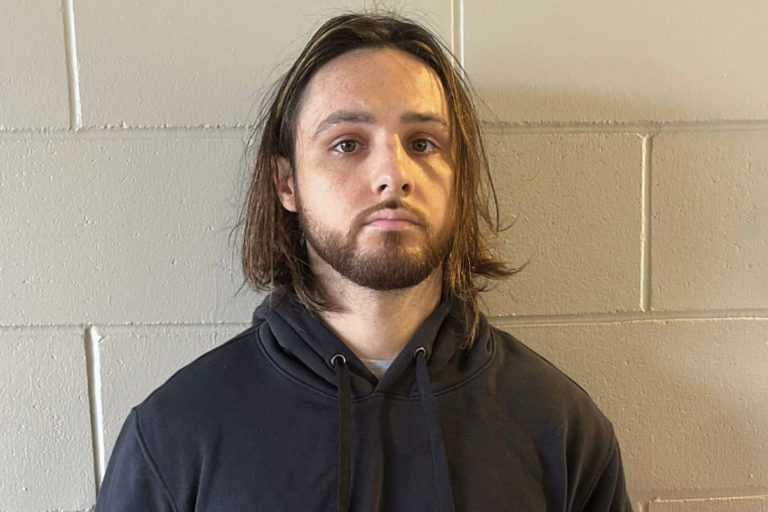
(Headline USA) A federal judge declared a mistrial Friday in the arson case against the man accused of sparking the deadly 2025 Palisades Fire in Los Angeles after the jury said it could not agree on a verdict. Prosecutors said they will try again.

Jurors said a day prior they had come to a standstill in deliberations in the trial of 29-year-old Jonathan Rinderknecht on three federal charges: arson, malicious destruction by means of a fire and timber set aflame.

“The court finds there is a manifest necessity to declare a mistrial because the jury is deadlocked,” Judge Anne Hwang said, with 10 jurors set on a not-guilty verdict and two others determined to convict.

The jury’s note Thursday said “We have people on both sides that are dead set, unwavering and unwilling to change their opinion.”

The jury also said there was nothing the court could do to help and that they were split on all three charges. Prosecution had requested Hwang to tell the jury to deliberate longer, but she said there was a “risk of coercion” given how definitive the jury seemed.

Defense attorney Steve Haney said the vote count was a “pretty resounding indication” that his client is innocent.

But U.S. Attorney Bill Essayli said they “fully intend to retry this case before a new jury and obtain guilty verdicts on all charged counts.”

“The evidence is strong that Jonathan Rinderknecht is responsible for igniting the fire on January 1, 2025, which eventually became the Palisades fire,” Essayli posted.

Rinderknecht pleaded not guilty to starting what became one of the most destructive wildfires in California history. He was charged with arson, malicious destruction by means of a fire and timber set aflame.

Prosecutors say Rinderknecht started a fire on Jan. 1, 2025, that burned undetected deep in root systems before flaring back up Jan. 7. The Palisades Fire ultimately killed 12 people and destroyed thousands of homes as it incinerated hillside neighborhoods in Pacific Palisades and the city of Malibu. Rebuilding has moved slowly in the Pacific Palisades — only 17 homes have been certified for occupancy.

His trial began June 8 and featured eight days of lengthy testimony from investigators, experts and witnesses from surrounding areas. Jurors deliberated for 13 hours over the course of two days before concluding that they could not produce a unanimous verdict.

Using security camera footage, prosecutors established that the fire is believed to have started at the Hidden Buddha clearing, a spot in the mountainside that can be reached by a neighborhood trail.

Rinderknecht, who was driving for Uber that evening, dropped off his last passenger in the same neighborhood, shortly before midnight.

Rinderknecht called 911 more than a dozen times that night, and the phone’s geolocation data showed he was at the clearing and walked down the trail as he reported the fire. Prosecutors said Rinderknecht admitted that he did not see or hear anyone else there.

Prosecutors introduced several witnesses to establish his motive and state of mind on New Years Eve 2024. They brought into evidence a multitude of digital records obtained from his phone, email, Uber, OpenAI and various social media accounts. Investigators reviewed thousands of conversations between Rinderknecht and ChatGPT, which he used multiple times a week as a personal diary.

“Why am I so angry all the time?” he said in one exchange.

Rinderknecht lamented wealth disparity and climate change and his inability to do anything about it.

Rinderknecht also made searches about Luigi Mangione, who is charged with the murder of United Healthcare CEO Brian Thompson, and on Reddit searched “lets kill all the billionaires.” He looked up the address of DoorDash CEO Tony Xu, including if he had children or surveillance cameras at his home.

He also shared his relationship struggles, including his rejection by a woman. He contacted that same woman earlier that night to ask if she had any New Year’s Eve plans. When she turned him down, he sent her angry and vile messages from another phone.

When firefighters responded to the blaze, Rinderknecht followed them and took videos of the fire as they battled it. While at the fire, he also asked ChatGPT if someone would be responsible for a fire accidentally started by a cigarette.

Rinderknecht screen-recorded both the 911 calls and his ChatGPT prompt, which prosecutors presented as evidence that he was trying to mislead investigators.

On January 6, a day before powerful Santa Ana winds rekindled smoldering roots into a conflagration, he recorded a selfie video where he stated he was having a mental breakdown.

He talked with an agent for hours — words used against him

Prosecutors also referenced a recorded interview Rinderknecht gave the Bureau of Alcohol, Tobacco, Firearms and Explosives in late January, before he was a suspect. ATF agent Matthew Beals spoke with him for roughly 8 hours, at one point driving together to the site of the fire so that Rinderknecht could physically identify his movements on the hill during the window of time when the fire started.

Rinderknecht’s account was in conflict with his phone’s geolocation data and the timing of his 911 calls, Beals testified.

Beals also said Rinderknecht became “agitated” when he asked about the fire’s details, at one point accusing him of interrogating him as a suspect, and repeatedly voiced dismay about the state of political affairs in response to the questions.

Specifically, Rinderknecht was recorded speculating that someone might hypothetically start a fire in the Palisades out of frustration about inequality, the agent said.

“If people are specifically targeting this area, I’m thinking it’s probably because they’re like, “Oh, do people think they can have their own little road up here in paradise and just, you know, be here with their money while we’re basically being slaves for them?” Rinderknecht said.

Arson behavioral expert Kevin Kelm testified that all of Rinderknecht’s behavior was consistent with that of a “revenge, or societal revenge motivated” arsonist.

Rinderknecht’s defense focused on showing jurors that fireworks could not be ruled out, and in fact were the most likely cause of the fire.

One firefighter testified they heard fireworks in the area shortly before and after midnight New Year’s Eve.

Haney called to the stand two Pacific Palisades residents and a security guard for the neighborhood. All three said they either saw flashes of light or heard fireworks, and two of them saw a group of teenagers running down the trail afterward.

Two expert witnesses cast doubt on the federal investigation. Among other things, the scene of the Jan. 1 fire was unsecured for 13 days and could have been compromised in that time, the defense said. The experts also testified that fireworks were the most likely cause.

Former LA fire investigator Ed Nordskog said he responded to dozens of fires each Fourth of July and New Year’s Eve, most started by fireworks. He accused government investigators of being influenced by confirmation bias as they pursued Rinderknecht.

“They’re choosing to look at information in a very sinister way when they should be a little more open about it,” he said.

When looking through Rinderknecht’s digital footprint, investigators never found any searches about arson, the best way to start a fire, or purchases of any fire-starting materials, Haney pointed out. While they found his DNA on a barbecue lighter in his car, they couldn’t prove a lighter sparked the blaze — only that it began with an “open flame,” he said.

Calling 911 more than a dozen times and staying at the scene while firefighters fought the blaze also demonstrated his innocence, Haney said.

“No arsonist sets a fire and calls 911 for them to put it out … and then waits around to be arrested,” Haney said.

Adapted from reporting by the Associated Press

Billionaire Leon Black Defends $158M Paid to Jeffrey Epstein

(Headline USA) Billionaire investor Leon Black said Friday that Jeffrey Epstein deceived him during a yearslong relationship in which he paid the disgraced financier $158 million, but insisted he committed no criminal wrongdoing as he appeared before the House Oversight Committee.

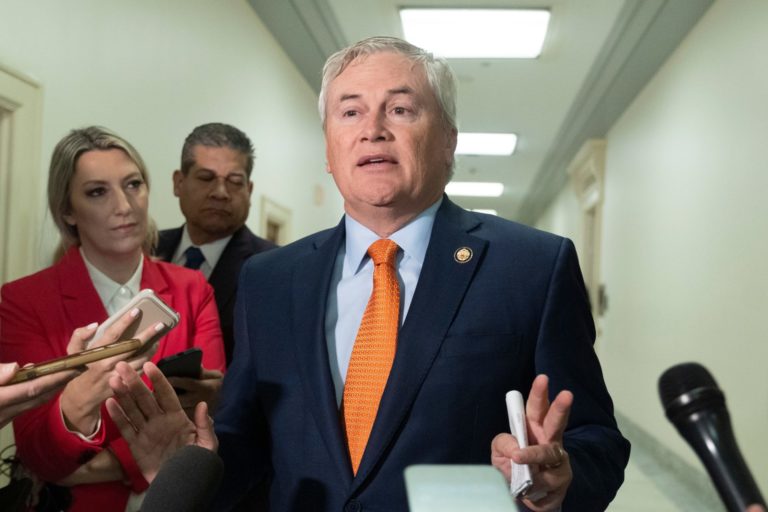
Black is the 16th person to appear before the committee as part of their broader investigation into the web of wealth and influence around Epstein. Before entering the closed-door deposition, Rep. James Comer, R-Ky., the House committee chairman, told reporters he believed it might be the most “groundbreaking” yet.

“This could be a pretty significant deposition as we try to get answers,” said Comer.

Black is the co-founder and former chief executive of the private equity firm Apollo Global Management. He stepped down in 2021 amid fallout over his ties to Epstein.

Black maintained Friday that he was not aware of Epstein’s “nefarious activity” until 2019 and that he paid Epstein for legitimate purposes, in part due to his “unrivaled network of relationships” with influential figures.

“I knew Jekyll. I didn’t know Hyde,” said Black.

Black is mentioned repeatedly in files that the Department of Justice has released related to the Epstein investigation. He also appears in a collection of birthday messages sent to Epstein that were released by the House committee last year, including a poem attributed to him that refers to “Blond, Red or Brunette, spread out geographically.”

A 2021 review commissioned by Apollo found that Black paid Epstein $158 million from 2012 to 2017, after Epstein pleaded guilty in 2008 to soliciting prostitution from a minor. The review said the payments were for “bona fide tax, estate planning and other related services.”

“I gave Epstein a second chance, as did many others. I wish I had not,” Black said.

Epstein was indicted in July 2019 on federal charges of sex trafficking of minors and conspiracy to commit sex trafficking of minors. The Justice Department alleged that Epstein created a vast network of girls, some as young as 14, for him to sexually abuse between 2002 and 2005. He died by suicide in a New York jail cell in 2019 while awaiting trial.

The House committee chairman, Rep. James Comer, R-Ky., said earlier this year that Epstein’s former accountant, Richard Kahn, told lawmakers in his testimony that Epstein received significant sums of money from a number of high-profile individuals, including Black.

Sen. Ron Wyden, D-Ore., this month referred findings from a nearly four-year investigation into Black to the House committee. In a statement, Wyden said, “Epstein even appears to have acted as a middleman for Black to pay women on Black’s behalf.”

Black broadly denied the allegations in his opening statement, calling them “rank speculation.”

“I have never abused a woman. I have never been with an underage woman. I have never engaged in sex trafficking. I have never paid Epstein for access to women. I was never blackmailed by Epstein.”

Other figures to have appeared for the investigation include former Democratic President Bill Clinton, former Secretary of State Hillary Clinton, Commerce Secretary Howard Lutnick, former Attorney General Pam Bondi and Microsoft co-founder Bill Gates.

Gates testified earlier this month and said he had made a “grave error in judgment” by meeting with Epstein.

Black said Epstein’s network included SpaceX founder Elon Musk, Google co-founder Sergey Brin and Peter Thiel, the co-founder of PayPal and Palantir.

Democrats on the House committee have pushed Republicans to seek testimony from President Donald Trump, a Republican who had his own yearslong relationship with Epstein. Republicans have refused, saying they have not come across any evidence that Trump did anything wrong during his well-documented friendship with Epstein.

Comer has said he has been in touch with the Justice Department about acting Attorney General Todd Blanche coming in for questioning soon.

Bondi, in her testimony, stressed that Blanche had overseen the chaotic release of the federal Epstein files, which included the unintentional release of victim information.

Adapted from reporting by the Associated Press

Ex-Nat’l Security Adviser John Bolton Pleads Guilty to Mishandling Classified Info

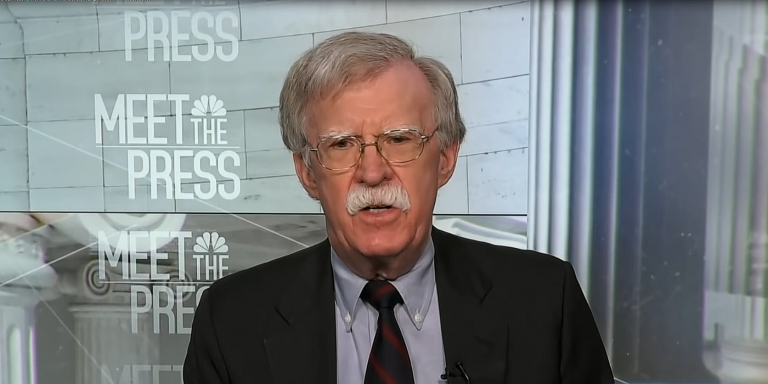
(Headline USAFormer Trump administration national security adviser John Bolton pleaded guilty on Friday to illegally retaining classified information, sealing a deal with federal prosecutors that could allow him to avoid a prison term.

Bolton is scheduled to be sentenced on Oct. 28 by U.S. District Judge Theodore Chuang in Greenbelt, Maryland.

Bolton, 77, pleaded guilty to a single count of illegally retaining national defense information, which carries a maximum sentence of 10 years. His plea agreement with the Justice Department may enable him to avoid time behind bars, but the judge ultimately will decide his punishment.

The plea agreement recommends capping any prison sentence at five years, but the judge isn’t bound by that part of the deal. Bolton, who also agreed to pay a fine of $2.25 million, can withdraw his guilty plea if the judge imposes a longer prison sentence or a larger fine.

Bolton must pay half of the fine within five days of his plea and the balance within 90 days. He agreed to forfeit his retirement pay for his federal service. The plea deal also requires him to submit to a debriefing with federal intelligence officials and perform up to 100 hours of community service.

After a prosecutor read aloud a summary of his offenses, Bolton agreed that it was accurate.

“I’m sorry for it,” he told the judge.

Defense attorney Abbe Lowell said Bolton “did what real leaders do” by pleading guilty.

“He took responsibility for a mistake he made, thereby saving the government resources to pursue a case that could expose additional sensitive information,” Lowell said in a statement after the hearing.

Bolton was charged last October with 18 counts of either retaining or disseminating classified information, including diary-like notes that he shared with relatives as he wrote a memoir about his career in government.

FBI agents searched Bolton’s Maryland home and Washington, D.C., office last August, but the investigation began before Trump returned to the White House in January 2025.

Bolton served for more than a year in Trump’s first administration before getting pushed out in 2019. He later published a book called “The Room Where it Happened” that presented an unflattering portrait of Trump’s leadership.

The Trump administration fought unsuccessfully to block the book’s release, claiming it contained classified information that could jeopardize national security. Trump derided Bolton as a “crazy” warmonger who would have led the country into “World War Six.”

Bolton’s indictment focused on notes that he shared with his wife and daughter rather than the contents of his book. After sending one document, Bolton wrote in a message to his relatives, “None of which we talk about!!!” In response, one of his relatives wrote, “Shhhhh,” prosecutors said.

Adapted from reporting by the Associated Press

Research Confirms Migration Fueled Housing Crisis

(José Niño, Headline USA) A Federal Reserve Bank of Dallas study concluded that the wave of illegal immigrants arriving during President Joe Biden’s tenure inflated housing prices and rental costs for Americans, Breitbart News reported.

Biden’s immigration policies ushered millions of migrants onto American soil at historic speed. When his administration ended, the nation’s foreign born population stood at nearly 52 million people, an unprecedented total.

Dallas Fed researchers studied illegal immigration’s influence on housing between early 2021 and early 2024. Their research established that adding millions of people to the population drove expenses upward.

“According to the U.S. Congressional Budget Office, net entry of this category of immigrants added roughly 7 million people to the U.S. population over 2021 to 2024 (1.75 million per year), nearly double that of legal immigration,” the report states.

The authors emphasized how dramatically recent flows departed from historical norms. “To put this growth in perspective, net unauthorized immigration—that is, immigration of individuals who entered the country without being formally admitted for purposes of immigration law— averaged only 0.1 million a year from 2000 to 2019 and was slightly negative from 2010 to 2019.”

Examining housing market consequences, researchers calculated specific effects from migrant worker arrivals. “First, we find that during the boom period an increase in unauthorized immigrant worker flows equal to 1% of a local area’s initial employment increased local house prices by 2.2% and increased local rents by 1.4%,” the study found. “A back-of-the-envelope calculation suggests that [unauthorized immigrant worker flows] can explain about 30% of the total growth in house prices and 20% of total growth in rents over the boom period for the average local market.”

Other federal agencies documented similar patterns. A Housing and Urban Development investigation released last year determined that mass migration especially burdened lower income Americans lacking government assistance.

“This immigration-driven increase in households has contributed to a significant increase in housing demand, thus driving up housing prices,” the HUD report noted. “In fact, in some markets, immigration has accounted for nearly all of the increase in housing demand in recent years.”

Academic work from abroad validated these conclusions. Researchers in Denmark released a study in September 2025 showing significant effects on local residents. “More specifically, we find that a one percentage point increase in the local immigration influx over a five-year horizon relative to the local population in the base year 1995 leads to an average increase of approximately 6 percent and 11 percent in private rental prices and house prices at the municipal level, respectively, during the same period.”

Steven Camarota from the Center for Immigration Studies informed Congress in 2024 that “a 5-percentage-point increase in the recent immigrant share of a metro area’s population is associated with a 12-percent increase in the average U.S.-born household’s rent, relative to their income.”

José Niño is the deputy editor of Headline USA. Follow him at x.com/JoseAlNino 

Trump Demands DOJ Investigate Oil Price Gouging

(José Niño, Headline USA) President Donald Trump instructed the Justice Department to launch an inquiry into petroleum corporations he accused of artificially propping up gasoline prices while crude oil costs tumble, ABC News reported.

The president vented his frustrations on Truth Social, alleging that energy companies exploit motorists at the pump.

“The big Oil Companies are not dropping their price at the pump commensurate with the sharply lower prices they are paying for Oil,” Trump said in a post on Truth Social. “Those prices are dropping like a rock! In other words, customers are being ‘gouged.'”

“I have instructed the DOJ to immediately start looking into this,” Trump continued. “Gasoline prices better start going down a lot faster than what I’m seeing!”

The Justice Department acknowledged the president’s order in comments provided to ABC News. “The price of fuel is not only a national security issue, it impacts the wallet of every American. We will always commit to ensuring affordability in this nation.”

Trump issued his directive as oil tankers and liquefied natural gas vessels began transiting the Strait of Hormuz once again.

Crude prices sustained their downward trajectory amid ongoing American and Iranian peace negotiations. Domestic oil changed hands at $70.13 per barrel, falling 4.18 percent, while international crude reached $73.74 with a 4.28 percent decline. These numbers approach pre-war benchmarks, when U.S. oil settled at $67 per barrel on the Friday before fighting erupted.

Actions by the Treasury Department authorizing greater Iranian oil exports through August 21 pushed prices lower, alongside reports of increased shipping activity through the Strait of Hormuz. The national average for regular unleaded stood at $3.90 per gallon, shedding nine cents compared to the previous week per GasBuddy.

Energy Secretary Chris Wright delivered an upbeat forecast during weekend media appearances. “I’m long out of the business of predicting oil or gasoline prices, but they will continue to head down. Flows of oil and natural gas through the straits have already returned to normal, and they will continue that way whatever happens with the negotiations with the Iranians,” Wright said on ABC News’ “This Week.”

Wright cited several dynamics working in consumers’ favor. “We’ve got growing American production, surging production in Venezuela. We’ve got cooperation with all the other energy producers of the world. So, I think Americans can expect continued declines in energy prices.”

Washington and Tehran executed a memorandum of understanding last week that seemingly resolved the months-long impasse choking the Strait of Hormuz. Roughly 20 percent of planetary oil supplies customarily flow through that Gulf passage before entering commercial circulation.

Energy expenses surged during May when American gasoline averaged $4.56 per gallon across the month based on GasBuddy statistics. Despite subsequent relief at the pump, prices remain elevated enough that Trump opted to publicly confront oil industry executives.

José Niño is the deputy editor of Headline USA. Follow him at x.com/JoseAlNino

Lawmakers Clash Over Prediction Market Restrictions

(José Niño, Headline USA) Republican members of the House Administration Committee advanced legislation Wednesday that would stop members of Congress and their family members from wagering on politically oriented prediction markets, Politico reported.

The GOP majority backed the proposal along strict party lines. The legislation would block representatives, their spouses, and dependent children from trading on prediction markets connected to electoral results or actions taken by the federal government.

This effort represents the newest chapter in congressional attempts to combat potential insider trading on prediction platforms. Such concerns exploded into public view following a string of perfectly timed bets surrounding the detention of former Venezuelan president Nicolás Maduro, manipulation involving Google’s search algorithms, and developments in the Iran conflict. Senators enacted an outright prohibition on prediction market participation for themselves and their staff earlier this year that took effect instantly, per a report by Politico.

Wednesday’s committee action revealed a rift between the parties over the appropriate scope of restrictions. Democrats voted against the bill, arguing it lacked sufficient teeth, while Republicans rallied behind it.

Rep. Joe Morelle, D-N.Y., serving as the committee’s senior Democrat, savaged the proposal as toothless. He argued that the legislation is “so filled with loopholes that it looks more like a sieve than a bill.” Morelle pressed colleagues to emulate the Senate by passing a sweeping resolution addressing prediction market use by members and staff alike.

“The Senate did it in a matter of minutes — no six-month grace period, no procedurally laborious process,” Morelle said. “They just went to the floor with a two-page resolution and banned it all unanimously. We should do the same.”

House Administration Chair Bryan Steil, R-Wis.,who crafted the legislation, countered his Democratic colleague’s criticisms. He raised questions about why a lawmaker’s relatives would face prohibition from sports betting via prediction markets while remaining free to gamble at traditional sportsbooks or casino establishments.

Steil described a hypothetical situation where a congressman’s college-aged child places a sports wager through a prediction market app. A blanket ban could ensnare such benign behavior, he suggested.

The chairman stressed that his proposal specifically addresses markets centered on governmental policy and electoral contests rather than athletic competitions.

“Lawmakers elect to serve the American people, not to enrich themselves by wagering on outcomes from the decisions they make,” he said. “We have a real opportunity to restore trust in Congress by taking necessary steps to eliminate even the appearance of impropriety.”

José Niño is the deputy editor of Headline USA. Follow him at x.com/JoseAlNino 

Secret Service Text Messages Were ‘Compromised,’ Inspector General Finds

(Ken Silva, Headline USA) A Homeland Security Inspector General’s investigation has revealed that some Secret Service text messages were “compromised” thanks to an unsecured third-party messaging app.

In a report issued earlier this week, the DHS-OIG said that the Secret Service deployed a third-party messaging app on agency-owned devices in March 2025.

“A limited number of Secret Service messages were compromised when the messaging solution improperly stored them on unsecured third-party servers,” the DHS-OIG report says.

The Secret Service told the DHS-OIG that the compromised messages contained employees’ information—but not “operationally sensitive data.” However, the DHS inspector general said he did not review the accuracy of the Secret Service’s claim.

The DHS-OIG also scolded the Secret Service for allowing—and even encouraging—its agents to use their personal devices. One official told the inspector general that using personal devices was necessary to communicate overseas with foreign stakeholders.

Additionally, agents don’t wipe their devices when returning from overseas trips, the report found.

“Until the Secret Service improves security controls for mobile devices used overseas, employees’ sensitive device information and communication with protectees face similar risks,” the inspector general warned. “These risks are even greater when employees rely on personal devices, which also lack Mobile Threat Defense and are not routinely wiped after travel.”

In response to the audit, the Secret Service promised to increase training and enforce protocols to make sure agents aren’t using their personal devices.

The DHS OIG study was launched after President Donald Trump was nearly assassinated at his July 13, 2024, campaign rally in Butler, Pennsylvania. The inspector general has also reviewed other elements of the agency, including how its snipers are trained. In that review, the DHS-OIG found that they’re overworked and not properly qualified.

The inspector general is reportedly being blocked from conducting some of this review.  DHS Inspector General Joseph Cuffari told Congress in March that he’s being blocked from investigating the agency’s intelligence-sharing ahead of the Butler rally.

Ken Silva is the editor of Headline USA. Follow him at x.com/jd_cashless.

Supreme Court Upholds Executive Authority in Immigration Cases

(The Center Square) Asylum seekers who arrive at the border are not entitled to entry and the Department of Homeland Security has broad authority over the temporary protected status program, the nation’s highest court ruled in two separate cases Thursday.

In Mullin V. Al Otro Lado, the U.S. Supreme Court reviewed cases that had been brought on behalf of asylum seekers who had been turned away at the border. The plaintiffs argued that under the Immigration and Nationality Act and other U.S. and international law, the asylum seekers were entitled to entry into the U.S. and application for admission through/under asylum.

“The Immigration and Nationality Act of 1952… governs the process by which an alien who ‘arrives in the United States’ is inspected by border officials, is deemed an applicant for admission, and may apply for asylum,” the court summary reads.

Conservative Justice Samuel Alito authored the 6-3 majority opinion, calling the matter before the court “straightforward,” with liberal Justices Ketanji Brown Jackson, Elena Kagan and Sonia Sotomayor dissenting.

“In ordinary speech, no one would say that a person ‘arrives in’ a place – for example, a house, a city, or a country – before the person enters that place,” Alito wrote. “The context in which the phrase ‘arrives in the United States’ is used in the immigration statutes at issue here supports an ordinary-meaning reading. So does the presumption against extraterritoriality. We therefore reverse.”

The ruling does not bar migrants from seeking asylum generally. It limits whether migrants who are still outside the United States can force U.S. border officials to process them before they are allowed to enter.

Alito determined that plaintiffs’ remaining arguments under other U.S. law and international law failed.

In a statement provided to The Center Square, Eric Wessan, solicitor general of Iowa, said, “Today’s decision is a decisive victory for border security and the rule of law. The Court correctly held that an alien standing in Mexico has not ‘arrived in the United States.’ That is common sense – someone hasn’t arrived in the United States if he is still in Mexico. Justice [Clarence] Thomas’s concurrence is especially welcome: it rightly underscores that Congress stripped lower courts of authority to grant class action relief to illegal immigrants. He also recognizes that compelling the President to admit aliens encroaches on his executive authority to exclude. A clear win for a secure, lawful border.”

Sotomayor read from her dissent after Alito announced the decision, a practice that observers noted is not common.

In Mullin v. Doe, in another 6-3 decision authored mostly by Alito, the court determined that the Department of Homeland Security has broad discretion over the temporary protected status program and that the law that created the program actually bars courts from reviewing related DHS determinations.

“The TPS statute plainly bars consideration of respondents’ non-constitutional claims,” the majority opinion reads.

Under former DHS Secretary Kristi Noem, the Trump administration ended temporary protected status for Haiti and Syria.

The program was created by Congress in 1990 to “provide short-term humanitarian relief for aliens who cannot safely return to their home countries,” the court summary reads.

However, if a country is experiencing continual political unrest, high levels of violent crime, religious persecution, deadly disease or devastating natural disasters, that can lead to a kind of perpetual “temporary” protected status, which the court notes.

The constitutional claim that was brought before the court concerned the 14th Amendment’s Equal Protection Clause, arguing that Noem had denied TPS to Haitians for racial reasons.

Alito said that claim was likely to fail.

“Ironically, one of respondents’ other arguments undermines the equal protection claim by offering a strong, race-neutral explanation for Haiti’s termination: namely, that the current administration, which has terminated every TPS designation that has come up for renewal, simply opposes the TPS program, at least as it has been implemented in the past,” the opinion reads.

In a statement provided to The Center Square, Hans von Spakovsky, a senior Legal Fellow at Advancing American Freedom’s Edwin Meese III Institute for the Rule of Law, and a former Counsel to the Assistant Attorney General for Civil Rights at the U.S. Department of Justice, said, “This was a simple case for the Supreme Court to decide since federal immigration law specifically bars judicial review of a decision by the executive branch to terminate Temporary Protected Status. The Court has properly slapped down lower court judges who ignored this judicial prohibition and unlawfully issued injunctions preventing the termination of TPS status for multiple groups of aliens from different countries.”

Republican Ohio Gov. Mike DeWine issued a statement opposing the court’s decision in Doe. Ohio’s Haitian immigrant community has come under scrutiny in recent years.

“As I have stated in the past, the policy to remove these individuals from this country is a mistake,” DeWine said. “As a result of today’s ruling, the over 10,000 Haitians who have been living in Ohio (mostly in the Springfield area) legally through TPS will now be here illegally and will be subject to immediate deportation. This also means that while these Haitians were working and contributing to our community and economy yesterday, today it is now illegal to employ them.”

“Changing the immigration status of these individuals is not in the best interest of the United States nor Ohio,” he concluded.

The Supreme Court has fewer than 10 cases left on its docket for this term, including a landmark case on birthright citizenship.

Newsom Hints at Support for Packing Supreme Court

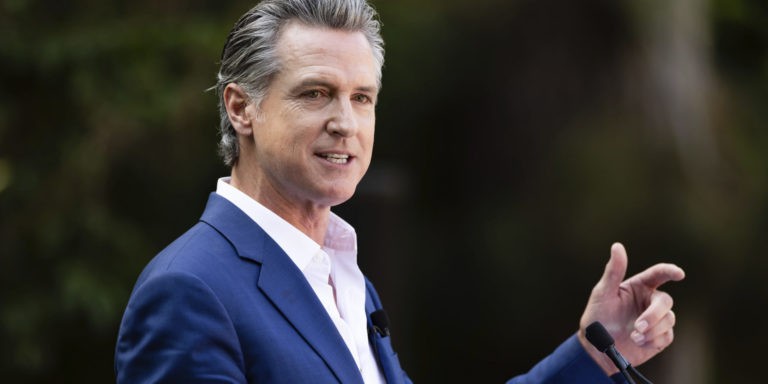
(Luis CornelioHeadline USA) California Gov. Gavin Newsom on Thursday gave his strongest indication yet that he could support expanding the Supreme Court if elected president in 2028.

Newsom, widely viewed as a viable contender for the Democratic presidential nomination, appeared to embrace the idea during an interview with left-wing influencer Brian Tyler Cohen.

“Look, you’re getting me closer to your point of view and you challenged me,” Newsom told Cohen, who has long advocated expanding the high court, during their interview on the This Is Gavin Newsom podcast.

The California governor added that he and Cohen had discussed the idea of increasing the number of justices to 13. This number, Newsom claimed, reflects the number of judges in lower courts.

“I’m done winning arguments. We got to win, and we got to consolidate power,” Newsom continued.

Newsom’s press office later reacted to a clip of the exchange with a single eye emoji.

Cohen appeared on Newsom’s show to promote his new book, The Day After: How to Wield Power in a Post-Trump World. It is Cohen’s second book, following Shameless.

Newsom has previously stopped short of endorsing court expansion, one of the Democratic Party’s most radical proposals following Republican victories in the 2016 and 2024 presidential elections.

In an earlier interview on Cohen’s podcast, Newsom said one of his concerns about packing the court was about Republicans regaining power and responding by adding even more justices.

During his first term, President Donald Trump appointed Justices Neil Gorsuch, Brett Kavanaugh and Amy Coney Barrett to the Supreme Court, giving conservatives a 6-3 majority.

The three other conservative justices are John Roberts, Clarence Thomas and Samuel Alito. The three liberal justices are Sonia Sotomayor, Elena Kagan and Ketanji Brown Jackson.

Some Democrats urged Sotomayor to retire during the Biden administration to avoid the possibility of a Trump filling her seat. Her health is a persistent concern among some Democrats.