Rapidly Growing Wildfire in Los Angeles County Prompts Evacuations in Remote High Desert

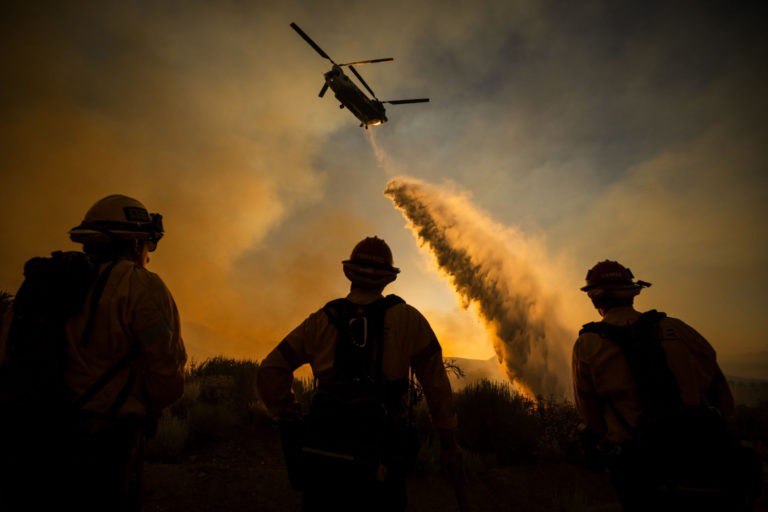
(Headline USA) A fast-spreading blaze prompted evacuation orders Friday afternoon in a sparsely populated area of Los Angeles County.

The brush fire sparked around 1 p.m. under dry and scorching hot conditions in a remote high desert region about 45 miles (72 kilometers) northeast of LA, according to the LA County Fire Department. Temperatures in the area soared to nearly 100 degrees Fahrenheit (38 degrees Celsius).

The fire reached about 2,700 acres (1,092 hectares) by evening, Angeles National Forest officials said on the social media platform X. It’s unclear how many buildings are threatened by the blaze.

The American Red Cross opened a shelter at a YMCA in Los Angeles County.

The nearest town to its east is Piñon Hills, a census-designated community of about 7,200 people in San Bernardino County. Parts of the town were under an evacuation warning by Friday evening.

Most of the U.S. is entering a heat wave this weekend caused by an unusually strong and long-lasting heat dome that will add to an already high wildfire risk this year in many drought-stricken regions. Temperatures are expected to be 15 to 25 degrees Fahrenheit (8 to 14 degrees Celsius) warmer than normal in some areas.

Adapted from reporting by the Associated Press

Trump Threatens Iran after Ayatollah Ali Khamenei’s Funeral Saw Open Calls for his Killing

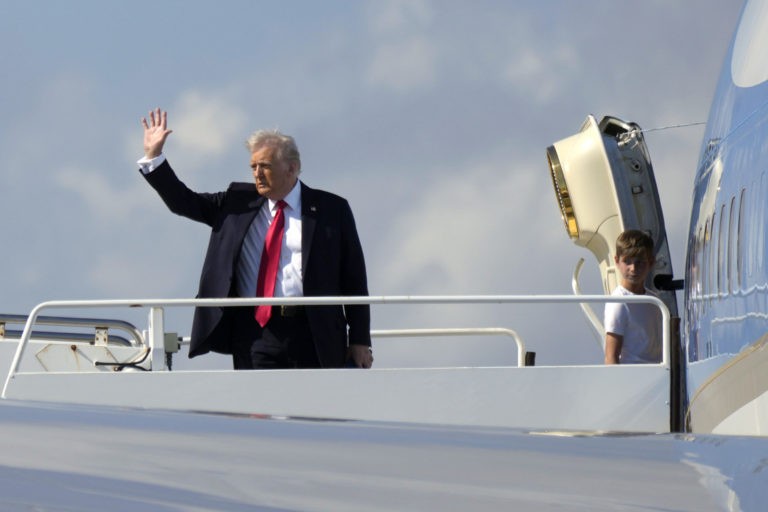
(Headline USA) U.S. President Donald Trump threatened Iran on Saturday after the funeral of Supreme Leader Ayatollah Ali Khamenei saw open calls for his killing, further underlining the tensions gripping the Middle East as an interim deal to end the war buckles under repeated crossfire in the region.

Trump made the comments on his Truth Social after senior U.S. officials demanded that Iran make a public statement saying the Strait of Hormuz is open and that ships crossing the vital corridor won’t be attacked any longer.

So far, Tehran has not done so, instead insisting that the route remain under its control and that it be allowed to charge ships moving through it, upending decades of precedent that consider the strait an international waterway.

There had been multiple days of U.S. airstrikes targeting Iran, as well as Iranian retaliatory fire targeting nations across the Middle East. Those strikes had been sparked by Iran attacking three ships in the strait earlier this week.

A thousand “missiles are Locked and Loaded and aimed at the Islamic Republic of Iran, with thousands of more to immediately follow, should the Iranian Government act on its threat,” Trump wrote on his website.

The U.S. president said his threat was in response to threats “to assassinate, or attempt to assassinate” him. During Khamenei’s funeral, mourners repeatedly held posters or banners calling for him to be killed along with Israeli Prime Minister Benjamin Netanyahu.

The Iran war’s opening moments on Feb. 28 saw an airstrike that killed Khamenei, 86. Iran only buried Khamenei this week following a dayslong funeral ceremony that saw his body taken to cities in both Iran and Iraq.

Trump added in his post that the U.S. military would “completely decimate and destroy all areas of Iran — PRAISE BE TO ALLAH!”

Trump, repeatedly during the war and its uneasy ceasefire, has invoked the name of God in Arabic, as well as threatened to destroy Iran’s very civilization. The Council on American-Islamic Relations, a nationwide advocacy group, has in the past criticized Trump’s “deranged mocking of Islam.”

The U.S. officials, who spoke on condition of anonymity to describe to reporters the state of play with Iran, said the resumption of strikes this week came after what they described as a rogue faction of Iranian hard-liners trying to sabotage the ceasefire between Tehran and Washington.

However, Iran has insisted its theocracy is unified after the war under the country’s new supreme leader, Ayatollah Mojtaba Khamenei.

The U.S. officials said Friday that Trump is giving U.S. negotiators limited time to reach a deal with Iran, but, in a sign of the challenges ahead, they underscored that the president had a wide range of options if talks fall apart.

Moments before the U.S. officials spoke, however, Tehran’s diplomat at the United Nations told reporters that any activity in the Strait of Hormuz, including its opening or demining operations, “rests exclusively with Iran.”

Qatari mediators separately traveled to Iran to meet with officials on Friday, Iranian Foreign Ministry spokesperson Esmail Baghaei said.

Iran has said the strait must now be under its sole control and that vessels should begin paying fees to Tehran — even though the world has for decades considered it an international waterway. About a fifth of all traded oil and natural gas passed through the strait before the war began.

Iran’s grip on the strait during the conflict led to a global energy crisis, though oil prices have sharply dropped since wartime highs of $120 a barrel.

After the U.S. wrapped up its latest strikes on Thursday, more attacks reportedly hit Iran, leaving questions about who else may be targeting the Islamic Republic. Israel didn’t claim them, meaning the Gulf Arab states may have launched them, likely as a means to deter Iran from attacking them again. Iran on Thursday retaliated for U.S. strikes by targeting Bahrain, Jordan, Kuwait and Qatar.

The strikes in Iran over two days killed at least 17 people and wounded 115 others, Iran’s Health Ministry spokesperson Hossein Kermanpour said.

Iranian Foreign Minister Abbas Araghchi traveled to Oman on Saturday to meet with his counterpart. Turkish Foreign Minister Hakan Fidan told his country’s state broadcaster TRT that he believed “a solution can be reached” this weekend between Iran and Oman, which lie on opposite sides of the narrow waterway.

However, Araghchi on Saturday accused the U.S. of violating the interim deal by ending waivers allowing Iran to sell crude oil on the open market in U.S. dollars. Washington did that in response to the attacks on ships in the strait.

“Reality check: There can only be mutual compliance,” Araghchi wrote on X.

The U.S. continues to urge mariners to travel on a southern route through Oman’s territorial waters to avoid Iranian waters and the commands of its paramilitary Revolutionary Guard. That has angered Tehran and sparked the attacks in the strait.

The U.S. officials also told journalists that any deal on Iran’s nuclear program would require Tehran to turn over its stockpile of highly enriched uranium. That’s something Iran has repeatedly refused.

If the U.S. does not reach a deal with Iran to turn over its nuclear material, it has military options to ensure that it remains buried underground forever, the officials said. They did not detail those options.

The uranium, enriched to near weapons-grade levels, is believed to be at nuclear sites the U.S. bombed in 2025. Iran long has insisted its nuclear program is peaceful, despite the International Atomic Energy Agency saying the Islamic Republic is the only country in the world to enrich uranium so highly without a weapons program.

The officials also insisted that they would never reach a nuclear deal with Iran if it did not first stop its attacks on ships in the Strait of Hormuz.

Adapted from reporting by the Associated Press

Fifth Circuit Upholds Texas Instate Tuition Ban for Illegal Foreign National Students

(Bethany Blankley, The Center Square) Nearly one year after a lower court ruled that Texas universities providing in-state tuition to illegal foreign nationals was illegal, the Fifth Circuit Court of Appeals upheld the decision.

On Thursday, a panel of three judges ruled 2-1 affirming the lower court’s decision and dismissed all other claims.

At issue is a 2001 law enacted under former Republican Gov. Rick Perry, which allowed students who were in the country illegally to receive in-state tuition rates at public colleges and universities in Texas. In 2022, at least 57,000 illegal foreign national students were enrolled in public higher education institutions receiving lower instate tuition rates, according to an analysis by the Presidents’ Alliance.

For more than a decade, hundreds of thousands of students – all in the country illegally – received lower tuition rates than American citizens applying to public higher education institutions in Texas.

Under Gov. Greg Abbott and Republican majority legislatures, the law was never repealed.

Last year, the Trump administration sued Texas arguing higher education institutions providing in-state tuition to noncitizens while not providing it to all citizens regardless if they lived in Texas or not was illegal.

“In direct and express conflict with federal law, Texas education law specifically allows an alien who is not lawfully present in the United States to qualify for in-state tuition based on residence within the state, while explicitly denying resident-based tuition rates to U.S. citizens that do not qualify as Texas residents,” the administration argued.

It also argued that some provisions of the Texas Education Code were “expressly preempted by federal immigration law,” 8 USC Section 1623, which states, “an alien who is not lawfully present in the United States shall not be eligible on the basis of residence within a State . . . for any postsecondary education benefit unless a citizen or national of the United States is eligible for such a benefit . . . without regard to whether the citizen or national is such a resident.”

Within hours of the lawsuit being filed, a federal judge agreed with the administration. U.S. District Judge Reed O’Connor from the Northern District of Texas Wichita Falls Division granted the federal government’s motion and declared sections of the state law in question illegal, The Center Square reported.

He also ruled that Texas Education Code sections 54.051 (m) and 54.052(a), “as applied to aliens who are not lawfully present in the United States, violate the Supremacy Clause and are unconstitutional and invalid.”

He also permanently enjoined the state, including state colleges and universities, from enforcing state law “as applied to aliens who are not lawfully present in the United States.”

Texas then settled with the administration and entered into a consent judgment, which O’Connor approved.

Last October, the Texas Higher Education Coordinating Board adopted new rules to comply with the court ruling, which applies to public, private and independent higher education institutions in Texas. It states that eligibility for in-state tuition only applies to students who are “lawfully present in the United States, in addition to meeting the other requirements,” The Center Square reported. The ban applies to Deferred Action for Childhood Arrivals (DACA) students.

Two advocacy groups, a community college, and a student sought to intervene, attempting to nullify the consent judgment. The district court denied their intervention, arguing the state law was preempted by federal law. They then appealed to the Fifth Circuit and lost.

“The district court correctly denied intervention after concluding that they could not plausibly defend the preemption claim,” the Fifth Circuit ruled. “Section 1623(a) preempts what we call the Challenged Provisions1 vis-à-vis illegal aliens, barring states from conferring postsecondary education benefits on any illegal alien based on residence unless the same benefit is available to all U.S. citizens and nationals irrespective of residency. We AFFIRM the denial of the motions to intervene and dismiss the remaining claims for want of appellate jurisdiction.”

Judge Jerry Smith, writing for the majority, also clarified that “all of appellants’ preemption contentions are meritless” and dismissed “the remaining claims for want of appellate jurisdiction.” He also wrote that “appellants are nonparties and cannot appeal the consent judgment.”

In response to the ruling, Abbott said, “Texas and the Trump DOJ just secured another major victory for the rule of law. The Fifth Circuit upheld the END of in-state tuition for illegal immigrants in Texas.”

The 2001 Texas law is still on the books and the state legislature could still repeal it.

8 Indicted in Planned Attack on White House UFC Event

(Morgan Sweeney, The Center Square) Eight men have now been indicted by a federal grand jury for charges related to an alleged plot targeting the UFC cage-fighting event at the White House in June. 

Though the defendants are from different states, all eight were indicted together Thursday in Columbus, Ohio, on murder and terrorism conspiracy charges.

The men allegedly planned an attack on the White House event commemorating America’s 250th birthday with the intent to kill President Donald Trump, Vice President JD Vance, Israeli Prime Minister Benjamin Netanyahu, billionaire Elon Musk and “other high value targets.”

The indictment alleges the defendants acquired firearms, munitions, explosives, drones and tactical gear and engaged in marksmanship and combat training to prepare for the attack. The defendants also allegedly classified participants into tiers according to who was willing to put themselves “in harms [sic] way, break the law, and potentially go into hiding.”

The first person to be charged in connection to the alleged plot was Tycen Proper, 19, of Danville, Ohio. Others from Missouri, Nebraska, California and Washington were subsequently charged. This week, the eighth defendant, Chandler Scaggs, 21, of Chapmanville, West Virginia, was taken into custody. Scaggs was allegedly assigned to be one of the snipers in the planned attack, according to an affidavit. 

If the defendants are found guilty, they could be sentenced to up to 15 years of prison for conspiring to provide material support to terrorists and life in prison for conspiring to commit murder. 

“Conspiring to provide material support to terrorists is punishable by up to 15 years of imprisonment. Conspiring to commit murder carries a potential penalty of up to life in prison,” according to a press release from the Justice Department.

A trial date has not yet been set.

Federal Deficit Reaches ‘Astounding’ Levels

(Thérèse Boudreaux, The Center Square) Only nine months into fiscal year 2026, the U.S. government has already borrowed $1.4 trillion, surpassing the entire federal deficit of the previous fiscal year.

The federal government collected $4.2 trillion over the past nine months and spent or lost a total of $5.5 trillion, according to a new Congressional Budget Office report.

During the month of June alone, the nation added $126 billion to the over $39 trillion national debt.

“We will likely borrow $2 trillion or more this fiscal year – an astounding figure given that the economy keeps growing and unemployment is low,” Maya MacGuineas, president of the Committee for a Responsible Federal Budget, stated in response to the report.

“This is likely the tip of the iceberg; borrowing will soar if policymakers fail to get our entitlements under control, enact further unpaid-for tax cuts or spending increases, and otherwise ignore the need to cut spending and increase revenues,” she added.

Social Security and Medicare are within seven years of trust fund exhaustion, and action needs to be taken to prevent across-the-board cuts to both programs.”

Most of the deficit is attributable to increased spending on entitlement programs like Social Security, Medicare, and Medicaid, paired with a significant decrease in corporate tax revenue due to changes made in Republicans’ “One Big Beautiful Bill.”

The CBO report shows that spending on Social Security benefits rose by $62 billion, or 5%, since last year. Medicare spending increased by $58 billion, or 8%, while Medicaid spending increased $49 billion, or 10%.

Federal revenues from corporate income taxes also dropped by $86 billion, 24%, which CBO says is due to Republicans’ OBBBA expanding corporate deductions.

At the same time, despite the OBBBA’s across-the-board tax cuts, individual income and payroll taxes increased, rising by $169 billion, or 5%, since last year.

Budget watchdogs have warned Congress for years about the unsustainability of the nation’s spending, and reports have shown that tax hikes alone can’t fully offset current spending levels.

The U.S. government added $89,208 per second to the national debt over the past year, according to the most recent estimates by the U.S. Congress Joint Economic Committee.

The nation also recently hit a debt milestone, with the national debt topping 100% of GDP in March. That means the federal debt was larger than the entire economy – the highest in history except for the years immediately following World War II.

Additionally, interest payments on the national debt hit $1 trillion in 2025 and are only set to rise under current government spending. The CBO report shows that net interest spending on the public debt already rose by $98 billion, a 13% increase, since last year.

Yet despite repeated warning signs, congressional action on soaring federal deficits and the over $39 trillion national debt ultimately hasn’t progressed past vigorous handwaving from a small group of Republicans.

Although Republicans’ OBBBA last year reduced federal spending by roughly $1 trillion over the next decade via entitlement program reforms, the savings only offset about a third of the bill’s $3.4 trillion 10-year cost.

Congress then sidestepped the automatic spending cuts to Medicare and other programs that are triggered by unpaid-for federal borrowing by wiping the Pay-As-You-Go (PAYGO) scorecard last November.

Most recently in March, U.S. lawmakers again dodged fiscal accountability when the U.S. House tanked a balanced budget resolution. If passed, the resolution would have capped federal spending each year at the average annual revenue of the previous three years.

“None of this is normal,” MacGuineas noted. “Policymakers should instead be targeting a much more sustainable deficit at 3% of GDP, putting together a bipartisan commission to address our fiscal situation and entitlements, and perhaps most importantly, being honest with the public about the grave dangers we face by remaining on this unsustainable path.”

Report: $225M in K-12 Fraud Found Across Six Years

(Andrew Rice, The Center Square) More than $225 million in fraud was reported by state education departments and school districts from 2019 to 2026, according to a new report.

Open the Books, a federal spending watchdog, and the State Financial Officers Foundation, analyzed six years’ worth of reports from the U.S. Department of Education’s Office of the Inspector General. The report found multi-million dollar fraud schemes in school districts across the country and in American territories.

OJ Oleka, CEO of the SFOF, said the fraud schemes happened due to a lack of oversight in education departments and the ability of bad actors to take advantage of certain programs.

“These entities are engaged deliberately in trying to take money out of the hands and literally the mouths of kids,” Oleka told The Center Square. “It’s a pretty disgusting thing.”

The report found Indiana schools documented the largest fraud scheme over the last six years. Leadership at two virtual online charter schools in the state inflated their enrollment numbers and received an additional $44 million from the state than they should have. Leaders at the school directed the fraudulent fund to several companies, according to the Office of the Inspector General.

Rhyen Staley, a former educator and director of Research at Defending Education, said fraud schemes in K-12 schools erode public trust between teachers and staff.

“You start to become suspicious of good people on the inside unfairly,” Staley said. “It does create a lot of animosity toward teachers.”

In Boone County, West Virginia, a former maintenance director pleaded guilty to defrauding the school district of $3.4 million. He falsified documents requesting janitorial supplies in order to buy vehicles and make home improvements.

“It’s a problem because it erodes the trust in education systems that erode the trust in schools,” Oleka said.

The report also found Florida, Illinois, Puerto Rico and Texas had numerous cases of fraud over the last six years. Florida and Illinois both accounted for 11 cases of fraud totaling $24.7 million and $14.5 million, respectively.

Chicago Public Schools lost $1 million in Indian Education formula grants that were intended for Native American and Alaska Native ancestry students. An investigation found that grant funds went to students of Indian, Burmese Bangladeshi, Pakistani and Nepali descent instead.

Staley said programs associated with diversity, equity and inclusion are ripe for fraud. He said they do not have specific disbursement requirements to avoid succumbing to fraudulent schemes.

“When you start throwing around that much money, you’re going to lose it to fraud,” Staley said. “It’s just inevitable.”

Kimberly Yee, Arizona’s state treasurer, said grants related to DEI often lack teeth that prevent them from being defrauded. She said the programs are often nebulous and lack a specific enforcement mechanism.

“They should have had some sort of provision in place for the grant,” Yee told The Center Square. “If they don’t use the funds for the required purpose, they will have the money pulled.”

The report also found that Puerto Rico lost $24 million to a tutoring services company that fraudulently obtained funds. Four individuals charged the Puerto Rico Department of Education for services that were ultimately never provided, according to the OIG.

Yee said smaller schools are often hit the hardest by fraud schemes. She said unassuming actors take advantage of relationships in the system and cause greater individual loss to students.

“When you talk about a small district, each individual student is going to be hit the hardest,” Yee said. “We do have to take a look at giving those smaller school districts and schools.”

A fraud scheme at the Community Preparatory Academy in California took $3 million over the course of five years. This amounted to ⅓ of the school’s overall state and federal funds, or $9,090 per student.

Yee, who is running for school superintendent in Arizona, said the U.S. Department of Education’s planned shift to state enforcement will be an enormous change for fraud in schools. She said states with more discretion over fraud enforcement will lower costs to taxpayers.

“Fiscal responsibility should rest with the states,” Yee said. “Many of these types of issues really require better transparency and accountability and you don’t have that when you’re in this giant building in Washington, D.C.”

“The states can see what’s happening with their taxpayer dollars and ensure that that accountability and that fiscal management is there in their own individual states,” Yee added.

Trump: Ceasefire with Iran Over as Talks Continue

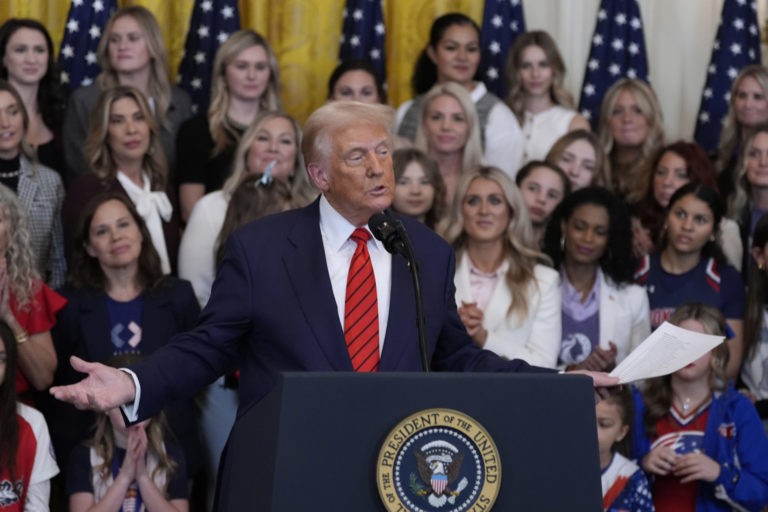
(Sarah Roderick-Fitch, The Center Square) The ceasefire with Iran is over as talks with the Islamic Republic continue, President Donald Trump said Friday.

Trump’s post on social media follows a tumultuous week of increased strikes in Iran after the Islamic Republic targeted cargo ships transiting the Strait of Hormuz, a vital passageway for oil stockpiles.

The Trump administration has requested $87.6 billion from Congress to cover the costs of the conflict, including more than $70 billion for military expenses, according to a White House supplemental appropriations request.

Earlier this week, during the NATO summit in Turkey, Trump voiced his frustration with Iranian leaders, indicating they can’t be trusted in negotiations, coming weeks after the U.S. and Iran signed a memorandum of understanding, entering technical talks to end the conflict.

The ceasefire, which went into effect over three months ago on April 8, has been tested multiple times as tensions flared, mainly over the Strait of Hormuz.

In his latest Truth Social post, the president appears skeptical of Iran’s desire to continue negotiations.

“The Islamic Republic of Iran has asked us to continue ‘talks.’ We have agreed to do so, but the United States has stated to them, in no uncertain terms, that the cease fire is over!” the president wrote.

Trump claimed earlier this week that dealing with the Islamic Republic is a “waste of time,” calling the leaders “dirty players” and “liars.”

The president has also highlighted Iran’s threats on his life, revealing he has been targeted by the Islamic Republic, underscoring it a handful of times this week. Multiple reports claim Israeli intelligence uncovered an alleged plot by Iran to target the president.

While the U.S. launched large-scale strikes against the Islamic Republic earlier in the week, strikes haven’t resumed.

Despite Iran’s threats on cargo ships in the Strait of Hormuz, U.S. officials maintain ships continue to transit through the vital waterway.

Jasmine Crockett Won’t Go Quietly, Calls Election Loss ‘Racist’

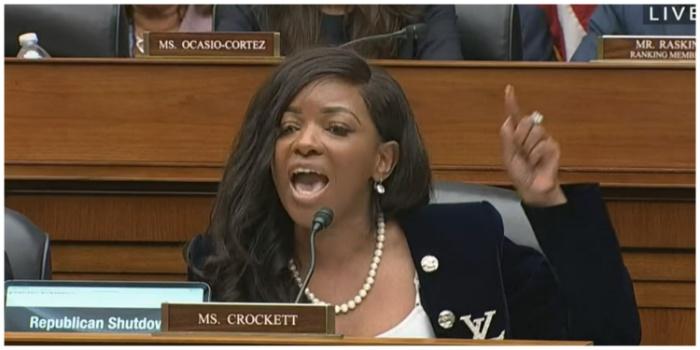
(Luis CornelioHeadline USA) Soon-to-be former Rep. Jasmine Crockett claimed racism played a role in her Texas Democratic Senate primary loss, calling the race “racist” while responding to her “haters.”

Crockett made the remarks while speaking at the Global Black Economic Forum on Tuesday, addressing her March 3 defeat to Texas state Rep. James Talarico.

“It was racist. It was a racist race,” Crockett said of her loss to Talarico, who is white. “It is what it is, right? But we live in America as y’all are celebrating 250. Okay? We know what this country is.”

Crockett did not specify where the alleged racism stemmed from.

In her same speech, Crockett pointed to what she described as historic turnout, claiming there was “no race that turned out more people to vote ever in the state of Texas except for Barack and Hillary.”

Crockett also pointed to the 2024 Democratic primary campaign of former Rep. Colin Allred, who received just over 500,000 votes.

“I got over double that, and I still lost,” she added.

Talarico secured 1,212,571 votes, or more than 52% of the vote, while Crockett received 1,068,387 votes, or 46.2%.

Crockett also pushed back against Democratic critics who called on her to campaign for Talarico.

“The fact is we have never seen anybody, quote unquote, be pressured to jump into a Senate race to help out their opponent that beat them ever,” she said. “This is the first time we have ever seen this in this country. And it just so happens that it ended up being a high-profile black woman.”

She described herself as “nobody’s foot tool.”

Instead, Crockett said that she would continue supporting other black candidates in the general election.

“I believe in doing everything that I can for the betterment specifically, not to the detriment of anybody else, but specifically for Black people. And I am committed to that. I will continue to do that work. And that’s that on that,” she added.

By entering the Senate race, Crockett gave up her seat in the U.S. House, which she had held since 2023.

WATCH: Mitch McConnell Carried Out on a Stretcher

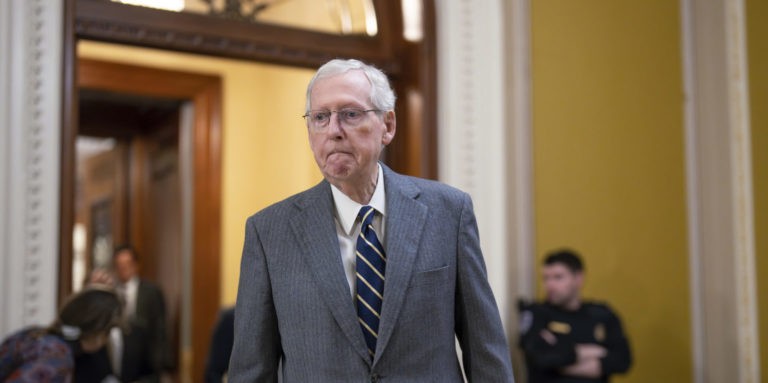
(José Niño, Headline USA) Video newly obtained by CNN captures paramedics rolling a person on a stretcher out of Sen. Mitch McConnell’s, R-Ky., Washington residence and lifting them into a waiting ambulance. The footage sharpens a question his staff has spent nearly a month dodging. What actually happened to him?

The neighbor who recorded the scene described stepping outside near 8:30 a.m. on June 14 to find the block completely shut down. Two ambulances sat at the curb alongside a fire truck, and Capitol Police officers held the street. Roughly half an hour elapsed before crews brought someone out on a stretcher.

Distance blurs the recording, and the person’s face never enters the frame. An orange blanket drapes the lower legs. The feet remain bare.

Public records allowed CNN to match the home visible in the video to McConnell’s address. His team has said he entered the hospital that same day.

“He’s in a stretcher, and he’s in some sort like orange foam looking blanket type thing,” the neighbor said. Their eye kept returning to the exposed feet, which in one fleeting moment appeared “not moving.”

Officers offered the neighbor almost nothing, describing the situation only as a “medical emergency.” When the neighbor asked directly whether McConnell was the patient, the officers replied that they would shut a street down for any resident. Confirmation arrived instead from someone farther up the block.

“One of my neighbors is like, ‘Oh yeah, it’s Mitch, I saw his face,'” the neighbor recounted. That witness also reported seeing no oxygen mask on the senator.

Separately, an independent journalist published EMS audio in which dispatchers reference an “unconscious” person and a “cardiac arrest” at the address, while a responder radios that there is “CPR in progress,” per a report by CNN. Authorities have never publicly confirmed that the call concerned McConnell.

What struck the neighbor most was the pace. Crews moved efficiently, yet nothing about them suggested alarm. “In a situation where perhaps time is of the essence, there seems to be a little bit more urgency, but there was no urgency here,” they told CNN. The ambulances rolled off the street with their sirens quiet.

Weeks have passed and McConnell’s office still refuses to identify what sent him to the hospital or characterize his condition. A spokesperson declined to comment for the story. Per CNN, on the morning itself, his team volunteered only that the senator had been “admitted to the hospital this morning” and was “receiving excellent care.”

His allies keep filling the vacuum. Senate Majority Leader John Thune says the two have talked. Scott Jennings told CNN’s Kasie Hunt that McConnell’s “voice sounded strong” and that he sounded “obviously well enough to call me on the phone.”

José Niño is the deputy editor of Headline USA. Follow him at x.com/JoseAlNino 

Lefty ‘Reporter’ Slammed After Appearing to Blame Platner Sexual Abuse Accuser

(Luis CornelioHeadline USA) A left-wing “reporter” came under fire Wednesday after attempting to contextualize one of the sexual abuse allegations against former Maine Senate candidate Graham Platner by publishing a text message from one of his accusers.

Ryan Grim, co-host of the Breaking Points podcast and a “reporter” for Drop Site News, claimed on X and on his show that Platner accuser Jenny Racicot had texted Platner on the night of the alleged assault that she “needed her glute massaged.”

Grim criticized Politico, which first broke Racicot’s allegations, for not including the text message in its story, calling the omission a “shocking breach of journalistic ethics.”

Platner was a left-wing darling who sought to unseat GOP Sen. Susan Collins in Maine. His candidacy got derailed following disturbing scandals.

Grim’s reporting appeared to be part of a last-minute effort to defend Platner before the candidate suspended his campaign just hours later.

Critics slammed Grim, accusing him of reviving outdated victim-blaming arguments used to discredit abuse allegations.

“Was she also wearing a short skirt,” wrote former Arizona Democratic Sen. Kyrsten Sinema.

Journalist Jerusalem Demsas echoed Sinema’s sarcasm, asking Grim what Racicot was “wearing,” whether she “had any strange fetishes” and “how many sexual partners she’s had.”

Columnist Jill Filipovic condemned the reporting, writing, “This is really disgusting and you should be ashamed of yourselves.”

Washington Free Beacon’s Jon Levine added: “Shorter @ryangrim — ‘it’s not rape if you previously mentioned wanting a massage.’”

Amid the backlash, Drop Site News deleted an X post repeating Grim’s reporting after critics said the reporting attempted to downplay Racicot’s allegations.

“The language of our post left the impression that text messages by Platner’s accuser Jenny Racicot are relevant to whether she was raped or in any way justify the alleged assault she described,” the outlet wrote. “That was not the intention and is not the position of Drop Site or Ryan. We genuinely value the feedback and criticism we have received from many readers and have deleted the post.”

Platner withdrew from the race after a string of controversies engulfed his campaign, including allegations of abusive behavior toward women, resurfaced Reddit posts downplaying sexual abuse and disparaging veterans, law enforcement officers, black Americans and rural Mainers.

More recently, the sexual abuse allegations from Racicot and former girlfriend Lyndsey Fifield were the final blow to his campaign.

Democrats are now seeking a replacement candidate to run against Collins, though their changes of flipping that Senate seat were thrown into uncertainty following Platner’s collapse.