Senate Rules Require McConnell to Seek Formal Leave of Absence (or Resign)

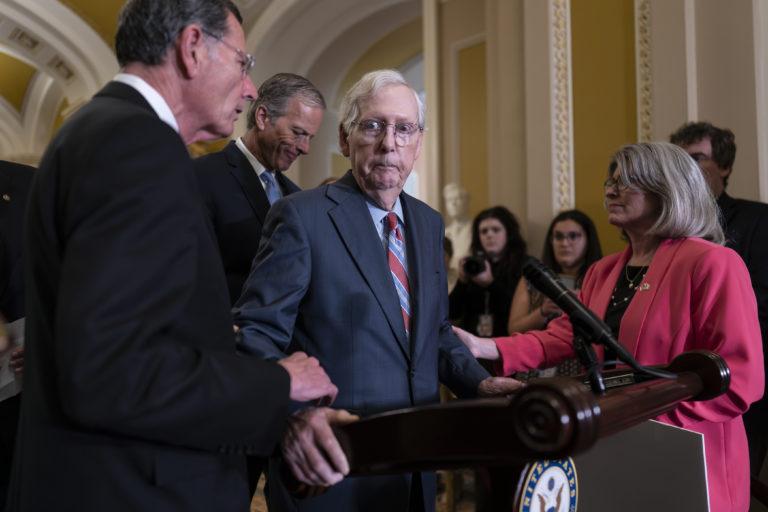
(Ben Sellers, Headline USA) After nearly a monthlong absence, the mysteries surrounding the health status of Sen. Mitch McConnell, R-Ky., are just as opaque as when he was found unresponsive on June 14.

Video released Friday by CNN showed McConnell, the longtime Senate majority leader and frequent Trump obstructionist, being carted to an ambulance on a stretcher with no oxygen mask, fueling speculation that he may have been dead on arrival.

The surprising departure of his wife, former Trump Transportation Sec. Elaine Chao, for a trip to China raised even more concerns.

Establishment Republicans — including a spokesperson for current Senate Majority Leader John Thune, R-S.D. — sought to tamp down on rumors by insisting that the two RINOs recently had a “lengthy and substantive conversation that covered a variety of topics,” but made no mention of McConnell’s expected return.

CNN analyst Scott Jennings, who was McConnell’s former campaign manager, also claimed to have been in contact with the 84-year-old senator during his convalescence.

“I spoke to my old friend Mitch McConnell this morning, the senior Senator from Kentucky. He’s still recovering in the hospital. We talked for just shy of 20 minutes,” Jennings wrote on Tuesday via X.

But without actual proof of life, few skeptics were assuaged.

Indeed, the matter was made worse after Jennings’s own network ran a post from a fake lawmaker whose spoof account appeared to be mocking the original post.

Meanwhile, McConnell critics, including Federalist CEO Sean Davis, have pointed out that there are specific protocols in the Senate for an extended leave of absence, and that Thune did not appear to be enforcing them.

“Rather than communicating through secret phone calls or anonymous sources, McConnell has an obligation to disclose to the Senate the reason(s) for his extended absence and to request permission of the Senate to grant him the privilege of continued absence,” Davis wrote in a Thursday X post after anonymous sources insisted McConnell wasn’t clinically braindead.

Many Trump supporters would prefer that McConnell, who is serving out his final term, simply make a graceful exit — if indeed he is still alive.

The lame-duck lawmaker, often seen being carted around by staffers in a wheelchair and appearing to have stroke-like symptoms when speaking publicly, has nonetheless proven to be a roadblock in efforts to pass the pro-election-integrity SAVE America Act, which would mandate voter ID and clean voter rolls.

Although Sen. Susan Collins, R-Maine, signaled a willingness to supply the 50th vote to give the GOP a simple majority needed to pass the measure through a reconciliation bill, Collins was unwilling to support all of the elements sought by the Trump administration, including restrictions on transgender students in girls’ sports.

She likewise has been a steadfast opponent to modifying the Senate rules to end the filibuster.

Unlike other states in which the governor is tasked with filling a vacancy, Kentucky’s Democrat Gov. Andy Beshear has no such power after its GOP legislature — anticipating a McConnell health crisis — stripped him of that power in 2024. Thus, the seat would remain empty until a special election was held.

Nonetheless, Beshear also urged McConnell and his handlers to be more forthcoming about his health status.

“Over the last several weeks, Kentuckians have grown increasingly concerned about the current state of your health and wellbeing, and ability to hold office in the United States Senate,” Beshear wrote in a letter to McConnell on Wednesday.

“As Governor, I request that you fully update Kentuckians regarding the current status of your health,” he continued. “As public officeholders, we have made a commitment to our constituents to do our best to represent them and to always be transparent. I believe this requires clear communication about one’s ability to serve.”

McConnell’s situation mirrors several other recent health crisis that brought attention to what some have called a geruntocracy of octogenarian leaders, many having clung to power for decades.

Former Sen. Dianne Feinstein, D-Calif., was frequently criticized for refusing to give up her seat despite a clear cognitive decline, and the same was true of President Joe Biden, whose insistence on running in 2024 contributed to his party’s defeat that year.

Republicans might hope, however, for a situation more like that of Sen. John Fetterman, D-Pa. Although elected in 2022 despite recovering from a severe stroke and suffering a cripping depression (that spurred rumors he was braindead), Fetterman not only made a full recovery but has since become the lone voice of reason within the Senate’s Democratic caucus.

Ben Sellers is a freelance writer and former editor of Headline USA. Follow him at x.com/realbensellers.


Trump and Iran’s Supreme Leader Trade Threats as Mediators Try to Save Their Crumbling Deal

(Headline USA) U.S. and Iranian leaders traded threats on Saturday as the interim deal to end the war buckled under crossfire in the Middle East and efforts continued to keep talks going.

President Donald Trump overnight made threats on social media of further missile attacks against Iran, after the funeral of Supreme Leader Ayatollah Ali Khamenei saw open calls for the U.S. leader’s killing. Senior U.S. officials demanded that Iran make a public statement saying the Strait of Hormuz is open and ships won’t be attacked.

Later, Iranian Supreme Leader Mojtaba Khamenei vowed that Iranians would continue to avenge his father’s death. Such revenge “is the will of our nation and must certainly be carried out,” he said in remarks carried by state television. He still has not been seen publicly since the war began on Feb. 28 with strikes that killed his father.

Tehran has insisted that the strait remain under its control and that it be allowed to charge ships moving through it, a stance it took after the war began.

The exchange of threats followed days of U.S. airstrikes targeting Iran, sparked by Iran’s attacks on three ships in the strait, and Iranian retaliatory fire targeting Arab nations in the region.

Trump has declared the ceasefire over but said the U.S. would continue negotiations. Iranian Foreign Minister Abbas Araghchi on Saturday traveled to Oman, located on the other side of the strait, for more talks, a day after Qatari mediators met with officials in Tehran.

A thousand “missiles are Locked and Loaded and aimed at the Islamic Republic of Iran, with thousands more to immediately follow, should the Iranian Government act on its threat,” Trump wrote on his website.

He said he was responding to threats “to assassinate, or attempt to assassinate” him. 

During Khamenei’s funeral, mourners held posters or banners calling for Trump to be killed along with Israeli Prime Minister Benjamin Netanyahu. Iran buried Khamenei, 86, this week.

Trump added that the U.S. military would “completely decimate and destroy all areas of Iran — PRAISE BE TO ALLAH!”

Trump has repeatedly invoked the name of God in Arabic, and threatened to destroy Iran’s very civilization. The Council on American-Islamic Relations, an advocacy group, has criticized Trump’s “deranged mocking of Islam.”

Iran’s foreign minister accused the U.S. of violating the interim deal by ending waivers allowing Iran to sell crude oil on the open market in U.S. dollars. Washington ended them in response to the attacks on ships in the strait.

“Reality check: There can only be mutual compliance,” Araghchi wrote on X.

He was scheduled to meet with his counterpart in Oman. Turkish Foreign Minister Hakan Fidan told his country’s state broadcaster, TRT, that he believed “a solution can be reached” this weekend between Iran and Oman.

The U.S. urges mariners to travel through the strait on a southern route, through Oman’s territorial waters. Iran has said the strait must be under its sole control and that vessels should begin paying fees to Tehran. The world for decades has considered it an international waterway.

About a fifth of all traded oil and natural gas passed through it before the war began. Iran’s grip on the strait during the war led to a global energy crisis, though oil prices have sharply dropped since wartime highs of $120 a barrel.

Tehran’s diplomat at the United Nations said on Friday that any activity in the strait, including its opening or demining operations, “rests exclusively with Iran.”

U.S. officials, speaking on condition of anonymity about the current situation with Iran, said the resumption of strikes this week came after what they described as a rogue faction of Iranian hard-liners tried to sabotage the ceasefire.

However, Iran has insisted its theocracy is unified under the new supreme leader.

After the U.S. wrapped up its latest strikes on Thursday, more attacks reportedly hit Iran, raising questions about who else may be targeting the Islamic Republic.

Israel didn’t claim them, meaning the Gulf Arab states may have launched them, likely as a means to deter Iran from attacking them again. Iran on Thursday retaliated for U.S. strikes by targeting Bahrain, Jordan, Kuwait and Qatar.

The strikes in Iran over two days killed at least 17 people and wounded 115 others, Iranian Health Ministry spokesperson Hossein Kermanpour said.

The U.S. officials told journalists the U.S. would never reach a nuclear deal with Iran if it does not first stop its attacks on ships in the strait.

They also said any deal on Iran’s nuclear program would require Tehran to turn over its stockpile of highly enriched uranium. That’s something Iran has repeatedly refused.

If the U.S. doesn’t reach a deal with Iran to turn over the material, it has military options to ensure that it remains buried underground forever, the officials said. They did not detail them.

The uranium, enriched to near weapons-grade levels, is believed to be at nuclear sites the U.S. bombed in 2025. Iran has long insisted its nuclear program is peaceful, though the International Atomic Energy Agency has said the Islamic Republic is the world’s only country to enrich uranium so highly without a weapons program.

Adapted from reporting by the Associated Press

USDA: California Owes $1.4 Billion Because of SNAP Errors

(Chris Woodward, The Center Square) California saw $1.4 billion in Supplemental Nutrition Assistance Program errors for Fiscal Year 2025.

That accounts for $3.8 million every single day.

That’s part of a trend of Southwestern states having to repay the federal government for SNAP benefits.

A payment error rate refers to instances of overpayment or underpayment to households. It is not inherently indicative of fraud, according to the U.S. Department of Agriculture, which oversees SNAP for the federal government. Rather, according to the department, it often stems from households providing incomplete information or state data processing errors.

Because of the high volume of error, California is subjecting itself to having to repay the federal government.

States that manage to stay below a federally mandated threshold of 6% for mistakes are safe. But consecutive years above the threshold force states into USDA-approved corrective action plans and financial liabilities. Under federal rules, liabilities can either be repaid in full, or states can reinvest half of the penalty into improving state operations to prevent future errors.

The information comes from the U.S. Department of Agriculture, which oversees SNAP for the federal government. States also have their own agencies involved in the oversight process. In California, which had 5 million-plus people on SNAP last year, that agency is the Department of Social Services.

“California remains committed to both payment accuracy and program access, ensuring that these critical food benefits are reaching the people they intend to support as quickly as possible,” said Theresa Mier, the DSS information officer, in an email to The Center Square.

In Colorado, where SNAP helps more than 600,000 beneficiaries under the supervision of the Colorado Department of Human Services, misallocated funds climbed to more than $143 million for the year. That averages out to $393,000 per day, landing the state an error rate of 10.09%.

The CDHS did not respond to The Center Square’s request for comments.

Nevada managed a lower, yet still problematic error rate of 6.22%. Erroneous payments topped $63 million annually, costing taxpayers about $173,000 every single day.

After being contacted by The Center Square, Nevada’s Division of Social Services , which oversees the program, acknowledged the USDA data is accurate for Nevada.

“The Nevada Division of Social Services will continue to comply with all applicable federal program requirements,” said DSS Public Information Officer Kristle Muessle in an email to The Center Square.

If Nevada is required to pay a portion of SNAP benefits under federal cost-sharing requirements, it could have an impact on the program, Muessle said. She added that DSS will at that time “evaluate all available options to determine the most appropriate course of action.”

California, Colorado and Arizona are part of a national trend as they deal with paying heavy sums back to the federal government. In Arizona, SNAP errors reportedly could cost taxpayers $200 million, as The Center Square reported earlier this week.

The national payment error rate for Fiscal Year 2025 was 10.62%. Federal law, again, dictates a 6% error threshold. Approximately 41 states plus Washington, D.C., exceeded the limit.

Combined, these errors represent $10.17 billion in government waste for fiscal year 2025.

“These payment error rates are further proof that state accountability is severely lacking in SNAP,” said Agriculture Secretary Brooke L. Rollins in the press release. “USDA has taken historic action to help interested states curb SNAP waste, and I hope other states, regardless of political leadership, prioritize needy families and the American taxpayer over politics.”

States that managed to stay below the 6% threshold are safe from financial penalties.

Those states are Nebraska (5.90%), Wisconsin (5.72%), Utah (5.54%), Vermont (5.38%), Iowa (5.34%), Kentucky (4.70%), Wyoming (3.96%), Idaho (3.85%) and South Dakota (2.47%).

Gavin Newsom Snapped When Asked About Missing Tax Returns

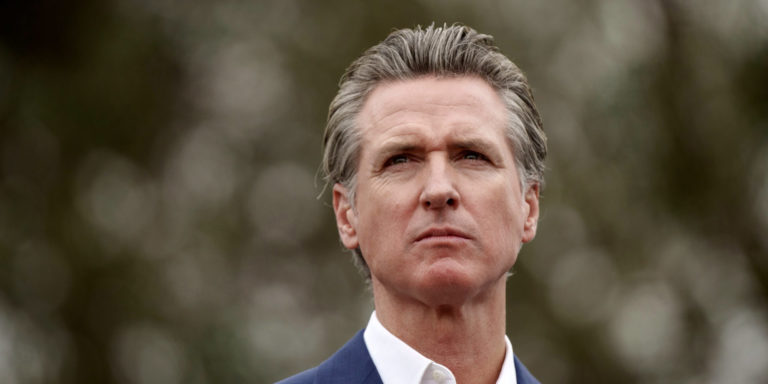
(Luis CornelioHeadline USA) California Gov. Gavin Newsom had a contentious reaction Thursday when pressed about his failure to release his tax returns for several years, even as he criticized President Donald Trump’s finances.

Newsom’s outburst occurred during a press conference where he signed an education bill. Near the end of the event, a reporter asked Newsom about his tax returns, which he has not released since disclosing his 2020 filing in 2022.

“I’ve given you 20 years of my taxes,” Newsom claimed. “I know you love taxes. Donald Trump. When’s he releasing his?”

The reporter seemed to push back against Newsom’s deflection to Trump, questioning him on his repeated claim that he is different from the Republican president.

Newsom replied, “I am because that’s why I’ve released all my taxes for decades. And you will have all those new tax returns because I have no reason why you haven’t gotten them already.”

The California governor has released some of his tax returns throughout his political career, including during his 2018 gubernatorial campaign and again during his 2022 reelection bid, according to CalMatters.

Newsom stopped releasing his tax returns after 2022 despite previously pledging to do so annually. He also signed a law requiring gubernatorial candidates to release their five most recent income tax returns to appear on the ballot. The law was later struck down.

Newsom’s remarks come as federal officials investigate at least two matters connected to the governor and his inner circle.

The DOJ is reportedly scrutinizing the finances and tax filings of his wife, Jennifer Siebel Newsom.

Another investigation involves his former chief of staff, Dana Williamson, who pleaded guilty to a series of fraud-related charges.

The Wall Street Journal reported that the investigations began after federal officials in California received whistleblower allegations.

The Williamson investigation began during the Biden administration, while the Siebel Newsom probe began in early 2025, shortly after President Donald Trump took office.

Newsom’s critics pointed to the Biden-tied timeline to counter claims that the probes are politically motivated.

As reported by the Journal, FBI and IRS agents have approached more than a dozen people within Newsom’s circle to ask about a “wide range of topics that dated back five or six years, including the governor’s family and Siebel Newsom’s business interests.”

Mitt Romney Gives an Answer to a 2028 Question Few Were Asking

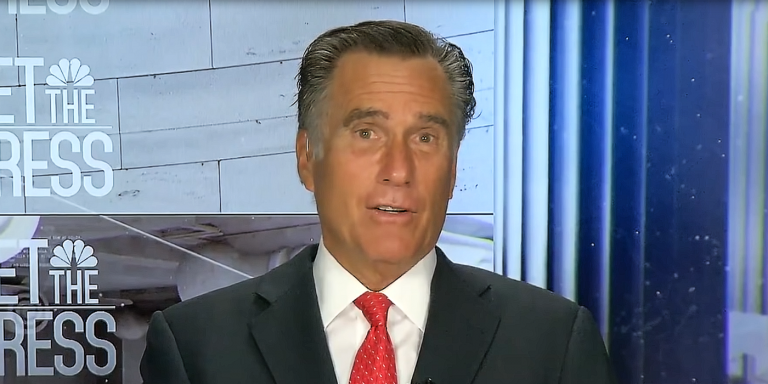
(Luis CornelioHeadline USA) Mitt Romney is perhaps the last name mentioned among potential 2028 presidential candidates. Even so, the former Utah senator recently responded to a question about a potential third presidential campaign.

Romney, a former Utah senator and Massachusetts governor, quipped during a July 8 interview on the Deseret Voices podcast that he “would love” to run again but suggested that his age was a deterrent.

“I wanted to announce that I am running one more time,” Romney joked when asked whether he was running in 2028. He added: “And the reality is sure, I would love to do it again. And this time I might get it right, you know, third time’s a charm. But no, I’m not.”

The 79-year-old politician unsuccessfully ran for president twice, first in 2008 and then in 2012. He lost the Republican primary to late Sen. John McCain in 2008 and the general election to then-President Barack Obama in 2012.

On the podcast, Romney said that he did not think “people who are 80 and above really should not be running the world or running the country.”

Romney also referred to The Body: A Guide for Occupants, in which author Bill Bryson wrote that the human brain shrinks by 20% at age 80.

The Republican served as a U.S. senator for Utah from 2019 to 2025. He declined to seek a second term to make way for a “new generation of leaders.”

“They’re the ones that need to make the decisions that will shape the world they will be living in,” Romney said in 2023, referring to younger politicians.

In his retirement announcement, Romney omitted that his reelection bid would have likely faced an uphill battle after he voted to convict President Donald Trump in his second impeachment in 2021.

Trump welcomed Romney’s retirement from public office, saying in 2024 that the country “will be a better place.”

More than 200 People at a Summer Camp Helicoptered to Safe as Missouri Faces Flooding

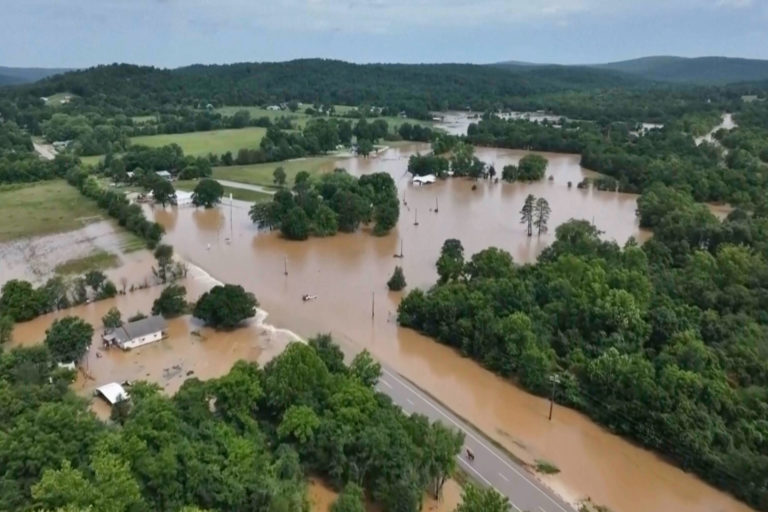
(Headline USA) One person remains missing in Missouri after heavy rainfall battered parts of Missouri on Friday, forcing numerous emergency rescues and evacuations, including at a summer camp with more than 200 children.

Several other states also face the potential for severe thunderstorms and flash flooding warning on Saturday as the slow moving storms move southward.

The National Weather Service said the severe weather impacts a wide region stretching from the Ozark mountains in southern Missouri eastward into much of the Ohio and Tennessee river valleys.

The service said the storms could bringing damaging winds, heavy rainfall and scattered flash flooding to the multistate region, with some places seeing impacts into Sunday.

Missouri’s Emergency Management Agency warned that while the storms are moving south and out of the state, further thunderstorms could still bring additional flash flooding, especially in areas that have already received 6 and 12 inches (15 and 30 centimeters) of rain.

Friday’s drenching rains washed away roads around Camp Taum Sauk, trapping children and staff at the site in the small southeastern community of Lesterville, according Sgt. Eddie Young, with the state’s highway patrol. The Army National Guard used Black Hawk helicopters to fly them to a nearby elementary school and reunite them with their families, he said.

The camp thanked emergency crews late Friday in a post on Instagram, saying, “We are beyond thankful for your help keeping our camp community safe.”

Meanwhile, the campers at the Bearcat Getaway campground near the Black River, about 85 miles (136 kilometers) south of St. Louis, had climbed onto a building to get away from the raging waters when it collapsed, Young said.

“Between the weight and the constant waters underneath it, it just gave away on them,” he said.

Three other people were trapped on trees on the Black River in Reynolds County and were rescued Friday evening, Young said.

There have been no reports of major injuries or fatalities, but a woman in Crawford County was missing after a house she was in was swept from its foundation by the flooding.

Young confirmed Saturday that the woman, Faith Gregory, remains the only person reported missing still unaccounted for in the county, which is about 71 miles (114 kilometers) southwest of St. Louis.

Family and friends, on social media, said they had resumed their search and urged others to look out for Gregory and her dogs, who they say were also swept away.

The weather service had issued flash flood warnings for the area as thunderstorms piled on one after another.

“It’s very, very popular place for recreation,” Matt Beitscher, a lead meteorologist with the NWS office in St. Louis, said of the affected counties. “So there are campgrounds there. There are float trip locations there. A lot of vulnerable populations that would be susceptible to flash flooding.”

Gov. Mike Kehoe declared a state of emergency and activated one of the state’s search and rescue teams to assist. He said late Friday that hundreds of people had been saved from floodwaters, trees, rooftops and stranded vehicles.

Several major roads were impassable due to flooding and damage, Kehoe said, warning that the Black River continues to rise and is expected to crest at more than 28 feet (8.5 meters) near Annapolis in southeastern Missouri, which would be a record for the waterway.

“As recovery efforts continue and additional rain is expected, I urge everyone in flood-prone and low-lying areas to stay weather-aware, have multiple ways of receiving alerts, and be ready to take protective action,” Kehoe said in a statement.

In Reynolds County, two rescue boats capsized in the flooding, but other emergency personnel safely recovered the responders, the sheriff’s office said.

Adapted from reporting by the Associated Press.

Ex-Epoch Times CFO Pleads Guilty in $67M Multinational Money Laundering Scheme

(Headline USA) The former chief financial officer of The Epoch Times, a conservative multinational media company, interrupted jury selection at his money laundering trial on Thursday to plead guilty to a conspiracy charge in a $67 million fraud scheme.

Weidong “Bill” Guan, 63, of Secaucus, New Jersey, entered the plea in Manhattan federal court, admitting his participation in what prosecutors described as a scheme to launder fraudulently obtained unemployment benefits and other funds through the New York-based media company’s bank accounts and related entities.

The conspiracy charge relating to illegal financial transactions carries a potential prison sentence of up to 10 years in prison, but the deal with prosecutors spares him from the possibility that he would be convicted of other charges at trial and face the chance of more than a decade in prison.

Judge Victor Marrero did not immediately set a sentencing date for Guan, who remains free on bail.

As he admitted his role, Guan said he knew there was “a high probability” that money passing through accounts he oversaw “were the proceeds of criminality.”

He said that despite the probability that the money was linked to fraud, he “chose to accept” explanations he was given and “did not look deeper to verify my concerns.”

“This was a tremendous lapse in judgment,” Guan told the judge. “It was wrong and I am very sorry for my actions.”

In response to a question posed by the judge, Guan confirmed that he knew what he was doing was wrong and illegal.

But when the judge asked him if he was pleading guilty, he responded: “I feel like I’m guilty.”

Marrero told him it was not a question of what he felt, but whether he was guilty.

“I’m guilty,” Guan responded.

According to court papers, members of the company’s “Make Money Online” team, which was managed by Guan, used cryptocurrency since 2020 to “knowingly purchase tens of millions of dollars in crime proceeds,” including funds from fraudulently obtained unemployment benefits that were loaded onto prepaid debit cards.

Stolen personal information was then used to open accounts as part of the money laundering scheme, prosecutors said. The money was further laundered through other bank accounts held by Epoch and Guan’s personal bank and cryptocurrency accounts, they said.

Prosecutors have said the charges are not related to the media company’s newsgathering activities.

A prosecutor told the judge that a trial would have included testimony from current and former Epoch Times employees along with cryptocurrency records and hundreds of emails and text messages, including some in which Guan misled banks about the nature of the income going through various accounts.

Federal prosecutors said the media company’s revenues jumped approximately 410% when the money laundering began, from approximately $15 million to $62 million. Guan, they said, lied to banks when they asked about the increase in transactions and said there was an increase in legitimate donations.

The Epoch Times, which has promised full cooperation with prosecutors, has become politically conservative over the years and has embraced President Donald Trump.

After Thursday’s plea, the Epoch Times said in a statement that it was never a party to the litigation and it “remains focused on producing award-winning and independent journalism” under the leadership of its chief executive, Samuel Zhou, and its chief financial officer, William Cheung.

Adapted from reporting by the Associated Press

Prosecutors Play Video in Court of Suspect in Charlie Kirk’s Shooting After he Turned Himself in

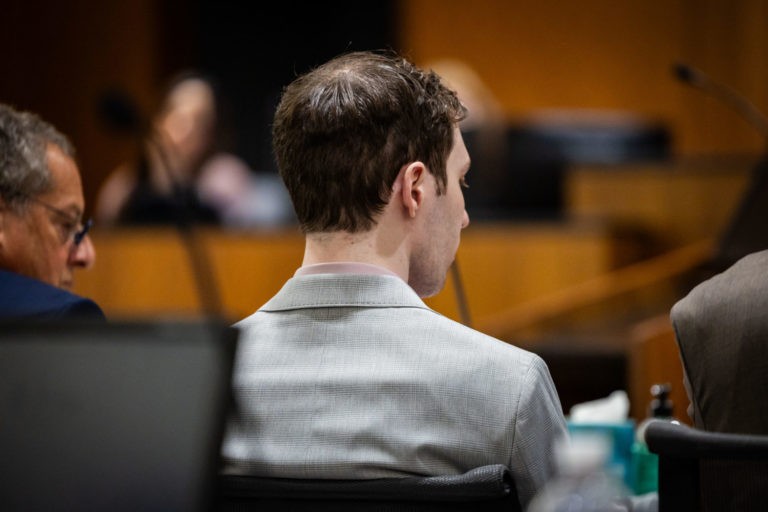
(Headline USA) Prosecutors in Utah played a video clip Wednesday that provided a rare glimpse of Tyler Robinson after the defendant in the killing of conservative activist Charlie Kirk first turned himself in.

The video showed Robinson standing in a room at the Washington County Sheriff’s Office wearing a T-shirt and baseball cap. There was no audio, but an investigator said he spoke to Robinson that night to get his name and date of birth.

The short clip played as state District Judge Tony Graf sought to keep a weeklong preliminary hearing on track and said he wanted to give both sides time to present their cases.

Instead, much of Wednesday was consumed by arguments over whether prosecutors can play a recorded law enforcement interview with Robinson’s roommate and romantic partner, Lance Twiggs, in court.

Graf indicated he would allow prosecutors to play redacted audio of those statements Thursday. The judge will decide after the hearing if prosecutors have enough evidence to bring Robinson to trial on an aggravated murder charge in Kirk’s Sept. 10 shooting on the campus of Utah Valley University.

Robinson has not yet entered a plea and his attorneys have not commented on his guilt or innocence. They have, however, sought to get the death penalty taken off the table, so far unsuccessfully.

Robinson’s lawyers said they were concerned about his right to a fair trial if Twiggs’ statements were played in open court and then broadcast by media outlets. They said prosecutors would attempt to portray Twiggs’ statements about what Robinson allegedly told him as a confession from Robinson, which could bias potential jurors.

Attorneys for Kirk’s family and the media had urged the judge to make Twiggs’ statements and other evidence public.

“To not be transparent, to not be open and let the world see what happened will create doubt and distrust in the judicial system,” Kirk family lawyer Jeffrey Neiman told Graf.

Prosecutors allege Robinson sent a text to Twiggs saying he targeted Kirk because he “had enough of his hatred.”

Twiggs was interviewed twice as part of the investigation, State Bureau of Investigation Agent Brian Davis testified Wednesday. He was given immunity for the statements, meaning what Twiggs said cannot be used against him in a potential criminal case, Davis said.

Robinson’s lawyers have questioned the reliability of DNA testing used to link the defendant to the suspected murder weapon.

A member of Tyler Robinson’s defense team interrogated a DNA analyst from the FBI about the techniques she used to connect Robinson to a towel wrapped around a rifle found at the college campus, where Kirk was shot while speaking to a large crowd.

Defense lawyer Michael Burt cast doubt on the analyst’s conclusions.

“She can’t match Mr. Robinson to the questioned samples,” Burt argued.

Forensics expert Lawrence Quarino said law enforcement agencies use “extremely reliable” tests to determine the probability that a person matches with DNA found at a crime scene.

DNA testing “is the gold standard in forensic science,” said Quarino, a professor and director of the forensic science program at Cedar Crest College in Pennsylvania.

FBI analyst Amanda Bakker said that after Twiggs provided a DNA sample for comparison, she was able to rerun her tests and attribute all of the DNA to two people.

Investigators found the towel and suspected murder weapon — a bolt-action rifle with one spent round — in a wooded area near where Kirk was shot.

DNA on the towel matched to two people, Jennifer Faumuina with the State Bureau of Investigation testified. One was Twiggs and the other was very likely Robinson, she said.

Prosecutors allege Robinson confessed in a note left for Twiggs that read: “I had the opportunity to take out Charlie Kirk and I’m going to take it.”

Investigators say Robinson went to a rooftop near where Kirk was speaking and shot him once through the neck as the activist was taking questions from a crowd of several thousand people. Kirk was declared dead after being taken to a hospital.

Prosecutors contend the shooting endangered others at Kirk’s campus event — an aggravating circumstance that could make the crime punishable by death under Utah law. Robinson also faces possible sentence enhancements based on the prosecution’s claim that he targeted Kirk because of his political views.

Robinson’s defense team has pushed back on the idea that he was hostile to Kirk’s politics. Defense attorney Richard Novak sought to block prosecutors from introducing a statement describing the traditional Christian values of Turning Point USA.

Adapted from reporting by the Associated Press

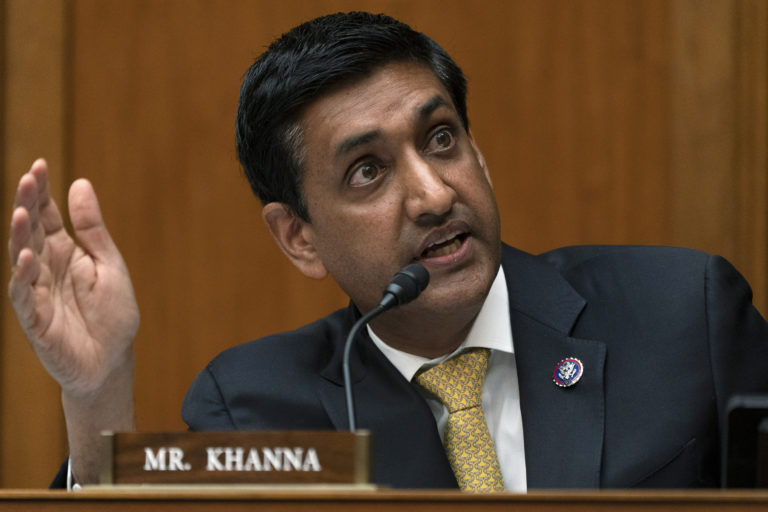
West Bank Settlers Held Rep. Ro Khanna at Gunpoint at Destroyed School

(Dave DeCamp, Antiwar.com) US Representative Ro Khanna (D–CA) reports that he was held at gunpoint for more than an hour earlier this week during his visit to the occupied West Bank when Israeli settlers confronted his entourage as he toured a destroyed Palestinian village.

“We were at a village that Israeli settlers had destroyed, they had destroyed the school, they had destroyed that village, and we were just looking at it,” Khanna said. “And these hoodlums come in with machine guns – M4, an American-made machine gun – and they detain us. They block off the road.”

The incident took place at the destroyed village of Khirbet Zanuta, a village near Hebron that was reported “ethnically cleansed” by settlers in 2023. Khanna reported that the settler group summoned the IDF and that the IDF sided with the settlers over the Americans.

Rep. Khanna’s aide, Cameron Kasky, said the group was held for more than an hour and called the US Embassy in Jerusalem for help. Eventually, police arrived at the scene and dispersed the settlers, ending the incident.

The IDF said their troops and police officers arrived on the scene and “dispersed the Israeli civilians” but doesn’t address Khanna’s report that the initial troops that arrived sided with the settlers over the matter.

Israeli officials said Khanna had not coordinated the visit with them, so that’s why they weren’t provided with a security escort, which would be normal for an official visit to the West Bank.

This article originally appeared at Antiwar.com.  

Responding To Trump, Kremlin Says Ukraine’s Long-Range Drone Attacks Will Likely Prolong War

(Dave DeCamp, Antiwar.com) The Kremlin on Thursday responded to President Donald Trump’s comments about Ukraine’s long-range drone attacks in Russia, which are supported by US intelligence.

At the NATO summit in Ankara, Trump acknowledged that the attacks are an “escalation” but one that could lead to an end to the conflict.

“This is a misconception. Rising tensions and further escalation cannot contribute to a peace process in any way,” said Kremlin spokesman Dmitry Peskov, according to Russia’s TASS news agency.

“The more strikes the Kiev regime carries out on our infrastructure facilities, the wider the security zones we will need to create. Further escalation will likely prolong the special military operation to some extent, although I cannot say by how much, and it will certainly force us to create a broader buffer security zone,” Peskov added.

The Kremlin spokesman also responded to Trump, suggesting he would be willing to impose a no-fly zone over Ukraine as part of a security guarantee for a future peace deal.

“No one had previously raised the issue of closing the airspace. In any case, this would imply operational activities by NATO member states’ armed forces over Ukrainian territory,” Peskov said. “This is precisely what the special military operation is intended to prevent.”

Trump also said at the summit that he would allow Ukraine to produce Patriot missiles, though actually establishing production is expected to take several years. Despite Trump’s backing for Ukraine’s long-range drone attacks and other escalations, Peskov said Russia still believes that the US genuinely wants to end the war while acknowledging “discrepancies” in the US position.

“Still, unlike the Europeans, the United States maintains a willingness to help launch a peace process. Even if it sometimes misunderstands certain issues and makes mistakes, we believe this willingness is genuine, and we welcome it,” he said.

This article originally appeared at Antiwar.com.