In the TikTok video, Mulvaney was seen on a book tour for Paper Doll: Notes from a Late Bloomer and had the overlay of “Happy international women’s day” on the video as the influencer posed for pictures with fans.
“Today was one of my favorite days ever ever ever,” Mulvaney wrote. “Thank you to all who came to my book event.”
Social media users were quick to blast Mulvaney because of the post.
“Dylan Mulvaney is a scam! He is not a woman. He does not want to be a woman,” one user wrote. “He is a scam artist. He is making money off of mocking women.”
Others called out the hypocrisy of Mulvaney’s video.
“Imagine that, a man telling an entire room full of women what it’s like to be a ‘girl,'” one user wrote. “You can’t make this stuff up.”
“I don’t know what’s more insane, Mulvaney pretending to be a woman, or the women buying into this nonsense!” another added.
The founder of XX-XY Athletics Jennifer Sey criticized the move to post on International Women’s Day.
“It’s hard to fathom how bad this book is,” Sey wrote. “And the nerve to launch it on International Women’s Day and market it as a book celebrating a womanhood. It’s a man FFS!!”
The former actor was thrown into controversy when Bud Light sent Mulvaney a few Bud Light cans which sported the influencer’s face. Backlash quickly followed and the company lost over $1 billion in sales as customers boycotted the product.
Israeli media has reported that Israel expressed strong objections to the talks once it learned about them. According to The Times of Israel, Israeli Minister of Strategic Affairs Ron Dermer “lashed out” at Boehler in a phone call.
“I spoke with Ron, and I’m sympathetic. He has someone that he doesn’t know well making direct contact with Hamas,” Boehler told CNN host Jake Tapper. “Maybe I would see them and say, look, they don’t have horns growing out of their head. They’re actually guys like us. They’re pretty nice guys.”
Boehler continued, “So he doesn’t know me. And there are big stakes. He lives in a country where, if it sets certain precedents, then it will hurt or help a lot of other people. So I understand the consternation and the concern. And I wasn’t upset. At the same time, we’re the United States. We’re not an agent of Israel. We have specific interests at play.”
Axios reporter Barak Ravid, a former IDF intelligence officer, was the first to report on the US-Hamas talks. His report said the US didn’t fully brief Israel on the talks and that Israel learned about them through “other channels.”
The talks reportedly focused on the release of Edan Alexander, a 21-year-old IDF soldier who grew up in New Jersey and was taken prisoner by Hamas during the October 7 attack. Edan is the only Israeli hostage with US citizenship who is believed to be alive. Hamas is holding the bodies of four other dual Israeli-American citizens.
“With respect to the Hamas situation, I do think there’s hope. I think that Israel has done a wonderful, masterful job eliminating Hamas, Hezbollah, a number of other enemies in the state that makes things possible that weren’t possible before,” Boehler said.
“And I think you could see something like a long-term truce, where we forgive prisoners, where Hamas lays down their arms, where they agree they’re not part of the political party going forward,” he added.
For its part, Hamas has said that it doesn’t need to govern post-war Gaza and that it would only disarm if a Palestinian state is established, an idea Israel strongly rejects.
(Kyle Anzalone, Libertarian Institute) The Israeli Shin Bet intelligence agency concluded that policies of Prime Minister Benjamin Netanyahu led to Hamas’s successful attack.
The report released last week explained that Netanyahu allowing Qatar to send funds to Hamas propped up the Palestinian group and paved the way for the October 7 attack. It explained. Netanyahu’s “policy of quiet that allowed Hamas’s massive build-up; the flow of Qatari funds and their delivery to Hamas’s military win, [and] the ongoing erosion of Israeli deterrence.”
The long-time Israeli Prime Minister has believed that propping up Hamas in Gaza was key to never having to negotiate a two-state solution by keeping the Palestinians in the Strip and West Bank.
Likud spokesman Jonatan Urich, one of Netanyahu’s media advisers, once bragged that one of Netanyahu’s key successes was disconnecting Gaza from the West Bank, both politically and conceptually. “[Netanyahu] basically smashed the vision of the Palestinian state in these two places… some of the achievement is related to the Qatari money reaching Hamas each month.”
Tel Aviv even pressured Doha to give the cash to Hamas. Netanyahu has previously dispatched high officials, such as Mossad chief Yosi Cohen, to Doha “[begging] the Qataris to keep funneling money into Hamas” as Avigdor Lieberman, the former defense minister put it.
“The effort to cope with a terrorist organisation on the basis of intelligence and defence, while refraining from offensive initiative [and] the cumulative weight of violations on the Temple Mount,” the report released Tuesday added.
What Tel Aviv refers to as the Temple Mount is the al-Aqsa Mosque and compound. Prior to the Hamas attack, then-National Security Minister Itmar Ben Gvir was encouraging Jewish prayer at the site and cracking down on Palestinian worship. Hamas dubbed its October 7 attack “Al-Aqsa Flood.”
On Thursday, reports surfaced that Netanyahu was attempting to push out the head of the Shin Bet, Ronen Bar. Sources said Netanyahu has been pushing Nar to resign, arguing he “failed completely in everything that pertains to how the Shin Bet coped with the Hamas organisation in general and specifically to the event of October 7″
On Monday, the Prime Minister’s office confirmed the reports saying, “the one who appoints the head of the Shin Bet is the government, and not the sitting Shin Bet chief.”
The Shin Bet report also admitted to failures on its part. “Had [Shin Bet] acted differently in the years preceding the (Hamas) attack and on the night of the attack… the massacre would have been prevented.” It continued, “This is not the standard that we expected from ourselves and the public from us.”
The conclusions drawn by Shin Bet followed inquiries by the Israeli military released recently that reviewed its failures on October 7. The IDF concluded on the morning of the attack, that the military was substantially underprepared for the Hamas assault.
This article originally appeared at The Libertarian Institute.
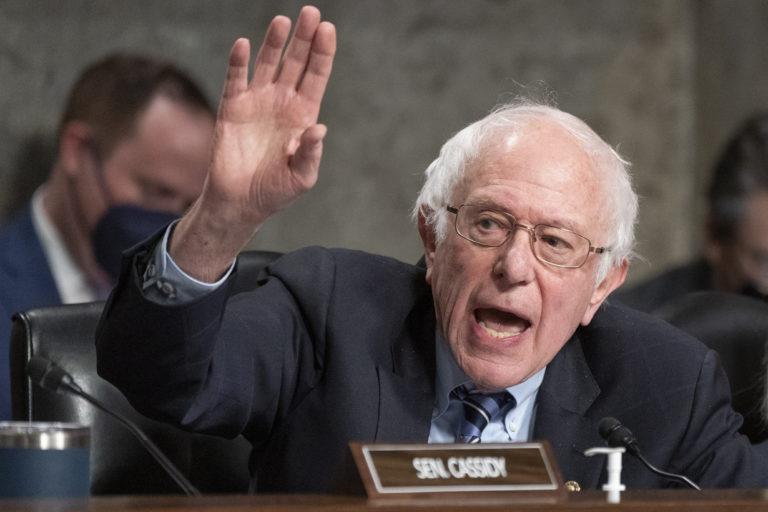
Laura Jane Grace, guitarist and singer of the punk band Against Me!, shared the performance to social media after the event with many slamming the vulgar lyrics.
“Does your god have a big fat d**k? Cause it feels like he’s f**king me,” Grace sang during the Vermont senator’s event.
The roughly two minute song titled “Your God (God’s D**k)” continued its profanity throughout the whole song.
“Can he c** a shotgun blast and shoot salvation up your a**? Does he chew c*** like bubblegum and give b******* like a vacuum?” the punk singer said in another line.
Conservative social media activist Robby Starbuck blasted the performance on X.
“This is who the Democrats are now. Pure evil,” Starbuck wrote.
In a later post, he noted that there were children in attendance during the rally.
“Other lyrics are somehow even more grotesque and anti-Christian. These people are insane,” he continued. “[Bernie Sanders] is a lunatic and anti-Christian. Yes, this was at Bernie’s rally.”
Starbuck shared a clip where Sanders thanked the singer for the performance.
“They have backed themselves into a corner where they have to pretend to like this stuff whether they do or not,” one user wrote in response. “They are absolutely scared of their far left fringe turning on them.”
Grace previously performed at another Sanders event in 2020, according to the New York Post.
The song “Hanging Tree” was equally as controversial as it makes reference to burning crucifixes, automatic wеapons and white supremacy.
“God is good and God is great. Now get the f**k out of thе USA,” is said in the song.
(Ken Silva, Headline USA) X, the social media site formerly known as Twitter, was offline for much of Monday morning, leaving users without their usual dose of news, memes and other content.
According to X owner Elon Musk, his site is under cyberattack—a big one, too.
“There was (still is) a massive cyberattack against 𝕏. We get attacked every day, but this was done with a lot of resources. Either a large, coordinated group and/or a country is involved. Tracing …” Musk said.
There was (still is) a massive cyberattack against 𝕏.
We get attacked every day, but this was done with a lot of resources. Either a large, coordinated group and/or a country is involved.
According to Newsweek, X has gone offline three times on Monday. The website was still having technical issues as of the publication of this article.
“Thousands of users have experienced issues logging onto the platform, with users mostly complaining of issues with the app at 57%,” Newsweek said, citing the outage tracker Downdetector.
The hacking group Dark Storm Team reportedly claimed responsibility for the attack. Newsweek reported that the group conducted a distributed denial-of-service (DDoS) attack, which is when bots are used to overwhelm a site by flooding it with traffic.
If the attack was indeed carried out by Dark Storm Team, it might because of Musk and the Trump administration’s continued support of Israel and its war on the Palestinians. According to Newsweek, the Dark Storm Team was formed in 2023 with a pro-Palestinian focus.
“Last month, the group vowed in a post to unleash a wave of cyberattacks on the government websites of NATO countries, Israel, and nations supporting Israel,” Newsweek reported.
Ken Silva is the editor of Headline USA. Follow him at x.com/jd_cashless.
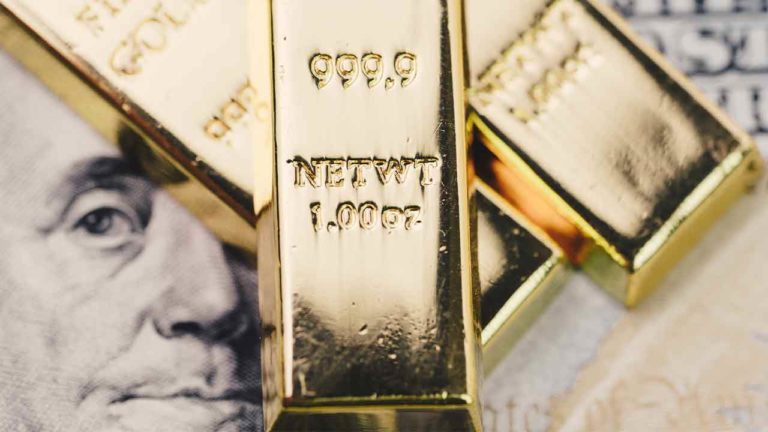
(Ryan McMaken, Money Metals News Service) In recent days, President Donald Trump, Elon Musk, Senator Rand Paul, and some others have pressed for an audit of the US gold reserves, with a special focus on the gold at Fort Knox.
This is perfectly reasonable given that the U.S. gold reserves—which are the property of the US Treasury and not the Federal Reserve—have not undergone even a partial audit in at least twenty years.
Part of the reason for the audit is to discover if any of the gold has been stolen. The US Mint, the government agency that acts as custodian of the gold, has reported for many years that the official size of the gold reserve is 8,133.46 metric tons of gold.
U.S. Bullion Depository at Fort Knox, Kentucky
Since there has been no audit in so long, though, the Mint’s position is essentially “trust us, bro.”
Trusting federal bureaucrats has never been a particularly wise policy, and this is why there are ongoing demands for some sort of transparent audit.
If the total size of the US’s gold holdings is revealed to be a number below the official number, then it will just be the latest reminder that there are a great many thieves and incompetents among the people running the US federal government. After all, if there is less gold than reported in the US gold reserves, it was presumably stolen at some point.
This would be a fitting destiny for the U.S. government’s gold since much of that was stolen to begin with.
When I say “stolen,” I don’t even mean in the sense that “taxation is theft” and that the US bought the gold using tax dollars. In truth, the way the US Treasury acquired much of its gold hoard is even more underhanded than ordinary taxation.
Rather, it is likely that most of the gold at Fort Knox, as with the U.S. regime’s gold in general, is gold stolen from ordinary Americans as a part of Franklin Roosevelt’s efforts to end the gold standard and confiscate private gold holdings in the United States.
That is, the U.S. gold reserves are a legacy of the way the US government reneged on its promises to redeem US dollars in gold.
Rather than pay out the gold that was owed to holders of dollars, the U.S. government hoarded it instead. That stolen gold is what the auditors will be counting if the U.S. government ever allows an honest accounting of the Treasury’s gold reserves.
Where Did the Gold at Fort Knox Come From?
In his 1994 article for The Journal of Economic Education, economist William C. Wood writes that “the Fort Knox depository is now an artifact of gold standard days.“
He then adds, “The gold currently in Fort Knox came from the melting of Depression-era gold coins, from lend-lease arrangements in World War II, and from government operations under the gold standard.”
That reference to “Depression-era gold coins” is telling. Most of those gold coins were likely the coins confiscated from private owners by the U.S. government following Roosevelt’s Executive Order 6102 which outlawed the private ownership of gold.
Few Americans owned gold bars, of course, and the gold that was in non-institutional private hands was mostly gold coins.
Roosevelt’s edict required that private citizens hand this gold over to the U.S. government in exchange for what was effectively below-market prices. And what if you would rather not give up your property to the U.S. government? Too bad.
Moreover, private banks and the central bank held gold in the form of coins for dollar holders who, prior to confiscation, would occasionally present US dollars for redemption in gold.
This is, in part, the gold in Fort Knox that Wood classifies as gold held for “government operations under the gold standard.”
After 1933, however, banks did not need to hold onto any gold coins for this purpose since Roosevelt’s effort to end the gold standard included a prohibition on banks paying out gold.
So, these coins ceased to have an immediate market value among banks. Where did all these gold coins end up? Most ended up with the US Treasury after the Treasury seized the Federal Reserve’s gold in 1934.
Evidence of this can be found in the nature of the gold that is now held at Fort Knox.
Wood further explains that the gold there is not the type of gold usually found in gold bars used for international transactions: “The gold resulting from melting of coinage has considerably lower quality than the ‘fine’ or ‘good delivery’ gold commonly used in international trade. The majority of the gold in Fort Knox is the lower-quality coin gold.”
The legacy of the US regime’s gold theft is not limited to the coins that happened to be in private hands in 1933, however. Much of the gold that is in the US gold reserves today is gold that would have been paid out to the private sector had the US government not reneged in its promises to pay war bonds in gold.
The 1934 Default on Gold-Based Liberty Bonds
Every time there is a debate over the so-called “debt ceiling,” various servants of the U.S. regime like Jerome Powell or Janet Yellen claim that “the United States has never defaulted.” This is a lie…
Arguably, it was a default, in the broad sense, when Roosevelt’s regime refused to make good on its obligations to dollar holders under the gold standard. The US also defaulted in a formal and legal sense when it refused to pay its World War I Liberty Bonds in gold as promised.
Specifically, in 1934, the United States defaulted on the fourth Liberty Bond. The contracts between debtor and creditor on these bonds were clear. The bonds were to be payable in gold. This presented a big problem for the US, which was facing big debts into the 1930s after the First World War. As described by John Chamberlain:
By the time Franklin Roosevelt entered office in 1933, the interest payments alone were draining the treasury of gold; and because the treasury had only $4.2 billion in gold it was obvious there would be no way to pay the principal when it became due in 1938, not to mention meet expenses and other debt obligations. These other debt obligations were substantial. Ever since the 1890s, the Treasury had been gold short and had financed this deficit by making new bond issues to attract gold for paying the interest of previous issues. The result was that by 1933 the total debt was $22 billion and the amount of gold needed to pay even the interest on it was soon going to be insufficient.
So how did the U.S. government deal with this? Chamberlain notes “Roosevelt decided to default on the whole of the domestically-held debt by refusing to redeem in gold to Americans.”
In other words, thanks to its profligate deficit spending, the U.S. government was running out of gold by the early 1930s. So, the regime defaulted on the gold bonds. The gold that would have passed into private hands was hoarded by the federal government and declared off limits to the public. Much of that gold remains in the U.S. gold reserves today.
Defaulting on International Gold Obligations
Not all of the U.S. Treasury’s gold is stolen from ordinary Americans. Some is stolen from foreign governments.
Another illustration of the dishonesty of the “we never defaulted” narrative is the fact that the U.S. government defaulted in 1971 on its obligations to foreign governments under the Bretton Woods system.
That is, rather than pay what was owed to foreign governments in exchange for gold under that system, the U.S. government once again decided to steal this gold and simply said “tough luck” to everyone with a legal claim to the gold. Or, as Treasury Secretary John Connally said at the time, the dollar “is our currency, but it’s your problem.”
U.S. Gold Reserves: A Legacy of Theft and Lies
The gold reserve was never supposed to be a static, untouchable hoard of the US federal government, as it is now. It was supposed to be there for Americans and other users of dollars who traded in their dollars for gold. Gold was supposed to flow in and out. Then, the US government slammed the doors of the federal gold vaults shut and declared “the gold is all ours forever.”
Like most everything else the U.S. government “owns,” the gold in the U.S. gold reserves is there due to many years of lies, gaslighting, and deception. The gold is there because the U.S. regime defaulted on its debts and reneged on its promises to back dollars in gold.
If a true auditing team is ever allowed to actually examine the U.S. gold, it will be examining the evidence of crimes from long ago. The auditors will be counting the gold stolen from our ancestors to enrich the state and its friends.
Ryan McMaken is executive editor at the Mises Institute, a former economist for the State of Colorado, and the author of two books: Breaking Away: The Case of Secession, Radical Decentralization, and Smaller Polities and Commie Cowboys: The Bourgeoisie and the Nation-State in the Western Genre. Ryan has a bachelor’s degree in economics and a master’s degree in public policy, finance, and international relations from the University of Colorado.
Ryan is a cohost of the Radio Rothbard podcast and the Loot & Lobby podcast, has appeared on Fox News and Fox Business, and has been featured in a number of national print publications including Politico, The Hill, Bloomberg, and The Washington Post.
(Mike Maharrey, Money Metals News Service) American consumers continued to pile on debt in January, but at a moderating pace after the massive credit-card fueled spending spree for the holidays.
Retail sales fell by 0.9 percent in January, and this was reflected in the slowdown in the growth of consumer debt. However, Americans are still leaning on debt to make ends meet.
It remains unclear how long it will take for consumers to hit their credit limit, but one thing is certain – that time will come and it’s growing near. That’s bad news for an economy that depends on consumer borrowing and spending for most of its growth.
That pushed total consumer debt to over $5 trillion for the first time.
The Federal Reserve consumer debt figures include credit card debt, student loans, and auto loans but do not factor in mortgage debt. When you include mortgages, U.S. households are buried under a record level of debt. As of the end of 2024, total household debt stood at $18.4 trillion.
Revolving credit, primarily reflecting credit card debt, grew by $9 billion, an 8.2 percent increase.
Americans currently owe a record $1.33 trillion in revolving debt.
The double whammy of rising debt and interest rates exacerbates the debt problem. The average annual percentage rate (APR) currently stands at 20.09 percent, with some companies still charging rates as high as 28 percent. The average is only slightly down from the record high of 20.79 percent set in August.
Rates aren’t coming down much even with Federal Reserve rate cuts. According to an ABC News report, despite a full percentage point in rate cuts, credit card companies are charging a higher margin “to weather default risk, cover overhead costs and recoup profits, experts added.”
“Credit card rates are high, and they’re staying high,” Bankrate analyst Ted Rossman told ABC News.
Americans are starting to struggle to pay those high credit card bills.
According to the New York Fed in the fourth quarter of 2024, “Aggregate delinquency rates ticked up 0.1 percentage point (ppt) from the previous quarter to 3.6 percent of outstanding debt in some stage of delinquency.”
According to PYMNTS Intelligence, credit cards are the loan type with the highest share of balance 90+ days delinquent, currently at 11.5 percent.
As traditional credit avenues creep closer to their limits, it appears consumers are turning to buy-now-pay-later to keep spending. According to PYMNTS, “The torrid pace of activity at the likes of Sezzle and Affirm — as many categories saw double-digit spending (and Sezzle notched triple-digit revenue growth) — has far outstripped the growth in the Fed’s data.”
Subprime credit card borrowers are struggling the most, with delinquency rates nudging upward by about 5.6 percent since the Federal Reserve began raising rates to battle price inflation.
Despite strong retail spending in December for the holiday season, the bigger picture reveals a consumer under stress.
Non-revolving debt, primarily reflecting outstanding auto loans, student loans, and loans for other big-ticket durable goods, also increased about $9 trillion, a 3 percent increase. This was a significant slowdown from the 5.2 percent in December and is more in line with the tepid growth of around 2 percent in non-revolving credit over the last year as consumers cut back on big-ticket spending to cover the increasing costs of day-to-day necessities.
Americans have blown through the savings they accumulated during the pandemic and have run their credit cards close to the limit. An economy run on Visa and Mastercard simply isn’t sustainable. When the Americans do hit their credit limit, it will have major implications for economic growth.
Mike Maharrey is a journalist and market analyst for Money Metals with over a decade of experience in precious metals. He holds a BS in accounting from the University of Kentucky and a BA in journalism from the University of South Florida.
(Mike Maharrey, Money Metals News Service) The National Bank of Kazakhstan (NBK) recently announced plans to sell dollars to ease the inflationary pressure caused by its gold purchases.
The Kazakh central bank buys most of its gold from domestic production, growing its reserves without engaging in the world gold market.
The program has increased Kazakh official reserves to $45.8 billion, about half of that held in gold.
However, the gold purchase program has a downside. It leads to inflation.
The NBK funds its gold purchases by issuing tenge (the Kazakh currency). In effect, it creates currency out of thin air to purchase gold from Kazakh miners. In effect, the process is not unlike the Federal Reserve’s quantitative easing operations, the difference being it adds gold to its balance sheet instead of bonds, notes, and mortgage-backed securities.
The Kazakh economy has been struggling with price inflation in recent years. The country’s CPI rose to 8.6 percent in December, aligning with the forecast range of 8 to 9 percent in 2024.
NBK Governor Timur Suleimenov addressed the increasing inflationary pressure during a press conference earlier this year.
“External price pressures stem from rising inflation in Russia, Kazakhstan’s key trading partner. Additionally, inflation in leading global economies has been gaining momentum in recent months, laying the groundwork for a prolonged period of elevated global interest rates. These expectations are already reflected in the strengthening of the U.S. dollar, which exerts pressure on the currencies of emerging markets, including the tenge.”
To ease the inflationary pressure of the country’s gold buying program, Suleimenov said the NBK will begin selling dollars in “a mirroring operation related to gold purchases.”
In practice, the central bank will sell dollars to match the amount of tenge created to buy gold. The sale of the greenbacks will serve to pull tenge out of the economy, something akin to a quantitative tightening operation.
Suleimenov emphasized that the central bank plan was not “currency intervention.”
“Their main objective is to reduce the excess amount of money in the economy and achieve the 5 percent inflation target. At the same time, these measures will create an additional currency supply in the domestic market, contributing to balancing the domestic currency market.”
While it appears that the National Bank of Kazakhstan is not directly aiming for de-dollarization, the plan does show that it values gold reserves more than dollars.
De-dollarization refers to countries trying to minimize their use and holdings of U.S. dollars. For example, countries including China, India, and many others are shifting away from dollar dependence and increasing their gold reserves. We’ve also seen de-dollarization as a talking point among BRICS nations.
While the dollar is not on the verge of imminent collapse, it may face a slow and inexorable decline.
Even a small decline in the dollar’s status as the world’s reserve currency could spell trouble for the economy. The U.S. heavily relies on global demand for dollars to support its borrowing and spending habits. Any significant shift away from the dollar could lead to even higher price inflation and a loss of the dollar’s purchasing power. In the worst-case scenario, significant de-dollarization could lead to hyperinflation.
The National Bank of Kazakhstan’s decisions to forgo dollars to facilitate expanding its gold reserves is another small crack in dollar hegemony.
Mike Maharrey is a journalist and market analyst for Money Metals with over a decade of experience in precious metals. He holds a BS in accounting from the University of Kentucky and a BA in journalism from the University of South Florida.
(Money Metals News Service) The global gold market is experiencing seismic shifts, and according to Jan Nieuwenhuijs, a gold market analyst for Money Metals, key developments in gold flows, central bank holdings, and U.S. gold policy signal significant changes ahead.
In a recent interview with Tom Bodrovics on Palisades Gold Radio, Nieuwenhuijs provided insights into the movement of gold from London to the COMEX, the controversial audit history of U.S. gold reserves, and the growing role of gold in the international monetary system.
Gold Flow from London to the U.S.: Trade Tariffs and Arbitrage
One of the most significant trends in the gold market has been the movement of gold out of the London Bullion Market Association (LBMA) vaults and into the U.S. COMEX system.
According to Nieuwenhuijs, this shift began after former President Donald Trump’s election in 2016, when fears of potential tariffs prompted bullion banks and traders to move gold into the U.S.
“We saw a premium rising on COMEX relative to the London spot price, and this was very much tied to tariff concerns,” Nieuwenhuijs explained. “Some dealers wanted to secure gold inside the U.S. before any tariffs were imposed, while others saw an opportunity to arbitrage between the two markets.”
JP Morgan and other bullion banks played a significant role in this arbitrage, purchasing gold in London at a lower price, refining it in Switzerland into 100-ounce and kilo gold bars, and then delivering it to COMEX. The result was record-breaking delivery volumes at COMEX, reflecting rising demand for physical gold within the U.S.
However, Nieuwenhuijs noted that the continuation of this trend remains uncertain.
“Trump’s stance on tariffs has been inconsistent, and that uncertainty itself is driving some of the gold movements,” he said.
The U.S. Gold Reserves: A Controversial Audit History
One of the most contentious topics in the gold market is the status of the U.S. gold reserves, particularly those stored at Fort Knox, West Point, and Denver. Despite claims by the U.S. Treasury that the gold is audited, Nieuwenhuijs has written extensively on the flaws in these audits.
The most recent U.S. gold audit began in 1974 following public pressure. The plan was to inspect 10% of the reserves annually, completing a full audit by 1983. However, by 1993, not only had the process failed to meet this timeline, but previous compartments were inexplicably reopened multiple times—violating the intended audit procedure and responsible practices.
“The idea was that once a compartment was audited, it would be sealed permanently,” Nieuwenhuijs explained. “Yet, in the 1990s and 2000s, we saw compartments being reopened multiple times with no clear justification.”
By 2008, a full inventory check had been completed, but since then, only the seals on vaults have been inspected—not the gold itself. Questions remain about whether any of the U.S. gold has been leased, swapped, or otherwise encumbered in financial transactions — such activities have never been disclosed or potentially even examined.
Nieuwenhuijs called for a new, independent audit, stating, “We need a transparent process with third-party verification to truly confirm that the gold is there.”
Gold Revaluation and Its Impact on U.S. Financial Policy
A crucial issue tied to U.S. gold policy is the valuation of its reserves. Currently, the U.S. Treasury values its gold holdings at just $42.22 per ounce—far below the market price of over $2,000 per ounce.
“This outdated valuation is a legacy from the Bretton Woods system, which collapsed in the 1970s,” Nieuwenhuijs said. “While other central banks mark their gold to market value, the U.S. continues to downplay gold’s role, which aligns with its strategy to maintain the dollar’s dominance.”
Revaluing gold to its market price could unlock approximately $700–800 billion in new liquidity for the U.S. government. This money could be used to reduce national debt or fund economic stimulus programs, though such a move would also acknowledge the long-term depreciation of the Federal Reserve note dollar against gold.
“If the U.S. were to revalue its gold and use it as collateral for spending, it would inject a massive amount of liquidity into the economy, which could be highly inflationary,” Nieuwenhuijs cautioned.
China’s Secret Gold Accumulation and the Eastern Shift
While the U.S. has been reluctant to highlight gold’s importance, China has taken the opposite approach—quietly amassing massive gold reserves while downplaying its official numbers.
Officially, the People’s Bank of China (PBOC) reports purchasing only 5 tons of gold per month. However, Nieuwenhuijs believes the real figure is closer to 50–70 tons per month when accounting for undisclosed purchases in London and other markets.
“China wants to reduce its dependency on the U.S. dollar, but they don’t want to make it obvious,” Nieuwenhuijs noted. “If the world knew exactly how much gold China was buying, the price would skyrocket, making it harder for them to accumulate more.”
China’s approach aligns with broader trends in the East, where countries like Russia, Saudi Arabia, and India are also increasing their gold holdings to hedge against financial instability and potential sanctions.
A Global Deleveraging and the Future of Gold
The increasing demand for gold from central banks signals a broader economic shift.
According to Nieuwenhuijs, the world is at the end of a major debt cycle, where excessive credit expansion has created imbalances that must now be corrected.
One way to address these imbalances is by allowing the gold price to rise, increasing the base of the global financial system while reducing reliance on debt-backed assets.
“Gold is at the bottom of the financial pyramid, with everything else—stocks, bonds, and currencies—resting on top of it,” Nieuwenhuijs explained. “When there is too much leverage in the system, gold’s role as a neutral asset becomes more important.”
As geopolitical uncertainty grows and economic policies become more erratic, Nieuwenhuijs believes gold will play an increasingly critical role in the global monetary system.
“The world is shifting, and gold is the asset that provides stability,” he concluded. “We’re seeing central banks position themselves for this new reality, and that’s a powerful signal for where gold is headed.”
Final Thoughts
The gold market is undergoing profound changes, driven by global trade tensions, geopolitical uncertainty, and shifting central bank policies. The movement of gold from London to the U.S., the lack of transparency in U.S. gold audits, and China’s aggressive accumulation all point to a world where gold is becoming more valuable as a financial anchor.
For investors and policymakers alike, understanding these trends is crucial. Whether through revaluing reserves, increasing transparency, or shifting away from dollar dependence, the role of gold in the global economy is poised to expand significantly in the years ahead.
For more in-depth research from Jan Nieuwenhuijs, and to learn more about investing in gold and silver, visitMoneyMetals.com.
Key Questions & Answers
The following are the key questions and answers from the Palisades Gold Radio interview with host Tom Bodrovics and Money Metals’ gold analyst Jan Nieuwenhuijs:
What prompted the movement of gold from London (LBMA) to COMEX in the U.S.?
The movement of gold from London to COMEX began largely due to concerns over trade tariffs, particularly after Donald Trump’s election in 2016. U.S. dealers sought to secure gold inside the country before any tariffs were imposed, while bullion banks engaged in arbitrage by purchasing gold in London, refining it in Switzerland, and delivering it to COMEX. This activity created a premium on COMEX relative to the London spot price, leading to record-breaking delivery volumes in New York.
What are the concerns about the U.S. gold reserves audit process?
The U.S. gold audit process has been controversial due to its inconsistencies and lack of transparency. The original audit plan, launched in 1974, aimed to inspect 10% of the reserves annually and complete the process by 1983. However, audits were repeatedly delayed, compartments were reopened multiple times without clear justification, and official procedures were not followed. Since 2008, only the seals on vaults have been checked rather than the gold itself. Nieuwenhuijs argues that a full, independent audit is necessary to ensure the integrity of U.S. gold reserves.
Why does the U.S. still value its gold at $42.22 per ounce?
The U.S. maintains an outdated valuation of its gold reserves at $42.22 per ounce, a legacy from the Bretton Woods system. This valuation serves to downplay gold’s role in the financial system and reinforce the dominance of the U.S. dollar. If the U.S. were to revalue gold at market prices (over $2,000 per ounce), it could unlock $700–800 billion in new liquidity. However, such a move would acknowledge the long-term depreciation of the U.S. dollar against gold.
How much gold is China really accumulating?
While the People’s Bank of China (PBOC) officially reports purchasing only 5 tons of gold per month, Nieuwenhuijs estimates the real figure is closer to 50–70 tons per month. China’s strategy involves buying gold in London and other markets while underreporting its actual holdings to avoid triggering a price surge. China’s broader goal is to reduce its dependency on the U.S. dollar while quietly increasing its gold reserves as a hedge against financial instability.
What role does gold play in global deleveraging?
Gold serves as the base of the financial system, with all other assets—stocks, bonds, and currencies—resting on top of it. As global debt levels become unsustainable, the system must deleverage, which often involves a rising gold price. This process reduces reliance on debt-backed assets and increases the value of gold as a neutral store of wealth. Central banks, particularly in China, are positioning themselves for this shift by accumulating gold while reducing their exposure to the U.S. dollar.
What would be the effects of revaluing U.S. gold reserves?
Revaluing U.S. gold reserves to market prices would inject a significant amount of liquidity into the financial system, potentially $700–800 billion. This could be used to reduce national debt, fund a sovereign wealth fund, or provide economic stimulus. However, such an action would also signal an official acknowledgment that the U.S. dollar has lost substantial value over time, potentially weakening confidence in the currency.
How are Eastern countries shifting away from the U.S. dollar?
Countries like China, Russia, Saudi Arabia, and India are increasingly diversifying away from the U.S. dollar by accumulating gold and exploring alternative payment systems. China, for instance, is developing the mBridge digital currency system, which allows for cross-border settlements outside the SWIFT network. Russia is also exploring gold-backed trade settlements, and Saudi Arabia has been discreetly increasing its gold holdings through purchases in Switzerland. These moves signal a gradual but determined effort to reduce reliance on the U.S. dollar in global trade.
Could the U.S. use gold to create a Sovereign Wealth Fund?
Yes, the U.S. could potentially use the value of its gold reserves to establish a Sovereign Wealth Fund. This would involve revaluing gold to market prices and using the unrealized gains as a financial backstop. However, doing so would require the U.S. to acknowledge gold’s true monetary role, which runs counter to its long-standing policy of promoting the dollar as the world’s primary reserve currency.
What is the long-term outlook for gold?
Nieuwenhuijs believes that gold’s role in the global financial system is strengthening as central banks, particularly in China, increase their holdings. He sees gold as a crucial asset in a world undergoing major financial realignments, where countries are shifting away from dollar dependency and preparing for a new monetary order. The growing demand for gold, coupled with concerns about global debt and monetary instability, makes gold a strong asset in the years ahead.
(José Niño,Headline USA) Anthony Constantino, the CEO of Sticker Mule, appears to be the favorite to replace Elise Stefanik in representing New York’s 21st congressional district.
According to a recent poll that Constantino’s team conducted of the upcoming special election to replace Stefanik, Constantino is leading the way with 40.1% of respondents backing his candidacy. New York State Senator Dan Stec is right behind Constantino at 39.7%.
The poll surveyed 2,307 people across all 15 counties in New York’s 21st Congressional district in upstate New York.
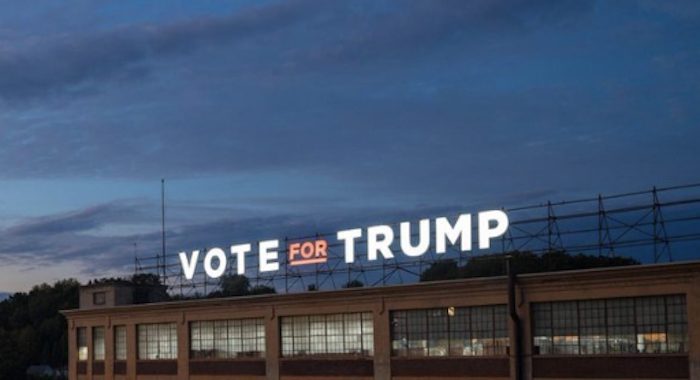
Constantino earned national attention when he built a giant “Vote for Trump” sign on the roof of his business in Amsterdam, New York. This prominently placed sign generated controversy and legal battles with local officials. The Sticker Mule CEO got into a legal battle with the Democratic mayor of Amsterdam Michael Cinquanti, who pursued a court order to take down the sign, alluding to safety concerns.
However, Constantino fought back and ended up winning the legal battle when a judge vacated the temporary restraining order, allowing the sign to remain.
Similarly, Constantino sent an email to Sticker Mule customers with the subject line “Trump 2024,” manifesting support for Donald Trump‘s 2024 presidential campaign and criticizing the “hate” directed at Trump supporters. This email achieved viral status on social media.
Donald Trump confidant Rogers Stone praised Constantino’s solid polling. In an X post, he declared, “The groundswell of support for Anthony Constantino, the only major contender who has never run for public office before, is proof that AMERICA LOVES TRUMP.”
Constantino also commented on the poll’s findings in an X post, proclaiming, “I am a vote for change and change is something New York badly needs. President Trump called us the most corrupt state in the union. I’m running to fix that and more.”
CONSTANTINO DOMINATES FIRST POLL FOR THE UPCOMING NY21 SPECIAL ELECTION
My team conducted the first poll of the upcoming special election to succeed Elise Stefanik. I like transparency so I thought I would share full results.
Headline USA reached out to Constantino for comment on his latest polling. He stated, “The people want fighters. That’s why they elected President Trump in a landslide, and why they overwhelmingly support me.”
José Niño is the deputy editor of Headline USA. Follow him atx.com/JoseAlNino