DOJ: Noncitizen IL Officials Kept from ICE Accused of Murder After Jail Release

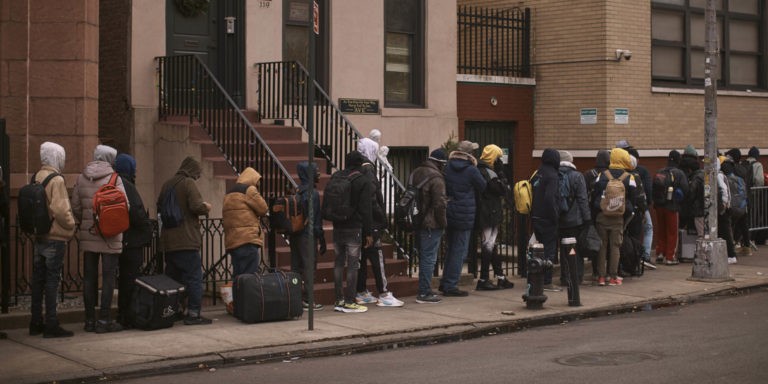
(Greg Bishop, The Center Square)  One of several examples the U.S. Department of Justice gave of how federal officials have been obstructed by Illinois’ migrant sanctuary policies involves an illegal alien released from jail later being accused of murder.

“In January 2025, federal officials issued a detainer request for an alien who was being held in Cook County jail on sexual assault of a minor charges,” the DOJ said. “Pursuant to Cook County’s restrictions, law enforcement officers did not respond to the detainer request … Following the alien’s release from local jail, he was arrested and charged with homicide just 17 days later.”

The filing in federal court comes as the state of Illinois, Cook County and the city of Chicago are asking the judge in the case to hold off on tackling migrant sanctuary policies that the DOJ says obstructs federal agents from doing their job.

In a statement of material facts for its motion for summary judgment against the state’s migrant sanctuary laws, the U.S. Department of Justice last week said the federal government has exclusive authority over immigration laws and enforcement and President Donald Trump issued an executive order declaring a national emergency at the border.

“Congress recently expanded the list of crimes that can trigger mandatory detention requirements to include burglary, theft, larceny, shoplifting, or assault of a law enforcement officer, or any crime that results in death or serious bodily injury to another person,” the DOJ said in its filing for summary judgment. “Defendants’ sanctuary policies cause significant harm to federal immigration enforcement and public safety by not honoring immigration detention orders, or helping facilitate access to detainees in local custody.”

At an unrelated event in Jacksonville Tuesday, Gov. J.B. Pritzker reacted.

“We don’t prevent the federal authorities from coming to our jails or coming to our prisons with a federal criminal warrant and take them,” Pritzker said. “We, in fact, I would like them to do that, but it is up to them to go to a court to get that criminal warrant to take them away.”

The DOJ gave an example of immigration officials waiting outside an Illinois prison for an illegal alien being released but were told to leave.

“When ICE attempts to stage an arrest outside of an Illinois state or local facility – including in a public parking lot – facility staff, usually at the direction of the warden, often commands ICE officers to leave the premises,” the DOJ filing said.

In another example given, the DOJ claims an illegal alien that federal officials were obstructed from picking up in a jail was subsequently let out in 2024. That individual was then arrested on a charge of aggravated criminal sexual abuse with a minor, traveling to meet a minor and contributing to the delinquency of a minor.

Tuesday evening, the state said the court should wait to schedule briefs on the motion for summary judgment against the sanctuary laws until their motion to dismiss the lawsuit is dealt with.

“Consistent with this sequence, Defendants request that the Court enter an order: (1) taking the United States’ summary judgment motion … under advisement and staying briefing on that motion until further order of the Court; and (2) instructing the parties to conduct a Rule 26(f) discovery conference within fourteen days of the Court’s ruling on Defendants’ pending motions to dismiss … to the extent any claims remain,” the defendants filing said.

The joint filing of the state of Illinois, Cook County and city of Chicago defending migrant sanctuary policies said the DOJ hasn’t provided a compelling reason to deviate from the typical sequence of federal litigation.

When asked if there needs to be more clarity in the state’s laws preventing local and state officials from cooperating with immigration enforcement, Pritzker said he’s been clear.

“I don’t know how much clearer I could be. I’ve been very straightforward about this,” Pritzker said. “And as far as I’m concerned, like I said, I welcome the authorities coming with criminal warrants to take those folks away.”

The case continues in federal court.
Trump Told Congress He Was Building Up US Forces in Mideast To Protect Israel

(Dave DeCamp, Antiwar.com) The White House on Tuesday published a letter President Trump sent to Congress on March 25 that said he was ordering a buildup of US military forces in the Middle East to protect Israel and US assets in the region.

In the letter to House Speaker Mike Johnson and Senate President Pro Tempore Chuck Grassley, Trump said he was writing it to inform them of the situation in Yemen and the broader Middle East region.

“First, I directed the Department of Defense to move additional forces equipped for combat into the Middle East to enhance the defensive capabilities available to United States forces and facilitate necessary military actions,” the president wrote.

He said the military buildup included “capabilities for air and missile defense of Israel and of locations hosting United States forces, as well as fighter, support, and reconnaissance aircraft to enable strikes on Houthi targets.”

Earlier this month, Israeli media reported that the US had sent a second Terminal High-Altitude Area Defense (THAAD) battery to Israel along with Patriot air defense batteries. The US has also sent an additional aircraft carrier to the Middle East, B-52 bombers to Diego Garcia, and other air assets to the region.

Trump also said in the letter that, at his direction, US Central Command had “commenced large-scale strikes in Houthi-controlled areas of Yemen to eliminate the capabilities the Houthis use for attacks on United States forces and commercial ships in the Red Sea and surrounding waters.”

The US launched the bombing campaign in Yemen on March 15, and over a month later, the Houthis, officially known as Ansar Allah, remain undeterred and continue to launch attacks.

While US officials have framed the airstrikes as a response to attacks on US ships, the Houthis ceased all operations in the region once a ceasefire went into effect in Gaza on January 19. The US restarted its bombing campaign in Yemen in response to the Houthis announcing they would re-impose a blockade on Israeli shipping due to Israel’s total blockade on Gaza, a violation of the ceasefire deal, but before they actually launched any attacks.

A senior member of Ansar Allah’s political bureau has said the Houthis would stop attacks on US warships if the US stopped bombing Yemen. US officials, including President Trump himself, have claimed they would stop the airstrikes if the Houthis declared they would stop targeting US ships, but there’s no sign the US is considering the offer since it’s really bombing Yemen for Israel.

This article originally appeared at Antiwar.com.

Report Claims Putin Willing To Halt Ukraine Invasion Along Current Frontlines

(Dave DeCamp, Antiwar.com) The Financial Times reported on Wednesday that Russian President Vladimir Putin was willing to halt his invasion of Ukraine across the current frontlines to reach a peace deal with President Trump.

If true, the position would mark a significant concession from Russia, which has maintained that any peace deal must include the recognition of the four Ukrainian Oblasts it has annexed as part of Russia, including territory that’s not under Russian control.

In response to a question about the report, Kremlin spokesman Dmitry Peskov warned against “fakes” but didn’t explicitly deny it. “There are a lot of fakes being published now, including by respected publications, so you should only listen to the original sources,” he said.

The Financial Times report said that Putin made the offer during recent talks with President Trump’s envoy, Steve Witkoff, in St. Petersburg earlier this month. After the meeting, Witkoff said he believed a peace deal was possible.

The Washington Post reported on Tuesday that the US has made a proposal to Ukraine and its European allies on a potential ceasefire deal that would involve freezing the battle lines and the US recognizing Crimea as part of Russia. The peninsula has been under Russian control since 2014.

European and Ukrainian officials are expected to meet and discuss the US proposal on Wednesday. Ukrainian President Volodymyr Zelensky said on Tuesday that Ukraine would never recognize Crimea as Russian, signaling he may not support the US proposal.

Zelensky also said that he would be willing to negotiate directly with Russia if a ceasefire was reached. His comments came after Putin suggested he was ready for direct talks with the Ukrainians.

The last time Russian and Ukrainian officials held direct peace talks was in the early days of the Russian invasion in 2022. At the time, Russia’s main demand was for Ukrainian neutrality. Those efforts were discouraged by the US, and later that year, Russia declared its annexation of four Ukrainian oblasts and added the recognition of that territory as Russia to its demands to end the war.

This article originally appeared at Antiwar.com.

NYC Mayor and Trump Border Czar Tout Charges Against 27 People in Tren de Aragua Case

(Headline USA) President Donald Trump’s border czar joined New York City’s mayor on Tuesday to tout new federal charges against 27 people accused of being Tren de Aragua gang members and associates.

The joint announcement is the latest example of the close ties between Mayor Eric Adams and the Trump administration, which recently dropped federal corruption charges against the Democrat so he could better focus on the Republican president’s immigration priorities. Adams is now running for reelection as an independent.

Trump, in his nationwide immigration crackdown, has labeled Tren de Aragua an invading force as he invoked the Alien Enemies Act, a statute from 1798 lets the president deport noncitizens 14 years or older who are from a country the U.S. is at war with.

“Every member of TDA should be on the run,” declared Thomas Homan, Trump’s border czar, referring to the initials of the gang, which originated in Venezuela more than a decade ago and has been linked to a series of kidnappings, extortion, and other crimes throughout the Western Hemisphere.

Adams’ administration recently announced that it would let federal immigration officials operate at the city’s Rikers Island jail complex — and Homan used the news briefing to take a swipe at a City Council lawsuit seeking to stop the plan.

“This is what collaboration looks like,” he said. “I never asked the city or the NYPD to be immigration officers. I asked them to work with us on significant public safety threats and national security threats, and that’s what we’re committed to doing.”

A New York judge ordered city officials on Monday to temporarily halt the plan, which would let Immigration and Customs Enforcement and other federal agencies establish offices at the massive lockup, until an April 25 hearing on the suit.

Adams said Tuesday’s announcement showed he remains “unapologetic” in his desire to rid the city’s streets of violent immigrant gangs.

“The question that we must answer: whose side are you on?” the Democrat said. “Are you on the side of those who are carrying these illegal guns, wreaking havoc, sex trafficking, harming innocent people regardless of their documentation, or are you on the side of hardworking New Yorkers and Americans? I’m clear on which side I’m on.”

Manhattan prosecutors say the case is the first to bring federal racketeering charges, which were famously used to bring down the Mafia, against the Venezuelan street gang. The more than two dozen accused also face charges including sex trafficking, drug trafficking, robbery, and firearms possession.

Prosecutors said those arrested smuggled young women from Venezuela into Peru and the U.S. The women, who they referred to as “multadas,” paid off their debts through prostitution and were threatened with violence and death.

The gang members also committed armed robberies and smuggled illegal drugs, including a substance called “tusi” that contains ketamine, prosecutors said.

Of the 27 charged, 21 are in custody, including five arrested Monday and Tuesday in operations in New York and elsewhere, they said. Six others remain at large.

The charges are broken out into two separate indictments, one for six alleged members of Tren de Aragua and the other charging 19 alleged members of “Anti-Tren,” a splinter faction made up of former Tren members.

Among those named in Tuesday’s indictment was Anderson Zambrano-Pacheco, who was among those arrested back in January in the Bronx during some of the Trump administration’s first efforts to ramp up immigration enforcement in the city.

Authorities say the 26-year-old was part of a group of heavily armed men seen in a now-viral video forcing their way into an apartment in Aurora, Colorado, raising fears that Tren de Aragua was in control of the rundown complex in the Denver suburbs.

Zambrano-Pacheco’s lawyer didn’t immediately comment Tuesday.

Adams rejected the notion that many of those apprehended by immigration and law enforcement officials in recent months are otherwise law-abiding people.

“The American dream is not doing armed robberies. The American dream is not discharging guns. The American dream is not shooting at police officers. The American dream is not going into homeless shelters and taking the documentation from innocent people and forcing them into sex trafficking,” he said. “That’s not the American dream, and we’re not going to be a safe harbor for criminals.”

Adapted from reporting by the Associated Press.

BREAKING: Klaus Schwab under Investigation for Defrauding World Economic Forum

(Ken Silva, Headline USA) The Wall Street Journal revealed Tuesday evening that World Economic Forum founder Klaus Schwab has been accused of defrauding the globalist organization that he created more than a half-century ago.

The Journal’s report came a day after the WEF announced that Shwab was retiring as its chairman “with immediate effect.” According to the Wall Street Journal, Schwab’s retirement was sparked by an anonymous whistleblower allegation that the Schwab family used the Forum’s resources for their personal affairs.

“[The letter] included allegations that Klaus Schwab asked junior employees to withdraw thousands of dollars from ATMs on his behalf and used Forum funds to pay for private, in-room massages at hotels. It also alleged that his wife Hilde, a former Forum employee, scheduled ‘token’ Forum-funded meetings in order to justify luxury holiday travel at the organization’s expense,” the Journal reported.

“The letter also raises concerns about how Klaus Schwab treated female employees and how his leadership over decades allegedly allowed instances of sexual harassment and other discriminatory behavior to go unchecked in the workplace.”

According to the Journal, Schwab argued against an investigation in the days leading up to his ouster. He reportedly has denied the allegations against him, and has threatened to file a lawsuit over the matter.

Against his protestations, the WEF board reportedly decided to open a probe during an emergency meeting on Easter Sunday. Schwab resigned immediately thereafter. He previously planned to stay in power until January 2027.

In a statement, the Forum told the Journal that it supported the decision to initiate an independent investigation “following a whistleblower letter containing allegations against former Chairman Klaus Schwab. This decision was made after consultation with external legal counsel.”

Former Nestle Chairman and CEO Peter Brabeck-Letmathe was unanimously selected as interim chairman by the forum’s board at a special meeting on Sunday. A search committee has been set up to choose a permanent successor.

The annual WEF gathering, typically in January, has hosted a long list of world leaders under Schwab’s 55-year tenure, including President Xi Jinping of China, Vladimir Putin of Russia, Donald Trump of the United States, and many more heads of state and government.

The WEF has been heavily criticized for promoting anti-liberty and anti-human policies, including lockdowns, vaccine mandates and trans-humanism—as summarized by its slogan: “Welcome to 2030. I own nothing, have no privacy, and life has never been better.”

The Associated Press contributed to this report.

Ken Silva is the editor of Headline USA. Follow him at x.com/jd_cashless.

Stephen Miller: Americans Should Receive Reparations for Illegal Immigrants’ Damage

(José Niño, Headline USA) In a blistering Newsmax interview, White House aide Stephen Miller called on the federal government to repay the American people for the social and economic wreckage caused by mass illegal immigration. 

“We all deserve reparations for what has been stolen from us,” Miller declared on Saturday. “It is a tragedy that defies our ability to even describe it.”

His remarks followed reports that Sen. Sheldon Whitehouse, D-RI, had floated the idea of compensating Kilmar Abrego Garcia. He is an illegal alien from El Salvador credibly accused of wife-beating, human trafficking, and ties to the violent MS-13 gang. In response, Miller posed a different question.

“Where are the damages for Americans?” he inquired. “Where do I even begin?”

He continued by listing the social and human toll of illegal immigration.

“We used to have a functioning public school system in this country. Then we had open borders. Now our schools are in chaos and disarray. We need hundreds of translators. Nobody’s learning how to read or write. We had an entire generation of Americans — multiple generations, in fact — robbed of educational opportunities,” he said.

Pointing to the transformation of major U.S. cities, Miller brought up the case of Los Angeles. He also cited the opioid crisis and violent crime:

“What about the victims of fentanyl poisoning brought in by Democrats’ open border?Hundreds of thousands of moms and dads have kids dead and buried. Where do they go for reparations? And what about the women who have been raped, beaten, or murdered? The dads shot dead? The police officers ambushed and killed by illegal aliens — where do their families go to be compensated?” he asked

Miller further condemned the Biden administration’s handling of child migrants, before concluding with a sweeping indictment:

There aren’t enough volumes in any library to measure the carnage inflicted by the Democratic Party’s open-border agenda. We could spend our lives documenting the harm. Where does the country go to be repaid for the security, wealth, and stability that’s been stolen through decades of mass illegal immigration?

Miller’s remarks come amid a broader political clash over immigration enforcement. Democrats increasingly argue that illegal migrants deserve expanded due process protections before deportation, even in cases that carry serious criminal allegations. 

Meanwhile, immigration judges across the country have thrown up legal roadblocks to deportation. 

Ultimately, Miller’s impassioned remarks highlight the mounting frustrations among many Americans who feel overlooked in the ongoing immigration debate, raising pressing questions about accountability, justice, and the future direction of U.S. immigration policy.

José Niño is the deputy editor of Headline USA. Follow him at x.com/JoseAlNino 

Gun Rights Organizations Target State Bans in Nationwide Legal Blitz

(José Niño, Headline USA) A series of high-stakes legal battles is unfolding across the United States as gun rights groups challenge some of the nation’s strictest firearm bans in the wake of a landmark Supreme Court decision.

The fate of assault weapons bans in Connecticut, Hawaii, Illinois, Massachusetts, and Colorado now rests in the hands of federal courts, as pro-gun organization National Association for Gun Rights (NAGR) seeks to overturn longstanding restrictions. 

Since the NYSRPA v. Bruen Supreme Court decision, which mandated that gun regulations align with the Second Amendment’s “text and historical context,” multiple states have faced legal challenges to their firearm restrictions.

In an email it sent to its followers on Sunday, NAGR highlighted several lawsuits it has filed in the aforementioned states. NAGR’s legal arm, National Foundation for Gun Rights, filed a lawsuit in Massachusetts, seeking to overturn the state’s “assault weapons” and magazine bans, which were enacted in 2006. A favorable ruling in the First Circuit could have implications for similar laws throughout the Northeast, including Maine, New Hampshire, and Rhode Island.

In Connecticut, NFGR legal action challenges the expansion of the state’s assault weapons and magazine bans implemented in 2013. The lawsuit contends that the expanded restrictions, which added over 100 firearms and limited magazine capacity to 10 rounds, are inconsistent with the Supreme Court’s 2022 Bruen decision. A decision in this case could affect gun regulations in the Second Circuit, covering Vermont and New York.

Hawaii’s laws, which ban certain pistols with common attachments and magazines exceeding 10 rounds, are also being contested. NFGR argues in its lawsuit that overturning these bans could influence similar regulations in Western states such as California, Oregon, and Washington.

In Illinois, litigation is underway against both a statewide semi-automatic weapons ban and a local ordinance in Naperville that prohibits the sale of AR-15 rifles. The outcome of these cases could establish a precedent for the Seventh Circuit, impacting Illinois, Wisconsin, and Indiana.

Finally, several local governments in Colorado, particularly in and around Boulder County, face lawsuits over recently enacted assault weapons and magazine bans. These legal challenges cite the Bruen decision as a basis for contesting the constitutionality of such restrictions.

Collectively, these lawsuits reflect a coordinated effort by NAGR and its legal arm to challenge and potentially overturn a range of firearm regulations in the wake of recent Supreme Court rulings on the Second Amendment.

“For decades, anti-gun politicians have chipped away at our rights with unconstitutional bans — but those days are over. With the Bruen decision in hand, we’re taking the fight to every court in the country. If they ban guns or magazines, they’d better be ready to face us in court,” Taylor Rhodes, the Communications Director for NAGR, told Headline USA. 

Whether these challenges succeed or fail, their outcomes will set the tone for future debates over gun control and constitutional rights in the United States.

José Niño is the deputy editor of Headline USA. Follow him at x.com/JoseAlNino

Instead of ‘Drill, Baby, Drill,’ U.S. Rig Counts Falling, Layoffs Increasing

Nat(Bethany Blankley , The Center Square)  A key pledge of President Donald Trump’s energy policy is to “unleash American energy,” make the U.S. energy industry dominant, and “drill, baby, drill.”

His Energy Secretary, Chris Wright, the former CEO of Denver-based Liberty Energy, also vowed that Trump’s energy policies would create a “golden age” for the U.S. oil and natural gas industry.

Within the first few months of Trump’s new administration, the opposite has been true, with layoffs increasing, rig counts dropping, and industry executives expressing alarm.

After Trump was reelected, “the initial mood in the industry was euphoric” because the industry believed the administration was “pro-energy,” Odessa-based Latigo Petroleum president Kirk Edwards said. “But within the first few months, a different set of challenges emerged. Tariffs have driven up the cost of drilling, squeezing margins just as operators look to expand.”

The Trump administration pushing OPEC to increase production in an already oversupplied global market contributed to oil prices plummeting. “This sharp price decline has thrown U.S. producers into limbo,” Edwards said. Trump’s mantra, “Drill, baby, drill,” turned into “wait, baby, wait,” he said. As a result, the industry isn’t adding rigs to drill when “price signals are so unclear,” The Center Square reported.

The rig count has dropped under the Trump administration, with the biggest losses reported in Texas, the oil and natural gas capital of the U.S. As of March 28, there were 290 rigs in Texas, down from 376 in March 2024, according to newly released Baker Hughes data.

“The U.S. shale industry faces significant challenges as production issues and economic pressures rise,” Linhua Guan, CEO of Houston-based Surge Energy, said in a social media post. He also published the results of a poll showing that the majority surveyed believed the U.S. crude oil production would plateau this decade.

Pioneer Natural Resources Founder Scott Sheffield warned that Trump’s “drill, baby, drill” mantra “might not happen.” Sheffield set a grim picture for the industry in Houston, saying “You’ve really got to hunker down. You may have to lay off some people. You’ve got to focus on your best prospects. We’ll see what happens over the next two or three years,” Bloomberg News reported.

Since then, oil prices keep dropping. The West Texas Intermediate, the benchmark for U.S. crude, was at $63.92 a barrel on Tuesday, below the $65 threshold companies need to break even. That’s down from the $80 a barrel the WTI was posting in early January.

The Texas oil and natural gas industry in the last two years reported record production and for many months was adding jobs and leading the U.S. in job creation, The Center Square reported. In March, it reported a loss of 700 jobs in the upstream sector – the sector that drills primarily in the oil rich Permian Basin, The Center Square reported.

Also last month, BP announced it was shedding 7,700 jobs globally and shifting roughly 1,100 U.S. based jobs to Hungary, India and Malaysia, Pipeline & Gas Journal reported. BP currently employs roughly 4,000 people in Houston, the oil and natural gas capital of Texas and the U.S. where BP’s U.S. headquarters is located.

In February, Chevron announced it was laying off up to 20% of its global workforce by the end of 2026. In January, Houston-based APA, the parent company of Apache Corporation, announced it was laying off nearly 300 employees globally; by February, it had reduced its corporate office by one-third, The Houston Chronicle reported. More layoffs are expected in Texas, industry executives have told The Center Square.

Uncertainty in the industry continued after Liberty Energy published its first quarterly earnings report showing a profit of $165 million, the lowest since the first quarter of 2022. “Net income (after taxes) totaled $20 million for the first quarter of 2025 compared to $82 million in the first quarter of 2024 and $52 million in the fourth quarter of 2024,” it said.

Its new CEO Ron Guzek said, “In recent months, tariff announcements and a more aggressive OPEC+ production strategy have sent ripples across the energy sector.” He told investors and media on a call, “As we look forward, of course, there are some storm clouds on the horizon. We don’t know if that storm is going to roll in here or not.”

“As global oil markets contend with tariff impacts, geopolitical tensions, and oil supply concerns, North American producers are evaluating a range of macroeconomic scenarios,” the company’s outlook states. “The recent pause on tariffs has momentarily eased pressure on the global economy, and in turn, global oil demand concerns. However, markets remain focused on supply side dynamics, including the evolving OPEC+ production strategy and potential constraints on Iranian, Russian, and Venezuelan oil exports.”

Since Trump’s been in office, Liberty’s stock has plummeted by 40%.

U.S. oil and gas executives are overall expressing pessimism, according to a Dallas Fed survey. The company outlook index decreased by 12 points; the outlook uncertainty index increased by 21 points.

DOD to Face Congressional Hearing Over Failed Audits

(Casey Harper, The Center Square)  A U.S. House Oversight Subcommittee on Tuesday announced a hearing on the Pentagon’s inability to pass a fiscal audit.

Subcommittee on Government Operations Chairman Pete Sessions, R-Texas, said the “Tracking Progress: Updates to DOD’s Financial Management Scorecard” hearing will occur next Tuesday.

The Pentagon has failed seven consecutive audits and has a long history of trouble tracking how it spends its money and where its massive inventory of equipment is stored around the nation and abroad.

While Trump’s Secretary of Defense Pete Hegseth continues to face controversy and pressure for his removal, the government efficiency promises of the Trump administration still stand. Hegseth has aggressively targeted spending on “woke” ideology and Diversity, Equity and Inclusion initiatives, which had become commonplace in the DOD, in large part because of the previous administration.  

However, the Pentagon’s fiscal problems are more widespread and go beyond the DEI spending.

“President Trump and his administration are taking decisive action to bring fiscal sanity to Washington,” Sessions said. “At this hearing, we are going to bring transparency to DOD’s financial practices and management of American taxpayer dollars, examine progress the agency has made towards achieving a clean audit, and review metrics to properly track progress of DOD’s efforts.”

Expected witnesses include Bryn Woollacott MacDonnell the Acting Comptroller and CFO at the DOD; Brett Mansfield, the Deputy Inspector General for Audit at the DOD’s Inspector General; Lt. General James H. Adams III, the Deputy Commandant for Programs and Resources at the U.S. Marine Corps; and finally Asif Khan a top financial management official at the Government Accountability Office.

RFK Jr. Asked to Help Lawmen with Human Trafficking Hotline

(Alan Wooten, The Center Square)  With the change in leadership for the organization that handles the national hotline not showing direction sought, North Carolina Attorney General Jeff Jackson is on board with nearly every other attorney general in the country requesting the help of Robert F. Kennedy Jr.

The Polaris Project is the operator of the National Human Trafficking Hotline, and Kennedy is the Trump administration’s leader of as secretary of the Department of Health and Human Services. Applications for operating the hotline are being accepted by Kennedy’s department. North Carolina, according to statistics from the hotline, is among the top 10 states for the rate of human trafficking cases.

Jackson, former member of the U.S. House of Representatives, put his signature with 40 others asking Kennedy to “require the next operator of the National Human Trafficking Hotline to better cooperate with local law enforcement,” the prosecutor’s release says.

“The Human Trafficking Hotline only works if law enforcement can respond to potential crimes as quickly as possible,” Jackson said. “Any delay in these tips getting to the right place puts lives at risk. Every second counts in these situations – that’s why we’re asking the federal government to make sure the next operator of this hotline communicates better with law enforcement.”

For six years, Catherine Chen was CEO at Polaris. Among the criticisms she drew were an approach centered on victims.

For example, U.S. Sen. Ashley Moody was attorney general in Florida last spring when according to published reports she offered, “Unfortunately, the woke Stanford and Columbia-educated CEO of Polaris has pushed a radical agenda to delay the dissemination of vital information to local law enforcement in favor of what she calls a ‘victim centered approach.’”

Chen stepped down in December, and Megan Lundstrom succeeded her in February. An opening graph of the announcement from Polaris said her work at The Avery Center “focused on survivor-driven, evidence-based program development with a priority on economic empowerment.”

Jackson says millions of dollars from Congress since 2007 have supported the 501(c)(3) agency. “However,” his release says, “the attorneys general recently learned that Polaris was failing to forward third-party tips about adult victims to state law enforcement except in limited circumstances. Additionally, the Hotline has taken up to several months to share those tips with the state. If state and local law enforcement don’t receive these tips in a timely manner, they can’t act to help people.”

Since 2007, North Carolina has been linked to 10,393 signals to the national hotline. This means calls, online reporting, web chats, emails and SMS reports. SMS is an acronym for short message service.

In the most recent year (2023) with statistics available, 143 of the 684 signals were from victims or survivors of human trafficking. Last fall’s meeting of the North Carolina Human Trafficking Commission included warnings that traffickers were moving into the Carolinas where people hit hard by Hurricane Helene were left vulnerable with a loss of basic needs.

Two significant laws related to human trafficking have been passed in the last 15 years by the General Assembly. In 2013, the Safe Harbor Law gave protection to minors forced into commercial sex from being charged with crimes. On Dec. 1, state law for “any person who solicits another for the purpose of prostitution” changed from Class 1 misdemeanor to Class I felony.

The letter included signatures of attorneys general in 39 states and one U.S. territory (American Samoa). It was led by Attorneys General Lynn Fitch of Mississippi, Kathy Jennings of Delaware, Liz Murrill of Louisiana and Aaron Ford of Nevada.

The only states not represented were Arizona, Connecticut, Kansas, Maine, Maryland, Massachusetts, Minnesota, Montana, New Jersey, Texas and Washington. The District of Columbia attorney general also did not sign.