DOJ Brings 1st Terrorism Case against Tren de Aragua Gang Member

(Headline USA) The Justice Department has charged an alleged high-ranking member of Tren de Aragua in Colombia with terrorism offenses, making the first case of its kind against a member of the gang the Trump administration has designated a foreign terrorist organization, officials said Wednesday.

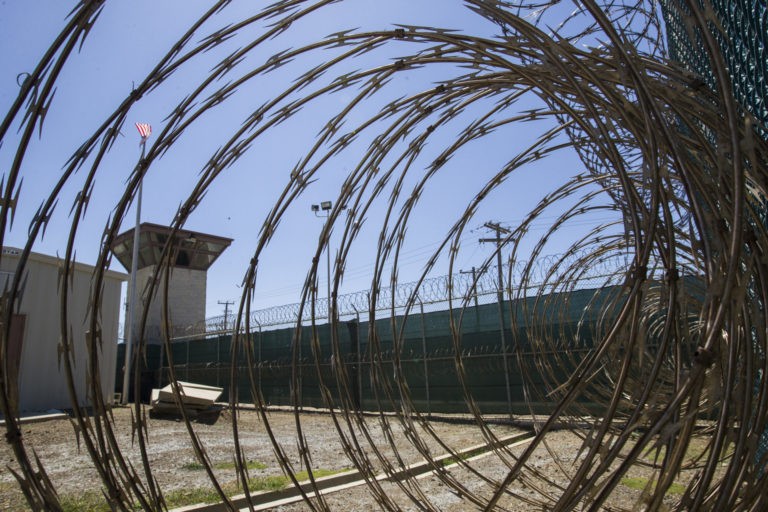
The case is part of a broad push to target Tren de Aragua, or TdA, a Venezuelan gang that has been blamed for drug smuggling and violence in the United States. President Donald Trump has labeled the gang an invading force under an 18th century wartime law to deport Venezuelan migrants to a notorious El Salvador prison as part of Trump’s sweeping immigration crackdown.

The Justice Department’s application of a criminal statute primarily reserved in recent years for extremist groups such as the Islamic State and al-Qaida underscores the extent to which the administration is relying on a strikingly expansive definition of terrorism as it pursues a national security agenda focused on drug trafficking and illegal immigration.

“TdA is not a street gang – it is a highly structured terrorist organization that put down roots in our country during the prior administration,” Attorney General Pam Bondi said in a statement. “Today’s charges represent an inflection point in how this Department of Justice will prosecute and ultimately dismantle this evil organization, which has destroyed American families and poisoned our communities.”

Jose Enrique Martinez Flores, 24, was charged in Texas federal court with drug offenses as well as conspiring to provide and providing material support to a designated foreign terrorist organization. Prosecutors described him as part of the “inner circle of TdA leadership,” and accuse him of playing a role in the international distribution of cocaine.

He is in custody in Colombia awaiting further proceedings. The Justice Department said he faces up to life in prison.

The material support statute has long been a favored tool of the Justice Department to build prosecutions against people who are suspected of facilitating the operations of a militant group but not always carrying out violence themselves.

The addition of TdA to the State Department list of foreign terrorist organizations enables the Justice Department to wield the statute against individuals suspected of supporting that group.

The announcement comes days after prosecutors announced what they said was the first case to bring federal racketeering charges, which were famously used to bring down the Mafia, against the Venezuelan street gang.

Adapted from reporting by the Associated Press

Jury Makes Key Decision in 2023 Ohio Train Derailment Case

(Headline USA) The company that owned the railcar that caused the devastating East Palestine train derailment in 2023 won’t have to help pay for the $600 million settlement Norfolk Southern agreed to with residents.

An Ohio jury decided Wednesday that GATX isn’t liable for the settlement even though the failure of a bearing on its railcar carrying plastic pellets caused the pileup on Feb. 3, 2023. GATX has maintained Norfolk Southern operated and inspected the train and all the cars and was responsible for delivering the cargo safely.

“GATX is pleased with the trial outcome, which affirms what we have known for some time: Norfolk Southern alone is responsible for the derailment and resulting damage in East Palestine,” the company said in a statement.

Norfolk Southern called the verdict disappointing but said it won’t affect the railroad’s commitments to everyone affected by the derailment.

“For more than two years, Norfolk Southern has paid the costs related to the derailment while acknowledging and acting on our own responsibility for the accident. Our belief has always been that GATX shares in that responsibility and should also be held to account,” the railroad said in a statement.

After the train derailed in East Palestine, an assortment of chemicals spilled and caught fire. Then three days later, officials blew open five tank cars filled with vinyl chloride because they feared those cars might explode, generating a massive black plume of smoke that spread over the area and forcing evacuations.

Norfolk Southern lost a similar lawsuit last year when it tried to force GATX and OxyVinyls, which made the vinyl chloride, to help pay for the environmental cleanup after the derailment that has cost the Atlanta-based railroad more than $1 billion. It made similar arguments in this trial.

These lawsuits have no effect on how much money residents or the village of East Palestine will receive from their settlements with the railroad. This cases only affect which company writes the check.

Last week, OxyVinyls agreed to a settlement with Norfolk Southern in this lawsuit over the class-action settlement after the railroad’s lawyers raised questions about the inconsistent information the chemical company provided about whether it was necessary to perform the vent-and-burn operation and release the vinyl chloride. The details of that settlement weren’t released.

The National Transportation Safety Board confirmed in its investigation that the vent-and-burn operation was unnecessary because the tank cars were starting to cool off and the railroad failed to listen to the advice from OxyVinyls’ experts or share their opinions with the officials who made the decision.

The railroad said GATX should have done more to take care of its railcar, particularly after it was surrounded by floodwaters, which could have damaged its bearings.

But GATX said it complied with all the relevant regulations for taking care of its railcars. The company said that even if the car was damaged six years earlier by standing parked in the middle of floodwaters from Hurricane Harvey, the railroad should have spotted the problem and repaired it, sending GATX the bill for the repairs.

The National Transportation Safety Board said the crash was caused by the failure of an overheating bearing on GATX’s railcar. The railroad’s sensors spotted the bearing starting to heat up in the miles before the derailment, but it didn’t reach a critical temperature and trigger an alarm until just before the derailment. That left the crew little time to stop the train.

Adapted from reporting by the Associated Press

Trump Slams Zelensky for Delaying Peace Negotiations With Russia

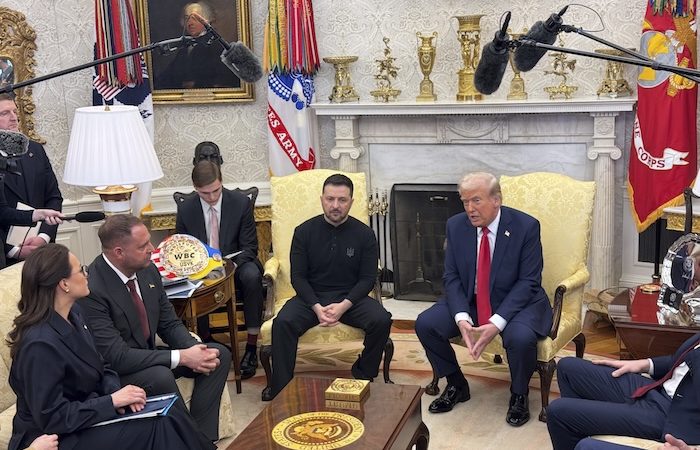
(Dave DeCamp, Antiwar.com) President Trump on Wednesday slammed Ukrainian President Volodymyr Zelensky for rejecting the idea of Ukraine recognizing Crimea as Russian, saying the comment is hurting the peace process.

“This statement is very harmful to the Peace Negotiations with Russia in that Crimea was lost years ago under the auspices of President Barack Hussein Obama, and is not even a point of discussion,” Trump wrote on Truth Social.

“Nobody is asking Zelensky to recognize Crimea as Russian Territory but, if he wants Crimea, why didn’t they fight for it eleven years ago when it was handed over to Russia without a shot being fired? The area also houses, for many years before ‘the Obama handover,’ major Russian submarine bases,” the president added.

Trump said that “inflammatory statements” like Zelensky’s were prolonging the war. “He has nothing to boast about! The situation for Ukraine is dire — He can have Peace or, he can fight for another three years before losing the whole Country,” he said.

The spat over Crimea comes amid reports that said the US has put forward a potential ceasefire deal that would involve the US recognizing the peninsula as Russian territory. According to Axios, the deal would also involve freezing the battle lines, meaning Russia would keep the territory it currently controls.

The US would also lift sanctions imposed on Russia since 2014 and guarantee that Ukraine wouldn’t join NATO. Ukraine would receive some sort of security guarantees, the details of which are unclear, a small part of the Kharkiv Oblast that’s currently occupied by Russia, unimpeded access to the Dnieper River, and assistance for reconstruction. The deal also proposes that the US would operate the Zaporizhzhia nuclear power plant, which is under Russian control.

According to Axios, the potential deal was presented to Ukraine as a “final offer,” meaning if an agreement isn’t reached or progress isn’t made, the US could walk away from negotiations.

Vice President JD Vance on Wednesday called for Ukraine and Russia to accept the proposal. “We’ve issued a very explicit proposal to both the Russians and the Ukrainians, and it’s time for them to either say yes or for the United States to walk away from this process,” he said.

“The only way to really stop the killing is for the armies to both put down their weapons, to freeze this thing and to get on with the business of actually building a better Russia and a better Ukraine,” the vice president added.

This article originally appeared at Antiwar.com.


America’s Wealth Gap Hit a New Record High under Biden

(José Niño, Headline USA) In 2024, the 19 wealthiest families in America saw their fortunes swell by an astonishing $1 trillion—more than the entire GDP of Switzerland.

These households, which make up the top 0.00001 percent of Americans, now control a record 1.8 percent of total U.S. household wealth, up from 1.2 percent the previous year, according to research by economist Gabriel Zucman.

This marks the largest one-year jump on record in the wealth share of the ultra-rich. In 1982, this sliver of the population accounted for just 0.1 percent of household wealth, with 11 families making up the group. By the end of 2024, their collective wealth reached approximately $2.6 trillion.

Zucman’s methodology subtracts major consumer items and unfunded pensions from the Federal Reserve’s household wealth estimates, putting total U.S. household wealth at around $148 trillion at year’s end.

“There’s been a gradual rise, followed by a recent and dramatic acceleration in the share of wealth held by the truly super-wealthy,” Zucman observed. 

A soaring stock market helped drive these gains. The S&P 500 posted its strongest two-year run in 25 years, significantly boosting fortunes tied to equities. 

The elite group identified by Zucman includes Elon Musk, Jeff Bezos, Mark Zuckerberg, Bill Gates, Warren Buffett, and Stephen Schwarzman. 

This figures an estimated minimum net worth of $45 billion. Economists have dubbed individuals in this wealth bracket “superbillionaires.”

The billionaire class has continued to grow. JPMorgan Chase’s private bank estimates the number of U.S. billionaires rose to nearly 2,000 in 2024, up from around 1,400 in 2021. Altrata, a wealth research firm, recorded 1,050 billionaires in the U.S. in 2023, with combined wealth nearing $4.9 trillion.

As of late 2024, the top 1 percent of American households controlled roughly 31 percent of the nation’s wealth, per Fed data. The World Inequality Database placed this figure even higher — at 34.8 percent in 2023 — well above the levels seen in other major Western economies. In contrast, the top 1 percent in the U.K. held 21.3 percent of national wealth, 27.2 percent in France, and 27.6 percent in Germany.

Households that were already wealthy in 1990 have seen their fortunes  grow exponentially since. Households in the top 0.1 percent — around 133,000 families with net worths exceeding $46.3 million — gained an average of $3.4 million per year (adjusted to 2024 dollars), according to economist Steven Fazzari.

As wealth continues to accumulate at the summit, policymakers face mounting pressure to reckon with its consequences.

José Niño is the deputy editor of Headline USA. Follow him at x.com/JoseAlNino 

Record No-Shows in Immigration Court: What’s Behind the Surge?

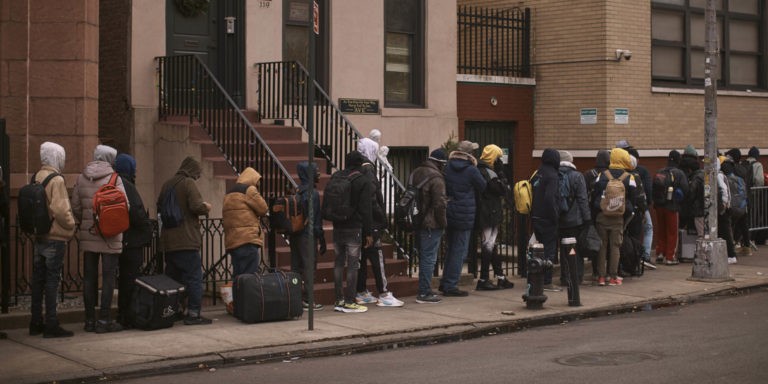
(José Niño, Headline USA) When Congress designed the rules for immigration proceedings, it never anticipated a scenario where hundreds of thousands of cases would be closed or dismissed, and even more would go unheard because respondents simply failed to appear.

However, that’s exactly what happened during the Biden administration, when over 500,000 noncitizens did not show up for their scheduled removal hearings, while the Department of Homeland Security dismissed or closed an additional 700,000 pending immigration cases, according to the findings of Andrew R. Arthur, the Resident Fellow in Law and Policy at the Center for Immigration Studies. 

These missed appearances signal a broader issue: the Biden administration’s actions have contributed to significant dysfunction in the immigration system. 

Removal proceedings in the United States are governed by Section 240 of the Immigration and Nationality Act (INA). 

The process begins when the Department of Homeland Security (DHS) files a Notice to Appear (NTA) with an immigration court. 

The respondent — typically a noncitizen alleged to be removable — attends a master calendar hearing, where an immigration judge explains their rights and hears their response to the allegations. Most respondents admit the charges and proceed to seek relief, such as asylum or lawful permanent residency. 

The judge then determines eligibility for relief during a separate merits hearing. If the respondent is not removable, the case is dismissed. If the respondent is removable and does not obtain relief, the judge issues a removal order.

Throughout these proceedings, cases may be continued for reasons such as securing legal counsel or gathering evidence. However, if a respondent receives notice but fails to appear, and the evidence supports removal, the INA requires the judge to issue a removal order in absentia. 

According to a December 2024 Government Accountability Office (GAO) report, historically about 34 percent of noncitizens have failed to appear for their hearings, resulting in removal orders issued without their presence.

Data from the Executive Office for Immigration Review (EOIR) indicate that from fiscal years 2015 to 2021, fewer than 350,000 in absentia removal orders were issued.

Between 2022 and December 2024, this number rose sharply to over 507,000 — an increase of nearly 45 percent in less than half the time. In 2024 alone, nearly 223,000 individuals failed to appear for their hearings and were ordered removed in absentia.

Several factors have contributed to the rise in no-shows and in absentia removal orders. The number of immigration judges has increased significantly, from just over 250 in 2015 to 735 in 2024, allowing more cases to be heard. 

While the number of immigration judges grew by 66 percent between FY 2019 and FY 2024 — from just over 440 to a significantly larger bench — the number of removal orders issued to aliens who failed to appear surged by more than 144% during the same period, rising from under 91,500 in FY 2019 to nearly 223,000 in FY 2024.

However, the increase in judges does not fully explain the surge in missed hearings. Policy changes in recent years, particularly regarding detention and release practices, have played a substantial role. 

The surge in immigration court no-shows stems largely from the Biden administration’s refusal to detain most illegal entrants, not from court operations.

Under section 235(b) of the INA, Border Patrol agents and Customs officers can place inadmissible aliens into expedited removal, bypassing immigration judges unless the alien claims a fear of return and is found to have a “credible fear.” Otherwise, they can be swiftly deported.

If credible fear is established, or if expedited removal isn’t applied, the alien is placed into standard removal proceedings under section 240 of the INA. By law, DHS must detain all such aliens from the moment of encounter until they are either granted relief or deported.

Instead, the Biden administration has largely sidelined expedited removals, treating nearly all illegal entrants as “asylum seekers” and releasing most of them — an estimated 88.5 percent by Arthur’s estimates — into the U.S. with a notice to appear in court.

Historically, released individuals who are unlikely to obtain relief are less likely to attend their hearings, which is why Congress mandated that DHS detain individuals encountered by CBP at the border and ports of entry.

By overwhelming immigration courts with largely unscreened migrants, the Biden administration effectively guaranteed a surge in absentia removal orders. Still, the more than 507,000 no-shows is even more troubling than it seems.

That’s because, while placing millions of illegal immigrants into removal proceedings, the administration also pushed courts to terminate, dismiss, or close over 700,000 other cases —what the House Judiciary Committee has described as a “quiet amnesty.”

Few, if any, of those aliens were eligible for relief. Had they been, they likely wouldn’t have allowed their cases to be terminated, dismissed, or closed.

These trends highlight ongoing challenges in enforcing immigration laws and maintaining the integrity of the court system. How policymakers address these issues will likely shape the effectiveness and credibility of U.S. immigration adjudication in the years ahead.

José Niño is the deputy editor of Headline USA. Follow him at x.com/JoseAlNino

Sen. Dick Durbin, Who Was Instrumental in Making Obama President, Announces His Retirement

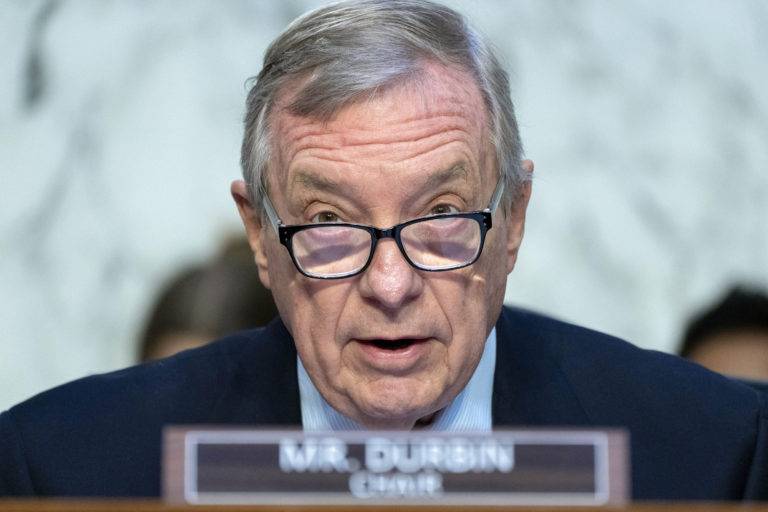
(Headline USA) Sen. Dick Durbin, D-Ill., who spent much of his career pushing for protections for illegal immigrants, said Wednesday he will not seek reelection in 2026. His impending retirement ends a more than four-decade career representing Illinois, and it accelerates a generational shift in Senate Democratic leadership where he has long held the No. 2 position.

Durbin, 80, is in his fifth Senate term and was first elected to the House in 1982. His decision not to run will set off a scramble for his Senate seat in solidly Democratic Illinois and for his leadership position in Washington as many in the party agitate for a new and more aggressive approach to confronting Republican President Donald Trump in his second term.

“The decision of whether to run has not been easy,” Durbin said in a video posted to X. “I truly love the job of being a United States senator. But in my heart I know it’s time to pass the torch.”

Durbin served seven terms in the House before succeeding his mentor, Paul Simon, in the Senate in 1996.

Durbin has been the No. 2 Senate Democrat since 2005. From that post, he helped shape the career of an up-and-comer from Illinois, Barack Obama, who was only four years into his first term in the Senate when he was elected president.

Obama said in a post on X after Durbin’s announcement that “I would not have been a United States Senator – and certainly would not have been President – had it not been for Dick’s support.”

As the chairman of the Senate Judiciary Committee during Democratic President Joe Biden’s term, Durbin led the confirmation of Supreme Court Justice Ketanji Brown Jackson in 2022. He also organized the Democrats’ pushback when Trump and Senate Republicans confirmed Justice Amy Coney Barrett in late 2020.

Durbin is part of a Senate leadership team that has been in place for almost two decades, alongside the current Senate Democratic leader, New York’s Chuck Schumer, 74, and the late Majority Leader Harry Reid of Nevada, who retired in 2017 and died in 2021. The race for Durbin’s No. 2 spot is likely to be seen as an early test for who could eventually replace Schumer as younger members of the caucus have eyed a new generation of leaders.

Hawaii Sen. Brian Schatz, one of the Democrats who is considered a possible contender for the second-ranking job, put out a statement within minutes of Durbin’s announcement saying that Durbin has been “a pillar of leadership, integrity, and unwavering dedication to the people of his home state of Illinois and the nation.”

Among Durbin’s more significant legislative achievements, he is largely credited with putting in motion the movement to ban indoor smoking. Having watched his 53-year-old father die of lung cancer when he was 14, Durbin won approval of legislation he sponsored in 1987 prohibiting smoking on short commercial flights and expanded it to nearly all domestic flights two years later.

“People started asking, ‘If secondhand smoke wasn’t safe on airplanes — why is it safe in public buildings, schools, hospitals or restaurants?’ The answer is simple: It’s not,” Durbin said on the 25th anniversary of the law.

In the early 2000s, he introduced the DREAM Act, which would give illegal immigrants pathway toward U.S. citizenship.

It has never become law, but in 2010, Durbin and Sen. Richard Lugar, R-Ind., wrote Obama asking him to stop deporting so-called Dreamers. Obama responded with Deferred Action for Childhood Arrivals, or DACA, which has covered about 830,000 illegal immigrants, according to Durbin’s office.

Richard Durbin was born in 1944 in East St. Louis. In 1966, after graduating from Georgetown University, he interned for Sen. Paul Douglas, whose seat he now holds. It was Douglas, who lost election to a fourth term in 1966, who once mistakenly called him “Dick,” a nickname Durbin adopted.

Durbin earned a law degree from Georgetown and worked as legal counsel for Simon, who was lieutenant governor in the late 1960s and early 1970s, and then for the Legislature through the 1970s. In 1978, Durbin made an unsuccessful run for lieutenant governor, after which he maintained a private legal practice and co-owned a Springfield tavern.

A redrawn district, an economic recession and funding from pro-Israel forces were factors when in 1982 Durbin ousted Paul Findley, an 11-term Republican congressman who was best known for his criticism of American policy toward Israel and support of Palestinians.

In 2000, Democratic presidential nominee Al Gore considered Durbin for the vice presidency, before chose Sen. Joseph Lieberman of Connecticut. But a few years later, Durbin influenced another presidential candidate when he served as a sounding board for and adviser to Obama.

Adapted from reporting by the Associated Press

Ruining the Money

(Lawrence W. Reed, Money Metals News Service) By the start of the 20th Century, governments and their diplomats around the world dubbed the (Turkish) Ottoman Empire “the sick man of Europe.”

Conventional wisdom, reflected in high school and college history texts to this day, cites these contributing factors in the 500-year decline of what was once one of the biggest and most powerful domains in the world: a failure to industrialize and modernize; internal strife; conflict with neighbors, particularly Russia; and siding with Germany in World War I.

All those factors played a role in the Empire’s formal end in 1922, when it was dismantled. The smaller nation of Turkey emerged in its place. But historians, who often prefer to tell history in political and military terms, probably underestimate the role of currency debasement (a.k.a. inflation) in the demise of the Ottomans.

The British economist John Maynard Keynes, in one of his few lucid moments, offered a candid assessment of the practice:

By a continuing process of inflation, governments can confiscate, secretly and unobserved, an important part of the wealth of their citizens. By this method they not only confiscate, but they confiscate arbitrarily; and, while the process impoverishes many, it actually enriches some.

The sight of this arbitrary rearrangement of riches strikes not only at security, but at confidence in the equity of the existing distribution of wealth…There is no subtler, no surer means of overturning the existing basis of society than to debauch the currency. The process engages all the hidden forces of economic law on the side of destruction, and does it in a manner which not one man in a million is able to diagnose.

As the medium of exchange, money is at least one side of every non-barter transaction. Ruin the money and you’ll ruin the economy. Ruin the economy and you’ll ruin the country.

Ottoman rulers routinely engaged in the debasement of money. They did it for hundreds of years by reducing the size and precious metal content of their coins, most notably the silver kuruş, also known as the piastre. They issued gold coins, too, but fixed the gold/silver ratio in a fashion that triggered Gresham’s Law and drove gold into hiding.

Much of the 18th Century saw a relative monetary stability before debasement and inflation resumed. When they had finally ruined the kuruş in the early 19th Century, the Ottomans introduced a new currency, the lira, and screwed it up too.

Then, in the decades before World War I, they tried two different fiat (unbacked) paper money issues and—you guessed it—mismanaged them both into oblivion.

The periodic financial crises created by Ottoman debasement make for fascinating reading if you know where to look (see below). Those crises often produced political upheavals and revolts. Space permits me to focus on just one of those episodes, the Beylerbeyi event of 1589. It was the first major debasement-induced rebellion in the Empire, and for the Ottomans, it was pretty much a long downhill road from there.

It all started with a war, when the Ottomans stupidly decided in 1578 to attack the neighboring Safavid Empire (roughly corresponding to today’s Iran). The venture proved too costly to finance through taxation and borrowing alone, so the Sultan, Murad III, reduced the precious metal in the coinage to cover his government’s budget deficits. Prices soared.

Ordinary people felt the brunt of the inflation, but they didn’t have the means to do much about it. However, the elite infantry, known as the “janissaries,” certainly did. They are considered history’s first standing army to be furnished with firearms, and they didn’t like what inflation did to their salaries. In real terms, their pay fell by about half during the war.

The janissaries demanded a big increase in their salaries, as well as the execution of the state’s Treasurer and another official (the Beylerbeyi) who had advised the Sultan to debase the currency. Murad III capitulated, raised the salaries, and stood by while the janissaries executed his Treasurer and advisor.

The revolt ended with the regime weakened, but subsequent sultans learned little from the episode. In the half century following the Beylerbeyi revolt, reports Hakan Berument, prices rose fivefold. Currency debasement became an Ottoman hobby during most of the next 300 years.

Now you know yet another good reason why the Ottoman Empire no longer exists.

Sources and additional information:


Lawrence W. Reed is FEE’s President Emeritus, Humphreys Family Senior Fellow, and Ron Manners Global Ambassador for Liberty, having served for nearly 11 years as FEE’s president (2008-2019). He is the author of the 2020 book, Was Jesus a Socialist? as well as Real Heroes: Incredible True Stories of Courage, Character, and Conviction and Excuse Me, Professor: Challenging the Myths of Progressivism.

New ICE Data: Sanctuary Cities Release THOUSANDS of Illegals Eligible for Deportation

(José Niño, Headline USA) Over a two-year period, sanctuary policies in dozens of states led to the release of more than 25,000 individuals flagged by Immigration and Customs Enforcement (ICE), according to newly obtained federal records.

Jessica M. Vaughan, the Director of Policy Studies at the Center for Immigration Studies, highlighted in a post titled “Which Sanctuary Jurisdictions Have Released the Most Criminals?” that sanctuary jurisdictions often declined to transfer custody of deportable individuals in their jails to ICE. 

Between October 1, 2022, and February 6, 2025, these facilities declined over 25,000 ICE detainer requests, and in more than 1,400 cases, they did not provide ICE with sufficient notice to assume custody.

A detainer request is a formal notice issued by ICE to state or local law enforcement agencies, asking them to temporarily hold an individual who is already in custody beyond their scheduled release time. This allows ICE to assume custody for potential deportation proceedings. 

The data reveals that California led the nation in declined immigration detainers, accounting for 52 percent of all cases, with 13,025 instances — more than any other state. Other states with notably high numbers of declined detainers included Illinois, Virginia, Massachusetts, and Connecticut. 

Overall, jails in 46 states, along with the District of Columbia, Puerto Rico, and the Northern Mariana Islands, declined detainers, even in jurisdictions where sanctuary policies are legally restricted.

Santa Clara County’s main jail in California topped the list, releasing nearly 3,000 individuals due to declined detainers or lack of notification. Cook County Jail in Illinois and Fairfax County Adult Detention Center in Virginia also released over 1,000 individuals each.

Most strikingly, the report found that 72 individuals with homicide charges or convictions were released during the period. Among the facilities involved, the Illinois River Corrections Center and Santa Clara County jails each released six convicted killers, while Stateville Correctional Center in Illinois released five.

A comprehensive map and additional details on active sanctuary cities and states and their policies can be found here. 

As the debate over sanctuary policies continues, these findings highlight the ongoing challenges faced by federal immigration authorities nationwide.

José Niño is the deputy editor of Headline USA. Follow him at x.com/JoseAlNino 

Report: Vehicle Driven by Deported ‘Maryland Man’ Was Used for Human Smuggling

(Ken Silva, Headline USA) A federal judge has given the Trump administration until 6 p.m. today to explain the steps it’s taken, if any, to free a “mistakenly” deported man from an El Salvador prison and return him to the U.S.

Meanwhile, evidence continues to be reported about the fact that the deported man, Kilmar Abrego Garcia, was likely an MS-13 gang member involved in human smuggling—contrary to reports from liberal media outlets, who’ve referred to the El Salvadorian illegal immigrant as a “Maryland man.”

Last week, it was revealed that Garcia was suspected by Tennessee Highway Patrol (THP) of human trafficking in 2022 during a traffic stop, and that the FBI ordered him to be released. On Tuesday, Just the News reported more facts about that 2022 traffic stop—revealing that Garcia was found to have been driving a vehicle owned by a human smuggler.

“When Abrego Garcia was stopped in 2022 by the Tennessee state trooper, Homeland Security intelligence created a record of the encounter … The El Salvadoran was driving a black 2001 Chevrolet Suburban and said he was transporting his passengers to Maryland from Texas for construction work, although the state trooper found no luggage in the SUV,” Just the News reported.

“Homeland Security documents identified the owner of the vehicle as Jose Ramon Hernandez Reyes. Abrego Garcia told the state trooper that the owner was his boss. However, that SUV was flagged separately by the Homeland Security Investigations Baltimore field office as belonging to a target they suspected of human trafficking or smuggling.”

Just the News quoted Homeland Security records, which stated: “Vehicle is used by HSI Baltimore target in human smuggling/trafficking operation. Vehicle makes trips to southern border to pick up non-citizens.”

The details of Abrego Garcia’s relationship with Reyes, who was deported for human trafficking in 2021. As has been previously reported, Abrego Garcia was transporting seven other people at the time of the 2022 traffic stop, and he told THP officers that he had spent the last three days driving from Houston, Texas to Temple Hills, Maryland, “to bring in people to perform construction work.”

“There was no luggage in the vehicle, leading the encountering officer to suspect this was a human trafficking incident,” a 2022 Tennessee police report said. “All the passengers gave the same home address as the subject’s home address. During the interview, subject pretended to speak less English than he was capable of and attempted to put encountering officer off-track by responding to questions with questions.”

Revelations about the 2022 traffic stop follow previous reports about a Maryland police report from three years earlier. According to that March 2019 Maryland police report, Abrego Garcia was spotted loitering at a Home Depot parking lot around 2:30 p.m. with three other men. Two of the other men were confirmed to be MS-13 members, while police said they couldn’t determine the affiliation of a third man. Abrego Garcia was also strongly suspected of being with MS-13, according to the report.

Along with Abrego Garcia’s potential gang activities, it has been revealed that Abrego Garcia’s wife filed a restraining order against him in 2021 over domestic violence allegations.

Abrego Garcia illegally immigrated to the U.S. in 2012, and two judges deemed him a likely member of MS-13 in 2019. However, former U.S. Immigration Judge David M. Jones reportedly granted Abrego Garcia’s request for a “withholding of removal” order in 2019, based on his claim that gangs threatened his family in El Salvador and Guatemala.

“He has established past persecution based on a protected ground, and the presumption of a well-founded fear of future persecution. DHS has not shown there are changed circumstances in Guatemala that would result in the Respondent’s life not being threatened, or that internal relocation is possible and reasonable under the circumstances,” Judge Jones said at the time, referring to the fact that his family was purportedly receiving threats from the Guatemalan gang Barrio 18.

When Abrego Garcia was deported last month, a DOJ lawyer attributed it to a “clerical error.” That DOJ lawyer, Erez Reuveni, was then placed on administrative leave before he was fired.

“The only mistake that was made is a lawyer put an incorrect line in a legal filing that since has been relieved of duty,” White House aide Stephen Miller said of Reuveni’s firing.

The U.S. Supreme Court ordered the Trump administration nearly two weeks ago to facilitate Abrego Garcia’s return to the U.S. from a notorious Salvadoran prison, rejecting the White House’s claim that it couldn’t retrieve him after mistakenly deporting him.

Trump administration officials have pushed back, arguing that it is up to El Salvador — though the president of El Salvador has also said he lacks the power to return Abrego Garcia. The administration has also argued that information about any steps it has taken or could take to return Abrego Garcia is protected by attorney-client privilege laws, state secret laws, general “government privilege” or other secrecy rules.

But on Tuesday, U.S. District Judge Paula Xinis said those claims, without any facts to back them up, reflected a “willful and bad faith refusal to comply with discovery obligations.”

“For weeks, Defendants have sought refuge behind vague and unsubstantiated assertions of privilege, using them as a shield to obstruct discovery and evade compliance with this Court’s orders,” Xinis wrote an the order Tuesday. “Defendants have known, at least since last week, that this Court requires specific legal and factual showings to support any claim of privilege. Yet they have continued to rely on boilerplate assertions. That ends now.”

She gave the administration until 6 p.m. Wednesday (today) to provide those details.

The Associated Press contributed to this report.

Ken Silva is the editor of Headline USA. Follow him at x.com/jd_cashless.

DOJ: Noncitizen IL Officials Kept from ICE Accused of Murder After Jail Release

(Greg Bishop, The Center Square)  One of several examples the U.S. Department of Justice gave of how federal officials have been obstructed by Illinois’ migrant sanctuary policies involves an illegal alien released from jail later being accused of murder.

“In January 2025, federal officials issued a detainer request for an alien who was being held in Cook County jail on sexual assault of a minor charges,” the DOJ said. “Pursuant to Cook County’s restrictions, law enforcement officers did not respond to the detainer request … Following the alien’s release from local jail, he was arrested and charged with homicide just 17 days later.”

The filing in federal court comes as the state of Illinois, Cook County and the city of Chicago are asking the judge in the case to hold off on tackling migrant sanctuary policies that the DOJ says obstructs federal agents from doing their job.

In a statement of material facts for its motion for summary judgment against the state’s migrant sanctuary laws, the U.S. Department of Justice last week said the federal government has exclusive authority over immigration laws and enforcement and President Donald Trump issued an executive order declaring a national emergency at the border.

“Congress recently expanded the list of crimes that can trigger mandatory detention requirements to include burglary, theft, larceny, shoplifting, or assault of a law enforcement officer, or any crime that results in death or serious bodily injury to another person,” the DOJ said in its filing for summary judgment. “Defendants’ sanctuary policies cause significant harm to federal immigration enforcement and public safety by not honoring immigration detention orders, or helping facilitate access to detainees in local custody.”

At an unrelated event in Jacksonville Tuesday, Gov. J.B. Pritzker reacted.

“We don’t prevent the federal authorities from coming to our jails or coming to our prisons with a federal criminal warrant and take them,” Pritzker said. “We, in fact, I would like them to do that, but it is up to them to go to a court to get that criminal warrant to take them away.”

The DOJ gave an example of immigration officials waiting outside an Illinois prison for an illegal alien being released but were told to leave.

“When ICE attempts to stage an arrest outside of an Illinois state or local facility – including in a public parking lot – facility staff, usually at the direction of the warden, often commands ICE officers to leave the premises,” the DOJ filing said.

In another example given, the DOJ claims an illegal alien that federal officials were obstructed from picking up in a jail was subsequently let out in 2024. That individual was then arrested on a charge of aggravated criminal sexual abuse with a minor, traveling to meet a minor and contributing to the delinquency of a minor.

Tuesday evening, the state said the court should wait to schedule briefs on the motion for summary judgment against the sanctuary laws until their motion to dismiss the lawsuit is dealt with.

“Consistent with this sequence, Defendants request that the Court enter an order: (1) taking the United States’ summary judgment motion … under advisement and staying briefing on that motion until further order of the Court; and (2) instructing the parties to conduct a Rule 26(f) discovery conference within fourteen days of the Court’s ruling on Defendants’ pending motions to dismiss … to the extent any claims remain,” the defendants filing said.

The joint filing of the state of Illinois, Cook County and city of Chicago defending migrant sanctuary policies said the DOJ hasn’t provided a compelling reason to deviate from the typical sequence of federal litigation.

When asked if there needs to be more clarity in the state’s laws preventing local and state officials from cooperating with immigration enforcement, Pritzker said he’s been clear.

“I don’t know how much clearer I could be. I’ve been very straightforward about this,” Pritzker said. “And as far as I’m concerned, like I said, I welcome the authorities coming with criminal warrants to take those folks away.”

The case continues in federal court.