U.S. Attorneys in Border States Charge 1,220 With Immigration Crimes in a Week

(Bethany Blankley, The Center Square) In one week, U.S. attorneys for four border states charged more than 1,220 defendants with immigration crimes.

The Trump administration is prosecuting illegal entry and illegal reentry cases in accordance with federal law. The base sentence for illegal reentry is two years in federal prison. Those with felony convictions who were previously deported face up to 10 years in prison, and those convicted with aggravated felonies face up to 20 years in federal prison.

The greatest number of illegal foreign nationals charged, nearly 600, were in Texas, followed by 329 in Arizona, 169 in California and 133 in New Mexico.

In the Southern District of Texas, 216 cases were filed from April 11 through 17. The majority, 119, face illegal entry charges; 11 involve human smuggling; 86 face felony illegal reentry charges after previously being deported, with the majority having felony narcotics, firearms or sexual offense convictions.

Juries also recently handed guilty convictions and indictments in human smuggling cases, including smuggling of children and possessing child sexual abuse material.

In the Western District of Texas, federal prosecutors filed 378 immigration-related criminal cases from April 11 through 17. Those charged also include convicted felons who were previously deported multiple times. Their convictions include lewd or lascivious acts with a child under age 14, assault causing bodily injury, DWI, possession of a controlled substance, domestic assault, aggravated assault, among others.

The U.S. Attorney’s Office for the District of Arizona charged the next greatest number of 329 over the same time period. The most were charged with illegal entry, 179, followed by 130 with illegal reentry and 18 with “smuggling illegal aliens” into Arizona.

One was charged with assaulting, resisting, or impeding a Border Patrol agent. One Mexican national was arrested after refusing to register with the federal government after being arrested for driving under the influence and previously being deported five times.

Many charged were previously deported, including a Latin Kings and MS-13 transnational criminal gang member who’d been deported seven times and convicted of racketeering and conspiracy to possess with intent to distribute methamphetamine.

In another case, an alleged human smuggler was charged after authorities uncovered a scheme using the Telegram phone app and burner phones to recruit alleged smugglers in the U.S. to travel to the Arizona-Mexico border to drive illegal border crossers to Phoenix. In another case, a Mexican national was arrested after illegally reentering the U.S. after he was previously deported and convicted for trafficking heroin.

The next greatest number charged, 169, were in California. The Southern District of California filed 135 border-related cases, including for “transportation of illegal aliens, bringing in aliens for financial gain, reentering the U.S. after deportation, deported alien found in the United States, and importation of controlled substances.”

Prosecutors are prioritizing charging drug and firearms offenses, drug, firearm, and human smugglers, those with serious criminal records, those with active warrants, and those who endanger and threaten the local communities and law enforcement officers, the office said.

In a separate case, four indictments were unsealed charging 16 people in San Diego County with distributing large quantities of methamphetamine, fentanyl and heroin and laundering the drug-trafficking proceeds. In a coordinated takedown, more than 115 federal, state and local law enforcement officials executed search warrants and made arrests in three San Diego neighborhoods after a 16-month investigation.

Using court-authorized wiretaps, undercover agents and confidential sources, the investigation uncovered a distribution network of drugs, including fentanyl, throughout the U.S., including in Ohio and Kansas. The San Diego County-based drug trafficking organization used shell companies to gather and launder the proceeds from other states, including Colorado, Minnesota and Nebraska, according to the indictment.

In the Central District of California criminal charges were filed against 34 defendants for illegal reentry after they’d been previously deported. Many are felons with domestic violence, unlawful sex with a minor and assault with a deadly weapon convictions, are registered sex offenders, and served prison time.

In one case, four illegal foreign nationals were charged with stealing $10,000 in cash from a victim at a gas station in East Hollywood after following the victim from a Los Angeles bank branch. Law enforcement officers engaged in a high-speed pursuit, eventually caught them even after two bailed out and fled on foot. Officers recovered the $10,000 hidden in one defendant’s underwear as well as several fake passports.

In the District of New Mexico, 133 were charged with immigration crimes. The most, 68, were charged with illegal reentry after deportation, 55 with illegal entry and 10 with “alien smuggling.” Many charged are felons convicted of possession of a dangerous weapon by a restricted person, aggravated driving under the influence and possession of a forgery writing/device.

“Enhanced enforcement both at the border and in the interior of the district have yielded aliens engaged in unlawful activity or with serious criminal history, including human trafficking, sexual assault and violence against children,” the U.S. Attorney for New Mexico said.

Black American Who Fled to Ghana over Racism Now Wants to Return

(Luis Cornelio, Headline USA) A black American woman who allegedly moved to Ghana to flee what she described as “white racism” in the U.S. is now begging to come back. The issue? Africa isn’t the safe haven she quite imagined.

The unnamed woman went viral Tuesday after several conservative pages shared a video of her unleashing a verbal tirade about her experiences in Ghana. Headline USA could not independently verify the authenticity of the date of the video. 

“I’d rather go back to America and deal with the racism in America before I sit here in Africa and deal with the bullsh*t robbery, the bullsh*t fraud, the bullsh*t scams, the bullsh*t too expensive, the bullsh*t not having no snacks, the bullsh*t not having no food, the bullsh*t electricity, the bullsh*t hot water,” she claimed. 

The woman also complained about her house being invaded by “bullsh*t animals,” such as scorpions and “big *ss spiders, big *ss lizards, colorful lizards you ain’t never seen before—all in the room with you, sleeping with you.” 

According to her, locals constantly attempt to get money from her because they believe she is wealthy. 

“All the bullsh*t people trying to scam you when you go outside, thinking you rich [sic] so they try to get more money off you,” she claimed.

Struggling to make sense of her current situation in Ghana, she said, “I’m really trying to wrap my head around this sh*t. I’m really trying to wrap my head around how Americans come to Africa and be happy. Please comment down below because for me, I’m ready to go.” 

She also scolded Ghana’s infrastructure while comparing it to that of the U.S. 

“We got electricity and the only time our electricity gets cut off is when we don’t pay the bill,” she said. “And we got it so good now, we got prepaid electricity, so if we forget to pay the bill, we put some money on the prepaid thing and it comes right back on in two minutes. In less than two minutes. This sh*t right here didn’t come on for 14 hours yesterday. I can’t deal.” 

It’s unclear when the footage was originally recorded. 

Back in 2019, Ghana launched its “Year of the Return” initiative to encourage black individuals, including Americans, to return to their homeland. This marked the 400 years since the first African slaves arrived in Virginia in 1619. 

“The arrival of enslaved Africans marked a sordid and sad period, when our kith and kin were forcefully taken away from Africa into years of deprivation, humiliation and torture,” the Ghanaian government wrote in a press statement at the time. 

“While August 2019 marks 400 years since enslaved Africans arrived in the United States, ‘The Year of Return, Ghana 2019’ celebrates the cumulative resilience of all the victims of the Trans-Atlantic slave trade who were scattered and displaced through the world in North America, South America, the Caribbean, Europe and Asia,” the statement added. 

Mike Waltz Ousted as National Security Advisor Amid Signal Chat Scandal

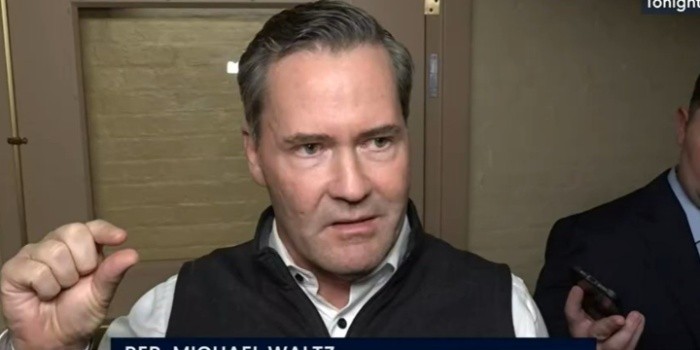
(José Niño, Headline USA) Michael Waltz’s tenure as National Security Adviser ended after a security breach involving a messaging app, according to a report by CBS News.

Waltz and his deputy Alex Wong are leaving the Trump administration, multiple sources confirmed on Thursday. This marks the first high-profile departure in President Trump’s second term, coming after less than four months in office.

Waltz’s departure stems from what has become known as “Signalgate”  — a March 2025 incident where he accidentally added Jeffrey Goldberg, editor-in-chief of The Atlantic, to a Signal group chat with top national security officials. 

The chat contained sensitive discussions about planned military strikes against Houthi rebels in Yemen, including specific timing information shared by Defense Secretary Pete Hegseth.

Following the incident, Waltz took responsibility, telling Fox News’ Laura Ingraham, “I take full responsibility. I built the group. It’s embarrassing. We’re going to get to the bottom of it.”. While President Trump initially expressed support for Waltz, saying he had “learned a lesson” and was “a good man,” the controversy ultimately eroded his standing within the administration.

Though administration officials argued no classified information was shared, the incident raised serious concerns about how sensitive security information was being handled.

A decorated combat veteran, Waltz served 27 years in the U.S. Army and National Guard, including multiple combat tours as a Special Forces officer in Afghanistan, the Middle East, and Africa, receiving four Bronze Stars, including two for valor.

Before entering politics, Waltz worked in the Pentagon as a defense policy director for Secretaries of Defense Donald Rumsfeld and Robert Gates, and served in the White House as Vice President Dick Cheney’s counterterrorism advisor. 

He later became the first Green Beret elected to Congress, representing Florida’s 6th district from 2019 until his appointment as national security advisor in January 2025.

Waltz was considered among the more hawkish members of the Trump administration, particularly regarding Iran. In March 2025, following U.S. strikes against Houthi rebels in Yemen, Waltz took a hard line: “All actions are always on the table with the president. But Iran needs to hear him loud and clear.” 

Regarding Iran‘s nuclear ambitions, Waltz announced that the Trump administration wouldn’t allow Iran’s Ayatollah to have his “finger on the nuclear button.” He emphasized, “All options are on the table to ensure it does not have one,” adding Iran could either “hand it over and give it up in a way that is verifiable, or they can face a whole series of other consequences.”

On Russia-Ukraine policy, Waltz has advocated for bringing both nations to the negotiating table while maintaining clear “red lines” and stronger deterrence against Russian escalation in Ukraine.

Waltz’s departure comes as reports surface of internal power struggles within the National Security Council. Tensions had reportedly grown between Waltz’s more interventionist stance and the “America First” faction of the administration. 

That wing—led in part by Vice President JD Vance—is generally more skeptical of foreign interventions.

Overall, Waltz’s firing leaves uncertainty about the Trump administration’s future national security leadership.

The Associated Press contributed to this report.

José Niño is the deputy editor of Headline USA. Follow him at x.com/JoseAlNino

Newsom Parole Board Approves Release of Another Toddler Murderer

(Kenneth Schrupp, The Center Square) California Board of Parole Hearings ordered the release of convicted child murderer Herbert David Brown III, making this the second announced early release of a convicted child murderer in recent weeks.

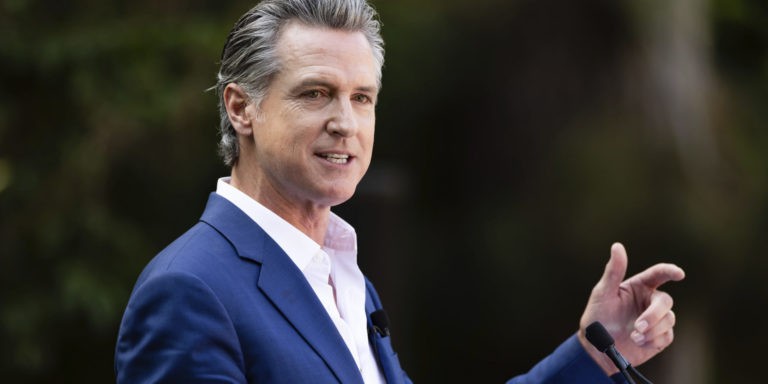
San Luis Obispo County District Attorney Dan Dow, whose office convicted Brown for beating his 22-month-old daughter Lily to death, has requested that California Gov. Gavin Newsom use his authority to overturn the parole board’s decision. All current board members are Newsom appointees.

“Brown has done self-help programming but didn’t express responsibility for Lily’s death until Inmate Brown was told that failure to do so was a bar to being paroled,” wrote Dow. “Even then, Inmate Brown’s account lacked credibility.”

“Brown has significant mental health issues that appear to require ongoing monitoring and treatment,” continued Dow. “Inmate Brown’s relapse prevention plans are inadequate and superficial.”

Brown entered a plea of no contest and was sentenced to 15 years to life in prison for the murder. Lily was found dead with multiple injuries, including a fractured skull.

Brown was under the influence of methamphetamine when he killed his daughter. He now identifies as a woman and has served 12 years of his sentence.  

According to the most recent Comprehensive Risk Assessment on Brown from 2023, he was found to be a “higher moderate” risk for violence. 

Brown was first granted parole in October 2024, after which California Gov. Gavin Newsom, who has appointed all current members of the California Board of Parole Hearings, referred the parole decision back to the parole board for review. The board has since reaffirmed its earlier decision, and Dow is seeking residents to write to the governor to use his constitutional authority to override the parole board.

“Precious Lily deserves better. The time is now Governor Newsom, please help ensure that we have Justice for Lily Brown,” said Dow.

“The Governor has authority under California Constitution, Article V, Section 8(b) to reverse a decision to release a convicted murderer on parole, but must do so within 30 calendar days,” continued Dow. “The decision was issued on April 22, 2025.”

There is currently no release date set for Brown.

Two weeks ago, the Board of Parole Hearings’ decision to approve the early release of convicted child murderer Josue Herrera, who was found to have beaten his girlfriend’s 2-year-old son to death, sparked national outrage against the state’s apparent leniency toward murders of young children. 

Dow said Brown’s early release is possible due to Proposition 57, passed in 2016. 

Prop. 57 was written to only allow early release of “prisoners convicted of non-violent felonies.” 

However, because the state automatically classifies any crimes not specifically classified as violent to be non-violent, such as drive-by shootings and assault with a deadly weapon, many violent crimes are not technically considered “violent” per se.

Dow also noted Prop. 57 allows the Department of Corrections and Rehabilitation to award sentence credits for rehabilitation, good behavior or educational achievements, even to those who committed crimes classified as violent.

“This means that even those inmates sentenced for violent offenses, like murder of a child, are eligible to be released much earlier than under the law that was in effect prior to the passage of Proposition 57,” said Dow.

US and Ukraine Sign Minerals Deal

(Dave DeCamp, Antiwar.com) On Wednesday, the US and Ukraine signed a deal that will establish a new investment and reconstruction fund to give the US access to Ukrainian rare earth minerals and other natural resources.

“I am glad to announce the signing of today’s historic economic partnership agreement between the United States and Ukraine establishing the United States-Ukraine Reconstruction Investment Fund,” said US Treasury Secretary Scott Bessent.

Bessent said the deal “allows the United States to invest alongside Ukraine, to unlock Ukraine’s growth assets, mobilize American talent, capital, and governance standards that will improve Ukraine’s investment climate and accelerate Ukraine’s economic recovery.”

While it does not appear Ukraine received any concrete security guarantees as part of the deal, it means the US now has more of an interest in staying involved in the country’s affairs. Bessent said the agreement “signals clearly to Russia that the Trump administration is committed to a peace process centered on a free, sovereign, and prosperous Ukraine over the long-term.”

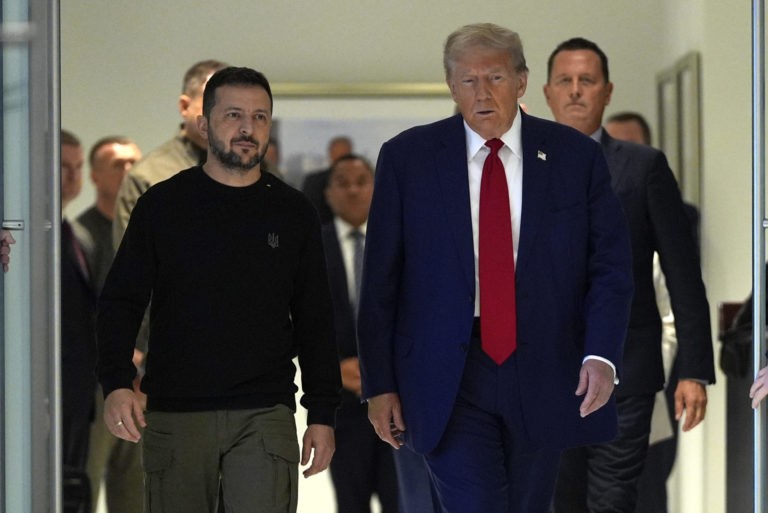
The signing of the deal comes after months of contentious negotiations, which included the Oval Office blow-up between Ukrainian President Volodymyr Zelensky, Vice President JD Vance, and President Trump.

Trump has been saying that Ukraine owes the US hundreds of billions of dollars for its spending on the proxy war, an idea Zelensky has rejected. Yulia Svyrydenko, Ukraine’s first deputy prime minister, who signed the deal with Bessent in Washington, said the agreement didn’t include any sort of debt repayment.

“The agreement does not contain any mention of any debt obligations of Ukraine to the United States. The implementation of the agreement will allow both countries to expand their economic potential through equal cooperation and investment,” she said.

This article originally appeared at Antiwar.com.

Law Enforcement Uncovers ‘Conspiracy’ to Commit Mass Shootings

(Ken Silva, Headline USA) Last December, a 15-year-old girl named Natalie Rupnow shot up the Abundant Life Christian School in Wisconsin—killing another student and a teacher, and wounding six others before killing herself.

When investigators searched Rupnow’s phone, they found that she was part of a network of extremist and sadistic chatrooms, and that she was communicating with many other people. One of those people was a 22-year-old Florida man, who was allegedly in a “conspiracy” with Rupnow to commit mass shootings, according to a detective’s affidavit released Tuesday.

Florida police say they stopped the 22-year-old, Damien Blade Allen, just in time when they arrested him Sunday.

“There’s no doubt in my mind they have stopped a mass shooting that was going to happen,” Palm Beach County Sheriff Ric Bradshaw told WPBF 25 News. “This guy was ready to go, had all the equipment, had the propensity to do it. It’s just a matter of what day was going to set him off to go do it.”

When the FBI searched through Allen’s social media accounts after last December’s Rupnow shooting, agents found videos of him posing as a police officer. Apparently, the videos were so convincing that they thought he really was one at first. According to a Palm Beach County Sheriff’s Office affidavit, Allen drove a Ford Crown Victoria similar to a police vehicle, he had all the equipment, and even had what looked like a Palm Beach Sheriff’s laptop.

“Based on postings made by Allen, dressed in a full class B PBSO uniform it was initially believed that he was likely a deputy with the Palm Beach County Sheriffs Office. FBI Milwaukee then contacted FBI Miami division to contact PBSO Internal Affairs bureau (IA) due to a deputy being in contact with an active shooter,” the PBSO affidavit stated. “It was later determined that Allen was not a PBSO deputy.”

Law enforcement also discovered that Allen allegedly sold guns illegally through a website that is still active. The PBSO said it’s still investigating this website.

Further investigations of Allen’s social media communications revealed his “conspiracy” with Rupnow to commit mass shootings, according to the affidavit. Allen and Rupnow said they loved each other on multiple occasions, and Allen told her at one point that “we go down together.”

“Based on these exchanges of posted statements between Rupnow and Allen on TikTok it is clear that Allen unequivocally makes written threats to conduct mass shootings at 7 different locations and that he is armed with at least two firearms,” the PBSO affidavit said, alleging that there was “a conspiracy between both of them to commit mass shootings.”

It turned out, Allen had a lot more than two firearms. According to WPBF 25 News, “deputies say they found 18 firearms, including what appeared to be automatic weapons, more than 300 pounds of ammunition, and … a taser, a two-way radio, and a fake body camera made with a 3D printer.”

“Detectives say Allen had more than PBSO gear — they found an FBI uniform, an Army Ranger outfit, Marine Corps dress blues, a ballistic vest, helmets, and fake federal and military ID badges,” WPBF 25 News added.

A picture also shows what appears to be some sort of bazooka, but law enforcement didn’t address that during their press conference Wednesday.

Allen is set to have a detention hearing Friday.

Meanwhile, the FBI says it’s still investigating the network in which Rupnow and Allen were involved. According to researcher Becca Spinks, Rupnow was in touch with at least one other school shooter—her Twitter/X account followed that of Solomon Henderson,  a 17-year-old Tennessee high schooler who killed a female student and wounded one other before killing himself in January.

In addition, the FBI detained a 20-year-old man named Alexander Paffendorf, who was also allegedly talking to Rupnow online about committing a mass shooting.

On Tuesday, A court reportedly granted a three-year gun violence restraining order against Paffendorf, which bars him from owning firearms for three years, according to Fox 5 in San Diego. Paffendorf has not been criminally charged over the matter.

Ken Silva is the editor of Headline USA. Follow him at x.com/jd_cashless.

First Quarter Gold Demand at Highest Level Since 2016

(Mike Maharrey, Money Metals News Service) Record gold prices drove first-quarter demand in 2025 to the highest level since 2016.

The LBMA gold price hit multiple record highs in Q1, with the average price coming in at $2,860 an ounce. That was a 38 percent year-on-year increase.

The gold price was driven by multiple factors, including the specter of a trade war, geopolitical turmoil in the Middle East and Ukraine, stock market volatility, and dollar weakness.

With prices on a strong bull run, total Q1 gold demand, including over-the-counter (OTC) investment, came in at 1,206 tonnes, a 1 percent increase year-on-year. In dollar terms, demand was nearly $111 billion, just slightly off the all-time quarterly record. The relatively modest uptick in volume translated to a 40 percent y/y rise in value.

There was a sharp revival in ETF inflows during Q1. This helped more than double investment demand to 552 tonnes. That represents a 170 percent year-on-year increase, the highest since Q1 2022.

In dollar terms, ETF demand of $21 billion ranked as the second highest quarterly inflow on record, just $3 billion lower than the record inflow set in the second quarter of 2020 during government pandemic shutdowns.

Bar and coin demand was also robust, coming in at 325.4 tonnes, a 3 percent y/y increase. This was 15 percent above the 5-year average.

Chinese demand was the primary driver for bar and coin sales, surging 12 percent to 124 tonnes. China accounted for 38 percent of global Q1 bar and coin investment.

Bar and coin demand was also strong in India, rising 7 percent y/y to 47 tonnes. This was sharply lower than the previous two quarters, but this was typical seasonal decline due to the drop in festival and wedding buying in Q1.

Meanwhile, bar and coin demand in the U.S. dropped to the lowest level in almost 5 years.

Unsurprisingly, high prices squeezed gold jewelry demand and Q1.

In volume terms, demand fell 21 percent year-on-year to 380 tonnes. However, in dollar terms, demand increased by 9 percent to $35 billion.

According to the World Gold Council, every market except China reported value growth, “suggesting that consumers were prepared to stretch their budgets in light of higher prices.”

Demand drag was particularly noticeable in price-sensitive Asian markets. Chinese gold jewelry demand hit a five-year low of 125 tonnes. However, the demand in dollar terms was down just 6 percent.

India also reported a sharp 25 percent drop in jewelry demand to 71 tonnes. It was the lowest quarterly volume since Q3 2020. However, the value of that demand rose by 3 percent.

In the U.S., gold jewelry demand fell more modestly, down 5 percent y/y. However, the rising prices drove the value of that demand 32 percent higher.

Central bank net gold purchases came in at 244 tonnes. That was 21 percent lower than the first quarter of 2024, but as the World Gold Council put it, “comfortably within the quarterly range of the last three years.”

The National Bank of Poland was the biggest buyer in Q1 (49 tonnes). Other significant buyers included China, Kazakhstan, Turkey, India, and the Czech Republic.

Demand for gold in industry and technology was flat at 80 tonnes in Q1, despite a 2 percent increase in demand in the electronics sector. Demand for AI-related applications and devices remained strong, supported by new product launches in China.

On the supply side, mine output was slightly higher than Q1 2024, coming in at 855.7 tonnes. That broke last year’s first quarter production record of 853.4 tonnes.

Gold recycling was down by about 1 percent despite the higher prices.

Total gold supply increased by 1% y/y to 1,206 tonnes in Q1.


Mike Maharrey is a journalist and market analyst for Money Metals with over a decade of experience in precious metals. He holds a BS in accounting from the University of Kentucky and a BA in journalism from the University of South Florida.

Chinese Investors Piled into Gold Last Month

(Mike Maharrey, Money Metals News Service) Chinese investors are pouring money into gold. China accounted for more than half of gold flows into ETFs globally last month, and Q1 Chinese demand for gold bars and coins hit the second-highest quarterly level on record.

As World Gold Council senior market strategist John Rease put it, Chinese investment demand for gold has increased “dramatically.”

China ranks as the world’s biggest gold market.

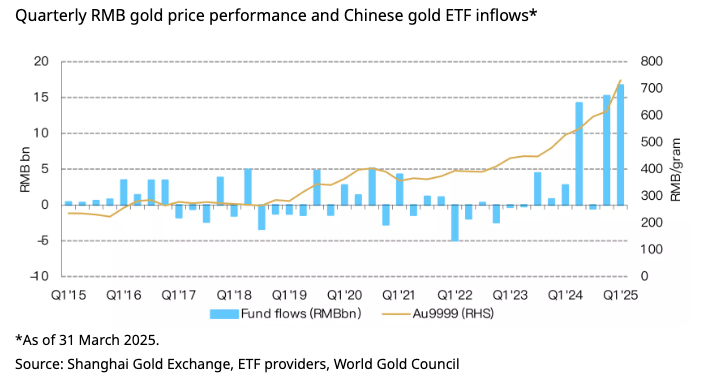
Chinese investors responded as the RMB gold price recorded its strongest Q1 since 2002 when the Shanghai Gold Exchange (SGE) was established.

Total inflows of gold into China-based ETFs were estimated at over 70 tonnes in April, totaling around $7.4 billion. According to the World Gold Council, this more than doubled the previous monthly record.

This was on top of record gold inflows of 23 tonnes totaling ¥16.7 billion ($2.3 billion) in Q1.

ETFs are a convenient way for investors to play the gold market, but owning ETF shares is not the same as holding physical gold.

China’s share of global ETF holdings jumped to 6 percent last month, up from 3 percent at the beginning of the year.

Chinese interest in gold-backed funds is a relatively new phenomenon. Physical gold has historically been the primary means of investment in the country, and even with the surging interest in ETFs, Chinese investors continue to gobble up physical metal. Gold bar and coin sales surged 12 percent to 124 tonnes in the first quarter.

China accounted for 38 percent of global Q1 bar and coin investment.

While physical gold investment surged in China (and Asia more broadly), it declined in the U.S., with gold coin and bar sales falling to the lowest level in five years.

Demand for gold in China has driven price premiums to extreme levels. During the third week of April, they rose as high as $100 per ounce.

Chinese demand for gold was so strong in April that the government allocated additional gold import quotas for commercial banks.

The demand frenzy also prompted the Shanghai Gold Exchange to issue a warning.

“Investors should manage risks and make rational investment decisions in light of recent gold price fluctuations.”

According to the Financial Times, gold has become the most attractive investment option in the midst of a Chinese real estate crisis and a bear market in stocks.

A Shanghai-based client manager told the FT that investors are approaching gold in the same way they typically do stocks.

“It’s just like when stocks rise and mom-and-pop investors rush to open securities accounts. With gold prices soaring, people think buying gold is a sure way to make money.”

According to the World Gold Council, “escalating trade tension between the US and China, alongside expected currency depreciation, also drove safe-haven demand for gold; this was further encouraged by continued announcements of buying by the PBoC.”

Looking ahead, World Gold Council analyst Ray Jia expects gold investment demand to remain strong, primarily driven by the escalating trade war.

“The global gold price strength, boosted by a restructuring of the world trade order and world market volatility, will provide further support.”

A pilot program that allows insurance funds to invest in gold should also support Chinese demand. To date, four insurance companies have joined the SGE. They executed their first trades of gold contracts the very next day.

According to Jia, “Their participation should sustain long-term investment demand for gold in China, especially amid ongoing economic and trade uncertainties.”


Mike Maharrey is a journalist and market analyst for Money Metals with over a decade of experience in precious metals. He holds a BS in accounting from the University of Kentucky and a BA in journalism from the University of South Florida.

Gold Soars Amid Chaos: How to Stay Grounded in the Precious Metals Bull Market

(Money Metals News Service) In this episode of the Money Metals Midweek Memo, host Mike Maharrey opens with an unexpected comparison between the experience of playing goalie in a chaotic amateur hockey game and navigating today’s financial markets.

Substituting for a team of less experienced players, Maharrey found himself overwhelmed by disorganized defense and unpredictable gameplay. The key to managing that chaos, he explains, was staying calm and relying on fundamentals.

He relates this to the current investing environment, where headlines change by the hour and markets swing wildly in response. Like tracking a puck in disorder, investors must tune out the noise and focus on what doesn’t change—underlying economic realities and long-term fundamentals.

This advice frames the episode’s central theme: the importance of clarity and discipline amid economic volatility.

Volatility and the Dollar’s Decline

Maharrey highlights the rapid fluctuations in gold prices, with $25 to $50 swings now a daily occurrence. On the day of recording, gold was down to around $3,300 per ounce, after trading near $3,350 the previous day.

These price movements, he notes, are driven by shifting policy news—especially around tariffs—and will likely continue.

But rather than reacting to every market twitch, investors should pay attention to foundational issues that aren’t going away: debt bubbles, structural economic distortions from years of easy money, and a Federal Reserve caught in a policy bind.

He explains that the Fed is stuck between the need to keep interest rates low to support debt-laden sectors and the need to keep them high to contain inflation.

In the midst of this uncertainty, one thing remains constant: the dollar continues to lose purchasing power. Maharrey reminds listeners that even when inflation is “under control,” the Federal Reserve targets a 2 percent annual increase in the price level.

That means a 10 percent loss in dollar value every five years—an erosion that continues indefinitely.

Gold Hits a New Inflation-Adjusted Record

Amid the chaos, gold reached a historic milestone.

On April 22, it hit an intraday high of $3,500 per ounce, surpassing its previous inflation-adjusted record of $3,493 set on January 21, 1980.

That earlier high of $850 per ounce, when adjusted for inflation, had long stood as the benchmark.

This new record marks the growing realization that the dollar’s purchasing power has significantly deteriorated over time.

Maharrey addresses a common critique—that gold isn’t an effective inflation hedge because it took so long to surpass the 1980 high. But that peak, he explains, was an anomaly.

At the time, Fed Chairman Paul Volcker aggressively raised interest rates to as high as 20 percent to combat inflation, crushing gold’s rally.

In contrast, today’s central bankers have held rates around 5.5 percent at most, showing far less resolve. Viewed over longer timelines, gold has more than kept up with inflation.

Long-Term Performance and Inflation Hedging

Looking at gold’s performance since 2000, the story becomes clearer. An ounce of gold in 2000 cost around $285.

As of April 2025, that same ounce is worth approximately $3,300—a gain of over 847 percent. During that same span, consumer prices have risen just 81 percent. Gold has far outpaced inflation, proving itself as a long-term hedge.

Maharrey warns against using arbitrary time frames to judge gold’s performance. Critics often point to the 2011 high and note the lower prices that followed for several years. But those who held on have seen strong gains.

The key, he says, is to view gold through a long-term lens, not through the erratic headlines and short-term dips. His personal investment philosophy centers on wealth preservation, especially in a monetary environment defined by inflation and uncertainty.

Understanding Gold Pricing: Spot, Futures, and Fix

Maharrey devotes a segment to explaining how gold is priced. He outlines three key price points that investors should understand.

Spot Price

The first is the spot price, which is the real-time market price for immediate delivery. It is not set by any single entity but emerges from aggregated global trades across exchanges and over-the-counter transactions. This price forms the foundation for retail pricing and is the most commonly quoted figure on sites like MoneyMetals.com.

Futures Price

The second price is the futures price, which reflects the expected value of gold at a future date. Traded primarily on the COMEX division of the Chicago Mercantile Exchange, futures contracts are based on 100-ounce lots. These prices help gauge market sentiment. For example, if the spot price is $3,300 and the futures price is $3,400, the market expects an upward move. Conversely, lower futures prices suggest bearish expectations.

London Fix

The third is the London gold price, often referred to as the London fix. This benchmark is set twice daily by the London Bullion Market Association (LBMA) through an auction process involving major banks like JPMorgan, HSBC, and UBS. Participants submit buy and sell orders until a price equilibrium is reached within a narrow 10,000-ounce tolerance. While less relevant for retail transactions, the London fix is widely used in contracts and by central banks.

Why Products Cost More Than Spot Price

Maharrey addresses a frequent point of confusion for new buyers: why gold products are priced above the spot price.

The difference is called the premium, and it reflects factors such as minting costs, supply and demand, product type, and dealer overhead.

Standard bullion coins may carry modest premiums, while collectible or novelty items—such as silver bullets or breakable gold bars—can cost significantly more.

These higher premiums are justified by production complexity and consumer interest. Maharrey emphasizes that value is subjective. Some buyers are happy to pay more for unique or symbolic items. He encourages customers to align their purchases with their goals—whether that’s maximizing weight for investment or acquiring aesthetically unique pieces.

The Bull Market in Gold and Silver

As the episode concludes, Maharrey reminds listeners that we are in the midst of a broad precious metals bull market. This doesn’t mean prices only move up—short-term pullbacks and corrections are part of any rally. But the long-term trend is upward, driven by economic fundamentals that show no signs of reversing.

He highlights silver as particularly undervalued relative to gold. Historically, silver tends to lag during the early phases of a bull market and then catch up with dramatic gains. Maharrey believes that dynamic is likely to play out again, making silver a compelling opportunity for investors who act early.

Call to Action

Maharrey encourages listeners to get involved before the rally matures. He urges them not to wait on the sidelines, but to act—whether by calling 1-800-800-1865 to speak with a Money Metals specialist, chatting online, or browsing the product catalog at MoneyMetals.com. Whether you’re looking for the lowest premium bullion or a unique collector’s piece, there are options available for every strategy.

As always, Maharrey closes by emphasizing the importance of tuning out media hysteria and focusing on the economic fundamentals. He invites listeners to visit MoneyMetals.com/news for the latest market coverage, subscribe to the podcast, and prepare for his upcoming interview with respected financial author Jim Grant.

Report: Tesla Searching for New CEO to Succeed Musk

(Ken Silva, Headline USA) Tesla started a formal process to find its next CEO last month, amidst declining public opinion about billionaire Elon Musk, according to a bombshell report from the Wall Street Journal.

“Board members reached out to several executive search firms to work on a formal process for finding Tesla’s next chief executive,” the Journal reported Wednesday night, citing people familiar with the matter.

“The board narrowed its focus to a major search firm … The current status of the succession planning couldn’t be determined. It is also unclear if Musk, himself a Tesla board member, was aware of the effort, or if his pledge to spend more time at Tesla has affected succession planning.”

Musk hasn’t publicly commented on the matter. Last week, he promised on an investor conference call that he’d be spending more time on Tesla, and less on politics. Accoridng to the Journal, Musk’s comments came in response to pressure from other board members.

However, Musk was seen at the White House on Wednesday afternoon, awkwardly wearing two hats — perhaps a symbol of him trying to lead Tesla and play politics at the same time.

Tesla sales have plunged in recent month amid a backlash against Musk’s backing of conservative politicians in Europe and his work in the U.S. as head of Trump’s government cost-cutting group. Musk has also angered some Trump supporters due to his push for more foreign tech labor.

Just 33% of U.S. adults have a favorable view of Musk, according to a poll from the Associated Press-NORC Center for Public Affairs Research. That share is down from 41% in December.

Tesla has pinned its future on complete automation of its cars, but it is facing stiff competition now from rivals, especially China automaker BYD.

Ken Silva is the editor of Headline USA. Follow him at x.com/jd_cashless.