Report: Visa Programs are Overcrowded, Pay Lower Wages

(Andrew Rice, The Center Square) Foreign worker visa programs in the United States are not doing enough to spur economic growth and recruit native workers, according to a new report.

The Economic Policy Institute released a report that says the H-2B visa program is bloated and stifles wage growth.

“Expansion of H-2B should be avoided,” the report summary reads. “What’s needed instead are new rules for H-2B and worker protections and a viable path to lawful permanent residence for the hundreds of thousands of workers who are employed in the United States through this program.”

The H-2B visa program is used for nonagricultural temporary workers, primarily in landscaping, construction and hospitality industries.

The Economic Policy Institute found that the H-2B program expanded to 169,177 people in 2024 despite having a statutory cap of 66,000 per year designated by Congress.

The Department of Homeland Security can approve supplemental H-2B visas based on demand in a given year. The report found DHS approved 64,716 supplemental visas in addition to the statutory cap of 66,000.

U.S. Citizenship and Immigration Services also exempts workers from the cap who extend their stay or change employees. In 2024, EPI found the State Department offered 139,541 new visas for workers while 4,850 H-2B workers had their employment extended and 25,056 workers changed their employers.

Rosemary Jenks, policy director at the Immigration Accountability Project, said programs like H-2B are taking jobs from American workers.

“There are millions of young Americans, people who are in high school or in college who need entry-level jobs,” Jenks said. “Those jobs are not available to Americans in a lot of places because we’re importing foreign workers to do them.”

While the H-2B visa program continues to be used at a vast rate, EPI found many employers using the visa system undercut U.S. wages significantly.

EPI compared average hourly wages of H-2B workers in jobs such as landscaping, hospitality and meatpacking to national average hourly wages from the Bureau of Labor Statistics. In the meatpacking industry, H-2B worker wages were 22.2% less than the national average.

For landscapers, H-2B workers made $17.55 per hour compared to the national average of $19.66 per hour.

The Department of Labor uses the prevailing wages determination to decide how much to pay an employee. However, EPI argues that employers often cherry-pick data to pay H-2B workers the lowest wages possible. Instead, the institute suggests requiring employers to pay the highest of the local, state or national average wage according to BLS data.

“H-2B workers are underpaid and can only make temporary minor contributions to local economies under the status quo,” the report reads.

Jenks said the wage disparity in visa programs like the H-2B shows why industries have a hard time recruiting American workers.

“Americans will do hard work for livable wages, they will not do hard work for slave wages,” Jenks said.

Jenks said reforms seeking to expand visa programs are aimed at amnesty instead of trying to improve outcomes in the systems.

“It’s not a reform of the system, it is making the system worse,” Jenks said. “I have not seen any big efforts to fix the H-2A or H-2B in several years.”

EPI called on the Trump administration and Congress to expand the H-2B program by protecting wages that allow for pathways to permanent residences and citizenship, instead of temporary worker status.

EPI criticized employers for not making adequate attempts to recruit American workers and called on the Trump administration to implement reforms.

“Any proposed legislation should shift away from the use of temporary workers and create green cards – allowing migrant workers to stay in the United States permanently, increasing their economic contributions and participation in social and political life,” the report read.

EPI also recommends the Trump administration make practical changes to the Department of Labor’s H-2B employer oversight to require employers pay the highest of the local, state or national wage for the specific job.

“Together, congressional and executive reforms could transform a program that brings a temporary, exploitable, and underpaid workforce into one that brings permanent workers with full and equal rights to the United States,” the report reads.


US Claims to Kill Senior ISIS Member in Syria

(Kyle Anzalone, Libertarian Institute) The US and Iraqi forces conducted a joint air raid against the Islamic State in Syria, claiming to kill a senior member of the terrorist organization. 

A statement released by US Central Command (CENTCOM) on Friday said “forces conducted a raid in Syria that resulted in the death of a senior ISIS operative who posed a direct threat to the US homeland.” The Pentagon claimed the operation killed Omar Abdul Qader. 

The Iraqi Counterterrorism Service said Iraqi forces also participated in the operation. Washington or Baghdad did not provide further details or disclose whether there were additional casualties. 

Qader was involved in the 2013 bombing of the Iranian embassy in Lebanon that killed 23, according to Iraqi security services. 

Trump has authorized multiple raids against ISIS leaders in Syria since taking office. Additionally, the US has conducted several strikes against the ISIS affiliate in Somalia. 

ISIS remains active in Syria and has targeted Kurdish forces since the fall of the Bashar al-Assad government last year. The current government in Damascus is led by Ahmed al-Sharaa, formerly Abu Mohammad al-Jolani. Julani was a senior member of ISIS before splitting off and forming the al-Qaeda affiliate in Syria. 

Sharaa is planning to attend the UN summit in New York City this week and may get a meeting with Trump. 

This article originally appeared at The Libertarian Institute. 

Inside Money Metals: A Conversation with Stefan Gleason, Mike Gleason, and Clint Siegner

(Money Metals News Service) In a special, first-time Money Metals Podcast episode recorded at the company’s home office in Idaho, host Mike Maharrey sat down with the founders and principals of Money Metals Exchange — Stefan Gleason, Mike Gleason, and Clint Siegner — for an informal, wide-ranging conversation about the company’s origins, mission, and culture.

The discussion ranged from childhood ambitions and ideological motivations to early operational hurdles, customer education, and what differentiates Money Metals from other dealers.

(Interview Starts Around the 5:43 Mark)

Origins: family, ideology, and timing

Money Metals began as a family project. Stefan and Mike are brothers; Clint is the brother-in-law. The idea was first floated in 2010, shortly after the fallout from the 2008 financial crisis — a moment when public interest in gold and silver surged.

The three founders had overlapping motivations: a distrust of large government spending and currency debasement, an appreciation for the hedge qualities of physical precious metals, and a desire to help ordinary investors protect savings.

  • Clint Siegner described his entry into the business as ideological: he was already an investor in metals and saw a business opportunity that matched his beliefs about money and limited government.
  • Mike Gleason credited a family interest in politics and a shared belief that precious metals belong in a diversified portfolio.
  • Stefan Gleason traced his path through public policy and marketing into precious metals; he described studying interest rates, the Federal Reserve system, and Austrian-school economics as the intellectual path that pushed him toward the business.

Stefan shared a personal anecdote: a childhood crayon drawing of a mint and “money machine” — a symbolic early fascination with what money is and how it’s made.

Family dynamics and company culture

The family nature of the enterprise surfaced repeatedly. All three acknowledged that working with family creates its own dynamics, but framed those dynamics as a net positive.

They credited complementary skill sets and a shared mission for the company’s cohesion: each founder contributes different strengths that, together, helped scale the business.

Mike Maharrey observed the company culture firsthand during his visit, noting enthusiastic, engaged staff and a visible sense of mission that starts at the top.

The founders agreed: building a business that reflects their values — and that hires people who are passionate about the mission — has been central to Money Metals’ identity.

Early growth and operational hurdles

Money Metals launched at an advantageous moment in the market, and the founders estimate rapid early success.

They described going from a single product to a small team quickly — growing to roughly 8–15 employees within a year or two — and then continuing to scale from there.

Early advantages included an existing subscriber list from a related publishing business, which helped with marketing and initial demand.

Yet the growth came with challenges:

  • Operational infrastructure and staffing: rapidly expanding headcount and systems required heavy lifting to scale effectively.
  • Banking and payments: securing banking relationships and managing credit card processing were difficult in the early years because many banks view precious-metals dealers as higher risk.
  • Fraud and security: dealing with fraud attempts and protecting customers and the business was an ongoing concern; the founders highlighted the learning curve in building robust anti-fraud processes.
  • Regulatory friction: they referenced heightened scrutiny stemming from regulatory regimes (e.g., Patriot Act-era compliance expectations) that make banking relationships tougher for metal dealers.

The company’s mission: education, honesty, and bullion focus

A central theme of the interview was Money Metals’ mission to educate investors and provide an honest, transparent way to enter the world of physical precious metals. The founders stressed that their work goes far beyond simply selling gold and silver.

At its heart, the company sees itself as a resource for people who have often been discouraged from considering metals by mainstream financial advisors, Wall Street talking points, or misleading marketing tactics.

To counter this, Money Metals invests heavily in education — producing podcastsarticles, and other resources designed to explain not just how to own bullion, but why owning it is essential.

Another major point of emphasis was the company’s rejection of high-pressure sales tactics that remain common across parts of the industry. Stefan Gleason noted that too many national dealers try to steer buyers into so-called “rare” or “collectible” coins that carry massive markups but little actual numismatic value. These items often sell at inflated premiums and can only be resold for melt value, leaving customers disappointed and financially harmed.

Money Metals has worked hard to position itself as the antidote to such practices, making bullion its primary focus and encouraging buyers to understand melt value, spreads, and real resale potential before making purchases.

This focus on transparency ties into a broader philosophy of fairness and long-term trust. Rather than asking customers to buy a story, Money Metals emphasizes that the true worth of a gold or silver item lies in the precious metal itself.

By keeping spreads small, focusing on standard bullion, and clearly communicating value, the company aims to ensure that customers make informed decisions that genuinely serve their financial goals.

In this way, education, honesty, and bullion-focused products form the three pillars of the firm’s mission — a mission that not only meets a market demand but also reflects the ideological convictions of its founders.

What sets Money Metals apart

When Maharrey asked each founder why customers should choose Money Metals, several differentiators emerged:

  1. Shared ideology with customers — the firm’s public policy advocacy and commentary around sound money resonated with its audience.
  2. Education-first approach — plentiful, ongoing educational content designed to reorient customers about the role of hard money in portfolios.
  3. One-stop capabilities — the ability to buy physical bullion, arrange storage, set up savings plans, and access lending products under a single roof.
  4. Customer experience — emphasis on answering calls with live people and recruiting staff who are both knowledgeable and aligned with the company’s values.
  5. Bullion purity of purpose — resisting high-pressure upsells into pseudo-collectibles and keeping spreads reasonable so customers buy metal, not stories.

Clint summarized the point succinctly: part of their job is to re-educate an American public that has largely been told precious metals are irrelevant, and to make the pathway into metal ownership straightforward and fair.

Lighter moments and a personal touch

The interview closed on a light note: the three founders joked about sibling rivalries, athletic build (Mike: 6’5″, Clint: 6’4″, Stefan: 6’3″), and office festivities — including a sumo-wrestling company party where Clint took home the honor.

Maharrey offered genuine praise for the company, noting the visible professionalism and commitment of staff during his visit and expressing pride in being part of the team.

Stefan returned the compliment by noting Maharrey’s prodigious output — podcasts and articles — and the shared ideological alignment that makes the work feel meaningful to everyone involved.

Bottom line

The episode paints Money Metals as a values-driven, education-focused precious-metals dealer that grew from a family vision into a sizeable online business.

Launched in 2010 in the wake of the 2008 financial crisis, the company leveraged an existing publishing audience, embraced a clear bullion-first philosophy, and invested in infrastructure and education to serve a market disenchanted with fiat currency and susceptible to predatory selling.

Operational challenges — especially around banking, fraud prevention, and scaling staff and systems — were candidly discussed, but the founders emphasized that complementary skills, shared purpose, and customer service have sustained the company’s growth and mission.

For listeners and prospective buyers, the takeaway is straightforward: Money Metals positions itself as a trustworthy, one-stop provider for those seeking access to physical gold and silver — backed by a public, ideological commitment to sound money and customer education.

Chinese Investment Demand Sags But Expected to Rebound

(Mike Maharrey, Money Metals News Service) Chinese investment demand has served as one of the primary drivers of the gold bull run so far, but it has ebbed in recent weeks with a surge in the Chinese stock market. However, World Gold Council analyst Ray Jia says he expects investment demand to rebound amid the renewed gold price strength.

China ranks as the world’s largest gold market.

After hitting a record high in April, gold consolidated and traded sideways through most of the summer, before surging higher in late August.

According to the World Gold Council, “The lack of a clear trend in the gold price in most of August led to investors waiting on the sidelines.”

However, the yellow metal charted another breakout beginning at the end of August, and over the past several weeks, gold hit a series of new record highs. Jia said this will likely reignite investor interest.

Gold was up 3.9 percent in dollar terms in August. It charted a 2 percent increase in yuan terms. The smaller gain was due to the yuan’s strength against the dollar.

The CSI300 Stock Index jumped 10 percent in August, diverting Chinese investor attention to equities. As a result, Chinese ETFs reported outflows of gold totaling ¥6 billion (US$834 million) in August.

Chinese ETF gold holdings fell 7.7 tonnes to 189 tonnes.

The range-bound price and surging stock prices also dented gold bar and coin sales, which were exceptionally strong through the first half of the year and helped drive the price higher.

Chinese bar and coin demand grew by 44 percent year-on-year in H1. Chinese investors snapped up 115 tonnes of gold bars and coins in the second quarter alone. It was the strongest H1 for physical gold buying since 2013.

Given the rapidly increasing price, it was inevitable that demand would slow. However, the anticipation of further price gains will likely reignite investor interest.

A month-on-month decline in gold withdrawals from the Shanghai Gold Exchange (SGE) last month reflected the sagging wholesale demand.

Overall, wholesale demand fell 9 tonnes month-on-month in August, totaling 85 tonnes. It was a 17-tonne year-on-year decline, the weakest August since 2010.

However, according to the World Gold Council, investment weakness masked a rebound in jewelry demand. This was evidenced by increased replenishment activities by jewelers ahead of Chinese Valentine’s Day (Aug. 29).

Jewelry sales have faced headlines with the higher gold price. However, the World Gold Council expects demand to pick up as retailers step up replenishment efforts ahead of the National Day Holiday in early October, along with various jewelry fairs in September that also tend to support wholesale demand.

Interestingly, wholesale gold demand is well below the 10-year average. This is notable given the fact that Asian demand, led by China, has been one of the primary forces behind gold’s upward trajectory over the last 18 months. It indicates that there may still be significant untapped demand in China.

In a sign that wholesale gold demand is expected to rebound, gold imports increased in July, coming in at 89 tonnes. That represented a 50-tonne rise month-on-month, and it was 53 tonnes higher year-on-year.

Earlier this year, the People’s Bank of China raised gold import quotas to meet surging demand.


Mike Maharrey is a journalist and market analyst for Money Metals with over a decade of experience in precious metals. He holds a BS in accounting from the University of Kentucky and a BA in journalism from the University of South Florida.

How Will the Fed Rate Cut Impact the Gold Market?

(Mike Maharrey, Money Metals News Service) As expected, the Federal Reserve cut interest rates by 25 basis points last week. How will this impact the gold market?

The cut was already priced into the markets. The real question is: what will the central bank do moving forward?

As it turned out, the messaging coming out of the Fed was somewhat more hawkish than markets had hoped.

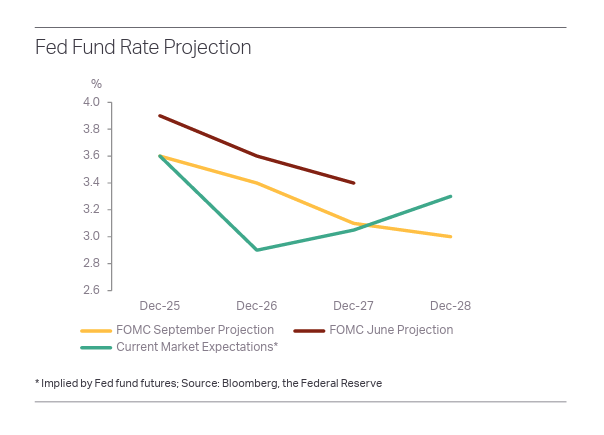
Based on the dot plot projections, the committee forecast two more cuts this year. However, the outlook for 2026 was more conservative, with the committee only anticipating one additional cut.

With the updated dot plot, the median projection is now for the Fed to trim rates to around 3.4 percent by the end of next year. In contrast, implied Fed funds futures point to at least two, if not three, cuts next year, with rates likely to end 2026 closer to 3 percent.

Gold sold off modestly after the rate cut decision and Powell’s post-meeting press conference. Analysts at Metals Focus said the consolidation wasn’t remarkable.

“With the FOMC statement largely aligning with market expectations, some near-term technical profit-taking in gold is unsurprising.”

Beyond the short term, analysts say, “The macroeconomic and geopolitical backdrop remains supportive of gold investment and prices,” and that there will likely be strong buying support with price dips.

“Buying on dips is therefore likely to continue, helping to drive the metal to fresh all-time highs well into 2026.”

Money Metals also expects further rate cuts. While the messaging coming out of the FOMC meeting was somewhat conservative, there will likely be continued pressure from the White House to cut more aggressively. There is also some division among committee members. Trump appointee Stephen Miran advocated for a half-point cut, and Trump will get to appoint a new chair next year.

Further softening of economic data could also speed up the rate of cutting.

Meanwhile, Metals Focus analysts think persistent inflation pressure will support gold.

“There is a risk that inflationary pressures could become more protracted just as nominal interest rates are falling. The resulting larger decline in real rates should provide an additional boost to gold.”

It will be important to pay attention to real rates moving forward.

When interest rates are higher, there is an opportunity cost to holding gold or silver when you could own bonds that generate interest income or stocks that pay dividends. However, when real interest rates fall or turn negative, those income-producing alternatives lose their comparative advantage.  In such an environment, the relative cost of holding precious gold and silver diminishes, making the metals more attractive as safe-haven and wealth-preservation assets.

Metals Focus expects equities to continue to push higher in the current market environment, supported by the stimulative effect of looser monetary policy.

“Looking ahead, with rising pressure on the Fed to stimulate growth and reduce financing costs, confidence in US equities is likely to remain intact. Further gains in US equities should encourage portfolio diversification, which also tends to favor gold.”

With or without rate cuts, the geopolitical uncertainty will likely continue, at least in the near to mid-term. Metals Focus notes that geopolitical tensions have “eased somewhat from earlier this year,” but you can’t rule out renewed instability.

“Uncertainty surrounding US economic and foreign policy is also likely to persist. Taken together, these factors will continue to support the case for adding gold to asset allocations among institutional investors with a medium- to long-term outlook.”

One also has to consider the possibility of a recession. While the mainstream has pretty much written off an economic downturn, the reality is that this debt-riddled, bubble economy has not cleansed the malinvestments and misallocations created by the monetary malfeasance in the wake of the Great Recession and during the pandemic. A downturn would undoubtedly provoke the Fed to cut rates more quickly — likely to zero. It would also likely mean a resumption of quantitative easing. This would result in ramping up inflationary pressure even higher than it already is.

All in all, the move toward looser monetary policy is predominantly bullish for gold (and silver).


Mike Maharrey is a journalist and market analyst for Money Metals with over a decade of experience in precious metals. He holds a BS in accounting from the University of Kentucky and a BA in journalism from the University of South Florida.

Trump Presses Bondi: ‘JUSTICE MUST BE SERVED, NOW!’

(Luis CornelioHeadline USAPresident Donald Trump appeared to issue, then walk back, an ultimatum to Attorney General Pam Bondi as the DOJ continues to stall prosecutions of political figures long accused of criminal acts. 

Trump posted the rebuke on Truth Social on Saturday, saying he had received numerous complaints that the DOJ is “all talk, no action” when it comes to investigating Democrats. Some speculated that Trump meant to privately message Bondi, but accidentally posted it for the public to see.

Either way, the president pointed to embattled figures like former FBI Director James Comey, Sen. (former Rep.) Adam Schiff, D-Calif., and New York Attorney General Letitia James.  

“‘They’re all guilty as hell, but nothing is going to be done,’” Trump wrote, quoting some of the criticisms he said he had heard. 

“We can’t delay any longer, it’s killing our reputation and credibility,” Trump continued. “They impeached me twice, and indicted me (5 times!), OVER NOTHING. JUSTICE MUST BE SERVED, NOW!!!” 

However, in a follow-up post, Trump appeared to soften the rebuke, praising Bondi as “doing a great job,” calling her “very careful” and “very smart.” 

Trump’s public criticism comes as Bondi faces mounting backlash from critics who argue she is more interested in media appearances than delivering the accountability promised in the 2024 presidential election. 

Comey became the subject of a criminal investigation in 2020 over his alleged mishandling of government communications when he led the FBI in Trump’s first administration.

Both Schiff and James are under federal investigation for alleged mortgage fraud. 

Schiff’s case, involving two homes he owns, was referred to the DOJ by Bill Pulte, director of the Federal Housing Finance Agency. 

James, meanwhile, is under investigation by the U.S. Attorney’s Office for the Eastern District of Virginia, which itself has faced controversy after Trump fired Erik Siebert, a Democrat-endorsed candidate for U.S. attorney.

Siebert purportedly failed to find evidence of criminal intent in James’s mortgage fraud case. Trump referenced Siebert in his rebuke of Bondi, saying his administration had “almost put in a Democrat supported” U.S. attorney in Virginia. 

“A Woke RINO, who was never going to do his job,” Trump said of Siebert. “That’s why two of the worst Dem Senators PUSHED him so hard. He even lied to the media and said he quit, and that we had no case. No, I fired him, and there is a GREAT CASE, and many lawyers, and legal pundits, say so.” 

SCOOP: Would-be Assassin Said in Letter That He Had ‘Mechanisms’ to Shred Trump’s Plane

(Ken Silva, Headline USA) After Ryan Routh allegedly tried assassinating Donald Trump last September in Palm Beach, investigators found a letter he wrote that offered $150,000 to anyone who could “complete the job.”

For over a year, the Justice Department kept the most of Routh’s letter secret—releasing only one page that included his $150,000 and an acknowledgement that he indeed tried to kill Trump. Judge Aileen Cannon has also prohibited Routh, who is currently on trial and is representing himself, from showing his full letter to the jury.

However, Routh was able to file the letter on the federal court docket Friday. The 12-page letter, which is being reported on here for the first time, mostly contains his ramblings about Democracy and why Trump is not good for the country.

“I am sure that I have left tons of DNA on this note as well on the 1,000 parts on my mechanism to shred his airplane,” he wrote.

Routh also expressed doubts that his letter would ever see the light of day.

“The Secret Service will probably burn this note so as no future assassination attempts will follow. They will lock me away and gag me to pave Trump’s path to the White House again while I sit at the Big House. I am willing to pay that price to at least say I tried to change history,” the letter says.

It’s unclear what “mechanisms” Routh was referencing. As Headline USA reported earlier this year, Routh asked a purported Ukrainian associate about purchasing a rocket launcher in August 2024.

Days before his alleged assassination attempt, he also visited Palm Beach International Airport for less than an hour. Surveillance footage reportedly shows Routh walking around the terminals alone before returning to the garage. When investigators later visited the area where Routh had been parked, they realized he had a vantage of the tarmac, including the location where Trump’s plane lands and is stored when he is in Palm Beach County.

Additionally, Routh wrote in his self-published book that he worked on a project to supply the Ukrainian military with drones while he was there in 2022.

His book says city officials wouldn’t allow drone testing in Kyiv, which forced Routh to take all his equipment in a supply van to the front line in Mykolaiv. Military officials there weren’t keen on allowing him to test his makeshift drone, either.

“Even in a war zone with rockets and cruise missiles flying, I was unable to do any testing. After 5 or 6 meetings it was obvious that Ukrainian cooperation was not going to happen, and the project was abandoned,” he wrote.

Along with his letter and numerous other exhibits, Routh filed a picture of the so-called drone on the federal court docket. It’s unclear whether he’ll be allowed to use that in his defense.

Routh has pleaded not guilty to charges of attempting to assassinate a major presidential candidate, assaulting a federal officer and several firearm violations. The prosecution rested its case on Friday, and Routh’s set to present his defense Monday.

He told Judge Cannon on Friday that he only needs half a day or so to present his defense. He has indicated that he plans to call a firearms expert and two character witnesses. He hasn’t said whether he plans to testify himself.

Cannon said attorneys should be prepared to deliver their closing arguments Tuesday, giving each side one hour and 45 minutes. Jurors will begin deliberating after that. Cannon had initially blocked off more than three weeks for the trial at the Fort Pierce federal courthouse, but Routh’s relatively short cross-examinations have led to a quicker pace than anticipated.

The Associated Press contributed to this report.

Ken Silva is the editor of Headline USA. Follow him at x.com/jd_cashless.

Border Czar Tom Homan Reportedly Accepted $50K in Cash from Undercover FBI Agents

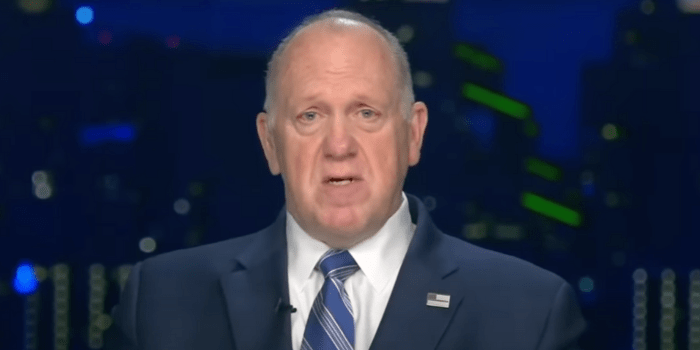
(Ken Silva, Headline USA) Border Czar Tom Homan reportedly accepted $50,000 in cash from undercover FBI agents posing as immigration contractors last September as part of an unrelated counter-intelligence probe. The bureau has since closed the investigation.

MSNBC reported on Saturday the FBI targeted Homan last year after a subject in a separate investigation claimed that he was soliciting payments in exchange for awarding contracts should Trump win the presidential election.

According to the Washington Post, the other subject was a CEO of a firm that focuses on immigration operations and detention management. The CEO told the undercover FBI agents that they should pay Homan $1 million in exchange for a contract. Those agents then met with Homan and gave him $50,000 in a bag.

At the time, Homan didn’t break any laws because he wasn’t a government official. The FBI was apparently waiting to see if Homan would live up to his end of the deal, which would be a blatant case of bribery. However, the FBI shut down the investigation before they could see whether Homan would take the bait.

In response to the reports, the Trump administration said that the Biden DOJ was running a blatantly political investigation.

“This blatantly political investigation, which found no evidence of illegal activity, is yet another example of how the Biden Department of Justice was using its resources to target President Trump’s allies rather than investigate real criminals and the millions of illegal aliens who flooded our country,” White House spokeswoman Abigail Jackson reportedly said in a statement.

“Tom Homan has not been involved with any contract award decisions. He is a career law enforcement officer and lifelong public servant who is doing a phenomenal job on behalf of President Trump and the country.”

Trump’s FBI also defended Homan.

“This matter originated under the previous administration and was subjected to a full review by FBI agents and Justice Department prosecutors,” Deputy Attorney General Todd Blanche and FBI Director Kash Patel reportedly said in a statement. “They found no credible evidence of any criminal wrongdoing.”

Ken Silva is the editor of Headline USA. Follow him at x.com/jd_cashless.

Trump Says ‘Bad Things Are Going to Happen’ If Afghanistan Doesn’t Hand Over Bagram Air Base

(Dave DeCamp, Antiwar.comPresident Trump on Saturday warned that “bad things would happen” if Afghanistan didn’t agree to hand over the Bagram Air Base back to the US military, an idea that’s been rejected by the Taliban-led government in Kabul.

“If Afghanistan doesn’t give Bagram Airbase back to those that built it, the United States of America, BAD THINGS ARE GOING TO HAPPEN!!!” Trump wrote on Truth Social.

While Trump claims the US built Bagram, the airfield was first constructed by the Soviet Union. Bagram became the largest US military base in Afghanistan during the 20-year US war in the country, and US forces pulled out of the airfield during the withdrawal in 2021.

Trump said during his visit to the UK last week that one of the reasons he wants Bagram is because it’s “an hour away from where China makes its nuclear weapons.” The president made similar commentswhile he was on the campaign trail in 2024, saying that if he were still president during the withdrawal, he was going to “keep Bagram” and leave 4,000 troops at the facility.

In response to Trump’s latest comments, the Taliban-led government, known officially as the Islamic Emirate of Afghanistan, called on the US president to uphold the Doha agreement, referring to the deal that was negotiated by the first Trump administration and led to President Biden’s withdrawal from Afghanistan.

“Under the Doha agreement, the United States pledged that it will not use or threaten force against the territorial integrity or political independence of Afghanistan, nor interfere in its internal affairs. Therefore, it is necessary that they remain faithful to their commitments,” said Afghan government spokesman Hamdullah Fitrat, according to TOLO News.

Trump had suggested that the US may be working on a diplomatic deal with Afghanistan on Bagram, but that was rejected by Fasihuddin Fitrat, the chief of staff of Afghanistan’s Defense Ministry.

“Recently, some voices claim that we are in talks with the Islamic Emirate of Afghanistan to negotiate the return of Bagram Airfield, or that we are seeking a political settlement after failing to take it by force. We assure the people of Afghanistan that no agreement over even an inch of our soil is possible,” Fitrat said.

This article originally appeared at Antiwar.com.


Pa. Gov Says Kamala Must ‘Answer’ for Role in Biden Cover-Up

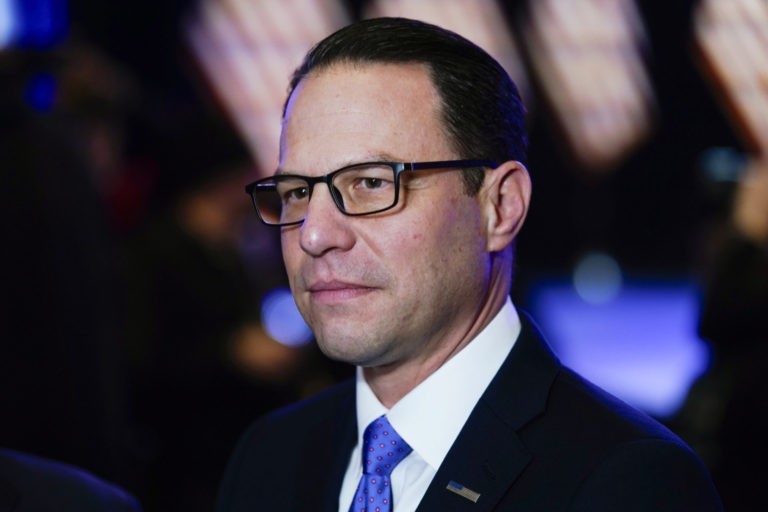
(Luis CornelioHeadline USA) Pennsylvania Gov. Josh Shapiro isn’t buying Kamala Harris’s bid in her new book, 107 Days, to escape blame for the years-long cover-up of Joe Biden’s cognitive decline.

“I haven’t read the former vice president’s book and she’s going to have to answer to how she was in the room and yet never said anything publicly,” Shapiro said in an interview with Stephen A. Smith on the Straight Shooter radio show Thursday.

Shapiro’s comments came after Smith read an excerpt in which Harris admitted that allowing Biden to run for re-election amounted to “recklessness.”

The admission was stunning given that Harris fought tooth and nail to defend Biden’s mental acuity and fitness in countless media appearances, even as reporting from outlets like Headline USA proved otherwise.

At 81, Biden stumbled over words, struggled to walk and flubbed basic policy questions, as seen in his first debate with President Donald Trump.

Unlike Harris, Shapiro claimed he repeatedly flagged concerns about Biden’s age to the White House and to the president directly.

“I was very vocal with him privately and extremely vocal with his staff about my concerns about his fitness to be able to run for another term. I was direct with them. I told them my concerns. I told them my worries. I told them what I was seeing in the polls,” Shapiro added.

He stated that it appeared Biden’s staffers were not “counseling” the former president with the state of the race until it was too late.

Shapiro’s reaction comes as Democrats aiming to run for president in 2028 try to distance themselves from Biden’s unpopular administration. Both Shapiro and Harris are seen as possible contenders.