Verizon is Cutting More Than 13,000 Jobs As It Works to ‘Reorient’ Entire Company

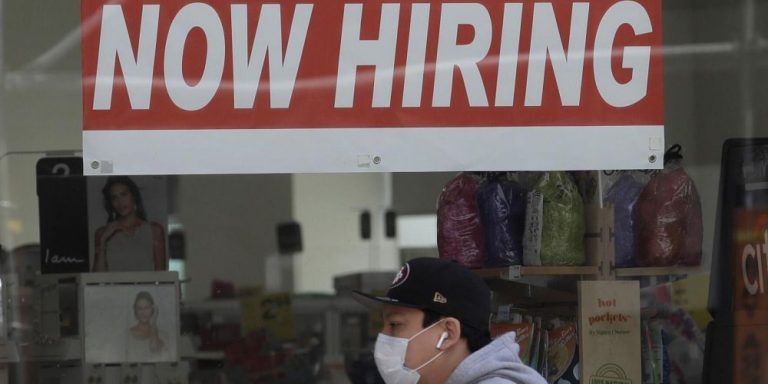
(Headline USA) Verizon is laying off more than 13,000 employees in mass job reductions that arrive as the telecommunications giant says it must “reorient” its entire company.

The job cuts began on Thursday, per to a staff memo from Verizon CEO Dan Schulman. In the letter, which was seen by The Associated Press, Schulman said Verizon’s current cost structure “limits” the company’s ability to invest — pointing particularly to customer experiences.

“We must reorient our entire company around delivering for and delighting our customers,” Schulman wrote. He added that the company needed to simplify its operations “to address the complexity and friction that slow us down and frustrate our customers.”

Verizon had nearly 100,000 full-time employees as of the end of last year, according to securities filings. A spokesperson confirmed that the layoffs announced Thursday account for about 20% of the company’s management workforce, which isn’t unionized.

Verizon has faced rising competition in both the wireless phone and home internet space — particularly from AT&T, T-Mobile and other big market players. New leadership at the company has stressed the need to right the company’s direction.

Schulman took the CEO seat just last month. In the company’s most recent earnings, he stated that Verizon’s trajectory was at a “critical inflection point” — and said, rather than incremental changes, Verizon would “aggressively transform” its operations.

For its third quarter of 2025, Verizon posted earnings of $4.95 billion and $33.82 billion in revenue. The carrier reported continued subscriber growth for its prepaid wireless services, but it lost a net 7,000 postpaid connections.

News of coming layoffs at Verizon were reported last week by The Wall Street Journal. The outlet says that the 13,000 job cuts mark the largest-ever round of layoffs at the company.

Beyond the cuts across Verizon’s workforce, Schulman said that the New York company would also “significantly reduce” its outsourced and other outside labor expenses.

It’s a tough time for the job market overall — and Verizon isn’t the only company to announce sizeable workforce reductions recently. More and more layoffs have piled up at companies like Amazon, UPS, Nestlé and more.

Some companies have pointed to rising operational costs spanning from U.S. President Donald Trump’s barrage of new tariffs and shifts in consumer spending. Others cite corporate restructuring more broadly — or are redirecting money to artificial intelligence. Regardless, such cuts have raised worker anxieties across sectors.

Schulman on Thursday recognized that “changes in technology and in the economy are impacting the workforce across all industries.” He said that Verizon had established a $20 million “Reskilling and Career Transition Fund” for workers departing the company.

Shares of Verizon were essentially flat Thursday.

House GOP Refers Ex-Jack Smith Attack Dog for Criminal Investigation

(Luis CornelioHeadline USA) The House Judiciary Committee on Wednesday referred a former top prosecutor on Special Counsel Jack Smith’s team to the DOJ for criminal prosecution over obstruction of Congress accusations. 

The referral targets former Senior Assistant Special Counsel Thomas Windom on claims he refused to answer nearly all questions in a closed-door deposition in June 2025. 

At the time, Windom appeared before the committee to address damning accusations of misconduct in Smith’s long-shot attempt to imprison President Donald Trump after he left office in 2021. 

According to House Judiciary Committee Chairman Jim Jordan, Windom stonewalled “on the inaccurate basis that DOJ had not authorized” the line of questioning.  

His refusal to answer questions contradicted the Trump administration’s directive to provide “unrestricted testimony,” Jordan wrote in a 193-page letter outlining the allegations to Attorney General Pam Bondi. 

“Windom’s improper refusal to answer nearly all questions during his deposition obstructed the Committee’s fact-finding, and his conduct can only be understood as an intentional, corrupt effort to thwart the Committee’s inquiry,” Jordan said in a statement. 

Jordan added that Windom had direct knowledge of an early proposal brought to the FBI by J.P. Cooney to investigate Trump. He also interacted with members of the anti-Trump Jan. 6 Committee and obtained documents from them. 

Additionally, Windom was reportedly aware of the FBI’s seizure of Rep. Scott Perry’s cellphone as well as broad subpoenas targeting other lawmakers and conservative organizations. 

The referral points to one striking instance of alleged obstruction in which Windom claimed he was not allowed to discuss his interactions with FBI officials because they were not “DOJ officials.” 

Windom’s claim was bizarre, as the FBI is a federal agency under the DOJ. 

The House Vote That May Have Saved Domestic Abuser Cory Mills

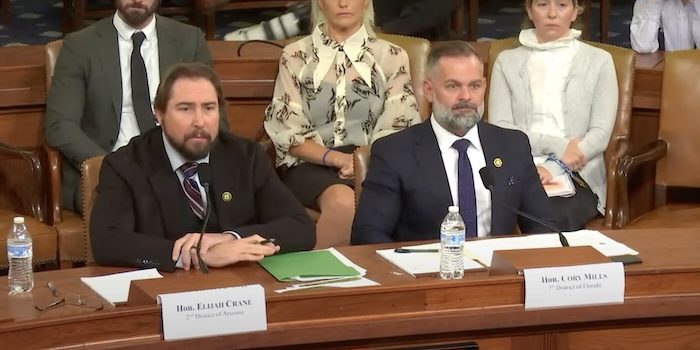
(José Niño, Headline USA) Rep, Cory Mills, R-Fla., arrived on the House floor already under a protective order and an ethics inquiry, yet some of his colleagues now believe the chamber quietly moved to shield him.

In October a Florida judge granted a protective order against the Florida Republican after his former girlfriend, Lindsey Langston, accused him of threatening to release sexually explicit videos and to harm any man she dated, according to a report in the New York Times

The order bars Mills from contacting her or coming near her home or workplace through January.

The allegations do not stop there. Critics say Mills benefited from federal contracts while in office, violated campaign finance rules and embellished his military record, accusations that they describe as “stolen valor.” 

On Wednesday, the House Ethics Committee opened a formal investigation into those claims, as first reported by the Washington Post.

That same day Rep. Nancy Mace, S.C., filed her own censure resolution. She cited accusations of stolen valor, abuse of women and improper contracting, per ABC News

On the floor she confronted Mills at close range and told him, “You’re a disgrace.” Mills responded with a procedural motion that sent her resolution to the Ethics Committee instead of an immediate vote. The House agreed by a tally of 310 to 103, effectively shelving the censure.

The question now roiling Republicans is whether Mills received protection the previous night, when the chamber considered a separate matter. 

On Tuesday, the House narrowly rejected a censure resolution against Delegate Stacey Plaskett of the Virgin Islands, which would have removed her from the Intelligence Committee. The measure failed 214 to 209, with three Republicans voting no and three voting present, according to the House clerk.

That resolution targeted Plaskett’s text messages with Jeffrey Epstein during a 2019 hearing where Michael Cohen testified against Donald Trump. 

Newly released records show that Epstein urged her to focus on “RONA,” a reference to Rhona Graff, and Plaskett soon asked Cohen about Ms. Graff, as detailed by the New York Times

Plaskett has said she sought information from a constituent and not advice, has cited her 30 years of legal experience and has argued that the later federal investigation of Epstein was not public at the time, according to Politico.

Before that vote Democrats warned that if Republicans censured Plaskett they would move at once to censure Mills, as reported by The Hill. When the Plaskett measure failed and Democrats stood down, several conservatives concluded that a quiet agreement had taken place.

Rep. Anna Paulina Luna, R-Fla., tried to press Speaker Mike Johnson on the floor. She asked why “leadership on both sides, both Democrat and Republican, are cutting back end deals to cover up public corruption in the House of Representatives,” according to CNN. The chair ruled her out of order. Representative Lauren Boebert, R-Colo., shouted at colleagues in her own party, while Representative Kat Cammack, R-Fla., wrote online that “a handful of Republicans took a dive on a vote to strip Stacey Plaskett of her position on House intel because of her ties to Epstein,” as related by the New York Post.

Mills has rejected any suggestion of a bargain. He has said his office “expected his censure to move forward on Tuesday night” and insisted “there was never a deal,” according to Florida Politics. Johnson has told reporters that he has not “heard or looked into any of the details” and has said that the Ethics Committee can review the matter “if it warrants that,” as The Hill reported.

José Niño is the deputy editor of Headline USA. Follow him at x.com/JoseAlNino 


Prosecutors Defend Indictment in Comey Case After Defense Questions

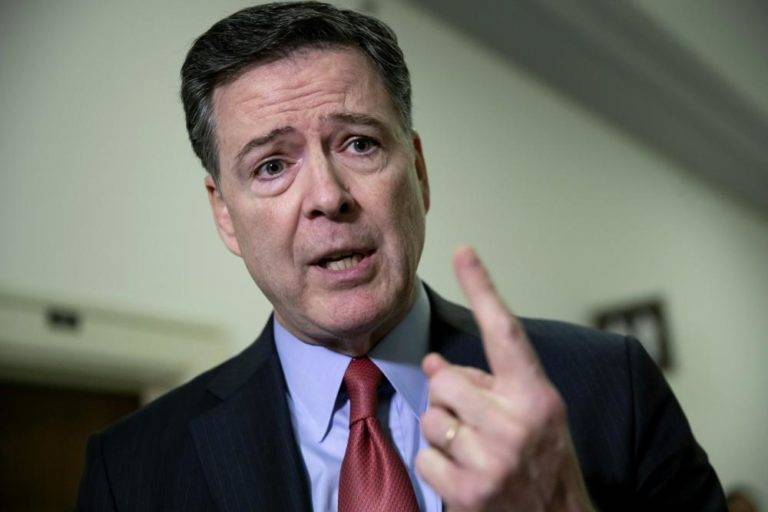
(Brett Rowland, The Center Square)  Prosecutors defended how they presented the criminal case against former FBI boss James Comey to a grand jury after defense attorneys said the indictment failed to meet legal standards.

Defense attorneys had not filed a motion to challenge the indictment as of Thursday morning, but made it clear in court Wednesday they didn’t think it would pass scrutiny.

Michael Dreeben, an attorney for Comey, said: “There is no indictment.”

He also said the statute of limitations for the charges expired Sept. 30, making the claimed misstep “tantamount to a complete bar” on the prosecution.

In September, federal prosecutors alleged that Comey lied to Congress when he denied claims that he leaked classified documents to a news outlet over the Trump-Russia election interference hoax investigation. The two-page indictment charged Comey with making false statements to Congress and obstruction of justice related to leaked documents to The New York Times.

In a filing late Wednesday, prosecutors defended their handling of the grand jury.

“The record shows that a duly constituted grand jury considered the presented indictment and returned a true bill as to only Counts Two and Three,” Assistant United States Attorney N. Tyler Lemons wrote. “Considering Gaither and controlling Supreme Court and Fourth Circuit precedent, the government course of conduct here was permissible and proper.”

Comey’s defense also argued that the charges against the former FBI boss were the result of selective or vindictive prosecution. That can be a high bar to prove. President Donald Trump tried the same thing in several of the case filed against him in the run up to the 2024 election. Trump was convicted in New York, but three other cases against him stalled or were dismissed.

U.S. District Judge Michael Nachmanoff, a Biden appointee, ordered both sides to provide him with answers to how the case should proceed.

The defense had not responded as of Thursday morning.

September Jobs Report Adds 119,000, Steady Unemployment

(Andrew Rice, The Center Square)  The delayed release of a September report on the labor market appeared to defy expectations.

The report showed employers added 119,000 jobs in September, a number that outpaces some economists expectations. The report was delayed due to the federal government shutdown.

The health care sector added 43,000 jobs in September a slight increase to its average monthly gain of 42,000. The construction sector also saw an increase with an additional 19,000 jobs in September.

“We expect this momentum to continue as the President’s full economic agenda takes effect, including the historic tax relief provided by the Working Family Tax Cuts and the trillions of dollars President Trump has secured to re-industrialize our nation,” said Lori Chavez-DeRemer, secretary of the Department of Labor.

Transportation and warehousing saw a loss of 25,300 jobs in September and manufacturing lost 6,000 jobs.

The unemployment rate was at 4.4%, a slight increase from 4.3% in August.

Wages also showed an increase in the September report. Average hourly earnings rose by nine cents, or 0.2%.

Vice President JD Vance praised the report’s release when speaking at an even Thursday morning.

“What this shows is that the Trump economic policies are actually working,” Vance said.

Vance also highlighted increases for native-born workers compared to foreign workers from the report.

According to yearly data, 2.5 million native-born workers gained employment, while 670,000 foreign-born workers lost employment.

“The best thing that you can say about the Trump economy is that American jobs are going to American workers for a change, and that’s the thing that I’m proudest about with these numbers,” Vance said.

Due to the federal government shutdown, the Department of Labor will not release a separate October jobs report. The November jobs report which will be released on Dec. 16 and include data from October.

Trump Administration Threatens to Withhold $75M From Pennsylvania Over Immigrant Truck Drivers

(Headline USA) The Trump administration threatened Thursday to withhold nearly $75 million in funding if Pennsylvania does not immediately revoke what the administration claims are illegally issued commercial driver’s licenses to immigrants.

The move by U.S. Transportation Secretary Sean Duffy to target Pennsylvania follows similar action against California. Both states are run by Democratic governors who have criticized President Donald Trump’s administration and who are viewed as potential top-shelf contenders to be the party’s 2028 presidential nominee.

Duffy has made it a priority to scrutinize how the licenses are issued since August, when a tractor-trailer driver not authorized to be in the U.S. made an illegal U-turn and caused a crash in Florida that killed three people. That incident thrust the issue into the public’s consciousness.

It’s unclear how many people would be affected in Pennsylvania. A letter from the Republican administration to Pennsylvania Gov. Josh Shapiro cited an audit that found two out of 150 people whose licenses exceeded their lawful presence in the country.

The Trump administration is calling on Pennsylvania to pause the issuance of new, renewed and transferred commercial driver’s licenses and permits, as well as conduct an audit to identify those licenses whose expirations exceed the driver’s lawful stay in the U.S.

It is also asking the state to void noncompliant licenses and remove those drivers from the road.

The governors of California and Pennsylvania — Gavin Newsom and Shapiro — are tough critics of Trump, and both have been repeated targets of Trump’s administration.

Shapiro’s administration has said the state transportation department ceased issuing commercial driver’s licenses to noncitizens after the Federal Motor Carrier Safety Administration published a regulation in late September that would severely limit which immigrants can get one.

A federal court has put the rule on hold for now, but Shapiro’s administration said its transportation department still hasn’t resumed issuing what are called “non-domiciled CDLs.”

The state transportation department said this week that whenever non-citizen applicants apply for a CDL in Pennsylvania, the agency reviews the necessary immigration and naturalization documents and verifies their lawful presence by checking the U.S. Department of Homeland Security’s database.

But Shapiro this week suggested that DHS was falling short by failing to properly maintain that database, which states use to check an immigrant’s legal status before issuing a driver’s license to a noncitizen.

His comments came after DHS said it had arrested an Uzbek national with a commercial driver’s license issued by Pennsylvania. The man, who had a work authorization granted in 2024, was wanted in his home country for belonging to a terrorist organization, the department said.

But Shapiro said the state transportation department checked the federal database over the summer before issuing a CDL to the man, and he was authorized to get one. The state rechecked the database this week, and it still listed him as qualified to get a CDL, Shapiro said.

“They clearly are not minding the shop, and they’ve gotta get better, because every single state in the country relies on this database when making a determination as to who qualifies for a CDL. We relied on the feds before issuing this one,” Shapiro said.

Report: Footage of Alleged Charlie Kirk Assassin Turning Himself in May Not Exist

(Ken Silva, Headline USA) Alleged Charlie Kirk assassin Tyler Robinson is said to have turned himself in to law enforcement on the evening of Sept. 11 after indicating to his parents that he was the man who gunned down Kirk the day before.

But according to local CBS affiliate KUTV in Utah, the footage of Robinson purportedly turning himself in may not exist. KUTV reported Wednesday that it was denied multiple record requests for such footage.

Initially, the news outlet said it asked the Washington County Sheriff’s Office for video showing Robinson entering the facility’s jail or holding area, as well as video of him in the holding room. The sheriff’s office said it didn’t have video of him entering the jail, and that the holding room footage was being withheld on the grounds that there’s an ongoing investigation.

KUTV then submitted a broader request for “surveillance video showing Tyler Robinson walking into Washington County Sheriff’s Office.” Again, the sheriff’s office denied the request, this time saying it doesn’t have footage because it’s no longer available after a 30-day retention period.

“When asked if the video was shared with any law enforcement or legal agency, the department responded, ‘It is my understanding it was never sent out to any agency,’” KUTV added.

Criminal defense attorney Rudy Bautista told KUTV that the sheriff office’s response is troubling.

“For the state of Utah, we would certainly hope that this video is available,” he reportedly said.

“If in fact it has been destroyed and not preserved, it’s very concerning. And if it has, then it’s very concerning that they’re telling you they don’t have it. If they no longer have it, I would have expected to say that this video has been provided to the Utah County law enforcement. But instead, this letter leads, in my opinion, as trying to shut the door and not give you free access to the press.”

The attorney reportedly added that the footage could be “crucial for the defense work of mitigation” in a case where prosecutors have indicated that they will seek the death penalty.

Robinson’s next hearing is set for January.

Ken Silva is the editor of Headline USA. Follow him at x.com/jd_cashless.

As the 60/20/20 Portfolio Strategy Gains Traction; Gold Becoming a “Core Allocation”

(Mike Maharrey, Money Metals News Service) Last month, Morgan Stanley CIO Michael Wilson suggested a seismic shift in investment strategy when he recommended a 20 percent allocation to gold. It appears investors are starting to take this advice to heart.

Historically, the conventional wisdom on Wall Street was a 60/40 portfolio, with 60 percent of the holdings in equities and 40 percent in fixed-income investments, primarily bonds. The theory is that these asset classes balance each other, with stocks strengthening in a strong economy and bonds creating a hedge during downturns.

Given changing market dynamics, Wilson said investors should consider a 60/20/20 strategy, swapping half of the bond portfolio for gold to serve as a “more resilient” inflation hedge.

Just days later, Sprott director of ETF management, Steven Schoffstall, echoed Wilson on CNBC, saying a 20 percent allocation to gold and silver will likely yield a better return than a traditional portfolio.

It appears investors have heard the message.

According to Wisdom Tree analysts, “a quiet revolution” is taking shape within investment portfolios because the traditional 60/40 model doesn’t work anymore.

“For decades, the 60/40 mix—60 percent equities, 40 percent bonds—was the shorthand for prudence, diversification, and balance. But the regime that made that formula work—low inflation, stable growth, and negative stock-bond return correlations—appears to have shifted.”

Bonds seem to have lost their safe-haven status in recent months. Last spring, at the height of tariff uncertainty, gold and silver rallied as bonds sold off. Gold and silver seem to be the last safe havens standing.

Wisdom Tree analysts say investors have noticed. Since 2022, there has been a growing number of people questioning how well bonds balance equity risk, and they are turning to gold.

And for good reason.

“Gold is not just a store of value; it’s a statement about the limits of paper promises.”

In a world where the government relentlessly inflates the currency and destroys purchasing power, investors are losing faith in those paper promises.

“In this new macro geometry, investors are re-examining what the ‘40’ should really be. Morgan Stanley’s latest Global Insights calls gold ‘an attractive hedge against fiscal largesse and geopolitics,’ noting its 50 percent rally year-to-date and near-zero equity correlation.”

Historically, gold has fallen when long-term interest rates rise. The Wisdom Tree analysts said this dynamic has broken down in recent years because investors now perceive those higher rates as bearish. Now, portfolio managers are “beginning to re-engineer portfolios for an era of structural deficits and active fiscal policy.” They cite the massive inflows of gold into ETFs – $10 billion in September alone.

“The asset’s behavior has evolved: what was once a rate-sensitive trade has become a fiscal-risk hedge. Correlations with Treasury yields have flipped from deeply negative to positive, implying that gold now rises with, not against, higher long-term rates when those rates reflect sovereign stress. That’s an inversion of an old mental model.”

This shift is already evident in Europe. Wisdom Tree’s 2025 investor survey of investors in the EU and the UK, 41 percent identified gold as their preferred store of value, well ahead of both the dollar and Bitcoin.

And they are putting their money where their mouths are. According to Wisdom Tree, the average portfolio allocations to gold now stand at 5.7 percent in the EU, equal to holdings in developed-market sovereign debt.

“That balance suggests gold is no longer viewed as a fringe diversifier but as a mainstream, fixed component of institutional portfolios.”

The Wisdom Tree analysts emphasized investors aren’t just turning to gold to sidestep market volatility. They’re hedging against counterparty risk.

“They’re buying the only liquid asset that sits outside the liabilities of any government or central bank.”

Wisdom Tree called this “a profound shift” as investors realize “the architecture of portfolio resilience is changing.”

“Instead of treating gold as an accessory to a portfolio, some strategists now treat it as a core sleeve of real assets—a 20 percent reallocation from the bond bucket that acknowledges diversification is no longer about opposites, but about orthogonality.”

While some may view the new 60/20/20 model as a radical break from traditional portfolio strategy, the Wisdom Tree analysts said it could be seen as “less a radical break than a quiet return to first principles: holding something that no one else owes you.


Mike Maharrey is a journalist and market analyst for Money Metals with over a decade of experience in precious metals. He holds a BS in accounting from the University of Kentucky and a BA in journalism from the University of South Florida.

Gold Deposit Accounts Surge in Turkey as People Try to Cope With Runaway Inflation

(Mike Maharrey, Money Metals News Service) What do you do if the government is relentlessly devaluing your money? Save in gold.

That’s exactly what people in Turkey are doing.

According to data from the Banking Regulation and Supervision Agency (BDDK), gold deposit accounts in Turkish banks surged by 99.1 percent year-over-year in the third quarter.

Turkish gold bank deposits now total 2.72 trillion liras. In Q3 2024, gold deposits totaled 1.36 trillion liras.

While gold accounted for around 8 percent of total Turkish bank deposits last year, its share grew to 11 percent at the close of Q3 ’25. Out of the 24.85 trillion liras in total bank deposits collected in the first nine months of the year, 2.72 trillion liras were in gold.

The majority of these gold deposit accounts (91.3 percent) are held by individuals, with corporate accounts representing just 8.7 percent of the total.

A gold deposit counts are typically denominated in grams of gold. Turkey ranks as one of the most developed countries in the world when it comes to gold deposit accounts. For instance, Kuveyt Türk offers gold deposit accounts with a minimum transaction limit of 0.01 grams. Account holders can buy or sell gold using Turkish lira, dollars, or euros.

Most gold deposit accounts at conventional banks in Turkey are unallocated book-entry claims on the bank and do not imply a promise to give you specific gold bars. Many accounts don’t allow physical delivery of metal at all.

In practice, gold deposit accounts are a convenient way to buy and sell gold without handling the metal. It also allows people to buy fractional amounts of gold. However, these deposit accounts have a higher level of counterparty risk than buying and holding gold yourself.

Gold: A Safe Haven for Inflationary Times

Turks are saving in real money – gold – to avoid the ravages of price inflation.

Turkish CPI began to spike in 2021, averaging 19 to 20 percent. By 2022, the Turkish economy was nearing hyperinflation status, with the average CPI spiking to 72 percent. It peaked that year between 85 and 86 percent.

Although price inflation eased somewhat in 2023, “cooling” to an average of around 54 percent, before reaccelerating again in 2024. By October of this year, Turkish CPI was still running around 33 percent.

Why this sustained surge of inflationary pressure?

As always, blame the government and a fiat money system that is backed by nothing.

Like their counterparts in the U.S., Turkish central bankers cut interest rates and engaged in money printing, despite rising inflation. President Recep Erdoğan even claimed high interest rates cause inflation, a notion counter to standard monetary theory.

This loose monetary policy drove real interest rates deeply negative. This incentivized people to dump lira for dollars, euros, or hard assets like gold.

This wasn’t merely a case of a policy misstep. It was intentional. The Turkish government used cheap credit and heavy spending to support economic growth in the run-up to national elections. The government implemented voter-friendly policies, including early retirement for over 2 million workers, repeated minimum wage hikes, and large public-sector pay rises. While this helped households struggling with rising prices, it also Fed inflationary pressures – not unlike U.S. stimulus during the pandemic.

From the government’s standpoint, this isn’t a bug in the fiat money system. It’s a feature. Governments want money backed by nothing because it imposes no restraints on its spending. It’s precisely why the U.S. began abandoning the gold standard during Franklin D. Roosevelt’s administration, and President Nixon severed the last link between the dollar and gold.

However, inflation is always the result of this monetary malfeasance.

The government doesn’t care, as long as inflation doesn’t get to the point that you notice it. This is why central banks created the 2 percent target. There’s nothing magical about 2 percent inflation. It’s just a level that most people are OK with. From a government’s perspective, Turkey’s only mistake was pushing inflation beyond tolerable limits.

People noticed, and now their spurning their paper money for gold.

It’s important to understand that the U.S. government is doing the exact same thing to the dollar. It’s just destroying it at a slightly slower pace. That means if you want to preserve your wealth over time, you need to save in real money like a growing number of Turks. No matter what the government does to your money, they can’t print gold.


Mike Maharrey is a journalist and market analyst for Money Metals with over a decade of experience in precious metals. He holds a BS in accounting from the University of Kentucky and a BA in journalism from the University of South Florida.

EXCLUSIVE: Becerra Refuses Headline USA’s Questions About Inactive Law License

(Luis CornelioHeadline USA) Former Health Secretary Xavier Becerra refused to answer Headline USA’s questions Wednesday regarding accusations that his law license was “inactive” when he litigated a high-profile redistricting case. 

Becerra, a current candidate for California governor and former state attorney general, said he could not comment “right now” when reached by phone, leaving his law license status unresolved.

Headline USA had asked Becerra to address a tweet by America First Legal President Gene Hamilton, who accused Becerra of filing legal documents despite his law license being inactive. 

Hamilton shared a screenshot of a document electronically signed by Becerra that lists his law license as “CA State Bar No. 118517.” However, a bar search shows the license is currently “inactive.” 

It is unclear whether the bar records are fully updated, and Becerra did not clarify the matter during the call. Attorneys are required to maintain an active license to represent clients in court. 

Headline USA independently verified that Becerra filed a document Monday titled “Proposed Cervantes Intervenor-Defendants,” asking a federal judge to allow a group of private individuals to join the lawsuit as defendants. 

The case was filed by Republicans in the U.S. District Court for Central California against Gov. Gavin Newsom in response to Proposition 50, a controversial measure to redraw the state’s congressional districts ahead of the 2026 presidential election. 

Becerra argued the proposed defendants were not originally part of the lawsuit but could be affected by its outcome.  

The six Democratic voters listed as intervenors are Clarissa Cervantes, Antonio Madrigal, Jose Antonio Moreno Jr., Dr. Ines Ruiz-Huston, Dr. Gary Segura and Isabel Solis. 

The lawsuit itself was filed by Assemblyman David Tangipa, a Republican representing Sacramento, along with the California Republican Party and 18 GOP voters. It blasts Proposition 50 as in violation of the 14th and 15th amendments of the Constitution. 

Specifically, the plaintiffs are seeking an injunction to block the new district maps so the current map remains in place temporarily ahead of the 2026 election. 

Newsom supported the ballot measure in response to redistricting efforts in Texas, which were blocked by a three-judge panel.