Radicals Already Protesting Mississippi’s Yet-to-Be Decided Flag Replacement

0

(Headline USA) Magnolias and stars. Crosses and guitars. Beer cans and crawfish. A Gulf Coast lighthouse. Elvis Presley and Kermit the Frog. All appear on proposals the general public submitted for a new Mississippi flag.

But the regardless of how creative the final product was bound to be, the same woke mobs that forced the state to replace the flag seemed poised for another battle over its mandatory use of a motto widely used on US currency.

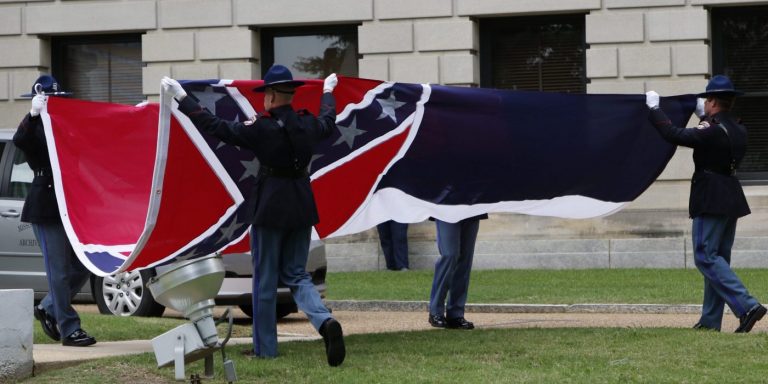
Mississippi recently retired the last state banner with the Confederate battle emblem that’s widely condemned as racist. A nine-member commission will design a replacement that cannot include the Confederate symbol and must have the phrase, “In God We Trust.”

The public submitted nearly 2,700 proposals, which were posted Monday to the Mississippi Department of Archives and History website.

By early September, commissioners will agree on a single design to put on the Nov. 3 statewide ballot. The commissioners—who were appointed by the governor, lieutenant governor and House speaker—could accept one of the public submissions, combine elements from different designs or start from scratch and draw their own.

An expert, Clay Moss, told commissioners last week that the best flag designs are simple and distinctive. He cited the Texas flag as a good example: The lone-star design is easy to draw and easy to recognize.

Some of the public submissions in Mississippi achieved simplicity. Others were complicated with squiggles, lots of stripes and flourishes including ivy, eagles, ducks, mockingbirds, deer, bees and catfish.

Some designs looked professional in their presentation. Others were hand-drawn with crayons or pencils.

Some protested the religious slogan requirement. One was a white rectangle with four phrases in black letters:

“In Yaweh we trust”

“In God we trust”

“In Allah we trust”

“no establishment of religion.”

Mississippi had used the same Confederate-themed flag since 1894, when white supremacists in the Legislature set the design amid backlash to political power that African Americans gained during Reconstruction.

People who voted in a 2001 election chose to keep the flag, but the symbol remained divisive in a state with a 38% Black population.

All eight of Mississippi’s public universities and a growing number of cities and counties stopped flying the state flag in recent years.

For decades, Mississippi legislative leaders said they couldn’t find consensus in the House and Senate to change the banner.

Republican Tate Reeves was elected governor in 2019 after saying that if the flag were to be reconsidered, it should only be done in another election.

Momentum shifted in early June, after the May 25 death of George Floyd while in police custody sparked global protests against racial injustice and reinvigorated debates about Confederate symbols.

Within weeks, leaders from business, religion and education were lobbying Mississippi legislators to ditch the flag and replace it with a more inclusive design.

Two college sports organizations leveraged their power. The Southeastern Conference said it might bar league championships in Mississippi unless the state changed the flag. The NCAA said that because of the Confederate symbol on the flag, Mississippi could not host events determined by teams’ performances, which would affect sports such as baseball, women’s basketball and softball.

Reeves agreed to sign the bill to retire the old flag after it became clear that legislators had the two-thirds majority they would need to override a veto.

If voters accept the commission’s proposal, that design will become the new flag. If they reject it, commissioners will draw a new design and that will go on the ballot later.
Navy to Investigate K-9 Demo that Used Pretend Colin Kaepernick

0

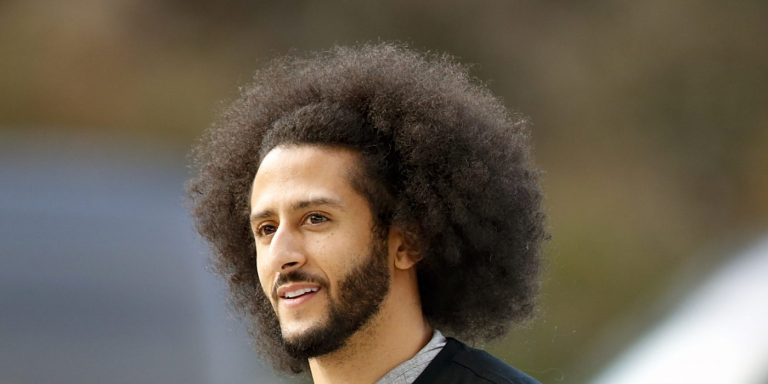
(Headline USA) The U.S. Navy is investigating an incident in which dogs attacked a “Colin Kaepernick stand-in” during a K-9 demonstration during a 2019 fundraiser at the Navy SEAL Museum in Florida.

The Navy said in a statement posted on Twitter that officials became aware of the video on Sunday.

Kaepernick is a former San Francisco 49ers quarterback who began kneeling during the playing of “The Star Spangled Banner” before games to protest social injustice and police brutality.

He played his final NFL game in January 2017. He offered support to those protesting the death of George Floyd at the hands of Minneapolis police officers in May, and the NFL’s commissioner has apologized for not listening earlier to players’ concerns about social injustice.

The videos show four dogs attacking a man, who is wearing a red Kaepernick football jersey over heavily padded gear as people stand nearby watching.

In a second video, the man is laying on the ground when he’s approached by men wearing fatigues and holding rifles, saying, “On your belly.”

The man replies, “Oh, man, I will stand,” as he rolls over, followed by laughing from the crowd.

The videos were apparently posted on Instagram last year and resurfaced over the weekend.

“The inherent message of this video is completely inconsistent with the values and ethos of Naval Special Warfare and the U.S. Navy,” the statement said.

The Navy said the “initial indications” are that no active duty personnel or equipment were used in the demonstration at the “independent organization’s event.”

The Navy SEAL Museum is located in Fort Pierce, Florida, which is north of West Palm Beach on the state’s Atlantic Coast.

According to its website, the National Navy UDT-SEAL Museum is the only museum dedicated solely to preserving the history of the U.S. Navy SEALs and their predecessors.

The museum’s stated main objective is the promotion of public education, with events for both children and adults. Children between the ages of 10 and 15 were recently given firsthand demonstrations on the care and training of working dogs as part of the museums “Frogman Foundry” program.

The museum is not officially connected to the Navy. It was designated as a National Museum by an act of Congress and signed into law in 2008.

Adapted from reporting by the Associated Press

Trump Slams Passage of Nevada Bill That Enhances Mail-In Fraud

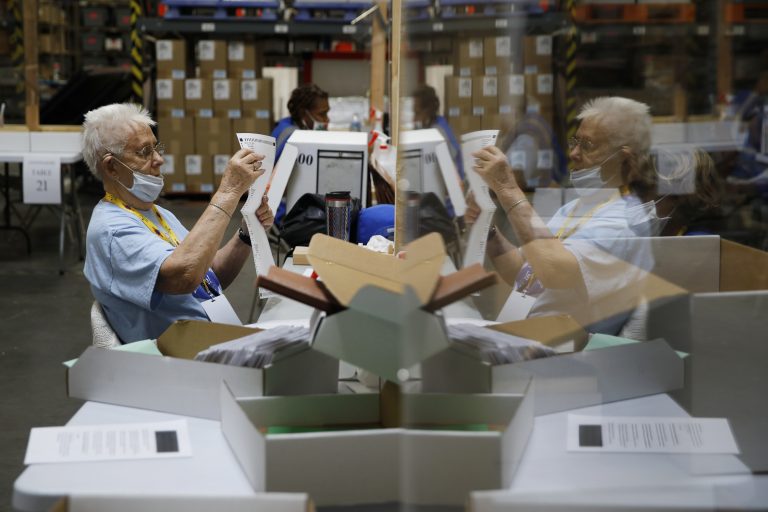
(Headline USA) Nevada lawmakers passed a bill Sunday that would add the state to a growing list of U.S. states that will mail active voters ballots ahead of the November election amid the coronavirus pandemic.

The bill now heads to Gov. Steve Sisolak, a Democrat. If he signs it as expected, Nevada will join seven states that plan on automatically sending voters mail ballots, including California and Vermont, which moved earlier this summer to adopt automatic mail ballot policies.

President Donald Trump called the bill’s passage “an illegal late night coup” in a tweet Monday morning. He accused Sisolak of exploiting COVID-19 to ensure votes in Nevada would favor Democrats.

“Nevada’s clubhouse Governor made it impossible for Republicans to win the state. Post Office could never handle the Traffic of Mail-In Votes without preparation … See you in court!”

Former U.S. Senate Majority Leader Harry Reid applauded the lawmakers’ decision and called Trump’s comments desperate.

“He’s lying about our state leaders and threatening a bogus lawsuit simply because Democrats made it easier for people to vote,” Reid said in a statement.

Trump has claimed the mail ballots would lead to fraud and compromise the integrity of the election. In California’s March primary, more than 100,000 mail-in ballots went uncounted. And in a municipal New Jersey election in May, at least 20 percent of the ballots submitted during the election were declared fraudulent.

Nevada Secretary of State Barbara Cegavske told lawmakers Friday that she wasn’t aware of any fraud in the June primary, when Nevada mailed all active voters absentee ballots and only opened a limited number of polling places to prevent the spread of coronavirus.

Limited polling places in Reno and Las Vegas resulted in lines of up to eight hours.

In the June primary, all Nevada counties had one polling place except for Clark County, which had three in the Las Vegas area. The bill requires at least 140 polling places throughout the state in November, including 100 in Clark County, which had 179 in the November 2018 election.

Christine Saunders of the Progressive Leadership Alliance of Nevada said the long waits in the June primary demonstrated why Nevada needs both mail and in-person voting opportunities.

“No one should have to choose between their health and voting. No one should have to choose between staying in line to vote and making it to their job on time,” she said.

The U.S. Center for Disease Control has issued election guidance to provide a wide variety of voting options and limit crowds at polling places.

In states such as Colorado and Oregon, which have mailed all voters ballots for years, the procedure is cheaper than holding an in-person election.

But Cegavske said the equipment, education, printing and postage would cost the Nevada Secretary of State’s office an additional $3 million, not including costs to counties, which distribute and tabulate ballots.

Nevada spent more than $4 million in federal relief dollars in the June primary, most of it funneled to counties. More than $1 million went toward leasing counting and sorting machines to accommodate a greater number of absentee ballots.

Cegavske, the state’s top election official and only Republican to hold statewide office, opposed the revised procedures. She blasted the Democratic-controlled Legislature for excluding her from discussions and said she saw a draft of the bill only a day before the vote in the state Assembly.

“We were not involved in this bill’s writing at all … I wish somebody would have asked us about because we could have told you what we had planned,” she said Friday.

To bypass Cegavske and enact the changes, the bill gives the governor the power to command the Secretary of State to adjust election procedures during a declared state of emergency. It passed on a party-line vote through both the state Senate and Assembly, with Democrats in favor and Republicans opposed.

Republicans were particularly distressed with provisions of the bill that expand who is allowed collect and hand in ballots. They warned it would enable a practice detractors call “ballot harvesting,” in which volunteers working for political groups collect and turn in large quantities of ballots to tip the scales in elections.

“It’s a safeguard that our state I believe we need … I feel that taking it out — and it is in this bill — would be devastating, not only to us, but to our state,” Cegavske said.

Democrats argued allowing people other than family members to return ballots would help groups like members of Nevada’s 32 Native American tribes, who have historically faced difficulty voting and live far form polling places, and seniors who may need assistance with voting and fear venturing to the polls.

For the June primary, all voters were mailed ballots and 1.6% voted in-person on election day, a tiny share compared to the 34.2% in the state who voted in-person in the November 2018 election.

Adapted from reporting by Associated Press.

Dems: Best-Case Scenario for Trump Election Victory May Mean Civil War

America may soon face the biggest lose–lose choice in its history: civil war or socialism.

The New York Times reported recently that the campaign of presumptive Democrat nominee Joe Biden and other top party allies were running through four different scenarios for the November election as part of a “wargames” exercise.

Alarmingly, its best-case scenario for President Donald Trump and his supporters still would result in three far-left states seceding from the union, likely resulting in a second Civil War.

Big League Stew wrote that the hypothetical scenario imagined as part of the highly partisan, Orwellian-sounding Transition Integrity Project would transpire if Trump secured a resounding Electoral College victory, as he did in 2016, but again lost the official popular vote tally.

Party officials would then look to blue-led battleground states—such as Michigan and Wisconsin—to refuse to cast their electoral votes for Trump and instead send their delegates to the Democrat House of Representatives to recognize Biden.

Should Trump nonetheless prevail in that scenario, though, the hypothetical—which saw former Hillary Clinton stooge John Podesta standing in for Biden—then would have California, Washington and Oregon seceding.

“The roleplay of the event ended when organizers determined the American people would look to the military to resolve the situation,” reported Big League Stew.

Unfortunately, given the ways in which Democrats have stacked the deck, this is likely to be the best-case scenario for Trump.

According to Ballotpedia, as of last week both California and Vermont have established policies that will involve automatic mail-in ballots being sent “to all voters in the  Nov. 3 general election.”

Already, California has proven—as have several other states during recent primaries—how disastrous this will be for vote tallying and integrity.

While it could be assumed that the state’s electoral votes would go to Biden (or whoever the eventual Democrat nominee is) California’s refusal to heed warnings from election-integrity watchdogs will, effectively, invalidate its count in the popular-vote tally.

Evidence has pointed to the fact that even using presumably legitimate means for vote-tallying, much of Hillary Clinton’s alleged 2.8 million popular-vote advantage in 2016 may come from loosely regulated blue regions that permitted systemic vote fraud.

In Los Angeles alone, the county reluctantly agreed in a legal settlement to purge millions of ineligible voters from its rolls last year.

And yet, the problems of duplicate ballots, mishandling, illegal voting and other integrity-destroying factors continue to be widespread.

Moreover, California’s subsequent legalization of ballot-harvesting played a major role in several Republican upsets during the 2018 midterms under particularly dubious circumstances.

In at least one case, also in Los Angeles, activists were charged with attempting to bribe residents of a homeless shelter for their votes.

Although California has faced an exodus of many residents and is projected to see a net loss of congressional seats, the recent influx of illegal immigrants to “sanctuary cities” that refuse to cooperate with federal authorities may also impact the election.

Several of these have begun issuing drivers’ licenses to illegals, making it easier yet to sow chaos and confusion at the polling place.

Because the impact of California and Vermont alone still could not sway the count in the Electoral College, the Democrat state officials in Nevada also joined in to secretly pass its own mail-in ballot scam.

Although the state has tended blue recently, it is still very much in play. Trump tweeted his outrage at the corrupt scheme on Monday and threatened to challenge the laws in court, according to Breitbart.

Pelosi Bashes Obama-Era COVID Expert Deborah Birx, Claims Disinformation

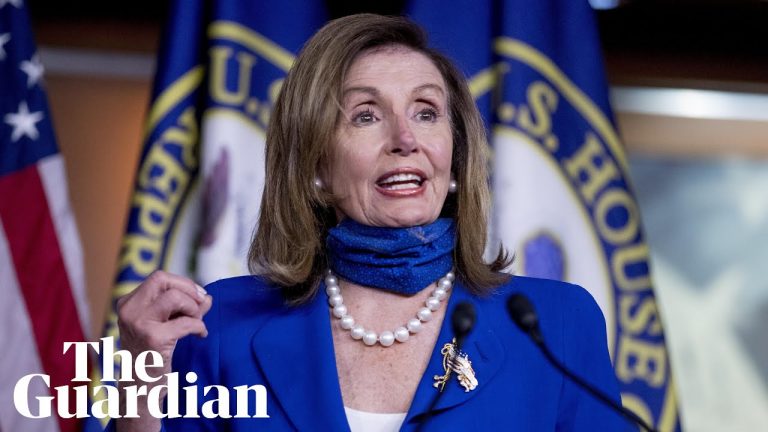
President Donald Trump bemoaned the fact that one of his top coronavirus advisers recently “took the bait” from radical leftist House Speaker Nancy Pelosi, D-Calif., to help spread further media fearmongering about the pandemic.

After the Left’s tireless lionization of Anthony Fauci, head of the National Institute of Allergy and Infectious Diseases, whose partisan grandstanding has come under increasing scrutiny, Pelosi scrambled to find her own scientific scapegoat over the weekend.

Pelosi proceeded to trash Deborah Birx, the White House’s official coronavirus response coordinator, who often has worked in tandem alongside Fauci and was, likewise, a regular presence at the president’s early press briefings on the pandemic.

Although Birx worked for much of the Obama presidency as director of the Centers for Disease Control and Prevention’s Division of Global HIV/AIDS, Pelosi claimed she was a Trump appointee.

Birx performed several other high-profile functions during the Obama administration, including US Global AIDS coordinator and US special representative for global health diplomacy.

Pelosi, who was speaker of the House for four years under Obama—from January 2007 to January 2011—does not appear to have gone on record raising concerns about Birx’s work at the CDC during that time.

However, during a meeting last week involving White House Chief of Staff Mark Meadows and Treasury Secretary Steven Mnuchin, Pelosi reportedly smeared Birx, according to Politico, saying, “Deborah Birx is the worst. Wow, what horrible hands you’re in.”

Pelosi doubled down on those remarks while appearing on ABC’s This Week while being pressed to follow up on the prior remarks.

“I think the president has been spreading disinformation about the virus and she is his appointee so, I don’t have confidence there, no,” Pelosi said.

Birx, who happened to be appearing on CNN around the time of Pelosi’s attack, was then broadsided by interviewer Dana Bash and asked to respond.

“I have tremendous respect for the speaker,” Birx sputtered diplomatically. “And I have tremendous respect for her long dedication to the American people.”

She also conceded several alarming claims Democrats have long sought to make about the virus, suggesting that it would spread to rural areas, despite evidence that the vast majority of cases and deaths have been in urban centers.

What we are seeing today is different from March and April,” Birx said.

“It is extraordinarily widespread,” she added. “It’s into the rural as equal urban areas.”

Pelosi’s effort to work the refs included the suggesting that Birx was only delivering good news to the president, a claim echoed by a recent New York Times article.

The propagandist piece also tries to suggest, as Democrats have long sought, that Trump abandoned leadership in managing the crisis, despite the evidence to the contrary.

Trump clearly sought a more robust defense from Birx, however.

The attack comes as his relationship with Fauci—always contentious, seems to be showing even greater signs of wear.

The showboating NIAID director threw out an embarrassing opening-day pitch as the Major League Baseball season got underway, and is slated to accept a partisan public service award—alongside controversial former football quarterback Colin Kaepernick, from the Kennedy family.

Trump, in turn, tweeted out video of Rep. Jim Jordan, R-Ohio, destroying Fauci while grilling him about whether radical leftist protests should be permitted—although he praised Fauci in the tweet as well.

Energy Dept. Recovers $200M from Failed Obama-Era Solar Energy Boondoggle

The U.S. Department of Energy recently announced that it’s clawing back $200 million from the now-defunct Crescent Dunes solar power plant near Tonopah, Nevada.

The bad news, however, is that the Obama-era debacle cost taxpayers $737 million in crony loan guarantees, and the project’s developer was unable to repay another $224.7 million it owes the government pursuant to a settlement agreement.

Crescent Dunes, located 200 miles northwest of Las Vegas, was a fiasco from the outset.

The same administration and Democrat-controlled Congress that lost billions funding renewable energy losers like Solyndra and Fisker Automotive, committed to making Crescent Dunes the largest solar-energy plant of its kind.

Using Great Recession stimulus funds meant to revamp a devastated American economy, the Obama administration guaranteed hundreds of millions of dollars and leveraged $140 million from the freshly bailed-out Citigroup bank to build the so-called future of solar power.

Harry Reid, then the Senate majority leader and senior senator from Nevada, cleared the way for SolarReserve, Inc., the project’s developer, to build on public land.

Ron Pelosi, Nancy Pelosi’s brother-in-law, sat on the board of an investment partner.

At a Washington, D.C., celebration of SolarReserve’s public funding bonanza, Kevin Smith, the company’s CEO, told a group of assembled politicians, “We’re proud to be doing our part to win the future,” Bloomberg Businessweek reported.

That was arguably the high point of the entire Crescent Dunes affair.

Launched in 2011, the project failed to operate until 2015. It was supposed to deliver 110-megawatts of solar-generated electricity to 75,000 homes. But it rarely generated anything close to the project’s touted benefits.

In fact, by the time Crescent Dunes opened, it was already obsolete.

Despite the impressive appearance of ten thousand solar mirrors spiraling almost two miles wide around a lone skyscraper in the Nevada desert between Las Vegas and Reno, the project’s basic technology-plan was faulty.

Crescent Dunes relied on sunshine to generate heat in order to turn steam generators and store energy in the form of molten salt. The process was expensive, labor-intensive and low yield at its best—but somehow deemed worthy of massive taxpayer investment.

The shiny outer image was effectively a desert mirage.

Newer, cheaper, more efficient technology had already surpassed Crescent Dunes before the plant went online in 2015, ensuring its eventual demise.

The plant’s only customer, NV Energy, was owned by Berkshire Hathaway Inc., which in turn was owned by Obama-friendly multi-billionaire Warren Buffett.

In April 2019, NV Energy cut ties with SolarReserve and the solar energy money-pit went out of business.

The Trump administration was forced to assume responsibility for the bankrupt venture in August 2019, and the Trump-led Department of Energy forced a settlement last week.

The plant’s builder, ACS Cobra, blamed the debacle on “technical issues,” according to federal court records.

The terms of the settlement allow ACS Cobra to upgrade the remnants of the Crescent Dunes plant and sell electricity as long as the DOE recoups the $200 million and can garnish future proceeds to make taxpayers whole.

DOE spokeswoman Shaylyn Hynes said the Trump administration had tried to salvage the project given the obscene amount of taxpayer losses involved, but it was ultimately unworkable.

“The Department’s decision was made after years of exhausting options within our authority to get the project back on track, given the significant taxpayer investment the prior Administration committed to this project,” Hynes said.

GOP Reps. Respond to House Oversight Dems’ Flawed, Partisan Ventilator Report

When the Wuhan coronavirus first swept over the country earlier this year, the Trump administration delivered life-saving ventilators to states that failed to keep their own strategic supplies.

The administration also replenished badly depleted emergency stockpiles from the Strategic National Supply, a problem Trump pandemic officials inherited from the Obama administration.

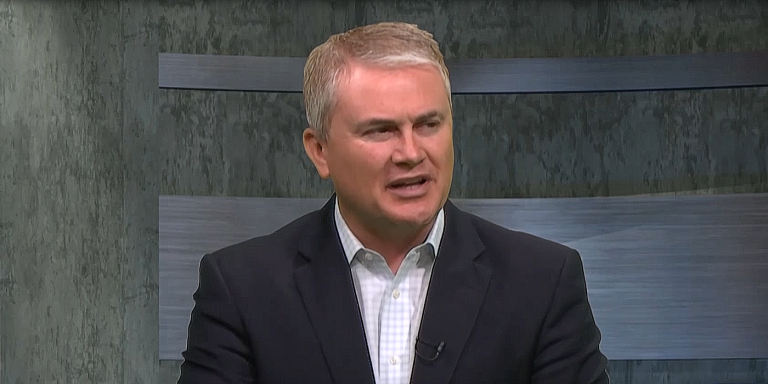
In the words of Reps. James Comer, R-Ky., and Michael Cloud, R-Texas, “no person who needed a ventilator went without one.”

But that hasn’t stopped House Democrats from attacking the administration’s Wuhan virus response, or blaming the failures of the Obama administration and Democratic governors on President Donald Trump.

A new media-ready report shamefully rewrites the history of the pandemic response and casts Trump as the villain rather than the man who rose to the occasion, according to Comer and Cloud.

Both GOP congressmen are members of the House Oversight committees, where Comer is now the ranking GOP member following the transfer of Rep. Jim Jordan, R-Ohio, to the Judiciary Committee and his replacement, former Rep. Mark Meadows, R-NC, becoming Trump’s chief of staff.

Cloud serves as ranking minority member of the subcommittee for economic and consumer policy.

Both congressmen said they are promoting a series of facts to combat the false narrative.

“The Democrats’ latest report shows they will stop at nothing in their endless quest to politicize this pandemic,” they said in a joint statement on Friday.

“After months of Democratic governors begging for more ventilators, congressional Democrats are now unhappy with the administration’s successful efforts to quickly secure a robust supply of ready to use ventilators,” Comer and Cloud continued.

The congressmen cite how Democratic governors in states like New York, California, New Jersey, Pennsylvania, Louisiana, Washington and Michigan were clamoring for ventilators even as they publicly trashed the president.

Rather than keep pace with Washington’s ventilator needs, costing roughly $15,000 to $25,000 per life-saving device, Gov. Jay Inslee spent more than $1.1 billion on programs for orcas in the Pudget Sound.

For years, New Jersey governors wasted huge sums on Hollywood tax giveaways and “green” energy schemes, while New York Gov. Andrew Cuomo opted to prioritize countless billions of taxpayer-funded projects to appease his Democratic supporters.

In every case, the governors were warned by their own administrations that they were in critically short supply of ventilators and personal protective equipment, or PPE.

They ignored those warnings and chose to blame the Trump administration, even as it helped save their respective state residents—including many who suffered in nursing homes thanks to horrendously poor judgment from Democrat state leaders.

“President Trump and his team deserve credit for more than quadrupling the supply of available ventilators in the Strategic National Stockpile (SNS) since March,” Comer and Cloud said.

They also decried the smearing and bullying of a private-sector medical device producer that worked with the Trump administration to help deliver emergency equipment.

The Democrat report attacks the company “without undertaking some of the most basic investigative steps to ensure they get the facts right,” according to Comer and Cloud.

The report rips the Phillips company for not producing ventilators under a 2014 research and development contract that hinged on FDA approval.

On top of depleting the nation’s strategic supply of ventilators, the Obama-led FDA never authorized the Phillips contract. But the House Democrat report holds the company responsible.

In July 2019, long before the Wuhan virus pandemic, the Trump FDA approved the 2014 contract and exercised an option months later to purchase new ventilators at a reduced cost to resupply the national stockpile.

But House Democrats portray the relationship between Phillips and the Trump administration as corruption.

“The manner in which Democrats have conducted this investigation should be a harbinger to any company called before the Oversight Committee,” Comer and Cloud said.

“Companies that receive an oversight letter from Democrats should be on notice that the majority will misconstrue, cherry-pick, and misrepresent their information and data,” they continued. “There is no incentive for the private sector or government to engage with Speaker Pelosi’s House,” they concluded.

Iowa’s Democrat Atty. Gen. Wants to Sue Trump. Republican Governor Won’t Let Him.

0

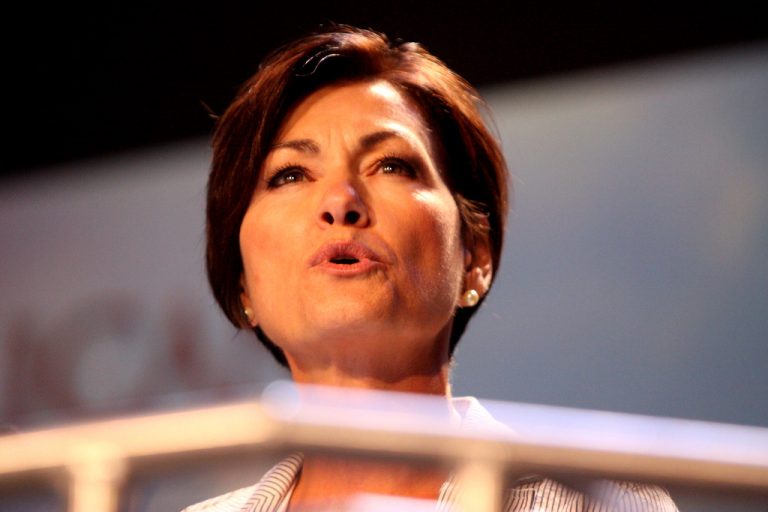
(Associated Press) Iowa‘s Republican governor has rejected two-thirds of the Democratic state attorney general’s requests to join multistate lawsuits, under an unusual compromise that has allowed her to repeatedly block the state’s involvement in challenges to Trump administration policies.

Iowa Attorney General Tom Miller agreed in May 2019 to seek Gov. Kim Reynolds’s approval before he would join multistate lawsuits. In turn, Reynolds vetoed a Republican-backed bill that would have prevented the state’s top lawyer from joining any multistate suit unless the governor or Legislature requested it.

Although the deal has allowed Reynolds to block 45 of 67 requests by Miller, the attorney general said he didn’t regret the bargain he made with the governor, which will expire when either of the officials leave office. Miller, 75, is the nation’s longest-serving state attorney general, having been elected 10 times.

“The most important thing is that the agreement is temporary and will not affect future attorneys general in Iowa,” Miller said in a statement. “It’s also important that I — and future AGs — retain the authority to comment on legislation and regulations before Congress and federal agencies.”

A spokesman for Reynolds declined to comment.

Attorneys general join multistate lawsuits for various reasons. Often it’s to recover damages for consumers in antitrust cases against companies when they attempt to quash competition, fix prices or limit availability of generic drugs.

But sometimes it’s more partisan, as has frequently been the case with Democratic attorneys general who have opposed President Donald Trump’s administration’s actions and with Republican state attorneys general when President Barack Obama was in office.

Records provided by Miller’s office show that at least nine of the 45 requests rejected by Reynolds challenged the Trump administration on issues of immigration and asylum policies.

Miller also was prevented from weighing in on at least eight cases involving abortion or birth control. Several other cases involved the relaxation of environmental regulations, at least four related to limits on guns or ammunition, and three pertained to sexual orientation or transgender rights.

In most of the cases, Miller asked to file documents often provided by parties not directly involved in a lawsuit, called amicus briefs. They are designed to advise the court of additional information and provide arguments for a particular position. Some cases were before the U.S. Supreme Court, although most were before a federal appeals court.

Miller said his colleagues across the country have been effective in bringing cases on health care, immigration, environmental protection, education, consumer protection and other issues.

“This agreement has not stopped the filing of any legal actions,” he said.

Since most states have too few lawyers to take on large corporations, states combine resources in investigations and lawsuits, said Sarah Allen, an assistant attorney general in Virginia and chairwoman of the National Association of Attorneys General Multi-state Antitrust Task Force. The group includes 12 attorneys general, including Miller.

“It’s a way for us to effectively work together and pool our resources, both monetary and people resources that are necessary to investigate and then litigate these cases,” she said. “It’s also a way to show that this is something that effects the consumers the citizens in all of our states.”

Allen cited as an example the current investigation into whether Google and Facebook have illegally squelched competition and operate as monopolies. So far, more than 40 states are involved. Without a combined effort, the states might have to conduct separate investigations and if necessary file separate lawsuits.

“It doesn’t make sense to sue Google 50 different times in 50 different state courts,” she said.

She said Miller, with his decades of experience, has substantial knowledge of antitrust issues and is well respected.

Former Maine Attorney General James Tierney, who now lectures at Harvard Law School, said the bill passed by Iowa lawmakers would have shut Iowa out from any multistate settlements, potentially losing millions of dollars for the state. He said Reynolds was wise to veto the bill and that the deal with Miller was a good compromise.

“The Democratic lawsuits against the Trump administration will proceed without Iowa,” he said.

One of the recent cases Reynolds denied involved a lawsuit filed by Massachusetts Attorney General Maura Healey, which asked a federal court to block a Trump administration rule that would have required international students to transfer or leave the country if their schools held classes entirely online because of the coronavirus pandemic. Seventeen states joined the lawsuit.

The Trump administration rescinded the rule, which had drawn sharp backlash and legal challenges from higher education institutions that argued the policy would put students’ safety at risk and hurt schools financially.

Reynolds also denied Miller’s request to file a brief to the U.S. Supreme Court supporting Pennsylvania and New Jersey as they challenged rules that allowed exemptions to the birth control mandate in the Affordable Care Act. In a 7-2 decision issued July 8, the court upheld the Trump administration rule that broadened religious exemptions to the birth control requirements.

Reynolds has consented to Miller’s request to join cases on topics such as binding presidential electors and defending states’ ability to enforce state and federal consumer protection laws against student loan service agents.

Rep. Tulsi Gabbard’s Presumptive Dem. Replacement May ‘Just Walk Right In’

0

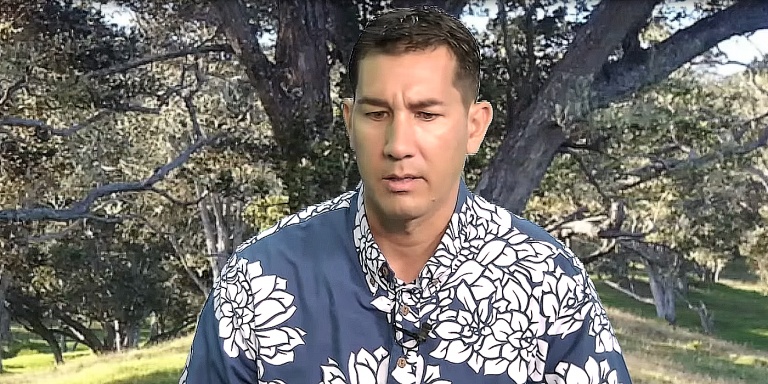
(Headline USA) There’s only one major candidate in the race to succeed Rep. Tulsi Gabbard, virtually guaranteeing he will be sworn in as Hawaii‘s newest congressman in January.

Kai Kahele, a Democrat, is so far ahead of everyone else that he has been spending the final four months before this week’s primary on active duty helping the Hawaii National Guard respond to the coronavirus pandemic instead of campaigning.

“Kai Kahele will probably just walk right in to Congress,” said Colin Moore, director of the Public Policy Center at the University of Hawaii.

The state’s Aug. 8 primary is being conducted by mail. Ballots must be received by 7 p.m. on election day to be counted.

In Hawaii, Democratic Party primaries for open congressional seats are usually packed with political veterans aiming to move up the ranks and ambitious upstarts eager to make their mark.

Kahele got a head start fundraising and gathering party elder support by declaring in December 2018 that he would run for Gabbard’s seat while she campaigned for president in faraway Iowa and New Hampshire.

The state senator argued Gabbard was neglecting her constituents while pursuing the White House, striking a nerve that unleashed a gush of donations.

He also raked in money from non-Hawaii residents unhappy with Gabbard positions like her past opposition to gay rights and her decisions to travel to Syria and meet with Syrian President Bashar Assad.

Kahele became the front-runner when Gabbard later said she wouldn’t seek reelection so she could focus on her ultimately unsuccessful presidential bid.

The 46-year-old has been a state senator since 2016 when he was appointed to serve the remainder of his late father’s term after his father died. He was elected later that year for the first time.

He’s a pilot for Hawaiian Airlines who also flies C-17 jets as a lieutenant colonel in the National Guard. He’s married to a Hawaiian Airlines flight attendant and has three daughters.

If elected, Kahele would be the third Native Hawaiian in Congress. The first was Jonah Kuhio Kalanianaole, a Hawaiian prince who was a delegate when Hawaii was a U.S. territory, and the second was the late Sen. Daniel Akaka, who left office in 2013.

He’s an advocate of Medicare-for-all and fought in the state Legislature to expand health care facilities in the town of Hilo, which he represents.

He supports the idea of a “Green New Deal” to address climate change and help Hawaii meet its clean energy goals.

Kahele has always been interested in supporting the rights of “all marginalized and oppressed people,” said campaign manager Kehau Watson, who spoke on his behalf because Kahele’s Guard duties prevent him from campaign activities.

“So I think he will not only look to pursue Native Hawaiian rights on their own but within a continuum of what will social justice mean going forward,” she said.

Beth Fukumoto, who lost to current Rep. Ed Case in a 2018 Democratic primary featuring six major candidates for Hawaii’s other congressional seat representing Honolulu, said Kahele’s early momentum, name recognition and fundraising likely deterred others from jumping in.

Adapted from reporting by the Associated Press.

Biden’s Potential VP Pick, Karen Bass, Defends Cuba & Fidel Castro

0

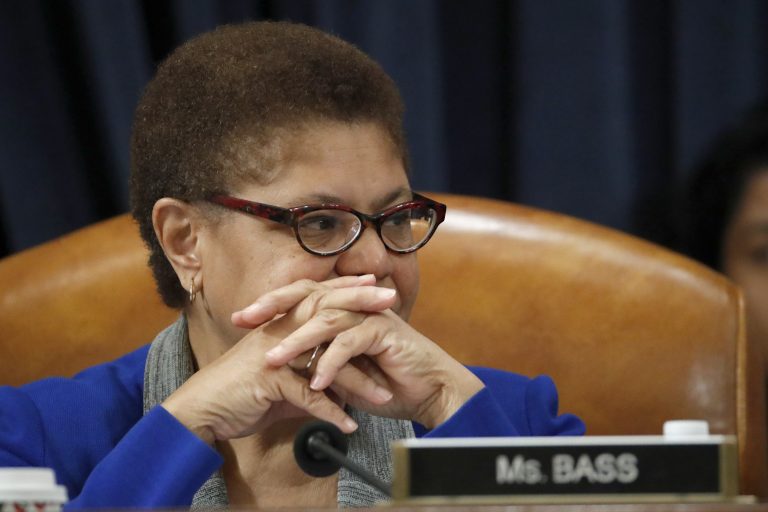
(Headline USA) Democratic Rep. Karen Bass, one of the top contenders to be Joe Biden’s running mate, on Sunday defended her past travel to Cuba and the sympathetic comments she made after the death of Fidel Castro, the dictator who ruled the communist country for decades.

Bass said she was trying to express her condolences to the Cuban people when she referred to Castro as “Comandante en jefe,” a term that roughly translates as commander in chief but is reviled by some Cuban exiles in Florida.

Bass, who represents California in Congress, said she was unaware of the phrase’s political significance in Florida when she issued the 2016 statement, which called Castro’s death a “great loss to the people of Cuba.

“Wouldn’t do that again,” Bass said during an appearance on NBC’s “Meet the Press.” “Talked immediately to my colleagues from Florida and realized that that was something that just shouldn’t have been said.”

Bass’s decades-long ties to Cuba have drawn scrutiny because of how they could play in Florida, a key swing state in the November contest with President Donald Trump.

Bass said she traveled to Cuba to help construct homes in her late teens and early 20’s. As a member of Congress, she has taken numerous trips to the island country to participate in cultural exchanges and study the Cuban medical system.

“The Cubans also have two medicines, one for diabetes, of which my mother died from, lung cancer, which my father died from, and I would like to have those drugs tested in the United States,” Bass said. “That doesn’t excuse the fact that I know the Castro regime has been a brutal regime to its people. I know that there is not freedom of press, freedom of association.”

Bass said she does not consider herself to be a “Castro sympathizer.”

She said her views of Cuba are in line with policy under former President Barack Obama, who sought to thaw U.S. relations with the country.

“I think the best way to bring about change on the island is for us to have closer relations with the country that is 90 miles away,” Bass said. “My position on Cuba is really no different than the position of the Obama administration. As a matter of fact, I was honored to go to Cuba with President Obama. I went to Cuba with Secretary Kerry when we raised the flag. So there really isn’t anything different.”

She also said recent criticism of her by Republican Florida Sen. Marco Rubio was politically motivated.

“I believe the Republicans have decided to brand the entire Democratic Party as socialists and communists. So I’m not surprised by Rubio’s characterization of me or of a role I would play if I were on the ticket,” she said.

Adapted from reporting by the Associated Press.