CDC Head Admits Hospitals Have ‘Perverse’ Incentive to Pad COVID Deaths

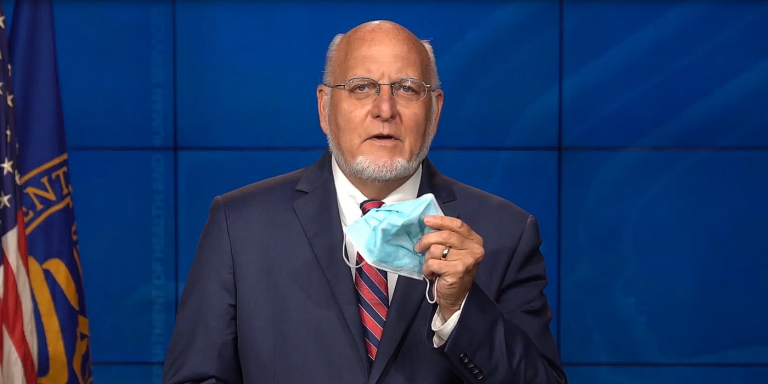
Robert Redfield, director of the U.S. Centers for Disease Control and Prevention, admitted on Friday that hospitals have a monetary incentive to over-report coronavirus deaths.

“I think you’re correct in that we’ve seen this in other disease processes, too,” he said. “Really, in the HIV epidemic, somebody may have a heart attack but also have HIV—the hospital would prefer the [classification] for HIV because there’s greater reimbursement,” Redfield said during a House panel hearing Friday when asked about potential “perverse incentives” and how they might affect our response to the coronavirus.

“So, I do think there’s some reality to that,” he added. “I do think [that] when it comes to hospital reimbursement issues or individuals that get discharged, there could be some play in that for sure.”

Several other health experts, including White House Coronavirus Response Coordinator Deborah Birx, have confirmed that coronavirus deaths are being generously counted.

Back in May, Birx said hospitals were overstating deaths by up to 25%. And multiple reports have detailed individual cases in which hospitals wrongly attributed the cause of death to the virus, including the case of a man who died from a gunshot wound to the head in Florida.

Several other Florida cases proved inaccurate as well.

CBS 12 News examined medical examiner’s reports on COVID-19 deaths last month and found at least eight examples where a person listed as a COVID-19 death died from something else.

In one case, a 90-year-old fell and broke his hip; in another, a 77-year-old died of Parkinson’s disease. 

Out of the 581 deaths reported, only 169 of them were listed as just coronavirus deaths without contributing factors, CBS 12 News found.

The CDC has also been caught reporting deceptive numbers. Last month, it was revealed that the CDC’s website listed 3,721 coronavirus deaths that were characterized as “intentional and unintentional injury, poisoning and other adverse events.”

Navy SEALs Cut Ties w/ Museum Over Colin Kaepernick Video

0

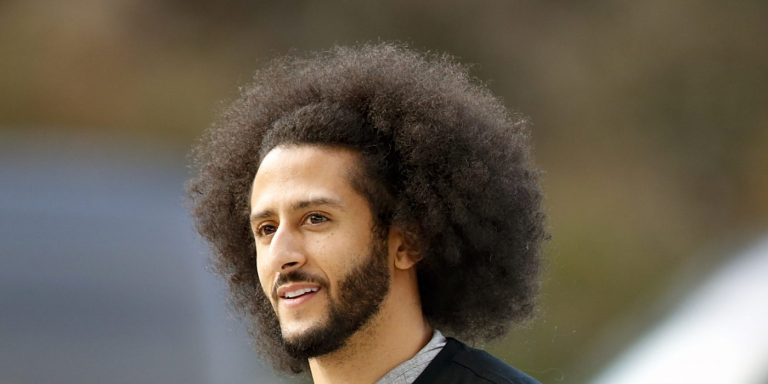
(Associated Press) The commander of the Navy SEALs said the unit will suspend its support of the National Navy SEAL Museum, a nonprofit organization not overseen by the military after videos surfaced online of dogs attacking a man wearing a Colin Kaepernick jersey during a demonstration.

“Each and every one of us serves to protect our fellow Americans – ALL Americans. Even the perception that our commitment to serving the men and women of this nation is applied unevenly is destructive,” Rear Admiral Collin Green, who heads the Naval Special Warfare Command, said in an email to his forces on Monday evening.

He added: “We will revisit our relationship with the Museum when I am convinced that they have made the necessary changes to ensure this type of behavior does not happen again.”

In the letter, Green said, “While the museum is an independent non-profit organization and the participants were contracted employees from outside the DoD, in many ways, these facts are irrelevant. We have been inextricably linked to this organization that represents our history.”

“We may not have contributed to the misperception in this case, but we suffer from it and will not allow it to continue,” he said.

The letter was provided to The Associated Press by a servicemember under the condition of anonymity because they were not authorized to do so. Museum officials did not respond to repeated requests for comment from the AP.

The letter comes one day after a pair of videos of an event at the Fort Pierce, Florida-based museum last year surfaced Sunday on social media. The videos quickly garnered more than 6.7 million views.

In one of the videos, men with guns—wearing camouflage and tactical gear—order four dogs to attack a man wearing protective equipment and Kaepernick’s red and white San Francisco 49ers jersey. A second video shows a dog biting the man in the jersey as he lays on the ground. An individual with a rifle approaches and orders him to turn over on his stomach. The man in the jersey replies, “Oh, man, I will stand,” a joke aimed at Kaepernick’s kneeling during the national anthem to bring attention to racial injustice and police brutality.

The Naval Special Warfare Command condemned the video and said in a statement posted Sunday to Twitter: “We are investigating the matter fully and initial indications are that there were no active-duty Navy personnel or equipment involved with this independent organization’s event.”

On social media, the video was met with mixed perceptions as some viewed the demonstration as further proof to indict and demand reforms of systemic racism within government institutions, especially after the civil unrest and protests around the country after the killing of George Floyd. Others found no issue with the video due to their disagreement with Kaepernick’s protests during the national anthem which they believe are unpatriotic and disrespectful to the memory of fallen service members, a viewpoint shared by President Donald Trump.

Kaepernick, 32, began his protests in 2016 and began to kneel during the national anthem after Nate Boyer, a former Army special forces soldier who tried out as a long snapper for the Seattle Seahawks, suggested it. The former San Francisco quarterback and other players faced intense backlash. But a number of athletes have started kneeling after national protests broke out in the wake of George Floyd’s death at the hands of police in Minneapolis in May.

The video comes to light during a volatile time for Naval Special Warfare Command as it continues to grapple with breakdowns in discipline among their rank-and-file. Amid the publicity of the war crimes trial of Special Operations Chief Edward “Eddie” Gallagher last year, Green told his forces “we have a problem,” among Navy SEALs “that must be addressed immediately,” according to The New York Times.

The letter last year came amid a volley of other scandals such as a platoon of Navy commandos being pulled abruptly from Iraq after an alcohol-fueled Fourth of July party and an allegation of rape upon a female service member. In a separate incident, SEALs in a different unit abused cocaine and skirted drug test screenings with clean samples.

“We own our relationship with the American people and we must honor it,” said Green in his letter on Monday. “We also own our relationship with each other, and our fellow teammates will all receive the dignity and respect they deserve.”

Health Officials Whine That Citizens Don’t Give Personal Info to Help COVID Tracing Efforts

Health officials are facing a reality check as they redouble their sometimes intrusive efforts to monitor, regulate and mitigate the spread of coronavirus.

Media over-hyping has led many to be skeptical of the risks in relation to the draconian demands being made on them as America enters its fifth month of pandemic restrictions.

State and local leaders in blue states and high-density area where the virus spread has been most severe have been inconsistent in their application of orders, notably allowing exceptions to social distancing during recent race-riots.

Republicans, in turn, have raised concerns over political motivations and have pushed back at all levels.

That has forced law enforcement in some areas to begin issuing citations for violations of face-mask orders or to local businesses for re-opening despite failing to meet arbitrary eligibility requirements.

In Charlotte, NC, a blue-run city that has staved off a major outbreak but has followed in the footsteps of other urban centers, officials recently issued citations to several arcades that were opening—some calling themselves bars—that failed to meet eligibility requirements for opening.

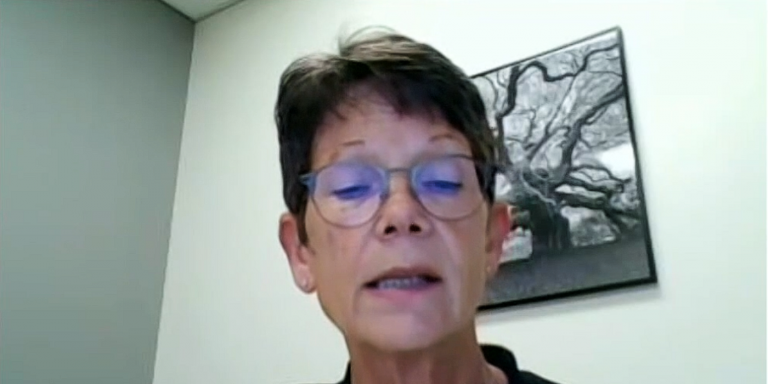
Meanwhile, Mecklenburg County Health Director Gibbie Harris said that health officials were facing other challenges due to a lack of cooperation in their contact-tracing efforts.

“They’re hanging up on staff sometimes,” Harris told WCNC.

“Sometimes they’re not answering the telephone, and there have been occasions when the staff has been yelled at because people are tired of this and don’t want to hear the information,” she continued.

“The other challenge we have right now is we’re hearing people say, ‘Thank you for the information, but I have to work.'”

Harris questioned whether contact tracing—attempting to reach out to all those who may have been in contact with someone who tested positive—was, in fact, the best use of resources.

The county stopped issuing mandatory quarantines early in the pandemic, so attempting to regulate those who may be asymptomatic carriers has been met with less than “strict compliance,” she said.

Harris complained that the earlier panic-mongering and unprecedented politicization of the health crisis as Trump-bashers hope the virus continues to drag the economy, have led many to be jaded by it.

It doesn’t help, of course, that top health organizations like the Centers for Disease Control and Prevention, which once never would have been regarded with a whiff of distrust, are having their motives questioned after several reversals on matters like mask mandates.

“For it to be effective, we have to have people who are willing to communicate with us, be honest with us, recognizing the fact that we’re not out to get them,” Harris said.

Reviving a common trope deployed by authoritarian lockdown and social-distancing proponents, she tried to appeal to the broader social responsibility of individuals being asked to curtail their personal freedom for the public good—or at least the latest iteration of what authorities may interpret it to be.

“We are out to try to help and that help can come to the individual that we’re talking to, but also the bigger community,” Harris said.

In public health, the community is our patient, so we’re trying to look at the big picture here,” she continued. “If the community is not interested in participating and working with us on this, it makes our job really difficult.”

Judge Calls for Invalidated NY Primary Ballots to Be Counted

0

(Courthouse News Service) Thousands of invalidated mail-in ballots from New York’s Democratic primary election in June must be counted, a federal judge ruled late Monday night in a statewide order.

“The Constitution is not so toothless,” U.S. District Judge Analisa Torres wrote in a 48-page opinion that says the New York State Board of Elections must direct local boards to count thousands of mail-in ballots for the primary election that had a late postmark or were lacking a postmark.

“When voters have been provided with absentee ballots and assured that their votes on those ballots will be counted, the state cannot ignore a later discovered, systemic problem that arbitrarily renders those ballots invalid,” the Obama-appointed judge wrote.

Nearly six weeks after the rescheduled primary election on June 23, Torres’s order requires local elections administrators across the state to count all otherwise valid absentee ballots that were received by June 24 without regard to whether such ballots are postmarked by June 23. Ballots that were received by June 25 but postmarked no later than June 23 also must be counted.

It is uncertain whether counting these ballots will alter the outcome of any races.

Congresswoman Carolyn B. Maloney is leading her Democratic challenger for the New York’s 12th Congressional District, Suraj Patel, by some 3,700 votes, and the judge’s decision will only force the counting of around 800 disputed absentee ballots in that contest.

Patel, a co-plaintiff in the suit, has still refused to concede his primary race to longtime incumbent Maloney until the remaining votes are counted.

“We have no reason to concede yet because we have thousands of ballots left to count,” Patel said at a videoconference Tuesday morning.

“We cannot just call out voter suppression and disenfranchisement when it is red, it is equally important to call it out when it’s also a Democratic state, because this is a problem, the constitution does not know parties and as Judge Torres said, ‘the constitution is not toothless,’” he said.

Meanwhile, Emily Gallagher, a 36-year-old insurgent Greenpoint Assembly candidate and co-plaintiff, officially defeated Joe Lentol, the 77-year-old, 23-term incumbent who conceded two weeks ago. With no opponent in the general election, Gallagher stands as the assemblywoman-elect for New York State Assembly District 50.

“It’s a shame that it took two new candidates without the backing of elected officials or major power players to force thousands of duly cast votes to be counted, but I’m proud that I did it,” Gallagher said at a press conference Tuesday morning. “I think last night that democracy won, and I think it’s going to make people feel a lot more comfortable to continue to vote, which is desperately needed in this terrible time.”

Queens-based attorney J. Remy Green, who represented the candidates and a dozen voters in their class action suit, said Tuesday that it remains unknown how many invalidated votes there are in the state that will be counted.

Judge Torres’s ruling comes a week after two days of evidentiary hearings via videoconference where New York State Board of Elections commissioner Douglas Kellner conceded that absentee ballots placed in a U.S. mailboxes on Election Day after the last pick-up time would not be postmarked.

Officials from the Postal Service testified that the state’s postage-paid, mail-in ballots are technically business-reply mail, which do not normally get postmarked, but that it is longstanding Postal Service practice to ensure the election ballots are postmarked.

Business-reply mail is typically delivered in one to three days, Postal Service officials testified.

“The evidence shows that many more ballots were invalidated in Brooklyn than in other boroughs,” Judge Torres wrote in her opinion.

Dawn Sandow, deputy executive director of the New York City Board of Elections, testified that although most absentee ballots returned by voters were postmarked, there were substantially more Brooklyn ballots without postmarks, possibly 2,000 ballots invalidated in Brooklyn, whereas there were between 20 to 60 absentee ballots that lacked postmarks in the other boroughs.

On Monday afternoon, before Judge Torres made her opinion public, President Trump suggested at press briefing there should be a revote in New York’s Democratic congressional primary.

“I think you probably have to take the Carolyn Maloney race and run it over again,” Trump told reporters. “They are six weeks into it now and they have no clue what’s going on, and I think I can say right here and now, you have to rerun that race because it’s a mess.”

Last week, Trump tweeted that New York’s “mail-in voting is in a disastrous state of condition.”

“Votes from many weeks ago are missing — a total mess,” he wrote, casting doubt on mail-in voting. “They have no idea what is going on. Rigged Election. I told you so. Same thing would happen, but on massive scale, with USA.”

Patel said Tuesday that it was “cynical” and “absurd on its face” to conflate his efforts to challenge voter disenfranchisement and reluctance to concede with Trump’s unsubstantiated claims of widespread mail-in voter fraud.

“Donald Trump famously takes things and confuses and conflates them on purpose to obfuscate and create questions in electorate,” he said.

“Anyone who is letting Donald Trump conflate the issue of New York’s 12th election into a cause for voter suppression and calling it voter fraud, which we have no basis of, is complicit in his conflation,” Patel, taking a swipe at his opponent, who said he had been a mouthpiece for Trump’s disparagement of mail-in voting.

“We don’t need his help in this race, we have the constitution, we have lawyers, we have voters,” Patel remarked Tuesday morning…Original Source

STUDY: Americans’ Skepticism of Media is Only Getting WORSE

0

(Headline USA) The distrust many Americans feel toward the news media, which is responsible for much of the nation’s partisan divide problems, only seems to be getting worse.

The trend was the conclusion of a “sobering” study of attitudes toward the press conducted by Knight Foundation and Gallup and released Tuesday.

Nearly half of all Americans describe the news media as “very biased,” the survey found.

“That’s a bad thing for democracy,” said John Sands, director of learning and impact at the Knight Foundation. “Our concern is that when half of Americans have some sort of doubt about the veracity of the news they consume, it’s going to be impossible for our democracy to function.”

The study was conducted before the coronavirus lockdown and nationwide protests over the death of George Floyd.

Eight percent of respondents — the preponderance of them politically conservative — think that news media that they distrust are trying to ruin the country.

The study found that 71% of Republicans have a “very” or “somewhat” unfavorable opinion of the news media, while 22% of Democrats feel the same way. Switch it around, and 54% of Democrats have a very favorable view of the media, and only 13% of Republicans feel the same way.

That divide has been documented before but only seems to be deepening, particularly among conservatives, Sands said.

“We’re starting to see more retrenchment among those who have already expressed deep concerns,” he said. “Moving the dial on these attitudes becomes more and more difficult for media organizations.”

Who is to blame for the nation’s political divide? Well, 48% of those questioned says the media bears a great deal of the responsibility.

The study found 73% of Americans feel that too much bias in news reports is a major problem, up from 65% two years ago.

Those surveyed also didn’t believe much in honest mistakes. When there were inaccuracies in articles, 54% of Americans said they believed reporters misrepresented facts, while 28% said reporters were making things up in their entirety.

The picture isn’t much prettier when you take a step back. Knight and Gallup said 41% of Americans have a great deal of confidence in the ability of the media to report the news fairly, down from 55% in a similar survey in 1999.

Eight in 10 Americans are calling for more diversity in news. Democrats and Black people are more likely to be referring to racial and ethnic diversity; while Republicans and white people prioritize diversity in political views.

In a clear message to Facebook and Twitter, nearly three-quarters of those surveyed said social media companies have to work harder to remove hateful language and inaccuracies from their platforms.

Knight and Gallup conducted a random sample of 20,046 American adults between Nov. 8, 2019 and Feb. 16, 2020, and claimed a margin of error of plus or minus 1%.

Adapted from reporting by Associated Press.

NO SURPRISE: Big-Tech Fact-Checkers Overwhelmingly Lean LEFT

0

(Sheryl Attkisson, RealClearInvestigations) A growing response to today’s chaotic information landscape sounds inviting and elegantly simple: appoint experts to “fact-check” news stories, blogs, speeches, studies, opinions, and political ads. Information they deem to be false is corrected or even removed from public view, in the name of the public good.

George Soros/AP Photo

Trump had said widespread mail-in ballots in the 2020 election would be “substantially fraudulent.” While the definition of “substantially” is in the eye of the beholder, the United States, in fact, has a long and ongoing history of ballot fraud.

Nevertheless, Twitter’s label warned that Trump’s claims were “unsubstantiated according to CNN, Washington Post, and others … Experts say mail-in ballots are very rarely linked to voter fraud.”

Like many questionable “fact checks” at issue, Twitter’s critique wasn’t really a fact check at all. It used past reporting from selected partisan news sources to claim that a prediction about what could happen in the future is untrue — before it even happens or doesn’t happen. It was, in short, a Democratic Party talking point.

Google has stoked criticism for inserting its judgment and opinions between internet users and their search results. In February, the search engine announced it was fighting “disinformation” about coronavirus by partnering with the World Health Organization (WHO). Google explained that user searches about COVID-19 would be directed to WHO’s online information. One big problem: WHO itself was guilty of factual misinformation in multiple instances. For example, the agency admitted it had wrongly called the global risk of the virus emanating from China virus “moderate” at a time when it had actually been “very high.”

Critics say the partnership with WHO reflects a trend by Big Tech fact-checkers to present often controversial global organizations as nonpartisan purveyors of objective fact.

Over at Facebook, censorship of accounts and ideas has included a fact check of a documentary about the lab in Wuhan, China, that was under investigation as a possible source of the COVID-19 outbreak. Facebook claimed the documentary was “false.” But an investigation by this reporter revealed that one of the authorities Facebook referenced in discrediting the documentary was a scientist who worked at the Wuhan lab.

Facebook did not respond to an emailed request for an interview with CEO Mark Zuckerberg or a representative.

Who’s Pulling Strings and Calling Shots?

Fact-checking organizations have grappled internally with the obvious but usually unspoken challenge in all such efforts: It is unrealistic to expect that any appointed group of fact-checkers has true expertise on all of the topics they litigate. Yet they do so every day.

As the labels applied to the Trump tweets illustrate, today’s brand of “fact-checking” is rarely cut and dry, such as verifying the date an event occurred. Now, fact checks are frequently used to litigate matters of opinion or debate, and to proclaim the truth about facts that are unknown, or cannot possibly be known, at the time. They commonly provide what they call the “context” they claim is necessary to assess a factual claim, rather than a simple assessment of whether a statement is correct or incorrect. As a result, many factually correct statements are deemed to be “half true” or “mostly false.”

Eric Schmidt: Hillary Clinton supporter and campaign volunteer — and former head of Alphabet, whose Google subsidiary ran a fact-checking nonprofit during the 2016 campaign./AP Photo

Keeping this in mind, the biggest inherent flaw with efforts to fact-check information may lie in the qualifications, bias, and conflicts of interest among the ranks of the fact-checkers themselves. One example is the fact-checking nonprofit First Draft, started by Google at the beginning of the 2016 election cycle. Google is owned by Alphabet, Inc. Alphabet executives and employees comprise a politically active group that ranks among the largest political donors to Democrats in the country. During the 2016 campaign, Alphabet was led by an ardent Hillary Clinton supporter and campaign volunteer, executive chairman Eric Schmidt.

First Draft is also supported by an array of liberal companies and nonprofits, including the Ford Foundation and George Soros’ Open Society Foundations. First Draft tends to fact-check topics in a vein that’s consistent with its major donors’ opinions and interests. This is particularly true when it comes to controversies about vaccine safety and climate change, where First Draft appears to give little consideration to opposing scientific views and information. In April, First Draft uncritically referred readers to an article perpetuating the false story that President Trump had literally encouraged “people to drink bleach.” Among the group’s original organizers is its digital director, Alastair Reid, who has frequently tweeted and retweeted anti-American rhetoric and progressive positions.

For its part, First Draft says “certain projects and initiatives may be guided in part by the specific requirements of our funding partnerships” but “our donors understand that First Draft retains operational and editorial independence. Our decisions are driven by the organization’s mission and values.”

Similar issues surround NewsGuard, an Internet browser tool that rates the trustworthiness of news sources on search engines and social media sites. Created in 2018, it is funded in part by one of the largest PR, advertising, and data collection firms in the world: Publicis Groupe. Publicis is active on the progressive side of major issues and controversies from gender to race and climate.

Steven Brill: His NewsGuard is funded by Publicis Groupe, which is active on the progressive side of major issues./Wikimedia

Last November, NewsGuard reached out to RealClearInvestigations, questioning its use of anonymous sources to reveal the identity of an intelligence community “whistleblower” whose allegations helped lead to Trump’s impeachment. But when RealClearInvestigations asked NewsGuard if it was posing similar queries about use of anonymous leaks by other news organizations, such as the New York Times, Washington Post, CNN, NBC, and BuzzFeed, NewsGuard did not reply.

The clearest example of conflicts in play regarding fact checks may be found by examining Facebook’s new oversight board, which was recently created to temper criticism over its decisions to flag certain content and accounts. According to Facebook, members of the oversight board “were chosen for their expertise and diversity” and “must not have actual or perceived conflicts of interest that could compromise their independent judgment and decision-making.” They all “have expertise in, or experience in advocating for, human rights.”

But 18 of the 20 members of Facebook’s oversight board members have ties to Soros’ Open Society Foundations, which have spent billions of dollars on global initiatives aggressively advocating for the progressive side on topics ranging from immigration policy and climate to abortion, gender, and racial policies.

The pervasive Soros connections on Facebook’s oversight board may be no more than a matter of odds. Soros is such a prolific financier among global groups that advocate for positions he supports, that his name is bound to turn up when the chosen fact checkers are primarily activists and advocates for progressive positions. The result is a group whose expressed viewpoints and causes are far from neutral. By contrast, however, no members of the Facebook board have known public positions on the conservative side of hot-button controversies.

Genesis

One measure of the problems in “objective” fact-checking is the vastly disparate treatment accorded two of the most established partisan outfits – the conservative Media Research Center and the liberal Media Matters.

Brent Bozell: Started the conservative Media Research Center in 1987. The liberal Media Matters, run by David Brock, followed in 2004. They are not treated the same by the so-called objective press./Gage Skidmore

Media Matters is a nonprofit founded in 2004 by right-wing operative-turned-left-wing operative David Brock as a counterpoint to Media Research Center. Today, it’s linked to a web of political action committees, nonprofits, LLCs and other groups that partner to advance their agendas in the news.

So the two groups are bookends in the increasingly partisan media landscape. But they are not treated the same by the so-called objective press. The liberal Media Matters is is frequently relied upon by journalism organizations and the mainstream media as if it were an accurate, nonpartisan source of news and information. An extensive search found no such treatment accorded to the Media Research Center. The credibility afforded to Media Matters by some appears to have evolved over time. Back in 2009, the Columbia Journalism Review called out Media Matters for a “falsehood,” citing a deceptive claim and press release. But fast forward to June 4, 2020 and an article in the same publication places Media Matters’ “editor-at-large” Parker Molloy among a group of “journalists, legal analysts and other experts” —  without disclosing the controversial group’s partisan affiliation. The article goes on to quote Molloy as claiming there is “honestly no reason to believe there’s some sort of liberal/progressive bias at social-media companies.” He adds, “Conservatives are really just trying to ‘work the refs’ as a way to push these companies into adopting a pro-conservative bias.”

What to Do?

Democrats and Republicans alike have stepped forward to say they have issues with some of today’s fact-checking and censorship efforts ahead of the 2020 election. But they differ on which political side they think has the edge, or what should be done about it.

Democrats tend to press for more censorship. Republicans are pushing to lift liability protections for social media platforms that engage in heavy-handed tactics to limit or shape content. The Department of Justice recently issued recommendations to reform the law. It includes ideas to strengthen censorship of content deemed harmful, providing transparency regarding the decisions, and addressing the concentration of information in the hands of just a few.

Sens. John Thune, a South Dakota Republican, and Brian Schatz, a Democrat from Hawaii, recently introduced the bipartisan Platform Accountability and Consumer Transparency Act, or the PACT Act. It would require Google, Facebook, Twitter and other online platforms to disclose their practices when it comes to how they shape and moderate content. It would also subject them to certain civil lawsuits they are currently exempted from.

On the other hand, eliminating liability protections could result in furthering the public perception that Big Tech is controlling what they are allowed to see and read, as companies could reasonably argue that they would have a heightened obligation to censor even more information due to the risk of being sued.

For now, the trend to “fact-checking” information the public accesses online and on the news is gaining momentum approaching the 2020 election. The evidence indicates the backgrounds and interests of those involved in the effort are serving to complicate rather than purify an increasingly fact-challenged information landscape…Original Source

Nearly 2 in 3 Voters Think Progressives Will Respond Violently to Trump Reelection

A poll released on Monday showed that 62 percent of voters believe that it is at least somewhat likely that progressives will commit acts of violence if President Donald Trump wins reelection.

The poll, conducted by JustTheNews.com, found that more than one third of voters, 34 percent, think that it is very likely that progressives will respond violently to a Trump reelection, Ballotpedia reported.

Voters were far less likely to believe that conservative Republicans would respond with violence if former Vice President Joe Biden—currently the presumptive Democrat nominee—won the 2020 presidential election.

It is interesting to note that last week more people thought Republicans would cheat rather than Democrats,” said Rasmussen.

Slightly more than one third, 38 percent, of voters said they saw conservative-backed violence as at least somewhat likely.

Only 16 percent said that they believed violence from conservatives is very likely.

Democrats are anticipating violence more heavily than Republicans, with 53 percent of those who identify as Democrats saying that violence is somewhat likely no matter the victor in the presidential election.

Republicans and independents believe that violence is more likely if Trump wins the election.

The JustTheNews poll follows month of organized political violence from neo-Marxist groups that are associated with the Democratic Party, including Black Lives Matter and Antifa.

Antifa and Black Lives Matter have indicated in their official platforms and rhetoric that they want to erase America’s culture, heritage and traditions, as well as eliminate capitalism, private healthcare, two-parent families and the rule of law.

A website called “A New Civil War” now tracks opinion and news article that discuss the prospects of a second civil war in the United States.

Trump Fires Chair of Federally-Owned TVA for Hiring Foreign Workers

(Headline USA) President Donald Trump said Monday that he had fired the chair of the Tennessee Valley Authority, criticizing the federally owned corporation for hiring foreign workers. Trump told reporters at the White House that he was formally removing chair Skip Thompson and another member of the board, and he threatened to remove other board members if they continued to hire foreign labor. Thompson was appointed to the post by Trump. The TVA was created in 1933 to provide flood control, electricity generation, fertilizer manufacturing and economic development to the Tennessee Valley, a region that was hard hit by the Great Depression. The region covers most of Tennessee and parts of Alabama, Mississippi and Kentucky as well as small sections of Georgia, North Carolina and Virginia. Trump also removed board member Richard Howorth, another presidential appointee. Trump also urged the TVA board to immediately hire a new chief executive officer who “puts the interests of Americans first.” According to the president, the current CEO, Jeff Lyash, earned $8 million a year. “The new CEO must be paid no more than $500,000 a year,” said Trump, who lacks the authority to remove the CEO. “We want the TVA to take action on this immediately. … Let this serve as a warning to any federally appointed board: If you betray American workers, you will hear two words: ‘You’re fired.’” Trump said the authority was replacing many of its in-house technology workers with contractors who rely heavily on foreign workers under the H1-B visa program for highly skilled workers. “All TVA employees are U.S.-based citizens,” said authority public information officer Jim Hopson. “All jobs related to TVA’s Information Technology department must be performed in the U.S. by individuals who may legally work in this country.” “As a federal corporation, TVA’s Board members serve at the pleasure of the President,” Hopson added. As Trump was meeting with workers who would shortly be laid off by the authority, he was passed a note from chief of staff Mark Meadows that said Lyash had called the White House and was promising to address the labor concerns. Some of the attendees, who are set to see their last paycheck at the end of the month, teared up as Trump read the message. Trump acknowledged that he was made aware of the issue after seeing a television ad that aired in prime time on Fox News and was produced by U.S. Tech Workers, a nonprofit that wants to limit visas given to foreign technology workers. The group, led by Kevin Lynn, criticized the TVA for furloughing its own workers and replacing them with contractors using foreign workers with H-1B visas. The ad, Lynn said, had an “audience of one,” aiming to persuade Trump to stop the TVA from outsourcing much of its information technology division. Trump made the announcement as he signed an executive order to require all federal agencies to complete an internal audit to prove they are not replacing qualified American workers with people from other countries. The White House said the order will help prevent federal agencies from unfairly replacing American workers with lower cost foreign labor. The order followed the TVA’s announcement that it would outsource 20% of its technology jobs to companies based in foreign countries. TVA’s action could cause more than 200 highly skilled American tech workers in Tennessee to lose their jobs to foreign workers hired on temporary work visas, according to the White House. “This is only the tip of the iceberg,” said Jay Palmer, a former tech professional and whistleblower in the H-1B outsourcing business, to Breitbart.com. “President Trump is going to remove all H-1B workers and all H-1B dependent companies from doing business with the United States government,” said Palmer, who helped federal officials win a $34-million legal settlement in 2013 with a major Indian-run H-1B staffing company, Infosys. “He’s keeping his promise to American workers.” Sen. Lamar Alexander, R-Tenn., said the TVA doesn’t get any taxpayer money and defended the CEO’s salary, saying it is in the bottom fourth of what his counterparts earn at other big utilities. “TVA may have shown poor judgment hiring foreign companies during a pandemic, but, on most counts, it does a very good job of producing large amounts of low-cost, reliable electricity. Residential electric rates are among the 25 percent lowest in the country, and industrial rates are among the lowest 10 percent,” Alexander said in a statement. “TVA’s debt is the lowest in 30 years, its pension fund is stronger and TVA leads the country in new nuclear power plants.” Adapted from reporting by Associated Press.

Trump Says He Has Authority to Issue Executive Order on Mail-In Votes

(Headline USA) President Donald Trump claimed Monday that he has the authority to issue an executive order on mail-in ballots, whose increasing use, he argues, could increase election fraud and uncertainty, though it is is unclear what he could do to curtail the practice.

“I have the right to do it,” Trump told reporters at a White House press conference. “We haven’t gotten there yet, we’ll see what happens.”

Trump added that Republicans are planning to file suit as soon as Tuesday to try to block Nevada’s expansion of mail-in voting.

Nearly all election procedures are governed on a state-by-state basis, with the remainder set by Congress or enshrined in the Constitution. There is no precedent or apparent authority for Trump to try to curtail the use of mail-in ballots by executive order, though he could use a document to formalize his opposition to the practice.

Trump has called remote voting options the “biggest risk” to his reelection. His campaign and the Republican Party have sued to combat the practice.

In addition to his claims of fraud, Trump argued that voting by mail would delay the determination of the election’s victor, noting that the winner of a New York Democratic congressional primary vote conducted by mail weeks ago remains undeclared.

Trump claimed the challenge would be greater in a presidential election, where the Electoral College could come down to just one state, and some states allow mail-in ballots to be received up to a week after Election Day.

“You’ll never know who won that state,” Trump said Monday of Nevada’s expansion of mail voting.

Adapted from reporting by Associated Press.

House Dems Continue to Drag Feet, Seek Leverage in COVID Stimulus Bill

0

(Headline USA) As with the prior coronavirus economic stimulus, House Democrats—despite being first out the gate—were yet again continuing to drag their feet on negotiations that would deliver another round of checks and other forms of much needed relief to American taxpayers.

Negotiators on a huge coronavirus relief bill reported slight progress after talks resumed Monday afternoon in the Capitol, with issues like food for the poor and aid to schools struggling to reopen safely assuming a higher profile in the talks.

Multiple obstacles remain, including an impasse so far on extending a $600-per-week pandemic jobless benefit, funding for the Postal Service, and aid to renters facing eviction.

Democratic negotiators spoke of progress at almost the very moment that top Senate Republican Mitch McConnell was slamming them for taking a hard line in the talks.

All sides predict a long slog ahead. Several more days of talks are expected, if not more, as lawmakers seek to deliver what will likely be the final legislative response to the pandemic before the November election.

“We are really getting an understanding of each side’s position. And we’re making some progress on certain issues moving closer together,” said Senate Minority Leader Chuck Schumer, D-N.Y. “There are a lot of issues that are still outstanding. But I think there is a desire to get something done as soon as we can.”

Treasury Secretary Steven Mnuchin, a lead negotiator for President Donald Trump, said afterward that “we continue to make a little bit of progress” and that the administration is not insistent on a small-bore approach centered on extending the supplemental unemployment benefit and leaving other items for later.

A GOP move to advance a slimmed-down relief package has been a recent point of conflict, with Democrats insisting there must be a comprehensive deal.

“We’re open to a bigger package if we can reach an agreement,” Mnuchin said.

On the Senate floor, McConnell, R-Ky., re-upped his complaint that Democrats are taking too tough a line. McConnell is not a direct participant in the talks but is likely to be an important force in closing out any potential agreement.

“The Speaker of the House and the Democratic Leader are continuing to say ‘our way or the highway’ with a massive wish list for left-wing lobbyists that was slapped together a few weeks ago called a coronavirus bill,” McConnell said.

Speaking to reporters after the two-hour session, Democratic negotiators pressed the case for additional food aid, funding for the Postal Service, and the $600-per-week jobless benefit that lapsed last week. The benefit has helped prop up the economy and family budgets as the coronavirus has wrought havoc.

The White House is seeking opportunities to boost Trump, like providing another round of $1,200 stimulus payments and extending the supplemental jobless benefit and partial eviction ban.

Pelosi, the top Democratic negotiator, appears intent on an agreement as well, but she’s made it clear she needs big money for state and local governments, unemployment benefits and food aid.

The demand to fund insolvent state and local governments has been particularly contentious given the insistence of many blue localities of spending on priorities unrelated to the relief, such as providing benefits for illegal immigrants.

“It was productive, we’re moving down the track. We still have our differences, we are trying to have a clearer understanding of what the needs are, and the needs are that millions of children in our country are food insecure,” Pelosi said. “Millions of people in our country are concerned about being evicted. Tens of millions of people are on unemployment insurance.”

Most members of the Democratic-controlled House have left Washington and won’t return until there is an agreement to vote on, but the GOP-held Senate is trapped in the capital.

Areas of agreement already include the $1,200 direct payment and changes to the Paycheck Protection Program to permit especially hard-hit businesses to obtain another loan under generous forgiveness terms.

But the terms and structure of the unemployment benefit remain a huge sticking point, negotiators said Sunday, and White House chief of staff Mark Meadows hasn’t made any concessions on the almost $1 trillion Pelosi wants for state and local governments grappling with pandemic-related revenue losses.

Pelosi said she’d consider reducing the $600 benefit for people in states with lower unemployment rates. Republicans want to cut the benefit to encourage beneficiaries to return to work and say it is bad policy since it pays many jobless people more money than they made at their previous jobs.

“Right now, today, we have an emergency,” Pelosi said Monday on CNN. “A building is on fire and they are deciding how much water they want to have in the bucket. This is very important to stop — millions of people could have fallen into poverty without this $600.”

Another sticking point is that Republicans want to give more school aid to systems that are restarting with in-school learning, even as Dr. Deborah Birx, Trump’s top coronavirus adviser, cautioned that schools in areas with spikes in cases should delay reopening.

Pelosi said Monday’s talks featured extensive discussion on reopening schools. Schumer said the discussion got into the details on the dollar figures involving school aid and food aid.

The House passed a $3.5 trillion measure in May, but Republicans controlling the Senate have demanded a slower approach, saying it was necessary to take a “pause” before passing additional legislation. Since they announced that strategy, however, coronavirus caseloads have spiked and the economy has absorbed an enormous blow.