November Inflation at 2.7%, Lower than Expected

(Andrew Rice, The Center Square)  Consumer prices rose by 0.2% in the two month period between September and November.

In the past 12 months, overall prices rose by 2.7%, which marks a slowdown from 3% reported in September, according to the Bureau of Labor Statistics.

Due to the federal government shutdown, BLS did not collect survey data in October. Instead, BLS retroactively acquired nonsurvey data from October and resumed its data collection efforts on Nov. 14, after the government reopened.

The index for shelter rose by 0.2% and the energy index rose by 1.1% over the two month period ending in November. Food prices increased by 0.1% during the same two-month period.

The inflation index for energy prices over the past 12-months rose by 4.2%. Over the past 12 months, gasoline prices increased by 0.9%; fuel oil rose by 11.3%; natural gas rose by 9.1%; electricity increased by 6.9%.

Overall food prices increased by 2.6% over the last year with meats, poultry, fish and eggs rising by 4.87%; nonalcoholic beverages increased 4.3%; cereals and bakery products increased 1.9%; and fruit and vegetables rose 0.1%. Dairy and “related products” saw a decrease of 1.6% over the same 12-month period.

Heather Long, chief economist at Navy Federal, said inflation came in lower than expected in November.

“It’s hard to read too much into the data given how much the shutdown impacted data collection,” Long said in a social media post Thursday.

In an address to the nation Wednesday night, President Donald Trump said “inflation is stopped.”

Trump said if prices haven’t fallen, they will soon.

“Prices on electricity and everything else will fall dramatically,” Trump said.

In June 2022, the United States experienced a 40-year peak of inflation at 9.1%. It has fallen since then and remained around 3% over the last several months.

Reports: A Homeless Man, Not the FBI, Solved the Brown University Shooting

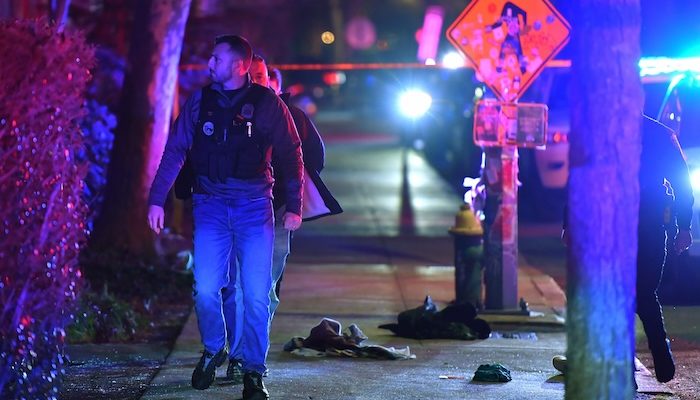
(Headline USAInformation from a tipster who had a strange encounter with another man on a sidewalk outside Brown University was key to police identifying the suspect they believe killed two students at the school and then two days later gunned down a Massachusetts Institute of Technology professor.

Known only as “John” in a Providence police affidavit, the source is being hailed by investigators as the key figure who gave law enforcement the details needed to determine who was behind the Brown shooting, as well as the killing of a Massachusetts Institute of Technology professor who was shot in his Brookline home Monday.

Ever since a shooter unloaded more than 40 rounds inside a Brown engineering building, anxiety and frustration has plagued the Providence, Rhode Island, community as police appeared no closer to identifying the person.

Yet on the sixth day of the investigation, the case gathered steam, ending with police announcing late Thursday they had found the suspected gunman dead from a self-inflicted gunshot wound.

The tipster, John, who according to some reports is homeless, was the reason why.

“He blew this case right open,” said Rhode Island Attorney General Peter Neronha of the information provided by the individual that resulted in finding the gunman nearly 24 hours later.

“When you crack it, you crack it,” he said.

According to police, John had several encounters with 48-year-old Claudio Neves Valente before Saturday’s attack. As police posted images of a person of interest — now identified as Neves Valente — John began posting on the social media forum Reddit that he recognized the person and theorized that police should look into “possibly a rental” grey Nissan. Reddit users urged him to tell the FBI, and John said he did. The police affidavit said they learned about the tip on Dec. 16, three days after the shooting and a day after the tip line was created.

Up until that point, the police affidavit says officials had not connected a vehicle to the possible shooter.

That detail led them to get more video of a Nissan Sentra sedan with Florida plates and enabled Providence police officers to tap into a network of more than 70 street cameras operated around the city by surveillance company Flock Safety.

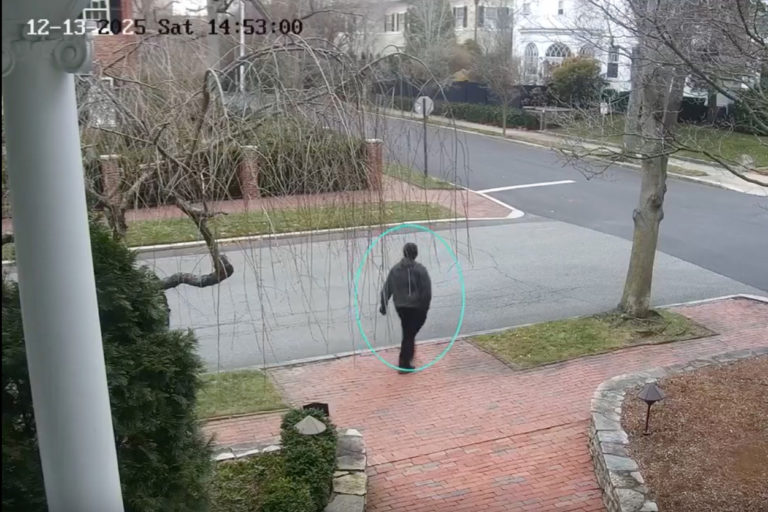
The affidavit says John gave investigators additional critical details: he encountered Neves Valente in the bathroom of the engineering building just hours before the attack, where John noted the suspect’s clothing was “inappropriate and inadequate for the weather.”

John also bumped into Neves Valente outside, mere blocks from the building, where John watched Neves Valente “suddenly” turn around from the Nissan when he saw John. What ensued was then a “game of cat and mouse,” according to John’s testimony — where the two would encounter each other and Neves Valente would run away.

At one point, John says he yelled out “Your car is back there, why are you circling the block?”

“The Suspect responded, ‘I don’t know you from nobody,’ then Suspect repeatedly asked, ’Why are you harassing me?’” according to the affidavit.

John told police he eventually saw Neves Valente approach the Nissan sedan once more and decided to walk away.

“Respectfully, I have said all I have to say on the matter to the right people,” John wrote on Reddit Wednesday night.

As of Thursday, it’s unknown whether John will receive the $50,000 reward the FBI had offered for information about the Brown shooting.

Ted Docks, special agent in charge of the FBI, said it was possible when asked by reporters.

“It would be logical to think that, absolutely, that individual would be entitled to that,” he said.

Adapted from reporting by the Associated Press


U.S. Troops to Get $1,776 Tax-Free Bonuses by Dec. 20

(The Center Square) U.S. troops will get a bonus before Christmas this year that will cost taxpayers about $2.6 billion.

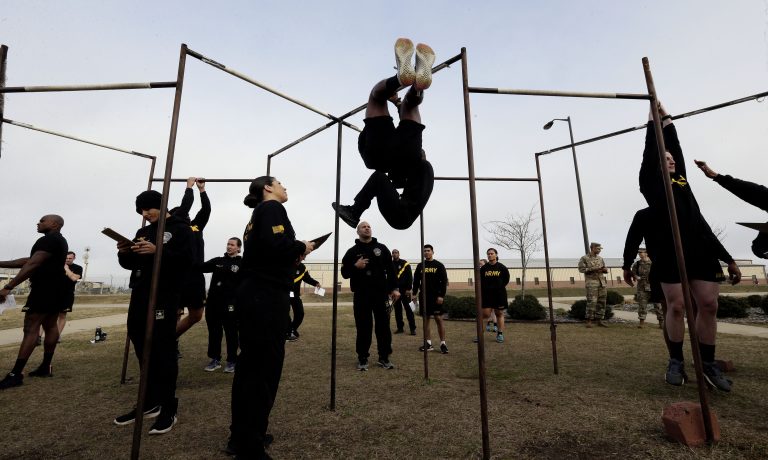
President Donald Trump announced a $1,776 tax-free “Warrior Dividend” bonus on Wednesday night during a national address. More than one million service members will get the bonuses.

Active duty service members and reserve service members with active-duty orders of 31 days or more will receive the bonuses by Dec. 20.

A Pentagon official confirmed to The Center Square that payments for each service member will be made “outside the regular pay cycle” by Dec. 20.

“The checks are already on the way,” Trump said. “Nobody deserves it more than our military, and I say, ‘congratulations’ to everybody.”

Funding for the bonus pay will come from the Basic Allowance for Housing funds, according to a Pentagon official. The “One Big Beautiful Bill Act,” signed in July, appropriated $2.9 billion to the Basic Allowance for Housing funds.

Typically, the Basic Allowance for Housing provides tax-free monthly payments for military members living off-base to cover housing costs. The funds are calculated based on housing market values where an individual lives and their pay grade.

Active duty service members in the pay grades from E-1 to O-6 as well as reserve members on active-duty orders of 31 days or more as of Nov. 30 are eligible for the bonuses.

“This Warrior Dividend serves as yet another example of how the War Department is working to improve the quality of life for our military personnel and their families,” Secretary of War Pete Hegseth said in a video posted to social media on Thursday. “All elements of what we’re doing are to rebuild our military.”

The War Department offers Basic Allowance for Housing to military service members every year. It estimated it will pay one million service members in 2026, for a total of $29.9 billion.

The “Warrior Dividend” payments will total $2.6 billion of the allocated funds in the One Big Beautiful Bill. This will leave $300 million remaining from the $2.9 billion afforded to the fund.

A senior White House official told The Center Square that the Warrior Dividend will compensate eligible service members who do not already receive basic housing allowance funds.

Jury Finds Judge Dugan Guilty of Helping an Illegal Immigrant Evade ICE

(Headline USAA jury found a Wisconsin judge accused of helping an illegal immigrant dodge federal authorities guilty of obstruction Thursday, marking a victory for justice as President Donald Trump continues his sweeping immigration crackdown across the country.

Federal prosecutors charged Milwaukee County Circuit Judge Hannah Dugan with obstruction, a felony, and concealing an individual to prevent arrest, a misdemeanor, in April. The jury acquitted her on the concealment count, but she still faces up to five years in prison on the obstruction count.

The jury returned the verdicts after deliberating for six hours. Dugan faces up to five years in prison when she’s sentenced, but no date had been set as of late Thursday evening.

Dugan and her attorneys left the courtroom, ducked into a side conference room and closed the door without speaking to reporters. Steve Biskupic, her lead attorney, later told reporters that he was disappointed with the ruling and didn’t understand how the jury could have reached a split verdict since the elements of both charges were virtually the same.

U.S. Attorney Brad Schimel denied the case was political and urged people to accept the verdict peacefully. He said courthouse arrests are safer because people are screened for weapons and it isn’t unfair for law enforcement to arrest wanted people in courthouses.

U.S. Deputy Attorney General Todd Blanche praised the verdict on X, saying nobody is above the law, even judges.

According to a court filings that include an FBI affidavit and a federal grand jury indictment, immigration authorities traveled to the Milwaukee County courthouse on April 18 after learning 31-year-old Eduardo Flores-Ruiz, a Mexican national, had reentered the country illegally and was scheduled to appear before Dugan for a hearing in a state battery case.

Dugan learned that agents were in the corridor outside her courtroom waiting for Flores-Ruiz. She left the courtroom to confront them, falsely telling them their administrative warrant for Flores-Ruiz wasn’t sufficient grounds to arrest him and directing them to go to the chief judge’s office.

While the agents were gone, she addressed Flores-Ruiz’s case off the record, told his attorney that he could attend his next hearing via Zoom and led Flores-Ruiz and the attorney out a private jury door. Agents spotted Flores-Ruiz in the corridor, followed him outside and arrested him after a foot chase. The U.S. Department of Homeland Security announced in November he had been deported.

Prosecutors worked during Dugan’s trial to show that she directed agents to the chief judge’s office to create an opening for Flores-Ruiz to escape.

An FBI agent who led the investigation testified that after agents left the corridor, she immediately moved Flores-Ruiz’s case to the top of her docket, told him that he could appear for his next hearing via Zoom and led him out the private door.

Prosecutors also played audio recordings from her courtroom in which she can be heard telling her court reporter that she’d take “the heat” for leading Flores-Ruiz out the back.

Her attorneys countered that she was trying to follow courthouse protocols that called for court employees to report any immigration agents to their supervisors and she didn’t intentionally try to obstruct the arrest team.

Adapted from reporting by the Associated Press


Somalians Stole BILLIONS of Dollars from Welfare Programs in Minnesota, DOJ Says

(Headline USAHalf or more of the roughly $18 billion in federal funds that supported 14 Minnesota-run programs since 2018 may have been stolen, a federal prosecutor said Thursday, describing the massive and multilayered fraud schemes as staggering.

While prosecutors typically see fraud manifest as providers overbilling, Thompson said during a news conference in Minneapolis that companies have been created to provide zero services while submitting claims to Medicaid and pocketing federal funds for international travel, luxury vehicles and lavish lifestyles.

“The magnitude cannot be overstated,” Thompson said. “What we see in Minnesota is not a handful of bad actors committing crimes. It’s staggering, industrial-scale fraud.”

Eighty-two of the 92 defendants in the schemes are Somalian, according to the U.S. Attorney’s Office for Minnesota.

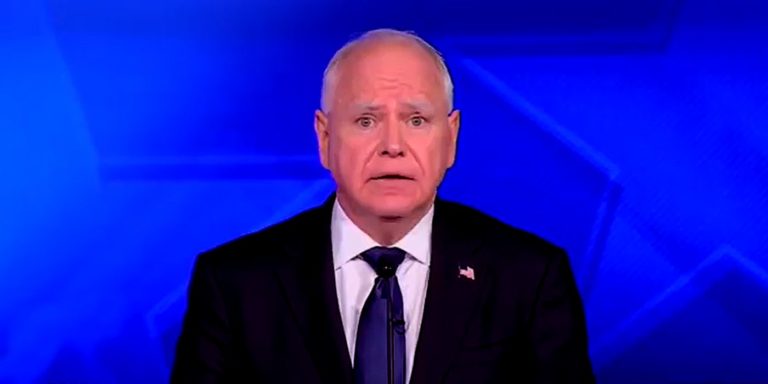
The investigators’ new findings may bolster President Donald Trump in his claims that Minnesota is a “hub of fraudulent money laundering activity” under Gov. Tim Walz, who was the Democrats’ vice presidential nominee in last year’s election.

Investigation into autism program grew out of Feeding Our Future

The announcements Thursday follow years of investigation that began with the $300 million Feeding Our Future scheme, for which 57 defendants have been convicted. Prosecutors said the Feeding Our Future nonprofit was at the center of the country’s largest COVID-19-related fraud scam, when defendants exploited a state-run, federally funded program intended to provide food for children.

Thompson said the investigation into a state program to support children on the autism spectrum, the Early Intensive Developmental and Behavioral Intervention benefit, grew out of Feeding Our Future.

“Roughly two dozen or so Feeding Our Future defendants were getting money from autism clinics,” Thompson said. “That’s how we learned about the autism fraud.”

Prosecutors on Thursday named a new defendant accused of defrauding the program, alleging he approached parents in the Somali community to “recruit their children” for the clinic and paid them kickbacks to drive up enrollment, according to court filings.

His clinic ultimately submitted $6 million worth of claims for Medicaid reimbursement, prosecutors say.

One woman previously charged for exploiting that program pleaded guilty Thursday morning. Prosecutors allege she received $14 million in Medicaid reimbursements.

New charges in housing services program and more under investigation

Five new defendants were charged Thursday in connection with a Minnesota housing services fraud, in which they stole the money instead of helping Medicaid recipients find stable housing, Thompson said. One defendant fled the country after his company received a federal grand jury subpoena, the prosecutor said.

The five charged include two Philadelphia residents who have been accused of “fraud tourism,” Thompson said, because they saw the Minnesota Housing Stability Services Program as a source of “easy money.” They are accused of submitting $3.5 million in fraudulent claims.

They join eight others who were charged in September for their alleged roles in the scheme to defraud the program, which has been shuttered entirely.

Authorities also served a search warrant Thursday in an investigation of a third state-run program, Integrated Community Supports, which was intended to support adults with disabilities who want to live independently. Payments to providers are on track to reach $180 million this year — exponentially more than when the state program was introduced in 2021 — leading prosecutors to believe it’s another program that has been abused.

“Every day, we look under a rock and find a new $50 million fraud scheme,” Thompson said.

Money sent abroad but no evidence it has purposefully funded terrorism

Conservative news outlet City Journal claimed last month that taxpayer dollars from defrauded government programs have flowed to the Somali militant group al-Shabab, an affiliate of al-Qaida.

While Thompson said money sent to Somalia might have indirectly gotten into the hands of al-Shabab, he emphasized that there was no evidence that defendants were sending money to or otherwise supporting terrorist organizations.

Still, Trump has referred to the Somali community as “garbage” and said he doesn’t want immigrants from the East African country in the U.S.

Thompson said a significant amount of the fraudulently obtained funds have been sent abroad, and much of it has been used to purchase real estate in Nairobi, Kenya’s capital, which has a large Somali diaspora.

“There’s no indication that the defendants that we’ve charged were radicalized or seeking to fund al-Shabab or other terrorist groups,” Thompson said.

Instead, one Feeding Our Future defendant spent hundreds of thousands of dollars on an aircraft in Nairobi. Another wired $1.5 million to China and Kenya, prosecutors said, and sent a text message claiming to have invested $6 million in Kenya. And one man bought Mediterranean coastal property in Alanya, Turkey.

Adapted from reporting by the Associated Press

 

Brown University Accused of Removing Cameras to Evade ICE

(José Niño, Headline USA) A firestorm of controversy has engulfed Brown University following the mass shooting that took place last Saturday. 

Critics are now questioning whether the prestigious institution deliberately disabled security cameras, inadvertently creating blind spots that allowed the shooter to escape detection.

According to the latest reports shared by Headline USA, the shooter was identified as Claudio Neves Valente, a 48-year-old Portuguese national. He has reportedly been found dead.

Conservative commentator Greg Price posted a video showing a tense moment when a Providence police press conference ended abruptly after a Latino Rhode Island radio host confronted officials. The journalist accused authorities of deliberately removing security cameras at Brown University because of sanctuary city laws designed to prevent recording of illegal aliens.

The confrontation occurred as Providence Mayor Brett Smiley and other officials fielded questions about the ongoing investigation. When pressed about the camera issue, officials refused to answer and immediately terminated the press conference, a response critics characterized as suspicious evasion.

The surveillance controversy deepened when Brown officials revealed the campus operates over 1,200 security cameras. Yet Rhode Island Attorney General Peter Neronha claimed no cameras captured footage of the shooting because it occurred in an “old part” of the Barus & Holley engineering building constructed in 1965.

Price highlighted this glaring contradiction, noting that a university with an $8 billion endowment somehow failed to install cameras in a major academic building. “An official from Brown just said that there are over 1,200 cameras all over the campus. Yesterday, the Rhode Island Attorney General said that there were no cameras where the shooting happened because it was an old part of the building. These people are a bunch of clowns,” Price wrote.

Additional failures compounded the investigation’s problems. Twitter user Alex Lace noted that the suspect walked directly past a Brown University campus police car after the attack, yet investigators obtained no footage because the patrol vehicles lack dash cameras. “Brown University shooting suspect casually WALKED RIGHT PAST a campus police car after the attack… But their patrol cars HAVE NO DASH CAMS?! No footage to capture him? This is unacceptable!” Lace wrote.

Providence Police Chief Col. Oscar Perez admitted during a press briefing he was unsure whether Brown University police cruisers even carry dash cameras, leaving investigators without potentially crucial evidence.

The most damning evidence emerged when Right Angle News Network revealed that Brown University received a letter in August 2025 from over 30 human rights and digital privacy organizations urging the institution to disable CCTV surveillance systems. The coalition, led by Fight for the Future, sent letters to 150 colleges including Brown demanding they ban facial recognition technology and disable campus surveillance.

The activists argued that surveillance infrastructure would be weaponized by the Trump administration to deport illegal alien students and punish protesters. Critics now believe Brown capitulated to these demands, creating the surveillance blind spots that hampered the shooter investigation.

According to CNN, investigators continue searching for older footage that might show the Neves Valentes’movements in days before the attack. 

Fox News reported that while the engineering building allegedly lacked cameras due to age, Brown’s president resides in a home built decades earlier that appears fully equipped with modern security systems.

José Niño is the deputy editor of Headline USA. Follow him at x.com/JoseAlNino 

U.S. House Passes GOP Health Care Bill, Sends to Senate

(Thérèse Boudreaux, The Center Square)  The U.S. House passed the Lower Health Care Premiums for All Americans Act in a party line, 216-211, vote Wednesday, sending the bill to its likely demise in the Senate.

The bill, which will almost certainly fail to reach the Senate’s 60-vote threshold, is Republicans’ alternative to extending enhancements to the Obamacare Premium Tax Credit. Congress temporarily expanded the PTC during the COVID-19 pandemic, and its reversion to original pre-pandemic levels will partially contribute to rising premiums in 2026.

“For too long, Democrats have forced hardworking American taxpayers to bail out big health insurance companies for hundreds of billions of dollars. Meanwhile, Americans are left paying for increasingly expensive care with fewer choices, lower quality, and worse health outcomes,” Republican House leadership said in a statement.

“The Lower Health Care Premiums for All Americans Act puts patients first,” they continued. “It does exactly what its title promises and more: lowers premium costs, expands access to affordable, quality care, gives every American more options and flexibility to choose coverage that is best for their needs, and brings greater transparency to the health care system.

Key reforms in the bill include increasing oversight and transparency requirements for pharmacy benefit managers, reforming health reimbursement arrangements, and excluding stop-loss policies from the definition of health insurance coverage.

Most notably, the bill would finally appropriate funding for cost-sharing reduction (CSR) payments, as well as loosen restrictions on which employers can form association health plans.

The Congressional Budget Office projects that unlocking CSR payments would lower gross benchmark premiums for all Americans by 11%, though 300,000 people annually could lose their existing health insurance between 2027 and 2035.

The new rules for health association plans, however, would provide insurance to 200,000 people who currently have none. Allowing small business owners and independent workers to band together across industries to form association health plans would increase the total number of people on those plans by an estimated 700,000.

Democrats widely condemned the bill following its passage.

“Instead of extending the ACA credits, Republican leadership pushed a health care scheme that does nothing to fix the very crisis they caused,” House Budget Ranking Member Brendan Boyle, D-Pa., said on X. “They are ignoring millions of Americans whose health care premiums are skyrocketing.”

The Senate is unlikely to vote on, let alone pass, the Lower Health Care Premiums for All Americans Act before lawmakers leave for Christmas break, meaning millions of Americans will see premiums spike in two weeks.


NYTimes Columnist Revealed in Epstein Photos, Weeks After Rebuking Files Release

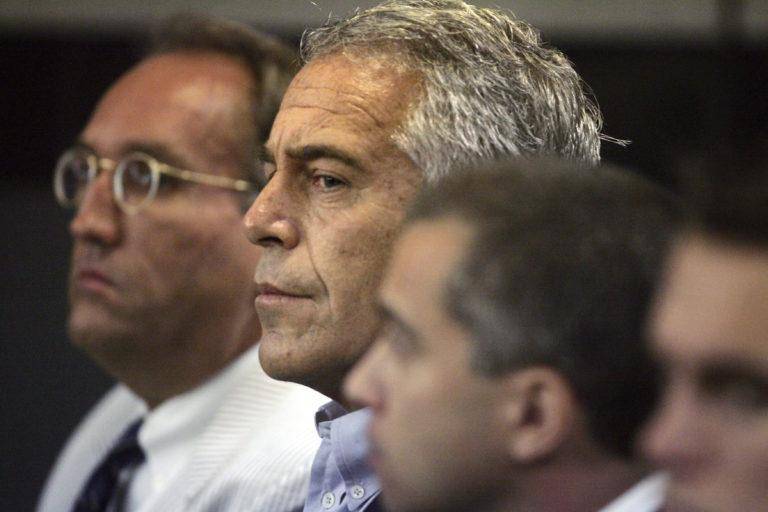
(Luis CornelioHeadline USA) What did he know, and when did he know it? This has been the question flooding social media after New York Times columnist David Brooks appeared in newly released photos linked to Jeffrey Epstein, just weeks after rebuking calls for the release of the Epstein files. 

The photos, released by Democrats on the House Oversight Committee, show Brooks seated at a dinner or lunch event attended by Epstein.  

One of the images showed Google co-founder Sergey Brin seated next to Brooks.  

A second photo shows Brooks smiling as he poses, while another is a close-up of Epstein, who is also smiling. 

The event appeared to be connected to a 2011 TED Conference, nearly 15 years ago. 

The photos’ release, however, could not have come at a worse time for Brooks. 

Just a month ago, he authored a New York Times column blasting Democrats for echoing Republicans’ calls to release the Epstein files. 

These files could expose powerful figures tied to the convicted sex offender, who was found dead while in federal custody in 2019. 

“The Epstein Story? Count Me Out,” Brooks headlined the piece. 

In it, he implied that Democrats were following QAnon’s footsteps by demanding the Epstein files be released. 

Brooks lumped President Donald Trump, Robert F. Kennedy, Candace Owens, Reps. Marjorie Taylor Greene and Nancy Mace, accusing them of spreading conspiracy theories.  

He questioned why Democrats were following suit. 

“I can kind of understand why Machiavellian Republicans would spew conspiracy theories. Those theories stoke cynicism, which serves Republican ends,” Brooks wrote, later adding: “What I don’t understand is why some Democrats are hopping on this bandwagon.” 

He concluded the piece by predicting that “we will look back on the Epstein moment and ask: ‘What the hell were we thinking?’” 

Nowhere in the column did Brooks or the New York Times disclose the potential Epstein ties.

Critics online suggested the column may have been part of a preemptive effort to protect himself from potential scrutiny for having met Epstein before. 

However, in remarks to news outlet Semafor, Brooks claimed he “never met” Epstein. 

“I attended a Ted Conference in 2011 and was invited to an adjacent dinner,” he said, as quoted by Semafor. “There were about 60 people there if memory serves. Apparently Epstein was also at this dinner. I don’t think we met or exchanged a word.”  

He added, “I never heard of Epstein until i [sic] read a Miami Herald story about him in 2018. I’ve never had any contact with him by email or any other means.” 

Brown University Shooter, a Portuguese National, Reportedly Found Dead

(Headline USAA man who is suspected of killing two and wounding several others at Brown University has been found dead in a New Hampshire storage facility, according to The Associated Press.

The man was found dead Thursday evening. He is believed to have died from a self-inflicted gunshot wound, a person familiar with the matter reportedly said.

Investigators believe the man is responsible for both the shooting at Brown and the killing of a Massachusetts Institute of Technology professor who was fatally shot in his Brookline home Monday, the official said. Authorities have not formally confirmed a connection between the two shootings.

The shooter was identified as a 48-year-old Portuguese national named Claudio Neves Valente.


Two people were killed and nine were wounded in the mass shooting Saturday at Brown University. The investigation had shifted Thursday when authorities said they were looking into a connection between the Brown mass shooting and an attack two days later near Boston that killed MIT professor Nuno F.G. Loureiro.

The FBI previously said it knew of no links between the cases.

How the Brown investigation has unfolded

It has been nearly a week since the shooting at Brown. There have been other high-profile attacks in which it took days or longer to make an arrest, including in the brazen New York City sidewalk killing of UnitedHealthcare’s CEO last year, which took five days.

But frustration mounted in Providence that the person behind the attack managed to get away and that a clear image of their face hadn’t emerged.

Although Brown officials say there are 1,200 cameras on campus, the attack happened in an older part of the engineering building that has few, if any, cameras. And investigators believe the shooter entered and left through a door that faces a residential street bordering campus, which might explain why the cameras Brown does have didn’t capture footage of the person.

Adapted from reporting by the Associated Press

 

Arrest Warrant Issued for Brown University Shooting Suspect

(Ken Silva, Headline USA) CBS News has reported that an arrest warrant has been issued for a suspect in the Brown University shooting, which killed two students and injured nine.

“Multiple sources familiar with the investigation at Brown University told CBS News on Thursday that a person of interest has been identified in the deadly mass shooting,” the outlet reported Thursday afternoon. “Law enforcement has identified a person, and a search for that individual is underway.”

Meanwhile, authorities are also reportedly investigating a connection between last weekend’s mass shooting at Brown University and the killing of MIT professor Nuno F.G. Loureiro two days later.

The FBI previously said it knew of no links between the two cases. But according to the New York Times, the Brown University shooter rented a vehicle that is same make and model of car connected to killing of MIT professor.

Frustration is mounting in Providence that the person behind Saturday’s attack managed to get away and that a clear image of their face has yet to emerge.

Although Brown officials say there are 1,200 cameras on campus, the attack happened in an older part of the engineering building that has few, if any, cameras. And investigators believe the shooter entered and left through a door that faces a residential street bordering campus, which might explain why the cameras Brown does have didn’t capture footage of the person.

Providence Mayor Brett Smiley said Wednesday that the city is doing “everything possible” to keep residents safe. However, he acknowledged that it is “a scary time in the city” and that families likely were having tough conversations about whether to stay in town over the holidays.

“We are doing everything we can to reassure folks, to provide comfort, and that is the best answer I can give to that difficult question,” Smiley said when asked if the city was safe.

The Associated Press contributed to this report.

Ken Silva is the editor of Headline USA. Follow him at x.com/jd_cashless.