Trump ‘Not Surprised’ by Document Revealing Plans to Sue Him Before He Was Elected

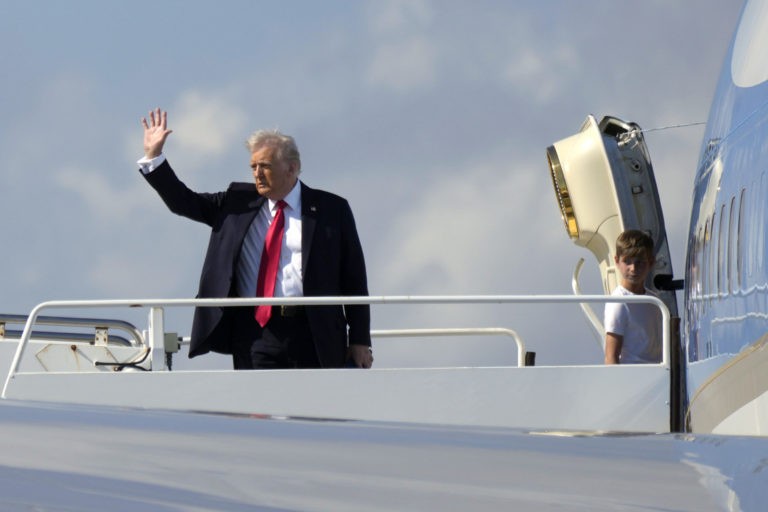
(Adam Herbets and Sarah Roderick-Fitch, The Center Square) President Donald Trump said he was “not surprised” to hear of confidential documents obtained by The Center Square revealing plans to sue him nearly seven months before he was reelected.

Trump made the comments at a press briefing on Monday, acknowledging investigative reporting by The Center Square.

“I heard about that,” the president said. “I’m not surprised because they’ve weaponized this country like never before. The Democrats – or the Dumbocrats, as I call them – they’ve weaponized the country. Nobody’s ever seen anything like it.”

State attorneys general have sued the Trump administration approximately 100 times since January 2025. Documents obtained by The Center Square show the coordinated effort appears to have a nickname: the “Project for Federal Accountability.”

Not all of the lawsuits have been joined by each attorney general, and some offices take the lead on different cases. At last count, California Attorney General Rob Bonta has participated in at least 82 lawsuits. Colorado Attorney General Phil Weiser has joined at least 76 lawsuits. Washington State Attorney General Brown has joined 72 lawsuits. Arizona Attorney General Kris Mayes has joined 49 lawsuits.

Bonta characterized the lawsuits as “apolitical,” although a confidential document obtained by The Center Square shows only Democratic attorneys general plotted the litigation.

“If (Trump) doesn’t want to get sued, all he has to do is follow the law,” Bonta said. “I don’t think our cases are likely to be dismissed… Trump shows no sign of slowing down, so we will continue to sue him.”

The lawsuits have cost California taxpayers $19 million, according to Bonta.

So far, 14 cases have been closed in favor of the plaintiff and four cases dismissed in favor of the federal government, according to Just Security — a nonpartisan digital law and policy journal at New York University.

Trump did not comment on any of the lawsuits specifically. He stated the documents are only being revealed now because he “won the election in a landslide.”

“These are very dishonest people,” Trump said. “I wouldn’t be surprised to see that.”

State attorneys general filed 122 multistate lawsuits against the Biden Administration during his four years in office, according to data previously collected in 2025 by Marquette University. Not all of them were launched by Republicans. Six of the lawsuits were launched by Democrats and two were bipartisan.

When attorneys general have sued prior administrations, it was typically after the administration took action — not before. For example, former Utah Attorney General Mark Shurtleff pointed to a 2012 lawsuit challenging the Affordable Care Act (Obamacare) after its passage in March 2010. He was one of 22 Republican attorneys general who signed onto the case, which ended with a partial victory and partial defeat before the United States Supreme Court.

Shurtleff, who now votes for Democrats, believes the sheer number of lawsuits on both sides are excessive.

“It’s just horrible. It’s a big, huge waste of attorney general time and the good things that you could accomplish together,” he said. “It’s a shame. It’s way too much. I think it’s ridiculous.”

Teacher Unions Dedicate Money to Political Activism, Lobbying

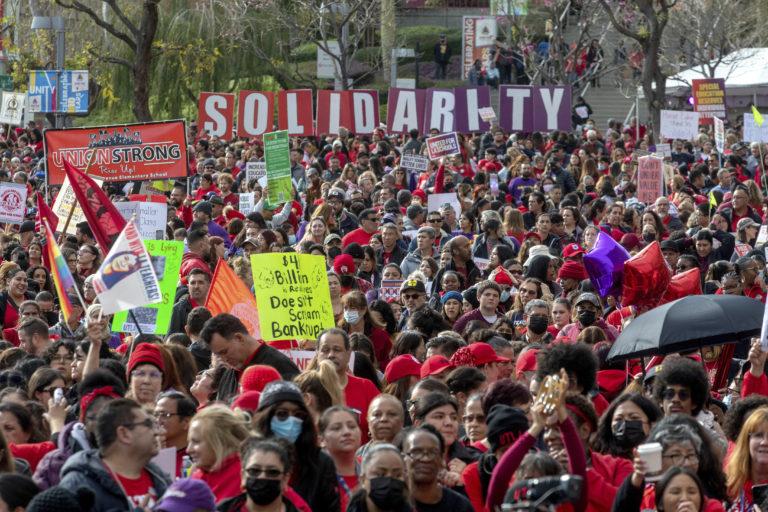
(Esther Wickham, The Center Square) National teacher unions contribute at least 10% of their annual budget to lobbying and political activism, which includes calling for the impeachment of Republican President Donald Trump in the 2026 American Federation of Teachers handbook. Efforts also include supporting Democratic causes such as messaging against immigration enforcement.

Some teachers raise questions about whether union dues are being used to advance causes the instructors actually support.

Todd Loeffler, a California elementary public school teacher for over 25 years, said the cost of joining the union and some of their political tactics turned him off.

“Knowing that our union dues were primarily going to Democratic candidates, it was very difficult,” he told The Center Square.

This is the second in a series on teacher unions, their influence on elected officials and the cost to taxpayers.

Another issue was the cost. He initially declined to join his union when he began teaching because the dues were too expensive.

“When I was just hired as a new teacher, I was asked to join the union along with all the other new teachers,” Loeffler said. “We discussed joining the union, but we agreed it was too expensive, and our salary was very low.”

Loeffler recalled that a seasoned teacher tapped him on the shoulder and said: “You better join the union.” But at the time, Loeffler said, membership was voluntary.

That changed the following year.

“Realizing that too many teachers were not joining the union, our school district teachers’ union changed it to a closed shop union,” Loeffler said. “That made us join, and we did not like it.”

States like California are non-right-to-work states, meaning they can require union participation and employees to pay agency fees or dues.

Right-to-work states like Texas offer union membership and dues as optional to workers.

For public school teachers throughout the U.S., that all changed in 2018 following the U.S. Supreme Court ruling in Janus v. AFSCME, which prohibited school districts from requiring their employees to pay union fees as a condition of employment. The ruling allows teachers throughout the nation to opt out of unions.

Following the Supreme Court’s 2018 ruling in Janus v. AFSCME, California enacted Senate Bill 866 in 2018 to prevent multiple members from leaving the union at once. The bill shifted the management of membership dues and any workers’ requests directly to unions.

Loeffler said he paid $1,200 in dues a year to the Association of Classroom Teachers, a chapter affiliated with the California Teachers Association, the state’s largest teachers’ union.

Loeffler said his concerns went beyond the cost of dues. He objected to what he believed was the union’s political spending, particularly its support for Democratic candidates.

Loeffler also questioned how much of his dues actually went toward political activity and how much went toward representing teachers.

Teachers were told union membership could provide legal protection if they were sued by a parent or student, he said.

“It was a scare tactic,” Loeffler said. “I don’t know of any teacher who had to use the union to manage a legal battle.”

The National Education Association and American Federation of Teachers represent millions of educators nationwide and are among the most politically active labor organizations in the country. The NEA has about 3 million members, while the AFT represents roughly 1.8 million.

In 2025, the NEA received almost $400 million in membership dues, and the AFT got over $270 million in dues.

Union members pay membership dues via payroll deduction from taxpayer-funded salaries. Many critics of teacher unions argue these dues are critical taxpayer dollars.

For example, for the California Teacher Association, which is under the NEA, dues are split into CTA dues of $899 annually per member for the 2026-27 year and NEA dues of $234.

In 2025, the NEA spent a total of $448,171,192, according to Union Facts, a nonprofit that focuses on transparency and accountability. AFT spent a total of $278,261,430.

The NEA spent more than $51 million on political activities and lobbying in 2025, and the AFT spent more than $41 million, according to Union Facts.

In comparison, the national average salary for a public school teacher is $74,000, according to the NEA.

Depending on the state and school district, a good portion of local budgets is allocated to teacher pay and benefits. For example, the Los Angeles Unified School District, the nation’s second-largest school district, allocated 93% of its budget to employee salaries, with 40% of the budget going to teacher pay and benefits.

Aaron Garth Smith, director of education reform at the Reason Foundation, told The Center Square that unions’ influence extends well beyond contract negotiations.

“Teacher union influence goes well beyond money, especially at the local level with school board races,” Smith said. “Ultimately, the job of teachers’ unions is to advocate for their members, not kids. Sometimes these interests align, but often they don’t.”

The NEA has taken public positions such as criticism of U.S. Immigration and Customs Enforcement. The NEA provided $1.7 million in funding to a May Day 2026 training toolkit that includes anti-ICE messaging, The Center Square previously reported.

Rusty Brown, director of special projects at the Freedom Foundation, which advocates against public-sector unions, told The Center Square that unions give money to what they align with.

“I see them not really giving money to people that are not gonna be perfectly aligned with them,” Brown told The Center Square. “It’s to push either a radical agenda or to help their own bottom line.”

In January, The Center Square attended a virtual conference hosted by Sunrise Movement, a political action organization, titled “Roadmap to Political Revolution,” where U.S. Rep. Ro Khanna, D-California, and NEA President Rebecca Pringle talked about the controversy surrounding U.S. Immigration and Customs Enforcement in Minnesota and across the country.

“It is no surprise that the NEA is this administration’s top target. Dictators always come for educators because we teach the children how to think for themselves … [T]his administration is using ICE to bring fear and trauma into our schools,” Pringle said during the conference.

The AFT has also taken political stances on various issues.

Its 2026 policy handbook includes positions addressing the separation of church and state in education, cuts to the military budget and the Trump administration.

One resolution calls for the impeachment, conviction and removal of the president.

“WHEREAS, Donald Trump’s fascist takeover of American democracy is real — including the threat to the right to public education — but the mass movement to defend democracy and stop the rise of fascism is real too,” the resolution reads.

“RESOLVED, that the AFT will call for the impeachment, conviction and removal of Donald Trump from the U.S. presidency as soon as possible.”

“RESOLVED, that the AFT will fight back against the chaos that the Trump administration is creating, and the AFT will fight forward by building a movement with the members, students, other workers, and our communities to fight for a stronger democracy and build a better future for all.”

Critics say such positions go beyond traditional union responsibilities.

“The job of a union used to be and should be to represent the interests of its members as they relate to the workplace,” Mika Hackner, research director at the North American Values Institute, told The Center Square.

Hackner said the NEA and AFT have embraced what she described as “social justice unionism,” arguing that the approach assumes members share the same political views.

“It is a wholly inappropriate use of union resources and a dereliction of the union’s duty,” Hackner added.

Cliff Smith, government affairs director at the North American Values Institute, said unions have a legitimate role in education policy but risk losing credibility when they move into issues far removed from their core mission.

“It’s perfectly appropriate for unions to have opinions on issues closely related to education,” Smith told The Center Square. “But when a union, or any other entity, steps wildly outside its area of expertise, not only does it promote ideas that it shouldn’t, but it creates distrust when they speak out on issues they truly are experts on.”

The Center Square reached out to the NEA, CTA and AFT multiple times for comments but did not receive a response.


Minnesota AG Sues Abbott Over Extradition of ICE Agent

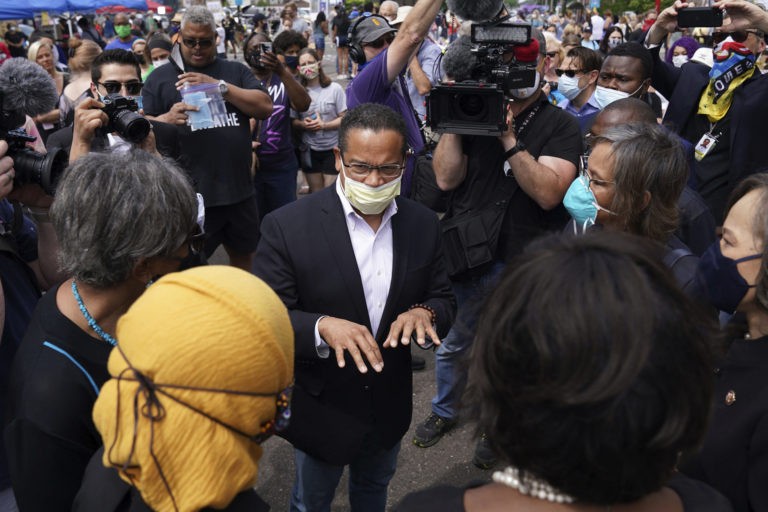
(Jon Styf, The Center Square) Minnesota Attorney General Keith Ellison sued Texas Gov. Greg Abbott to force the extradition of an Immigration and Customs Enforcement agent accused of assault and falsely reporting a crime.

Agent Christian Castro was arrested May 29 in Texas but Abbott has refused to sign an extradition to send Castro to Minnesota to stand trial.

Ellison sent a letter to Abbott on Aug.. 13 stating that he would face legal action if he did not comply.

“Abbott’s refusal to extradite Castro is unconstitutional and violates federal law and Texas law,” Ellison said in a statement. “I will not stand for that, so I’m taking Abbott to court. Christian Castro will stand trial in Minnesota.”

Castro was charged on May 18 with second-degree assault and falsely reporting a crime after a Jan. 14 action in Minneapolis where Castro is accused of firing a gun at the front door of an occupied home.

One bullet struck a victim in the leg and then went into a child’s wall in the home.

Castro is accused of falsely claiming that a crime had been committed and is accused of providing false information to an officer on the scene.

Minnesota’s extradition request was sent on June 2 from Gov. Tim Walz to Abbott.

“Gov. Abbott’s withholding of the rendition warrant threatens to deprive Minnesota of its constitutional right to Castro’s return,” Ellison’s office said in a statement. “Furthermore, because Texas law mandates Castro’s discharge from custody after 90 days, Abbott’s continued refusal to extradite creates a substantial risk that Castro will be released from custody and flee Texas to avoid prosecution in Minnesota.

“Such an outcome is directly contrary to the intended purpose of the U.S. Constitution’s Extradition Clause of enabling states to bring offenders to trial as swiftly as possible.”

Four Reasons Central Banks Are Piling Up Gold

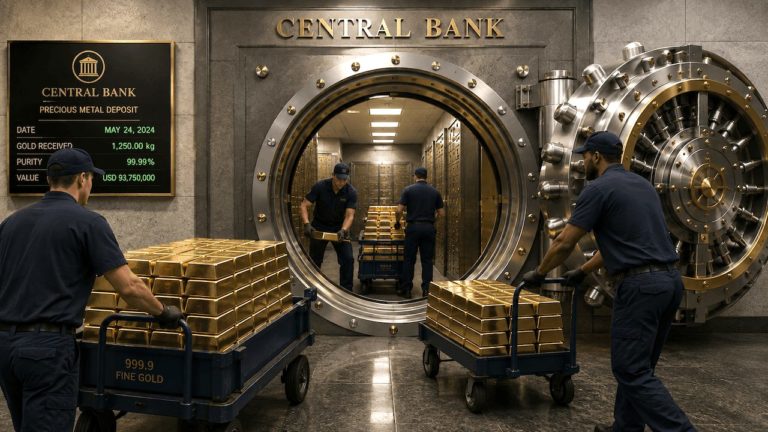
(Mike Maharrey, Money Metals News Service) Central bank gold buying was one of the pillars supporting the gold bull market last year, and it has continued to bolster the market even as it faced significant headwinds due to expectations of a higher interest rate environment.

But why are central banks piling into gold even as they minimize their exposure to the dollar?

There are four key reasons.

  1. Geopolitical risk
  2. The weaponization of the dollar.
  3. Worries about the U.S.’s deteriorating fiscal situation.
  4. Regime uncertainty

In an op-ed published by Reuters, financial journalist Jamie McGeever said that none of these events on their own would necessarily spark the current revival in gold.

“But throw them all together, and it’s a pretty compelling checklist. Especially for central banks, which had already started to ramp up their purchases in the second quarter after a lackluster first quarter.”

McGeever is referring to the resurgence of central bank gold buying in the second quarter of this year. Facing price pressure in Q1, central bank purchases slowed, but things started picking up in April. Central banks bought 289 tonnes of gold in the second quarter, nearly five times more than the Q1 total.

Following is an overview of these four factors and why they’re incentivizing gold accumulation and de-dollarization.

Geopolitical Risk

The war between the U.S. and Iran has had an oversized impact on the markets. After a brief safe-haven bid at the outset of hostilities, gold sold off and has traded sideways due to the oil price shock and worry that higher inflation will mean higher interest rates.

And the war is starting to look like a problem that won’t go away. McGeever called it “an unnerving geopolitical and policy backdrop that has reminded the world of gold’s underlying appeal.

“Hopes of a peace ‘deal ’-however unsatisfactory that deal might be – are evaporating. U.S. President Donald Trump’s off-ramp ahead of November’s midterm elections is narrowing. Escalation or capitulation is not the only choice Trump faces, but it is a black-and-white scenario some analysts are now beginning to contemplate.”

As expectations for a Fed rate hike fade, gold’s safe-haven appeal is growing in this uncertain environment.

Dollar Weaponization

When the world sees the U.S. moving aggressively on the world stage, it increases worries about the weaponization of the dollar.

After Russia invaded Ukraine, the U.S. and its Western allies aggressively sanctioned Russia, effectively cutting the Russians off from the global financial system.

Other countries sat up and took notice.

While it may make sense from a Western foreign policy perspective, it has made many countries wary and sped up efforts to minimize dependence on the greenback. After all, if you have something that can be leveraged against you, it’s only natural to try to minimize your exposure to that thing. If the U.S. can pull the dollar rug out from under you, why not try to get that rug out of the room?

This is one of the primary dynamics driving central bank gold accumulation.

Notably, they are decreasing their exposure to dollars at the same time. Earlier this year, the European Central Bank confirmed gold has surpassed Treasuries as the top reserve asset.

U.S. Fiscal Malfeasance

The national debt is only a few billion dollars away from $40 trillion. Meanwhile, federal spending keeps speeding up. The U.S. ran the biggest monthly budget deficit in five years last month.

The world has financed America’s spending spree for decades, but it might be getting wary of loaning Uncle Sam money. Treasury yields have been pushing higher in what some analysts believe is the beginning of a secular bear market in bonds.

McGeever pointed out that yields on the benchmark 10-year Treasury note have climbed to their highest level in 18 months. Meanwhile, yields on 30-year bonds and 30-year inflation-protected bonds are at their highest since 2007 and 2008, respectively.

This indicates a sagging demand for U.S. debt.

Economist Phil Suttle explained the ramifications.

“The U.S. is now in a phase where its global seigniorage benefits of supplying the world’s reserve currency have now been exhausted; the next phase (which may already be underway) is what happens when the foreign official holders of your liabilities become more antsy about holding them.”

Regime Uncertainty

Markets are forward-looking. They don’t function very well when the future gets hazy.

For an economy to operate at peak efficiency, market participants need to be able to anticipate future developments. They need stability in policy and regulation.

We have none of that today.

The tariff situation is a prime example. Nobody knows what the tariff landscape will look like next month, much less a year from now. How does one plan for the unknown?

Meanwhile, many people on the international stage question Federal Reserve independence. They worry that pressure from the administration could drive monetary policy. It’s a legitimate concern because Fed independence is a myth.

While new Federal Reserve Chairman Kevin Warsh has talked a good game on tackling inflation, he hasn’t actually done anything. This is causing the markets to question his commitment to reining in inflation.

McGeever noted that it also appears Trump is in Warsh’s year.

“Media reports suggest Trump has repeatedly called Warsh since his appointment, and Trump has revived his attempts to fire Governor Lisa Cook. All this has unnerved the bond market.”

All these factors are driving central bank gold buying. BNY analysts say they should also incentivize renewed investor interest, especially with the price below all-time highs.

“Gold is not a pure Fed signal, but persistent official-sector demand and renewed investor interest are reinforcing the value of inflation, currency and geopolitical hedges.”

McGeever argued that this is a setup for a long-term gold bull run.

“As confidence in the world’s reserve assets frays, gold’s allure is unlikely to dim.”


Mike Maharrey is a journalist and market analyst for Money Metals with over a decade of experience in precious metals. He holds a BS in accounting from the University of Kentucky and a BA in journalism from the University of South Florida.

Chinese Gold Demand Was Steady in July

(Mike Maharrey, Money Metals News Service) Despite gold’s sideways price performance and increased volatility, Chinese gold demand remained generally stable in July.

China ranks as the world’s biggest gold market.

The gold price in yuan was virtually unchanged in July. According to the World Gold Council’s gold return attribution model, a weaker dollar and improved investor positioning supported the yellow metal, while rising yields continued to create headwinds.

Chinese gold demand has been bifurcated, with resilient investor buying and a struggling jewelry sector.

Withdrawals from the Shanghai Gold Exchange (SGE) fell by 8 percent in July, dipping to 80 tonnes. Banks, jewelers, and refiners pull gold from the SGE, and the volume provides a snapshot of wholesale gold demand in China.

The World Gold Council described wholesale demand as “tepid,” but noted that the decline was “largely seasonal.”

“The jewelry sector is typically tepid in Q2 and early Q3.”

The WGC said data indicates that physical gold investment demand was “broadly unchanged” from June and failed to offset the decline in jewelry demand due to high prices.

Year-on-year, SGE withdrawals are down 15 percent, reflecting a softer jewelry market and a higher gold price. They are also coming off extremely high demand numbers from last year.

ETF flows indicated a modest resurgence in investment demand in July.

Five tonnes of gold flowed into Chinese gold-backed funds last month. That pushed ETF assets under management (AUM) up 3 percent to ¥250 billion ($37 billion).

ETFs are a convenient way for investors to play the gold market, but owning ETF shares is not the same as holding physical gold.

According to the World Gold Council, investment interest was buoyed by several factors.

“Recurring geopolitical uncertainty, weaker equities, and persistent gold accumulation by the PBoC. Meanwhile, rising institutional investor participation as the gold price stabilized also supported demand in the month.”

In another sign of bullish sentiment, net longs on the Shanghai Futures Exchange rose 24 tonnes to 117 tonnes at the end of July.

Meanwhile, Chinese gold imports rose to a two-year high in June as lower prices sparked a resurgence in demand.

Looking ahead, World Gold Council analysts said investment demand will likely improve if the price continues to break higher. Wholesale demand could also get a boost from seasonal jewelry inventory replenishment.

However, there are some potential headwinds if the domestic equity rebound that started earlier in August persists.


Mike Maharrey is a journalist and market analyst for Money Metals with over a decade of experience in precious metals. He holds a BS in accounting from the University of Kentucky and a BA in journalism from the University of South Florida.

FBI Scientist Pleads Guilty to Possessing Child Abuse Material

(Ken Silva, Headline USA) An FBI scientist has pled guilty to child-pornography related charges as part of a plea deal struck earlier this month.

The DOJ Inspector General announced this week that the FBI scientist, microbiologist Cary Andre Rue, pled guilty on August 4 to one count of advertisement for child sexual abuse material, or CSAM, and one count of possession of CSAM.

“Rue did knowingly make and publish or cause to be made or published in November 2025, a notice and advertisement seeking and offering to receive, exchange, produce, display, distribute, and reproduce a visual depiction, the production of which visual depiction involved the use of a minor engaging in sexually explicit conduct, knowing that the advertisement would be transported using interstate and foreign commerce,” the DOJ Inspector General said in a press release.

“In addition, on or about April 8, 2026, Rue knowingly possessed at least one matter on an Android Galaxy S22 cell phone containing a visual depiction of CSAM, and beginning in at least November 2023.”

Rue was first put under investigation after Google submitted multiple tips last September about his email account to the National Center for Missing and Exploited Children. According to charging documents, Google reported that Rue had uploaded more than 50 files of suspected child pornography to his Google Drive account.

In April of this year, the FBI executed search warrants on more than 25 electronic devices owned by Rue—allegedly finding more than 3,000 sexually explicit videos depicting minors as young as babies. Agents also allegedly found Rue talking about finding teenage prostitutes the next time he goes overseas, and insinuating that he had sex with minors in Bulgaria.

He was arrested on May 4 and indicted shortly thereafter.

Rue resides in Stafford, Virginia, maintained an office at the FBI lab in Quantico, and had a top secret security clearance, according to court records.

He was the second Virginia-based FBI official to be charged with a sex crime in May. Earlier that month, FBI supervisor Timothy Healy was reportedly charged with felony sexual battery in Indiana. Healy lives in Virginia and was reportedly visiting someone he knew in Indianapolis when the alleged crime took place. Further details aren’t public yet.

The FBI still lists Healy on its website—listing him as a supervisory agent who serves with the bureau’s Crisis Negotiation Unit in Quantico, Virginia.

Healy also had a bio on Georgetown University’s website, but that has been removed. According to an archived version of the deleted page, Healy has some 23 years of federal service under his belt.

Ken Silva is the editor of Headline USA. Follow him at x.com/jd_cashless.

Pentagon Orders Audit of 30 Universities’ Partnerships with Foreign Institutions

(Headline USAThe Department of Defense has ordered 30 U.S. universities to audit their partnerships with mostly Chinese universities and military training institutions as the Trump administration scrutinizes the country’s growing global influence.

If the schools don’t complete a review and terminate any arrangements deemed problematic within the next two weeks, they face losing funding. The goal is to protect taxpayer-funded research from theft and exploitation, the Pentagon said Monday.

“The Department of War has zero tolerance for academic partnerships that compromise our national security,” Emil Michael, the Pentagon’s chief technology officer, said in a news release.

The release didn’t name the schools, but a U.S. official who spoke on condition of anonymity to discuss internal matters said they include Harvard University, the Massachusetts Institute of Technology and Johns Hopkins University.

Sarah Spreitzer, vice president at the American Council on Education, which represents college and university presidents, raised concerns that the announcement suggests, without any evidence, that the schools are engaged in wrongdoing.

The order comes after the Pentagon last month released an updated list of 130 foreign institutions it accused of engaging in “activities that increase the likelihood of U.S. government-funded research and development efforts being misappropriated.”

While the vast majority were Chinese, such as the University of Science and Technology of China and the country’s Academy of Military Medical Sciences, several Iranian and Russian institutions also appeared on the list.

The first version of the list was developed during Trump’s first term, with the help of the American Council on Education, Spreitzer said.

She said most of the council’s member institutions moved away from research partnerships with those institutions in the years that followed. She said she worries U.S. schools will be held liable for partnerships that predate the creation of the list.

The audit comes as the Trump administration continues to express deep concern about China’s activities in the Americas, pushing back on Chinese ownership of ports at either end of the Panama Canal, infrastructure projects funded by China’s Belt and Road initiative in the region and Chinese investment in the telecommunications sector.

The Justice Department also is investigating whether Harvard University is allowing Chinese donors to create scholarships that exclude American students, adding to the barrage of federal inquiries the Trump administration has opened in its battle against the Ivy League school.

A spokesperson for the Chinese embassy said in a statement that the country opposes what it described as the politicization of “normal scientific, educational, and academic exchanges.”

“The U.S. side,” the statement continued, “should abandon the Cold War mentality and foster an open, fair, and non-discriminatory environment for educational, scientific, and people-to-people exchanges between China and the United States.”

Adapted from reporting by the Associated Press

WATCH: Ohio Recycling Center Explodes

(Headline USAExplosions rocked an Ohio industrial recycling business Tuesday morning, sparking a large fire that drew a swarm of emergency responders. Two workers were unaccounted for and a few others had minor injuries, officials said.

The Toledo Fire & Rescue Department said there were two explosions at Brent Industries shortly before 5 a.m. TV news video showed fire engines surrounding the building as flames and dark smoke poured from the structure.

Fire Chief Allison Armstrong said the explosions came during a shift change at the business. She said it was not immediately clear whether the two workers who were unaccounted for were OK and just not answering their phones, but they were seen in the building before the explosion.

“We’re working to contain the fire and account for all the employees right now,” Armstrong said. “They’ve got hazardous materials in there, so we’re dealing with chemicals and runoff and tanks that exploded.”

She added, “If we’re missing people and we’re not sure if they’re in there, I mean that’s just terrible. And so you know we’re hoping that we can just account for the remaining employees and get the fire under control.”

Demetrius Langston said he felt the explosion half a mile away. He ran outside with his phone and captured video of a huge plume of smoke rising into the dark sky. As police cars raced up the street, he worried the city was under attack.

“The shock waves came down the block,” he said. “Then we all heard it again. Boom! You could feel it.”

Armstrong said there was still a major fire at the site at around 7:30 a.m. and at least half the building collapsed. She also said there were no preliminary indications of what caused the explosions.

Authorities urged the public to stay away from the area as crews worked to extinguish the blaze.

A phone message was left for Brent Industries.

The company, based in Brent, Alabama, offers textile reconditioning and industrial recycling services aimed at reducing waste and saving money, according to its website. It was founded in Alabama in 1977 and has operations in Brent and Toledo.

Adapted from reporting by the Associated Press

Karen Bass Implicated in Fake Poll Claiming Spencer Pratt’s Voters Now Back Her

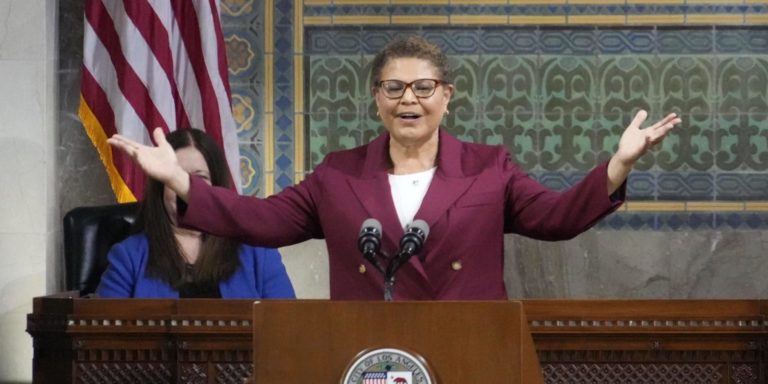
(Luis CornelioHeadline USA) Los Angeles Mayor Karen Bass celebrated a shocking poll that showed her leading her reelection opponent by nearly 12 points. But on Monday, that celebratory mood at her campaign quickly came crumbling down after the poll turned out to be fake.

Bass, a former Democratic member of Congress, is facing a rocky reelection following her first term leading Los Angeles. Most recently, her administration has faced scrutiny over its handling of the wildfires that savaged the city.

Her campaign team was thrown a lifeline after an entity identified as Median Strategies released a purported poll of 560 voters that showed Bass leading her opponent, Councilmember Nithya Raman, by nearly 12 points. The poll, which Headline USA reviewed, claimed Bass had 50% support compared with just 39% for Raman.

Bass even boasted about the poll in an X post, writing: “Doing the work, showing up, and gaining momentum. Let’s do this, LA!”

But when the Los Angeles Times said it repeatedly demanded to speak with Median Strategies’ pollster, the company claimed the poll was nothing but a social media experiment.

“Median Strategies was created as a short term social experiment to examine how purported polling information could enter and spread through the political information ecosystem without independent verification,” the company told the outlet.

Median Strategies added that it was “not seeking publicity or attribution for the individuals involved and are declining interviews.”

The individuals behind the fabricated poll are unknown. Critics online have questioned whether the stunt may have run afoul of state law, while others said the fake poll may have boosted Bass by giving her reelection campaign the appearance that it was doing well.

For instance, donors could potentially have been compelled to give money to her campaign rather than Raman’s based on the perception that Bass was gaining momentum.

In response to the embarrassing blunder, Bass’ team implied it believed the poll was real because it had received coverage from the California Post.

“This poll was reported on by a news outlet. Any bad faith attempts to influence elections should be investigated and prosecuted to the fullest extent of the law,” one of her campaign’s spokespeople claimed, as quoted by the Los Angeles Times.

The fake poll also included a section that proclaimed that the disenchanted Los Angelinos who backed the unconventional Pratt campaign were backing Bass after he didn’t make the open primary earlier this year.

“Faced with a choice between the incumbent and a Democratic Socialists of America-aligned challenger, most Pratt voters appear to be treating Bass as the more familiar, more moderate option rather than sitting out the race,” the poll claimed.

Bass has since deleted the X post celebrating the poll, but the episode came as she faces a difficult path to reelection.

The runoff election is set to for Nov. 3. The open primary, which included Pratt, was held June 2. Bass received a plurality of the vote, though a majority voted for other candidates. She specifically received 292,593 votes, or 34.3%; Raman received 247,781, or 29.0%; and Pratt received 217,977, or 25.5%.

Jewish Democrat Ditching District to Usurp Majority-Black District

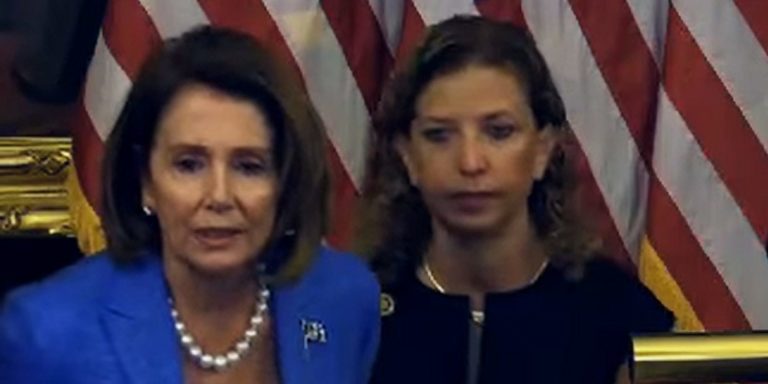
(Luis CornelioHeadline USA) Democrat Debbie Wasserman-Schultz has long advocated for black representation in government and politics. However, when her district was redrawn, she was quick to jump into another race where she is potentially threatening the same black representation she claimed to advocate.

Wasserman-Schultz, who is Jewish, was seeking a 12th term to represent Florida’s 25th Congressional District. But in response to Gov. Ron DeSantis’ redistricting plan that made her district lean Republican, she jumped into the race to represent Florida’s 20th Congressional District.

The new district she is aiming to represent covers Broward County, which is approximately 40% black and has long sent black lawmakers to Congress, according to multiple news reports.

Wasserman-Schultz is now facing questions about her decision to join that race, as four other prominent black Democrats were already in the race. They include activist Elijah Manley, former Rep. Sheila Cherfilus-McCormick, former Broward County Mayor Dale Holness and musician Luther Campbell.

Notably, a Headline USA review of Wasserman-Schultz’s past comments on her X page found a recurring theme in which the Democrat repeatedly accused Republicans of diminishing black and minority representation.

Most recently, on April 21, 2022, the Democrat darling claimed Florida Republicans kept “eroding minority progress” by cutting Florida’s black congressional representation “in half.”

She said she was “very proud” of Democrats “who refuse to be silent while this injustice unfolds.”

On Jan. 26, 2021, Wasserman-Schultz hailed the Biden administration’s plan to put Harriet Tubman on the $20 bill, claiming: “Representation matters, especially on the most used dollar bill in America.”

On Oct. 13, 2020, she accused the Trump administration of redrawing congressional maps and “rob millions of mostly nonwhite people of representation.”

In June 2020, Wasserman-Schultz praised Ella Jones for becoming the first black mayor of Ferguson, Mo., saying that “now more than ever, representation matters.”

The Democratic primary is set for Aug. 18. The winner is heavily favored to win the general election in November.