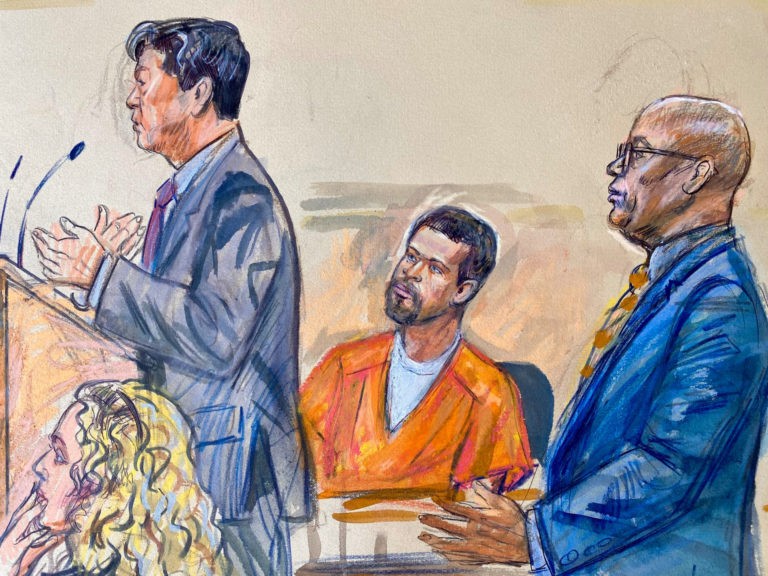
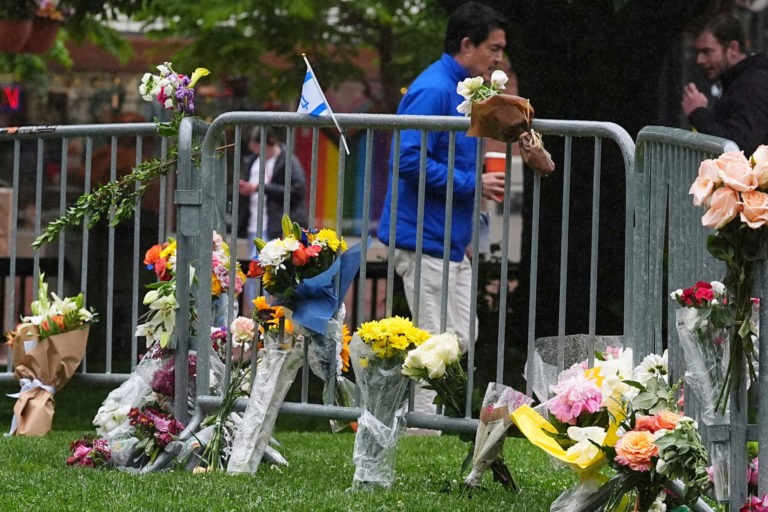
(Headline USA) A man shot five people in Texas on Tuesday, killing two of them, at a shopping center north of Dallas, police said.
It was not a random act of violence and the victims knew the attacker, Carrollton Police Chief Roberto Arredondo said.
“We don’t know exactly what the meeting was about, but we understand it to be a business relation,” he continued.
After a short chase on foot, the 69-year-old suspect was arrested about 4 miles (6 kilometers) away at a grocery store, police said.
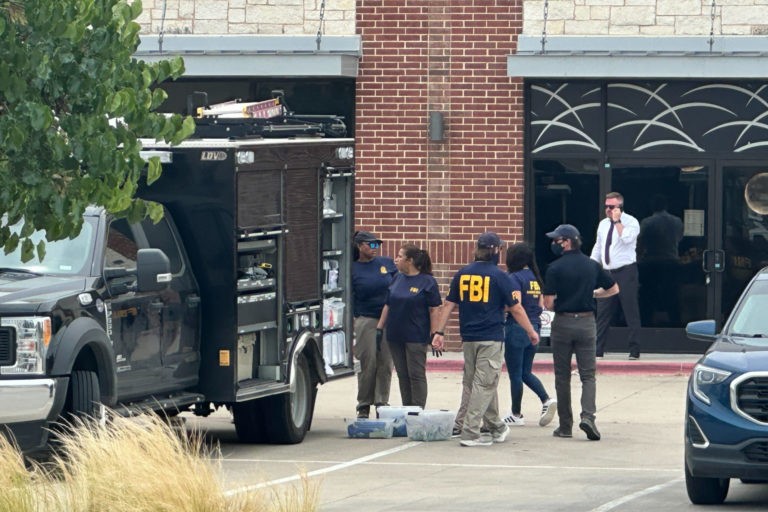
Video posted online showed officers with their guns drawn as they walked past doors at K Towne Plaza in an area of the city known as Koreatown. Agents from the FBI and another federal agency were among law enforcement at the scene.
Carrollton, population 130,000, is 20 miles (32 kilometers) north of Dallas. More than 4,000 residents are of Korean descent, according to the U.S. Census Bureau.
In the last 20 years, it has grown into a thriving Koreatown for the metro Dallas area, thanks to Korean investors. It’s anchored by big-box businesses like H Mart as well as dozens of restaurants serving everything from Korean fried chicken to shaved ice desserts.
The city is also home to multiple Korean churches from Baptist to Presbyterian.
(Ken Silva, Headline USA) The Justice Department announced last month that a “Chantilly man” was sentenced to 27 years in prison after being convicted of sexual exploitation and coercion and enticement of minors to engage in illegal sexual activity.
What the DOJ’s press release didn’t say—and what’s not mentioned in court records—is that the defendant is a former contractor for the U.S. Marshals. This fact was revealed by the DOJ Inspector General, which was part of the investigation. According to the DOJ-OIG, Bourne was assigned to the Marshals’ information technology division in Virginia.
What's not mentioned in this tweet, the DOJ's press release, or any court records is that the defendant here was a US Marshals contractor.
Bourne, 55, was convicted of using an anonymous Google account, lordromance2021, to sexually exploit at least six girls between the ages of 13 and 17. Court records show that he referred to them as his “slaves,” and persuaded them to “serve” and “please” him by engaging in sexually explicit conduct on live webcam.
“Bourne groomed the girls, inundating them with sexual messages, including sexually graphic pictures and a video of himself. He pressured the victims to reciprocate his sexual advances and to join him on video calls even when they expressed discomfort,” the DOJ said in its press release.
“He also received child sexual abuse material from two of his victims. Bourne knew that several of his victims suffered from serious mental health issues, making them more susceptible to his coercion.”
Bourne has filed an appeal in his case.
Ken Silva is the editor of Headline USA. Follow him at x.com/jd_cashless.
(Ken Silva, Headline USA) Shortly after FBI Director Kashyap Patel and then-Deputy Director Dan Bongino took office, they found a trove of classified Russiagate records and other damning documents inside “burn bags” in a secret bureau room—or so the story goes.
Patel provided more details about this purported burn-bag room in a recent interview with Fox News’s Sean Hannity. Patel said the room was so secret that it’s not even included in the blueprints for FBI headquarters.
“They weren’t burned, but the room was also off the map,” Patel said. “It wasn’t on our blueprint, and nobody had access to it.”
🚩Secrets reduced to ashes: the Intel’s forgotten burn bags.
KASH PATEL relays a shocking burn bag headline he exposed last year.
The “burn bag” system is used to destroy sensitive documents. Fox News reported last July that one of the most damning records found in the room was the classified annex to former special counsel John Durham’s final report, which includes the underlying intelligence he reviewed.
Fox News’s sources reportedly said the classified annex includes information about how a foreign CIA source predicted that the FBI would spread the dubious claims behind the Trump-Russia collusion hoax, even before the bureau launched Crossfire Hurricane. This annex also reportedly shows that credible evidence of possible misconduct was deliberately overlooked by the FBI.
Records from the burn-bag room are reportedly underpinning Patel’s investigation into whether there was a “grand conspiracy” between intelligence officials and Democratic politicians.
Patel’s FBI’s broader conspiracy case would allow a special prosecutor more time to connect recent alleged crimes to older events, treating them as part of a continuing conspiracy or racketeering operation. The probe could also enable the empaneling of a grand jury outside Washington, D.C., where Trump has historically faced unfavorable juries. Florida, where overt acts of the alleged conspiracy occurred, is being considered as an alternative venue.
Patel has promised that arrests in the grand conspiracy case are impending.
Ken Silva is the editor of Headline USA. Follow him at x.com/jd_cashless.
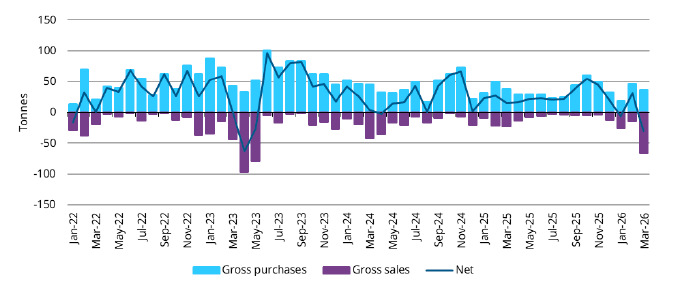
(Mike Maharrey, Money Metals News Service) Central banks continued to buy gold in March; however, big sales by Turkey and Russia sent net purchases negative by 27 tonnes.
Officially, central banks globally bought 37 tonnes of gold in March, led by Poland.
The Gold Buyers
Despite rumors that the country might tap into its gold reserves to fund defense spending, the National Bank of Poland added 11 tonnes of gold to its reserves in March. That drove its 2026 purchases to 31 tonnes, lifting the country’s gold reserves to 581 tonnes, making up around 31 percent of its total reserves.
Poland led central bank gold buying in 2025, adding 102 tonnes of gold to its holdings.
Glapiński recently floated a plan to sell $13 billion in gold to finance defense spending. He said the bank would “generate profits and to then buy it back.” However, the Polish central bank has not released any additional details about the plan.
Uzbekistan continued to add gold to its holdings in March, with a 9-tonne purchase.
The Uzbek central bank has purchased 25 tonnes of gold so far this year, boosting reserves to 416 tonnes. The country holds most of its reserves in gold, with the yellow metal accounting for around 88 percent of its total reserve assets.
The National Bank of Kazakhstan came back to the table in March, expanding its gold reserves by 6 tonnes. So far this year, the Kazakh central bank has bought 13 tonnes of gold.
It is not unusual for central banks that buy from domestic sources, such as Uzbekistan and Kazakhstan, to pivot back and forth between buying and selling.
The Czech Republic has been one of the most consistent buyers over the last few years. The trend continued in March, as the Czech central bank expanded its reserves by another 2 tonnes. The Czechs have adopted a slow, steady approach, buying gold for 37 straight months. The country added 20 tonnes to its holdings last year, and it now holds 78 tonnes of gold. Czech officials say they plan to increase gold reserves to 100 tonnes by 2028.
China continued adding gold to its official reserves and sped up the pace of buying with a 5-tonne purchase as prices fell in March. The People’s Bank of China has reported an increase in official reserves for 17 straight months.
It’s reported that gold reserves now stand at 2,313 tonnes, making up almost 10 percent of total official reserves.
Notice the emphasis on “official.”
China is among the central banks that are likely to hold significantly more gold than they publicly disclose. As Jan Nieuwenhuijs has reported, the People’s Bank of China is secretly buying large amounts of gold off the books. According to data parsed by the renowned Money Metals researcher, the Chinese central bank is currently sitting on more than 5,000 tonnes of monetary gold located in Beijing – more than TWICE what has been publicly admitted.
Guatemala (2 tonnes) and the Kyrgyz Republic (1 tonne) also reported increases in their gold reserve in March.
The Gold Sellers
We already knew that Turkey sold a significant amount of gold in February and March to backstop its currency and cover rising energy costs. The selling showed up in the March data with a 60-tonne decrease in Turkish gold reserves. This follows a 6-tonne decline in reserves in February.
Meanwhile, the Russians have also tapped into their gold reserves to support their economy and fill a budget hole in the wake of ongoing economic sanctions. The Central Bank of Russia reported a 6-tonne net decline in reserves in March.
The Broader Trend
Looking at the broader trend, central bank gold buying moderated in 2025 but remained far above the recent historical average. Official net full-year buying came in at 863.3 tonnes. That was down 21 percent year-on-year, charting the lowest level since 2021.
However, while central bank gold purchases declined last year, they were still well above the 2010-2021 annual average of 473 tonnes.
Last year was the fourth-largest expansion of central bank gold reserves on record. The all-time high was set in 2022 (1,136 tonnes). It was the highest level of net purchases on record, dating back to 1950, including since the suspension of dollar convertibility into gold in 1971.
The surging gold price was likely a factor in slowing central bank gold accumulation. As the World Gold Council put it, the higher price prompted “a more cautious approach.”
“This highlights that central banks are not insensitive to price dynamics, even as their long-term strategic interest in gold remains firmly intact.”
The New York Times Discovers Central Banks Are Buying Gold
While she was a little late to the party, the Times reporter at least seems to understand the dynamics driving the central bank gold-buying spree, hitting on themes of inflation and the weaponization of the dollar.
“Gold is seen as a good store of value when inflation rises, and it can usually be sold quickly when a country urgently needs cash. Crucially, it is harder for another country to interfere in a central bank’s stash with sanctions because gold is a physical object and not, like a bond or bank deposit, backed by a currency such as the dollar or euro.”
This underscores why the expansion of central bank gold reserves will continue, big sales by Turkey and Russia notwithstanding.
According to the NYT report, “A survey of central banks conducted in the first three months of the year found that more than one-third planned to increase their gold holdings in the next year, and the rest said they would maintain their current allocations.”
This dovetails with the World Gold Council’s view that “persistent economic and geopolitical uncertainty is likely to sustain demand for gold as a reserve asset.”
“We maintain our view that central banks will continue to add gold to their reserves. Our Central Bank Gold Reserves Survey 2025 shows that respondents overwhelmingly (95 percent) expect global central bank gold reserves to increase over the next 12 months, while 43 percent believe that their own gold reserves will also increase over the same period. Notably, none of the respondents anticipate a decline in their gold reserves.”
Mike Maharrey is a journalist and market analyst for Money Metals with over a decade of experience in precious metals. He holds a BS in accounting from the University of Kentucky and a BA in journalism from the University of South Florida.
(Mike Maharrey, Money Metals News Service) The movement of silver out of the U.S. has helped ease market tightness, but an ongoing structural supply deficit makes the metal vulnerable to future squeezes.
Silver went on an incredible run late last year after taking off in October as a silver squeeze gripped the market. The metal opened in 2025 at $28.84 and didn’t crack $40 until September. When the year ended, the price sat at $71.30. At its peak, silver was up 147 percent intra-year. The average price came in at $40, a 42 percent increase.
A convergence of factors, from market dynamics to logistical problems, led to the October squeeze, and to a second squeeze late last year that briefly drove silver prices over $100 in January.
The Silver Shortage
While the market dynamics that got us here might be difficult to untangle, the situation is about as basic as it gets.
There’s not enough silver.
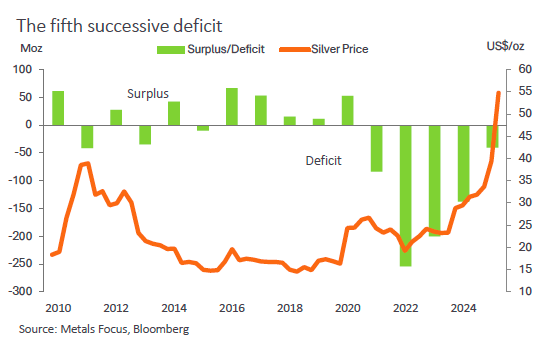
The silver market recorded a supply deficit for the fifth consecutive year in 2026.
Last year, demand outstripped supply by 40.2 million ounces (1,252 tonnes). That drove the 5-year market deficit to 716 million ounces. To put that into perspective, total silver mining output last year was 846 million ounces. Metals Focus forecasts a 46.3-million-ounce supply deficit this year.
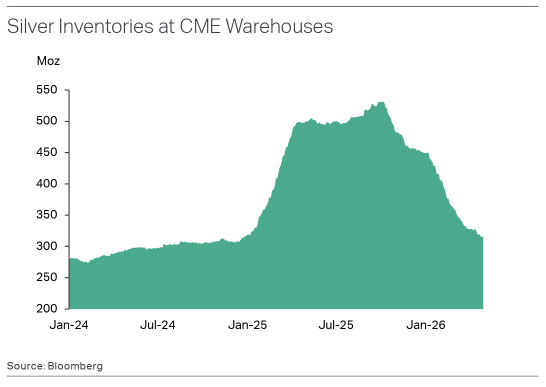
The stage was set months earlier when tonnes of silver moved from London to New York due to tariff worries. As President Trump began levying tariffs in April 2025, silver streamed into the U.S. CME silver holdings, eclipsing the record set during the pandemic at 531 million ounces.
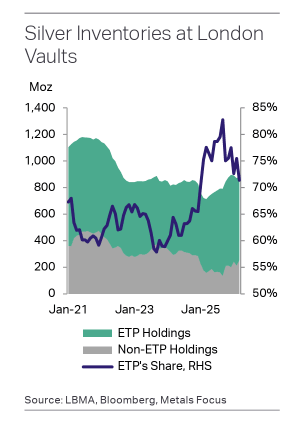
Meanwhile, metal bled from London vaults.
Much of the silver remaining in London was already committed to ETFs. That left very little “free float” metal to provide liquidity to the London market. According to Metals Focus, the share of London silver stocks, not allocated to ETPs, fell to just 17 percent by the end of September 2025.
That set the stage for the first squeeze, and a surge in Indian silver demand last fall was the pin that popped the bubble.
Initially, Indian buyers were primarily sourcing silver from Hong Kong, but they reportedly shifted more toward London during the Chinese Golden Week Holiday in the first week of October.
But London vaults were already tapped out.
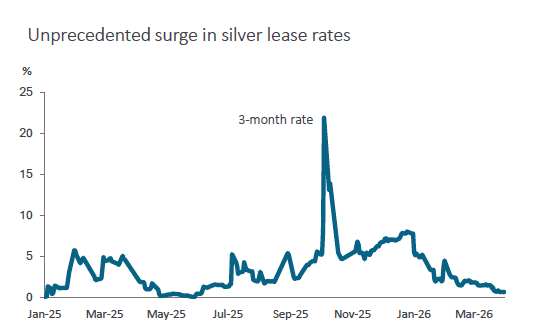
As the squeeze intensified, silver lease rates exceeded 200 percent, reflecting the strain in the market.
After a healthy correction in January, the market has stabilized, with silver prices settling in a range between $70 and $80 an ounce.
Metal Movement Provides Some Relief
The movement of silver out of the U.S. helped to settle the market.
After peaking at 531.9 million ounces in October, CME silver inventories recorded sustained withdrawals. According to Metals Focus, CME stocks stood at 315.2 million ounces at the end of last month. That’s comparable to inventories back in November 2024. In effect, all the tariff-driven inflows between December 2024 and October 2025 have been unwound.
According to Metals Focus, “Physical tightness, easing EFP spreads and rising regional premiums have all incentivized the movement of silver out of CME vaults.”
Analysts also noted that the Trump administration has refrained from levying tariffs on precious metals (so far) and has been negotiating with “key partners.”
“This more dovish stance has, at least for now, alleviated tariff concerns.”
U.S. export data also reflects the movement of silver out of the U.S. In just the first two months of 2026, 95 million ounces of silver flowed out of the United States. That exceeds annual silver exports over the last several years.
About half of that metal went to London. However, there was a significant increase in silver exports to the UAE and Hong Kong. According to Metals Focus, imports from the U.S. to both regional hubs in January and February were equivalent to multi-year cumulative totals.
“This aligns with market feedback suggesting that a surge in investment demand in early 2026 was geographically broad-based. … Growth in East Asia and the Middle East (regions where physical investment has historically been subdued) was exceptionally strong in early 2026, although buying has moderated since March.”
While more than half of the silver flowing to the U.S. went to London, metal held in commercial vaults there dropped by 1 percent, indicating that the country is serving as a pass-through to other markets. Metals Focus analysts said, “This largely reflects acute bullion supply shortages in certain markets in early 2026 following a surge in physical investment.”
“As regional liquidity tightened, traders increasingly drew on London stocks, with the Middle East and East Asia once again among the top destinations for UK silver exports. As a result, the UK was a net exporter of silver bullion in the first two months of the year, although a reversal has been evident since March.”
While the amount of silver in London vaults has barely budged this year, the amount of “free float” silver available for trading or delivery has increased as metal committed to ETFs dropped after the price correction. Global silver ETF holdings have declined by around 70 million ounces (5 percent) year-to-date.
Currently, the amount of free float silver in London stands at around 235 million ounces, the highest level since December 2024. That’s up approximately 116 million ounces since the low last September.
There’s a High Risk of Additional Silver Squeezes
While the shuffling metal between the U.S., London, the Middle East, and Asia has taken the strain off the silver market, it has not solved the fundamental problem.
As already noted, there isn’t enough silver.
It’s like a game of musical chairs. Everything seems fine while the music is playing. However, when it stops, there are going to be problems.
Metals Focus analysts said the silver market is still at risk for additional squeezes.
“At the time of writing, the physical silver market appears closer to historical norms, as evidenced by a further decline in leasing rates in recent weeks. However, global identifiable inventories remain low compared to levels seen in the early 2020s. More importantly…the silver market is expected to remain in a fundamental deficit in 2026, at a level similar to that recorded in 2025.”
Analysts noted that the prospect of improving investment demand later this year “implies a continued cumulative drawdown of stocks.”
“As a result, the market remains vulnerable to periodic liquidity squeezes. While such events will remain uncommon, structurally lower liquidity than in previous years suggests that price and lease rate volatility will persist.”
Mike Maharrey is a journalist and market analyst for Money Metals with over a decade of experience in precious metals. He holds a BS in accounting from the University of Kentucky and a BA in journalism from the University of South Florida.
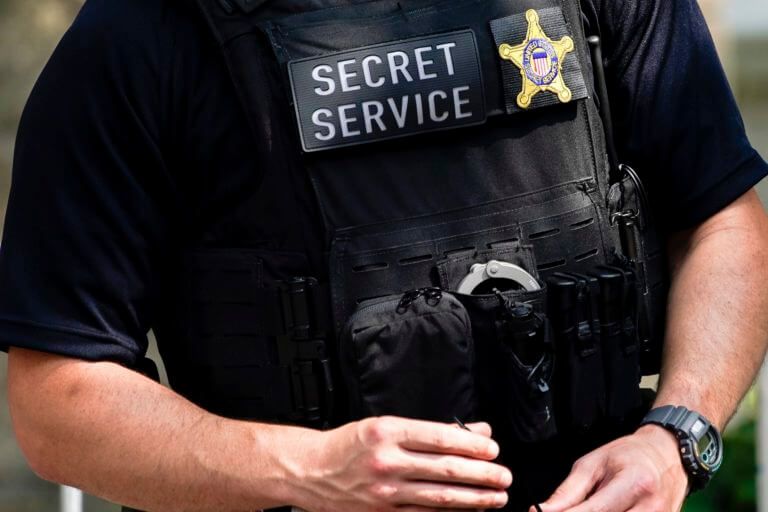
(Ken Silva, Headline USA) A Secret Service officer was reportedly arrested Monday for public masturbation at a DoubleTree hotel near the Miami airport.
The officer, 33-year-old uniformed division officer John Spillman, was arrested after hotel security called the Miami Dade Sheriff’s office, which allegedly caught him in the act, according to RealClearPolitics reporter Susan Crabtree.
“A victim told police that she was in the lobby when Spillman allegedly followed her and another upstairs and immediately entered a room ‘because she was in fear for their lives,’” Crabtree reported, adding that the victim “saw the defendant masturbating next to their hotel room.”
A court hearing is set for May 27 for Spillman.
🚨🚨 SECRET SERVICE SCOOP: Here's the mug shot and arrest affidavit for the Secret Service Uniformed Division officer who was arrested just after midnight Monday morning on charges that he was naked and masturbating in a Doubletree hotel hallway near the Miami airport.
The Secret Service has yet to publicly comment on the matter, which marks the latest in a series of public embarrassments for the agency.
Last month, for instance, a married Secret Service agent was revealed to have been having an affair with an OnlyFans star and making pornographic videos with her.
Around the same time, ABC News revealed that a Secret Service trainee was arrested for spying on his roommate, also an agent-in-training, with a hidden camera.
Before that, a Secret Service agent protecting former First Lady Jill Biden shot himself in the buttocks last month at the Philadelphia International Airport.
And earlier in the month, Crabtree reported that agent Myosoty Perez, who is a lesbian, has been suspended and is under investigation for marrying a foreign national—possibly an illegal immigrant—without declaring it. Perez was one of the agents responsible for nearly getting President Donald Trump killed at his July 13, 2024, campaign rally in Butler, Pennsylvania.
In January, journalist James O’Keefe published a shocking report about how a Secret Service agent assigned to Vice President JD Vance’s security detail leaked details about his travels to one of O’Keefe’s undercover reporters.
Also in January, a Secret Service recruit shot and killed a 16-year-old in Tamarac, Florida. The 16-year-old victim was identified as Orlando Wedderburn. A woman was also grazed. The Secret Service recruit, for his part, is claiming self-defense.
According to Crabtree, Secret Service Director Sean Curran is receiving internal criticism for not doing enough to eliminate the agency’s diversity, equity and inclusion policies, which were implemented starting in the Obama era.
Meanwhile, the agency is looking to hire 4,000 new employees by 2028.
Ken Silva is the editor of Headline USA. Follow him at x.com/jd_cashless.
(Ben Sellers, Headline USA) For decades, guerilla graffiti artist Banky has been viewed as the pinnacle of postmodern culture, using a populist medium and public spaces to strip elitism from the haute-couture art world while adding value with playful, socially relevant messages steeped in humor, irony and meta-criticism.
The iconoclastic artist’s anonymity only enhanced the intrigue at the peak of his influence, with the 2010 documentary Exit Through the Gift Shop helping to turn him into a bona fide celebrity.
But his star has begun to fade in a post-COVID world, in which cynicism and skepticism reign supreme as those in power use leftist virtue-signaling to posture as plebians while secretly acting upon their own authoritarian instincts.
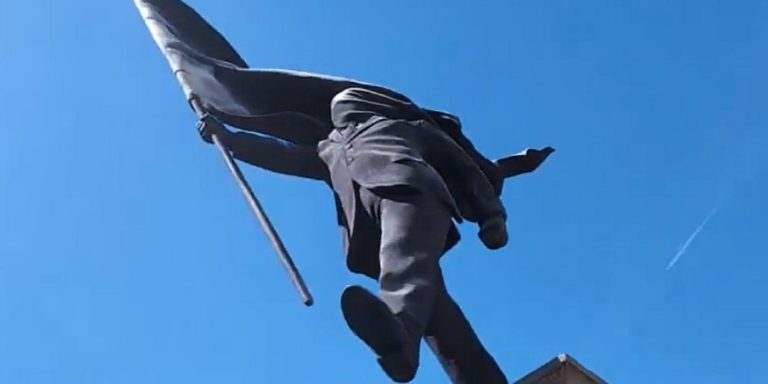
Banksy — who was identified by a Reuters expose in March as Bristol resident Robin Gunningham — now faces accusations that his latest work, a statue satirizing jingoism and patriotic fervor, might have been done in coordination with London’s radical left-wing government.
"Banksy" has always struck me as a scam. A supposedly anonymous artist doodles graffiti around the world and the media always knows right away that it's him and runs stories about it? And now he's installing statues on plinths in the middle of London and no one notices? Get real. https://t.co/A3Gq05tFfG
The artist posted a video to his official Instagram account to confirm the statue’s authenticity. In it, he and a small crew appear to work under cover of night with heavy construction equipment to install the faux monument at London’s Waterloo Place, a prominent location in the heart of the city that is bookended on either side by Buckingham Palace and Trafalgar Square.
The audacious stunt, and the apparent lack of alarm from authorities, led the BBC to openly wonder how he was able to pull it off.
But Britain’s state-run media did not dwell too deeply on the question.
“They’re the sort of dudes who can set up a Metallica concert in 24 hours: groovy folks but actually extremely organized and professional when it comes to getting things done,” concluded James Peak, creator of the BBC podcast series “The Banksy Story.”
“They’ve probably surveilled the area, worked out what happens when, gone in the early hours with a low-loader truck and they probably sited it in a few minutes, at the quietest time possible,” Peak added.
The BBC report said that the Westminster City Council, which governs the installation of statues in that section of the city, had not given permission or been notified in advance of the statue.
Normally, that approval process can be drawn-out and costly, with the application for a 2014 statue of Mahatma Gandhi in Parliament Square Gardens, for example, requiring that a private trust put up £75,000 (roughly $143,000 in 2025 U.S. dollars) to cover its future upkeep.
However, a spokesperson for the council had no qualms about the provocative Banksy work and signaled no plan by city officials to remove it.
“We’re excited to see Banksy’s latest sculpture in Westminster, making a striking addition to the city’s vibrant public art scene,” said the spokesperson.
Indeed, one can rest assured that the London government will spend more time safeguarding its valuable new installation from vandalism and destruction than it did preventing the vandalism from going up in the first place.
“While we have taken initial steps to protect the statue, at this time it will remain accessible for the public to view and enjoy,” said the spokesperson.
Critics of the work, meanwhile, said the installation must have been done with the blessing of far-left mayor Sadiq Khan.
“There is absolutely no way Banksy managed to put this up in central London without the go ahead from the state,” said a “Restore Britain” advocate posting under the influencer account @Basil the Great.
There is absolutely no way Banksy managed to put this up in central London without the go ahead from the state
Others, including Derry resident Kieran Brown, went so far as to call it a psy-op, while denouncing Banksy as a state-sanctioned “asset of a globalist agenda.”
How can nobody see through this Banksy psyop ? He is quite clearly an asset of a globalist agenda & is state-sanctioned/commissioned. How can this character go around doing what he does without being stopped by police or have no CCTV footage released ? #Banksy is a BS artist https://t.co/XXMncFhET3
The installation, construed as an attack on British nationalism, comes as Prime Minister Keir Starmer has led a crackdown on any whiff of criticism — even online posts — denouncing England’s loose borders, which have allowed it to be infiltrated by Muslims who are fundamentally hostile to western culture.
Some noted that Banksy’s sell-out further signified a dramatic reversal in what was once considered to be countercultural and subversive, with traditionalists assuming the more underground role long occupied by the Left.
“Patriotism is the new punk,” wrote musician Louise Distras. “Banksy is the house band at the corporate elite party, pumping out safe regime approved slop!!”
Meanwhile, some social-media accounts spoofed the statue by pointing out that the extreme Left has its own jingoistic flags and symbols, including the Palestinian flag and the LGBT flag.
A common misconception about Banksy's new statue in London is that it's always been bare bronze. But recently, microscopic analysis of its surface has allowed art historians to reconstruct its original, vibrant, paint scheme… pic.twitter.com/nAyeLuFhqr
(Ben Sellers, Headline USA) Democrats’ disingenuous attempt to smear the Supreme Court’s Louisiana v. Callais decision as the latest “Jim Crow 2.0” fell apart when supporters of color-blind redistricting pointed out examples of gerrymandered voters favoring white Democrats over black Republicans.
The loathsome attacks notably included cartoons and graphics of Justice Clarence Thomas — a black man who endured segregation during his upbringing in Savannah, Ga. — as a member of the SPLC-supported Ku Klux Klan.
But conservatives such as long-suffering CNN panelist Scott Jennings demolished the leftist talking points by pointing out the recent selection of a white Democrat, Abigail Spanberger, over Republican candidate Winsome Earl‒Sears, a black immigrant, in last year’s Virginia gubernatorial election.
DEM: "We haven’t had an African American Republican governor since reconstruction!"
ME: “The Republicans tried to elect one in Virginia.”
DEM: “Okay…” 😳
ME: "Then you got a white Democrat who gerrymandered the state! It’s all crumbling, John!" pic.twitter.com/B2gJHrg3W0
That example was one of many the high court may have considered in making the landmark ruling, which struck down the archaic civil-rights-era practice of forcing red states to create majority‒minority districts that were based entirely on the presence of black voters.
Democrats in recent years had come to rely on those safe-blue seats to secure undue political advantages by running race-baiting candidates like Reps. Hank Johnson of Georgia, James Clyburn of South Carolina and Bennie Thompson of Mississippi.
Yet, in another egregious example of how the districts were doing more to harm than help black representation, many noted that Rep. Steve Cohen, a white Democrat representing Tennessee’s gerrymandered 9th congressional district, had defeated Charlotte Bergmann — a black, female Republican — in the past five Memphis-area elections.
Bergmann, who has been the Republican candidate running against Cohen in every House race since 2018, is once again running in the Republican primary for the 2026 election.
Several critics slammed Emmanuel Felton, a recently-fired race reporter at the Washington Post, for an obtuse remark on X that specifically mentioned Memphis to complain about Tennessee Gov. Bill Lee’s recent calls to redistrict, while ignoring the lopsided outcome of the last election.
“Memphis is the second Blackest big city in the country, and it’s about to be gerrymandered within an inch of its life so a white Republican can represent it in Congress,” Felton claimed. “This was exactly the thing Congress was trying to address with the Voting Rights Act.”
Emmanuel, I know the Washington Post is out of touch with the south, so as a Tennessean let me educate you. District 9 is rep’d by a White Democrat man. A Black Republican woman has run against him 5x. Your race card has been denied. Take it back to DC where it belongs. We will… https://t.co/4C1S5opuFU
The rush to redistrict mid-decade heated up last month after Virginia Democrats, led by Spanberger, passed a ballot referendum to suspend the state constitution in order to secure an advantage for themselves in upcoming congressional races that would aid in the effort to impeach President Donald Trump for a third time.
However, with the new Virginia initiative enjoined by the state courts, the effort may backfire in the short term. It triggered an in-kind response from Florida Gov. Ron DeSantis, a Republican, who convened a special session of the state legislature to redraw the maps, adding an equal number of Republican seats to offset those Virginia sought to steal.
The SCOTUS decision, which followed shortly thereafter, has fueled similar calls from states including Tennessee, Mississippi, Alabama and Louisiana.
But Democrats are bracing themselves for a contentious brawl while seeking to redraw already gerrymandered states like Illinois and California — and adding several others into the mix.
Red states didn’t wait. The second SCOTUS butchered the Voting Rights Act, they went all in.
Louisiana: Roughly one-third Black, and now they’re pushing maps that could leave the state with zero Black representation in Congress.
It is unclear who will prevail, if anyone, and whether the hyper-partisan gerrymandering will ultimately help or harm the push for fair representation.
While it will likely lead to several states having delegations that are aligned exclusively with the party in power, it could also help to make races within those districts more competitive since they will, by necessity, be less concentrated.
Ben Sellers is a freelance writer and former editor of Headline USA. Follow him atx.com/realbensellers.
(Headline USA) A federal magistrate judge on Monday pressed a jail official to explain why a man charged with trying to storm the White House Correspondents’ Association dinner and attempting to kill President Donald Trump was placed on restrictive suicide watch after his arrest.
Officials at the city jail in Washington, D.C., removed Cole Tomas Allen from its designated “suicide status” over the weekend after his attorneys complained that he had been unnecessarily confined in a padded room with constant lighting, repeatedly strip searched and placed in restraints outside his cell.
But the relaxed conditions didn’t satisfy U.S. Magistrate Judge Zia Faruqui’s concerns that Allen may have received disparate, punitive treatment in violation of his due process rights. Faruqui noted that the D.C. jail routinely houses convicted killers and others charged with violent crimes without placing them on 24-hour lockdown.
“It could drive a person crazy to be in that situation,” he said.
Faruqui apologized to Allen over his confinement conditions. In response to a news report on that apology, U.S. Attorney Jeanine Pirro criticized him in a social media post that said Faruqui “believes a defendant armed to the teeth and attempting to assassinate the president is entitled to preferential treatment in his confinement compared to every other defendant.”
Allen’s lawyers said he wasn’t showing any suicidal risk factors after his arrest. But a jail psychiatrist evaluated him and initially concluded that he posed a suicide risk, according to Tony Towns, acting general counsel for the city’s corrections department.
“Every case is different, your honor,” Towns said.
Allen was moved into protective custody after the jail lifted the suicide prevention measures. His attorneys didn’t object to his new confinement status. They had asked the magistrate to cancel Monday’s hearing, but Faruqui forged ahead with it due to his “grave concerns” about Allen’s treatment in jail.
Allen was injured but was not shot during the April 25 attack at the Washington Hilton, which disrupted one of the highest-profile annual events in the nation’s capital.
Allen was armed with guns and knives when he ran through a security checkpoint and pointed his weapon at a Secret Service agent, who fired back five times, authorities said. Pirro has said that Allen fired a shot that struck the agent’s bullet-resistant vest.
Allen later told FBI agents that he didn’t expect to survive the attack, which could help explain why he was deemed to be a possible suicide risk, said Justice Department prosecutor Jocelyn Ballantine.
Allen, 31, of Torrance, California, is charged with attempted assassination of the president and two additional firearms counts. He faces up to life in prison if convicted of the assassination count alone.
Defense attorney Eugene Ohm said Allen was prohibited from having anything in his cell.He asked for a Bible and a visit from a chaplain but hasn’t received either, according to Ohm.
(Headline USA) A man accused of killing one person and injuring a dozen more in a firebomb attack on Colorado demonstrators showing support for Israeli hostages in Gaza plans to plead guilty this week to murder and other charges, according to court documents.
Mohamed Sabry Soliman faces a sentence of life in prison without the possibility of parole in the June 1 attack in downtown Boulder, according to the documents filed by his attorneys on Sunday in a related federal case.
Soliman had previously pleaded not guilty after he was accused of throwing two Molotov cocktails during the demonstration at a pedestrian mall. An 82-year-old woman who was injured in the attack later died. A dozen others were also injured.
Soliman is an Egyptian national who federal authorities say was living in the U.S. illegally. Investigators say he planned the attack for a year and was driven by a desire “to kill all Zionist people.”
Boulder Mayor Pro Tem Tara Winer said the victims included some of her close friends and she planned to attend Thursday’s court hearing to support their fight for justice.
“It was a horrific attack,” Winer said by email. “Their lives were changed forever.”
Soliman faces dozens of state charges including murder and attempted murder.
He has pleaded not guilty to federal hate crime charges. Prosecutors are considering whether to seek the death sentence in that case, according to his attorneys. Soliman’s attorneys said he offered last August to plead guilty to the federal charges and would accept a sentence of life in prison. They said federal officials had not yet decided on the offer.
A spokesperson for the U.S. attorney’s office declined comment.
The Associated Press left voicemail messages for Soliman’s attorneys in both cases. His federal defenders said in Sunday’s court filing that the attack “was profoundly inconsistent” with Soliman’s prior conduct and “came as a total shock to his family.”
Before the attack, Soliman had been living with his family in a two-bedroom apartment in Colorado Springs. He had worked in a series of low-paying jobs since moving to the U.S. from Kuwait in 2022 with his wife and their five children, according to his attorneys. The couple divorced in April, his attorneys said.
Shannon Carbone with the 20th Judicial District Attorney’s Office, which is prosecuting the state case, declined to comment on Soliman’s intention to plead guilty, citing court restrictions on public comments by prosecutors.
“From the very first day, our office has been committed to fighting for justice in this case,” Carbone wrote in an email, adding that County Attorney Michael Dougherty will address the case following Thursday’s hearing.
Investigators say Soliman told them he intended to kill the roughly 20 participants at the weekly demonstration at Boulder’s Pearl Street pedestrian mall. But he threw just two of more than two dozen Molotov cocktails he had with him while yelling, “Free Palestine!” Police said he told them he got scared because he had never hurt anyone before.
Federal prosecutors allege the victims were targeted because of their perceived or actual connection to Israel. But Soliman’s federal defense lawyers say he should not have been charged with hate crimes because the evidence shows he was motivated by opposition to Zionism, the political movement to establish and sustain a Jewish state in Israel.
An attack motivated by someone’s political views is not considered a hate crime under federal law.
State prosecutors have identified 29 victims in the attack. Thirteen were physically injured, and the others were nearby and are considered victims because they could have been hurt. A dog was also injured in the attack, and Soliman has been charged with animal cruelty.
Soliman’s wife, Hayam El Gamal, and their children spent 10 months in immigration detention until a federal judge in Texas ordered their release in April.
U.S. District Judge Fred Biery in San Antonio allowed their release on the condition that El Gamal and her oldest child, who is 18, wear electronic monitoring. He released the family even though an immigration appeals court dismissed their case to stay in the U.S. and issued a deportation order.
Soliman’s attorneys have sought to block the deportation of El Gamal and the children until a judge determines they won’t need to be present for any court proceedings in his federal case.