

Ramaswamy Links Whitmer Kidnap Plot to Jan. 6 Capitol Riot

(Julie Kelly, RealClearInvestigations) In a fiery exchange last month, CNN anchorwoman Abby Phillip told GOP presidential candidate Vivek Ramaswamy that there was “no evidence” to support his claim that federal agents abetted protesters at the Capitol on Jan. 6, 2021.

Ramaswamy shot back that the FBI conspicuously has never denied that law enforcement agents were on duty in the crowd. He argued that federal officials have repeatedly “lied” to the American people about not only that investigation but one that has gotten much less attention: the alleged failed plot to kidnap and kill Democratic Gov. Gretchen Whitmer of Michigan in 2020.

“It was entrapment,” Ramaswamy said. “FBI agents putting them up to a kidnapping plot that we were told was true but wasn’t.”

His zeroing in on the Michigan case highlighted an uncharacteristic development in contemporary politics, where progressives vigorously defend law enforcement power while conservatives view it with deep suspicion.

Further, Ramaswamy’s linking of Jan. 6 and the Whitmer plot resonated with many on the right who want similarities between the two episodes exposed to the general public, especially the FBI’s reliance on informants and other paid operatives.

On Oct. 8, 2020, Whitmer announced the shocking arrests of several men accused of planning to kidnap and possibly assassinate her. The case produced alarming headlines just weeks before Election Day; Democrats, including Whitmer, used news of the plot to blame Trump for inciting violence.

Joe Biden commended the FBI for thwarting the abduction plan and, in a written statement issued the same day, claimed that “there is a through line from President Trump’s dog whistles and tolerance of hate, vengeance, and lawlessness to plots such as this one.” Biden continued that line of attack during campaign speeches in Michigan, a swing state that voted for Trump in 2016, and one Biden needed to capture to win the presidency.

In the years since the election, the national press has given little attention to the case since the initial arrests, even though court documents have recast the episode as something more sinister. Instead of a heroic effort by the FBI to safeguard the country from domestic terrorists, it now appears to have been a broad conspiracy by law enforcement to entrap American citizens who held unpopular political views.

The FBI’s tactics were first exposed by BuzzFeed in July 2021, when reporters Ken Bensinger and Jessica Garrison disclosed startling details based on court filings as the matter headed to trial. They found that the number of FBI confidential human sources involved in the scheme was equal to the number of defendants.

“An examination of the case by BuzzFeed News also reveals that some of those informants, acting under the direction of the FBI, played a far larger role than has previously been reported,” they wrote.

“Working in secret, they did more than just passively observe and report on the actions of the suspects. Instead, they had a hand in nearly every aspect of the alleged plot, starting with its inception. The extent of their involvement raises questions as to whether there would have even been a conspiracy without them.”

Six men ranging in age from 22 to 44 – Adam Fox, Barry Croft Jr., Brandon Caserta, Daniel Harris, Ty Garbin, and Kaleb Franks – faced federal charges of conspiring to kidnap and use a weapon of mass destruction. Eight others faced state charges. BuzzFeed recreated much of the defendants’ movements between March and October 2020, including attendance at “field training” exercises and the surveillance of Whitmer’s properties.

While BuzzFeed offered the first account of the entrapment operation, further reporting by RealClearInvestigations, along with details revealed in court filings and trial proceedings, make the operation sound like something out of a Hollywood script. It features secretive cash payouts; drug- and booze-fueled parties; a convicted wife-beating FBI investigator; a career felon revealed as a longtime FBI asset and later accused of acting as a “double agent”; and a dramatic takedown scene at the end.

Public defenders representing the accused have identified at least 12 FBI informants and three undercover FBI agents managed by FBI officials in numerous field offices responsible for framing the men.

“In this Case, the undisputed evidence … establishes that government agents and informants concocted, hatched, and pushed this ‘kidnapping plan’ from the beginning, doing so against defendants who explicitly repudiated the plan,” defense lawyers wrote in a Dec. 25, 2021 motion. “When the government was faced with evidence showing that the defendants had no interest in a kidnapping plot, it refused to accept failure and continued to push its plan.”

At the center of the action was the FBI’s ringleader, Dan Chappel, 34 years old at the time, an Iraq war veteran and contract truck driver for the U.S. Postal Service. Chappel, the official story goes, joined a group called the “Wolverine Watchmen” in early 2020 to burnish his firearms skills. Members generally interacted on social media. The government claimed Chappel became alarmed at alleged online chatter about killing police and took his concerns to a friend in law enforcement in March 2020.

A week later, the FBI hired Chappel as an informant.

Over the course of the next seven months, Chappel “ingratiated” himself with the men, as one defense attorney described his method, with his eye particularly on Fox, 37, the reported mastermind of the plot. While the media portrayed Fox as a military leader prepping an army of “white supremacists” to overthrow state governments across the country, he was, in reality, a homeless man living in the dilapidated basement of a vacuum repair shop without running water or a toilet in a Grand Rapids strip mall. One co-defendant referred to him as “Captain Autism.”

Fox’s lawyer, Christopher Gibbons, said Chappel took on a “father figure” role to his fatherless and destitute client. Fox and Chappel exchanged thousands of texts. Chappel drove Fox, who did not own a car, to various meetups and staged events while recording every moment to preserve as evidence against him. On at least three occasions, according to testimony offered at trial, Chappel offered Fox a prepaid credit card authorized by the FBI with a $5,000 limit to help him buy guns and ammunition; Fox, despite being broke, declined each time.

Chappel, known as “Big Dan” to the group, created encrypted chats and gave real-time access to his FBI handlers working out of the Detroit FBI field office as the farfetched plan unfolded.

Informants and targets mulled over how to blow up a bridge outside Whitmer’s summer cottage; kill her security detail; take her to a nearby boat launch; and either abandon her in the middle of Lake Michigan or bring her across the lake to Wisconsin to stand a “citizen’s trial” over her COVID-19 lockdown policies. One discussion involved the implausible use of a military helicopter.

From appearances, a demonstration at the Michigan state Capitol in Lansing on April 30, 2020 might well have been a law enforcement dress rehearsal for Jan. 6. Chappel traveled to the event with three members of the Watchmen later held on state charges. Some protesters were clad in military gear and carried firearms but could not enter the building.

When Chappel told his FBI handler what was happening, the FBI ordered the Michigan State Police to stand down and allow protesters inside. News photographers captured the moment when protesters “stormed” the Michigan Capitol and called out for Whitmer, resulting in the same sort of optics produced on Jan. 6.

The incident took on greater significance when it was revealed that Steven D’Antuono, head of the Detroit FBI field office during the Whitmer caper, was promoted to head up the Washington, D.C., FBI field office three months before the events of Jan. 6.

In exchange for his work, the FBI paid Chappel at least $54,000 in cash. Part of that haul included an envelope, handed over by his primary FBI handler in December 2020, filled with $23,000 in cash as payment for a mission accomplished. (Department of Justice policy requires informants to be paid in cash.). The bureau also supplied Chappel with other personal items, such as a laptop computer and tires for his car.  Chappel also used a rented SUV, again funded by the FBI, to drive his targets to various locations as part of the trap.

Other informants were involved, too. A longtime FBI source named Steve Robeson, from Wisconsin,  organized a “militia” meeting in Ohio in June 2020 and pressured the government’s targets, including Fox and Croft, to attend as he wore a wire to record what was said during the event.

Robeson arranged other events throughout the summer including at his remote property in Cambria, Wisconsin. He constructed a so-called “kill house” for the men to practice shooting. At one point, Robeson suggested the exercises could be used to “storm” a state Capitol building or governor’s residence.

Robeson is a convicted felon several times over, including on charges of sex with a minor, with a rap sheet spanning at least nine states. He was paid roughly $20,000 for his involvement in the Whitmer caper. Prosecutors later accused him of acting as a “double agent” for allegedly tipping off one of the defendants that his arrest was imminent.

At least two other informants were tasked with managing Croft, who had been under FBI surveillance since 2019 for his “extremist” views, according to documents.

It was later revealed that the informants, including Chappel, violated FBI protocol by getting drunk and high on drugs with their targets numerous times, sleeping in the same hotel, and suggesting ways to advance the kidnapping plan. At one point, Chappel took an oath to join a separate group called the “Three Percent Patriot Militia” group – one fabricated by the FBI – then convinced Fox to become the head of the Michigan chapter, all in an effort have the men believe Chappel was part of a nonexistent “militia” movement.

Defense lawyer Gibbons described the ruse during the April 2022 trial as “free money, free bombs, daily contact for months, fake militia, build up vulnerable adult with a fake militia and a title of commanding officer, send him a federal agent to join his militia.”

More behind-the-scenes machinations were disclosed when the defense uncovered hundreds of communications between the agents and informants that showed how they guided the plot every step of the way. One text suggests that the FBI and Chappel attempted to lure a disabled Vietnam War veteran named “Frank” into initiating a similar plan against Virginia Gov. Ralph Northam. “Mission is to kill the governor specifically,” Chappel’s FBI handler texted him in August 2020.

Despite the FBI’s best efforts, the group of so-called kidnappers started to disband by August 2020. Chappel asked his handlers how to “put more pressure” on the individuals so no one would break off. To rally the increasingly uninterested group that month, Chappel proposed firing live rounds into Whitmer’s cottage and the residences of other governors, then sending the shell casings to news reporters.

“Look at you bringing people together,” one of Chappel’s FBI handlers texted to him after he successfully kept the group intact.

Even that wasn’t enough to solidify a kidnapping scheme so, according to numerous exchanges between the FBI assets and trial testimony from one cooperating witness, the FBI ran another undercover agent into the plot in September 2020 to tempt the men into trying to purchase bomb-making material. During a get-together in mid-September, an FBI undercover agent known as “Red” showed the group a video of a Chevy Tahoe being blown up as a way to demonstrate his credentials.

The video had been produced by the FBI.

At the same get-together, several FBI informants and “Red” took their targets on a reconnaissance mission to stake out Whitmer’s vacation cottage, the scene of the alleged prospective crime. It was the second time Chappel drove Fox to the property. (The governor and her staff were in communication with authorities for months as the entrapment scheme was under way; the FBI installed pole cameras and 3D devices around her property to record any activity to be used as evidence.)

Chappel also drove the men to the location of the FBI arrest point in Ypsilanti, Mich., on Oct. 7, 2020, under a ruse to meet “Red,” who promised to sell them military-style garb, not explosive materials. Members of the FBI’s Hostage Rescue Team, whose missions include “high-risk arrests,” were there waiting.

But things went downhill for the government after that. Richard Trask, one of the main FBI investigators on the case, who signed the complaint against the federal defendants, was criminally charged in July 2021 for brutally assaulting his wife after a swingers’ party in Kalamazoo. Police body cam video showed a partly clothed, bloody, and apparently intoxicated Trask talking with police during his arrest. Reporters also found profane anti-Trump posts on Trask’s social media account.

Trask was removed from the case and fired by the FBI in September 2021.

Prosecutors removed Chappel’s two primary FBI handlers, Henrik Impola and Jayson Chambers, from the government’s witness list after defense attorneys accused Impola of committing perjury in a previous case and discovered that Chambers was moonlighting as head of a security firm on the side and posting inside information about the pending arrests on social media as a way to attract business.

Robeson and his wife, Kimberly, were charged with fraud  in December 2021 for convincing a couple to purchase a used SUV and donate it to the Robesons’ nonexistent charity, a crime committed while Robeson was working the Whitmer plot.

Robeson also was charged separately with illegally purchasing a firearm as a felon; he threatened to plead his Fifth Amendment right against self-incrimination, so he also was not called as a witness.

By the time the federal case went to trial in western Michigan in March 2022, Ty Garbin and Kaleb Franks had accepted plea offers and planned to testify against their remaining four co-defendants: Fox, Croft, Harris, and Caserta.

Judge Robert Jonker allowed the defense to raise the entrapment issue but only after the government presented its case. That plan, however, did not last beyond the first day as defense attorneys struggled during opening remarks to explain their clients’ behavior without mentioning the key role of FBI informants and agents. Jonker suspended his own order – at which point the FBI essentially went on trial.

The trial lasted four weeks. Prosecutors insisted the defendants were solely responsible for conceiving the plan but the defense argued the group’s activities amounted to little more than “crazy, stoned talk.” Chappel took the stand for the prosecution but his testimony appeared to backfire as his central role in the plot came into view. He also admitted he became an informant to pad his resume in hopes of pursuing a job in law enforcement.

During closing arguments, the four defense attorneys emphasized the FBI’s misconduct while asking the jury for not-guilty verdicts.

“[This] is unacceptable in America,” Gibbons said during closing arguments on April 1. “That’s not how it works. They don’t make terrorists so we can arrest them.”

On April 8, 2022, after nearly four days of deliberation, the jury found Caserta and Harris not guilty on all charges; after 18 months behind bars, both men went free.

The jury, however, could not reach a unanimous verdict for Fox and Croft, resulting in a mistrial.

It was a shocking blow to the government. In what the Justice Department considered its biggest domestic terror case over the past few decades (until Jan. 6), prosecutors did not yet have a single conviction – an outcome practically unheard of for a department with a more than 90% conviction rate.

“It felt so good, I was so happy. We did it, we beat them. We got justice,” Caserta told me in a post-trial interview in 2022.

Prosecutors immediately announced they would retry Fox and Croft. A different version of Judge Jonker appeared on the bench in August 2022; the trial was marked by open hostilities between the judge and defense attorneys.

At one point, Jonker took the rare step of setting a time limit for cross-examination of a key government witness. He also refused to allow defense attorneys to interview a juror suspected of bias against the defendants based on comments he had made to co-workers during jury selection and his affiliation with Black Lives Matter.

Jonker repeatedly admonished both lawyers in front of the jury, accusing counsel of causing jurors to “tune out” and rushing them through important lines of questioning. Over objections by the defense, Jonker kept the man on the jury. He became the foreman.

Croft and Fox were convicted on August 23, 2022 of conspiring to kidnap and use a weapon of mass destruction, and are serving out multi-year sentences in supermax prisons reserved for the country’s worst criminals.

They are now appealing their convictions. In an August 2023 brief, Croft’s new appellate attorney, Timothy Sweeney, wrote: “It is staggering the extent to which the FBI and its agents/informants used excessive pressure, exploited the anger from COVID lockdowns and destructive summer riots, and manipulated emotional issues among vulnerable and excitable citizens.

“This included: nearly constant real-time monitoring of FBI’s communications with Fox, plus thousands of government-initiated texts/chats; the deployment of multiple paid agents/informants who sought to elicit and encourage extremist and violent behavior; and the FBI’s instigating, planning, promoting, and conducting of nearly all key events.”

In response, the government wrote in a December 2023 motion that “there was no evidence that government agents or informants suggested the plot or offered more than opportunity and facilities.”

Sweeney and Fox’s new appellate attorney, Steven Nolder, further accused Jonker of severely hamstringing the defense by refusing to admit into evidence the hundreds of messages that showed extensive communication between FBI agents and informants as they advanced the plot. Jonker, in both trials, denied defense motions to allow the jury to see the communications.

“These communications – constituted relevant evidence of the shocking degree to which Chambers, Chappel, and the other FBI agents/informants orchestrated this scam and generally engaged in incessant and oppressive inducement,” Sweeney wrote.

A recent verdict for the last three defendants charged in the Michigan state case may add weight to the appeal. An Antrim County jury in September 2023 found Willam Null, his brother Michael Null, and their co-defendant Eric Molitor not guilty of providing material support to an act of terror and illegally possessing firearms.

The acquittals represented another blow to the overall case and a poor showing for the government; of the 10 defendants who went to trial, five were found not guilty and two were convicted after a second trial.

Four others pleaded guilty—outcomes that represent a poor showing for both the DOJ and Michigan Attorney General Dana Nessel. Nessel was so infuriated by the acquittals for the Null brothers and Molitor that she publicly criticized jurors as coming from “a very, very right-leaning county (were) seemingly not so concerned about the kidnapping and assassination of the governor.”

Fox and Croft and the DOJ have asked for oral arguments. An appellate court in western Michigan could render a decision by mid-2024.

“When I look at what happened in this case,” Croft’s public defender, Joshua Blanchard, said during closing arguments in the April 2022 trial, “I am ashamed of the behavior of the leading law enforcement agency in the United States. This investigation was an embarrassment, and we have to tell them this isn’t how our country operates. This isn’t how our justice system is supposed to work.”

FBI Initially Closed Case on J6 Provocateur Ray Epps in July 2021

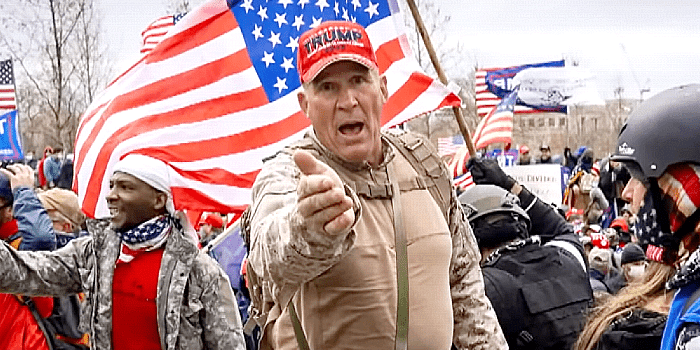
(Ken Silva, Headline USA) Despite having an abundance of evidence about Capitol Hill provocateur Ray Epps by early 2021, the FBI initially closed its investigation into him by July of that year, according to records filed Tuesday on the federal court docket.

The Justice Department apparently reopened the Epps case after Rep. Thomas Massie, R-Ky., Revolver News and other conservatives began to question whether he was being protected by government. The DOJ eventually slapped him with a lone misdemeanor count of disorderly conduct.

FBI records showing the initial decision to close the Epps case were attached to a sentencing memorandum filed by the DOJ on Tuesday. Prosecutors are asking a judge to sentence Epps to six months imprisonment—a punishment that’s been criticized as relatively light for a man who helped stoke the riot.

According to the FBI records attached to the sentencing memo, the bureau had Epps under investigation in early and mid 2021. According to those records, the FBI had “photographic/and or video evidence that James Ray Epps conspired to and/or recruited others to storm the United States Capitol Building.”

However, a July 29, 2021, FBI report said that its “investigation did not reveal sufficient evidence that Epps … engaged in acts of violence or committed any other criminal violations.” That’s despite the fact that video had already surfaced showing him pushing a sign into a group of police officers, and that Epps had admitted to trespassing on Capitol grounds.

The FBI report said that the U.S. Attorney’s Office in Washington DC declined to prosecute Epps. The report referenced an email from the U.S. Attorney’s Office, but that email wasn’t included in the records filed on Tuesday.

“No potential criminal violations or priority threats to national security warranting further investigation were identified. FBI Phoenix is closing captioned matter,” the report concluded. “In the event additional derogatory information is discovered regarding captioned subject, FBI Phoenix will consider reopening this investigation.”

Epps has claimed that the DOJ’s trespassing charge against him disproves the theory that he was a federal asset who encouraged Trump supporters to commit violence on Jan. 6.

“In May 2023, the Department of Justice notified Epps that it would seek to charge him criminally for events on January 6, 2021—two-and-a-half years later. The relentless attacks by Fox and [Tucker] Carlson and the resulting political pressure likely resulted in the criminal charges,” Epps said last year in a lawsuit against Fox News, which is still ongoing.

Ken Silva is a staff writer at Headline USA. Follow him at twitter.com/jd_cashless.

Venezuelan Arrested for Carrying Machete, Butcher’s Knife at Capitol

(A Venezuelan man who illegally entered the U.S. was arrested after wielding a machete and knife in the U.S. Capitol building the day after Christmas. He is being processed for removal.

Jose Leonardo Marquez–Marquez, a 23-year-old Venezuelan national, was arrested by U.S. Capitol Police on Dec. 26 for carrying a machete, a butcher’s knife and a brick at the U.S. Capitol. He was charged with carrying a dangerous weapon and possessing a prohibited weapon.

He was taken into custody the next day by U.S. Immigration and Customs Enforcement’s Enforcement and Removal Operations (ICE ERO) agents in Washington, D.C.

“Jose Leonardo Marquez–Marquez posed a significant threat to people in and around the U.S. Capitol,” said Patrick Divver, acting field office director for ICE ERO Washington, D.C., in a statement.

“Thanks to our law enforcement partners at the U.S. Capitol Police, this threat was mitigated quickly,” he added. “Fortunately, Marquez is currently in ERO custody and will face removal proceedings.”

Marquez “unlawfully entered the United States on an unknown date, at an unknown location and without being admitted, inspected, or paroled by an immigration official,” ICE said.

Border patrol considers him a gotaway—a foreign national who illegally entered the U.S. between a port of entry, intentionally to evade capture by law enforcement.

Roughly 1.7 million gotaways have been reported since January 2021, the Center Square first reported.

Former Border Patrol Chief Raul Ortiz previously testified before Congress that gotaways are underreported by between 10% and 20%; officials don’t know who they are, how many or where they are.

After Marquez illegally entered, Border Patrol agents in the El Paso region of Texas arrested him on Aug. 21, 2022. The next day, he was released “on Alternatives to Detention due to a lack of detention capacity,” ICE said.

Two months later, he reported to ICE-ERO officials in Washington, D.C., on Oct. 5, 2023, and was issued a notice to appear before a Department of Justice immigration judge.

On Dec. 27, 2023, ICE ERO-Washington, D.C., agents lodged an immigration detainer— notice of action, against him with the U.S. Marshals Service in Washington, D.C. Later that day, he was transferred into ICE-ERO custody in Washington, D.C., and remains in custody as he awaits removal proceedings.

He is among an untold number of people who illegally entered the U.S. and once caught were released into the United States by Border Patrol agents only to later be arrested for committing a crime, as he Center Square has previously reported.

Other recent ICE ERO removals include a Chilean military officer wanted for kidnapping and murder; a Brazilian fugitive wanted for raping a child; Guatemalans wanted for murder and rape; an MS-13 gang member on El Salvador’s Top 100 list; and a Brazilian military officer involved in a 2015 massacre.

They also include hundreds in recent operations with criminal convictions for certain felonies or other crimes including “murder for hire, manslaughter, sex crimes against children, assault with a firearm, battery, domestic violence, drug trafficking, possession of a controlled substance and driving under the influence,” and determined “to be a threat to national security, public safety or border security.”

In fiscal year 2022, ICE ERO agents arrested 46,396 illegal foreign nationals with criminal histories including 198,498 associated charges and convictions.

The charges and convictions include 21,531 assault offenses; 8,164 sex and sexual assault offenses; 5,554 weapons offenses; 1,501 homicide-related offenses; and 1,114 kidnapping offenses.

In fiscal year 2022, ICE ERO agents also conducted 72,177 removals to over 150 countries.

Fiscal 2023 numbers have not yet been published.

U.S. Debt Surpasses $34T as Rate of Borrowing Grows Rapidly

(The nation’s debt has surpassed $34 trillion, according to figures from the U.S. Department of the Treasury.

The nation’s growing debt has become a source of concern for some politicians as the cost to service that debt takes up a larger portion of the federal budget.

The gross national debt topped $34 trillion on Friday, after hitting $33 trillion in September, the U.S. Treasury confirmed on Tuesday.

Maya MacGuineas, president of the Committee for a Responsible Federal Budget, said the new milestone should serve as an alarm for lawmakers and voters.

“We remain hopeful that policymakers will take further measures to reduce our borrowing either by raising taxes, reducing spending, or creating a fiscal commission—or ideally by doing all of the above,” she said Tuesday.

“We can be a weak divided country where our leaders fight, pander, and take the easy way out while we become increasingly vulnerable, or we can do the hard work to be stronger, more secure, and more prosperous for the long run,” she added.

Michael Peterson, CEO of the Peter G. Peterson Foundation, said the new milestone came just months after U.S. debt hit $33 trillion in September 2023.

“We are beginning a new year, but our national debt remains on the same damaging and unsustainable path,” Peterson said in a statement.

“Following last year’s debt ceiling deal, we quickly crossed $32 trillion in June, $33 trillion in September, and now we are soaring past $34 trillion,” he continued. “Looking ahead, debt will continue to skyrocket as the Treasury expects to borrow nearly $1 trillion more by the end of March. Adding trillion after trillion in debt, year after year, should be a flashing red warning sign to any policymaker who cares about the future of our country.”

In November 2023, Moody’s Investors Service gave the federal government a negative credit outlook citing large deficits, high interest rates and waning political interest in addressing the nation’s deficit.

The other two credit-rating agencies, S&P Global and Fitch, grade U.S. credit at AA+. In August 2023, Fitch Ratings made the decision to downgrade the government’s credit rating from the highest level of AAA down one tier to AA+. Fitch pointed to the U.S. government’s high national debt and deficits and an “erosion of governance.”

The nation’s debt is costing taxpayers, and the cost of borrowing money is taking up a larger share of the federal budget, which along with the rising costs of Social Security and Medicare, are driving up the national deficit.

Interest costs on the country’s debt increased 23% to $879 billion in fiscal year 2023. That’s a record high.

Interest costs accounted for 14% of total federal spending as of September 2023. The cost of maintaining that debt is expected to grow.

The Congressional Budget Office released projections in June that showed interest costs would “exceed all mandatory spending other than that for the major health care programs and Social Security by 2027, all discretionary outlays by 2047, and all spending on Social Security by 2051.”

Peterson said it was time for a bipartisan fiscal commission, which lawmakers discussed last year.

“To help break through partisan gridlock, lawmakers on both sides of the aisle and in both the House and the Senate have supported a bipartisan fiscal commission,” Peterson said.

“This is promising, because a dedicated, comprehensive process would put everything on the table, allowing lawmakers to look across the entire budget to recommend revenue and spending reforms that stabilize our debt,” he added.

In February 2023, the U.S. Government Accountability Office’s audit of the federal government’s financial statements found it “continues to face an unsustainable long-term fiscal path.”

Census to Recount Iowa, Chicago Suburbs after Biden Population Boom

(Headline USA) Four years after the last census, almost a dozen small communities in the Midwest are going to be counted again in hopes of getting a new grocery store or more state funding to build roads, fire stations and parks.

Eleven small cities in Illinois and Iowa are the only municipalities so far to have signed agreements with the U.S. Census Bureau for a second count of their residents in 2024, the first year the special censuses can be conducted, in a repeat of what happened during the 2020 census.

But that could change as the exurbs of major metropolitan areas like Chicago continue to grapple with the spillover effect from the Biden administration’s open-border crisis, which already has let in more than 10 million illegal immigrants, with recent surges continuing to break records.

With one exception, city officials don’t think the numbers from the original count were inaccurate. It’s just that their populations have grown so fast in three years that officials believe they are leaving state funding for roads and other items on the table by not adding the extra growth to their population totals.

Some also believe that new results from a second count will open up their community to new businesses by showing they have crossed a population threshold.

“We anticipate a significant increase in population from the special census, particularly given that we have had a record building-permit year,” said Marketa Oliver, city administrator for Bondurant, Iowa, a city of more than 8,700 residents in mid-2022, the last year figures are available, which is an 18% increase over the count in 2020.

Officials in Norwalk, Iowa, hope the second count shows the city has surpassed 15,000 people, since that is the threshold typically used as a rule of thumb in commercial real estate for when a community can support a business like a supermarket.

“Once a city hits 15,000, the market opens up tremendously,” said Luke Nelson, Norwalk’s city manager.

Unlike the 2020 census, the second counts won’t be used for redrawing political districts or determining how many congressional seats each state gets. Instead, they will be used to determine how much the communities will get in state funding that often is calculated by population size.

Communities losing population in the past three years have nothing to worry about—their declining numbers won’t catch up with them until after the 2030 census. However, despite evidence showing that residents of blue states had been fleeing for states like Florida during the pandemic, it is likely that the biggest population driver of Biden’s presidency for both red and blue regions will be the influx of new illegals.

Local, state and tribal governments across the U.S. have until May 2027 to ask for a special census from the Census Bureau.

While the tab for the 2020 head count was picked up by the federal government, the local municipalities have to foot the bill for their special censuses. The cost isn’t cheap, ranging from just over $370,000 to almost $500,000 for the communities.

Some communities have already forged ahead with their own do-it-yourself recounts, unwilling to pay the price tag for a bureau-organized special census. Others have challenged their numbers with the Census Bureau and gotten small wins.

The cities in Iowa paying for a Census Bureau-run second count in 2024—Altoona, Bondurant, Grimes, Johnston, Norwalk, Pleasant Hill and Waukee—are fast-growing suburbs of Des Moines.

The reason special censuses are so popular in Iowa is because the state uses the once-a-decade head count as the official population when it comes to funding based on population size, said Gary Krob, coordinator for the State Data Center at the State Library of Iowa.

Other states between censuses use annual population estimates for calculating how much funding local governments should get each year.

“That means the 2020 census population is currently the official count for every city and county in Iowa,” Krob said. “The only way to adjust your population count between now and 2030 is to conduct a special census with the Census Bureau and then have this new count certified by the Iowa Secretary of State.”

The geography of the Illinois cities and their reasons for seeking a second count—McDonough, Pingree Grove, Urbana and Warrenville—are a little more scattershot than in Iowa.

Officials in Warrenville, a suburb of Chicago with more than 13,500 residents in 2020, believe they can get an extra $1.2 million annually in federal and state funding, based on the calculation that they have added almost 1,000 new residents from several new housing developments.

The Village of Pingree Grove outside Chicago has experienced rapid growth, doubling from more than 4,500 residents in 2010 to more than 10,300 residents in 2020. Village officials believe there will be 12,300 residents in 2024, so the special census is needed to bring in an increased share of state revenues, “versus waiting another six years for the 2030 Census,” said Laura Ortega, the village clerk.

University of Illinois students make up about half the population of the college town of Urbana and city officials maintain the 2020 census missed a lot of them.

During the 2020 census, places with large numbers of students emptied out as campuses shut down in-person classes because of the COVID-19 pandemic.

Urbana’s expected modest population gain for the 2020 census ended up being a 7% decrease from the 2010 head count, with the largest decreases in student neighborhoods near campus, Mayor Diane Marlin said in an email.

The uncounted students are costing the city at least $500,000 to $750,000 annually in missing state and federal funding, the mayor said. The 2024 count in Urbana will be limited to neighborhoods that saw the biggest decreases.

“If we recapture our population through a more accurate count, we recapture lost revenue,” Marlin said.

Adapted from reporting by the Associated Press

Wisconsin Court OKs Acceptance of Absentee Ballots w/ Errors

(Headline USA) Wisconsin election clerks can accept absentee ballots that contain minor errors such as missing portions of witness addresses, a court ruled Tuesday in a legal fight that has pitted conservatives against liberals in the battleground state.

Dane County Circuit Court ruled in favor of the League of Women Voters of Wisconsin in its lawsuit to clarify voting rights protections for voters whose absentee ballots have minor errors in listing their witnesses’ addresses.

The ruling means that absentee ballots with certain technical witness address defects will not be rejected in future elections, the league said.

A Waukesha County Circuit Court, siding with Republicans, barred the Wisconsin Elections Commission in 2022 from using longstanding guidance for fixing minor witness address problems on absentee ballots without contacting the voter.

That ruling left absentee voters at risk of having their ballots rejected due to technical omissions or errors with no guarantee that they would be notified and given the chance to correct any errors and have their votes counted.

The League’s lawsuit argued that rejecting absentee ballots for the omission of certain witness address components violated the 1964 Civil Rights Act, which prohibits denying the right to vote based on an error that has no material bearing on determining voting eligibility.

In Tuesday’s order, the Dane County Circuit Court wrote, “the Witness Address Requirement is not material to whether a voter is qualified. . . . As such, rejecting ballots for trivial mistakes in the Witness Address requirement directly violates the federal Civil Rights Act of 1964.”

“All voters deserve to have their votes counted regardless of whether they vote in person or absentee,” Debra Cronmiller, executive director of the League of Women Voters of Wisconsin, said in a news release. “Small errors or omissions on the absentee certificate envelope should not prevent voters from exercising their constitutional rights.”

The Fair Elections Center, a Washington-based, nonpartisan voting rights and election reform advocate, sued on behalf of the league.

“Wisconsinites should not have their right to vote denied due to technical errors, especially when they are not uniformly given an opportunity to remedy such issues,” said Jon Sherman, the center’s litigation director. “Congress enacted the Civil Rights Act to prohibit exactly this type of disenfranchisement, and the court’s order today enforces that federal law’s protections as to four categories of absentee ballots.”

Despite the claims that the ruling only addressed minor ballot issues, however, and the rhetoric that it ensured equal voting access for all, the ultimate effect was to give more discretion to election clerks in a state where the local election clerks were notoriously influenced by left-wing operatives during the 2020 race.

A subsequent audit led by special counsel Mike Gableman found that so-called Zuckerbucks—funding that originated from Facebook CEO Mark Zuckerberg through two leftist nonprofits with ties to Barack Obama and George Soros—had infiltrated at least five major cities, including Milwaukee, Madison and Green Bay.

Those leftist groups then demanded that the clerks relax their standards with regard to the acceptance of absentee ballots and loosen election-integrity laws, resulting in an unusual spike in votes for Democrats in the wee hours of election nights, with some districts reporting more votes than people and other statistical improbabilities.

Wisconsin’s GOP-led legislature has since debated whether to impeach Meagan Wolfe, the state’s top election official who oversaw the 2020 race, accusing her of partisan bias, but ultimately decided it would be a fruitless effort.

The Wisconsin case bears similarities to one brought forth recently in Pennsylvania, where a federal court mandated in November that the battleground state must accept and count all mail-in ballots, even those with missing or incorrect dates.

Former President Donald Trump is currently polling ahead in both of the battleground states, which were pivotal to his 2016 victory and to President Joe Biden’s 2020 upset of his re-election campaign, despite Trump’s comfortable leads in both states as many went to bed on election night that year.

Adapted from reporting by the Associated Press

George Santos Reveals Potential Role in Trump 2024

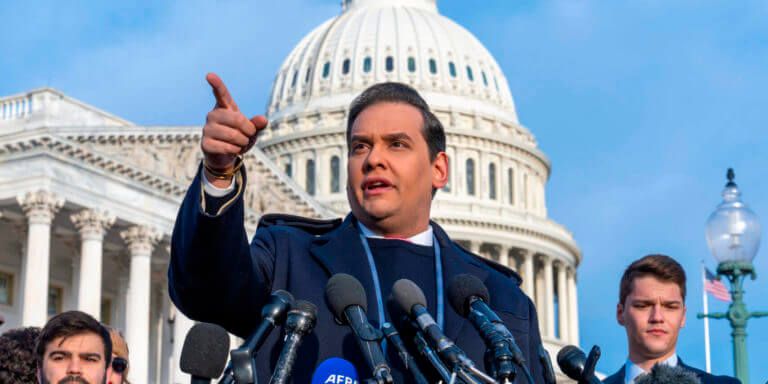
(Luis Cornelio, Headline USA) Even though former Rep. George Santos, R-N.Y., is currently jobless, that hasn’t stopped him from looking ahead to the 2024 presidential election. He’s already positioning himself as a potential high-ranking official in a potential Trump administration. 

Outraged at rampant illegal immigration in the U.S., Santos took to Twitter to declare his New Year’s resolutions: Trump’s comeback to the White House and his appointment as director of ICE. 

“It’s time to reclaim our country and if you believe the nonsense numbers the media is giving you then you are accepting the big lie!” Santos said on Tuesday. 

“We have over 50M+ people who have invaded our sovereignty over the years due to careless and neglectful immigration policy, if given the job I know exactly where to start and run the much needed raids of removals proceedings this country needs,” he added. 

In the same statement, Santos said that the U.S. should not serve as a “global dumping hub.”

His remarks came less than a month after the Trump campaign rebuked Republicans publicly rallying support for potential roles in a 2024 administration. 

“Let us be even more specific, and blunt: People publicly discussing potential administration jobs for themselves or their friends are, in fact, hurting President Trump … and themselves. These are an unwelcomed distraction,” Trump senior advisers Susie Wiles and Chris LaCivita said. 

But Santos’s aspirations align with ongoing speculation about potential appointments in a future Trump administration.  

Some individuals have suggested contentious figures like former U.N. Ambassador Nikki Haley for vice president, igniting criticism from America First supporters, such as Rep. Marjorie Taylor Greene and Don Trump Jr. 

Tucker Carlson, a popular podcast host, has been considered as a potential vice-presidential pick, despite repeatedly stating his disinterest in politics and refusal of such offers.

Former House Speaker Kevin McCarthy, R-Calif., expressed openness to a potential role in a hypothetical 2024 Trump administration.

An Axios report mentioned several names for potential roles, including Sen. J.D. Vance, Arkansas Gov. Sarah Huckabee Sanders, former Arizona gubernatorial candidate Kari Lake, and South Dakota Gov. Kristi Noem, being considered for a vice-presidential role.

New Year, New Country? Over 300K Illegals Encountered in Dec. — Highest in History

(Luis Cornelio, Headline USA) A staggering 302,000 illegal aliens were encountered while attempting to cross the southern border in December 2023, marking the highest encounter total in U.S. history, Fox News reported. 

This record-breaking figure spans from Dec. 1 through Dec. 31. It also marks the first time that encounters surpassed 300,000.

According to Fox reports, over 785,000 illegal aliens were encountered in fiscal year 2023, beginning on Oct. 1.

In response to the released data, CBP disclosed that border agents have been stationed near hot spots.  

“Encounter numbers continue to fluctuate, as smugglers and bad actors continue to spread falsehoods and show complete disregard for the safety and wellbeing of vulnerable migrants,” CBP claimed, as reported by ABC News. 

“We remain vigilant and stand ready to ensure safety of our personnel, migrants, and local communities, and the security of our southwest border,” the federal agency added. 

Data revealed by Fox News border correspondent Bill Melugin shows a significant surge in border encounters since former President Donald Trump departed from the White House. 

In December 2022, at least 252,315 illegal aliens were encountered. In December 2021, the number was 179,253. These figures starkly contrast with the seemingly meager total of 73,994 border encounters in December 2020—the final December of the Trump administration.

Rep. Tony Gonzales, R-Texas, mentioned in a Sunday interview with Fox News that House Speaker Mike Johnson, alongside a delegation of House Republicans, is expected to inspect the border chaos next week. 

“Life along the border is turned upside down and that is exactly what the [Speaker Johnson] and my colleagues are going to see next week,” Gonzales said on Sunday.

“I believe in legal immigration; I believe most of America believes in legal immigration. But what we are not seeing is not that. This is chaos. Enough is enough,” he added.

This unprecedented surge comes as border governors implement drastic measures to deter illegal aliens attempting to cross the border. In Texas, Gov. Greg Abbott signed a law allowing local law enforcement to apprehend individuals suspected of being in the country illegally. 

In response, the DOJ threatened Abbott with a potential lawsuit that could reach the Supreme Court if the law isn’t rescinded. It is scheduled to come into effect in March 2024. 

“The Biden Admin. not only refuses to enforce current U.S. immigration laws, they now want to stop Texas from enforcing laws against illegal immigration,” Abbott said in a Dec. 28 tweet. “I’ve never seen such hostility to the rule of law in America. Biden is destroying America. Texas is trying to save it.”

Two Men Accused of Staging Fake Robberies for Immigration Benefits

(Luis Cornelio, Headline USA) Two New York men were arrested after allegedly orchestrating fake armed robberies across the country in an illegal attempt to secure immigration perks, federal prosecutors announced on Dec. 29. 

Rambhai Patel, 36, and Balwinder Singh, 39, each face a count of conspiracy to commit visa fraud for reportedly staging at least eight robberies at convenience stores, liquor shops and fast-food restaurants. 

U.S. District Attorney’s Office for Massachusetts said that these hoax crimes were aimed at obtaining non-immigration visas, specifically the “U Visa,” which is accessible for certain non-U.S. citizens, including illegal aliens, who have been victims of specific crimes. 

Federal prosecutors said that U Visas allow illegal aliens facing potential removal to remain in the U.S. after enduring abuse and assisting law enforcement in crime investigations or prosecutions.

The alleged hoaxes involved the individuals posing as robbers, threatening store clerks with a firearm, taking cash and fleeing. However, the federal criminal complaint report that some of victims waited several minutes before notifying law enforcement of the purported crimes. 

Prosecutors stated that the accused perpetrators paid the alleged victims to participate in the scheme, with one of the men also paying the store owners for using their stores. 

“The charge of conspiracy to commit visa fraud provides for a sentence of up to five years in prison, three years of supervised release, and a fine of $250,000,” federal prosecutors said in a press release. 

Video footage obtained by the several media outlets shows the men entering convenience stores with weapons and staging the robberies. 

Singh was arrested in Queens, New York but appeared before a judge in Boston. Patel was apprehended in Seattle and will remain in custody pending trial, the press release said.

The arrests followed the guilty pleas of a former Tennessee state worker and her husband, who conspired to unlawfully produce state driver’s licenses for unqualified illegal aliens.

Cheryl Huff and Mario Paz-Mejia entered guilty pleas to one count of conspiracy to produce, without lawful authority, identification documents or false identification documents, federal prosecutors announced on Dec. 21. As reported by Headline USA, the couple faces a maximum penalty of 15 years in prison, $250,000 in fines and three years of supervised release.

Small-Town Pa. Water Supply Caught in Crossfire of Iran’s Anti-Israeli Cyberterrorism

(Headline USA) The tiny Aliquippa water authority in western Pennsylvania was perhaps the least-suspecting victim of an international cyberattack.

It had never had outside help in protecting its systems from a cyberattack, either at its existing plant that dates to the 1930s or the new $18.5 million one it is building.

Then it—along with several other water utilities—was struck by what federal authorities say are Iranian-backed hackers targeting a piece of equipment specifically because it was Israeli-made.

“If you told me to list 10 things that would go wrong with our water authority, this would not be on the list,” said Matthew Mottes, the chairman of the authority that handles water and wastewater for about 22,000 people in the woodsy exurbs around a one-time steel town outside Pittsburgh.

The hacking of the Municipal Water Authority of Aliquippa is prompting new warnings from U.S. security officials at a time when states and the federal government are wrestling with how to harden water utilities against cyberattacks.

The danger, officials say, is hackers gaining control of automated equipment to shut down pumps that supply drinking water or contaminate drinking water by reprogramming automated chemical treatments.

Besides Iran, other potentially hostile geopolitical rivals, including China, are viewed by U.S. officials as a threat.

A number of states have sought to step up scrutiny, although water authority advocates say the money and the expertise are what is really lacking for a sector of more than 50,000 water utilities, most of which are local authorities that, like Aliquippa’s, serve corners of the country where residents are of modest means and cybersecurity professionals are scarce.

Besides, utilities say, it’s difficult to invest in cybersecurity when upkeep of pipes and other water infrastructure is already underfunded, and some cybersecurity measures have been pushed by private water companies, sparking pushback from public authorities that it is being used as a back door to privatization.

Efforts took on new urgency in 2021 when the federal government’s leading cybersecurity agency reported five attacks on water authorities over two years, four of them ransomware and a fifth by a former employee.

At the Aliquippa authority, Iranian hackers shut down a remotely controlled device that monitors and regulates water pressure at a pumping station. Customers weren’t affected because crews alerted by an alarm quickly switched to manual operation—but not every water authority has a built-in manual backup system.

With inaction in Congress, a handful of states passed legislation to step up scrutiny of cybersecurity, including New Jersey and Tennessee.

Before 2021, Indiana and Missouri had passed similar laws. A 2021 California law commissioned state security agencies to develop outreach and funding plans to improve cybersecurity in the agriculture and water sectors.

Legislation died in several states, including Pennsylvania and Maryland, where public water authorities fought bills backed by private water companies to force them to upgrade various aspects of their infrastructure, including pipes and cybersecurity measures.

Private water companies say the bills would force their public counterparts to abide by the stricter regulatory standards that private companies face from utility commissions and, as a result, boost public confidence in the safety of tap water.

“It’s protecting the nation’s tap water,” said Jennifer Kocher, a spokesperson for the National Association of Water Companies.

“It is the most economical choice for most families, but it also has a lack of confidence from a lot of people who think they can drink it and every time there’s one of these issues it undercuts the confidence in water and it undercuts people’s willingness and trust in drinking it,” she added.

Opponents said the legislation is designed to foist burdensome costs onto public authorities and encourage their boards and ratepayers to sell out to private companies that can persuade state utility commissions to raise rates to cover the costs.

“This is a privatization bill,” Justin Fiore of the Maryland Municipal League told Maryland lawmakers during a hearing last spring. “They’re seeking to take public water companies, privatize them by expanding the burden, cutting out public funding.”

For many authorities, the demands of cybersecurity tend to fade into the background of more pressing needs for residents wary of rate increases: aging pipes and increasing costs to comply with clean water regulations.

One critic, Pennsylvania state Sen. Katie Muth, a Democrat from suburban Philadelphia’s Montgomery County, criticized a GOP-penned bill for lacking funding.

“People are drinking water that is below standards, but selling out to corporations who are going to raise rates on families across our state who cannot afford it is not a solution,” Muth told colleagues during floor debate on a 2022 bill.

Pennsylvania state Rep. Rob Matzie, a Democrat whose district includes the Aliquippa water authority, is working on legislation to create a funding stream to help water and electric utilities pay for cybersecurity upgrades after he looked for an existing funding source and found none.

“The Aliquippa water and sewer authority? They don’t have the money,” Matzie said in an interview.

In March, the U.S. Environmental Protection Agency proposed a new rule to require states to audit the cybersecurity of water systems.

It was short-lived.

Three states—Arkansas, Missouri and Iowa—sued, accusing the agency of overstepping its authority and a federal appeals court promptly suspended the rule.

The EPA withdrew the rule in October, although a deputy national security adviser, Anne Neuberger, told the Associated Press that it could have “identified vulnerabilities that were targeted in recent weeks.”

Two groups that represent public water authorities, the American Water Works Association and the National Rural Water Association, opposed the EPA rule and now are backing bills in Congress to address the issue in different ways.

One bill would roll out a tiered approach to regulation: more requirements for bigger or more complex water utilities.

The other is an amendment to Farm Bill legislation to send federal employees called “circuit riders” into the field to help smaller and rural water systems detect cybersecurity weaknesses and address them.

If Congress does nothing, 6-year-old Safe Drinking Water Act standards will still be in place—a largely voluntary regime that both the EPA and cybersecurity analysts say has yielded minimal progress.

Meanwhile, states are in the midst of applying for grants from a $1 billion federal cybersecurity program, money from the 2021 federal infrastructure law.

But water utilities will have to compete for the money with other utilities, hospitals, police departments, courts, schools, local governments and others.

Robert M. Lee, CEO of Dragos Inc., which specializes in cybersecurity for industrial-control systems, said the Aliquippa water authority’s story—that it had no cybersecurity help—is common.

“That story is tens of thousands of utilities across the country,” Lee said.

Because of that, Dragos has begun offering free access to its online support and software that helps detect vulnerabilities and threats for water and electric utilities that draw under $100 million in revenue.

After Russia attacked Ukraine in 2022, Dragos tested the idea by rolling out software, hardware and installation at a cost of a couple million bucks for 30 utilities.

“It was amazing, the feedback,” Lee said. “You wonder, ‘Hey I think I can move the needle in this way’ … and those 30 were like, ‘Holy crap, no one’s ever paid attention to us. No one’s ever tried to get us help.'”

Adapted from reporting by the Associated Press