NFL Adds Gay Pride Event to Super Bowl Week

(Jacob Bruns, Headline USA) With a growing number of LGBT activist brought into its viewership fold by this season’s frequent camera pans to Taylor Swift, the woke NFL announced plans to incorporate gay pride into its Super Bowl celebration for the third consecutive year.

In a recent communication on its website, the league said it would host the third annual “Night of Pride” in Las Vegas on Wednesday, Feb. 7, ahead of that Sunday’s game.


View this post on Instagram


A post shared by GLAAD (@glaad)

The website called it “an evening of music, cocktails and interview-style conversations with GLAAD, a non-profit organization focused on LGBTQ advocacy and cultural change.”

The sponsors and organizers of the event will also “gather to spotlight advances” of the “future of LGBT inclusion in professional sports.”

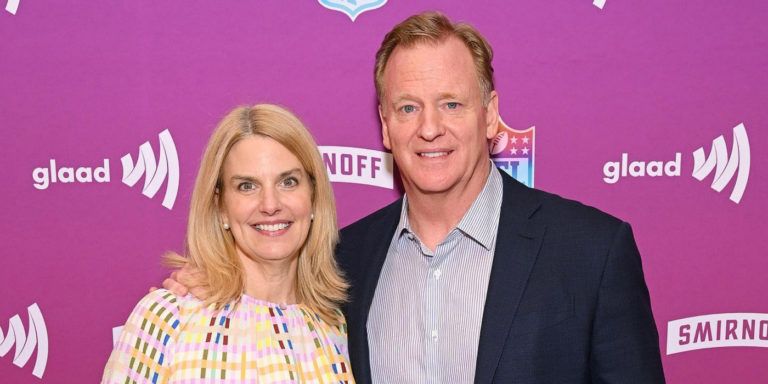
GLAAD President and CEO Sarah Kate Ellis praised the NFL for partnering with her organization, and said that, together, the two organizations were committed to advancing LGBT propaganda.

“GLAAD’s partnership with the NFL is committed to creating spaces where all fans can celebrate and to growing important visibility for LGBTQ fans at the Super Bowl and all season long,” said Ellis. “The third annual A Night of Pride at Super Bowl LVIII will spotlight LGBTQ leaders in sports as we work to create safe and inclusive sports environments for our community.”

Ellis’s comments were backed by Jonathan Beane, the NFL’s senior vice president and chief diversity & inclusion officer.

According to Beane, the third Night of Pride will be a night of trying to form public opinion with LGBT propaganda.

It will be “yet another strong step to accelerating acceptance and demonstrating the NFL’s unwavering support of the LGBTQ community,” he said, noting that the NFL wants to continue and strengthen its efforts to “ensure football is for everyone.”

The event is expected to add even more political controversy to a championship game already embroiled in controversy over its decision to include the so-called black national anthem in pre-game ceremonies alongside the “Star-Spangled Banner.”

The song “Lift Every Voice and Sing” will be performed by R&B singer Andra Day.

Did Wisconsin Gov. Just Give House GOP the ‘Smoking Gun’ Needed to Impeach?

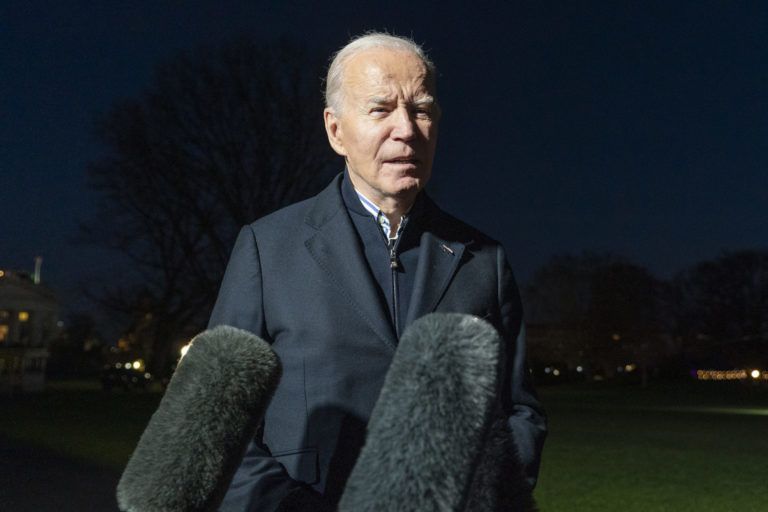
(Jacob Bruns, Headline USA) In a Thursday press conference, Wisconsin Gov. Tony Evers, a Democrat, introduced President Joe Biden as the “Big Guy,” echoing language used in documents associated with Biden’s crooked son, Hunter Biden, the Western Journal reported.

Evers’s apparent Freudian slip came as Biden visited Wisconsin on Thursday to speak on the Infrastructure Investments and Job Acts.

He announced projects to replace old bridges throughout the swing state in order to buy voters’ support.

Evers, who seemed to have taken the podium to get the audience excited for Biden’s appearance, noted that he would be “the last speaker before the Big Guy comes out”:

The phrase used by the Wisconsin Democrat–“Big Guy”– is how Hunter Biden referred to his father in his dealings with foreigners as he attempted to leverage his family’s political power for his own personal gain.

For instance, the younger Biden used it to threaten one of his Chinese business partners into cooperation with his illicit business dealings.

In an email exchange, it appears that Hunter set aside funds for the “Big Guy,” presumably the elder Biden.

According to a November Wall Street Journal op-ed, the president has spent years helping his family members cash in on political favors, aiding them with his presence and also with financial assistance.

Meanwhile, the House Oversight Committee, led by chairman James Comer, is engaging in an investigation of the Biden family and its business dealings throughout the president’s lengthy political career.

According to Comer, evidence suggests that Biden “lied to the American people about his involvement in his family’s business schemes.”

Comer also claimed that there is substantial evidence that Biden family members “sold access for profit around the world to the detriment of American interests” and that the family’s private business dealings pose “a threat to national security.”

The House investigation is ongoing.

Speaker Johnson: Mayorkas Impeachment to Move Forward ASAP

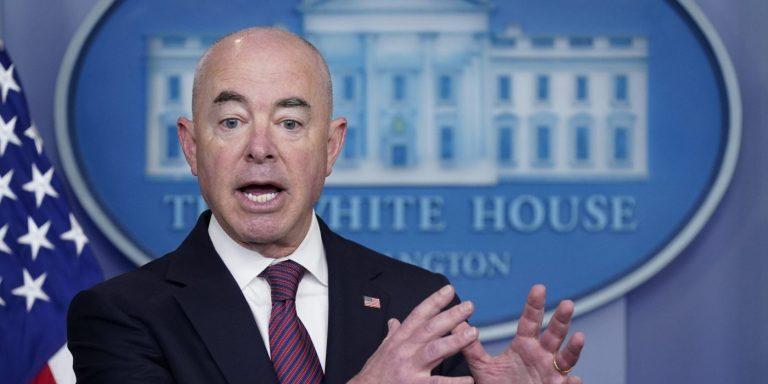
(Headline USA) House Speaker Mike Johnson, R-La., said this week that he intends to expedite the impeachment of Homeland Security Secretary Alejandro Mayorkas.

House Republicans launched impeachment proceedings against Mayorkas earlier this month, accusing him of being “derelict in his duty” to secure the U.S.’s southern border and defying congressional immigration statutes.

In a letter to his colleagues this week, Johnson said he intends to hold a House-wide vote on whether to impeach Mayorkas “as soon as possible,” citing the growing crisis between border states and the federal government.

“The facts show that President Biden and his Homeland Security Secretary Mayorkas have willfully ignored and actively undermined our nation’s immigration laws,” the speaker wrote. “Rather than accept accountability, President Biden is now trying to blame Congress for what HE himself intentionally created.”

Johnson also pointed out that illegal immigration is a top concern among voters.

“The American people know better, and that’s why public opinion polls show the country has overwhelmingly sided with us on this issue. When we return next week, by necessity, the House Homeland Security Committee will move forward with Articles of Impeachment against Secretary Mayorkas. A vote on the floor will be held as soon as possible thereafter,” he said.

The speaker also reaffirmed the House GOP’s support for Texas, which signaled this week that it would take action to secure its own border regardless of the Biden administration’s attempts to prevent the state from doing so.

“I made clear that we stand with Texas Governor Greg Abbott in his heroic efforts to protect the citizens of his state and all Americans, and I am emphasizing again today that House Republicans will vigorously oppose any policy proposal from the White House or Senate that would further incentivize illegal aliens to break our laws,” Johnson said.

Johnson was referring to a proposed immigration bill in the Senate that former President Donald Trump has urged Republicans to oppose, calling it “bad for the country.”

The House Homeland Security Committee is having a hearing Tuesday on a resolution to impeach Mayorkas.

Bombshell IG Report Finds Illegal Drug-Dealing within White House

(Ken Silva, Headline USA) The Defense Department’s Inspector General released a report earlier this month about how the White House’s pharmacy dispensed drugs without following safety rules and regulations.

“We found that the White House Medical Unit provided a wide range of health care and pharmaceutical services to ineligible White House staff in violation of Federal law and regulation and DoD policy,” the IG’s Jan. 9 report said.

“Additionally, the White House Medical Unit dispensed prescription medications, including controlled substances, to ineligible White House staff.”

According to the report, the White House’s clinic failed to track its opioids and other controlled substances, and both wrote and dispensed prescriptions without requiring information or checking the recipient’s identity. The clinic is run by the White House Medical Unit, which is part of the DoD.

The DoD’s IG said it interviewed more than 120 officials for its investigation. One official interviewed reportedly said that “anything that took place at the White House Clinic was never written down, never recorded.

“The only record that you ever had that a patient came in and got any sort of medication would have been if it was a controlled substance that we were required to document for the pharmacy,” the official reportedly said.

The IG recommended an overhaul to the White House pharmacy’s policies, procedures, and oversight plans to manage controlled and non-controlled medications and patient eligibility for the White House Medical Unit.

The IG report marks the latest drug-related scandal coming out of the White House.

Last July, a bag  of cocaine was found in the White House—leading some to point the finger at Hunter, who was living there around that time.

The Secret Service launched an investigation into how the cocaine ended up in the White House, but claimed it was not able to find a culprit.

“There was no surveillance video footage found that provided investigative leads or any other means for investigators to identify who may have deposited the found substance in this area,” the Secret Service said in a statement. “Without physical evidence, the investigation will not be able to single out a person of interest from the hundreds of individuals who passed through the vestibule where the cocaine was discovered.”

Ken Silva is a staff writer at Headline USA. Follow him at twitter.com/jd_cashless.

Pa.’s Far-Left Gov. Borrows from Trump Playbook w/ Profanity on Campaign Trail

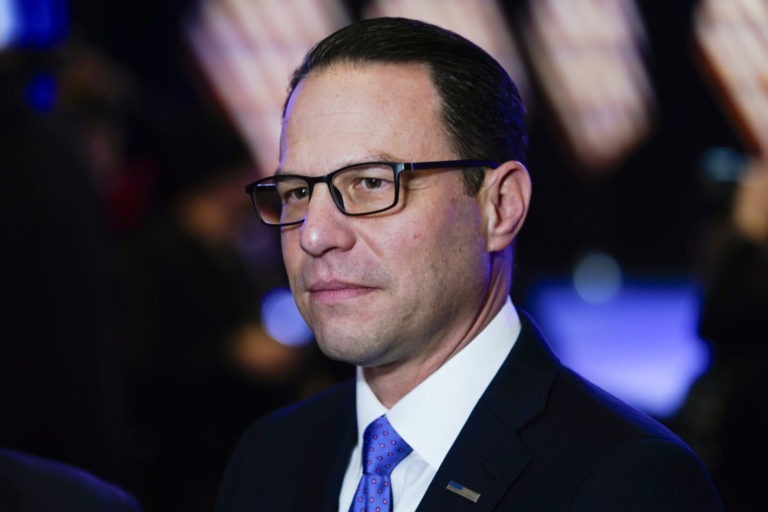
(Headline USA) Gov. Josh Shapiro has a new slogan for how he wants to run Pennsylvania—and it’s not fit for kids’ ears.

“We’ve got a GSD attitude in the Shapiro administration that means we focus on getting, you know, stuff done,” he told a news conference Monday with local officials at the Johnstown YMCA. “There’s children here, so we’ll just say ‘stuff.’”

That was the G-rated version of the line he’s been delivering in recent months. Occasionally, Shapiro just comes out and says it: “get s**t done.”

The phrase has become the governing philosophy and brand of Shapiro, the leftist former attorney general who was instrumental in facilitating the massive vote fraud in the state during the 2020 election.

Shapiro refused to challenge unconstitutional policies or to enforce the state constitution, allowing then-Secretary of State Kathy Boockvar to unilaterally push policies in direct violation of the law.

By the time of Shapiro’s own gubernatorial run, in 2022, many of those same policies, such as loosening the authentication standards and deadlines of mail-in ballots, had calcified into policy if not law.

Leigh Chapman, the state’s acting top election official (Boockvar had resigned following an ethics scandal) questionably mailed out hundreds of thousands of ballots to unverified voters long before election day.

Shapiro, in turn, handily defeated his pro-MAGA challenger, former state lawmaker Doug Mastriano, who had been one of the most critics of the 2020 election abuses in the state legislature.

The governor is now considered a rising star in the Democratic Party. He is one of a handful of fresh leaders building their national profiles and positioning themselves for a 2028 run for the White House as Democrats hope to phase out the current gerontocracy at the top of the party ranks, led by 81-year-old Joe Biden.

But like the elections that got him into office, Shapiro is now focused on cultivating a phony persona—and crafting it after the same freewheeling MAGA politicians he once claimed were threatening to destroy democracy.

While Biden has violated countless political norms—whether by design or inadvertently due to his ever-increasing cognitive decline—Shapiro hopes to reach younger voters by, effectively, speaking their language, even if that language is considered by others to be in poor taste and unbefitting of his office.

Yet, Shapiro isn’t the kind of norm-breaking politician who might otherwise be expected to cuss in public—suggesting that the slogan is the exact opposite of the sort of off-the-cuff, relatable outburst.

Rather, it is a frantic attempt at rebranding himself in a state where a growing number of working-class voters have begun connecting with the “America First” message of former President Donald Trump, and switching parties as a result.

The 50-year-old son of a physician and former state lawmaker, county commissioner and state attorney general is generally considered a relatively buttoned-down politician who carefully controls his messaging.

Shapiro debuted his “S-word” slogan last June in Philadelphia when he announced the reopening of a section of Interstate 95 that had collapsed 12 days earlier in a tractor–trailer accident.

He has since hauled out the phrase during a few other speeches, usually substituting “stuff.” He is using the initials “GSD” to title his latest statewide media tour and on his website to tout his accomplishments. His social media team also has used the phrase online in videos.

Shapiro has long held the philosophy that government should get stuff done for people, and the saying was used frequently between campaign staff and Shapiro in the 2022 campaign, his press secretary, Manuel Bonder, said.

Neither the campaign nor the governor’s office have workshopped the slogan or focus-grouped it to see what sort of public reception it might get, Bonder insisted.

“It’s something that’s representative of how the governor feels about governing and leading and trying to make government work more efficiently and getting things done for people,” Bonder said. “It’s something that is based off of that philosophy.”

Regardless, the saying has prompted some eye rolls from the insiders who hear it the most.

“When I first heard it, I thought it was unseemly for a governor, but I guess I’m getting used to it,” said state Rep. Russ Diamond, R-Lebanon. “I still cringe. You just don’t hear that from a public official too often. Are we lowering the bar now? I guess that bar can be lowered.”

It’s also evinced grumbling that Shapiro is taking credit for stuff that lawmakers had labored over long before he took office a year ago.

“With all due respect governor, we got this s**t done before your tenure,” state Sen, Kristin Phillips-Hill, R-York, wrote in response to a post by Shapiro on Twitter.

The saying is not necessarily original.

In 2012, then-California Gov. Jerry Brown abruptly used the expression during a news conference declaring his support for a multibillion-dollar water project.

Swearing by politicians also isn’t necessarily new, although it is increasingly breaking free from taboos.

It began picking up in earnest some seven or eight years ago, likely coinciding with the growing use of social media that let academics better measure the use of language, said Benjamin Bergen, a professor of cognitive science at the University of California-San Diego who studies language, including profanity.

Trump—labeled the “profanity president” in a 2019 New York Times headline for his use of obscenities during speeches or rallies—had a lot to do with breaking down the staid ways in which politicians communicate, said Jennifer Mercieca, a professor of communication and journalism at Texas A&M who studies political rhetoric.

Still, Mercieca couldn’t think of another politician who had adopted a slogan with a swear word.

“It’s probably the new normal now to expect that politicians post-Trump are going to be more freewheeling under the guise of authenticity and say things they think would be said in a way that people would say themselves,” Mercieca said.

One of Shapiro’s fellow Pennsylvania Democrats, Sen. John Fetterman, cussed routinely on social media while on his way to winning the Senate seat in 2022.

Still, Fetterman—known for his blunt and irreverent talk—generally confined his profanities to his writings on social media when describing his disdain for, say, Pennsylvania’s relatively low minimum wage.

There is some academic research on the effects of politicians swearing.

It shows that, in general, people judge politicians who swear the way they judge anyone else who swears, Bergen said.

It largely hinges on the appropriateness of the context, he said.

“On the positive side, people tend to judge politicians who swear as being more authentic or truthful,” Bergen said. “On the negative side, they tend to judge them as being more out of control, less aware of or conforming to social norms.”

In any case, attitudes toward the S-word have changed in the last few decades, and it has lost much of its punch as a cuss word, Bergen said.

The word may be taboo with, say, older adults, but Bergen asks his freshmen class every year to rank cuss words, and “s**t” barely registers anymore.

“It’s as offensive as ‘loser,’” Bergen said.

Adapted from reporting by the Associated Press

Man Entrapped by FBI in Dubious Plot to Build ‘X-Ray Gun’ is Now in Supermax Prison

(Ken Silva, Headline USA) The plot would be comical if not for its disturbing outcome: A man entrapped by FBI undercover agents and informants in a dubious plan to build a so-called X-ray gun is now housed in one of the most notorious prisons in the world.

The inmate, Glendon Crawford, a member of the Ku Klux Klan, was initially charged by the Justice Department in 2013 for conspiring to build a “lethal radiation-emitting device.”

It turned out, Crawford’s plans were almost entirely facilitated by FBI undercover informants, undercover agents and a cooperating witness from the KKK—as the DOJ admitted in its own charging documents.

“Crawford soon found two separate groups with the apparent means and ability to get for him the type of x-ray system he wanted for his scheme,” FBI agent Geoffrey Kent said in a 2013 affidavit for an arrest warrant, before getting to the punchline: “Fortunately … both groups presently dealing with Crawford and his scheme are composed of Undercover Employees (UCEs) and a Confidential Human Source (CHS).”

The details of the DOJ’s case against Crawford were revealed to be even more absurd as the matter made its way through federal court. According to court filings, the DOJ used 59 federal agents and law enforcement officers over a two-year span to investigate Crawford, producing 7,700 pages of discovery materials and over 50 audio and video recordings—all made by undercovers in rooms or on the phone with Crawford.

Crawford’s attorney noted in an unsuccessful motion to dismiss that the FBI’s investigation was not a case where an undercover infiltrated a criminal enterprise.

“Rather, no criminal enterprise existed when the undercovers had contact with Crawford, and the criminal enterprise became, over time, all of the undercovers,” his motion said.

“The claimed device was provided by the undercovers, brought to a warehouse operated by those government undercovers, and was not activated at the time of the arrest of Crawford,” his motion stated.

“The video recording … reveals a number of box-type materials—all brought to the site by the government … They are in a government warehouse brought there by the government, and the recording shows defendant Crawford walking around at the encouragement of the government agents reading manuals about the machinery,” Crawford’s motion said.

“In the end, Crawford closed up the machine and said, ‘There is this thing called leagues, and I am not in this one.’”

Despite the highly dubious case, a jury eventually found Crawford guilty.

Crawford’s petition to the Supreme Court—which declined to hear his case—shows that he had many of the same barriers faced by the defendants in the Whitmer kidnap conspiracy: The government was allowed to play select clips of undercover audio recordings, but Crawford was not allowed to present his own evidence from the recordings—meaning the jury couldn’t hear statements where he declined to proceed with the alleged plan.

“The Government was allowed to pick and choose those portions that would be played for the jury and was allowed to pick and choose those portions that they wished to transcribe,” his brief to SCOTUS stated.

“That is, the Government played only select clips of different recordings and Petitioner was not allowed to play the entire portions to put the clips into context.”

A district judge had also allowed the FBI to conceal the identity of three undercover agents who testified against Crawford at trial.

To top it off, a federal judge assessed a twelve-level “terrorism” enhancement when sentencing Crawford, giving him 30 years in prison.

And now, Crawford is serving that sentence in one of the most notorious prisons in the world: Florence supermax, the home of inmates such as drug lord Joaquín “El Chapo” Guzmán, Oklahoma City bombing accomplice Terry Nichols and 1993 World Trade Center bomber Ramzi Yousef. Florence is also where Whitmer kidnap defendants Adam Fox and Barry Croft are being caged.

Crawford has an ongoing lawsuit over his placement at Florence supermax.

According to Crawford’s lawsuit, which was filed last July, he was held in a medium-security prison in Pekin, Illinois for the first six months of his sentence in 2017. Then, suddenly he was informed that he’d be transferred to Florence.

Since then, Crawford has been subject to “special administrative measures,” or SAMs, designated for violent inmates. He said he’s been denied the ability to communicate with lawyers and others on the outside.

Crawford’s lawsuit claims that he is the “only Christian American who has been unjustifiably subjected to SAMs for six years, housed in the ADX supermax with the most notorious and infamous international Islamic terrorists—all of whom are unapolegetically in a state of war with this great nation.”

Crawford’s lawsuit is still in its early stages. A judge ordered him to file an amended complaint by Feb. 8.

Ken Silva is a staff writer at Headline USA. Follow him at twitter.com/jd_cashless.

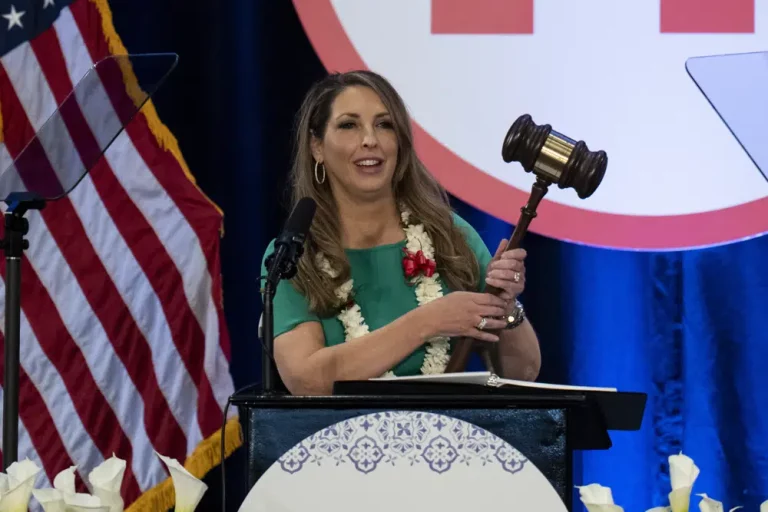
RNC Scraps Plan to Declare Trump as Nominee after He Requests ‘Old Fashioned’ Victory

(Headline USA) The Republican National Committee pulled a resolution to consider declaring Donald Trump the party’s “presumptive 2024 nominee” before he formally clinches the requisite number of delegates, a person familiar with the decision said Thursday.

News of the withdrawal came shortly after Trump posted on his Truth Social site that, while he “greatly” appreciated the notion, he felt, “for the sake of PARTY UNITY, that they should NOT go forward with this plan, but that I should do it the ‘Old Fashioned’ way, and finish the process off AT THE BALLOT BOX.”

The measure, according to a draft obtained Thursday by the Associated Press, had said it “declares President Trump as our presumptive 2024 nominee for the office of President of the United States and from this moment forward moves into full general-election mode welcoming supporters of all candidates as valued members of Team Trump 2024.”

The withdrawal was confirmed by a person familiar with the decision who was not authorized to publicly discuss the proposal and spoke on condition of anonymity Thursday night.

If approved, the measure would have further solidified Trump’s standing as the de-facto party leader and given him more control over its operation at a time when Trump’s former United Nations ambassador, Nikki Haley, is still competing against him for the GOP nomination.

With an estimated 70% of Haley’s support coming from non-Republicans in the New Hampshire primary and much of her financial support coming from Democrat donors, Trump undoubtedly sees her ongoing presence in the race as less of a threat than an opportunity.

Meanwhile, there is little use in focusing on the general election race and expending resources with Democrats continuing to push the dubious claim that they are planning to double down on incumbent President Joe Biden, who already has proven himself to be unfit for the job in a variety of ways. Many are speculating that former first lady Michelle Obama will eventually enter the race.

As for the RNC, it may be eager to bring Trump into the fold for its own reasons as Republican donors are far more likely to support the embattled organization with his blessing and endorsement.

Trump boycotted all of the RNC debates after it required him to submit to unfavorable terms—a move that proved to be strategically shrewd on his part as he was, despite his absence, frequently declared the debate winner, with the other candidates acrimoniously bickering among themselves in a brawl for second-place.

RNC Chair Ronna McDaniel had earlier signaled her approval for the resolution. On Tuesday, after Haley finished second to Trump in New Hampshire, McDaniel said that while she felt the former ambassador had “run a great campaign,” Republicans “need to unite around our eventual nominee, which is going to be Donald Trump.”

The resolution had been expected to be discussed at the RNC’s winter meeting in Las Vegas next week.

Haley’s camp said Thursday that it wasn’t up to the RNC to decide who the GOP nominee would be.

“Who cares what the RNC says? We’ll let millions of Republican voters across the country decide who should be our party’s nominee, not a bunch of Washington insiders,” said campaign spokesperson Olivia Perez–Cubas.

Despite losing both the Iowa and New Hampshire contests to Trump, Haley has argued that her performance—outlasting all the other Trump rivals—shows the strength of her candidacy.

There was precedent, however, for the committee to declare a candidate the presumptive nominee before winning the 1,215 requisite delegates to clinch the nomination. Then-RNC Chair Reince Priebus did so with Trump in May 2016.

Trump currently has 32 delegates to Haley’s 17. There is one delegate left to be assigned after the New Hampshire contest.

During a rally Wednesday night in her home state of South Carolina, Haley—the former governor—noted that her campaign had brought in more than $1 million since her second-place finish in New Hampshire.

Trump followed up with a remark that appeared aimed at intimidating her donors—or perhaps at baiting her NeverTrump allies to squander even more of their resources on her.

“Anybody that makes a ‘Contribution’ to Birdbrain, from this moment forth, will be permanently barred from the MAGA camp,” Trump wrote, using the nickname he has crafted for Haley. “We don’t want them, and will not accept them, because we Put America First, and ALWAYS WILL!”

Haley’s campaign raised an additional $1.2 million “after Trump’s unhinged pledge to ‘permanently bar’ any individual who contributed to Haley’s campaign,” it said Thursday.

“Donald Trump’s threats highlight the stark choice in this election: personal vendettas or real conservative leadership,” said Haley spokesperson AnnMarie Graham–Barnes.

“Trump’s scheme blew up in his face,” she claimed. “The contributions to the Haley campaign are pouring in—proof that people are sick of the drama and are rallying behind Nikki’s vision for a strong and proud America.”

Trump’s dismissal of any Haley donors had no effect on T.J. Petrizzo, a former top Capitol Hill staffer and now lobbyist who supports Haley.

“That’s something out of a Godfather movie. Never betray the family? Come on,” he added. “You’ve got to play this through.”

Petrizzo said he understands that some Republicans may be ready to pivot to a head-to-head contest between Trump and the Democrat nominee, but he noted that there is a lot of time left before a general election.

“I’ve heard a lot of elected officials in the Republican Party, including the RNC chair, say, ‘We need to rally around a candidate.’ That this is going to be our candidate. ‘It was chosen by Iowa and New Hampshire, so we must go ahead and rally around Trump,’” Petrizzo said. “Well, there’s 285 days until the election. There’s plenty of time on the clock.”

Adapted from reporting by the Associated Press

China Now the Biggest Retail Buyer of Gold

(Mike Gleason, Money Metals News Service) As superficially upbeat economic data propels the stock market to new highs, precious metals investors are questioning the story being told by Wall Street cheerleaders and government bureaucrats.

On Thursday, the Bureau of Economic Analysis announced its Gross Domestic Product estimate for the fourth quarter. It beat expectations, with GDP growth coming in at 3.3%.

The gains came largely as a result of seasonal bumps in inventories and exports, which are not expected to be sustained. GDP growth is almost certain to come in much lower in the first quarter of this year. It could even start to trend negative later in 2024.

Alternative measures of the economy’s performance captured by the Leading Economic Index are already turning down. The LEI fell in December, pointing to underlying weakness.

Also of concern, the number of American workers applying for first-time unemployment benefits is rising.

Nevertheless, the talk on Wall Street is of a soft landing. The mainstream financial media is touting a so-called “Goldilocks” economy now that official inflation rates have come down.

Clip #1: After two years of surging inflation, are we going back to a Goldilocks economy?

Clip #2: It’s an economy that is cooling on the inflation front, but still showing growth on the spending front, the Goldilocks…

Clip #3: Perfect Goldilocks scenario.

Clip #4: We’re getting some of that Goldilocks.

Clip #5: It is Goldilocks.

Clip #6: This is Goldilocks.

With bullish sentiment running rampant, the investing public is largely ignoring precious metals as potential safe havens. Softening demand for bullion has caused premiums to shrink and contributed to price weakness so far in 2024.

The gold market had entered the year very close to all-time highs. Despite pulling back, support at the $2,000 level has held.

Although gold and other precious metals are largely being overlooked by U.S. investors at the moment, that’s not the case in other parts of the world. In fact, the gold market is booming in places like China.

The Chinese stock market and currency have both plummeted in value over the past several months. But gold prices have hit record highs in terms of the Chinese yuan.   

China is now the world’s biggest retail buyer of gold.  And Chinese households are increasingly turning to gold bullion and jewelry for wealth protection. China’s jewelry purchases rose 8% last year, according to the China Gold Association.

Meanwhile, demand for gold coins jumped nearly 16% in 2023. Chinese gold-backed exchange-traded products added 10 tons to their holdings. And the People’s Bank of China increased its gold reserves by a whopping 225 tons.

The PBOC has also implemented measures to make it easier for bank account depositors to convert cash into gold. Chinese officials may be viewing gold as a geopolitical tool amid rising tensions with the United States.

The U.S. dollar is steadily losing market share in terms of global central bank currency reserves while gold is gaining.

It’s not ultimately China or Russia or other U.S. adversaries that pose the biggest threat to U.S. dollar hegemony. It’s reckless U.S. fiscal and monetary policy that is undermining global confidence in its currency.

Credit ratings agencies Standard and Poor’s and Fitch have downgraded U.S. debt amid a skyrocketing budget deficit and constant budget brinksmanship in Washington, D.C.

Many investors nevertheless believe that the U.S. economy, the stock market, the banking system, and the currency are all on fundamentally sound footing. But if their Goldilocks scenarios fail to pan out, they could be left wishing they had diversified into actual gold instead.

In other news, Money Metals‘ public policy efforts are kicking into high gear right now with the start of the state legislative season. Our team has already secured the introduction of over a dozen bills that benefit our customers and our nation as a whole.

Specifically, we have bills in Kentucky, Wisconsin, Vermont, New Jersey, Hawaii, Indiana, and Alaska that remove sales taxes from gold and silver purchases.

And, we’re also backing bills in Nebraska, Georgia, Kansas, West Virginia, Oklahoma, and Iowa that remove income taxes and, in several cases, institute other sound money reforms.

Keep your eyes peeled for ways to help!

Congress Working to Provide Retirement Benefits for CIA Drug Traffickers

(Ken Silva, Headline USA) So much for fighting the Deep State.

Sen. Marco Rubio, R-Fla., and Rep. Glenn Grothman, R-Wisc., have both introduced legislation that would ensure retirement benefits for the roughly 1,000 U.S. employees of Air America, a CIA front company widely suspected of being involved in drug trafficking.

When Grothman announced the bill last year, he touted the Air America workers as national heroes.

“According to now-declassified documents, we now know that Air America was not a private company and, in fact, acted as a top-secret arm of the executive branch in implementing Cold War policies under the management of the Central Intelligence Agency,” Grothman said in a press release.

“Air Americans saved tens of thousands of lives in search and rescue missions for downed U.S. military pilots, evacuations of allied refugees, and the final evacuations of Danang and Saigon in 1975.”

Grothman said his legislation was inspired by his constituent, 85-year-old Neil Hansen, who flew for Air America during the Vietnam War era.

“I flew the last plane out of Cambodia,” Hansen told The Washington Times in March 2021.

However, Air America has a dark past that hasn’t been mentioned by Congress.

According to historian Alfred McCoy, the CIA used Air America to smuggle drugs to fund its black ops.

The CIA has denied such allegations, but CIA officer Anthony Poshepny reportedly admitted to the drug trafficking to historian Douglas Valentine.

“Poshepny said he knew it was wrong for America’s allies to sell U.S. government weapons on the black market and for the CIA to engage in drug trafficking,” Covert Action Magazine reported last May.

Air America was dissolved in 1976, but many of its pilots went on to fly for the CIA during the Iran-Contra scandal in the 1980s.

One of those pilots, Barry Seal, achieved fame as a firearms and cocaine smuggler in Arkansas. According to the book Compromised, written by Iran-Contra whistleblower Terry Reed, Arkansas’ then-governor, Bill Clinton, was involved in the cocaine-smuggling operation.

Iran-Contra was exposed publicly when a former Air America pilot, William Cooper, was shot down and killed while smuggling arms into Nicaragua in 1986.

But don’t tell any of that to Congress. Grothman and Rubio’s legislation has at least 35 cosponsors from both sides of the aisle.

“The brave men and women of Air America deserve an immense token of appreciation for their service to our nation. I am proud to lead this bipartisan bill to ensure our fellow Americans who honorably served our great nation receive the recognition they deserve,” said Rubio.

Ken Silva is a staff writer at Headline USA. Follow him at twitter.com/jd_cashless.

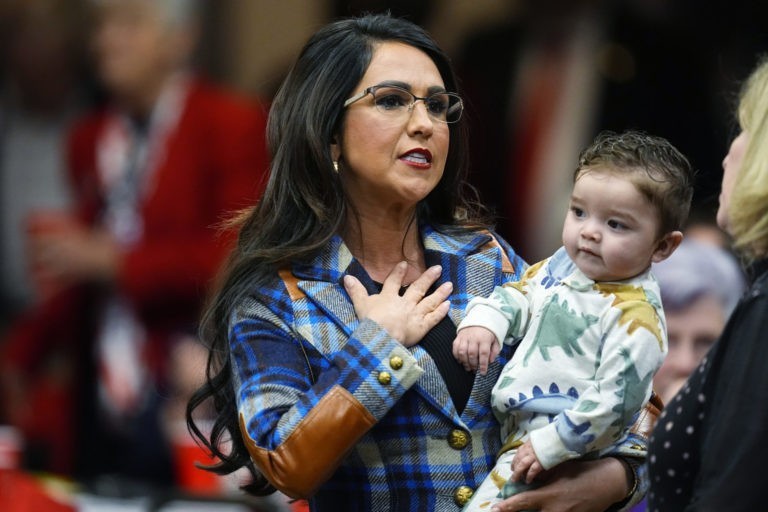
District-Hopping Boebert Slammed as ‘Carpetbagger’ in GOP Primary Debate

(Headline USA) Republican primary candidate Mike Lynch didn’t sugarcoat the question to his opponent on the crammed debate stage, Republican Rep. Lauren Boebert, who hopped into the race last month partly over fear of a loss in the district she currently represents.

“Could you give the definition of ‘carpetbagger?'” Lynch asked to low murmurs from the crowd at the first Republican primary debate in Fort Lupton, a community in Colorado’s 4th District.

It was expected. The candidate before Lynch had asked the same question, if more delicately put after she joined the packed primary race in an open “safe” district to avoid the risk of losing her seat in the general election.

The pejorative term—popularized during the post-Civil War “Reconstruction” era as fortune-seeking northerners looked to take advantage of new economic opportunities, refers to interlopers from outside a region who show up with no money or possessions except what they can carry with them in a traveling bag.

On stage, Boebert didn’t hesitate in her response to the attack.

“The crops may be different in Colorado’s 4th District but the values are not, and I’m a proven fighter for the values that you all believe in,” said Boebert, her voice forceful over the wide room in a recreation center.

While Colorado’s congressional representatives do not have to live in the district they represent, only the state, Boebert—on the heels of a particularly acrimonious divorce—relocating to Weld County in her new district, jokingly described by the moderator as “the most heavily Republican seat on the planet Earth.”

The corner of the Great Plains is a sweep of prairie grass and farms broken only by ranching towns where auctioneers chant the weight and price of cattle near every week.

Voters supported Trump by nearly 20 percentage points in 2020, more than double the margin in Boebert’s old district.

Boebert built herself into a household name with a style of pugilistic politics that has turned otherwise tame moments in Congress into slugfests, along with unwavering conservative stances and loyalty to former President Donald Trump.

However, her eastern Colorado district, which includes the resort town of Aspen, was redrawn more favorably for Democrats prior to the 2022 election, in what may have been a deliberate bid to neutralize one of Trump’s strongest political allies.

As a result of the redistricting and a coordinated effort by left-wing activists to smear and defame her—including baseless allegations that she had previously been a prostitute—Boebert narrowly won her last race by just 546 votes.

This time around, the same challenger, Adam Frisch, used Boebert’s notoriety among Democrats to pull in vast amounts of dark money from outside the district, raising more than three times the funding of the beleaguered GOP lightning rod.

With Republicans hanging onto control of the U.S. House by their fingertips, Boebert opted to pivot from the 3rd District to the solid-red 4th District, where Rep. Ken Buck’s retirement had left the race with no incumbent but with a crowded field of nine other GOP hopefuls.

Political experts generally agree Republicans have a better chance of holding onto the 3rd District without Boebert in the race.

The crowd at Thursday’s debate, a who’s who of local Republicans and voters, sat around tables where red popped among dark suits, including red solo cups and Boebert’s signature lipstick.

Jerry Sonnenberg, a popular former state senator with a tactically deployed baritone, was among the six of nine candidates on stage who raised their hands when asked if they had been arrested, to raucous applause.

Another, Rep. Richard Holtorf, the Republican whip in the Colorado House, has been most outspoken about Boebert’s move. Deborah Flora, a filmmaker and radio host, was the first to levy her question of switching districts at Boebert on stage.

State Rep. Lynch also exchanged barbs with Boebert. Lynch was Colorado’s House minority leader until he stepped down Wednesday after a 2022 arrest for drunken driving came to light, an issue that was largely met with forgiveness by fellow contestants.

Boebert was caught on video vaping and groping with a date in a Denver theater in September, but the embarrassing episode went unmentioned at the debate.

Still, the scandal may be hard to shake in Boebert’s new electoral stomping grounds, where voters hold tight to conservative Christian values some feel she transgressed.

The congresswoman must rely on her national name and convince skeptical voters that her voice is needed in Congress more than those of her homegrown opponents, some of whom have lived in the district their entire lives and represent parts of the area in Colorado’s Legislature.

Boebert focused on her experience in Congress as the key factor separating her from the candidates on stage.

“Everyone will talk like a Freedom Caucus member, but there is only one who governs as a Freedom Caucus member,” she said. “I am here to earn your support, earn your vote. This is not a coronation.”

Boebert’s primary rivals largely seemed hesitant to directly attack her onstage, which was reminiscent of the Republican presidential primary candidates who avoided criticism of Trump in early debates.

The debate also largely centered on national political issues including border security, abortion and fentanyl, on which Boebert could laud her sterling conservative voting record. Her opponents didn’t raise local issues they may have thought she was unprepared to represent.

Adapted from reporting by the Associated Press