Las Vegas Sued for Deleting Records of Its Shady Voter Rolls

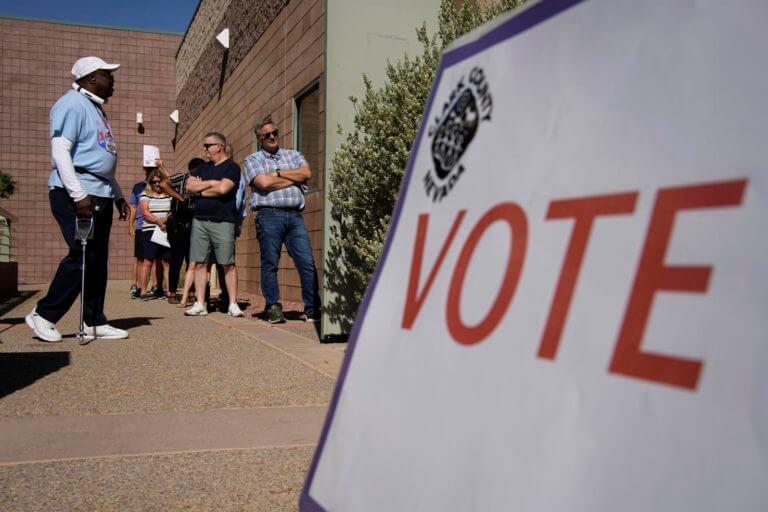
(Jacob Bruns, Headline USA) Restoring Integrity and Trust in Elections, a watchdog group, has reported that Clark County, Nevada, which includes Las Vegas, has violated the the federal National Voter Registration Act by deleting voting records prematurely.

The NVRA requires that counties keep voting information on-hand for two years after each election, and that they provide said information to the public if requested.

After Clark County failed to do so, RITE filed a lawsuit.

According to RITE President Derek Lyons, Clark County has only been keeping the information on file for six months.

“RITE has identified a new disappearing act in Las Vegas, but this one is far less entertaining than a magician on the Strip,” Lyons wrote, noting that the county has also failed to work with RITE to help them access any relevant information.

“By all indications, Clark County is deleting nearly all election-related emails after six months, rather than retaining them for two years as required by federal law and state law,” he added. “RITE has tried for months to resolve this and other document-related issues with the county, but its requests for an explanation have been ignored.”

In the group’s legal notice addressed to Clark County, they suggest that the county has “violated the NVRA’s records retention and disclosure obligations” by not keeping the information available for two years.

The watchdog group demanded that Clark County officials respond, or prepare to meet in court.

“RITE demands that you take immediate steps to remedy these legal violations,” the notice said, offering county officials one final chance to hand over the relevant information.

“If you have withheld responsive records, RITE is entitled to their immediate production,” it continued. “And if you have destroyed records that are less than two years old, RITE is entitled to a forthright and unambiguous admission of that error, an explanation for why it occurred, and firm assurances that you will immediately implement processes and procedures to prevent ongoing and future violations of the NVRA.”

The news is particularly troubling given the central place Las Vegas has played in recent elections, culminating in a 2022 election riddled with allegations of fraud.

LAPD Hires Illegals as Cops amid Spate of Recent Attacks, Safety Fears

(Jacob Bruns, Headline USA) The Los Angeles Police Department is now hiring as police officers illegal immigrants who have attained special residency status under the Obama-era Deferred Action for Childhood Arrivals status, The Federalist reported.

Arming the illegal immigrants and giving them the power to enforce law, the LAPD made the announcement in January, with Capt. Robin Petillo noting that the newly recruited officers would “possess department-issued firearms on and off duty.”

As recently as two years ago, no California cities were able to hire noncitizens to be law enforcement officers in the state.

But now the department has hired nearly a dozen candidates, and plans to move forward under a 2022 California law that made DACA illegal immigrants eligible for public-sector jobs, including police work.

Los Angeles Police Chief Michel Moore said that former President Barack Obama’s 2012 executive order—now court sanctioned—which decreed federal immigration law to be invalid at the caprices of the executive branch had made all of this possible.

“We’ve tried to carve just what is necessary for DACA, and these individuals be treated on the same basis of which non-DACA recipients are, as to the possession of a department firearm and its use,” Moore said.

The move to deputize illegal immigrants comes in spite of a border-security crisis that has led to violence across the country as immigrants continue to murder or otherwise harm American citizens.

For instance, last week Venezuelan national Jose Antonio Ibarra was charged with murdering nursing student Laken Riley, who was jogging near Georgia University.

Further, last month a twice-deported Salvadoran illegal immigrant shot and killed a 2-year-old in Maryland.

In New York City, a moped gang has formed which robs various establishments in the city.

Illegal immigrant Peraza Navas, a part of the group, was arrested and told investigators that the crime syndicate is massive.

“It’s much bigger than me,” Peraza Navas allegedly said. “In a million years, I never thought you’d catch me. I’ve been going to Miami every three weeks. And it’s much bigger than me.”

Judge Blocks Texas Law that Gives Police Broad Powers to Arrest Illegal Immigrants

(Headline USA) Even as sanctuary-state California moves to deputize illegal immigrants as members of law enforcement, a feckless federal judge is preventing law enforcement in Texas from arresting illegal immigrants for violating immigration law.

District Judge David Ezra on Thursday blocked a new Texas law that would give police broad powers to arrest migrants suspected of illegally entering the U.S., dealing a victory to the Biden administration with a broad rejection of Republican Gov. Greg Abbott’s immigration enforcement effort.

Ezra’s preliminary injunction pausing a law that was set to take effect March 5 came as President Joe Biden and former President Donald Trump—both the presumptive nominees for their respective parties’ 2024 presidential tickets—were visiting Texas’s southern border to discuss immigration.

The state attorney general’s office immediately appealed the ruling, according to a statement Thursday.

The ruling rebuked Texas’s immigration enforcement effort on multiple fronts, brushing off claims by Republicans about an ongoing “invasion” along the southern border due to record-high illegal crossings.

Ezra, an appointee of former President Ronald Reagan, also said the law violated the Constitution’s supremacy clause, conflicted with federal immigration law, and could hamper U.S. foreign relations and treaty obligations.

Texas officials had argued, however, that the dereliction of duty by the Biden administration to uphold the federal law empowered the states to do so under the 10th Amendment, as well as other laws pertaining to foreign invasions and acts of terrorism.

It was the second time in six months that Ezra has stopped one of Abbott’s border-enforcement efforts, having also ruled against a floating barrier Texas erected in the Rio Grande.

Allowing Texas to “permanently supersede federal directives” due to a so-called invasion would “amount to nullification of federal law and authority—a notion that is antithetical to the Constitution and has been unequivocally rejected by federal courts since the Civil War,” the judge wrote.

In his decision, Ezra wrote that the Texas law was preempted by a 2010 Supreme Court decision in an Arizona case, adding that the two laws had “striking similarities.”

He also struck down state officials’ claims that large numbers of illegal border crossings constituted an “invasion,” saying calling it such is a novel interpretation of the Constitution’s invasion clause and that allowing the law to stand would be permitting the state to engage in war.

Although some may empathize with Texas officials’ claims regarding the federal government’s handling of immigration policy, it is not an excuse to violate the Constitution, the judge wrote.

In a statement, Abbott blamed the influx of migrants on Biden.

“[W]e will not back down in our fight to protect our state—and our nation,” he wrote,  noting that he believed the case would ultimately end up before the Supreme Court.

“Texas has the right to defend itself because of President Biden’s ongoing failure to fulfill his duty to protect our state from the invasion at our southern border,” he added.

Left-wing activist groups who sued the state claimed that if allowed to stand, the law—Senate Bill 4—could lead to civil rights violations and racial profiling.

“With today’s decision, the court sent a clear message to Texas: S.B. 4 is unconstitutional and criminalizing [b]lack, [b]rown, [i]ndigenous, and immigrant communities will not be tolerated,” said Jennifer Babaie, director of advocacy and legal services with Las Americas Immigrant Advocacy Center, in a statement celebrating the decision.

The Biden administration’s lawsuit was one several legal battles between it and Texas over how far the state can go to try to prevent migrants from crossing the border under the current open-border policy.

Under the now-suspended law, state law-enforcement officers could arrest people suspected of entering the country illegally. Once in custody, they could agree to a Texas judge’s order to leave the country or face a misdemeanor charge for entering the U.S. illegally.

Migrants who don’t leave after being ordered to do so could be arrested again and charged with a more serious felony.

Texas has been arresting migrants for years under a more limited program based on arrests for criminal trespassing.

At a Feb. 15 hearing, Ezra expressed skepticism as the state pleaded its case, saying he feared the U.S. could become a confederation of states enforcing their own immigration laws. In his ruling, he doubled down on the thought, adding that “SB4 threatens the fundamental notion that the United States must regulate immigration with one voice.”

Republicans who back the law have said it would not target immigrants already living in the U.S. because of the two-year statute of limitations on the illegal entry charge and would be enforced only along the state’s border with Mexico.

Other Republican governors have expressed support for Abbott, who has said the federal government is not doing enough to enforce immigration laws.

Adapted from reporting by the Associated Press

Hungary’s Viktor Orbán to Visit Trump at Mar-a-Lago Next Week

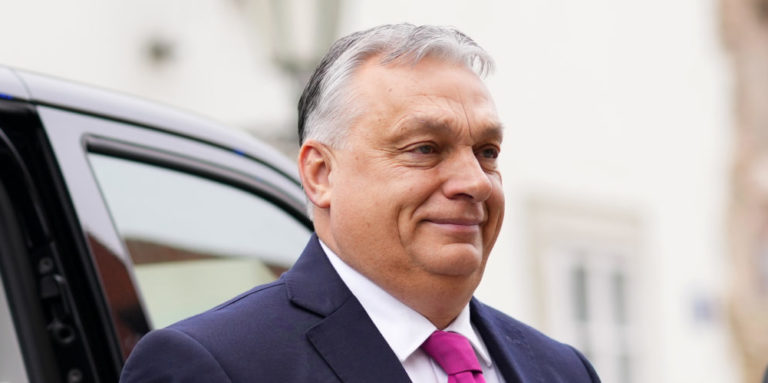
(Headline USA) Hungarian Prime Minister Viktor Orbán will visit former President Donald Trump next week at his Florida home Mar-a-Lago, according to a person briefed on the plans who was not authorized to disclose them publicly and spoke on condition of anonymity.

The visit was first reported Wednesday night by the New York Times.

The meeting comes as Trump seeks to shift his attention from the Republican primary to the general election, although his hosting of world leaders also allows him to draw contrast with GOP rival Nikki Haley, whose role as Trump’s U.N. ambassador seemed largely ceremonial given his hands-on approach to diplomacy.

Trump’s political standing within his own party seems stronger than ever, having easily won the early presidential Republican primary contests and flexed his influence over GOP members in Congress and the leadership of his political party.

Orbán and Trump have been long allies, and Trump regularly praises the right-wing populist in his campaign speeches. The two met in August 2022 at Trump’s Bedminster, New Jersey, golf club when Orbán traveled to the United States to speak at the Conservative Political Action Conference in Texas.

In April 2023, when charges were filed in the first of Trump’s four criminal cases, Orbán posted a message of support for Trump urging him to “keep on fighting.”

Trump, in early 2022, said he was giving his “complete support and endorsement” to Orbán’s reelection campaign that year.

Orban, who has been in office since 2010, has promoted what he calls “illiberal democracy.”

He has been criticized by international observers—including the U.S. State Department—for leading an increasingly autocratic system in Hungary, largely do to his firm stance against open borders and loose immigrations laws, which much of Europe has been subjected to, at the risk of losing many countries’ unique cultural identities.

His conservative values have put him in direct conflict with globalist oligarch George Soros, a Hungarian native, who has played a major role in influencing the so-called democracy in corruption-plagued Ukraine.

There has been considerable speculation that leftists working in conjunction with the Biden State Department/CIA and with Soros-backed non-governmental organizations may try to stage a coup in Hungary, similar to the 2014 color revolution that ousted Ukraine’s Russia-friendly government.

Adapted from reporting by the Associated Press

Another Set of Michigan Delegates Still Up for Grabs in Saturday Caucus

(Former President Donald Trump handily defeated former U.N. Ambassador Nikki Haley in the Michigan primary Tuesday, but another batch of delegates is up for grabs in the state’s caucus on Saturday.

Trump received about 68% of the vote in Michigan, compared to Haley’s nearly 27%. Trump won 12 delegates, bringing his total to 122 while Haley received 4, raising her total to 24 delegates.

President Joe Biden won Michigan and is largely unopposed in his race for the Democrat nomination. However a sizeable number Democrat primary participants from predominantly Muslim communities opted to vote “uncommitted” in protest of Biden’s stance on the Israel–Gaza war. The effort took about 13% of the vote and two delegates from Biden.

On Saturday, under the state’s unique Republican party rules, another 39 delegates will be awarded via a caucus system.

“Haley got trounced last night, losing the Great State of Michigan by over 42 Points,” Trump wrote on Truth Social Wednesday. “Looking forward to Super Tuesday where she is doing even worse, if that’s possible. I’m leading every State by over 60 Points! People don’t like her, and they know, as per the polls, that she can’t beat Biden, or any Democrat!”

More than a dozen states will go to the polls on Tuesday—and a sweeping win for Trump in those states would pressure Haley even more to drop out of the race.

On Wednesday, Haley hinted that Trump was unelectable and that Biden, who is 81-years-old, is bound to be replaced.

“The GOP has to be a party of addition, not subtraction, or else we’ll be doomed to a President Kamala Harris,” Haley tweeted.

Trump has responded to the electability argument with the latest polling, which shows him beating Biden in several swing states, though some recent polling suggested that Haley performed better against Biden in several states.

El Salvador President: ‘Confidence in Your Currency Could Be Lost.’

(Mike Gleason, Money Metals News Service) Precious metals markets enter trading for March with gold bulls wondering whether the monetary metal is finally ready to march up to new highs.

Gold spent the first two months of the year locked in a trading range between $2,000 and just under $2,100 per ounce. For now, it continues to be overshadowed by new stock market records. The metals space is also being stifled by the Federal Reserve’s unwillingness to commit to rate cuts.

As of this Friday recording, gold comes in at $2,062 an ounce – up 0.8% for the week. Silver shows a weekly loss of 1.2% to bring spot prices to $22.87 per ounce. Platinum is off 4.4% to trade at $883. And finally, palladium is dipping 2.4% this week to check in at $984 per ounce as of this Friday morning recording.

With price inflation coming down in recent months and the economy holding up according to official government statistics, many Wall Street analysts are heaping praise upon the Federal Reserve.

The Fed has supposedly tamed the very inflation it generated without sending the economy into recession – at least as of yet.

But central bankers are also fueling a dangerous bubble in government debt – one that they are doing nothing to tame.

This year the debt to GDP ratio will exceed 130%. That’s a level rarely seen in developed countries except in times of war or other crisis.

The consequences of excessive debt, excessive currency creation, and overbearing government can include hyperinflation and widespread poverty. These consequences have been felt by the people of third world countries in Africa and Latin America.

Hyperinflation ruined the economies of Zimbabwe and Argentina, for example. But now Zimbabwe is considering backing its currency with gold. And Argentina recently elected a free-market economist as president who is working to end the reckless fiscal policies that dragged down the once prosperous country.

El Salvador of all places is rapidly emerging from one of the most troubled countries in the world to one of the most promising.

Last week Salvadoran President Nayib Bukele traveled to Washington DC to give a speech to the Conservative Political Action Conference.

Bukele warned Americans of the dangers posed by globalist elites. He specifically called out left-wing financier George Soros. He also warned that the U.S. dollar is at risk of going down.

Nayib Bukele: Not even those high taxes, higher than a lot of places in the world, not even those taxes are really funding the government. So, who’s financing the government? Government is financed by Treasury Bonds, paper. And who buys the treasury bonds? Mostly the Fed. And how does the Fed buy them? By printing money. But what backing does the Fed have for that money being printed? The treasury bonds themselves. So basically, you finance the government by printing money out of thin air. Paper backed with paper. A bubble that will inevitably burst. The situation is even worse than it seems because if most Americans and the rest of the world were to become aware of this farce, confidence in your currency would be lost.

Bukele has irked the Biden administration by promoting Bitcoin as an alternative to U.S. dollar hegemony. El Salvador holds Bitcoin in official reserves and has declared it legal tender in the country.

The cryptocurrency surged above $60,000 this week, helping to boost the value of El Salvador’s bonds.

Bitcoin is an asset class that isn’t controlled by governments or global financial elites. But its market value is volatile and the future utility of the digital blockchain is uncertain.

What is certain is that over time, gold will retain purchasing power better than inflationary fiat currency. Precious metals may seem boring compared to Bitcoin at the moment. But physical gold and silver have attributes that no digital asset can replicate. A bullion coin is money in tangible form, and its value does not depend on the internet.

Precious metals are an asset class that governments, central banks, pension funds, and individual investors alike can hold to protect themselves against the ongoing depreciation of the U.S. fiat dollar.

Inflation Is Still Gobbling Up Your Paycheck

(Mike Maharrey, Money Metals News Service) While your paycheck might be a little fatter, you’re actually earning less because price inflation continues to gobble up your paycheck.

As pundits and politicians slice and dice various inflation reports, debating whether or not the Fed has finally tackled inflation, things aren’t getting any better where it really matters – in your pocketbook.

On an annual basis, average weekly earnings rose by 3 percent in January. A 3 percent raise sounds pretty good, doesn’t it? But when you factor in a 3.1 percent consumer price index, real earnings fell by 0.1 percent over the past year.

And it’s worse than that when we consider the CPI formula is designed to understate the true extent of price inflation. Measured by the formula used during the inflationary era in the 1970s, CPI would be somewhere in the neighborhood of double what the government reports today. That means your real earnings have dropped closer to 3 percent over the past year – and probably more than that.

Real wages had been clawing upward ever-so-slightly over the previous seven months, so the sudden turn back negative is a bad sign for the “inflation is over” crowd. But more significantly, it drives home the pain inflation causes for the average worker.

And even that seven months of wage recovery didn’t provide a whole lot of relief given what happened over the previous two years. Real wages went negative in April 2021 and fell month after month for the next 26 months as price inflation skyrocketed.

Sadly, you’ll never get that earning power back.

Ryan McMaken summed it up in a recent article published by the Mises Wire.

All that value stolen from your dollars over the past three years? It’s gone forever unless some serious deflation sets in and the value of your money actually go up. The Fed is committed to making sure that never happens. 

A recent Wall Street Journal article pointed out another trend that shows just how much price inflation is eating away at your purchasing power. The amount of disposable income spent on food has reached a 30-year high.

“Eating continues to cost more, even as overall inflation has eased from the blistering pace consumers endured throughout much of 2022 and 2023. Prices at restaurants and other eateries were up 5.1 percent last month compared with January 2023, while grocery costs increased 1.2 percent during the same period, Labor Department data show.

“Relief isn’t likely to arrive soon. Restaurant and food company executives said they are still grappling with rising labor costs and some ingredients, such as cocoa, that are only getting more expensive. Consumers, they said, will find ways to cope.”

You’ll often hear politicians and talking heads on mainstream news outlets claim that inflation doesn’t really matter because wages rise along with prices. When it’s all said and done, it’s just a wash and you’re no worse off. Prices go up. Wages go up. Everything is fine!

But as usual, they’re gaslighting you. The data shows that wages don’t rise as quickly as costs. There is always a lag, and workers are almost always playing catch-up. 

And for people living on fixed incomes and savers, price inflation creates an even bigger hardship. The sad reality is the burden of price inflation tends to fall hardest on the poor and elderly.

Savers should take note. The best way to protect yourself from a constant drop in purchasing power is to hold real money – gold and silver.


Mike Maharrey is a journalist and market analyst for MoneyMetals.com with over a decade of experience in precious metals. He holds a BS in accounting from the University of Kentucky and a BA in journalism from the University of South Florida.

What Dynamics Drive the Silver Price?

(Mike Maharrey, Money Metals News Service) What drives the price of silver? Understanding silver pricing can be tricky because of the metal’s dual nature. It is an industrial commodity, but fundamentally, silver is money.

A recent report by the Silver Institute attempts to untangle the various factors that go into the price of silver, noting that it’s a difficult job.

“The Report finds that no magic formula or combination of factors consistently and accurately explains the level of or change in the silver price. While the price of silver is not a random walk, neither is its future path entirely predictable based on past trends.”

Industrial and technical applications account for roughly half of silver demand. In that sense, you will sometimes see the price movements correlate with the broader commodity complex.

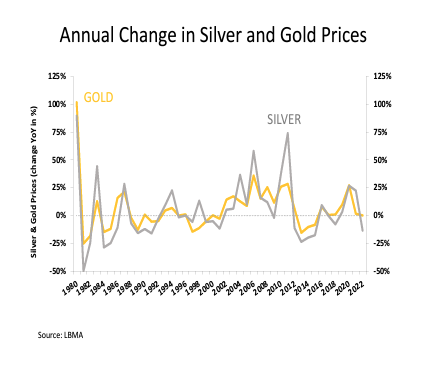
But at its core, silver is money. That brings other factors into the pricing equation such as the strength of the dollar or the trajectory of interest rates. That means silver typically moves with gold, especially over the long run.

“Supply/demand analysis is complicated by silver’s legacy as a monetary metal and its continued acceptance as an investable asset. The result is that above-ground stocks of bullion and investment demand play an outsized role in silver compared to other ‘purer’ commodities, such as copper or palladium, where stocks are much smaller and investor interest far narrower and shallower. In this regard, silver is closer to gold, whose price to an even greater extent is subject to changes of ownership in its huge level of above-ground bullion stocks and in investor sentiment towards the precious metal.”   

As you can see from the charm silver tends to outperform gold during a gold bull market.

Silver Appears to Be Underpriced

Whether you’re considering industrial demand, the current monetary climate, or both, silver appears to be significantly underpriced.

Despite wishful thinking in the mainstream, inflation doesn’t appear to be down and out. And if it is, that just means a return to inflationary policies with the Fed trying to push down interest rates. That’s bullish for both gold and silver.

There is also a strong likelihood that something will break in the economy in the near future. The financial system isn’t built to operate in even a modestly high interest rate environment. The Federal Reserve would almost certainly respond to a financial crisis by slashing interest rates to zero and restarting quantitative easing (effectively printing money). These are inflationary policies. There are already signs of stress in the banking system and the commercial real estate market is ripe for a crisis.

When there is high inflation, smart people want to hold real money. This is bullish for gold and silver.

On the supply and demand side of the equation, silver is expected to hit the second-highest level on record in 2024.

Industrial demand for silver is expected to lead the growth in global demand, driven in part by the growth of the green energy sector. According to a 2022 research paper by scientists at the University of New South Wales, solar manufacturers could consume over 20 percent of the current annual silver supply by 2027. And by 2050, solar panel production will use approximately 85–98 percent of the current global silver reserves.

Even if the economy crashes, government commitment to green energy will likely keep the money in that sector.

The Silver Institute projects another market deficit in 2024 with demand outstripping supply. This would mark the fourth straight year of a structural market deficit and further cut into silver reserves.

Given these dynamics, at between $22 and $23 an ounce, silver is on sale.

The gold:silver ratio would appear to confirm the white metal is underpriced – at least in relation to gold.

The has spread to almost 90:1. That means it takes almost 90 ounces of silver to buy one ounce of gold. This is a historically widespread.

The average gold:silver ratio in the modern era has generally ranged between 40:1 and 60:1. When the ratio widens far beyond that range, as it has in recent years, it typically returns toward that mean.

For instance, the ratio fell to 30:1 in 2011 and below 20:1 in 1979.

The pandemic era provides a more recent example. As the Fed cut rates and launched quantitative easing to prop up a shaky economy caused by rate hikes the prior year, the gold:silver ratio climbed to nearly 93:1. As silver rallied along with gold, the gold:silver ratio plunged from over 100:1 to just over 64:1, close to the high end of the historical norm. 

It’s pretty clear that silver isn’t priced for the current demand dynamics.

The bottom line is no matter how you weigh the various factors that drive the price of silver, the white metal appears to be a bargain at the current price.


Mike Maharrey is a journalist and market analyst for MoneyMetals.com with over a decade of experience in precious metals. He holds a BS in accounting from the University of Kentucky and a BA in journalism from the University of South Florida.

NYC Officials Clear Bronx Storefront Housing Dozens of Illegals

(Headline USA) New York City officials have cleared out a Bronx storefront illegally converted to house dozens of tenants that was run by the same person who operated one hosting as many as 70 migrants in a Queens furniture store.

The city Department of Buildings responded Wednesday to reports of an illegal conversion at a two-story commercial building in the borough’s Fordham neighborhood, according to WNBC.

Agency inspectors found 45 beds packed closely together on the first floor and basement of the building, along with extension cords, e-bikes, space heaters, hotplates and other fire hazards in the makeshift living quarters, the station reported.

City officials ordered the building vacated due to the “hazardous, life-threatening conditions” which included severe overcrowding and a lack of natural light and ventilation. The building’s landlord was also issued two violations for failure to maintain the building and for occupying the building contrary to city records.

The city’s Office of Emergency Management, which operates NYC’s migrant shelter system, is assisting displaced tenants, including referring people to asylum seeker services, according to WNBC.

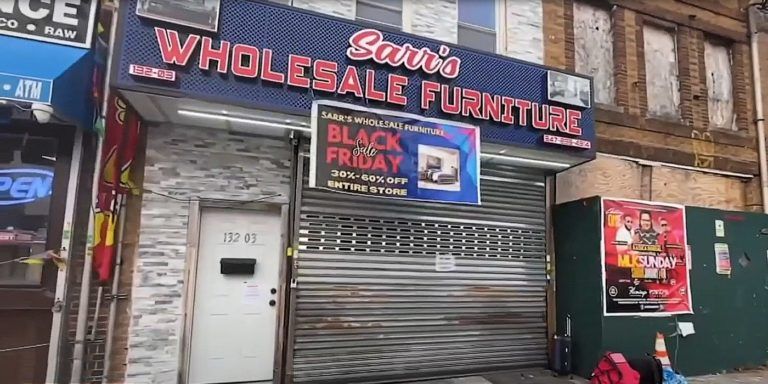
The news station said the storefront is run by Ebou Sarr, who operated a similar housing operation in Queens that was shut down Tuesday.

City officials ordered Sarr’s Wholesale Furniture vacated after finding the building’s first-floor commercial space and cellar had been converted into sleeping quarters, with 14 bunk beds and 13 beds tightly packed on both floors and able to fit about 41 people.

The native of Senegal had told reporters Tuesday that he was housing mostly migrant men from his West African nation and charging them $300 a month because they couldn’t afford a place to live after timing out of the city’s emergency shelter system for migrants.

No one answered phone numbers associated Sarr on Thursday and the city buildings department and emergency management office didn’t immediately respond to messages seeking comment.

Adapted from reporting by the Associated Press

WATCH: FBI Arrests and Handcuffs Blaze Journalist Who Documented Capitol Hill Uprising

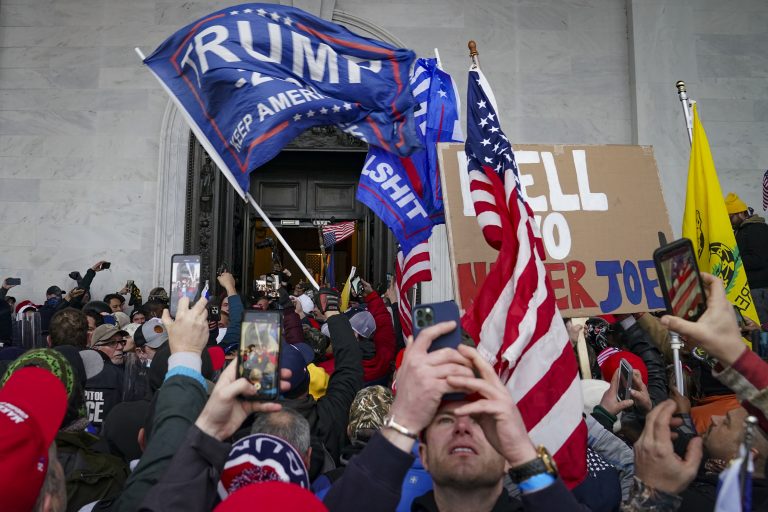
(Ken Silva, Headline USA) Blaze Media journalist Steve Baker turned himself in to the FBI on Friday to face four misdemeanor charges for entering the Capitol to document events during the Jan. 6, 2021, protest-turned-riot—and he was subsequently handcuffed and made to do a perp walk for the world to see.

Baker has been on the forefront of exposing anomalies and likely government malfeasance on Jan. 6. Most recently, he reported that a Capitol Police Special Agent gave false testimony at the Oath Keepers’ sedition trial last year.

His arrest did not go over well with his supporters, though liberals were oddly silent about the Justice Department’s brazen attack on the free press.

“Those two Agents are going to have to sleep with this experience from here on out. The incredible thing is: they will still think they are the good guys. Hey @FBIDallas you cowards die a thousand deaths… every day you wake up,” said former FBI agent Kyle Seraphin.

“The House has released footage to Blaze Media of @TPC4USA in the Capitol on Jan. 6. In the five minutes we saw, there is no ‘disorderly and disruptive conduct’ or ‘parading, demonstrating, or picketing.’ Just journalism. Wake up, America. Biden’s FBI ARRESTED him for this,” said Baker’s employer, Blaze Media founder Glenn Beck.

Baker is now at least the second reporter to be charged for—by all accounts—purely journalistic activities. He joins Stephen Horn, who was convicted of four misdemeanor charges in September for entering the Capitol while filming the Jan. 6 protests/riots. Horn is set to be sentenced in January.

Headline USA understands there are more than 20 other reporters who, like Horn and Baker, entered the Capitol on Jan. 6, but aren’t facing charges. Headline USA reviewed some of their names, but is withholding them so they won’t be targeted, too.

Along with Horn and Baker, the DOJ also charged Infowars host Owen Shroyer with disorderly conduct and entering a restricted area of Capitol grounds.

In Shroyer’s case, he violated terms of a deferred prosecution agreement stemming from a December 2019 arrest for shouting during a House Judiciary Committee impeachment hearing. Shroyer’s deferred prosecution agreement entailed him agreeing to do community service and follow certain conditions, such as not engaging in disorderly or disruptive conduct on Capitol grounds.

While Shroyer may not have been prosecuted solely for his journalism, the DOJ nevertheless successfully pushed for a jail sentence for him—even though he never entered the Capitol. In doing so, DOJ prosecutors cited his First Amendment-protected activity as a reason to put him in jail.

“The First Amendment is no bar to the Court’s consideration of Shroyer’s words and actions at sentencing,” the DOJ argued.

Horn is set to be sentenced this month, while Shroyer recently got out of prison after serving most of his 60-day sentence.

Ken Silva is a staff writer at Headline USA. Follow him at twitter.com/jd_cashless.