Jan. 6 Defendant Was Sentenced in Secret

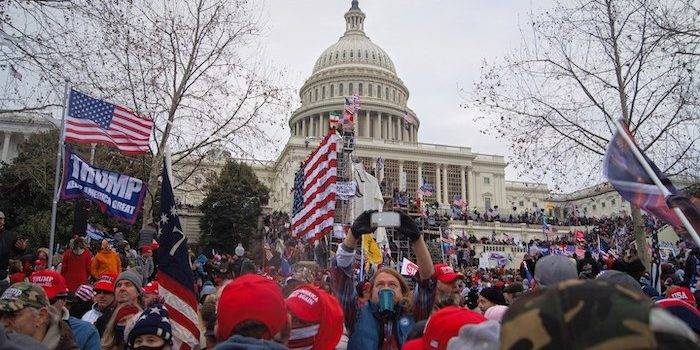
(Ken Silva, Headline USA) In January 2022, Stefanie Chiguer was charged with four misdemeanors in relation to her participation in the Jan. 6, 2021, Capitol Hill uprising. About three months later, Chiguer reached a plea deal, and was later sentenced to 36 months’ probation, 60 days’ home detention and 120 hours’ community service.

However, the federal court docket does not reflect what penalty the Justice Department sought for Chiguer, nor does it say when her sentencing hearing was. A coalition of media members have filed an application to unseal her records to obtain the details of her secretive sentencing.

“This motion seeks access to all such sealed or otherwise undocketed records related to Chiguer’s sentencing, including but not limited to: any sentencing memoranda filed by Chiguer or the Government; the transcript of Chiguer’s sentencing hearing; the Court’s Judgment reflecting any sentence or other penalties imposed on Chiguer; any other filings made in connection with Chiguer’s sentencing; any related motion to seal; and any sealing order,” the press coalition said in its Feb. 27 application.

“The public docket provides no explanation as to why, despite the strong presumption of transparency in this Circuit, these judicial records are not available to the public.”

According to the press coalition’s motion to unseal, the public docket in Chiguer’s case does not reflect that any sentencing memoranda was ever been filed, that any sentencing hearing has ever been held, or that any sentence has ever been issued.

The press coalition argued that it has a First Amendment right to cover Chiguer’s case.

In response to that application, the Justice Department filed sealed documents Wednesday—the docket doesn’t reflect what those documents say.

The Chiguer case is reminiscent to that of J6 convict Samuel Lazar, who received a secret, sweetheart plea deal—serving just 30 months imprisonment for pepper-spraying police and urging protestors to “take their guns.”

Like Chiguer, Lazar’s records were initially sealed until a coalition of press outlets successfully motioned to make them public.

When the records were unsealed in December, they showed that Lazar received a sweetheart deal because he was cooperating with the FBI against other Jan. 6 protestors. They also revealed that Lazar “was ready to testify” in a murder trial unrelated to Jan. 6, and that he was even a jailhouse snitch, according to NBC News reporter Ryan Reilly.

Ken Silva is a staff writer at Headline USA. Follow him at twitter.com/jd_cashless.

Rubio Re-Ups Call for Permanent Daylight Saving Time

(Some lawmakers are once again calling on their colleagues to make Daylight Saving Time permanent.

Ahead of the switch to Daylight Saving Time this weekend, Sen. Marco Rubio, R-Fla., highlighted the importance of the Sunshine Protection Act, which would make Daylight Saving Time permanent.

“We’re ‘springing forward’ but should have never ‘fallen back,’ ” Rubio said in a statement. “My Sunshine Protection Act would end this stupid practice of changing our clocks back and forth.”

Rubio has backed the Sunshine Protection Act in previous years. In March 2022, the Senate unanimously passed the Sunshine Protection Act, sending it to the House for action. Former House Speaker Nancy Pelosi, D-Calif., never brought the legislation up for a vote.

Not everyone is on board. The American Academy of Sleep Medicine opposes the Sunshine Protection Act. The AASM supports the elimination of the biannual time changes in March and November but is advocating for Congress to introduce legislation restoring permanent standard time.

“It is time to stop changing our clocks in the spring and fall, but making daylight saving time permanent is the wrong choice,” AASM President Jennifer Martin said. “The science is clear: Restoring permanent, year-round standard time is the best option for our health and well-being.”

Rubio’s Sunshine Protection Act would apply to those states that participate in daylight saving time. Most states observe daylight saving time for eight months each year. The bill would do away with changing clocks twice a year. Hawaii and most of Arizona do not participate in Daylight Saving Time.

Nineteen states—Alabama, Arkansas, California, Delaware, Georgia, Idaho, Louisiana, Maine, Massachusetts, Minnesota, Mississippi, Montana, Ohio, Oregon, South Carolina, Tennessee, Utah, Washington, and Wyoming—have passed similar laws, resolutions, or voter initiatives, Rubio said. States need federal approval to make the change.

The bill wouldn’t alter or change time zones, change the amount of hours of sunlight or require those who do not currently observe DST to do so (American Samoa, most of Arizona, Guam, Hawaii, Northern Mariana Islands, Puerto Rico, and the Virgin Islands).

Proponents of the measure say it could help reduce vehicle crashes by better aligning daylight hours to drivers’ standard work hours; reduce risks for cardiac issues, stroke and seasonal depression; reduce energy usage and help the economy.

The Florida senator said research shows switching the clocks had been linked to increased heart attacks, car accidents and pedestrian accidents. He said other research suggests light later in the day could reduce crime and childhood obesity.

Congress enacted Daylight Saving Time in the U.S. after Germany’s 1916 effort to save fuel during World War I, and its period of observance has since been lengthened.

Congress initially mandated it for six months. In 2005, Congress extended DST to begin the second Sunday in March and end the first Sunday in November. As a result, the United States now has eight months of DST and four months of standard time.

The United States has also gone through periods of year-round DST, including 1942-1945 and 1974-1975.

In 2022, a Monmouth University Poll found about 1 in 3 Americans want to maintain this clock-resetting practice. A plurality would prefer to make daylight saving time permanent. Using standard time year-round had few supporters.

Six in 10 Americans (61%) would do away with the nation’s twice-a-year time change while a little over one-third (35%) want to keep the existing practice.

Those who want to stick with a single year-round time prefer to have later sunrise and sunset hours (44%) than the earlier setting offered by standard time (13%).

2024 Started as 2023 Ended With Central Banks Buying More Gold

(Mike Maharrey, Money Metals News Service) Central banks took up where they left off in 2023, adding more gold to their stockpiles to kick off the new year.

Globally, central banks increased their gold reserves by a net 39 tons in January, according to the latest data compiled by the World Gold Council.

Turkey was the biggest buyer in January, adding 12 tons of gold to its reserves. With the most recent addition, the Central Bank of Turkey now holds 552 tons of gold.

Last year, Turkey was a net seller, liquidating 160 tons of gold in the spring of 2023. The central bank returned to buying in the third quarter of last year.

According to the World Gold Council, the big gold sale was a specific response to local market dynamics and didn’t appear to reflect a change in the Turkish central bank’s long-term gold strategy. The Turkish central bank sold gold into the local market to satisfy demand after the government imposed import quotas in an attempt to improve its current account balance. The country is running a significant trade deficit.

China continued to add gold to its reserves at a steady pace in January with a 10-ton purchase. It was the 15th straight month of gold buying for the People’s Bank of China.

Official total Chinese gold holdings now stand at 2,245 tons, nearly 300 tons higher than at the end of October 2022 when the People’s Bank of China resumed reporting gold purchases.

There has long been speculation that China owns far more gold than it officially reveals. As Jim Rickards pointed out on Mises Daily back in 2015, many analysts believe that China keeps several thousand tons of gold “off the books” in a separate entity called the State Administration for Foreign Exchange (SAFE).

The Reserve Bank of India bought gold for the first time since last October, increasing its reserves by 9 tons. Since resuming buying in late 2017, the Reserve Bank of India has purchased over 200 tons of gold. In August 2020, there were reports that the RBI was considering significantly raising its gold reserves.

Kazakhstan was a consistent seller most of last year, but the Kazak central bank returned to buying gold in January with a 6-ton purchase. It is not uncommon for banks that buy from domestic production – such as Uzbekistan and Kazakhstan – to switch between buying and selling.

The Central Bank of Jordan increased its gold holding for the second consecutive month, adding 3 tons of gold to its reserves. The small Middle Eastern nation now holds 75 tons of gold.

The Czech National Bank increased its gold holdings for the 11th straight month with a 2-ton purchase.

There were no notable sellers in January.

The Central Bank of Russia reported a 3-ton decline in its gold reserves. According to the World Gold Council, this was “a continuation of a pattern that has been in place since 2021: frequent 3t declines that are subsequently replenished. We believe this activity is related to the country’s coin minting program.”

The World Gold Council said the continuation of gold buying in January supports its expectation that “2024 will be another solid year of central bank gold demand.”

“Last year central banks placed great emphasis on gold’s value in crisis response, diversification attributes and store-of-value credentials. A few months into 2024 the world seems no less uncertain meaning those reasons for owning gold are as relevant as ever.”

Last year, central bank gold buying fell just 45 tons short of 2022’s multi-decade record.

According to the World Gold Council, central banks net gold purchases totaled 1,037 tons in 2023. It was the second straight year central banks added more than 1,000 tons to their total reserves.

Central bank gold buying in 2023 built on the prior record year. Total central bank gold buying in 2022 came in at 1,136 tons. It was the highest level of net purchases on record dating back to 1950, including since the suspension of dollar convertibility into gold in 1971.

China was the biggest buyer in 2023.

Analysts at ANZ Bank recently said they expect central bank gold buying to remain hot for at least the next six years. According to these analysts, “Depleted trust in the U.S. fixed-income assets and the rise of non-reserve currencies are other themes that could support central bank gold buying.”


Mike Maharrey is a journalist and market analyst for MoneyMetals.com with over a decade of experience in precious metals. He holds a BS in accounting from the University of Kentucky and a BA in journalism from the University of South Florida.


BRICS to Develop Blockchain-Based Payment System to Bypass the Dollar

(Mike Maharrey, Money Metals News Service) In an interview on the Russian news agency TASS, Kremlin aide Yury Ushakov announced that the BRICS nations plan to develop a new payment system based on the blockchain.

This sets the stage for further de-dollarization and could further undermine the status of the dollar as the global reserve currency.

“We believe that creating an independent BRICS payment system is an important goal for the future, which would be based on state-of-the-art tools such as digital technologies and blockchain.”

Ushakov said the system should be convenient for governments, businesses, and common people to use, “as well as cost-effective and free of politics.” And significantly, without dollars.

“Work will continue to develop the Contingent Reserve Arrangement, primarily regarding the use of currencies different from the U.S. dollar.”

Ushakov didn’t provide any details about the plan, but he said the BRICS bloc remains committed to increasing its role in the international monetary and financial system.

BRICS is an economic cooperation bloc originally made up of Brazil, Russia, India, China, and South Africa. As of Jan. 1, 2024, the bloc expanded to include Saudi Arabia, Egypt, the UAE, Iran, and Ethiopia.

More than 40 other nations have expressed interest in BRICS membership.

The expanded BRICS has a combined population of about 3.5 billion people. The economies of the BRICS nations are worth over $28.5 trillion and make up roughly 28 percent of the global economy. BRICS nations also account for about 42 percent of global crude oil output.

The BRICS countries have expressed a desire to move away from dependence on the dollar. During last year’s BRICS summit, Brazil President Luiz Inacio Lula da Silva called on the bloc to create a common currency for mutual trade and investment. He said a BRICS currency would “increase our payment options and reduce our vulnerabilities.”

BRICS nations have already made moves to move away from the dollar. Last April, China and Brazil announced a trade deal in their own currencies, completely bypassing the dollar. Under the deal, Brazil and China will carry out trade directly exchanging yuan for reais and vice versa instead of first converting to dollars.

Last summer, India and the United Arab Emirates also settled an oil trade without converting local currencies to dollars for the first time, as India’s top refiner made a payment for oil in rupees.

A BRICS payment system could speed the move away from the dollar.

Currently, most global trade moves through the Society for Worldwide Interbank Financial Telecommunication (SWIFT) system.  

SWIFT serves as the global economy’s superhighway. In effect, it operates as a global financial messaging service, facilitating cross-border payments. As the SWIFT website puts it, “SWIFT is the way the world moves value.”

Since the dollar serves as the world reserve currency, SWIFT effectively facilitates an international dollar system.

But a lot of countries aren’t comfortable with the U.S. maintaining that kind of economic clout and a more diversified system. Before last year’s BRICS summit, the bloc’s South African ambassador Anil Sooklal said, “The days of a dollar-centric world is (sic) over. That’s a reality. We have a multipolar global trading system today.”

The Ramifications of De-Dollarization

BRICS’s growing economic power poses a direct threat to dollar dominance. In fact, during last year’s summit, BRICS leaders emphasized conducting increased trade within the bloc using local currencies as part of a move towards de-dollarization, with a stated goal of reducing the U.S. dollar’s dominance in global trade and finance.

This isn’t just about a geopolitical power play. Any erosion of the dollar’s status could have significant economic ramifications for the average American.

Because the global financial system runs on dollars, the world needs a lot of them, and the United States depends on this global demand to underpin its profligate borrowing and spending. The only reason the U.S. can borrow, spend, and run massive budget deficits to the extent that it does is the dollar’s role as the world reserve currency. It creates a built-in global demand for dollars and dollar-denominated assets. This absorbs the Federal Reserve’s money creation and helps maintain dollar strength despite the Federal Reserve’s inflationary policies.

But what happens if that demand drops? What happens if BRICS nations and other countries decide they don’t want to hold dollars?

A de-dollarization of the world economy would cause the value of the U.S. currency to crash and likely spark a currency crisis. You and I would feel the impact with more price inflation eating away at the purchasing power of the dollar. It could even lead to hyperinflation.

The Weaponization of the Dollar

The weaponization of the dollar as a foreign policy tool could speed up de-dollarization.

The U.S. and other Western countries aggressively sanctioned Russia in the wake of its invasion of Ukraine, locking Russia out of the SWIFT financial system and freezing around $300 billion in Russian central bank assets.

Now, the U.S. and its allies are considering upping the ante with a proposal to seize frozen Russian assets and use the proceeds to rebuild Ukraine. Treasury Secretary Janet Yellen recently voiced support for the idea.

But even if you consider this justifiable and effective policy, it’s important to understand the risk involved. Yes, the U.S. may further its foreign policy aims, but make no mistake, the rest of the world is watching.

It’s clear the United States is more than willing to use the dollar as a hammer against other countries. If you hold something that could be used against you, what would you do?

 You’d get rid of it to minimize the risk. After all, something you don’t have can’t be used against you.

 In other words, if you are concerned that the U.S. could pull the “dollar rug” out from under you, why not pull out from the dollar system first?

This is exactly what the BRICS nations are trying to do.

The demise of the dollar won’t happen overnight. The BRICS nations face significant political and economic hurdles in their quest to exert more control over global finance. But they are clearly working hard to move in that direction. The U.S. and its allies had better pay attention.

Nothing guarantees the dollar will maintain its dominance forever. In fact, history says it won’t.

In the meantime, it might not be a bad idea to do what many central banks around the world are doing – buy gold.


Mike Maharrey is a journalist and market analyst for MoneyMetals.com with over a decade of experience in precious metals. He holds a BS in accounting from the University of Kentucky and a BA in journalism from the University of South Florida.

Drone Whistleblower: ‘I Was Punished under the Espionage Act. Why Wasn’t Joe Biden?’

(Ken Silva, Headline USA) Former U.S. intelligence analyst Daniel Hale, who blew the whistle on the Pentagon’s secret drone assassination program, was released from prison last month after serving nearly three years for violating the Espionage Act.

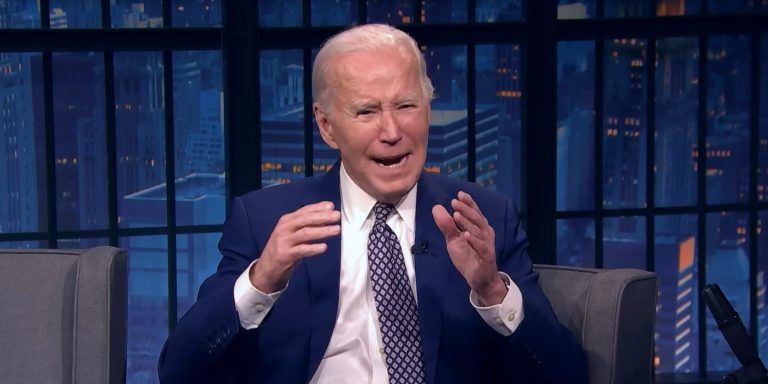
In his first public statement since being released from prison, Hale wrote an article Wednesday for Al Jazeera, asking why President Joe Biden hasn’t also been prosecuted under the Espionage Act for mishandling classified documents.

Hale noted that Special Counsel Robert Hur declined to prosecute Biden because of the President’s cognitive decline. Hale, for his part, leaked classified drone documents more than a decade ago because he thought the public needed to know about the program.

“According to [Hur’s] report, President Biden kept classified information outside of a secure facility at his home and office – as did I. The president later spoke with a reporter about the classified information he retained – again, as did I,” Hale said.

“Both President Biden and I expressed to our respective reporters the concerns we had about official US policy – his about the failed 2009 surge in Afghanistan (as vice president) and mine about the consequences of that policy. So why the decision to prosecute one and not the other?”

To be clear, Hale said he doesn’t support prosecuting Biden under the Espionage Act. Hale echoed civil libertarians such as Sen. Rand Paul, R-Ky., in calling the Espionage Act unconstitutional.

However, Hale said he wishes he and other whistleblowers were treated the same by the Justice Department.

“I am sincerely glad President Biden was able to receive what so many others in the crosshairs of the Espionage Act have been denied – the benefit of the doubt,” he said.

“But if Joe Biden truly wishes to convey the kind of ideals that helped secure his presidency in the first place, he would utilize his power as president to pardon the whistleblowers and cease the global war on terror policy of ‘targeted’ killing.”

Among other things, the documents leaked by Hale reportedly showed that from January 2012 to February 2013, US special operations airstrikes killed over 200 people, only 35 of whom were the intended targets. During one period of five months, close to 90 percent of the victims killed were not intended targets.

Hale said he regrets participating in the drone program, and stands by his decision to expose it.

Ken Silva is a staff writer at Headline USA. Follow him at twitter.com/jd_cashless.

Biden Loses Tens of Thousands of Swing-State Dems to Hamas Protest Votes

(Headline USA) Tens of thousands of Democratic voters cast protest votes against President Joe Biden during Super Tuesday’s elections, selecting an “uncommitted” option on their ballots instead of voting for him, Business Insider reported.

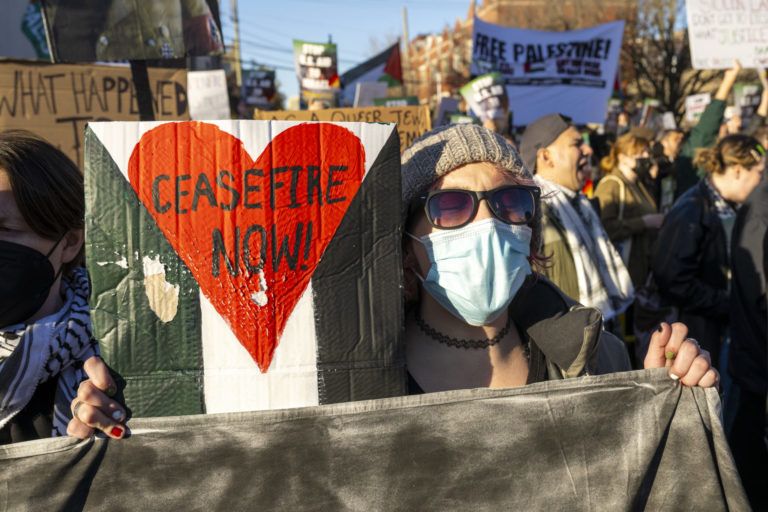
The protest vote campaign began in Michigan, where progressives rallied voters to choose the “uncommitted” option to send a message to the White House about its position on the Israeli/Gaza conflict. More than 100,000 Michigan Democrats voted “uncommitted” instead of for Biden.

And on Tuesday, several other states followed suit. In Minnesota, nearly 20% of Democratic voters ended up marking their ballots as “uncommitted” to protest Biden’s continued support for Israel. That’s a number greater than the margin by which Hillary Clinton defeated Donald Trump in the state in 2016.

Both Michigan and Minnesota have large Muslim populations.

But a sizable protest vote also extended to Alabama, Colorado, Iowa, Massachusetts, North Carolina and Tennessee, where tens of thousands of voters likewise refused to support Biden. 

In Alabama, more than 11,000 voters, or roughly 6% of the Democratic electorate, voted for “uncommitted.” The option collected the second-most votes in the Democratic primary.

In Colorado, more than 43,000 voters, or roughly 8% of the Democratic vote, marked “Noncommitted Delegate” on the ballot. 

In Massachusetts, more than 54,000 voters, or just under 10%, backed “No Preference.”

And in North Carolina, 88,000 voters, or nearly 13%, backed “No Preference.”

The president still easily carried the Democratic nomination in each of these states, but the sheer number of protest votes against him have raised concerns about his reelection chances, especially in the swing states where he narrowly defeated former President Donald Trump in 2020.

In Michigan, for example, the official tally from 2020 reported that Biden beat Trump by roughly 150,000 votes.

“That is a powerful way to send the administration a message,” Christian Peterson, 22, a law student at the University of Minnesota, told Reuters. “Biden needs to stop sending military aid to Israel.”

However, in doing so, he faces a dilemma with the possibility of further alienating Jewish voters, as well as severing ties with one of America’s closest and most strategically important geopolitical allies.

A recent poll revealed that in New York, the majority of Jewish voters may already be backing Trump, a significant shift from 2020, when Biden secured 77% of the Jewish vote nationwide.

MSNBC Panel Mocks Voters Who Care about Illegal Immigration

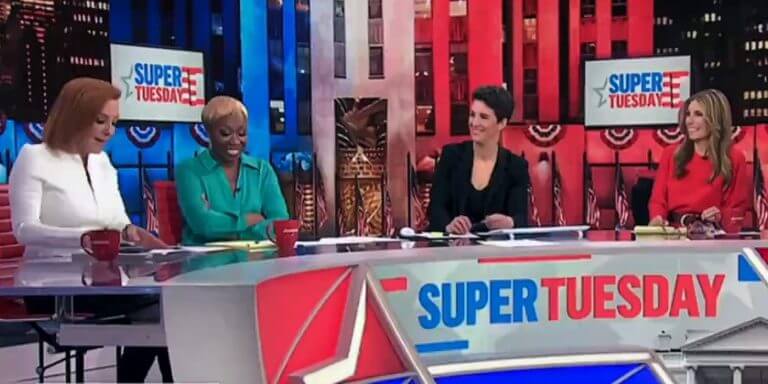
(Headline USA) An MSNBC panel led by host Rachel Maddow on Tuesday mocked Virginia voters who said their top issue at the polls was immigration.

“Look at some of these exit polls. I live in Virginia. Immigration was the No. 1 issue,” said former White House press secretary Jen Psaki, which prompted MSNBC’s Joy Reid to start laughing.

Maddow then cut in, “Well, Virginia does have a border with West Virginia,” as the rest of the panel joined in laughing.

Reid went on to insult white working-class voters, saying they should thank President Joe Biden, who is a “white working-class guy himself,” for the “benefits they’re getting economically” from him. Instead, they’re “voting on race,” she said. 

“They’re voting on this idea  of an invasion of brown people over the border,” Reid continued.

Psaki agreed with Reid’s characterization of voters, arguing former President Donald Trump had “indoctrinated people with this fear of people who do not look like them being a threat to them.”

Maddow then complained that every election cycle, especially when a Democrat is in office, “we get reminded about the borders.”

She added, “You make these things an issue, you make them into boogeymen… as long as there’s a Democratic incumbent to blame on it.”

Virginia Attorney General Jason Miyares responded to the panel’s insulting comments, arguing that they dismiss voters’ concerns about illegal immigration at their own peril. 

“Under the failed policies of Joe Biden every state is a border state & we are dealing with the ramifications every day in fentanyl deaths, human trafficking, and crime,” Miyares tweeted.

“This isn’t a laughing matter,” he added. “Last week an illegal immigrant was charged in VA of sexually assaulting a minor child.”

The case Miyares was referring to involves Renzo Mendoza, an illegal Venezuelan immigrant who was arrested and charged last week for “indecent liberties with a child under 13 years of age and carnal knowledge of a child 13 to 14 years of age without force,” according to Immigration and Customs Enforcement.

It was one of several recent high-profile crimes involving illegal immigrants, including the brutal murder of nursing student Laken Riley in Georgia and the death of a Washington state trooper by a Mexican national who was driving under the influence.

As press secretary, Psaki regularly was responsible for gaslighting the public on the nature and scope of the Biden administration’s open-border policies, including secretive midnight flights into airports in New York and other states.

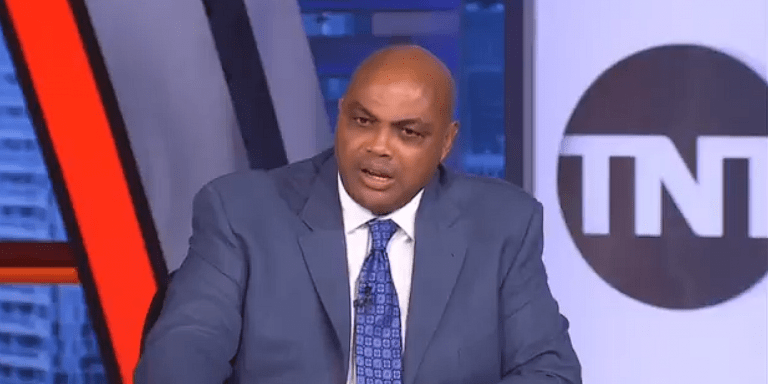
Charles Barkley Threatens to Punch Black Trump Supporters in the Face

(Headline USA) Former NBA star Charles Barkley threatened this week to punch any black person he sees wearing former President Donald Trump’s mugshot merchandise, according to Mediaite.

Barkley was responding to comments Trump made at the Black Conservative Federation Honors Gala in South Carolina, where the GOP leader mused that his support among black voters—especially black men—was rising because they see him being legally “discriminated” against.

“I got indicted for nothing, for something that is nothing,” Trump said. “And a lot of people said that’s why the black people like me, because they have been hurt so badly and discriminated against, and they actually viewed me as I’m being discriminated against. It’s been pretty amazing but possibly, maybe, there’s something there.”

Trump’s statements were not inaccurate. Following his arrest, it was widely reported in the media and on social media that his mugshot would amplify the trend of black supporters siding with him after finding themselves disaffected by the Biden administration for a variety of reasons.

When asked what he made of Trump’s comments during his CNN show, King Charles, Barkley responded, “First of all, if I see a black person walking around with Trump’s mug shot, I’m going to punch him in the face.”

Barkley’s co-host, Gayle King, quickly interjected to say he wasn’t being serious. 

“Charles. Charles, you really can’t say that ’cause, A. you don’t mean that,” she said.

But Barkley responded by insisting that he “sincerely” meant what he said, and that if he were arrested for punching a black Trump supporter he would “bail myself out and go celebrate.”

After the audience laughed, King said to them, “Don’t encourage him.”

Barkley went on to say that if he had been in attendance at the South Carolina conference, he would have walked out.

“That was an insult to all black people,” he said. “To compare black history, where we’ve been discriminated against, to his plight—well, first of all, he’s a billionaire, and they are prosecuting him for stuff he did wrong.”

But even King noted that the cases against Trump are “still in the court system. We have to wait,” she added.

White House Declines to Say Whether Biden Will Debate Trump 

(Luis Cornelio, Headline USA) Is President Joe Biden running away from the imminent 2024 debates with GOP presidential front-runner Donald Trump? The White House is tight-lipped. 

On Wednesday, White House Press Secretary Karine Jean-Pierre repeatedly shut down questions from Fox News correspondent Peter Doocy regarding Biden’s attendance at the scheduled presidential debates later this year, where he is set to face Trump. 

“Is President Biden going to commit to a debate with Donald Trump,” Doocy inquired of Jean-Pierre, who directed him to Biden’s reelection campaign. 

“That’s something for the campaign to speak to,” she claimed.

Despite Doocy’s persistence, Jean-Pierre remained defiant, pointing him to the campaign for answers. “You should speak to the campaign,” she reiterated, adding, “I’m going to sound like a broken record, you should reach out to the campaign.” 

Doocy pressed further, questioning Jean-Pierre’s insistence on referring to the campaign: “Because it’s an election. It’s a debate for the 2024 presidential election.” 

The White House’s refusal to confirm Biden’s participation in the debate coincides with Trump securing victories in all primary states on Super Tuesday—except for Vermont. 

In contrast to the White House’s stance, Trump empathetically demanded Biden’s presence at a debate, declaring that he is prepared to engage “ANYTIME, ANYWHERE, ANYPLACE!” 

In a post on Truth Social, Trump highlighted the importance, “for the Good of our Country, that Joe Biden and I Debate Issues that are so vital to America, and the American People.” 

Truth added: “Therefore, I am calling for Debates, ANYTIME, ANYWHERE, ANYPLACE! The Debates can be run by the Corrupt DNC, or their Subsidiary, the Commission on Presidential Debates (CPD).”

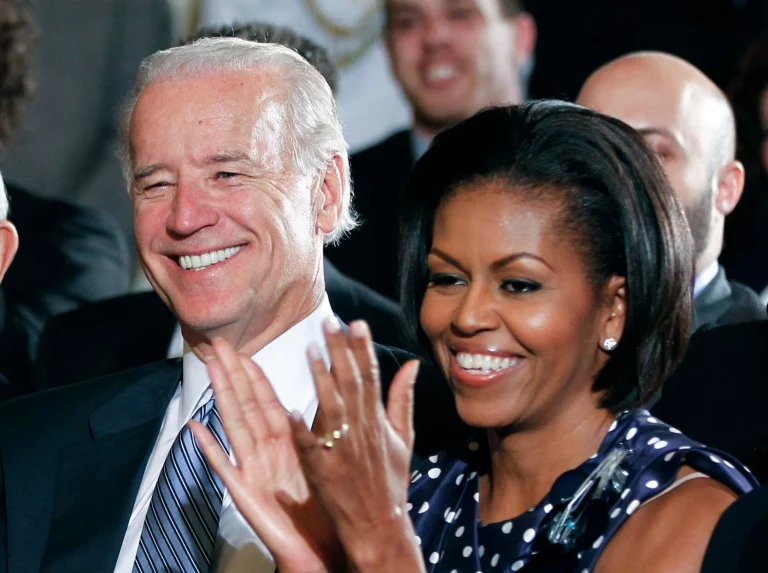
Michelle Obama Shuts Down Rumors of 2024 White House Bid

(Headline USA) Former first lady Michelle Obama ruled out a 2024 presidential bid this week, shooting down months of speculation that she might seek to replace President Joe Biden during or after the Democratic National Convention in August.

“As former first lady Michelle Obama has expressed several times over the years, she will not be running for president,” Crystal Carson, director of communications for Obama’s office, said in a statement on Tuesday. “Mrs. Obama supports President Joe Biden and Vice President Kamala Harris’ re-election campaign.”

Obama has been considered a favorite potential candidate in Democratic circles given her popularity, but she’s been outspoken about her lack of interest in running for office.

Ahead of the 2020 election, for example, Obama likewise shot down rumors about her aspirations, saying, “I’ve never had the passion for politics. I just happened to be married to somebody who has the passion for politics, and he drug me kicking and screaming into the arena.”

However, Obama has become more publicly involved with Democratic politics over the past year, warning voters about the chances of former President Donald Trump once again winning office.

“What’s going to happen in this next election?” Obama said on the podcast On Purpose in January.

“I’m terrified about what could possibly happen because our leaders matter,” she continued. “Who we select, who speaks for us, who holds that bully pulpit, it affects us in ways sometimes I think people take for granted.”

But sources familiar with Michelle Obama’s thinking said she and former President Barack Obama plan only to assist Biden’s campaign this fall.

A senior adviser for the Biden campaign told NBC News they planned to lean on her heavily later in the campaign in an effort to win over swing voters.

“President and Michelle Obama were enormously helpful in the fight to beat Donald Trump and elect President Biden and Vice President Harris the first time and we are grateful to have their voice and their support in the fight for the fate of our democracy this November,” Biden campaign spokesperson Kevin Munoz said in a statement.