BREAKING: Another RINO Rep. Resigns Early, Putting Dems 1 Seat Closer to Majority

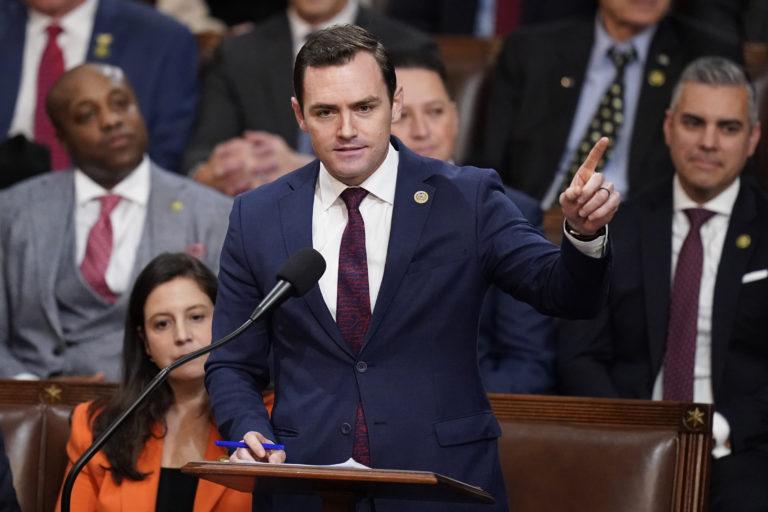
(Ken Silva, Headline USA) RINO Rep. Mike Gallagher, R-Wis., announced Friday that he’ll be leaving Congress effective April 19, which will narrow the GOP House majority to one vote.

Gallagher’s press office did not explain why the World Economic Forum-affiliated congressman isn’t serving out his term. It only said he decided to leave after talking to his family.


Gallagher, the chair the Select Committee on China, had been one of the most liberal Republicans in the House.

Last year, he glad-handed with World Economic Forum oligarchs, defending his participation in the WEF on the grounds that he was in the “belly of the beast” to warn other attendees about the “existential threat” posed by the Chinese Communist Party.

More recently, Gallagher aligned himself with Democrats in the fight to impeach DHS Secretary Alejandro Mayorkas. In a 216-214 vote last month, four Republicans—Reps. Gallagher; Ken Buck, Colo.; Tom McClintock, Calif.; and Rep. Blake Moore, Utah—joined 212 Democrats to vote no on the impeachment.

Gallagher’s early departure follows a similar move from Rep. Buck, who exits Congress today, and will leave the GOP with a one-seat majority in the House.

Addressing his departure, Buck told Axios, “I think it’s the next three people that leave that they’re going to be worried about.”

Newsweek reported that as many as five Republicans could leave before the 2024 election. Gallagher was one of the congressman on this list in Newsweek’s article. The publication reached out to David Valadao, Thomas Massie, Chip Roy, Larry Bucshon Greg Pence and Gallagher—and only Roy responed with a denial that he’ll leave early.

Newsweek predicted at the time that “like Buck, Pence and Gallagher may opt to resign sooner.”

Conservative radio host Dan Bongino spelled out the implications of a Democrat-controlled House.

“Who’s going to be the speaker? Yeah, his name is Hakeem Jeffries. Wouldn’t that be interesting that never-Trumpers leave Congress right before the election? All of the investigations right before the election. The chair of those committees would change as the Democrats retake the majority,” he said last week.

Ken Silva is a staff writer at Headline USA. Follow him at twitter.com/jd_cashless.

House GOP Probing ‘Loose-Knit Network’ Conspiring to Stop Trump

(Ken Silva, Headline USA) The House Oversight Committee has opened an investigation into the Transition Integrity Project, an organization of election “experts” housed at Georgetown University that includes White House Deputy Chief of Staff and former Hillary Clinton campaign manager John Podesta.

In a Thursday letter to Georgetown Dean Rosa Brooks, Oversight Committee member Rep. Pete Sessions, R-Texas, asked her to preserve all work product and communications from the 2020 Transition Integrity Project’s “war gaming exercise.”

Revealed last July by Mike Benz, a Trump-era State Department official who now heads the Foundation For Online Freedom, TIP’s war gaming exercise included a scenario where Trump won the electoral college in 2020, but Biden had a commanding 52% of the popular vote. Accordingly, Democrat governors in closely contested states, including Michigan, would call for recounts.

“As the game developed, governors in two of the three (Wisconsin and Michigan) sent separate slates of electors to counter those sent by the state legislators,” the TIP document states—mimicking a GOP scenario now being painted as a criminal conspiracy by Michigan’s attorney general.

In his Tuesday letter, Sessions said, “It would be highly inappropriate for a university that relies on federal funding to conduct partisan political activity intended to undermine a lawfully conducted election.”

Sessions also asked Dean Brooks whether Georgetown is involved in a “loose-knit network” of deep state actors and liberal activists are conspiring to undermine a Donald Trump presidency if he retakes office. NBC News reported on this network in January.

Sessions was particularly interested in Mary McCord, a former top Justice Department official involved in the illegal spying of Trump’s 2016 campaign. McCord is now the executive director of the Institution for Constitutional Advocacy and Protection at Georgetown Law.

“Recently, Professor Mary B. McCord … said ‘we’re already starting to put together a team to think through the most damaging types of things that he [Trump] might do so that we’re ready to bring lawsuits if we have to,” Session said.

“Please define if Professor McCord and her colleagues are conducting this hyper partisan activity under the auspices of ICAP – an entity which is described as a ‘non-partisan institute within Georgetown University Law Center’ on the ICAP website.”

Sessions seeks answers about McCord and a slew of other questions by April 19.

Ken Silva is a staff writer at Headline USA. Follow him at twitter.com/jd_cashless.

DOJ Sues Apple, Alleging It Illegally Monopolized Smartphone Market

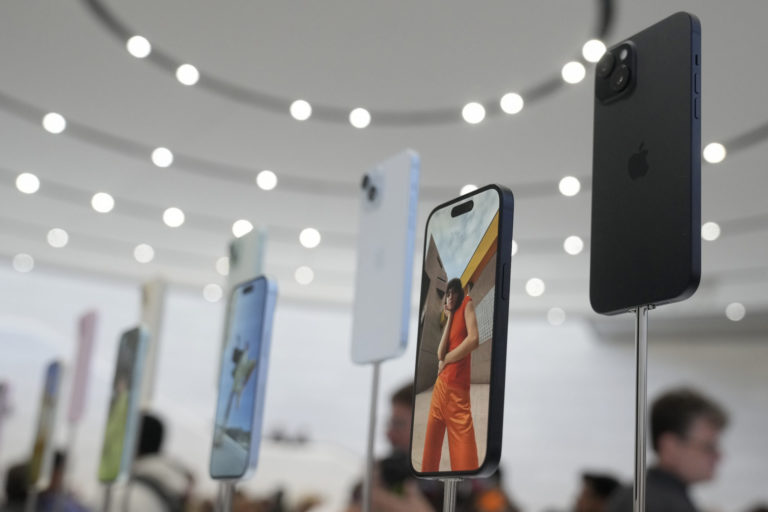
(Headline USA) The Justice Department on Thursday announced a sweeping antitrust lawsuit against Apple, accusing the tech giant of engineering an illegal monopoly in smartphones that boxes out competitors, stifles innovation and keeps prices artificially high.

Apple has monopoly power in the smartphone market and leverages control over the iPhone to “engage in a broad, sustained, and illegal course of conduct,” alleged the lawsuit, filed in federal court in New Jersey.

“Apple has locked its consumers into the iPhone while locking its competitors out of the market,” said Deputy Attorney General Lisa Monaco.

Stalling the advancement of the very market it revolutionized, she said, it has “smothered an entire industry.”

Apple called the lawsuit “wrong on the facts and the law” and said it “will vigorously defend against it.”

The suit takes aim at how Apple allegedly molds its technology and business relationships to “extract more money from consumers, developers, content creators, artists, publishers, small businesses, and merchants, among others.”

That includes diminishing the functionality of non-Apple smartwatches, limiting access to contactless payment for third-party digital wallets and refusing to allow its iMessage app to exchange encrypted messaging with competing platforms.

It specifically seeks to stop Apple from undermining technologies that compete with its own apps—in areas including streaming, messaging and digital payments—and prevent it from continuing to craft contracts with developers, accessory makers and consumers that let it “obtain, maintain, extend or entrench a monopoly.”

The lawsuit—filed with 16 state attorneys general—is just the latest example of aggressive antitrust enforcement by an administration that has also taken on Google, Amazon and other tech giants with the stated aim of making the digital universe more fair, innovative and competitive.

“The Department of Justice has an enduring legacy taking on the biggest and toughest monopolies in history,” said Assistant Attorney General Jonathan Kanter, head of the antitrust division, at a press conference announcing the lawsuit. “Today we stand here once again to promote competition and innovation for next generation of technology.”

Antitrust researcher Dina Srinavasan, a Yale University fellow, compared the lawsuit’s significance to the government’s action against Microsoft a quarter century ago—picking a “tremendous fight” with what has been the world’s most prosperous company.

“It’s a really big deal to go up and punch someone who is acting like a bully and pretending not to be a bully,” she said.

President Joe Biden has called for the Justice Department and the Federal Trade Commission to vigorously enforce antitrust statutes.

While its stepped-up policing of corporate mergers and questionable business practices has met resistance from some business leaders—accusing the Democratic administration of overreach—it’s been lauded by others as long overdue.

The case seeks to pierce the digital fortress that Apple Inc., based in Cupertino, California, has assiduously built around the iPhone and other popular products such as the iPad, Mac and Apple Watch to create what is often referred to as a “walled garden” so its hardware and software can seamlessly offer user-friendly harmony.

The strategy has helped Apple attain an annual revenue of nearly $400 billion and, until recently, a market value of more than $3 trillion. But Apple’s shares have fallen by 7% this year even as most of the stock market has climbed to new highs, resulting in long-time rival Microsoft seizing the mantle as the world’s most valuable company.

The lawsuit, if successful, would “hinder our ability to create the kind of technology people expect from Apple — where hardware, software, and services intersect” and would “set a dangerous precedent, empowering government to take a heavy hand in designing people’s technology,” Apple said in a statement.

“At Apple, we innovate every day to make technology people love — designing products that work seamlessly together, protect people’s privacy and security, and create a magical experience for our users,” the company said. “This lawsuit threatens who we are and the principles that set Apple products apart in fiercely competitive markets.

Apple has defended the walled garden as an indispensable feature prized by consumers who want the best protection available for their personal information.

It has described the barrier as a way for the iPhone to distinguish itself from devices running on Google’s Android software, which isn’t as restrictive and is licensed to a wide range of manufacturers.

“Apple claims to be a champion of protecting user data, but its app store fee structure and partnership with Google search erode privacy,” Consumer Reports senior researcher Sumit Sharma said in a statement.

The lawsuit complains that Apple charges as much as $1,599 for an iPhone and that the high margins it earns on each is more than double what others in the industry get. And when users run an internet search, Google gives Apple a “significant cut” of the advertising revenue those searches generate.

The company’s app store also charges developers up to 30 percent of the app’s price for consumers.

Critics of Apple’s alleged anticompetitive practices have long complained that its claim to prioritize user privacy is hypocritical when profits are at stake. While its iMessage services is sheathed from prying eyes by end-to-end encryption, that protection evaporates the moment someone texts a non-Apple device.

But Will Strafach, a mobile security expert, said that while he believes Apple needs reigning in, he’s concerned that the Justice Department’s focus on messaging may be misplaced and could weaken security and privacy.

“I am quite glad that access to SMS messages is restricted,” said Strafach, creator of the Guardian Firewall app.

He notes that a number of apps, ostensibly for weather and news, on iPhones have secretly and persistently sent users’ GPS data to third parties. Strafach said he is concerned weakened Apple security “could open the door to stalkerware/spouseware, which is already more difficult to install on Apple devices compared to Android.”

However, prominent critic Cory Doctorow has complained that while Apple has blocked entities like Facebook from spying on its users, it runs its “own surveillance advertising empire” that gathers the same kinds of personal data but for its own use.

“Apple has a history of clandestine deals with surveillance giants like Google, and [Apple CEO] Tim Cook gave Uber a slap on the wrist instead of an app store ban when (the ride-sharing company) built a backdoor to spy on iPhone users who had already deleted Uber’s app,” noted Sean O’Brien, founder of Yale’s Privacy Lab.

Fears about an antitrust crackdown on Apple’s business model haven’t just contributed to the drop in the company’s stock price; there also is concern it lags behind Microsoft and Google in the push to develop products powered by artificial intelligence technology.

Antitrust regulators made it clear in their complaint that they see Apple’s walled garden mostly as a weapon to ward off competition, creating market conditions that enable it to charge higher prices that have propelled its lofty profit margins while stifling innovation.

“Consumers should not have to pay higher prices because companies break the law,,” said Attorney General Merrick Garland. Left unchallenged, Apple would “only continue to strengthen its smartphone monopoly,” he added.

Former FTC chair William Kovacic, who teaches at George Washington University, said he expects the core of Apple’s defense to be that it is not at all a monopoly in the smartphone market.

Justice Department lawyers have built a “high-quality” argument of harm in the 88-page indictment with “impressive excerpts from the firm’s own documents,” he said.

But don’t expect a verdict until 2026—which means the case could easily drag on with appeals.

The case escalates the Biden administration’s antitrust siege, which has already triggered lawsuits against Google and Amazon accusing them in engaging in illegal tactics to thwart competition, as well as unsuccessful attempts to block new acquisitions by Microsoft and Meta Platforms.

In addition, the FTC sued Facebook in 2020 over its acquisitions of Instagram and WhatsApp.

Kovacic predicted antitrust action by the FTC or Justice Department against Microsoft over its relationship with OpenAI was “coming up around the corner,” and “the two agencies are fighting over who will handle that better.”

“They foreshadowed this would be their agenda and they’re filling out the agenda the way they said,” he added. “These are all high-stakes matters, and you can expect an intense and aggressive defense.”

Apple’s business interests are also entangled in the Justice Department’s case against Google, which went to trial last fall and is headed toward final arguments scheduled to begin May 1 in Washington, D.C.

In that case, regulators are alleging Google has stymied competition by paying for the rights for its already dominant online search engine to be the automatic place to handle queries on the iPhone and a variety of web browsers in an arrangement that generates an estimated $15 billion to $20 billion annually.

With the Justice Department mounting a direct attack across its business, Apple stands to lose even more.

Adapted from reporting by the Associated Press

Trump Eyes Big Returns If Shareholders Vote to Go Public w/ Truth Social

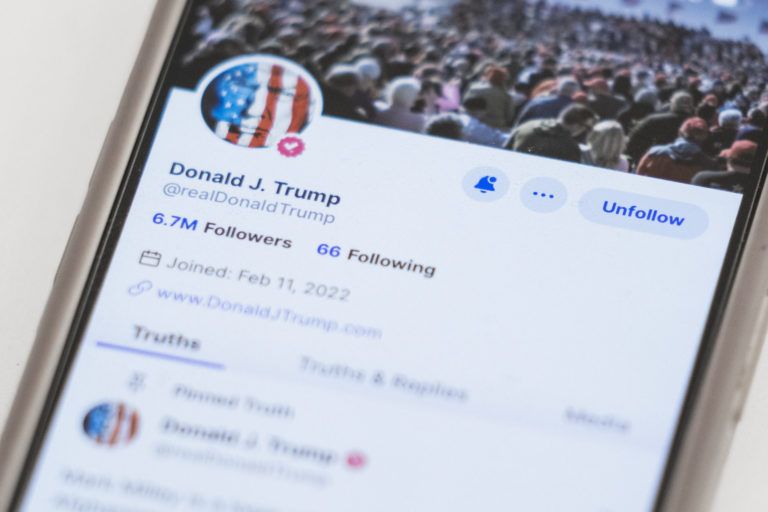
(Headline USA) The Wall Street debut of Donald Trump’s Truth Social network could give him stock worth billions of dollars on paper. But the former president probably will not be able to cash it out right away, unless some things change.

Trump’s pending return to Wall Street comes down to a vote scheduled for Friday by shareholders of a company named Digital World Acquisition Corp., which at the moment is essentially just a pile of cash.

The corporation hopes to merge with Trump Media & Technology Group, the Trump-chaired company behind Truth Social, which goes by TMTG. If the shareholders approve the deal, TMTG could soon see its stock trading on the Nasdaq in Digital World’s place.

The vote looks likely to pass given how high Digital World’s stock has jumped on excitement about Trump. It finished Thursday at $42.81 per share. It’s already up nearly 145% so far this year, towering over the roughly 10% gain for the S&P 500 index.

Trump would own most of the new, combined company, or nearly 78.8 million shares, which would account for at least 58%. Multiply that by Digital World’s current stock price of more than $40, and the total value could surpass $3 billion.

The board would likely comprise mostly people put forth by TMTG, including the former president’s son, Donald Trump Jr., if all goes as expected. Former Republican Rep. Devin Nunes would be a director and the company’s CEO.

Also on the board would be Robert Lighthizer, who served as Trump’s U.S. trade representative, and Linda McMahon, who ran the Small Business Administration under Trump.

Digital World is what’s called a special purpose acquisition company, or SPAC, or “blank-check company.” SPACs raise cash and then hunt for companies to merge with.

Such deals give the target companies a potentially quicker and easier way to get their stocks onto the New York Stock Exchange or Nasdaq. The arrangement lets them avoid some of the paperwork associated with traditional initial public offerings of stock, or IPOs.

For investors, SPACs offer a way to get into hyped, potentially faster-growing companies such as TMTG, the DraftKings betting service or SoFi banking.

Many of Digital World’s investors are small-time investors who are either fans of Trump or trying to cash in on the mania, instead of big institutional and professional investors.

The stock will continue to trade under Digital World’s ticker, DWAC, possibly for a couple of days to a couple of weeks, experts say. Then at some point, companies in SPAC deals usually announce that their stock will begin trading under the new ticker symbol.

Trump’s company hopes to trade under the ticker symbol DJT, the former president’s initials. The same ticker symbol was used by Trump Hotels & Casino Resorts before it filed for Chapter 11 bankruptcy protection in 2004.

Trump faces a $454 million judgment in a fraud lawsuit, among other financial burdens. But he cannot sell easily for at least six months. That’s because major TMTG shareholders will be under what’s called a “lock-up” provision, a common restriction on Wall Street that keeps big, early investors from immediately dumping their shares. Such sales could tank the stock’s price.

Investors under the lock-up deal cannot sell, lend, donate or encumber their shares for six months after the close of the deal. Legal experts say “encumber” is a powerful word that could prevent Trump from using the stock as collateral to raise cash before six months have elapsed.

There are a few exceptions, such as by transferring stock to immediate family members. But in such cases, the recipients would also have to agree to abide by the lock-up agreement.

Digital World could waive the lock-up agreement before the deal closes. Or, in what some legal experts say could be a more likely path, the new company’s board could decide to alter the lock-up agreement after the deal closes.

Such a decision by the board could open those directors up to legal scrutiny. They would need to show they’re doing it to benefit shareholders.

But if the value of Trump’s brand is key to the company’s success, and if easing the lock-up agreements could preserve that brand, it could make for a case that would at least spare board members’ lawyers from getting laughed out of court immediately.

Some companies’ boards in the past have altered lock-up agreements to allow investors to sell earlier.

Digital World has filed 84 pages with U.S. regulators to list many of its risks and those of TMTG.

One risk, the company said, was that as a controlling stockholder, Trump would be entitled to vote his shares in his own interest, which may not always be in the interests of all the shareholders generally.

It also cited the high rate of failure for new social media platforms, as well as TMTG’s expectation that the company will lose money on its operations “for the foreseeable future.”

The company lost $49 million in the first nine months of last year, when it brought in just $3.4 million in revenue and had to pay $37.7 million in interest expenses.

“It’s losing money, there’s no way the company is worth anything like” what the stock price suggests, said Jay Ritter, an IPO specialist at the University of Florida’s Warrington College of Business.

“Here, given the stock price is so divorced from fundamental value, it’s kind of the same issue that came up with meme stocks,” he said, recalling companies whose share prices once soared far beyond what professionals considered rational. “With AMC and GameStop, the price was way above fundamental value, and there’s the question of: Can you get out before the music stops?”

For those whose aim is simply to invest in Trump, however, it could be a win–win situation, provided they are willing to assume the risk or to look at it as a unique way to show political support and help him to fend off his multiple lawfare attacks that also has the potential for yielding dividends.

Adapted from reporting by the Associated Press

Candace Owens Exits Daily Wire after Sharp Criticism of Views on Judaism

(Ben Sellers, Headline USA) In a terse post Friday morning, Daily Wire CEO Jeremy Boreing announced that the popular Nashville-based media company had “ended [its] relationship” with Blexit provocateur Candace Owens.

The fiercely independent Owens was a bold choice for the company, which has sought to stay on the cutting edge in expanding conservative media to new demographics—including having recently launched its own streaming service with children’s programming.

Overall, much of its brand has embraced a sort of values-based, wholesome form of conservatism, with top talents like Ben Shapiro and Matt Walsh openly expressing their deep-rooted religious convictions as the driving forces behind their views.

In recent months, Owens had publicly clashed with “editor emeritus” Shapiro—the company’s cofounder alongside Boreing.

Owens notably maintained a friendship with rapper Kanye West, who has previously been criticized over his anti-Semitic remarks, while Shapiro’s devout adherence to Judaism is well known.

Shapiro appeared to fire back at the belittling of his culture when he released a rap video recently under the artistic name “Dr. Dreidle” that briefly wound up rocketing to the top of several major industry charts, prompting rapper Nicki Minaj to congratulate him.

Mediaite blamed Owens’s “promotion of various anti-Semitic conspiracy theories” for the escalation, noting that she had recently “liked a tweet promoting the blood libel that Jews drink Christian blood as part of certain religious ceremonies” in response to one from a rabbi who had accused her of “inciting her Jew-hating followers to threaten to murder Jews.”

It was unclear, however, that Owens was endorsing the anti-Semitic trope and not the factual correction, pointing out an anachronism in the rabbi’s timeline that exonerated her from the accusation.


Occasionally the tensions between Owens and Shapiro have spilled out into the open, as when the two argued on Twitter last November following Israel’s launch of its military strike on Gaza.

Owens initially wrote that there was “no justification for a genocide.”

Shapiro went on to call her remarks “disgraceful,” leading to a tense back-and-forth exchange between the two that culminated in Shapiro suggesting a parting of ways.


Prior to joining the Daily Wire in 2021, Owens made a name for herself as the leader of the Blexit movement, which sought to raise awareness within the black community of the exploitative nature of left-wing politics and how it effectively extends the plantation culture that Democrats used to oppress blacks for much of America’s history by keeping them dependent on government subsidies and offering patronage in return for their unwavering loyalty.

She confirmed Boering’s announcement on Friday, celebrating her own newfound emancipation and teasing what lay ahead, while suggesting ways her supporters could contribute in the meantime.

Ben Sellers is the editor of Headline USA. Follow him at twitter.com/realbensellers.

Utah Greenlights Gold, Silver Holdings to Protect State Reserve Funds

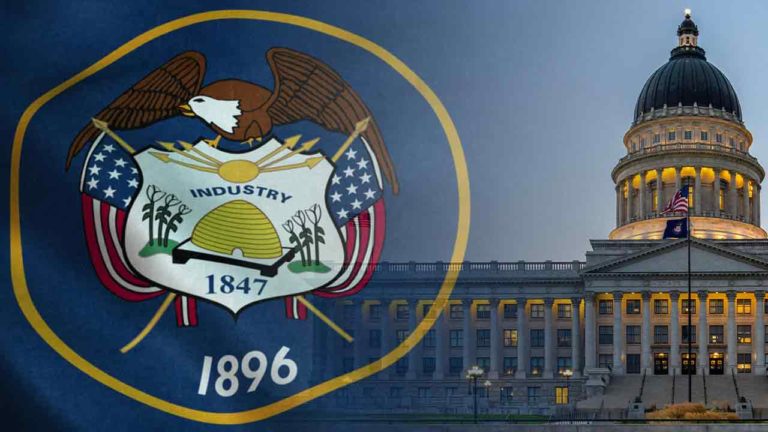
(Jp Cortez, Sound Money Defense League, Money Metals News Service) Utah Governor Spencer Cox signed legislation on Thursday empowering the state Treasurer to secure state funds with a significant allocation to physical gold and silver.

Sponsored by Rep. Ken Ivory, House Bill 348 permits the Treasurer to hold up to 10% of certain state reserve accounts in precious metals to help secure state assets against the risks of inflation and financial turmoil and/or to achieve capital gains as measured in Federal Reserve Notes.

The Utah State Treasurer has limited options for holding, managing, and investing state monies, making this enabling legislation necessary.

Utah’s reserves are invested almost exclusively in treasuries, municipal bonds, corporate bonds, and agency debt.

These debt instruments carry risks – especially because they are not inflation-hedged and are therefore largely unprotected from the steady erosion in the real value of principal, coupled with interest rates that are often negative in real terms.

The legislation specifically pertains to the State Disaster Recovery Restricted Account, General Fund Budget Reserve Account, Income Tax Fund Budget Reserve Account, and the Medicaid Growth Reduction and Budget Stabilization Account.

“By enabling the State Treasurer to invest in the monetary metals, Utah is better equipped to protect Utah taxpayer funds and the residents of Utah against inflation and counterparty risk,” said Jp Cortez, executive director of the Sound Money Defense League.

An allocation to gold and silver fits squarely within the objective of protecting Utah against financial risks and would logically be included in a list of safe and liquid investment options.

The monetary metals provide an important hedge against inflation, debt default risks, and stock market declines – and they have historically boosted overall investment returns while also reducing portfolio volatility.

The Sound Money Defense League and Money Metals Exchange have been encouraging states to hedge reserve and pension funds using gold and silver, and enabling legislation has often been necessary.

Texas and Ohio have previously acquired gold. Meanwhile, legislation like HB 348 recently passed in Tennessee and is under consideration right now in Missouri, Idaho, and West Virginia.

Central banks worldwide have been stockpiling gold at record rates in recent years as concerns about the U.S. dollar expand.

Additionally, House Bill 348 requires the Treasurer to present other legislative proposals by October 2024 after conducting a study “analyzing the role of precious metals in augmenting, stabilizing, and ensuring the economic security and prosperity of the state, the families and residents of the state, and businesses in the state.”

Ranked seventh on the Sound Money Index, Utah has been among the leading states promoting sound money public policy, starting with the passage of the Utah Legal Tender Act in 2011 (also sponsored by Rep. Ivory).

The enactment of Utah House Bill 348 comes on the heels of Wisconsin this week becoming the 44th state to eliminate sales taxes from the purchase of gold and silver.

DOJ Declined to Prosecute Treasury Dep’t Employee Who Stormed Capitol on J6

(Ken Silva, Headline USA) A Treasury Department employee broke multiple laws by storming the Capitol on Jan. 6, 2021, but the Justice Department declined to prosecute that person, according to a new report in Bloomberg.

Citing a Treasury Inspector General report obtained through the Freedom of Information Act, Bloomberg reported Friday that Treasury received information from the DOJ Inspector General that the employee entered a restricted area at the Capitol “without lawful authority.” Treasury’s IG substantiated the allegation.

“The employee admitted in an interview that he ‘went through a barricade and remained inside the barricaded areas for an extended period of time,’” Bloomberg reported.

“But when he was later questioned about his presence there, he told officials he didn’t see any ‘confrontations’ or violence and that he didn’t witness ‘anyone breaking the law.’ The employee said he had no clue there was even a riot going on at the Capitol until he got home.”

The inspector general expressed doubt at the employee’s claims, saying that the employee lacked candor when interviewed.

Treasury referred the employee to the DOJ for prosecution, but the US Attorney’s Office for the District of Columbia declined to prosecute the employee on May 20, 2022, according to the IG report.

“It’s unclear why,” Bloomberg reported. “A Justice Department spokesperson said the agency doesn’t comment on charging decisions. But there are all sorts of reasons prosecutors decide not to file criminal charges.”

When it comes to the DOJ’s Jan. 6 investigation, the only other case Headline USA has seen where the US Attorney declined to prosecute was that of notorious provocateur Ray Epps.

In the Epps case, a July 29, 2021, FBI report said that its “investigation did not reveal sufficient evidence that Epps … engaged in acts of violence or committed any other criminal violations.” That’s despite the fact that video had already surfaced showing him pushing a sign into a group of police officers, and that Epps had admitted to trespassing on Capitol grounds.

The FBI report said that the U.S. Attorney’s Office in Washington DC declined to prosecute Epps.

The DOJ apparently reopened the Epps case after Rep. Thomas Massie, R-Ky., Revolver News and other conservatives began to question whether he was being protected by government. The DOJ eventually slapped him with a lone misdemeanor count of disorderly conduct.

Ken Silva is a staff writer at Headline USA. Follow him at twitter.com/jd_cashless.

Judiciary Committee Sues DOJ Lawyers for Stonewalling Hunter Biden Investigation

(Ken Silva, Headline USA) The Judiciary Committee has sued to Justice Department lawyers for refusing to comply with congressional subpoenas issued in its ongoing investigation into whether the DOJ gave Hunter Biden preferential treatment.

The Judiciary Committee’s lawsuit, filed Thursday, stems from the DOJ treating the President’s son with kid gloves when investigating his alleged tax crimes.

As the lawsuit notes, in the spring of 2023, two IRS whistleblowers who were intimately involved in that investigation came forward and exposed several ways that DOJ had deviated from its standard processes during the Hunter Biden investigation.

Several months later, a DOJ prosecutor admitted that DOJ had offered Hunter Biden a diversion agreement that was unlike any other he was aware of: an agreement that, as judge presiding over Hunter’s trial said, would have given him broad immunity over “crimes that have nothing to do with the case or the charges being diverted.”

Now, the Judiciary Committee is seeking to depose Mark Daly and Jack Morgan, two current or former Tax Division attorneys who purportedly have firsthand knowledge of the irregularities in DOJ’s investigation.

The Judiciary Committee said in its lawsuit that Daly and Morgan initially agreed that DOJ should file charges for tax crimes related to 2014 and 2015. “But months later, they gave a key presentation and argued just the opposite—that Hunter Biden should not be charged for tax crimes related to those years,” the committee said.

“Daly and Morgan are thus crucial to the Committee’s investigation,” the committee said. “After DOJ refused to make Daly and Morgan available for voluntary interviews with the Committee, the Committee subpoenaed them to appear for depositions. But they defied the Subpoenas because their employer, DOJ, directed them not to appear.”

The Judiciary Committee is seeking a court order for Daly and Morgan to comply with its subpoenas.

The committee’s lawsuit follows a similar lawsuit filed last month against Elvis Chan, the assistant special agent in charge of the FBI’s cyber branch in San Francisco, who was a key FBI official involved in pressuring social media companies to censor content.

That lawsuit was filed after Chan repeatedly refused to be interviewed by the committee.

“Neither Chan nor DOJ has disputed that the Committee’s investigation is lawful. Nor have they disputed that Congress has the authority to pass legislation addressing the topic of the Committee’s investigation. Indeed, multiple other Executive Branch officials have appeared before the Committee as part of its inquiry,” said the lawsuit, which is ongoing.

“Rather, DOJ has directed Chan to defy the Committee’s Subpoena only because, under House Rules, agency counsel (a lawyer who represents the Executive Branch’s interests, not Chan’s) cannot attend.”

Ken Silva is a staff writer at Headline USA. Follow him at twitter.com/jd_cashless.

CIA Blocked Feds from Meeting w/ Hunter Biden’s ‘Sugar Brother’

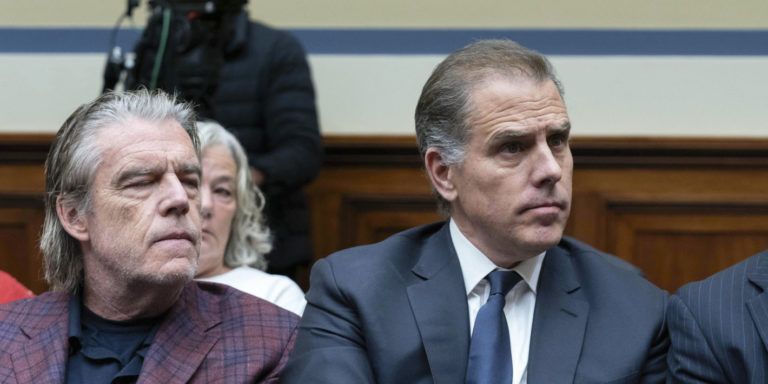
(Luis Cornelio, Headline USA) The CIA appeared to intervene in imminent criminal interviews involving Kevin Morris, the financier associated with Hunter Biden’s tax issues, according to a whistleblower revealed on Thursday.

A whistleblower disclosed to the House Oversight Committee that the CIA effectively blocked IRS and DOJ investigations from scrutinizing Morris over his ties to the president’s son in August 2021. The focal point of the inquiry was Biden’s tax discrepancies.

This new revelation prompted House Oversight Committee Chairman James Comer, R-Ky., and House Judiciary Committee Chairman Jim Jordan, R-Ohio, to seek explanations from CIA Director William Burns, an appointee of President Joe Biden.

“It is unknown why or on what basis the CIA allegedly intervened to prevent investigators from interviewing Mr. Morris,” wrote Comer and Jordan to Burns in a three-page letter. “However, these allegations track with other evidence showing how the DOJ deviated from its standard investigative practices during the investigation of Hunter Biden.”

According to the whistleblower, federal investigators were on the verge of summoning Morris for an interview before they purportedly received orders to appear at the CIA’s headquarters in Virginia. 

These allegations add another layer to the claims of government interference in the criminal examination of Hunter Biden, whose indictments for tax evasion and an illicit firearm purchase have rocked the White House. 

As detailed by lawmakers in the letter to Burns, the federal government curtailed the investigation into Hunter Biden, notified the first son’s legal counsel of a potential raid, and barred relatives from being interviewed. 

Attention has now shifted to the CIA. Comer and Jordan are demanding all documents related to the DOJ and IRS investigations of Hunter Biden, along with communications and documents pertaining to Morris. Lawmakers have given the CIA until April 4, 2024, to produce these documents. 

In response to the letter, the CIA declined to explain the specifics of its involvement in the criminal investigation of Hunter Biden. 

“CIA does not comment on specific investigations,” an agency spokesperson told to the New York Post, which first reported on the letter. 

The spokesperson further claimed, “We can say that CIA cooperates with law enforcement partners and does not obstruct investigations. CIA also fully and routinely cooperates with our oversight committees and will continue to do so.” 

Headline USA has reached out to the CIA to inquire whether the agency intends to comply with the April deadline outlined in the letter. 

Menendez Drops Plans to Run as Democrat, but May Run as Independent

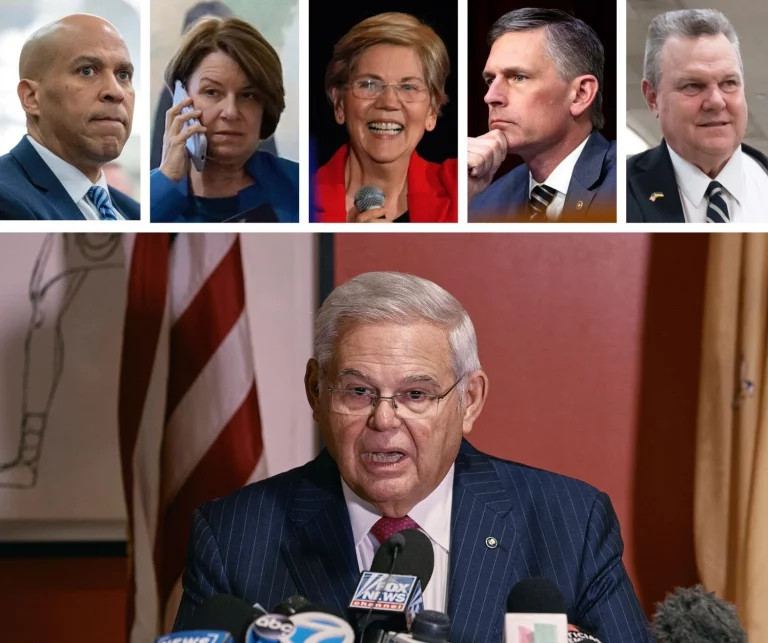
(Headline USA) Sen. Bob Menendez of New Jersey said Thursday that he will not run in the Democratic primary as he faces federal corruption charges, but he left open the possibility that he would reenter the race as an independent later this year if he is exonerated at a trial.

Menendez made the announcement in a video released Thursday afternoon.

The decision comes as Menendez fights federal bribery charges, along with his wife, Nadine, and three business associates.

Menendez and his spouse are charged with taking bribes of gold bars, cash and a Mercedes-Benz in return for the senator’s help with projects pursued by three New Jersey businessmen.

In return for the haul, Menendez helped one of the men get a lucrative meat-certification deal with Egypt, taking actions favorable to the Egyptian government, according to prosecutors.

An additional indictment said Menendez helped another associate get a deal with a Qatari investment fund.

Initially, some of his Democrat colleagues in New Jersey and in the U.S. Senate put out calls for him to resign his seat, but he defiantly refused to do so, echoing previous occasions when he has beat the rap on federal felony charges.

Menendez did resign his chair of the Senate Foreign Relations Committee but maintained his innocence throughout and insisted he would be validated and exonerated.

The calls have since quieted, prompting some to point out the hypocritical double-standared between Democrats’ reluctance to take meaningful action in holding him accountable and Republicans’ overzealousness to do so—even at considerable political cost for themselves—in the case of Rep. George Santos, R-N.Y., who also was indicted on federal felony charges.

Six Democrats had entered into the Democratic primary race sensing Menendez’s vulnerability, including current Rep. Andy Kim, considered by some to be a rising Democrat star.

Six Republicans and two independent candidates have also thrown their hats into the ring.

The primaries for the two parties to select their candidates will be June 4.

Adapted from reporting by the Associated Press