Calif. Minimum Wage Hike for Fast-Food Workers Leads to Shortages in Schools

(Headline USA) When Califorina leftists voted to impose a $20-per-hour minimum wage for fast-food workers, many warned of the unintended consequences, including massive price hikes on food in an already inflationary economy.

That, however, may have been more of a feature than a glitch for the nanny state, which has obsessed over how to regulate consumers’ private lifestyle habits and choices with everything from sugary-drink bans, to straw and plastic-utensil regulations, to caps on grilling and watering one’s yard.

Yet another, less foretold, was the impact that it would have in sending other lower-wage jobs that may require greater skill sets and professional experience racing to the doors for positions once relegated mostly to teenagers.

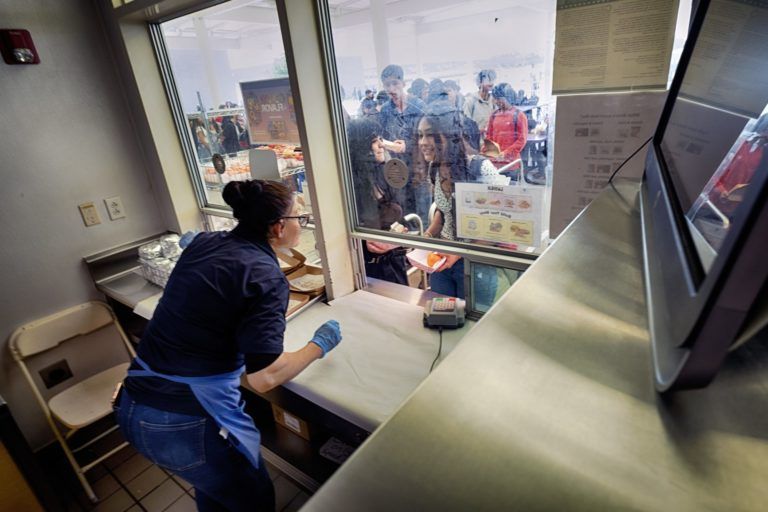
Among the employers now dealing with the adverse effects of government interference in free-market economics are public schools, as the new law forces districts to compete with the likes of McDonald’s and Wendy’s for cafeteria workers amid a state budget crunch.

The minimum-wage law that took effect Monday guarantees at least $20-per-hour for workers at fast food restaurant chains with at least 60 locations nationwide. That doesn’t include school food-service workers, historically some of the lowest-paid workers in public education.

Demand for school meals is higher than ever in California, the first state to guarantee free meals for all students, regardless of their family’s income. And demand is projected to fuel an increase of more than 70 million extra meals in California schools this year compared to 2018, according to the state Department of Education.

But these jobs typically have lots of turnover and are harder to fill. The minimum-wage boost for fast-food workers could make that even more difficult.

“They are all very worried about it. Most are saying they anticipate it will be harder and harder to hire employees,” said Carrie Bogdanovich, president of the California School Nutrition Association.

Statewide, some districts have already taken steps to compete in the new reality.

Last year, the Sacramento Unified School District—anticipating the law’s passage—agreed to a 10% increase for its food service workers and other low-paying jobs, followed by another 6% increase July 1 of this year to bump their wages up to $20 per hour.

Cancy McArn, the district’s chief human resources officer, said it was the largest single raise in the district in nearly three decades.

“We are looking not only at competing with districts and comparing with districts, we’re also looking at fast food places,” McArn said.

In Southern California, San Luis Coastal Unified doubled its food-service staff to 40 people after seeing a 52% increase in the number of students eating school meals. The district prepares 8,500 meals daily for 7,600 students across 15 school sites—breakfast, lunch and even supper options for youth in after-school sports and activities.

The district has since limited the number of its entry-level positions, which are the hardest to fill, while seeking to hire more for complex roles like “culinary lead” and “central kitchen supervisor” that require more skills and hours—making them more attractive to job seekers.

“That’s allowed us to be more competitive,” said Erin Primer, director of food and nutrition services for the San Luis Coastal Unified School District.

Tia Orr, executive director of the Services Employees International Union California—which represents both school food service workers and fast food employees—said school districts and other service industries must consider raising wages because of this new law.

“This is a good thing, and it is long overdue,” she said.

But some districts are limited in what they can do.

In the Lynwood Unified School District in Los Angeles County, the starting salary for food service workers is $17.70 per hour and maxes out at $21.51 per hour, according to Gretchen Janson, the district’s assistant superintendent of business services.

She said these workers only work three hours per day, meaning they aren’t eligible for health benefits.

Janson says the district is waiting to see how employees react, adding: “We just don’t have the increase in revenue to be able to provide additional funding for staff.”

Nuria Alvarenga has worked food service in the Lynwood School District for 20 years. She makes $21 per hour now, but said she could likely earn more in fast food.

While she said several co-workers were considering finding other jobs, she hasn’t decided yet what she will do. She normally works at an elementary school, but has been filling in recently at a high school where she enjoys seeing former students recognize her as they stand in line for lunch.

“I’m so glad they still remember me,” she said.

School food-service workers have gotten more support in recent years under a state push to expand school meals and make them more nutritious.

That included $720 million in recent years for upgrades to school kitchens to better prepare fresh meals, plus $45 million to create an apprenticeship program to professionalize the industry.

It would be difficult for lawmakers to mandate a raise for school food workers given the complexities of the state’s school funding formula. That’s why some advocacy groups, including the Chef Ann Foundation, proposed a state-funded incentive program that would have given school food workers who completed an apprenticeship program a $25,000 bonus payable over five years.

That idea didn’t make it into Democratic Gov. Gavin Newsom’s budget proposal released in January. The state is facing a multibillion dollar budget deficit, limiting new spending.

But pay raises aren’t the only incentives school districts can offer. There’s also health insurance, paid vacation, no night or weekend shifts and a pension that could guarantee a monthly income after retirement. Plus, school food workers have predictable hours, letting them work other jobs if they wish—or in summer when school is out.

“Restaurants are laying off employees. They’re cutting hours,” said Eric Span, director of nutrition services for the Sweetwater Union High School District in San Diego County. “I think we should position ourselves to really talk about some stability.”

Michael Reich, a labor economics professor at the University of California-Berkeley, said those factors could favor school districts when competing for workers.

“Working in a school cafeteria gives you more stability, job security and maybe less stress than in a profit making institution,” he said. “So there’s a lot of advantages from a community standpoint. But that’s not to say they don’t also want to get more money.”

Adapted from reporting by the Associated Press
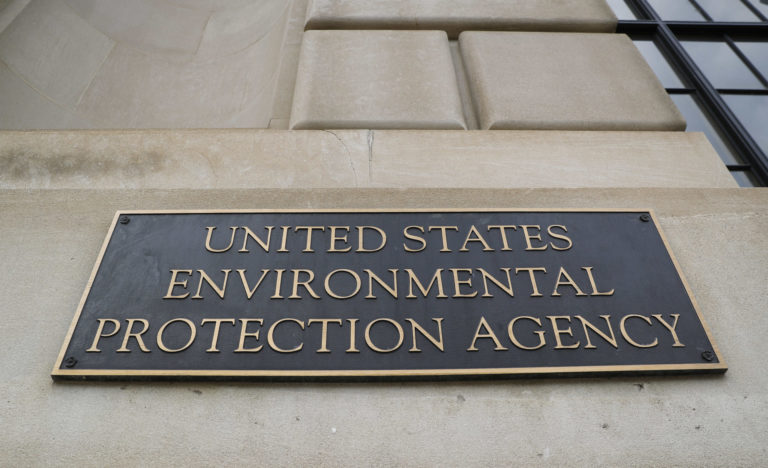
Biden EPA Offers Kickbacks to Woke Banks after DOJ Targeted Noncompliers

(Headline USA) Drawing inspiration from the Obama-era “Operation Choke Point” and the controversial ESG investing movement, the Biden administration is using a sticks-and-carrots approach to force banks to follow its aggressively woke agenda. 

On one hand, it has threatned banks with fines and investigations for insufficient money-lending to high-risk minority borrowers, including illegal immigrants, under the guise of a crackdown on “redlining”—a nebulous social-justice buzzword for assessing the likelihood of loan repayment based on one’s current living conditions.

However, for those who toe the line with risky lending and investment practices by gambling on “green energy” projects that consumers have widely rejected in the marketplace, there may be a special reward, courtesy of U.S. taxpayers.

The Environmental Protection Agency on Thursday awarded $20 billion in federal “green bank” grants to eight community development banks and nonprofit organizations to use on projects combating climate change in disadvantaged communities and other objectives tied to so-called environmental justice.

The money could fund tens of thousands of eligible projects ranging from residential heat pumps and other energy-efficient home improvements to larger-scale projects such as electric vehicle charging stations and community cooling centers, according to senior administration officials.

It comes as leftist states increasingly seek to shake down woke corporations, including financial institutions and energy companies, to fund their climate agenda.

A recent bill passed by the Vermont legislature said fossil-fuel companies like Exxonmobile are obliged to contribue to a “superfund” to help pay for the impacts of climate change, even if no direct causal culpability between the companies’ specific practices and the environmental impacts can be established.

Other states— including California, New York, Massachusetts and Maryland—are certain to follow suit.

Katherine Hamilton, chair of public policy firm 38 North Solutions and who worked on underlying legislation for the federal fund, said it used similar efforts in states like Connecticut as blueprints for the federal shakedown.

“The scale envisioned for these entities could model successful state green banks while supercharging the number of communities served,” Hamilton said in an email.

She added that would help the country move “more quickly through the energy transition.”

Vice President Kamala Harris, EPA Administrator Michael Regan and other officials planned to announce the grant selections during a visit to Charlotte, North Carolina on Thursday.

Recipients were awarded competitive grants from two of the three programs overseen by the “green bank” created in the Biden administration’s Inflation Reduction Act, passed in 2022.

Formally known as the Greenhouse Gas Reduction Fund, the $27 billion bank is one of many federal efforts to invest in solutions that cut planet-warming greenhouse gas emissions and address human-caused climate change, a topic President Joe Biden has emphasized in his presidency and reelection campaign.

The bank’s goals are to reduce climate and air pollution and mobilize public and private capital in the communities that need it most.

As part of Thursday’s news, the $14 billion National Clean Investment Fund program granted money to three nonprofits that will partner with states and the private sector to provide affordable financing for projects across the country.

The $6 billion Clean Communities Investment Accelerator also granted money to five institutions that will work with other groups to establish hubs that make funding and technical assistance accessible to community lenders.

Recipients committed to spending $7 in private sector funding for each $1 from the federal investment money, to “reduce or avoid” 40 million metric tons of carbon dioxide each year and earmark 70% of the money for disadvantaged and low-income communities.

Among the eight funding recipients are:

  • Coalition for Green Capital, a nonprofit working with a nationwide network of state, local, and nonprofit green banks, received $5 billion.
  • Power Forward Communities, a nonprofit coalition formed by five housing, climate, and community investment groups, received $2 billion.
  • Appalachian Community Capital, a nonprofit community development financial institution working with lenders in Appalachia, received $500 million.

Also part of the bank is the $7 billion Solar for All program, which will award states, tribes and municipalities money for a variety of residential and community solar projects at a later date.

Specifics around the bank were outlined last February, with applications for the programs sought in July and due last fall.

“I do think this is a really important part of our national strategy to reduce greenhouse gas emissions and engage every community in the clean energy revolution,” Maryland Sen. Chris Van Hollen told the Associated Press in an interview.

The Democrat first introduced legislation to create a national green bank 15 years ago. “Now we just need to work very hard on implementation,” he said.

But the taxpayer-funded green bank has also faced opposition, notably from Republicans in Congress, who have called it a “slush fund” and voiced concern over accountability and transparency on how the money is used.

House Republicans passed a bill last month to repeal the bank and other parts of the president’s climate agenda.

Adapted from reporting by the Associated Press

Audit of Postal Service Facility Exposes Trouble Ahead of Mail-In Election

(Headline USA) The “Rich Men North of Richmond” may have a backdoor plan to keep their jobs in November—by meddling with the mail service.

Ahead of an election where, once again, Democrats—and even some Republicans—are embracing the widespread use of mail-in voting, the U.S. Postal Service appears to be asleep on the job, literally.

An audit conducted by the Postal Service’s inspector general found significant problems at a new regional processing facility in Virginia, including water-damaged mail left unprocessed for months and a worker asleep at a forklift.

The audit, dated March 28, raises questions about the Postal Service’s plans to modernize its processing network—the Richmond facility that was the focus of the audit is the first of a planned 60 regional processing centers that USPS is launching nationwide that are supposed to streamline operations and improve efficiency.

But the audit found that problems at the Richmond center, which opened in July, have contributed to a drop in on-time service that now finds Virginia ranked worst in the nation.

The inspector general said only 66% of first-class mail has been delivered within two days in the current fiscal year, compared to a national average of 87%. No other region in the U.S. fell below 80%, according to the inspector general’s office.

The Postal Service has estimated that the $23 million facility will produce $15 million annually in savings by consolidating operations. But the audit found that work hours and overtime actually increased after the center opened.

“At this time, it is unclear if the Postal Service will realize the expected savings associated with consolidating operations into the Richmond” regional processing center, the audit concluded.

Auditors also said they discovered “a general inattention to detail that resulted in mail left on or around machines, large amounts of machinable mail in manual processing, and in one case, mail over two months old left in a container in the truck yard.” They also observed a mail handler sleeping on a parked forklift.

Postal Service officials responded to the audit and said they agree with most of the 10 specific recommendations for improvement made in the report by the inspector general.

“We have undertaken extensive efforts to thoroughly address these challenges and issues in Richmond, which has led to continued performance improvement,” the officials said in their formal response to the audit.

Virginia’s two U.S. senators, Democrats Mark Warner and Tim Kaine, issued a joint statement along with U.S. Reps. Jennifer McClellan, D-Va.; Bobby Scott, D-Va.; Rob Wittman, R-Va.; Abigail Spanberger, D-Va.; Bob Good, R-Va.; and Jen Kiggans, R-Va., calling on USPS to fix the problems identified in the report.

“It couldn’t be clearer that USPS has not been providing reliable service to Virginians, and we’ve been pressing for answers,” the lawmakers said.

“This report pinpoints a number of issues, including a lack of coordination between USPS and staff at the Richmond Regional Processing and Distribution Center (RPDC),” they added. “USPS must provide more resources and clearer guidance to management and staff at RPDC, among other steps.”

Virginia Gov. Glenn Youngkin, a former co-CEO of the globalist Carlyle Group, is one of several moderate GOP leaders in blue or purplish states who has embraced early voting and, through his Spirit of Virginia PAC, is working with the Republican State Leadership Committee to invest heavily in get-out-the-vote measures that rely on absentee ballots.

Adapted from reporting by the Associated Press
DOJ Sues Utah Prisons System over Inmate Who ‘Removed Her Own Testicles’

(Ken Silva, Headline USA) The Justice Department filed a lawsuit Tuesday against Utah’s Department of Corrections after alleging that the state violated an inmate’s rights by refusing to provide treatment for gender dysphoria.

The DOJ’s lawsuit comes three weeks after federal prosecutors threatened to sue Utah if it failed to implement a raft of reforms, including new policies to ensure inmates have access to gender-related healthcare. The DOJ didn’t even wait a month after its threat to file the lawsuit.

According to the DOJ, the unnamed inmate in Utah did not receive gender dysphoria treatment for more than 15 months after requesting it. By then, the inmate had already self-mutilated, the DOJ said.

“After enduring repeated delays and denials of her requests for disability-related care and reasonable modifications, Complainant performed dangerous self-surgery and removed her own testicles,” the DOJ said, identifying the biological male as a woman.

The DOJ blamed the messy debacle on Utah’s “protracted, multistep process” to receive gender dysphoria treatment. The DOJ also noted that the inmate was denied the request to move to a female prison.

“We hope to work together with you to resolve this matter cooperatively through a court enforceable consent decree that brings UDOC into compliance with the ADA. If we are unable to reach such a resolution, the Attorney General may initiate a lawsuit,” said Rebecca Bond, the head of the DOJ’s disability rights section.

In response to the DOJ’s findings, Utah’s DOC said it was “blindsided.”

“We have been working to address this complex issue, and were blindsided by today’s public announcement from the Department of Justice. We have also taken steps on our own, and as a state, to address the needs of inmates while maintaining the highest safety standards,” said DOC Director Brian Redd in a statement.

“We fundamentally disagree with the DOJ on key issues, and are disappointed with their approach.”

The DOJ’s legal threat against Utah is its latest move in an apparent campaign to promote transgenderism in prisons.

DOJ Lawfare

In February, the DOJ filed a statement of interest in support of a lawsuit from transgender inmate Jonathan C. Richardson, who now goes by the name “Autumn Cordellionè” and is serving a 55-year sentence for killing Richardson’s infant stepdaughter.

Richardson, who identifies as an “Islamic-practicing transwoman,” first sued the Indiana Department of Correction last August in federal court after the state passed a law banning prisoners from receiving sexual reassignment surgery. The baby-killer’s lawsuit is being litigated by the American Civil Liberties Union, with the support of the DOJ, which filed a statement of interest in support of their motion to block Indiana’s law.

While Richardson’s lawsuit didn’t involve any removal of testicles, the inmate did disclose that “I have soiled myself rather than go to the bathroom, as I just do not want to see or deal with my genitals.”

The DOJ’s support of Richardson follows a similar move in Georgia, where prosecutors filed a brief in January to support a lawsuit filed by an unnamed inmate against the Georgia Department of Corrections. Details of the inmate’s crimes weren’t included in the filing.

Additionally, the DOJ settled a lawsuit last June from a federal inmate—former Neo-Nazi bank robber Pete/Donna Langan—who sued the Bureau of Prisons in late 2021 to obtain a sex change. Langan became the first federal inmate in history to receive a sex change in January 2023, but continued to sue the BOP to also cover facial hair removal surgery.

The details of Langan’s settlement have not been made public.

Ken Silva is a staff writer at Headline USA. Follow him at twitter.com/jd_cashless.

Ex-FBI and FusionGPS Partner Reemerges w/ New QAnon Smear against Trump

(Ken Silva, Headline USA) Anti-Trumpers have been using violent incidents involving seemingly mentally ill government contractors and ex-military personnel to attack the former President—and now one of the original engineers of the Russiagate hoax has reemerged to help with the smear campaign.

The latest incident of this happened after U.S. Navy veteran Ervin Lee Bolling allegedly rammed an SUV into a barrier at the front gate of the FBI’s Atlanta office on Monday. Two days later, the tech publication Wired published an article about Bolling being pro-Trump, having links to QAnon and wanting to join a militia.

Wired cited the non-profit group Advance Democracy as the source of its information about Bolling. Observers noted that Advance Democracy is headed by former FBI analyst and FusionGPS partner Daniel J. Jones—one of the main engineers of the Russiagate hoax. Jones reportedly hired Fusion GPS and Christopher Steele to conduct opposition research on Trump, paying them millions of dollars.

Jones was one of the officials in an initial key Feb. 10, 2017, meeting to hatch the post-election plan to resurrect rumors Trump was a tool of the Kremlin. As RealClearInvestigations first reported in May 2020 that the meeting, which lasted about an hour and took place in a Washington office building, also included former Clinton campaign chairman John Podesta.

“The group discussed raising money to finance a multimillion-dollar opposition research project headed by Jones to target the new president. In effect, Jones’ operation would replace the Clinton campaign’s operation, continuing the effort to undermine Trump,” according to RCI.

“Just 10 days before the February 2017 meeting, Jones had incorporated a nonprofit called The Democracy Integrity Project (known internally as TDIP) … The goal of their ongoing project is to ‘prove’ the allegations in the dossier, while digging up new dirt on Trump and feeding it to media outlets, congressional investigators and the FBI to derail his presidency,” RCI reported in May 2020.

More than seven years later, Jones is using this week’s car crash to attack Trump—collecting nearly $500,000 for his efforts in the process. According to financial records, his new non-profit, Advance Democracy, received a $250,000 from his older non-profit involved in Russiagate, TDIP.

The car crash with Bolling—who enlisted in the Navy in January 1998 and served as a submarine sonar technician before retiring in 2017—is the latest incident being used to paint Trump as someone who inspires his followers to commit violence.

Last year, the Justice Department blamed Trump for a lone-wolf gunman’s April 2022 attack on an FBI field office in Cincinnati—even though it was revealed after the death of the gunman, 42-year old Ricky Shiffer, that the FBI was already investigating him for months prior to the incident.

Like Bolling, Shiffer worked on a submarine. He was also a U.S. security clearance holder.

More recently, anti-Trumpers linked Justin Mohn—the self-purported militia leader who murdered his father and displayed his decapitated head on YouTube in January—to QAnon and Trump. It later came out that Mohn is not a fan of Trump.

Even more so than Bolling or Shiffer, Mohn displayed signs of severe mental illness. Bizarrely, Mohn immediately travelled to a National Guard base after murdering his father, where he was taken into custody. Mohn’s father was in the Army Corps of Engineers.

And in an incident similar to the Bolling car crash, an FBI contractor was arrested in February for allegedly stealing a government vehicle from FBI headquarters and driving it to another bureau facility in Vienna, Virginia. According to the FBI’s criminal complaint, the FBI contractor, John Conrad Worrell III, heard “coded messages” before committing his crime.

Ken Silva is a staff writer at Headline USA. Follow him at twitter.com/jd_cashless.

The Evils of Paper Money Have No End

(Mike Maharrey, Money Metals News Service) Many prominent American founders warned us about paper money.

Thomas Paine may have summed it up best:

“The evils of paper money have no end.”

In an 1814 letter to Thomas Cooper, Thomas Jefferson was prophetic. 

“Every thing predicted by the enemies of banks, in the beginning, is now coming to pass. We are to be ruined now by the deluge of bank paper as we were formerly by the old Continental paper.”

It almost sounds like Jefferson was warning about our situation today, but he was actually predicting the depression of 1815-1821 and the panic of 1819. The later years of that economic downturn featured widespread foreclosures, bank failures, unemployment, a collapse in real estate prices, and a slump in agriculture and manufacturing.

It was a different time, but the root cause of that economic crisis was the same as what we face today. In a letter to John Adams, Jefferson warned things would never change until people understood the underlying problem. 

“The evils of this deluge of paper money are not to be removed until our citizens are generally and radically instructed in their cause & consequences.”

In their correspondence, Jefferson and Adams also discussed the recently published Treatise on Political Economy by Destutt de Tracy. In a letter to Jefferson, Adams cited a passage calling fiat money printing more “ruinous and a greater theft than empires of old shaving off a little gold from their coins and passing them off as full-weight.“

“A theft of greater magnitude & still more ruinous is the making of paper. It is greater because in this money there is absolutely no real value. It is more ruinous because by its gradual depreciation during all the time of its existence it produces the effect which would be produced by an infinity of successive deteriorations of the coin.”

Adams told Jefferson it was akin to thievery and Americans were as guilty as any other country – even more so.

“That is to say an infinity of successive felonious larcenies. If this is true as I believe it is we Americans are the most thievish people that ever existed, we have been stealing from each other for an hundred & fifty years.” 

Unfortunately, Americans never learned these lessons. In the years since, the U.S. completely abandoned the gold standard, with President Richard Nixon severing the final tie in 1972.

The consequences were predictable.

When he announced the closing of the gold window, Nixon said, “Let me lay to rest the bugaboo of what is called devaluation,” and promised, “Your dollar will be worth just as much as it is today.”

This was a lie.

The purchasing power of a 1971 dollar is equal to less than 12 cents today.

This demonstrates what Jefferson wrote long before the economic downturn he saw unfolding in the early 1800s.

“Paper is poverty … it is only the ghost of money, and not money itself.”

Jefferson was echoing his friend Thomas Paine. Paine wrote extensively about the dangers of paper money, going as far as to call it evil. 

“Money is Money, and Paper is Paper. All the invention of man cannot make them otherwise. The alchemist may cease his labors, and the hunter after the philosopher’s stone go to rest, if paper can be metamorphosed into gold and silver, or made to answer the same purpose in all cases.”

Paine went on to say paper money turned everybody into “stock jobbers,” a derogatory term for people who made a living on stock market manipulation and frontrunning.

“One of the evils of paper money is that it turns the whole country into stock jobbers. The precariousness of its value and the uncertainty of its fate continually operate, night and day, to produce this destructive effect. Having no real value in itself it depends for support upon accident, caprice, and party; and as it is the interest of some to depreciate and of others to raise its value, there is a continual invention going on that destroys the morals of the country.”

Many other prominent founding-era figures denounced paper money. 

George Mason agreed with Paine’s evaluation that paper money is “evil.”

“The laws making paper currency a legal tender have produced great and numerous evils.”

Richard Henry Lee wrote to James Madison, saying, “Knaves assure, and fools believe, that calling paper money, and making it tender, is the way to be rich and happy.”

Patrick Henry warned that “paper money would be the bane of this country. I detest it.”

And George Washington scolded Rhode Island Superior Court Judge and former Deputy Governor Jabez Bown in a 1787 letter.

“Paper money has had the effect in your State that it ever will have, to ruin commerce – oppress the honest, and open a door to every species of fraud and injustice.”

Even Alexander Hamilton warned about the dangers of a deluge of paper.

“To emit an unfunded paper as the sign of value ought not to continue a formal part of the Constitution, nor ever hereafter to be employed; being, in its nature, pregnant with abuses, and liable to be made the engine of imposition and fraud; holding out temptations equally pernicious to the integrity of government and to the morals of the people.”

The Real Money Alternative to the “Evils” of Paper

The founding generation believed in real money – gold and silver. They understood that gold and silver could not be easily manipulated and printed for government purposes like paper and that it would retain its value over time.

In an 1813 letter to John Epps, Thomas Jefferson declared gold and silver the best form of money.

“Specie is the most perfect medium, because it will preserve its own level; because having intrinsic and universal value, it can never die in our hands.”

He went on to write:

“The trifling economy of paper, as a cheaper medium, or its convenience for transmission, weighs nothing in opposition to the advantages of the precious metals… it is liable to be abused, has been, is, and forever will be abused, in every country in which it is permitted.”

Proving that there’s nothing new under the sun, Paine anticipated one of the arguments against hard money. Many claimed we need paper money because there aren’t sufficient amounts of gold and silver. Paine countered, “This, so far from being a reason for paper emissions, is a reason against them.” And he went on to accurately predict what would happen if paper were allowed to compete with real money.

“As gold and silver are not the productions of North America, they are, therefore, articles of importation; and if we set up a paper manufactory of money, it amounts, as far as it is able, to prevent the importation of hard money, or to send it out again as fast it comes in; and by following this practice we shall continually banish the specie, till we have none left, and be continuously complaining of the grievance instead of remedying the cause.”

This is why the Constitution made gold and silver the only acceptable forms of money. Among James Madison’s papers were notes for a 1786 speech opposing paper money.

“Right of regulating coin given to Congs. for two reasons. 1. for sake of uniformity. 2. to prevent fraud in States towards each other or foreigners. Both these reasons hold equally as to paper money.”

We can’t say we weren’t warned. We ignored the wisdom of the founding generation and we got exactly what was predicted. We have a deteriorating currency that will eventually collapse into oblivion.


Mike Maharrey is a journalist and market analyst for MoneyMetals.com with over a decade of experience in precious metals. He holds a BS in accounting from the University of Kentucky and a BA in journalism from the University of South Florida.

CNN Host Roasted for Pushing Anti-Trump ‘Animals’ Hoax

(Luis Cornelio, Headline USA) CNN was put to task when a guest challenged the network live on air, defending former President Donald Trump’s characterization of the man accused of brutally murdering beloved nursing student Laken Riley as an “animal.” 

On Wednesday, Scott Jennings, a former aide in the Bush White House and a CNN contributor, stood by Trump’s comments as anchor Wolf Blitzer attempted, unsuccessfully, to admonish the former president for supposedly labeling all illegal aliens as “animals.” 

In response, Jennings said: “I listened to the entire tape. He was specifically talking about the person who murdered Laken Riley in Georgia. To be honest with you, Wolf, if somebody murders another human being, I think they deserve to be called animals.”

Expanding on his defense of Trump, Jennings remarked, “I don’t think any American is really going to reject that kind of rhetoric. That poor girl was murdered in cold blood. Is that person, who did it, not an animal? I think that’s an apt term.” 

Jennings’s comments were prompted by Blitzer’s incorrect interpretation of Trump’s remarks, which he made during a Michigan campaign event. “When he says that these immigrants are animals, are not humans, what does that suggest? … Shouldn’t people be condemning that?” Blitzer asserted.

Contrary to Blitzer’s claims, Trump did not broadly refer to all illegal aliens as “animals.” Instead, the former president specifically referred to Riley‘s alleged murderer and other instances of illegal aliens committing crimes.

“The 22-year-old nursing student in Georgia who was barbarically murdered by an illegal alien animal,” Trump said. He was referring to 26-year-old Jose Antonio Ibarra, a Venezuelan national who faces murder charges in Riley’s death.

Later in his remarks, Trump also criticized Democrats for objecting to his characterization of illegal aliens accused of heinous crimes as “animals,” as seen in video footage of the Michigan event. 

“The Democrats said, ‘Please don’t call them animals, they’re humans.’ I said no they’re not humans they’re not humans they’re animals,” Trump stated. “[Former House Speaker] Nancy Pelosi told me that. She said, ‘Please don’t use the word animal, sir, when you’re talking about these people. I said, ‘I’ll use the word animal because that’s what they are.’” 

Before making the “animal” remark, the former president addressed the tragic death of a Michigan woman, who was allegedly killed and run over by a Mexican national. 

Mavi Garcia, the victim, was killed by her boyfriend, 25-year-old Brandon Ortiz-Vite, who had been deported by the Trump administration but managed to re-enter the U.S.  

Law enforcement alleged that Ortiz-Vite left Garcia’s body in the middle of a street before fatally running over her. Initially, police characterized the death as the result of a drunken carjacking. The Mexican national is now facing murder charges.  

Jack Smith Threatens Judge Cannon in Latest Display of Defiance, Partisanship

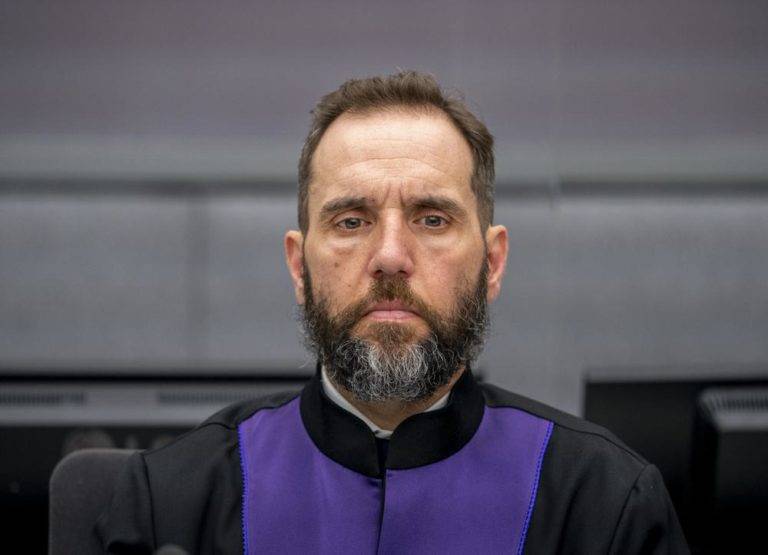
(Luis Cornelio, Headline USA) Special Counsel Jack Smith scolded Judge Aileen Cannon after she demanded information on jury instructions from both his office and former President Donald Trump’s defense attorneys.

In a filing on Tuesday, Smith asserted that Cannon’s request was “wrong” and could potentially bias the verdict in favor of Trump. Cannon is presiding over the classified documents indictment filed by Smith against Trump.

As reported by several media outlets, last month Cannon instructed Smith and Trump to provide jury instructions outlining two potential scenarios related to the Presidential Records Act. 

One scenario would have allowed jurors to review records and determine whether documents allegedly found at Mar-a-Lago are categorized as personal or presidential. The second scenario would have argued that U.S. presidents hold “sole authority” under the Presidential Records Act. 

Trump has invoked the second defense to refute Smith’s claims that the documents found at his Mar-a-Lago residence belong to the federal government and the National Archives. 

In the Tuesday filing, Smith criticized Cannon’s demands, stating: “Both scenarios rest on an unstated and fundamentally flawed legal premise — namely, that the Presidential Records Act (‘PRA’), and in particular its distinction between ‘personal’ and ‘Presidential’ records determines whether a former President is ‘authorized,’ under the Espionage Act to possess highly classified documents and store them in an unsecure facility.” 

Conservative journalist Julie Kelly commented on Twitter that a defense attorney described Smith’s filing as a “threat” to Cannon. “The tone Smith is taking with Cannon is no longer persuasion but outright threats. Unheard of dynamic btw DOJ and the bench,” she said on Wednesday.

Smith also argued in the filing that the scenarios demanded by Cannon, which echoed Trump’s defense, were not based on “facts.” 

He further wrote, “It is a post hoc justification that was concocted more than a year after he left the White House, and his invocation in this Court of the PRA is not grounded in any decision he actually made during his presidency to designate as personal any of the records charged.” 

Dems in Deep-Blue Maryland Panic that Tax Policies May Cost Senate Seat

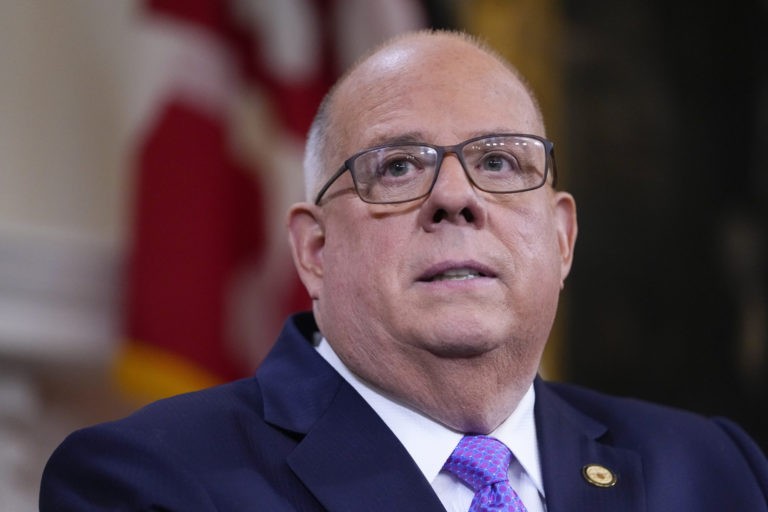
(Headline USA) A push in Maryland’s legislature for hundreds of millions of dollars in taxes and fees has some Democrats concerned that the package may bolster Republican former Gov. Larry Hogan’s campaign for U.S. Senate and cost the party its already-narrow majority.

While a Republican hasn’t won a Senate race in Maryland since 1980, Hogan is widely believed to be the GOP’s best chance in decades.

Hogan’s political ascendency resulted in large part from his criticism of tax increases that resonated with a tax-weary electorate in his upset victory in 2014.

“If you go back to 2014 and 2018, I think it’s not brain science to see what happened and how the former governor was successful in the state of Maryland, and so that context is very real, and we have to be honest about it,” Maryland Senate President Bill Ferguson, a Baltimore Democrat, said Tuesday in an interview with the Associated Press.

Hogan, who began building his popularity early in his first term by lowering tolls statewide in 2015, has been quick to condemn the revenue package that has led to a budget showdown between the chambers.

“It’s deja vu all over again—the same crushing tax hikes that convinced me to run for Governor in the first place are rearing their ugly head again,” Hogan tweeted last month.

Democrats hold a tenuous 51-49 majority in the U.S. Senate. And Hogan, who was originally elected governor by railing against tax increases endorsed by the Maryland General Assembly, has already made the Maryland race unusually competitive in the heavily Democratic state.

An outspoken critic of former President Donald Trump, considered by many conservatives to be a RINO candidate, his victory—although a boon to Republicans seeking to regain the majority with a new leader to replace the retiring Sen. Mitch McConnell, R-Ky.—would likely do little to help Trump’s future presidency.

Hogan would quickly fill the void left by NeverTrump Sen. Mitt Romney, R-Utah, who opted not to run again this year after having the dubious distinction of being the only Republican to vote twice in favor of impeaching the GOP president..

Still, a Washington Post-University of Maryland poll late last month showed Hogan remains an overwhelmingly popular political figure in Maryland, underscoring his potential to turn a usually solid blue state into a competitive one for Republicans.

But while his potential opponents remain relatively unknown, the poll also shows that Maryland voters remain much more likely to prefer a Democratic U.S. Senate.

Del. Ben Barnes, a Democrat who chairs the Maryland House Appropriations Committee, said the state’s transportation funding problems can’t wait a year, and he questions why the legislature with strong Democratic majorities in both chambers should wait.

“I’m not afraid of Larry Hogan. I don’t think any of us should be afraid of Larry Hogan,” Barnes said. “I think voters are going to vote in this U.S. Senate race based on national issues.”

Barnes oddly then proceeded to hammer Hogan on a state-based issue, accusing him of causing a transportation crisis for his refusal to fund a trust while governor.

The state, which includes large portions of the Washington, D.C., suburbs, is notoriously traffic-heavy, and the tragic collapse last week of the Francis Scott Key Bridge in Baltimore is sure to exacerbate those issues in the months to come, eliminating one of the main corridors in and out of Maryland’s largest city.

President Joe Biden has pledged to cover the entire cost of replacing the bridge with federal funds, although such a measure would require congressional support also.

Nevertheless, some Maryland Democrats question whether now is the time for a package of tax and fee increases proposed by the state’s House of Delegates to pay for transportation and K-12 education, when lawmakers could wait a year and defer potential political blowback.

“It is something that is a factor in the decision-making process for the next year,” Ferguson said. “The makeup of the U.S. Senate will matter for the long-term investment future for Maryland.”

With strong majorities in both the the state House and Senate, and a 2-1 advantage in statewide voter registration, Maryland Democrats typically don’t have to worry much about the GOP in the state capital. But Hogan is a rare Maryland Republican who has won two statewide races. That’s something neither of his likely Democratic opponents, including U.S. Rep. David Trone and Prince George’s County Executive Angela Alsobrooks, has done.

Hogan’s gubernatorial successor, Democrat Gov. Wes Moore, submitted a balanced $63 billion budget for the next fiscal year in January without tax increases, and he has said raising taxes would face “a very, very high bar” this year.

The Maryland Senate this month largely kept his budget plan intact, despite a drop in revenue estimates announced after the governor submitted his plan.

But the House has changed budget legislation to include new revenues, relying on a variety of transportation-related user fees and corporate tax reform for much of it.

The Senate has been mostly unreceptive to the House plan, with Ferguson ruling out the corporate tax component. He’s also ruled out legalizing internet gambling this year, another part of the House plan.

Senators negotiating with House members have expressed willingness to raise about $250 million in revenues, but the House negotiators have said that’s not enough.

With differences still unresolved and less than a week left in the session, Moore issued an executive order Monday night to extend the session by 10 days, if needed beyond Monday’s scheduled adjournment at midnight.

In December, the state’s transportation secretary proposed roughly $3.3 billion in cuts for Maryland’s six-year transportation spending plan, as inflationary pressures add to the problem as well as the fact that traditional revenue sources haven’t kept up with costs.

Ferguson said the budget plan approved in the Senate invests in the state’s priorities without tax increases, with ample reserves still in the rainy day fund to avoid a hurried approach to revenues. He also claimed that the bridge collapse has only underscored the need to keep a Democratic majority in the Senate.

“This is about the long-term future of the state, and that is the political reality that we have to operate within,” Ferguson said.

Adapted from reporting by the Associated Press

Biden Loses 50K Dem. Votes in Wisconsin Primary as Leftist Protest Continues

(Headline USA) President Joe Biden lost tens of thousands of Democratic primary votes during the primaries Wisconsin and several other states this week after progressives led a protest vote against him.

Nearly 50,000 registered Democrats in the state voted for an “uninstructed” delegation instead of for Biden on Tuesday, the latest effort by Hamas supporters on the Left to register their disapproval of Biden’s reluctance to pressure Israel to end its military strike in Gaza.

As a result, the “uninstructed” option made up nearly 8% of the Democratic vote in Wisconsin—a larger margin than the one Biden beat former President Donald Trump by in the state in 2020.

Democrats in Connecticut and Rhode Island also participated in the Biden boycott, according to Fox News, although both states have large enough Democrat majorities to ensure his political safety.

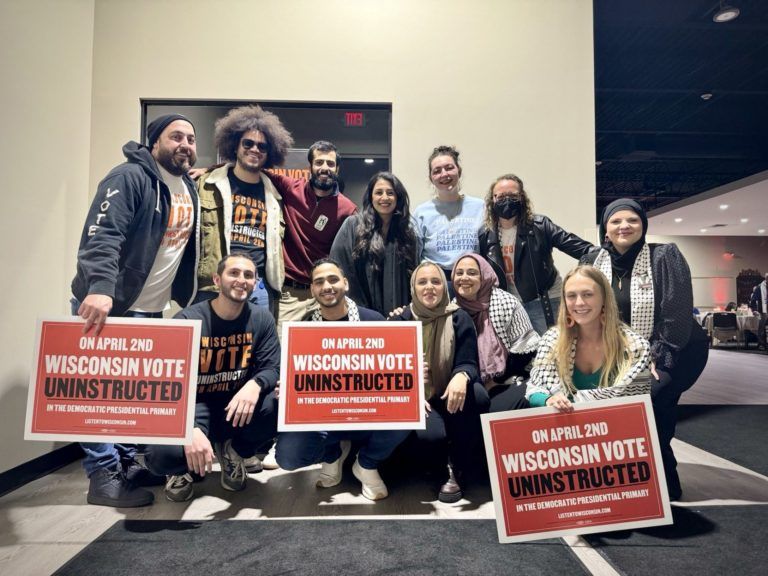
Activist group Listen to Wisconsin celebrated the performance after polls closed Tuesday.

“We had three weeks to pull off a presidential primary election. Lots of tiring days and sleepless nights. But we would do it over again in a heartbeat,” the group tweeted. “Thank you Wisconsin for making your voices heard today!”

Leftist commentator Nina Turner similarly celebrated the turnout, warning Biden that he must change his position on Israel if he hopes to gain the Left’s vote in November.

“Yesterday, over 47,000 voters in Wisconsin went to the polls and voted Uninstructed. President Biden won Wisconsin in 2020 by a little over 20,000 votes,” Turner tweeted.

“This president must decide if loyalty to Netanyahu is worth delivering Trump the election in November,” she added. “He must decide.”

Protest votes against Biden in the Democratic primary have swept other states as well, including Michigan, Minnesota, Massachusetts and North Carolina.

In North Carolina, for example, 88,000 voters, or nearly 13%, backed “No Preference” over Biden. And in Massachusetts, more than 54,000 voters, or just under 10%, backed “No Preference.”

Biden still won these states outright. However, activists behind the protest effort said their goal was not to win primaries but to put pressure on Biden and the Democratic Party to abandon their commitment to Israel.

“We’re seeing in Michigan and Minnesota that this voting uninstructed or uncommitted has been working, and opinions in D.C. have been somewhat changing,” Jamilah Arabiyat, president of Students for Justice in Palestine at the University of Wisconsin-Milwaukee, told NBC News.