Woman in Interracial Marriage Sues All-White Community for Excluding Her

(Headline USA) Members of the “Return to the Land” project in Arkansas say they want to live peacefully as an all-white community while the rest of the country becomes more diverse. But a woman of Jewish ancestry is asking the federal government to stop them.

A real estate broker says an organization denied her the opportunity to purchase land in an Arkansas development because of her Jewish ancestry, and because she has a black husband and biracial children, according to a lawsuit filed Wednesday in federal court.

The lawsuit, filed in Arkansas on behalf of Michelle Walker, names Return to the Land, a development whose owners have said they must personally confirm that applicants are white before they are accepted, its Ozarks chapter and five officers. It says Return to the Land founders are “explicitly attempting to establish an all-white community.”

The lawsuit also calls Return to the Land a white nationalist organization and says it’s in violation of federal and state fair housing and civil rights acts.

“Its founders believe that white people are genetically superior to other races, advance the view that Jewish people are engaged in a plot to eliminate the white race, and advocate for segregated white communities for the purpose of creating a separate all-white nation state that will help avoid ‘white genocide,’” the lawsuit said.

Walker, a real estate broker who lives in St. Louis, applied to buy land last year in the town of Ravenden, Arkansas. Ravenden is about 150 miles northeast of Little Rock and just south of the state line with Missouri.

She was asked questions during the application process about her ancestry, religion and her family, according to the lawsuit.

Walker said she is white and belongs to a Christian church. Her Jewish ancestry is on her mother’s side.

She is represented in the lawsuit by the Relman Colfax law firm, the Legal Defense Fund, and Legal Aid of Arkansas.

Return to the Land did not respond to an email Wednesday from The Associated Press seeking comment on the lawsuit.

On its website, Return to the Land promotes itself as a private membership association “for individuals and families with traditional views and common continental ancestry.” In addition to the its Ozarks Regional Chapter which covers parts of Arkansas, Missouri and eastern Oklahoma, Return to the Land says it has chapters around the United States.

After reports that Return to the Land was eyeing the Springfield, Missouri-area for a whites-only community, Springfield’s city council said in a Facebook post last July that there was no place in the city “or anywhere, for such a divisive and discriminatory vision.”

Pennsylvania’s state House in April passed — by a ultra-slim vote of 101-100 — a bill to block the creation of whites-only housing communities. House Bill 2103 followed Return to the Land’s believed intention to expand to Pennsylvania and other states.

The legislation now is before the Pennsylvania Senate.

Adapted from reporting by the Associated Press

Ask Mike Anything: Gold, Silver, Fiat Failure, and Why Movement Matters

(Money Metals News Service) Mike Maharrey opened this Midweek Memo with a different format: an unscripted “Ask Mike Anything” episode recorded ahead of travel. Instead of a prepared monologue, he answered listener questions on sound money, precious metals, inflation, AI, Federal Reserve policy, and even his longevity as a 59-year-old hockey goalie.

Will We Ever Trade in Gold and Silver Again?

Maharrey said a full return to physical gold and silver transactions would likely require a severe breakdown in government or a “Mad Max” scenario. Short of that, he expects monetary change to come through evolution, not a sudden return to coinage.

He argued that all fiat systems eventually fail because governments cannot resist printing money. With U.S. debt approaching nearly $40 trillion, de-dollarization gaining momentum, and countries wary of dollar weaponization after sanctions on Russia, he expects the dollar to lose prominence over time.

Rather than one replacement, Maharrey sees a multipolar monetary world: dollars, euros, yuan, gold, silver, and other currencies competing. He expects gold to play a larger role because central banks are buying it and because, unlike fiat money, gold and silver cannot be printed.

Oil Prices and Inflation

A listener asked whether higher oil prices would raise overall consumer inflation. Maharrey stressed that rising prices are not inflation in the historic sense; they are a symptom of monetary inflation, meaning expansion of money and credit.

An oil shock can raise many prices because energy touches nearly everything. But without money-supply expansion, higher gasoline costs force consumers to cut spending elsewhere. Hotel prices, travel costs, or other discretionary goods could fall as households reallocate budgets.

His central point was that only money and credit creation raise the entire price structure like a tide.

Could Gold Hit $6,000?

Maharrey said the claim that gold could hit $6,000 this year is not merely hype. He cited major banks, including Bank of America, Deutsche Bank, Citibank, and Chase, as having issued bullish forecasts in the $5,500 to $6,000 range.

He said war can create short-term safe-haven buying, followed by selling as investors raise cash. But the deeper drivers remain debt, central bank gold buying, overvalued stocks, and monetary instability.

He also remains bullish on silver, noting that the silver market has been in a structural deficit for five straight years. He does not believe January’s highs will necessarily be the peak for gold or silver this year.

Bullion Versus Collectible Coins

On numismatic coins, Maharrey was blunt: in a crisis, collectible value may matter far less than metal content. He personally prefers bullion because it carries lower premiums and less subjective risk.

He warned listeners about bait-and-switch tactics where dealers advertise low-premium bullion, then try to upsell buyers into collectibles. He said Money Metals specialists are not commission-based and do not operate that way.

Is AI a Bubble?

Maharrey said yes. AI reminds him of the dot-com era: transformative technology surrounded by companies with massive valuations and uncertain staying power.

He believes AI will reshape the economy, but many AI-related stocks may not survive. If that bubble bursts, he said, it could drag down the broader stock market, which he already views as significantly overvalued.

Trading the Gold-Silver Ratio

The gold-silver ratio was about 54-to-1 at the time of the episode, meaning it took roughly 54 ounces of silver to buy one ounce of gold. Maharrey said that sits near the modern historical range of 50-to-1 to 60-to-1.

He said trading the ratio can be a legitimate strategy: buy silver when it is undervalued, then swap into gold when silver catches up. But he cautioned that timing markets is difficult and investment decisions depend on personal goals, risk tolerance, and knowledge.

Silver’s Outperformance and Future Rate Cuts

Maharrey expects silver to continue benefiting from physical shortages. He noted that gold-silver ratios had been around 80-to-1 or 90-to-1 last year, showing silver had been deeply undervalued before catching up.

He also expects rate cuts eventually, even if inflation rises. In his view, when central bankers must choose between saving the economy and fighting inflation, history shows they choose inflation.

Making Precious Metals Normal Again

Maharrey said precious metals payments are already possible if both parties agree. He has personally been paid in gold or silver for services.

But widespread adoption requires motivation. Dollars remain convenient, and most people are not yet ready to change. Hyperinflation, crisis, or fiat breakdown could provide that incentive.

For barter, Maharrey likes junk silver: pre-1965 U.S. quarters, dimes, and half dollars containing 90% silver. He said a 1964 silver quarter had a melt value of about $15, making it useful for smaller transactions.

Economic Cause and Effect Takes Time

Responding to a question about policy lag, Maharrey said economic effects often take longer than people expect. The economy does not move on a 30-second news cycle.

He used the 2006 subprime warning signs and the 2008 financial crisis as an example. Problems were visible to some, including Ron Paul, long before they became obvious to the mainstream.

Health Is Wealth

Maharrey closed with a personal answer about playing hockey goalie at age 59. His secret, he said, is stubbornness: he refuses to quit.

He said movement preserves movement. Stopping is deadly. He stretches daily, goes to the gym, watches his diet, and keeps playing because hockey supports both his physical and mental health.

He cited the common estimate that men lose about 10% of muscle mass per decade after age 40, but argued this is not inevitable. It happens largely because people stop moving.

His final message was simple: gold and silver help preserve financial wealth, but health is the greater wealth.

US Announces Charges Against Former Cuban Leader Raúl Castro

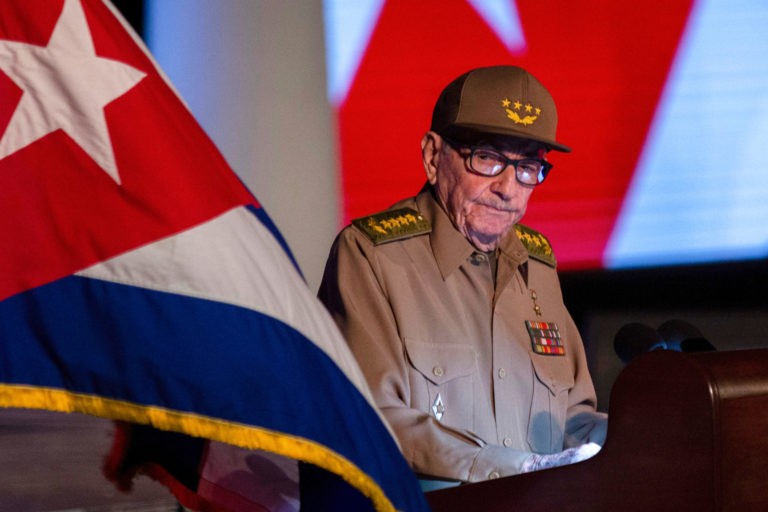
(Headline USA) Federal prosecutors on Wednesday announced charges against former Cuban President Raúl Castro in the 1996 downing of civilian planes operated by Miami-based exiles as the Trump administration escalated pressure on the socialist government.

The indictment was related to Castro’s alleged role in the shootdown of two small planes operated by the exile group Brothers to the Rescue. Castro, now 94, was Cuba’s defense minister at the time. The charges included murder and destruction of an airplane.

Acting Attorney General Todd Blanche and other top Justice Department officials made the announcement in Miami at a ceremony to honor those killed in the shootdown.

“For nearly 30 years, the families of four murdered Americans have waited for justice,” Blanche said. “They were unarmed civilians and were flying humanitarian missions for the rescue and protection of people fleeing oppression across the Florida straits.”

Asked to what lengths American authorities would go to bring Castro to face charges in the U.S., Blanche said: “There was a warrant issued for his arrest. So we expect that he will show up here, by his own will or by another way.”

The federal government, he said, indicts people outside the United States “all the time” and uses a variety of methods to bring them to justice.

The indictment also charged five other people, including one of the Cuban military pilots accused of downing the planes.

Cuban President Miguel Díaz-Canel condemned the indictment and accused the U.S. of lying and manipulating the events of 1996. He called it “a political action without any legal basis” that only seeks to “bolster the case they are fabricating to justify the folly of a military aggression against Cuba.”

Díaz-Canel wrote on X that Cuba acted in “legitimate self-defense within its territorial waters after repeated and dangerous violations of its airspace by notorious terrorists.”

He said U.S. officials at the time had been warned about the violations but allowed them to continue.

Marlene Alejandre-Triana, whose father, Armando Alejandre Jr, was among those who died, said the charges were “long overdue.” She said her father only wanted to bring freedom to his Cuban homeland.

Over the years, she spoke to multiple federal investigators about charging Castro. She referred to him as “one of the main architects of the crime.”

In Miami’s Little Havana neighborhood, Peter Hernandez, whose family owns a fruit and vegetable market, said he would welcome the U.S. sending its military to arrest Castro.

“He’s a criminal,” said Hernandez, whose parents moved from Cuba to South Florida before he was born. ”I think we should do that with all criminals, especially if they’re hiding behind a country that consistently has been proven that they are on the wrong side of our national security efforts and ideology.”

President Donald Trump has been threatening military action in Cuba ever since U.S. forces captured the Cuban government’s longtime patron, Venezuelan President Nicolás Maduro. After ousting Maduro, the White House ordered a blockade that choked off fuel shipments to Cuba, leading to severe blackouts, food shortages and an economic collapse across the island.

Since Maduro’s capture, Trump has ratcheted up talk of regime change in Cuba after pledging earlier this year to conduct a “friendly takeover” of the country if its leadership did not open its economy to American investment and kick out U.S. adversaries.

Trump’s first administration indicted Maduro on drug-trafficking charges and used that to justify removing him from power during a surprise military raid in January that whisked the Venezuelan leader to New York to face trial.

Secretary of State Marco Rubio on Wednesday urged the Cuban people to demand a free-market economy with new leadership that he said will chart a new course in relations with the U.S.

“In the U.S., we are ready to open a new chapter in the relationship between our people,” Rubio, the son of Cuban immigrants, said in a Spanish-language video message. “Currently, the only thing standing in the way of a better future are those who control your country.”

Castro took over as president from his ailing older brother Fidel Castro in 2006 before handing power to a trusted loyalist, Díaz-Canel, in 2018.

While he retired in 2021 as head of the Cuban Communist Party, he is widely believed to wield power behind the scenes, underscored by the prominence of his grandson, Raúl Guillermo Rodríguez Castro, who previously met secretly with Rubio.

Last week, CIA Director John Ratcliffe traveled to Havana for meetings with Cuban officials, including Castro’s grandson. Two other senior State Department officials met with the grandson in April.

“The symbolic nature is absolutely crucial,” said Lindsey Lazopoulos Friedman, a former prosecutor at the U.S. attorney’s office in Miami who handled national security cases and crimes involving Cubans.

The indictment can be used “as a pressure point, a tactical advantage, to extract other concessions like the release of prisoners or to keep Russia out,” she added.

Starting in 1995, planes flown by members of Brothers to the Rescue, a group founded by Cuban exiles, buzzed over Havana dropping leaflets urging Cubans to rise up against the Castro government.

The Cubans protested to the U.S. government, warning that they would defend their airspace. Federal Aviation Administration officials also opened an investigation and met with the group’s leaders to urge them to ground the flights, according to declassified government records obtained by George Washington University’s National Security Archive.

“This latest overflight can only be seen as further taunting of the Cuban Government,” an FAA official wrote in an email to her superiors after one intrusion in January 1996. “Worst case scenario is that one of these days the Cubans will shoot down one of these planes.”

But those calls went unheeded and on Feb. 24, 1996, missiles fired by Russian-made MiG-29 fighter jets downed two unarmed civilian Cessna planes a short distance north of Havana just beyond Cuba’s airspace. All four men aboard were killed.

Guy Lewis, who was a federal prosecutor, uncovered evidence linking senior Cuban military officials to cocaine trafficking by Colombia’s Medellin cartel. Following the shootdown, the investigation expanded, and prosecutors pursued charges against Raúl Castro for leading a vast racketeering conspiracy by Cuba’s armed forces.

In the end, the Clinton administration indicted four individuals, including the MiG pilots, the head of the Cuban air force and the head of a Cuban spy network in Miami — the only one to see the inside of a U.S. prison — for providing valuable intelligence about the flights.

The incident led the U.S. to harden its position against Cuba, even though the Cold War had ended and the Castros’ support for revolution across Latin America was a fading memory.

But Castro himself was spared as the Clinton administration — which had quietly sought to expand relations with Cuba prior to the incident — raised foreign policy concerns about such a high-profile indictment.

“Raúl was definitely one who slipped through the noose,” Lewis said.

Adapted from reporting by the Associated Press

Workers Say Mass Spirit Airlines Layoffs Violate Federal Law

(Michael Carroll, The Center Square) Six former Spirit Airlines employees, including five Florida residents, have filed a class-action lawsuit alleging that the Florida company’s worker layoffs violate a federal law mandating a 60-day notice prior to such terminations.

The laid-off employees filed the litigation May 12 in the federal bankruptcy court in the Southern District of New York, accusing the no-frills carrier of sending a mass email to employees earlier this month without the proper advance written notice required by the Worker Adjustment and Retraining Notification Act of 1988, or the WARN Act.

“We filed on behalf of all 17,000 people who lost their jobs on May 2,” the lead attorney in the case, Eric Lechtzin, told the Florida Record. Lechtzin indicated that the next step in the litigation would be to review the response of Spirit Aviation Holdings Inc., which had been the seventh largest airline in the nation.

Lechtzin said the plaintiffs are seeking the maximum damages available under federal law. The lawsuit says employees are owed wages, salary, commissions, bonuses, accrued holiday pay and accrued vacation pay for 60 days, as well as compensation related to lost health insurance coverage and retirement plan contributions.

Such compensation should have been provided in accordance with the WARN Act, which covers mass layoffs or plant closings, according to the complaint.

The class action was filed in New York because that is the venue where the airline, which is based in Dania Beach, Fla., filed for Chapter 11 bankruptcy. Spirit has provided low-cost air travel around the United States as well as Latin America and the Caribbean since 1992.

The complaint points out that Spirit has sought the court’s permission to pay retention bonuses to designated workers who opt to remain with the airline during its “wind-down process.” Specifically, the airline wants permission to pay $10.7 million to non-executive employees. It also expects to pay three unnamed senior executives an undisclosed amount during the phase-out of the company, according to the lawsuit.

“It is reasonable to infer from this failure to identify any sum of money or the expected recipients of those sums that the amount is in the millions of dollars for each of these senior executives,” the complaint says.

Last year, the airline paid retention bonuses to senior executives amounting to millions of dollars. The payouts included $2.9 million to CEO David Davis; $1.2 million to Fred Cromer, the chief financial officer; and $1.1 million to John Bendoraitis, the company’s chief operating officer, the complaint says.

The lawsuit points to company communications to employees that urged them to ignore rumors the carrier was on the verge of dissolution and that provided assurances immediately before the May 2 shutdown announcement that normal operations would continue.

“The announcement stated that employees would be paid ‘for hours worked through May 2, 2026,” the complaint states. “However, to date, employees have not received their final paychecks, accrued vacation time or unused sick time.”

The legal website Findlaw.com reported that Spirit filed for bankruptcy protection in 2024 and 2025 and that rising aviation fuel costs prompted by the war with Iran put the company in greater danger of going under.

The number of direct and indirect employees living in South and Central Florida impacted by Spirit’s bankruptcy proceedings number more than 4,800, according to the Orlando Sentinel.

Senate Republicans’ Rebellion in War Powers Resolution Vote Could Sway House Vote

(Thérèse Boudreaux, The Center Square) In a remarkable rebuke of the Trump administration’s mission against Iran, the U.S. Senate narrowly advanced a War Powers Resolution when a handful of Republicans joined Democrats in a 50-47 vote.

Sens. Rand Paul, R-Ky.; Susan Collins, R-Maine; Lisa Murkowski, R-Alaska; and Bill Cassidy, R-La., peeled away from their party Tuesday, the 80th day of the U.S. conflict in Iran.

“While I support the administration’s efforts to dismantle Iran’s nuclear program, the White House and Pentagon have left Congress in the dark on Operation Epic Fury,” Cassidy said on X. “Until the administration provides clarity, no congressional authorization or extension can be justified.”

Cassidy had previously opposed reining in the administration’s actions but pivoted after losing in the primary election for his seat. The action is widely viewed as a rebellion against President Donald Trump, who had bashed Cassidy and urged Louisiana voters to reject him.

Only Congress has the power to declare war, but Congress still hasn’t authorized U.S. military actions against Iran. The War Powers Act of 1973 gives the president only 60 days to conduct military operations without congressional approval, and that deadline has passed.

The Trump administration has skirted the requirement by temporarily declaring a ceasefire, a move which Secretary of War Pete Hegseth argues resets the 60-day clock.

Even if the Senate’s War Powers Resolution successfully clears both chambers of Congress, it is unlikely the administration will heed it. Presidents have historically ignored War Powers Resolutions, which are difficult to legally enforce.

In the meantime, public opinion of U.S. involvement in Iran continues to sour, with poll averages showing only 38% of American voters approving while 56% disapprove, according to RealClearPolitics’s analysis of all major polls on the issue.

The Iran conflict has cost the lives of 13 U.S. military service members and at least $29 billion so far, according to the Pentagon.

Jet fuel costs have risen by 85% and crude oil prices have increased by about 50%, resulting in more expensive plane tickets, higher distribution costs for consumer goods, and U.S. gas prices hitting a four-year high.

The House of Representatives is planning to vote Thursday on its own War Powers Resolution. Though previous resolutions have failed, Senate Republicans’ rebellion might push enough wavering House Republicans to change their votes as well.

3 Dead in New Mexico after Exposure to ‘Unidentified Substance’

(Headline USAThree people are dead and more than a dozen first responders had to be quarantined and assessed Wednesday for possible exposure to an unidentified substance after being called to a suspected drug overdose at a rural New Mexico home, authorities said.

New Mexico State Police said three of the four people found unresponsive inside the home east of Albuquerque died, while the fourth was being treated at a hospital in Albuquerque.

During the response, first responders were exposed to the substance and began experiencing symptoms including nausea and dizziness, authorities said.

Antonette Alguire, a firefighter with Mountainair’s volunteer fire department, helped to give CPR to a woman outside the home and watched as EMTs and firefighters started coughing, vomiting and becoming dizzy at the heliport. She said she never went inside the home and hasn’t experienced any symptoms but described it as scary.

“I guess we’re just going to have to start wearing hazmat suits into these calls and wearing oxygen,” she said. “It’s getting to that point where we just have to live in fear, even saving lives.”

Officials at University of New Mexico Hospital confirmed that 23 patients who were exposed were assessed and decontaminated after being transported to the hospital. Most of those were first responders who were showing no symptoms and were later discharged.

Medical teams continued to monitor three symptomatic patients Wednesday evening, according to the hospital.

Two first responders were listed in serious condition, said Officer Wilson Silver with New Mexico State Police.

Mountainair EMS Chief Josh Lewis, who was the first to enter the residence, was hospitalized overnight for observation, Mountainair Mayor Peter Nieto said in a social media post.

Also among those experiencing symptoms were EMTs from Torrance County and nurses from the University of New Mexico hospital who came into contact with individuals on scene, he said. The mayor added that public works crew had confirmed that the health issues were not related to carbon monoxide or natural gas exposure.

Albuquerque Fire Rescue Hazmat teams were assisting at the scene in Mountainair, a rural community east of Albuquerque, in efforts to identify the substance involved.

“At this time, investigators believe the substance may be transmitted through contact and do not believe it to be airborne,” Silver said.

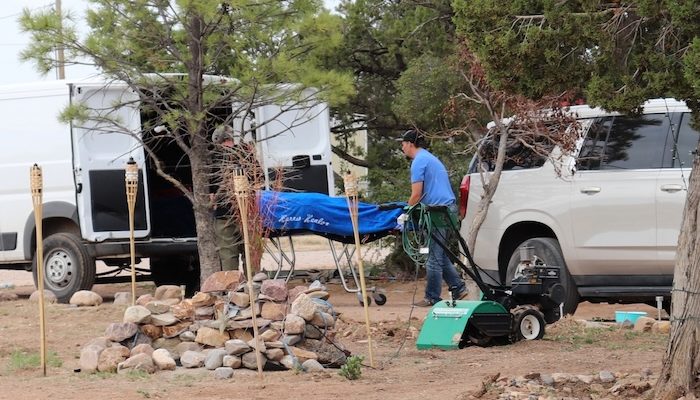
As law enforcement officers from multiple agencies remained on the scene late Tuesday afternoon, three bodies were placed onto gurneys and then loaded into a white van and driven away.

Yellow police tape surrounded the home, located on a dirt road in a rural subdivision. A singlewide trailer could be seen in the home’s backyard, with several cars, trucks and vans in the driveway.

While the investigation was ongoing, Silver said indications were pointing toward drugs as a possible factor in the deaths. He added that there was no threat to the public.

Residents, however, took to social media to voice their frustrations about drug use in the community and elsewhere. New Mexico had the fourth-highest rate of drug overdose deaths of any U.S. state in 2024, with 775 deaths, according to the most recent data available by the Centers for Disease Control and Prevention.

The mayor said the town’s law enforcement officers and first responders work every day to protect the community and respond to difficult situations.

“But the reality is that addiction and substance abuse are issues affecting communities all across our state and nation,” Nieto said. “There is no simple or immediate solution. Lasting change requires family support, accountability, education, and most importantly, individuals who are willing to accept help.”

Adapted from reporting by the Associated Press

DOJ Prosecutor Who Targeted Trump Charged w/ Stealing Documents

(Headline USAA former federal prosecutor in Florida sent to her personal email account a special counsel report from the investigation into President Donald Trump’s hoarding of classified documents despite a judge’s order that it was to remain sealed, according to an indictment made public on Wednesday.

Carmen Lineberger, who worked in the U.S. Attorney’s Office for the Southern District of Florida and managed its Fort Pierce branch, faces charges including theft of government property and concealment of government records. She pleaded not guilty during a court appearance in West Palm Beach. Her attorney did not immediately return messages seeking comment.

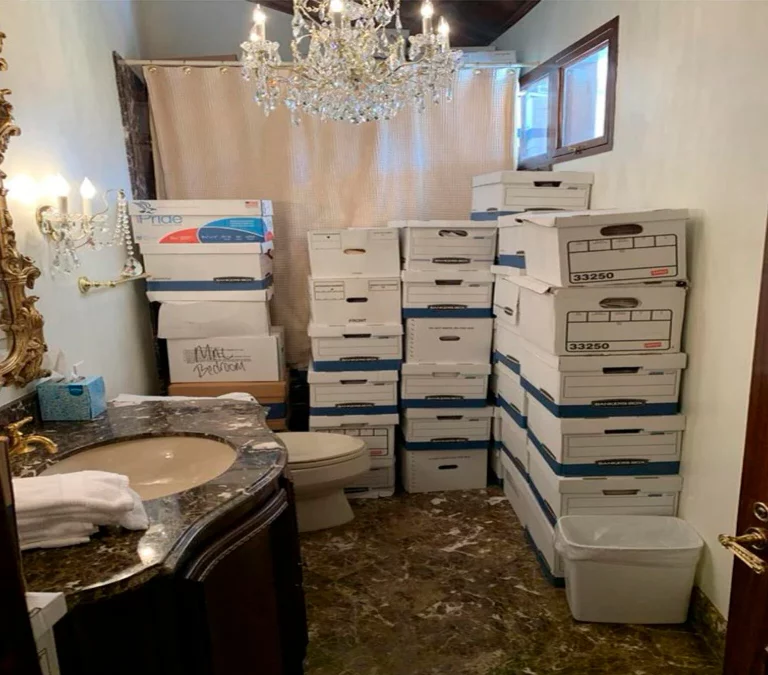
Prosecutors allege that while serving as a Justice Department prosecutor last December, Lineberger sent a copy of the report that special counsel Jack Smith and his team had prepared, recapping their investigation into Trump’s retention of top-secret documents at his Mar-a-Lago estate in Palm Beach, to her personal email account. At the time she did so, the indictment says, a judicial order barred Justice Department employees from sharing, transmitting or distributing copies of the report.

The indictment alleges that Lineberger sought to conceal her actions by altering the original file name of the report to “Bundt_Cake_Recipe.pdf” before saving the re-titled file on her government computer and emailing it to her personal email account with the subject line of “Bundt_Cake_Recipe,pdf.”

Several months earlier, according to the indictment, Lineberger created on her government computer a document consisting of portions of internal Justice Department messages, along with portions of an internal memorandum with header and footer markings that indicated it was for official use only.

She sent the material to her personal email address via an attached file titled “Chocolate_cake_recipe.pdf,” prosecutors say.

The indictment does not explain why Lineberger may have wanted to send the report, which prosecutors say she had access to in her professional capacity as a prosecutor, to her own email account.

The volume detailing Smith’s findings in a criminal investigation once seen as posing significant legal peril to Trump has never been seen by the public. U.S. District Judge Aileen Cannon sided with Trump’s lawyers, who argued that releasing the report would be unfairly prejudicial after Smith abandoned the case following Trump’s 2024 election victory.

Lineberger worked in the same judicial district where Smith’s case against Trump was filed. That case accused Trump of illegally retaining at the Mar-a-Lago property dozens of classified records from his first term and obstructing government efforts to get them back.

“This FBI will not hesitate to bring to account those who violated the trust of the American public in an investigation that should’ve never been brought to begin with,” FBI Director Kash Patel said in a statement posted on X.

Adapted from reporting by the Associated Press

Feds Probe Va. Schools After Alleged Trans Student Bathroom Scandal

(Luis CornelioHeadline USA) An ongoing scandal involving allegations that a transgender student secretly filmed or photographed fellow students in school bathrooms has formally drawn the attention of the Trump administration.

The Department of Education announced Wednesday that it is specifically looking into Loudoun County Public Schools after WJLA-TV reported that a transgender student at Freedom High School may have secretly recorded or photographed classmates inside a school bathroom.

The federal probe will examine whether the LCPS violated Title IX of the Education Amendments of 1972 by failing to “prevent and properly redress allegations of sexual harassment,” the agency said in a press release.

Assistant Secretary for Civil Rights Kimberly Richey criticized the district’s handling of the allegations, pointing to LCPS’s long history of controversies.

“Loudoun County – yet again – appears to demonstrate its profound dereliction of responsibility to protect its students’ privacy and dignity,” Richey said.

She added: “After repeatedly subjecting its minor students to the presence of members of the opposite sex in their intimate facilities, Loudoun reportedly stood idly by while an individual repeatedly recorded students, including minors, while undressed and using the restroom.”

WJLA-TV reported that the student may have recorded as many as 40 individuals, primarily male students, over a period of more than three years. The report also indicated school officials may have been aware of the allegations for longer than previously disclosed.

Principal Tania Brown notified parents of the incident in April. A subsequent email in May suggested that the conduct may not have been isolated, according to WJLA-TV.

The federal probe is being led by the Office for Civil Rights within the Department of Education, while the Loudoun County Sheriff’s Office is conducting a separate criminal investigation.

Headline USA spoke with a sheriff’s office deputy on Wednesday evening, though he declined to comment on the record. He referred inquiries to a spokesperson; a response is pending.

Loudoun County previously gained national attention after a male student was accused of sexually assaulting a female student in 2021. That same perpetrator went on to commit a separate assault in October 2021 at a different school.

He was found guilty on the first incident and pleaded no contest to the second.

This incident, along with broader protests over transgender-related school policies, has been cited as a major factor in the 2021 election of now-former Gov. Glenn Youngkin.

WATCH: Juveniles Destroy Washington DC Chipotle

(José Niño, Headline USA) A group of African American juveniles engaged in a violent brawl inside a Washington D.C. Chipotle on Saturday evening, throwing chairs and using them to attack one another as onlookers screamed, Breitbart News reported.

A Metropolitan Police Department spokesperson told ABC 7News the department knows about the incident and has opened an investigation.

The fight took place in the Navy Yard neighborhood, which has experienced similar disturbances repeatedly over the past several months. Navy Yard resident Ken Ledet told 7News that these events no longer surprise him.

“It’s not shocking anymore, since this has become routine on Saturdays and Friday nights, but it’s disappointing to know this is still happening,” Ledet told the outlet.

“I actually come to this Chipotle at least three or four times a week, so thankfully I didn’t come here last night.”

The incident happened only a day after United States Attorney for the District of Columbia Jeanine Pirro declared her office would begin prosecuting parents of minors who take part in the growing wave of “teen takeovers” sweeping the city. Pirro pointed specifically to problems in the Navy Yard area.

“We’re going to charge them, and if you drop your kid off and you fail to supervise them or you let them skip school to join the chaos, you are going to face fines, court-ordered classes and possible jail time,” Pirro said, per 7News.

Under the charge of contributing to the delinquency of a minor, parents could spend as long as six months in jail, according to Pirro.

José Niño is the deputy editor of Headline USA. Follow him at x.com/JoseAlNino

Support Swells Across the Aisle for $580B BUILD America 250 Act

(Alan Wooten, The Center Square) Five-year plans for American roads, bridges, transit, rail transportation, and highway and motor carrier safety programs reaches an 18-month crescendo Thursday with a committee markup of the $580 billion BUILD America 250 Act.

Introduced by Reps. Sam Graves, R-Mo., and Rick Larsen, D-Wash., and three others, the resolution from the Committee on Transportation and Infrastructure in the House of Representatives has already drawn support from industry groups, The Center Square has learned. Rep. David Rouzer, R-N.C., chairman of the Subcommittee on Highways and transit and among those introducing the bill, calls the nation’s infrastructure “the silent engine of American productivity, and it cannot afford to sit idle.”

“The BUILD America 250 Act brings commonsense fundamentals back to the forefront, strengthening our roads, highways, and bridges while ensuring the strategic, responsible use of hard-earned taxpayer dollars to get even more projects delivered,” Rouzer said. “This bill is the culmination of years of hard work and input from members of Congress and the public, including job creators around the nation, to pass a surface transportation bill that meets the fundamental infrastructure needs of the country.”

Authorization of the funds would be in fiscal years 2027 through 2031. The Highway Trust Fund contract authority accounts for a guaranteed $474.4 billion; there is $106 billion subject to future annual appropriations.

Graves is chairman of the committee and Larsen its ranking member. They, Rouzer, and Reps. Eleanor Holmes Norton, D-D.C., and Daniel Webster, R-Fla., introduced what is more formally known as Building Unrivaled Infrastructure and Long-term Development for America’s 250th Act.

Norton is ranking member of Rouzer’s subcommittee; Webster is chairman of the Hazardous Materials Subcommittee.

In an email to The Center Square, Owner-Operator Independent Drivers Association President Todd Spencer said in part, “This surface transportation reauthorization contains many meaningful provisions that support the men and women who make their living behind the wheel and avoids missteps that would make their lives harder. We look forward to this bill advancing out of committee and to the House floor.”

The organization expressed concern with autonomous vehicle manufacturers’ ability to self-certify their technology for deployment on public roads.

Hearings in the last 18 months, input, ideas and priorities for consideration were undertaken by the panel. More than 11,000 individual policy requests were submitted.

“This bill provides the largest investment in America’s bridges in our history, begins shoring up the Highway Trust Fund, cuts federal red tape, promotes transportation innovation and safety, allows states the flexibility to address their unique infrastructure challenges,” Graves said. “I look forward to a healthy debate on the bill in committee this week, and to moving it forward in the House.”

Opposition to the bill, or parts within it, is expected from environmental organizations, alternative transportation advocates and some regional planners.

Support, in addition to OOIDA, is from the American Trucking Associations, American Council of Engineering Companies, American Cement Association, and American Public Transportation Association.

“You can’t have a big-league economy with Little League infrastructure,” Larsen said. “A commitment to bipartisan lawmaking means finding compromise; while this bill does not include every priority, I am committed to building on the last bipartisan infrastructure law by creating good-paying transportation jobs, growing the economy and safely transporting people and goods across the country by road and rail.”