Senate Advances War Powers Resolution Meant To End Trump’s War With Iran

(Dave DeCamp, Antiwar.com) The Senate on Tuesday voted to advance a War Powers Resolution meant to bring an end to President Donald Trump’s war against Iran as he is threatening to restart the full-scale bombing campaign.

The legislation, which would direct the removal of US forces engaged in the blockade and other hostilities against Iran that haven’t been authorized by Congress, was advanced in a procedural vote of 50-47, a preliminary step before a final vote. It passed after seven previous attempts thanks to Sen. Bill Cassidy (R-LA) switching sides to support the bill, a move that comes after he lost his primary to a President Trump-backed opponent.

Cassidy joined three other Republicans — Senators Rand Paul (KY), Lisa Murkowski (AK), and Susan Collins (ME) — in supporting the legislation, while just one Democrat, Sen. Jon Fetterman (PA), opposed it.

The bill also advanced because three Republicans were absent for the vote. One more procedural vote is needed before it’s brought to the floor for a final vote to send it to the House, and if the Senate votes 50-50, Vice President JD Vance could cast a tie-breaking vote to kill the bill, as he did for a Venezuela War Powers Resolution back in January.

But the bill’s advancement reflects growing momentum for the War Powers effort, as the latest attempt in the House came very close to passing, with a 212-212 vote. The bills aren’t close to gaining a veto-proof majority at the moment, but advancing War Powers Resolutions in both chambers would send a significant message to the administration and make it more difficult politically for President Trump to restart the full-scale bombing campaign, which he continues to threaten.

While Trump administration officials have declared the 1973 War Powers Resolution “unconstitutional,” they have also been desperately trying to circumvent the law, which was passed to rein in the Executive Branch’s disregard for the Constitution’s requirement that Congress has the sole power to declare war.

The law includes a 60-day deadline for the president to end any unauthorized military action or obtain authorization from Congress, which has been falsely reinterpreted to give the president 60 days to wage war without congressional authorization.

The 60-day deadline for the Iran war expired on May 1, and the administration has tried to claim that the ceasefire should have paused the clock, but the blockade means the US military is still engaged in hostilities against the country. The US military has also attacked several Iranian commercial ships and bombed Iranian ports amid the blockade.

According to a report from NBC News, the Pentagon is considering renaming the war with Iran from “Operation Epic Fury” to “Operation Sledgehammer,” and the White House believes giving the conflict a new name would reset the War Powers clock. But all of the hostilities are clearly still part of the same war that the US and Israel launched on February 28.

This article originally appeared at Antiwar.com.  

Liberal Congressman Barney Frank Dies at 86

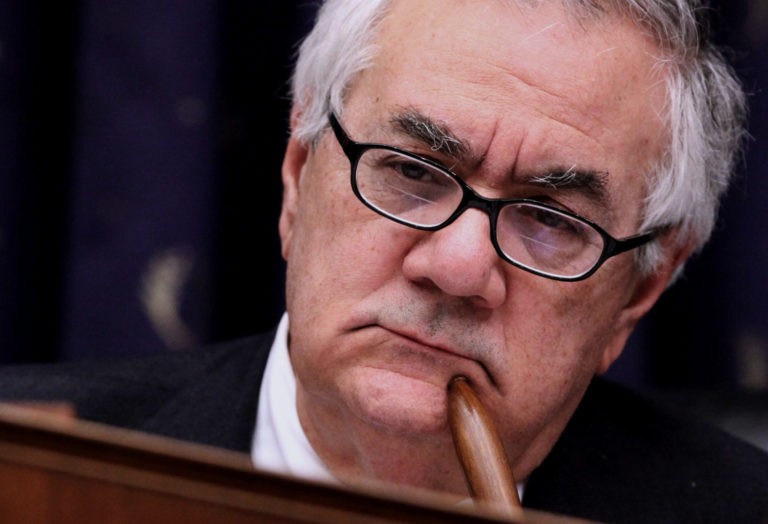
(Headline USA) Barney Frank, the longtime Democratic congressman and leading liberal who brought new visibility to gay rights and crafted the most significant reforms to the financial system in a generation, has died. He was 86.

Frank died late Tuesday, according to Jim Segel, Frank’s former campaign manager and close friend.

After representing broad swaths of Boston’s suburbs in Congress for 32 years, Frank and his husband moved to Ogunquit, Maine. He entered hospice there in April with congestive heart failure and is survived by his husband, Jim Ready, and sisters, the longtime Democratic strategist Ann Lewis and Doris Breay, along with brother David Frank.

A self-described “left-handed gay Jew,” Frank was known for his acerbic wit, combative style and focus on marginalized communities. He represented the party’s left wing while keeping close with Democratic leaders who sometimes frustrated progressives.

He is best known as a pioneer for LGBT rights. After decades of grappling with his sexuality, he publicly came out as gay in 1987, the first member of Congress to do so voluntarily. With his 2012 marriage to Ready, he became the first incumbent lawmaker on Capitol Hill to marry someone of the same sex.

But in an April interview as he entered hospice, Frank said he hoped he would be remembered for advocating a brand of politics that embraced progressive ideals without forcing them on voters prematurely. 

“I hope I made the point that the best way to accomplish the improvements in our society that we need, particularly in making it less unfair economically and socially, is by conventional political methods,” Frank said. “The main obstacle to our defeating populism and going further in the right direction is that mainstream Democrats have to make it clear that we oppose that part of the agenda of our friends on the left that is politically unacceptable. They’re right about a lot of things but you have to have some discretion.”

“You should not take the most unpopular parts of your agenda and make them litmus tests,” he added. “And that’s what my friends on the left have been doing.”

Born in 1940 in Bayonne, New Jersey, he entered politics in 1968 as an aide to Boston Mayor Kevin White before winning a seat in the Massachusetts House in 1972. Frank was elected to Congress in 1980, an otherwise dismal year for Democrats as the party lost dozens of seats in the U.S. House and Republican Ronald Reagan won the White House.

Frank’s pragmatic style surfaced early in his congressional career. He joined the liberal 

Democratic Study Group to help push then-Speaker Tip O’Neill, D-Mass., to respond more aggressively to the Reagan administration. But Frank said he found himself more often agreeing with O’Neill’s less confrontational approach.

Years later, as Congress prepared to pass a massive tax overhaul package, Frank intended to vote “no,” opposed to the bill’s lowering of top tax rates. He changed his mind, however, when he worked out a deal boosting affordable housing tax credits.

“I was happy to sacrifice my ideological purity to improve legislation that was going to become law with or without me,” he wrote.

Rep. Nancy Pelosi, the California Democrat and former House speaker, called Frank an “idealist to the nth degree.”

“The goals, the vision, the promise of it all,” she recalled in an interview. “Nobody could ever surpass what he brought to the table in that regard.”

Through his early years in Washington, Frank led something of a double life.

Privately, he socialized in the city’s gay circles and had relationships but did not publicly acknowledge his sexuality. The media at the time rarely reported that someone was gay unless that person was involved in a scandal. When Frank in 1987 invited a reporter to his office to formally ask whether the congressman was gay, Frank responded, “yeah, so what?”

Other elected leaders, perhaps most notably San Francisco’s Harvey Milk, had come out years before. Members of Congress, including Rep. Gerry Studds, D-Mass., were previously outed through scandal.

Frank’s approach made him the most prominent gay leader in national politics for much of the 1980s and 1990s. He helped secure AIDS funding and pressed the Democratic Clinton administration, unsuccessfully, to lift a ban on gays serving in the military.

But there were low points, too, most notably an overwhelming 1987 House vote to reprimand him for poor judgment involving a male prostitute he hired in 1985. Rep. Newt Gingrich of Georgia, the Republican whip at the time, pressed for the more severe punishment of censure, which was rejected by a large margin.

Frank became something of a punch line among conservative Republicans, with House Majority Leader Dick Armey, R-Texas, calling him “Barney Fag” in 1995. Armey said he misspoke and later apologized from the House floor.

By 2007, Frank was the chairman of the House Financial Services Committee, where he would leave his lasting policy mark as the U.S. economy careened toward collapse. He worked with the Republican Bush administration to pass a rescue package, providing vital support to financial institutions but spurring a populist revolt that still courses through American politics.

Once the initial crisis eased, Frank helped develop the most significant reform legislation since the New Deal. Working with then-Senate Banking Committee Chairman Chris Dodd, D-Conn., the Dodd-Frank Act would enhance consumer protections, impose new capital requirements for banks and boost the ability of regulators to monitor risk.

“Barney and I shared a fantastic relationship,” Dodd said. “I had many good moments in those 36 years in Congress, but none more significant, joyful, or productive than those almost two years working with Barney on our banking bill.”

During President Donald Trump’s second term, his Republican administration has worked to roll back many of the legislation’s provisions, arguing they were too onerous.

Frank faced his toughest reelection campaign in years in 2010 as the tea party wave swept over American politics. He opted against running again in 2012, though remained engaged in politics long after leaving Congress, including spending time as a contributor to the conservative Newsmax network.

He remained a fierce critic of Trump. Asked for his prediction on who might succeed the president, Frank said “unfortunately I won’t get to vote for it.”

Adapted from reporting by the Associated Press

Colorado Gov. Faces Political Exile Over Tina Peters Decision

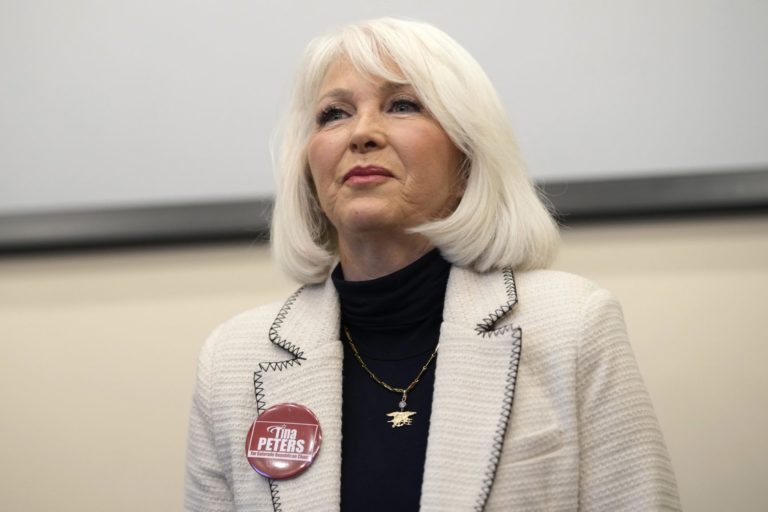
(Luis CornelioHeadline USA) Left-wing activists and Colorado Democrats launched a backlash campaign against Gov. Jared Polis after he commuted the controversial sentence of former Mesa County Clerk Tina Peters.

Political exile, censure, impeachment and even removal from office are among the measures being floated by the left in response to the commutation. Leading the attacks are Democratic politicians running for statewide office in 2026.

Sen. Michael Bennet vowed not to appoint Polis to replace him in the Senate if elected governor in the November 2026 election. Bennet is currently running for the Democratic nomination for governor, while Polis is term-limited.

“If I have the honor of becoming Colorado’s next governor, Jared Polis will not be considered in my place,” Bennet wrote on X after discussing the matter on CNN.

Meanwhile, left-wing attorney general candidate David Seligman called on the General Assembly to reconvene for special sessions “for the purpose of impeaching or censuring” Polis.

Seligman accused Polis of commuting Peters’s nine-year sentence in the election interference-related case only after the legislature adjourned to “avoid accountability.”

Colorado Secretary of State Jenna Griswold described the commutation as an “affront to democracy, the people of Colorado, and election officials across the country.” Like Seligman, Griswold is running for the Democratic nomination for attorney general.

Polis maintained in several interviews that he decided to commute Peters’s sentence independently, though President Donald Trump had long demanded that Polis pardon Peters.

The Democratic governor said the commutation came after a Colorado appeals court ruled that her nearly decade-long sentence was “based in part” on constitutionally protected speech — specifically her belief that the 2020 election was stolen.

Instead, the appellate court ruled that Peters must be resentenced based on the election-system breach in Mesa County in 2021.

Peters is set to be released in the coming weeks.

NRA Honors Heroic Local Cop Who Shot Would-be Trump Assassin in Butler

(Ken Silva, Headline USA) President Donald Trump may not acknowledge that it was a local cop, rather than the Secret Service, who may have saved his life in Butler, Pennsylvania nearly two years ago. But at least the National Rifle Association is honoring Butler ESU member Sgt. Aaron Zaliponi for his heroics on July 13, 2024.

The NRA announced Monday that it’s bestowing the 2025 Officer of the Year Award on Zaliponi, who fired at alleged would-be assassin Thomas Crooks about five seconds after the shooting started—and a whopping 10 seconds before the Secret Service finally returned fire.

The NRA’s press release recounted what happened from the time shots were fired to after Crooks was killed.

“Sergeant Zaliponi immediately scanned the area then heard a fourth gunshot and he looked at the top of the building and observed a gunman, in a prone position, at the apex of the roof,” the press release said.

“The gunman then fired a fifth, sixth, and a seventh shot. Sergeant Zaliponi quickly acquired the gunman in his rifle’s red dot optic, just as the suspect fired his eighth shot. Sergeant Zaliponi then fired his one and only shot at the suspect, from 115 yards away, which was the ninth shot of the incident,” the NRA said.

“Immediately after Sergeant Zaliponi fired, he observed the gunman jerk to his right, then slowly slump over his rifle and slide down the backside of the roof.”

Ten seconds later, Secret Service counter-sniper David King fired the final shot.

While Zaliponi is convinced he hit Crooks, the medical examiner who conducted the autopsy on Crooks have both denied that Zaliponi hit the gunman. The FBI has also stated that it has “no forensic evidence indicating that [the round fired by the local officer] either struck our subject or the subject’s rifle.”

But in the Fox Nation documentary, Butler ESU Commander Ed Lenz noted the obvious: Crooks stopped shooting after Zaliponi returned fire, so his shot must have hit something.

“You don’t shoot ‘one, two, three, four, five, six, seven, eight—and then just stop,” Lenz said.

Trump has largely ignored Zaliponi’s heroics. After the White House Correspondents’ Dinner Association attack earlier this month, he lauded counter-sniper King as the person who shot Crooks—saying that King fired from over 400 yards away and stopped Crooks within 4.2 seconds. Both of those statements are incorrect.

“Within 4.2 seconds from a distance of about 400 yards, one shot, and he was gone. His name is David … I like you very much, David,” Trump falsely said, referring to David King.

Ken Silva is the editor of Headline USA. Follow him at x.com/jd_cashless.

Trump Stands By Chinese Student Visa Program

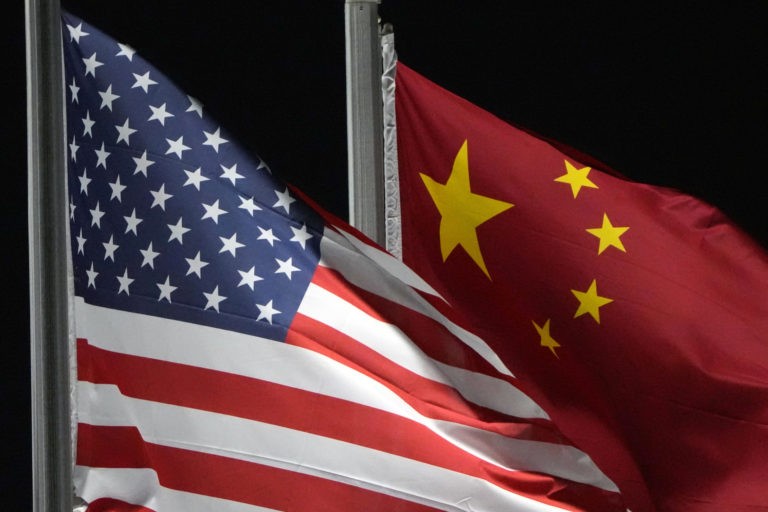
(José Niño, Headline USA) President Donald Trump mounted a forceful defense of Chinese student visas on Fox News, cautioning that expelling half a million foreign students from American campuses would cripple universities across the country, Breitbart News reported.

During his Thursday appearance on “Hannity,” Trump resisted pressure to curtail Chinese enrollment at American institutions, casting such action as both diplomatically damaging and financially destructive.

“As far as the students, it’s 500,000 students they come—good students. I could tell them, ‘I don’t want any students,’ is a very insulting thing to say to a country,” Trump stated. “They would then immediately go out and start building universities all over China.”

The president recognized that his stance might catch some allies off guard. “I frankly think that it’s good that people come from other countries and they learn our culture, and many of them want to stay here. I think it’s good. Not everybody agrees with me, and it doesn’t sound like a very conservative position,” he remarked. “And I’m as conservative—I’m a conservative guy. I’m really a common sense guy, I think, more than a conservative. I think MAGA is common sense.”

Trump stressed that prestigious universities would weather a foreign student prohibition but that lesser known schools would face disaster. “You want to see a university system die, take a half a million people out of it,” he cautioned. “The top schools will do fine, but your lower schools, your lower—the ones that don’t do quite as well—those two, they’ll be dying all over the place.”

When Hannity mentioned worries that certain foreign students might possess “nefarious intentions,” Trump accepted the premise but implied that intelligence gathering occurs on both sides.

“Sure, I know, and we worry about that, and honestly, you know, they do things to us, and we do things to them. It’s a very fine line, the whole thing with students,” Trump replied.

The president circled back multiple times to the financial and diplomatic fallout that would follow any enrollment restrictions. “You want to screw it up, take a half a million students, and you’re gonna see bankruptcies at the lower end of good colleges—but they’re not known or whatever,” he explained. “You’re gonna have a lot of problems.”

Trump further observed that colleges themselves resist such measures. “It’s something I’m always looking at, but it’s a very insulting thing to tell a country, ‘We don’t want your people in our schools.’ I mean, it really is,” he added. “School systems don’t want that to happen because you won’t have much of a school system.”

The comments position Trump awkwardly relative to immigration hawks within his own movement who have demanded stricter oversight of Chinese nationals enrolled at American universities, especially those pursuing studies in sensitive fields tied to national security.

José Niño is the deputy editor of Headline USA. Follow him at x.com/JoseAlNino

Democrat Senate Candidate Revealed to Have Bizarre Bathroom Fetish

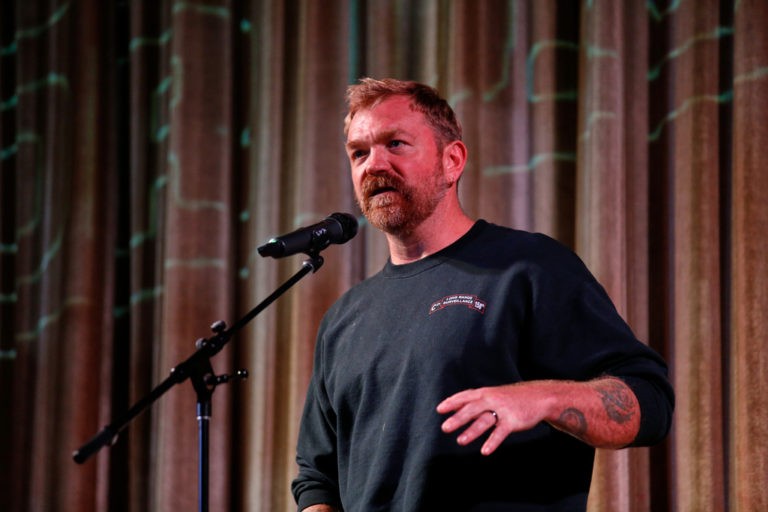
(José Niño, Headline USA) Graham Platner, the progressive favorite seeking Maine’s Senate seat, is grappling with newly surfaced Reddit posts containing graphic sexual admissions about portable toilets and glowing descriptions of obscene military bathroom artwork, according to Fox News.

A March 2017 entry on Reddit’s r/Military forum captured Platner responding to a thread about memorable military smells. “I still have to jerk off every time I sit in a portas—-er… that blue water smell conditioned me,” he wrote.

The posts originated from “P-Hustle,” a deleted Reddit account that Platner has previously confirmed belonged to him.

A separate March 2021 post on Reddit’s r/USMC forum showed Platner waxing poetic about a crude penis illustration inside a portable toilet during an overseas assignment. In a thread celebrating so called “GWOT Dick Art,” Platner launched into lavish praise for the drawing, describing it as “beautiful,” “engorged and veiny,” and moving “towards its penetrative glory.”

“Oh s—!!!,” Platner exclaimed. “You’ve got the Hot Rod C— from Manas!”

Manas served as a critical U.S. military transit point in Kyrgyzstan throughout the Afghanistan conflict. Platner joined the Marines in 2003 and deployed three times to Iraq before transferring to the Maryland Army National Guard in 2010 for a fourth combat tour in Afghanistan. He went back to Afghanistan eight years later working as a security contractor.

“I sat there in sheer awe,” Platner recounted about the illustration. “The soul filling joy to be allowed to witness such glory.”

When confronted about his controversial posts previously, Platner insisted he was not being serious. “You should read the comments in context. It’s very clear I’m joking,” he told Fox News Digital. “It’s called s—posting. It’s when you argue with people on the internet and try to bother them. So, yeah, no, it’s very obviously not true.”

These disclosures represent the latest in a string of inflammatory online comments that critics say cast doubt on Platner’s fitness for office. He clinched the Democratic nomination after two term Governor Janet Mills abandoned her campaign last month amid weak polling and fundraising. Platner carries endorsements from progressive heavyweights Senators Bernie Sanders and Elizabeth Warren.

Republican strategist Mehek Cooke told Fox News Digital that voters will care about the posts because they are “deciding whether Graham Platner has the judgment, temperament, and basic decency to represent Maine in the Senate.”

“His campaign has been built around authenticity and moral seriousness. These posts undercut both,” Cooke observed. “Platner is not a truth-teller. He is someone whose instincts appear crude, reckless, and deeply unserious. And by the way, if they were really ‘jokes,’ why delete the posts? That sounds less like humor and more like a CYA cleanup operation.”

Platner has also drawn fire over a New York Times interview concerning a 2013 post in which he suggested people worried about rape should not “get so f—ed up they wind up having sex with someone they don’t mean to.” Further scrutiny has followed posts where he called himself a “communist” and “socialist,” along with alleged homophobic slurs and expressions of admiration for Hamas military tactics.

Cooke maintained that “one tasteless post” might be excused as “immaturity” but a “years-long trail of vulgar, sexually degrading, and slur-filled commentary is a character issue.”

José Niño is the deputy editor of Headline USA. Follow him at x.com/JoseAlNino 

Trump-Endorsed Gallrein Ousts Massie in Kentucky

(The Center Square) Rep. Andy Barr and Ed Gallrein secured partisan nominations in high-profile Kentucky primary races Tuesday, according to multiple outlets.

President Donald Trump’s endorsement appeared critical for both candidates.

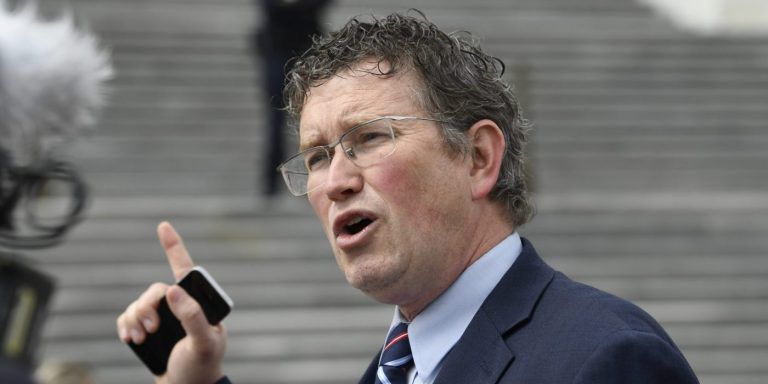
Gallrein, a farmer and business owner, rode the political capital and the endorsement of President Donald Trump to defeat long-time Congressman Thomas Massie, who has served in Kentucky’s fourth congressional district since 2012.

Massie drew the ire of Trump for his continued pressure on the administration about the Jeffery Epstein files and the ongoing conflict with Iran.

Trump surrogates Vice President JD Vance and Secretary of Defense Pete Hegseth both made campaign apperances for Gallrein.

“Fourth district voters appreciate having an independent conservative voice who works for them,” Massie said

Gallrein has spoken out about Massie’s voting record and criticized his lack of support for Trump’s agenda, including Massie’s vote seeking to restrict Trump’s authority in the conflict with Iran.

“If we do not take advantage of this narrow window of opportunity we have, history will punish us,” Gallrein said at a campaign event on Monday.

Trump has called Massie is “fraudulent” and the “Worst Congressman in the History of our Country” before polls closed on Tuesday.

“Thomas Massie is a terrible congressman, he’s been a terrible congressman from day one,” Trump said to reporters on Tuesday. “I don’t think he’s a Republican, I think he’s actually a Democrat, he’s not a libertarian, he’s really a Democrat.”

Gallrein will face off against Melissa Claire Strange, the Democrat candidate in Kentucky’s fourth district, in November.

Andy Barr, a Trump-endorsed Republican, came out on top of the race to succeed Sen. Mitch McConnell. He became a frontrunner after Nate Morris was nominated to an unnamed ambassadorship in the Trump administration’s cabinet.

Barr has touted his record in Kentucky’s sixth congressional district throughout his campaign. Barr was first elected to his post in 2012.

“Together, we’ll cut taxes, slash waste and fire the deep state bureaucrats who steal our freedoms,” Barr said. “We’ll deport illegal aliens instead of putting them in luxury hotels.”

Voters in Kentucky will return to the polls in November to elect candidates who will serve in the U.S. Senate and U.S. House next year.

Trump Says He Decided To ‘Hold Off’ on Plans To Attack Iran

(Dave DeCamp, Antiwar.com) President Donald Trump said in a post on Truth Social on Monday that he has decided to “hold off” on a plan to attack Iran on Tuesday due to requests from the US’s Gulf Arab allies.

Trump claimed that the request to delay the attack came from the leaders of Qatar, Saudi Arabia, and the United Arab Emirates. The president said that he would oblige the request but threatened that a US attack on Iran could still happen at any moment.

“Based on my respect for the above mentioned Leaders, I have instructed Secretary of War, Pete Hegseth, The Chairman of The Joint Chiefs of Staff, General Daniel Caine, and The United States Military, that we will NOT be doing the scheduled attack of Iran tomorrow, but have further instructed them to be prepared to go forward with a full, large scale assault of Iran, on a moment’s notice, in the event that an acceptable Deal is not reached,” he wrote.

Trump said the Arab states requested the delay because “serious negotiations are now taking place, and that, in their opinion, as Great Leaders and Allies, a Deal will be made, which will be very acceptable to the United States of America, as well as all Countries in the Middle East, and beyond.”

Earlier in the day, a senior US official told Axios reporter Barak Ravid that Iran’s latest response in the negotiations being mediated by Pakistan was unacceptable to the US because Tehran isn’t caving to US demands. The official warned that new US strikes on Iran were likely.

“It’s time for the Iranians to throw a bit of candy out. We need some real, sturdy, and granular conversation [regarding the nuclear program]. If that’s not gonna happen, we will have a conversation through bombs, which will be a shame,” the US official said.

This article originally appeared at Antiwar.com.  

Cuba’s President Warns That US Attack Will Cause ‘Bloodbath’

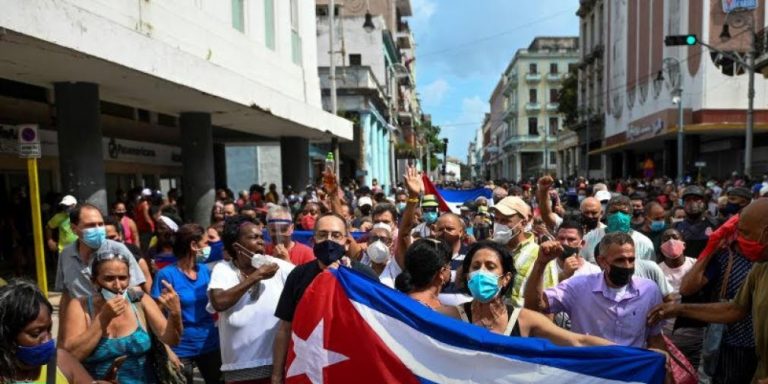
(Dave DeCamp, Antiwar.com) Cuban President Miguel Diaz-Canel said on Monday that any US attack on Cuba would cause a “bloodbath,” a warning that comes as US officials are setting up pretexts for a potential war on the island nation.

“The threats of military aggression against [Cuba] from the world’s greatest power are well-known,” Diaz-Canel wrote on X. “The threat itself already constitutes an international crime. If it were to materialize, it would trigger a bloodbath with incalculable consequences, plus the destructive impact on regional peace and stability.”

The Cuban leader also appeared to respond to a report from Axios, which cited unnamed US officials who claimed Cuba’s military has discussed using drones against the US base at Guantanamo Bay, US warships, or even potentially Key West, Florida. Buried in the report was an acknowledgment that the United States doesn’t “believe Cuba is an imminent threat, or actively planning to attack American interests” and that any alleged conversations about drone warfare were regarding potential responses to a US attack.

“Cuba poses no threat, nor does it have aggressive plans or intentions against any country. It has none against the US, nor has it ever had any — something the government of that nation knows full well, particularly its defense and national security agencies,” Diaz-Canel said in his X post.

“Cuba, which already endures a multidimensional aggression from the US, does have the absolute and legitimate right to defend itself against a military onslaught. Yet that cannot be wielded, either logically or honestly, as an excuse for imposing war on the noble Cuban people,” the Cuban leader added.

Besides the Axios story, another pretext being discussed is the possibility of the Department of Justice indicting former Cuban President Raul Castro, the brother of long-time leader Fidel Castro, over the 1996 downing of two planes belonging to a Cuban exile group, which killed four people. The idea appears to be to follow a similar playbook as the US pursued regarding its attack on Venezuela.

President Donald Trump has repeatedly threatened some sort of attack on Cuba, saying in March that he may have the “honor” of “taking” the country. The US has also imposed a ramped-up oil embargo on Cuba, which has caused a devastating humanitarian crisis in the country.

This article originally appeared at Antiwar.com.  

TrumpRx Expanding, Offering Generic Prescription Drugs

(Morgan Sweeney, The Center Square) TrumpRx is expanding to about seven times its current size, adding more than 600 generic prescription drugs to the months-old direct-to-consumer government website, the president said Monday.

The website was created as part of President Donald Trump’s campaign to lower drug prices for Americans, a policy agenda continued from his first term. TrumpRx.gov functions as an online marketplace for a number of select expensive pharmaceutical drugs, with the manufacturers having agreed to significantly discount them for Americans who don’t have or aren’t using their insurance. 

By adding a broad catalog of low-cost generic drugs to the website, the administration hopes it will increase consumers’ awareness of generics that might work for them that they may not have known about.

“Cost-effective generic drugs are often available at just a tiny fraction of the price of their brand name equivalents, and in theory they’re the same thing, yet many consumers do not think to ask for them. They don’t know about them,” Trump said.

The website went live in January and was rolled out alongside the president’s most-favored-nation pricing initiative, where the Trump administration negotiated with major pharmaceutical manufacturers for drug pricing that is more comparable to America’s economic peers. The manufacturers agreed to sell many of their drugs to state Medicaid programs at most-favored-nation pricing, as well as offer deep discounts on the list price of some of their drugs on TrumpRx.

“In some cases, the discounted generics available through Trump RX may be offered at an even lower cash price than the out-of-pocket insurance costs, which has always been the lowest. We’re going to be lower,” he added.

Trump also said that the administration is adding new tools to the website that will allow patients to find the lowest price pharmacy near them.

Monday’s announcement was part of a series of health care affordability events the president has hosted announcing similar deals or initiatives, aimed at speaking to the rising cost-of-living that burdens many voters ahead of the 2026 midterm elections.