(Headline USA) With Muslims boycotting the Democrat ticket amid outrage over President Joe Biden’s handling of the Israel–Hamas conflict, the White House is seeking foreign intervention in a highly unorthodox campaign ploy that would seem to raise serious concerns over potential conflicts of interest.
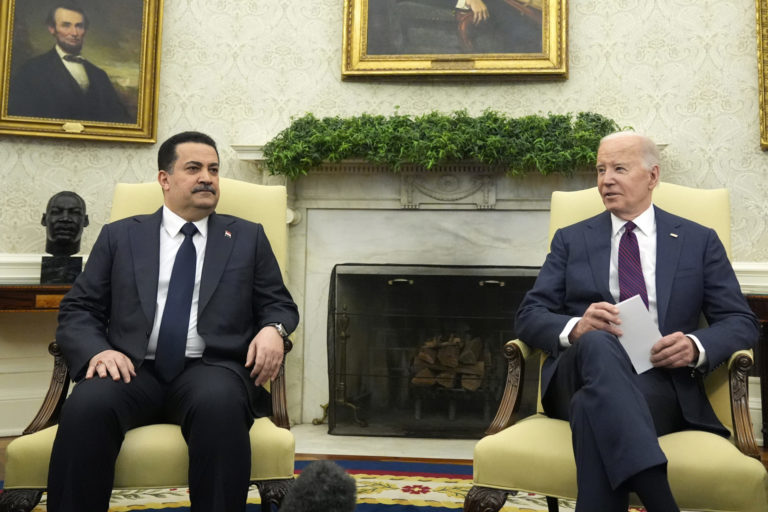
The leader of Iraq traveled to Michigan on Thursday to meet with the state’s large Iraqi community and update them on escalating tensions in the Middle East following Iran’s weekend aerial assault on Israel.
The visit from Iraqi Prime Minister Mohammed Shia al-Sudani has been thrust into the spotlight following the Iran’s weekend attack on Israel, which included drone and missile launches that overflew Iraqi airspace, as well as others that were launched from Iraq by Iran-backed groups.
Some are now speculating that Biden may, in fact, have greenlighted the Iranian attack using back-channel communications, ostensibly to mitigate the potential fallout that a surprise attack would have incurred.
Nonetheless, the Iron Dome defense systems activated for the face-saving military showcase cost billions of dollars for the U.S.
Al-Sudani’s trips to both Washington and Michigan to discuss U.S.–Iraq relations had been planned well before Saturday’s drone and missile launches from Iran-backed groups.
But it comes just three days after the two world leaders met to reaffirm their “strategic partnership” on a variety of issues—including efforts to streamline Iraq’s energy and banking sectors—raising questions about how much funding, courtesy of U.S. taxpayers, was attached to the agreement.
Republican lawmakers earlier this month slammed al-Sudani’s close ties with the rogue Iranian regime, noting that Iraq has provided considerable funding that likely helped support regional terrorism against Israel and U.S. interests.
“Your appeasement of Iran has endangered American national security and weakened our relationship with our allies,” said a letter signed by four U.S. senators and four members of the House of Representatives.
Just months prior to the deadly Hamas attack on Israel that broke a two-year ceasefire and left some 1,200 innocent Israelis dead, Biden authorized Iraq to release $2.76 billion in frozen assets to its Iranian neighbor.
In their letter, the Republican legislators went on to list several specific actions that the Iraqi government had taken that conflicted with U.S. military, diplomatic and trade efforts in the Middle East, according to The Hill.
For Biden, whose reelection prospects could pivot on his success in wooing Michigan’s Arab population, soliciting campaign assistance from al-Sudani may be far more valuable than any Middle-Eastern concessions.
There are just over 90,000 residents in Michigan of Iraqi descent, the largest of any state, according to the most recent U.S. Census. In Wayne County, home to the cities of Detroit and Dearborn, 7.8% of residents identified of Middle Eastern and North African ancestry, alone or in any combination, the highest percentage of any U.S. county.
However, protest votes during the Democratic primary triggered fears that residents—many of them refugees from America’s eight-year war with Iraq, which ended in 2011—could sit out the November election and hand the crucial swing state, once again, to Republican contender Donald Trump.
Al-Sudani was expected to land in the Detroit area Thursday evening and be met by local leaders, including Wayne County Executive Warren Evans and Assad I. Turfe, a deputy Wayne County executive.
He will then travel to a mosque in Dearborn Heights to meet with Iraqi community members and officials to give an update on his meeting with Biden talking about the economic relations between Iraq and the U.S., according to Mohammed Al-mawla, a community member involved in the planning.
Earlier this month, Dearborn became immersed in a swirl of controversy after “Death to America” chants erupted during an Al-Quds Day protest.
The group also made clear its displeasure with Biden during the demonstration.
“It’s not Genocide Joe that has to go; it’s the entire system that has to go,” said local activist Takek Bazzi. “Any system that would allow such atrocities and such devilry to happen and would support it—such a system does not deserve to exist on God’s earth.”
Concern about the defection of a core Democrat constituency has already resulted in multiple visits from Biden administration officials to the area.
Amos Hochstein, a senior adviser to Biden, traveled to metro Detroit in March to meet with Lebanese Americans and discuss efforts to prevent the conflict from expanding along Israel’s northern border, where Hezbollah operates.
Ahead of the Feb. 27 primary, several White House officials also traveled to Dearborn to meet with Arab–American leaders to discuss the conflict.
Nonetheless, more than 100,000 Democratic voters in Michigan—or 13% of the Democratic vote total—wrote in “uncommitted,” despite Biden having been the only serious candidate.
Trump, the first Republican to win Michigan since 1988, defeated Hillary Clinton by fewer than 11,000 votes in 2016.
(Ken Silva, Headline USA) Last month, American and Mexican authorities captured a fugitive, David DeWayne Young, who was wanted in the U.S. as part of a massive drug conspiracy case.
According to Mexican journalist Óscar Balmen, the U.S. authorities had help from “Los Chapitos,” the sons of notorious Mexican drug lord Joaquín “El Chapo” Guzmán, who headed the Sinaloa Cartel until he was eventually captured and extradited to the U.S. in January 2017.
“As for El Chapo’s sons, they knew that an American fugitive was hiding in one of their strongholds. They decided they would score points with the FBI and hand him over as a goodwill offering,” Balmen recently said, according to a report in the UK Daily Star.
“Giving his [Young’s] head on a platter would be convenient for them, because after the surprise arrest and express extradition of Ovidio [Guzmán] they started an operation to remove the label of ‘Uncle Sam’s priority targets for trafficking fentanyl’.”
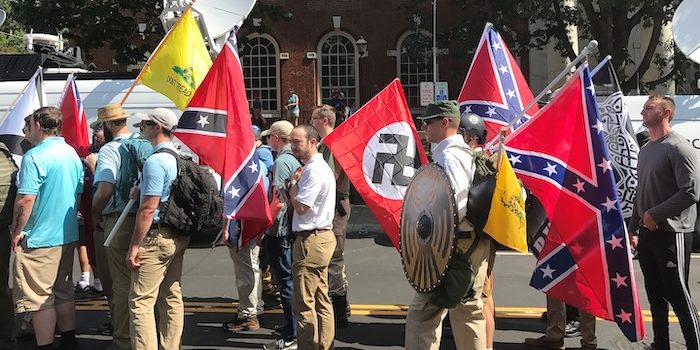
Balmen also reportedly said the sons weren’t happy with Young’s “anti-Mexican” rhetoric. Young is a member of the neo-Nazi prison gang, the Ghostface Gangsters Gang.
The notion that the Sinaloa cartel helping the FBI might seem preposterous, given that Guzmán is serving a life prison sentence in the U.S., and one of his sons was arrested in January last year and is now awaiting trial in the U.S.
However, the Sinaloa cartel has a long history of cooperating with federal authorities as part of a self-preservation strategy.
Newsweek detailed Sinaloa’s strategy of working with the U.S. in 2013, when the news organization interviewed an informant from the cartel.
“Most criminals who become informants do so because they’ve been arrested and squeezed, encouraged to betray their criminal employers in exchange for leniency. But this man had an unusual story to tell about his first encounter with U.S. federal agents. It was his boss, a top manager at the Sinaloa cartel, who encouraged him to help the Americans: ‘Meet with the U.S. investigators, he was told. See how we can help them with information,’” Newsweek reported.
The informant reportedly said an Immigration and Customs Enforcement told him that they were here to help [the Sinaloa cartel]—”and to fuck the Vicente Carrillo cartel. Sorry for the language. That’s exactly what they said,” the informant told Newsweek.
The same year as Newsweek’s investigation, an anonymous Mexican government official reportedly accused the US government of helping the Sinaloa cartel in an internal email leaked in 2012. The Mexican official reportedly alleged that US authorities told the Juarez Cartel in 2010 that it should recognize the superiority of the Sinaloa Cartel and called on both groups to cut down on violence in the area.
And in 2014, another outlet, Business Insider, revealed in 2014 that the DEA was exchanging intelligence with the Sinaloa cartel.
More recently, an ATF whistleblower has come forward with information suggesting that the U.S. is still funneling guns to Mexican cartels in an operation similar to the Obama-era Fast and Furious scandal.
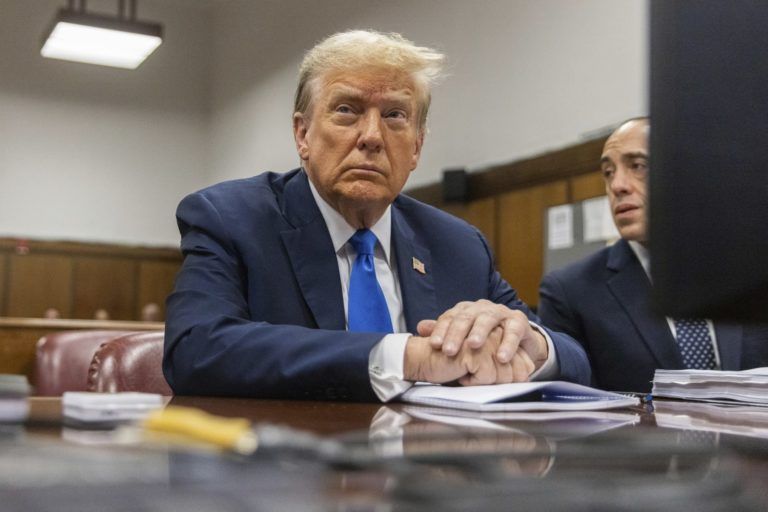
Update: A jury of 12 people was seated Thursday in former President Donald Trump’s hush money trial in New York, and the court quickly turned to selecting alternate jurors.
The rapid progress Thursday afternoon came despite an earlier setback in which two of the seven selected on Monday were dismissed.
The jury includes a sales professional, a software engineer, an English teacher and multiple lawyers.
Original story below:
(Headline USA) Two jurors in former President Donald Trump’s trial for falsifying business records were dismissed Thursday: one after expressing doubt about her ability to be fair and impartial, and the other over concerns that some of his answers in court may not have been accurate.
The dismissals reduced to five the number of jurors who have been seated for the unprecedented trial of a former president.
The setbacks in the selection process emerged during a frenetic morning in which prosecutors also asked for Trump to be held in contempt over a series of Truth Social posts this week, while the judge barred reporters from identifying jurors’ employers after expressing privacy concerns.
The jury selection process picked up momentum Tuesday with the selection of seven jurors. But on Thursday, Judge Juan Merchan revealed in court that one of the seven, a cancer nurse, had “conveyed that after sleeping on it overnight she had concerns about her ability to be fair and impartial in this case.”
And though jurors’ names are being kept confidential, the woman told the judge and the lawyers that she had doubts.
“Yesterday alone I had friends, colleagues and family push things to my phone regarding questioning my identity as a juror,” she said. “I don’t believe at this point that I can be fair and unbiased and let the outside influences not affect my decision-making in the courtroom.”
A second seated juror was dismissed after prosecutors raised concerns that he may not have been honest in answering a jury selection question by saying that he had never been accused or convicted of a crime.
The IT professional was summoned to court to answer questions after prosecutors said they found an article about a person with the same name who had been arrested in the 1990s for tearing down political posters pertaining to the political Right in suburban Westchester County.
A prosecutor also disclosed that a relative of the man may have been involved in a deferred prosecution agreement in the 1990s with the Manhattan district attorney’s office, which is prosecuting Trump’s case.
Because the juror was questioned Thursday at the judge’s bench, off-microphone and out of earshot of reporters, it was not known whether the man confirmed or denied either instance was connected to him.
Twelve jurors and six alternates must be seated to hear the trial. Merchan said Tuesday that opening statements could begin as soon as Monday.
The process of picking a jury is a critical phase of any criminal trial, but especially so when the defendant is a former president and the presumptive Republican nominee. Prospective jurors have been grilled on their social media posts, personal lives and political views as the lawyers and judge search for biases that would prevent them from being impartial.
Inside the court, there’s broad acknowledgment of the futility in trying to find jurors without knowledge of Trump. A prosecutor this week said that lawyers were not looking for people who had been “living under a rock for the past eight years.”
But Thursday’s events laid bare the inherent challenges of selecting a jury for such a landmark, high-publicity case. More than half the members of a group of 96 prospective jurors brought into the courtroom were dismissed Thursday, most after saying they doubted their ability to be fair and impartial.
After dismissing from the jury the nurse who had already been selected, Merchan ordered journalists in court not to report prospective jurors’ answers to questions about their current and former employers.
“We just lost, probably, what probably would have been a very good juror for this case, and the first thing that she said was she was afraid and intimidated by the press, all the press, and everything that had happened,” Merchan said after dismissing the juror.
Prosecutors had asked that the employer inquiries be axed from the jury questionnaire. Defense lawyer Todd Blanche responded that “depriving us of the information because of what the press is doing isn’t the answer.”
The district attorney’s office on Monday sought a $3,000 fine for Trump for three Truth Social posts they said violated a recent gag order imposed on the former president.
Since then, though, prosecutors say he’s made seven additional posts that they claimed violated the order.
Several of the posts involved an article that referred to former Trump lawyer Michael Cohen as a “serial perjurer,” and one from Wednesday repeated a report by Fox News host Jesse Watters that left-wing activists were lying to get on the jury, said prosecutor Christopher Conroy.
Trump lawyer Emil Bove said Cohen “has been attacking President Trump in public statements,” and Trump was just replying.
The judge had already scheduled a hearing for next week on the prosecution’s request for contempt sanctions over Trump’s posts.
The trial centers on a $130,000 payment that Cohen made shortly before the 2016 election to porn star Stormy Daniels to prevent her claims of a sexual encounter with Trump from becoming public in the race’s final days.
Prosecutors say Trump obscured the true nature of the payments in internal records when his company reimbursed Cohen, who pleaded guilty to federal charges in 2018 and is expected to be a star witness for the prosecution.
Trump has denied having a sexual encounter with Daniels, and his lawyers argue that the payments to Cohen were legitimate legal expenses.
Trump faces 34 felony counts of falsifying business records. He could get up to four years in prison if convicted, though it’s not clear that the judge would opt to put him behind bars given the logistical issues it would create and the probability of mass outrage that would likely result in widespread public demonstrations and potentially aid Trump’s reelection effort.
Trump would almost certainly appeal any conviction.
Making matters worse, top Pentagon officials have displayed shocking ignorance about the simmering situation, according to their testimonies at congressional hearings this week.
The situation in Niger stems from the country’s government declaring last month that the U.S. military presence there is “illegal.” However, the Biden administration has yet to make any moves towards withdrawing troops.
In a letter published Wednesday by the Washington Post, an Army whistleblower accused Biden of endangering the troops’ lives by leaving them there against the wishes of Niger.
“Americans deployed here have not been able to perform their primary mission and have been told to ‘sit and hold.’ It is clear that the country of Niger does not want a permanent military presence in the country and they have informed us that we need to leave,” the whistleblower said.
“At the same time, there are approximately 1,100 US Military Service Members in the country who are essentially being held hostage from returning home to their families while the State Department continues with failed diplomacy by not communicating with the country of Niger on what their withdrawal plans will look like.”
According to the whistleblower, the troops in Niger can’t leave because the government isn’t approving visas for the new troops that would replace them.
According to Rep. Matt Gaetz, the troops in Niger now are experiencing shortages of water, medicine and other supplies. Gaetz grilled Army Secretary Christine Wormuth and Chief of Staff Gen. Randy George about the matter Wednesday during a budget hearing.
Perhaps just as shocking as the situation in Niger is the fact that the senior Army officials said they didn’t know about what’s going on there.
Right now in Niger, the government has stopped the U.S. from doing diplomatic overflight missions.
We have Army soldiers in Niger who aren’t getting their troop rotations, their medicine, or even their basic supplies. I currently have constituents there who can’t even get clean… pic.twitter.com/DpMXb2AThY
“Army soldiers right now in Niger who aren’t getting their troop rotations, who aren’t getting their medicine, who aren’t getting their supplies, who aren’t getting their mail,” Gaetz said. “And the two senior people in the United States Army are sitting before me, and it’s like ‘hear no evil, see no evil, speak no evil.’”
Gaetz said the top Army officials must be ignorant about Niger because the U.S. embassy there is blocking intelligence from reaching them. Gaetz said this must be because Secretary of State Antony Blinken called Niger a “model democracy” last year—months before a coup took place—and is now suppressing intel to avoid embarrassment.
Gaetz said he fears this coverup will lead to another Benghazi.
“U.S. embassy Niger has been blocking the intelligence. I fear that as we speak, the conditions are forming for another Benghazi-style attack,” he said on the House floor this week.
(Ken Silva, Headline USA) An American Nazi-jihadist terrorist alliance: It was an idea pushed after 9/11 by groups such as the FBI, Anti-Defamation League and Southern Poverty Law Center.
Though that leftist propaganda campaign never took hold after 9/11, it looks like the same groups are at it again in the wake of the Oct. 7 Hamas attack on Israel.
Gun Owners of America recently obtained heavily redacted FBI records showing that analysts there are worried about an alliance between the American far right and Islamic terrorists. Noting the one commonality between the two groups—a hatred for Jews—the FBI said in a September 2021 report that such an alliance is unlikely.
“The FBI also assesses Islamist Foreign Terrorist Organizations (FTOs) likely are discouraged from collaborating with [right-wing extremist groups] because of animosity and distrust of [those groups],” said the FBI report, which was obtained by GOA and first reported on by ammoland.com.
However, “the FBI further assess some [right-wing terrorists] sympathetic to Islam likely pursue alliance with Islamic extremists,” the report said. The FBI said this risk poses challenges to collecting intelligence.
What the FBI report didn’t mention—at least not in the unredacted sections—is that a previous, supposed post-9/11 alliance between Islamic extremists and Nazis included one of the bureau’s own informants.
Indeed, in 2007 a Marxist Palestinian American by the name of Ziad Shaker al-Jishi struck an alliance with a North Korean loyalist named John Paul Cupp and a white supremacist named Joshua Caleb Sutter—as reported in a wild May 2013 article by NKNews.org.
“In 2008 Cupp and Ziad had become involved with the Rural People’s Party and had actually travelled to South Carolina to meet their leader, known as David Woods. Cupp would later say that Woods was a pseudonym for Josh Sutter and that Sutter had been arrested for some offense and had become a government agent,” a white nationalist named Kevin Walsh told NKNews. “Cupp and Ziad had initially thought Woods/Sutter and the RPP were sincere.”
Sutter continued to work as an FBI informant through at least 2021, and there are some suggestions that he still works for the feds today.
Sutter, who’s received more than $100,000 from the FBI, runs a Satanic publishing house in South Carolina—meaning that the FBI has essentially bankrolled his operation.
The Fed was conceived during a secret meeting of bankers and politicians at a private club on Jekyll Island, Georgia. Using a blueprint drawn up during this clandestine meetup, Congress created the Federal Reserve in 1913 via the Federal Reserve Act. Woodrow Wilson signed the bill into law on Dec. 23, 1913.
The stated purpose of the legislation was to “provide the nation with a safer, more flexible, and more stable monetary and financial system.” In the years since its founding, the Fed’s role in banking and the economy has expanded exponentially.
The Fed has become the nation’s money printer, rapidly expanding the money supply using interest rate policy and quantitative easing. In other words, the Fed creates inflation.
There is no question that the Fed has a pernicious effect on the economy. But there is an even more fundamental problem with the Federal Reserve – it is constitutionally dubious.
The Roots of Central Banking
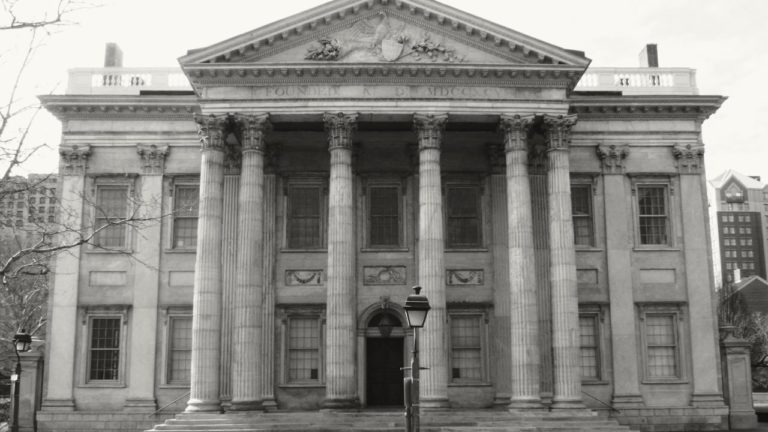
We can trace the origins of this modern central bank back to the creation of the First Bank of the United States, chartered for a period of 20 years by Congress on Feb. 25, 1791.
A national bank was the brainchild of Alexander Hamilton. His rationale wasn’t much different from those who later came up with the Federal Reserve. Hamilton thought a central bank was necessary to stabilize and improve the fledgling nation’s credit and to better manage the financial business of the United States government. He also knew that his vision of a powerful national government was impossible without a central bank to backstop government borrowing.
So, how did Hamilton’s bank fit into the constitutional framework ratified just a couple of years earlier?
Simply put, it didn’t.
To justify his bank, Hamilton performed perhaps the greatest political flip-flop in American history. During the ratification debates, Hamilton promised that the federal government would remain limited to its explicitly delegated powers. But when it came time to charter his bank, Hamilton suddenly discovered “implied powers” buried in the text of the Constitution.
If supporters had taken this position during the ratification process, the states would have rejected the Constitution outright.
The arguments against the bank fit more closely with the vision laid out by supporters of the Constitution during the ratification debates, but ultimately, Hamilton won the day. The chartering of the First Bank of the United States not only set the precedent for government-controlled central banking that ultimately gave us the Federal Reserve; it also sent the United States down the path to ever-growing central power.
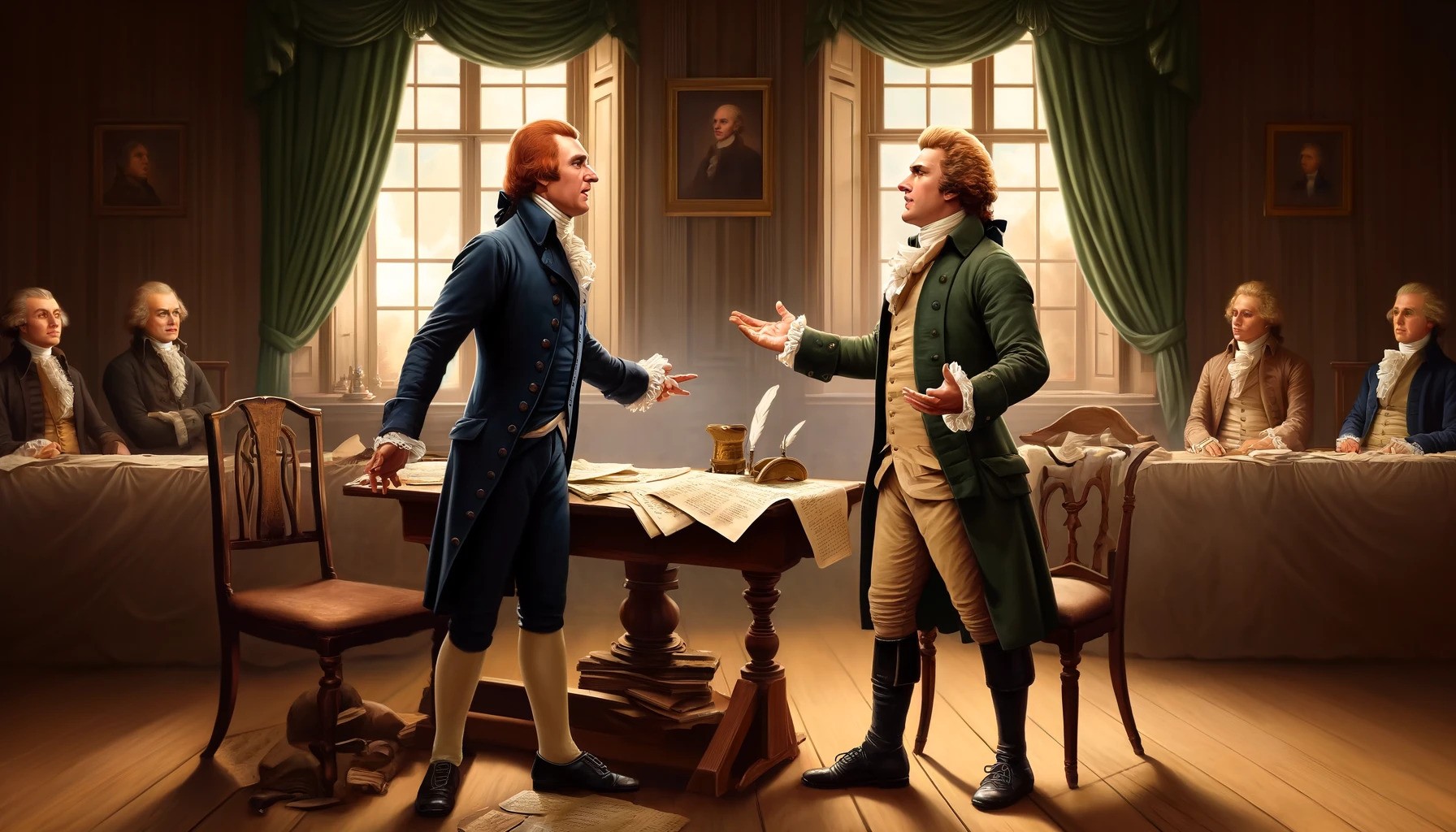
One of the most vocal opponents of the bank was Thomas Jefferson who argued that it was unconstitutional.
The Central Bank Debate
The debate was really about more than chartering a bank. At its core, it was an argument about the extent of federal power.
Jefferson stayed true to the constitutional vision cast by supporters of the Constitution during the ratification debates – that federal authority would remain carefully circumscribed by the enumerated delegated powers. Given that the Constitution doesn’t explicitly authorize Congress to charter corporations, much less a national bank, Jefferson argued that it was an unconstitutional act.
During ratification, Hamilton also insisted that the Constitution put strict limits on federal power. But he pivoted from this position and justified his project by invoking the doctrine of “implied powers.” His arguments foreshadowed how government people would justify federal policies of every imaginable stripe moving forward.
Arguably, Hamilton’s arguments for the First Bank of the United States set the foundation for much of the federal overreach we have today.
“I consider the foundation of the Constitution as laid on this ground: That ‘all powers not delegated to the United States, by the Constitution, nor prohibited by it to the States, are reserved to the States or to the people.’ [XIIth amendment.] To take a single step beyond the boundaries thus specially drawn around the powers of Congress, is to take possession of a boundless field of power, no longer susceptible of any definition.”
He then succinctly stated his conclusion.
“The incorporation of a bank, and the powers assumed by this bill, have not, in my opinion, been delegated to the United States, by the Constitution.”
Jefferson proceeded to outline the various clauses of the Constitution that supporters of the bank used to constitutionally justify its creation, and explained why they failed to bear the burden of that power.
Supporters of the bank primarily justified it based on the Commerce Clause, but Jefferson argued that “to erect a bank, and to regulate commerce, are very different acts.” Erecting a bank creates an institution of commerce, and as Jefferson pointed out, “to make a thing which may be bought and sold, is not to prescribe regulations for buying and selling.”
He went on to argue that if erecting a bank is an exercise of the commerce power, it would be void because it would also impact commerce within individual states.
“For the power given to Congress by the Constitution does not extend to the internal regulation of the commerce of a State, (that is to say of the commerce between citizen and citizen,) which remain exclusively with its own legislature; but to its external commerce only, that is to say, its commerce with another State, or with foreign nations, or with the Indian tribes.”
Next Jefferson tackled the General Welfare Clause, pointing out that Congress cannot lay and collect taxes for any purpose it pleases, “but only to pay the debts or provide for the welfare of the Union.” Likewise, Congress can’t do anything it pleases to promote the “general welfare.” It can only further the general welfare by laying taxes and acting within its enumerated powers.
“In like manner, they are not to do anything they please to provide for the general welfare, but only to lay taxes for that purpose. To consider the latter phrase, not as describing the purpose of the first, but as giving a distinct and independent power to do any act they please, which might be for the good of the Union, would render all the preceding and subsequent enumerations of power completely useless. It would reduce the whole instrument to a single phrase, that of instituting a Congress with power to do whatever would be for the good of the United States; and, as they would be the sole judges of the good or evil, it would be also a power to do whatever evil they please. It is an established rule of construction where a phrase will bear either of two meanings, to give it that which will allow some meaning to the other parts of the instrument, and not that which would render all the others useless. Certainly no such universal power was meant to be given them. It was intended to lacce them up straitly within the enumerated powers, and those without which, as means, these powers could not be carried into effect.” [Emphasis original]
Jefferson drove his point home by pointing out a very inconvenient fact for Hamilton – the Philadelphia Convention debated and rejected delegating the power to charter corporations.
On one of the final days of the convention, James Madison proposed the federal government be delegated the authority “to grant charters of incorporation where the interest of the U.S. might require & the legislative provisions of individual State may be incompetent.”
Rufus King of Massachusetts objected specifically on the grounds that “It will be referred to the establishment of a Bank, which has been a subject of contention in those Cities (New York and Philadelphia). He also warned that “In other places it will be referred to mercantile monopolies.”
George Mason of Virginia proposed limiting the power to charting corporations for the construction of canals. “He was afraid of monopolies of every sort, which he did not think were by any means already implied by the Constitution as supposed by Mr. Wilson.”
Ultimately, the convention rejected the proposal completely. Historian Dave Benner wrote, “This casts overwhelming doubt on the notion that the Constitution allowed Congress to form such monopolies. No enumerated power to grant monopolies and corporate charters was ever included in the document, and during the ratification campaign, none of the Constitution’s advocates cited the presence of such a power.”
But Hamilton’s arguments didn’t rely on the existence of any delegated power. Instead, he appealed to the existence of unwritten “implied powers.”
In response to Jefferson’s appeal to the Tenth Amendment and that the federal government can only exercise delegated powers, Hamilton affirmed it, and then effectively nullified its limiting force. He wrote, “The main proposition here laid down, in its true signification is not to be questioned.” But he continued, insisting, “It is not denied that there are implied well as express powers, and that the former are as effectually delegated as the latter.”
But who decides the extent of these implied powers? Who determines their limits? In effect, Hamilton sets up an almost unlimited reservoir of power the general government can dip into in order to take whatever actions it deems appropriate. This was a 180-degree reversal from the position he took during the ratification debates when he insisted that the new general government would only exercise limited powers.
Hamilton primarily based his defense of the national bank on the “necessary and proper clause,” citing it as the source of these “implied” powers. While Jefferson relied on a very narrow definition of “necessary and proper,” Hamilton used the phrase to milk implied powers out of the Constitution.
The debate centered on the meaning of the word necessary. Jefferson took a very narrow view, arguing that the government can carry out all of its enumerated powers without a national bank. “A bank therefore is not necessary, and consequently not authorized by this phrase.”
“It has been urged that a bank will give great facility or convenience in the collection of taxes, Suppose this were true: yet the Constitution allows only the means which are ‘necessary,’ not those which are merely ‘convenient’ for effecting the enumerated powers. If such a latitude of construction be allowed to this phrase as to give any non-enumerated power, it will go to everyone, for there is not one which ingenuity may not torture into a convenience in some instance or other, to some one of so long a list of enumerated powers. It would swallow up all the delegated powers, and reduce the whole to one power, as before observed. Therefore it was that the Constitution restrained them to the necessary means, that is to say, to those means without which the grant of power would be nugatory.”
Hamilton found this view too limiting. He wrote, “It is certain that neither the grammatical nor popular sense of the term requires that construction. According to both, necessary often means no more than needful, requisite, incidental, useful, or conducive to.”
“It is a common mode of expression to say, that it is necessary for a government or a person to do this or that thing, when nothing more is intended or understood, than that the interests of the government or person require, or will be promoted by, the doing of this or that thing. … To understand the word as the Secretary of State does, would be to depart from its obvious and popular sense, and to give it a restrictive operation, an idea never before entertained. It would be to give it the same force as if the word absolutely or indispensably had been prefixed to it.”
Jefferson hit the problem with Hamilton’s view on the head. It opens up a door to virtually unlimited government power. This runs counter to James Madison’s assurance in Federalist #45 that “the powers delegated by the proposed Constitution to the federal government are few and defined.” [Emphasis added]
Under Hamilton’s “implied power” doctrine and his loose reading of the necessary and proper clause, there is very little the federal government can’t do. After all, virtually anything could be defined as “needful” or “useful” to the government. During the ratification debates, opponents of the Constitution worried that the necessary and proper clause would be construed exactly as Hamilton read it. At the time, Hamilton swore they had nothing to worry about. In Federalist #33, he wrote, “It may be affirmed with perfect confidence that the constitutional operation of the intended government would be precisely the same, if these clauses [necessary and proper and the supremacy clause] were entirely obliterated, as if they were repeated in every article. They are only declaratory of a truth which would have resulted by necessary and unavoidable implication from the very act of constituting a federal government, and vesting it with certain specified powers.” [Emphasis added]
Hamilton pivoted from “specified powers” in 1788 to “implied powers” just three years later.
In his push for a bank, Hamilton also invoked a rule of construction very favorable to the government. He wrote, “This restrictive interpretation of the word necessary is also contrary to this sound maxim of construction, namely, that the powers contained in a constitution of government, especially those which concern the general administration of the affairs of a country, its finances, trade, defense, etc., ought to be construed liberally in advancement of the public good.”
This was not “a sound maxim of construction” at the time.
St. George Tucker was an influential lawyer and jurist, and he wrote the first systematic commentary on the Constitution. Published in 1803, View of the Constitution of the United States served as an important law book, informing the opinions of judges, lawyers and politicians for the next 50 years. He explained that we should always construe federal power in the most limited sense possible.
“The powers delegated to the federal government, are, in all cases, to receive the most strict construction that the instrument will bear, where the rights of a state or of the people, either collectively or individually, may be drawn in question.”
This is the exact opposite of Hamilton’s maxim. As “Light Horse” Harry Lee put it during the Virginia ratifying convention, “When a question arises with respect to the legality of any power, exercised or assumed by Congress, it is plain on the side of the governed. Is it enumerated in the Constitution? If it be, it is legal and just. It is otherwise arbitrary and unconstitutional.”
When political power resides in the people, the default position should always be to assume the most limited government power possible – not the most liberal reading as Hamilton insisted.
“On every question of construction let us carry ourselves back to the time when the Constitution was adopted, recollect the spirit manifested in the debates, and instead of trying what meaning may be squeezed out of the text, or intended against it, conform to the probable one in which it was passed.”
There was no probable construction authorizing charting a national bank.
Reading Hamilton’s arguments for the bank, it becomes clear he was trying to “squeeze” meaning – and power – out of the Constitution. Under the limited general government promised by supporters of the Constitution during ratification, including Alexander Hamilton, there would have been no national bank.
Hamilton’s twisting of the Constitution to wring out new powers set the stage for all the federal overreach that would follow. It was the “foundation” for the “living breathing” Constitution we live under today.
Mike Maharrey is a journalist and market analyst for MoneyMetals.com with over a decade of experience in precious metals. He holds a BS in accounting from the University of Kentucky and a BA in journalism from the University of South Florida.
(Peter St. Onge, Money Metals News Service) Confidence in Western financial markets has already been shaken enough by the 20% devaluation of the dollar over the last few years. But now the European Commission wants to hand Ukraine $300 billion seized from Russia. Doing so likely would sound the death knell for the dollar and eventually the euro.
Treasury Secretary Janet Yellen, who has worked for literally decades to undermine the strength of the dollar, recently urged world leaders to take this disastrous step of outright theft.
But financial leaders worldwide, including those who adamantly support Ukraine, are sounding the alarm, citing the unprecedented fallout that would stem from further violating the sacrosanct nature of the dollar.
When Russia invaded Ukraine two years ago, the U.S. and its European allies seized $300 billion in Russian Central Bank assets. Relative to the size of the Russian economy, that’s the equivalent of $4 trillion in U.S. financial holdings.
The goal was to instigate panic in Russian markets, culminating in bank runs and general unrest, perhaps even leading to the ouster of President Vladimir Putin himself. It didn’t work.
Instead, American banks had a cliffhanging spring last year that included the collapse of Silicon Valley, Signature and Silvergate banks, while countless regional banks held on thanks to emergency loans from the Federal Reserve.
Apparently not content with sowing chaos in domestic financial markets, the federal government’s push to steal Russian financial assets would plant the seeds of pandemonium abroad.
The European Union is in lockstep with the Biden administration’s plan to transfer the frozen Russian assets to Ukraine to buy weapons—which, of course, would be sold by the EU and the U.S.
Some member states of the EU want to just hand over all $300 billion instantly to the corrupt oligarchs in Ukraine. Others want to start with just the interest payments accruing on these financial assets. (Of course, the frozen assets aren’t actually accruing interest now, so any payments to Ukraine would actually be more deficit spending by Western governments.)
Just sending the interest payments would be crossing a terrible threshold, further violating financial custodial agreements of dollar- and euro-denominated assets.
The message from the EU and the Biden administration is crystal clear: Western financial markets are now a dangerous place to park your money. This could fatally undermine global confidence in American and European financial management because the safety of your assets will have become dependent upon your standing in Washington and Brussels.
That’s a concern for corporations, but it could be an existential threat to countries that own a large share of international financial assets. The ever-present threat of theft, couched as financial sanctions, means nations effectively lose their autonomy, forced to kowtow to the whims of American and European bureaucrats.
The Biden administration has already threatened sanctions on Uganda over its LGBTQ policy, but that’s just the beginning. Similarly punitive financial ideas have been floated regarding abortion and environmental policies.
Now sanctions are becoming just the first step to seizing all of a country’s financial assets, and the rest of the world is waking up to the racket.
A few months ago, the Indonesian president gave a speech saying his country needed to diversify its dollar holdings and dollar-denominated assets, ominously citing, “Look what happened to Russia.” The Federal Reserve recently refused to disclose how much foreign exchange reserves and gold have been withdrawn from the United States since the Russian asset seizure.
The de-dollarization trend is decades old, a result of dysfunctional government crippling economic growth while inflation erodes the currency’s value. The dollar fell from 73% of currency reserves to 55% in 2021, but the seizure of Russian financial assets gave this trend a shove into overdrive.
The dollar’s share of currency reserve plummeted another 8 percentage points in just two years, falling to 47% in 2023.
It’s not just reserves, but international trade, too. Brazil has begun conducting some of its trade in Chinese yuan, and projections are for China’s share of trade to triple in the next decade. Other countries, including their central banks, are divesting their dollar holdings, preferring gold or other real assets.
The Fed’s interest rate increases have buoyed the dollar, but that is poised to reverse as the central bank readies a pivot to interest rate cuts in this election year.
Similarly, the turmoil around the globe has prompted a “flight to safety” where investors buy assets perceived to be safe, such as U.S. Treasuries. But the talk of seizing foreigners’ assets is exposing these dollar-denominated loans as less than safe. Indeed, they’re more of a liability.
If the people running our country were intentionally trying to destroy the dollar, it’s not clear what they would be doing differently.
Peter St. Onge writes articles about Economics and Freedom. He’s an economist at the Heritage Foundation, a Fellow at the Mises Institute, and a former professor at Taiwan’s Feng Chia University. His website is www.ProfStOnge.com.
“Coins are as good as junk for many Americans,” the WSJ proclaimed.
Why are so many people willing to pitch money in the garbage?
For one thing, coins are a pain to carry around. They’re heavy and take up a lot of space. Meanwhile, the U.S. is moving quickly toward a cashless society. Most people primarily use electronic payments. As the Wall Street Journal pointed out, “Buses, laundromats, toll booths, and parking meters now take credit and debit cards and mobile payments.”
But more significantly, the U.S. government and the Federal Reserve have devalued the currency to the point that coins have virtually zero purchasing power. The WSJ article notes that the buying power of a quarter in 1980 was equal to about a dollar today. In other words, the quarter has lost about 75 percent of its value in the last 40-plus years.
Real Coins, Real Money
The extent of the quarter’s depreciation since 1980 may shock a lot of people. It vividly illustrates just how much price inflation has eaten up your purchasing power. But it’s even worse than the WSJ example reveals.
If you want to understand the full extent of the government’s monetary malfeasance, we need to travel back in time to 1964. That was the last year the U.S. coins were minted from silver (90%).
In other words, coins minted before 1965 were real money – not government fiat currency.
President Lyndon B. Johnson changed that when he signed the Coinage Act of 1965. Under the law, the U.S. Treasury removed all of the silver from dimes, quarters, and half-dollars. Instead, the government mints coins from “composites, with faces of the same alloy used in our 5-cent piece that is bonded to a core of pure copper.”
In reality, we should call modern American coins junk.
And that’s exactly how most Americans treat them. They’re tossing them in the trash!
Johnson promised removing silver would have no impact on the value of US coinage.
“[The] Treasury has a lot of silver on hand, and it can be, and it will be used to keep the price of silver in line with its value in our present silver coin,” he said.
Just a few years later, President Richard Nixon made a similar claim when he cut the final tie to the gold standard. He said, “Let me lay to rest the bugaboo of what is called devaluation,” and promised, “Your dollar will be worth just as much as it is today.”
Both men were lying.
When you disconnect money from anything of tangible value, it is going to quickly depreciate. It’s as certain as death and taxes.
“When LBJ signed the 1965 act, the value of a dollar was almost exactly the same as it had been in 1792—0.77 ounces of silver. Despite some downs and ups, on average it had been remarkably steady for the long span…
“The value of the dollar started sinking after the 1965 coinage act, and by 1980 the dollar—so long valued at 0.77 ounces of silver—plunged to 0.02 ounces of silver. Today it is valued at 0.06 ounces of silver.”
President Johnson made another claim that turned out wildly wrong. He declared that silver coins would “very definitely” not disappear or “even become rarities.”
You’ll be shocked to learn that silver coins have disappeared. Try finding a quarter minted before 1965 out in the wild. It rarely occurs.
But if you do happen to find one, keep it. It’s worth a lot more than you probably think.
How Much Has the Government Devalued Our Coins?
Just how much have U.S. coins depreciated since Johnson’s inauspicious act?
And if you’re lucky enough to find a pre-1965 silver half-dollar, its melt value comes in at $10.32.
Here’s a little perspective.
In 1964, the minimum wage stood at $1.25 per hour, the equivalent of five silver U.S. quarters. If you got paid five pre-1965 quarters today, you would hold $25.75 in your hands.
There’s your living wage.
We don’t have a wage problem. We have a money problem.
And the government caused it!
People are tossing worthless fiat coins in the trash. They would never do that with real money.
Mike Maharrey is a journalist and market analyst for MoneyMetals.com with over a decade of experience in precious metals. He holds a BS in accounting from the University of Kentucky and a BA in journalism from the University of South Florida.
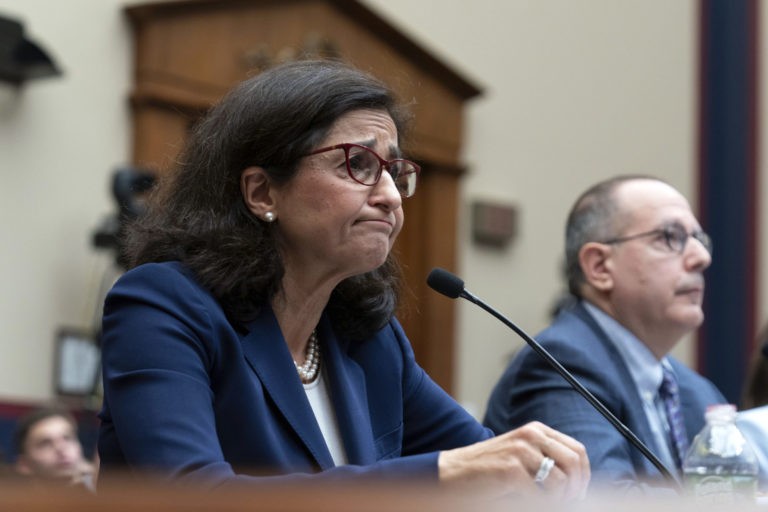
(Headline USA) Columbia University’s president took a firm stance against anti-Semitism in a congressional hearing on Wednesday, but she faced bruising criticism from Republicans who say her actions haven’t supported her words, especially when it comes to disciplining faculty and students accused of bias.
Nemat Shafik’s visit to Capitol Hill was a reprise of a December hearing that led to the resignations of presidents at Harvard and the University of Pennsylvania.
It follows House efforts to investigate the wave of anti-Semitism at America’s most prestigious universities that first became apparent following Hamas’s Oct. 7 terrorist attack on Israel.
After the other Ivy League presidents’ equivocation led to weeks of backlash, Shafik focused her message on fighting anti-Semitism rather than protecting free speech.
“Anti-Semitism has no place on our campus, and I am personally committed to doing everything I can to confront it directly,” Shafik said in her opening comments.
On key questions, she took a more decisive stance than her Ivy League colleagues, who gave lawyerly answers when asked if calls for the genocide of Jews would violate campus policies. Asked the same question, Shafik and three other Columbia leaders responded definitively: yes.
But Shafik hedged on whether certain phrases invoked by some supporters of the Palestinians rise to harassment.
Rep. Lisa McClain, R-Mich., asked her if phrases such as “ from the river to the sea, Palestine will be free ” or “long live intifada” were anti-Semitic.
“I hear them as such; some people don’t,” Shafik said.
McClain posed the same question to David Schizer, who leads an anti-Semitism task force at Columbia. He said those phrases are anti-Semitic.
Unlike in December, much of the questioning on Wednesday focused on Columbia’s handling of faculty who were accused of anti-Semitism. Given the protections offered by university tenure, disciplining faculty is a thorny question for universities whose professors were weighing in on the Israel–Hamas war.
Shafik was hammered on the issue by Rep. Elise Stefanik, R-N.Y.
Stefanik asked about Mohamed Abdou, a visiting Arab studies professor who expressed support for Hamas on social media after Oct. 7. Shafik said she shared Stefanik’s “repugnance” over Abdou’s comments, adding that he had been terminated.
“He is grading his students’ papers and will never teach at Columbia again,” she said.
“Mr. Abdou is not grading papers right now,” Stefanik later countered. She said she heard Abdou attended a pro-Palestinian demonstration at Columbia Wednesday morning, in apparent violation of the school’s new rules limiting protests to certain hours and locations.
Shafik was also grilled over Columbia’s handling of Joseph Massad, a professor of modern Arab politics, accused of calling the Oct. 7 attacks “awesome,” “astonishing,” “astounding” and “incredible.”
Shafik said Massad had been reprimanded and removed as chair of an academic review committee. When Stefanik revealed that a Columbia website still listed Massad as the committee chair, she demanded Shafik’s commitment to remove him from the post.
“I think that would be—I think I would—yes,” Shafik said.
Massad is a tenured professor, which generally brings added protection against firing, including for expressing controversial opinions. When asked if Massad could lose his job, Shafik wouldn’t give a clear answer.
“There are some very complex issues around tenure,” she said.
In a comment to the Associated Press, Massad denied being reprimanded. He claimed members of Congress distorted his comments, and he disputed praising the killing of 1,200 Jews. Massad said he was not removed as chair of the academic review committee and that his term ends in the coming weeks.
Columbia professor Marcel Agüeros, a leader at the college’s chapter of the American Association of University presidents, expressed dismay at how much Shafik conceded to Republicans on faculty discipline.
“The university has processes, and those processes are intended to protect academic freedom,” he said. “Faculty whose speech is not necessarily what I would say myself, they have a right to that speech.”
Complaints of anti-Semitism have been on the rise at the New York campus of 35,000 students, prompting the school to adopt new limits on demonstrations. Protests can be held only on weekdays at certain times and locations, with advance notice to school officials.
Some civil rights groups, students and faculty say the policy curbs free expression. But Shafik cited it as evidence that the school is serious about protecting students, saying 15 students have been suspended and six are on probation for breaches.
“I promise you, from the messages I’m hearing from students, they are getting the message that violations will have consequences,” she said.
Her vision clashes with the accounts of critics who say anti-Semitism goes unchecked at Columbia, citing a Jewish student who was beaten on campus while putting up posters of Israeli hostages, and protesters who chanted phrases that some consider a call for the genocide of Jews.
“The problem is, action on campus doesn’t match your rhetoric today,” said Rep. Aaron Bean, a Florida Republican. “Your students, their message is quite different. Their message is one of fear.”
Some Columbia students who support Hamas were frustrated they were not allowed into the hearing.
“This is not an honest conversation that we are having today in this committee,” said Muslim Rep. Ilhan Omar, D-Minn., after speaking with the students.
The December hearing featured the Harvard and Penn presidents, as well as the leader of the Massachusetts Institute of Technology. During heated questioning, Stefanik asked them whether “calling for the genocide of Jews” would violate each university’s code of conduct.
Liz Magill, then-president of Penn, and Claudine Gay, then-president of Harvard, both said it would depend on the situation. MIT president Sally Kornbluth said she had not heard of anyone calling for the genocide of Jews on campus, and that speech “targeted at individuals, not making public statements,” would be considered harassment.
Almost immediately, the careful responses from the university presidents drew criticism from donors, alumni and politicians. Magill resigned soon after the hearing and Gay stepped down in January following accusations of plagiarism.
(Headline USA) Republican attorneys general attacked the Biden administration’s stated goal of pursuing “environmental justice,” giving it a more appropriate term: “racial engineering.‘’
Florida Attorney General Ashley Moody and 22 other GOP officials asked the EPA Tuesday to stop using civil rights laws to investigate actions and policies that result in harm to black people or other minority groups — even unintentionally — more than white residents.
“The EPA should be focusing on enforcing the environmental laws passed by Congress, not so called ‘environmental justice,’ which is a euphemism for Biden’s extreme agenda,‘’ Moody said. Their petition demands that the EPA change decades-old rules, though the civil rights law could still be used where discrimination was intentional.
The petition is unlikely to convince the Biden administration to back away from an issue EPA Administrator Michael Regan has taken pains to highlight. Regan, for example, went on a “Journey to Justice” tour to places like the industrial stretch of Louisiana typically called Cancer Alley to show how majority-black communities living near polluters were being hurt. To address such harms, the EPA has turned in part to a section of the Civil Rights Act of 1964 called Title VI to open investigations and pressure states to make changes.
The petition in an election year is the latest in Republicans’ expanding fight against racialist government policies. They cited the recent Supreme Court decision that eliminated affirmative action in college admissions, arguing it shows the court is wary of race-conscious federal policies.
“Because the EPA’s regulations prohibit any action that results in racial disparities, a funding recipient must set demographic targets for their projects to maintain compliance,” the attorneys general wrote. “This kind of allocation based on group membership is a constitutional nonstarter.”
The Florida attorney general’s office, which took the lead on the petition, said the states would sue if the EPA does not amend its rules.
EPA declined to comment, citing ongoing litigation around the issue.
Title VI aims to prevent discrimination in programs that receive federal funds. The agency can investigate allegations of discrimination, publish their findings and pressure states and local governments to agree to change policies. The federal government can yank funding if they find a Title VI violation.
Debbie Chizewer, managing attorney in the Midwest office at the environmental group Earthjustice, said Title VI is part of the country’s historic fight against discrimination and is still a critical tool. Elected officials across the county permitted numerous polluting factories, chemical plants and refineries near minority communities that now are burdened with the effects, including poorer health, lower property values and economic blight.
“I think it is a perversion of our civil rights laws to say otherwise, to say that you can’t account for these past harms by creating policies that protect communities that are disproportionately harmed,” she said.
Previously, Title VI has been a relatively weak environmental weapon, rarely resulting in significant changes to environmental policy. Under the Biden administration, however, environmental and civil rights groups were hopeful it could be used to do more.
Those groups asked the EPA to investigate Louisiana’s regulation of air pollution, arguing that it disproportionately hurt majority-black communities near heavy industry. They highlighted the Denka Performance Elastomer plant that makes synthetic rubber and emits harmful chloroprene. It’s located a half-mile from an elementary school. The agency agreed to investigate and released initial findings saying there was evidence of discrimination.
But before the state agreed to any changes, the EPA dropped its investigation. The end came soon after Louisiana sued the agency, arguing that focusing on policies that may harm one group more than another but weren’t intentionally discriminatory went too far.
That lawsuit has so far seen success. In January, a federal judge in Louisiana put a temporary halt on the EPA’s power to investigate discrimination that had a so-called “disparate impact.” A final decision in the case hasn’t come yet.
Environmental groups have worried that the EPA’s move in Louisiana amounts to a pullback on the Biden administration’s commitment to fighting environmental discrimination.
EPA officials are wary of unfavorable court rulings and a conservative Supreme Court that has already curtailed its regulatory power. The Supreme Court restricted the EPA’s authority to fight air and water pollution — including a landmark 2022 ruling that limited the EPA’s authority to regulate carbon dioxide emissions from power plants that contribute to global warming.
Regan said earlier this month that he believes strongly in using Title VI to fight environmental discrimination, but it’s complicated.
“It is not just on this issue, we face headwinds in the courts on a lot of issues,” Regan said. He added that the EPA is trying to ensure every action it takes can withstand a court challenge.
But the agency has other options to hold polluters accountable, he said. Recently, for example, the EPA finalized new, tougher, emissions limits for more than 200 chemical plants, including the Denka facility under scrutiny in Louisiana.