Seeking to Keep Trans School Shooter’s Manifesto Secret, Parents Claim Copyright

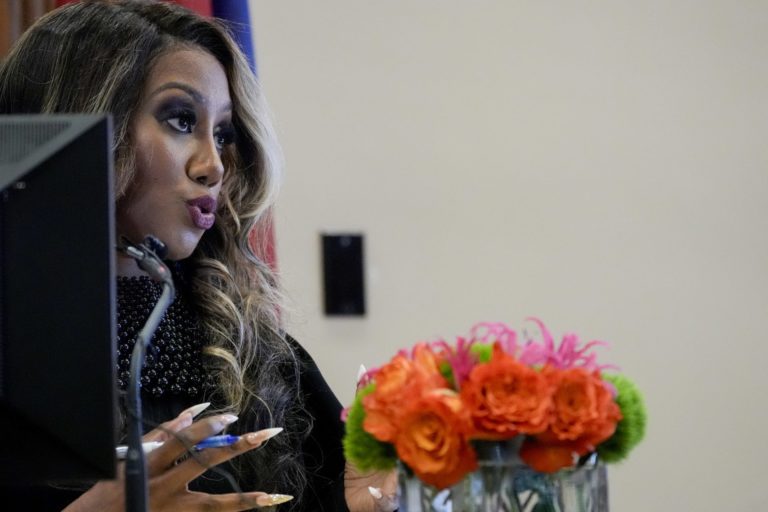
(Headline USA) A Tennessee judge on Wednesday seemed ready to agree with an attorney for Nashville police that the writings of school shooter Audrey Hale could be released as public record once the investigation is officially closed.

But the parents of children at the Covenant School added an extra twist to an already complicated case by asserting that they have gained legal ownership of the writings from the shooter’s parents and now hold the copyright.

None of the eight attorneys arguing before Davidson County Chancery Court Judge I’Ashea Myles during a two-day hearing claimed to be a copyright expert. Their answers to Myles’ pointed questions about the interplay of federal copyright protections and the Tennessee Public Records Act seemed at times only to muddy the waters further.

In the end, Myles said she will write an order outlining specific questions she wants them to address. Only after that will she rule on when, if ever, the writings can be released to the public.

Police have said the writings that they collected as part of their investigation into the March 27, 2023, shooting at the Covenant School that killed three 9-year-old children and three adult staff members are public records. However, they have said they cannot be released until their investigation is concluded.

Despite law enforcement’s attempts to keep the manifesto secret, the first three pages the purported manifesto were leaked to conservative broadcaster Steven Crowder last November. The Nashville Police Department reportedly suspended seven detectives over the leak.

The portion of the manifesto that was leaked purportedly revealed Hale, who identified as transgender, had been planning the school shooting for years, and that she deliberately targeted “white privileged” “cr*****s” and “f****ts.”

“Can’t believe I’m doing this but I’m ready… I hope my victims aren’t,” Hale wrote. “My only fear is if anything goes wrong. I’ll do my best to prevent any of the sort. God let my wrath take over my anxiety. It might be 10 minutes tops. It might be 3-7. It’s gonna go quick. I hope I have a high death count. Ready to die.”

Those asking that the full writings be released immediately include news outlets, a Tennessee state senator, a gun-rights group and a law enforcement nonprofit. They argue that the open investigation is a formality at this point. The shooter was killed by police at the scene, and no other suspects have been identified.

Meanwhile, three other groups that have been allowed to intervene in the case argued that none of the writings should ever be released.

In addition to the copyright issues, attorneys representing the Covenant parents, the Covenant School and the Covenant Presbyterian Church presented a united front in arguing that the writings fall under a Tennessee law that protects the privacy of information, records and plans related to school security. Giving the law the broadest possible reading, the writings could inspire copycats and therefore threaten Covenant’s security, they argued.

Myles seemed to take exception to that interpretation.

“Right now, you’re asking me to adopt an interpretation of this statute that information written in a journal should be construed as a plan related to school security,” she said. She noted that any decision she makes is sure to be appealed and will have to survive the scrutiny of a higher court.

Eric Osborne, the parents’ attorney, had yet another reason to keep the writings secret. All of the children of Covenant School are victims under the Tennessee Constitution and have a right to be free from abuse, harassment and intimidation. Releasing the writings publicly could harm the children and would violate the law, he argued.

Myles again pushed back on such a broad approach.

“Is ‘harm’ synonymous with harassment, intimidation and abuse?” she asked. “You’re asking this court to perhaps create new law.”

Myles offered the example of a victim undergoing cross-examination in a criminal trial. It might be upsetting, but it is not a violation of their constitutional rights, she said.

Myles added that she reads the law to protect victims during the pendency of criminal justice proceedings. “To say it is in perpetuity, after the investigation is closed — I don’t see it,” she told Osborne.

He replied that there is no expiration. “Once you are involved in the criminal justice system, you have the constitutional rights that Tennesseans have given to all victims,” Osborne said.

Myles then asked whether there might be some parents at the school who want the writings released. “You represent your clients’ interests. What you are asking the court to do puts a bar on what they want. Are you elevating one group of parents over another?” she said.

Osborne said that 103 of the 112 families with children at the school at the time of the March 27, 2023, attack have signed on to their position that the writings should be suppressed.

At the end of the hearing, Myles made clear that the decision was a difficult one.

“Before I’m a chancellor, I’m a human,” she said. “I’m also a mom.”

Although her “heart grieves” for the children, Myles said she has to put emotion aside. “I have to take how I feel out of it. I have to interpret the law as written by the legislature,” she said.

Adapted from reporting by the Associated Press
SCOTUS Lowers Bar for Discrimination Based on Forced Job Transfers

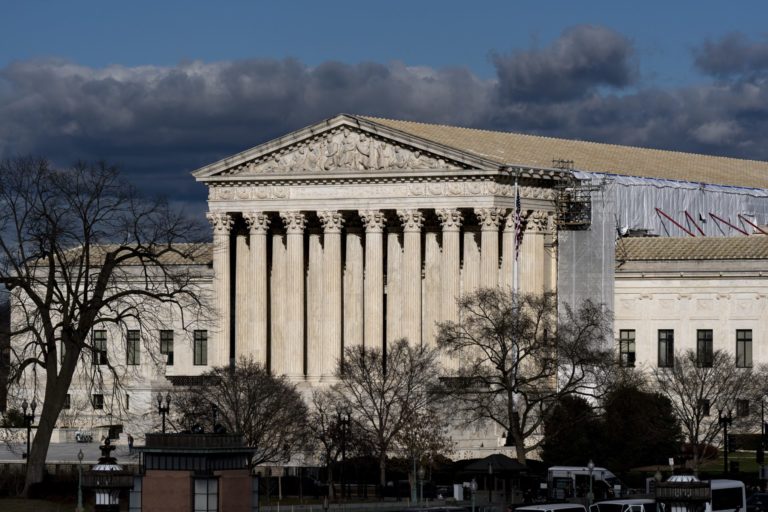
(Headline USA) The Supreme Court on Wednesday made it easier for workers who are transferred from one job to another against their will to pursue job discrimination claims under federal civil rights law, even when they are not demoted or docked pay.

Workers only have to show that the transfer resulted in some, but not necessarily significant, harm to prove their claims, Justice Elena Kagan wrote for the court.

The justices unanimously revived a sex discrimination lawsuit filed by a St. Louis police sergeant after she was forcibly transferred, but retained her rank and pay.

Sgt. Jaytonya Muldrow had worked for nine years in a plainclothes position in the department’s intelligence division before a new commander reassigned her to a uniformed position in which she supervised patrol officers.

The new commander wanted a male officer in the intelligence job and sometimes called Muldrow “Mrs.” instead of “sergeant,” Kagan wrote.

Muldrow sued under Title VII of the Civil Rights Act of 1964, which prohibits workplace discrimination on the basis of race, sex, religion and national origin. Lower courts had dismissed Muldrow’s claim, concluding that she had not suffered a significant job disadvantage.

“Today, we disapprove that approach,” Kagan wrote. “Although an employee must show some harm from a forced transfer to prevail in a Title VII suit, she need not show that the injury satisfies a significance test.”

Kagan noted that many cases will come out differently under the lower bar the Supreme Court adopted Wednesday.

She pointed to cases in which people lost discrimination suits, including those of an engineer whose new job site was a 14- by 22-foot wind tunnel, a shipping worker reassigned to exclusively nighttime work and a school principal who was forced into a new administrative role that was not based in a school.

Although the outcome was unanimous, Justices Samuel Alito, Brett Kavanaugh and Clarence Thomas each wrote separate opinions noting some level of disagreement with the majority’s rationale in ruling for Muldrow.

Madeline Meth, a lawyer for Muldrow, said her client will be thrilled with the outcome.

Meth, who teaches at Boston University’s law school, said the decision is a big win for workers because the court made “clear that employers can’t decide the who, what, when, where and why of a job based on race and gender.”

The decision revives Muldrow’s lawsuit, which now returns to lower courts. Muldrow contends that, because of sex discrimination, she was moved to a less prestigious job, which was primarily administrative and often required weekend work, and she lost her take-home city car.

“If those allegations are proved,” Kagan wrote, “she was left worse off several times over.”

The case is Muldrow v. St.Louis, 22-193.

Adapted from reporting by the Associated Press

Tesla Seeks to Restore Musk’s Pay Package that Was Voided by Judge

(Headline USA) Tesla is asking shareholders to restore a pay package—initually valued at $56 billion— for CEO Elon Musk after it was rejected by a Delaware judge this year.

The changes, to be voted on by stockholders at a June 13 annual meeting, also include a proposal to shift the company’s corporate home to Texas.

However, garnering the necessary support could be a tougher sell than when Musk’s compensation proposal was first approved in 2018.

The Austin, Texas, electric vehicle maker is struggling with falling global sales, slowing electric vehicle demand, an aging model lineup and a stock price that has tumbled 37% so far this year after having been one of the hottest stocks on the market.

Musk, one of the world’s wealthiest men, has also fallen out of favor with the political Left after buying Twitter and restoring it as a free-speech-supportive platform following years of censorship and shadow-banning under pressure from the Biden administration and the intelligence community.

His companies, which also include SpaceX and several other cutting-edge ventures, have been the subject of multiple lawsuits and investigations by agencies including the Justice Department.

The Tesla founder reportedly has not been paid by the company in six years.

In January, Chancellor Kathaleen St. Jude McCormick—an appointee of Democrat Delaware Gov. John Carney—ruled that Musk was not entitled to the landmark stock compensation that was to be granted over 10 years.

Ruling on a lawsuit from a shareholder, she voided the pay package, saying that Musk essentially controlled the board, making the process of enacting the compensation unfair to stakeholders.

“Musk had extensive ties with the persons tasked with negotiating on Tesla’s behalf,” she wrote in her ruling.

But in a letter to shareholders released in a regulatory filing on Wednesday, Chairperson Robyn Denholm said that Musk has delivered on the growth it was looking for at the automaker, with Tesla meeting all of the stock value and operational targets in the 2018 package that was approved by shareholders.

Shares are up 571% since the pay package began.

“Because the Delaware Court second-guessed your decision, Elon has not been paid for any of his work for Tesla for the past six years that has helped to generate significant growth and stockholder value,” Denholm wrote. “That strikes us—and the many stockholders from whom we already have heard—as fundamentally unfair, and inconsistent with the will of the stockholders who voted for it.”

In the filing, Tesla said it intended to appeal the decision. If shareholders approve the new package, disclosure and procedural deficiencies and breaches of the board’s fiduciary duty detailed by McCormick should be fixed, the filing said.

But Tesla said shareholders may still challenge the ratification vote. Even if it does pass, Tesla said it may not fully resolve the matter, and a Delaware court could find the ratification itself is not fair to shareholders.

If shareholders don’t ratify the plan, Tesla said it may need to negotiate a replacement with Musk. That may take a lot of time and expense “in light of the criticism” detailed in the Delaware suit.

Tesla is going the route of ratification, instead of trying to negotiate a new package with Musk, which the company said would likely need to be of similar magnitude to the previous package in order to keep him.

Because it’s trying for ratification instead of a new plan, Tesla said it “did not substantively re-evaluate the amount or term” of the package and did not hire another compensation consultant to weigh in on it.

In the 2018 plan, Musk would not get salary or cash bonuses. Instead he was to receive only stock options, and only if the company met certain thresholds. It would need to grow its total market value by certain amounts, while also hitting targets for revenue and pretax earnings, and other items.

Many CEOs at big companies need to hit targets to get a lot of their possible compensation. That’s to encourage decisions that benefit the company and shareholders at large. But Musk was unusual in having all of his pay dependent on such measures.

When the company’s board drew up the compensation plan, it said it thought the hurdles would be challenging to meet. Some outsiders agreed.

But the shareholder plaintiff in the Delaware suit alleged the company’s proxy wrongly characterized all the milestones that triggered vesting in the stock options as “stretch” goals, even though internal projections indicated that three operational milestones were likely to be achieved within 18 months of the stockholder vote.

The board said it believed in 2018 that “many of Tesla’s prior successes were driven significantly by Mr. Musk’s leadership.” And it wanted to motivate Musk to “devote his time and energy” to the company when he also had interests in other companies.

Erik Gordon, a lawyer and business professor at the University of Michigan, said that since Tesla would still be a Delaware corporation at the time of the vote on the package, shareholders could still challenge it in Delaware courts.

But because Tesla disclosed facts in the proxy about the board’s ties to Musk, he would expect Tesla to win. “If the uninterested shareholders are properly informed and they vote in favor of it, the court actually has nothing to do,” Gordon said.

Delaware courts, he said, “want the corporations to disclose and let the shareholders decide.”

Musk may not see much legal benefit from moving Tesla’s corporate home to Texas, because the law governing executive pay is similar to Delaware’s, Gordon said. “There’s no Texas case that tells you if this had happened in Texas you’d have gotten a different result.”

Tesla posted record deliveries of more than 1.8 million electric vehicles worldwide in 2023, but the value its shares has eroded quickly this year as EV sales soften.

The company said it delivered 386,810 vehicles from January through March, nearly 9% fewer than it sold in the same period last year.

Future growth is in doubt and it may be a challenge to get shareholders to back a fat pay package in an environment where competition has increased worldwide.

The proxy statement filed with the Securities and Exchange Commission does not address Musk’s demand to own 25% of Tesla shares for him to pursue artificial intelligence and robotics at the company. At present he owns 20.5% of the company.

In January Musk challenged the Tesla board in a post on Twitter—the social media platform he now owns and has renamed “X”—to come up with a new compensation package. Unless he gets 25%, he wrote that he’d prefer to build products outside of Tesla, apparently with another company.

Wedbush analyst Dan Ives, who is normally bullish on Tesla, said in an interview that the filing doesn’t address multiple issues including Musk’s future compensation.

“It’s the elephant in the room because Musk has threatened over X, and it’s been a massive overhang” for Tesla stock, Ives said.

Musk, he said, needs to commit to being Tesla CEO for three to five years and developing artificial intelligence with the company. When Tesla announces first-quarter earnings next week, Musk needs to spell out growth plans, including the status of the Model 2, a small EV that costs about $25,000, Ives said. Otherwise, dark days lie ahead, he said.

“There’s a feeling like the plane is crashing into the ocean and the board is focused on their own salted peanuts,” he said.

At the time of the Delaware court ruling, Musk’s package was worth more than $55.8 billion, but the stock slide has cut that to $44.9 billion at the close of trading on Friday, Tesla’s filing said.

Starting last year, Tesla has cut prices as much as $20,000 on some models. The price cuts caused used electric vehicle values to drop and clipped Tesla’s profit margins.

This week, Tesla said it was letting about 10% of its workers go, about 14,000 people.

Shares of Tesla Inc. closed down about 1% in Wednesday.

Adapted from reporting by the Associated Press
Boeing Faces Senate Scrutiny in Back-to-Back Hearings on Safety Culture

(Headline USA) An engineer at Boeing said Wednesday that the aircraft company, in rushing to produce as many planes as possible, was taking manufacturing shortcuts that could lead to jetliners breaking apart.

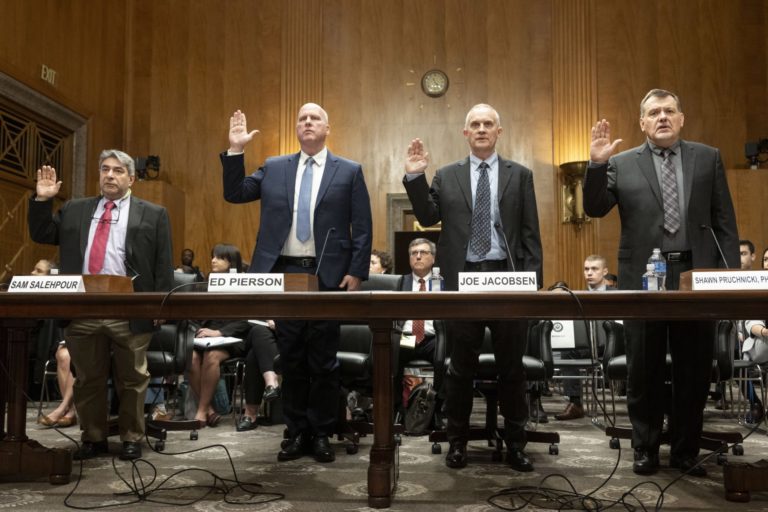
“They are putting out defective airplanes,” the engineer, Sam Salehpour, told members of a Senate subcommittee.

Salehpour was testifying about Boeing’s 787 Dreamliner, hundreds of which are in use by airlines, mostly on international routes.

He spoke while another Senate committee held a separate hearing on the safety culture at Boeing.

The dual hearings were a sign of the intense pressure on Boeing since a door-plug panel blew off a 737 Max jetliner during an Alaska Airlines flight in January.

The company is under multiple investigations, and the FBI has told passengers from the flight that they might be victims of a crime. Regulators limited Boeing’s rate of aircraft production, and even minor incidents involving its planes attract news coverage.

Salehpour alleged that workers at a Boeing factory used excessive force to jam together sections of fuselage on the Dreamliner. The extra force could compromise the carbon-composite material used for the plane’s frame, he said.

The engineer said he studied Boeing’s own data and concluded “that the company is taking manufacturing shortcuts on the 787 program that could significantly reduce the airplane’s safety and the life cycle.”

Salehpour said that when he raised concern about the matter, his boss asked whether he was “in or out”—part of the team, or not.

“’Are you going to just shut up?’ … that’s how I interpreted it,” he said.

Boeing said retaliation is strictly prohibited. A spokesperson said the company encourages employees to speak up, and that since January it has seen more than a 500% increase in employee reports on a company portal.

The hearing of the investigations subcommittee marked the first time Salehpour has described his concern about the 787 and another plane, the Boeing 777, in public. Senators said they were shocked and appalled by the information. Democrats and Republicans alike expressed their dismay with the iconic American aircraft manufacturer.

The company says claims about the Dreamliner’s structural integrity are false. Two Boeing engineering executives said this week that in both design testing and inspections of planes—some of them 12 years old—there were no findings of fatigue or cracking in the composite panels.

They suggested that the material, formed from carbon fibers and resin, is nearly impervious to fatigue, which is a constant worry with conventional aluminum fuselages.

The Boeing officials also dismissed another of Salehpour’s allegations: that he saw factory workers jumping on sections of fuselage on another one of Boeing’s largest passenger planes, the 777, to make them align.

Separately on Wednesday, the Senate Commerce Committee heard testimony from members of an expert panel that found serious flaws in Boeing’s safety culture.

One of the panel members, MIT aeronautics lecturer Javier de Luis, said employees hear Boeing leadership talk about safety, but workers feel pressure to push planes through the factory as fast as they can.

In talking to Boeing workers, de Luis said he heard “there was a very real fear of payback and retribution if you held your ground.”

The dual hearings added to criticism that has been heaped on Boeing since the door plug blew off an Alaska Airlines Boeing 737 Max as it flew over Oregon. Major safety failures have pushed Boeing into a crisis that has already resulted in a management shakeup, including the CEO’s decision to step down at the end of this year.

Sen. Ted Cruz, R-Texas, said the public is looking to Washington to assure that boarding a plane is not getting more dangerous.

“Flying commercial remains the safest way to travel, but understandably, recent incidents have left the flying public worried,” he said. “The perception is things are getting worse.”

The Federal Aviation Administration, which regulates airlines and aircraft manufacturers, was also heavily criticized during Wednesday’s hearings.

The FAA was battered for the way it approved the 737 Max nearly a decade ago without fully understanding a key flight-control system. Two Max jets crashed in 2018 and 2019, killing 346 people. Critics continue to accuse the agency of being too cozy with Boeing.

“The FAA needs to be a regulator. They need to do their job. That’s the missing piece right now,” Joe Jacobsen, a former Boeing and FAA engineer, told the investigations subcommittee.

The FAA is now under a new administrator, Mike Whitaker, who has taken a tougher approach to Boeing. He limited Boeing’s production of 737 Max jets and gave the company until May 28 to produce a detailed plan for how it will fix manufacturing problems and resolve safety concerns.

Boeing is facing separate investigations by the FAA, the Justice Department and the National Transportation Safety Board.

The DOJ could reopen a 2021 agreement in which Boeing avoided criminal prosecution on a charge of misleading regulators about the Max. In exchange, the company agreed to pay $2.5 billion—mostly to airline customers.

All the attention is taking a chunk from Boeing stock, which has tumbled in price by nearly one-third since the Alaska Airlines panel blowout. Shares of the Arlington, Virginia, company have lost 32%—more than $47 billion in market value.

Sen. Richard Blumenthal, the Connecticut Democrat who chairs the investigations subcommittee, and the panel’s senior Republican, Sen. Ron Johnson of Wisconsin, have asked Boeing and the FAA for troves of documents going back six years.

Blumenthal said his subcommittee plans to hold more hearings on Boeing and hopes to hear from CEO David Calhoun.

In interviews and messages to employees, Calhoun has said many times that Boeing is taking steps to improve its manufacturing quality and safety culture. He called the Alaska Airlines accident a “watershed moment” from which a better Boeing will emerge.

There is plenty of skepticism about comments like that.

“We need to look at what Boeing does, not just what it says it’s doing,” said Sen. Tammy Duckworth, D-Ill.

Adapted from reporting by the Associated Press
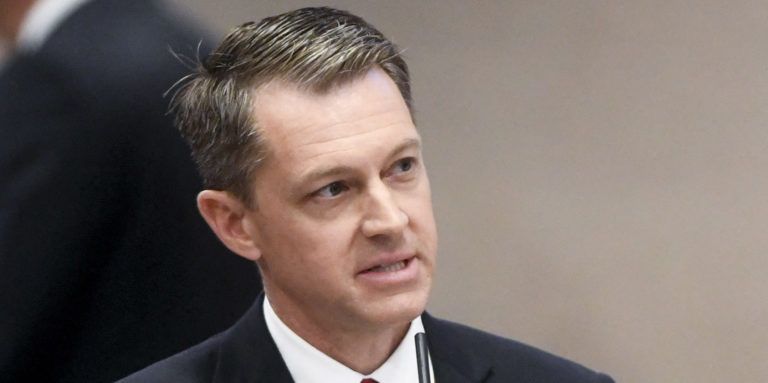
Would Dems Do This?: Alabama’s GOP Legislature Helps Ensure Biden Is on Ballot

(Headline USA) Alabama lawmakers advanced legislation Wednesday to ensure President Joe Biden will appear on the state’s November ballot.

The Republican-led legislature’s accommodations mirrored those made four years ago for then-President Donald Trump, although the changing political landscape due to Democrats’ reckless brinksmanship in waging a series of lawfare attacks on Trump had threatened to bring partisan allegiances into the mix.

After three states attempted earlier this year to block Trump from the ballot over baseless allegations of “insurrection,” many speculated that red states might respond in kind by blocking Biden.

Meanwhile, Democrats’ late convention has fueled speculation that the Democratic National Committee might attempt to pull off a Biden bait-and-switch by swapping the unpopular leader with another candidate at the last minute, with little opportunity for voters to thoroughly vet the alternative.

The issue of Biden’s ballot access has arisen in Alabama and Ohio as Republican secretaries of state warned that certification deadlines fall before the DNC convention is set to begin on Aug. 19.

The Biden campaign has asked the two states to accept provisional certification, arguing that has been done in past elections. However, the Republican election chiefs have said they don’t have the authority to do so arbitrarily, and must enforce the deadlines without additional legislative action.

Ohio became the first state to disclose that the DNC would violate state law requiring certification at least 90 days before an election, and thus far the GOP-led Buckeye State has yet to offer an alternative to keeping the Democrat nominee off the ballot if the law is not followed.

Democrat-run Washington state has agreed to allow the DNC to use a provisional rule, effectively listing Biden as a placeholder for the eventual nominee.

Meanwhile, legislative committees in the Alabama House of Representatives and Senate took the middle road, approving identical bills that would push back the state’s certification deadline from 82 days to 74 days before the general election in order to accommodate the date of Democrats’ nominating convention.

The bills now move to to the full chambers.

“We want to make sure every citizen in the state of Alabama has the opportunity to vote for the candidate of his or her choice,” Democrat Sen. Merika Coleman, the sponsor of the Senate bill, told the Senate Judiciary Committee.

Democrats proposed the two Alabama bills, but the legislation moved out of committee with support from Republicans who hold a lopsided majority in the Alabama Legislature. The bills were approved with little discussion. However, two Republicans who spoke in favor of the bill called it an issue of fairness.

Republican Rep. Bob Fincher, chairman of the committee that heard the House bill, said this is “not the first time we’ve run into this problem” and the state made allowances.

“I’d like to think that if the shoe was on the other foot, that this would be taken care of. And I think that Alabamians have a deep sense of fairness when it comes to politics and elections,” Republican Sen. Sam Givhan said during the committee meeting.

Trump faced the same issue in Alabama in 2020. The Republican-controlled Alabama Legislature in 2020 passed legislation to change the certification deadline for the 2020 election.

The bill stated that the change was made “to accommodate the dates of the 2020 Republican National Convention.” However, an attorney representing the Biden campaign and DNC, wrote in a letter to Alabama Secretary of State Wes Allen that it was provisional certification that allowed Trump on the ballot in 2020, because there were still problems with the GOP date even with the new 2020 deadline.

Allen has maintained he does not have the authority to accept provisional certification.

Similarly, in Ohio, Attorney General Dave Yost and Secretary of State Frank LaRose, both Republicans, rejected a request from Democrats to waive the state’s ballot deadline administratively by accepting a “provisional certification” for Biden.

In a letter Monday, Yost’s office told LaRose that Ohio law does not allow the procedure. LaRose’s office conveyed that information, in turn, in a letter to Democratic lawyer Don McTigue.

LaRose’s chief legal counsel, Paul Disantis, noted it was a Democrats who championed the state’s ballot deadline, one of the earliest in the nation, 15 years ago. It falls 90 days before the general election, which this year is Aug. 7.

Ohio Senate Democratic Leader Nickie Antonio said she was waiting to hear from the DNC on how to proceed. One of her members, state Sen. Bill DiMora, said he has legislation for either a short- or long-term fix ready to go when the time comes.

Adapted from reporting by the Associated Press

WATCH: Biden Bureaucrat Reveals Who Really Runs the White House

(Jacob Bruns, Headline USA) Investigative journalist James O’Keefe released footage in a Wednesday Tweet of a White House official spilling the beans on who really runs the White House.

As it turns out, White House Chief of Staff Jeff Zients, along with a few other key figures in the administration, exercises a large role in running America, according to O’Keefe’s latest mark.

O’Keefe released footage of a covert interview with Tyler Robinson, Special Advisor to the Administrator of the US Small Business Administration, who claims that Zients is largely running the show while President Joe Biden just repeats what Zients tells him.

“People call him the second most powerful person in Washington,” Robinson said, noting that he calls the shots and Biden listens.

“Most of the time, it’s like, whatever [Zients] says, it’s what the President says,” he added. “If they put it on his desk, they’re saying ‘Hey we think you should do this,’ he will probably sign off on it” he said of the president.

Notably, Robinson affirmed that Zients wields more power than Vice President Kamala Harris, who is on track to be one of the least popular vice presidents in American history.

When asked if Zeints is “more powerful than Kamala,” Robinson replied with a simple “Yeah.”

Further, Robinson affirmed the suspicions of many Americans, admitting that other influential Democrats continue to operate within the White House.

For instance, President Barack Obama has not shied away from exercising an outsized influence over the Biden administration.

“I feel like Barack Obama is still very involved,” the undercover journalist offered. “No, he is,” Robinson confirmed.

He also admitted that failed 2016 presidential candidate Hillary Clinton is highly involved in the administration of the White House.

As it turns out, it is hard to say what exactly Biden does do for himself. According to Robinson, Biden’s sister, Valerie Biden Owens, practically runs his nonprofit foundation for him.

“Biden’s sister, she runs the Biden Foundation,” Robinson claimed.

While O’Keefe’s latest scoop spread like wildfire online, some observers questioned its validity. FBI whistleblower Kyle Seraphin accused O’Keefe of presenting a low-level White House staffer as an important source.

Ariz. Dems Clear Path to Vote on Repeal of State’s Near-Total Abortion Ban

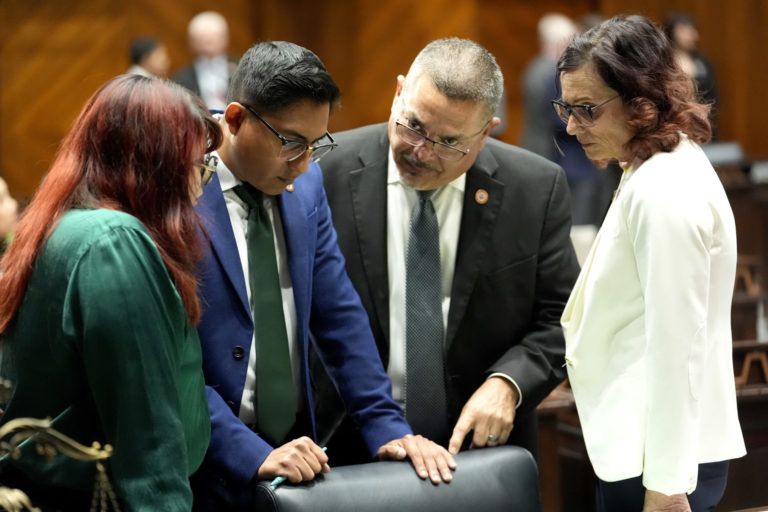
(Headline USA) Democrats in the Arizona Senate cleared a path to bring a proposed repeal of the state’s near-total ban on abortions to a vote after the state’s highest court concluded the law can be enforced and the state House blocked efforts to undo the long-dormant statute.

Although no vote was taken on the repeal itself, Republican Sens. T.J. Shope and Shawnna Bolick sided with 14 Democrats in the Senate on Wednesday in changing rules to let a repeal proposal advance after the deadline for hearing bills had passed. Proponents say the Senate could vote on the repeal as early as May 1.

If the proposed repeal wins final approval from the Republican-controlled Legislature and is signed into law by Democrat Gov. Katie Hobbs, the 2022 statute banning the procedure after 15 weeks of pregnancy would become the prevailing abortion law.

The move by the Senate came after Republicans in the Arizona House, for the second time in a week, blocked attempts on Wednesday to bring a repeal bill to a vote.

One Republican joined 29 Democrats in the Arizona House to bring the repeal measure to a vote Wednesday, but the effort failed twice on 30-30 votes.

“Today was a victory for life, even if only temporarily,” said the Center for Arizona Policy, a longtime backer of pro-life proposals before the Legislature, in a statement. “Most pro-life lawmakers kept their promise today to protect the unborn and their mothers and not repeal Arizona’s pre-Roe law.”

The state’s 1864 law, which predates Arizona’s statehood, permits abortions only for saving the woman’s life and provides no exceptions for rape or incest. It carries a sentence of two to five years in prison for doctors or anyone else who assists in an abortion.

The court’s ruling came just a day after presumptive GOP presidential nominee Donald Trump released a video outlining his official stance on the abortion issue, a compromise that put the conservative leader at odds with many pro-lifers but was seen as a necessary compromise following several election cycles that were decided in Democrats’ favor by single-issue abortion voters.

Trump’s key takeaway was that the issue should remain at the state level following the Supreme Court’s repeal of the controversial Roe v. Wade decision rather than pursuing federal legislation that would prevent another Roe if the court were once again to flip liberal.

After Roe v. Wade was overturned in June 2022, then-Arizona Attorney General Mark Brnovich, a Republican, persuaded a state judge to lift an injunction that blocked enforcement of the 1864 ban. Brnovich’s Democratic successor, Attorney General Kris Mayes, urged the Arizona Supreme Court to hold the line against it.

Nonetheless, the high court’s decision affirming the lower court was seen as undercutting Trump’s position, in light of the swing state having already passed a more moderate abortion bill in March 2022, and could potentially help mobilize even more Democrat resistance ahead of the critical November election.

The debate in the House over whether to allow a vote on the repeal proposal was much fierier than in the Senate. Members from pro-life groups packed the House’s gallery and gave a standing ovation after efforts to bring the repeal bill to a vote was defeated.

House Speaker Ben Toma said those wanting to repeal the law were demanding action too soon, noting the court decision to revive the law came only a week ago. He said the only way he would bring the repeal bill to a vote would be if his fellow Republicans wanted it.

“We have deeply held beliefs,” Toma said. “And I would ask everyone in this chamber to respect the fact that someone wants to believe that abortion is in fact the murder of children.”

Democrat Rep. Alma Hernandez of Tucson said Republicans were failing to act on a matter of great importance to Arizonans. “This is what we are arguing about right now: whether or not we should overturn something that is archaic, something that is going to really impact women in Arizona,” Hernandez said. “And yet we want to talk about a process or the right process.”

Rep. Matt Gress, the Phoenix Republican who joined with Democrats in trying to bring the repeal measure to a vote, said the 160-year-old law doesn’t reflect the values of most people living in the state.

“We need to get that taken care of and get it taken care of as soon as possible,” Gress said. “I think the eyes of the nation are on Arizona.”

In a statement, Hobbs, a George Soros-backed leftist who supports a repeal of the law, offered a sneak previous of the hyperbolic election messaging that the GOP can expect, claiming that women were already suffering, despite the law’s not having taken effect yet.

“Republican extremists in the House have yet again failed to do the right thing,” Hobbs bemoaned.

“In just one week living under this new reality, women, doctors, and healthcare providers have already begun to feel the devastating effects of living under a total abortion ban,” she claimed. “We cannot go on like this.”

The state’s highest court said enforcement of the 1864 law won’t begin for at least two weeks. However, it could be up to two months, based on an agreement reached in a related case in Arizona.

Adapted from reporting by the Associated Press
The FBI Ignored USA Gymnastics Sex Abuse Scandal. Now the DOJ Will Pay $100M

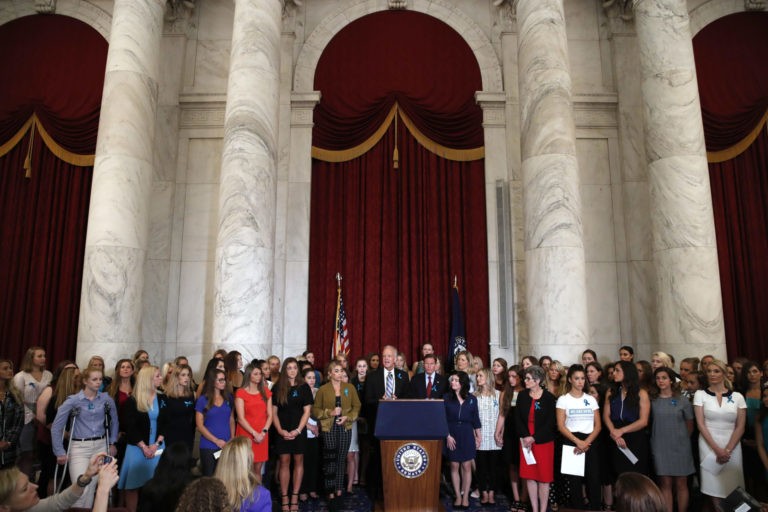
(Headline USA) The Justice Department has reportedly agreed to pay approximately $100 million to settle claims with about 100 people who say that the FBI ignored their complaints after they were sexually assaulted by sports doctor Larry Nassar, according to an anonymous source who spoke with the Associated Press.

The deal has not been finalized and no money has been paid, the source said on condition of anonymity because the person was not authorized to speak before a formal announcement.

An internal investigation found that FBI agents mishandled abuse allegations by women more than a year before Nassar was arrested in 2016.

The settlement was first reported by the Wall Street Journal. A Justice Department spokesperson declined to comment.

Nassar was a Michigan State University sports doctor as well as a doctor at Indianapolis-based USA Gymnastics. He is serving decades in prison for assaulting female athletes, including medal-winning Olympic gymnasts, under the guise of treatment.

Lawyers filed claims against the government, focusing on a 15-month period when FBI agents in Indianapolis and Los Angeles had knowledge of allegations against Nassar but apparently took no action, beginning in 2015. The Justice Department inspector general confirmed fundamental errors.

Nassar’s assaults continued until his arrest in fall 2016, authorities said.

The assault survivors include decorated Olympians Simone Biles, Aly Raisman and McKayla Maroney.

“I’m sorry that so many different people let you down, over and over again,” FBI Director Christopher Wray told survivors at a Senate hearing in 2021. “And I’m especially sorry that there were people at the FBI who had their own chance to stop this monster back in 2015 and failed.”

The Michigan attorney general’s office ultimately handled the assault charges against Nassar, while federal prosecutors in western Michigan filed a child sex abuse images case against him.

Michigan State University, which was also accused of missing chances over many years to stop Nassar, agreed to pay $500 million to more than 300 women and girls who were assaulted. USA Gymnastics and the U.S. Olympic and Paralympic Committee made a $380 million settlement.

Adapted from reporting by the Associated Press
Claim: Nearly 50 Survivors of Hamas’s Oct. 7 Festival Massacre Have Committed Suicide

(Jacob Bruns, Headline USA) Since they survived the deadly Oct. 7 Hamas attack at a music festival, nearly 50 Israelis who narrowly avoided captivity that day appear to have committed suicide, the Daily Mail reported.

Some of the Supernova festival attendees claim that, since the date of the attack—which included friendly fire from the Israel Defense Force—they have received inadequate care, causing untold psychological damage.

Guy Ben Shimon, an Israeli survivor of Hamas’s assault who is among those having psychiatric breakdowns, told Israel’s parliament that suicide in particular was commonplace among those who were present that day.

“Few people know, but there have been almost 50 suicides among the Nova survivors,” he told the governing body. “This number, which was true two months ago, may have increased since.”

Shimon also reportedly said that other survivors were being “involuntarily hospitalized.”

Ben Shimon’s claim was disputed by state authorities, who said they’ve seen no rise in suicides whatsoever since the initial Hamas assault.

Still, Ben Shimon said that among those who attended the Nova concert and witnessed the assault, the effects have been devastating.

“There are many survivors who had to be forcibly hospitalized due to their psychological state,” he argued, suggesting that he, personally, was “unable to do anything” and as a result has had to take steps to remedy his struggles.

“I had to get a dog to help me survive in my daily life,” he suggested, noting that even now he cannot “work and function normally” without “adequate help.”

Other survivors of the attack echoed Ben Shimon’s statements in their comments.

Na’ama Eitan, another survivor, said that she has faced the trauma of constantly recounting the experience, which has caused her to become nearly incapable of functioning on her own.

“Why should I constantly prove what I experienced?” she asked, noting that as a result of the attack she now sleeps only “two hours a night.”

“I can no longer move on my own. I need to be constantly accompanied.”

According to Eitan, she would be dead of not for her therapist.

Largest Bodega Union Hails Trump Following Viral Visit

(Luis Cornelio, Headline USA) Former President Donald Trump’s presence in New York City for his criminal trial led by embattled Manhattan District Attorney Alvin Bragg has commanded significant media attention. 

However, on Tuesday, Trump made a notable stop at a bodega, where a worker defended himself against a violent assailant, only to later face charges from Bragg. 

Trump’s visit to the bodega had been planned (but kept secret) for several days and aligned with concerns voiced by the Bodega and Small Business Group (BSBG), one of New York’s largest bodega unions, regarding the escalating crime impacting bodega workers across the city.

During his visit, Trump engaged with bodega workers, advocating for their right to self-protection. “You should be allowed to have a gun,” Trump remarked. “If you had a gun, you’d never get robbed, you’d never get robbed, that would be the end of it.” Trump pledged to restore law and order if elected ahead of the 2024 general election. 

In a phone interview with Headline USA, BSBG president Francisco Marte echoed Trump’s sentiments and praised the former president for shining a spotlight on worker safety concerns.  

“We are fed up with the lack of action to protect bodega workers,” Marte expressed during a 20-minute conversation conducted in Spanish. “We appreciate Trump for accepting our visit to the bodega and taking the time to meet with us.” 

Marte revealed that Trump’s visit was cleared by the Secret Service and organized by a Dominican American individual affiliated with a local Republican club. Initially planned for a downtown location, Trump ultimately agreed to visit a bodega in upper Manhattan. 

The bodega chosen for Trump’s visit was where Jose Alba, a Dominican American bodega worker, fatally defended himself against a violent attacker in 2022. However, Alba found himself facing charges from Manhattan District Attorney Alvin Bragg, who is also prosecuting Trump over alleged payments made to former adult film star Stormy Daniels and model Karen McDougal.

Alba’s arrest stirred widespread outrage, with many questioning Bragg’s motives and alleging selective prosecution.

During the interview, Marte criticized Democrats opposing legislation that would classify assaulting a retail worker as a felony. He expressed hope that Trump’s visit would spur Democrats into action. 

“I hope Democrats recognize our frustrations as businessmen and Hispanics. We’re tired of being ignored,” Marte emphasized. “We’re tired of facing daily insecurity and yet there’s no sense of urgency to address it.” 

While stressing that his union does not endorse candidates, Marte underscored the significance of Trump’s support as a wake-up call for politicians. 

“Trump’s visit must serve as a wake-up call to Democrats because our votes cannot be taken for granted,” he asserted. “I’ve had discussions about this with many bodega owners and other associations. We need to learn about ‘vote in’ and ‘vote out.’ Those who don’t represent us will be voted out of office.” 

The BSBG represents around 3,000 bodegas, owned by people from diverse backgrounds, including Yemen, Bangladesh and Latino communities. 

Marte’s remarks align with Trump’s ongoing campaign focused on law and order, criticizing Democrats nationwide for their perceived lax approach to crime prevention.