Boy Scouts Officially Changes Name after More than a Century

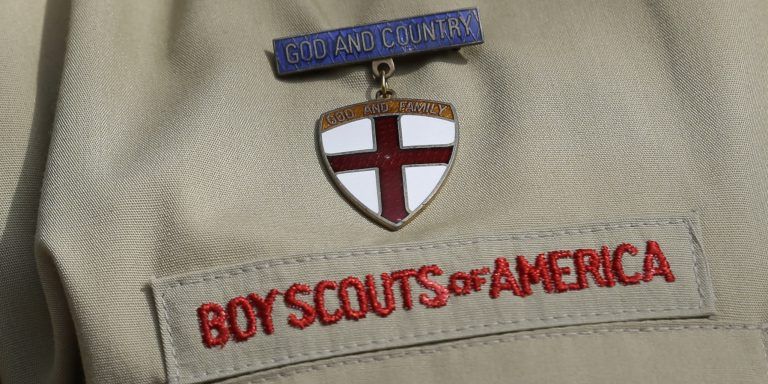
(Molly Bruns, Headline USA) The Boy Scouts of America officially changed their name to “Scouting America” in order to be more inclusive and allow kids to “bring their authentic selves” to the program, according to Gateway Pundit.

The group announced the change via a press release on its website, with several statements insisting that the embattled program is “evolving,” according to CEO Roger Krone.

In recent years, Boy Scouts of America faced significant political pressure to make changes in the name of “inclusivity.”

“Scouting America provides a welcoming, safe environment where youth can become the best version of themselves by learning and respecting each other,” Krone said. “I encourage everyone to join us and experience the benefits of scouting.”

This is the first time the name of the entire organization has changed in its 114 year history.

The sad end cultural touchstone comes after decades fraught with turmoil due to scandal over sexual-abuse allegations and the resulting lawsuits, which stigmatized the group and forced it to the brink of bankruptcy in 2018.

However, the effort to soften its image and expand its outreach ultimately alienated many of the core groups—including the Church of Latter-Day Saints—that saw it drifting away from the fundamental values it once had promoted the more it ventured into the politics of sex and gender.

In 2015 the administrative arm of the organization lifted the blanket ban on openly gay adult volunteers.

In 2019, the group announced that girls would be allowed into the organization; changing the Boy Scouts arm of the organization to “Scouts BSA” instead of “Boy Scouts of America.”

In 2020, the group implemented a mandatory Diversity and Inclusion Badge for aspiring Eagle Scouts.

Since these drastic changes took effect, the group suffered a sharp decline in membership and an unprecedented spike in sexual abuse.

“The argument that I make with people that say, ‘I like Boy Scouts of America… why do we have to change?’ You know, membership is at historic lows,” said Krone. “Part of my job is to reduce all the barriers I possibly can for people to accept this as an organization and to join.”

They also faced lawsuits from several different sides, including victims of abuse and even from the Girl Scouts, who sued the group after their drastic membership loss.

Navigating the Future of Precious Metals: Insights and Legislative Advocacy from Industry Experts

(Money Metals News Service) In a recent episode of the Vancouver Resource Investment Conference podcast, hosted by Jesse Day, guests Stefan Gleason (President and CEO of Money Metals Exchange) and Jp Cortez (Executive Director of the Sound Money Defense League) shared their expert analysis on the dynamics of the gold and silver markets and discussed legislative efforts to promote these metals as sound money in the United States.

Analyzing the Precious Metals Market

The conversation began with an examination of the recent price action in gold and silver. Stefan Gleason noted that central bank gold buying has been a significant catalyst, particularly in response to geopolitical tensions and economic sanctions, such as those against Russia. 

This has sent a strong signal worldwide, resulting in increased gold purchasing by central banks, particularly in Asia. “Demand outside of the country, not necessarily US demand, has been a driving force,” Gleason explained, pointing out the trend of gold flowing eastward through Switzerland and being remelted into kilo bars for Asian markets.

Discussing the retail participation in precious metals, Gleason observed a dichotomy where U.S. retail demand has not paralleled the high prices, with more selling than buying occurring at the retail level. However, recent price spikes have begun to attract more retail interest. “It’s an interesting dichotomy between U.S. retail and global flows,” he stated.

Efforts by the Sound Money Defense League

JP Cortez provided an overview of the Sound Money Defense League’s initiatives, which focus on legislative changes to facilitate the use of gold and silver as money. He highlighted the cumbersome tax implications that currently hinder the transactional use of precious metals. “In some states, you’re hit with triple taxation,” Cortez pointed out, underlining the need for legislative reforms to eliminate such financial barriers.

The league has successfully advocated for the removal of sales taxes on precious metals in several states and is pushing for further legislative changes to protect and promote gold and silver as part of a sound monetary system. These efforts include encouraging state treasurers to invest in physical gold and silver and establishing in-state depositories.

Future of Gold and Silver as Transactional Currencies

The conversation with host Jesse Day also touched on the potential for gold and silver to be used more broadly as transactional currencies. Both guests agreed that while there are innovative products emerging, such as digital gold and fractional gold, widespread adoption as everyday currency is unlikely in the near term. Traditional investors in gold and silver value the physical possession of their assets, which presents a challenge to digital solutions that lack privacy and physical tangibility.

However, both Stefan Gleason and Jp Cortez see these innovations as important steps toward reintroducing gold and silver as practical, everyday money. They also emphasized the educational value of these innovations in helping the public understand the true nature of sound money.

Key Questions and Answers

What are the main catalysts driving the current price actions in gold and silver?

Stefan Gleason: Central Bank gold buying is a major driver, spurred by geopolitical tensions and economic sanctions, such as those imposed on Russia. This has led to increased demand for gold, particularly in Asia. The market movements were also influenced by declarations from U.S. officials about seizing Russian assets, which triggered additional waves of buying.

Are we in the early stages of a precious metals bull market, or is this the top?

Stefan Gleason: We may be seeing a peak for the early part of the year, typically a seasonal high in spring. In the long term, the breakout of gold over $2100 is significant, indicating a strong upward trajectory, but silver still has a long way to go to reach its historical highs.

What role does geopolitical uncertainty play in the price of gold?

JP Cortez: Geopolitical risks are significant drivers as they lead to instability, which in turn prompts central banks and nations to hedge their risks by buying gold. The uncertainty in the global financial system, particularly concerning the dominance of the U.S. dollar, is prompting countries to consider gold-backed alternatives to establish more stable currencies.

What are the current trends in retail buying in the West compared to the East?

Stefan Gleason: In the West, particularly the U.S., there has been more selling than buying at the retail level, which contrasts with strong buying trends in the East, like China and India. The U.S. market has seen outflows from gold ETFs and a general decrease in retail purchases despite high gold prices.

What legislative efforts are underway to promote gold and silver as sound money?

JP Cortez: The Sound Money Defense League is actively working to remove sales taxes on precious metals and push for legislation that recognizes gold and silver as legal tender. They are also advocating for state treasurers to include physical gold and silver in state reserves and pension funds, aiming to protect state finances from inflation and financial instability.

How might gold and silver be used as transactional currencies in the future?

Stefan Gleason: For gold and silver to become widely used as transactional currencies, issues such as high transaction costs and taxes must be addressed. Innovations like digital gold and fractional gold are making headway, but widespread adoption is limited by traditional investors’ preference for physical assets and privacy concerns.

What can people do to support sound money initiatives?

JP Cortez: Individuals are encouraged to engage with the Sound Money Defense League, participate in grassroots efforts, and stay informed about legislative battles related to sound money policies. This involvement is crucial for advancing legislation that supports the use of gold and silver as money.

Important Points

In the interview on the Vancouver Resource Investment Conference podcast, several important points were raised concerning the Federal Reserve, the purchasing power of the dollar, and the future of currency, especially in relation to gold and silver.

  1. Federal Reserve and the U.S. Dollar:
    • Weaponization of the U.S. Dollar: Stefan Gleason discussed how recent actions by the United States, such as removing Russia from the SWIFT banking system, have demonstrated a willingness to weaponize the U.S. dollar in international relations. This has broader implications for the trust and stability of the dollar as the world’s reserve currency.
  2. Purchasing Power of the Dollar:
    • Devaluation and Inflation Concerns: Both speakers touched on the declining purchasing power of the dollar, driven by inflation and federal monetary policies. The ongoing devaluation has sparked a reevaluation among central banks and nations about relying too heavily on the dollar.
    • Implications of U.S. Fiscal Policy: JP Cortez highlighted concerns about the U.S. fiscal discipline, or lack thereof, which contributes to ongoing devaluation and diminishes the dollar’s reliability as a store of value. This has led to increased interest in alternatives like gold.
  3. Future of Currency:
    • Rise of Alternative Currencies: The discussion included the notion that geopolitical tensions and concerns about the dollar’s stability are pushing various countries to explore alternative currency systems, potentially backed by gold. This is seen as a way to create more stable and trustworthy monetary systems.
    • Digital Currencies and Privacy Concerns: There was also mention of the emergence of digital currencies, including Central Bank Digital Currencies (CBDCs), which are seen as potential competitors to traditional fiat currencies like the dollar. However, there are significant privacy concerns with digital currencies that may deter their adoption among traditional gold and silver investors who value anonymity and control over their assets.
  4. Role of Gold and Silver:
    • Gold and Silver as Safe Havens: Amidst these uncertainties, gold and silver are increasingly viewed not just as investment assets but as fundamental components of a more stable monetary system. This view is driven by their historical role as sound money and their historic value, which is not dependent on the policies of any single government.
  5. Legislative Advocacy for Sound Money:
    • Sound Money Defense League Efforts: The Sound Money Defense League’s legislative advocacy aims to make gold and silver more accessible and practical for use as money by eliminating taxes on their purchase and recognizing them as legal tender. This is part of a broader effort to restore their role in the economic system, providing a counterbalance to the risks associated with fiat currency.

During the interview on the Vancouver Resource Investment Conference podcast, JP Cortez provided detailed insights into the Sound Money Index, an initiative of the Sound Money Defense League. 

Purpose of the Sound Money Index

The Sound Money Index is designed to evaluate and rank each U.S. state based on how friendly their laws and regulations are towards gold and silver. The index uses 14 different indicators to assess the extent to which states support sound money principles. 

These principles include the absence of taxes on the purchase and sale of gold and silver, the legal recognition of these metals as money, and other related legislative measures that reduce friction for using precious metals as money.

Highlights from the Sound Money Index:
  • Top Performing States: JP Cortez mentioned that states like Wyoming, South Dakota, Alaska, New Hampshire, and Arkansas rank highly on the Sound Money Index. These states have enacted robust laws that reaffirm gold and silver as legal tender, eliminate capital gains on precious metals, and provide strong protections for contracts denominated in gold and silver.
  • Legislative Achievements: Many of these top-ranked states have proactively passed legislation that supports the use of gold and silver. For example, Wyoming was one of the first significant wins for the Sound Money Defense League, successfully removing all tax liabilities on metals and ensuring protections against future taxes.
  • Ongoing Efforts in Other States: The discussion also touched on efforts in states like Alaska, where legislation is being considered that would prohibit local taxes on precious metals and encourage the state to explore alternative currencies that might incorporate gold and silver.
  • Struggles and Successes: Cortez discussed the challenges and successes in various states, including the introduction of bills in states traditionally less friendly to sound money policies. He highlighted recent legislative efforts in New Jersey, where a bill to remove sales taxes on precious metals was unanimously approved in the legislature but was ultimately vetoed by the governor.

Impact and Importance of the Sound Money Index

The Sound Money Index plays a crucial role in providing transparency about the monetary environment across the U.S. and acts as a tool for advocacy and reform. By highlighting how states compare in their treatment of gold and silver, the index helps inform residents and policymakers about where improvements can be made. 

The Sound Money Index also serves as a benchmark for legislative efforts by the Sound Money Defense League, guiding their initiatives to enhance the acceptance and practical use of gold and silver as money.

In summary, the Sound Money Index is a strategic part of the Sound Money Defense League’s efforts to promote gold and silver as sound, constitutional money across the United States, supporting legislative changes that align with this goal.

Conclusion

The insights from Stefan Gleason and JP Cortez in this interview by Jesse Day shed light on the complex interplay of market dynamics, geopolitical factors, and legislative efforts that shape the precious metals landscape. 

Their discussion with host Jesse Day underscored the growing importance of gold and silver not only as investment assets but also as foundational elements of a more stable and secure monetary system. As legislative victories continue to mount, the path toward reestablishing gold and silver as sound money appears increasingly viable, reflecting a significant shift in public and governmental attitudes toward these timeless assets.

U.S. Rep. Introduces Bill to End Federal Tax on Gold and Silver

(Money Metals News Service) U.S. Rep. Alex Mooney, R-W.Va., has re-introduced sound money legislation to remove all federal income taxation from gold and silver coins and bullion.

The Monetary Metals Tax Neutrality Act (H.R. 8279) backed by the Sound Money Defense League, Money Metals Exchange, and free-market activists – would clarify that the sale or exchange of precious metals bullion and coins are not to be included in capital gains, losses, or any other type of federal income calculation. Gold and silver would be treated as a non-entity for tax purposes, putting it on par with the U.S. dollar.

Reps. Scott Perry, R-Pa., and Randy Weber, R-Texas, joined as original cosponsors.

“My view, which is backed up by language in the U.S. Constitution, is that gold and silver coins are money and are legal tender,” Rep. Mooney said.

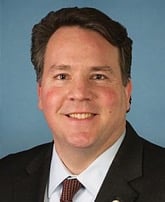
Congressman Alex X. Mooney (R-WV)

“If they’re indeed U.S. money, it seems there should be no taxes on them at all. So, why are we taxing these coins as collectibles?”

Acting unilaterally, Internal Revenue Service bureaucrats have placed gold and silver in the same “collectibles” category as artwork, Beanie Babies, and baseball cards – a classification that subjects the monetary metals to a discriminatorily high long-term capital gains tax rate of 28%.

Sound money activists have long pointed out it is inappropriate to apply any federal income tax, regardless of the rate, against the only kind of money named in the U.S. Constitution. And the IRS has never defended how its position squares up with current law.

Furthermore, the U.S. Mint continuously mints coins of gold, silver, platinum, and palladium and gives each of these coins a legal tender value denominated in U.S. dollars. This formal status as U.S. money further underscores the peculiarity of the IRS’s tax treatment.

A tax-neutral measure, the Monetary Metals Tax Neutrality Act states that “no gain or loss shall be recognized on the sale or exchange of (1) gold, silver, platinum, or palladium minted and issued by the Secretary at any time or (2), refined gold or silver bullion, coins, bars, rounds, or ingots which are valued primarily based on their metal content and not their form.”

Under current IRS policy, a taxpayer who sells his precious metals may end up with a capital “gain” in terms of Federal Reserve Notes and must pay federal income taxes on this “gain.”

But the capital “gain” is not necessarily a real gain. It is often a nominal gain that simply results from the inflation created by the Federal Reserve and the attendant decline in the Federal Reserve Note dollar’s purchasing power.

Under Rep. Mooney’s bill, precious metals gains and losses would not be included in any calculations of a taxpayer’s federal taxable income.

“U.S. inflation is not caused by CEOs of grocery stores or by outside world leaders, it is caused by the Federal Reserve and federal policy,” said Jp Cortez, executive director of the Sound Money Defense League. “The federal government has a responsibility to remove disincentives for people seeking alternatives to the Federal Reserve note dollar to protect their savings.”

“The IRS does not let taxpayers deduct the staggering capital losses they suffer when holding Federal Reserve notes over time,” said Stefan Gleason, president of Money Metals Exchange, the U.S. company named Best Overall Precious Metals Dealer by Investopedia.com. “So it’s grossly unfair for the IRS to assess a capital gains tax when citizens hold gold and silver to protect them from the Fed’s policy of currency debasement.”

The Monetary Metals Tax Neutrality Act aligns with a broader national trend. With most states having already eliminated sales tax on the purchase of precious metals, state legislatures are increasingly introducing and approving measures to eliminate state income taxation of gold and silver.

Alabama and Nebraska each passed their version of this policy this year. Arizona, Arkansas, and Utah approved similar measures in recent years. And Iowa, Georgia, Oklahoma, Missouri, and Kansas also considered income tax exemptions in 2024, with several approving the bill across multiple committees and chambers.

The text of the H.R. 8279 can be found here and additional information on its current status is located here. 

23 State AGs Call on Congress to Defund UN Agency w/ Ties to Hamas Terrorism

(A coalition of 23 attorneys general led by Utah and South Carolina have called on Congress to permanently defund a United Nations agency after learning of its ties to the terrorist organization Hamas.

“The United States must stop funding antisemitic education efforts run by the United Nations body tied to terror organization Hamas,” they wrote in a letter to congressional leaders. “On Oct. 7, UNRWA staff participated in the worst pogrom against Jews since the Holocaust.”

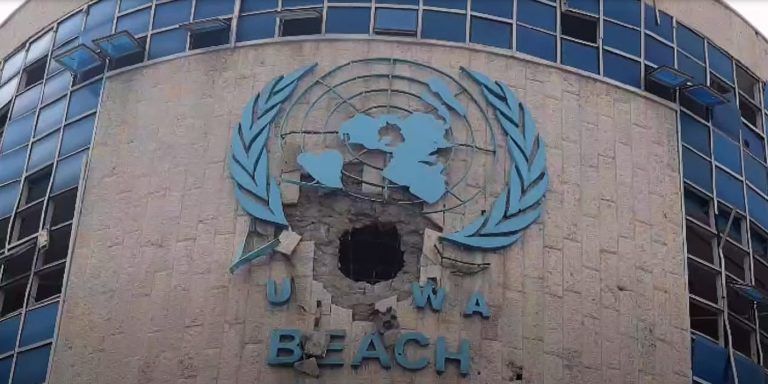
The agency responsible for providing humanitarian aid to Palestinians, the United Nations Relief and Works Agency, denied knowing that Hamas established intelligence operations directly below and in its headquarters in Gaza.

Israeli Security Agency operatives raided UNRWA’s headquarters earlier this year and found large quantities of weapons, rifles, ammunition, grenades and explosives in its offices, as well as a 700-meter long and 18-meter deep tunnel below, the Times of Israel reported.

Since Hamas’s Oct. 7 attack on Israel, Hamas has refused to share fuel with hospitals, U.S. Secretary of State Antony Blinken told Congress.

Multiple reports revealed that Hamas was storing weapons and munitions in hospitals and schools, preventing food and water from reaching civilians, the Center Square reported.

In January, UNRWA announced it had fired more than a dozen employees for participating in the Oct. 7 attack. But a coalition of attorneys general weren’t convinced and called on Congress to defund UNRWA.

“UNRWA’s ties to terrorism are nothing new,” said the 26 AGs, led by Iowa Attorney General Brenna Bird and South Carolina Attorney General Alan Wilson.

“UNRWA employed one school principal who moonlit as an Islamic Jihad bomber and another who was a Hamas commandant,” they continued. “One UNRWA school teacher is accused of detaining an October 7 hostage for nearly two months … [and] every UNRWA school the Israeli Defense Forces searched contained hidden weapons.”

Under former President Donald Trump, the U.S. stopped all federal funding to UNRWA in 2018. President Joe Biden reinstated the funding on his first day in office. In his first term alone, U.S. taxpayers have funded UNRWA to the tune of $1 billion.

“For even a single taxpayer dollar to fund a corrupt organization that hires and harbors terrorists is despicable,” Bird said.

“President Trump got it right when he stopped payments to UNRWA in 2018,” she added. “It’s the federal government’s job to prosecute terrorists, not fund them. We’re calling on Congress to take immediate action and defund UNRWA once and for all.”

On Tuesday, a second coalition of 23 AGs again called on Congress to fully defund UNRWA.

“We call on Congress to stop funding this nascent and growing terror threat,” they said.

“Radicalization in the Middle East today can lead to future attacks on the United States, our citizens, and our allies,” they continued. “Recognizing that, President Trump cut funding to UNRWA that was only restored after President Biden took office. Just as with the crisis at the border, President Biden should recognize that it is time to adopt the right policy of his predecessor.”

The coalition includes attorneys general from Alabama, Alaska, Arkansas, Florida, Georgia, Idaho, Indiana, Iowa, Kansas, Kentucky, Louisiana, Mississippi, Missouri, Montana, Nebraska, Ohio, Oklahoma, South Carolina, Tennessee, Texas, Utah, Virginia, West Virginia and Wyoming.

In addition to funding the UNRWA, Biden ignored calls by House and Senate Republicans to rescind visas of pro-Hamas individuals living in the U.S.

Senate Democrats also blocked any attempt to deport Hamas sympathizers.

As Palestinians and pro-Hamas supporters increasingly called for the death of Jews, the annihilation of Israel, and Jewish Americans on college campuses were targeted with violence, Biden expanded measures to prevent “certain Palestinians” from being deported, the Center Square reported.

He is also reportedly considering offering refugee status to Palestinians in the U.S. when nearly all Islamic countries will not take them. Neighboring Egypt fortified its wall and security forces to block illegal entry from Gaza.

FBI Director Christopher Wray has for months warned that Hamas and Islamic extremists could commit a terrorist attack on U.S. soil. More recently, he acknowledged that groups affiliated with ISIS were coming through the U.S. border, the Center Square reported.

This is after the greatest number of known or suspected terrorists (KSTs) have been apprehended illegally entering the U.S. under the current administration. Fiscal year 2024 through April 24, 235 KSTs have been apprehended, according to U.S. Customs and Border Protection data. The majority, by a margin of 2-1, are being apprehended at the northern border.

In fiscal 2023, 736 KSTs were apprehended nationwide—the greatest number in recorded U.S. history. The significant majority—66%, or 487—were apprehended at the northern border.

Newsom Uses Fake Data to Claim Tourism Boom Despite Lockdowns

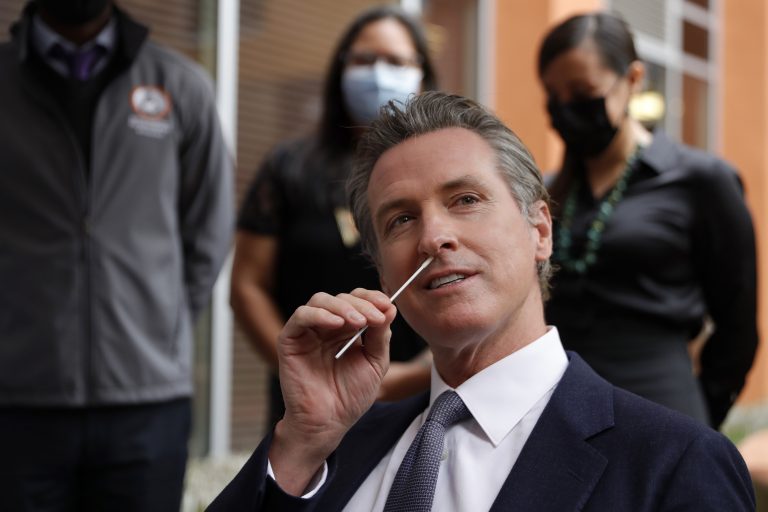
(California Gov. Gavin Newsom stuck to his guns after claiming record-high tourism spending from atop the Golden Gate Bridge—despite the fact that the report he cited noted in the adjoining sentence that real spending was down 14% since 2019 after accounting for inflation.

“Last year, travelers spent a record-breaking $150.4 [billion] in the state—further cementing our spot as the state with the largest tourism market share in the country,” Newsom claimed atop the San Francisco landmark and suicide hotspot.

As one of the most populated, wealthy areas in the world, California naturally sits at the top of many rankings.

“… People can try to undermine California’s success all they want, but the fact is tourists keep visiting the 5th largest economy on planet Earth because of all our state has to offer and the data supports that,” said a spokesperson at the governor’s office after the Center Square published its fact check pointing out the misleading statistics.

Once accounting for inflation, real tourism-related tax revenues are down about 16%, and real earnings for tourism-related workers are down about 6%. Falling revenues have, in part, fueled California’s projected $73 billion deficit for the 2024-2025 fiscal year.

Nonetheless, the governor’s spokesperson noted California leisure and hospitality jobs have doubled since April 2020, well into the Newsom-ordered COVID-19 lockdowns that completely shut down the state for months. California maintained many of its COVID policies until June 15, 2021—longer than almost every other state—which proved brutal for the state’s tourism industry.

Joining other national news organizations, the New York Times repeated the spurious claims, saying, “Spending by tourists rose to a record-high $150.4 billion in 2023, Gov. Gavin Newsom said over the weekend—surpassing 2019 and suggesting that the pandemic slump has ended. The surge generated billions of dollars in tax revenue for the state and helped create 64,900 new jobs last year.”

The governor’s joint press release with Visit California cited Visit California’s report finding that while tourism spending in 2023 was up 3.8% from peak 2019 levels, those figures were not adjusted for inflation, which has been approximately 19% since 2019.

“Direct travel spending in 2023 increased 5.6% in current dollars,” confirmed the report. “Adjusted for inflation, travel spending in 2023 was down 14% from the peak (in 2019).”

California political leaders piled on the governor for his claim, pointing at the state’s fuzzy budget math as evidence of the governor’s fiscal ineptitude.

“It’s obvious Newsom is using the same faulty ‘math’ that caused California’s budget crisis. Let’s face it: Those numbers don’t add up,” state Sen. Brian Dahle, R-Bieber, told the Center Square. “It’s another bogus claim to deceive voters into thinking he’s actually doing a good job.”

Newsom’s revised budget for the 2024-2025 fiscal year is expected to come out this Friday.

Newsom’s initial budget assumed a $38 billion deficit against the non-partisan, state-funded Legislative Analyst Office’s $73 billion estimate, and called for less than $10 billion in spending cuts.

California requires legislators to pass a balanced budget, so even if Newsom passes a balanced budget this year on fuzzy math, major cuts may have to come later—after elections—when that math doesn’t work out, as has been done in recent years.

Lawsuit Alleges Statewide Pedo Ring at Illinois Detention Centers 

(Headline USA) Child sexual abuse at Illinois juvenile detention centers was pervasive and systemic for decades, according to disturbing accounts in a lawsuit filed Monday by 95 men and women housed at the youth centers as children.

The lawsuit details alleged incidents of abuse from 1996 to 2017, including gang rape, forced oral sex, beatings and groping of children by corrections officers, sergeants, nurses, therapists, a chaplain and others at nine youth centers. Many plaintiffs said they were threatened or rewarded to keep quiet.

“The State of Illinois has allowed a culture of abuse at Illinois Youth Centers to flourish unabated,” the 186-page complaint said.

The lawsuit, filed in the Illinois Court of Claims, follows similar harrowing allegations of child sex abuse at juvenile detention centers in Maryland, New Jersey, New Hampshire, California and New York City. Some cases have gone to trial or resulted in settlements; arrests have been infrequent.

The Illinois lawsuit contends the state failed to supervise, discipline, remove or investigate alleged abusers, enabling the abuse to continue. The complaint alleges the abuse happened at youth centers in locations all over the state including Chicago, Joliet, Harrisburg, Murphysboro and Warrenville. Several locations have since closed.

The lawsuit names the state of Illinois, the state’s Department of Corrections and Department of Juvenile Justice as defendants. It seeks damages of roughly $2 million per plaintiff, the most allowed under law.

Messages left Monday with the governor’s office and both corrections agencies were not immediately returned.

The 95 plaintiffs are among hundreds of victims of sexual abuse at Illinois detention centers, said Jerome H. Block, an attorney who brought the case and who expects to file more lawsuits. His firm has helped bring lawsuits in Maryland, New Jersey and New York City.

“The very people that were entrusted with keeping our clients safe when they were children were the ones perpetrating the sexual abuse,” Block said. “This is long-term institutionalized sexual abuse.”

The Associated Press does not typically name people who say they were sexually assaulted unless they consent to being identified or decide to tell their stories publicly.

Three of the 95 plaintiffs are named in the lawsuit, including Jeffery Christian of Maywood, who said it was important to come forward publicly because he thought it could help others who may be suffering in silence.

The 36-year-old suburban Chicago man said he was sexually abused at two different detention centers beginning when he was about 13, including by a counselor who groped and fondled him during counseling sessions.

Like many of the plaintiffs, Christian said the abuse was reported at the time, but facility administrators did nothing to address it. He said reporting the abuse made him more of a target. After the incidents, he became withdrawn and anti-social.

“It prepared me to start looking at the world different,” he said. “It took some light out of me.”

At least six detention center workers — including a current mayor of a small southern Illinois community — were identified in the lawsuit as alleged repeat offenders with separate accusations from different plaintiffs. Some alleged offenders are named in the lawsuit, while others are identified only as the plaintiffs remembered them by physical attributes, initials or nicknames. Most plaintiffs are identified by initials in the complaint.

Among other things, the complaint blames the state’s use of unconstitutional and systemic strip searches as perpetrating sexual abuse.

“The State of Illinois has had notice of such abuse for decades and nonetheless neglected to protect its confined youth from sexual abuse and failed to implement policies necessary to ensure such protection,” the complaint said.

The lawsuit cites a 2013 U.S. Department of Justice survey of incarcerated youth that found Illinois was among the four worst states nationwide for sexual abuse in detention facilities. It also notes about half a dozen criminal cases from 2000 to 2021 where youth center employees were convicted of sexually abusing children and alleges that abuse continues to this day.

The alleged repeat offenders include Rocky James, a longtime supervisor at the Harrisburg center who currently serves as the mayor of nearby Eldorado in southern Illinois, according to the lawsuit. Six plaintiffs separately allege that James abused them in the 2000s, including one teenager who was “regularly and physically coerced” to have sexual intercourse inside his cell and the bathroom, it said.

James, a former Eldorado city council member and Saline County board member, has served as mayor of the town of about 3,500 people since 2007. He has not been charged with wrongdoing.

When reached Monday by telephone, James, 59, said it was the first he was hearing of the allegations.

“There’s absolutely no truth to it,” he said, declining further comment.

Criminal charges are not beyond the realm of possibility in some of the more recent cases. Although there’s no longer a statute of limitations on crimes related to the sexual abuse of minors occurring after Jan. 1, 2020, a 20-year limit remains on alleged offenses committed prior to that, allowing for the possibility of criminal charges in cases allegedly occurring as long ago as 2004.

Many plaintiffs said their abusers threatened them with violence, solitary confinement, transfers to harsher facilities and longer sentences if they reported the abuse. Others were given extra food, money in their commissary accounts, the chance to play videos games and other rewards if they kept silent.

The plaintiffs ranged in age from 12 to 17 at the time they said they were abused, often while they were isolated in a bathroom, kitchens or in their cells. When detainees reported abuse, the lawsuit said it was laughed off, with one lieutenant saying, “He’s just playing around,” or a chaplain who told a 17-year-old boy he allegedly fondled and was upset, “This is what goes on” in the church.

They are now adults, with the oldest in their early 40s. Most are men, but one of the detention centers was co-ed. They are from small communities and big cities, mostly in Illinois. Several are from Indiana, Wisconsin, Ohio, Iowa and Texas.

“Children, that are detained in juvenile detention centers, are especially vulnerable to sexual abuse. That’s because the staff working at these juvenile detention centers have complete and total control over these children,” Block said. “There is no way for these children to escape the abuse.”

Adapted from reporting by the Associated Press

State Dep’t Cables Discuss COVID-19 Coming from China

(Ken Silva, Headline USA) The House Subcommittee on the Coronavirus Pandemic is calling for the State Department to declassify cables discussing whether COVID-19 came from the Wuhan Institute of Virology in China.

“These documents contain highly pertinent information that credibly suggests: COVID-19 originated from a lab-related accident in Wuhan, China; The CCP acted to prevent, and in fact obstructed, a fulsome investigation into these matters; and a seamless relationship between the WIV and the Chinese People’s Liberation Army,” the committee’s chair, Rep. Brad Wenstrop, R-Ohio, said Tuesday in a letter to Secretary of State Antony Blinken.

The documents that Wenstrup were already obtained by the non-profit transparency group, U.S. Right to Know, last June. The organization published a report about the documents at the time.

As described by U.S. Right to Know, one State Department cable alleges evidence of connections between China’s biotechnology sector and the People’s Liberation Army, including “cyber evidence” of “PLA shadow labs at WIV,” the PLA’s involvement with the construction of the lab and subsequent presence there, and “WIV personnel with possible PLA ties.”

A second cable appears to address the blurring of civilian and military research — specifically Beijing’s emphasis on “military-civil fusion,” or MCF — in the world of biotech, according to U.S. Right to Know.

A third cable details the way in which Beijing authorities censored the spiraling pandemic in critical early days, with devastating consequences: “Initial Outbreak Could Have Been Contained in China if Beijing Had Not Covered It Up,” it states.

“The cables may represent some of the research that informs a 2021 statement from the State Department that ‘the WIV has engaged in classified research, including laboratory animal experiments, on behalf of the Chinese military since at least 2017,’” U.S. Right to Know reported last June.

“But while some information can be gleaned through the cable’s headings, the rest of the content is fully redacted.”

It’s not clear why Wenstrop is only now seeking to have the documents unredacted. The congressman also seeks a briefing on the documents by May 14. He told Blinken that he previously requested a briefing by April 24—before the committee held its hearing with Wuhan collaborator Peter Daszak—but that didn’t happen.

“The American people deserve to see the information that is hidden under these redactions,” Wenstrup reiterated in his letter.

Ken Silva is a staff writer at Headline USA. Follow him at twitter.com/jd_cashless.

Hot Ladies Troll Leftist Shills, Say They Won’t Vote for Biden

(Dmytro “Henry” Aleksandrov, Headline USA) A new trend of young and attractive women mocking leftists by saying they won’t vote for Joe Biden went viral on May 6, 2024.

The trend began after Paula Scanlan, an ambassador for the Independent Women’s Forum, mocked a young pro-Biden influencer in her social media post for supporting the corrupt politician.

“I’m Paula Scanlan, I’m 24 years old, I’m in Connecticut, and I’m NOT voting for Joe Biden in November,” Scanlan wrote, mimicking the style of Samuel Schwartz, a 20-year-old leftist influencer. 

The reason why Scanlan decided to mock the Biden shills was because she noticed the concerted effort of the Left to brainwash the youth.

“I first saw his post in my feed and saw there was a chain of Democrats doing it. I know the Democrats are pushing a lot of money into social media marketing, especially with Gen Z, and I thought they looked like idiots. I decided to respond with the same exact wording, just with the word NOT voting for Biden,” Scanlan told the Daily Caller.

Soon after that, some of the most prominent female influencers on social media responded with similar messages.

“I’m Brett Cooper, I’m 22 years old, I’m from Tennessee, and I’m NOT voting for Joe Biden in November,” the Daily Wire host wrote.

Debra Lea, a prominent pro-Israel activist responded to the viral trend as well.

“I’m Debra, I’m 23 years old, I’m from Manhattan, and I will NOT be voting for Joe Biden this November,” she wrote.

Alexandra Lains, a Catholic commentator with over 50,000 followers on Twitter, also stated that she won’t be boring for Biden in the upcoming election.

“I’m Alex Lains, I’m 28 years old, I’m in NJ, and I’m NOT voting for Joe Biden in November,” she wrote.

In another post, Scanlan wrote that she was surprised about people’s reactions.

“When I first posted this as a joke making fun of the paid liberal shills posting Biden propaganda, I did not anticipate thousands of people joining me. Never thought disliking the current president would be so unifying. You did it, Joe,” she wrote.

However, in her statement to the Caller, she said that the anti-Biden reaction was not really surprising, even among young females, who usually tend to vote “blue no matter who.”

“After all the Title IX rewrite work and the administration allowing men into women’s sports and spaces, I don’t think there’s any excuse left to support him. I think people, especially women, are starting to wake up to this,” she said.

Ilhan Omar Faces Censure Vote after ‘Pro-Genocide’ Jewish Student Claims 

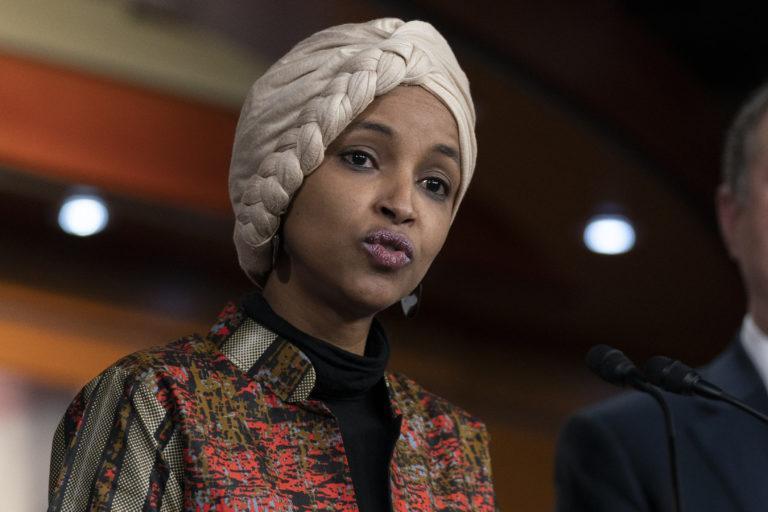
(Luis Cornelio, Headline USA) Embattled Rep. Ilhan Omar, D-Minn., could soon be reprimanded over her controversial “pro-genocide” characterization of some Jewish students.

Omar made unsubstantiated remarks against students who counter-protested pro-Palestinian students on college campuses, calling them of being “pro-genocide.”

As she toured the protest site at Columbia University on April 26, she told Fox 5 New York, “I actually met a lot of Jewish students who are in the encampment, and I think it is really unfortunate that people don’t care about the fact that all Jewish kids should be kept safe.”

She added, “We should not have to tolerate antisemitism or bigotry for all Jewish students, whether they are pro-genocide or anti-genocide.”

In response, Rep. Don Bacon, R-Neb., introduced a censure resolution scolding Omar’s characterization of Jewish students as “pro-genocide.” 

Bacon stated that her remarks were “slanderous” and could “inflame violence against the Jewish community.”

The resolution, first reported by Fox News, also targets Omar’s “long and demonstrated history of hateful rhetoric that plays into the worst antisemitic tropes.” 

The Nebraska Republican hinted at the censure last week, as reported by Fox News. 

“To say that the Jewish students are responsible for this and treat them that way, that is antisemitism, right? It’s one thing to protest Israel, but to stretch it over and accost Jewish students is wrong,” Bacon said.

“I’m working on a bill right now to call out Omar for what she said,” he added. “She’s talking about pro-genocide or anti-genocide Jewish students…all this talk is all wrong because Jewish Americans are Americans. Quit treating them that way.” 

Omar, who is Muslim, has been previously accused of voicing anti-Semitic tropes, resulting in her removal from the House Foreign Affairs Committee by then-House Speaker Kevin McCarthy in 2021.  

In 2019, she faced a bipartisan resolution aimed at condemning “anti-Semitism, Islamophobia, racism, and other forms of bigotry.” 

Ex-Top Biden Official, DNC ‘Political Consultor’ Now Prosecutes Trump

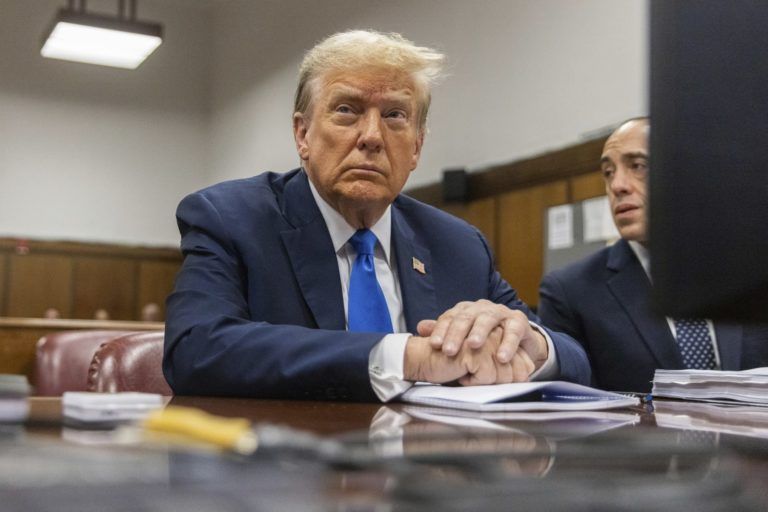
(Dmytro “Henry” Aleksandrov, Headline USA) It was revealed that the Democratic National Committee paid Donald Trump prosecutor and a former Joe Biden official Matthew Colangelo thousands of dollars for “political consulting” in 2018.

Colangelo delivered opening statements in the unprecedented criminal trial of Trump and currently serves as a top prosecutor with Manhattan District Attorney Alvin Bragg’s Office on the case, Fox News reported.

In December 2022, Colangelo joined Bragg’s office after Mark Pomerantz and Carey Dunne, former Trump prosecutors investigating him, resigned because Bragg was initially unwilling to indict Trump.

To join Bragg’s team, Colangelo left a senior role at the Biden Justice Department. Soon after that happened, Bragg brought charges against Trump in April 2023, which raised questions among some Republicans about the alleged politicization of the case.

On Jan. 31, 2018, the DNC paid Colangelo twice, $6,000 each time, the Federal Election Commission records revealed, with “Political Consulting” being the explanation for payments.

Colangelo was serving in then-New York Attorney General Eric Scheiderman’s office as the deputy attorney general for social justice at the time, assuming the role from Bragg who was appointed as chief deputy attorney general.

In May 2018, Schneiderman resigned amid allegations of sexual assault, with Barbara Underwood replacing him as New York attorney general.

In June 2018, just months after Colangelo received the payments from the DNC, Underwood, with Colangelo as executive deputy attorney general, filed a lawsuit against the Trump Foundation, in which they claimed that Trump used the foundation’s charitable assets to pay off his legal obligations.

In December 2018, the Trump Foundation ultimately agreed to dissolve.

After Underwood left, Colangelo stayed in the New York Attorney General’s Office, working under current Attorney General Letitia James, who took over in 2018 when he continued to work on Trump lawsuits and investigations.

Before his work in New York and in the Biden Justice Department, Colangelo worked in the Obama administration, serving in several different roles, such as a deputy assistant and the deputy director of the White House Economic Council.