UNC Board OKs $2.3M Cut to DEI Programs as Schools Face Fallout from Wokeness

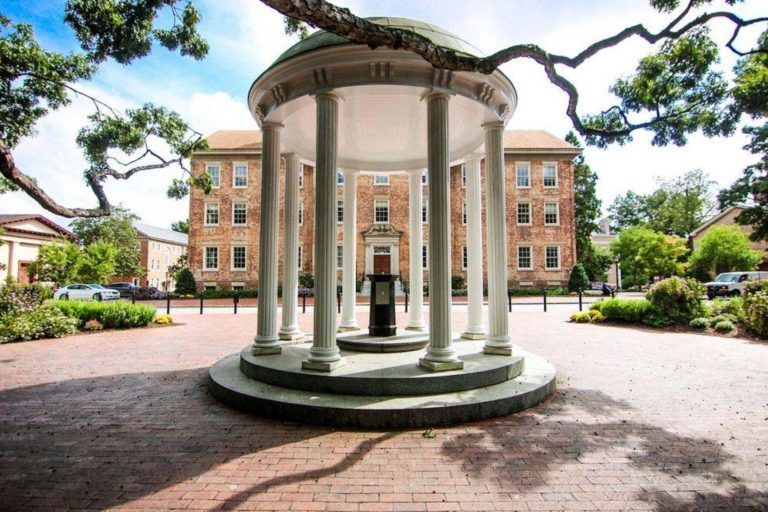
(Funding for diversity, equity and inclusion programs totaling $2.3 million is being transferred from to public safety and policing at the nation’s oldest public university and flagship campus in the University of North Carolina System.

The Board of Trustees approved the change Monday at a special meeting on the upcoming budget.

The alteration could result in the loss of its diversity office, led by 12 regular staff including a vice provost making more than $315,000 annually.

The move was praised by Republicans on House Committee on Education and the Workforce, as well as committee chairwoman Rep. Virginia Foxx, R-N.C., a UNC graduate.

“A wise decision by UNC-Chapel Hill’s Board of Trustees to dismantle DEI and reallocate funds to public safety and policing,” the committee tweeted. “Hopefully the beginning of a trend.”

The reallocation appeared to be the culmination of several pressure points on the school, which, along with Harvard University, was one of the two schools specifically named in a pair of landmark lawsuits last year that resulted in the U.S. Supreme Court overturning the practice of affirmative action.

Unlike other institutions, UNC also faces pressure from the state’s conservative legislature, which now has a supermajority and can override the veto of Democrat Gov. Roy Cooper, perhaps incentivizing its sudden rightward pivot.

However, it also comes amid the backdrop of nationwide pro-Hamas demonstrations on college campuses, which recently foisted UNC into the spotlight, this time for positive reasons after a group of fraternity brothers protected the American flag which radical activists were attempting to replace with a Palestinian one.

Some Twitter users noted the timing of the two events.

Despite the frat boys’ efforts, though, public safety drew attention leading up to Saturday’s graduation with a pro-Palestinian encampment on the famed Polk Place quad.

Dave Boliek, budget chairman and candidate for state auditor in Tuesday’s Republican primary runoff, said Carolina could lead and be ahead of potential changes from a vote by the UNC Board of Governors that has authority over all 17 campuses.

In April, a committee within the Board of Governors recommended changes to DEI policy that appeared to eliminate positions. The 24-member board votes next week, and an alteration would take effect immediately.

At Carolina, there is a 12-member office. Their titles and annual salary per the UNC System database:

• Dr. Leah Cox: vice provost of Equity and Inclusion, and the chief diversity officer; $317,538.

• Trish Harris: senior director of Education, Operations and Initiatives; $116,626.

• Toska Cooper: coordinator of Projects and Planning; $96,720.

• Cloe Liparini: director of Education, Community Engagement and Belonging; salary unconfirmed.

• Ari Weinbaum: assistant director, Education, Community Engagement, Strategic Initiatives; $71,796.

• Yesenia Pedro Vicente: assistant director of Student Access, Success and Engagement; $78,000.

• Tray Good: assistant director of Student Access, Success and Engagement; $60,840.

• Tran (Annie) Phun: program coordinator, Student Access, Success, and Engagement; $56,545.

• Theo Horne: marketing, communications specialist; $60,000.

• Tammy Siler Belcher: business services coordinator; $57,200.

• Stacy Reynolds: executive assistant; $56,812.

• Charlie Taylor: accounting technician; $55,640.

Graduate assistants and student ambassadors are also part of the staff, according to the university’s website.

Changing policies with regard to DEI offices and initiatives are happening throughout the country.

In Florida, public colleges cannot use state and federal funds for DEI.

In Texas, Gov. Greg Abbott signed law requiring all state-funded colleges and universities to close such offices.

Utah Gov. Spencer Cox signed a law prohibiting diversity training, hiring and inclusion programs at universities and in state government.

More than 30 states have introduced such bills to ban or limit initiatives in diversity, equity and inclusion.

Headline USA’s Ben Sellers contributed to this report.

Whistleblower Purge? FBI Suspended Security Clearances for 106 Employees

(Ken Silva, Headline USA) Last June, an anonymous whistleblower disclosed that the FBI Deputy Director Paul Abbate threatened any agent who disagreed with how the bureau was conducting its investigation into the Jan. 6, 2021, Capitol Hill uprising.

According to the whistleblower, Abbate conveyed his threat to all FBI personnel in a video teleconference during February 2021—when he “told the audience that anyone who questions the FBI’s response or his decisions regarding the response to January 6th did not belong in the FBI and should find a different job.”

Since Abbate’s threat, multiple FBI whistleblowers, including Garrett O’Boyle and Marcus Allen, have had their security clearances indefinitely suspended—leaving them and their families destitute. On Tuesday, the Justice Department’s Inspector General issued a report showing that O’Boyle and Allen aren’t alone.

According to the DOJ-IG report, in the last 5 years, 106 employees have had their clearances suspended for 6 months or longer. Some of these employees presumably had their clearances suspended for legitimate reasons, but multiple FBI agents have claimed political retaliation.

“For these 106 employees, the average time between suspension and a decision to revoke or reinstate the clearance, or for the employee’s separation during suspension, was 527 days, which is about 17.5 months,” the DOJ-IG found.

The report specifically referenced the case of Allen, showing how his indefinite suspension left him in limbo.

“In that case, [Allen] was suspended without pay for approximately 15 months before the FBI issued a decision revoking his security clearance and it then took another 4 months for the FBI to provide the employee with the information that the FBI used to support its revocation decision,” the DOJ-IG said.

“The employee has been suspended without pay for more than 2 years.”

The DOJ’s practice of indefinitely suspending security clearances is illegal, according to legal pundits, as well as the inspector general. The DOJ is required to have an appeal process for employees to contest a suspended security clearance as retaliatory, but it does not.

“This lack of a DOJ appeal process for employees who allege their suspension of more than 1 year is retaliatory,” the DOJ-IG said.

In response to the DOJ-IG’s findings, “the FBI stated it would add relevant language to the appropriate policy guides and directives to conform those guides and directives to [legal] requirements,” the report said.

Ken Silva is a staff writer at Headline USA. Follow him at twitter.com/jd_cashless.

Pelosi Humiliated by Ex-Mumford and Sons Musician in Oxford Union Debate

(Jacob Bruns, Headline USA) A recent Oxford University debate went viral after former Mumford and Sons musician Winston Marshall rebuked former U.S. House Speaker Nancy Pelosi, D-Calif., for being an out-of-touch elite, Fox News reported.

During the Oxford Union event, the British string band’s erstwhile banjo player and lead guitarist—who was famously canceled in 2021 after promoting Antifa-fighting journalist Andy Ngo—embraced his newfound role as a truth-teller in the ultimate Orwellian showdown with the suspected mastermind behind the Jan. 6 psy-op and subsequent cover-up.

Pelosi had previously argued at the April 25 debate that “populism” was a threat to democracy in the United States, and that as a result it must be stopped, using the term as a dogwhistle to represent presumptive GOP nominee Donald Trump.

The former House Speaker, an alleged Catholic, condemned millions of Americans as “poor souls who are looking for some answers”—souls who still cling to their traditional views of “the three Gs” by refusing to accept the Democrats’ machinations.

“We’ve given them to them, but they’re blocked by some of their views on guns,” rambled the 81-year-old San Francisco leftist.

“They have the three Gs: guns, gays, God—that would be a woman’s right to choose—and the cultural issues cloud some of their reception of an argument that really is in their interest,” Pelosi claimed.

Since much of Pelosi’s incoherent argument rested on her redefining of commonly understood precepts to mean their opposite—as in suggesting that God was somehow indicative of a “woman’s right to choose” in the abortion debate—without ever making a logical case why, Marshall homed in one contradiction in particular.

He argued in response that, in the wake of the 2016 election, the word “populist,” once embraced by Democrats, had been redefined to mean “racist” or “ethno-nationalist” in order to fit the shifting paradigm and political imperative as Pelosi’s party grew farther out-of-touch with common citizens and more in bed with wealthy billionaire globalists who could sway elections through non-democratic means.

According to Marshall, it is now a term that “elites” use “to show their contempt for ordinary people.” As recently as 2016, he pointed out, then-President Barack Obama enviously rejected the labeling of Trump as a populist, insisting that he was the true champion of the working class.

But after being rebuked by voters, rather than looking inward at the problems with their message, Democrats instead blamed the voters themselves, suggesting the general populous was too ignorant and backward for its own good.

To punctuate his argument, Marshall also pointed out another contradiction—Pelosi’s efforts to redefine political violence by claiming the populist uprising at the U.S. Capitol on Jan. 6, 2021, was an insurrectionist coup while insisting that the months of leftist violence that she and other Democrats openly encouraged prior to the 2020 election was simply the democratic process at work.

“Jan. 6 has been mentioned—a dark day for America, indeed,” Marshall conceded.

“And I’m sure Congresswoman Pelosi will agree that the entire month of June 2020, when the federal courthouse in Portland, Oregon, was under siege and under insurrection by radical progressives—those too were dark days for America,” he added.

Pelosi, however, did not agree, and by refusing to do so, appeared to make his point.

“There is no equivalence there,” she claimed “… It is not like what happened on Jan. 6, which was an insurrection incited by the President of the United States.”

Although Trump was acquitted of any role in inciding the Jan. 6 violence, a House report suggested that Pelosi may have been responsible for it due to her deliberate refusal to provide adequate security. Video evidence, in fact, shows that many of the so-called insurrectionists were invited into the Capitol by U.S. Capitol Police and appeared to conduct themselves as tourists would have.

By contrast, there is evidence that China may have been linked to the Black Lives Matter and Antifa riots in Portland, Seattle and elsewhere—during which law enforcement not only refused to arrest the offenders but, in many cases, later paid them large settlements for their troubles.

Marshall went on to cite several other examples of the contrast between the “elite” and “populist” systems in different world governments and how powerful special interests had systemically co-opted democratic systems of governance to act against the interests of the public.

He concluded by arguing that “populism is democracy,” a system of government designed to keep both minority and majority factions in check.

“The threat to democracy comes from those who smear working people as racists,” Marshall concluded.

Headline USA’s Ben Sellers contributed to this report.
BoA ‘De-Banks’ Whitmer Kidnap Conspiracy Documentarian

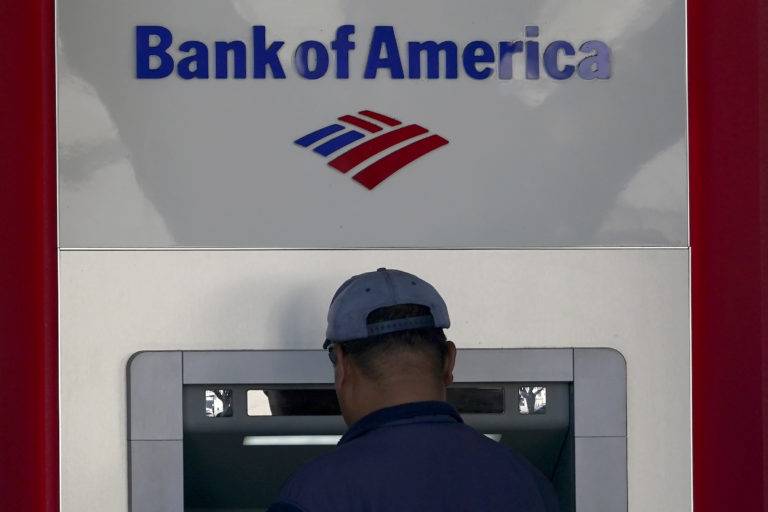
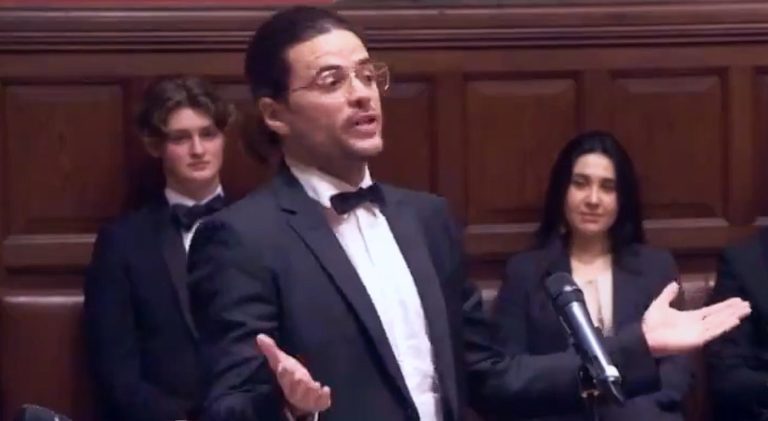
(Ken Silva, Headline USA) Journalist Christina Urso, who’s making a documentary about the 2020 plot to kidnap Michigan’s governor, announced Monday that Bank of America has closed her account without giving her any reason or warning.

“The ‘risk department’ has decided to close the account and these bastards want me to wait for a check to come on the mail with the account balance. They are literally holding my funds hostage right now. This is insane,” she said on Twitter.

The closure comes as Urso was about to take two trips to complete her reporting on the Gov. Gretchen Whitmer kidnap conspiracy—a case that involved numerous underhanded tactics by the FBI’s at least 12 undercover informants and agents.

Urso said that thankfully, she still has a separate account for the GiveSendGo donations her documentary has received. Nevertheless, Urso said she views the sudden account closure as political.

“This is clearly because of my documentary and my critical reporting,” said Urso, who’s been SWATTED, surveilled and de-platformed during the course of making her documentary, which is titled Kidnap and Kill: An FBI Terror Plot.

Bank of American publicists Matthew Card and Juan Soto did not respond to emails from Headline USA about Urso’s situation.

Bank of America has a documented history of working with the U.S. government to target political dissidents, such as when it provided a trove of data about January 6 protestors to the FBI—voluntarily and without a warrant.

The bank has also denied services to Christian charities, gun manufacturers, distributors, and sellers, fossil fuel producers and other service providers.

Republican AG Investigation

Last month, a coalition of 15 Republican attorneys general sent Bank of America a letter about its “de-banking practices.”

“Your discriminatory behavior is a serious threat to free speech and religious freedom, is potentially illegal, and is causing political and regulatory backlash,” the attorneys general told Bank of America in an April 15 letter.

“Your bank needs to be transparent with and assure us, its shareholders, and others that it will not continue to de-bank customers for their speech or religious exercise.”

The attorneys general gave Bank of America 30 days to provide a written report about their policies and practices, update terms of service, participate in the Alliance Defending Freedom’s Viewpoint Diversity Score Business Index, and support shareholder proposals protecting religious and political diversity.

The AGs didn’t say what they’ll do if Bank of America misses their deadline, which is tomorrow.

Ken Silva is a staff writer at Headline USA. Follow him at twitter.com/jd_cashless.

Industrial and Tech Demand for Gold Surged in Q1

(Mike Maharrey, Money Metals News Service) Industrial and tech demand for gold rebounded in the first quarter, rising 10 percent year over year.

Industrial and technological applications consumed about 79 tons of gold in Q1, according to data compiled by the World Gold Council.

At the aggregate level, all four major electronics fabrication hubs around the world recorded a year-on-year increase in gold demand during the first quarter.

  • Japan – 19 tons (24.0% increase)
  • South Korea – 6 tons (20.2% increase)
  • The US – 17 tons (1.6% increase)
  • Mainland China and Hong Kong – 17 tons (18.5% increase)

A recovery in the electronics sector helped drive industrial demand for gold higher. Gold offtake for electronic applications rose 13 percent year-on-year to 64 tons.

Demand for gold in tech is expected to continue an upward trajectory thanks to the growth in AI-related devices and infrastructure. According to the WGC, “The rapid growth of cloud computing catalyzed by the AI boom boosted demand for high-end communication chips.”

There was also a strong rebound in demand for smartphones.

Gold is an important component in the manufacturing of light-emitting diodes. According to the WGC, industrial gold demand got a boost from a strong period of automotive demand, as well as a resurgence in demand for displays/panels, helped by the prospect of major events such as the Paris Olympics and Euro 2024.

Other industrial applications charted a 2 percent gain in the first quarter.

Gold Is Far from Useless!

Warren Buffett once said, “Gold gets dug out of the ground in Africa, or someplace. Then we melt it down, dig another hole, bury it again and pay people to stand around guarding it. It has no utility. Anyone watching from Mars would be scratching their head.”

You’ll often hear this notion that gold is “useless” from commentators on mainstream financial networks. 

And it’s just silly.

Gold is one of the most useful metals in the world.

In the first place, gold is beautiful. That’s why people all over the world love to wear gold. About three-quarters of gold demand is for jewelry production. About 479 tons of gold were used in jewelry fabrication in the first quarter.

But gold isn’t just a pretty face. Because of its inherent properties, gold is used in many industrial and technological applications. Gold doesn’t corrode, it is an exceptional electricity conductor, it is malleable, and gold can be used to catalyze many chemical processes without being consumed.

This is why we see gold increasingly used in the tech sector. In fact, gold would probably be used even more if it weren’t so rare and expensive. 

Gold is also important in the medical field. Its inherent stability and unique optical properties make it perfect for use in diagnostic testing. The World Gold Council said that gold is “at the heart of the hundreds of millions of Rapid Diagnostic Tests (RDTs) that are used globally every year.

“This well-established, and critically important, technology has changed the face of disease diagnosis in the developing world over the last decade.”

Gold nanoparticles are used in testing for malaria, HIV, hepatitis, and other illnesses.

Gold has even been used in some exotic applications. In 2018, a team of Chinese researchers partially restored the sight of blind mice by replacing their deteriorated photoreceptors – sensory structures inside the eye that respond to light – with nano-wires made of gold and titanium.

The point is gold is far from useless. 

On top of that, gold is money.


Mike Maharrey is a journalist and market analyst for MoneyMetals.com with over a decade of experience in precious metals. He holds a BS in accounting from the University of Kentucky and a BA in journalism from the University of South Florida.

Americans Aren’t Convinced the Fed Is Winning the Inflation Fight

(Mike Maharrey, Money Metals News Service) Fed officials and people in the Biden administration insist “we” are making progress in tamping down price inflation. Many market analysts are optimistic enough to believe that the central bank will be able to cut interest rates this fall.

But the average American isn’t so sure the Fed is going to win the inflation fight any time soon.

According to a New York Fed survey, people in the U.S. are bracing for generally hot price inflation for at least the next three years. 

Respondents to the survey expect price inflation as measured by the CPI to still be running at 3.3 percent one year from now. Last month, the expectation was for 3 percent price inflation in a year.

Three years from now, Americans expect price inflation to still be running hot at 2.8 percent – still well above the Fed’s mythical 2 percent target.

The University of Michigan Surveys of Consumers found similar sentiment, with year-ahead price inflation expectations rising from 3.2 percent to 3.5 percent.

In a separate survey by the Cleveland Fed, business leaders expressed similar pessimism, saying they expect CPI to rise to 3.8 percent over the next year.

CPI in March came in hotter than expected at 3.5 percent. That means most people don’t see the price inflation picture improving much at all over the next 12 months. 

Americans expect prices to rise across all measured categories, including food, fuel, medical care, and rent. 

A general rise in prices throughout the economy is indicative of monetary inflation. As the central bank creates money out of thin air and incentivizes borrowing, the money supply expands, and an individual dollar buys less. This is reflected in rising consumer prices.  

Meanwhile, most survey respondents don’t expect their wages to keep up with rising prices. 

This also reflects the dynamics of monetary inflation. Wages do rise in an inflationary environment, but they typically go up more slowly than other prices. 

Keep in mind, inflation is worse than the government data suggest. The government revised the CPI formula in the 1990s so that it understates the actual rise in prices. Based on the formula used in the 1970s, CPI is closer to double the official numbers. So, if the BLS was using the old formula, we’re looking at CPI closer to 6 percent. And using an honest formula, it would probably be worse than that.

The Fed Hasn’t Done Enough

Despite talks of rate cuts, the Fed hasn’t done enough to slay the inflation dragon it unleashed over the last decade-plus. It is alive and well because the Fed was never fully committed to killing it.

If the central bankers at the Fed were truly all-in on driving price inflation back to 2 percent, they would be talking about additional rate hikes – not pending rate cuts.

Make no mistake; 5.5 percent interest rates are high for an economy loaded up with debt. But they aren’t high in the face of a 6 percent CPI (using the more honest 1970s formula).

Meanwhile, the central bank has announced plans to slow balance sheet reduction.

The Federal Reserve added nearly $5 trillion to its balance sheet during the pandemic and injected the same amount of money into the economy. This is, by definition, inflation. This monetary inflation is the root of the price inflation we’re suffering from today. Since the central bank launched its inflation fight, it has only wrung $1.5 trillion of that inflation out of the economy. This is just a drop in the inflationary bucket. 

The balance sheet reduction scheme was tepid, to begin with. Based on the plan announced in March 2022, it would take 7.8 years for the Fed to shrink its balance sheet back to pre-pandemic levels. That doesn’t even begin to touch the trillions added to the balance sheet in the decade after the 2008 financial crisis.

The truth is, the Fed was never all in on the inflation fight. It couldn’t swing for the fences without wrecking the economy. So, it settled for a bunt.

It is fair to say the Fed has made monetary policy “tighter.” But it certainly isn’t tight.

In fact, the Chicago Fed’s own National Financial Conditions Index confirms this. The NFCI came in at –0.49 in the week ending May 3. That negative number means financial conditions are historically loose.

The average American probably isn’t thinking about these things as they answer survey questions. They’re just responding based on their lived experience at the grocery store and gas station. But their instinct is correct. Inflation is alive and well. And it won’t likely be going anywhere anytime soon. 


Mike Maharrey is a journalist and market analyst for MoneyMetals.com with over a decade of experience in precious metals. He holds a BS in accounting from the University of Kentucky and a BA in journalism from the University of South Florida.

House GOP Gives Ultimatum to Garland: Contempt of Congress Hearing Dates Revealed

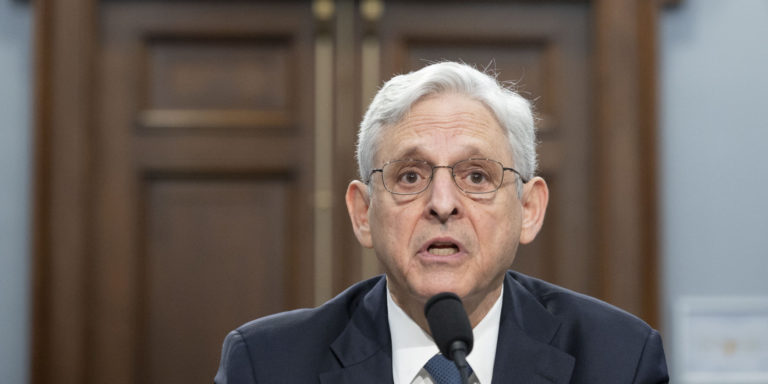
(Luis Cornelio, Headline USA) Attorney General Merrick Garland faces potential repercussions as the Republican-led House of Representatives takes action to hold him accountable for his refusal to release potentially damaging audio recordings involving President Joe Biden. 

On Thursday, a Republican-led committee will discuss a resolution to hold Garland in contempt of Congress due to his reluctance to hand over the recorded deposition of Biden from his interview with Special Counsel Robert Hur. 

Specifically, House Oversight Committee Chairman James Comer, R-Ky., stated his intention to hold Garland in contempt if the audio recordings are not released.

This confrontation arises from Hur’s decision not to pursue criminal charges against Biden for his alleged mishandling of classified documents during his tenure as vice president in the Obama White House. 

Hur’s report revealed evidence suggesting that Biden knowingly retained classified documents at his private residence, despite lacking the authority to declassify them as vice president. 

Investigators uncovered purported audio of Biden admitting to holding classified documents for his ghostwriter, an action that could have potentially led to criminal charges against any other American.

Comer emphasized that lawful subpoenas were issued to Attorney General Garland for the audio recordings of Biden’s interview with Special Counsel Hur, yet Garland continues to defy these subpoenas. 

“These audio recordings are important to our investigation of President Biden’s willful retention of classified documents and his fitness to be President of the United States,” stated Comer in a press release. 

He further stressed the necessity of consequences for Garland’s refusal to comply with the subpoenas for the files, affirming, “We will move to hold Attorney General Garland in contempt of Congress.”

Did Biden Just Admit (Again) Kamala Is Really in Charge? Watch This Video

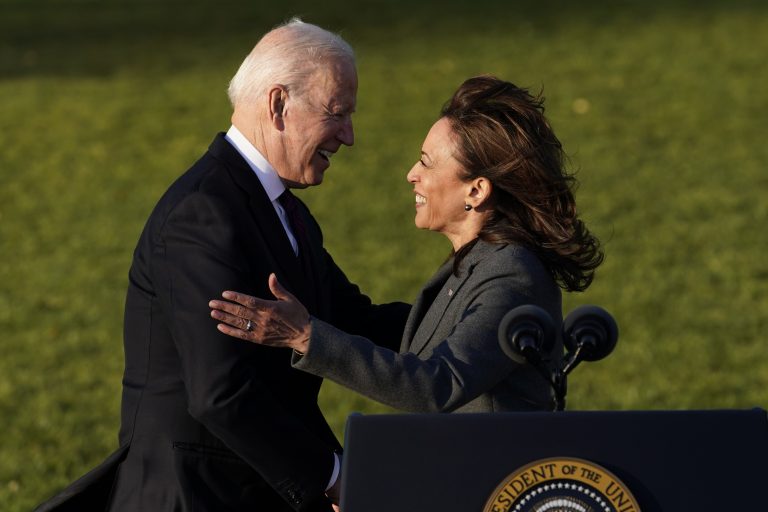
(Luis Cornelio, Headline USA) President Joe Biden on Monday alluded that Vice President Kamala Harris is at the helm of the White House. 

“My name is Joe Biden. I work for Kamala Harris,” the president said at a White House reception for Asian American, Native Hawaiian and Pacific Islander Heritage Month. 

Shortly after prompting laughter, Biden hinted at the sole reason behind his selection of Harris as his running mate. 

“I asked her to be my vice president because I knew I needed somebody smarter than me,” he added. 

Standing alongside Biden was Harris, who had just introduced him and actor Lucy Liu.

This isn’t the first time the 81-year-old president has hinted that Harris is the one calling the shots. 

On Jan. 5, 2023, Biden mistakenly referred to the vice president as “President Harris” while discussing immigration from the White House. He quickly corrected himself, the New York Post reported. 

In October 2022, Biden praised Harris as a “great president.”  

But that’s not all, as recounted by the New York Post. 

In January 2022, during a speech in Georgia, Biden accidentally referred to his running mate as “President Harris.” 

In December 2021, while addressing students at South Carolina State University, Biden proudly declared that “of course, President Harris is a proud Howard alum.” 

In March 2021, shortly after taking office, Biden mistakenly called Harris “President Harris” during celebratory remarks on COVID-19 vaccines. 

Even before the election, in December 2020, Biden referred to Harris as “President-elect Harris.” 

Biden is infamously known for his verbal gaffes and constant confusion during public appearances, prompting concerns about his fitness for office. 

These frequent missteps have led many to question whether the oldest president in U.S. history is capable of effectively leading the country for another four years. 

Former President Donald Trump, Biden’s leading opponent, has seized on these moments to cast doubt on Biden’s mental acuity. 

Significantly, this messaging appears to resonate with voters, as several polls suggest Trump could mount a successful bid to return to the White House in the 2024 presidential election. 

Despite Biden’s pledge in 2021 to serve as a transitional, one-term president, recent polls indicate that Harris is equally if not more unpopular than the president himself. 

Kamala Unleashes Profanity-Laden Speech: ‘Kick the F**king Door Down’

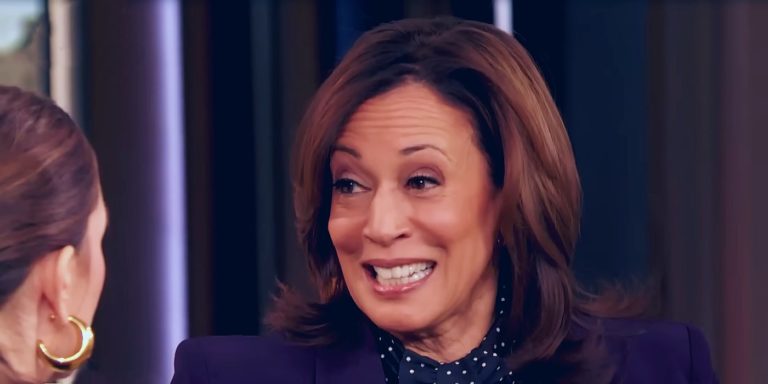
(Luis Cornelio, Headline USA) Is Vice President Kamala Harris okay? This may be the question on many Americans’ minds following her profanity-laden speech on Monday. 

Harris—infamous for her incoherent and inappropriate speeches—urged attendees of a summit to “kick the f**cking door down” to break “barriers.”

Delivered at the Asian Pacific American Institute for Congressional Studies, her speech aimed to address overcoming what she perceived as barriers for minorities, specifically Asian Pacific Americans. 

“When you walk in those rooms, being the only one that looks like you, the only one with your background, you walk in those rooms, chin up, shoulders back,” she began. 

Later in her speech, she declared, “We have to know that sometimes people will open the door for you and leave it open and sometimes they won’t—and then you need to kick that f**cking door down.” 

Harris’s use of profanity prompted laughter from the guests. “Excuse my language!” she said, amid more chuckles. 

While some may perceive Harris’s Monday remarks as unbecoming of a vice president, they are part of a pattern where she either delivers nonsensical remarks or makes improper references. 

Take, for instance, her speech at a campaign event in Montgomery County, Pennsylvania. 

During the event, Harris discussed using blunt language when speaking about abortion and women’s reproductive organs. 

“I’m so fed up with this sometimes because you know I’m on the road full-time talking about this and other issues,” Harris told singer Sheryl Lee Ralph, who hosted the event. 

“When I went to a reproductive clinic it was a long day and press was there and I said, ‘Let me just tell you. You guys are going to have to be ready for this ready for certain language and I said very loudly: Ovaries!’” she added. 

Lee Ralph chimed in, “Fallopian tubes!”  

A chuckling Harris continued, “Fallopian tubes, right?”  

Adding to the odd exchange, she mentioned, “Fibroids!” alluding to muscular tumors.

Over the past several months, President Joe Biden has seemingly deployed Harris to the campaign trail amid several polls showing them trailing Donald Trump ahead of the 2024 presidential election. 

Fellow Dem. Slams Hillary Clinton for Being ‘Dismissive’ of Low-Info Student Protesters

(Headline USA) Failed presidential candidate Hillary Clinton received an earful from a fellow Democrat this week for being “dismissive” of radical anti-Israel student protesters.

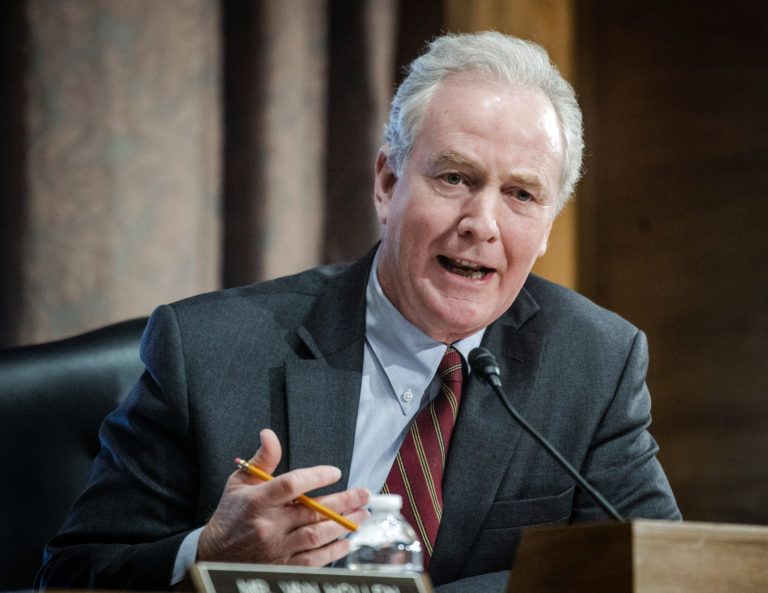
Sen. Chris Van Hollen, D-Md., told CBS’s Face the Nation on Sunday that Clinton should be more understanding of student protesters’ cause.

The criticism came after Clinton blasted the protesters last week, arguing they were uninformed about history and foreign policy.

“They don’t know very much at all about the history of the Middle East, or, frankly, about history in many areas of the world, including our own country,” she said, specifically citing her husband, former President Bill Clinton, and his efforts to offer a two-state solution to then-Palestinian leader Yasser Arafat.

“They don’t know that … an offer was made to Palestinians for a state on 96% of the existing territory occupied by the Palestinians, with 4% of Israel to be given to reach 100% of the amount of territory that was hoped for,” she added.

Clinton, currently a professor of international and public affairs at Columbia University, faced regular heckling and disruptions from pro-Hamas agitators throughout the semester following the Oct. 7 terrorist attack and Israeli military response in Gaza.

However, Van Hollen slammed her efforts to provide the potential Democrat voters with unnecessary historical context that failed to take their feelings fully into account.

“Secretary Clinton’s comments … were quite dismissive of students’ concerns about the awful humanitarian crisis and high civilian death toll in Gaza,” he said.

“The great majority of the students are protesting, are following very closely what’s happening in Gaza,” Van Hollen claimed, contrary to evidence.

Van Hollen went on to cite the high civilian death toll—although the United Nations on Sunday revised that total, acknowledging that the real number was, in fact, about 50% less than what it had been claiming based on the information supplied by Hamas officials.

“We can certainly revisit history and past negotiations,” Van Hollen continued. “But I believe that the overwhelming majority of students—not all, and…there are some very bad elements that are involved, as well as on the counter protest side—but I believe that the students do understand what’s happening in Gaza with respect to the civilian casualties.”

The open criticism of Clinton represents a larger split within the Democratic Party over the conflict in Gaza.

A growing number of Democrats have started distancing themselves from Israel’s military campaign, including President Joe Biden himself, likely due to fears of backlash from young and leftist voters.