Rutgers, Northwestern Face Scrutiny from House GOP for Rewarding Anti-Semites

(Headline USA) The presidents of Northwestern and Rutgers universities defended their decisions to end pro-Hamas encampments through negotiations rather than police force, telling a House committee on Thursday that they defused the danger without ceding ground to protesters.

“We had to get the encampment down,” Northwestern’s Michael Schill said. “The police solution was not going to be available to us to keep people safe, and also may not be the wisest solution as we’ve seen at other campuses across the country.”

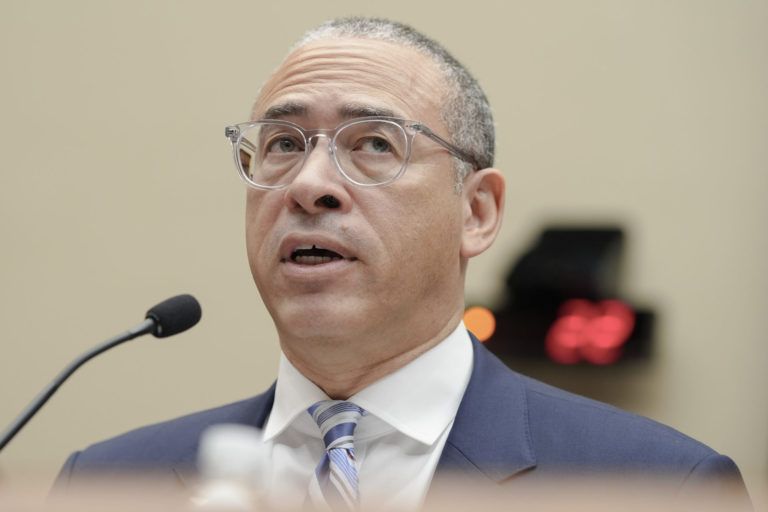
Schill and Jonathan Holloway of Rutgers were called before the House Education and the Workforce Committee as part of a series of hearings examining how colleges have responded to allegations of anti-Semitism.

Also testifying was Gene Block, chancellor of the University of California, Los Angeles, which has come under scrutiny for a delayed police response to violence between rioters and Jewish counterprotesters.

The committee’s inquiry expanded to large, public universities, UCLA and Rutgers, after earlier hearings largely focused on private, Ivy League colleges.

Committee Republicans accused the university leaders at the hearing of tacitly promoting and rewarding anti-Semitism, with particular scorn for Northwestern and Rutgers, where schools struck deals to end or limit protests.

Neither Northwestern nor Rutgers agreed to sever business ties with Israel—one of the protesters’ chief demands. Rutgers agreed to discuss the topic; Northwestern revived a committee on “investment responsibility.”

Other terms focused on expanding institutional support for Muslim and Arab students and scholars on campus, and Rutgers promised not to retaliate against those who participated in protests.

“Each of you should be ashamed of your decisions that allowed anti-Semitic encampments to endanger Jewish students,” said Rep. Virginia Foxx-R-N.C., the committee chair. “Mr. Schill and Dr. Holloway, you should be doubly ashamed for capitulating to the anti-Semitic rule breakers.”

The presidents considered police action but said it was not necessary.

“We made a choice—that choice was to engage our students through dialogue as a first option instead of police action,” Holloway said. “We had seen what transpired at other universities and sought a different way.”

Schill said students were willing to negotiate and reach a compromise that did not include divestment, their main demand. He said agreeing to a space for Muslim students where they could eat and pray, like other faith communities had on campus, was something he supported.

“We had students who were willing to negotiate and gave up their demands,” Schill said. “We said no, nothing that singles out Israel. Let’s think about what will make the university stronger.”

Protesters hailed the agreements as victories. But on Capitol Hill, the presidents said they did not lose any ground.

“I would never recommend to the Board of Trustees divestment of anything or any academic boycott of Israel,” Schill said.

Even so, Foxx countered that Schill “created the perception” he would support divestment, “which encouraged other universities to cave on this.”

Each president denounced the rise of anti-Semitism amid the Israel–Hamas war. Schill and Block, who are Jewish, expressed their own disgust at some of the rhetoric and imagery used by protesters.

Block said public universities are in an especially tough bind as they work to shield students from discrimination while also upholding free speech. Unlike private universities, public universities are bound by the First Amendment. Even hateful speech must be protected, Block said, but UCLA draws the line when it crosses into threats and harassment.

He expressed remorse over the handling of a UCLA encampment that was attacked in early May.

Counterprotesters threw traffic cones and released pepper spray in fighting that went on for hours before police stepped in, drawing criticism from Muslim students and political leaders.

“Tragically, it took several hours for law enforcement to quell the violence,” Block said “With the benefit of hindsight, we should have been prepared to immediately remove the encampment if and when the safety of our community was put at risk.”

On Wednesday, the police chief at UCLA was reassigned “pending an examination of our security processes,” according to a statement from the school.

A new pro-Palestinian encampment appeared on the UCLA campus as Block testified. “Our safety personnel are on site and actively monitoring the situation,” Mary Osako, vice chancellor for UCLA Strategic Communications, said in a statement.

As in previous hearings, Republicans pressed the leaders on discipline. They asked how many students had been expelled and how many faculty had been fired over anti-Semitic incidents since Oct. 7, when Hamas attacked Israel.

None of the presidents said students had been expelled, though they said there are dozens of ongoing investigations. Four students were suspended at Rutgers, Holloway said.

Schill said the numbers aren’t a reflection of inaction.

“The fact that we didn’t have not yet suspended or expelled students does not mean that students have not received discipline,” he said. “There’s a wide range of discipline, and discipline has been meted out to many of those students.”

Tensions over the Israel–Hamas war have been high on campuses since the fall and spiked in recent weeks with a wave of pro-Palestinian tent encampments that led to over 3,000 arrests nationwide.

After the first congressional hearings in December, an outcry of criticism from donors, students and politicians contributed to the eventual resignations of the presidents of Harvard and the University of Pennsylvania, who gave cautious, halting answers to questions about whether calls for the genocide of Jews would violate their schools’ conduct policies.

Initially, Harvard stood behind its leader, then-President Claudine Gay. However, the negative attention led outrage activists to examine her academic record, uncovering examples of plagiarism that ultimately forced her to resign her administrative post.

Harvard, which held its commencement on Thursday, announced that it would refuse diplomas to 13 students who had participated in weeks of disruptive campus protests and encampments, prompting roughly 1,000 students to walk out and eliciting boos for interim President Alan Garber, according to its student newspaper, The Crimson.

In April, the committee turned its attention to Columbia President Nemat “Minouche” Shafik, who took a more conciliatory approach to Republican-led questioning. Shafik’s concessions around faculty academic freedom upset students and professors at Columbia. Her testimony, and subsequent decision to call in police, escalated protests on campus that inspired students at other colleges to launch similar demonstrations.

Originally, the presidents of Yale University and the University of Michigan were called to testify on Thursday. But the committee shifted its attention to Northwestern and Rutgers after those colleges struck deals with pro-Palestinian protesters to limit or disband encampments.

Adapted from reporting by the Associated Press

Schumer Cynically Pushes Failed Border Bill in Election-Year Political Stunt

(Headline USA) Democrats performatively pushed a dead-on-arrival bill that would have allocated more funding to Homeland Security Secretary Alejandro Mayorkas in his effort to more efficiently process illegal immigrants coming into the United States.

The legislation, which failed for a second time after an earlier attempt in February, would have done very little to curtail the issue of illegal immigration, but would have given the gaslighting Biden administration bogus talking points to claim they had addressed the problem when, in fact, their open-border policies are directly responsible for it.

While most Americans saw through the hollow election-year ploy, Senate Majority Leader Chuck Schumer, D-N.Y., nonetheless spun the vote as if Republicans were to blame for the border crisis that has allowed an estimated 11 million illegals into the country on President Joe Biden’s watch.

“We gave Republicans a second chance to show where they stand,” Schumer claimed after all but one Republican, Sen. Lisa Murkowski of Alaska, voted against it.

Stunningly, the 73-year-old New Yorker couldn’t help but convey his contempt for the American people as he undertook the show vote, his voice dripping with sardonic derision that undercut his sudden apparent concern for a bipartisan solution.

“Do they want to fix this so-called emergency or do they want to show blind allegiance to the former president even when they know he’s wrong?” Schumer sneered.

Although Democrats may be dishonest about what is in the bill and what its actual impact would be, Schumer has, in fact, been remarkably candid about his true motivations for brining it back to the floor.

He is trying to defend a narrow Senate majority in this year’s election and sees the Republican’s rejection of the deal that a handful of RINOs helped to negotiate as a political “gift” for Democrats.

Seeking to highlight Republican resistance to popular measures, Schumer is also planning to push forward a bill in June that would protect access to “contraception,” which it broadly defines as any “an action taken to prevent pregnancy.”

That, presumably, would be a back-door attempt at a federal abortion mandate. (Headline USA reached out to Schumer’s press secretary for comment and will follow up accordingly.)

The Democratic leader said it would “show the public who’s on what side and in June we’re going to spend a significant amount of time talking about reproductive rights.”

When the immigration proposal was brought up in February, the test vote failed 49-50—well shy of the 60 votes needed to advance.

This time, not even some of the bill’s primary authors—Sens. James Lankford, an Oklahoma Republican, and Kyrsten Sinema, an Arizona independent—voted for Schumer’s move.

“Today is not a bill, today is a prop,” Lankford said on the floor ahead of the vote. “Everyone sees it for what it is.”

Sinema called the vote “political theater” that will do nothing to solve problems at the border.

“To use this failure as a political punching bag only punishes those who were courageous enough to do the hard work in the first place,” she said.

Republican leaders spent much of the week decrying the vote as a bald-faced political maneuver and reiterating that ownership of the border crisis rested entirely with Biden Democrats.

“We’re nearing the end of President Biden’s term, and the American people’s patience for his failing to secure the southern border is running thin,” Senate minority leader Mitch McConnell, R-Ky., said Thursday.

Earlier in the week, McConnell told reporters, “The president needs to step up to it—do everything he can do on his own because legislation is obviously not going to clear this year.”

The Biden administration claims it has been considering executive orders on border policy and immigration—a dramatic departure from its early days, when it swiftly repealed the executive actions taken under the Trump administration and actively fought them in court.

Biden recently made some changes to the asylum system meant to speed up processing and potential removal of migrants.

Borrowing from Trump’s playbook, the Democratic president has considered using a provision in federal immigration law that gives leeway to block entry of certain immigrants into the U.S. if it would be “detrimental” to the national interest of the United States.

Mayorkas told reporters Monday that Senate legislation would provide more money for Customs and Border Protection officials, asylum officers, immigration judges and scanning technology at the border—all things that officials have said the underfunded immigration and border protection system needs.

“The legislation provides tools that executive action cannot,” Mayorkas said.

Even before the bill was fully released earlier this year, Trump effectively killed the proposal by labeling it “meaningless” and a “gift” for Biden’s reelection chances. Top Republicans soon followed his lead and even McConnell, who had initially demanded the negotiation over the border measures, voted against moving forward.

A significant number of Democrats have also criticized the proposal, mostly because it does not include any broad relief for immigrants who have already established lives in the United States. On the left, four Democrats, as well as Sen. Bernie Sanders, I-Vt., voted against advancing the bill.

“It fails to address the root causes of migration or to establish more lawful pathways,” said Sen. Alex Padilla, a California Democrat.

The Congressional Hispanic Caucus said in a statement this week that the Senate’s bill “fails to meet the moment by putting forth enforcement-only policies and failing to include provisions that will keep families together.”

They have urged executive actions that would provide protections from deportation for immigrants who have lived in the U.S. for years or who have family ties to U.S. citizens.

Amid the tension, Biden’s reelection campaign met with CHC leadership Wednesday to discuss outreach to Latino communities, and Biden spoke on the phone with Rep. Nanette Barragán, the chair of the group. She discussed the reasons for the group’s opposition, according to a person familiar with the call who spoke on the condition of anonymity to discuss the private conversation.

Schumer said that if Democrats win majorities in the Senate and House next year, he wants to advance “comprehensive immigration reform.”

Still, for Democratic senators facing tough reelection battles this year, the vote Thursday provided another opportunity to show they were supportive of stronger border measures, as well as distance themselves from Biden’s handling of the border.

As Sen. Jon Tester attempts to hold a Democratic seat in the red-leaning state of Montana, he said in a statement, “This common sense bill would push back on the Biden administration’s failed border policies by forcing the president to shut down the border, strengthen our asylum laws, and end catch and release.”

Adapted from reporting by the Associated Press

SCOTUS Finds No Bias against Blacks in Charleston-Area Congressional District

(Headline USA) The Supreme Court ruled in favor of a Republican-held South Carolina congressional district, rejecting a lower-court ruling that said the district discriminated against black voters.

In a 6-3 decision, the court held that South Carolina’s Republican-controlled legislature did nothing wrong during redistricting when it strengthened Rep. Nancy Mace’s hold on the coastal district by moving 30,000 Democratic-leaning black residents of Charleston out of the district.

“It reaffirms everything everyone in South Carolina already knows, which is that the line wasn’t based on race,” said Mace, responding to the court’s decision.

The issue has vexed the court in recent years, notably as left-wing activist groups reflexively continue to challenge every effort by Republican legislatures that might give them any kind of legislative advantage by suggesting that the redrawing of districts, however fair-minded, was motivated by race instead of political considerations.

The court previously ruled that racial gerrymandering was impermissible but partisan gerrymandering was allowable under federal law, creating a bizarre and highly subjective standard for itself.

Confoundingly, it has also hinted in other cases that some racial gerrymandering may be necessary in maps where there are an insufficient number of minority-dedicated districts because blacks are not geographically clustered enough.

The South Carolina case once more presented the court with the tricky issue of how to distinguish race from politics.

A lower court had ordered South Carolina to redraw the district after it found that the state used race as a proxy for partisan affiliation in violation of the equal protection clause of the 14th Amendment to the Constitution.

The state argued that partisan politics, not race, and a population boom in coastal areas explain the congressional map.

Thursday’s decision won’t have a direct effect on the 2024 election. The lower court had previously ordered the state to use the challenged map in the November vote, which could help Republicans as they try to hold on to their narrow majority in the House of Representatives.

Justice Samuel Alito, writing for the court, criticized lower-court judges for their “misguided approach” that refused to presume that lawmakers acted in good faith and gave too much credit to the challengers.

Alito wrote that one weakness of the case was that the activist plaintiffs did not produce an alternative map, which he called an “implicit concession” that they couldn’t have drawn one.

“The District Court’s conclusions are clearly erroneous because it did not follow this basic logic,” he wrote.

Justice Elena Kagan, writing for the court’s three liberal justices, said the decision insulated states against claims of unconstitutional racial gerrymandering.

“Perhaps most dispiriting,” Kagan wrote, the court adopted “special rules to specially disadvantage suits to remedy race-based redistricting.”

However, Sen. Thomas Alexander, the president of the South Carolina Senate, praised the ruling. “As I have said throughout this process, our plan was meticulously crafted to comply with statutory and constitutional requirements, and I was completely confident we would prevail,” Alexander said.

The Supreme Court in 2019 ruled that partisan gerrymandering cases could be not be brought in federal courts.

Justice Clarence Thomas, who was part of the conservative majority five years ago, wrote separately Thursday to say federal courts should similarly get out of the business of refereeing racial gerrymandering disputes.

“It is well past time for the Court to return these political issues where they belong—the political branches,” Thomas wrote. No other justice signed on.

When Mace first won election in 2020, she edged Democratic incumbent Rep. Joe Cunningham by 1%, under 5,400 votes.

In 2022, following redistricting driven by the 2020 census results, Mace won reelection by 14%.

However, the shift may not entirely be indicative of redistricting. Mace has garnered a reputation as a political maverick, who has frequently flouted political conventions and often bucked establishment politics. She was among eight Republicans who voted in October to oust Kevin McCarthy, R-Calif., as House speaker.

Moreover, Charleston has continued to become an affluent and in-demand region. It recently elected its first Republican mayor since 1877.

Even black residents in the area tend to be more conservative, as MSNBC uncomfortably discovered when it interviewed a panel of black Trump supporters at a barber shop in February.

The case differed from one in Alabama in which the court ruled last year that Republican lawmakers diluted black voters’ political power under the landmark Voting Rights Act by drawing just one district with a majority black population.

The court’s controversial—and contradictory—decision to require racial gerrymandering when it was in the reverse led to new maps in Alabama and Louisiana creating a second district where Democratic-leaning black voters comprise a substantial portion of the electorate.

In South Carolina, black voters wouldn’t have been as numerous in a redrawn district. But combined with a substantial set of Democratic-leaning white voters, Democrats might have been competitive in the reconfigured district.

The high court left open one part of the case about whether the map intentionally sought to dilute the votes of black residents.

President Joe Biden, whose administration backed the plaintiffs, criticized the ruling. “The Supreme Court’s decision today undermines the basic principle that voting practices should not discriminate on account of race and that is wrong,” Biden said in a statement.

Adapted from reporting by the Associated Press
Trump Rally in South Bronx Is Biggest Test Yet of Appeal Among Blue-State Voters

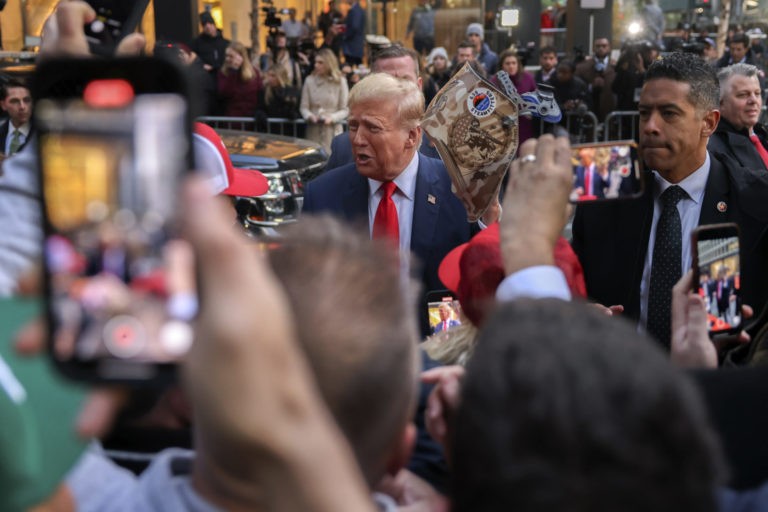
(Headline USA) Former President Donald Trump will campaign in one of the most Democratic counties in the nation Thursday, holding a rally in the South Bronx to woo minority voters days before a Manhattan jury will begin deliberations on whether to convict him of felony charges in his porn-star trial.

Trump will address supporters in Crotona Park, a public green space in a neighborhood that is among the city’s most diverse and its most impoverished, a change from the majority-white areas where he holds most of his rallies. His campaign said he is expected to draw a crowd of several thousand people.

However, with a recent rally in deep blue New Jersey having shocked political watchers, drawing an estimated 80,000 to 100,000 who waited hours if not days to gain access, the presumptive GOP presidential nominee has proven that he can defy all expectations and win over an unlikely coalition of supporters with his populist appeal.

With Trump confined to New York for the last six weeks, the presumptive Republican nominee’s campaign planned a series of local stops across his hometown before and after court. He visited a bodega in Harlem, dropped by a construction site one morning, and held a photo op at a local firehouse.

The Bronx rally will be Trump’s first event open to the general public as he insists he is making a play to win an overwhelmingly Democratic state that hasn’t backed a Republican for president since Ronald Reagan in 1984.

While the odds of him claiming outright one of the bluest states in the country may be stacked against him, though, the same factors that drove the Reagan Revolution in the 1980s seem almost to be daring history to repeat itself.

Besides creating a spectacle of rallygoers and protesters, the rally also allows Trump to highlight what he argues are advantages on economic and immigration issues that could cut into key Democratic voting blocs, not to mention his support for Israel in a state where more than 9% of the population is Jewish, the highest rate anywhere in the nation.

“The strategy is to demonstrate to the voters of the Bronx and New York that this isn’t your typical presidential election, that Donald Trump is here to represent everybody and get our country back on track,” said Florida Republican Rep. Byron Donalds, a potential Trump running mate who grew up in Brooklyn and will join him at the rally.

Trump’s campaign believes he can chip away at Democrats’ historic support among black and Hispanic voters, particularly younger men who are frustrated by their economic situations and relate to Trump as a fellow victim of government oppression fighting against a rigged criminal-justice system.

The rally comes during a pause in Trump’s Manhattan trial, where suspicion has grown that Judge Juan Merchan may be receiving bribes from Democrat lawmakers and other party leaders through his daughter’s digital marketing business, Authentic Campaigns.

Legal experts including revered Harvard Law professor Alan Dershowitz have denounced the show trial as one of the biggest travesties of justice they have ever witnessed.

Court will resume following the Memorial Day weekend with closing arguments.

Several longtime figures in New York politics—both Republican and Democrat—argued there’s good reason for Trump to go to the Bronx and other majority black and Latino communities.

Ed Cox, chairman of the New York Republican Party, noted that the GOP, in an upset victory, picked up a city council seat from the borough last year for the first time in 40 years. He pointed to the current political climate, with many voters pessimistic about the economy and viewing President Joe Biden as responsible for the current state of national malaise.

“As chairman of the party here in New York, I’m not going to write off New York. We’re going to go for it,” he said.

Trump has often pointed to the success of former Rep. Lee Zeldin, a Republican who ran for governor in 2022 against Democratic incumbent Kathy Hochul. Zeldin ultimately lost the race by an unusually close margin.

During his campaign, Zeldin appeared in the Bronx alongside the Rev. Rubén Díaz Sr., a former state senator and city council member who had urged Trump to hold a rally in the borough and held a pro-Trump event there Saturday.

While other presidential candidates have visited and met with local leaders, Díaz commended Trump for being “the first and only president or presidential candidate who has shown respect to minority communities in the Bronx” by holding a rally.

Díaz, who remains a Democrat despite backing Trump, said he believes there are others in the borough who will also cross the aisle, pointing to the influx of illegal immigrants that has dominated headlines in New York due to budget and safety concerns.

“People are fed up,” he said. “Democrats say they are there to help us … but our people are doing worse under the Democratic control.”

Former New York Gov. Andrew Cuomo said that campaigning in that part of the city makes sense for Trump.

“There is a concentration of Latino ministers who are pro-life in the Bronx and they are mobilized and energized,” said Cuomo, who chose to appear with Diaz in 2022 as he floated a political comeback months after the Democrat resigned after being accused of sexual harassment by at least 11 women.

Cuomo, who has denied the allegations, said: “It’s not really indicative of New York, but there is a lot of energy on that issue in that part of the Bronx.”

The Bronx was once the most Democratic borough in the city. Barack Obama won 91.2% of the borough’s vote in 2012, the highest anywhere in the state. Biden won 83.5% of the borough in 2020. Trump garnered only 16% of the vote.

The area Trump will be visiting is overwhelmingly non-white. About 65% of residents are Hispanic and 31% black, according to U.S. Census data. About 35% live below the poverty line.

Trump will not be the first Republican presidential candidate to visit the borough. Reagan—the last Republican president to win New York— held an event in the South Bronx as he ran against Democratic President Jimmy Carter in 1980, delivering a speech at a vacant lot on Charlotte Street.

Reagan, according to a New York Times report from the time, likened the area to London in World War II after the Gerdonman blitz and accused Carter of failing to deliver on promised revitalization efforts. Carter had visited the same spot several years earlier, vowing improvements.

Reagan’s visit was interrupted by protesters, who chanted, “You ain’t going to do nothing,” and “Go back to California.”

Adam Solis, the chairman of the Black Caucus of the New York Young Republican Club, which helped Trump’s campaign organize the event, said the visit to a park where he played growing up shows Trump cares about what he dubbed the “forgotten borough.”

“You can imagine being a Trump supporter in the Bronx. You can get ostracized sometimes,” said Solis, who still lives in the borough.

He also called on any protesters who might choose to demonstrate to remain peaceful.

“I wish any protesters the best. I hope they have fun sharing their views,” he said. “But I just hope they tread lightly. Because disrespect is not accepted in the Bronx.”

Adapted from reporting by the Associated Press
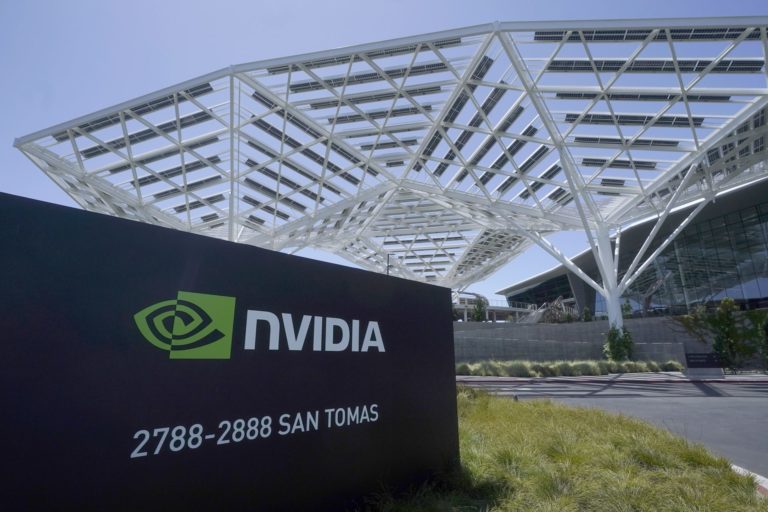
Nvidia’s Quarterly Profit Soars, Underscoring Dominance in AI Market (for Now…)

(Headline USA) Nvidia on Wednesday overshot Wall Street estimates as its profit skyrocketed, bolstered by the chipmaking dominance that has made the company an icon of the artificial intelligence boom.

Its net income rose more than sevenfold compared to a year earlier, jumping to $14.88 billion in its first quarter that ended April 28 from $2.04 billion a year earlier. Revenue more than tripled, rising to $26.04 billion from $7.19 billion in the previous year.

“The next industrial revolution has begun,” CEO Jensen Huang declared on a conference call with analysts.

Huang predicted that the companies snapping up Nvidia chips will use them to build a new type of data centers he called “AI factories” designed to produce “a new commodity—artificial intelligence.”

Huang added that training AI models is becoming a faster process as they learn to become “multimodal”—that is, capable of understanding text, speech, images, video and 3-D data—and also “to reason and plan.”

The company reported earnings per share—adjusted to exclude one-time items—of $6.12, well above the $5.60 that Wall Street analysts had expected, according to FactSet.

It also announced a 10-for-1 stock split, a move that it noted will make its shares more accessible to employees and investors.

And it increased its dividend to 10 cents a share from 4 cents.

Shares in Nvidia Corp. rose 6% in after-hours trading to $1,006.89. The stock has risen more than 200% in the past year.

The company, based in Santa Clara, California, carved out an early lead in the hardware and software needed to tailor its technology to AI applications, partly because Huang, the founder and CEO, began to nudge the company into what was then seen as a still half-baked technology more than a decade ago.

It also makes chips for gaming and cars.

The company now boasts the third highest market value on Wall Street, behind only Microsoft and Apple.

“Nvidia defies gravity again,” Jacob Bourne, an analyst with Emarketer, said of the quarterly report. While many tech companies are eager to reduce their dependence on Nvidia, which has achieved a level of hardware dominance in AI rivaling that of earlier computing pioneers such as Intel Corp., “they’re not quite there yet,” he added.

Demand for generative AI systems that can compose documents, make images and serve as increasingly lifelike personal assistants has fueled astronomical sales of Nvidia’s specialized AI chips over the past year.

Tech giants Amazon, Google, Meta and Microsoft have all signaled they will need to spend more in coming months on the chips and data centers needed to train and operate their AI systems.

What happens after that could be another matter. Some analysts believe the breakneck race to build those huge data centers will eventually peak, potentially spelling trouble for Nvidia in the aftermath.

“The biggest question that remains is how long this runway is,” Third Bridge analyst Lucas Keh wrote in a research note.

AI workloads in the cloud will eventually shift from training to inference, or the more everyday task of processing fresh data using already trained AI systems, he noted.

And inference doesn’t require the level of power provided by Nvidia’s expensive top-of-the-line chips, which will open up market opportunities for chipmakers offering less powerful, but also less costly, alternatives.

When that happens, Keh wrote, “Nvidia’s dominant market share position will be tested.”

Adapted from reporting by the Associated Press
CIA Blocked Feds from Using Biden’s Sugar Brother as Witness, Whistleblower Says

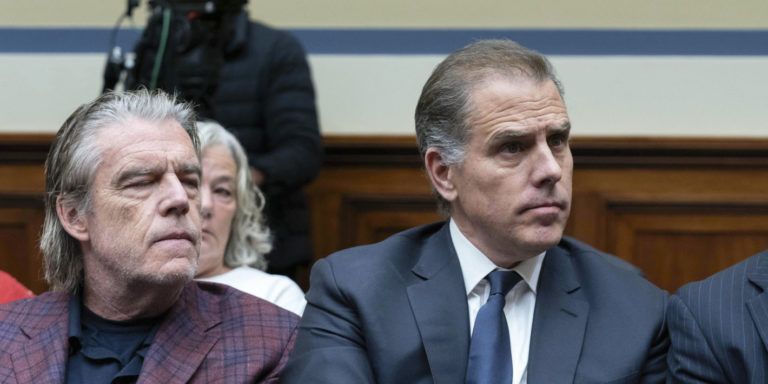
(Luis Cornelio, Headline USA) The CIA provided information that blocked investigators from using Kevin Morris as a potential witness in the Hunter Biden probe, a whistleblower affirmed in an affidavit.

IRS whistleblower Gary Shapley stated he “could no longer pursue” Morris for information against Biden, confirming his claim that the CIA “stonewalled” an IRS interview with Morris, Fox News reported on Thursday.

Morris became a person of interest to congressional investigators leading the impeachment inquiry of President Joe Biden after the Hollywood mogul gave millions of dollars to Biden to pay his IRS bills, which are at the center of a federal indictment.

The affidavit, submitted to the House Ways and Means Committee, reveals the CIA’s involvement in the Biden investigation.

“In and around August 2021, discussions were ongoing within the prosecution team on the Hunter Biden investigation concerning witnesses who needed to be interviewed in furtherance of the investigation,” Shapley wrote in the three-page affidavit. 

According to Shapley, Assistant United States Attorney Lesley Wolf and DOJ Tax Attorney Jack Morgan were “summoned” by the CIA to discuss Morris. 

“Wolf stated that they were provided a classified briefing in relation to Mr. Morris and as a result we could no longer pursue him as a witness,” Shapley added. 

“Investigators probed AUSA Wolf, but since her briefing was classified and she was apparently sanitizing it to an unclassified form to share over an open phone line, she did not elaborate with more information,” he noted. 

Wolf reiterated “more than once” that the CIA summoned her and Morgan. 

“It is unclear how the CIA became aware that Mr. Morris was a potential witness in the Hunter Biden investigation and why agents were not told about the meeting in advance or invited to participate,” he wrote. “It is a deviation of normal investigative processes for prosecutors to exclude investigators from substantive meetings such as this.” 

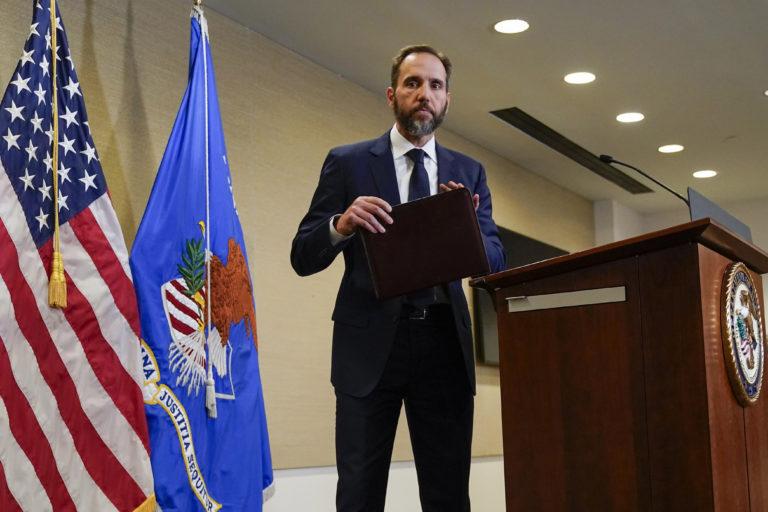
Judge Tells Erratic Jack Smith Prosecutor to ‘Calm Down’

(Luis Cornelio, Headline USA) A federal judge in the Mar-a-Lago case scolded a prosecutor for his seemingly aggressive and erratic behavior while addressing accusations of prosecutorial misconduct, Politico reported on Wednesday. 

“I’m going to have to ask that you calm down,” Judge Aileen Cannon sternly told David Harbach, one of the prosecutors hired by Special Counsel Jack Smith to pursue former President Donald Trump. 

Harbach’s behavior was triggered by Cannon’s questioning of whether there was evidence that Harbach’s colleague, Jay Bratt, had threatened Stanley Woodward, a defense attorney for Trump co-defendant Walt Nauta. 

According to Politico, Bratt allegedly attempted to coerce Woodward into pressuring Nauta to cooperate with the prosecution against Trump.  

Bratt suggested to Woodward that President Joe Biden would not appoint him to a federal judgeship if Nauta did not testify against Trump. 

However, Harbach denied these claims, calling the alleged meeting a “fantasy” and insisting it “did not happen.” 

Despite this denial, Woodward raised other concerning allegations, including that the DOJ singled out Nauta for harsher prosecution. 

As reported by Politico, Harbach reiterated the list of accusations raised by the DOJ against Nauta, including allegedly lying to investigators, lying to a grand jury, moving boxes, and deleting video evidence. 

Nauta has vehemently denied these claims. 

Cannon also instructed Harbach to lower his voice when he whispered something to another prosecutor.  

Additionally, she criticized Woodward for rushing through his remarks and reprimanded Harbach for not being prepared to answer questions. 

“You should have been prepared to address this,” she said, according to Politico. 

The case stems from alleged documents Trump kept at his Mar-a-Lago estate. The National Archives and Records Administration claims that the documents belongs to them but Trump says they belong to him. 

Indian Central Bank Goes on Gold Buying Spree

(Mike Maharrey, Money Metals News Service) The Reserve Bank of India has followed the lead of China and other Eastern central banks and ramped up its accumulation of gold.

According to the latest data released by the RBI, the Indian central bank increased its gold reserves by 24 tons through the first four months of the year. The RBI added 16 tons of gold to its holdings through the entirety of 2023.

The Reserve Bank of India currently holds just over 827 tons of gold in its reserves. India ranks ninth in the world in total gold holdings.

According to a report by FirstPost.com, India is increasing its gold holdings “as a hedge against volatility amid geopolitical tensions and in challenging times,” and gold is “a component of strategic reserve diversification.”

Diversification has become a common theme in the world of central banking. As the U.S. has increasingly used the dollar’s status as the reserve currency as a foreign policy weapon, many countries have elected to minimize their exposure to dollars. 

This has driven a broader trend of gold moving from the West to the East and into emerging markets.

The RBI noted this trend in a recent bulletin.

“The heightened global uncertainty is sending emerging market central banks on a spree of buying gold, adding 290 tonnes in the first quarter of 2024 and accounting for a quarter of overall global gold demand. Amid geopolitical developments and a slowing global economy, these central banks are signaling that living in challenging times calls for strategic diversification”

India went on a big gold-buying spree in 2022, adding about 200 tons of gold to its reserves before slowing purchases later in mid-2023. Since resuming purchases late last year, the RBI’s gold holdings have increased from 7.8 percent of its total reserves to 8.7 percent. On top of physical gold purchases, India’s gold holdings are increasing in both dollar and rupee terms thanks to the rising price of gold. 

Central banks globally have been gobbling up gold. Last year, central bank gold buying fell just 45 tons short of 2022’s multi-decade record.

According to the World Gold Council, central banks net gold purchases totaled 1,037 tons in 2023. It was the second straight year central banks added more than 1,000 tons to their total reserves.

Central bank gold buying in 2023 built on the prior record year. Total central bank gold buying in 2022 came in at 1,136 tons. It was the highest level of net purchases on record dating back to 1950, including since the suspension of dollar convertibility into gold in 1971.


Mike Maharrey is a journalist and market analyst for MoneyMetals.com with over a decade of experience in precious metals. He holds a BS in accounting from the University of Kentucky and a BA in journalism from the University of South Florida.

Is the Federal Reserve Just Winging It?

(Mike Maharrey, Money Metals News Service) Are the central bankers at the Federal Reserve just winging it? It sure seems that way if you step back and take a long view of their decision-making.

Fed officials project this aura of authority. You might imagine them as hyper-intelligent experts in the field of economics and finance making carefully calculated monetary policy decisions based on a thorough understanding of all the dynamics in the economy. After all, they must have risen to these important positions at the Fed based on their economic acumen, right?

Or maybe they are just politicians making stuff up as they go along.

A more accurate word picture would probably be a bunch of people wearing expensive suits throwing darts at a dartboard.

Current Fed Thinking

We just got the minutes from the most recent FOMC meeting held on April 30 and May 1. As you may recall, the committee elected to hold rates steady at 5.25 to 5.5 percent. But the messaging that came out of that meeting was relatively hawkish after several previous CPI reports showed stubbornly sticky price inflation.

In its official statement, the Committee conceded that rates will remain at this level into the foreseeable future.

“The Committee does not expect it will be appropriate to reduce the target range until it has gained greater confidence that inflation is moving sustainably toward 2 percent.”

During the post-meeting press conference, Powell admitted that he and his fellow central bankers don’t have a clue when that might happen.

“I would say my personal forecast is that we will begin to see further progress on inflation this year. I don’t know that it will be enough, sufficient. I don’t know that it won’t. We’re going to have to let the data lead us on that.”

The May meeting minutes reveal that the FOMC members were even more hawkish behind closed doors.

They lamented the lack of progress on the price inflation front.

“Participants observed that while inflation had eased over the past year, in recent months there had been a lack of further progress toward the Committee’s 2 percent objective. The recent monthly data had showed significant increases in components of both goods and services price inflation.”

And with price inflation still running hot, “The market-implied path for the federal funds rate through 2024 increased markedly, and federal funds futures rates suggested that market participants were placing lower odds on significant policy easing in 2024 than they did just before the March FOMC meeting.“


In fact, according to the minutes, “Various participants mentioned a willingness to tighten policy further should risks to inflation materialize in a way that such an action became appropriate.”

In other words, as of May 1, the central bankers at the Fed weren’t thinking about rate cuts and they put further rate hikes back on the table.

What a Difference Six Weeks Makes

Now let’s take a trip back into the deep recesses of time known as March.

After the March FOMC meeting, the committee released its “dot plot” projecting the expected trajectory of interest rates over the next several years.  

Based on the dot plot, the FOMC indicated that it still planned to cut interest rates three times this year. If it moved in typical 25-basis point increments, that would lower rates to between 4.5 and 4.75 percent by the end of the year.

The committee projected additional cuts in 2025, dropping rates to around 3 percent.

Now, stop and think about this. Six weeks ago, the FOMC was convinced that three rate cuts were the appropriate trajectory of monetary policy.

Six weeks later, we might need rate hikes. 

Did I mention this flip-flop happened in just six weeks?

This doesn’t exactly inspire confidence that these people know what they’re doing, does it?

Now, you might say, “Well, Mike, monetary policy is a complex business. You can’t expect them to get it right every time.” And that might be a fair assessment. The problem is it doesn’t seem like they ever get it right.

Comparing the actual trajectory of rate cuts with the projections bear this out. 

How bad is their track record?

Fund manager David Hay analyzed past dot plots and found the FOMC only got interest rate projections right 37 percent of the time. And as Hay pointed out, “They control interest rates!”

In other words, the people who set interest rates would make better guesses about where interest rates are heading by flipping a coin.

For instance, in March 2021, the FOMC projected the interest rate would still be zero in 2022. The actual 2022 rate was 1.75 percent. And in 2023, the vast majority of FOMC members thought the rate would still be at zero. The actual rate was over 5 percent.

If the FOMC members didn’t have coins handy, maybe they should try throwing darts at a chart.

My point is we don’t have a good reason to believe anything Powell & Company said or to think their musings tell us anything about the central bank’s next moves.

I can’t help but think of other Fed predictions that were wildly wrong. 

Do you remember when inflation was “transitory?”

Or how about back in 2007 when they emphatically assured us that the subprime mortgage problems were “contained.”

A year later, then Fed Chair Ben Bernanke told Congress that quantitative easing was a “temporary emergency measure” and once the crisis passed, the central bank would quickly shed the bonds it was buying from its balance sheet. He insisted that the Fed was not engaged in debt monetization. Sixteen years later, most of those assets are still on the books.

I’m just going to throw this out there – given the track record, maybe the mainstream should stop with the knee-jerk reactions every time words fall out of Jerome Powell or some other Fed official’s mouths. 

After the minutes came out, stocks tanked and gold sold off, because we’re hawkish again. Just a week ago, stocks set new records and gold rallied because the CPI report was good (even though it wasn’t) making everybody think the Fed people would jump back on the rate cut train. 

The fact of the matter, it’s all just wild guesses and speculation.

Instead of obsessing over the Fed’s open-mouth operations (doing monetary policy by talking), people would do better to look at the underlying fundamentals of the economy. Consider the massive levels of debt, the stagnating growth, the amount of money creation the central bank engaged in, and the fact that the economy runs on easy money, and then place all of this into the context of a higher interest rate environment. You’ll almost certainly come closer to anticipating the future than you will by listening to Fed officials blah, blah, blah.

Or you could just throw darts. 


Mike Maharrey is a journalist and market analyst for MoneyMetals.com with over a decade of experience in precious metals. He holds a BS in accounting from the University of Kentucky and a BA in journalism from the University of South Florida.

Biden Admin. Uses Notorious FACE Act to Target More Pro-Life Protesters

(Dmytro “Henry” Aleksandrov, Headline USA) The Biden administration continued its witchhunt on people who oppose murdering unborn babies in the womb by announcing a lawsuit this week against two pro-life organizations and seven pro-life activists. 

Pro-lifers were accused of violating the Freedom of Access to Clinic Entrances (FACE) Act during two protests at abortion facilities in Ohio in June 2021, the lawsuit said. The defendants could face tens of thousands of dollars in fines if they are convinced, the Daily Wire reported.

“Obstructing people from accessing reproductive health care and physically obstructing providers from offering it is unlawful. Congress passed the FACE Act 30 years ago this month in response to acts of violence, threats of violence and physical obstruction at reproductive health clinics in our country,” Assistant Attorney General Kristen Clarke of the Justice Department’s Civil Rights Division said.

Citizens for a Pro-Life Society, Red Rose Rescue, Laura Gies, Lauren Handy, Clara McDonald, Monica Miller, Christopher Moscinski, Jay Smith and Audrey Whipple were listed as the defendants.

The charges stem from protests at Northeast Ohio Women’s Center (NOWC) in Cuyahoga Falls, Ohio, on June 4, 2021, and at Planned Parenthood of Greater Ohio’s Bedford Heights Surgery Center (BHSC) in Bedford Heights, Ohio, the news source reported.

It was also noted that, during the protests, the defendants went in and around the abortion facilities where they sat, laid down and kneeled in front of doors and walkways, urging women who were coming to the abortion centers to not murder their babies.

Eventually, the protesters were arrested by police and booked for trespassing.

Before she participated in the protest at the Northeast Ohio Women’s Center, Gies previously discussed how she wanted abortion providers shut down, the criminal complaint stated.

The defendants could be given fines of up to $20,516 for the first violations of the FACE Act and up to $30,868 for later violations, the DOJ said, while also asking for the defendants to be required to pay $5,000 in damages to people harmed by the alleged criminal actions.

It wasn’t the first time when the far-left regime that is currently in power tried to go after pro-lifers. The DOJ had a history of targeting pro-lifers and admitting it. The FBI has been attacking pro-life advocates as well by raiding their homes and saying that it’s part of the protocol.