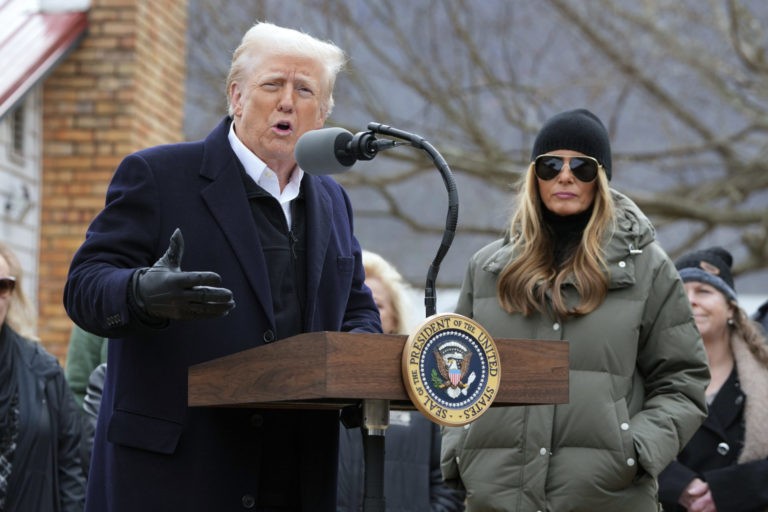
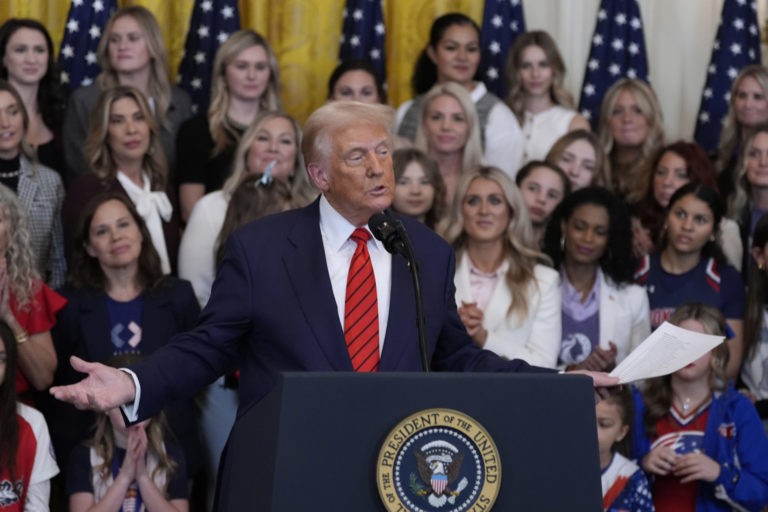
The report came after the president downplayed Iranian attacks targeting US bases in Kuwait and Bahrain, which were Iran’s most significant response yet to US strikes. The president acknowledged that the US hit Iran “hard” before the Iranian attacks and that Tehran was “a little bit provoked.”
A US soldier did die in Iraq on May 31, but according to the US military, it was due to a training accident, and several US troops and American contractors were injured by an Iranian attack on Kuwait last week. At least 13 US troops were killed during the US-Israeli bombing campaign against Iran, according to the Pentagon’s numbers.
Like President Trump, US Central Command has also been downplaying Iran’s attacks, claiming they’ve all been defeated, though that was contradicted by satellite images that show damage at the US Ali Al Salem Air Base in Kuwait following Iran’s strikes on Wednesday.
Iran made clear in its latest attacks that it will be striking harder in response to any further US attacks on Iranian ships or Iranian ports as it seeks to end the “tit-for-tat” strikes that have been taking place throughout the so-called ceasefire, meaning that the risk of US troops being killed will rise going forward.
Trump has suggested that the current status quo of a US blockade on Iranian ports and flare-ups involving drone and missile strikes could continue for a long time. When asked this week if the blockade could last until Labor Day, which is more than three months away, he didn’t rule it out. “I don’t know. I mean, I think it could be, but I think it’s unlikely. I think this will resolve itself fairly quickly,” he said.
“There’s a reason for everything, and we hit them pretty hard last night,” the president told reporters in the Oval Office. “Some people would say they were slightly provoked because we took a strong action for a different reason, so they were reciprocating.”
Iran launched the missile and drone attacks after the US bombed a commercial ship attempting to reach Iran and launched strikes on Iran’s Qeshm island.
During the Iranian attack on Kuwait, a passenger terminal at Kuwait’s international airport was hit, and at least one person was killed, and more than 60 were injured. Local officials said the terminal was hit by Iranian drones, which Iran denied, claiming that it was struck by an errant US Patriot missile interceptor. Kuwait’s aviation authority later released a video of the strike that appeared to show a drone striking the terminal.
“An additional wave of Iranian drones attempting to attack US forces in Kuwait failed to impact intended targets tonight. US Central Command air defenses successfully downed multiple drones and ensured no American personnel or assets were harmed,” CENTCOM said.
Despite the casualties at the Kuwait airport, Trump said the Iranian attacks were “not a big deal” and that the US “nipped it in the bud very quickly.” When asked if the ceasefire was still in place, he said, “In that part of the world, ‘ceasefire’ is when you’re shooting in a more moderate manner.”
Iran’s attacks were its most significant response yet to US violations of the ceasefire, representing a new Iranian strategy to avoid more “tit-for-tat” strikes. Iranian Foreign Minister Abbas Araghchi vowed on Wednesday that Tehran would continue to have a strong response to any US attacks.
“Our Armed Forces are conducting self-defense strikes on sites the US is permitted to use to attack civilian shipping and violate the ceasefire,” Araghchi wrote on X in a post that included a video of US Secretary of State Marco Rubio praising the UAE and Kuwait for being cooperative with US military operations.. “Any hostile act will be met with an immediate, decisive response. What sanctions and war failed to achieve won’t be won with more war.”
The bill passed on Wednesday in a vote of 215 to 208, with four Republicans joining Democrats in support of the effort. The resolution now heads to the Senate, where it has a chance of passing since the upper chamber advanced a similar War Powers Resolution last month. The bill is a concurrent resolution, meaning the president cannot veto it.
“Yesterday, in a meaningless vote, the House voted, 4 bad Republicans and all of the Dumocrats, to limit my War Powers, right in the middle of my final negotiations to end the War with the Islamic Republic of Iran. Who would do such an unpatriotic thing,” Trump wrote on Truth Social.
“They know where the negotiations stand. The Democrats are fueled by Trump Derangement Syndrome. They would rather have our Country fail than give me another, of many, victories. The four Republicans, that’s a whole other story – They’re GRANDSTANDERS! They should be ashamed of themselves. MAGA!!!” the president added.
Rep. Thomas Massie (R-KY), the only House Republican to support all four attempts to pass an Iran War Powers Resolution, responded to Trump in a post on X, writing, “Sir, we have Trump disappointment syndrome. When you said no new wars, we took it to heart, and a few of us meant it.”
(Headline USA) President Donald Trump said Wednesday that he will nominate Todd Blanche to serve as attorney general, tapping his former personal lawyer who has aggressively pursued the Republican president’s agenda while leading the Justice Department in an acting role.
Trump said at a dinner at the White House that he plans to nominate Blanche formally on Thursday, according to a video of the event posted on social media by a White House aide.
“We are going to make him permanent attorney general,” Trump said at the Rose Garden event.
Blanche sought quickly to position himself as the favorite for the permanent job after Pam Bondi’s firing in April, accelerating investigations into Trump foes and announcing a nearly $1.8 billion fund meant to compensate the president’s allies for alleged political persecution. The proposed fund created a bipartisan firestorm that forced the Justice Department to scrap the idea earlier this week in an extraordinary about-face.
Blanche was brought into the Justice Department as deputy attorney general and was elevated after Bondi’s ousting over her failed efforts to prosecute Trump’s perceived political opponents. Blanche insisted he wasn’t auditioning for the permanent post but made clear through splashy moves since taking the reins his intent on proving his loyalty to Trump.
Blanche’s actions have outraged Democrats and other critics who accuse him of still acting like Trump’s personal lawyer to carry out the president’s campaign of retribution. The $1.776 billion “Anti-Weaponization Fund” also prompted backlash from Republicans in the Senate whose support Blanche will now need in order to be confirmed as attorney general.
While Blanche has maintained he feels no pressure from the president, the Justice Department under his watch has advanced its pursuits of longtime Trump foes. Blanche has strongly rejected accusations that the Trump administration has politicized the Justice Department and has said he is focused on correcting what he contends were past abuses by the Biden administration.
Former FBI Director James Comey was indicted in April over a social media photo of seashells arranged on a beach that officials said constituted a threat the president. Comey, who has slammed the case as politically motivated, has said he wouldn’t be surprised if the Justice Department pursues additional indictments against him.
Blanche separately appointed Joseph diGenova, an 81-year-old former Justice Department prosecutor from the Reagan administration, to oversee a Florida-based investigation into whether former law enforcement and intelligence officials conspired over the last decade to undermine Trump.
He came under intense scrutiny last month over the proposed “Anti-Weaponization Fund,” which the administration said was meant to compensate people who feel they’ve been unjustly investigated and prosecuted under past administrations. The fund sparked outrage over the possibility that violent offenders who participated in the Jan. 6, 2021 U.S. Capitol riot could be considered for payments — which Blanche refused to publicly rule out.
Blanche told lawmakers on Tuesday the Justice Department would not move forward with the plan after the political blowback stalled legislation to fund Trump’s immigration enforcement agencies.
A former federal prosecutor in New York, Blanche came to public prominence for his lead role on Trump’s defense team, including during the Republican’s hush money trial in New York. That perch afforded him, he has said, a firsthand look at what he contends was the weaponization of the criminal justice system against Trump.
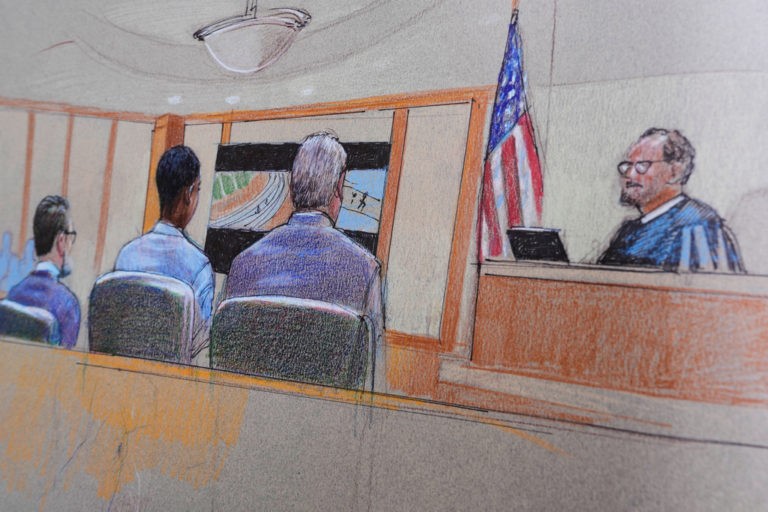
(Headline USA) A 17-year-old boy was fatally stabbed by a competitor in a “sneak, surprise attack” at a Texas high school track meet, a prosecutor told jurors Thursday, as a trial opened in a case that stunned an affluent Dallas suburb where the pair attended school.
Dozens of people lined up to get a seat in the Collin County courtroom. The death last year quickly drew wide attention, in part because of social media posts that amplified the case in racial terms. The accused, Karmelo Anthony, now 19, is black, while the victim, Austin Metcalf, was white.
Anthony told police he was protecting himself when the two got into a confrontation during a track meet in Frisco, a booming city in Dallas’ sprawling north suburbs, according to an arrest report.
But prosecutor Bill Wirskye told jurors it was a “senseless murder” and not a case of self-defense.
“He didn’t want a fight,” Wirskye said of Metcalf.
The jury was seated this week under increased security at the courthouse, and a judge has set strict rules over the proceedings, including prohibiting attorneys from discussing the case publicly.
The stabbing happened on a rainy morning in April 2025. Witnesses told police the confrontation began when Anthony sat under a tent belonging to Metcalf’s team, according to an arrest report. The teens went to different high schools in Frisco.
When Metcalf told Anthony that he needed to move, Anthony reached inside his bag and allegedly replied: “Touch me and see what happens,” the report said.
In his opening remarks, defense attorney Mike Howard said Metcalf made the first contact.
“In that split second, Melo has a decision to make: how and when to act. Self-defense is useless if you wait too late to defend yourself. … He reacts in a split second of fear, chaos,” Howard said.
Metcalf was stabbed in the chest. Anthony faces up to life in prison if convicted of murder.
Mark Porter, a forensic video analyst, guided jurors through video recorded at the track meet, including some images that were magnified. He said about 15 minutes elapsed between Metcalf entering the stadium and Anthony’s arrest.
The parents of both teens have said they were good students who planned to go to college. Metcalf’s father has condemned those who seized on the race of the teenagers after the killing.
“This was not a race thing. This is not a political thing. Please do not comment if you do not know what happened,” Jeff Metcalf said on Fox News’ “America Reports.”
“This is a human being thing,” he said. “This person made a bad choice and it affected both his family and my family forever.”
Authorities have also issued warnings about online discussions surrounding the killing. Frisco Police Chief David Shilson has urged people to beware of posts spreading “misinformation, hate, fear, and division.”
(Ken Silva, Headline USA) New details are pouring out about the former senior CIA official who was caught last month with some $40 million in gold bars that he had obtained from the government for unspecified “work-related expenses.”
The Wall Street Journal published an article on Wednesday tying HHS Secretary Robert F. Kennedy’s daughter-in-law, Amaryllis Fox Kennedy, to the scandal, which led to the arrest of former senior CIA official David Rush last month.
Fox Kennedy, a former CIA officer, reportedly resigned from her role as a deputy director of national intelligence around the time of Rush’s arrest. In an interview with the Journal published Tuesday, Fox Kennedy said she resigned in part because she was frustrated with the lack of oversight of the intelligence community’s use of taxpayer funds—including gold bullion.
“Until there’s functional oversight of the IC’s ample and unsupervised movement of money and gold, we are stuck living in something less than the constitutional republic our founders designed,” she reportedly said.
The CIA reportedly rejected Fox Kennedy’s allegations, calling them “totally false.”
Meanwhile, NBC News reported Wednesday that Rush had worked in a highly classified nuclear submarine plan for the Pentagon. Rush was reportedly “handpicked” for the job by Stephen A. Feinberg, who is now the deputy secretary of defense.
Rush was picked for the highly sensitive assignment despite the fact that he lied numerous times on his applications to get into the CIA, according to court records from his arrest last month. For instance, Rush allegedly said in an application to enter the “senior executive service” level ranks that he was the “director of test” for a joint Army/Navy weapons test organization. However, his military records showed that he separated from the Navy in 2015.
Rush’s phony resume reportedly sparked an FBI investigation. As its investigation progressed, the FBI allegedly found that Rush made several requests to the government to obtain a “significant quantity” of foreign currency, as well as tens of millions of dollars in gold bars, for “work-related expenses” from last November to March.
“During the search, FBI agents seized approximately 303 gold bars, each of which weighs approximately one kilogram,” court records say. “Based on the current price of gold, the estimated value of the gold exceeds $40 million.”
The Pentagon has denied NBC’s report about Feinberg handpicking Rush for the nuclear sub assignment. Chief Pentagon spokesman Sean Parnell reportedly called the allegations “completely false and embellished.”
Rush is scheduled to have a detention hearing Friday at 10 a.m. Part of the hearing will be held in secret.
The ex-CIA official caught w/ $40 million in gold bars is having a detention hearing tomorrow, part of which will be held in secret due to the Top Secret info being discussed. https://t.co/Hl3qlH6VMqpic.twitter.com/PEfTApEoDW
“The first portion would occur in a closed Sensitive Compartmented Information Facility (SCIF) or in a similarly appropriate secured space and be limited to discussions regarding classified information,” the Justice Department disclosed in a request for the secret hearing, which a judge granted.
“The second portion would occur in open court and involve discussion of any remaining, unclassified information.”
Ken Silva is the editor of Headline USA. Follow him at x.com/jd_cashless.
(Money Metals News Service) In this episode of the Money Metals Midweek Memo, host Mike Maharrey argues that reports of inflation’s demise have been greatly exaggerated. Drawing on both recent economic data and historical parallels, he contends that the United States may be entering a second wave of a broader long-term inflationary cycle reminiscent of the inflationary era of the 1960s and 1970s.
Using the famous example of the New England Patriots’ comeback from a 28-3 deficit against the Atlanta Falcons in Super Bowl LI on February 5, 2017, Maharrey suggests that inflation, much like that game, wasn’t truly over when many believed it was. While the Federal Reserve’s aggressive tightening campaign brought inflation down from its June 2022 peak of 9.1%, the underlying forces driving rising prices were never fully eliminated.
Signs of a Second Inflation Wave
According to Maharrey, the recent rise in consumer prices suggests inflation is beginning to reassert itself. The Consumer Price Index (CPI) climbed to 3.8% in April, its highest level since May 2023.
Many analysts have blamed the increase on the U.S.-Iran war and the resulting oil shock. While higher energy prices have certainly contributed, Maharrey argues that the deeper cause is continued monetary expansion. He points to the growth of the money supply from $21.61 trillion in February 2025 to $22.67 trillion in February 2026, an increase of approximately 4.9%.
From his perspective, inflation should be defined as an increase in the money supply rather than simply rising consumer prices. CPI, he argues, measures one symptom of inflation rather than inflation itself. Rising prices resulting from oil shocks can create temporary disruptions, but only monetary inflation can drive sustained increases across the entire economy.
Whether driven by war-related spending, monetary expansion, or a combination of both, Maharrey believes the conditions are in place for another major inflationary surge.
Lessons from the 1960s and 1970s
A major theme of the episode is the striking resemblance between today’s economic environment and the inflationary cycles of the late twentieth century.
Maharrey notes that inflation during the 1960s and 1970s did not rise in a straight line. Instead, it arrived in three distinct waves. The first wave emerged in the mid-1960s before subsiding after the Federal Reserve raised interest rates, with the federal funds rate peaking at 8% in 1969.
Once inflation appeared under control, the Fed cut rates in 1970, setting the stage for a second inflation wave that peaked in 1974. Interest rates subsequently rose again, reaching 10.5% that year.
The pattern repeated itself. Inflation eased, rates were cut, and a third inflation wave eventually followed. The cycle finally ended only when Federal Reserve Chairman Paul Volcker pushed interest rates to nearly 20% in 1980.
Maharrey argues that today’s inflation trajectory closely resembles the early stages of that historical pattern. The inflation spike of 2022 and 2023, followed by easing inflation and subsequent rate cuts, appears remarkably similar to the first wave of the 1970s cycle.
Government Spending and the Real Driver of Inflation
According to Maharrey, government spending lies at the heart of inflationary pressures.
He points out that the inflation of the 1960s and 1970s was fueled by a combination of Lyndon B. Johnson’s Great Society programs and spending associated with the Vietnam War. Massive borrowing required monetary support, helping create inflationary conditions.
A similar pattern emerged during the COVID era. In response to the pandemic, the Federal Reserve slashed interest rates to zero and conducted nearly $5 trillion in quantitative easing. The central bank effectively monetized much of the debt accumulated during that period by purchasing government bonds with newly created money.
Maharrey argues that every significant spike in government spending is typically followed by a rise in inflation. He cites Austrian economist Mark Thornton, who contends that the Federal Reserve’s primary purpose is to facilitate government borrowing and deficit spending rather than manage inflation and employment.
With persistent federal budget deficits and increased military expenditures associated with the current Iran conflict, Maharrey believes the same forces that drove inflation decades ago remain firmly in place today.
Why Higher Rates May Not Be Enough
Although markets continue to speculate about future Federal Reserve rate hikes, Maharrey questions whether the central bank can realistically maintain a restrictive policy stance.
He argues that the U.S. economy has become so dependent on debt that significantly higher interest rates could trigger widespread financial instability. Government debt, consumer debt, and corporate leverage have all reached historically elevated levels.
As a result, the Federal Reserve faces what Maharrey describes as a “Catch-22.” If it raises rates aggressively, it risks destabilizing the economy. If it eases policy, inflation could accelerate further.
The second half of the episode focuses on the financial condition of American households.
Maharrey challenges mainstream narratives celebrating the resilience of the American consumer. While retail sales remain strong, he argues that much of the spending is being driven by necessity and financed with debt rather than genuine financial strength.
During the pandemic, Americans accumulated substantial savings. The personal savings rate surged to 31.8% in April 2020, the highest level since the 1960s. Aggregate excess savings eventually peaked at $2.1 trillion in 2021.
That cushion has largely disappeared.
The San Francisco Federal Reserve estimated that excess savings had fallen to just $190 billion by June 2023, representing a decline of roughly $1.9 trillion. By March 2024, those excess savings were effectively exhausted.
Meanwhile, the personal savings rate fell to just 2.6% in April, the lowest level since before the 2008 financial crisis and approaching the all-time low of 1.4% recorded in July 2005.
Credit Card Debt Reaches New Records
As savings have disappeared, consumers have increasingly relied on debt.
Total consumer debt has climbed to a record $5.14 trillion. Revolving debt, primarily credit card balances, has reached an unprecedented $1.4 trillion.
Maharrey highlights March retail sales, which rose 1.5% amid rising gasoline prices. At the same time, revolving debt surged 9.1%, suggesting that a significant portion of consumer spending may be financed through borrowing rather than income growth.
The situation becomes even more concerning when delinquency data is examined.
According to New York Federal Reserve figures, 13.1% of credit card balances were at least 90 days delinquent in April, the highest level since the later stages of the Great Recession. Serious delinquencies have risen 5.5% since the third quarter of 2022, deteriorating faster than during the 2007-2010 financial crisis period.
Maharrey suggests that consumers may be approaching their borrowing limits, reducing their ability to continue supporting economic growth through credit-fueled spending.
Rising Financial Stress Across America
Additional evidence of financial strain can be found in LegalShield’s Consumer Stress Legal Index (CSLI).
Although the index declined slightly in the first quarter of 2026 due largely to tax-refund-related relief, it remained 11.6% higher than a year earlier.
The firm’s bankruptcy subindex rose 2% during the quarter and 8% year-over-year. LegalShield notes that its bankruptcy data has historically preceded actual business bankruptcy filings by approximately two quarters and has demonstrated a 0.95 correlation since 2006.
Even more concerning, the foreclosure subindex increased 20.3% year-over-year, reaching its highest level since the onset of the pandemic in March 2020.
Homeowners are also facing growing pressure from rising insurance costs. National homeowners’ insurance premiums increased 70% between 2019 and 2025 and now account for approximately 14% of the average monthly mortgage payment.
Taken together, Maharrey argues that these figures paint a picture of consumers who are financially stretched, heavily indebted, and increasingly vulnerable to economic shocks.
Gold and Silver as Inflation Protection
Against this backdrop, Maharrey remains bullish on precious metals.
Despite recent volatility caused by war-related headlines and speculation about future Federal Reserve actions, he believes gold’s long-term fundamentals remain strong. He argues that real interest rates continue to fall and questions whether the Fed can maintain tighter policy without triggering a broader financial crisis.
In his view, inflation is not a temporary problem but a structural feature of the modern monetary system. Because government borrowing and spending continue to expand, he expects inflationary pressures to persist.
For that reason, Maharrey encourages investors to maintain exposure to gold and silver as long-term stores of value. He characterizes current price weakness as a buying opportunity and argues that investors should acquire their inflation hedges before a larger crisis unfolds rather than afterward.
As the episode concludes, Maharrey reiterates his belief that the current environment closely resembles the early stages of the inflationary period that culminated in the 1970s. If history continues to rhyme, he warns, inflation’s comeback may be only beginning.
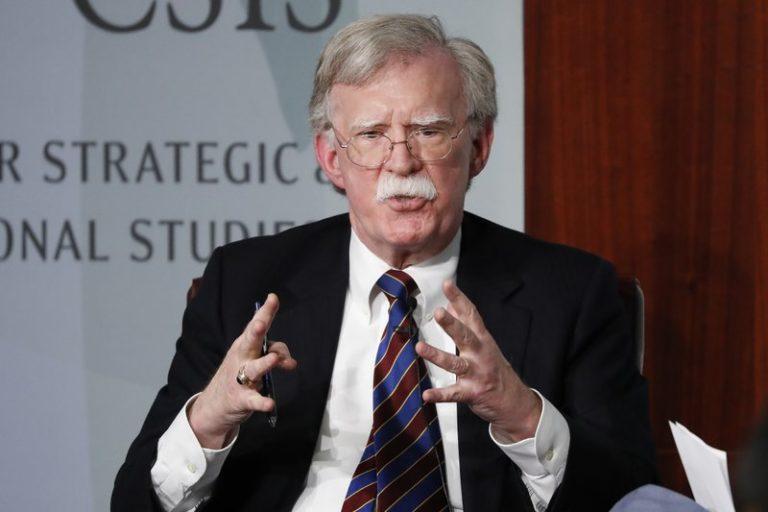
(Headline USA) Former Trump administration national security adviser John Bolton has agreed to plead guilty to a single count of retaining classified information under a deal with the Justice Department that could allow him to avoid prison time, a person familiar with the matter said Thursday.
The deal would resolve a criminal case filed in October that charged Bolton with 18 counts of either retaining or disseminating classified information, including diary-like notes from his time in government that officials say he shared with his family members as he was preparing a memoir about his time in office.
Under the agreement, Bolton would also face a $2.25 million fine, said the person, who insisted on anonymity to discuss a deal that had not been made public. Any prison sentence would be capped at five years, but the agreement allows for him to avoid time behind bars, though the punishment will ultimately be up to a judge.
An FBI investigation into Bolton burst into public view in August when federal agents served warrants at his Maryland home and office.
He is a a longtime fixture in Republican foreign policy circles who became known for his hawkish views on American power. Bolton served for more than a year in Donald Trump’s first administration before being fired in 2019 and publishing a critical book about the president.
The administration fought unsuccessfully to block the publication of “The Room Where it Happened” on the grounds that the book risked disclosing classified information. The plea deal that Bolton will enter covers the notes he shared with relatives as opposed to information in the book.
A rearraignment, which typically signals a plea agreement, is scheduled for June 26 in federal court in Greenbelt, Maryland.
(Headline USA) Dozens of anti-ICE agitators facing federal criminal charges after they invaded a Minnesota church in January will not additionally be charged locally, a prosecutor said Wednesday.
St. Paul City Attorney Irene Kao said in a statement that “current evidence is insufficient to meet that standard for criminal charges under Minnesota state statutes,” a determination heavily criticized by the lead pastor at Cities Church, where the protest occurred.
The U.S. Justice Department brought federal civil rights charges against 39 people, including former CNN journalist Don Lemon, after a livestreamed video showed a group of people interrupting services at Cities Church on Jan. 18 by chanting “ICE out” and “Justice for Renee Good.” Good, a 37-year-old mother of three, was fatally shot by a U.S. Immigration and Customs Enforcement agent in Minneapolis amid a surge in federal immigration enforcement.
Cities Church in St. Paul, Minnesota, where anti-ICE protesters stormed the sanctuary during worship, chanting accusations against the pastor as an immigration agent. This is a communist revolution. pic.twitter.com/BaVujvd8sp
The protesters had learned that one of the church pastors was also an ICE official who had been overseeing the intensive operation in Minnesota.
“According to the St. Paul City Attorney’s logic, it is perfectly fine for agitators to invade a mosque, a cathedral, or a temple, intimidate the families and children inside, and shut down their religious gathering. Just call it a ‘protest,’” Cities Church lead pastor Jonathan Parnell said in a written statement.
Violence, destruction of property and threats to public safety remain serious concerns, Kao said, but none of that occurred during the demonstration.
Attorneys for the church said that just because the protesters did not break windows or destroy property doesn’t mean they didn’t break the law.
At least four states — Idaho, Louisiana, Oklahoma and Kansas — adopted laws this year making it a crime to disrupt worship services.
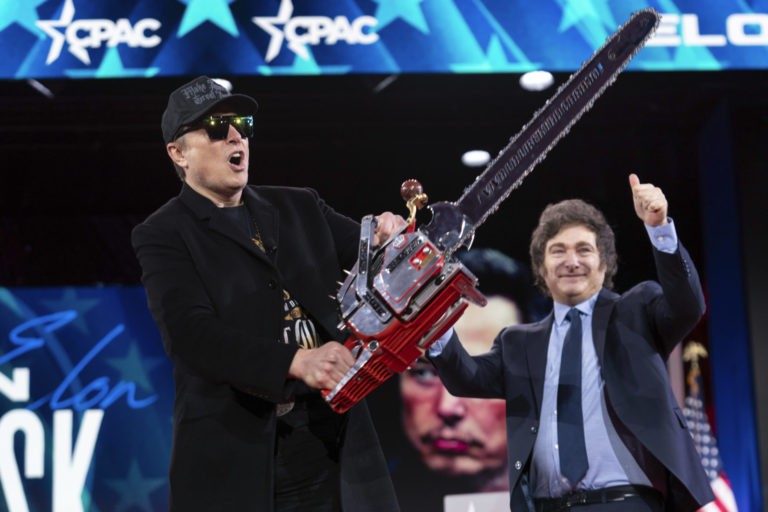
(Headline USA) SpaceX says it plans to raise up to $75 billion when it goes public this month, setting the stage for the largest-ever stock market debut and putting Elon Musk on course to becoming the world’s first trillionaire.
The company, formally known as Space Exploration Technologies Corp., said Wednesday it will sell 555.6 million shares at $135 a piece in an initial public offering. The estimated proceeds would easily top the $26 billion raised by oil giant Saudi Aramco in 2019. The offering would also give SpaceX a market value of $1.77 trillion. Only six companies in the S&P 500 are currently worth more, with Nvidia tops at $5.2 trillion.
Besides the size of the offering and the expected proceeds, SpaceX’s amended prospectus updates details about how much control of the company Musk will have. As SpaceX’s CEO, chief technical officer and chairman, Musk’s voting power will come primarily through his ownership of 5.22 billion Class B shares, which give the holder 10 votes for every share held. According to the filing, Musk would have 82.4% of the voting power in the company.
Forbes currently values Musk’s net worth at $826 billion and his stake in SpaceX at $542 billion. The estimated value of his SpaceX holdings was based on an overall value for the company of $1.25 trillion. Based on those numbers, a $1.77 trillion valuation for SpaceX would boost Musk’s net worth by $223 billion, making him a trillionaire. However, much of Musk’s worth is in stock that he has yet to cash in.
Even as it makes a bid for a blockbuster market debut, SpaceX is currently losing billions of dollars a year. The filing shows that the company lost $2.6 billion from operations last year on $18.7 billion in revenue, and the losses kept piling up at the start of this year, too.
Fantastical plans
Time will tell how SpaceX fares on the market. Musk’s plans for the company are as fantastical as the money he hopes raise in the sale.
Colorful, even frightening in parts, the IPO document strikes a contrast with the typically dry, technical prose in IPO documents, detailing plans to use proceeds from the sale to help put men on the moon again and perhaps even Mars. In one section, it talks of a need to build “a permanent human colony” on the red planet with “at least one million inhabitants” as existential threats loom that could consign man to “the same fate as the dinosaurs.”
Musk has almost equally ambitious plans for his other publicly traded company, Tesla. His goal is to transform the maker of electric vehicles into a producer of robotaxis and humanoid robots. Dan Ives of Wedbush Securities wrote in a research note that he expects Tesla and SpaceX to merge next year.
AI plays a key role
Key to the success of both companies — and any merged entity — is artificial intelligence. In its IPO filing, SpaceX says it sees potential revenue from AI of up to $26.5 trillion. But that depends on another lofty Musk ambition — putting data centers in space, which is not technologically possible at the moment.
Transforming his space company into a primarily AI-focused company will be a challenge for Musk, who started xAI in 2023 with 11 other co-founders who have all since left. Some were recruited away by rivals.
Its main AI product, the chatbot Grok, is “less impressive than anything that we see from any other major player in the space, whether that’s OpenAI, or Anthropic, or (Google’s) Gemini,” said IDC analyst Arnal Dayaratna.
Dayaratna said that doesn’t mean SpaceX doesn’t have potential as a major AI player, thanks in part to its computing partnership with Anthropic and Musk’s recent deal that gave SpaceX the rights to buy AI coding tool Cursor for $60 billion later this year. Folding in Cursor’s capabilities would give SpaceX access to the coveted business customers now using Anthropic’s Claude or OpenAI’s ChatGPT.
SpaceX plans to use the net proceeds from the IPO to fund the expansion of infrastructure for its AI and rocket businesses, and to beef up the constellation of satellites that power Starlink Mobile, among other investments.
The company plans to list on the Nasdaq under the symbol “SPCX” and could begin trading as soon as the end of next week.
And SpaceX isn’t the only colossal market debut investors are now bracing for. Earlier this week, Anthropic submitted a confidential filing with the U.S. Securities and Exchange Commission to officially start its own IPO clock.
OpenAI has not yet reported filing the initial SEC paperwork, but an IPO from the ChatGPT maker is widely expected.
“This listing represents the first major test for public markets after years of muted IPO activity with SpaceX paving the way for AI giants Anthropic and OpenAI to follow soon after,” Ives wrote.