Appeals Court Blocks Activist Challenge to Fla. Law against Underage Gender Experiments

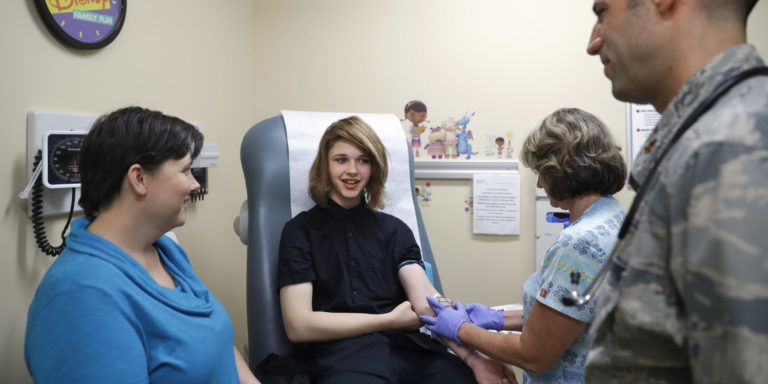
(Headline USA) A federal appeals court Monday cleared the way for Florida to enforce a ban against transgender experimentation on minors, reversing a lower court order against the ban while the matter is appealed.

The 2-1 decision was issued by the 11th U.S. Circuit Court of Appeals in Atlanta after U.S. District Judge Robert Hinkle blocked the law in June.

The law revived by the ruling prohibits transgender clinics and other child groomers from prescribing puberty blockers and hormonal treatments for minors, even with their parents’ permission.

To prevent clinics from exploiting lucrative gender-surgery practices by rubber-stamping treatments based on the whims and caprices of vulnerable, mentally fragile patients, the law also requires that transgender adults receive treatment only from a doctor, not a nurse or other medical practitioner. Adults who want the treatment must be in the room with the physician when signing the consent form.

Florida’s attorneys acknowledged during the district court trial that the state cannot stop someone from pursuing a transgender identity, but said it can regulate medical care.

Because genital surgeries for minors were already blocked under state law, the only treatments at issue in the case were puberty blocking treatments and cross-sex hormones—giving testosterone to a biological female, for example. Those who were undergoing treatment when the law was adopted in May 2023 were allowed to continue.

At least 26 states have adopted laws restricting or banning the life-altering procedures for minors: Alabama, Arkansas, Arizona, Florida, Georgia, Idaho, Indiana, Iowa, Kentucky, Louisiana, Mississippi, Missouri, Montana, Nebraska, New Hampshire, North Carolina, North Dakota, Ohio, Oklahoma, South Carolina, South Dakota, Tennessee, Texas, Utah, West Virginia and Wyoming.

However, most of those states face ongoing lawsuits. A federal judge struck down the ban in Arkansas as unconstitutional, and a judge’s order is in place temporarily blocking enforcement of the ban in Montana.

Adapted from reporting by the Associated Press

Leftist Pa. Judge Backtracks on Ballot ‘Curing’ Precedent, Requires County to Alert Voters

(Headline USA) In the same area where former President Donald Trump was nearly assassinated, a Pennsylvania judge last week delivered a major win for election integrity by upholding the Butler County Elections Board’s ban on ballot-curing.

Not to be outdone, however, a Democrat judge ruled Friday that a Republican-controlled county violated state law in last April’s primary, when election workers neglected to tell voters that their mail-in ballots had been rejected and wouldn’t be counted.

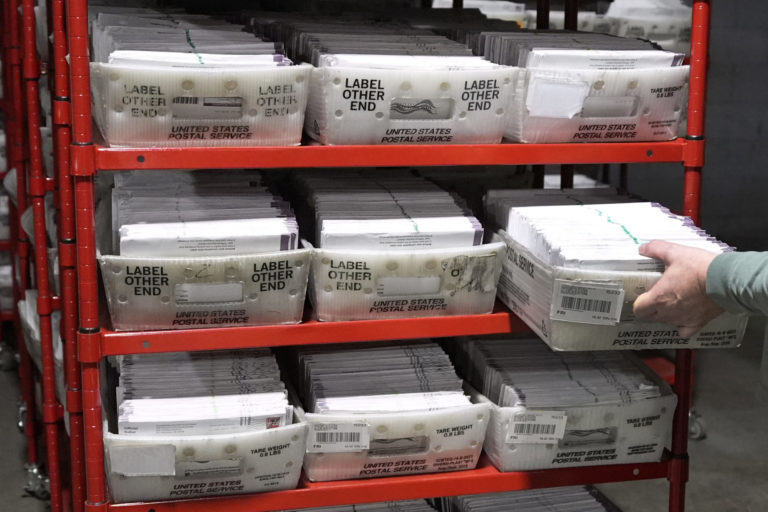
As a result, Judge Brandon Neuman said, voters in Washington County were unable to exercise their legal right either to challenge the decision of the county elections board or to cast a provisional ballot in place of the rejected mail-in ballot.

Those lawsuits were among several courtroom battles already being waged in the hotly contested presidential battleground. Much like Florida in the 2000 Bush v. Gore election, the entire outcome of November’s contest between Republican Donald Trump and Democrat Kamala Harris could come down to how much latitude leftist election officials have to collect and count mail-in ballots after election night.

Despite polls suggesting that the Biden administration’s second-in-command may be pulling ahead following last week’s Democratic National Convention, Trump could win an Electoral College victory by reclaiming Pennsylvania and Georgia for the red column—along with holding all the states he won in 2020.

Georgia, the more reliably Republican of the two, closed many of the election loopholes that allowed Democrats to flip the state in the previous election.

However, Democrats still control all the levers of power in the Keystone State and have now codified some of the dubious COVID-era policies that helped them winnow down—and ultimately reverse—Trump’s massive election-night lead.

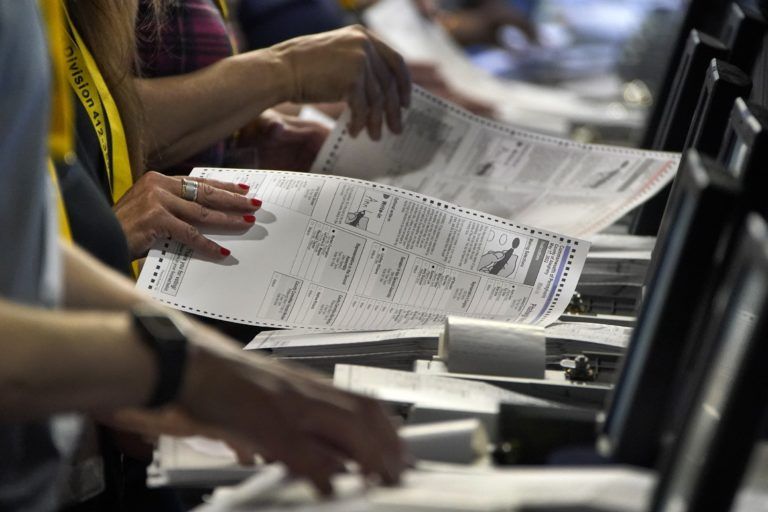
In the Washington County primary, election officials rejected 259 mail-in ballots that had been received before polls closed, or 2% of all mail-in ballots received on time, the judge wrote.

Roughly three-fourths of mail-in ballots tend to be cast by Democrats in Pennsylvania, despite—or perhaps because of—its demonstrated ability to facilitate fraud.

The NAACP and other lawfare groups sued the coounty earlier this summer on behalf of seven voters whose ballots had been rejected in the April 23 primary. The activists accused the county of violating the constitutional due process rights of voters by deliberately concealing whether their ballots had been counted.

In his decision, Neuman ordered county officials to notify any voter whose mail-in ballot is rejected because of an error—such as a missing signature or missing handwritten date—so that the voter has an opportunity to challenge the decision.

Neuman also ordered the county to allow those voters to vote by provisional ballot to help ensure they could cast a ballot that would be counted.

The conflicting decisions over ballot curing may send the matter to the state supreme court, where Democrats outnumber Republicans five to two.

Nick Sherman, the chairman of Washington County’s commissioners, said he and other county officials hadn’t decided whether to appeal.

However, Sherman called Neuman’s ruling a prime example of a judge “legislating from the bench,” while maintaining that the county’s practices were compliant with state law.

“I would question how you would read a law that is that black and white and then make a ruling like that,” Sherman said in an interview.

Sherman said state law does not allow the county to begin processing mail-in ballots—called precanvassing—until Election Day starting at 7 a.m.

However, Witold Walczak, legal director of the American Civil Liberties Union of Pennsylvania, which helped represent the plaintiffs, claimed county election workers could see right away whether a just-arrived mail-in ballot had mistakes that would disqualify it.

Most counties check for such mistakes and notify voters immediately or enter the ballot’s status into the state’s voting database, Walczak said. That helps alert a voter that their ballot was rejected so they can try to make sure they cast a ballot that counts, Walczak said.

None of that is precanvassing, Walczak claimed.

“Precanvassing is about opening the [ballot] envelopes,” Walczak said. “That’s not what this is. And if Sherman is right, then 80% of counties are doing it wrong.”

Adapted from reporting by the Associated Press

As Dems Decry AI’s Ballot-Deadline Misinfo, 3 Key Battlegrounds May Still Omit Kamala

(Ben Sellers, Headline USA) Earlier this month, leftist secretaries of state pounced at the opportunity to attack Trump-backing billionaire Elon Musk over allegations that his artificial intelligence chatbot had errantly suggested that Vice President Kamala Harris would not make the ballot in several states.

Curiously enough, the complaint appeared to ignore three major battleground states where the law still stipulates that President Joe Biden will appear on the ballot as the Democrat candidate, according to a leading conservative think-tank, which suggested that claims of Harris being eligible to appear in all 50 states may be the real disinformation.

Grok—which is available only to subscribers of the premium versions of X—debuted last year and was touted by Musk as a “rebellious” AI chatbot that would answer “spicy questions that are rejected by most other AI systems.”

However, not all of its responses may be entirely accurate.

Top election officials from Michigan, Minnesota, New Mexico, Pennsylvania and Washington sent a letter to Musk on Aug. 5 complaining that the chatbot had produced false information about state ballot deadlines shortly after President Joe Biden dropped out of the 2024 presidential race.

According to the letter, Grok had indicated that the deadline for replacing Biden had already passed in nine states states where it had not: Alabama, Indiana, Michigan, Minnesota, New Mexico, Ohio, Pennsylvania, Texas and Washington.

“In all nine states the opposite is true: The ballots are not closed, and upcoming ballot deadlines would allow for changes to candidates listed on the ballot,” the secretaries wrote.

Following the fix, the chatbot now says, “For accurate and up-to-date information about the 2024 U.S. Elections, please visit Vote.gov” before listing responses to election-related questions.

“We appreciate X’s action to improve their platform and hope they continue to make improvements that will ensure their users have access to accurate information from trusted sources in this critical election year,” the secretaries of state wrote.

Even while Biden was in the race, ballot eligibility in Ohio, Alabama and Washington was a source of concern since all three initially had ballot deadlines that took effect prior to last week’s Democrat convention in Chicago.

In each case, however, the state legislature or the secretary of state worked to resolve the loophole and ensure that the Democrat nominee would be on the ballot.

That nominee, of course, proved not to be Biden but rather Harris, his former running mate, after party elites forced the incumbent president out of the race.

To play it safe, Democrats conducted a virtual nominating process that took place prior to Harris’s ceremonial nomination and acceptance speech at last week’s convention.

Yet, despite the focus on states where Harris is now assured her spot on the ballot, major questions remain as to whether she will be eligible to appear in at least three other crucial swing states.

According to the Heritage Oversight Project, an election-integrity watchdog launched by prominent conservative think-tank the Heritage Foundation, the deadline for removing Biden from the ballot has already long since passed in Georgia, Wisconsin and Nevada.

Some have argued that the question may be moot since Harris absorbed Biden’s campaign into her own.

Under such circumstances, the Electoral College, which has been oft-reviled by the Left, may prove to be its savior.

The political parties’ “nominees for president and vice president are not the candidates who are elected on November 5th, the people running for presidential elector are,” explained Joel Watson Jr., Louisiana’s deputy secretary of state for communications, in a July article by the Iowa Capital Dispatch.

Those electors, like the ones pledged to Biden during the primary, would then exercise their discretion to cast a vote for Harris instead of Biden when they convene in December.

Additionally, the article, citing information from 39 state news bureaus, disputed the Heritage Oversight Project’s deadline claims and instead listed September deadlines for Georgia (9/17), Nevada (9/3) and Wisconsin (9/3) to finalize their ballots.

Yet, Mike Howell, the executive director of the Oversight Project, told Headline USA in an email that its researchers “were not mistaken at all” about their read on the state laws.

Democrats are “not out of the woods yet … and I’m wondering why no one with standing is suing,” Howell said.

“The DNC and Biden claimed that Biden was already the nominee before he was taken out, Howell added. “So now they have two nominees, without formally withdrawing and substi[tu]ting one of them, and I’m not sure why Secretaries of State are okay with that process.”

Howell took credit for having forced the DNC’s pre-convention virtual-roll-call vote due to the prior threat of a lawsuit.

“The DNC admitted that it was a major legal problem so they moved up the DNC nomination process to a Zoom roll call vote in early [A]ugust without any citizen actually voting for Kamala Harris,” Howell said. “This is admitted in writing by the DNC and they reference us as the reason.”

As far as the three battleground states where Harris may be ineligible, it is not yet clear whether election officials will seek to swap out the nominee to accommodate Democrats—and avert a messy legal battle—or whether Republicans will press forward with any preemptive challenges.

Howell noted that a lawsuit from the Heritage Foundation inevitably would be dismissed due to its lack of standing, meaning it would likely fall on the Republican National Committee and the Trump campaign, or on a group of concerned voters in the state, to pursue litigation.

Complicating the matter may be the issue of whether plaintiffs could advance a case before the ballots were cast, or if it would be necessary to wait until after the grievance already had occurred—setting the stage for no-holds-barred courtroom brawls like the ones in 2020.

Not surprisingly, the Harris campaign has already secured a legion of lawyers, overseen yet again by prominent election-stealer Marc Elias.

Headline USA reached out to RNC co-chair Michael Whatley to inquire as to whether it had such a lawsuit planned; as well as to Gabriel Sterling, the chief operating officer for the Georgia secretary of state’s office, to inquire whether Republican Secretary Brad Raffensperger would adhere to the law or seek a workaround to accommodate Harris.

Neither had responded as of Thursday morning.

Ben Sellers is the editor of Headline USA. Follow him at twitter.com/realbensellers. The Associated Press contributed to this report.


Ariz. Judge Weighs Challenge That Could Disrupt 2020 Election ‘Lawfare’

(Luis Cornelio, Headline USA) The Arizona criminal case related to the 2020 presidential election could soon be dismissed after Republican defendants cited a law that blocks state prosecutors from weaponizing the judicial system against political opponents. 

On Monday, Maricopa County Judge Bruce Cohen indicated he might hear the defendants’ plea to dismiss the charges, following their invocation of the state’s anti-SLAPP law, Courthouse News Service reported on Tuesday. 

The anti-SLAPP law protects First Amendment rights, including freedom of speech and freedom of the press, and explicitly shields any defendant from prosecution if the courts determine that such a case was brought in retaliation for First Amendment-protected speech. 

At least 14 of the 16 defendants argue that their signatures to declare electoral votes for Trump in protest of the 2020 election certification were protected by the First Amendment and this law.

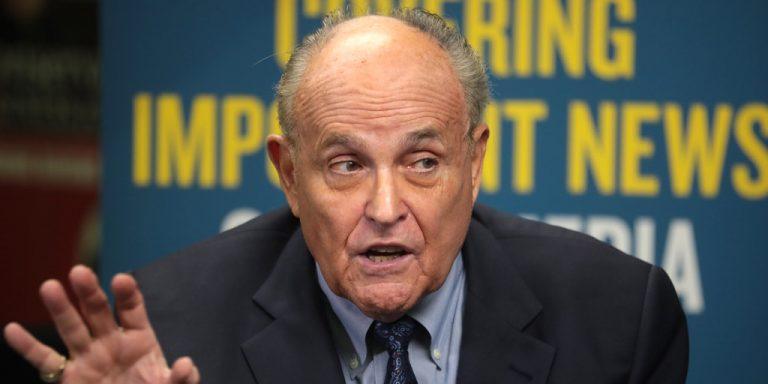
Former New York City Mayor Rudy Giuliani and Republican state Senator Jake Hoffman are among those defendants citing the law.

Thus far, former Trump attorney Jenna Ellis has agreed to cooperate, and former Republican official Lorraine Pellegrino has pleaded guilty. 

According to Courthouse News Service, Cohen could order an evidentiary hearing in November if he finds the anti-SLAPP motions have merit. He could dismiss the cases if the evidence supports it.  

Citing the law as a defense, Hoffman’s attorney Michael Columbo told the judge, “There’s a difference between a group of people committing fraud and a group of people expressing an unpopular political belief.” 

Other defendants argued that challenging the 2020 election results, including filing lawsuits and urging Congress to reject the certification, is not a crime and that any related criminal cases should be dismissed, according to the outlet.

Republicans have long described the case, led by Arizona Attorney General Kris Mayes, as part of a broader Democratic “lawfare” campaign against conservatives. 

Mayes, a Democrat, took office in 2023 after winning the election by just 280 votes. She announced the criminal charges related to the election certification in May 2024, more than three years after the alleged crimes occurred. 

Secret Service Agents from Trump Shooting Are NOT Being Disciplined, Working at Home Instead

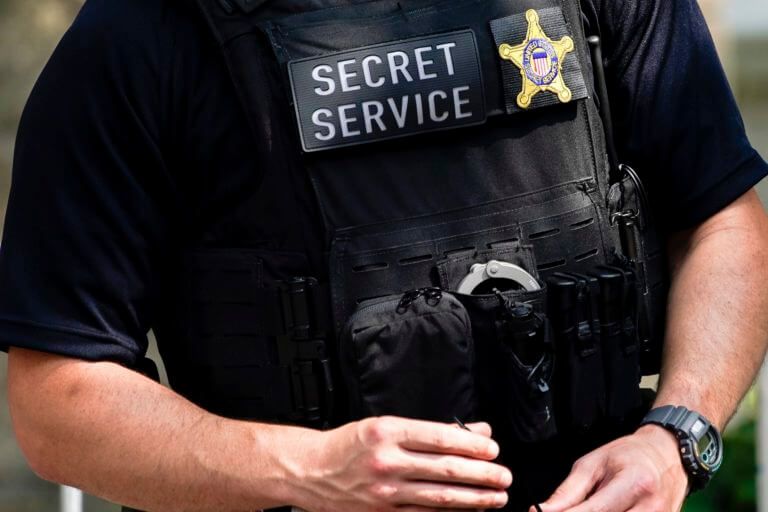
(Ken Silva, Headline USA) Reports have been circulating since last week that five Secret Service employees involved in the security failures that led to Donald Trump nearly being assassinated have been placed on leave.

However, The Washington Post reported Monday that those agents aren’t being disciplined. Instead, they get to work from home on “nonoperational duties,” said the Post, citing two unnamed sources familiar with the matter.

“The five agents were told to telework, which is not a disciplinary action and does not involve any finding of possible wrongdoing,” the Post reported.

In response to the news, a Secret Service spokesman reportedly said, “We are examining the processes, procedures and factors that led to this operational failure.

“The U.S. Secret Service holds our personnel to the highest professional standards, and any identified and substantiated violations of policy will be investigated by the Office of Professional Responsibility for potential disciplinary action. Given this is a personnel matter, we are not in a position to comment further,” the spokesman told the Post.

The five agents reportedly include included three agents as well as Timothy Burke, the special agent in charge of the Secret Service’s Pittsburgh field office since 2016.

Burke reportedly oversaw the security plan for the Butler campaign event, and was also an agent on Trump’s security detail who visited Butler ahead of the visit to help with that plan.

According to Rep. Jim Jordan, R-Ohio, Burke told the Secret Service ahead of July 13 that his agency had limited resources for the Trump rally because it was also covering the North Atlantic Treaty Organization summit in Washington, D.C.

Empower Oversight President Tristan Leavitt, whose organization represents federal whistleblowers, blasted the Secret Service for failing to hold its agents accountable for their failures.

“Admin leave is a paid status where you are not permitted to come into work–days “on the bricks” or “on the beach,” as federal agents often call it. That’s not what’s happening here,” he said.

In a letter earlier this month to Secret Service Director Ronald Rowe, Hawley called for the lead site agent from the Trump shooting to be suspended immediately. Hawley said whistleblowers have given him disturbing information about the Secret Service lead site agent’s track record. That agent reportedly is a female.

Ken Silva is a staff writer at Headline USA. Follow him at twitter.com/jd_cashless.

BREAKING: DOJ Files New Indictment against Donald Trump

(Ken Silva, Headline USA) It looks like the Justice Department is still desperate to put Donald Trump behind bars.

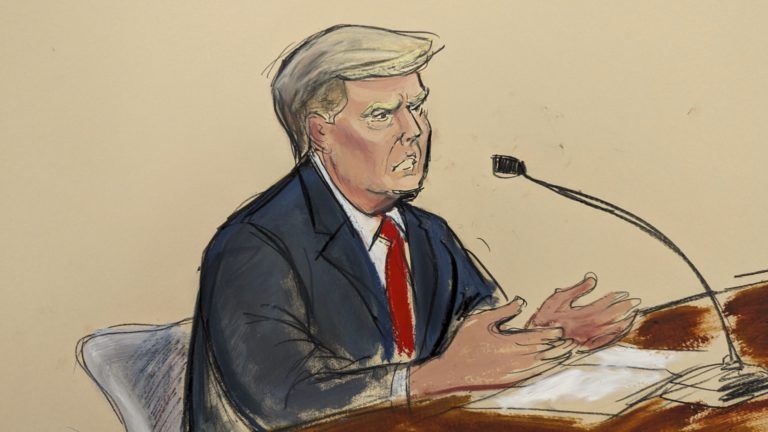
Special counsel Jack Smith on Tuesday filed a new indictment against Trump that keeps the same criminal charges but narrows the allegations against him following a Supreme Court opinion conferring broad immunity on former presidents.

The new indictment removes a section of the indictment that accused Trump of trying to commandeer the DOJ in support of his efforts to challenge the election—an area for which the Supreme Court in a 6-3 opinion said Trump was entitled to immunity from prosecution.

Smith filed the new indictment after SCOTUS ruled last month that sitting presidents have “presumptive immunity” from prosecution. SCOTUS was deciding whether President Donald Trump and other presidents should be granted legal immunity from civil or criminal prosecution based on alleged offenses they committed while acting in the interest of the nation.

Smith and the DOJ seem to be putting their hopes in their case against Trump in Washington DC, which centers around the allegations that he tried to unlawfully challenge the results of the 2020 election.

In the DOJ’s separate case in Florida over Trump allegedly mishandling classified documents, a federal judge in Florida dismissed the charges against Trump last month, saying the appointment of Smith violated the Constitution. The DOJ has appealed that decision.

The case could be appealed and go all the way to the U.S. Supreme Court. The basis for arguing that Smith was illegitimate was initially laid out in an amicus curiae brief by former Ronald Reagan attorney general Ed Meese that was filed with the Supreme Court for Trump v. U.S., the case considering Trump’s presidential immunity in Smith’s Washington, D.C., case.

The Associated Press contributed to this report.

Ken Silva is a staff writer at Headline USA. Follow him at twitter.com/jd_cashless.

Internet Outages from Apparent Cyberattack a Nightmare for Travelers at Seattle Airport

(Headline USA) An apparent cyberattack disrupted internet, phones, email and other systems at Seattle-Tacoma International Airport for a third day on Monday as Port of Seattle officials worked to investigate the outages and restore full service.

“We’re working around the clock to get necessary systems back online and to mitigate impacts to our passengers,” the airport’s aviation managing director Lance Lyttle said in a press conference Sunday.

Lyttle said the airport is investigating with the help of outside experts and is working closely with federal partners, including the Transportation Security Administration and Customs and Border Protection. Officials have not released details about the full scope of the outage, but Lyttle said it was not affecting TSA’s ability to screen passengers.

Some airlines, including Delta and Alaska Airlines, reported no service interruptions from the outage. Both of the airlines use Sea-Tac as a hub. Still, the outage did affect the Port of Seattle’s baggage sorting system, prompting airlines to warn passengers to avoid checking bags if possible to avoid potential delays.

The airport also warned travelers to allow extra time at the airport and to use airline mobile applications to get boarding passes and bag tags when possible.

Still, many travelers faced security lines that were longer than normal and long waits at baggage claims and checking. Terminal screens were also out throughout the airport, making it difficult for some to determine their assigned gate.

“Port teams continue to make progress on returning systems to normal operations, but there is not an estimated time for return,” the airport wrote on Facebook on Sunday.

Adapted from reporting by the Associated Press

Police: Trump Shooter ‘Possibly’ Made Chemical Bombs in Parents’ House

(Ken Silva, Headline USA) On Monday morning, news broke that the parents of alleged Trump shooter Thomas Crooks have hired lawyers as the FBI probes their possible foreknowledge of the attack on the July 13 campaign rally in Butler, Pennsylvania.

Later that day, a local law cop from the July 13 Trump rally gave a possible reason why Crooks’s parents are apparently worried about criminal liability. According to the local cop— Washington Regional SWAT operator Ben Shaffer—the explosives found in Crooks’s vehicle may have been made in his parents’ house.

“The explosives that were used—their primary charge was a homemade variant called ammonium nitrate and fuel oil, or ANFO, supposedly manufactured, possibly in the residence of the home,” said Shaffer, who was a counter sniper stationed about 238 yards southwest from where Donald Trump was speaking, and about 348 yards from where Crooks opened fire.

Ammonium nitrate is a potent explosive, capable of wreaking death and destruction on an unimaginable scale. The April 19, 1995, Oklahoma City bombing was one such example—a homemade bomb containing ammonium nitrate that had been constructed and detonated with devastating consequences.

If bombs were indeed manufactured in the Crooks household, that would explain why it was reportedly clean to the point of being sterile when law enforcement arrived there after the July 13 shooting. Rep. Eli Crane, R-Ariz., revealed the information about the clean house last month when he questioned Pennsylvania State Police Commissioner Christopher Paris at a congressional hearing.

“Did you get any reports from any of your agents of anything fishy at the home. Was there any silverware found in the home, or trash? Was it extremely clean, almost like a medical lab? That’s what I’m hearing. Interesting,” Crane said to Paris, who professed ignorance about the matter.

Additionally, Fox News reported the day after the attack that bomb-making materials were found in the home.

Meanwhile, the Crookses’ neighbors are beginning to talk to media.

“I would love to know what really happened and what Thomas’ motivation was,” neighbor Kelly Little, 39, told The New York Post.

“It’s been weeks since police were here. There’s nothing happening, no police activity,” she reportedly said, reportedly noting that local cops drive by occasionally, but there haven’t been officers stationed there long-term.

Another neighbor who declined to be named reportedly said she doesn’t think Crooks acted alone. Yet another neighbor who only gave her first name, Karen, questioned the parents’ involvement.

“What went on in that house? Why didn’t they know their son was going through whatever he was going through or that their son thought the way he thought?” she reportedly asked.

The same Post article that quoted the neighbors also reported that law enforcement seized 4.5 terabytes of data from Crooks’s laptop, two cellphones and multiple hard drives and flash drives—a fact this writer hadn’t encountered before.

Ken Silva is a staff writer at Headline USA. Follow him at twitter.com/jd_cashless.

FTC Looks to Block Merger of Kroger, Albertsons that Regulators Say Would Raise Food Prices

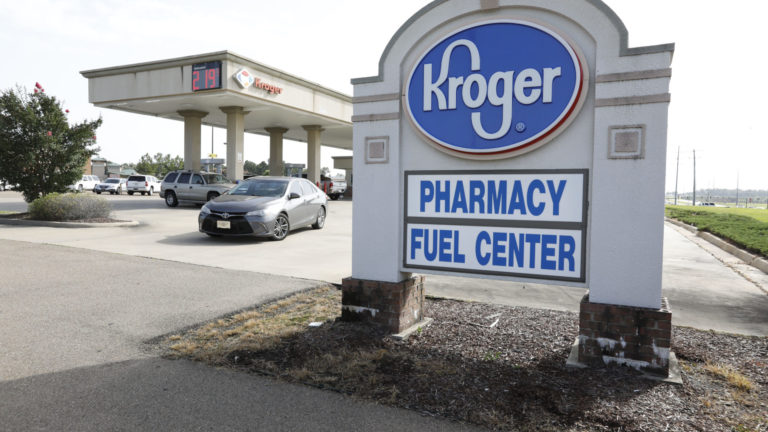
(Headline USA) Supermarket chain Albertsons told a federal judge Monday that it might have to lay off workers, close stores and even exit some markets if its planned merger with Kroger isn’t allowed to proceed.

The two companies proposed what would be the largest supermarket merger in U.S. history in October 2022. But the Federal Trade Commission sued to prevent the $24.6 billion deal, alleging it would eliminate competition and raise grocery prices in a time of already high food price inflation.

In the three-week hearing that opened Monday, the FTC is seeking a preliminary injunction that would block the merger while its complaint goes before an in-house administrative law judge.

“This lawsuit is part of an effort aimed at helping Americans feed their families,” the FTC’s chief trial counsel, Susan Musser, said in her opening arguments on Monday.

Musser said Kroger and Albertsons currently compete in 22 states, closely matching each other on price, quality, private label products and services like store pickup. Shoppers benefit from that competition, she said, and will lose those benefits if the merger is allowed to proceed.

Customers also are wary of the merger, the lawyer said. In Santa Fe, New Mexico, for example, 278 shoppers wrote to the FTC to express their concerns about a combined Kroger and Albertsons, which would own five of the city’s eight supermarkets.

But Kroger and Albertsons insist the FTC’s objections don’t take into account the rising competition in the grocery sector. Walmart’s grocery sales totaled $247 billion last year compared to $63 billion in 2003, for example; Costco’s sales have grown more than 400% in the same period.

“Consumers are blurring the line of where they buy groceries,” Albertsons attorney Enu Mainigi said.

Mainigi said Albertsons customers now spend 88 cents of every dollar at competitors that range from Aldi and Trader Joe’s to Dollar General. Albertsons can’t compete with larger rivals that have national scale, but joining forces with Kroger would help it do that, she said.

Kroger attorney Matthew Wolf also defended the proposed merger.

“The savings that come from the merger are obvious and intuitive. Kroger may have the best price on Pepsi. Albertsons may have the best price on Coke. Put them together, they have the best price on both,” Wolf said.

The two sides also disagree on Kroger’s and Albertsons’s plan to sell 579 stores in places where their stores overlap. The buyer would be C&S Wholesale Grocers, a New Hampshire-based supplier to independent supermarkets that also owns the Grand Union and Piggly Wiggly store brands.

The FTC says C&S is ill-prepared to take on those stores. Laura Hall, the FTC’s senior trial counsel, cited internal documents that indicated C&S executives were skeptical about the quality of the stores they would get and may want the option to sell or close them.

But Wolf said C&S has the experience and infrastructure to run the divested stores and would be the eighth-largest supermarket company in the U.S., if the merger plan goes through.

The commission also alleges that workers’ wages and benefits would decline if Kroger and Albertsons no longer compete with each other.

Before the hearing, several members of the United Food and Commercial Workers International union gathered outside the federal courthouse in downtown Portland to speak out against the proposed deal.

“Enough is enough,” said Carol McMillian, a bakery manager at a Kroger-owned grocery store in Colorado. “We can no longer stand by and allow corporate greed that puts profit before people. Our workers, our communities and our customers deserve better.”

The labor union also expressed concern that potential store closures could create so-called food and pharmacy “deserts” for consumers.

For people in many communities across the U.S., when a grocery store shutters, “their only source of food actually is walking to the nearest gas station,” said Kim Cordova, the president of UFCW Local 7, which represents over 23,000 members in Colorado and Wyoming.

Mainigi argued the deal could actually bolster union jobs, since many of Kroger’s and Albertsons’ competitors, like Walmart or Costco, have few unionized workers.

U.S. District Judge Adrienne Nelson is expected to hear from around 40 witnesses, including the CEOs of Kroger and Albertsons, before deciding whether to issue the preliminary injunction. If she does decide to temporarily block the merger, the FTC’s in-house hearings are scheduled to begin Oct. 1.

But Nelson’s decision will seal the merger’s fate, according to Wolf. He said the FTC’s in-house administrative process is so long and cumbersome that merger deals almost always fall apart before it’s through. Earlier this month, Kroger sued the FTC, alleging the agency’s internal proceedings were unconstitutional and saying it wants the merger’s merits decided in federal court.

The attorneys general of Arizona, California, the District of Columbia, Illinois, Maryland, Nevada, New Mexico, Oregon and Wyoming all joined the case on the FTC’s side. Washington and Colorado filed separate cases in state courts seeking to block the merger.

Kroger, based in Cincinnati, Ohio, operates 2,800 stores in 35 states, including brands like Ralphs, Smith’s and Harris Teeter. Albertsons, based in Boise, Idaho, operates 2,273 stores in 34 states, including brands like Safeway, Jewel Osco and Shaw’s. Together, the companies employ around 710,000 people.

Adapted from reporting by the Associated Press

Edgar Bronfman Jr. Withdraws Paramount Offer, Allowing Skydance Merger to Proceed

(Headline USA) The merger between entertainment giant Paramount and media company Skydance is set to go ahead after Edgar Bronfman Jr. withdrew a competing offer.

Bronfman, executive chairman of streaming service Fubo, told Paramount’s special committee of directors Monday night that he would not proceed with his bid.

“While there may have been differences, we believe that everyone involved in the sale process is united in the belief that Paramount’s best days are ahead,” he said.

Bronfman, the former chairman and CEO of Warner Music, had intitially offered $4.3 billion for Shari Redstone’s National Amusements, the controlling shareholder of Paramount, according to multiple media reports. He then upped that bid to $6 billion.

Paramount agreed last month to a merger deal with Skydance that will inject desperately needed cash into a legacy studio that has struggled to adapt to a shifting entertainment landscape.

Since then, during what’s known as a “go shop” period, a special committee of Paramount’s board had reached out to more than 50 third parties to determine whether they were interested in making offers. The go shop period was extended for Bronfman, but has now closed.

Shari Redstone’s National Amusements has owned more than three-quarters of Paramount’s Class A voting shares through the estate of her late father, Sumner Redstone. She had battled to maintain control of the company that owns CBS, which is behind blockbuster films such as Top Gun and The Godfather.

The deal signals the rise of a new power player, Skydance founder David Ellison, the son of billionaire Larry Ellison, who founded the software company Oracle.

Skydance, based in Santa Monica, California, has helped produce some major Paramount hits in recent years, including Tom Cruise films like Top Gun: Maverick and installments of the Mission Impossible series.

The proposed combined company of Paramount and Skydance is valued at around $28 billion. The deal is expected to close in September 2025, pending regulatory approval.

Paramount, founded in 1914 as a distributor, is one of Hollywood’s oldest studios and has had a hand in releasing numerous films—from Sunset Boulevard and The Godfather, to Raiders of the Lost Ark and Titanic.

Adapted from reporting by the Associated Press