Paper Money Isn’t a Fix for Central Bank Digital Currency (CBDC)

(Mike Maharrey, Money Metals News Service) There has been quite a bit of pushback against governments and central banks around the world as they seek to introduce central bank digital currencies. But in the scramble to block CBDCs, some people seem to have forgotten that there is a more fundamental problem: government-issued paper fiat is the parent of a CBDC, and whether it is in physical or digital form, fiat currency isn’t real money.

Nevertheless, a lot of the proposals to stop CBDC simply involve incentivizing the use of paper money as an alternative.

While physical paper money does solve some of the privacy and security issues inherent in CBDCs, it is not a panacea because it doesn’t resolve the fundamental problems inherent in fiat systems.

What Is CBDC?

Digital currencies are virtual banknotes or “coins” held in a digital wallet on a computer or smartphone. The difference between a central bank (government) digital currency and peer-to-peer electronic cash such as Bitcoin is that the value of CBDC is backed and controlled by the government, just like traditional paper fiat currency. In practice, a Federal Reserve-issued CBDC would just be a dollar in another form.

Fiat money benefits governments because they can expand the money supply at will. This enables government borrowing and spending that would be impossible in a sound money system. Without fiat money, governments would be much smaller, less powerful, and less intrusive. 

And while fiat systems benefit governments and their cronies, it hurts regular people. As governments print more money to fund their programs and enrich the political class, it steals the purchasing power of everybody else. 

The specter of a CBDC creates additional problems relating to financial privacy and the potential for government control.

At the root of the move toward CBDC is what some call “the war on cash.” For years, governments have looked for ways to eliminate physical cash because it is hard to control. I can put it under my mattress and nobody has to even know I have it. And if you and I do a cash transaction, no record exists. That’s a problem for government officials who would like to tax our transactions, or possibly prohibit them altogether.

Enter CBDCs.

Government-issued digital currencies are sold on the promise of providing a safe, convenient, and more secure alternative to physical cash. We’re also told they will help “stop dangerous criminals” who like the intractability of cash. But there is a darker side – the promise of control. CBDC creates the potential for the government to track and even micromanage consumer spending.

Imagine if there was no cash. It would be impossible to hide even the smallest transaction from the government’s eyes. Something as simple as your morning trip to get a coffee wouldn’t be a secret from government officials. As Bloomberg put it in an article published when China launched a digital yuan pilot program in 2020, digital currency “offers China’s authorities a degree of control never possible with physical money.”

The government could even “turn off” an individual’s ability to make purchases. Bloomberg described just how much control a digital currency could give Chinese officials.

The PBOC has also indicated that it could put limits on the sizes of some transactions, or even require an appointment to make large ones. Some observers wonder whether payments could be linked to the emerging social-credit system, wherein citizens with exemplary behavior are ‘whitelisted’ for privileges, while those with criminal and other infractions find themselves left out. ‘China’s goal is not to make payments more convenient but to replace cash, so it can keep closer tabs on people than it already does,’ argues Aaron Brown, a crypto investor who writes for Bloomberg Opinion.”

Economist Thorsten Polleit outlined the potential for Big Brother-like government control with the advent of a digital euro in an article published by the Mises Wire. As he put it, “the path to becoming a surveillance state regime will accelerate considerably” if and when a digital currency is issued.

You can see why governments are keen on implementing CBDC as quickly as possible. And you can understand why a lot of people are worried about this potential.

Is Paper Money the Solution?

As the push to implement CBDC intensifies, opponents are lobbying for policies to preserve the right to use cash, primarily in the form of the U.S. Dollar (USD). This makes sense on the surface. If people have the option to use physical currency, they can simply avoid a CBDC and the inherent control it would provide government actors.

But in the clamor to minimize the impact of CBDC, many have lost sight of the inherent problems with paper fiat money.

As George Mason put it, “The laws making paper currency a legal tender have produced great and numerous evils.”

Thomas Jefferson went further, declaring that “paper is poverty, it is only the ghost of money and not money itself.” 

A CBDC would certainly give government more control than it has today, but don’t forget that the government’s monopoly on money, and the Federal Reserve’s ability to create it out of thin air, gives it plenty of control already.

In fact, the Fed is the engine that drives the biggest government in history.

As already mentioned, the problem with fiat money – paper or digital –  is the Fed can just fire up the proverbial printing press and make more when the government wants to pay for something. That means there is virtually no restraint on government spending already – and on government power. But when the government just creates trillions of dollars out of thin air, it also erodes away the purchasing power. That makes you poorer.

As Thomas Jefferson warned, “We are to be ruined now by the deluge of bank paper.”

Paper currency is the parent of a CBDC. Central bank digital currency is the same old dollar in a new form with the same problem as paper. Instead of printing new dollars, the Fed can create new digital dollars with a keystroke. Instead of a deluge of paper, we will get a deluge of electronic digits.

The economy has already moved a long way in that direction with the advent of credit cards and electronic payment systems.

Granted, CBDCs create new worries about privacy and control, and I don’t want to understate that. But that is not a reason to suddenly embrace paper dollars as the solution to all of our problems.

Nevertheless, that’s what a lot of people seem to be doing. They’re telling us we have to protect and promote the fiat U.S. Dollar to fight a CBDC because government digital currency is so bad. As one opponent of government digital currency put it, “I used to be really critical of Federal Reserve notes. … Compared to CBDC, U.S. Federal Reserve note cash will be wonderful. We will miss it when it is gone.” [Emphasis added]

Note he “used to be” really critical of the USD. Apparently, he’s not anymore because CBDC is so much worse. This mentality drives people away from opposing the original evil that led us here in the first place – paper government fiat.

It’s important to remember that Federal Reserve notes were always an evil. CBDC is all of that evil plus some. But that doesn’t make the original evil good or something that should be preserved.

John Adams compared government overreach to cancer.

“The nature of the encroachment upon the American constitution is such, as to grow every day more and more encroaching. Like a cancer, it eats faster and faster every hour.”

What do you do to cancer?

You remove it.

And when cancer metastasizes, you don’t just remove the metastasis; you remove it and the original tumor. No sane person would embrace the original cancer just because the metastasis is worse.

The Path Forward

Relying on fiat paper money might alleviate some of the problems of a CBDC, but it doesn’t strike the root of the problem. The government might not be able to track every purchase if you use paper money, but it will still devalue your dollar every single day – and expand its power while doing so.

We need currency competition.

That means finding sound money alternatives to federal government-produced and controlled fiat money.

This could come in the form of gold, silver, or non-government cryptocurrencies such as Bitcoin. It could even involve ways of transacting business we haven’t even thought of yet. But we need sound money that is not subject to the Federal Reserve and government control and manipulation.

Supporting one form of government money over another is not a long-term solution, nor will it ever push the needle forward for the Constitution and liberty.

The Tenth Amendment Center contributed to this report. 


Mike Maharrey is a journalist and market analyst for MoneyMetals.com with over a decade of experience in precious metals. He holds a BS in accounting from the University of Kentucky and a BA in journalism from the University of South Florida.


Peruvian Gold Exports to India Poised to Set a Record

(Mike Maharrey, Money Metals News Service) Gold exports from Peru to India are poised to set a record in 2024 as demand grows in the world’s second-largest gold-consuming country. 

According to Peru’s ambassador to India, Javier Manuel Paulinich Velarde, gold exports to India are projected to rise by 36 percent year on year to a record $3 billion.

Velarde told the India Gold Conference that gold exports surged through the first half of the year, up by 81 percent.

According to Reuters, Velarde attended the conference hoping to drum up Indian investment in Peruvian gold-mining projects. He noted that last year, India became Peru’s second-biggest customer for gold. China, Canada, Mexico, and the U.S. all invest in Peru’s mining sector.

Velarde said the country currently has six major gold projects in the investment stage with a total buying investment of $7 billion. 

Indian gold demand has picked up in 2024, despite record high prices. It got a shot in the arm in July when the Indian government cut taxes on gold and silver imports by more than half, lowering duties from 15 percent to 6 percent. 

The domestic gold price fell 6 percent month-on-month after the lower duty went into effect, even as the dollar price of gold increased.

At the India International Jewellery Show earlier this month, manufacturers reported a “substantial” increase in order booking from retailers.

Gold coin and bar investment demand have also been strong through the first half of the year. 

World Gold Council analysts said that the lower import taxes could boost Indian gold jewelry, bar, and coin demand by 50 tons or more in the second half of 2024. 

Demand for silver has also surged in India. As Indian households gain purchasing power, demand for appliances such as air conditioners, washing machines, and refrigerators has skyrocketed. This has put a strain on the country’s energy grid. 

According to Jon Forrest Little, “The surge in demand for modern amenities has also created an unexpected pressure point: the need for silver, a crucial component in many electronic devices and appliances due to its superior conductivity.”

India imported more silver through the first four months of 2024 than it did in the entirety of last year.

The country ranks as the world’s number one silver consumer.


Mike Maharrey is a journalist and market analyst for MoneyMetals.com with over a decade of experience in precious metals. He holds a BS in accounting from the University of Kentucky and a BA in journalism from the University of South Florida.
This New Record High for Gold Changes Everything

(Brien Lundin, Money Metals News Service) Gold has set another record high as Jerome Powell confirmed the Fed pivot.

While gold has been driven to these heights by Eastern buying, we’re now seeing Western investors flocking to the metal as the shift to easier monetary policies begins.

And gold stocks are also now beginning to outperform gold itself.

This is what we’ve been waiting for: The next phase of the gold bull market has begun.

I’m talking about the long-anticipated entrance of Western investors into the gold and mining share market.

As you know, this new gold bull market was launched with furious buying from central banks and Chinese citizens.

Central banks want to reduce dependence from the U.S.-dominated global financial system, while Chinese savers and investors are not only culturally attached to gold, but have also been attracted to the metal’s performance relative to their stock and real estate markets.

These have been powerful drivers for gold, but they were nothing that Western investors/traders have been able to place much confidence in.

But Fed rate cutting? Well…that’s something they can sink their teeth into. It’s a trend they can project forward for years. And it’s the trend that will take gold to far, far higher levels.

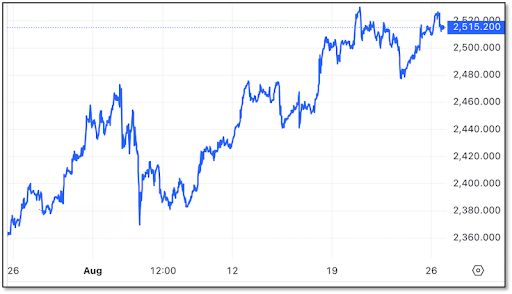
It’s already begun. As you can see, Western investors are starting to price-in the Fed pivot, and that has fueled the rise to new record levels.

You’ll also notice the latest run, one that was sparked by Fed Chairman Jerome Powell’s announcement in his Friday comments from Jackson Hole, that the first rate cut will come at its September 18th meeting.

This has also added more fuel to the fire that’s already growing in gold mining stocks:

The chart above shows the ratio of the GDX mining stock index to gold itself. As you can see, this ratio began to take off a couple of weeks ago as gold stocks began to outperform gold.

This is only the start of what’s to come. We are finally seeing investors recognizing how severely undervalued gold stocks are at these gold-price levels.

As I’ve been saying, gold at $2,500 changes everything for the gold stocks. When gold was at $2,000 just a few months ago, there were many companies with large gold resources that were trading for a quarter or less of where they would historically have been valued in just a normal gold market.

Now — at these gold prices — those companies could be 10-baggers or better.

In fact, I’ve found two of them that I’m about to unveil in a few days…

  • The first company is developing a multi-million-ounce gold deposit where a pre-feasibility study has projected a net present value of about five times its current market valuation. But get this: That study is based on a $1,650 gold price!At today’s prices, the already stellar economics will explode off the page and attract hordes of investors…once they discover this hidden gem.
  • My second new recommendation is a company that is about to reveal a resource estimate for its large project in Nevada. Looking at the data, I’m confident it will show about 1.5 million ounces of open-pittable gold at an eye-popping average grade above 2 g/t gold.Those would be amazing numbers for a project in Nevada. But the truly shocking number is this: The company’s market valuation is still under US$9 million!

I think you can see why I’m so excited about these two bargains and why I believe they could provide 10x returns as this gold bull market progresses. Learn more here.

To get Brien Lundin’s ongoing commentary on the markets at no charge, click here to subscribe to his free Golden Opportunities newsletter.


Brien Lundin is the publisher and editor of Gold Newsletter, the publication that has been the cornerstone of precious metals advisories since 1971.  Mr. Lundin covers not only resource stocks but also the entire world of investing. He also hosts the annual New Orleans Investment Conference. To get Brien Lundin’s ongoing commentary on the markets at no charge, click here to subscribe to his free Golden Opportunities newsletter.

House Trump Shooting Task Force Members Refuse to Say Whom They Plan to Interview

(Ken Silva, Headline USA) Monday’s press conference with the House Task Force to investigate the Trump assassination attempt revealed little, if any, information about what happened at the July 13 campaign rally in Butler Pennsylvania.

Instead, ranking task force member Rep. Jason Crow, D-Co., who helped spearhead the impeachment attempts against Trump, refused to say who lawmakers are planning to interview. Crow’s refusal came in response to a reporter’s question about whether he’ll be talking to the classmates or parents of alleged shooter Thomas Crooks.

“We’re not going to comment right now specifically who we’re going to talk to. We’ll talk about the entities—we’ve been in touch with the Secret Service, FBI and local law enforcement—but we’re not going to say yet specific individuals,” Crow said.

Democrats also downplayed the notion that others were involved in the attack, despite Crooks having at least three encrypted messaging apps, a Discord account and other online accounts.

“I think it’s too early to make that determination. At this moment, I don’t think the task force has seen any hard evidence that that would be the case,” Jared Moskowitz, D-Fla., said about others being involved.

Republicans on the task force were also lukewarm at Monday’s press conference. When asked about the government stonewalling Congress, Rep. Laurel Lee, R-Fla., came to the defense of the federal agencies.

“We have heard from a number of federal agencies, the Secret Service, we’ve been in contact with the FBI, we’ve had a briefing with the FBI,” Lee said.

However, Sen. Ron Johnson, R-Wisc., who’s conducting his own investigation, said in an interview with Fox News on Monday that he’s yet to receive a single interview report from the FBI’s investigation.

The House task force, formed by House Speaker Mike Johnson and ranking member Hakeem Jeffries, will “supersede” other House investigations into the July 13 shooting. The results of the task force investigation aren’t due until December 13, after the upcoming election.

While Monday’s press conference featured a mixture of Democrats and RINOs, Reps. Michael Waltz, R-Fla., and Clay Higgins, R-La., have signalled intent to pursue a deeper investigation.

Waltz has said that he believes others were involved, while Higgins has already put out a bombshell report on his preliminary findings—revealing, among other facts, that Crooks’s body was released for cremation before Congress had the chance to examine it.

Ken Silva is a staff writer at Headline USA. Follow him at twitter.com/jd_cashless.

Jack Smith Begs Fla. Appeals Court to Circumvent Judge, Reaffirm His Legitimacy

(Headline USA) Special counsel Jack Smith urged a federal appeals court Monday to reinstate the classified documents case against former President Donald Trump, saying a judge’s decision that dismissed the prosecution was at odds with longstanding Justice Department practice and must be reversed.

Smith’s team said U.S. District Judge Aileen Cannon made a grievous mistake by ruling that Smith was unlawfully appointed by Attorney General Merrick Garland since he never received any congressional vetting or confirmation.

Although the appointment of the decidedly partisan Smith from outside normal DOJ channels to pursue the Biden administration’s top political enemy was indeed unprecedented, Smith claimed that there was nothing specifically prohibiting it. The position, prosecutors wrote in a brief filed with the Atlanta-based appeals court, runs counter to rulings by judges across the country as well as “widespread and longstanding appointment practices in the Department of Justice and across the government.”

If allowed to stand, they warned, it could ”jeopardize the longstanding operation of the Justice Department and call into question hundreds of appointments throughout the Executive Branch.”

“The Attorney General validly appointed the Special Counsel, who is also properly funded,” prosecutors wrote. “In ruling otherwise, the district court deviated from binding Supreme Court precedent, misconstrued the statutes that authorized the Special Counsel’s appointment, and took inadequate account of the longstanding history of Attorney General appointments of special counsels.”

The appeal is the latest development in a prosecution that has been snarled by delays, including assorted Trump team motions, before Cannon ultimately dismissed the prosecution, bringing the proceedings to at least a temporary halt.

It’s unclear how long it will take for the 11th U.S. Circuit Court of Appeals to decide the matter, but even if it overturns Cannon’s dismissal and revives the prosecution, there’s no chance of a trial before the November presidential election. Trump, if elected, could appoint an attorney general who would dismiss the case.

Alternatively, the case would likely rest in the hands of the U.S. Supreme Court, which would have final say in whether Smith was legitimate or not, potentially impacting Smith’s other case against Trump in the Washington, D.C., district court.

In a statement Monday, Trump campaign spokesman Steven Cheung said “not only should the dismissal of the Lawless Indictment in Florida be affirmed, but be immediately joined by a dismissal of ALL the Witch Hunts.”

The case, one of four federal and state prosecutions brought against Trump, includes dozens of felony charges that Trump illegally retained classified documents from his presidency at his Mar-a-Lago estate in Palm Beach, Florida and obstructed the government’s efforts to get them back. Trump has pleaded not guilty.

At issue in the appeal is a provision of the Constitution known as the Appointments Clause, which requires presidential approval and Senate confirmation for certain public figures, including judges, ambassadors and “all other officers of the United States.”

But the clause also includes an exception for what it says are “inferior officers” who can be appointed directly by the head of an agency. Smith, according to the Justice Department, fits that category and Garland was empowered to name him directly to the role of special counsel.

Critics say that given the special counsel’s unlimited power to subpoena and investigate, paired with t

Smith was appointed special counsel in November 2022 by Garland to investigate Trump’s handling of the documents as well as his efforts to challenge the 2020 presidential election. Both investigations resulted in criminal charges, though the election subversion prosecution also faces an uncertain future following a U.S. Supreme Court decision last month that conferred broad immunity on Trump and narrowed the scope of the case.

Defense lawyers in the classified documents case had argued that Smith’s appointment violated the Appointments Clause, a motion that prompted Cannon to hold a multi-day hearing in June. The judge sided with the defense, saying that no specific statute permitted Garland’s appointment of Smith and that Smith was unlawfully appointed because he had not been named by the president or confirmed by the Senate.

But prosecutors insisted Monday that no fewer than four statutes give the attorney general the power to appoint a special counsel like Smith—an authority they said has been recognized for decades by judges across the country.

“From before the creation of the Department of Justice until the modern day, Attorneys General have repeatedly appointed special and independent counsels to handle federal investigations, including the prosecution of Jefferson Davis, alleged corruption in federal agencies (including the Department of Justice itself), Watergate, and beyond,” Smith’s team wrote.

In recent years, the Justice Department, during both Democratic and Republican administrations, has relied on special counsels appointed from outside the agency to conduct investigations into everything from Russian interference on Trump’s behalf during the 2016 election to President Joe Biden’s handling of classified documents after his tenure as vice president ended.

Cannon’s ruling, prosecutors said, suggests that every special counsel who’s been brought in from outside the Justice Department was invalidly appointed and that “Congress repeatedly overlooked the persistent pattern of errors.”

“But,” they added, “it also goes much further. If the Attorney General lacks the power to appoint inferior officers, that conclusion would invalidate the appointment of every member of the Department who exercises significant authority and occupies a continuing office, other than the few that are specifically identified in statute.”

A three-judge panel of the same appeals court overturned Cannon in December 2022, ruling that she had overstepped her bounds during the documents investigation by appointing an independent arbiter to review the classified records seized by the FBI during the Mar-a-Lago estate.

Adapted from reporting by the Associated Press

Jury Deliberates Fate of Dem. Lawmaker Who Allegedly Killed Journalist over Bad Coverage

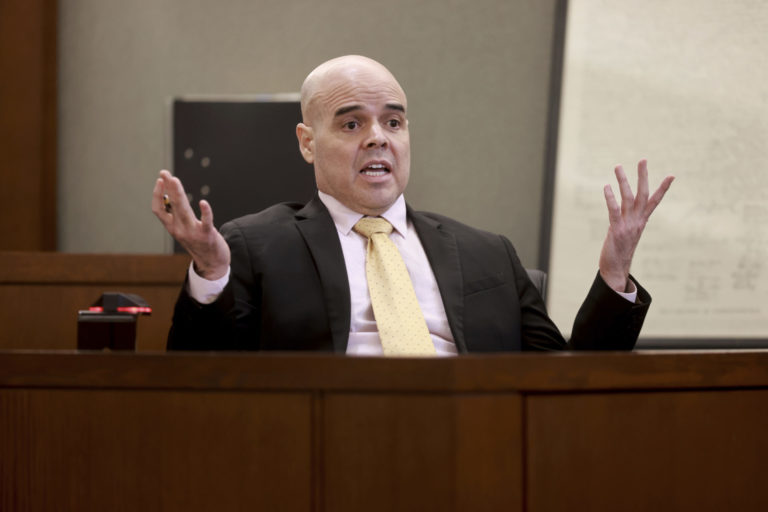
(Headline USA) A jury began deliberating Monday in the trial of a former Las Vegas-area Democratic politician accused of killing of an investigative journalist who prosecutors said the official blamed for writing stories that destroyed his career, ruined his reputation and threatened his marriage.

“And he did it because Jeff wasn’t done writing,” prosecutor Christopher Hamner said of defendant Robert Telles and the reporter, Jeff German. “It’s like connecting the dots.”

Telles had already lost his Democratic primary for a second term heading an obscure county office that handles unclaimed estates following German’s first stories for the Las Vegas Review–Journal in May 2022. They described turmoil and bullying in Telles’s workplace and a romantic relationship between Telles and a female employee.

The day before German was stabbed to death, Telles learned that Clark County officials were about to provide German with email and text messages that Telles and the woman shared, in response to the reporter’s request for public records. Another story was in the offing, Hamner said.

“The murder is the very next day … about 15 hours later,” prosecutor Pamela Weckerly said as she presented to the jury a timeline and videos of Telles’s maroon SUV leaving the neighborhood near his home a little after 9 a.m. on Sept. 2, 2022, and driving on streets near German’s home a short time later.

The SUV driver was seen wearing a bright orange outfit similar to one worn by a person captured on camera walking to German’s home and slipping into a side yard.

“That person stays, lying in wait,” Weckerly said, playing again a video from a neighbor’s home showing German’s garage door rise and German walk into the side yard where he was attacked.

A little more than two minutes elapse, then the figure in orange emerges and walks down a sidewalk. German does not reappear.

The prosecutor said evidence showed the killing was first-degree murder because it was willful, deliberate and premeditated. While prosecutors did not have the murder weapon, she said evidence was clear that one was used.

Weckerly also focused on a text message from Telles’s wife, which he failed to answer, asking, “Where are you?” about 45 minutes before evidence showed German was killed.

Hamner and Weckerly told the jury they believe Telles didn’t respond because he left his cellphone—and its ability to track him—at home.

German’s body was found the next day, and Telles’s DNA was found beneath German’s fingernails. When asked about the DNA, Telles said he believed it was planted.

None of German’s blood or DNA was found on Telles, in his vehicle or at his home, defense attorney Robert Draskovich said. “Ask yourself what is missing,” he said.

The jury heard about cut-up pieces of a broad straw hat and a gray athletic shoe found at Telles’s house that looked like ones worn by the person wearing the orange shirt, which was never found.

“You are the sole judges of the facts,” Draskovich told the jury during his closing arguments before the panel was pared to 12, broke for lunch and began just before 2 p.m. to deliberate whether they all believe Telles murdered German.

“I’m not crazy. I’m not trying to avoid responsibility,” Telles told the jury on Friday to end his second and final round of self-guided testimony in his defense. “I didn’t kill Mr. German, and I’m innocent.”

The testimony came the day German would have turned 71. Originally from Milwaukee, he was a respected journalist who spent 44 years covering crime, courts and corruption in Las Vegas.

Telles, 47, is an attorney who practiced civil law before he was elected in 2018. His law license was suspended following his arrest several days after German was killed. He faces up to life in prison if he is found guilty.

Jurors have been attentive throughout the trial, watching Telles in the witness box and the defense table. He sat Monday with his brow creased and his eyes slightly squinted at computer images in front of him as Weckerly and Hamner spoke.

In his testimony, he named office colleagues, real estate agents, business owners and police he accused of “framing” him for German’s killing. He said it was retaliation for his crusading effort to root out corruption he saw in his office of about eight employees handling probate property cases.

“I am not the kind of person who would stab someone. I didn’t kill Mr. German,” Telles said Thursday. “And that’s my testimony.”

Where Telles was when German was killed remained a central focus during the trial, as Weckerly and Hamner presented 28 witnesses and hundreds of pages of photos, police reports and video.

Telles and five other people testified during trial for the defense. No Telles family members were called to the stand or identified in the trial gallery.

About a dozen German family members sat silently together in the hushed courtroom on Friday. They declined as a group to comment to the Associated Press.

The killing drew widespread attention. German was the only journalist killed in the U.S. in 2022, according to the New York-based Committee to Protect Journalists. The nonprofit has records of 17 media workers killed in the U.S. since 1992.

It comes as Democrats nationwide, many of them suffering from Trump Derangement Syndrome, grow increasingly radical and desperate in their efforts to cling to power.

Democrats have twice attempted to impeach Trump and have launched multiple lawfare attacks in a bid to bankrupt and possibly incarcerate the GOP presidential nominee.

At the same time, the Biden administration has promoted aggressive censorship and attacks on free speech, including the threats and arrests of prominent conservative watchdogs like James O’Keefe and Catherine Herridge.

Adapted from reporting by the Associated Press

Zuckerberg Admits to 2020 Election Interference in Bombshell Letter

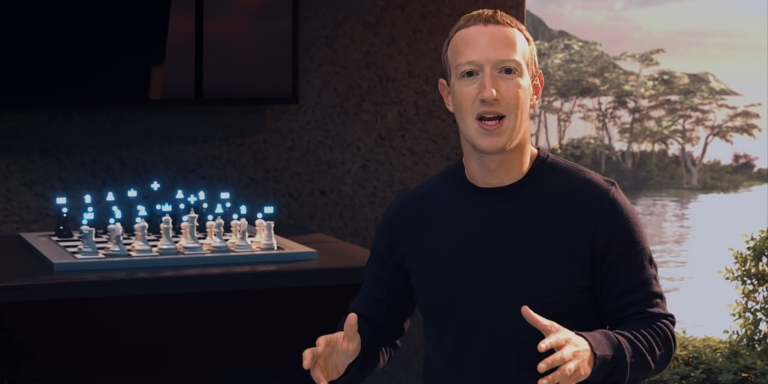
(Luis Cornelio, Headline USA) Meta CEO Mark Zuckerberg has released a tell-all letter detailing his censorship in the 2020 presidential election and the coercive role of the Biden-Harris administration during the censorship of the pandemic contented in 2021. 

In a letter to House Judiciary Committee Chairman Jim Jordan, R-Ohio, Zuckerberg admitted that the Biden-Harris administration “pressured” Facebook to censor certain COVID-19 content, even those protected by the First Amendment.

“In 2021, senior officials from the Biden Administration, including the White House, repeatedly pressured our teams for months to censor certain COVID-19 content, including humor and satire,” Zuckerberg stated.  

He added that the administration expressed frustration when Facebook didn’t comply. Zuckerberg rebuked the federal government for this pressure and regretted not speaking out sooner. 

“I feel strongly that we should not compromise our content standards due to pressure from any Administration in either direction – and we’re ready to push back if something like this happens again,” Zuckerberg said, years after the COVID-19 censorship took place.

He also did not mince words in response to the FBI’s role in influencing the social media censorship of the Hunter Biden laptop story. 

Zuckerberg suggested that the FBI misled Big Tech platforms, causing them to erroneously censor the Post’s report, which revealed that Joe Biden, then a Democratic candidate for president, had falsely claimed he never spoke about business dealings with his son. 

Despite being aware of the laptop’s authenticity, the FBI remained silent as social media companies censored anyone who posted the story. According to a Media Research Center poll, this blackout may have swayed the 2020 election in favor of Joe Biden.

“According to our poll, full awareness of the Hunter Biden scandal would have led 9.4% of Biden voters to abandon the Democratic candidate, flipping all six of the swing states he won to Trump, giving the President 311 electoral votes,” MRC wrote in 2020.

Zuckerberg reiterated his defense of funneling $350 million into the Center for Technology and Civic Life. This nonprofit issued grants, infamously known as “Zuckbucks,” to counties and city election officials ahead of the election.  

These grants have faced widespread criticism, leading to at least 28 states enacting laws to ban or restrict third-party financing in elections. Similarly, 12 counties have passed similar restrictions, according to the Capital Research Center.

This is not the first time Zuckerberg has expressed regret for censorship. He has voiced similar sentiments in interviews and past congressional hearings.

Despite this, Facebook’s censorship has continued as it recently came under fire for reportedly censoring content related to the failed assassination attempt on President Donald Trump.

Notably, following the January 6 protests, Facebook was among the Big Tech platforms that permanently banned Trump. They reversed this decision years later.

Tulsi Gabbard, Dean Phillips Follow RFK Jr.’s Lead. Will More Democrats Jump Ship for Trump?

(Dmytro “Henry” Aleksandrov, Headline USA) Robert F. Kennedy Jr. recently said over the weekend that he will campaign for Donald Trump in the coming days and weeks, adding that he expects more Democrats to join Trump’s campaign soon.

RFK Jr. made his remarks during an Aug. 25, 2024, interview on “Fox News Sunday” with host Shannon Bream after he announced last week that he was suspending his campaign and endorsing Trump for president.

“I’m going to be campaigning actively. I think President Trump is going to make a series of announcements about other Democrats who are joining his campaign, and you know, I want to make America healthy again, and so does President Trump. So those are objectives,” he said.

He stated the same thing in one of his Twitter posts.

“This is only the beginning. Wait till you see the next additions to President Trump’s Unity Government,” RFK Jr. wrote.

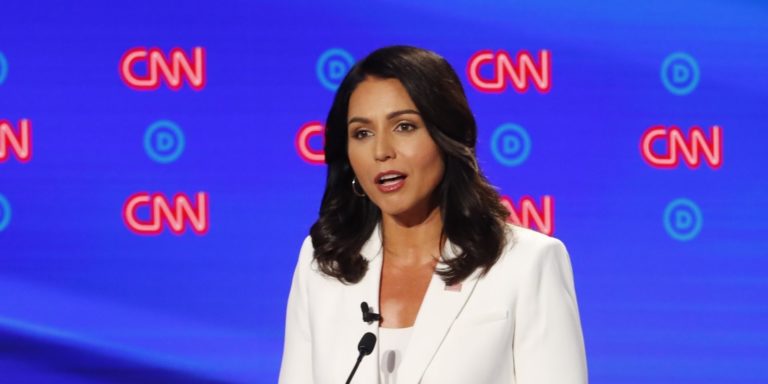
Fox News reported that, on Aug. 26, 2024, Tulsi Gabbard, a former Democratic congresswoman from Hawaii, also endorsed Trump.

“If you love our country, as I do, if you cherish peace and freedom as we do, I invite you to join me in doing all that we can to save our country and elect President Donald J. Trump and send him back to the White House to do the tough work of saving our country and serving the people,” Gabbard said at the National Guard conference in Detroit.

Gabbard’s endorsement, however, is not surprising considering that Trump recently recruited her to train him for the upcoming Sept. 10, 2024, debate against Harris at the National Constitutional Center in Philadelphia.

Even though he did not explicitly endorse Trump, Rep. Dean Phillips, D-Minn., who ran against Joe Biden while he was still in the race, said that he is considering a move away from his lifetime party after Democrats installed Harris as the party’s presidential nominee without receiving a single vote.

Fox News reported that Phillips would be open to serving in the next administration regardless of which party wins this year.

Kamala Taps Google Attorney for Debate Prep, Sparking Serious Ethics Issues

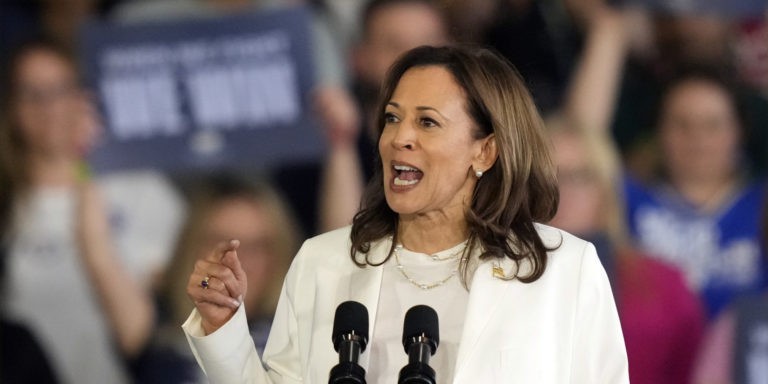
(Luis Cornelio, Headline USA) Vice President Kamala Harris has enlisted the help of a Google attorney for her debate preparation, raising serious concerns about potential conflicts of interest.  

The attorney, Karen Dunn, serves as lead counsel for Google in a high-profile antitrust lawsuit filed by the Biden-Harris administration, prompting the Trump campaign to sound the alarm. 

The ethical dilemma centers around Dunn’s dual role. She is helping Harris prepare for the upcoming ABC News presidential debate on Sept. 10, while also defending Google in a massive antitrust case brought by the Department of Justice. 

The Biden-Harris-led DOJ accuses the tech giant of monopolizing the search market by thwarting its competition through illegal means. The trial is set to begin on Sept. 9, just one day before the debate, Fox News reported. 

Dunn works for the lawfirm Paul, Weiss, Ritkind, Wharton & Garrison, which is representing Google in the suit. She is notably listed as “lead attorney” in Google’s defense against the DOJ’s lawsuit, Fox added. 

The relationship between Harris and Dunn is not new. In 2020, Dunn assisted Harris prepare for her one debate with then-Vice President Mike Pence. Dunn claimed she assisted former President Barack Obama and twice-failed presidential candidate Hillary Clinton in their debate prep.

In remarks to Fox News, Trump campaign senior adviser Tim Murtaugh said that Harris “will never stand up to Big Tech because she’s being coached on what to say in the debates by Google’s top lawyer.” 

He continued, “Think about how outrageous it is — their administration is suing Google, but Harris is taking political advice from the defendant’s lawyer. Any first year law student knows that’s a conflict of interest.” 

Murtaugh highlighted the “cozy relationship” between the Biden-Harris administration and Big Tech, particularly amid censorship coordination. 

This election-interfering censorship was the subject of a lawsuit by the attorneys general of Missouri and Louisiana against the federal government. The Supreme Court ruled against conservatives on standing grounds. 

The evidence was staggering. The federal government coerced the social media platforms to censor constitutionally protected free speech in unprecedented levels, the lawsuit alleged. 

Robert F. Kennedy Jr., a former Independent presidential candidate, pointed to this collusion as a key reason his challenge against Biden failed. 

Murtaugh suggested that these developments are not “surprising because Big Tech and the Biden-Harris White House have been conspiring to censor and trample the rights of law-abiding citizens since they gained power.” 

He continued, “They don’t even try to hide their cozy relationship — it’s all been reported by the media — but it is disgusting and dangerous.” 

Dunn did not respond to Headline USA’s request for comment. The questions centered on whether she had discussed the antitrust lawsuit with Harris, informed Google or her law firm of her role in the debate prep or if she is receiving any compensation from the Harris campaign.

Requests for comments were also sent to the law firm’s chief operating officer, Eric Sekler; chief conflicts and compliance officer, Glenn Jones; and deputy general counsel, Elizabeth G. McCabe.

Several critics, including Sen. Mike Lee, R-Utah, and members of the Trump campaign, voiced their reactions on X.


Rumble CEO Escapes Commie Europe After France Arrests Telegram Founder

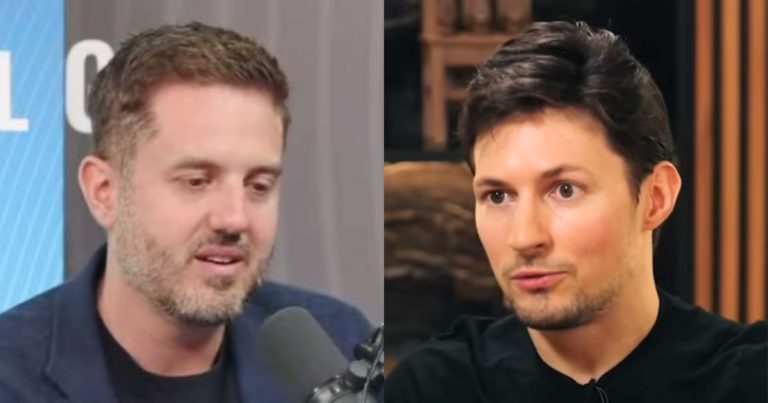
(Dmytro “Henry” Aleksandrov, Headline USA) Rumble CEO Chris Pavlovski announced that he had “safely departed” from Europe after Telegram CEO Pavel Durov was arrested in France, and French authorities made subsequent threats against Rumble.

The Post Millennial reported that Durov was detained at Le Bourget Airport near Paris on Aug. 25, 2024, after he arrived on a private jet from Azerbaijan. The arrest, executed under a warrant for Durov, who holds dual citizenship of France and the United Arab Emirates, allegedly stems from allegations that Durov failed to moderate content on his social media platform.

Durov now faces a potential 20-year prison sentence on charges including terrorism, narcotics trafficking, fraud, money laundering and receiving stolen goods.

Pavlovski released a statement on Twitter, condemning the actions taken against Durov and vowing to fight for freedom of expression.

“France has threatened Rumble, and now they have crossed a red line by arresting Telegram’s CEO, Pavel Durov, reportedly for not censoring speech. Rumble will not stand for this behavior and will use every legal means available to fight for freedom of expression, a universal human right. We are currently fighting in the courts of France, and we hope for Pavel Durov’s immediate release,” he wrote.

In his other post, Pavlovski also pointed out that several countries worldwide banned and threatened Rumble.

“China bans Rumble. France threatens Rumble. We leave. Brazil threatens Rumble. We leave. [The United Kingdom] threatens Rumble. Russia bans Rumble. New Zealand threatens Rumble. France arrests Telegram CEO. Free speech is under major assault, and I will not stop fighting for it,” he wrote.

Elon Musk, Twitter’s owner, responded to the recent news by emphasizing the importance of supporting free speech and urging users to share posts on his platform, particularly in countries with heavy censorship.

“It is vital to the support of free speech that you forward X posts to people you know, especially in censorship-heavy countries,” he wrote.