(Ken Silva, Headline USA) Oran Alexander Routh, the son of failed Trump assassin Ryan Routh, has been charged with possessing child pornography.
According to a criminal complaint docketed on Tuesday, the FBI said it found the child pornography during a search of Routh’s home on Saturday that was “unrelated to child exploitation”—likely referring to the probe into Ryan Routh’s Sept. 15 attempt on the life of Donald Trump.
During the search of the son’s Greensboro home, investigators found a Samsung Galaxy Note 9. A search of that device found child porn, the FBI said.
Read the criminal complaint filed against Oran Routh, the son of the 2nd failed Trump assassin, for allegedly possessing child porn pic.twitter.com/A6xolNmfE4
“In a folder titled ‘Download,’ investigators observed a video depicting an adult female engaging in oral sex with a prepubescent minor female between approximately 6-8 years of age,” FBI agent Garett Foo said in a sworn statement.
“Investigators also located chats from a messaging application that, based on my training and experience, is commonly used by individuals who distribute and receive child pornography.”
Oran Routh is reportedly set to make an initial appearance in North Carolina federal court later Tuesday. The Justice Department is expected to seek his continued detention.
Oran Routh was thrust in the media spotlight immediately following his father’s attempt on Trump’s life. He told the Daily Mail that his father hates Trump—as “every reasonable person does—but claimed ignorance about the assassination plot.
“He said he was at the beach, but I thought that meant the outer banks in Hawaii,” he reportedly said. “I didn’t ask him for more information because we’ve had a falling out. We’ve grown apart.”
Oran did defend his father, telling the Daily Mail, “He’s a great dude, a nice guy and has worked his whole f**king life.”
After his initial phone interview, Oran later reportedly sent a rambling text to the Daily Mail—exhibiting bizarre behavior for someone who just learned that his father tried to kill a presidential candidate.
“I hate this game every four years, and think that we all do, and if my father wants to be a martyr to how broken and disassociated the process has become from the real problems and practical solutions, then that’s his choice,” he reportedly said.
“I’m not saying that’s what he’s done or what he’s about, that’s just my own rant being fed up with it all for my entire adult life,” he wrote.
“South Park said it best, every 4 years we’re forced to choose between a turd sandwich and a giant douche, and it all stays f****d in the same ways by different degrees, and we’re exhausted and embarrassed by it all.”
Ken Silva is a staff writer at Headline USA. Follow him at x.com/jd_cashless.
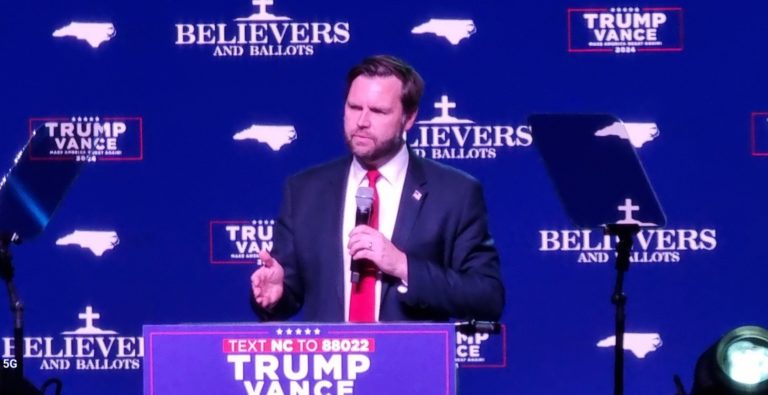
(Ken Silva, Headline USA) CHARLOTTE, N.C.—GOP candidate for Vice President Sen. JD Vance, R-Ohio, has a warning for Christians: Religious liberty is on the ballot in November.
“[Kamala Harris and Tim Walz] are the biggest opponents of religious liberty I’ve ever seen running in my life,” he told a capacity crowd Monday at the Freedom House Church in Charlotte, North Carolina.
Speaking at event geared towards Christian conservatives, Vance’s remarks come as Donald Trump and some in the GOP have expressed support for allowing abortions in certain situations—which has caused a stir among staunch pro-lifers.
But while those pro-lifers may disagree with Trump’s more moderate abortion stance, the Democrats want to jail them for their beliefs, Vance reminded voters—recalling the Biden-Harris Justice Department’s prosecution of Mark Houck, a pro-life activist who was raided by the FBI for protesting peacefully at an abortion clinic, allegedly violating the Freedom of Access to Clinic Entrances Act. Houck was found not guilty in January 2023.
“I believe GOP is pro-life because we believe every life is precious from the moment it begins to natural death,” Vance said. “Kamala doesn’t just disagree with us; she’s trying to throw people in prison that share our values … like the pro-life Catholic father of seven who was treated like a common thug for daring to go out and advocate for the unborn.”
Vance also reminded voters that his counterpart Walz signed legislation allowing abortions up until birth as governor of Minnesota.
“No one like that should be near the Oval Office,” he said.
The Charlotte Christians seemed receptive to Vance’s message. Their loudest response came when the vice-presidential candidate recounted the July 13 and Sept. 15 assassination attempts against his running mate, Trump.
“I really believe, when you see that clip of an assassin’s bullet missing him by a few millimeters, I believe Donald Trump is here by the grace of God,” he said.
“What we most need is someone in the Oval Office who shows courage and grace under fire. Who do we want: Kamala Harris, who’s afraid of the media, or Donald Trump, who can take an assassin’s bullet in stride?”
Ken Silva is a staff writer at Headline USA. Follow him at x.com/jd_cashless.
Meanwhile, in the shadows, silver has enjoyed a nice run-up of its own. The white metal is up 29 percent year to date, about the same as gold in percentage terms.
And this silver bull may have an even brighter road ahead of it than gold.
According to analysts at UBS, silver will likely outperform gold over the next 12 months.
Bullish on Gold!
It’s not that UBS has soured on gold. In a recent note, analysts said plenty of momentum remains with the Federal Reserve pivoting into an easing cycle. And there are other bullish factors in play as well.
“It’s not just the expectations of lower yields at play, with further support from macro and geopolitical uncertainties, and the continuing trend of USD diversification by central banks.”
The UBS analysts said that the geopolitical uncertainty and tension are “likely” to extend into 2025, “with the next U.S. government (and its policies) uncertain.”
“We expect gold to remain a favored market hedge for both geopolitical and rate risks. Historically, the metal has outperformed equities during periods of elevated volatility, which again proved to be the case in recent months despite a less dovish market consensus on the pace of Federal Reserve rate cuts ahead.”
Even More Bullish on Silver!
Although silver has kept pace with gold this year, most people perceive it as lagging.
And silver is underpriced compared to gold from a historical perspective.
As the UBS report notes, the gold-silver ratio is extremely wide. It is currently over 84:1. That means it takes over 84 ounces of silver to buy one ounce of gold.
To put that into perspective, the average in the modern era has been between 40:1 and 60:1.
Historically, after widening, the ratio has always returned to the mean. And it has done so with a vengeance, sometimes even overshooting that mean. The ratio fell to 30:1 in 2011 and below 20:1 in 1979.
UBS analysts expect the gold-silver ratio to narrow over the next 12 months, likely dropping back into the 60s. That would mean a significant rally for silver, even as gold continues to climb.
“We maintain our view that silver is set to benefit from a rising gold price environment, which is aligned with Fed policy easing.”
Silver demand outstripped supply for the third straight year in 2023 as mine output dropped and industrial demand set a record.
“Our expectation that the silver market will remain in deficit over the coming years implies continuous declines in above-ground inventories, which should help fundamentally underpin prices as well as act as a tailwind for investor interest.”
UBS’s projections fit with historical trends.
Silver has historically outperformed gold in a gold bull market, particularly in the later stages. For instance, gold charted a gain of around 40 percent during the pandemic. Meanwhile, silver was up a whopping 141 percent.
History, fundamentals, and technical factors all look bullish for silver. Wise investors are paying attention.
Mike Maharrey is a journalist and market analyst for MoneyMetals.com with over a decade of experience in precious metals. He holds a BS in accounting from the University of Kentucky and a BA in journalism from the University of South Florida.
(Matthew Cortez, Sound Money Defense League) Inflation is pernicious and widespread – silently siphoning the purchasing power of the U.S. Federal Reserve note “dollar” from the savings of the American people year after year.
Meanwhile, central banks all over the globe – from Saudi Arabia to China to Egypt and beyond – are buying gold at breakneck pace. Some global banks, including the BRICS nations (Brazil, Russia, India, China, South Africa), are even considering a non-dollar alternative to the Federal Reserve note for global trade settlement.
As geopolitical uncertainty increases, precious metals have gained renewed attention; savers, savvy investors, businesses, and even state treasurers are taking more steps toward protecting their savings from inflationary pressures by purchasing gold and other precious metals.
The U.S. Bullion Depository
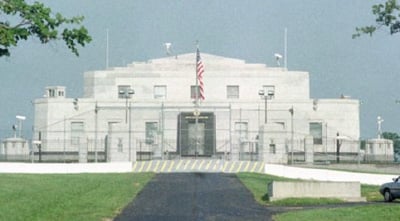
According to recent reports, the United States gold reserves presently total 8,133 metric tons, much of it stored in the United States Bullion Depository situated within Fort Knox, Kentucky. This vault, and the gold stored inside it, have long been a symbol of America’s monetary might and global status.
However, despite these claims, U.S. gold reserves haven’t received a credible inspection since 1974, shortly after America’s breach of the Bretton Woods agreement raised concerns about America’s gold holdings. In fact, audits conducted prior to 1974 were not credible either.
Today is the 50-year anniversary of this public relations stunt. The nagging question remains: Is all of America’s gold still there?
History of the United States Bullion Depository
Constructed in 1936 to support Executive Order 6102, a Roosevelt-imposed mandate on Americans to turn over their gold in exchange for unbacked paper money, the United States Bullion Depository, commonly referred to as Fort Knox, was introduced as the nation’s primary gold vault.
Located in Kentucky, the U.S. Bullion Depository is situated at the interior of the continent, intentionally far from any coastlines, to ensure the gold is safe in the case of any assaults or invasions.
Equipped with a 21-inch vault door and 1,420 tons of steel, the security features of Fort Knox were specifically designed for storage of millions of ounces of gold (mostly in bar form, often created from melted coins) that had been extracted from U.S. citizens and institutions by President Roosevelt’s infamous order, and the massive amounts of gold that were imported into the U.S. to isolate it from war-torn Europe.
While the vault was touted to be impenetrable, Americans began to wonder about the gold supposedly held inside the depository’s secure chambers.
Theories circulated about the state, condition, and ownership of the metals, but one particular theory was from a Washington attorney in an interview with The National Tattler, claiming that 20 billion dollars’ worth of gold had suddenly gone missing from the depository. These rumors quickly spread to Congress.
Americans remained skeptical of the depository, speculating that the gold reserve had been depleted, used to pay debts, or shipped elsewhere over the years.
The “Show Audit” of Fort Knox Gold in 1974 Created More Questions
To ease these concerns, on September 23, 1974, the U.S. Treasury opened just one of its 15 Fort Knox vault compartments to politicians and reporters to view the gold and confirm its existence.
For about two hours multiple film and camera crews and smiling politicians filed into a hallway for the chance to hold a gold bar and peek into a room full of gold stacked up to the ceiling.
On their way out, each visitor had to pass by a metal inspector to ensure that none of the gold bars were being snuck out in the process.
Notably, throughout the visit, none of the bars being passed around were matched to a serial number, assayed or tested for purity, or even verified as part of United States’ holdings. (Foreign countries have at times stored gold there as well.)
It seems the made-for-TV spectacle in 1974 was more of a pep-rally than any credible proof of what the amount of U.S. gold purported to be in those vaults.
Decades later, speculation continues. As the Federal Reserve note continues to falter and central banks all over the world continue to stockpile gold, Americans deserve to know the truth about America’s gold holdings.
In 2021, Rep. Alex Mooney, R-W.Va., introduced legislation to audit America’s gold holdings. The bill called for a full assay, inventory, and audit of all US gold holdings, along with a full accounting of all gold transactions in which the U.S. has engaged. (No action was been taken on this bill, but it may be reintroduced next year.)
Matthew Cortez is a policy assistant for the Sound Money Defense League.
(Jan Nieuwenhuijs, Money Metals News Service) Countries that participate in the novel cross-border payments system mBridge are each hoarding gold and are largely responsible for the bull market of the past two years.
How and when the global dollar standard will disintegrate is hard to predict, but setting up a non-dollar payments system (mBridge) and aggressively accumulating gold to replace U.S. Treasuries as the prime international reserve asset is a potent strategy to de-dollarize.
The project aims to create a multi-central bank digital currency platform for participating central banks and commercial banks, built on distributed ledger technology (DLT) to enable instant cross-border payments and settlement. MBridge uses an Ethereum-compatible DLT network, the mBridge Ledger, developed by China’s Digital Currency Research Institute. Because China oversees the backbone of the technology, it’s immune to Western sanctions.
A common technical infrastructure has the potential to improve the current system and allow cross-border payments to be more efficient, immediate, and cheaper. On June 5, 2024, mBridge reached the Minimum Viable Product (MVP) stage.
A Surge in Gold Hoarding by mBridge Members
Readers who are familiar with my writings understand that the gold price is determined by global flows. Based on cross-border trade statistics, it’s clear that the East assumed dominance in the gold market starting in 2022, overtaking the West.
As stated in a previous article, formal gold import and export statistics represent private flows, but they can also reflect central bank activity. Aside from elevated peaks in private demand from China and Thailand, the Chinese and Saudi central banks (PBoC and SAMA) are largely responsible for the rally that commenced in 2022, both having vigorously stepped up gold purchases after the West froze part of Russia’s foreign exchange reserves.
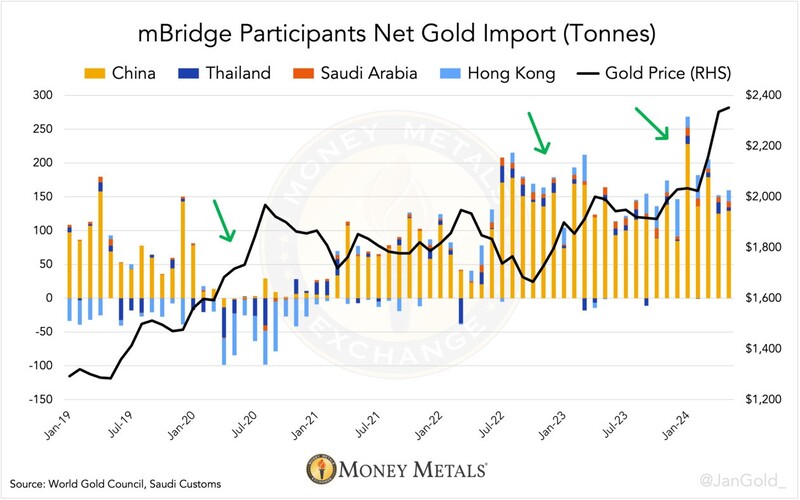
Strikingly, according to available trade data, the countries in the driver’s seat of the gold market are all full members of mBridge: China, Saudi Arabia, Thailand, and Hong Kong (see chart below). Statistics by the U.A.E. lag several years and are misleading due to smuggling to India.
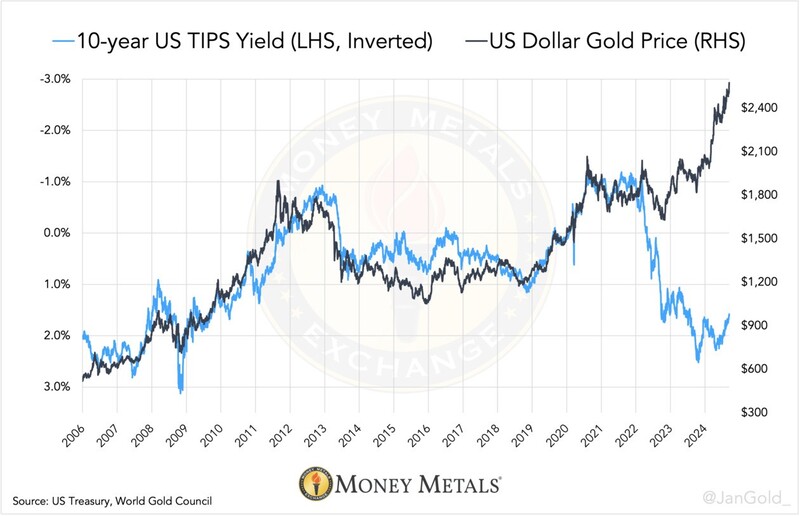
Chart 1. Net gold import data through May 2024 reveals gold stockpiling amid higher prices.Chart 2. The Treasury Inflation Protected Security (TIPS) yield is the expected real interest rate on U.S. government bonds. Strong gold buying by the East has broken the correlation and rendered TIPS impotent.
Between China, Thailand, Saudi Arabia, and Hong Kong, it’s clear their gold stance has changed since early 2022: they’ve jettisoned their sensitivity to the price. Instead of selling into rallies, they are themselves causing those rallies as a result of strong demand.
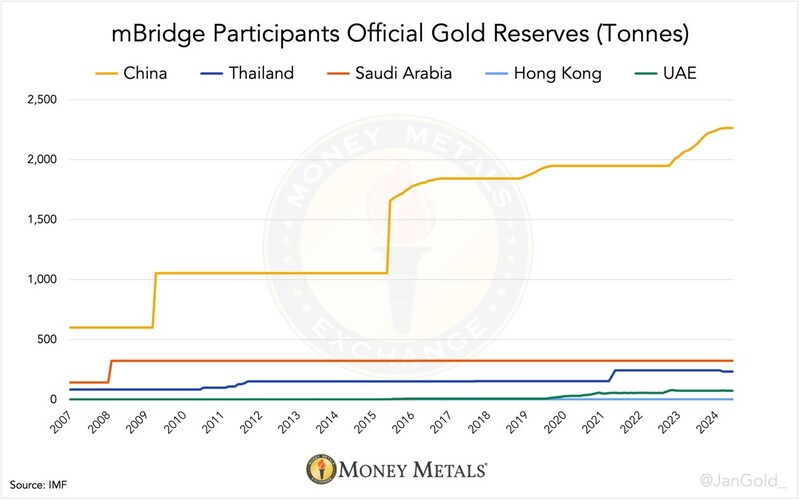
Aside from visible global gold flows, we know the official gold reserves of Thailand, the U.A.E., China, and Saudia Arabia are rising in recent years—even when excluding covert purchases by the latter two. Only Hong Kong’s monetary gold has been flat; however, it can be lumped in with Beijing since it’s a special province of China.
Chart 3. The Central Bank of Thailand has increased its reserves to 235 tonnes from 84 tonnes in 2008. In the U.A.E., official gold assets went up from zero to 75 tonnes over this time span. PBoC and SAMA gold reserves are much higher than disclosed.
mBridge Helps Facilitate a Ditching of the Dollar
The dollar is said to be the world reserve currency, which means it’s the most used currency in global trade. The lion’s share of global international reserves (owned by central banks) are held in dollar-denominated assets such as U.S. government bonds (USTs). Nations wanting to break free from the dollar need an alternative for trade and reserves.
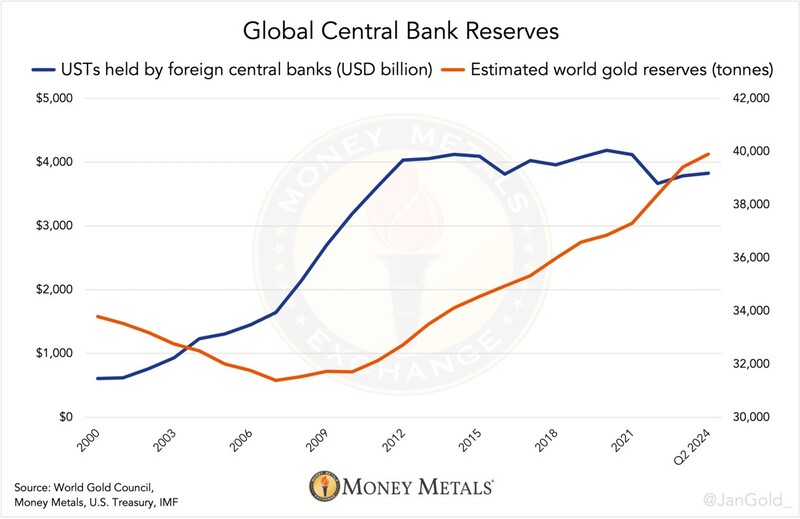
As described above, the members of the mBridge fellowship—all running a current account surplus—have been increasing their gold reserves in recent years. This is referred to as Gold Recycling: storing trade surpluses in gold rather than USTs.
Chart 4. A visualization of the Gold Recycling trend. World official gold reserves are estimated based on reported and unreported purchases by central banks.
Getting rid of the dollar in trade is more challenging. Liquidity in local currencies can be poor; volatility can be risky with limited hedging opportunities, transactions slow and expensive, and payment infrastructures incompatible.
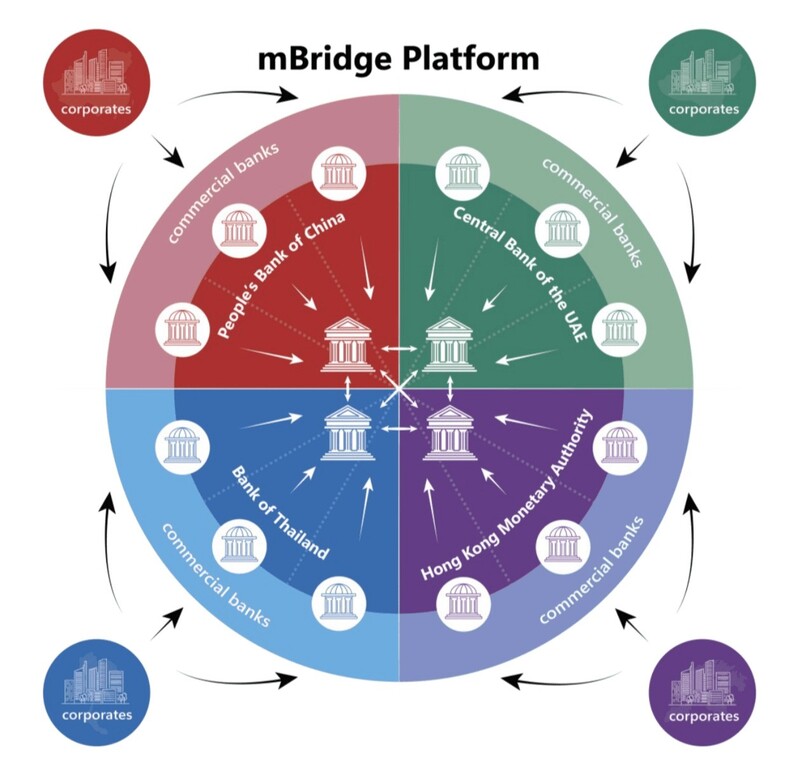
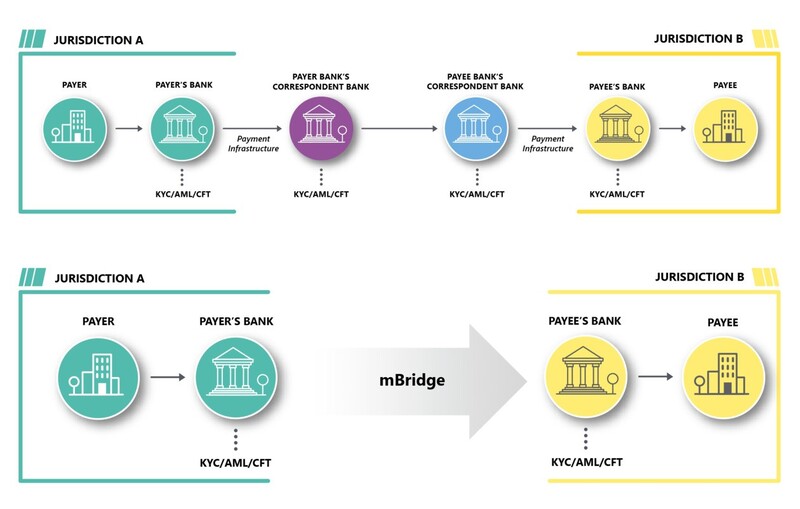
MBridge is about connecting central banks to provide a settlement layer for their digital currencies while supporting interoperability between participants’ existing financial infrastructures. Utilizing mBridge is a stepping stone for more use of local currencies and, eventually, an improvement of liquidity.
Courtesy of BIS Innovation Hub (2022). Saudi Arabia was the last member to join in June 2024.
Cross-border payments often rely on an inefficient network of correspondent banking. Through mBridge, though, its participants seek to do away with correspondent banking and let banks link up efficiently through the new settlement rails. According to the BIS, mBridge payments are faster, safer, cheaper, and more accessible, and settlement is final.
Courtesy of the Hong Kong Digital Currency Academy.
mBridge Facilitates New Non-Dollar Trade Deals
Energy is the lifeblood of any economy, and Saudi Arabia and China are the largest exporters and importers of oil, respectively. For a long time, the House of Saud preferred to receive dollars in return for oil, based on an agreement with the United States to invest its trade surplusses in USTs*. Despite their long-standing ties with the U.S., the Saudis are becoming eager to trade oil in other currencies.
In November 2023, the PBoC and SAMA signed a currency swap agreement worth ¥50 billion yuan ($7 billion dollars) to “expand the use of local currencies between China and Saudi Arabia and facilitate trade and investment between the two sides.”
This September, the Saudi Minister of Mineral Resources, Bandar Alkhorayef, said in an interview with SCMP that he’s open to new ideas, including the use of renminbi in crude oil settlements. No wonder the Saudis joined mBridge in June.
The PBoC also renewed a currency swap line with with the U.A.E.’s central bank (CBUAE) in November 2023 and, at the same time, solidified a digital currency cooperation agreement as part of ongoing teamwork for mBridge.
As it has reached the MVP stage, mBridge is slowly becoming fully operational. A few weeks ago, as an example, RAKBANK in the U.A.E. executed its first instant cross-border payment—digital dirham against digital yuan—using mBridge.
In May 2024, representatives of the Thai central bank and the PBoC signed a Memorandum of Understanding “on strengthening banking and financial cooperation, including the promotion of local currency usage as well as cross-border payment and settlement,” an apparent reference to mBridge.
The Combination of Gold & mBridge Could Tank the Dollar
What are the odds that the countries that have taken over the gold market in the past two years are also in a non-dollar trade alliance? Surely, these countries have a thought-out plan to de-dollarize.
Noteworthy, China, Hong Kong, and the U.A.E. have sophisticated precious metals markets where gold is traded in local currency, allowing mBridge associates to convert any surpluses from bilateral trade directly into gold while bypassing the dollar.
Saudi Arabia doesn’t have a developed gold market, but not long ago, a new refinery was opened in Riyadh under the patronage of the Saudi Minister of Mineral Resources, Bandar Alkhorayef. On the refinery’s website, it reads gold bars will “comply with globally approved standards and should be accepted globally by all customers, including all national banks.” That should tell us enough.
One requirement for mBridge to come to fruition is the completion of the digital local currencies, most of which are currently still in a pilot phase. It should be clear, though, that mBridge constituents are being finalized and coming together.
MBridge is likely to become a success because there is a political motive to escape from the clutches of the weaponized dollar if the mBridge group is able to take over the gold market, who knows what they can do on the cross-border payments front?
As we keep track of developments in cross-border payments through local currencies, the rise of gold to the detriment of the dollar in global reserves is inescapable.
Global Gold Reserves Flipping from Dollars into Gold
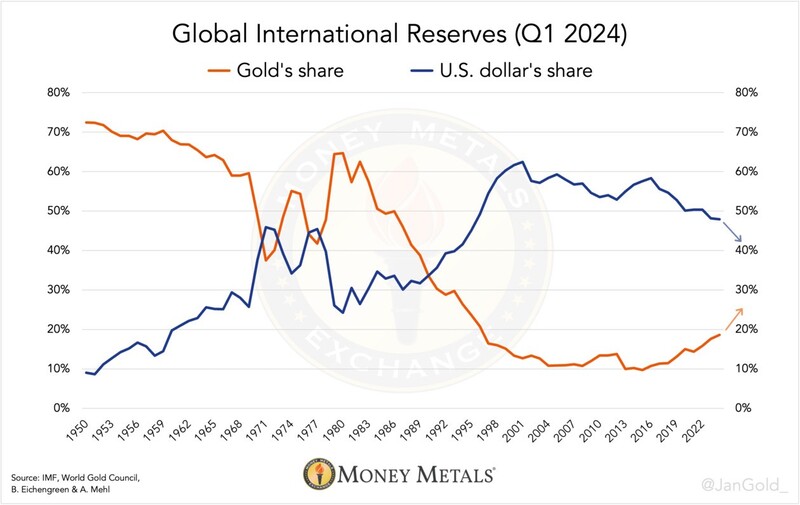
My personal calculations suggest gold is currently making up 19% of international reserves, up from 10% in 2014. Meanwhile, the dollar’s share has fallen from 62% in 2001 to 48% in March of this year as a result of the Gold Recycling trend (see charts 4 and 5).
Chart 5. Gold is taking over market share from the dollar in global international reserves.
Since geopolitical tensions aren’t subsiding and the mBridge group has a motive to de-dollarize, we can assume this trend will continue. And we shouldn’t rule out Western investors will join in driving up the price of gold.
The dollar won’t die overnight, yet its slow demise is worth evaluating relentlessly**. I will keep readers posted on the composition of international reserves and developments in the cross-border payments arena.
*A “petrodollar” deal in which the Saudis exclusively accept dollars for oil has never existed between the U.S. and Saudi Arabia.
**Not mentioned in this article is that there is also a lot of dollar debt internationally due to the Eurodollar market.
Originally a sound engineer in the Dutch movie industry, Jan Nieuwenhuijs has devoted the last decade to in-depth gold market research. His commentary and analysis has earned him international recognition as a top expert on the Chinese gold market, the COMEX futures market, the London Bullion Market, and the Turkish gold market. Currently, he writes about the international monetary system, central bank gold policies, the mechanics of the global gold market, the gold price, and economics in general.
(Mike Maharrey, Money Metals News Service) Anybody paying any attention at all knows that gold is setting records. But just how good is gold doing in 2024?
It is outperforming stocks.
And pretty much everything else.
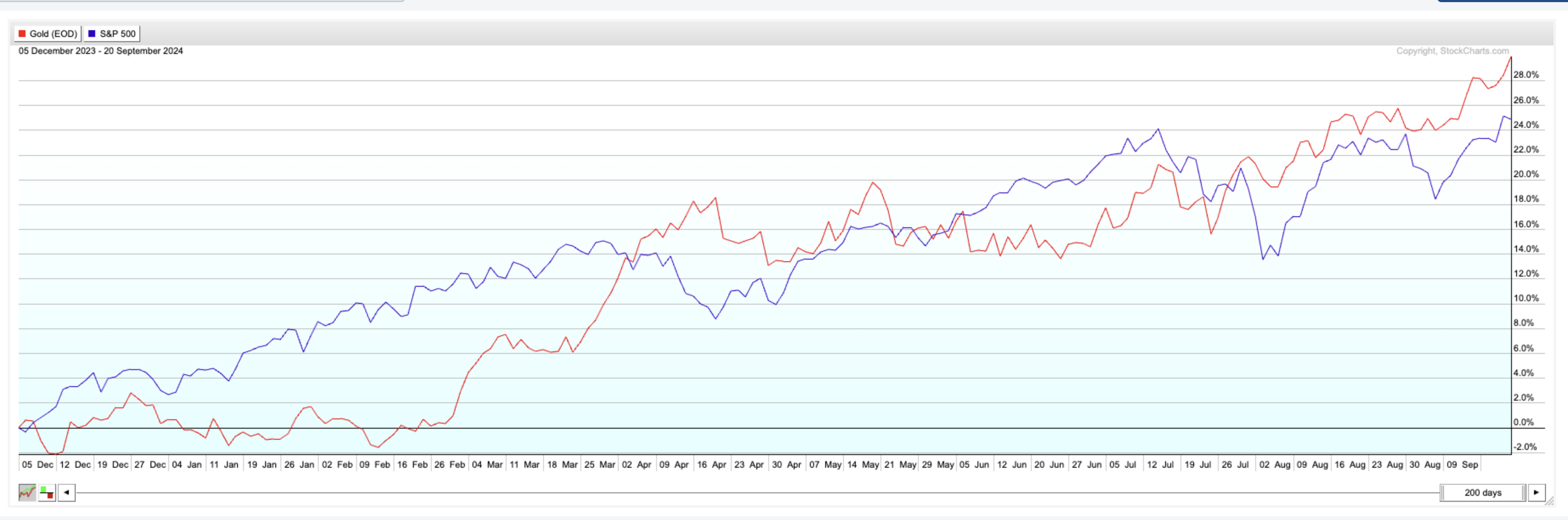
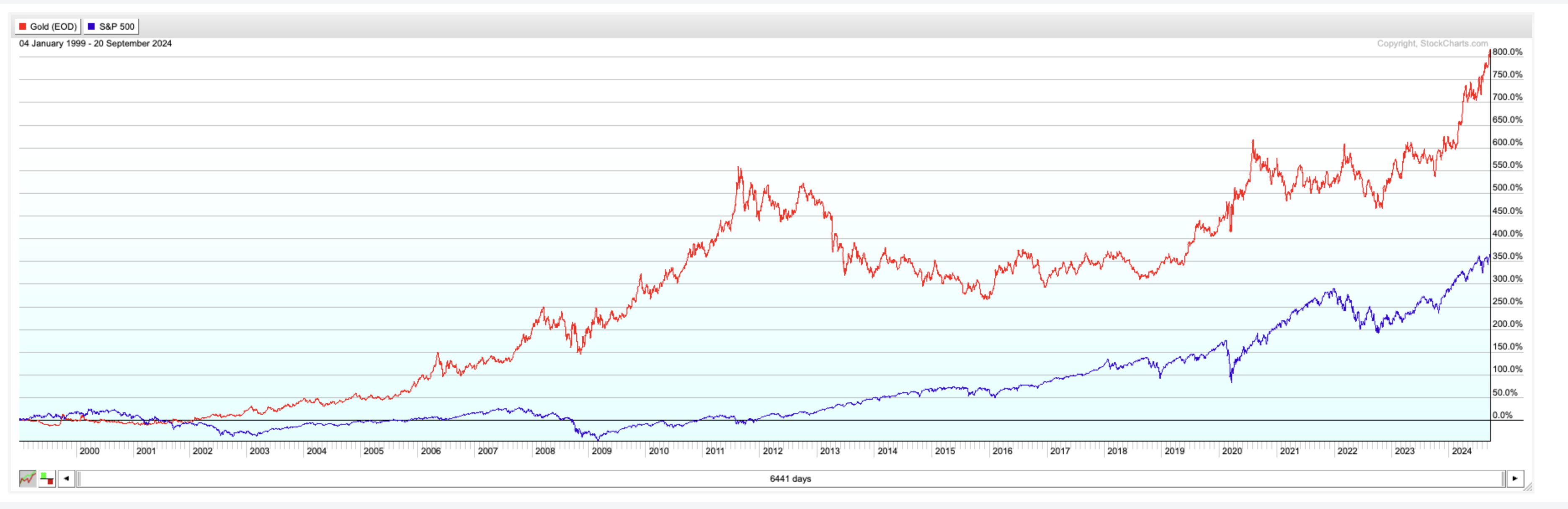
Gold closed at yet another record high on Friday, ending the week at $2,622 per ounce. Year-to-date, gold is up 27.1 percent.
Meanwhile, the return on the S&P 500 so far in 2024 is 20.8 percent, and that includes reinvested dividends.
(Note: the chart doesn’t show the gains after Sept 9)
Gold is outperforming other stock indices well. The Dow is up 11.6 percent, and the NASDAQ is up 21.7 percent.
If things hold up for the rest of the year, gold is on track for its best return since 2010, in the midst of zero percent interest rates and the Federal Reserve’s three rounds of quantitative easing after the financial crisis. Gold is currently outpacing its gangbuster 25 percent gain during the pandemic.
You might think gold outperforming stocks is just a recent phenomenon, but gold has outgained the S&P 500 since the turn of the century. Gold is up 811 percent since January 2000, while the S&P 500 has charted a 517 percent return.
Forbes notes that the Fed’s “recalibration” to lower interest rates and easier money creates two tailwinds for gold.
“Lower rates of return on other non-stock assets which offer fixed payments tied to the Fed-set interest rates, like short-dated government bonds and certificates of deposit (CDs), may make gold a more popular diversification option, and gold is considered perhaps the most popular hedge against inflation, meaning if the Fed acted too swiftly and U.S. inflation gets worse again, gold prices should benefit.”
Forbes pointed out that gold has enjoyed “three distinct rallies” since 2000 – the years after the 2008 financial crisis, the COVID-19 pandemic, and the last two years’ bout of global inflation. The first two periods were marked by artificially low interest rates and quantitative easing. But the most recent gold rush is a little different. So far, it is based solely on the hope of easier money. Most of gold’s gains this year came before the Fed cut rates at all.
In other words, we’re seeing this kind of performance just based on the promise of Federal Reserve easing and one rate cut. Imagine what will happen if the economy cracks and the Fed returns, slashes rates to zero again, and ramps up the QE machine!
Fed policy isn’t the only thing driving gold higher. The initial stages of this gold bull run got a boost from high demand in Asian and Middle Eastern markets. In fact, we saw a significant movement of gold from the West to the East.
Dollar reserves globally have dropped by 14 percent since 2002. And de-dollarization accelerated after the U.S. and her Western allies aggressively sanctioned Russia and froze the country’s assets after it invaded Ukraine. As dollar reserves have dropped, gold reserves have grown. According to Goldman Sachs, the rate of central bank gold buying has tripled since the invasion.
Simply put, the United States’s weaponization of the dollar is undermining its strength and role as a reserve currency. This is boosting gold demand, and there’s no reason to think the situation will change any time soon.
According to the most recent World Gold Council survey released in June, 29 percent of central banks plan to add more gold to their reserves in the next 12 months. The WGC said it was the highest level since the survey began in 2018.
That means there are plenty of reasons to believe this gold bull still has plenty of legs.
Mike Maharrey is a journalist and market analyst for MoneyMetals.com with over a decade of experience in precious metals. He holds a BS in accounting from the University of Kentucky and a BA in journalism from the University of South Florida.
(Ben Sellers, Headline USA) “North Carolina is becoming like a second home to me,” quipped Sen. JD Vance, R-Ohio, during a stop Monday at Charlotte’s Central Piedmont Community College.
Indeed, he and former President Donald Trump have traversed the battleground state in recent weeks, with stops in Raleigh and Wilmington over the past five days as they push hard to defend a razor-thin lead in the final stretch of the presidential race.
For better or worse, Republicans fear that the second home for Vance—which also happens to be the home state of Republican National Committee co-chairs Michael Whatley and Lara Trump (the president’s daughter-in-law via Eric)—now comes with its own proverbial black sheep.
Neither the local leftist media nor a coalition of Christian conservatives was willing to let GOP officials attempt to memory-hole the state’s besmirched gubernatorial candidate, Mark Robinson, following a CNN smear attack last week.
Robinson, the state’s current lieutenant governor, is accused of having posted crude and offensive comments online between 2008 and 2012—roughly six years before he was propelled into politics by a viral video about gun rights.
“What he said or didn’t say is ultimately between him and the people of North Carolina,” Vance said in response to one of three media questions, all seeming to ask the same thing about where GOP leaders stood currently with respect to Robinson. “The people of North Carolina are gonna make that decision.”
Robinson, who is black, has denied unequivocally that the series of posts—including references to Nazism, slavery and transgenderism—came from him, and he has vowed to stay in the race, despite reported pressure from the Trump campaign last week to drop out for fear he could drag down other races on the ticket.
Thus far, however, Robinson’s popular support—among conservatives, at least—appeared to remain strong, with many of the Republican attendees at Vance’s events on Monday booing outside attacks on the gubernatorial candidate while also appearing to urge GOP officials to acknowledge and circle the wagons behind him.
The same was true on social media, where many of the comments coming from well-known conservative influencers also conveyed support, despite the predictable presence of leftist snipes and pearl-clutching—a flip-flop from a party that suddenly finds transgenderism and anti-Semitism objectionable after tacitly, if not overtly, embracing both, while often condemning criticism of black individuals with the caveat that those oppressed themselves cannot be “racist.”
The GOP needs to circle the wagons like the Democrats do. Lets get him across the finish line and figure out what to do on November 6th.
Vance’s answers to media questions seemed to be the most direct response from the Trump campaign since the supposed scandal broke on Thursday.
“Now look, I’ve seen some statements,” said the vice-presidential candidate.
“I haven’t seen them all—some of them were pretty gross, to put it mildly,” he continued. “Mark Robinson says that those statements are false and he didn’t actually speak them, so I think it’s up to Mark Robinson to make his case to the people of North Carolina…”
The crowd erupted in applause as Vance expressed his measured and qualified support for the top GOP state leader before trying to shift the focus from Robinson onto the media itself for its preoccupation with the topic.
“I gotta say that this entire episode illustrates something that is fundamentally broken about the American media,” Vance said.
“You’ve got in this country right now, a record number of Americans who are dying of fentanyl overdoses thanks to Kamala Harris’s policies. You’ve got a record number of young Americans who can’t afford to buy a home thanks to Kamala Harris’s policies. And you’ve got a record number of Americans who are struggling to buy groceries thanks to Kamala Harris’s policies,” he continued. “The media oughta focus on Kamala Harris and her failure.”
However, that effort to refocus only led more reporters to double down on asking Robertson follow-ups, with two additional questions sounding much the same as the first one, eliciting more peevish responses toward Vance directed toward the journalists themselves.
At a separate event later that evening, prior to Vance taking the stage, Whatley, the current RNC co-chair and former state-level GOP chair in North Carolina, pointedly snubbed Robinson in his own remarks.
“We need more men and women of faith in public office, in North Carolina and across this country,” Whatley said, proceeding to list several other races while clumsily skipping over the gubernatorial race.
At least twice, people in the audience loudly shouted Robinson’s name, but Whatley proceeded to ignore them.
The event, which was specifically geared toward Christian conservatives, took place at Freedom House Church, in a room that, just two years prior, Robinson had delivered the keynote address for the Faith and Freedom coalition’s “Salt and Light” conference, a multi-day event that brought several prominent political and conservative evangelical figures to the stage.
Meanwhile, Robinson said during a campaign stop in Wilkesboro that he planned to lawyer up against CNN and any others involved in what he maintained was a hoax to smear his good name.
I am in the process of retaining aggressive legal counsel to investigate who did this and how; we will leave no stone unturned, and will use every legal means to hold CNN accountable for perpetrating these lies.
Over the weekend, most of his campaign staff quit, leaving only two spokespeople and a security guard, according to a report by Axios.
Already, the lieutenant governor, known for his fiery and provocative rhetoric, had appeared to be trailing in polls to state Attorney General Josh Stein, leaving some to suspect that the GOP and Trump campaign were all too eager to cut bait when the scandal broke.
Nonetheless, supporters see similarities between the attack on Robinson and past character attacks on Trump—most notably the October 2016 Access Hollywood smear just a month before his victory over Democrat Hillary Clinton.
Even if the posts from Robinson did prove to be his, some argue that the situation has been blown out of proportion, applying a blatant double-standard to Robinson, who would be the state’s first black governor if elected.
He's a grown man who WAS addicted before turning his life around. Isn't that a story of triumph? They should be running ads all over TV screens. That story makes him more relatable to people
(Dmytro “Henry” Aleksandrov, Headline USA) Conservatives started asking why the mainstream media suddenly decided to broadcast Donald Trump rallies, even though they’ve been avoiding doing that for a very long time.
According to the observant Americans, it is because they were informed in advance that the third assassination attempt on Trump would happen.
On Sept. 21, 2024, Trump War Room was the first to raise the question by posting screenshots from the propaganda industry’s outlets like controlled opposition Fox News and openly leftist CNN, MSNBC and News Nation.
“These scumbags only cover rallies when they think there could be chaos. Head on a swivel at this event,” Brenden Dilley of the Dilley Show wrote in the comment section.
These scumbags only cover rallies when they think there could be chaos.
Other anonymous people on the social media platform agreed with Dilley.
“Very odd. Why are they all watching and broadcasting live again? Did they think something would happen? Has MSM flipped? Are they now required to air Trump,” @17ThankQ wrote.
Very odd Why are they all watching and broadcasting live again? Did they think something would happen? Has MSM flipped? Are they now required to air Trump? 🤔🤔🤔🤔 https://t.co/xlf5zTy3dS
Another person on Twitter, however, decided to openly state that the reason why these anti-Trump propagandists chose to report on what was going on during Trump’s rallies was because they wanted to capture on camera the murder of Trump that leftists all around the country so desire to see.
“Did you know that CNN has only live-streamed one Trump rally this year? Just so happens it was on July 13th. Are you paying attention yet?” @vileTexan wrote.
Did you know that CNN has only live streamed one Trump rally this year?
The speculations came after Headline USA recently reported that Ryan Routh, the second person who tried to assassinate Trump, wrote a letter to every unhinged leftist with a Trump Derangement Syndrome that he would pay $150,000 to anyone who would murder Trump.
However, conservatives on Twitter once again started asking questions. This time, they were about whether Routh wrote the letter in the first place and how it was so quickly released to the public.
“Ryan Routh didn’t write this… The CIA/FBI just put out a bounty on Donald Trump’s head. You’re telling me they never released the [Nashville] shooter’s manifesto, but they released this? This tells me there will be more attempts,” one of the anonymous people wrote.
Would-be Trump Assassin Ryan Routh supposedly wrote this letter to the world… stating he’s sorry he failed, and offers $150,000 to finish the job
Translation: Ryan Routh didn’t write this… The CIA/FBI just put out a bounty on Donald Trumps head.
Jesse Kelly of the Jesse Kelly Show also reminded people that they should not be surprised about the recent news because “corrupt regimes murder their enemies.”
People are shocked the DOJ publicized a $150,000 bounty on Trump’s because people still haven’t accepted that we already live under an evil, murderous government that will simply kill anyone who threatens its criminal enterprise.
“Isn’t it crazy how the DOJ released Trump’s $150k bounty letter on the same day the NYT released polls showing Trump strongly pulling away in swing states? A 10-point shift to Trump in AZ?! The swamp rats are freaking out. Judgment day is coming, and they know it,” Rogan O’Handley wrote.
Isn’t is t crazy how the DOJ released Trump’s $150k bounty letter on the same day the NYT released polls showing Trump strongly pulling away in swing states?
Among the tactics that they implemented were brainwashing already politically leftist college students, focusing their attention on overseas ballots and allowing people who did not verify that they are citizens of the United States to vote in the upcoming election.
The Federalist recently reported that Guides.Vote, a leftist “voter guide” organization, contacted some professors at colleges and universities to push leftist students to vote for Kamala Harris.
“We have made it simple to incorporate our guides and resources into your existing curriculum,” Claire Adams, campus and youth programs director for Guides.Vote, wrote in an email to a professor that was obtained by the news source. “We hope you’ll check out our guides and use our resources to help your students vote.”
Even though the organization claimed it didn’t have a political ideology, The Federalist exposed its explicit anti-Trump bias, which the organization showed in its “guides.”
According to Politico, Democrats’ other tactic was to concentrate on overseas votes, claiming that 1.6 million overseas voters live in the battleground states. Gateway Pundit reported that the article’s original title was “Could Overseas Voters be the Ticket to Winning the Election?” However, Politico changed it to “Could voters abroad hold all the cards?” just not to be so obvious with their true goal.
The Hill also recently reported that the Arizona Supreme Court unanimously voted to allow almost 100,000 people to vote without providing proof of American citizenship.
All of these recent decisions to steal the upcoming election came as a pushback to conservatives recently winning multiple battles in the 2024 election war.
Assistant News Director for Florida Voice News Eric Daugherty recently revealed that Florida and two swing states, Pennsylvania and North Carolina, have seen a “rightward trend in mail-in voting requests compared to this same point in 2020.”
“The Democratic lead has declined in all three,” he added.
🚨 JUST IN: Pennsylvania, Florida and North Carolina all have seen a rightward trend in mail-in voting requests compared to this same point in 2020.
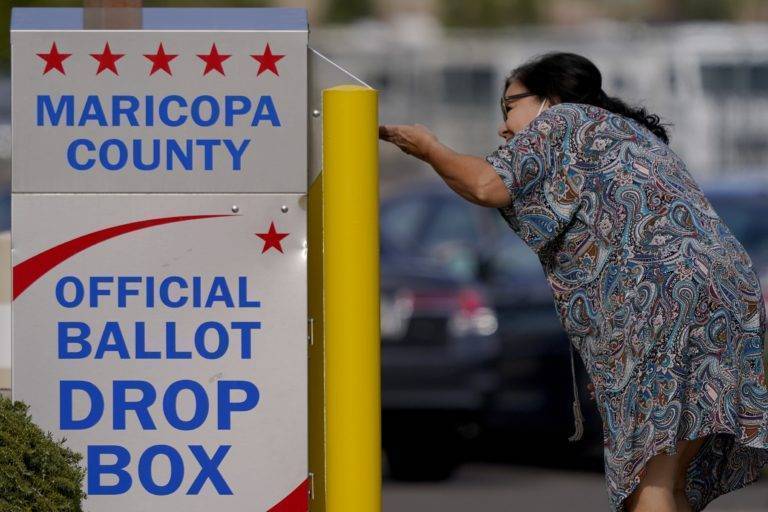
Oklahoma also removed 450,000 ineligible voters from the state’s rolls, Georgiarequired a hand count of ballots to confirm electronic results and Virginiamandated all votes for the 2024 election to be cast by paper ballot.
(Dmytro “Henry” Aleksandrov, Headline USA) Kamala Harris recently agreed to another debate with Donald Trump, with recent news suggesting that she decided to do that because she is losing this election in the battleground states and even some blue states.
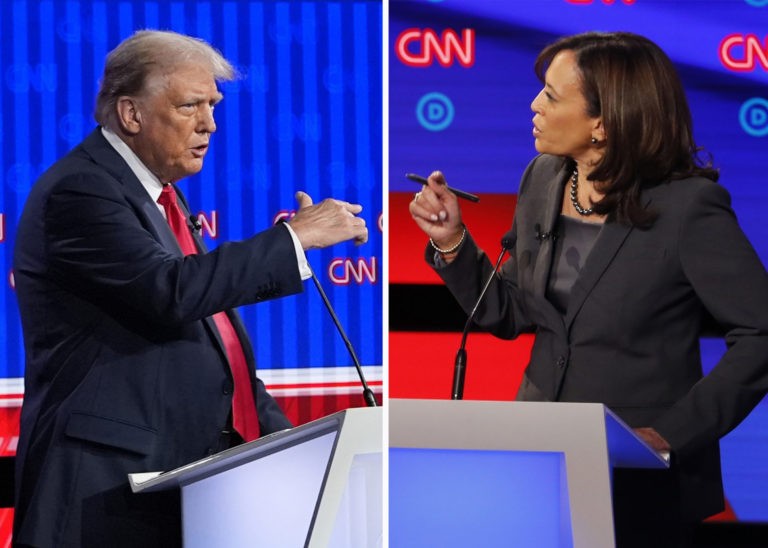
On Sept. 21, 2024, the Harris-Walz campaign stated that Harris was ready for another debate with Trump on Oct. 23, 2024, on CNN, another extremely biased mass media network that would be on her side.
However, during his recent rally in North Carolina, Trump said he wouldn’t agree to participate in another debate, stating that it is too late because the mai-in-voting has already begun.
BREAKING: Trump just told the voters of North Carolina that there won't be another debate with Kamala Harris because voting has already begun, and the only reason she wants to do it is because she knows she's LOSING
Trump also said that Harris suddenly wanted to debate because she was losing the election, a statement with which the senior writer for the National Review, Dan McLaughlin, agreed.
“The typical rule of thumb is that the side that wants more debates is the side that’s losing,” he wrote, adding that Trump made a wise decision by avoiding another debate.
The typical rule of thumb is that the side that wants more debates is the side that's losing. Which suggests that the Harris campaign's internal polling may belie the smug certainty of victory that pervades her online supporters.
Trump, of course, is probably wise to duck another debate unless he is going to be more prepared & disciplined than he was in the last one – which would require a very old dog learning new tricks. Harris has huge vulnerabilities in a debate, but Trump doesn't have what it takes…
Recent news also indicated that Harris is losing many potential voters. The Washington Free Beacon reported that white working-class people are not going to vote for Harris after learning that one of the biggest unions in the country, Teamsters, refused to endorse any presidential candidate this year despite their previous decade-long allegiance and loyalty to the Democratic Party.
Harris also has a problem with voters from swing states, like Pennsylvania. Even Sen. John Fetterman, D-Pa., recently said that the state’s residents support Trump.
Facts back this rhetoric. WVIA recently reported that one of the deep blue counties in Pennsylvania, Luzerne County, recently flipped red, which resulted in conservatives celebrating the victory.
WE DID IT!
IT IS DONE!
We flipped Luzerne County, Pennsylvania, from 🔵🔜🔴.
This is monumental, earth-shattering, ground shaking news.
Thank you to EVERY single volunteer that contributed to this victory!
However, Pennsylvania was not the only state supporting Trump instead of Harris. According to the Sept. 23, 2024, polling by the New York Times and Siena College, Trump led Harris in three battleground states: Arizona, Georgia, and North Carolina—50-45, 49-45 and 49-47, respectively.
Aside from the swing states, Harris may also lose to Trump in two infamous blue states.
One of those states is Virginia, in which, according to a new poll from the University of Mary Washington, Harris only has a slight one-percent lead, which is usually considered a margin of error.
Another blue state, New York, may also turn red, as Fox News reported. Headline USA recently reported that the infamously far-left New York City may also vote for Trump.
Harris also recently decided not to attend a historic Al Smith charity dinner, during which attendees constantly “roast” each other, which could result in her losing even more voters.