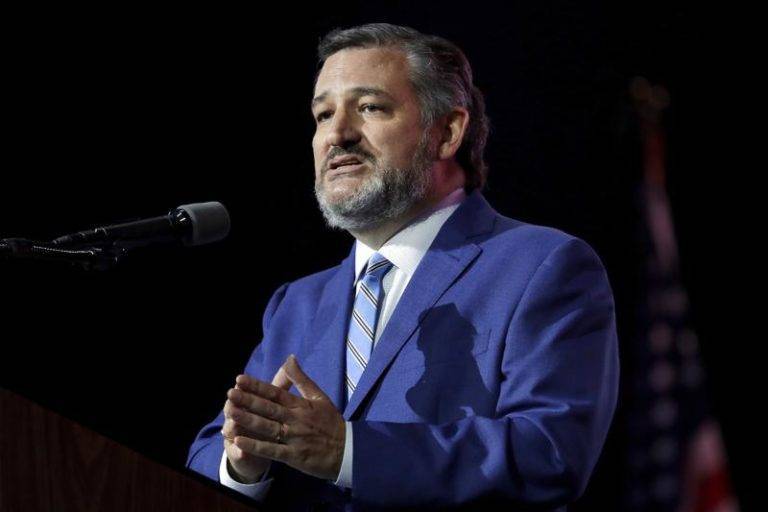
On Verdict, Cruz was reacting to a viral clip of MSNBC’s Jen Psaki, formerly President Joe Biden’s press secretary, suggesting that laws must be changed to stop “disinformation”—or content disadvantageous to Democrats—from impacting elections.
The senator slammed Democrats for not acknowledging Vice President Kamala Harris’s lackluster outreach attempts to American voters by instead looking toward censorship to help them win the next election.
“Well, the Democrats, they’re not actually looking introspectively and saying, ‘Gosh, maybe we were wrong on the issues. Maybe the fact that that over 70% of Americans thought we were on the wrong track, maybe that’s a problem….’” Cruz said. “That would be a rational and sensible thing for Democrats to do.”
Cruz noted Democrats instead took a different tactic.
“So, they’re not doing that. Instead, they’re saying, ‘Hmm, maybe if people just didn’t know what we were doing, maybe if they couldn’t say what we were doing, maybe if they couldn’t criticize what we’re doing,'” Cruz added. “‘Yeah, that’s how we’d win.’”
Cruz pointed out that Psaki’s suggestion would affect the free speech of X users and podcasters like Joe Rogan, whose three-hour interview with President-elect Donald Trump garnered millions of days before the election.
“Understand, she’s not saying we the Democrats need to communicate better,” the GOP senator said. “She’s not saying we the Democrats need to change our policy.”
Cruz said Democrats want censorship and to silence Americans.
“She’s saying we need to change the laws to make it illegal for that SOB Joe Rogan to say things we don’t like,” Cruz added. “We need to change the laws to make it illegal for anyone to post on X what the actual facts are of what we the Democrats are doing.”
Laken Riley Trial Begins, Detailing Her Horrifying Murder, plus Dems Brazenly Trying to STEAL Pennsylvania Senate Election. @benfergusonshow and I break it all down on Verdict. https://t.co/v7aJqz5liK
Cruz expressed relief that Harris did not become president because she and her running mate, Minnesota Gov. Tim Walz, ran an intensely “anti-free speech campaign.”
“We talked before during the election, how this campaign with Kamala Harris and Tim Walz was the most anti-free speech campaign since John Adams, who had signed the Alien and Sedition Acts,” Cruz said. “And it really is historic and dangerous.”
Cruz said he was happy American’s voted for free speech on Election Day.
“I’m glad that the American people repudiated that assault on free speech, and yet I don’t hear anyone in the Democrat Party defending free speech, and sadly, I think they’re going to double down on the answer is more censorship, so no one dares criticize us,” he added.
Julianna Frieman is a freelance writer published by the Daily Caller, Headline USA, The Federalist, and The American Spectator. Follow her on Twitter at @JuliannaFrieman.
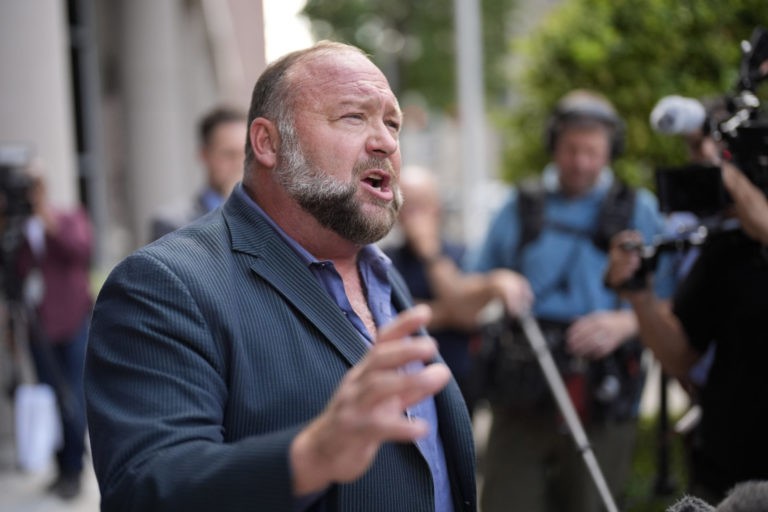
(Headline USA) A company affiliated with Infowars founder Alex Jones asked a federal judge on Monday to disqualify a bid by the satirical news outlet The Onion to buy Jones’s organization at a bankruptcy auction, alleging fraud and collusion.
The company, First United American Companies, which is affiliated with a Jones website that sells dietary supplements, was the only other bidder at the recent auction, offering $3.5 million.
🚨BREAKING EXCLUSIVE: Fraudulent Sale of InfoWars Exposed In Major Federal Court Filing
In a filing in federal bankruptcy court in Houston, a lawyer for the company asked the judge to declare it the winning bidder instead of The Onion.
The lawyer, Walter Cicack, claimed that the bankruptcy trustee overseeing the auction improperly colluded with The Onion and families of victims of the Sandy Hook Elementary School shooting in Connecticut in naming The Onion the winning bidder.
Cicack also alleged the trustee violated rules for the sale set by the judge, and said the company’s cash offer was twice the amount of The Onion’s.
The bankruptcy auction was held last week as part of the liquidation of Jones’ assets, including Infowars.
Proceeds from the sale will go to Sandy Hook families and other creditors.
Jones filed bankruptcy in 2022 after he was ordered to pay nearly $1.5 billion in defamation lawsuits filed by the families for calling the 2012 shooting that killed 20 children and six educators a hoax staged by actors to increase gun control.
The bankruptcy trustee appointed to oversee the sale, Christopher Murray, declined to comment Monday. A lawyer for the Sandy Hook families, Christopher Mattei, also declined to comment.
In a response filed in court later Monday, Murray called the allegations “baseless.”
He said the motion by First United American to disqualify The Onion was “a disappointed bidder’s improper attempt to influence an otherwise fair and open auction process.”
Murray also wrote, “Having failed in its prior efforts to bully the Trustee and his advisors into accepting its inferior bid, FUAC now alleges, without evidence, collusion and bad faith in an attempt to mislead the Court and disqualify its only competition in the auction.”
Murray filed separate court papers Monday asking the judge to approve the sale of Infowars to The Onion.
Monday’s filing by First United American Companies included the formal bid submitted by The Onion, revealing that it offered $1.75 million for Infowars along with certain incentives by Sandy Hook families who won their defamation lawsuit against Jones.
The families agreed to forgo up to 100% of their share of the Infowars sale proceeds and give it to other Jones creditors.
With the families’ offer, other Jones creditors would get a total of $100,000 more than they would get if First United American Companies bought Infowars, according to The Onion’s bidding document.
Murray told the bankruptcy judge during a court hearing Thursday that the families’ incentives made it a better offer than the one by the Jones-affiliated company.
“The creditors ended up significantly better off,” Murray told the judge, adding that one of his responsibilities was to maximize value for creditors.
Judge Christopher Lopez, who said he had questions about the sale process and concerns about transparency, ordered a hearing to see exactly what happened with the auction and how the trustee chose The Onion.
The date of the hearing has not been set.
Jones has been criticizing the sale process on his show and social media sites, calling it “rigged” and a “fraud.”
Cicack also said in Monday’s court filing that the trustee improperly changed the auction process “from a live auction to a secret process.”
Cicack said that after sealed bids were submitted Nov. 8, it was expected that there would be a round of live bidding on Nov. 13.
But instead, he said, Murray decided to ask the two bidders to submit another offer as their final and best proposal, which they did.
Murray then chose from those final bids without holding a round of live bidding. He alleged Murray violated the auction rules.
Cicack called the Sandy Hook families’ portion of The Onion’s bid “Monopoly” money with no value.
“It is also the product of impermissible collusion with the Onion in an effort to ‘rig’ the auction with the goal of achieving a specific result desired by the Connecticut Families,” he wrote.
That means the federal government’s largest agency—with a budget of more than $840 billion—can’t fully explain its spending.
The disclaimer this year was expected. And it’s expected again next year.
The Pentagon previously said it will be able to accurately account for its spending by 2027.
“Despite the disclaimer of opinion, which was expected, the Department has turned a corner in its understanding of the depth and breadth of its challenges,” said Michael McCord, undersecretary of defense and chief financial officer. “Momentum is on our side, and throughout the Department there is strong commitment—and belief in our ability—to achieve an unmodified audit opinion.
Of the 28 reporting entities undergoing standalone financial statement audits, nine got an unmodified audit opinion, one got a qualified opinion, 15 got disclaimers and three opinions remain pending.
“The Department continues to need the sustained investment, senior leadership commitment, and the support of our partners in Congress, federal regulators, the audit community, and our military and civilian personnel to accomplish its audit goals,” McCord said. “An unmodified audit opinion has always been the Department’s primary financial management goal, and with their help, I know it is achievable.”
In February, a Congressional watchdog said it was again unable to determine if the federal government’s consolidated financial statements were reliable, largely due to problems at the Pentagon.
The U.S. Government Accountability Office, which is Congress’ research arm, said it was hampered by “serious financial management problems at the Department of Defense,” among other issues.
Each year, teams of independent public accountants audit the department’s $4.1 trillion in assets and $4.3 trillion in liabilities.
The DOD Office of Inspector General audits the department’s overall or consolidated financial statements in support of that independent public accounting firms audit the individual military services and other DOD reporting entities, including the defense agencies that are all pieces of that overall audit that IG looks at.
The overall DOD audit is comprised of or supported by 28 separate audits of these different components, McCord said.
“This result was not a surprise and I know that on the surface it doesn’t sound like we’re making progress,” he said. “However, that is not the case … The department has improved from less than 7% to over 82% of its funding being free of material weaknesses.”
(Ken Silva, Headline USA) Politicopublished an interview with notorious anti-Trump lawyer Mark Zaid on Monday, revealing that Zaid is telling his clients to leave the country before Donald Trump’s inauguration in January.
“There are a small number of people who I have told, ‘Look, you should take a vacation outside of the country around the time of inauguration, just to see what happens,’” Zaid reportedly said in the interview. “Just go on a routine vacation and see what plays out come Jan. 20, 21st, 22nd.”
Mark Zaid is the latest to confirm former and current operatives in DOJ/natsec space are lawyering up in advance of Trump administration. Zaid, a longtime Dem dirty operative, is even advising those high on the hit list to leave the country—and seek mental health help. pic.twitter.com/OsrjX0B9ln
Politico’s article came a day after NBC News reported that DOJ and FBI officials are hiring lawyers in anticipation of Matt Gaetz becoming the country’s next Attorney General.
Zaid has a long list of unsavory and controversial clients.
A self-described advocate for whistleblowers, Zaid has worked on a wide variety of politically charged matters, including the first Trump impeachment. His clients have included Facebook’s dubious pro-censorship whistleblower, Frances Haugen; the brother of impeacher-turned-war profiteer Alexander Vindman; and a slew of CIA agents who’ve made numerous unfounded claims about having so-called “Havana Syndrome.”
More recently, he was hired on by Secret Service agent Dana DuBrey, who was a site agent involved with the security failures at the July 13 Trump rally in Butler, Pennsylvania—where Trump was nearly assassinated.
Meanwhile, Republicans in the House and Senate have both told the DOJ to preserve all its records from its cases against Trump.
“With President Trump’s decisive victory this week, we are concerned that the Office of Special Counsel may attempt to purge relevant records, communications, and documents responsive to our numerous requests for information. The Office of Special Counsel is not immune from transparency or above accountability for its actions,” Judiciary Chairman Rep. Jim Jordan, R-Ohio, said earlier this month in a letter to Special Prosecutor Jack Smith.
Ken Silva is a staff writer at Headline USA. Follow him at x.com/jd_cashless.
(Ken Silva, Headline USA) The Justice Department claims that a neo-Nazi intentionally crashed a U-Haul truck into a security barrier across from the White House last year—what prosecutors say was the culmination of a six-month plan to “overthrow the democratically elected government of the United States” and “replace it with a dictatorship fueled by Nazi ideology.”
But in a sentencing memorandum filed in September, the lawyers for the defendant—Sai Varshith Kandula, a non-citizen from India—explained what really happened with their client, who’s been diagnosed with schizophrenia.
According to Kandula’s attorneys, his “plan” was “an assemblage of delusional thoughts stitched together by a common thread.”
“For about six months, phantasmic ideas whirled in Sai’s head. He jotted them down in a notebook…an archive of his impairment. According to Sai, a reptilian race had installed a puppet regime to operate the U.S.,” they said.
Kandula acted on his delusions in May 2023, driving a U-Haul into the protective posts that separate the White House grounds from the sidewalk. After that, he stepped outside with the Nazi flag that would be plastered across mainstream news outlets for the next several days. It appears as though someone besides Kandula unfurled the flag for the world to see, as pictures of his arrest still show the Nazi flag folded in half to obscure the swastika.
Remember this? Court filings include pictures of when the suspect was arrested. The flag was still crumpled up, obscuring the swastika. Sure seems like someone (I wonder who?) unfurled the flag for propaganda purposes. BTW, did I mention this guy has been sent to a psych hospital… https://t.co/Zbx7yMBdOnpic.twitter.com/glEH9cCZK1
“He has no time to unfurl it. He lays it on the ground, along with the black bag, raises his hands over his head, and lies prostrate on the sidewalk. Two officers approach and grab his wrists. They pull his arms behind his back. Sai yelps. He says, ‘please, please don’t hurt me.’ An officer asks if he has any weapons. He says, ‘no,’” the defense attorneys recounted.
“Once in custody, an officer removed Sai from the scene. She sat him down across the street. ‘So you tried to run into the White House?’ she asked. ‘Yep,’ he said, ‘I’m gonna be the new leader of this country.’”
Despite the obvious half-baked nature of Kandula’s plans, the DOJ and mainstream media used his actions to generate anti-Trump and anti-right-wing propaganda. Even after Kandula was formally diagnosed with schizophrenia earlier this year—as first reported by Headline USA—the DOJ repeated the claims that he was a serious Nazi who threatened democracy.
“Based on Defendant Sai Varshith Kandula’s stated aim to overthrow the democratically elected government of the United States, the aim to replace it with a dictatorship fueled by Nazi ideology, and his brazen attempt to gain access to the White House by crashing a large vehicle into the barriers protecting the White House, the government requests this Court sentence him to 96 months (eight years) of imprisonment,” prosecutors said in their Sept. 6 sentencing memorandum.
Three days after the DOJ asked for eight years for Kandula, his lawyers filed a rebuttal, explaining his history of mental health issues.
“Formally, his offense meets the requirements for application of the terrorism guideline,” the defense attorneys admitted, before arguing: “But in substance, he’s no terrorist.
“He’s a 20-year-old with a serious but treatable mental illness, and a sentence of 10-16 months time-served with GPS monitoring, mandated treatment and therapy, and a requirement to reside with his parents will satisfy that which the law requires: a sentence sufficient but not greater than necessary to comply with the purposes of sentencing,” the attorneys argued.
A judge was set to weigh the opposing memorandums and sentence Kandula on Oct. 1. But instead of sentencing him, the judge found that he was having a mental health breakdown, and ordered him to undergo a psych exam.
According to an Oct. 30 joint status report from both parties, Kandula was transported by the United States Marshals Service to the Federal Medical Center in Butner, North Carolina on Oct. 21.
Kandula’s evaluation period is set to be complete by Wednesday, after which he’ll return to Washington DC. He’s set to be back in DC by Dec. 28, but the presiding judge hasn’t set a new date for sentencing—presuming that’s still happening.
Kandula’s family expects him to be deported to India, regardless of the severity of his carceral sentence.
Ken Silva is a staff writer at Headline USA. Follow him at x.com/jd_cashless.
(Clint Siegner, Money Metals News Service) Gold and silver futures speculators began selling contracts in anticipation of a Trump victory. Thus far, the selling continues after his win.
The markets may have simply been overbought after big moves higher in October. However, the impact of the election cannot be discounted.
The initial sentiment from Americans at large, and precious metals investors in particular, is that change is coming to Washington, DC. Confidence is on the rise, and that means lower demand from buyers looking for a safe haven and inflation hedge.
There may be reason for hope of fiscal reform, but investors will want to temper that emotion with reality. There is a lot of difficult work to be done, and it won’t be completed without plenty of institutional resistance.
The list of presidential appointees, for example, has many buzzing with anticipation. The reality is the Senate confirmation process won’t start for a couple of months. The candidates will get opposition from Senate Democrats and Republicans like Susan Collins and Lisa Murkowski.
Last week, Senate Republicans installed John Thune as Majority Leader. His track record indicates he is more closely aligned with Mitch McConnell – the former majority leader – than with the president-elect.
The number and the power of entrenched interests who will fight reforms in Washington, DC, should not be underestimated.
Likewise, the new administration has its work cut out for it when it comes to subduing the inflationary forces which have been driving metals prices higher in recent years.
The portion of the U.S. budget available for wholesale cuts is called “discretionary spending.” It represents just a small portion of overall spending. It was only 27% of the total federal budget in 2023. It includes:
National Defense: Approximately $742 billion in 2023
Nondefense: Approximately $935 billion in 2023 for categories including:
Education and workforce development
Science and research
Infrastructure and transportation
Healthcare and social services
Law enforcement and public safety
Last year, the U.S. government forked out approximately $1.7 trillion on discretionary spending. How much of that can be eliminated? Even relatively small, proposed cuts will be greeted with angry opposition by special interests and their allies in Congress.
Nobody in Washington, including the president-elect, has announced plans to touch entitlements – Social Security, Medicare, and other government assistance programs.
The trouble is deficits are forecasted at $2 trillion per year for the next 10 years. If Elon Musk and Vivek Ramaswamy, through their newly created Department of Government Efficiency, are able to trim $1 trillion from federal spending, the deficit will still be $1 trillion per year.
The incoming regime is also an advocate for Fed stimulus – lower interest rates and other inflationary monetary policy.
The infamous U.S. Debt Clock isn’t going to start spinning in reverse any time soon. If it is possible to balance the federal budget, some very hard political choices will have to be made. Until then, the Federal Reserve note “dollar” will likely continue to weaken relative to tangible goods, especially gold and silver.
Trump pointed to Carr’s “great work” in his current term, which expires in 2029, as the reason for his nomination.
“Commissioner Carr is a warrior for Free Speech, and has fought against the regulatory Lawfare that has stifled Americans’ Freedoms, and held back our Economy,” Trump wrote. “He will end the regulatory onslaught that has been crippling America’s Job Creators and Innovators, and ensure that the FCC delivers for rural Americans.”
Trump first nominated Carr to the FCC in 2017 and he has been confirmed unanimously by the U.S. Senate three times. Carr served at the FCC since 2012.
Carr, one of two Republicans among the five current FCC commissioners, was quick to call out NBC for its efforts to evade the Equal Time rule by allowing Vice President Kamala Harris to appear on Saturday Night Live without inviting Trump the weekend before Election Day.
This is a clear and blatant effort to evade the FCC's Equal Time rule.
The purpose of the rule is to avoid exactly this type of biased and partisan conduct – a licensed broadcaster using the public airwaves to exert its influence for one candidate on the eve of an election.… https://t.co/LliZF0po9t
“This is a clear and blatant effort to evade the FCC’s Equal Time rule,” Carr wrote on Nov, 2.
He explained how important Equal Time is.
“The purpose of the rule is to avoid exactly this type of biased and partisan conduct—a licensed broadcaster using the public airwaves to exert its influence for one candidate on the eve of an election,” he continued. “Unless the broadcaster offered Equal Time to other qualifying campaigns.”
NBC remedied the situation by giving Trump free commercial time during the NASCAR playoff race and Sunday Night Football to match Harris’s 90-second skit, according to The Hollywood Reporter.
Carr promptly responded to Trump’s nomination Sunday.
Thank you, President Trump!
I am humbled and honored to serve as Chairman of the FCC.
Broadcast media have had the privilege of using a scarce and valuable public resource—our airwaves. In turn, they are required by law to operate in the public interest.
When the transition is complete, the FCC will enforce this public interest obligation.
Julianna Frieman is a freelance writer published by the Daily Caller, Headline USA, The Federalist, and The American Spectator. Follow her on Twitter at @JuliannaFrieman.
(Mike Maharrey, Money Metals News Service) Indian gold demand held up during the Diwali season despite surging prices, as festival buying was boosted by strong investment demand.
Diwali is the Hindu festival of lights. It is considered an auspicious time to buy gold, and many Indian couples choose to get married during the festival season. Gold demand typically spikes during festival seasons.
Some analysts thought the recent surge in gold prices might dampen demand during Diwali. Gold hit multiple new highs in rupee terms last month, charting a 5.5 percent gain. So far, gold is up 17 percent in rupee terms this year.
The gold price has been mitigated somewhat by a big reduction in import duties on precious metals. In July, the Indian government cut taxes on gold and silver imports by more than half, lowering duties from 15 percent to 6 percent.The move initially pushed prices down by about 6 percent and drove record gold imports in August.
Indian gold consumers tend to be price-sensitive, but gold demand has remained strong even as prices surged.
According to anecdotal information gathered by the World Gold Council, jewelry stores reported higher foot traffic during the Diwali buying season. The WGC said auspicious “token” purchases were “rather broad-based, spanning regions and demographics.”
While the rising gold price may be slowing retail demand, it has boosted investor sentiment and made gold an attractive long-term investment option. This drove a surge of investment buying last month, with gold coin sales particularly brisk.
Volatility in Indian equity markets has also caused tailwinds for investment demand.
This surge of interest in the yellow metal was reflected in Indian-based gold ETFs. From July to October, monthly inflows of gold into Indian funds increased from ₹5.3 billion to ₹15.4 billion.
According to the Association of Mutual Funds in India (AMFI), Indian ETFs reported net inflows of ₹19.6 billion ($233 million), pushing the total assets under management (AUM) to a new high of ₹445 billion ($5.3 billion). This represented a 12 percent month-on-month increase and a 70 percent gain on the year.
Indian funds have added 12.2 tons of gold to their holdings in 2024.
October Indian gold imports were estimated to be between 90 and 92 tons, in line with expectations. That was up from 59 tons imported in September.
Since the import duty cut, imports have averaged around 95 tons per month, up from a 50-ton average earlier in the year before the tax relief.
Year to date, gold imports are up around 21 percent.
India ranks as the second biggest gold market globally behind China. Indian gold demand can have a significant impact on global prices.
India’s Central Bank Also Gobbling Up Gold
Indian consumers and investors aren’t the only ones stocking up on the yellow metal.
The Reserve Bank of India added another 28 tons of gold to its reserves last month. The Indian central bank has been one of the biggest central bank gold buyers this year. So far this year, the RBI has increased its gold holdings by 78 tons.
Gold currently accounts for about 10 percent of India’s total reserves, the highest level since 1999.
The RBI has been buying gold since 2017. Over that period, it has increased its gold reserves by over 260 tons.
An Indian economist told the Times of India that the push to accumulate gold was based on both political and economic reasons. He said that the “reliability” of the U.S. dollar has “diminished.” He noted the “noticeable decline” in the confidence in U.S. dollar assets.
Another economist told the Times, “It makes a lot of sense (to invest in gold), given the increased volatility in the FX market, elevated interest rates in the U.S., and, of course, also as the central banks in each economy would like to diversify the asset classes in which they are parking their reserves.”
India has also been bringing its gold back into the country. Last spring, the Reserve Bank of India repatriated 100 tons of gold, moving it from the UK to vaults within India’s borders, and it recently brought more gold home.
India’s Love Affair With Gold
Indians have historically had an affinity for gold. Indian households own an estimated 25,000 tons of gold. That amount is likely significantly understated, given the large black market in the country.
Gold is deeply interwoven into the country’s marriage ceremonies and cultural rituals. Festival seasons typically boost gold demand.
Indians have long valued the yellow metal as a store of wealth, especially in poorer rural regions. Around two-thirds of India’s gold demand comes from beyond the urban centers, where large numbers of people operate outside the tax system.
Gold isn’t considered a luxury in India. Even poor Indians buy gold. According to a 2018 ICE 360 survey, one in every two households in India had purchased gold within the last five years. Overall, 87 percent of Indian households own some gold. Even households at the lowest income levels in India hold some of the yellow metal. According to the survey, more than 75 percent of families in the bottom 10 percent of income managed to buy some gold.
The yellow metal was a lifeline for Indians buffeted by the economic storm caused by the government’s response to COVID-19. After the Indian government locked down the country, banks tightened credit to mitigate the default risk. Unable to secure traditional loans, Indians used gold to secure financing. As Indians endured a second wave of lockdowns, many Indians resorted to selling gold outright to make ends meet.
(Money Metals News Service) In a riveting discussion with host Mike Maharrey, economist and writer Jeffrey Tucker dug deep into key economic challenges and societal shifts shaping the U.S. in recent years. As founder and president of the Brownstone Institute, Tucker provides a unique lens into the intersection of economics, public policy, and culture.
(Interview Begins Around 6:33 Mark)
Who is Jeffrey Tucker?
Jeffrey Albert Tucker is an American libertarian writer, publisher, and advocate for anarcho-capitalism. Jeffrey A. Tucker has been involved with several prominent organizations, including the Mises Institute, where he served as editorial vice president, and the American Institute for Economic Research (AIER), where he organized efforts against COVID-19 restrictions starting in 2020.
Tucker tackled the misconception that inflation is “under control.” He traced the roots of inflation back to April 2020, when the U.S. experienced a 26% annual increase in the money supply—an unprecedented injection of liquidity largely spurred by stimulus payments and pandemic-era policies.
By 2023, official data indicated a 22% decline in purchasing power since January 2020, with some metrics suggesting losses as high as 50% when accounting for housing, insurance, and hidden costs.
Despite claims from financial leaders like Janet Yellen that inflation was “transitory,” Tucker highlighted its deeper causes, including massive Fed purchases of Treasury debt and artificially low interest rates. He predicted a resurgence of inflation by the summer of 2025, emphasizing that $1.1 trillion in new money had been created over the past year alone.
Misunderstanding Inflation and Economic Policy
Tucker clarified the distinction between inflation and rising prices in isolated markets like oil or imports. True inflation reflects a broad decline in the dollar’s purchasing power.
He criticized Keynesian economic policies, which misattribute inflation to “overheated production,” and advocated for supply-side approaches to stimulate growth while curbing inflation.
Cutting federal spending by $2–3 trillion, reforming bureaucratic inefficiencies, and addressing excessive money printing are necessary steps, according to Tucker. However, he acknowledged the political challenges of implementing such measures.
The Role of Brownstone Institute
Founded in 2021, the Brownstone Institute emerged as a response to the failures of public policy during the pandemic. Tucker lamented the class-based nature of lockdowns, which shielded the upper class while economically burdening workers and small businesses.
He described Brownstone as a coalition of dissidents examining the intersection of health, economics, and freedom.
Brownstone supports intellectuals through fellowships and publications, addressing issues like censorship, health policy, and globalism. Tucker highlighted its alignment with broader societal movements, including medical freedom and anti-lockdown advocacy.
Pandemic Reflections
Reflecting on the pandemic, Tucker criticized lockdowns as a failed strategy that disproportionately hurt the vulnerable. He argued that waiting for a vaccine while halting economic activity created devastating consequences, compounded by the failure of the vaccines to deliver expected results. “We would have been better off doing absolutely nothing,” Tucker remarked.
He noted that much of the pandemic’s policymaking remains classified, leaving many unanswered questions about its rationale and execution.
The Future of U.S. Politics and Economy
Tucker discussed the implications of Donald Trump’s recent election victory, emphasizing the president’s challenge to address domestic inflation while navigating myths around economic causality. He predicted that Trump’s administration would face difficulties reducing federal spending while balancing political optics.
He also highlighted the ongoing “realignment” in U.S. politics, marked by the merging of anti-censorship, health freedom, and economic independence movements.
Final Thoughts and Where to Learn More
Jeffrey Tucker continues to share his insights through Brownstone.org, as well as social platforms like X (formerly Twitter). The Brownstone Institute publishes daily articles and provides a platform for intellectual exploration of liberty and public policy.
This podcast highlighted Tucker’s sharp critique of economic myths, his passion for freedom, and his commitment to addressing modern challenges with honesty and foresight.
Key Questions & Answers
Here are the key questions and answers from the podcast featuring Mike Maharrey and Jeffrey Tucker:
On Inflation: Is it truly “under control”?
Inflation is far from resolved. Despite claims that it’s “transitory,” inflation rates soared due to massive money printing in 2020. The money supply increased by 26% annually, and purchasing power declined by 22% (officially) since January 2020, with real losses potentially reaching 40–50% when accounting for hidden costs like housing and insurance. The $1.1 trillion created over the last year ensures inflation will remain an issue.
What is the real cause of inflation?
Inflation is not merely the result of rising prices in specific markets (e.g., oil). It is a broad-based decline in the dollar’s purchasing power, caused by excessive money printing and fiscal policy. Misunderstanding this leads to ineffective policy responses, such as blaming tariffs or supply-chain issues.
What steps are necessary to combat inflation?
A combination of drastic federal budget cuts (up to $3 trillion), reforming bureaucracies, and halting excessive money printing is essential. However, political challenges, including entitlement spending and interest on debt, limit these actions. Growth-driven policies, like those advocated by supply-siders in the 1980s, could help mitigate inflation by driving production and wealth creation.
What is the Brownstone Institute, and why was it founded?
Founded in 2021, the Brownstone Institute emerged to address the failures of public policy during the pandemic, particularly the exploitative nature of lockdowns. It focuses on promoting liberty and freedom, supporting intellectuals, and publishing research that examines the intersection of health, economics, and freedom. It also predicted the realignment of medical freedom, anti-censorship, and pro-economic independence movements.
Looking back: Were lockdowns and pandemic responses effective?
Public opinion is slowly turning against lockdowns, but the repudiation of these policies is happening more slowly than expected. Tucker emphasized that the lockdowns, coupled with vaccine failures, caused more harm than good. “We would have been better off doing absolutely nothing,” he remarked, highlighting the lasting damage to public trust.
What are the implications of Donald Trump’s recent election?
Trump faces significant hurdles in addressing inflation, which stems from structural problems set in motion by previous administrations. While his promise to reduce inflation resonates with voters, meaningful progress requires addressing underlying fiscal and monetary issues, which will be politically challenging.
(Mike Maharrey, Money Metals News Service) We keep hearing that the economy is “robust” and gliding to a soft landing, but there are cracks in the foundation if you care to look closely enough.
American consumers have continued to spend over the last two years despite the stranglehold of price inflation. On the surface, this seems like a bullish indicator. But when you dig into the spending patterns, you discover that Americans blew through their savings and ran up massive credit card bills to sustain their spending spree.
And now it appears consumers might be pushing up against their borrowing limits.
The increase in consumer debt has slowed to a crawl, with both credit card spending and borrowing for big-ticket items tanking. This may indicate that Americans are close to being tapped out.
That’s bad news for an economy relying on borrowing and spending to keep churning.
Americans now owe just over $5.1 trillion in consumer debt.
The Federal Reserve consumer debt figures include credit card debt, student loans, and auto loans but do not factor in mortgage debt. When you include mortgages, U.S. households are buried under a record level of debt. As of the end of the third quarter, total household debt stood at $17.94 trillion.
Credit card spending tanked in August and remained muted in September. Revolving credit, primarily made up of credit card balances, rose by $1.1 billion, a 0.9 percent increase. Americans owe just under $1.36 trillion in revolving debt.
The double whammy of rising debt and interest rates exacerbates the debt problem. The average annual percentage rate (APR) currently stands at 20.35 percent, with some companies charging rates as high as 28 percent. That’s only slightly down from the record high of 20.79 percent set in August.
Rates don’t seem to be coming down much despite the Federal Reserve’s recent rate cuts. According to an ABC News report, while the Fed has dropped the benchmark rate by 75 basis points, credit card companies are charging a higher margin “to weather default risk, cover overhead costs and recoup profits, experts added.”
“Credit card rates are high, and they’re staying high,” Bankrate analyst Ted Rossman told ABC News.
That’s more bad news for consumers already burdened by high prices and big credit card balances.
This double whammy is taking its toll. According to New York Fed Q3 data, “Aggregate delinquency rates edged up from the previous quarter, with 3.5 percent of outstanding debt in some stage of delinquency.” It characterized delinquency rates as “elevated.”
This underscores the fundamental problem of running an economy on credit. It’s expensive, and credit cards have an inconvenient thing called a limit.
Non-revolving debt, primarily reflecting outstanding auto loans, student loans, and loans for other big-ticket durable goods, increased by 1.6 percent in September. Non-revolving debt has increased at a relatively tepid pace of under 2 percent for most of the year as consumers cut back on big-ticket spending in order to cover the increasing costs of day-to-day necessities.
There was an acceleration in non-revolving debt in July and August, likely reflecting student loan balances as students prepared for the fall semester.
Before the pandemic, revolving credit growth averaged 5 percent.
As credit card balances max out, more and more Americans are turning to their home equity to fill the gap. HELOC balances increased by $7 billion to reach $387 billion in Q3, representing the tenth consecutive quarterly increase since Q1 2022.
Joe Biden, Jerome Powell, and the talking heads on corporate media can brag all they want about the “strong economy,” but Americans have been borrowing to buy it. They may have reached their limit, and that’s bad news for an economy that thrives on debt.