No Joke: Massachusetts Man Electrocuted While Hanging Christmas Lights, in Critical Condition

(Jacob Bruns, Headline USA) A Massachusetts man was nearly electrocuted to death while hanging his Christmas lights on his tree, ABC News reported.

The incident occurred on Wednesday of this week, and was reported to the local 911 station around 10 a.m., according to the Wellesley Police Department.

Though he did not die, the man reportedly remains in the hospital.

The WPD report indicated that the victim was a “contractor hired by a resident” to install Christmas lights on a large, outdoor tree—a reminder of the dangers of large-scale outdoor Christmas decorating.

The report suggested that the man was using a pole measuring approximately 34 feet when it “came into close proximity, or contact with, a primary electrical line on a utility pole.”

This incidental contact led to “a life-threatening electrical shock.”

After the shock, the man’s coworkers called 911 and began to perform CPR. 

A People report suggested that the young man did not recover a pulse until the “last shock administered” by the AED machine.

The victim reportedly is still alive despite the life-threatening incident, but no reports have emerged as to the extent of the harm done to him.

Officer Tim Gover told reporters that it would be unlikely to survive such an extreme shock.

“He’ll be pretty lucky if he survives,” Gover noted. “He took a big hit.”

Though the incident was indeed grave, it does call to mind a classic American Christmas trope, the electric shock of the Christmas lights, wherein a cat messing with Christmas lights electrocutes itself.

Still, the Massachusetts incident awaits further investigation.

According to the police report, the Occupational Safety and Health Administration was on the Massachusetts case. 

“OSHA investigators responded to the scene and are working with the WMLP and Wellesley Police,” the police report said. “The Wellesley Police, Fire, and WMLP Departments extend our thoughts and prayers to the victim and his family during this tragic incident.”

SJSU Reaches Finals of Conference Tournament Due to Forfeit over Trans Athlete

(Maire Clayton, Headline USA) The San Jose State University women’s volleyball team advanced to the finals of the Mountain West Conference after Boise State forfeited due to SJSU having a transgender athlete. 

Boise State pulled out of the tournament on Wednesday night and released a statement, according to ESPN.

“The decision to not continue to play in the 2024 Mountain West Volleyball Championship tournament was not an easy one,” it read.

The statement mentioned the team had to overcome many obstacles to even make the tournament.

“Our team overcame forfeitures to earn a spot in the tournament field and fought for the win over Utah State in the first round on Wednesday,” it continued. “They should not have to forgo this opportunity while waiting for a more thoughtful and better system that serves all athletes.”

The team was praised on social media for its decision to not compete against SJSU.

Women’s sports activist (and former college swimmer) Riley Gaines expressed her approval of the decision.

“They’ve made it clear some things matter more than victory,” she wrote. “The BSU women’s volleyball team are HEROINES.”

Idaho GOP Gov. Brad Little commended the team for its leadership, according to a Fox News interview.

“Even with their biggest game of the season on the line, the Boise State women’s volleyball team has consistently shown leadership for female athletes everywhere,” he said. “Idaho will continue to fight to defend women’s sports.”

SJSU reached the finals without having to win a single match, as the team had a bye and then received a forfeit.

A group of 12 women, including some current student athletes and SJSU’s former associate head volleyball coach, filed a lawsuit to try to stop trans athlete Blaire Fleming from competing in the conference tournament.

Biden-appointed Judge S. Kato Crews ruled the tournament would continue as scheduled and refused to remove forfeits teams accrued from not competing against SJSU.

WATCH: Putin Gives Ominous Warning about Trump Assassination Attempts

(Ken Silva, Headline USA) Russian President Vladimir Putin reportedly warned this week that U.S. President-elect Donald Trump is “not safe” from assassination attempts.

Putin’s remarks came at a Thursday press conference during a security summit in Kazakhstan.

“What struck me the most is not that Donald Trump was faced with uncivilized means, including assassination attempts––more than once,” Putin said, as translated by the Associated Press. “By the way, in my view, even now he’s not safe … But he is a clever and cautious man, I should hope he realizes all that.”

Trump famously survived two credible assassination attempts during his 2024 campaign.

The first one occurred in Butler, Pennsylvania on July 13, when a gunman shot him in the year—also killing a rally-goer and seriously wounding at least two others.

On Sept. 15, another gunman attempted to kill Trump on his Florida golf course, leading him to forego golf for the rest of the campaign.

Since then, he’s received enhanced security from the Secret Service. Earlier this month, footage showed that his security includes robot dogs, which are becoming increasingly common among law enforcement.

But according to former congressman Matt Gaetz—whom Trump unsuccessfully nominated to be his Attorney General—there are possibly up to five known assassination teams in the U.S. conspiring to assassinate Trump.

Gaetz said in September that a senior Homeland Security official told him about the five assassination conspiracies. That was before the Sept. 15 attempt on Trump at his West Palm Beach golf course.

“Three of them that we know are foreign in nature. Two of them we know are domestic in nature, and that calls for a force protection that we do not have around the former president right now,” Gaetz said at the time, adding that DHS officials are “aware of this and were concerned that the Secret Service was not providing sufficient support.”

“Three of these teams are foreign-inspired, from my understanding—Iranians, Ukraine, Pakistan—and, you know, the work is obviously challenging to protect—protective detail, like a presidential campaign that is vigorous and out campaigning,” Gaetz said.

Gaetz hasn’t gone into detail about the alleged assassination teams. The FBI has claimed to thwart an Iranian plot against Trump, but the details of that case look dubious.

Ken Silva is a staff writer at Headline USA. Follow him at x.com/jd_cashless.

Police Deny Sitting on Evidence as Netflix Doc Brings Renewed Attention to JonBenet Ramsey’s Killing

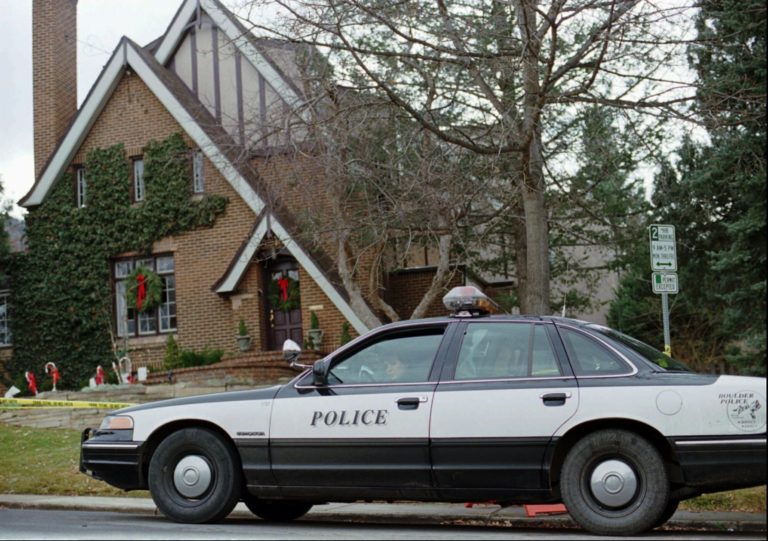
(Headline USA) Amid renewed interest in the killing of JonBenet Ramsey triggered in part by a new Netflix documentary, police in Boulder, Colorado, refuted assertions this week that there is viable evidence and leads about the 1996 killing of the 6-year-old girl that they are not pursuing.

JonBenet Ramsey, who competed in beauty pageants, was found dead in the basement of her family’s home in the college town of Boulder the day after Christmas in 1996.

Her body was found several hours after her mother called 911 to say her daughter was missing and a ransom note had been left behind.

The details of the crime and video footage of JonBenet competing in pageants propelled the case into one of the highest-profile mysteries in the United States.

The police comments came as part of their annual update on the investigation, a month before the 28th anniversary of JonBenet’s killing.

Police said they released it a little earlier because of the increased attention on the case, apparently referring to the three-part Netflix series Cold Case: Who Killed JonBenet Ramsey.

In a video statement, Boulder Police Chief Steve Redfearn said the department welcomes news coverage and documentaries about the killing of JonBenet, who would have been 34 this year, as a way to generate possible new leads.

He said the department is committed to solving the case but needs to be careful about what it shares about the investigation to protect a possible future prosecution.

“What I can tell you though, is we have thoroughly investigated multiple people as suspects throughout the years and we continue to be open-minded about what occurred as we investigate the tips that come into detectives,” he said.

The Netflix documentary focuses on the mistakes made by police and the “media circus” surrounding the case.

JonBenet was bludgeoned and strangled. Her death was ruled a homicide, but nobody was ever prosecuted.

Police were widely criticized for mishandling the early investigation into her death amid speculation that her family was responsible.

However, a prosecutor cleared her parents, John and Patsy Ramsey, and brother Burke in 2008 based on new DNA evidence from JonBenet’s clothing that pointed to the involvement of an “unexplained third party” in her slaying.

The announcement by former district attorney Mary Lacy came two years after Patsy Ramsey died of cancer. Lacy called the Ramseys “victims of this crime.”

John Ramsey has continued to speak out for the case to be solved.

In 2022, he supported an online petition asking Colorado’s governor to intervene in the investigation by putting an outside agency in charge of DNA testing in the case.

In the Netflix documentary, he said he has been advocating for several items that have not been prepared for DNA testing to be tested and for other items to be retested. He said the results should be put through a genealogy database.

In recent years, investigators have identified suspects in unsolved cases by comparing DNA profiles from crime scenes and to DNA testing results shared online by people researching their family trees.

In 2021, police said in their annual update that DNA hadn’t been ruled out to help solve the case, and in 2022 noted that some evidence could be “consumed” if DNA testing is done on it.

Last year, police said they convened a panel of outside experts to review the investigation to give recommendations and determine if updated technologies or forensic testing might produce new leads.

In the latest update, Redfearn said that review had ended but that police continue to work through and evaluate a “lengthy list of recommendations” from the panel.

Adapted from reporting by the Associated Press

Newsom’s Office Says People are Flocking to Calif.; Others Say It’s No. 1 for Exits

(Kenneth Schrupp, The Center Square) While California Gov. Gavin Newsom’s office said the state has seen a “surge” in people moving to the state, data from the same source shows California has the highest net out-migration of any state in the nation.

Newsom’s office recently sent the Center Square an email regarding the publication’s “close, detailed coverage of California’s population movements,” encouraging reporters to examine a Newsweek piece titled, “California Sees Surge in People Moving to the State,” noting the National Association of Realtors said California was among the most popular states for Americans to move to in 2024. 

California has the largest economy and population of any state in the country, which means coming in second to Texas—which has an economy two-thirds the size and population three-quarters the size of California’s—suggests the state is underperforming.

Another NAR report from October found that California had the highest net out-migration of jobs—18,485—in the third quarter of 2023, and had 29% net out-migration per capita than Illinois, which had the second-most.

The Newsweek piece has since been updated to note that the increase in Californians moving to the state was from a 2022 report, and that for 2024 “California did not see high net migration numbers.”

The piece’s title was also updated to “Californians Who Left for Remote Work Have Shown ‘Signs of Returning,'” suggesting widespread return-to-office orders are bringing remote workers back to California.

The California Department of Finance said the state’s population grew by 67,000 in the 2022-2023 fiscal year, which Newsom’s office referenced for The Center Square, but official Census data seems to contradict these numbers. 

According to an analysis of U.S. Census data from the Orange County Register, California lost a net of 268,052 residents in 2023, which is 73,814 better than in 2022.

With the Census noting major losses across 2022 and 2023, it seems improbable that the state’s population grew. 

“California experienced a historic population loss thanks to Newsom’s policies that encourage crime, homelessness and inflation,” said California Assembly Minority Leader James Gallagher, R-Yuba City, to The Center Square. “Things aren’t going to get better if the governor keeps cherrypicking data to delude himself into thinking he’s solved Californians’ problems.”

Freshman Congressman Vows to Continue Matt Gaetz’s Push to Abolish the ATF

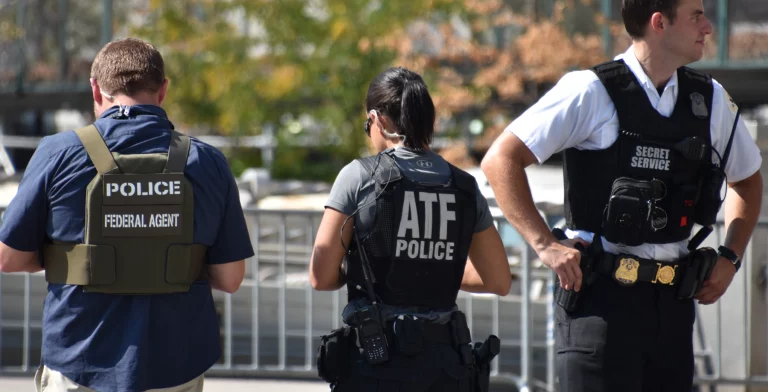
(Ken Silva, Headline USA) Matt Gaetz was one of the biggest thorns in the ATF’s side while he was in Congress, pushing to both defund and abolish the agency over its constitutional infringements.

Gaetz is no longer in Congress after he stepped down in a failed effort to become the next U.S. attorney general. Luckily for ATF critics, Rep. Eric Burlison, R-Mo., vowed to take Gaetz’s place. Burlison first took office in January 2023, and won his reelection in November.

“He’s leaving a vacuum behind. I’m happy to announce that I’m stepping in, and in January I’ll be filing a bill that Matt Gaetz sponsored to abolish the ATF,” Burlison said earlier this month on Twitter/X.

Burlison also reportedly said the ATF “has been a disaster for the American people and our God-given Second Amendment rights”—citing scandals such as Ruby Ridge, Waco, and Operation Fast and Furious.

Gaetz introduced legislation to abolish the ATF last January, after the agency introduced legislation that requires owners of guns with stabilizing braces to destroy, reconfigure, register, or turn in their firearms to ATF within 120 days. Stabilizing arm braces are accessories installed on pistols and shotguns that allow users to stabilize these firearms against their arms, resulting in more accurate shooting without compromising safety or comfort, and reducing the risk of bruising and other injuries when shooting from one hand.

Gaetz’s bill never gained traction, but the ATF’s rule was temporarily blocked by the Eighth Circuit Court of Appeals in August.

The lawsuit against the ATF’s unconstitutional rule was remanded to the district court, where it remains ongoing.

Ken Silva is a staff writer at Headline USA. Follow him at x.com/jd_cashless.

Report: JP Morgan CEO Influencing Trump’s Agenda, Despite Previous Support for Democrats

(Ken Silva, Headline USA) The CEO of JPMorgan Chase, which last year agreed to pay $290 million to the victims of Jeffrey Epstein for banking the sex trafficker’s criminal enterprise, has been secretly communicating with Donald Trump for months and is influencing his impending policy agenda—despite his previous staunch opposition to Trump.

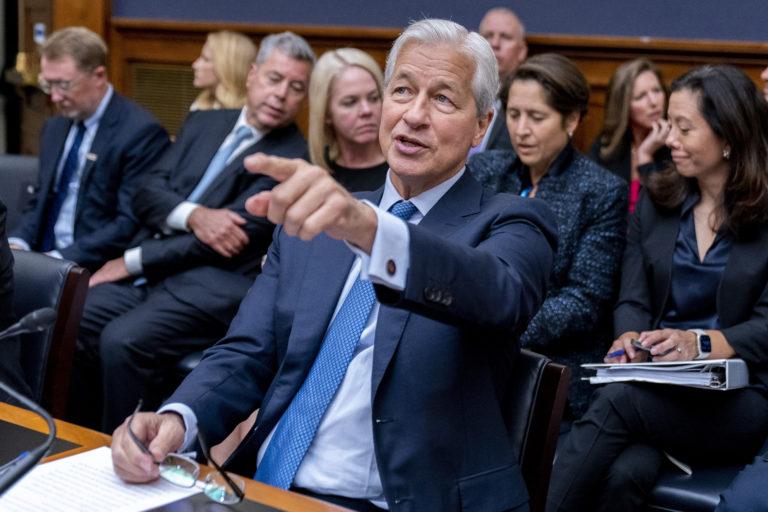
Citing four sources close to Trump’s transition team, the New York Post reported Friday that JPMorgan CEO Jamie Dimon been serving as a “sounding board” for the incoming president’s economic plan.

“One GOP insider said the president-elect’s inner circle held a series of ‘no-holds-barred conversations’ with Dimon,” the Post reported.

“Three of the sources close to Trump said the secret back channel focused on plans for cutting government spending, banking regulation, taxes and trade,” the newspaper said.

“A company insider added that Trump’s top aides set up the calls, which continued after the election, to ‘create a bit of daylight’ between the two men and stop details of the exchanges leaking.”

The Post added that despite their political differences, Trump has admired Dimon, who’s worth about $2.6 billion. One source told the Post that Trump has a “man crush” on Dimon.

News of Trump’s talks with Dimon—a long-time Democrat supporter—comes on the heels of reports that the President-elect is also consulting with Democrat donor and Blackrock CEO Larry Fink.

Dimon and the Trump campaign both reportedly declined to comment on the matter.

Like many players who’ve recently jumped on the Trump bandwagon, Dimon opposed Trump throughout much of the 2024 presidential campaign.

Last November, Dimon endorsed virulent neocon Nikki Haley, urging Democrats to support her, too.

“Even if you’re a very liberal Democrat, I urge you, help Nikki Haley, too. Get a choice on the Republican side that might be better than Trump,” Dimon reportedly said at the time.

Dimon did admit in January that Trump “was kind of right about NATO, kind of right on immigration.” And in June, Trump floated Dimon’s name for Treasury Secretary and claimed he had the banker’s endorsement—even though Dimon never publicly endorsed him.

Earlier this month, Trump announced that Dimon will not be in his Cabinet. That prompted the JP Morgan CEO to respond: “I haven’t had a boss in 25 years and I’m not about ready to start.”

Ken Silva is a staff writer at Headline USA. Follow him at x.com/jd_cashless.

Thanksgiving, Economics, and Sound Money

(Money Metals News Service) In the latest episode of the Money Metals Midweek Memo, host Mike Maharrey blends historical insights with economic commentary to explore Thanksgiving’s roots, the current state of the gold and silver markets, and the enduring principles of sound money.

The Pilgrims’ Experiment in Socialism: A Thanksgiving Tale

Thanksgiving is often remembered for its feasts and family gatherings, but the holiday has a lesser-known economic backstory. Maharrey recounts the trials of the Pilgrims who settled in Plymouth in 1620. Initially, the colony organized itself under a socialist system, where resources and labor were pooled and distributed equally. The results were disastrous. Facing harsh winters, famine, and widespread illness, more than half the colony perished within the first year.

Governor William Bradford documented these struggles, noting that communal ownership bred discontent and laziness. In 1623, the colony adopted a system of private property, assigning each family their own plot of land. This shift incentivized productivity, dramatically increasing crop yields and securing the colony’s survival. As Bradford observed, private ownership aligned with human nature, fostering industriousness and eliminating the inefficiencies of socialism. Without this change, there likely would not have been a Thanksgiving to celebrate.

Gold and Silver: Navigating Volatile Markets

Recent weeks have seen significant swings in the gold and silver markets, driven by geopolitical and economic factors. Maharrey explains that reports of a potential ceasefire between Israel and Hamas temporarily eased investor concerns, leading to a selloff in safe-haven assets like gold. Simultaneously, discussions around tariffs strengthened the U.S. dollar, creating further headwinds for precious metals.

Despite these short-term fluctuations, the fundamentals remain unchanged. Inflation persists, government debt continues to climb, and the Federal Reserve signals a slower-than-expected pace for reducing interest rates. Maharrey predicts that the long-term consequences of years of monetary malfeasance—including artificially low interest rates and excessive quantitative easing—will come to a head within the next 12 to 18 months. These structural issues, he argues, reinforce the case for holding gold and silver as long-term stores of value.

Bitcoin vs. Gold: Complementary Assets, Not Competitors

As Bitcoin recently approached $100,000 before experiencing a correction, Maharrey emphasizes the differences between Bitcoin and gold. While Bitcoin is often dubbed “digital gold,” its volatility sets it apart. Maharrey notes that Bitcoin behaves more like a tech stock, with sharp price swings that can unsettle investors. During economic downturns, Bitcoin has historically failed as a safe-haven asset, unlike gold, which tends to perform well in times of crisis.

Rather than viewing Bitcoin and gold as competitors, Maharrey advocates a complementary approach. He suggests that Bitcoin investors consider converting gains into gold or silver during market corrections. This strategy not only protects profits but also shields wealth from the relentless devaluation of fiat currencies. Money Metals Exchange, he highlights, facilitates seamless transactions between cryptocurrencies and precious metals, offering storage options in a state-of-the-art depository that is even larger than Fort Knox.

The Enduring Lessons of Thanksgiving

Reflecting on Thanksgiving, Maharrey expresses gratitude for the remnants of free-market capitalism in the United States. Despite government intervention and cronyism, the market system has proven far superior to socialism, which he criticizes as incompatible with human nature. The Pilgrims’ failed experiment in communal ownership serves as a cautionary tale, underscoring the importance of incentives and private property in economic systems.

Socialism, Maharrey argues, often appeals to emotion with promises of fairness and collective prosperity. However, its fundamental flaws—ignoring scarcity, incentives, and human behavior—inevitably lead to failure. The Pilgrims’ experience vividly demonstrates that sound economic principles, rooted in human nature, are essential for success.

Avoid Black Friday Madness: Give the Gift of Gold and Silver

As Thanksgiving transitions into the holiday shopping season, Maharrey offers a simple solution to avoid the chaos of Black Friday: invest in precious metals as gifts. Unlike fleeting consumer goods, gold and silver retain their value and serve as lasting reminders of thoughtful giving. Money Metals Exchange offers a range of options, from coins to collectibles, making it easy to find the perfect gift for loved ones.

Conclusion

Maharrey’s commentary in this week’s episode ties together historical lessons, market insights, and practical advice. From the Pilgrims’ economic experiments to the enduring value of gold and silver, the episode reinforces the importance of sound money principles. As we celebrate Thanksgiving, it’s a reminder to reflect on the lessons of history and to prepare for the uncertainties of the future with investments that stand the test of time.

Crypto Entrepreneur Eats Banana Art after Purchasing for $6.2M

(Maire Clayton, Headline USA) Crypto entrepreneur Justin Sun decided to eat the banana art he purchased for a whopping $6.2 million at a Sotheby’s auction in New York City.

He made the move during a Hong Kong conference on Friday, according to the BBC.

“It’s much better than other bananas,” Sun said. “It’s really quite good.”

The 2019 piece by Maurizio Cattelan was titled “Comedian” and comprised of a banana that was duct-taped to a wall.

The banana used for the art piece is routinely changed, and Sun described how to replace the fruit while he spoke with the press.

The outlet added the banana was previously eaten two other times, but neither individual paid money to do so.

Sun originally shared on Nov. 20 he acquired the controversial piece of art in a social media post.

“This is not just an artwork; it represents a cultural phenomenon that bridges the worlds of art, memes, and the cryptocurrency community,” he wrote.

He added he planned to eat the banana in the upcoming days.

Sun said it would be “honoring its place in both art history and popular culture.”

After the selling of the art went viral, The New York Times found the fruit vendor the banana was purchased from.

The outlet informed Shah Alam of just how much the banana went for, causing Alam to cry.

“I am a poor man,” Alam said. “I have never had this kind of money; I have never seen this kind of money.”

Sun saw the story and took to social media Thursday vowing to help Alam.

“To thank Mr. Shah Alam, I’ve decided to buy 100,000 bananas from his stand in New York’s Upper East Side,” Sun wrote. “These bananas will be distributed free worldwide through his stand.”

The entrepreneur stated he hopes to visit Alam’s fruit stand in person.

“Mr. Alam’s contribution to this extraordinary artwork is indispensable, highlighting the boundless possibilities and value hidden in everyday life,” he continued.

Why Do They Call It Black Friday?

(Mike Maharrey, Money Metals News Service) Do you know what I don’t do on Black Friday Leave the house. That’s my tradition, and I’m sticking to it. It’s just too peopley out there.

On top of my propensity to avoid hordes of grumpy shoppers, I like to sleep. Black Friday generally involves getting up early to get the best deal. As much as I like to save a few dollars, there isn’t a Walmart deal ever conceived that can entice me to go shopping at 5 a.m.

The truth is I have zero desire to go out at the crack of dawn, fight traffic, elbow through a smelly mass of humanity to get into a retail store, risk a fistfight over the last discounted laptop on the shelf, stand in a long line to pay for said discounted laptop, fight traffic some more and then go home exhausted only to find out somebody broke my el-cheapo laptop during the melee.

Now, my mom and grandmother — they did some serious Black Friday shopping back in the day. I think they crammed almost all of their Christmas shopping into one exhausting day. But that was a different era. I’ve been seeing “Black Friday” deals for weeks. I have to admit, from a nostalgia standpoint, I kind of miss Black Friday being, well, Black Friday. Not Black November and beyond.

It’s kind of a function of Christmas mission creep, isn’t it? I’m not going to lie — it annoys me a little. I love Thanksgiving, and it irks me that we’re basically just phasing it out. You’ve heard of the “war on Christmas?” Well, it can’t end until it ends Christmas ends illegal occupation of November. At least the first three weeks of November. I’m OK with Christmas stuff after Thanksgiving. In fact, today is the day I start listening to Christmas music, and the tree will probably go up this weekend.

Anyway, why do they call it Black Friday?

Because it’s an awful day.

I’m not kidding.

I can confirm this from experience. I worked part-time at Toys R Us back in the mid-90s when I was trying to make a living as a musician. Remember the Power Ranger craze? I personally helped break up a physical altercation between two women in a Toys R Us aisle. They were fighting over the last of that season’s must-have Ranger.

Now, you have probably heard that they call it Black Friday because it was traditionally the busiest shopping day of the year, and sales on the day after Thanksgiving typically got retailers out of “the red” and into “the black” financially for the first time during the year. But this is pretty much propaganda put out by the retail industry because they didn’t want negative connotations attached to what was once one of the most important days of the year.

Obviously, the importance of Black Friday has waned. These days, it’s really more about the entire holiday shopping season, running from October through the end of the year. In fact, as I understand it, black Friday isn’t even the busiest shopping day. The Saturday before Christmas is generally the biggest sales day of the year for retailers.

So, why is it really called Black Friday?

Interestingly, the first reference to the “getting out of the red” explanation for Black Friday anybody can find was in the Philadelphia Enquirer in 1981.

I was Googling to confirm this and ran across a 1985 Philadelphia Inquirer story that I found kind of amusing. It highlights how people in the retail sector were desperately trying to rebrand Black Friday.

“The caller wanted to know about retail sales at Hess’s department store in Allentown on Black Friday.  But the question touched a sensitive nerve for Irwin Greenberg, chairman of the chain. ‘That’s the most disgusting thing I’ve ever heard,’ snapped Greenberg. ‘Retail sales?’ ‘No!’ he steamed, ‘The term Black Friday. Black Friday is a phrase that’s sinful, and it’s disgusting,’ a perturbed Greenberg said. ‘Why would anyone call a day, when everyone is happy and has smiles on their faces, Black Friday?’ he asked.”

I don’t think that dude was ever actually in one of his stores on Black Friday. Based on my experience working at Toys R Us, people were not typically happy and smiling.

Anyway, the earliest known use of “Black Friday” predates the Enquirer article by three decades. The term was used in the journal Factory Management and Maintenance in 1951, referring to workers calling in sick the day after Thanksgiving. At about the same time, cops in Philadelphia started using Black Friday and Black Saturday to describe the crowds and traffic congestion as the Christmas shopping season kicked off the weekend after Thanksgiving.

You’ll notice Philly keeps popping up here. Now, no disrespect to any Philly folks, but I’ve been in your city, and I understand why.

In 1961, a public relations expert recommended rebranding the days “Big Friday” and “Big Saturday.” That went nowhere. The New York Times started using Black Friday to describe the busiest shopping and traffic day in 1975.

You’ll notice traffic is a recurring theme here. Combine that with long lines, flustered shoppers, and surly clerks, and you have a recipe for unpleasantness.

So, there ya go. It’s Black Friday because it’s an awful day.

Well, anyway, enjoy Black Friday in whatever manner you choose. If you do go out, I’ll remember you as you were. And a friendly reminder — be considerate of your fellow shoppers. Say you’re sorry as you shove people out of the way. And make sure you turn your phone horizontally before you video any Black Friday fist-fights!

And if you’re like me and don’t want to go out, you could sit at your desk and buy your loved ones the gift of money. No. Not the worthless paper printed by the government. I’m talking about gold and silver! Check out our Black Friday Specials.