Kash Patel Plans Sweeping ATF Reduction, Nearly 1,000 Jobs at Stake

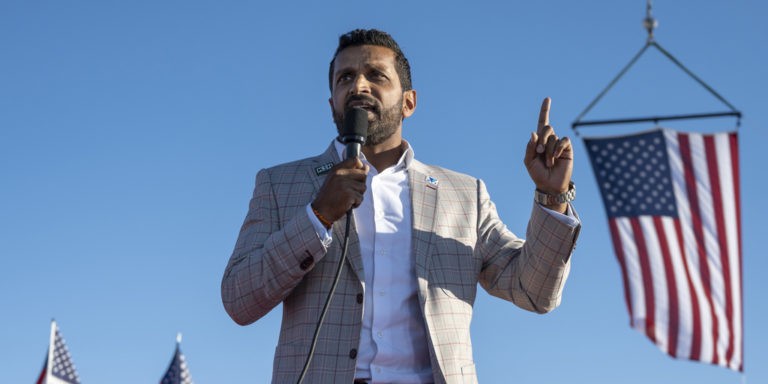
(José Niño, Headline USA) FBI director Kash Patel has plans to drastically downsize the Bureau of Alcohol, Tobacco, Firearms and Explosives (ATF). 

According to a report by CNN, Patel plans to fire as many as 1,000 ATF agents” and transfer them over to the FBI. The ATF has roughly 2,600 agents and more than 5,000 employees, a figure that has remained the same in recent years. 

This move would constitute a reduction of about one third of the ATF’s current agents. 

Gun Owners of America, a no compromise gun lobby, praised Patel’s move in a post it published on X on Monday. GOA called for Patel to “dismantle” the ATF. 

GOA has strongly supported Kash Patel’s nomination as FBI Director. Last year, the organization enthusiastically endorsed President Donald Trump’s choice, describing Patel as “fiercely pro-gun” and a “true constitutionalist”. GOA’s Senior Vice President, Erich Pratt, expressed confidence that under Patel’s leadership, there would be a “reckoning” for those who had “weaponized the FBI against gun owners.”

Taylor Rhodes, who currently serves as the Director of Communications for the National Association for Gun Rights (NAGR), was not fully satisfied with this announcement. He posted on X, “Not enough.”

Kash Patel has been highly critical of the ATF,  portraying it as a threat to Second Amendment rights. In August 2024, he spoke at a Gun Owners of America summit, where he accused the ATF of attempting to “wipe out” people’s Second Amendment rights. 

This rhetoric resonates with gun rights groups that have long been skeptical of the ATF’s role in firearms regulation.

José Niño is the deputy editor of Headline USA. Follow him at x.com/JoseAlNino 

Liberal HBO Pundit Bill Maher Set to Meet w/ Trump

(Maire Clayton, Headline USA) Leftist comedian Bill Maher revealed he will be going to the White House to meet with President Donald Trump.

Maher made the revelation during his podcast Sunday.

While speaking with comedian Andrew Schulz, he said that singer Kid Rock was the one to tell Maher he needed to meet with the president.


“Kid Rock was here a couple of weeks ago, and he said, ‘I want you to meet Trump.’ He said, ‘I’m gonna take you to the White House,'” Maher said. “So now we’re gonna do that”

He told Schulz he expects Democrats to be upset with his decision to speak with Trump.

“There will be lots of people on the left who will be like ‘How dare you talk to this man?’ Like f**k you,” Maher said. “I’m not playing this game that you mean girls play.”

Where you’re like ‘you cant sit at my lunch table, because I’m not talking to you.’ Not talking to you? You lost the election. Who the f**k do you think you have to talk to?”

He added there should be a level of respect for Trump as he did win the 2024 election and the popular vote.

“You have to respect that, the guy did win,” he continued. “It’s more than half the country.”

“You can not like Trump, you can hate him, but you can’t hate everybody who voted for him… I don’t hate half the country and I don’t want to hate half the country,” Maher said.

Maher also said he plans on dressing in a suit and tie for his visit to the White House.

“I’m not going to dress like Zelenskyy,” Maher said, referring to Ukrainian President Volodymyr Zelenskyy decision to wear casual clothes while meeting with the president.

Maher also mentioned Democrats need to be more willing to speak with individuals who share different views. He mentioned how California Gov. Gavin Newsom had conservative political activist Charlie Kirk on an episode of his recent podcast.

CA Gained 76% Fewer Jobs in 2024 than Estimated, Grew Just 0.3%

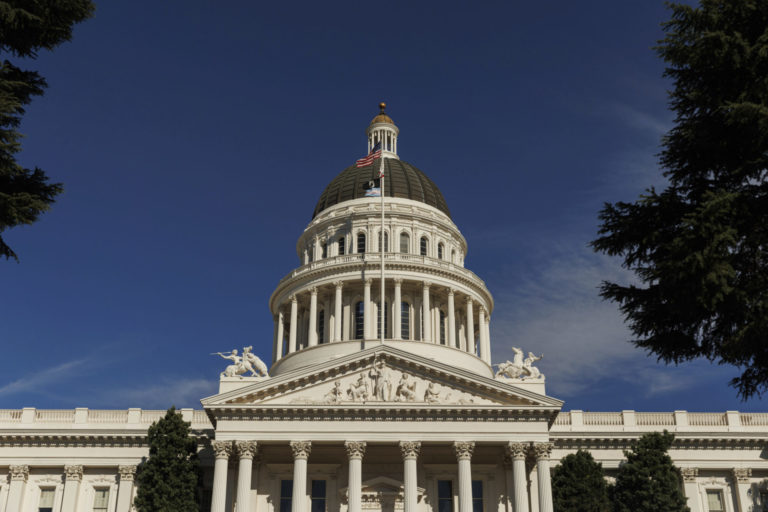
Updated federal data shows California gained 76% fewer jobs in 2024 than initially estimated, gaining only 60,000 jobs, instead of the earlier announced 250,000 jobs.

A 2024 state-funded report found that California private sector employment went into a downturn in 2022, with jobs growth only coming from the public sector and related employment. If this trend has continued, the state’s 0.3% jobs growth could have entirely come from taxpayer-financed government and government-adjacent hiring.

“The corrected data show that the state added just 60,000 jobs between September 2023 and September 2024. The monthly jobs report, which the administration and the Legislature relied on to gauge the economy during that period, showed the labor market growing steadily, appearing to add more than 250,000 jobs over that period,” wrote the state-funded Legislative Analyst’s Office. “Actual job growth for the year was 0.3 percent, compared to the 1.5 percent growth initially reported via the preliminary survey.”

The state-funded Legislative Analyst’s Office reported that between September 2022 and April 2024, the private sector lost 154,000 jobs, while the public and publicly-supported sector, which includes the healthcare sector — which is majority-funded by taxes via Medicare, Medicaid, and Affordable Care Act premium subsidies — gained 361,000 jobs.

The governor has proposed withdrawing $7 billion from reserves this year, while increasing spending to $322 billion. Amid stock market volatility and uncertainty about federal funding, it’s unclear how much the state may have to cut from its projected revenue.

12 Dozen Lawmakers Accused in 8 Years. Women in the Statehouse Weigh #MeToo’s Impact

(Headline USA) Virginia lawmaker Jackie Glass said she got a “safety brief” when she joined the Legislature.

“I was told who not to go drink with, who not to be alone with and who to just watch out for,” she said on the Statehouse floor in 2024. Addressing the male House speaker, she said, “I don’t think you got that brief.”

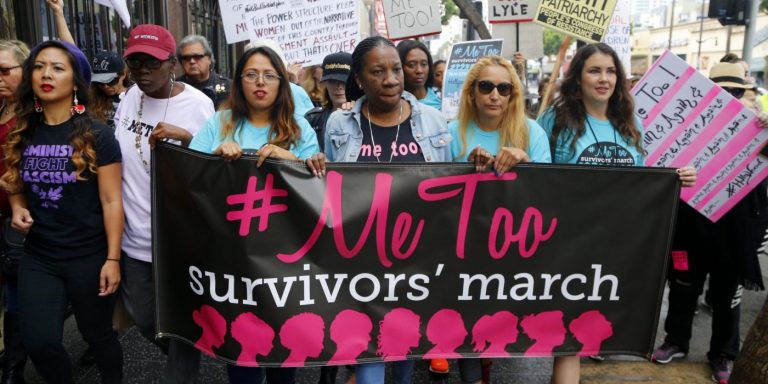
The Democrat was discussing a pervasive culture of sexual misconduct in the Statehouse, something that remains despite the #MeToo movement hitting critical mass in 2017.

The movement toppled politicians, celebrities and others across the country. Allegations of harassment and misconduct, some from many years prior, came to light — highlighting a toxic culture where such behavior was perhaps as rampant and accepted as the silence that buried it.

Many state legislatures responded by adopting or enhancing policies against sexual misconduct. As the number of female state lawmakers reaches new heights, some say statehouses are less of a “boys’ club.”

But allegations continue to surface — at the state level and beyond.

In an interview with The Associated Press, Glass questioned why she would encourage women to join the legislative ranks when it feels little has changed.

“I just don’t know how we keep women — and well, quite frankly, people — safe when it feels like it goes hand in hand with the work,” she said.

Since 2017, The Associated Press has cataloged at least 147 state lawmakers across 44 states who have been accused of sexual harassment or sexual misconduct.

Over a third resigned or were expelled from office and roughly another third faced repercussions, such as losing party or committee leadership positions. A dozen top state executive officials, including governors and attorneys general, also faced sexual misconduct allegations during that time, and most resigned.

The total includes allegations of incidents in state government and outside of it. That includes Minnesota Republican state Sen. Justin Eichorn, who resigned on Thursday after being charged with soliciting a minor for prostitution. A federal defender said Thursday that Eichorn was still in the process of hiring a private lawyer.

Most allegations were reported in the first two years of #MeToo, but more have emerged every year since.

In 2024 alone, the AP tallied at least 14 state lawmakers from a dozen states who were accused — about twice as many as the previous year.

According to the National Women’s Defense League, which advocates for sexual harassment policies in statehouses and keeps its own count, Republicans and Democrats are nearly equally accused and 94% of those overall are men.

An AP survey of the legislative chambers in each state, conducted from last November through January, found about half had updated their sexual harassment policies over the past five years.

The Nevada Legislature, for example, expanded its definition of sexual harassment to include “visual” conduct — such as derogatory photos or gestures.

And the Kentucky General Assembly added sexual harassment to its list of “ethical misconduct,” taking action several years after revelations that four lawmakers had signed a secret sexual harassment settlement with a female employee.

Near the beginning of #MeToo, an AP survey found about a third of legislative chambers didn’t require lawmakers to take sexual harassment training.

Almost all state legislatures now offer it, though it’s not always mandatory and content, format and frequency vary.

Academic experts and women’s advocacy groups say frequent training is best — conducted in person and with real-life scenarios. While most chambers offer in-person training, only about one-third nationwide conduct training annually, according to AP’s survey.

Not every legislative chamber is transparent about its policies or efforts to mitigate sexual harassment and misconduct, though.

The Oklahoma Senate and both chambers of the West Virginia Legislature declined to provide their sexual harassment policies to the AP, asserting they are internal documents exempt from disclosure. The Mississippi Senate did not respond to requests for its written policy.

The Arkansas Senate is the only legislative chamber without a specific sexual harassment policy, but Senate legal counsel said it has an ethics code and the authority to discipline members.

Lawmakers in California created a body independent of the Legislature to investigate reports of sexual harassment with a call line. However, investigation findings are only released publicly if the complaint is found to be substantiated against a lawmaker or high-level staffer.

Lawmakers and others are divided about whether anything has changed — and if so, why.
Rep. Abby Major, a Pennsylvania Republican, says male colleagues have treated women better after recent sexual harassment scandals.

“I think maybe the men are afraid to do anything lest I am doing a press conference about them next,” Major said, referring to her disclosure that a fellow representative in 2022 propositioned her and followed her to her car. “If that’s what it takes to keep people acting right, then that’s fine. I’ll be the boogeyman.”

Michigan Democratic state Sen. Mallory McMorrow, who filed a sexual harassment complaint against Republican state Sen. Peter Lucido in 2020, said improvements have less to do with policy changes and more to do with the fact more women are in charge.

“By our very nature, we changed how the Legislature operates,” she said.

Lucido did not respond to requests for comment.

According to data kept by the Center for American Women and Politics at Rutgers University, the number of female state lawmakers saw the greatest rise in 2018 since the 1990s, largely driven by the success of Democratic women in that year’s midterms. Women now occupy 33% of all legislative seats nationwide, although representation by state varies.

“Sometimes it feels like we should just smile more and not be disruptive and not challenge anyone. That hasn’t gone away,” said Georgia state Rep. Shea Roberts, who resigned as Democratic Caucus treasurer to protest after the caucus leader was accused last year of sexually harassing a staffer.

Even with updated sexual harassment policies and cultural shifts, the decision to report is fraught.

Misconduct reports may be handled by a third party or more commonly, by ethics committees or caucus leadership. Accusers often consider which leaders and parties are in power, according to the National Women’s Defense League.

“This is a political workplace and therefore harassment issues inside of the statehouse are inherently political,” said Emma Davidson Tribbs, the NWDL’s founding director.

Experts say a third party is crucial to ensuring a fair investigation and to encourage reporting.

Only about one-quarter of legislative chambers require external investigations when such complaints are made, according to AP’s survey. Dozens of others allow external investigations at the case-by-case discretion of legislative leaders.

Oregon’s Legislative Equity Office, which investigates complaints, found in its annual report released earlier this month that legislative staff reached out to the office more than any other group.

Oregon Democratic state Sen. Sara Gelser Blouin was one of two female lawmakers who filed complaints about unwanted touching by a fellow senator in 2017.

“I still remember the first time I turned on the radio and heard my name and people talking about my breasts or my thighs,” she told the AP. “It felt very, very invasive. And it made it a lot more clear to me why people don’t make their complaints or why they don’t come forward.”

Despite legal protections against retaliation, accusers’ reputations and careers often take a hit after coming forward.

Gabrielle Brock, then a communications staffer for Indiana Senate Democrats, was 23 when she and three other women accused then-Attorney General Curtis Hill, a Republican, of groping them at a 2018 party. Their accusations led to a misconduct hearing before the state Supreme Court and Hill’s law license was suspended for 30 days.

Hill, who denied the allegations, lost his 2020 reelection bid thereafter and ran unsuccessfully for governor in 2024.

Brock and the other women left their jobs in the Statehouse as a result.

“I felt like that story overshadowed any work that I was doing for the state, for my caucus at the time,” Brock said.

Brock had found a passion for working in government but says the Statehouse environment made it too uncomfortable a place to work.

“Every woman had a story of some kind of inappropriate interaction, primarily with an elected official,” she said.

The women dropped a lawsuit against Hill last December, saying through their attorney they felt the trial would bring no relief — monetary or otherwise.

When reached for comment, Hill called the original allegations “vague” and “thin.”

Men still make up two-thirds of all state lawmakers in the U.S. and though #MeToo has primarily spotlighted women’s voices, some say the reckoning gave them the space to join women in discussing misconduct and to acknowledge more work is needed.

Republican state Rep. Mark Schreiber of Kansas, who joined the Legislature in 2017, said he saw a “boys will be boys” ethos when he started coming to the Statehouse decades ago as a utility company executive. That later gave way to acknowledging harassment — while still blaming women.

In more recent years, he said, men realized, “We’re blaming the wrong people,” and “We need to correct the behavior of these men.”

Advocates and lawmakers alike hope that improvements continue, saying hostile work environments remain pervasive enough to keep women from running for office.

“When men run for office, it’s about whether they can do the job,” said Erin Maye Quade, a Minnesota Democratic senator. “When women run for office, it’s about a lot more than that.”

Adapted from reporting by the Associated Press

Former Utah Rep. Mia Love, the First Black Republican Woman Elected to the US House, Has Died

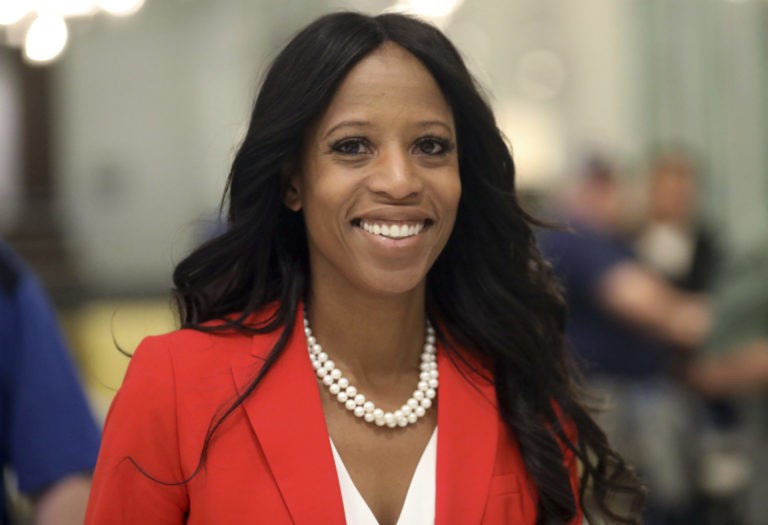
(Headline USA)Former U.S. Rep. Mia Love of Utah, a daughter of Haitian immigrants who became the first black Republican woman elected to Congress, died Sunday.

She was 49.

Love’s family posted news of her death on Love’s X account.

She had undergone recent treatment for brain cancer and received immunotherapy as part of a clinical trial at Duke University’s brain tumor center. Her daughter said earlier this month that the former lawmaker was no longer responding to treatment.

Love died at her home in Saratoga Springs, Utah, according to a statement posted by the family.

“With grateful hearts filled to overflowing for the profound influence of Mia on our lives, we want you to know that she passed away peacefully,” her family said. “We are thankful for the many good wishes, prayers and condolences.”

Utah Gov. Spencer Cox referred to Love as a “true friend” and said in a statement that her legacy of service inspired all who knew her.

Love entered politics in 2003 after winning a seat on the city council in Saratoga Springs, a growing community about 30 miles south of Salt Lake City. She later became the city’s mayor.

In 2012, Love narrowly lost a bid for the House against the Democratic incumbent, former Rep. Jim Matheson, in a district that covers a string of Salt Lake City suburbs. She ran again two years later and defeated first-time candidate Doug Owens by about 7,500 votes.

Love didn’t emphasize her race during her campaigns, but she acknowledged the significance of her election after her 2014 victory. She said her win defied naysayers who had suggested that a black, Republican, Mormon woman couldn’t win a congressional seat in overwhelmingly white Utah.

In an op-ed published earlier this month in the Deseret News, Love described the version of America she grew up loving and shared her enduring wish for the nation to become less divisive. She thanked her medical team and every person who had prayed for her.

Love said her parents immigrated to the U.S. with $10 in their pocket and a belief that hard work would lead to success. She said she was raised to believe passionately in the American dream and “to love this country, warts and all.” America at its roots is respectful, resilient, giving and grounded in gritty determination, she said.

Her career in politics exposed Love to America’s ugly side, but she said it also gave her a front row seat to be inspired by people’s hope and courage. She shared her wish for neighbors to come together and focus on their similarities rather than their differences.

“Some have forgotten the math of America — whenever you divide you diminish,” Love wrote.

She urged elected officials to lead with compassion and communicate honestly with their constituents.

“In the end, I hope that my life will have mattered and made a difference for the nation I love and the family and friends I adore,” Love wrote. “I hope you will see the America I know in the years ahead, that you will hear my words in the whisper of the wind of freedom and feel my presence in the flame of the enduring principles of liberty. My living wish and fervent prayer for you and for this nation is that the America I have known is the America you fight to preserve.”

Adapted from reporting by the Associated Press

Opening Statements Set for Bribery Trial of Nadine Menendez, Wife of Ex-Sen. Bob Menendez

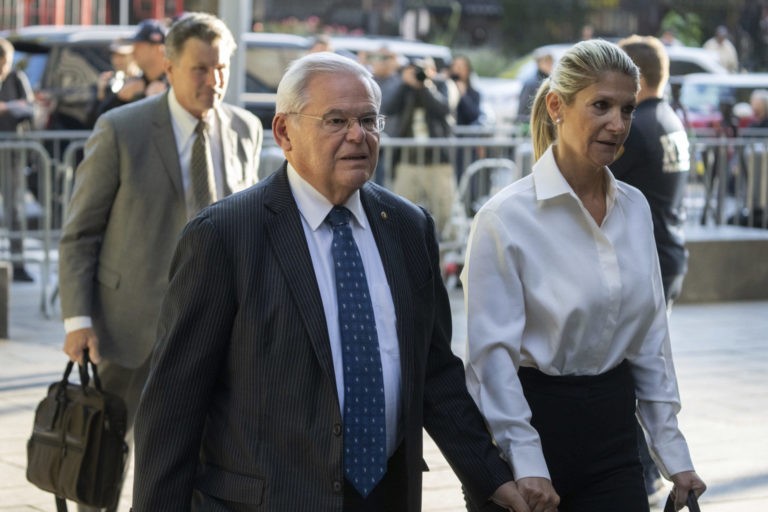
(Headline USA) Opening statements are scheduled Monday in the bribery trial of Nadine Menendez, whose prison-bound husband, former U.S. Sen. Bob Menendez, complained she was being treated unfairly by Manhattan federal prosecutors.

Nadine Menendez, 58, was originally scheduled to go to trial last year along with the 71-year-old New Jersey Democrat, but a breast cancer diagnosis and surgery led to a delay in her case. She has pleaded not guilty to charges that she participated in the bribery scheme resulting in her husband’s conviction.

“My wife, who had breast cancer reconstructive surgery just days ago, is being forced by the government to go to trial tomorrow,” Bob Menendez said last week on the social platform X before jury selection took place.

“Only the arrogance of the SDNY can be so cruel and inhumane,” Menendez added, referring to the Southern District of New York, where her trial is taking place. “They should let her fully recover!”

The former senator was sentenced in late January to 11 years in prison after being convicted of accepting hundreds of thousands of dollars in bribes from three New Jersey businessmen. Prosecutors said that was in return for a variety of favors, including using his influence to help some of them in their dealings with foreign governments, and he was also convicted of acting as a foreign agent for Egypt.

Menendez resigned his Senate seat after his conviction. A judge delayed the start of his prison term until June 6 so he could attend his wife’s trial.

Throughout his two-month trial, Nadine Menendez was mentioned repeatedly for her dealings with the businessmen. One of them testified he bought her a luxury car after the senator tried to get New Jersey prosecutors to drop a criminal investigation involving one of his associates.

In 2022, FBI agents raided the couple’s home in Englewood Cliffs, New Jersey, and found over $100,000 in gold bars and more than $480,000 cash stuffed in envelopes, shoeboxes, jackets and boots.

Bob Menendez said at trial that the gold belonged to his wife and the cash resulted from his habit of hoarding money after his parents fled Cuba in 1951 with only what they had hidden in a grandfather clock.

Menendez, who beat another corruption prosecution a decade ago, has aligned himself with Donald Trump’s criticisms of the judicial system, particularly in New York City, and tagged the president in his March 17 complaint on X.

“This process is political, and it’s corrupted to the core,” he told reporters after his sentencing. “I hope President Trump cleans up the cesspool and restores the integrity to the system.”

Adapted from reporting by the Associated Press

Report: Several Crucial Bridges at ‘High Risk’ for Ship Collisions

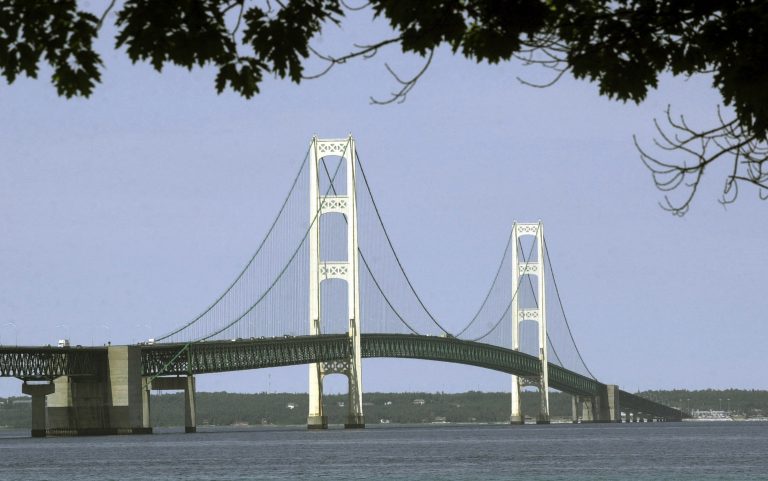
An ominous report identifies 20 bridges nationwide at serious risk of ship collisions, potentially resulting in a collapse like the one that brought down the Francis Scott Key Bridge in Baltimore.

A group of engineers from Johns Hopkins University in Baltimore analyzed the likelihood of ship/bridge collisions across the country, including the frequency of potential collisions.

Experts note that “ship strikes should be extremely rare” due to bridge design standards. The group says the annual chances of a bridge collapse stemming from a ship collision “should be less than 1 in 10,000.” However, the unsettling report finds that “some of the busiest bridges” in the country are “likely” to be hit by ships “within our lifetime.”

“With this investigation we wanted to know if what happened to the Key Bridge was a rare occurrence. Was it an aberration? We found it’s really not,” said Michael Shields, a Johns Hopkins engineer specializing in risk assessment and lead investigator of the National Science Foundation. “In fact, it’s something we should expect to happen every few years.”

Most of the bridges identified through the study are located in major metropolitan areas, including New Orleans, Houston, New York City and San Francisco, including one of the world’s most iconic bridges, the Golden Gate Bridge.

Among the bridges identified was the Delaware Memorial Bridge, which connects Delaware and New Jersey as part of Interstate 95. A potential collision with that bridge could have a devastating impact on the I-95 corridor from Maine to Florida, one the busiest in the country.

Before the Key Bridge collision, it was 15 years since the nation experienced a significant ship/bridge collision. However, engineers at Johns Hopkins believe chances could be high for a similar incident to the Key Bridge, leading to the group analyzing several factors surrounding shipping traffic and movements – specifically under bridges.

The report said, “The results revealed stark vulnerabilities for many bridges. Several bridges could expect a major ship collision – a collision strong enough to cause catastrophic damage or collapse – at least once every 20 to 50 years. Many others are likely to sustain a ship strike within 100 years.”

Shields highlighted the need to dramatically reduce the chances of repeating a disaster like Key Bridge collapse.

“To keep our bridges safe and operational, we want the chances of a collision strong enough to take down the bridge to be less than one in 10,000 in a given year, not one in a 100. One in 100 is extremely high,” Shields said. “If I look at the San Francisco Bay Bridge, we’re likely to see a major collision once every 22 years. That is huge. We want that number to be thousands of years. That’s tens of years.”

The most vulnerable bridges identified by the report include:

• Huey P. Long Bridge, Louisiana. Collision is expected once every 17 years.

• San Francisco–Oakland Bay Bridge. Collision is expected once every 22 years.

• Crescent City Connection, New Orleans. Collision is expected once every 34 years.

• Beltway 8 Bridge, Texas. Collision is expected once every 35 years.

• Hale Boggs Memorial Bridge, Louisiana. Collision is expected once every 37 years.

• Bayonne Bridge, New York/New Jersey. Collision is expected once every 43 years.

• Fred Hartman Bridge, Texas. Collision is expected once every 47 years.

• Martin Luther King Bridge, Texas. Collision expected once every 64 years.

• Sunshine Bridge, Louisiana. Collision expected once every 71 years.

• Rainbow Bridge, Texas. Collision is expected once every 71 years.

• Veterans Memorial Bridge, Louisiana. Collision expected once every 74 years.

• Chesapeake Bay Bridge, Maryland. Collision expected once every 86 years.

• Talmadge Memorial Bridge, Georgia. Collision is expected once every 88 years.

• Veterans Memorial Bridge, Texas. Collision expected once every 94 years.

• Delaware Memorial Bridge, Delaware/New Jersey. Collision is expected once every 129 years.

• Dames Point Bridge, Florida. Collision expected once every 152 years.

• Horace Wilkinson Bridge, Louisiana. Collision expected once every 198 years.

• Verrazzano-Narrows Bridge, New York. Collision expected once every 362 years.

• Golden Gate Bridge, California. Collision expected once every 481 years.

• John A. Blatnik Bridge, Minnesota/Wisconsin. Collision expected once every 634 years.

The engineers noted that according to their calculations, the Key Bridge “would have been among the 10 most vulnerable bridges.” Adding it would likely have been hit by a ship “within 48 years.” During the bridge’s 46 years, it had only sustained one other minor ship collision before the devastating collapse.

Despite the dire warning, Shields noted that “no two bridges are the same,” underscoring that a large ship collision doesn’t always equate to a bridge collapse.

The engineers suggested that to lower the risk of collisions, it is essential to “keep ship traffic away from piers,” adding that they should be outfitted with “robust protections,” including structural “dolphins.”

Following the 1980 deadly ship collision and collapse of the Sunshine Skyway Bridge over Tampa Bay, engineers incorporated several concrete dolphins to act as a barrier between ships and the bridge’s main supports.

Wednesday marks one year since the Key Bridge collapse, where the container ship Dali collided with the bridge in the early morning hours, killing six construction workers.

U.S. Doctor Says Israel Bombed Americans and Europeans in Gaza Hospital

(José Niño, Headline USA) An American orthopedic surgeon had first row seats to a bone-chilling episode of carnage in Gaza. 

On Sunday, Israel launched an airstrike that hit the Nasser Medical Complex in Gaza where U.S. Dr. Mark Perlmutter was working as a volunteer surgeon along with Dr. Feroze Sidwha. Several hours before Israel launched the strikes, both of the physicians spoke to CNN about Israel’s latest round of attacks.

According to Dr. Perlmutter, European and American teams were both working at the hospital when the Israeli airstrike hit.

The day prior, Perlmutter’s Instagram account was banned.

The strike reportedly targeted the men’s surgical unit on the second floor of the hospital, resulting in multiple casualties.

In the CNN interview, Dr. Perlmutter made strong statements about the impact of media coverage on the conflict, claiming it was responsible for the deaths of Palestinian children. The Israeli military confirmed carrying out the strike, stating they were targeting a “key terrorist in the Hamas terrorist organization” operating inside the hospital.

The Guardian detailed the overwhelming influx of casualties at Nasser Hospital in Khan Younis following the collapse of a ceasefire between Hamas and Israel. Dr. Perlmutter described the emergency room being inundated with patients, predominantly women and children, with the floor “awash with blood.” 

Perlmutter, a board-certified orthopedic surgeon specializing in hand surgery with over 35 years of experience in the medical field, has been a vocal critic of Israel’s military conduct since Hamas’ Oct. 7, 2023 attacks.  He previously alleged that Israel was committing genocide and crimes against humanity in Gaza and that the casualties in Gaza were “almost exclusively children” and that healthcare workers and journalists were “specifically targeted.”

José Niño is the deputy editor of Headline USA. Follow him at x.com/JoseAlNino 

Alleged Would-be Trump Assassin May Claim to Have an Alibi, Court Filing Suggests

(Ken Silva, Headline USA) A new filing in the Justice Department’s case against Ryan Routh suggests that the alleged would-be assassin may claim to have an alibi against the allegations that he attempted to kill Donald Trump at his Florida golf course last September.

According to the DOJ, Routh camped out for nearly 12 hours near the Trump International Golf Club in West Palm Beach before the President went golfing on Sept. 15. Trump was allegedly about 300 yards away from Routh when a Secret Service agents spotted the gunman in the bushes. The agent opened fire, missing all six shots and allegedly causing Routh to flee.

A civilian took a picture of Routh’s Nissan Xterra fleeing the scene. Some 38 miles and 44 minutes later, Routh was apprehended by the Martin County Sheriff’s Office.

The DOJ later claimed that Routh gave a letter to someone months before the incident, telling the world: “This was an assassination attempt on Donald Trump but I failed you. I tried my best and gave it all the gumption I could muster. It is up to you now to finish the job; and I will offer $150,000 to whomever can complete the job.”

However, a recent court filing suggests that Routh might claim to have evidence that would counter the DOJ’s narrative. The court filing is a March 21 order from Judge Aileen Cannon that the defense must submit any potential notice of Routh’s alibi by this Friday.

“Defendant’s notice must state: (A) each specific place where the defendant claims to have been at the time of the alleged offense(s); and (B) the name, address, and telephone number of each alibi witness on whom Defendant intends to rely,” Cannon’s order states.

According to the order, Routh had argued that he needs a “detailed synthesis and analysis of cellular location information” from the DOJ’s cellular expert before he can file any such motions. But Cannon rejected Routh’s argument, setting her Friday deadline for any potential alibi to be filed.

Cannon also set a Friday deadline for the defense to request a “live-fire testing or related review of any firearms or firearms parts/ammunition.”

The defense was further given an April 11 deadline to request to review any other physical evidence in Routh’s case, while the DOJ was given a May 23 deadline to provide Routh with all the discovery it intends to use at his trial, which is set for September.

Ken Silva is the editor of Headline USA. Follow him at x.com/jd_cashless.

J6er Seeks Sanctions on Trump’s DOJ for Hiding Evidence of Undercover FBI Operatives

(Ken Silva, Headline USA) President Donald Trump may have pardoned the Jan. 6 protestors, but some of them are growing increasingly discontent by a Justice Department that’s still treating them like domestic terrorists. One J6er is even seeking sanctions against Trump’s DOJ.

On Jan. 20, J6er William Pope was in Washington DC when he learned that the DOJ’s charges against him were dropped. According to Pope, he then ran into the DOJ’s new U.S. Attorney for DC, Ed Martin, who told him that he should file a request for his full case file.

Pope acted accordingly—filing a request for a slew of records, including footage an FBI informant took of him entering the Capitol, records related to any warrantless FISA surveillance he may have been subjected to, all records of any FBI informant that came within 100 feet of him, and other documents related to undercover agents at the Jan. 6 event.

Some two months later, Pope has yet to receive a single record. And now, Martin has apparently backtracked on his assurances that such records would be made public.

Moreover, the DOJ is still accusing Pope and others of being a “mob of rioters”—even though Pope was entirely peaceful on Jan. 6, by the government’s own admission. Perhaps even worse, Trump’s DOJ has filed a cross-motion for Pope to return all the case records he already has in his possession.

Outside of Pope’s case, the DOJ is denying any wrongdoing in its prosecution of the Proud Boys, despite the fact that an FBI informant was caught spying on the Proud Boys defense team.

On Feb. 12, Pope filed a motion for sanctions over the matter, and he doubled down on March 6—also including Martin in his quest for sanctions.

“Had this simply been a matter of Mr. Martin changing his mind, he should have told me so. But since Mr. Martin, through the government oppositions, has also tried to deny that he gave me permission to keep the discovery (which is irreversibly intertwined in my case notes), and since Mr. Martin has used this as an opportunity to cast allegations against me after they have been dismissed by this Court (when I no longer have an opportunity to confront these allegations in trial), this feels like a great betrayal,” Pope said.

“More than that, since Mr. Martin is the one who raised the issue and directly suggested I file the request, this feels like a setup. This level of treachery is typically only seen outside of Washington D.C. in poker cheats, horse thieves and backshooters,” he added.

“I am also alarmed that Mr. Martin would try to claw back discovery rather than make it public. Why is he now trying to cover up the truth about January 6? Wasn’t this supposed to be the most transparent administration?”

The DOJ hasn’t responded to Pope’s March 6 filing. It’s unclear when the presiding judge might rule over the matter.

Ken Silva is the editor of Headline USA. Follow him at x.com/jd_cashless.