Big Pharma’s Billion-Dollar Ad Deduction: The Hidden Cost to Taxpayers

(José Niño, Headline USA) A recent study reveals a staggering financial burden on U.S. taxpayers, exceeding $1 billion yearly, due to a legal provision enabling pharmaceutical giants to deduct their marketing expenses.

This finding, released last Tuesday by The Campaign for Sustainable RX Pricing (CSRxP), sheds light on the significant tax implications of Big Pharma’s advertising practices. The analysis also uncovered that in 2023, 10 leading pharmaceutical corporations collectively invested almost $14 billion in direct-to-consumer (DTC) advertising campaigns.

According to the analysis, the IRS allows pharmaceutical companies to claim deductions for their marketing expenditures. This provision, as highlighted by CSRxP, results in a substantial annual loss for taxpayers, estimated between $1.5 billion and $1.7 billion, solely from the 10 corporations examined in the report. This tax benefit effectively shifts a significant financial burden from these pharmaceutical giants onto the shoulders of American citizens.

Those 10 companies are AbbVie, Amgen, Biogen, Bristol Myers Squibb (BMS), Eli Lilly, Gilead Sciences, GlaxoSmithKline (GSK), Johnson & Johnson (J&J), Merck and Pfizer.

The study reveals that Pfizer led the pack in advertising expenditure, allocating an alarming $3.7 billion in 2023. This massive investment reportedly yielded the company a tax advantage exceeding $1 million.

Since the Food and Drug Administration (FDA) gave the green light to pharmaceutical direct-to-consumer (DTC) advertising in 1997, the industry’s marketing expenses have skyrocketed. The analysis indicates a dramatic surge in annual medical marketing outlays, climbing from $17.7 billion to $29.9 billion between 1997 and 2016. During the same period, DTC advertising experienced an even more pronounced increase, soaring from $2.1 billion to $9.6 billion.

The analysis also references a Congressional Budget Office (CBO) report that establishes a clear link between increased pharmaceutical advertising expenditures and higher drug prices. According to the CBO’s estimates, a 10 percent boost in direct-to-consumer (DTC) advertising correlates with a 1 percent to 2.3 percent uptick in drug spending. Even more striking, a separate study by the National Bureau of Economic Research (NBER) suggests this increase could reach as high as 5.4 percent.

Notably, the recently appointed Health and Human Services (HHS) Secretary, Robert F. Kennedy Jr., has been a vocal critic of televised pharmaceutical advertising. This practice is uniquely permitted in only two nations worldwide: the United States and New Zealand. Kennedy’s stance aligns with growing concerns about the impact of such advertising on healthcare costs and consumer behavior.

“You look at somebody like Anderson Cooper, I think Anderson Cooper makes about $20 million, give or take,” Kennedy said to marketing expert Joe Polish in 2024. “If you say he’s at a $20 million salary and 75 percent of that or 80 percent of that is coming from the pharmaceutical companies, that’s who his real boss is.”

On a previous occasion, Kennedy has indicated his intention to recommend to President Trump a prohibition on pharmaceutical advertising. This potential policy shift could significantly alter the landscape of drug marketing in the United States, potentially aligning it more closely with practices in other countries where such advertising is restricted.

José Niño is the deputy editor of Headline USA. Follow him at x.com/JoseAlNino 

JD Vance Cautioned Against Bombing Yemen, Leaked Chats Reveal

(Dave DeCamp, Antiwar.com) Vice President JD Vance cautioned against bombing Yemen before the US restarted its airstrikes on the country, calling it a “mistake,” and suggested delaying the attack by one month, according to a leaked Signal conversation between administration officials.

Jeffrey Goldberg, a reporter for The Atlantic, was included in the Signal thread, apparently by accident, which is how he obtained the conversation.

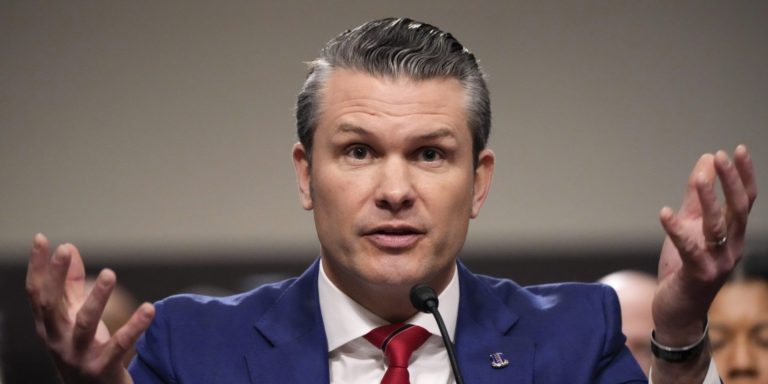
An account believed to be Secretary of Defense Pete Hegseth shared details of the March 15 airstrikes on Yemen two hours before they happened, and the White House confirmed that the Signal conversation appeared to be authentic.

A day before the airstrikes, an account labeled “JD Vance” expressed misgivings about the idea of targeting the Houthis. “Team, I am out for the day doing an economic event in Michigan. But I think we are making a mistake,” the Vance account said.

Vance framed his opposition to the airstrikes based on President Trump’s policies toward Europe, which have involved pressuring the Europeans to pay more for their own militaries to be less reliant on the US. Vance pointed out that only a small percentage of US shipping goes through the Suez Canal compared to European trade.

The message said: “3 percent of US trade runs through the suez. 40 percent of European trade does. There is a real risk that the public doesn’t understand this or why it’s necessary. The strongest reason to do this is, as POTUS said, to send a message.”

Vance continued, “I am not sure the president is aware how inconsistent this is with his message on Europe right now. There’s a further risk that we see a moderate to severe spike in oil prices. I am willing to support the consensus of the team and keep these concerns to myself. But there is a strong argument for delaying this a month, doing the messaging work on why this matters, seeing where the economy is, etc.”

An account believed to be Joe Kent, President Trump’s nominee to lead the National Counterterrorism Center, replied to Vance, saying, “There is nothing time sensitive driving the time line. We’ll have the exact same options in a month.”

Hegseth responded to Vance by saying the messaging to the American people about the war would focus on President Biden failing to deter Yemeni attacks and the Houthis being “Iran funded.” Iran is aligned with the Houthis, but it’s unclear how much support they give to the group, and US officials have acknowledged the Houthis wouldn’t take orders from Tehran and have their own weapons supply.

“VP: I understand your concerns – and fully support you raising w/ POTUS. Important considerations, most of which are tough to know how they play out (economy, Ukraine peace, Gaza, etc). I think messaging is going to be tough no matter what – nobody knows who the Houthis are – which is why we would need to stay focused on: 1) Biden failed & 2) Iran funded,” Hegseth said.

Hegseth also disputed the idea that the strikes could wait, saying he wanted it to happen before the Gaza ceasefire fell apart and before Israel attacked Yemen. The US launched the March 15 airstrikes just a few days after the Houthis, officially known as Ansar Allah, announced they would reimpose their blockade on Israeli shipping in response to Israel’s ceasefire violations, which included imposing a full blockage on all goods entering Gaza.

“Waiting a few weeks or a month does not fundamentally change the calculus. 2 immediate risks on waiting: 1) this leaks, and we look indecisive; 2) Israel takes an action first – or Gaza cease fire falls apart – and we don’t get to start this on our own terms. We can manage both. We are prepared to execute, and if I had final go or no go vote, I believe we should,” Hegseth said.

Hegseth also claimed bombing Yemen wasn’t really “about the Houthis” and suggested the messaging would focus on protecting shipping. “This [is] not about the Houthis. I see it as two things: 1) Restoring Freedom of Navigation, a core national interest; and 2) Reestablish deterrence, which Biden cratered. But, we can easily pause. And if we do, I will do all we can to enforce 100% OPSEC [operations security]. I welcome other thoughts,” he said.

National Security Advisor Mike Waltz, who added Goldberg to the chat, made his argument for bombing Yemen, saying it would “have to be the United States that reopens these shipping lanes” and that the administration would figure out a way to get Europe to pay. “Per the president’s request we are working with DOD and State to determine how to compile the cost associated and levy them on the Europeans,” he said.

Vance said that he would agree with whatever Hegseth’s decision was. “If you think we should do it let’s go. I just hate bailing Europe out again,” he said.

The first round of US airstrikes on Yemen killed at least 53 people, including five children and two women, according to Yemen’s Health Ministry. Administration officials celebrated the strikes in the chat, including Waltz, who sent a fist emoji, a flame emoji, and an American flag emoji.

Since those initial airstrikes, the Houthis have carried multiple attacks targeting the US aircraft carrier USS Harry Truman, which US officials have said were intercepted. The Houthis also began firing missiles at Israel in response to Israel restarting its massive bombing campaign on Gaza.

The Houthis ceased their attacks on Israel and Israel-linked shipping when the Gaza ceasefire went into effect on January 19. The group has maintained that the only way to stop its attacks now is for another truce in Gaza and the end to the Israeli blockade on aid entering the Strip.

While the Trump administration officials’ conversation was focused on the impact on shipping, the US bombing campaign in Yemen is more about backing Israel. The Israeli news site Ynet reported that the US has told Israel not to worry about retaliating against the Houthis for their recent missile attacks, saying US forces will handle it.

President Trump is threatening the Houthis with “annihilation,” but a year-long US bombing campaign launched by President Biden from January 204 to January 2025 did not stop the Houthis, and a brutal US-backed Saudi-led war on Yemen from 2015 to 2022 also failed to remove the group from power.

This article originally appeared at Antiwar.com.


Lawmakers Face Deadline to Raise Debt Ceiling or Default on $36 Trillion Debt

(Thérèse Boudreaux, The Center Square) – Unless Congress suspends or raises the debt ceiling soon, the U.S. government could default on its $36.2 trillion debt by mid-July, according to the newest debt limit analysis.

The Bipartisan Policy Center, which published the analysis Monday, projects the “X Date” will occur somewhere between mid-July and early October 2025, depending on how tax season goes and how much revenue tariffs bring in, among other variables.

During the Biden administration, Congress had suspended the debt limit until Jan. 1, 2025, through the 2023 Fiscal Responsibility Act. On Jan. 17, U.S. Department of the Treasury announced it had hit the debt limit and declared a debt issuance suspension period, which it extended on March 14 to last until June.

The updated deadline range puts new pressure on Congress to move forward in the budget reconciliation process, which allows lawmakers to do things like raise the debt ceiling by a simple majority vote in the Senate.

Both chambers need to pass the same budget resolution — legislation that outlines the federal government’s spending, revenue, debt, and deficit levels — before moving forward in the budget reconciliation process.

But House Republicans are having trouble getting their Senate counterparts on board with a massive $4.5 trillion budget resolution that would extend the 2017 Tax Cuts and Jobs Act by ten years and raise the debt ceiling by $4 trillion.

“We took the first step to accomplish that by passing a budget resolution weeks ago, and we look forward to the Senate joining us in this commitment to ensure we enact President Trump’s full agenda as quickly as possible,” House GOP leaders, including Speaker Mike Johnson, R-La., said in a joint statement Monday. “We encourage our Senate colleagues to take up the House budget resolution when they return to Washington.”

While the House took weeks in February to craft “one big, beautiful bill,” Senate Republicans itching to implement President Donald Trump’s border security and defense policies as soon as possible forged ahead with their own $342 billion budget resolution to do so, saving the TCJA extension for a later date.

After Trump endorsed the House version, Senate Majority Leader John Thune, R-S.D., said the Senate would keep its version as a “back up plan” — a plan he now seems reluctant to let go of as time is ticking.

Part of the reason is how expensive the House’s plan is. The Congressional Budget Office estimates it could add $25 trillion to the national debt over the next decade. Even without extending the TCJA, CBO predicts the debt will hit $52 trillion by 2035.

The Bipartisan Policy Center urged lawmakers to move forward in the budget reconciliation process and “commit to responsible budgeting.”

“Fiscal responsibility is not just about avoiding financial calamity time and time again—it’s about ensuring economic stability and paying our bills on time,” Bipartisan Policy Center President Margaret Spellings said Monday. “This year presents many opportunities to begin getting our fiscal house in order without risking the full faith and credit of the United States.”

A Dump of JFK-Related Records Reveals Past CIA Secrets But also Some Personal Data

(Headline USA) History buffs dove into thousands of pages of government records released online this week, hoping for new nuggets about President John F. Kennedy’s assassination. They instead found revelations about U.S. espionage in the massive document dump that also exposed some previously redacted personal information.

The U.S. National Archives and Records Administration posted more than 63,000 pages of records on its website, following an executive order from President Donald Trump. Many of the documents had been released previously but with redactions that hid the names of CIA sources or details about its spying and covert operations in the 1960s.

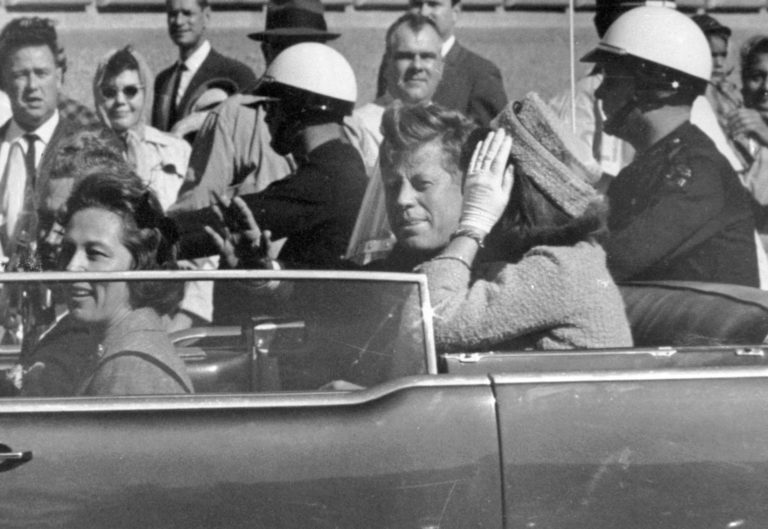
Kennedy was killed on Nov. 22, 1963, during a visit to Dallas. As his motorcade finished its parade route downtown, shots rang out from the Texas School Book Depository building.

Police arrested Lee Harvey Oswald, who had positioned himself from a sniper’s perch on the sixth floor. Two days later, nightclub owner Jack Ruby fatally shot Oswald during a jail transfer broadcast live on television.

The latest release of documents pumped new energy into conspiracy theories about the assassination. Kennedy scholars said they haven’t seen anything out of line with the conclusion that Oswald, a 24-year-old ex-Marine, was the lone gunman.

“The chase for the truth will go on forever, I suspect,” said Philip Shenon, who wrote a 2013 book about the killing of JFK.

The vast majority of the National Archives’ collection of more than 6 million related pages of records, photographs, motion pictures, sound recordings and artifacts had already been released before the archives posted about 2,200 files online this week.

Writers, historians and conspiracy promoters have spent decades pushing for the release of all the records. In the early 1990s, the federal government mandated that all assassination-related documents be housed in a single collection in the National Archives and Records Administration. The collection was required to be opened by 2017, barring any exemptions designated by the president.

According to researchers and the FBI, roughly 3,700 files held by federal authorities still haven’t been released.

Trump’s order also called for declassifying the remaining federal records related to the 1968 assassinations of Sen. Robert F. Kennedy and the Rev. Martin Luther King Jr.

Scholars and history buffs described the latest release as rushed and expressed frustration that going through the files one by one represented a random search for unreleased information.

“We’ve all heard the reports about the lawyers staying up all night, which I believe, because there’s there’s a lot of sloppiness in this,” said Larry Sabato, director of the University of Virginia Center for Politics and author of “The Kennedy Half-Century.”

Scholars and history buffs grumbled that, unlike past releases, the National Archives didn’t provide an index or workable search tool. Also, the files included material generated after the 1960s, and some people listed in the records were angry to find out that sensitive information about them was revealed, including Social Security numbers.

They include Joseph diGenova, a former campaign lawyer for Trump. His personal information was on documents relating to his work for a U.S. Senate select committee that investigated abuses of power by government officials in the 1970s, including the surveillance of U.S. citizens.

He is planning to sue the U.S. National Archives and Records Administration for violating privacy laws.

“I think it’s the result of incompetent people doing the reviewing,” he said. “The people who reviewed these documents did not do their job.”

White House officials said a plan was in place to help those whose personal information was disclosed, including credit monitoring, until new Social Security numbers are issued.

Officials are still screening the records to identify all the Social Security numbers that were released.

The latest release represented a boon to mainstream historians, particularly those researching international relations, the Cold War and the activities of the CIA.

One revelation was that a key adviser warned President Kennedy after the disastrous Bay of Pigs invasion of Cuba in 1961 that the CIA had grown too powerful. The aide proposed giving the State Department control of “all clandestine activities” and breaking up the CIA.

The page of Special Assistant Arthur Schlesinger Jr.’s memo outlining the proposal had not been released before. A previous release of part of his memo redacted Schlesinger’s statement that 47% of the political officers in U.S. embassies were controlled by the CIA.
Schlesinger’s plan never came to fruition.

Timothy Naftali, an adjunct professor at Columbia University who is writing a book about JFK’s presidency, said scholars likely now have more details about U.S. intelligence activities under Kennedy than under any other president.

“It’s quite remarkable to be able to walk through that secret world,” he said.

Adapted from reporting by the Associated Press

Major Guatemalan Human Smuggling Operation Busted in Arizona, California

One of the largest human smuggling operations in U.S. history has been dismantled by federal and local law enforcement officers.

U.S. Immigration and Customs Enforcement, Border Patrol and Inglewood Police investigators in California launched an investigation that led to the arrests of four Guatemalan human smuggling ringleaders who were all living illegally in the U.S.

They were charged and indicted on multiple counts for orchestrating what law enforcement said was one of the largest human smuggling organizations in America.

They were indicted on charges of smuggling roughly 20,000 Guatemalans into the U.S. over a period of five years. Overall, the smuggling operation was active for roughly 12 years nationwide, according to a recently unsealed indictment.

Authorities arrested the alleged ringleader, Eduardo Domingo Renoj-Matul, and his alleged right-hand man, Cristobal Mejia-Chaj, in the Westlake neighborhood of Los Angeles. They were arraigned the same day, ordered jailed without bond; a trial is set for next month.

Two others charged include Guatemalans Helmer Obispo-Hernandez, a lieutenant in the criminal organization who remains a fugitive, authorities said, and Jose Paxtor-Oxlaj, a driver for the smuggling organization.

Paxtor-Oxlaj is currently incarcerated in Oklahoma for causing a November 2023 car accident that killed seven, authorities said, including three minors in Elk City, Oklahoma. The accident occurred during a smuggling operation when he was transporting illegal foreign nationals from New York to Los Angeles, authorities said. He was arrested and charged in the Western District of Oklahoma.

He had previously been removed from the U.S. in 2010 and illegally reentered as a gotaway – those who illegally enter between ports of entry and intentionally evade capture. A record more than two million gotaways illegally entered the U.S. under the Biden administration, The Center Square exclusively reported.

Each of the four Guatemalan men were charged with “conspiracy to bring aliens to the United States, transporting aliens in the United States, and harboring aliens in the United States for private financial gain and resulting in death,” according to the indictment.

Renoj-Matul and Mejia-Chaj were also charged with two counts of hostage-taking. According to the indictment, from April 2024 to July 2024, they held hostage two Guatemalan nationals who were smuggled into the U.S. who hadn’t paid their smuggling fees and allegedly threatened to kill them until third parties paid for their release.

In a separate and more recent complaint, Obispo-Hernandez was charged with threatening to cut off the heads of an ICE task force officer and his family members. He allegedly made the threats after search warrants were executed at his residence.

The Renoj-Matul transnational criminal organization operated for at least a dozen years, specializing in smuggling Guatemalans into the U.S., primarily transporting illegal foreign nationals from Phoenix to Los Angeles, according to the indictment.

Renoj-Matual’s associates based in Guatemala allegedly solicited Guatemalans to come to the U.S., charging between $15,000 and $18,000 for each to be smuggled into the U.S., investigators say. Once they reached Mexico, Mexican cartel smugglers transported them through Mexico and across the U.S.-Mexico border in Arizona. They were then held hostage in stash houses in Arizona and eventually picked up by Renoj-Matul’s lieutenants, according to the indictment.

For an additional fee, the smuggled Guatemalans paid to be transported throughout the U.S., including to Los Angeles. Those who couldn’t pay were allegedly held hostage in a stash house in the Westlake neighborhood near downtown Los Angeles, according to the complaint.

Renoj-Matul also orchestrated a process for the human smuggling proceeds to be transported from Los Angeles to Phoenix, given to Mexican smugglers “to pay the expenses incurred by Renoj-Matul’s transnational criminal organization,” according to the complaint.

If convicted of all charges, each of the four Guatemalan ringleaders face a maximum sentence of death or life imprisonment.

Authorities also arrested two additional illegal foreign nationals and alleged lieutenants in the Renoj-Matul transnational criminal organization. Rolando Gomez-Gomez, who was previously deported, was arrested in South Los Angeles, charged with “one count of being an illegal alien found in the United States following removal.” Juan Lopez Garcia was arrested in Downtown Los Angeles on a civil removal matter.

The smuggling bust occurred after a record nearly one million Guatemalans illegally entered the U.S. under the Biden administration, The Center Square reported.

LA Father Says 911 Put Him on Hold for 58 Minutes after Burglary

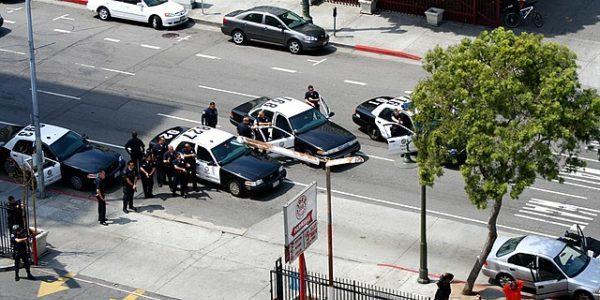
A Los Angeles father who came home to find his house broken into says 911 had him on hold for 58 minutes.

The dispatcher answered within two minutes, then diverted him to a non-emergency hold for nearly an hour.

Evan Lovett, a creator of Los Angeles-focused content and a former Los Angeles Times sports writer, said police arrived within six minutes of him getting off hold. Police told him that his home was broken into by professionals who used a WiFi jammer to disable his non-hardwired security camera.

Officers, whom Lovett described as courteous and professional, recommended that he install a hardwired monitoring system, procure a means of self-defense and get a big dog.

The thieves stole Lovett’s large, heavy safe full of irreplaceable family heirlooms, such as baseball cards and Roman-era coins all handed down to him by his late father.

Lovett said his neighborhood has been targeted by burglary crews and that this break-in was only the latest example.

“Unfortunately there have been a rash of break-ins not just in my neighborhood but throughout Los Angeles,” said Lovett. “There are burglary crews. I know there’s a South American crew from Chile.”

“It’s just part of — I don’t want to say daily — but at least weekly life in our neighborhood,” continued Lovett. “Even after my burglary, since then in the last week, there have been two in my neighborhood.”

With the city facing a $1 billion budget shortfall, many, including City Controller Kenneth Mejia, are pointing out the police budget, and especially police overtime and liability claims, as part of the problem.

However, with high overtime utilization being driven by not having enough officers to make overtime no longer necessary, budget cuts could further impact the city’s ability to maintain basic law and order. Los Angeles has half the officers per resident that Chicago and New York do, and covers a much larger area than either city.

Base pay for officers has increased to $97,300 upon graduation from the police academy, with an additional $6,500 per year in pay for being assigned to patrol, not including any overtime. In California, overtime pay for hours worked in excess of eight hours must be one and a half times regular pay. At a base wage of $46.78 per hour for officers, overtime pay is $70.17 per hour. By hiring more officers to reduce overtime utilization, the city would actually save money.

Studies also show that police who are heavily fatigued from serially working extensive overtime are also more likely to make errors that result in lawsuits and liability judgements. This suggests that hiring more police to reduce overtime could also limit negative consequences suffered by the community and officers by fatigue-induced errors.

Trump Officials Texted War Plans to a Group Chat that Included a Journalist

(Headline USA) Top national security officials for President Donald Trump, including his defense secretary, texted war plans for upcoming military strikes in Yemen to a group chat in a secure messaging app that included the editor-in-chief for The Atlantic, the magazine reported in a story posted online Monday. The National Security Council said the text chain “appears to be authentic.”

The material in the text chain “contained operational details of forthcoming strikes on Iran-backed Houthi-rebels in Yemen, including information about targets, weapons the U.S. would be deploying, and attack sequencing,” editor-in-chief Jeffrey Goldberg reported.

It was not immediately clear if the specifics of the military operation were classified, but they often are and at the least are kept secure to protect service members and operational security. The U.S. has conducted airstrikes against the Houthis since the militant group began targeting commercial and military vessels in the Red Sea in November 2023.

Just two hours after Goldberg received the details of the attack on March 15, the U.S. began launching a series of airstrikes against Houthi targets in Yemen.

The National Security Council said in a statement that it was looking into how a journalist’s number was added to the chain in the Signal group chat.

Trump told reporters he was not aware of the apparent breach in protocol.

“I know nothing about it,” Trump said, adding that The Atlantic was “not much of a magazine.” He went on to say, “I don’t know anything about it. You’re telling me about it for the first time.”

Government officials have used Signal for organizational correspondence, but it is not classified and can be hacked.

The sharing of sensitive information comes as Defense Secretary Pete Hegseth’s office has just announced a crackdown on leaks of sensitive information, including the potential use of polygraphs on defense personnel to determine how reporters have received information.

Sean Parnell, a spokesman for Hegseth, did not immediately respond to requests for comment on why the defense secretary posted war operational plans on an unclassified app.

The handling of national defense information is strictly governed by law under the century-old Espionage Act, including provisions that make it a crime to remove such information from its “proper place of custody” even through an act of gross negligence.

The Justice Department in 2015 and 2016 investigated whether former Secretary of State Hillary Clinton broke the law by communicating about classified information with her aides on a private email server she set up, though the FBI ultimately recommended against charges and none were brought.

In the Biden administration, some officials were given permission to download Signal on their White House-issued phones, but were instructed to use the app sparingly, according to a former national security official who served in the Democratic administration.

The official, who requested anonymity to speak about methods used to share sensitive information, said Signal was most commonly used to communicate what they internally referred to as “tippers” to notify someone when they were away from the office or traveling overseas that they should check their “high side” inbox for a classified message.

The app was sometimes also used by officials during the Biden administration to communicate about scheduling of sensitive meetings or classified phone calls when they were outside the office, the official said.

Adapted from reporting by the Associated Press

Trump Taps His Former Defense Attorney, Alina Habba, to be New Jersey’s Top Federal Prosecutor

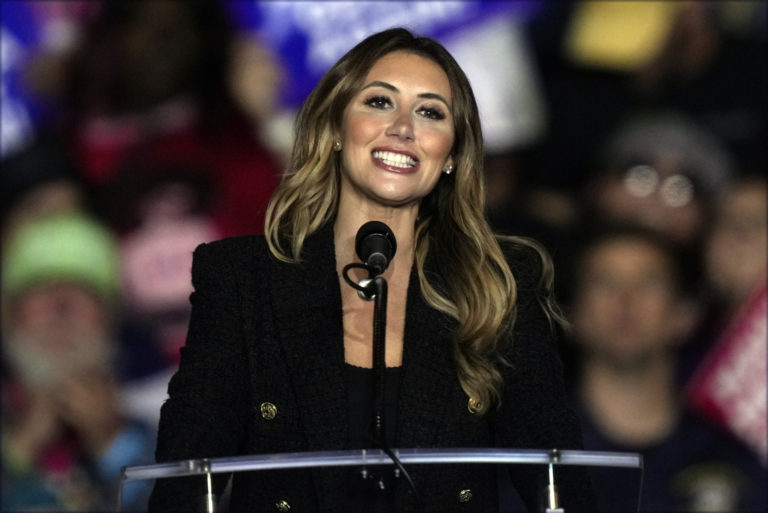
(Headline USA) President Donald Trump on Monday named his one-time defense attorney and current White House counselor Alina Habba to be the top federal prosecutor in New Jersey.

Habba, who turns 41 Tuesday, takes over the interim post from John Giordano, whom the president said he’s naming to be the U.S. ambassador for the southwestern African country of Namibia.

A partner in a small New Jersey law firm near Trump’s Bedminster golf course, Habba served as a senior adviser for Trump’s political action committee, defended him in court in several civil lawsuits and acted as a spokesperson last year as he volleyed between courtrooms and the campaign trail. She lists no prosecutorial experience in an online biography.

Habba said she looked forwards to working with Attorney General Pam Bondi to pursue the president’s agenda of “putting America first,” and going after the people “we should be going after.” She criticized Democrats Sen. Cory Booker and Gov. Phil Murphy for their poor stewardship of the state.

“If you look at what happened in crime, what’s going on in Newark, what’s going on in Camden, this has been a neglected state. It is one of the most populated states for its size and it needs to stop. We’re gonna do a bang up job,” Habba said Monday.

Spokespeople for Booker and Murphy did not immediately respond to a request for comment.

Officials in Newark, the state’s largest city, said late last year that homicide rates had fallen but other crime levels had increased in 2024.

Habba was one of Trump’s most visible defense attorneys, appearing on cable TV news as his “legal spokesperson.” She represented Trump in 2024 in the defamation case involving E. Jean Carroll.

Habba has had limited federal court experience, practicing mainly in state-level courts.

Giordano was sworn in as New Jersey’s interim U.S. attorney earlier this month. He previously served as a counselor to the assistant attorney general for the Environment and Natural Resources Division. Giordano also served as a federal prosecutor in Virginia.

Adapted from reporting by the Associated Press

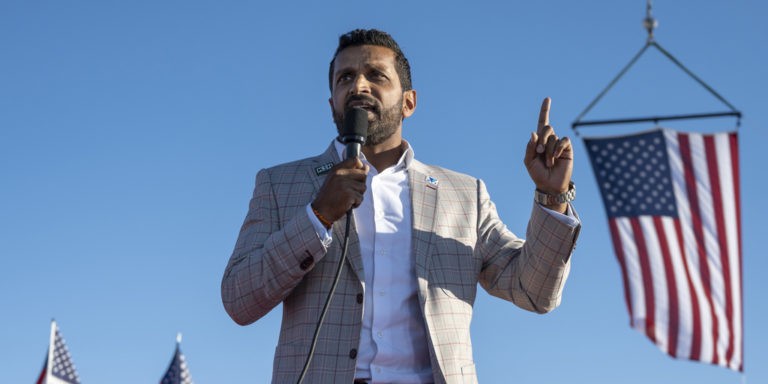
Kash Patel Plans Sweeping ATF Reduction, Nearly 1,000 Jobs at Stake

(José Niño, Headline USA) FBI director Kash Patel has plans to drastically downsize the Bureau of Alcohol, Tobacco, Firearms and Explosives (ATF). 

According to a report by CNN, Patel plans to fire as many as 1,000 ATF agents” and transfer them over to the FBI. The ATF has roughly 2,600 agents and more than 5,000 employees, a figure that has remained the same in recent years. 

This move would constitute a reduction of about one third of the ATF’s current agents. 

Gun Owners of America, a no compromise gun lobby, praised Patel’s move in a post it published on X on Monday. GOA called for Patel to “dismantle” the ATF. 

GOA has strongly supported Kash Patel’s nomination as FBI Director. Last year, the organization enthusiastically endorsed President Donald Trump’s choice, describing Patel as “fiercely pro-gun” and a “true constitutionalist”. GOA’s Senior Vice President, Erich Pratt, expressed confidence that under Patel’s leadership, there would be a “reckoning” for those who had “weaponized the FBI against gun owners.”

Taylor Rhodes, who currently serves as the Director of Communications for the National Association for Gun Rights (NAGR), was not fully satisfied with this announcement. He posted on X, “Not enough.”

Kash Patel has been highly critical of the ATF,  portraying it as a threat to Second Amendment rights. In August 2024, he spoke at a Gun Owners of America summit, where he accused the ATF of attempting to “wipe out” people’s Second Amendment rights. 

This rhetoric resonates with gun rights groups that have long been skeptical of the ATF’s role in firearms regulation.

José Niño is the deputy editor of Headline USA. Follow him at x.com/JoseAlNino 
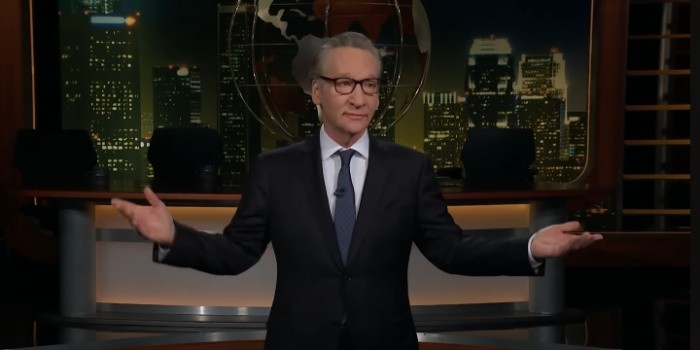
Liberal HBO Pundit Bill Maher Set to Meet w/ Trump

(Maire Clayton, Headline USA) Leftist comedian Bill Maher revealed he will be going to the White House to meet with President Donald Trump.

Maher made the revelation during his podcast Sunday.

While speaking with comedian Andrew Schulz, he said that singer Kid Rock was the one to tell Maher he needed to meet with the president.


“Kid Rock was here a couple of weeks ago, and he said, ‘I want you to meet Trump.’ He said, ‘I’m gonna take you to the White House,'” Maher said. “So now we’re gonna do that”

He told Schulz he expects Democrats to be upset with his decision to speak with Trump.

“There will be lots of people on the left who will be like ‘How dare you talk to this man?’ Like f**k you,” Maher said. “I’m not playing this game that you mean girls play.”

Where you’re like ‘you cant sit at my lunch table, because I’m not talking to you.’ Not talking to you? You lost the election. Who the f**k do you think you have to talk to?”

He added there should be a level of respect for Trump as he did win the 2024 election and the popular vote.

“You have to respect that, the guy did win,” he continued. “It’s more than half the country.”

“You can not like Trump, you can hate him, but you can’t hate everybody who voted for him… I don’t hate half the country and I don’t want to hate half the country,” Maher said.

Maher also said he plans on dressing in a suit and tie for his visit to the White House.

“I’m not going to dress like Zelenskyy,” Maher said, referring to Ukrainian President Volodymyr Zelenskyy decision to wear casual clothes while meeting with the president.

Maher also mentioned Democrats need to be more willing to speak with individuals who share different views. He mentioned how California Gov. Gavin Newsom had conservative political activist Charlie Kirk on an episode of his recent podcast.