23andMe Files for Bankruptcy, CEO and Cofounder Steps Down

23andMe, the prominent San Francisco genetic testing company that helps customers determine their ancestry, has filed for bankruptcy.

Additionally, CEO Anne Wojcicki has resigned, effective immediately, the health care and biotechnology company said in a news release Sunday announcing the Chapter 11 bankruptcy.

Wojcicki wrote on X Sunday that she stepped down so that she can be an independent bidder to buy the company. The 23andMe Board of Directors rejected Wojcicki’s March 10 bid to purchase the company she co-founded.

Wojcicki will remain on the 23andMe board.

23andMe announced Joe Selsavage, its chief financial and accounting officer, has been named interim CEO.

The company said it was filing for bankruptcy in the U.S. Bankruptcy Court for the Eastern District of Missouri. 23andMe is seeking the court’s authorization to sell all of its assets.

A court-supervised sales process is the best way “to maximize the value of the business,” said Mark Jensen, who became chair of the 23andMe board during the newly announced leadership changes.

In the meantime, 23andMe said, it won’t make any changes in how it stores, manages or protects customers’ genetic data.

But before the bankruptcy announcement, California Attorney General Rob Bonta issued a consumer alert.

“Given 23andMe’s reported financial distress, I remind Californians to consider invoking their rights and directing 23andMe to delete their data and destroy any samples of genetic material held by the company,” Bonta said Friday.

He cited the state’s Genetic Information Privacy Act and the California Consumer Protection Act.

Customers can delete data by going to 23andme.com, the Attorney General’s Office said, adding that customers then:

  • Sign onto their account.
  • Go to the Settings section of their profile.
  • Scroll to the “23andMe Data” section on the bottom of the page.
  • Click “View” next to “23andMe Data.”
  • Save a copy of their data, if they want, by clicking on an option to download it to their device.
  • Scroll to the “Delete Data” section.
  • Click “Permanently Delete Data.” 23andMe will send the customers an email. Customers then will follow a link in the email to confirm their deletion request.

If customers previously chose to have their saliva sample and DNA stored by 23andMe, they can change their mind and call for the sample to be destroyed from their account settings page, under “Preferences,” Bonta’s office said.

23andMe is well-known for genetics testing that provides information for customers’ ancestry and genetic health profile, including risks of passing some conditions to their children.

“Since 2006, we have built an incredible consumer brand with one of the world’s largest and most diverse genetic communities,” Wojcicki wrote on X.

“If I am fortunate enough to secure the company’s assets through the restructuring process, I remain committed to our long-term vision of being a global leader in genetics and establishing genetics as a fundamental part of healthcare ecosystems worldwide,” the former CEO said.

23andMe said it filed a motion with the bankruptcy court for the authority to pay employee wages and benefits and compensate certain vendors and suppliers. It also filed a motion to reject contracts, including real estate leases in San Francisco and the Santa Clara County city of Sunnyvale, to reduce its expenses.

For more about the bankruptcy filing, go to restructuring.ra.kroll.com/23andMe.

Pentagon Prepares for ‘Monster’ Challenges w/ Proposed Golden Dome

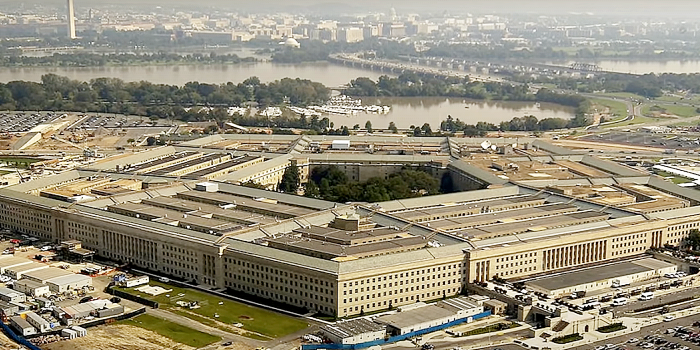
President Donald Trump’s executive order outlining plans for a Golden Dome missile defense system to protect the U.S. from attacks pose “monster challenges” for the Pentagon.

The Office of the Undersecretary of Defense for Acquisition and Sustainment is working with the Missile Defense Agency and the military services on the project, said Steven Morani, who is performing the duties of undersecretary of defense for acquisition and sustainment at the McAleese Defense Programs Conference in Washington.

“Consistent with protecting the homeland and per President Trump’s [executive order], we’re working with the industrial base and [through] supply chain challenges associated with standing up the Golden Dome,” Morani said.

In the 1980s, President Ronald Reagan wanted to build an air defense system, but technology wasn’t available. Morani said the challenge would be formidable and require a lot of teamwork.

“This is like the monster systems engineering problem. This is the monster integration problem,” he said. “This is going to be layers of architecture working together at all group level elevations … to protect the United States … so we’re going to need all the services and agencies that do this kind of work to step up.”

Some skeptics say the technology needed to protect a land mass the size of the U.S. still isn’t ready. Israel’s Iron Dome system works only against short-range rockets fired at a country the size of New Jersey. The system Trump envisions would protect the much larger U.S. using multiple layers of defense against a range of potential attacks.

Joe Cirincione, a national security analyst with Defense One, estimated that creating an Iron Dome for America would cost $2.5 trillion.

“Because Iron Dome is designed to intercept short-range rockets, not intercontinental ballistic missiles,” he wrote. “Each Iron Dome system can defend an area of roughly 150 square miles. We would need to deploy more than 24,700 Iron Dome batteries to defend the 3.7 million square miles of the continental United States. At $100 million per battery, that would be approximately $2,470,000,000,000.”

Cirincione noted that “it is technically impossible to build a system that can protect the United States from ballistic missile attack.”

Two experts on security issues, Stephen J. Cimbala and Lawrence J. Korb, wrote in the nonprofit “Bulletin of the Atomic Scientists” that Trump’s plan has “serious technology” flaws.

“The Trump administration’s ambitious plans for nationwide defenses deserve serious scrutiny about whether they are feasible – from the standpoint of available and foreseeable technology and cost – and desirable, from the standpoint of deterrence stability,” they wrote.

Nearly every president since Ronald Reagan has discussed some sort of missile defense system for the U.S. Reagan proposed the “Star Wars” system. In 1992, the U.S. Government Accountability Office concluded a proposed space-based interceptor system known as “Brilliant Pebbles” was based on immature simulations that “use many unproven assumptions.” Some such projects cost billions and were eventually scrapped.

Some Records about FBI’s Involvement in OKC Bombing Remain Sealed by a Judge

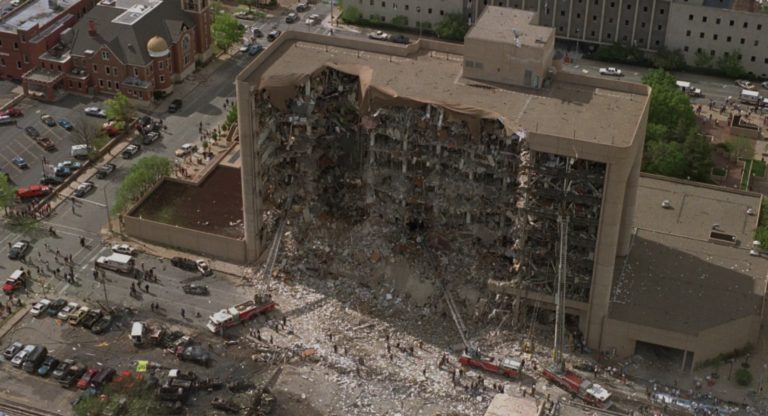
(Ken Silva, Headline USA) The FBI disclosed a batch of records to Utah attorney Jesse Trentadue earlier this month as part of his ongoing Freedom of Information Act lawsuit for documents about undercover federal informants linked to the April 19, 1995, Oklahoma City bombing.

However, at least eight of the records Trentadue seeks remain sealed by a federal judge. The bureau also withheld 30 documents for privacy reasons, even though the main subjects of Trentadue’s request—OKC bomber Timothy McVeigh and FBI informant Roger Edwin Moore—are both dead.

Additionally, only two of the 355 pages the FBI provided to Trentadue this month have anything to do with his original FOIA requests, he said in a March 20 court filing—one that seeks a judge to intervene and force the FBI to produce records more quickly.

“To date, the FBI has produced to Plaintiff 2,626 pages of documents of which just 17 pages were responsive to his FOIA Requests. The FBI has also withheld from Plaintiff another 627 pages of purportedly responsive documents under vague claims of privilege,” Trentadue said in his filing.

“The FBI has obviously done so in an effort to conceal from the American public the role that it played in the Oklahoma City Bombing, which is the very kind of government wrongdoing that FOIA was intended to expose.”

The FBI has yet to respond to Trentadue’s latest filing.

It’s unclear which court sealed the records that are subject to Trentadue’s FOIA actions. According to Trentadue, the fact that some records are sealed is an implicit admission of “the FBI’s involvement in the Oklahoma City Bombing.”

Trentadue’s Quest for Justice

Trentadue has been suing the U.S. government for OKC bomb-related records for nearly 30 years, ever since his brother was murdered in a federal penitentiary. The complex story of how the death of Trentadue’s brother relates to the OKC bombing can be read in Mother Jones.

One of the key players Trentadue seeks info about is a man named Roger Edwin Moore (not the James Bond actor), who was an FBI informant as part of the bureau’s 1980s- and early 90s-era Operation Punchout.  In the early 90s, Moore met McVeigh. The two would become business partners, embarking on the national gun show circuit in 1993.

“According to Terry Nichols, one of McVeigh’s accomplices, not only did Moore provide them with the Kinestik explosives used to detonate the bomb that destroyed the Murrah Federal Building, but Moore also told McVeigh that he knew McVeigh ‘would put them [the Kinesteik] to good use,’” Trentadue said in his Wednesday court filing.

Along with Moore, Trentadue also continues to seek info on the ARA.

In 2001, then-Indiana State University criminologist Mark Hamm published a book making the case that the ARA helped carry out the bombing. Hamm’s In Bad Company: America’s Terrorist Underground detailed the movements of McVeigh and the ARA throughout 1993 and ’94, showing that the bomber was often in Arizona, Kansas and Oklahoma at the same time as several other ARA members. McVeigh and ARA members were also both spotted by witnesses at Elohim City, a white nationalist compound in the Ozarks.

Even more shocking, Trentadue later uncovered evidence that the ARA may even have been an FBI front group. Trentadue obtained an email from former FBI agent Don Jarrett—who investigated right-wing terrorism in the 1990s—saying that the Aryan robbers were thoroughly infiltrated by FBI informants.

In his current lawsuit, Trentadue expressed his belief that the ARA was indeed an FBI front group.

“Timothy McVeigh participated in some of those robberies and is reported to have used money obtained from these crimes to help fund the bombing of the Murrah Federal Building in Oklahoma City on April 19, 1995. Members of the ARA also assisted McVeigh in carrying out the bombing of the Murrah Federal Building,” he said in his complaint last February.

“The ARA was actually a front group created by the FBI in which the Bureau had embedded at least one informant.”

Meanwhile, Trentadue still has another lawsuit against the FBI for records about the OKC bombing.

That lawsuit, which has been ongoing for decades, seeks surveillance footage of the blast. The FBI has denied that such footage exists, but Trentadue has evidence to the contrary—including a Secret Service investigative memo that describes the surveillance footage.

Trentadue’s lawsuit went to trial in 2014.

There, he was to have FBI informant-turned-whistleblower John Matthews testify on his behalf about how the bureau was monitoring McVeigh in the lead-up to the attack. However, Matthews changed his mind about testifying the night before he was supposed to take the stand, leading to Trentadue alleging that the FBI engaged in witness tampering and threatened Matthews.

Trentadue’s allegations have been subject of a court-appointed investigation for the last nearly eight years. The investigation has been conducted behind closed doors, with gag orders on all parties.

Ken Silva is the editor of Headline USA. Follow him at x.com/jd_cashless.

Former UFC champion Cain Velasquez Sentenced to 5 Years for Killing Pedophile

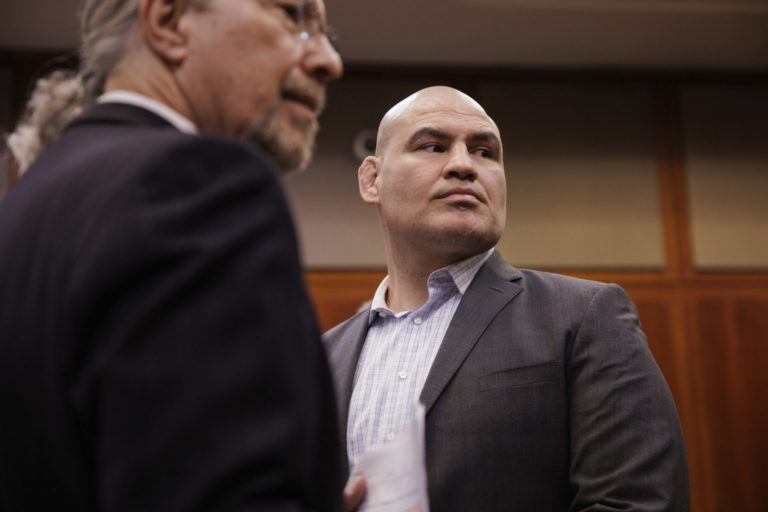
(Headline USA) Former UFC champion Cain Velasquez was sentenced to five years in prison Monday for a shooting in 2022 where he chased after the man accused of molesting his son.

Velasquez was sentenced in Santa Clara County after he pled no contest to attempted murder, felony assault, and other related gun charges last August for what the district attorney’s office called a “vigilante shooting spree.” He will receive credit for time served.

In February 2022, the two-time UFC heavyweight champion fired a gun multiple times at a truck carrying three people, including 46-year-old Harry Goularte, who is facing felony child molestation charges, according to the district attorney’s office.

His defense attorney, Renee Hessling, called the result “bittersweet” as they had hoped to keep Velasquez out of prison.

“Throughout it all, Cain has shown courage and strength of character,” Hessling said in a statement. “He has taken responsibility for his actions and has been held accountable. The sentence handed down today reflects the complexities of the situation and acknowledges the man behind the headlines.”

Less than a week prior to the shooting, Goularte was arrested in connection to the sexual assault of a 4-year-old at the daycare owned by his family. He was released without bail a few days later. Officials said he was released under house arrest and was on his way to retrieve an electronic monitoring bracelet when Velasquez attacked.

Velasquez shot at Goularte’s truck in a car chase that lasted for 11 miles, the district attorney’s office said. Goularte was uninjured, but his stepfather, who was driving, was hit twice.

Velasquez has said the sexual assault incident involved his child and is suing Goularte and his family’s daycare for negligence and sexual battery.

On his former teammate Kyle Kingsbury’s podcast, Velasquez said the way he handled the situation was “not the way to do it.”

“We cannot put the law in our own hands,” Velasquez said. “I know what I did, and I know what I did was very dangerous to other people, you know? Not just to people involved, but innocent people. I understand what I did and I’m willing to do everything I have to, to pay that back.”

Velasquez also said it was important to have open and honest with your kids about what kind of behavior is acceptable and listen to what they say.

“One man’s decision to take the law into his own hands left an innocent man wounded and endangered schoolchildren, teachers, and many others in our community,” District Attorney Jeff Rosen said in a statement. “If you want to do justice in Santa Clara County, please apply for a badge.”

Adapted from reporting by the Associated Press

Mangione Wants a Laptop in Jail While He Awaits Trial in Killing of UnitedHealthcare CEO

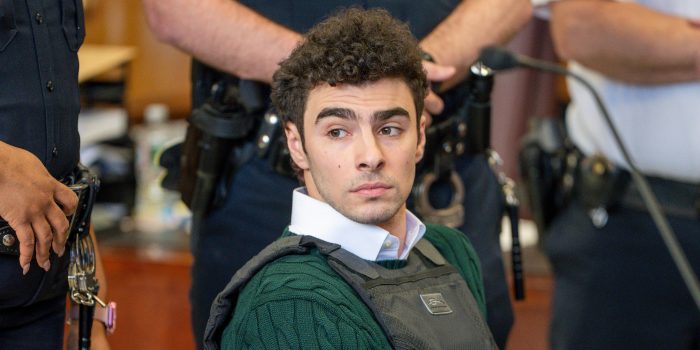
(Headline USA) Luigi Mangione is asking for a laptop in jail, but just for legal purposes — not for communicating with anyone — as he awaits trial in the killing of UnitedHealthcare’s CEO.

In a court filing made public late Monday, Mangione’s lawyers proposed that he get a laptop configured solely to let him view a vast amount of documents, video and other material in the case surrounding the shooting of Brian Thompson. Similar limited-laptop provisions have been made for some other defendants in the federal lockup where Mangione is being held.

The Manhattan district attorney’s office, which is prosecuting Mangione on a rare New York state charge of murder as an act of terrorism, didn’t immediately respond to a request for comment. According to Mangione’s lawyers, prosecutors are frowning on the laptop request, saying that some witnesses have been threatened.

Defense lawyer Karen Friedman Agnifilo wrote that there’s “no connection to Mr. Mangione for any of said alleged threats.”

Mangione, 26, is accused of gunning down Thompson in December outside a Manhattan hotel where UnitedHealthcare was about to hold an investor conference. Thompson, who was 50 and had two children in high school, worked for decades within UnitedHealthcare and its parent company.

Mangione, an Ivy League computer science graduate from a Maryland real estate family, has pleaded not guilty to the New York state charges. He also faces a parallel federal case that carries the possibility of the death penalty. He hasn’t entered a plea to the federal charges or to state-level gun possession and other charges in Pennsylvania, where he was arrested days after Thompson’s death.

Thompson’s killing alarmed the corporate world, where some health insurers hastily switched to remote work or online shareholder meetings.

But at the same time, the case channeled some Americans’ frustrations with health insurance companies. Mangione’s writings and words on bullets recovered from the scene reflected animus toward health insurers and corporate America, authorities have said.

Some people have lionized the accused killer, donated money to his defense and even flocked to his court appearances. Others, including elected officials, have deplored the praise for what they cast as ideological violence and vigilante justice.

Through his lawyers, Mangione has released a statement thanking supporters.

If he does get a laptop, it would be unable to connect to the internet, run video games or play movies or other entertainment, his lawyers said in Monday’s filing. But it would let him examine, from his jail cell, more than 15,000 pages of documents and thousands of hours of video that prosecutors gathered and were required to turn over to his attorneys.

Otherwise, he can view the material when meeting with his lawyers. But they say there aren’t enough visiting hours in the day for him to do that and properly help prepare his defense.

Adapted from reporting by the Associated Press

Rosie O’Donnell Claims Trump Stole the 2024 Election

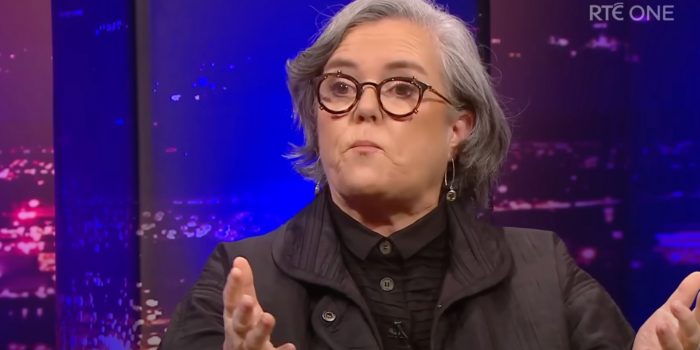
(Maire Clayton, Headline USA) Comedian Rosie O’Donnell made an appearance on Ireland’s Late Late Show Friday and tried to claim the results of the 2024 election needs to be “investigated.”

“I question why for the first time in America history a president has won every swing state and is also best friends and his largest donor was a man who owns and runs the internet,” O’Donnell said about President Donald Trump’s win and friendship with tech mogul Elon Musk.

O’Donnell has a feud with Trump and claimed the president “has it out for me and has for 20 years.” She bizarrely tried to claim former Vice President Kamala Harris had overwhelming support.

“So, I hope that would be investigated,” O’Donnell continued. “And that we would see whether it was an anomaly or it was something else that happened on election night in America when Kamala Harris was filling up stadiums with people who supported her and Donald Trump was not able to do that.”

Harris was only able to fill up a stadium in Houston, Texas, because singer Beyonce was in attendance, according to the Daily Mail. Fans ended up leaving once they realized the singer would not be performing.

Trump, who captured the Popular Vote, was routinely filling up stadiums throughout the country and would have multiple rallies in one given day.

O’Donnell continued her claims during her first appearance since moving to Ireland.

“So, it’s curious to me and as an American and a believer in democracy, I would hope that we would be able to look at all of the reasons why this happened in our country,” she added.

O’Donnell fled the United States after the win and claimed she would only return when it felt safe.

“It’s been pretty wonderful, I have to say,” O’Donnell said in the video. “And the people have been so loving, so kind and so welcoming. And I’m very grateful.”

The Fed Posted Another Big Operating Loss in 2024 and It’s Ultimately Your Problem

(Mike Maharrey, Money Metals News Service) The Federal Reserve lost $77.6 billion in 2024. And by the way, a Fed loss is ultimately your loss.

The central bank began bleeding red in late 2022. In 2023, it reported an operating loss of $114 billion.

On top of its operating loss, the Federal Reserve reported unrealized losses on its Treasury and mortgage-backed security holdings totaling $1.06 trillion. That was up from $948 billion as of the end of 2023.

Unrealized losses represent the difference between the securities’ face value when they mature and their current market value.

Why Is the Federal Reserve Bleeding Red Ink?

While most people view the central bank as an extension of the government, at its core, it is a business, and it is set up to make money.

Right now, it isn’t.

The Fed’s losses are a direct result of its rate hikes, and its financial condition offers a glimpse behind the curtain into the unseen consequences of its war on price inflation.

After insisting that price inflation was “transitory” for months, the Fed was forced to take action and begin raising interest rates in March 2022. This is the root cause of its current operating losses.

In simplest terms, as it hiked rates, the bank had to pay commercial banks more for the money they parked at the Fed. Meanwhile, its interest income remained static as the Treasuries and mortgage-backed securities on its balance sheet continued to yield lower interest income. From there, it’s a simple math problem. The bank has paid more interest to banks than it has collected on its asset portfolio.

The root of this problem goes back to the 2008 financial crisis and the Great Recession when the Fed purchased trillions in low-yielding securities during multiple rounds of quantitative easing (QE), followed by an even bigger round of bond-buying during the pandemic years. The Fed purchased these Treasuries and mortgage-backed securities during a time when interest rates were pushed artificially low by its own monetary policy.

Today, after having driven interest rates much higher over the last two years, it is paying interest at a much higher rate, however, it is still collecting lower rates of interest on the paper on its balance sheet.

The St. Louis Fed explained it this way:

“Tightening causes the net interest rate spread to fall; that is, it causes net income to fall for a constant size of the Fed’s balance sheet. This occurs because the Fed runs a maturity mismatch: It owns long-term securities and owes short-term liabilities.

“Specifically, when the Fed raises the policy rate, it is immediately paying more interest on bank reserves and reverse repos—a large portion of the Fed’s liabilities: 42.5 percent and 17.0 percent, respectively, as of Nov. 8, 2023. However, the Fed’s assets are longer-term and often pay a fixed interest rate. Therefore, when the Fed raises the policy rate, its net interest rate spread falls.”

Many commercial banks face a similar situation. In fact, this phenomenon was the root of the mini-financial crisis back in March 2022. 

The recent rate cuts afforded some relief, but the Fed still hasn’t worked its way back to the break-even point.

Fed Losses Are Your Losses

The bad news is you’re ultimately on the hook for the Fed’s business problem.

Generally, businesses experience pain when they lose money. But when the Federal Reserve loses money, the U.S. government feels the pain.

And that means you will ultimately feel the pain because you (the taxpayer) are going to foot the bill.

Under the Federal Reserve charter, the central bank remits net operating profits to the U.S. Treasury. This payday serves as an income source for the federal government and lowers the budget deficit. According to the St. Louis Fed, the central bank returned nearly $1 trillion to the U.S. Treasury between 2011 and 2021.

But when the Fed loses money, the Treasury loses its cash cow. That results in even bigger budget deficits.

And who pays for federal budget deficits?

Taxpayers.

Bigger deficits mean Congress either has to raise taxes to cover the shortfall, or the Treasury has to borrow even more money. Either way, taxpayers pay. They either get a bigger tax bill or they pay for the borrowing via the inflation tax when the Fed prints money to monetize the debt.

Meanwhile, it’s business as usual over at the Eccles Building.

Typically, managers have to take drastic measures when their companies suffer big losses. They generally try to slash costs. Sometimes, they lay off employees. If losses mount high enough, they might have to borrow money or sell assets. If they can’t stop the business from bleeding red ink, the company will ultimately face bankruptcy.

When the Fed loses money, the central bankers don’t have to do anything other than some creative accounting.

Their Rules Aren’t Your Rules

As George Orwell put it in Animal Farm, “All animals are equal, but some are more equal than others.”

And in the U.S., central banks get to play by different rules.

We live in a universe where the Fed gets to make its own special accounting rules, and according to its own special accounting rules, a net loss magically transforms into a “deferred asset.”

You read that right. Losses become an “asset” on the Fed’s balance sheet.

The Fed explains the “deferred asset” like this:

“[I]n the unlikely scenario in which realized losses were sufficiently large enough to result in an overall net income loss for the Reserve Banks, the Federal Reserve would still meet its financial obligations to cover operating expenses. In that case, remittances to the Treasury would be suspended, and a deferred asset would be recorded on the Federal Reserve’s balance sheet.”

Under Generally Accepted Accounting Principles, operating losses reduce a business’s reported capital or surplus. But in Fed accounting, the central bank gets to create an “asset” on its balance sheet out of thin air equal to the loss. Business goes on as usual. If losses mount, the size of this “asset” grows.

As The Hill reported, “Among other things, this accounting ‘innovation’ ensures that the Fed can keep paying dividends on its stock.”

Don’t you wish the IRS would let you use “innovative” accounting on your tax returns?

This “differed asset” has no upper limit. The Fed can keep losing money into perpetuity, and it won’t matter – at least as far as the central bank is concerned. The “asset” will just continue to grow.

Once the Fed starts making money again, it will reduce the amount of this imaginary asset. That means the U.S. Treasury won’t see another dime from the Fed until this “asset” is zeroed out.

How long will it be before the Fed starts making money again?

That remains unclear.

With the Fed easing monetary policy, it is getting closer to breaking even again. It will likely return to “profitability” this year or early next. According to Morgan Stanley, “The smaller balance sheet combined with the lower policy rate has brought the Fed out of the red.”

Even so, it will take years to pay down that deferred asset. That means it will be years before the U.S. Treasury sees a dime from the central bank.

This loss of revenue is less than ideal when Uncle Sam is already buried in over $36 trillion in debt and continues to run massive budget deficits every single month. It means the U.S. government will have to borrow even more money that the Fed will ultimately have to monetize.

And it’s less than ideal for the U.S. taxpayer how will ultimately foot the bill for higher interest expense and the price inflation created as the Fed ultimately monetizes the debt.


Mike Maharrey is a journalist and market analyst for Money Metals with over a decade of experience in precious metals. He holds a BS in accounting from the University of Kentucky and a BA in journalism from the University of South Florida.


Trump Campaign Manager Sues the Daily Beast

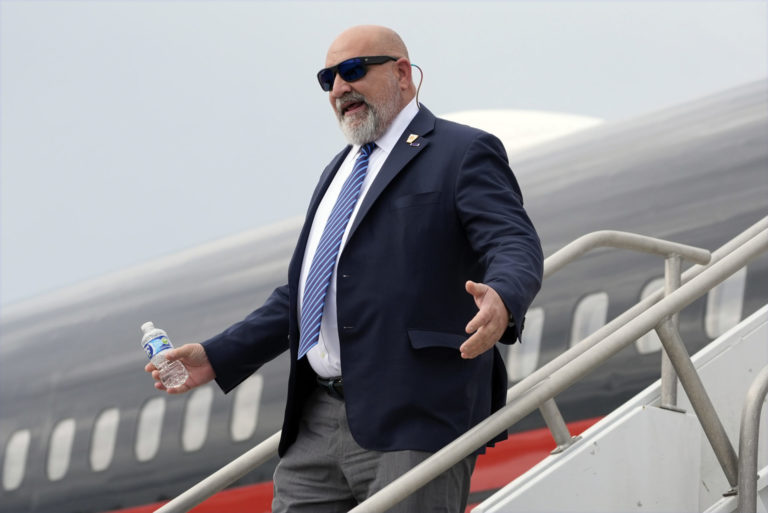
(Headline USA)The co-manager of President Donald Trump’s successful 2024 campaign sued the Daily Beast for defamation Monday over stories regarding how much he was paid for his work.

The lawsuit on behalf of Chris LaCivita said the online publication’s stories that he was paid $22 million over two years — later corrected to $19.2 million — “created the false impression that Mr. LaCivita was personally profiting excessively from his work for the campaign and that he was prioritizing personal gain over the campaign’s success.”

The Daily Beast said it stood by its reporting and said the lawsuit “is meritless and a transparent attempt to intimidate the Beast and silence the independent press.”

Celebrity attorney Mark Geragos is representing LaCivita in the lawsuit, filed in U.S. District Court in Richmond, Virginia. The filing was first reported by Axios.

The case continues a trend of aggressive action taken against the news media by Trump and those in his orbit. Trump has sued CBS News for $20 billion over editing of a 60 Minutes interview with his 2024 opponent, Kamala Harris, and sued the Des Moines Register over an Iowa election poll that turned out to be inaccurate. ABC News settled a lawsuit with Trump over its incorrect claim that the president had been found civilly liable for raping writer E. Jean Carroll.

LaCivita, in his lawsuit, said the majority of the money paid by Trump to him and his firm, Advancing Strategies LLC, was to buy media ads. He alleges that the stories created a negative perception for him and his firm and hindered the ability to attract new clients.
In a letter to Geragos last month, the Daily Beast said it would request that Trump and several of his aides be made available for the discovery process. The company’s lawyer, Neil Rosenhouse, disputed the idea that LaCivita’s business had been hurt.

“The Beast’s reporting that the LLC earned millions of dollars by successfully managing President Trump’s campaign is not defamatory,” he wrote, “it is the opposite.”

Adapted from reporting by the Associated Press

Big Pharma’s Billion-Dollar Ad Deduction: The Hidden Cost to Taxpayers

(José Niño, Headline USA) A recent study reveals a staggering financial burden on U.S. taxpayers, exceeding $1 billion yearly, due to a legal provision enabling pharmaceutical giants to deduct their marketing expenses.

This finding, released last Tuesday by The Campaign for Sustainable RX Pricing (CSRxP), sheds light on the significant tax implications of Big Pharma’s advertising practices. The analysis also uncovered that in 2023, 10 leading pharmaceutical corporations collectively invested almost $14 billion in direct-to-consumer (DTC) advertising campaigns.

According to the analysis, the IRS allows pharmaceutical companies to claim deductions for their marketing expenditures. This provision, as highlighted by CSRxP, results in a substantial annual loss for taxpayers, estimated between $1.5 billion and $1.7 billion, solely from the 10 corporations examined in the report. This tax benefit effectively shifts a significant financial burden from these pharmaceutical giants onto the shoulders of American citizens.

Those 10 companies are AbbVie, Amgen, Biogen, Bristol Myers Squibb (BMS), Eli Lilly, Gilead Sciences, GlaxoSmithKline (GSK), Johnson & Johnson (J&J), Merck and Pfizer.

The study reveals that Pfizer led the pack in advertising expenditure, allocating an alarming $3.7 billion in 2023. This massive investment reportedly yielded the company a tax advantage exceeding $1 million.

Since the Food and Drug Administration (FDA) gave the green light to pharmaceutical direct-to-consumer (DTC) advertising in 1997, the industry’s marketing expenses have skyrocketed. The analysis indicates a dramatic surge in annual medical marketing outlays, climbing from $17.7 billion to $29.9 billion between 1997 and 2016. During the same period, DTC advertising experienced an even more pronounced increase, soaring from $2.1 billion to $9.6 billion.

The analysis also references a Congressional Budget Office (CBO) report that establishes a clear link between increased pharmaceutical advertising expenditures and higher drug prices. According to the CBO’s estimates, a 10 percent boost in direct-to-consumer (DTC) advertising correlates with a 1 percent to 2.3 percent uptick in drug spending. Even more striking, a separate study by the National Bureau of Economic Research (NBER) suggests this increase could reach as high as 5.4 percent.

Notably, the recently appointed Health and Human Services (HHS) Secretary, Robert F. Kennedy Jr., has been a vocal critic of televised pharmaceutical advertising. This practice is uniquely permitted in only two nations worldwide: the United States and New Zealand. Kennedy’s stance aligns with growing concerns about the impact of such advertising on healthcare costs and consumer behavior.

“You look at somebody like Anderson Cooper, I think Anderson Cooper makes about $20 million, give or take,” Kennedy said to marketing expert Joe Polish in 2024. “If you say he’s at a $20 million salary and 75 percent of that or 80 percent of that is coming from the pharmaceutical companies, that’s who his real boss is.”

On a previous occasion, Kennedy has indicated his intention to recommend to President Trump a prohibition on pharmaceutical advertising. This potential policy shift could significantly alter the landscape of drug marketing in the United States, potentially aligning it more closely with practices in other countries where such advertising is restricted.

José Niño is the deputy editor of Headline USA. Follow him at x.com/JoseAlNino 

JD Vance Cautioned Against Bombing Yemen, Leaked Chats Reveal

(Dave DeCamp, Antiwar.com) Vice President JD Vance cautioned against bombing Yemen before the US restarted its airstrikes on the country, calling it a “mistake,” and suggested delaying the attack by one month, according to a leaked Signal conversation between administration officials.

Jeffrey Goldberg, a reporter for The Atlantic, was included in the Signal thread, apparently by accident, which is how he obtained the conversation.

An account believed to be Secretary of Defense Pete Hegseth shared details of the March 15 airstrikes on Yemen two hours before they happened, and the White House confirmed that the Signal conversation appeared to be authentic.

A day before the airstrikes, an account labeled “JD Vance” expressed misgivings about the idea of targeting the Houthis. “Team, I am out for the day doing an economic event in Michigan. But I think we are making a mistake,” the Vance account said.

Vance framed his opposition to the airstrikes based on President Trump’s policies toward Europe, which have involved pressuring the Europeans to pay more for their own militaries to be less reliant on the US. Vance pointed out that only a small percentage of US shipping goes through the Suez Canal compared to European trade.

The message said: “3 percent of US trade runs through the suez. 40 percent of European trade does. There is a real risk that the public doesn’t understand this or why it’s necessary. The strongest reason to do this is, as POTUS said, to send a message.”

Vance continued, “I am not sure the president is aware how inconsistent this is with his message on Europe right now. There’s a further risk that we see a moderate to severe spike in oil prices. I am willing to support the consensus of the team and keep these concerns to myself. But there is a strong argument for delaying this a month, doing the messaging work on why this matters, seeing where the economy is, etc.”

An account believed to be Joe Kent, President Trump’s nominee to lead the National Counterterrorism Center, replied to Vance, saying, “There is nothing time sensitive driving the time line. We’ll have the exact same options in a month.”

Hegseth responded to Vance by saying the messaging to the American people about the war would focus on President Biden failing to deter Yemeni attacks and the Houthis being “Iran funded.” Iran is aligned with the Houthis, but it’s unclear how much support they give to the group, and US officials have acknowledged the Houthis wouldn’t take orders from Tehran and have their own weapons supply.

“VP: I understand your concerns – and fully support you raising w/ POTUS. Important considerations, most of which are tough to know how they play out (economy, Ukraine peace, Gaza, etc). I think messaging is going to be tough no matter what – nobody knows who the Houthis are – which is why we would need to stay focused on: 1) Biden failed & 2) Iran funded,” Hegseth said.

Hegseth also disputed the idea that the strikes could wait, saying he wanted it to happen before the Gaza ceasefire fell apart and before Israel attacked Yemen. The US launched the March 15 airstrikes just a few days after the Houthis, officially known as Ansar Allah, announced they would reimpose their blockade on Israeli shipping in response to Israel’s ceasefire violations, which included imposing a full blockage on all goods entering Gaza.

“Waiting a few weeks or a month does not fundamentally change the calculus. 2 immediate risks on waiting: 1) this leaks, and we look indecisive; 2) Israel takes an action first – or Gaza cease fire falls apart – and we don’t get to start this on our own terms. We can manage both. We are prepared to execute, and if I had final go or no go vote, I believe we should,” Hegseth said.

Hegseth also claimed bombing Yemen wasn’t really “about the Houthis” and suggested the messaging would focus on protecting shipping. “This [is] not about the Houthis. I see it as two things: 1) Restoring Freedom of Navigation, a core national interest; and 2) Reestablish deterrence, which Biden cratered. But, we can easily pause. And if we do, I will do all we can to enforce 100% OPSEC [operations security]. I welcome other thoughts,” he said.

National Security Advisor Mike Waltz, who added Goldberg to the chat, made his argument for bombing Yemen, saying it would “have to be the United States that reopens these shipping lanes” and that the administration would figure out a way to get Europe to pay. “Per the president’s request we are working with DOD and State to determine how to compile the cost associated and levy them on the Europeans,” he said.

Vance said that he would agree with whatever Hegseth’s decision was. “If you think we should do it let’s go. I just hate bailing Europe out again,” he said.

The first round of US airstrikes on Yemen killed at least 53 people, including five children and two women, according to Yemen’s Health Ministry. Administration officials celebrated the strikes in the chat, including Waltz, who sent a fist emoji, a flame emoji, and an American flag emoji.

Since those initial airstrikes, the Houthis have carried multiple attacks targeting the US aircraft carrier USS Harry Truman, which US officials have said were intercepted. The Houthis also began firing missiles at Israel in response to Israel restarting its massive bombing campaign on Gaza.

The Houthis ceased their attacks on Israel and Israel-linked shipping when the Gaza ceasefire went into effect on January 19. The group has maintained that the only way to stop its attacks now is for another truce in Gaza and the end to the Israeli blockade on aid entering the Strip.

While the Trump administration officials’ conversation was focused on the impact on shipping, the US bombing campaign in Yemen is more about backing Israel. The Israeli news site Ynet reported that the US has told Israel not to worry about retaliating against the Houthis for their recent missile attacks, saying US forces will handle it.

President Trump is threatening the Houthis with “annihilation,” but a year-long US bombing campaign launched by President Biden from January 204 to January 2025 did not stop the Houthis, and a brutal US-backed Saudi-led war on Yemen from 2015 to 2022 also failed to remove the group from power.

This article originally appeared at Antiwar.com.