Trump Shuts Down FBI Office that Shielded Hunter Biden

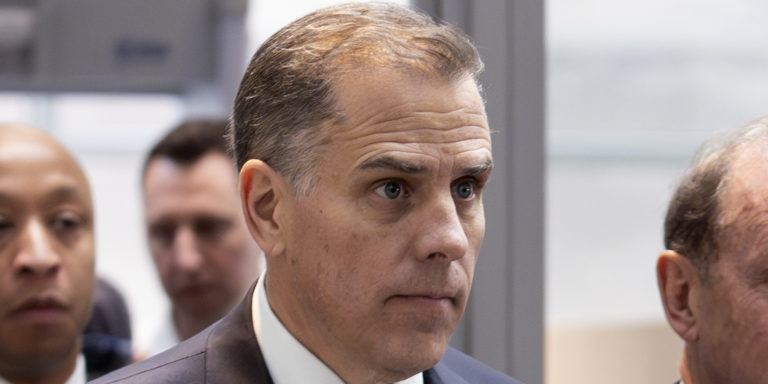
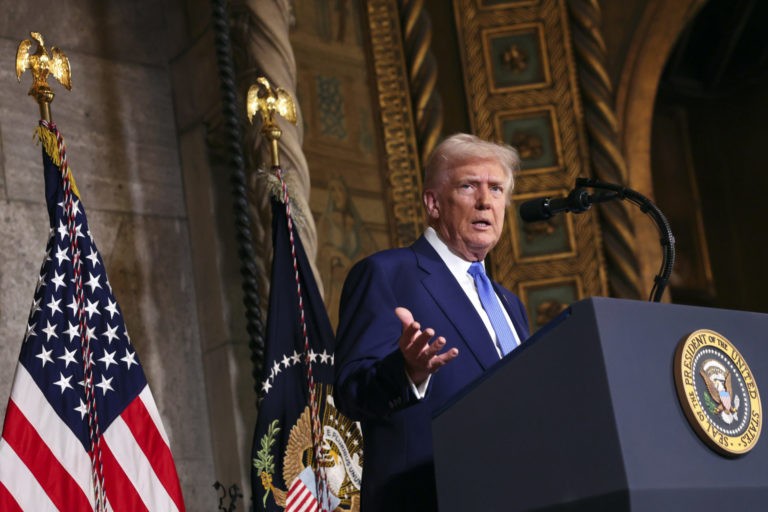
(Luis Cornelio, Headline USA) President Donald Trump disbanded the FBI office that prompted Big Tech companies to believe that the Hunter Biden laptop bombshell was tied to a Russian disinformation campaign. 

The FBI’s Foreign Influence Task Force briefed social media platforms about a so-called Russian hack-and-leak operation in the lead-up to the 2020 presidential election. Weeks later, the New York Post published its explosive reporting on the Biden laptop. 

Social media companies—freshly briefed by the task force—immediately censored the spread of the laptop story, supporting claims by the Biden campaign that the laptop was part of a Russian disinformation effort. 

Worse yet, the FBI knew the laptop was real but refused to confirm its authenticity, effectively shielding the Biden campaign from scrutiny and helping secure a favorable election outcome. 

The laptop confirmed that then-Democrat presidential candidate Joe Biden had lied about his involvement in Hunter’s shady business dealings, which ultimately triggered years-long criminal and congressional investigations. 

Attorney General Pam Bondi announced the task force’s shutdown in an internal memo issued on Feb. 5, stating that the move was intended to free up “resources to address more pressing priorities” and to end “risks of further weaponization and abuses of prosecutorial discretion.” 

Bondi also declared that criminal charges under the Foreign Agents Registration Act would “be limited to instances of alleged conduct similar to more traditional espionage by foreign government actors.” 

The infamous task force was launched in 2018 by then-FBI Director Chris Wray. He resigned before Trump could fire him after taking office on Jan. 20, 2025. 

Wray claimed the task force operated across all 56 field offices and focused on election threats and partnerships with private companies. 

“This year, we’ve met with top social media and technology companies several times,” Wray admitted in 2018. “We’ve given them classified briefings, and we’ve shared specific threat indicators and account information, so they can better monitor their own platforms.” 

He added, “It’s going to take all of us working together to hold the field, because this threat is not going away. As I’ve said consistently, Russia attempted to interfere with the last election, and it continues to engage in malign influence operations to this day.” 

Democrat Gov. Angry Novak Djokovic Played Tennis w/ RFK Jr.

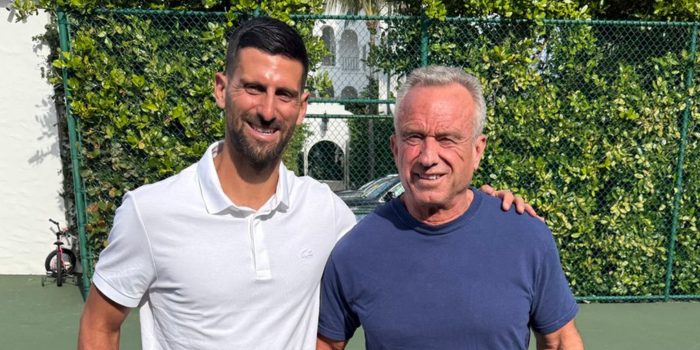
(Maire Clayton, Headline USA) Democrat Hawaii Gov. Josh Green went on an unhinged rant after tennis player Novak Djokovic played tennis with Health and Human Services secretary Robert F. Kennedy Jr. in a recent social media post.

Green appeared on Thursday’s broadcast of CNN’s OutFront where he said Djokovic should just “go play tennis” and “stay out of public health.”

The 37-year-old multi grand slam winner is best known off the court for his anti-COVID vaccine stance. Djokovic refused to compromise his beliefs and was forced to not compete for a period of time.

“We have vaccine hesitancy, especially in rural communities. I love to play tennis,” the Democrat began. “I was a competitive tennis player when I was young. But Novak hanging out with RFK, while good for cardiovascular health, won’t do anything to prevent the spread of AIDS with good public health advice.”

Green continued his hateful rhetoric over the meeting between Djokovic and Kennedy.

“This is this kind of B.S. distraction which we expected from a guy who took the job for celebrity reasons. It is catastrophic for our healthcare system to have RFK there,” Green said. “And shame on Novak for cozying up to this guy.”

In typical Democrat fashion, Green said he hopes Djokovic gets hit with a tennis ball and will feel pain.

“Novak, go play tennis, hit a 160 mph serve, but stay out of public health,” Green said. “And I hope someone hits him with an overhead and shows him what it means to hurt somebody, because that’s what it’s going to be for all these kids that don’t get vaccinated.”

Kennedy posted an image of the two on Sunday and expressed his support of the Serbian player.

“Novak Djokovic. First in tennis. First in integrity. First in courage. Guess who won this match?” Kennedy said.

First State in the Nation Bans Fluoride from Drinking Water

(Ken Silva, Headline USA) Utah became the first state to ban fluoride in public drinking water after the state’s Republican governor, Spencer Cox, signed legislation Thursday that bars cities and communities from deciding whether to add the mineral to their water systems.

Utah lawmakers who pushed for a ban said putting fluoride in water was too expensive. Cox, who grew up and raised his own children in a community without fluoridated water, compared it recently to being “medicated” by the government.

The ban, which is effective May 7, comes weeks after U.S. Health Secretary Robert F. Kennedy Jr., who has expressed skepticism about water fluoridation, was sworn into office.

In January, the National Institutes of Health published a study that supports Kennedy’s position on the matter—finding “significant inverse associations between fluoride exposure and children’s IQ scores.”

According to the study, children’s IQ’s decreased by about 1.63 points for every per 1-mg/L increase in urinary fluoride. The studies underpinning the NIEH’s findings were conducted outside the U.S.

“There is concern that pregnant women and children are getting fluoride from many sources, and that their total fluoride exposure is too high and may affect fetal, infant and child neurodevelopment,” NIEHS epidemiologist Kyla Taylor, the report’s lead author, told the New York Times.

The NIEHS study follows a September order from a federal judge for the U.S. Environmental Protection Agency to further regulate fluoride in drinking water because high levels could pose a risk to the intellectual development of children.

U.S. District Judge Edward Chen cautioned that it’s not certain that the amount of fluoride typically added to water is causing lower IQ in kids, but he concluded that mounting research points to an unreasonable risk that it could be. He ordered the EPA to take steps to lower that risk, but didn’t say what those measures should be.

Despite those recent developments, Utah appears to be alone in terms of states pushing to get fluoride out of their water. Proposed restrictions on fluoridation in New Hampshire, Tennessee and North Dakota have been rejected. A measure in Kentucky to make fluoridation optional stalled in the state Senate.

More than 200 million people in the U.S., or almost two-thirds of the population, receive fluoridated water through community water.

The sponsor of the Utah legislation, Republican Rep. Stephanie Gricius, acknowledged fluoride has benefits, but said it was an issue of “individual choice” to not have it in the water.

Out of the 484 Utah water systems that reported data in 2024, only 66 fluoridated their water, an Associated Press analysis showed. The largest was the state’s biggest city, Salt Lake City.

Utah in 2022 ranked 44th in the nation for the percentage of residents that receive fluoridated water, according to the data from the Centers for Disease Control and Prevention.

The Associated Press contributed to this report.

Ken Silva is the editor of Headline USA. Follow him at x.com/jd_cashless.

Rep. Massie Pushes for Nationwide Right to Carry Firearms w/o Permit

(José Niño, Headline USA)  Earlier this week, the House Judiciary Committee passed a bill HR 38, a bill that allows licensed concealed firearm holders to carry in other states that allow concealed carry. 

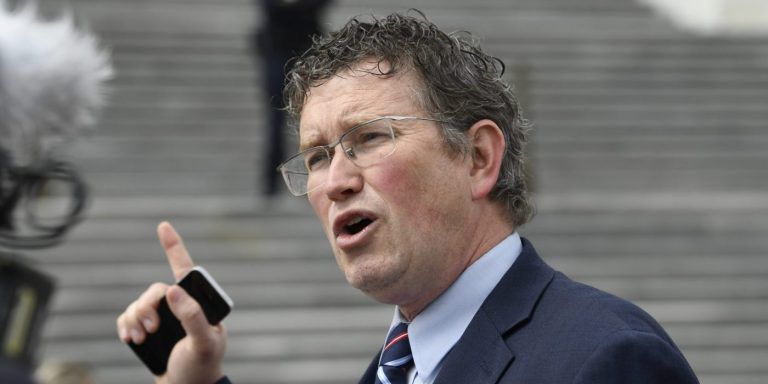
However, for Rep. Thomas Massie, R-KY, this bill does not go far enough. On X, he said “ I support this bill, but there is a better option, and it is National Constitutional Carry.” 

He added, “29 states already have Constitutional (i.e. permitless) Carry. Why not extend it to all 50 states?” 

Constitutional carry is the simple concept that any lawful individual can carry a firearm without having to ask the government for permission.

Under HR 38, Massie noted that residents of constitutional carry states can carry firearms in any state that issues permits to its citizens. The recent Bruen Supreme Court decision requires all non-constitutional carry states to issue carry permits.

Massie highlighted how when HR 38 passes, residents of the 29 constitutional carry states will be able to carry in all 50 states without a permit. Though paradoxically, residents of the 21 states without constitutional carry will need permits in their own states, while visitors from constitutional carry states won’t.

In the Kentucky congressman’s view, if Congress can mandate California to allow permit-less carry for out-of-state visitors based on the Second Amendment, it only makes sense to extend this right to California residents as well. 

Massie posed the following question: “Why not pass national constitutional carry and afford everyone in the United States the right to ‘bear arms’ which is enshrined in the Constitution?”

He also called attention to how HR 38 may create a situation where a Kentucky resident could carry an AR-15 pistol with a 20-round magazine in California, while Californians themselves cannot own or carry such equipment. This appears to contradict the framework established by the Supreme Court decision in DC v. Heller.

In contrast, Massie’s proposed national constitutional carry bill stipulates that if a state allows possession of a particular firearm, it must also allow the carry of said firearm.

He introduced this bill as a substitute amendment to HR 38 in committee but withdrew it to avoid forcing his colleagues to choose between National Reciprocity and National Constitutional Carry. The current consensus is that HR 38 can pass the House, while Constitutional Carry may not have sufficient support.

Pro-gun organizations such as the National Association for Gun Rights are firmly behind Massie’s Constitutional Carry bill. NAGR President Dudley Brown tweeted, “Massie’s bill is INFINITELY better than *smirk* John Cornyn’s.”

Massie’s bill is INFINITELY better than *smirk* John Cornyn’s.

Headline USA reached out to Brown, who said the following about Massie’s bill: 

“Massie’s Real Constitutional Carry law skips all the big-brother-may-I requirements and assumes citizens are law-abiding.  National reciprocity is a half measure compromise, as evidenced by the Senate sponsor, Sen John Cornyn.”

HR 38 was introduced by Rep. Richard Hudson, R-NC, and currently has 178 co-sponsors.

.José Niño is the deputy editor of Headline USA. Follow him at x.com/JoseAlNino

Pedophile Hunter Arrested at Missouri Steak ‘n Shake

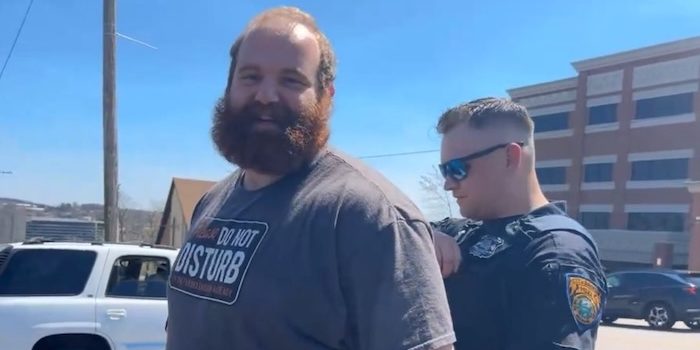
(José Niño, Headline USA)  Alex Rosen, the founder of the vigilante organization Predator Poachers, was arrested in Branson, Missouri following a confrontation with an individual he accused of being a pedophile.

According to a Facebook post published by the Branson Police Department (BPD), officers responded to reports of a disturbance involving Rosen at a local Steak ‘n Shake.

Witnesses informed the police that Rosen was allegedly shouting at customers and staff, becoming hostile and refusing management’s requests to leave, causing concern among some patrons who believed his behavior could escalate into violence.

Court records confirm that Rosen has been charged with first-degree harassment, disturbing the peace, and trespassing, all misdemeanors.

Rosen claimed on his X/Twitter media account that he went to the Steak ‘n Shake to confront an employee whom he alleged had been identified through one of his group’s sting operations targeting suspected sexual predators. He also accused the restaurant’s management of defending the individual in question.

Following the incident, police arrested Rosen for disturbing the peace and trespassing. The Steak ‘n Shake franchise intends to press charges against him.

Rosen’s bond was set at $15,000. Additionally, he has been ordered to avoid contact with the suspected pedophile and banned from entering any Steak N Shake location. If he is found guilty on all counts, Rosen could face a maximum five-year prison sentence.

The Branson Police Department stated it is investigating Rosen’s accusations and clarified they had not refused any information he provided. Additionally, they confirmed that the individual accused of pedophilia by Rosen has been arrested following an official police investigation. 

In an interview with conservative podcast host Breanna Morello, Rosen likened his pedophile bust to a “kamikaze mission”  given how both him and the suspect ended up being arrested. 

In a statement, BPD made its anti-vigilant stance clear:

The rule of law is critically important. Vigilante campaigns conducted without lawful and valid investigative techniques place potential victims at unnecessary risk and increase the likelihood that families and individuals are harmed through unproven accusations. We are aware many private groups are dedicated to protecting victims from sexual predators, and we applaud their lawful efforts. Such groups that genuinely engaged in these efforts know there are procedures that must be followed for successful outcomes, and that these procedures require proper coordination with law enforcement agencies.

Rosen founded Predator Poachers in 2019 and claims his organization has carried out operations nationwide, resulting in over 200 arrests and 40 convictions. His team poses as minors online to lure predators, confronts them in person, and documents their confessions on video. These videos are often used in legal proceedings, although civilian-collected evidence is not always admissible in certain jurisdictions.

José Niño is the deputy editor of Headline USA. Follow him at x.com/JoseAlNino 

Trump Says He Believes FBI’s Official Story about Who Tried to Assassinate Him

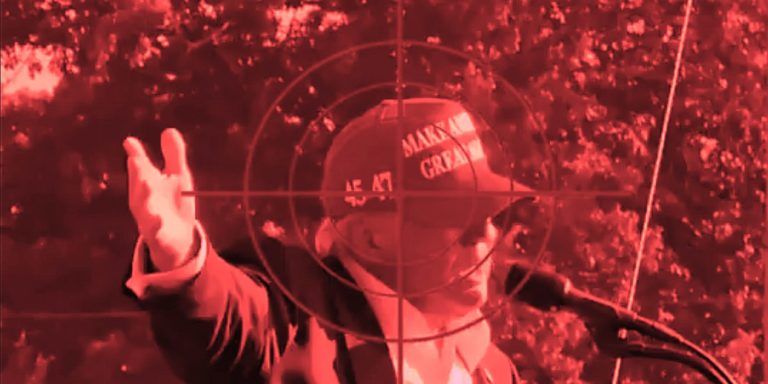
(Ken Silva, Headline USA) Last year’s assassination attempts on President Donald Trump have sparked numerous conspiracy theories—and for good reason.

When it comes to the July 13 assassination attempt in Butler, Pennsylvania, the FBI hasn’t released any new information about alleged shooter Thomas Crooks since last August. Lawmakers say they were stonewalled by the bureau during their investigation. Officials have said that Crooks had a large online footprint, but haven’t released any details on who he may have been communicating with.

As for the Sept. 15 attempt on Trump at his Florida golf course, the alleged would-be assassin, Ryan Routh, has been revealed to have bizarre connections to U.S. intelligence agencies.  Routh previously travelled to Ukraine in early 2022 to volunteer in the warfighting efforts against Russia’s invasion, and he was reportedly attempting to recruit fighters up to days within his Sept. 15 assassination attempt.

Chelsea Walsh, a nurse who had several encounters with Routh in Kyiv, reported him to Customs and Border Protection in June 2022—telling agents that “Routh was among the most dangerous Americans she met during her month-and-a-half-long stint in Ukraine.”

Walsh again reported him to the FBI and Interpol in 2023, after she heard that was attempting to recruit Syrian refugees to fight in Ukraine.

“She filed an online report with the FBI and Interpol outlining her concerns about Routh and others, she said. Neither Customs nor the FBI followed up with her,” the Wall Street Journal reported in September.

Nevertheless, Trump says he believes the FBI’s assessment that Crooks and Routh both acted alone in their respective alleged attempts. Trump told Newsmax that he was recently briefed on the attempts on his life. He sidestepped Newsmax reporter Greg Kelly’s question about whether an independent commission should be formed to investigate them.

“They don’t seem to think there was anything other than abnormal people,” he said, referring to Crooks and Routh. “I’ll assume that’s true.”

Trump also mentioned a “third case,” which is likely a reference to Asif Merchant, the Pakistani man busted for trying to hire two undercover FBI agents as “hitmen.” The FBI has claimed that Merchant’s actions were part of a larger Iranian conspiracy to assassinate Trump, but its case against Merchant appears to have been a highly controlled sting operation that never posed a threat to the President.

Trump has indicated that he also believes the FBI when it comes to the Iranian conspiracy.

Trump said last month that he’s given his advisers instructions to obliterate Iran if it assassinates him.

“If they did that they would be obliterated,” Trump told reporters while signing an executive order calling for the U.S. government to impose maximum pressure on Tehran. “I’ve left instructions if they do it, they get obliterated, there won’t be anything left.”

Trump ordered the 2020 killing of Qassem Soleimani, who led the Iranian Islamic Revolutionary Guard Corps’ Quds Force.

Ken Silva is the editor of Headline USA. Follow him at x.com/jd_cashless.

Union Says Carmakers Should Absorb Trump’s 25% Tariff on Imports

A union representing U.S. autoworkers cheered President Donald Trump’s 25% tariffs on auto imports and foreign parts while encouraging Congress to force vehicle makers to take the tax hit from consumers.

Trump on Wednesday announced the 25% tariff on vehicles built outside the U.S. along with a 25% tariff on imported auto parts.

The 25% tariff applies to imported passenger vehicles, light trucks and auto parts. It also includes processes to expand tariffs on additional parts “if necessary,” according to the White House.

Importers of automobiles that fall under the United States-Mexico-Canada Agreement will be able to certify their U.S. content, and the 25% tariff will only apply to the value of non-U.S. content.

USMCA-compliant automobile parts will remain tariff-free while the secretary of commerce and U.S. Customs and Border Protection establish a process to apply tariffs to the non-U.S. parts, according to the White House.

United Auto Workers, a union that represents 400,000 active members, lauded the tariffs as Trump prepares to roll out broader protectionist trade policies.

“We applaud the Trump administration for stepping up to end the free trade disaster that has devastated working class communities for decades,” UAW President Shawn Fain said. “Ending the race to the bottom in the auto industry starts with fixing our broken trade deals, and the Trump administration has made history with today’s actions.”

Fain said automakers should return union jobs to the U.S.

“These tariffs are a major step in the right direction for autoworkers and blue-collar communities across the country, and it is now on the automakers, from the Big Three to Volkswagen and beyond, to bring back good union jobs to the U.S,” he said.

The White House expects the auto tariffs to generate $100 billion in federal revenue. Trump said he hopes to eventually bring in $600 billion to $1 trillion in tariff revenue in the next year or two. Trump also said the tariffs would lead to a manufacturing boom in the U.S., with auto companies building new plants, expanding existing plants and adding jobs.

UAW said vehicle makers should take the tax hit rather than passing it to consumers. It encouraged Congress to take legislative action to make sure the companies don’t pass on added costs to consumers.

“As they shift their supply chains and investments to the U.S., auto companies that have enjoyed years of record profits should absorb the cost of these tariffs rather than passing them on to consumers, and the UAW would support legislative or regulatory action requiring them to do so,” the union said. “Workers must be held harmless during any disruption that accompanies the reshoring process, with financial support from the federal government if necessary.”

Autos Drive America, which represents 12 international automakers with operations in the U.S., said the tariffs will result in higher prices and fewer choices.

“The tariffs imposed today will make it more expensive to produce and sell cars in the United States, ultimately leading to higher prices, fewer options for consumers, and fewer manufacturing jobs in the U.S.”

Nearly half of all cars sold in the U.S. in 2024 were imported, according to industry data. Americans bought about 16 million cars, SUVs and light trucks last year. About 50% were imports. The White House said that of the 8 million vehicles assembled in America and not imported, the average domestic content was estimated at 50%.

Cox Automotive Chief Economist Jonathan Smoke said Wednesday tariffs on Mexican and Canadian parts would add on average $3,000 to the cost of building a new car or truck in North America. The 25% tariff on vehicles assembled outside the U.S. would add $6,000 to the cost.

“The massive policy changes by the administration have been far more aggressive than anyone expected so far,” Smoke said during the media call. “And worse still, the administration has communicated that they are willing to see the economy deteriorate if that is necessary to accomplish their goals.”

The American Automotive Policy Council, representing American automakers Ford, General Motors and Stellantis, said the tariffs must be structured to avoid higher prices.

“U.S. Automakers are committed to President Trump’s vision of increasing automotive production and jobs in the U.S. and will continue to work with the Administration on durable policies that help Americans,” President Matt Blunt said. “In particular, it is critical that tariffs are implemented in a way that avoids raising prices for consumers and that preserves the competitiveness of the integrated North American automotive sector that has been a key success of the President’s USMCA agreement.”

The average listing price for a new vehicle in February was $48,316, down 0.6% from a month earlier and higher by 2.6% compared to last year. However, 82 models on the market are priced at $40,000 and below, and 31 sit below the $30,000 mark, according to a report from Cox Automotive.


Kennedy to Cut 10,000 HHS Employees to Reduce ‘Bureaucratic Sprawl’

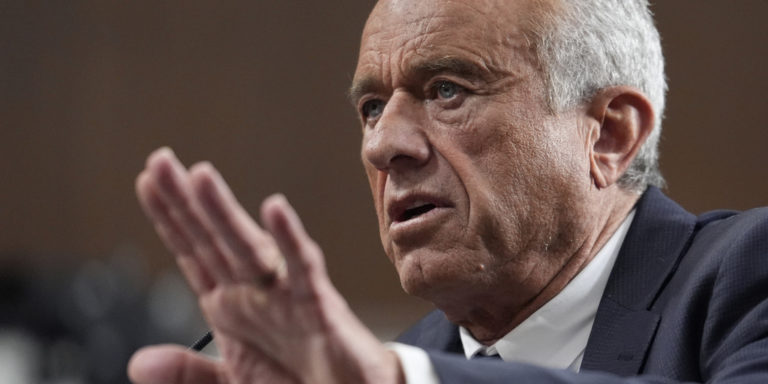
(Brett Rowland, The Center Square) Robert F. Kennedy Jr. announced a significant restructuring of the U.S. Department of Health and Human Services on Thursday in a move to streamline the huge federal agency and cut costs.

Kennedy plans to trim about 10,000 employees from the agency’s workforce in addition to employees who left as part of a Deferred Resignation Program, similar to a buy out, earlier this year. The move is expected to save about $1.8 billion.

Kennedy said the restructuring won’t affect the agency’s critical services. When combined with HHS’ other efforts, including early retirement, the changes are expected to reduce the agency’s headcount from 82,000 to 62,000 full-time employees. The restructuring will also align the department with Kennedy’s goals for a healthier U.S. population.

“We aren’t just reducing bureaucratic sprawl. We are realigning the organization with its core mission and our new priorities in reversing the chronic disease epidemic,” Kennedy said. “This Department will do more – a lot more – at a lower cost to the taxpayer.”

Kennedy also said the restructuring of the department’s 28 divisions will get rid of redundant units, consolidating them into “15 new divisions, including a new Administration for a Healthy America, or AHA, and will centralize core functions such as Human Resources, Information Technology, Procurement, External Affairs, and Policy.” Regional offices will be reduced from 10 to 5.

The overhaul will implement the new “HHS priority of ending America’s epidemic of chronic illness by focusing on safe, wholesome food, clean water, and the elimination of environmental toxins. These priorities will be reflected in the reorganization of HHS.”

Kennedy also said the restructuring would improve taxpayers’ experience with HHS by making the agency more responsive and efficient. He also said the changes would ensure that Medicare, Medicaid, and other essential health services remain intact.

The Administration for a Healthy America will combine multiple agencies – the Office of the Assistant Secretary for Health, Health Resources and Services Administration, Substance Abuse and Mental Health Services Administration, Agency for Toxic Substances and Disease Registry, and National Institute for Occupational Safety and Health — into a single, unified entity, Kennedy said.

The Centers for Disease Control and Prevention will get the Administration for Strategic Preparedness and Response, which is responsible for national disaster and public health emergency response.

“Over time, bureaucracies like HHS become wasteful and inefficient even when most of their staff are dedicated and competent civil servants,” Kennedy said. “This overhaul will be a win-win for taxpayers and for those that HHS serves.”

Among the cuts: The U.S. Food and Drug Administration will shed about 3,500 full-time employees. Officials said the reduction won’t affect drug, medical device, or food reviewers, nor will it impact inspectors. The CDC will drop about 2,400 employees. The National Institutes of Health will cut about 1,200 employees. The Centers for Medicare & Medicaid Services will cut about 300 employees. The reorganization won’t affect Medicare and Medicaid services, officials said.

Justice Department Eyes Combining ATF and DEA as Part of Broad Restructuring

(Headline USA) Justice Department leadership is proposing combining the two agencies responsible for enforcing drug and gun laws as part of a dramatic restructuring of the department, according to a memo reviewed by The Associated Press.

The memo from Deputy Attorney General Todd Blanche seeks feedback on a reorganization plan that would combine the Drug Enforcement Administration and Bureau of Alcohol, Tobacco, Firearms and Explosives into a single agency “to achieve efficiencies in resources, case deconfliction, and regulatory efforts.”

It’s part of a broader push by the Trump administration to shrink and reshape the federal government that has already led to a slew of legal challenges. President Donald Trump has directed agencies to develop plans for eliminating employee positions and consolidating programs.

Perhaps the most sweeping part of the Justice Department’s plan is a push to merge the DEA and ATF, which often work together along with the FBI but are both led by separate directors and are tasked with distinctly different missions. The memo included no details about how the two agencies would be combined, or whether some of the agents would be eliminated.

The ATF investigates things like violent crime, gun trafficking, arson and bombings. It also provides technical expertise tracing guns used in crimes and analyzing intelligence in shooting investigations. The DEA, meanwhile, is in charge of enforcing the nation’s laws around drugs. Its agents are focused on combating criminal drug networks and stemming the illicit flow of fentanyl and other street drugs.

Questions have been raised about the future of the ATF after FBI Director Kash Patel — in an unusual arrangement — was tapped to simultaneously serve as acting leader of the gun law agency.

The Justice Department plan also calls for combining policy offices in Washington and eliminating certain field offices around the country that work on things like antitrust and environmental matters.

Tax division lawyers as well as employees in the section that handles public corruption cases would be reassigned to U.S. attorneys offices, except for a “core team of supervisory attorneys” that would remain in Washington, according to the proposal.

The AP reported earlier this month that lawyers in the public integrity section, which oversees public corruption cases, were told they will be asked to take new assignments in the department and as few as five lawyers may remain in the unit.

A Justice Department spokesperson didn’t immediately provide a comment on the plan, which is not been finalized. Heads of Justice Department agencies were instructed to respond with any concerns about the proposals by April 2.

Adapted from reporting by the Associated Press

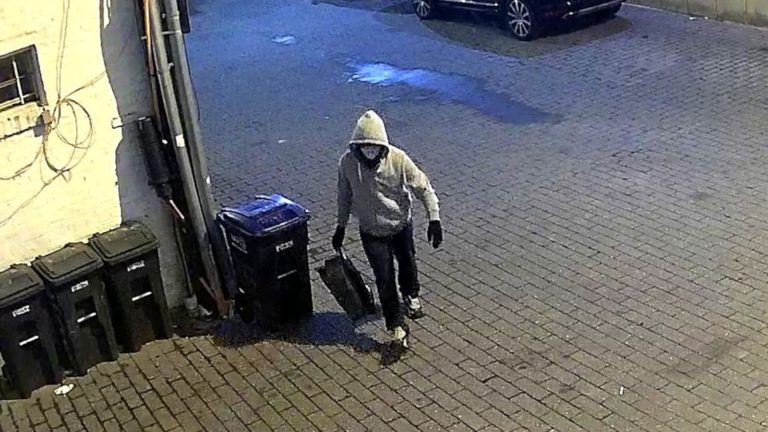
Search Warrants Unsealed in FBI’s Jan. 5/6 Pipe Bomb Investigation

(Ken Silva, Headline USA) Earlier this month, Judge Beryl Howell unsealed the four-year-old search warrants from the FBI’s stagnant investigation into who planted pipe bombs near the Republican and Democratic national committees’ offices the night before the Jan. 6, 2021, Capitol Hill uprising.

The unsealed records, first reported on by CourtWatch.News, show that the FBI applied for four search warrants on Jan. 9, 2021—seeking a trove of cell phone data from cell towers where the subject was observed. The search warrants were for Verizon, AT&T, T-Mobile, and Sprint.

On Jan. 13, 2021, a judge denied the FBI’s applications on the grounds that they were overly broad, and that the FBI “failed to establish probable cause as required by the Fourth Amendment.” The judge approved the applications after the government provided more information about them on that same day.

For the next four years, the search warrant documents remained sealed. The Justice Department applied to unseal them on March 17.

“The Subject remains unidentified and the government’s investigation into this matter continues,” the DOJ said in its motion to unseal.

“Recently, however, the existence of these tower dump warrants has been made public through a report by Congress,” prosecutors added. “In light of this disclosure, the previously proffered reasons for keeping these dockets and filings sealed has been mitigated.”

The search warrants don’t appear to reveal much new information about the pipe bombs. They do support the theory raised by Rep. Thomas Massie, R-Ky., and others that the pipe bombs were placed to divert law enforcement from the Capitol right as the protest was becoming especially heated.

“At approximately 1:00 p.m., a suspected IED was reported at RNC headquarters, located at 310First Street, SE, in Washington, D.C. Fifteen minutes later, at approximately 1:15 p.m., a second suspected IED with a similar description was reported at DNC headquarters,” Judge Howell noted in a Jan. 17, 2021, order.

“The timing, to align with the opening of the joint session, and the locations at which the devices were found, blocks away from the Capitol, raise the suspicion that the IEDs may have been strategically placed to distract and divert law enforcement from the impending mob rush at the Capitol.”

The unsealed search warrant docket also makes no mention of an allegation from FBI senior official Steven D’Antuono that some of the data provided by cell phone providers was “corrupted.” All the cell providers have also denied D’Antuono’s claim.

Before Donald Trump took office in January, he claimed that the FBI knew the pipe bomber’s identity.

“And why didn’t they find the pipe bomber?” Trump asked. “You know, they know who the pipe bomber is. The FBI knows who it is.”

Trump’s remarks followed a bombshell report from Rep. Barry Loudermilk, R-Ga., and the House Administration Committee, suggesting an FBI coverup.

Meanwhile, former Vice President Kamala Harris continues to be tight-lipped on the subject, despite the fact that her motorcade drove past the DNC pipe bomb on Jan. 6. Harris left the Capitol at 11:21 a.m. arrived to the DNC at 11:25 a.m., but the nearby pipe bomb wasn’t discovered until 1:07 p.m. by a plainclothes Capitol Police officer.

The lack of answers have driven many to suspect that it may have been a false-flag attempt overseen by the feds themselves to divert law enforcement from the Capitol right as the Jan. 6 protest was turning violent.

Rep. Massie asked DOJ Inspector General Michael Horowitz last September whether the pipe bomber was an FBI informant, and the IG said he couldn’t recall.

Ken Silva is the editor of Headline USA. Follow him at x.com/jd_cashless.