Hooters Is Making BIG Changes to Its Restaurants, Dubbed ‘Re-Hooterization’

(Maire Clayton, Headline USA) Hooters announced it is ending its long running “Bikini Nights” in hopes of appealing to families.

As the company is on verge of bankruptcy, the CEO of parent company HMC Hospitality Group Neil Kiefer decided to try to rebrand the iconic chain, according to Bloomberg.

“I’m calling it re-Hooterization,” he told the outlet.

He added that Hooters is frowned upon in certain areas of the United States.

“You go to some parts of the country and people say, ‘Oh I could never go to Hooters, my wife would kill me,”’ Kiefer said. “That’s depressing to us. We want to change that.”

The restaurant is known for its iconic bright orange shorts and its revealing tank tops.

Aaron Allen, a restaurant industry analyst, cited the rise of what he called “eatertainment.”

“For a business to be successful and sustainable, it helps to appeal to more than just men,” Allen said.

Kiefer said he plans on making the restaurants focus on three key areas, better good, customer service and regular reinvestment in the restaurants’ operation.

“There’s a noticeable difference,” he told the outlet. “The food’s different, the service is different — I hope to correct it all.”

He said he wants to focus on fresher ingredients and used switching to real butter as one example.

In June 2024, Hooters shut down around 40 locations, according to the Daily Mail.

“What was novel in the 1980s is a legacy business today,” Mark Kalinowski, a chief executive officer of restaurant-investing advisory firm, told Bloomberg. “You’ve seen quick service and fast-casual taking market share from casual dining.”

Hooters has been around for over 40 years with the first one opening in Clearwater, Florida in 1983.

Executive Order Redirects Smithsonian Funding Away from Leftward Historical Bent

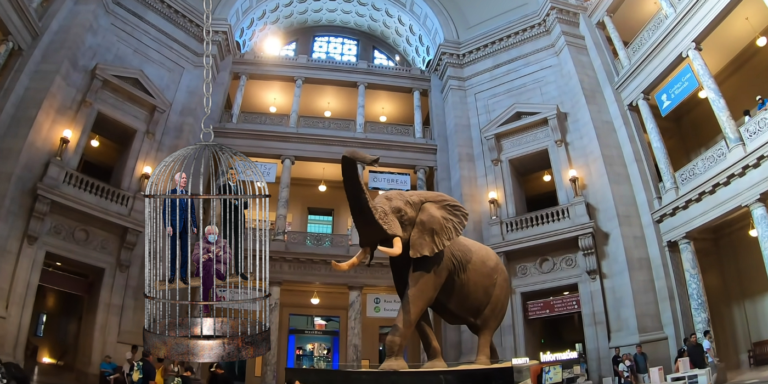
A new executive order from President Donald Trump is attempting to end displays and programs at Smithsonian museums that “divide Americans based on race” and “inappropriately disparage Americans past or living.”

“Over the past decade, Americans have witnessed a concerted and widespread effort to rewrite our Nation’s history, replacing objective facts with a distorted narrative driven by ideology rather than truth,” the order reads. “Under this historical revision, our Nation’s unparalleled legacy of advancing liberty, individual rights, and human happiness is reconstructed as inherently racist, sexist, oppressive, or otherwise irredeemably flawed.”

The order appoints Vice President J.D. Vance to lead efforts to replace existing exhibits or programs that teach America as a uniquely systemically oppressive nation. It directs Vance and the Office of Management and Budget to work with Congress to halt appropriations to such exhibits and redirect it to those that inspire, promote American greatness and its shared values and foster unity.

The order highlights examples of existing exhibits that “portray American and Western values as inherently harmful and oppressive,” describing the “Shape of Power” exhibit at the Smithsonian American Art Museum; depictions of “White culture” at the National Museum of African American History and Culture; and plans to celebrate “male athletes… in women’s sports” at the forthcoming American Women’s History Museum.

Appropriations for the women’s history museum are to go toward recognizing the achievements of biological women and not toward “[recognizing] men as women in any respect” there, according to the order. Vance is to work with the leaders in the House and Senate to appoint citizen members to the Smithsonian Board of Regents “committed to advancing the policy of this order.”

Poll: Majority Says Energy Independence More Important than Fighting Climate Change

A majority of Americans say it is more important for the U.S. to establish energy independence than to fight climate change, according to new polling.

The poll from Napolitan News Service of 1,000 registered voters shows that 57% of voters say making America energy independent is more important than fighting climate change, while 39% feel the opposite and 4% are unsure.

Those surveyed also were asked:  Which is more important, reducing greenhouse gas emissions to combat climate change, or keeping the price of cars low enough for families to afford them?

Half of voters (50%) said keeping the price of cars low was more important to them than reducing emissions, while 43% said emissions reductions were more important than the price of buying a car.

When asked, “Which is more important, reducing greenhouse gas emissions or reducing the cost and improving the reliability of electricity and gas for American families?”, 59% said reducing the cost and increasing the reliability was more important compared to 35% who said reducing emissions was more important.

The survey was conducted online by pollster Scott Rasmussen on March 18-19. Field work was conducted by RMG Research. The poll has a margin of error of +/- 3.1 percentage points.

Kanye West Gives Interview in a Black KKK-Inspired Outfit

(Maire Clayton, Headline USA) Rapper Kanye West decided to give an interview Sunday while dressed in a black leather Ku Klux Klan inspired outfit.

The move stunned interviewer DJ Akademiks, as West proceeded to say he also owns a white version as well.

“Have you worn this out in public?” Akademiks asked the singer.

“You know funny thing is I really wanted to wear it yesterday, but I thought they would like put me in a hospital for my outfit,” West said.

After the roughly one hour interview, West finally removed the outfit. However, it was revealed he was also wearing a custom swastika necklace along with a T-shirt designed by Sean “Diddy” Combs.

In February, West tried to sell T-shirts with a swastika on it before it was removed from his website.

West previously posted a since deleted image on Instagram showing a white KKK robe with the caption “outfit of the day.”

The rapper also spoke about his ex-wife and reality star Kim Kardashian in the interview. He claimed he didn’t want to have children with her, but ended up having four.

“When you speak about Kim, people might be like, ‘Well, you picked her. You put yourself in that,’” Akademiks said before West chimed in.

“Absolutely, I did,” West stated. “That was my fault. No, that was my fault.”

He continued and noted having children with her was not his original plan.

“I didn’t want to have children with this person after the first two months of being with them, but that wasn’t God’s plan,” he added.

Social media quickly responded to the bizarre interview.

“Kanye West’s situation is a clear example of the consequences of surrounding oneself with yes-men, making poor decisions, and struggling with mental health challenges,” one user wrote.

Hegseth Orders Pentagon To Focus on Preparing for War With China Over Taiwan

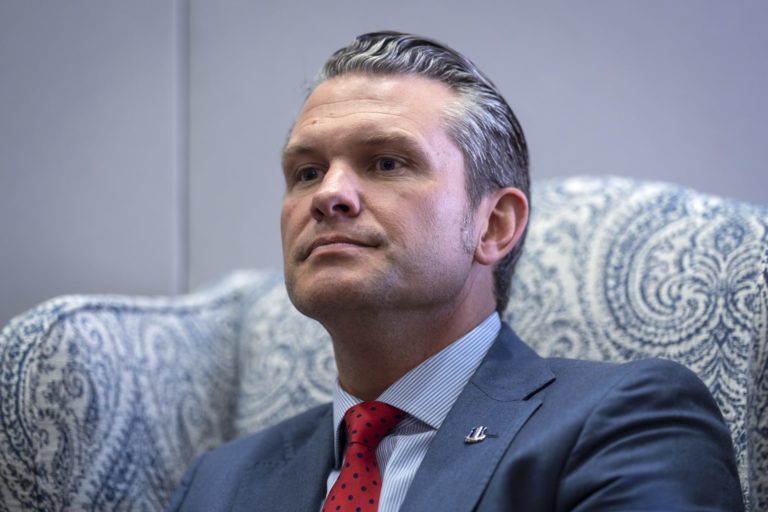
(Dave DeCamp, Antiwar.com) Secretary of Defense Pete Hegseth distributed a memo in mid-March ordering the Pentagon to put its focus on preparing for a war with China, a nuclear-armed power, by “assuming risk” in Europe and other parts of the world, The Washington Post reported on Saturday.

The Post didn’t publish the full memo, known as the Interim National Defense Strategic Guidance, but said it “outlines, in broad and sometimes partisan detail, the execution of President Donald Trump’s vision to prepare for and win a potential war against Beijing and defend the United States from threats in the ‘near abroad,’ including Greenland and the Panama Canal.”

The Pentagon has considered China the top “threat” facing the US since the first Trump administration, but the Post report said the memo is “extraordinary in its description of the potential invasion of Taiwan as the exclusive animating scenario that must be prioritized over other potential dangers — reorienting the vast US military architecture toward the Indo-Pacific region beyond its homeland defense mission.”

The report said that the guidance from Hegseth says the Pentagon’s force planning construct “will consider conflict only with Beijing when planning contingencies for a major power war” and leave the “threat from Moscow largely attended by European allies.”

Hegseth wrote that China “is the Department’s sole pacing threat, and denial of a Chinese fait accompli seizure of Taiwan — while simultaneously defending the US homeland is the Department’s sole pacing scenario.”

The memo reflects the Trump administration’s policy toward Europe and calls for NATO allies to take a “far greater” burden sharing. The document says that the US is unlikely to provide substantial support to Europe if Russia’s military advances in the region, saying the US will only provide nuclear deterrence.

The memo also calls for the US to pressure Taiwan to increase military spending “significantly.”

For years now, the US military has been openly preparing for war with Chinadespite the risk of nuclear escalation. It has done this by expanding military bases in the Asia Pacific, building alliances, and increasing support for Taiwan. While being done in the name of deterrence, these steps have only increased tensions in the region, making conflict more likely.

The Post report says that Hegseth’s plans to prepare a “denial defense” of Taiwan include “increasing the troop presence through submarines, bombers, unmanned ships, and specialty units from the Army and Marine Corps, as well as a greater focus on bombs that destroy reinforced and subterranean targets.” His memo also calls for increasing the defenses of US troop positions in the region and establishing more weapons stockpiles.

This article originally appeared at Antiwar.com.


Trump Says He’s ‘Pissed Off’ at Putin, Threatens ‘Secondary Tariffs’ on Russia

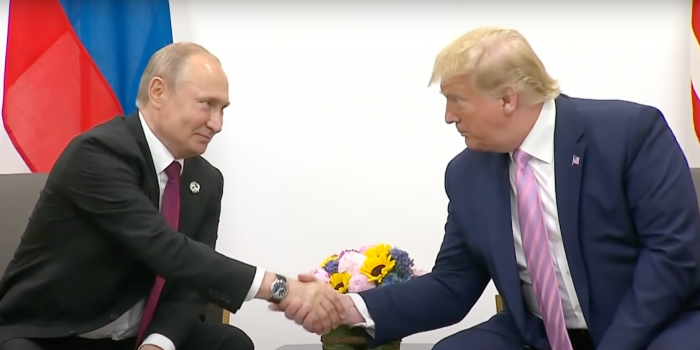
(Dave DeCamp, Antiwar.com) President Trump said on Sunday that he was “pissed off” at Russian President Vladimir Putin and warned he could hit Russia with “secondary tariffs” on its oil if a peace deal to end the Ukraine war isn’t reached.

Trump said he was unhappy with Putin questioning Ukrainian President Volodymyr Zelensky’s legitimacy. On Friday, Putin suggested replacing Zelensky with a “transitional administration” to prepare for elections in Ukraine.

Putin’s comments came after Zelensky said that he believes the Russian leader will soon be dead. “He will die soon, that is a fact, and everything will be over,” Zelensky said in an interview on March 26.

Trump has previously criticized Zelensky for not holding elections and even called the Ukrainian leader a “dictator,” but said in a phone interview with NBC News that he was “angry” over Putin’s comments about the Ukrainian leader.

“If Russia and I are unable to make a deal on stopping the bloodshed in Ukraine, and if I think it was Russia’s fault — which it might not be — but if I think it was Russia’s fault, I am going to put secondary tariffs on oil, on all oil coming out of Russia,” Trump said.

“That would be that if you buy oil from Russia, you can’t do business in the United States. There will be a 25% tariff on all oil, a 25- to 50-point tariff on all oil,” the president added.

It remains unclear if the current negotiations between the US and Russia will lead to a full ceasefire in Ukraine and a lasting peace deal. While both sides have nominally agreed to stop targeting energy infrastructure and halting attacks on the Black Sea, fighting continues to rage across the frontlines, Russian strikes are pounding Ukraine, and Ukraine is still launching drones into Russia.

This article originally appeared at Antiwar.com.


Stock Markets Around the World Tumble as Trump’s ‘Liberation Day’ Approaches

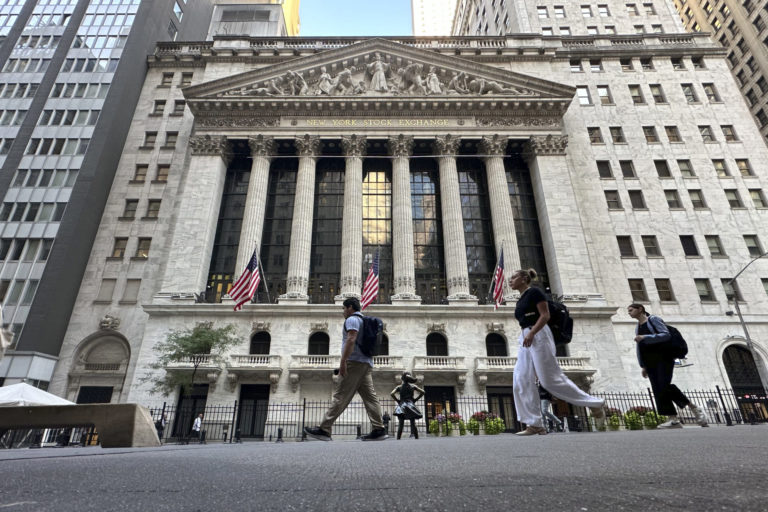
(Headline USA) President Donald Trump’s “Liberation Day” is fast approaching, and stock markets from Wall Street to Wellington, New Zealand, are falling Monday in advance of it.

In New York, the S&P 500 was down 0.8% following one of its worst losses of the past couple of years on Friday. It’s on track to finish the first three months of the year with a loss of 5.9%, which could make this its worst quarter in nearly three years.

The Dow Jones Industrial Average was down 111 points, or 0.3%, as of 10:10 a.m. Eastern time, and the Nasdaq composite was 1.7% lower.

The U.S. stock market’s drops followed a sell-off that spanned the world earlier Monday as worries build that tariffs coming Wednesday from Trump will worsen inflation and grind down growth for economies. Trump has said he’s plowing ahead in part because he wants more manufacturing jobs back in the United States.

In Japan, the Nikkei 225 index dropped 4%. South Korea’s Kospi sank 3%, and France’s CAC 40 fell 1.6%. In New Zealand, the NZX 50 slipped a more modest 0.1%.

Instead of stocks, which can be some of the riskiest possible investments, prices strengthened for things considered safer bets when the economy is looking shaky. Gold rose again to briefly crest $3,160 per ounce and was heading toward another record.

Prices for Treasury bonds also climbed, which in turn sent their yields down. The yield on the 10-year Treasury fell to 4.21% from 4.27% late Friday and from roughly 4.80% in January. It’s been falling as worries build about tariffs. On Wednesday, the United States is set to begin what Trump calls “reciprocal” tariffs, which will be tailored to match what he sees is the burden each country places on his, including things like value-added taxes.

Much is still unknown, including exactly what the U.S. government will do on “Liberation Day.” At Goldman Sachs, economists expect Trump to announce an average 15% reciprocal tariff. They also raised their forecast for inflation and lowered it for U.S. economic growth for the end of the year.

Altogether, they now see a 35% chance of recession in the next year, up from an earlier forecast of 20%, “reflecting our lower growth forecast, falling confidence, and statements from White House officials indicating willingness to tolerate economic pain,” according to Goldman Sachs economist David Mericle.

If the April 2 tariffs end up being less onerous than investors fear — maybe Trump includes no additional tariff increases on China, for example — stocks could rally. But if they end up being a worst-case scenario, which also gets businesses so fearful that they start cutting their workforces, something that hasn’t happened so far, stocks could sink much further.

Of course, there’s also the chance that April 2 does little to clear the uncertainty. It could end up being merely a “stepping stone for further negotiations” instead of a big “clearing event” for the market, according to Michael Wilson and other strategists at Morgan Stanley.

“This means policy uncertainty and growth risks are likely to persist — it’s a question of to what degree,” Wilson wrote in a report.

One worry is that even if Trump’s tariffs end up being less harsh than feared, all the uncertainty created by them could alone cause U.S. households and businesses to freeze their spending, which would hurt an economy that had been running at a solid pace at the close of last year.

Either way, some familiar names were leading the way downward on Wall Street Monday.
Tesla fell 5.2% to bring its loss for the year so far to 38.1%. It’s been one of the worst performers in the S&P 500 so far this year in large part because of fears that the electric-vehicle maker’s brand has become too intertwined with its CEO, Elon Musk.

Musk has been leading U.S. government efforts to cut spending, making him a target of growing political anger, and protests have been swarming Tesla showrooms as a result.
It’s a sharp drop-off following a surge of roughly 90% in the weeks following November’s Election Day, when the thought was that Musk’s close relationship with Trump could help the company’s finances. Tesla’s stock is roughly back to where it was on Nov. 5.

Other Big Tech stocks also helped to pull the market lower. They’ve been at the center of the recent sell-off in large part because of criticism that their stock prices had become too expensive. Critics pointed to how their prices rose much faster than their already quick-growing profits in recent years.

Nvidia, which has ridden the frenzy around artificial-intelligence technology to become one of Wall Street’s most influential stocks, fell 4% to bring its loss for the year so far to 21.6%.

Stocks of companies that need customers feeling flush enough to spend were also among Monday’s worst performers, as they’ve been so far this year.

United Airlines lost 6.5%, and Delta Air Lines gave up 4.5%.

On the winning side of Wall Street was Mr. Cooper, which jumped 16.1% after the home loan servicer said it’s being bought by mortgage company Rocket in an all-stock deal valued at $9.4 billion. The deal comes just weeks after Rocket acquired real estate listing company Redfin, and Rocket’s stock fell 7.3%.

In stock markets abroad, Thailand’s SET lost 1.5% after a powerful earthquake centered in Myanmar rattled the region, causing widespread destruction in the country, also known as Burma, and less damage in places like Bangkok.

Shares in Italian Thai Development, developer of a partially built 30-story high-rise office building under construction that collapsed, tumbled 26.9%. Thai officials said they are investigating the cause of the disaster, which left dozens of construction workers missing.

Adapted from reporting by the Associated Press

Tax Firm Shows Jobless Illegal Aliens How to Snatch $14K in IRS Cash

(Luis Cornelio, Headline USA) Illegal aliens are reportedly receiving thousands in tax dollars through IRS refunds—and one of the largest tax-preparation companies is actively encouraging them to use its services to maximize their gains. 

Jackson Hewitt Tax Service Inc. openly tabled outside the Roosevelt Hotel—the former luxury hotel turned shelter—in a bid to persuade illegal aliens to use their services to get more than $14,000 in tax refunds. Moreover, Jackson Hewitt did not require potential clients to have jobs to secure these refunds. 

These revelations came to light Friday after Turning Point USA’s Frontlines visited New York City to survey the status of illegal aliens and the lingering effects of the Biden administration’s open border policies.

Frontlines journalist Savanah Hernandez noticed that Jackson Hewitt staffers were stationed near the Roosevelt Hotel and were handing flyers that read, “Working or not, file your taxes” and “Let us help you get money today. Get the maximum benefit for your family.” 

The flyer also indicated that potential clients could file their taxes remotely and that the company offers Spanish-language services. Jackson Hewitt’s refund offers include up to $7,650 for one child, $12,635 for two children and $14,255 for three children. 

When the staffers realized that Hernandez was a journalist, they warned that their legal representative would need to get involved if their faces were shown in the footage. The tax-preparing company has not been accused of any wrongdoing.  

Foreign nationals—even those unlawfully in the country—can file returns using an Individual Taxpayer Identification Number, which allows them to access the same tax benefits that are available to American citizens. 

“While the primary purpose of an ITIN is for filing your federal tax return, obtaining an ITIN can also provide you with access to various benefits and opportunities,” said Jackson Hewitt’s chief tax officer Mark Steber in a company blog. 

“With an ITIN, you can claim certain tax credits and deductions you’re eligible for. Taking advantage of applicable credits and deductions could mean you owe less in taxes and potentially get a bigger refund,” he added. 

Headline USA attempted to reach out to Jackson Hewitt for comment, sending four emails from two separate accounts, but all were rejected by an apparent security filter that flagged them as spam.

Jeffrey Epstein Abuse Survivor Says She Has Fewer than 4 Days to Live

(Ken Silva, Headline USA) Virginia Giuffre, one of the most vocal survivors of Jeffrey Epstein’s sex trafficking ring, might die before she ever sees Epstein’s co-conspirators brought to justice.

Giuffre said on Sunday that she was recently hit by a bus, and has fewer than four days to live.

“They’ve given me four days to live, transferring me to a specialist hospital in urology,’ she said Sunday on Instagram, explaining that she’s gone into kidney failure, and that she wants to see her babies one more time before she dies.

“This year has been the worst start to a new year, but I won’t bore anyone with the details. But I think it’s important to note that when a school bus driver comes at you driving 110kmh as we were slowing down for a turn, that no matter what your car is made of, it might as well be a tin can.”

Giuffre did not say where or when the crash occurred.

Giuffre, formerly Virginia Roberts, alleged that Epstein and his associate Ghislaine Maxwell groomed her, starting at 16 years old, for Epstein’s “pleasure, including lessons in Epstein’s preferences during oral sex.” Giuffre said she was trafficked to prominent figures such as Prince Andrew, attorney Alan Dershowitz, politician Bill Richardson, and others.

She settled a lawsuit with Maxwell in 2017 and Prince Andrew in 2022, while dropping her lawsuit against Dershowitz.

Meanwhile, Maxwell is serving a 20-year sentence after being found guilty of conspiring with Epstein in 2021. Epstein was reportedly found dead in his prison cell in August 2019—allegeldy of suicide, though Maxwell recently said she doubts that.

“I believe that he was murdered. I was shocked, and I wondered, ‘How did this happen?’ Because I was sure he was going to appeal, and I was sure he was covered by the non-prosecution agreement,” Maxwell told British reporter Jeremy Kyle of TalkTV.

The non-prosecution agreement referenced by Maxwell was a sweetheart deal Epstein signed with the Department of Justice in 2008, in which he pleaded guilty to a state charge of procuring for prostitution a girl below the age of 18. Epstein was housed in a private wing of the Palm Beach County Stockade, and was reportedly allowed to leave the jail on “work release” for up to 12 hours a day.

After the Miami Herald published an expose on Epstein and his non-prosecution agreement in late 2018, Epstein was arrested again on July 6, 2019, on federal charges for the sex trafficking of minors in Florida and New York. He was found dead in his jail cell about a month later.

Epstein’s lawyers have contested the claim that he killed himself. Skeptics point to malfunctioning surveillance cameras, sleeping guards, and broken bones in Epstein’s neck as indications that his death was something other than suicide.

Ken Silva is the editor of Headline USA. Follow him at x.com/jd_cashless.

Trump Fires Hundreds of Bureaucrats at Failed Institute of Peace

(Luis Cornelio, Headline USA) The Trump administration has fired nearly half the bureaucrats at the obscure—and infamously named—U.S. Institute of Peace, as part of DOGE’s effort to cut government waste and reduce the size of the federal government. 

The mass firings, estimated to have affected between 200 and 300 workers and described by staffers as a “Friday night massacre,” came two weeks after President Donald Trump removed the agency’s president, Lise Grande. 

According to the liberal Washington Post, the Trump administration offered generous severance packages and an extra month of health insurance in exchange for workers signing agreements not to sue the government.  

The agreements are likely intended to avert additional lawsuits by bureaucrats attempting to force taxpayers to continue funding their salaries. 

What the U.S. Institute of Peace actually does was relatively unknown until it became a target of Trump’s downsizing efforts two weeks ago. 

Created by Congress in 1984, the self-described “nonpartisan” organization claimed via its Facebook page that it is “dedicated to protecting U.S. interests by helping to prevent violent conflicts and broker peace deals abroad.” 

It is unclear how USIP’s work differs from that of the already enormous Department of State and its global bureaucracy. 

“We put mediators in place to help stitch these communities back together,” an anonymous USIP employee told The Washington Post. “So it does have a dramatic effect on violence on the ground immediately by just pulling these assets out.” 

As recounted by the liberal newspaper, USIP attempted to challenge the White House’s authority to investigate its programs or fire workers, similar actions taken by the now-defunct U.S. Agency for International Development. 

USIP and members of the board filed a federal lawsuit, claiming that the executive branch lacks authority to shut down its operations because they were created by Congress.