(Dave DeCamp, Antiwar.com) On Saturday, Yemen’s SABA news agency reported that footage shared by President Donald Trump that showed a US airstrike in Yemen hit a religious gathering, not a Houthi military meeting as the president claimed.
Trump posted the video on his social media, which showed a group of people gathered in a large circle who were then bombed. “These Houthis gathered for instructions on an attack. Oops, there will be no attack by these Houthis!” the president wrote on X.
Trump added that the Houthis, officially known as Ansar Allah, will “never sink our ships again,” although there have been no known incidents of the Yemeni group sinking an American ship.
These Houthis gathered for instructions on an attack. Oops, there will be no attack by these Houthis!
In response to the post, a source told SABA that the video showed an airstrike on a gathering for Eid, the Muslim holiday that marks the end of Ramadan. “The source explained that the video clip published by the criminal Trump, claiming that it was a gathering of military leaders, was merely an event for a social Eid visit in Hodeida province,” SABA reported.
The report said the source “emphasized that those present at that gathering had no connection to the operations carried out by the Yemeni Armed Forces, which are implementing the decision to ban navigation on ships linked to the American and Israeli enemy, as the criminal Trump claimed.”
Mohammed al-Houthi, a senior member of Ansar Allah’s political council, said the video was evidence of a US intelligence failure. “The video clip published by Trump and the situation of the visitors attest to the falsity of what he said. The video he published is in fact the targeting of an Eid social gathering,” he said. Users on social media were quick to point out that the circle of people resembled a common way Yemeni tribes gather.
A member of the US and Saudi-backed Yemeni government in exile, which is based in Saudi Arabia, claimed the US strike killed 70 Houthi fighters and several Iranian advisors but offered no evidence for the claim. At the time of the attack, there were no reports in Yemeni media of a major casualty in Hodeidah.
The US military has shared virtually no details about its bombing campaign in Yemen and has not offered specifics about the video that Trump posted. The president shared the footage on the same day that The New York Times reported that the daily airstrikes on Yemen have had “limited success” as the Houthis are not deterred and are not backing down.
The US bombing campaign has had a heavy toll on civilians, with at least 25 civilians being killed in the first week from March 15 to March 21, according to the Yemen Data Project.
(Luis Cornelio, Headline USA) A veteran is under fire after sharing gay porn of himself on X. But there were two problem: he is a married Army Reserve lieutenant colonel specializing in diversity, equity, and inclusion—and some of his porn was recorded during his deployment overseas.
Lt. Col. Adam Harmon served as both an equal opportunity adviser and a diversity, equity, and inclusion professional in the Army—later working as a DEI attorney at prominent firms Foley Hoag and WilmerHale.
According to the New York Post—the first to report on Harmon’s acts Thursday—both Harmon and his husband are West Point graduates.
Harmon allegedly ran an X account called “franzkafka2007,” where he shared “workplace fantasies, self-generated X-rated content and lurid propositions for the past six years,” the Post noted.
Harmon apologized for his behavior while on deployment, telling the Post: “Serving this country in uniform for 24 years has been the greatest honor of my life. That’s why I am deeply sorry for the lapse in judgment that brought embarrassment to the Army, my unit and myself.”
“This occurred during an especially lonely chapter of my life, but I take full responsibility,” he added. “I believe in accountability, in learning from our mistakes and in using them as a path to growth — and that’s exactly what I intend to do here.”
The Post‘s analysis of the raunchy X page noted that Harmon left “his fingerprints” all over the account despite his apparent attempts to remain anonymous.
In December 2022, he shared a vacation photo in a Speedo on both his personal Instagram and X, displaying a right-arm tattoo.
Then, in September 2023, he boasted about three sex toys—known in gay culture as “butt plugs”—featuring his lieutenant colonel insignia.
In one video, Harmon recorded himself masturbating in the middle of barracks, captioning it, “A few guys have been very into f–king me in uniform lately so why not.”
Even worse, he shared what appeared to be a nude photo of himself timestamped in the United Arab Emirates in November 2024, while he was officially stationed in Kuwait.
The posting did not stop there. The Post noted, “The lieutenant colonel also shared two blushworthy sex pics of himself taken by other men — one in which he performs fellatio. Neither post identifies the other man as his husband.”
It added, “Harmon also posted two raunchy photos of a man whom he identifies as his husband, Bennett, who has been awarded the Bronze Star, the Meritorious Service Medal, the Combat Action Badge and 15 other decorations during his service, according to Army Reserve records.”
Critics say the issue with Harmon’s posts isn’t their sexual nature, but that they violated his duty to protect the country.
While he has deleted the page, the Post’s reporting led to his dismissal from his current job.
(Luis Cornelio, Headline USA) Hundreds of individuals have reportedly donated over $160,000 to a digital fundraiser for Karmelo Anthony, the man accused of fatally stabbing a 16-year-old white teen at a Texas track meet..
The fund—started by Anthony’s family—appeared to seek to cover the legal fees tied to first-degree murder charges. According to the Frisco Police Department, Anthony fatally stabbed Austin Metcalf, a 16-year-old student-athlete with a 4.0 GPA, during a track meet on April 2.
The incident reportedly began when Metcalf and his twin brother, Hunter, asked Anthony to move from seats assigned to them. Anthony allegedly refused, and after a brief altercation, took a knife out of his bag and stabbed Metcalf in the chest.
When apprehended by police, Anthony defiantly said, “I’m not alleged, I did it,” claiming his actions were in self-defense. His family echoed these claims in a GiveSendGo fundraiser.
“This is the Official Support Fund for Karmelo and his family during this challenging and difficult time,” the family wrote.
They added, “The narrative being spread is false, unjust, and harmful. As a family of faith, we are deeply grateful for all of your support during this trying period. Your prayers and assistance mean more to us now more than ever.”
The fundraiser, set at $200,000, has already attracted significant donations—some as high as $3,000—with supporters commenting, “Let’s get this baby home” and “We are here for you, Karmelo!” The Daily Mail was first to report on the fundraiser.
In contrast, Metcalf’s twin brother offered a different account of the seat dispute’s events.
In an interview with WFAA the day after the athlete’s death, Hunter recalled: “We asked him to move. He started getting aggressive and talking reckless, and my brother stepped in and said, ‘You need to move.’ He’s like, ‘Make me move,’ [and] also grabbed his backpack,” Hunter said, before saying he couldn’t explain further what happened.”
He added: “I look at my brother and then, I’m not gonna talk about the rest… I try to, I try to help him but it was just senseless. It was, it was really senseless, really. I don’t know why a person would do that to someone just over that little argument.”
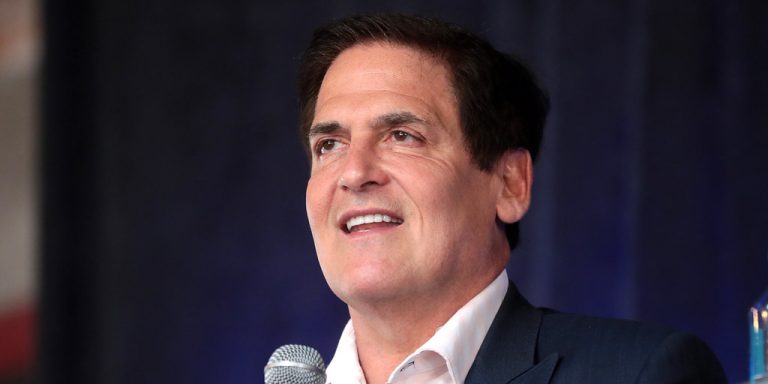
(Luis Cornelio, Headline USA) Billionaire Shark Tank star Mark Cuban offered a rather uninspiring explanation for his support of Kamala Harris in the 2024 presidential election. He admitted that his reason for voting Democratic boiled down to a single point: Harris was not Donald Trump.
Cuban made these remarks during a Friday interview with ESPN personality and podcast host Stephen A. Smith on The Stephen A. Smith Show. Smith had asked Cuban to explain his support for Democrats.
“Why is it—tell us and remind us—why you were so supportive of Kamala Harris and the Democratic Party considering how chaotic things looked and we ultimately learned that side of the aisle was?” Smith asked.
“Because she wasn’t Donald Trump,” Cuban replied.
Taken aback by the lack of substance in the answer, Smith pressed further: “Simple as plain? Just that simple? If it were anybody else other than Donald Trump—let’s say for example it was Nikki Haley, let’s say for example it was Ron DeSantis, or Chris Christie even a Vivek Ramaswamy or somebody—are you saying that you may have thought differently?”
Cuban confirmed, admitting he “voted for Nikki Haley in the Texas primary.”
“I got you,” Smith said. “So you would have voted for her for presidency if she had won the Republican nomination?”
Cuban hesitated at first, admitting he did not agree with all of Haley’s policy proposals, but added, “I certainly would have considered it.”
Only then did Cuban share some positive thoughts about Harris.
“Look, I like Kamala,” Cuban said. “I don’t want to throw her under the bus. I think she’s smarter than people give her credit for but I think she was really held back by her team they would not let her do just basic things that would have made a lot of difference.”
Stephen A. Smith: “Tell us, and remind us, why you were so supportive of Kamala Harris?”
Mark Cuban: “Because she wasn't Donald Trump.”
Stephen A. Smith: “Simple as plain. Just that simple?”
(Mike Maharrey, Money Metals News Service) Stocks have taken a beating over the last several days. The conventional wisdom is that the sell-off is due to worries about the impact of the Trump tariffs.
The aggressive tariff regime certainly triggered the sudden and sharp downturn in the stock market, but is something deeper going on?
I think there is.
The big sell-off in response to tariffs is just one chapter in a much longer novel. A look at a metric known as the Dow-to-gold ratio hints at the larger narrative.
In a nutshell, the stock market is historically overvalued. In other words, it is a bubble. And one thing we know about bubbles is that they eventually pop.
All it takes is a pin.
Tariffs might be the pin.
But even if stocks manage to regain their footing, another pin is out there.
What Is the Dow-Gold Ratio?
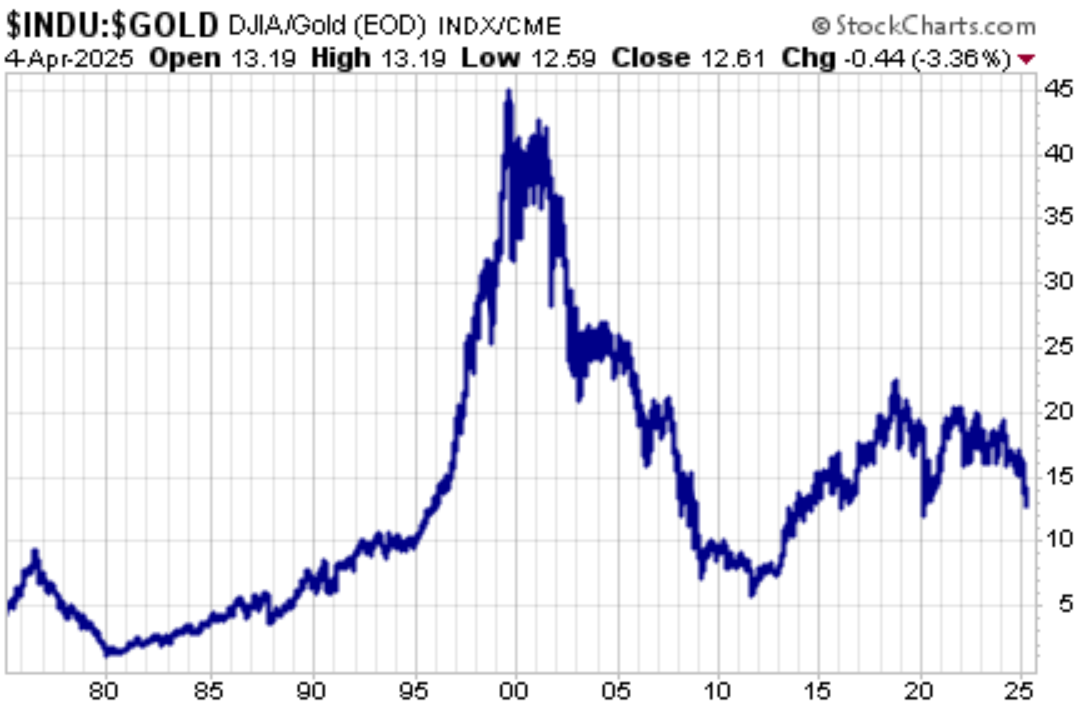
The Dow-to-Gold ratio prices the Dow Jones Index in ounces of gold. Currently, the ratio stands at just over 12.5-1. In other words, it would take around 12.5 ounces of gold to “buy” the Dow.
As you can see from the chart, the ratio is starting to break down.
What is this telling us?
Ratios are valuable in revealing trends and cycles. For instance, a large spread in the gold-to-silver ratio (such as the 100:1 ratio today) tells us that silver is significantly undervalued compared to gold. When we get these large spreads, ratios typically revert back to the mean. For instance, the gold-to-silver ratio fell to 30-1 in 2011 after rising to over 80-1 during the money creation of the Great Recession in the wake of the 2008 financial crisis.
We can track similar trends in the Dow-to-gold ratio.
What we find is that historically, a falling Dow-to-Gold ratio precedes or coincides with financial crises or long-term bear markets.
Going way back in time, the ratio fell from around 18-1 to 2-1 in the early years of the Great Depression.
During the stagflationary years of the ’70s, stocks tanked, but gold took off on a long bull rally. In 1980, the Dow-Gold ratio briefly touched 1-1.
As we can see from the chart, stock valuations took off in the 90s. Between that low in 1980 to 2000, the index moved as high as 43-1.
How do we account for this massive runup in stocks?
There were certainly many factors, but one of the most significant drivers was money creation by the Federal Reserve that helped pump up the dot-com bubble. The extreme overvaluation of tech stocks drove the Dow-to-gold ratio to all-time highs.
And then the bubble popped.
The Fed managed to keep some air in the bubble for a while with a massive injection of easy money, but the bubble popped as we endured the 2008 financial crisis and the Great Recession. Between 2000 and 2011, the ratio fell to as low as 6:1.
And then the Fed went to work again.
The Dow-to-gold ratio peaked at over 18:1 in 2018, thanks to a decade of easy money. The ratio fell modestly in late 2018 as the stock market tanked and the central bank finally attempted to “normalize” monetary policy. But when the market crashed in the fall of that year, the central bank pivoted back to quantitative easing to keep the air flowing.
The pandemic gave the Fed cover to double down on loose monetary policy and blow even more air into the stock market bubble. The chart shows the post-pandemic rebound as stocks surged due to massive liquidity injections inflating the ratio yet again.
Since then, we’ve seen a relatively steady ratio until the drop in recent weeks.
Bubbles Pop
The relationship between Federal Reserve monetary policy and the Dow-to-Gold ratio underscores an important fundamental — the stock market is subject to inflation just like consumer prices. In fact, monetary inflation often shows up in equities first. In a nutshell, central bank money creation tends to blow up asset bubbles.
In effect, this means that while stocks have surged in nominal terms, they have made much less progress in real (inflation-adjusted) returns.
I have been saying for years that the stock market is extremely overvalued, thanks to the Fed’s monetary malfeasance. It is a bubble waiting for a pin. It started to deflate in 2018, but the Fed was able to use the pandemic as an excuse to pump the air back in. Now, it may have found its pin in Trump tariffs.
There is little question that the stock market is extremely overvalued. In December, CurrentMarketValuation.com called the S&P 500 “strongly overvalued” based on the price-earnings ratio.
If history is any indication, the sudden drop in the Dow-to-Gold ratio could be signaling the beginning of a massive selloff in stock and a major rally in gold.
An Opportunity for Investors
The recent breakdown in the Dow-to-gold ratio may signal that it’s time to consider getting out of stocks and into gold.
Even if Trump backs off the aggressive tariffs and provides some relief for markets, it won’t change the fact that stocks are overvalued. We still haven’t dealt with the ramifications of well over a decade of artificially low interest rates and multiple rounds of QE.
We will.
Consider this: if the Dow-gold ratio were to revisit the 1-1, we’d be looking at either a massive stock market crash, an explosive move higher in precious metals prices, or some combination of both.
While a return to a 1-1 ratio would be extreme, even a more modest contraction of the ratio presents an opportunity. If the ratio returned to 5-1, we’d be looking at $7,500 gold if there was no corresponding drop in the Dow. If the Dow fell to 20,000, gold would still be over $4,000 an ounce.
And don’t forget that silver typically outperforms gold in the latter part of a gold bull market. With the gold-to-silver ratio over 100-1, we know that silver is significantly undervalued compared to gold and set up for a major gain. So this extremely high gold-to-silver ratio suggests one might be overweight to silver in comparison to gold.
Nobody has a crystal ball. Trump could relent on tariffs tomorrow and set off a relief rally in stocks. But it won’t change the fact that the market is a “big, fat, ugly bubble,” to quote Donald Trump in 2016. Smart investors are positioned for that reality.
Mike Maharrey is a journalist and market analyst for Money Metals with over a decade of experience in precious metals. He holds a BS in accounting from the University of Kentucky and a BA in journalism from the University of South Florida.
(Money Metals News Service) In the latest episode of the Money Metals podcast, host Mike Maharrey welcomes Peter Krauth—veteran resource market analyst, publisher of Silver Stock Investor and Silver Advisor, and author of The Great Silver Bull.
Together, they explore the rapid acceleration in gold prices, silver’s current lag, and why both metals may be poised for significant moves in the coming months and years.
(Interview Starts Around the 4:48 Mark)
Gold Hits $3,000 in Record Time
Gold’s recent price action has stunned even seasoned market watchers. The metal surged from $2,500 to $3,000 in just 210 days—an unprecedented move considering that past $500 price milestones took an average of 1,700 days.
Krauth expressed a mixture of surprise and validation.
While long-term bulls have anticipated such a breakout, the velocity and durability of the move have exceeded expectations. He noted that multiple global factors are creating the conditions for gold’s strength and argued that we remain in the early stages of a larger bull market.
Silver: Lagging But Loaded with Potential
The big question on many investors’ minds is, “What’s wrong with silver?”
Krauth’s answer: “Absolutely nothing.”
Silver is behaving in line with its historical pattern, trailing gold in the early stages of a bull cycle. Importantly, the gold-to-silver ratio remains near historically elevated levels, currently around 90:1, far above its long-term average of 55 to 60.
Krauth emphasized that this imbalance will eventually correct—and when it does, silver tends to move violently to the upside.
He acknowledged that some industrial headwinds, such as tariffs and economic uncertainty, may be tempering silver’s price, but those same conditions are also setting the stage for future gains.
History shows that during past Federal Reserve rate-cutting cycles, silver has delivered gains exceeding 300% within one to two years.
Industrial Demand vs. Investment Demand
Silver’s dual identity as both an industrial metal and a monetary asset adds complexity to its price behavior.
Over the past decade, industrial demand has grown from about 50% to nearly 60% of overall usage, largely due to solar panels, electric vehicles, and green energy technologies. This shift means there’s now less silver available for investment.
Krauth pointed out that when investor demand does come roaring back—as it often does during bull markets—the reduced available supply could send prices soaring. He sees the industrial base as providing a rising and more stable floor for silver prices, while investment demand brings in volatility and explosive upside potential.
Bullish Technical Signals: $50+ in Sight?
Technically, silver may be setting up for one of the most powerful breakouts in market history.
Krauth referenced the multi-decade “cup and handle” formation in silver, stretching back to the $50 highs of 1980 and 2011.
He cited technical analyst Jordan Roy-Byrne, who argues that a breakout above $35 to $37 would be significant, while a breakout past $50 would mark entirely new territory.
Such a move could catapult silver to $70, $80, or even $100 in a short time span. Krauth agrees with this view, emphasizing that even if one doesn’t trade technically, many investors do—and that alone makes such breakouts meaningful.
Monetary Policy, Tariffs, and Regime Uncertainty
Krauth and Maharrey both observed that gold’s rally has unfolded even without a dramatic loosening of monetary policy. This indicates the market may be anticipating a major economic event or crisis.
Krauth believes the Federal Reserve is cornered by soaring deficits and high interest rates, and when it inevitably cuts rates in the face of ongoing inflation, it will lose its remaining credibility.
This could trigger a massive move into gold—and then into silver, as investors look for more affordable alternatives. Krauth sees silver potentially reaching $40 by the end of 2025 and breaking through its all-time high of $50 sometime in 2026.
Since the recording of this interview, the White House has released its tariff plans. Gold and silver bullion, along with other precious metals and copper, will not have a tariff.
Government Support and the Green Transition
Government policy is creating sustained demand for silver, particularly through green energy initiatives. Krauth pointed to recent data showing that renewable energy has surpassed coal for electricity generation in the United States for the first time.
Solar panels, a major consumer of silver, are becoming more efficient, with newer technologies requiring up to 50% more silver per panel. He also noted that Europe is aggressively spending on both rearming and the green economy, with Germany proposing a €900 billion package for defense and climate-related infrastructure.
Looking ahead, Krauth is highly optimistic. He believes a $40 silver price later this year is realistic and sees strong odds that silver will test or break its all-time high of $50 in 2026.
If gold continues to climb—possibly reaching $3,500 or $4,000—investors will likely shift attention to silver, which still offers more ounces per dollar.
This relative value, combined with limited supply and rising demand, could create the perfect conditions for a major silver bull run.
Where to Follow Peter Krauth
Peter Krauth offers a range of resources for investors. His paid newsletter, Silver Stock Investor, is available at silverstockinvestor.com. He also publishes a free newsletter, Silver Advisor, featuring lower-risk, more advanced companies, which you can subscribe to at thegoldadvisor.com/registration.
His book, The Great Silver Bull, provides a comprehensive yet accessible overview of the silver market, ideal for both new and seasoned investors. You can follow him on X (formerly Twitter) at @PeterKrauth and connect with him on LinkedIn.
Final Takeaway
The message from this episode is clear: Gold may be leading the charge, but silver is gathering strength beneath the surface.
With tight physical supplies, government-fueled industrial demand, and bullish technical setups converging, investors may want to prepare now—before silver’s breakout comes hard and fast.
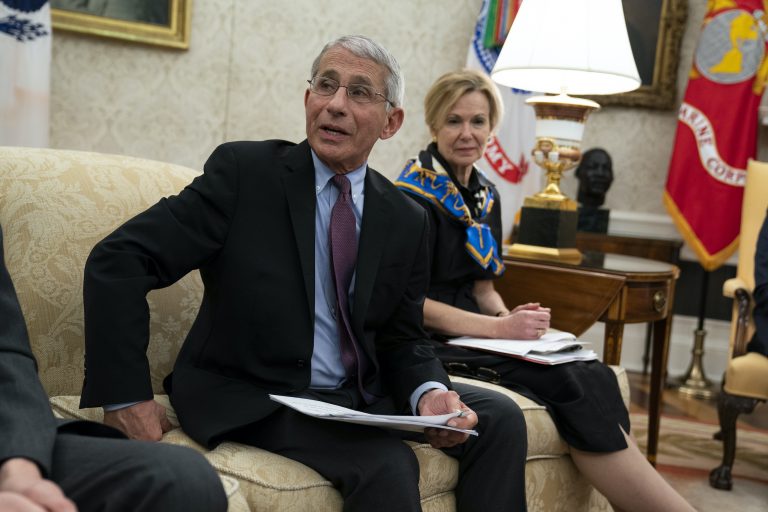
(Ken Silva, Headline USA) Last week, the New York Timesrevealed that numerous top government health officials have been reassigned to regional offices of the Indian Health Service, which provides federal health services to Native Americans and Alaska Natives. The reassigned officials include none other than former COVID-19 czar Anthony Fauci’s wife, Christine Grady.
However, Native Americans are “insulted” by Grady’s reassignment, according to the Times.
The Times reported Monday that Native Americans are already made at recent changes made to the Department of Health and Human Services—including the shuttering of regional offices that cover much of the Indian population. Grady’s reassignment is apparently the straw that broke the camel’s back, so to speak.
Dr. Fauci’s wife, Christine Grady. PHOTO: NIH
“The final indignity, Native leaders say, came last week, when Mr. Kennedy reassigned high-ranking health officials — including a bioethicist married to Dr. Anthony S. Fauci, a tobacco regulator, a human resources manager and others — to Indian Health Service locations in the American West, when what the chronically understaffed service really needs are doctors and nurses who are familiar with the unique needs of Native people,” the Times reported Monday.
“More than half a dozen leaders of Native American groups used words like ‘cruel,’ ‘disingenuous’ and ‘offensive’ to describe the proposed transfers.”
It’s unclear whether Grady will actually go to the reservation. She reportedly had until last Wednesday to accept the reassignment or to resign. The Times reported that she declined to be interviewed.
Of the other officials who were ordered to the reservation, one reportedly said she’d consider the reassignment, while another declined. Both spoke to the Times on condition of anonymity.
The Times reported today that the Native Americans don't want Dr. Fauci's wife because they need real healthcare workers instead Native American groups used words like “cruel,” “disingenuous” and “offensive” to describe Dr. Fauci's wife being reassigned to them. https://t.co/Z9g9wWCySzpic.twitter.com/sqItYeovZB
The Indian Health Services has offices in Alaska, Albuquerque, Bemidji, Billings, California, Great Plains, Nashville, Navajo, Oklahoma, Phoenix, Portland, and Tucson.
The Times further noted that Health and Human Services Secretary Robert F. Kennedy Jr. has lamented that the Indian Health Service has been “treated as the redheaded stepchild at H.H.S.,” and that said President Trump wants him to “rectify this sad history.”
The reassignments are part of a massive restructuring of the HHS.
As many as 10,000 scientists, senior leaders, doctors, inspectors and others across the department have already received layoff notices as part of an HHS effort to cut a quarter of its workforce.
“This overhaul is about realigning HHS with its core mission: to stop the chronic disease epidemic and Make America Healthy Again,” Kennedy said on social media. “It’s a win-win for taxpayers, and for every American we serve.”
The move, the department has said, is expected to save $1.8 billion from the agency’s $1.7 trillion annual budget — about one-tenth of 1%.
The department has not released final numbers but last week said it planned to eliminate 3,500 jobs from the Food and Drug Administration, 2,400 jobs at the Centers for Disease Control and Prevention, and 1,200 from the National Institutes of Health.
The Associated Press contributed to this report.
Ken Silva is the editor of Headline USA. Follow him at x.com/jd_cashless.
Feeling flogged by sticks, Wall Street greeted President Donald J. Trump’s Liberation Day with a bellowing Bronx cheer.
On Wednesday, Trump unveiled 10% across-the-board tariffs on all imports, plus reciprocal taxes tailored to foil foreign tariffs on U.S. goods. Financial markets opened Thursday and swiftly wilted.
After China slapped a retaliatory 34% tariff on American products early Friday, the key indices dropped like bombs from a B-52. The Dow Jones Industrial Average tumbled 2,231 points (5.50%). The S&P 500 plunged 322 points (5.97%). The NASDAQ plummeted 962 points (5.82%).
If the USA must absorb tariffs as long-run expenses (rather than watch Trump use them, short-term, to lean on foreign leaders), they should strike a vibrant, very special economy. Instead, tariffs are smacking Americans still anemic from Bidenomics.
Nonetheless, Trump predicted Wednesday in the Rose Garden: “We will supercharge our domestic industrial base.” He pledged, “Jobs and factories will come roaring back into our country,” along with “more production at home.”
Hooray!
But where will companies find the cash to repatriate foreign assembly lines, expand domestic operations, and otherwise reinvigorate U.S. manufacturing — especially after $6.6 trillion in market value evaporated on Thursday and Friday?
Trump’s stick-heavy recipe lacks one key ingredient: Carrots.
The all-American industrial renaissance that Trump rightly envisions would arrive sooner, if lower taxes, instant amortization, and other catalysts were humming within days, not whenever Congressional Republicans get around to them.
From twisting arms on Capitol Hill to rallying taxpayers across America, Trump should push tax cuts as hard as he presses tariffs. Indeed, tax cuts should have come first.
What a pity that Trump did not promote these policies in reverse:
First, slash taxes and let embattled American citizens and companies keep more of their money. A boom promptly would have erupted.
Second, as output soared, Trump should have invited world leaders to the White House and proposed 0% tariffs among these trade partners. If they agreed, Hallelujah! The world would enjoy pure, free trade.
Third, if these countries rebuffed Trump’s offer, however, he then could have hurled reciprocal tariffs like lightning bolts from atop the moral highlands.
Instead, uncertainty remains the enemy of growth. This suggested timetable would have furnished answers, not today’s burning questions:
What tax rate will corporations pay after January 1? How quickly may a factory amortize a brand-new boiler? Will Canadian aluminum prices include a 25%, 10%, or 0% tariff?
As of second quarter 2025, nobody knows.
Congressional Republicans appear to be coalescing around One Big, Beautiful Bill, brimming with permanently low Trump-45 tax rates, a new 15% corporate tax (down from 21%) for domestic manufacturers, and other vital reforms.
Alas, Republicans lack the urgency that this moment demands. Senators, in particular, discuss tax cuts by Memorial Day or “later this year.” Others would postpone Trump’s repeal of taxes on tips, overtime, and Social Security benefits until 2026!
This is dangerous.
These tax cuts should be passed and signed by May Day. Tax relief should take effect that morning, if not retroactively to January 20 or even January 1, 2025. At once, this would leave additional money in American wallets. Businesses would bloom among lower tax rates, more generous deductions, and, ideally, immediate depreciation for factory construction and equipment.
A burgeoning economy would position Republicans to keep Congress. However, GOP dithering on tax reduction could delay prosperity and buoy Democrats’ mid-term prospects.
Meanwhile, some Republicans reportedly are considering hiking tax rates up to 40% on $1-million-plus earners. It is abominable that any Republican would parrot Bernie Sanders’ chief talking point: Tax millionaires and billionaires — good and hard.
Trump’s policy is an audacious wager.
Best-case scenario: Scores of nations mirror Israel’s and Vietnam’s ambitions to negotiate with Trump and set reciprocal tariffs at 0%.
Worst-case scenario: Trade War I explodes, nations dig financial trenches, and attack each other with tariff gas.
Mr. President, let’s avoid that second destination.
More carrots, please!
The above column does not necessarily reflect the editorial views of Headline USA.
Deroy Murdock is a Manhattan-based Fox News Contributor.
(Kenneth Schrupp, The Center Square) California did not materially comply with the requirements for seven of the 22 federal programs the state auditor examined, including “pervasive” noncompliance in its unemployment benefits program, which could put essential federal funding at risk.
“This report concludes that the State did not materially comply with certain requirements for seven of the 22 federal programs or clusters of programs (federal programs) MGO audited, including one program for which the noncompliance was pervasive,” wrote Deputy State Auditor Linus Li.
“Additionally, although MGO concluded that the State materially complied with requirements for the remaining federal programs it audited, the State continues to experience certain deficiencies in its accounting and administrative practices that affect its internal controls over compliance with federal requirements.”
The audit found that even in 2023 — years after the state made $55 billion in fraudulent COVID lockdown-era benefits payments — the state likely made “potentially ineligible payments” of nearly $200 million. The audit also found that of 138 pandemic unemployment assistance claimants that were tested, 91, or 66%, had verification issues.
“While Gavin Newsom chases the national spotlight, Californians are left with an administration that can’t accomplish the basic functions of government,” said California State Assembly Minority Leader James Gallagher to The Center Square. “The federal government is right to take a look at this spending and decide if it’s appropriate to keep throwing resources at an administration that treats it like Monopoly money.”
Last year, the state’s Legislative Analyst’s Office said the state’s unemployment fund runs a structural deficit of $2 billion per year, beyond the $20 billion debt and $1 billion in annual interest payments to the federal government. Because the unemployment fund is paid for by payroll taxes on employers and their employees, the LAO said payroll taxes would need to rise from $42 per employee making $46,800 or more per year, to $889.20, or over 21 times higher than the existing base payroll tax.
(Headline USA) A tentative deal has been reached with the Florida Republican leading a bipartisan push to allow proxy voting in the U.S. House for new parents, potentially ending a standoff that halted legislative work for days and threatened to delay a vote this week to advance President Donald Trump’s agenda.
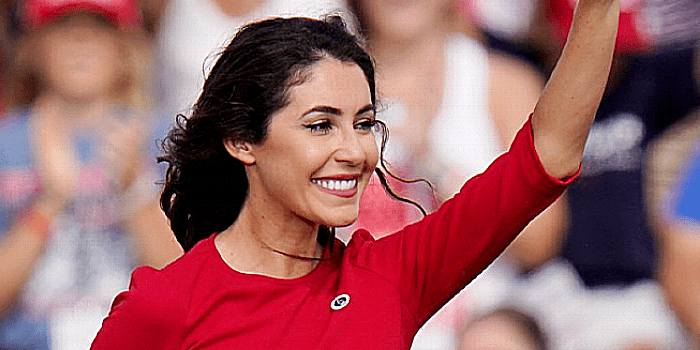
House Speaker Mike Johnson and Florida Rep. Anna Paulina Luna, who has been leading the bipartisan push on proxy voting, reached the deal, Luna said in a social media post on Sunday.
Rather than allow proxy voting, Luna said the agreement would formalize a “pairing” system long used in Congress where one member who is physically present in the House cancels out the vote of someone who is absent. Luna said the voting option would be open to all Republicans who are unable to vote, including new parents, the bereaved and lawmakers facing various medical and family emergencies.
Speaker Johnson and I have reached an agreement to bring back a procedure called live/dead pairing, which dates back to the 1800s. It will be open for the entire conference to use when unable to vote (e.g., new parents, bereaved, emergencies, etc.).
“If we truly want a pro-family Congress, these are the changes that need to happen,” Luna said.
No further details were immediately available. It was also unclear if the deal would be agreed to by the other lawmakers who had signed on to the proxy voting proposal.
The agreement with Luna could end days of back-and-forth over allowing new parents in Congress to vote by proxy for 12 weeks as they care for their newborns. Johnson has vigorously opposed the effort, calling it an affront to the Constitution that would open “Pandora’s box.”
But some Republicans refused to go along with Johnson’s bid to kill the resolution, with nine of them defying him in a vote last week.
By reaching a deal, Republican leaders will likely be able to move ahead this week on key legislative priorities — most critically a revised version of the budget framework that opens the door to Trump’s push for trillions of dollars in tax breaks. The Senate approved that budget framework early Saturday morning after grinding through a late-night session.
Trump had said he was in favor of allowing proxy voting for new parents after speaking with Luna, though he said he would defer to Johnson how the House should operate. “I don’t know why it’s controversial,” Trump said.
Luna, who gave birth during her first term in Congress, had championed the proxy voting resolution alongside Democratic Rep. Brittany Pettersen of Colorado, who has a 4-month-old son. The effort drew significant bipartisan support, with 218 lawmakers — the majority of the House, many young parents themselves — signing onto a petition that could trigger a floor vote.
The resolution would allow proxy voting for lawmakers who have given birth or pregnant lawmakers who are unable to travel safely or have a serious medical condition. It would also apply to lawmakers whose spouses are pregnant or giving birth.
Pettersen, who has carried her son onto the floor during recent House votes, said the institution needs to change with the times. About a dozen women have given birth while in Congress over the years, and there are many new fathers as well.
“It is unfathomable that in 2025 we have not modernized Congress,” she said.
But Johnson, like GOP leaders before him, loathes proxy voting, which had been put in place for about two years during the COVID-19 lockdowns when Democrats had control of the House.
“It was quickly abused. Republicans put an end to it then, and we cannot allow it again,” Johnson said in a social media post.