Trump Administration Seeks Expansion of Nation’s Immigration Detention System

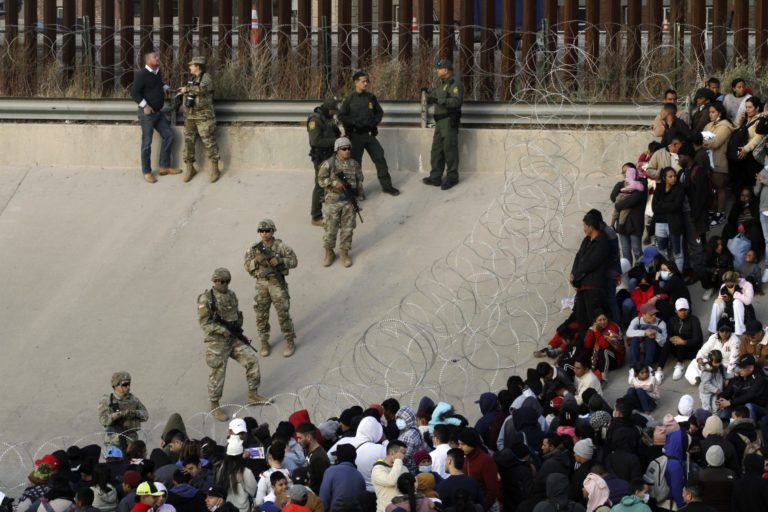
(Headline USA)  Amid rural Louisiana’s crawfish farms, towering pine trees and cafes serving po’boys, nearly 7,000 people are waiting at immigration detention centers to learn whether they will be expelled from the United States.

If President Donald Trump’s administration has its way, the capacity to hold tens of thousands more migrants will soon be added around the country as the U.S. seeks an explosive expansion of what is already the world’s largest immigration detention system.

Trump’s effort to conduct mass deportations as promised in the 2024 campaign represents a potential bonanza for private prison companies and a challenge to the government agencies responsible for the orderly expulsion of immigrants. 

The acting director of the Immigration and Customs Enforcement agency, Todd Lyons, said at a border security conference in Phoenix last week that the agency needs “to get better at treating this like a business” and suggested the nation’s deportation system could function “like Amazon, trying to get your product delivered in 24 hours.”

“So trying to figure out how to do that with human beings and trying to get them pretty much all over the globe is really something for us,” Lyons said.

ICE takes steps to add more immigration beds

This month, ICE invited companies to bid on contracts to operate detention centers at sites around the country for up to $45 billion as the agency begins to scale up from its current budget for about 41,000 beds to 100,000 beds.

The money isn’t yet there, but contracts are already being awarded. The House narrowly approved a broad spending bill that includes $175 billion for immigration enforcement, about 22 times ICE’s annual budget. The agency’s 100-plus detention centers nationwide currently hold about 46,000 people, causing overcrowding in locations including Miami.

ICE last week awarded a contract worth up to $3.85 billion to Deployed Resources LLC to operate a detention camp at the Fort Bliss Army base in Texas. The little-known company is shifting its business from Border Patrol tent encampments for people arriving in the United States — most of which are now closed — to ICE facilities for people being deported.

The Geo Group Inc. got a contract for 1,000 beds in Newark, New Jersey, valued at $1 billion over 15 years and another for 1,800 beds in Baldwin, Michigan. CoreCivic Inc., won a contract to house 2,400 people in families with young children in Dilley, Texas, for five years.

Louisiana ranks No. 2 in the nation in immigration detention space

Louisiana, which has relatively few immigrants and doesn’t border Mexico, may not seem like an obvious choice to establish an immigration detention hub. But circumstances converged toward the end of the last decade that allowed ICE to take over five former criminal jails in the state in 2019 alone.

Now the state is second only to Texas in the amount of bed space it offers for detained immigrants. ICE was drawn to the state in part by relatively low labor costs, a generally favorable political environment and a ready supply of recently emptied jails.

State laws in 2017 lowered criminal penalties, reducing the need for jail and prison beds. In rural areas, where a corrections facility is often a main driver of the local economy, officials were eager to sign contracts for immigration detention.

“Because Louisiana was a top incarcerator in the world, it’s not as though you have local legislators who are against prisons or against having a for-profit prison industrial complex come in and actually ensure that these continue to run,” said Nora Ahmed, legal director for the American Civil Liberties Union of Louisiana.

Conservative federal courts in the Western District of Louisiana and at the 5th U.S. Circuit Court of Appeals make it tougher for people in Louisiana immigration jails to challenge detention conditions or to appeal immigration court rulings, said Mary Yanik, a professor and co-director of the Immigrant Rights Clinic at Tulane University Law School.

“ICE gets to choose, basically, the courts where their cases are heard by locating detention centers in particular places,” she said.

Adapted from reporting by the Associated Press.
Lil’ Marco’s Old Senate Pals are Pressuring Him to Stop Enforcing Trump’s Agenda

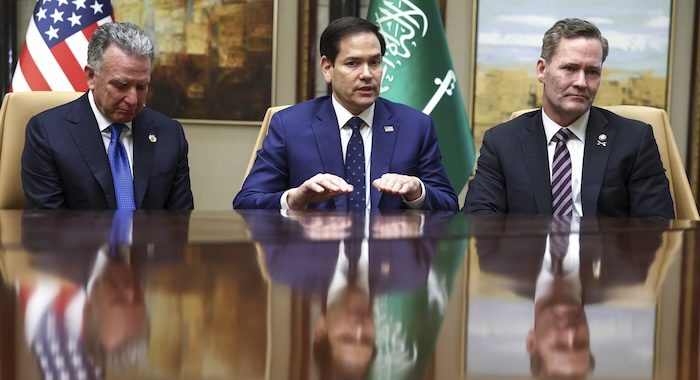
(José Niño, Headline USA) Donald Trump’s mission to gut USAID is exposing fault lines inside the State Department, pitting loyalists against moderates and testing Secretary of State Marco Rubio’s allegiance to the president’s agenda.

The State Department is reportedly split between officials loyal to President Trump and those aligned with moderate Republican senators resistant to deep cuts to USAID, according to the Daily Caller. 

Rubio has faced pressure from former Senate colleagues to preserve parts of the agency and was initially reluctant to lead its dismantling when asked by Elon Musk and the Department of Government Efficiency (DOGE), multiple Trump administration sources told the outlet.

“[Rubio] is getting calls all the time from his senators … when we would get a call from a senator or congressman, all of a sudden Mike Needham and Dan Holler are like, ‘oh my gosh, you better do this. You better get this member what they want,’” one Trump administration official informed the Daily Caller. “They don’t even flinch when the President issues an executive order. To the contrary, it’s as though it never happened.”

Mike Needham, who previously served as Rubio’s Chief of Staff in the Senate, now holds the same position at the State Department, with Dan Holler as his deputy. 

A second Trump administration official described Needham as a key intermediary between Senate Republicans opposing USAID cuts and Rubio himself.

According to one source, several senators have personal or political stakes in preserving USAID-funded pet projects, which has fueled their lobbying efforts. The official suggested that Rubio may be sympathetic to preserving select programs, potentially as a way to revive the agency in the future.

Among those applying pressure are members of the Senate Appropriations Committee, including Republican Sens. Mitch McConnell, R-Kentucky, and Lindsey Graham, R-S.C., who have reportedly succeeded in tempering some of the proposed cuts.

“I’m very happy that USAID – as we know it – will no longer exist,” Graham said to the Daily Caller. 

A spokesperson for the South Carolina Senator told the Daily Caller that he is not lobbying to preserve USAID and “supports consolidating the agency under the State Department’s control.”

Despite detailed reviews and staff efforts to phase out specific programs, sources said Rubio has occasionally intervened to reverse or block certain cuts after pressure from the Senate.

A State Department official, however, pushed back on that narrative, telling the Daily Caller they were “not sure where this is coming from.”

The official alluded to a March statement outlining plans to scale back USAID by September. The official emphasized that the DOGE team has worked collaboratively with the department and that any suggestion of internal conflict is “categorically false.”

Still, multiple sources told the Daily Caller that the friction appears to stem from tensions between DOGE and Rubio.

Two sources told the Daily Caller that Rubio was hesitant to personally oversee the dismantling of USAID when urged by Elon Musk and DOGE. As a result, Pete Marocco was brought in to spearhead the effort in coordination with DOGE as the director for the Office of Foreign Assistance, the sources said.

On Sunday, The Wall Street Journal reported that Marocco is no longer with the State Department.

“President Trump is keeping his promises to the American people. I am absolutely confident he will achieve his agenda of making America safer, stronger and more prosperous,” Marocco told the Daily Caller in a statement.

In recent days, several staffers involved in the USAID drawdown have either moved from the State Department building to the USAID offices or taken sick leave, citing concerns about being unable to carry out their work without interference. Some are reconsidering their positions, questioning whether they can continue advancing the president’s agenda in an environment they believe is subject to excessive surveillance. 

A State Department official also dismissed claims that Rubio or his team are being influenced by Senate lobbying.

“Secretary Rubio … is the Secretary of State for the President of the United States,” the State Department official underscored.

Tensions between Musk and the Rubio factions have been a theme in the early stages of the second Trump administration. Headline USA has previously reported that Musk previously clashed with Rubio and Transportation Secretary Sean Duffy over federal staffing cuts.

Whether Trump’s team can overcome internal resistance and fully dismantle USAID remains to be seen, but tensions seem to be coming to a head.

Report: Law Enforcement is Using AI Bots as Undercover Spies

(Ken Silva, Headline USA) Wired published an article on Thursday about how police departments are using artificial intelligence-powered bots posing as real people online—interacting with a variety of targets, from legitimate criminals to political activities.

“Massive Blue, the New York–based company that is selling police departments this technology, calls its product Overwatch, which it markets as an ‘AI-powered force multiplier for public safety’ that ‘deploys lifelike virtual agents, which infiltrate and engage criminal networks across various channels,’” Wired reported, citing government documents it obtained via public records requests.

“Massive Blue is offering cops these virtual personas that can be deployed across the internet with the express purpose of interacting with suspects over text messages and social media.”

According to Wired, Massive Blue lists “border security,” “school safety,” and stopping “human trafficking” among Overwatch’s use cases.

Internal records from Massive Blue reportedly reveal a variety of AI fake personalities used by law enforcement.

For instance, there is a “radicalized AI” “protest persona” that poses as a 36-year-old divorced woman who is lonely, has no children, is interested in baking, activism, and “body positivity,” Wired reported.

Another AI persona is reportedly described as a “‘Honeypot’ AI Persona.”

“Her backstory says she’s a 25-year-old from Dearborn, Michigan, whose parents emigrated from Yemen and who speaks the Sanaani dialect of Arabic. The presentation also says she uses various social media apps, that she’s on Telegram and Signal, and that she has US and international SMS capabilities,” Wired reported.

Other AI bots include a 14-year-old boy “child trafficking AI persona,” an “AI pimp persona,” “college protestor,” “external recruiter for protests,” “escorts,” and “juveniles,” Wired added.

Massive Blue cofounder Mike McGraw reportedly did not answer questions posed by Wired about his dystopian product. Instead, he issued a statement about being proud of his work.

“We are proud of the work we do to support the investigation and prosecution of human traffickers,” McGraw told Wired. “Our primary goal is to help bring these criminals to justice while helping victims who otherwise would remain trafficked. We cannot risk jeopardizing these investigations and putting victims’ lives in further danger by disclosing proprietary information.”

There are no known arrests involving the use of fake online personalities. The report does raise grave questions about the extent to which internet users are being manipulated by fake AI accounts run by law enforcement and intelligence agencies.

Ken Silva is the editor of Headline USA. Follow him at x.com/jd_cashless.

Judge Deems Google’s Digital Ad Network an Illegal Monopoly

(Headline USA) Google has been branded an abusive monopolist by a federal judge for the second time in less than a year, this time for illegally exploiting some of its online marketing technology to boost the profits fueling an internet empire currently worth $1.8 trillion.

The ruling issued Thursday by U.S. District Judge Leonie Brinkema in Virginia comes on the heels of a separate decision in August that concluded Google’s namesake search engine has been illegally leveraging its dominance to stifle competition and innovation.

After the U.S. Justice Department targeted Google’s ubiquitous search engine during President Donald Trump’s first administration, the same agency went after the company’s lucrative digital advertising network in 2023 during President Joe Biden’s ensuing administration in an attempt to undercut the power that Google has amassed since its inception in a Silicon Valley garage in 1998.

Although antitrust regulators prevailed both times, the battle is likely to continue for several more years as Google tries to overturn the two monopoly decisions in appeals while forging ahead in the new and highly lucrative technological frontier of artificial intelligence.

The next step in the latest case is a penalty phase that will likely begin late this year or early next year. The same so-called remedy hearings in the search monopoly case are scheduled to begin Monday in Washington D.C., where Justice Department lawyers will try to convince U.S. District Judge Amit Mehta to impose a sweeping punishment that includes a proposed requirement for Google to sell its Chrome web browser.

Brinkema’s 115-page decision centers on the marketing machine that Google has spent the past 17 years building around its search engine and other widely used products and services, including its Chrome browser, YouTube video site and digital maps.

The system was largely built around a series of acquisitions that started with Google’s $3.2 billion purchase of online ad specialist DoubleClick in 2008. U.S. regulators approved the deals at the time they were made before realizing that they had given the Mountain View, California, company a platform to manipulate the prices in an ecosystem that a wide range of websites depend on for revenue and provides a vital marketing connection to consumers.

The Justice Department lawyers argued that Google built and maintained dominant market positions in a technology trifecta used by website publishers to sell ad space on their webpages, as well as the technology that advertisers use to get their ads in front of consumers, and the ad exchanges that conduct automated auctions in fractions of a second to match buyer and seller.

After evaluating the evidence presented during a lengthy trial that concluded just before Thanksgiving last year, Brinkema reached a decision that rejected the Justice Department’s assertions that Google has been mistreating advertisers while concluding the company has been abusing its power to stifle competition to the detriment of online publishers forced to rely on its network for revenue.

“For over a decade, Google has tied its publisher ad server and ad exchange together through contractual policies and technological integration, which enabled the company to establish and protect its monopoly power in these two markets.” Brinkema wrote. “Google further entrenched its monopoly power by imposing anticompetitive policies on its customers and eliminating desirable product features.”

Despite that rebuke, Brinkema also concluded that Google didn’t break the law when it snapped Doubleclick nor when it followed up that deal a few years later by buying another service, Admeld.

The Justice Department “failed to show that the DoubleClick and Admeld acquisitions were anticompetitive,” Brinkema wrote. “Although these acquisitions helped Google gain monopoly power in two adjacent ad tech markets, they are insufficient, when viewed in isolation, to prove that Google acquired or maintained this monopoly power through exclusionary practices.”

That finding may help Google fight off any attempt to force it to sell its advertising technology to stop its monopolistic behavior.

The Justice Department didn’t immediately comment on the judge’s decision.

In a statement, Google said it will appeal the ruling.

“We disagree with the Court’s decision regarding our publisher tools,” said Lee-Anne Mulholland, Google’s vice president of regulatory affairs. “Publishers have many options and they choose Google because our ad tech tools are simple, affordable and effective.”

Analysts such as Brian Pitz of BMO Markets had been predicting that Google would likely lose the case, helping to brace investors for the latest setback to the company and its corporate parent, Alphabet Inc., whose shares declined 1% in afternoon trading. Alphabet’s stock has plunged by 20% so far this year.

As it did in the search monopoly case, Google and its corporate parent Alphabet vehemently denied the Justice Department’s allegations. Their lawyers argued the government largely based its case on an antiquated concept of a market that existed a decade ago while underestimating a highly competitive market for advertising spending that includes the likes of Facebook parent Meta Platforms, Amazon, Microsoft and Comcast.

The market as drawn in the Justice Department’s case didn’t include ads that appear on mobile apps, streaming television services, or other platforms to which internet users have increasingly migrated, prompting Google lawyer Karen Dunn to compare the government’s definition a “time capsule with a BlackBerry, an iPod and a Blockbuster video card” during her opening statement when the trial began last September.

At trial, the Justice Department’s lawyers emphasized the harm to news publishers that has arisen from Google’s alleged dominance of the marketplace. Witnesses from Gannett, the publisher of USA Today and other newspapers, and News Corp., the publisher of The Wall Street Journal, testified about the difficulties they have faced and what they said was a lack of alternatives to Google’s ad tech. Those companies rely on online advertising to fund their news operations and make their articles free to consumers on the internet, government lawyers have argued.

Now, government is in position to try to dismantle that byzantine ad system. When the case was filed more than two years ago during the Biden administration, the Justice Department asserted Google should be forced to sell, at a minimum, its Ad Manager product, which includes the technology used by website publishers and the ad exchange.

Adapted from reporting by the Associated Press


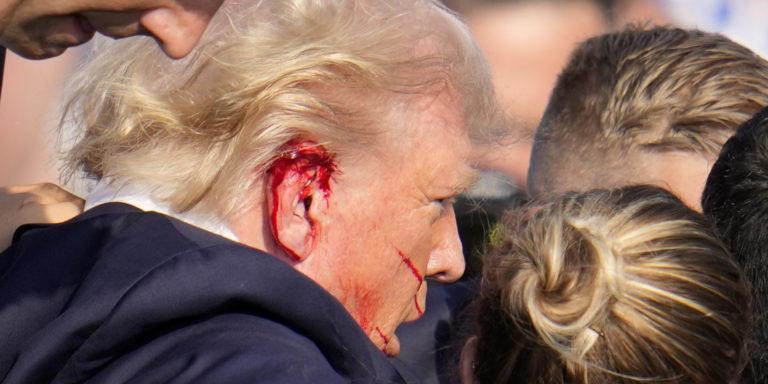
Trump Now Says ‘I Don’t Know What to Believe’ about Last Year’s Assassination Attempts

(Ken Silva, Headline USA) Last month, President Donald Trump told Newsmax that he was recently briefed on last year’s attempts on his life, and that he believes the FBI’s story that his two would-be assassins acted alone.

“They don’t seem to think there was anything other than abnormal people,” he said, referring to Thomas Crooks and Ryan Routh. “I’ll assume that’s true.”

But now, Trump is apparently having second thoughts. In an interview with Fox News released Wednesday, he said he doesn’t know what to believe.

“I don’t know what to believe. I really don’t … [Crooks’s] father’s got the ultimate law firm—a white shoe law firm from Pittsburgh. They have a lawyer who IBM would hire. Where did he get this person?” Trump said, referring to the fact that Crooks’s parents have hired the prestigious law firm Quinn Logue, which describes itself as trial attorneys who specialize in both criminal defense and civil suits, including wrongful death and personal injury.

“I’ll be honest: It has not been explained to me perfectly by the Secret Service or FBI,” Trump said.

Trump said he still needs a better explanation about Crooks and Routh, even if it’s a private briefing. Trump said he might make the results of that briefing public.

“They cremated him very quickly, and it was all gone. You and I will be talking about it in the near future,” he added, speaking to the Fox News reporter.

Trump’s remarks come after the bombshell news about Routh’s activities in the months leading up to his alleged Sept. 15 attempt on Trump. According to the DOJ, Routh tried buying a rocket launcher from a purported Ukrainian associate, and had an escape plan with a human trafficker in Mexico.

Routh previously travelled to Ukraine in early 2022 to volunteer in the warfighting efforts against Russia’s invasion, and he was reportedly attempting to recruit fighters up to days within his Sept. 15 assassination attempt.

Chelsea Walsh, a nurse who had several encounters with Routh in Kyiv, reported him to Customs and Border Protection in June 2022—telling agents that “Routh was among the most dangerous Americans she met during her month-and-a-half-long stint in Ukraine.”

Routh is set to stand trial this September. Meanwhile, the FBI hasn’t provided any public updates about Crooks since last August.

Ken Silva is the editor of Headline USA. Follow him at x.com/jd_cashless.

Suspect in Custody in Florida State Shooting

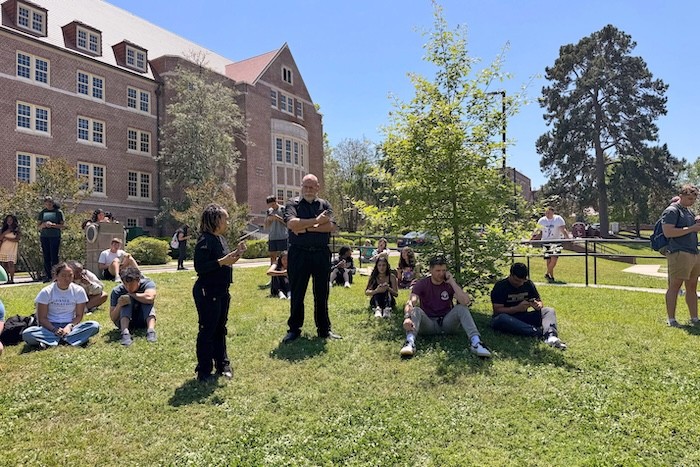
(Headline USA) The 20-year-old son of a sheriff’s deputy opened fire Thursday at Florida State University with his mother’s former service weapon, killing two people and wounding at least six others, investigators said.

Officers quickly arrived and shot and wounded the shooter after he refused to comply with commands, said Tallahassee Police Chief Lawrence Revell.

Authorities have not yet revealed a motive for the shooting, which began around lunchtime just outside the student union, sending frightened students and parents hiding for cover in a bowling alley and a freight elevator inside the building.

The shooter, identified by police as Phoenix Ikner, is believed to be a Florida State student, investigators said. The two people who died were not students, said Florida State University Police Chief Jason Trumbower, adding that he would not release additional information about the victims.

The shooter obtained access to a weapon that belongs to his mother, who has been with the sheriff’s office for over 18 years and has been a model employee, said Leon County Sheriff Walt McNeil. Police said they believed Ikner shot the victims using his mother’s former service handgun, which she had kept for personal use after the force upgraded to new weapons.

The alleged shooter was a long-standing member of the sheriff’s office’s youth advisory council, the sheriff said.

“He has been steeped in the Leon County Sheriff’s Office family, engaged in a number of training programs that we have,” McNeil said. “So it’s not a surprise to us that he had access to weapons.”

Witness says the suspect’s shotgun jammed

Ambulances, fire trucks and patrol vehicles from multiple law enforcement agencies raced toward the campus just west of Florida’s capital after the university issued an active shooter alert.

Aidan Stickney, a 21-year-old studying business management, was running late to class when he said he saw a man get out of a car with a shotgun and aim at another man in a white polo shirt.

The gun jammed, Stickney said, and the shooter rushed back to his car and emerged with a handgun, opening fire on a woman. Stickney ran, warning others as he called 911.

“I got lucky today. I really did. I really, really did,” he said.

Trumbower said investigators have no evidence that anyone was shot with the shotgun.

Shots sent students scattering

Ryan Cedergren, a 21-year-old communications student, said he and about 30 others hid in the bowling alley in the union’s lower level after seeing students running from a nearby bar.

“In that moment, it was survival,” he said.

Chris Pento said he and his twins were getting lunch at the student union during a campus tour when they heard gunshots. “It was surreal. And people just started running,” he told WCTV in Tallahassee.

They crammed into a service elevator after encountering locked doors at the end of a hallway. “That was probably the scariest point because we didn’t know. It could get worse, right?” he said. “The doors opened and two officers were there, guns drawn.”

Dozens of patrol vehicles, including a forensics van, were parked outside the student union hours after the shooting. Officers blocked off the area with crime scene tape.

Students and staff who left behind phones, keys and other items in the rush to evacuate waited in the shade and prayed for the victims.

Tallahassee Memorial Hospital confirmed it was treating six people wounded in the shooting, one in critical condition.

Shooting shocks campus and the nation

President Donald Trump said from the Oval Office that he had been fully briefed on the shooting. “It’s a horrible thing. It’s horrible that things like this take place,” he said.

But Trump also suggested that he would not be advocating for any new gun legislation, saying, “The gun doesn’t do the shooting, the people do.”

After receiving warnings of an active shooter, students and faculty took cover and waited in classrooms, offices and dorms across campus.

The first thing you think of is just, ‘This can’t be true,’ right?” said Kai McGalla, a sophomore who spoke by phone while locked down at a campus testing center.

Junior Joshua Sirmans, 20, was in the main library when alarms went off. Law enforcement officers escorted him and other students from the library with their hands over their heads, he said.

University President Richard McCullough said he was heartbroken by the violence. “Our hearts go out to our students and the victims of this terrible tragedy,” he said.

As dusk fell over Florida State University, a small memorial of candles and bouquets of flowers had been set up outside the student union, while investigators’ yellow tape blocked off the nearby doors.

Another shooting a decade ago at Florida State

Florida State is one of Florida’s 12 public universities, with its main campus in Tallahassee. About 44,000 students are enrolled in the university, per the school’s 2024 fact sheet.

In 2014, the main library was the site of a shooting that wounded three people. Officers shot and killed the gunman, 31-year-old Myron May.

The university canceled classes for the rest of the week and canceled home athletic events through Sunday.

Adapted from reporting by the Associated Press


Trump Calls for Fed to Lower Interest Rates, Blasts Chair Powell

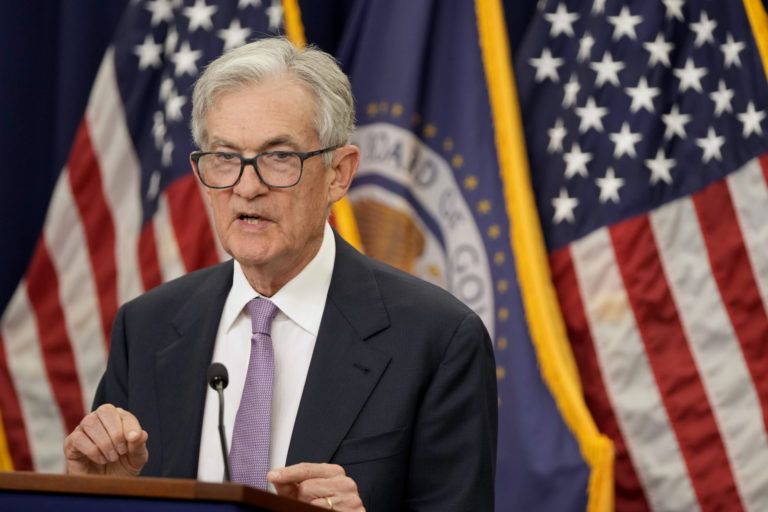
(Morgan Sweeney, The Center Square)  President Donald Trump again called for the Federal Reserve to lower interest rates Thursday morning.

In a post on Truth Social, the president chastised Fed Chairman Jerome Powell for not having cut rates in 2025.

“The [European Central Bank] is expected to cut interest rates for the 7th time, and yet, ‘Too Late’ Jerome Powell of the Fed, who is always TOO LATE AND WRONG, yesterday issued a report which was another, and typical, complete ‘mess!’” Trump said.

The Fed cut rates three times in 2024, but Trump has called for more rate cuts several times since returning to office, including at the World Economic Forum in January, again on Truth Social in March as a means of boosting the economy throughout the implementation of new tariffs and Thursday. The Fed chose to hold interest rates steady in March at 4.25% to 4.50% range, as they have since December, though the Federal Open Market Committee has projected two cuts later in 2025, according to US Bank.

Trump said Powell should have lowered interest rates already, since prices are down, and that he can’t wait for Powell’s termination.

“Oil prices are down, groceries (even eggs!) are down, and the USA is getting RICH ON TARIFFS. Too Late should have lowered Interest Rates, like the ECB, long ago, but he should certainly lower them now. Powell’s termination cannot come fast enough!” Trump wrote in his post. 

The Federal Reserve is an independent agency and as such, the president has limited power over the members of its board. The president can nominate a new chairman or reappoint the existing chair – either of whom must be confirmed by the Senate – at the end of the current chair’s four-year term, but removing or replacing the chairman is more complex. Powell is set to serve as Fed chair through May 2026 and has said it’s illegal for Trump to fire him.

Report: Trump Declined To Back Israeli Attack on Iran in Favor of Diplomacy

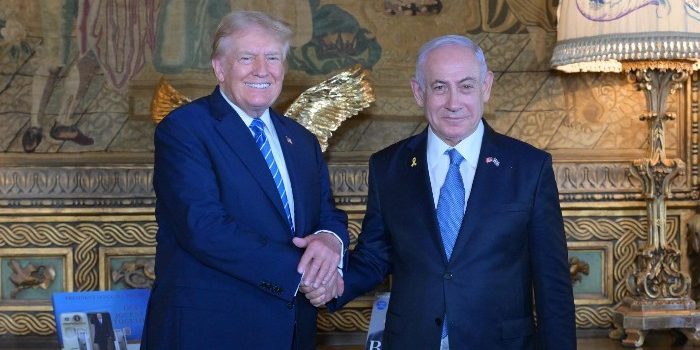
(Dave DeCamp, Antiwar.com) President Trump declined an Israeli plan to attack Iran with US support as soon as next month in favor of attempting diplomacy with Tehran over its civilian nuclear program, The New York Times reported on Wednesday.

The report said Israel developed plans to attack Iran’s nuclear facilities that would have required significant US support. The initial Israeli plan would have involved a bombing campaign with Israeli commando raids on Iranian nuclear sites in hopes that American aircraft would be involved.

The commando plan would have taken months to prepare, and Israeli Prime Minister Benjamin Netanyahu was looking to attack Iran this May, so the plan shifted to a prolonged bombing campaign that would last over a week. The idea would be to destroy Iran’s air defenses and then start targeting nuclear facilities.

Officials told the Times that Trump made the decision to hold off on the attack after months of internal debate within the administration. The rough consensus, at least for now, is that the US should hold off on the military option to pursue negotiations.

The report said that Vice President JD Vance told the president that he had a unique opportunity to reach a deal with Iran, but he said that if the negotiations failed, Trump could then support the Israeli attack.

Axios also reported on the divide between the administration, with some officials supporting the negotiations and others being more skeptical and leaning toward bombing Iran, even though US intelligence agencies have recently reaffirmed there’s no evidence Iran is building a nuclear weapon.

The Axios report said that Vance was the unofficial leader of the officials pushing for diplomacy with Iran and supporting the idea of the US making compromises. Other officials in favor of this approach include Steve Witkoff, Trump’s envoy who is leading the negotiations with Iran, and Secretary of Defense Pete Hegseth.

The officials against diplomacy include Secretary of State Marco Rubio and National Security Advisor Mike Waltz. Trump is also under pressure from US Senators Lindsey Graham (R-SC) and Tom Cotton (R-AR) to take military action against Iran.

Trump has repeatedly threatened to bomb Iran and is currently conducting a major bombing campaign in Yemen. In recent weeks, the US has deployed additional bombers, another aircraft carrier, and other air assets to threaten Iran. Those assets are also being used to ramp up attacks on Yemen.

The Times report said that in an internal meeting this month, Director of National Intelligence Tulsi Gabbard recently presented an intelligence assessment that found the US military buildup in the Middle East could potentially spark a wider conflict with Iran that the United States did not want.

It remains unclear how the negotiations between the US and Iran will play out. Both sides spoke positively of the talks that occurred this past weekend, but the Trump administration has sent mixed signals since then and continues to increase sanctions on Iran.

Hawks in the US and Israel are pushing for a deal that would involve the full dismantlement of Iran’s civilian nuclear program, which is a non-starter for Tehran. Witkoff recently suggested the US would be happy with a deal to limit Iranian enrichment to 3.67%, but he appeared to walk that back the following day, saying any agreement must “eliminate nuclear enrichment” altogether.

This article originally appeared at Antiwar.com.

Silver Market Records Fourth Straight Supply Deficit Amidst Record Industrial Demand

(Mike Maharrey, Money Metals News Service) The official numbers are in, and industrial demand for silver set a fourth consecutive record in 2024.

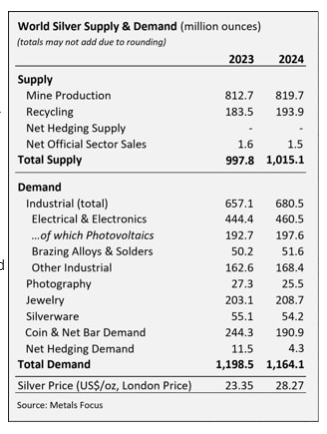
Despite record industrial offtake, total silver demand declined by 3 percent to 1.16 billion ounces last year, primarily due to weak investment demand, according to the World Silver Survey 2025 published by the Silver Institute.

Even with the slight decline, demand outstripped the silver supply for the fourth consecutive year. The structural market deficit came in at 148.9 million ounces. That drove the four-year market shortfall to 678 million ounces, the equivalent of 10 months of mining supply in 2024.

The silver price remained well below its all-time high throughout 2024, creating the impression that it underperformed. However, it had a pretty solid year.

The White Metal kicked off 2024 at $23.99 per ounce and closed out the year at $28.91, a 20.5 percent gain.

Industrial Silver Demand Drives Higher

Industrial demand for silver hit 680.5 million ounces last year. According to the Silver Institute, record electronics and electrical demand underpinned the growth.

“This reflected structural gains in the green economy flowing through from the PV and automotive sectors and grid infrastructure development. Demand also received a boost from AI-related applications.”

China accounted for the largest share of industrial gains with a 7 percent increase. There was also strong industrial demand in India, with offtake increasing by 4 percent.

Demand in the West was more tepid. U.S. industrial silver demand dropped by 6 percent last year, and most European countries also reported modest declines.

Demand for silver in solar panels accounted for nearly half of the total silver demand in the electronics sector.

Silver is the best conductor of electricity of all metals at room temperature. That makes it a vital input in the production of solar panels. With demand for solar power increasing along with the amount of silver used in each panel, analysts believe that solar panel production will consume increasingly large amounts of silver in the future.

According to a research paper by scientists at the University of New South Wales, solar manufacturers will likely require over 20 percent of the current annual silver supply by 2027.

By 2050, solar panel production will use approximately 85–98 percent of the current global silver reserves.

The green energy sector is also essentially recession-proof because it is being driven, incentivized, and in some cases directly funded by governments around the world.

Silver Jewelry Demand Grows as Investment Remains Tepid

Silver jewelry demand grew by 3 percent to 208.7 ounces in 2024.

According to the Silver Institute, India accounted for the bulk of these gains, driven by an import duty cut, a healthy rural economy, and the ongoing rise in purities.

The Silver Institute reported that improving exports to key Western countries also lifted silver jewelry demand. For instance, fabrication in Thailand grew by 13 percent.

“Western consumption was broadly steady, as positives, such as branded silver’s gains, balanced negatives, including cost-of-living issues.”

By contrast, China reported a third consecutive year of losses due to its challenging economic backdrop.

Silverware demand fell by 2 percent to a 3-year low of 54.2 million ounces. This was primarily due to soft demand in India, where rising prices put a strain on the gifting segment.

The biggest drag on silver demand was in the investment sector. Coin and net bar demand plunged by 22 percent to a 5-year low of 190.9 million ounces.

Western markets reported the biggest sag in demand, with double-digit declines across the board. The steepest drop was in the U.S., where silver investment demand crashed by 46 percent. According to the Silver Institute, profit-taking at higher prices, market saturation, and optimism about a Trump presidency created headwinds for silver in the U.S.

India was the bright spot for silver investment, with demand growing by 21 percent. Bullish price expectations and the import duty cut buoyed the market.

Silver Supply

Silver mine output was steady, rising by 0.9 percent to 819.7 ounces.

Lead and zinc mines continued to produce the most silver globally, however, output was flat year on year. In contrast, silver production from gold mines recorded the strongest growth, up 12 percent to 13.9 million ounces, a three-year high.

Mexico ranked as the top silver-producing country, followed by China, Peru, Bolivia, and Chile.

With the silver price rising, recycling rose 6 percent, hitting a 12-year high of 193.9 million ounces.


Mike Maharrey is a journalist and market analyst for Money Metals with over a decade of experience in precious metals. He holds a BS in accounting from the University of Kentucky and a BA in journalism from the University of South Florida.

Trump Reportedly Wanted an Official Fired; Treacherous Advisor Promoted Him Instead

(José Niño, Headline USA) A recent promotion within the National Security Council has ignited backlash from within Donald Trump’s own movement, spotlighting ideological rifts within the Trump administration. 

At the center of the controversy is Ivan Kanapathy, a retired Marine Corps lieutenant colonel and Mandarin-speaking Asia expert, who now serves as the NSC’s Senior Director for Asia. 

His role, already central to shaping U.S. policy toward China and Taiwan, has reportedly expanded to include oversight of international organizations — a move that some Trump allies view as a betrayal of the “America First” agenda.

Pro-Trump activist Laura Loomer sounded the alarm about Kanapathy’s role within the administration in a post on X accusing National Security Adviser Michael Waltz of promoting Kanapathy in direct defiance of Trump’s reported order to fire him. 

Loomer cited Kanapathy’s previous affiliations with Beacon Global Strategies, a consulting firm founded by former Obama officials, as grounds for dismissal. She questioned Waltz’s motives and accused the administration for failing to vet national security personnel.

“Trump wanted Kanapathy fired,” Loomer wrote. “Why did Waltz disobey Trump’s orders and PROMOTE Kanapathy?”

The post followed reports that Loomer met with Trump earlier this month to advocate for the removal of several NSC staffers. Axios described the resulting shakeup as a potential “bloodbath,” though it remained unclear whether Kanapathy had been among those axed. 

According to a report by The Independent, Loomer’s campaign focused on Kanapathy’s ties to former Obama CIA Director Mike Morrell and Defense Secretary Leon Panetta, both associated with Beacon Global Strategies.

Kanapathy, however, is not new to Trump’s national security apparatus. 

He served in the first Trump administration as director for China, Taiwan, and Mongolia, and later as deputy senior director for Asian affairs. 

In public commentary and policy work, Kanapathy has consistently advocated for a tougher U.S. stance vis-a-vis China. He has supported Taiwan’s efforts to prepare militarily against a potential Chinese invasion and called for major reforms to international organizations in order to curb Beijing’s influence. 

Whether Kanapathy’s promotion will hold in the face of grassroots pressure remains uncertain. As of now, neither the White House nor the NSC has commented on Loomer’s claims, and there has been no formal confirmation of a presidential directive to remove him. 

As Trump attempts to consolidate power and implement his second-term vision, the battle over figures like Ivan Kanapathy may be a preview of deeper ideological clashes to come within his administration.

José Niño is the deputy editor of Headline USA. Follow him at x.com/JoseAlNino