Trump Reportedly Blocked Musk from Attending Classified Briefing on China

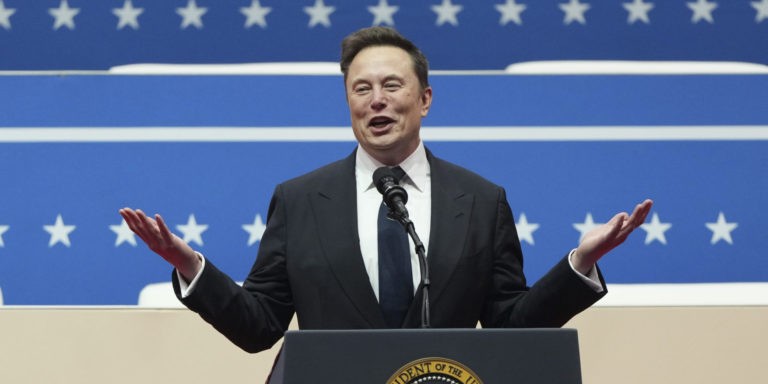
(José Niño, Headline USA) President Donald Trump personally intervened to prevent Elon Musk from attending a classified Pentagon briefing on China, igniting a firestorm over national security, business interests, and government transparency.

According to a report by Axios, President Donald Trump personally intervened to block Elon Musk from receiving a classified Pentagon briefing on China in March 2025. 

In the middle of March 2025, plans were made for Elon Musk to receive a highly classified Pentagon briefing on U.S. military strategies for a potential conflict with China. 

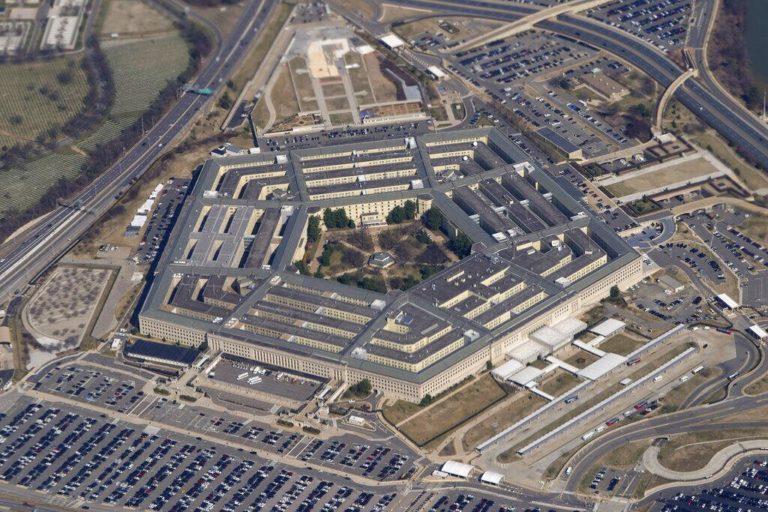
The briefing was slated for March 21, 2025, in a secure Pentagon conference room informally known as “the Tank,” which is generally designated for high-level military meetings. Per a report by The New York Times, Admiral Samuel Paparo, the four-star commander of the Indo-Pacific region who would be in charge of operations in any potential clash with China, would lead the briefing.

The planned briefing first became public when the NYT reported on March 20 that Musk was set to receive information on top-secret war preparations, including a presentation featuring 20 to 30 slides outlining potential U.S. military actions against China. 

This report immediately generated controversy, owing to Musk’s extensive business interests in China through Tesla and his role in the Trump administration.

Upon learning about the scheduled briefing, President Trump reportedly angrily reacted, telling staffers: “What the f**k is Elon doing there? Make sure he doesn’t go.” 

Trump personally intervened to cancel Musk’s participation in the classified portion of the Pentagon visit, though Musk attended a different meeting at the Pentagon that same day with Defense Secretary Pete Hegseth where China was reportedly not discussed. 

When NYT first reported on the planned briefing, Trump quickly dismissed the story as “fake news” on his Truth Social platform. 

“They said, incorrectly, that Elon Musk is going to the Pentagon tomorrow to be briefed on any potential ‘war with China,'” Trump wrote. “How ridiculous? China will not even be mentioned or discussed. How disgraceful it is that the discredited media can make up such lies. Anyway, the story is completely untrue!!!”

However, Trump later acknowledged the underlying concerns about potential conflicts of interest. Speaking to reporters on March 21, he explained: “I don’t want to show that to anybody – but certainly, you wouldn’t show it to a businessman who is helping us so much. You know, Elon has businesses in China, and he would be susceptible, perhaps, to that – but it was such a fake story.”  

At the heart of the controversy lies the potential conflict between Musk’s business interests and his advisory role in the Trump administration. As CEO of Tesla, Musk maintains significant operations in China, where the company has a major manufacturing facility in Shanghai and relies on the Chinese market for a significant share of its revenue.

The situation highlights the complex challenges when business leaders assume prominent government advisory roles, particularly those involving access to classified national security information. As a Trump administration official said to Axios, “POTUS still very much loves Elon, but there are some red lines. Elon has a lot of business in China and he has good relations there, and this briefing just wasn’t the right thing.”

After the NYT’s report about the planned briefing, a significant leak investigation was launched at the Pentagon. Headline USA previously reported that Defense Secretary Pete Hegseth placed two senior officials — Dan Caldwell and Darin Selnick — on administrative leave and had them escorted from the Pentagon after they were identified as part of the investigation into unauthorized leaks.

The probe goes beyond just the Musk briefing and covers several other leaked materials, including military operational plans for the Panama Canal, Red Sea operations, and intelligence collection efforts in Ukraine. 

This increased amount of leaks prompted a crackdown within the Trump administration, with Defense Secretary Hegseth’s chief of staff Joe Kasper announcing last month that the Pentagon’s intelligence and law enforcement arms would investigate “recent unauthorized disclosures” of sensitive national security information.

With the boundaries of influence and access under increased scrutiny, the fallout from Trump’s intervention signals a new phase in the uneasy alliance between the White House and America’s most prominent billionaire. 

José Niño is the deputy editor of Headline USA. Follow him at x.com/JoseAlNino 
Fed Chair Sets Up Tariffs as Scapegoat as the Economy He Helped Create Leaks Air

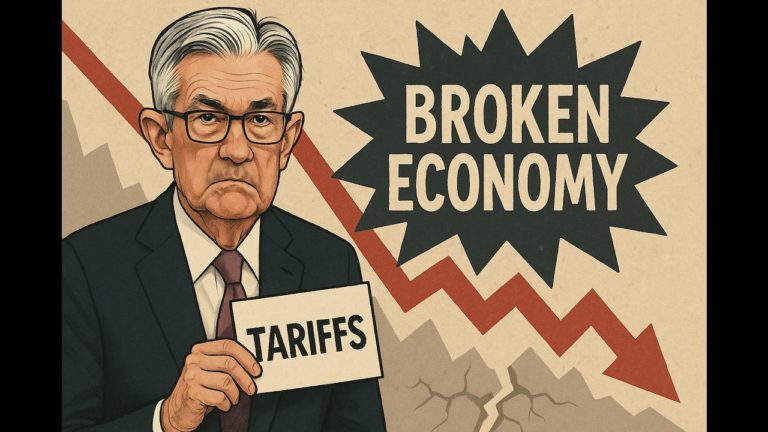
(Mike Maharrey, Money Metals News Service) Federal Reserve Chairman Jerome Powell is living a charmed life. The pandemic gave him cover to keep the Fed’s Great Recession-era bubbles pumped up. Now, he can use tariffs as a scapegoat as the inevitable effects of the Fed’s reckless monetary malfeasance during the pandemic and the Great Recession play out.

Blame Game

Powell is already setting up tariffs as a scapegoat.

During a speech at the Economic Club of Chicago, Powell issued a blunt warning – we could be on the verge of stagflation.

He blamed tariffs, bemoaning that they are “significantly larger than anticipated.”

“The same is likely to be true of the economic effects, which will include higher inflation and slower growth.”

Rising price inflation and slow growth define stagflation.

Powell worried out loud that the economic situation makes it difficult for the central bank to carry out its “dual mandate” – maintaining stable prices and maximum employment, calling it a “challenging scenario.”

Powell and his fellow central bankers have been walking a tightrope. For a long time. He finally acknowledged it during the speech. As the AP described it, “The Fed would essentially have to choose whether to keep interest rates high to fight inflation or cut them to spur growth and hiring.”

“Our tool only does one of those two things at the same time,” Powell said during a Q&A session.

This Catch-22 Isn’t New

Powell just described the Catch-22 I wrote about back in January before Trump was even inaugurated.

I’ve been saying for months that the central bank never did enough to slay the inflation dragon it resurrected with its massive money injection during the pandemic. It needs to hold rates higher for longer, and likely raise rates, to truly get inflation under control.

On the other hand, this debt-riddled bubble economy can’t function in a high-interest rate environment. It needs its easy money drug.

In other words, the Fed needs to simultaneously raise rates to battle price inflation and cut rates to keep the air in the bubbles.

It can’t do both.

Even Reuters recognized the dilemma facing the Fed back in January.

“Extreme bond market agitation has put the Federal Reserve in a bind. It can either cool long-term inflation fears or acquiesce to President-elect Donald Trump’s complaints about interest rates being ‘far too high.’ It can’t do both and will likely opt to tackle the former, potentially setting up a running verbal battle with the White House over the coming year.” [Emphasis added]

Powell & Company Created This Problem

Markets are in turmoil, and more and more people in the mainstream are worried about a recession. In a recent survey of over 300 CEOs, over 60 percent said they believe the U.S. was heading for an economic downturn in the next six months.

If you listen to mainstream analysis, it’s all about tariffs.

But it’s not.

Tariff policy might be the pin that pops this bubble, but even if it isn’t, there is a pin out there with this bubble’s name on it.

The $9 trillion question is who pumped up the bubble.

Answer – the Federal Reserve.

Simply put, without money creation, there is no bubble.

The Fed fuels bubbles by injecting money into the economy directly through quantitative easing (QE) and indirectly by keeping interest rates artificially low — incentivizing massive debt. This is, by definition, inflation, and this easy money policy blows up bubbles.

When most people hear the word “inflation,” they think of rising consumer prices. But inflation typically shows up first in financial markets. It blows up asset bubbles in stocks, real estate, art, and other sectors. That’s exactly what happened during the Fed’s easy money spree during the Great Recession. But the full effects didn’t hit consumer prices until the Fed doubled down on its monetary binge during the pandemic.

Consider the amount of inflation the Fed has created since the 2008 financial crisis. It pumped over $9 trillion into the economy through QE alone. On top of that, it suppressed interest rates for well over a decade.

That’s a tidal wave of inflation, and it blew up some mighty big bubbles.

This isn’t the first time the Fed has gotten into the bubble-blowing business. It pumped up the dot-com bubble in the 90s. It pumped up a real estate bubble in the early ’00s.

What happened to those bubbles?

They popped.

Post-2008 Financial Crisis, the Fed went to work reinflating the bubble yet again. The air started to come out in 2018 after the central bank made a half-hearted effort to normalize monetary policy. You might remember the stock market crash that fall. And what did the central bank do? It cut interest rates and relaunched quantitative easing. Keep in mind, this bubble was leaking air before COVID-19 reared its ugly head.

The pandemic was a gift for Powell. It gave the Fed an excuse to go all in, blow the bubble to epic proportions, and kick the can down the road. Had it not been for COVID-19, the post-recession bubble probably would have popped years ago.

As I mentioned, Powell is living a charmed life.

And here we are today with an even bigger bubble economy that not even Reuters can ignore.

So, Powell can yell and scream about tariffs all day, but he owns the problem. He and his predecessors (Ben Bernanke and Janet Yellen specifically) set the stage. They held the air hose that blew up the bubbles. Sure, they might not be holding the pin. Blame that on President Trump if you want to. But without the actions of the central bank over the last 15 years, there wouldn’t be a bubble to pop.

It’s worth revisiting what I wrote back in January.

This debt-riddled bubble economy can’t keep limping along in this higher interest rate environment. This is precisely why the Fed delivered a rate cut in December while simultaneously jawboning about caution and trying to dampen expectations of more rate cuts in 2025.

On the other hand – inflation.

You see, there is a big elephant standing middle of the family room. The Fed already wrecked the economy with well over a decade of easy money. It pumped nearly $9 trillion in new money (inflation) into the economy through quantitative easing alone from the onset of the Great Recession through the pandemic. That’s on top of the inflation it created with nearly a decade of zero percent interest rates.

That monetary malfeasance has consequences. It created a massive debt bubble and all kinds of malinvestments in the economy. The impact hasn’t manifested yet.

When the economy visibly cracks, the Fed will be forced to get even more aggressive in loosening monetary policy – elevated inflation or not. If history is any indication, it will cut rates to zero again, and it will launch more rounds of QE. That means even more inflation.

The worst-case scenario is a protracted period of stagflation.

And what is Jerome Powell suddenly warning about four months later?

Stagflation.

Fortunately for the Fed chair, he has a scapegoat now.


Mike Maharrey is a journalist and market analyst for Money Metals with over a decade of experience in precious metals. He holds a BS in accounting from the University of Kentucky and a BA in journalism from the University of South Florida.

EXCLUSIVE: Headline USA Interviews an Alleged OKC Bombing Accomplice

(Ken Silva, Headline USA) In early 2023, Showtime released a television series that depicted a German national named Andreas Strassmeir as an accomplice in the April 19, 1995, Oklahoma City bombing, which remains the deadliest domestic terrorist attack in American history.

In the show, OKC bomber Timothy McVeigh is shown driving to an Oklahoma religious compound called Elohim City, where Strassmeir was living at the time. Elohim City was also known as a haven for neo-Nazi bank robbers and other violent extremists.

When the show was released, Headline USA interviewed Strassmeir, who now lives in Germany, for his reaction to the show. Not surprisingly, Strassmeir said the show’s depiction of him and other Elohim City residents is a complete fabrication.

While the interview started about the show, it turned into a three-plus hour conversation about all aspects of Strassmeir’s life—including his relationship with an ATF informant who implicated him in the bombing, his contact with McVeigh, and his friendship with a CIA asset named Dave Hollaway, who was a pilot during Iran Contra and who now works as a NASA contractor.

Nearly two years later, Headline USA is releasing this interview to mark the 30th anniversary of the Oklahoma City bombing.

Ken Silva is the editor of Headline USA. Follow him at x.com/jd_cashless.

Gold Hits New Record Highs Amid Market Turmoil

(Money Metals News Service) In this week’s episode of the Money Metals Midweek Memo, host Mike Maharrey unpacked a volatile week in the markets, highlighting gold’s standout performance as a safe haven asset.

After opening just under $3,040 per ounce, gold briefly dipped below $3,000 during Monday’s sell-off, reaching a low of $2,950. But the yellow metal quickly rebounded, surpassing $3,300 by week’s end and reaching an all-time high of $3,323 per ounce.

Maharrey emphasized that gold’s sharp recovery—despite a broad market panic—illustrates its enduring role as a store of value in times of uncertainty. Analysts were surprised not by the initial dip, which often occurs as traders liquidate gold to cover losses elsewhere, but by how fast the metal recovered and pushed higher.

Traditional Safe Havens Fail to Deliver

While gold surged, other traditional safe haven assets faltered. U.S. Treasury bonds saw an initial wave of buying early in the week, sending the 10-year yield below 4 percent. However, that rally quickly faded.

By Friday, the 10-year Treasury yield had risen to 4.49 percent, the highest since February. This signals falling demand for U.S. debt at a time when the federal government remains heavily dependent on borrowing.

Meanwhile, the U.S. Dollar Index plunged to 99.78, its lowest level since April 2022. Both developments are abnormal during a stock market correction, when bonds and the dollar typically attract capital.

Analysts suggested this may reflect growing concern over the long-term viability of the U.S. dollar and U.S. debt as safe assets.

Silver Follows Gold, Remains Volatile

Silver also rallied last week, though it remains more volatile due to its industrial demand. The gold-to-silver ratio briefly dropped below 100:1, a sign that silver is still historically undervalued.

Maharrey noted that silver tends to lag behind gold in a bull market but often outperforms later in the cycle. He also pointed out that silver’s connection to the broader economy makes it more sensitive to trade wars and recession fears.

Despite its volatility, silver’s role as a monetary metal remains intact, and Maharrey expects it to track gold higher over time.

Trade War Adds to Economic Fragility

Maharrey devoted a significant portion of the episode to analyzing the impact of tariffs and trade tensions.

Last week’s announcement of new reciprocal tariffs led to an immediate market sell-off, though a 90-day reprieve later in the week temporarily calmed investor nerves.

Still, the market remains jittery, largely because of what Maharrey called “regime uncertainty”—a climate in which businesses and investors are unsure about the future direction of policy.

This uncertainty, he argued, is especially dangerous in an already fragile economy built on unsustainable debt and inflated asset prices. The tariffs may not be the root of the problem, but they could serve as the pin that pops an already overinflated economic bubble.

The Bubble Economy Enters the Mainstream Conversation

A major theme of the episode was the recognition—even by mainstream outlets like Reuters—that the U.S. is operating within a bubble economy.

Maharrey highlighted a Reuters article titled “There’s No Easy Escape from the U.S. Bubble Economy,” which described a system where asset prices are detached from fundamentals, corporate behavior is driven by financial engineering, and debt fuels growth rather than investment.

The article also noted that the contribution of finance and insurance to GDP has doubled since 1945, while manufacturing has shrunk by more than half. Maharrey emphasized that this bubble is fragile and inherently unsustainable, especially as debt levels continue to climb.

Debt Levels Reach Historic Highs

The discussion turned to the scale of America’s debt problem. Combined government, corporate, and consumer debt now exceeds $100 trillion—over three times the U.S. national income. American consumers are saddled with record credit card debt, while average interest rates remain above 28 percent. Meanwhile, the federal government is running massive deficits.

The first half of fiscal year 2025 saw a $1.31 trillion deficit, second only to the $1.7 trillion deficit logged during the first half of fiscal year 2021 at the height of the COVID-19 crisis.

Contrary to claims that spending is under control, outlays rose by $139 billion in the first quarter of 2025, with borrowing increasing by $41 billion compared to last year.

The Federal Reserve: Bubble Generator in Chief

Maharrey made clear that the real source of the bubble economy is not tariffs or trade policy, but the Federal Reserve.

Since the 2008 financial crisis, the Fed has pumped over $9 trillion into the financial system through quantitative easing and held interest rates near zero for more than a decade. This easy money fueled rampant asset inflation and created the illusion of prosperity.

The Fed’s policies encouraged borrowing, discouraged savings, and led to asset bubbles in stocks, real estate, and even art.

Maharrey criticized mainstream economists and reporters for failing to connect the dots between monetary policy and the boom-bust cycles that define the modern U.S. economy.

Economic Indicators Point to Recession

Economic data supports the warning signs. According to the Atlanta Fed’s GDPNow model, U.S. GDP is expected to contract by 2.4 percent in Q1 of 2025.

A recent survey of over 300 CEOs found that more than 60 percent expect a recession or economic downturn within six months. These forecasts align with other warning indicators, including a shrinking manufacturing base, weak consumer confidence, and rising borrowing costs.

As the air leaks out of the bubble economy, Maharrey warned that it is only a matter of time before the next major downturn hits.

Analysts Turn Bullish on Gold

Mainstream and alternative analysts alike are increasingly bullish on gold. Mark Chandler called for a move to $3,500 in the near term, citing capital flight from U.S. assets and the weakening dollar.

Adrian Day described the latest gold pullback as “short-lived” and emphasized the strong momentum behind the metal.

Maharrey noted that the current market dynamics—rising gold prices amid rising bond yields and a falling dollar—are highly unusual and speak to deep structural shifts in investor preferences.

Conclusion: Real Money in an Unreal Economy

In closing, Maharrey encouraged listeners to protect their wealth by owning real money—gold and silver. He argued that the weakening dollar, the erosion of trust in U.S. debt, and the persistence of economic bubbles all point to a need for financial insulation.

Maharrey advised listeners to call Money Metals Exchange to learn more about precious metals or visit the website to start buying.

Whether by design or by accident, the economic bubble appears to be deflating, and now is the time to act before the next crisis arrives.

To speak with a precious metals specialist or start building a position in gold and silver, contact Money Metals Exchange at 1-800-800-1865 or visit www.moneymetals.com.

Gold On Fire

(Brien Lundin, Money Metals News Service) It’s getting crazy now, and it’s obvious gold is telling us something.

It began last night, as the price of gold began to take off in overseas trading.

The chatter on X alerted those of us trying to get away from the markets for a few hours to what was going on. I took a moment from my BBQ to check the price. It was up about $40, no news.

It seemed that Asia, again, wanted gold.

Being a gold bug veteran of many a 2×4 upside the head delivered by Mr. Market, I restrained my enthusiasm until after the typical smash-down time on the New York opening.

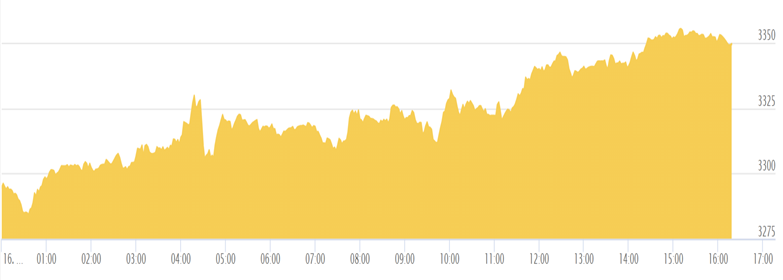
Give them credit — they tried — but nothing could stop this train today:

After beating back a couple of bear attacks, gold took off with little remaining resistance. As I write, it’s up about $108 on the day. Silver can’t keep up to this rocket ship, but is still up very nicely.

Frankly, this move is somewhat worrisome. After a brief correction earlier this month, gold’s overheated status cooled off, with its RSI dipping back below 70. But it’s right back in the stratosphere after the remarkable surge in recent sessions.

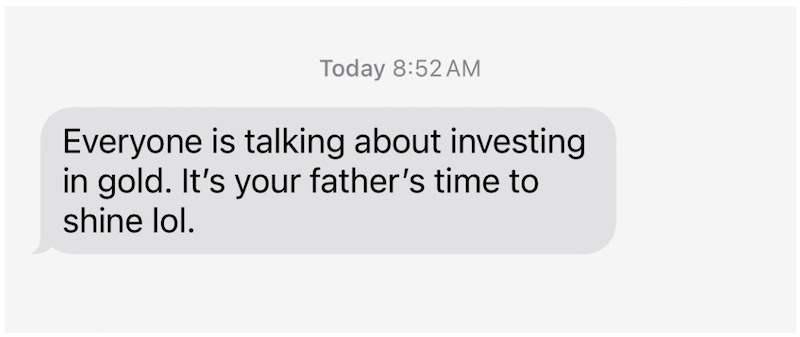
Similarly worrisome, gold is catching a buzz in the mainstream, as illustrated by this text my daughter received this morning from one of her law school friends:

While I appreciate the shoutout…and my investment portfolio is indeed shining right now…this is the sort of thing that has my contrarian Spidey senses tingling. Is this kind of mainstream recognition a warning that the move in gold has peaked?

I don’t think so, at least for the longer term.

First, if almost everyone you hang out with and talk to is a contrarian, it’s hard to figure out what is truly a contrarian view. Pulling back and looking at the big picture, I believe what we’re seeing right now is merely the start of a long-lasting move into metals and the miners from mainstream investors.

There’s lots more to go before this bull market ends.

Second, I think gold is telling us something now. As I’ve written here recently, all investment markets are predictive mechanisms, but I believe gold is, along with bonds, the most sensitive of all.

It soared after the Covid shutdown not because inflation was soaring, but because it was discounting the inflation to come as a result of the rescue efforts from the Fed and other central banks. Pundits bemoaned gold’s lack of reaction when that inflation finally emerged, but gold had already reacted long before.

Today, gold is once again warning us of severe repercussions ahead…and perhaps a reordering of the global monetary system.

What these repercussions are will be revealed in time, although I believe they will involve an economic slowdown, another monetary rescue from the Fed, and the resulting inflationary effects.

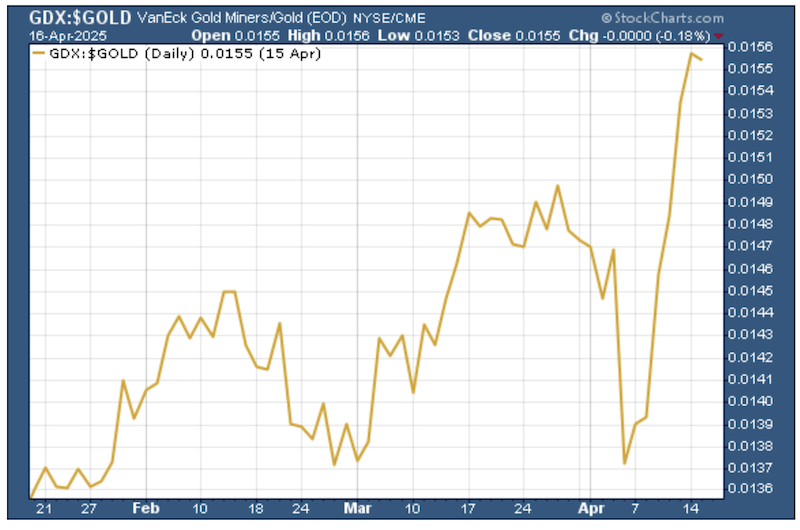
In the meantime, despite gold’s rocket-like surge, gold stocks have managed to dramatically outperform the metal. Again, that’s clear in the chart below of the GDX/gold ratio, updated from when I showed it to you on Monday:

More to the point, the stocks in our Gold Newsletter portfolio are just beginning to take off.

I won’t belabor the point, except to say this: This train is leaving the station, and if you’re not on board, you’re going to miss one of the best investing opportunities of your career.

To get Brien Lundin’s ongoing commentary on the markets at no charge, click here to subscribe to his free Golden Opportunities newsletter.


Brien Lundin is the publisher and editor of Gold Newsletter, the publication that has been the cornerstone of precious metals advisories since 1971. Mr. Lundin covers not only resource stocks but also the entire world of investing. He also hosts the annual New Orleans Investment Conference. To get Brien Lundin’s ongoing commentary on the markets at no charge, click here to subscribe to his free Golden Opportunities newsletter.

Trump’s Anti-War Voice Silenced? The Fall of Senior DoD Official Dan Caldwell

(José Niño, Headline USA) The ouster of Dan Caldwell from the Pentagon may have been triggered by a leak investigation—but to many inside Trump world, it looks more like the sidelining of a dissenting voice within the administration.

Dan Caldwell, a senior advisor to Defense Secretary Pete Hegseth and a prominent advocate for foreign policy restraint, was placed on administrative leave and escorted out of the Pentagon on Tuesday as part of an investigation into sensitive leaks coming from the Defense Department. 

While the official reason cites unauthorized disclosures of sensitive information, Caldwell’s removal is seen by realist foreign policy advocates as emblematic of deeper ideological rifts within Donald Trump’s second-term foreign policy team.

Caldwell is a former Marine and Iraq War veteran whose battlefield experience turned him into a vocal critic of U.S. interventionism.

After earning a degree from Arizona State University in 2011, he joined the realist foreign policy think tank Defense Priorities, where he became a leading voice for scaling back America’s overseas military commitments, per a report by the Associated Press. 

Caldwell has described the Iraq War, in which he served in, as a “monstrous crime” and has repeatedly argued for a reduced U.S. presence in the Middle East. 

His criticisms of bipartisan foreign policy orthodoxy positioned him as a prominent voice for realism and restraint in the Trump administration. 

In his role as senior advisor to Hegseth, Caldwell reportedly influenced key Pentagon appointments and shaped the department’s approach to conflicts in Ukraine and Yemen. 

Caldwell’s removal comes on the heels of the “Signalgate” scandal. Last month, Defense Secretary Hegseth inadvertently revealed sensitive operational details in a Signal chat with top officials — and journalist Jeffrey Goldberg, who had been mistakenly included in the group. Caldwell was identified as the Pentagon’s primary liaison with the White House on U.S. strikes against Houthi targets in Yemen.

Politico reported that this episode prompted an internal probe into broader leaks concerning Pentagon operations, including naval deployments, intelligence activities, and a controversial visit by Elon Musk to the Pentagon itself. On March 21, Hegseth’s chief of staff authorized polygraph testing as part of the probe.

Caldwell and deputy chief of staff Darin Selnick were both placed on administrative leave on Tuesday and escorted from the Pentagon. Neither the White House nor the Defense Department has publicly commented on their status.

Caldwell’s departure is the latest in a string of high-level Pentagon exits under Hegseth, including the chairman of the Joint Chiefs, the top Navy admiral, and the head of U.S. Cyber Command. 

The shakeups suggest a reconfiguration of the defense establishment, one that may be drifting away from the foreign policy doctrine of restraint Caldwell championed.

One X/Twitter user, Shadow of Ezra, observed that “Caldwell didn’t toe the usual line on foreign policy. He openly challenged the Washington consensus on Israel, saying the U.S. hasn’t had an honest conversation on the topic in over two decades.”

“He also opposed dragging America into war with Iran, famously stating that when Israel is attacked, it’s Israel—not America—under fire,” the X user added. 

For supporters of an America First foreign policy of realism and restraint, Caldwell’s exit is a blow, but not necessarily a resounding defeat. 

As tensions continue to mount globally, the debate over how much the United States should project power abroad remains unsettled and dissenting voices within the Trump administration will continue to make their case against their more hawkish counterparts.

José Niño is the deputy editor of Headline USA. Follow him at x.com/JoseAlNino 
Report: Alleged MS-13 Member in Deportation Controversy Was Stopped in 2022—But FBI Had Him Sprung

(Ken Silva, Headline USA) Liberal media outlets and Democrat activists have rallied around “Maryland man” Kilmar Abrego Garcia, an El Salvador national who was deported last month on the grounds that he’s a suspected MS-13 gang member.

Abrego Garcia has denied the MS-13 allegation, and the U.S. Supreme Court has ordered the Trump administration to facilitate his return to the U.S. from a notorious Salvadoran prison, rejecting the White House’s claim that it couldn’t retrieve him. Trump administration officials have pushed back against the idea of bringing him back, arguing it was up to El Salvador.

While the Justice Departments litigates the matter in court, the Trump administration released police records suggesting that Abrego Garcia was indeed an MS-13 gang member—despite his denials and most mainstream media reports painting him in a positive light.

According to a March 2019 Maryland police report, Abrego Garcia was spotted loitering at a Home Depot parking lot around 2:30 p.m. with three other men. Two of the other men were confirmed to be MS-13 members, while police said they couldn’t determine the affiliation of a third man. Abrego Garcia was also strongly suspected of being with MS-13, according to the report.

“Officers observed [Abrego Garcia] wearing a Chicago Bulls hat and a hoodie with rolls of money covering the eyes, ears and mouth of the presidents on the separate denominations. Officers know such clothing to be indicative of the Hispanic gang culture. The meaning of the clothing is to represent ‘ver, oir y callar’ or ‘see no evil, hear- no evil and say no evil.’ Wearing the Chicago Bulls hat represents that they are a member in good standing with the MS-13,” the report stated.

“Officers contacted a past proven and reliable source of information, who advised Kilmar Armando ABREGO-GARCIA is an active member of MS-13 with the Westerns clique. The confidential source further advised that he is the rank of ‘Chequeo’ with the moniker of ‘Chele.’”

Later in 2019, a U.S. immigration judge shielded Abrego Garcia from deportation to El Salvador because he likely faced persecution there by local gangs that had terrorized his family. The Trump administration deported him there anyway.

On top of the newly released police report, the Tennessee Star published a bombshell article on Wednesday about the fact that Abrego Garcia was suspected by Tennessee Highway Patrol (THP) of human trafficking in 2022. However, the FBI ordered him to be released, according to the Star.

“Abrego Garcia was stopped for an unknown reason on December 6, 2022, and that the THP officer responsible for the stop immediately discovered Abrego Garcia was transporting seven passengers, with eight individuals inside the vehicle,” the Star reported, citing anonymous sources.

“THP ultimately discovered Abrego Garcia was on a terrorist watch list, but could not locate Abrego Garcia on a deportation list. THP subsequently called the FBI, which was then led by former Director Christopher Wray under the Biden administration. The FBI instructed the THP officers at the scene to capture photographs of all eight people in the vehicle and document its contents,” the Star added.

“Once the photographs were captured, this source told The Star that the FBI requested THP release all eight individuals and that the THP officers complied with this request.”

Along with Abrego Garcia’s potential gang activities, it was revealed that Abrego Garcia’s wife filed a restraining order against him in 2021 over domestic violence allegations.

Meanwhile, the Trump administration is facing possible contempt of court over the matter. The judge in Abrego Garcia’s case has said she is determining whether to undertake contempt proceedings, saying officials “appear to have done nothing to aid in Abrego Garcia’s release from custody and return to the United States” despite a Supreme Court ruling that the administration must “facilitate” his release.

The Associated Press contributed to this report.

Ken Silva is the editor of Headline USA. Follow him at x.com/jd_cashless.

Mother of Maryland Woman Murdered by MS-13 Member Speaks amidst Deportation Controversy

(Morgan Sweeney, The Center Square) In a last-minute press briefing Wednesday afternoon, the mother of Rachel Morin, a 37-year-old Marylander who was raped and murdered by an MS-13 gang member, addressed reporters at the White House.

The White House announced it was hosting a “special guest” to speak just two hours before the briefing. White House Press Secretary Karoline Leavitt said that Patty Morin had requested to share her daughter’s story with the media. Rachel’s attacker was convicted of killing her by bashing her head against rocks and later strangling her.

Morin described the gruesome details of her daughter’s rape and murder.

“There’s a six-inch square on the back of her head where her skull is shattered the way that you would crush an eggshell,” Morin said. “There wasn’t one inch of her body that didn’t have some kind of injury.

“This means nothing to them,” Morin said, referring to members of the notorious international crime gang. Of her daughter’s killer, she said he didn’t appear concerned about the potential consequences of the crimes in court.

“When he was sitting in the courtroom, he actually looked like he thought he was going to be set free,” she added.

Morin addressed reporters in light of the blowback the administration has faced after its accidental deportation of Salvadoran national Kilmar Abrego Garcia with a group of purported illegal alien criminals in March. Garcia came to the U.S. illegally as a teenager around 2011, and was granted asylum by an immigration judge in 2019, despite suspicions and earlier court documents referring to him as a member of MS-13. He lived in Maryland from his arrival in the states until his deportation and has a wife and child that are American citizens.

Despite a federal judge ruling the administration was to return Garcia – and a partial upholding of those orders from the Supreme Court telling the Trump administration to “facilitate” Garcia’s return – the administration has not agreed to bring Garcia back to the U.S. It insists it has complied with the Supreme Court’s orders, saying they don’t require the administration to “effectuate” his return. Salvadoran President Nayib Bukele said during his visit to the White House Monday that he also would not send Garcia back to the U.S.

Leavitt emphatically affirmed Wednesday afternoon what the White House has repeatedly said: It will not be returning Garcia to the U.S.

“The Democrats and the media in this room have continually and wrongly labeled Kilmar Abrego Garcia as a Maryland father. There is no Maryland father,” Leavitt said. “Nothing will change the fact that Abrego Garcia will never be a Maryland father. He will never live in the United States of America again.”

Leavitt disclosed for the first time that Garcia’s wife had petitioned the courts for a protection order against her husband in May 2021.

The Trump administration has seen heightened scrutiny over the issue for what some see as defying multiple court orders and deporting someone who was living in the U.S. legally and whose lawyers say has never been charged with any crimes.

DOJ’s Mixed Signals on Pistol Braces Leave Gun Owners in Legal Limbo

(José Niño, Headline USA) The Justice Department is under fire from gun rights advocates for continuing to prosecute pistol brace owners, even as it claims to be reviewing the controversial rule.

The DOJ is currently prosecuting a case in the U.S. District Court for the District of Columbia involving the possession of a handgun outfitted with a pistol stabilizing brace, in U.S. v. Taranto. 

“This does not inspire confidence in the DOJ,” the National Association for Gun Rights (NAGR) posted on X on Sunday. “They are ‘reviewing’ the pistol brace rule and yet are still continuing to charge individuals for possessing them. This is not what gun owners asked for.”

In this case, prosecutors are charging a man, Taylor Taranto, for possessing a CZ Scorpion pistol equipped with a stabilizing brace. 

Taranto was arrested on June 28, 2023, after the Secret Service and FBI found him near former President Barack Obama’s home. 

He was allegedly engaged in “erratic behavior,” livestreamed threats about a vehicle “detonator,” and fled into woods when approached. Authorities discovered a CZ Scorpion pistol with an SBTEVO stabilizing brace in his vehicle.

He faces multiple charges, including:

  • Possession of a pistol without a D.C. license
  • Possession of an unregistered short-barreled rifle (SBR)

In response to this case, Gun Owners of America and the Firearms Regulatory Accountability Coalition (FRAC) have called on the DOJ to drop the charge, arguing that it sets a troubling precedent for the estimated 40 million Americans who legally own similar firearms.

Pistol stabilizing braces are firearm accessories initially designed to help disabled veterans shoot heavier pistols one-handed. Created in 2012 by SB Tactical founder Alex Bosco, the braces strap to a shooter’s forearm for stabilization. They differ from rifle stock, which are designed to be shouldered. This distinction is crucial.

If a firearm with a barrel shorter than 16 inches is intended to be fired from the shoulder, it’s considered a short-barreled rifle under the National Firearms Act (NFA), requiring special registration and taxation. 

For years, the ATF allowed braces without classifying them as SBRs.

That changed in January 2023 when the Biden administration’s ATF published a 293-page rule redefining braced pistols as SBRs if they met certain criteria. 

This rule, known as 2021R-08F, reclassified potentially millions of pistols, threatening owners with felony charges unless they registered the firearms under the NFA.

Gun Owners of America (GOA), the National Association for Gun Rights (NAGR), and the Firearms Regulatory Accountability Coalition (FRAC) quickly filed lawsuits against the brace rule.

In a landmark decision in 2024, U.S. District Judge Reed O’Connor issued a nationwide injunction, ruling that the brace rule violated the Administrative Procedure Act. Other courts followed suit, effectively blocking the rule’s enforcement.

Despite these victories, gun groups say the DOJ and ATF continue to pursue cases that rely on the same legal theories the courts rejected.

In U.S. v. Taranto, the DOJ claims it isn’t enforcing the vacated rule but is instead applying the underlying statute — the NFA —as it has always done.

In a recent filing, prosecutors wrote, “ATF is not barred from continuing to enforce the underlying statute … those determinations will naturally tend to look substantially like the determinations that would follow from applying the clear framework outlined in the rule.”

To GOA and NAGR, this amounts to a bureaucratic sleight of hand.

While the Trump administration has publicly supported gun rights and assembled a new DOJ task force to uphold Second Amendment protections, groups like GOA and NAGR are alarmed that prosecutions like Taranto continue.

“Even under a Trump administration, it appears that career anti-gun bureaucrats within ATF, along with some holdover prosecutors at the DOJ, just aren’t willing to give up their anti-gun agenda,” one GOA representative said in a statement.

The issue, GOA argues, is that the Taranto case could establish a precedent by stealth. Although the defendant faces numerous unrelated charges, including allegedly outfitting his vehicle with a detonator and fleeing Secret Service agents, GOA and FRAC emphasize they are solely focused on the NFA charge for possessing a braced firearm.

Taylor Rhodes, the Director of Communications at the National Association of Gun Rights, chimed in as well.

“The DOJ’s relentless pursuit of law-abiding gun owners over pistol braces is a blatant assault on our Second Amendment rights—rights that a federal appeals court already deemed violated by this unconstitutional rule,” Rhodes said. 

He added: “Charging individuals for owning any brace, despite ongoing reviews, proves the Biden administration’s anti-gun agenda is alive and well, and we won’t stand for it.”  

Rhodes stressed: “Gun owners are not criminals, and we’ll fight tooth and nail to ensure the government stops weaponizing vague regulations to strip away our freedoms.”

The stakes are high. According to the Congressional Research Service, as many as 40 million firearms equipped with pistol braces are in circulation. For their owners, the current legal gray zone is both confusing and potentially perilous.

Though the courts have enjoined the brace rule, the DOJ continues to prosecute cases using the same framework. That leaves gun owners unsure whether they’re protected under current law or one prosecutorial decision away from a felony.

GOA, NAGR, and FRAC are urging the DOJ to drop the brace-related charge in U.S. v. Taranto and abandon what they see as a selective, unconstitutional enforcement strategy.

Despite promises of review and reform, the DOJ’s actions suggest that the fight over pistol braces is far from over.

José Niño is the deputy editor of Headline USA. Follow him at x.com/JoseAlNino 

Did a Pro-Gun Group Oust a Director over His Views on Israel?

(José Niño, Headline USA) A popular YouTuber known for his gun advocacy has ended his role as a state director for Gun Owners of America, leaving followers speculating whether his skepticism of Israel cost him his role.

Gun YouTuber Iraqveteran8888, whose real name is Eric Blandford, was GOA’s Georgia State Director until last Tuesday, when he was apparently relieved of his position.  Blandford was originally brought on board by GOA on May 23, 2022. 

His departure from GOA has raised speculation as to why he is no longer working with the pro-gun lobby. 

Several of his followers on X/Twitter, believe that he parted ways with GOA owing to his commentary about Israel. 

Thomas C. Leager, a former Senate candidate for Wisconsin, exclaimed on X, “@GunOwners have officially sold out. Eric @Iraqveteran8888 had a huge audience WAYYYYY before Gun Owners of America. He will after.”

When Headline USA editor Ken Silva inquired about Blandford’s apparent firing, Leager responded, “They got the call and distanced themselves from @Iraqveteran8888 because he asked questions about the “chosen people” on his X Acct.”

Comments from a now-deleted Reddit thread have also mentioned that Blandford has experienced a difficult divorce and has been frequently posting content about Jewish and Israeli influence — something that has alarmed several of his followers. .

One reddit user observed, “Eric has been crashing out hard on X. Seemingly after his divorce? I dont know nor do I care — but the man has been posting about jews nearly 24/7 for I dont know how long. I thought to myself a week ago like – damn I cant believe GOA hasn’t dropped him yet. This was the least surprising thing ever.” 

Reddit Post Concerning Iraqveteran8888’s Firing

While there is no smoking gun confirming his anti-Israel commentary as the precipitating factor behind the termination of his relationship with GOA, Blandford has a notable history of Israeli skeptic commentary.

Since Hamas’ attack on Israel on October 7, 2023, a sharp and unprecedented divide has emerged within conservative media over the value of the United States’ alliance with Israel.

Blandford himself recorded a YouTube video titled “Firing Back with Erich Pratt #1: ‘The Israeli Situation'” where he discusses Israel with GOA Senior Vice President Erich Pratt. This video was originally published on October 15, 2023, on the heels of the October 7 attacks. 

In the video, Eric took a more neutral tone and expressed sympathy for Israelis affected by violence, characterizing the situation as “extremely emotional” and noting that “war is extremely terrible.” He described the Hamas attacks as a situation where “people came across the border started shooting people up” and states that Israelis were “caught off guard.”

During the conversation with Pratt, Blandford highlighted the contrast between Israeli and U.S. gun control policies, noting that following the Hamas attacks, the Israeli government began to “slash their gun control laws” and started “handing out machine guns to their citizens.”

Blandford expressed solidarity with the Israelis saying they are “like us in a lot of ways” and that “they want to live free and they want to be safe just like any other person.” He acknowledges that Israelis “live in a very hostile place with people all around them that hate them.”

However, Blandford’s comments on Israel have taken a more critical tone since 2024. 

In one post he published on October 18, 2024, Blandford argued that various nations and organizations such as Hamas, Israel, the United States, Russia, and Ukraine, have all committed serious violations such as war crimes or crimes against humanity. 

In a similar vein, Blandford made a post on October 23, 2024 highlighting the actions of the aforementioned state and non-state actors pointing out that these entities have been responsible for significant violence, including the deaths of children. 

He argued that political efforts to restrict personal firearms overlook the broader issue of violence perpetrated by powerful groups. The post critiques what the Blandford perceives as a flawed moral stance by certain political factions, advocating instead for the right to personal defense through firearm ownership

In the middle of March, when Donald Trump authorized the United States military to carry out a series of air strikes against the Houthis in Yemen, Blandford raised the question of whether Israeli influence was driving the decision

At the start of April, the gun YouTuber began to increase his anti-Israel posts. In one post, Blandford questioned the validity of the United States’ alliance with Israel.  


Blandford also published a post requesting clarification for certain passages in the Talmud that he finds perplexing or troubling. 

The Talmud, a central text in Rabbinic Judaism, is made up of a vast collection of discussions and interpretations of Jewish law, ethics, customs, and history. Some passages have been sources of controversy. 

Five days before his exit from GOA, Blandford asked his Twitter followers if there is any other political figure outside of Rep. Thomas Massie, R-KY, who is not “in bed with Israel.”

The string of anti-Israel posts he published apparently got numerous people to privately message Blandford about the pivot in his commentary. Despite these messages of concern, Blandford stressed that he would not change his stance on Israel unless he was presented with truly compelling and indisputable evidence to the contrary.


Curiously, the day before Blandford and GOA parted ways, the firearms personality posted a satirical “Dying for Israel Risk Index” on his X account.

Shortly afterwards, he published a series of posts condemning Israel’s punitive campaign in Gaza, focusing on the high number of civilian casualties it has inflicted.

According to figures from the Gaza Health Ministry, the Israel Defense Forces (IDF) have killed close to 51,000 Palestinians, with nearly 116,000 others wounded. 

These final posts may have been the tipping point that ultimately led GOA to sever its ties with Blandford.

After his departure from GOA, Blandford has continued criticizing Zionist interest groups. In response to a tweet published by conservative commentator Candace Owens, he highlighted that the Zionist lobby has been losing the public relations battle for millennia, and only now is the mainstream beginning to acknowledge it.

Headline USA has reached out to Blandford and GOA for comment, but has not received any response thus far.

As Headline USA has previously covered, there appears to be a concerted effort by several Zionist organizations and conservative media personalities to discredit and suppress the voices of right-wing critics of Israel.

Since Israel launched its military campaign against Hamas following the October 7 attacks, a range of conservative figures — including Candace Owens, Tucker Carlson, and even social media personalities like former MMA fighter Jake Shields and Dan Bilzerian — have openly criticized Israel’s actions.

This has likely prompted Israeli Prime Minister Benjamin Netanyahu to hold a private meeting with conservative influencers such as Tim Pool to discuss this anti-Israel trend, which appears to be growing on the Right. 

In a movement long defined by loyalty to guns, God, and country, Blandford’s case poses a provocative question: Is Israel now the third rail of the American Right?

José Niño is the deputy editor of Headline USA. Follow him at x.com/JoseAlNino.