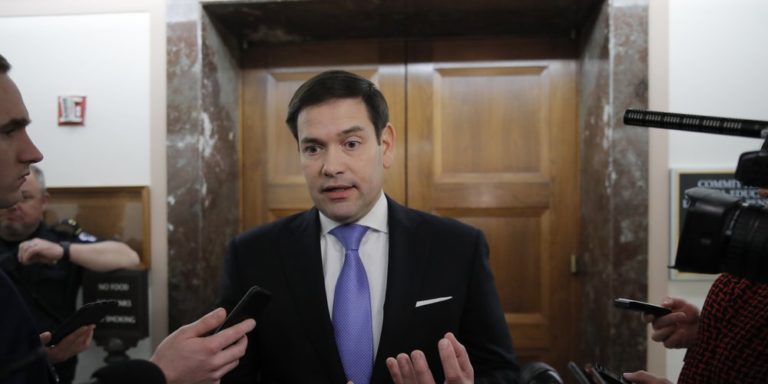
(By Bethany Blankley, The Center Square) Following through on a pledge he made while still in the U.S. Senate, Secretary of State Marco Rubio began restricting visa policies on Wednesday to protect Americans.
Rubio first announced visa restrictions for foreign nationals who censor Americans.
A few hours later, he announced the U.S. State Department was working with the Department of Homeland Security to aggressively revoke visas for Chinese students, including those with connections to the Chinese Communist Party or studying in critical fields.
The State Department also will be revising visa criteria to enhance scrutiny of all future visa applications from the People’s Republic of China and Hong Kong, he said, adding that the new visa policies would “put America first, not China.”
The announcement came as the greatest number of Chinese nationals illegally entered the U.S. in recorded history under the Biden administration, at least 176,000, The Center Square reported.
While in the Senate, Rubio and others expressed alarm about national security threats posed by the Chinese Communist Party, Chinese intelligence outposts operating in the U.S., Chinese and other illegal border crossers breaching U.S. military bases, The Center Square reported.
The first visa restriction policy was implemented to protect Americans’ First Amendment right to free speech, a right, Rubio argues, sets America “apart as a beacon of freedom around the world.”
“Even as we take action to reject censorship at home, we see troubling instances of foreign governments and foreign officials picking up the slack,” he said. “In some instances, foreign officials have taken flagrant censorship actions against U.S. tech companies and U.S. citizens and residents when they have no authority to do so.”
The new visa restriction policy applies to foreign nationals who censor protected expression in the United States.
“It is unacceptable for foreign officials to issue or threaten arrest warrants on U.S. citizens or U.S. residents for social media posts on American platforms while physically present on U.S. soil,” Rubio said. “It is similarly unacceptable for foreign officials to demand that American tech platforms adopt global content moderation policies or engage in censorship activity that reaches beyond their authority and into the United States. We will not tolerate encroachments upon American sovereignty, especially when such encroachments undermine the exercise of our fundamental right to free speech.”
Section 212(a)(3)(C) of the Immigration and Nationality Act of 1996 authorizes the Secretary of State “to render inadmissible any alien” whose entry into the U.S. “would have potentially serious adverse foreign policy consequences for the United States.”
The visa restrictions may also apply to certain family members.
The policy is a marked reversal of Biden administration policies, which instead of targeting threats to Americans for removal and visa revocation, extended temporary protective status to roughly one millionillegal foreign nationals, including Palestinians and pro-Hamas rioters who threatened Jewish and Israeli Americans, The Center Square reported.
(Brett Rowland, The Center Square) A federal court ruled Wednesday that President Donald Trump doesn’t have unilateral authority to impose tariffs under an emergency law, blocking tariffs that upended markets and worried businesses and consumers.
The three-judge panel on the U.S. Court of International Trade unanimously ruled Congress did not give tariff authority to the president under the International Emergency Economic Powers Act of 1977.
“The court does not read IEEPA to confer such unbounded authority and sets aside the challenged tariffs imposed thereunder,” the court wrote.
The Liberty Justice Center, based in Texas, challenged the administration’s reciprocal tariffs, which Trump announced on April 2 and suspended on April 9, hours after they went into effect.
The Liberty Justice Center argued that the administration had no authority to issue across-the-board worldwide tariffs without congressional approval. The nonprofit’s lawsuit alleges Trump has broadly overstepped his authority by claiming “the authority to unilaterally levy tariffs on goods imported from any and every country in the world, at any rate, calculated via any methodology – or mere caprice – immediately, with no notice, or public comment, or phase-in, or delay in implementation, despite massive economic impacts that are likely to do severe damage to the global economy.”
The Court of International Trade issued one opinion for both V.O.S. Selections, Inc. v. Trump and State of Oregon v. U.S. Department of Homeland Security that applies to all of the Trump administration’s tariffs imposed under the IEEPA, including the “Liberation Day” tariffs and the tariffs imposed on goods from China, Mexico, and Canada.
“We’re delighted by the decision of the Court of International Trade enjoining the President’s so-called ‘Liberation Day’ tariffs,” said Jeffrey Schwab, senior counsel and director of litigation at the Liberty Justice Center. “This ruling reaffirms that the President must act within the bounds of the law, and it protects American businesses and consumers from the destabilizing effects of volatile, unilaterally imposed tariffs.”
The ruling is a setback for Trump’s foreign policy agenda and domestic economic policy.
“Worldwide and Retaliatory Tariffs do not comply with the limitations Congress imposed upon the President’s power to respond to balance-of-payments deficits,” the Court of International Trade judges wrote. “The President’s assertion of tariff-making authority in the instant case, unbounded as it is by any limitation in duration or scope, exceeds any tariff authority delegated to the President under IEEPA.”
The Trump administration has filed a notice of appeal in response to the ruling.
“Foreign countries’ nonreciprocal treatment of the Unites States has fueled America’s historic and persistent trade deficits,” a White House spokesman said in a statement. “These deficits have created a national emergency that has decimated American communities, left our workers behind, and weakened our defense industrial base – facts that the court did not dispute.”
Economists, businesses and some publicly traded companies have warned that tariffs could raise prices on a wide range of consumer products.
Trump has said he wants to use tariffs to restore manufacturing jobs lost to lower-wage countries in decades past, shift the tax burden away from U.S. families, and pay down the national debt.
“It is not for unelected judges to decide how to properly address a national emergency,” White House spokesman Kush Desai said. “President Trump pledged to put America First, and the Administration is committed to using every lever of executive power to address this crisis and restore American Greatness.”
A tariff is a tax on imported goods. The importer pays the tax to the federal government and can either absorb the loss or pass the cost on to consumers through higher prices.
(José Niño, Headline USA) At first glance, starwarsweb.net looked like any other early 2010s fan site. Visitors found a cartoon Yoda, game reviews, and links to Star Wars merchandise.
However, according to findings from 404 Media, starwarsweb.net actually functionally as a covert CIA communication platform for maintaining contact with international informants. The website reportedly doubled as a sophisticated system designed for covert communication.
This website formed part of an extensive CIA network that Iranian intelligence first uncovered over a decade ago, ultimately resulting in the execution of numerous CIA assets in China during the early 2010s.
Security researcher Ciro Santilli was responsible for launching the investigation into this CIA network.
The CIA has been revealed to have once secretly ran a Star Wars fan website and used it to communicate with overseas spies.
He took a particular interest into this topic owing to his fascination with Chinese political affairs (his mother-in-law is apparently involved with the Falun Gong religious movement), his enjoyment of televised spy novel adaptations, his desire for “sticking it up to the CIA for spying on fellow democracies” (identifying himself as Brazilian), and his technical expertise in web development and Linux systems.
He also candidly mentioned pursuing “fame and fortune” as additional motivation for researching this matter during an online discussion.
Santilli’s investigation uncovered additional suspected CIA-operated websites, including platforms focused on comedy, extreme sports, and Brazilian music. His analysis suggests these sites specifically targeted users in Germany, France, Spain, and Brazil based on their linguistic content and cultural references.
“It reveals a much larger number of websites, it gives a broader understanding of the CIA’s interests at the time, including more specific democracies which may have been targeted which were not previously mentioned and also a statistical understanding of how much importance they were giving to different zones at the time, and unsurprisingly, the Middle East comes on top,” Santilli explained.
Yahoo News published a comprehensive investigation in November 2018 examining the CIA’s covert communication infrastructure and its eventual discovery.
This exposure began in Iran before resulting in the deaths of over two dozen CIA sources in China between 2011 and 2012. The CIA subsequently discontinued these covert communication tools.
Reuters followed with their own investigation in September 2022, titled “America’s Throwaway Spies,” demonstrating how Iranian authorities identified CIA informant Gholamreza Hosseini through the agency’s poorly constructed covert websites.
A critical CIA error involved using sequential IP addresses for these sites, making it simple for investigators to locate additional network components after discovering just one.
The Reuters investigation revealed that entering passwords into these seemingly ordinary websites’ search functions actually initiated secure login procedures for sources to communicate with CIA handlers.
While Reuters published two specific domains and described nine total sites, their article contained clues that allowed Santilli to discover many additional platforms.
Santilli discovered that screenshot filenames within the article sometimes contained actual CIA website URLs, which he then researched using the Wayback Machine. He subsequently employed viewdns.info to identify related domains by examining IP address associations.
Santilli’s detailed research methodology involved extensive domain name analysis, HTML code examination, and deploying “a small army of Tor bots” to circumvent Wayback Machine IP restrictions. He accomplished this investigation using exclusively free online tools without purchasing any specialized data.
Citizen Lab had previously identified 885 websites following Hosseini’s disclosure of iraniangoals.com to Reuters. Santilli eventually compiled several hundred domains for manual inspection “as patience would allow.”
Independent cybersecurity researcher Zach Edwards confirmed to 404 Media: “The recent efforts to uncover the websites CIA used to communicate with their spies all over the world aligns with what I understood about this network. We’re now about 15 years past when these websites were being actively used, yet new information continues to drip out year after year.”
“The simplest way to put it—yes, the CIA absolutely had a Star Wars fan website with a secretly embedded communication system—and while I can’t account for everything included in the research from Ciro, his findings seem very sound,” Edwards added. “This whole episode is a reminder that developers make mistakes, and sometimes it takes years for someone to find those mistakes. But this is also not just your average ‘developer mistake’ type of scenario.”
Regarding his research impact, Santilli stated: “At the very least the potential public benefit of enlightening history seems to be greater than that risk now. I really hope we’re right about this.”
He concluded: “It is also cute to have more content for people to look at, much like a museum. It’s just cool to be able to go to the Wayback Machine and be able to see a relic spy gadget ‘live’ in all its glory.”
As digital footprints become increasingly permanent and searchable, the Star Wars site saga serves as a stark warning that today’s secret operations may become tomorrow’s open-source investigations.
José Niño is the deputy editor of Headline USA. Follow him at x.com/JoseAlNino
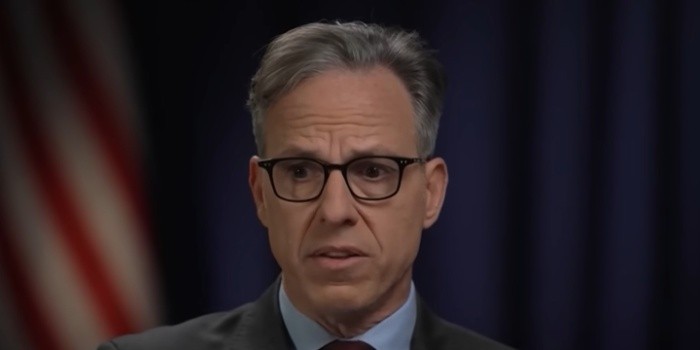
(Luis Cornelio, Headline USA) Embattled CNN host Jake Tapper lashed out after a left-leaning podcast host joked that his 15-year-old son was a racist for saying he wants to be a police officer.
Tapper told the story on May 22 on The Prof G Pod with Scott Galloway while promoting his new book, Original Sin.
“I went on a left-leaning podcast that shall remain nameless, and we were talking about my kids because I think they were both people without kids,” Tapper recalled. “They asked me about my son, and I said he was, ‘You know, he’s a football player, and he wants to be a policeman.’”
He said the hosts then launched a tirade against his son. “And their joke was about my 15-year-old son, ‘Oh, how does he feel about minorities?’ Like the idea that he wants to be a policeman, therefore he’s racist. My son. And, like, you know, that was the big laugh and then I got dragged in the comments and all that stuff.”
“And I thought to myself, this is why you folks are losing elections,” Tapper said, though some commentators suggested he said “f**kers” instead of “folks.”
"This is why you fuckers are losing elections."
CNN's Jake Tapper says left-wing podcast hosts assumed his teen son is racist because he wants to be a police officer.
Tapper’s outburst comes as Democrats struggle to win back young voters after years of embracing identity politics and radical gender ideology.
According to The New York Times, some Democratic megadonors are “inundated” with pitches to spend millions of dollars in a bid to recreate President Trump’s success with young men in the 2024 presidential election.
“Find the next Joe Rogan,” left-wing strategists are saying, the paper reported.
Another Times article noted plans for a $20 million effort dubbed SAM—Speaking with American Men: A Strategic Plan—with some of the strategy plans taking place at “luxury hotels.”
(Money Metals News Service) In this episode of the Money Metals Midweek Memo, host Mike Maharrey delivers a sharp rebuke of the financial media’s obsession with tariffs and trade wars.
While headlines scream about the latest deal or tariff suspension, Maharrey argues that investors are dangerously distracted from the real threat: America’s exploding national debt and the systemic consequences that follow.
He warns that the U.S. is barreling toward a fiscal cliff, and most people aren’t paying attention because they’re fixated on the wrong issues.
If stocks fall, it’s because of tariff fears. If they rise, it must be due to a pause in tariffs or the announcement of a new trade negotiation. Just recently, the Dow jumped more than 700 points after news broke that the EU and the U.S. were discussing a potential deal. Meanwhile, gold dropped by $50.
But Maharrey calls this fixation misplaced. Investors selling gold just because of a temporary trade headline are reacting emotionally, not strategically. He emphasizes that tariffs, while economically significant, are just one factor—and probably not the most important one.
They’re a single tree. The debt crisis, he says, is the forest.
That number continues to rise with no political will to stop it. Yet the issue garners little attention. Maharrey believes this is partly because debt alarm bells have been ringing for decades, and nothing seems to have collapsed—yet.
Many assume the problem is overblown. But he insists the day of reckoning is coming.
Interest payments alone are already squeezing the federal budget. In April 2025, the U.S. paid $11.7 billion in interest. For the fiscal year so far, that number has hit $684.1 billion, marking a 9.5% increase from the previous year.
More is now spent on interest than on national defense or Medicare. The only larger expenditure is Social Security.
This should alarm everyone.
Credit Rating Downgrade: The Wake-Up Call No One Heard
He says the downgrade wasn’t news to anyone who’s been paying attention. Moody’s justified the move by pointing to Congress’s failure to reverse the trend of massive deficits and rising interest costs.
This wasn’t a sudden shift. Moody’s had already dropped its U.S. credit outlook to “negative” back in November 2023, and issued a damning report in March 2024 warning that America’s fiscal strength was in a multi-year decline.
Now, all three major credit agencies have lowered the U.S. rating. S&P downgraded in 2011, Fitch in 2023, and now Moody’s has joined them.
Debt Ceiling Drama Is Political Theater
Maharrey dismisses the debt ceiling as a complete charade.
He traces its origin back to 1917, when Congress first imposed a cap of $11.5 billion as part of the Second Liberty Bond Act. Since then, it has become a hollow political ritual. Between 1962 and 2011, lawmakers raised the ceiling 74 times.
More recently, they’ve resorted to suspending it altogether. The most recent “big beautiful bill” includes a $5 trillion debt ceiling hike.
This proves, Maharrey argues, that there’s no serious intent in Washington to restrain borrowing. The ceiling exists as a stage prop, nothing more. Politicians grandstand, hold press conferences, and then quietly vote to raise it—every single time.
The Bond Market Is Starting to Shake
The bond market is already showing signs of stress.
After the Moody’s downgrade, the 10-year Treasury yield rose to nearly 4.6%, and the 30-year approached 5%, levels not seen in nearly two decades. These rising yields signal one thing: investors are growing less willing to lend to Uncle Sam.
Falling demand means lower bond prices. And lower bond prices mean higher yields.
That’s bad news for a government that needs to refinance mountains of debt. There’s $700 billion in Treasuries maturing within the next year, and $1.45 trillion more over the next five years.
Maharrey compares this to a Ponzi scheme. The government must constantly borrow more—not just to fund new spending, but also to pay off old debt.
There’s no off-ramp. The exit was missed a long time ago.
The Federal Reserve’s Only Option: Monetize the Debt
With traditional borrowing costs surging, the Fed’s only real option is to monetize the debt—to step into the bond market and start buying U.S. Treasuries again.
This strategy is known as quantitative easing. The Fed creates money out of thin air, uses it to buy government debt, and holds those bonds on its balance sheet. By doing this, it artificially boosts demand and suppresses yields.
This isn’t theory. It already happened.
Between March 2020 and May 2021, the Fed bought $2.44 trillion in Treasuries to finance pandemic-era stimulus. No entity—foreign or domestic—bought more U.S. debt than the Fed.
And that’s exactly what Maharrey predicts will happen again.
QE Means Inflation Is Coming (Again)
When the Fed buys bonds with newly created money, the money supply increases. That is inflation—by definition.
During the Great Recession, much of that new money stayed in financial markets. The result was asset inflation: rising stock and bond prices.
During the pandemic, the money hit consumers directly—via stimulus checks and spending programs—and drove up consumer prices.
Either way, it’s inflation.
Even today, Maharrey notes, the money supply is growing again. That means inflation is already rearing its head, even if official CPI numbers stay flat. This time, we may be heading back toward another asset bubble.
Why Gold and Silver Matter More Than Ever
None of this would be possible under a sound money system.
If the dollar were backed by gold or silver—or even clams, Maharrey jokes—there would be a natural limit on borrowing. But fiat currency removes all restraint. That’s why the Fed can create money and governments can borrow endlessly.
Gold and silver are real money. They are immune to the printing press.
When the bond market crashes, Maharrey argues, capital will flee from bonds, not to them. That money has to go somewhere—and much of it will flow into precious metals.
This is already happening. Central banks around the world have been quietly buying gold, diversifying out of the U.S. dollar. A sovereign debt crisis would only accelerate this trend.
Conventional Wisdom Doesn’t Apply Anymore
Traditionally, rising yields are seen as bearish for gold because the metal pays no interest.
But Maharrey argues this logic breaks down in a debt crisis. When investors lose confidence in U.S. bonds, they won’t care about yield—they’ll care about safety.
This isn’t theoretical. The rally in gold over the last 18 months shows that markets are already sensing what’s coming. The shift is slow now, but as Maharrey warns, these things tend to happen “slowly, then all at once.”
Time to Prepare—Not Panic
Don’t panic—but don’t ignore the signs, either.
Maharrey encourages investors to use price dips as buying opportunities. Precious metals are more than a hedge against inflation—they’re a long-term store of value, and a critical defense against systemic collapse.
You don’t need to be wealthy to start. Money Metals offers programs beginning at $100 per month to help everyday people build their gold and silver holdings over time.
If you’re concerned about where the economy is headed, this is the time to act.
Not when the cliff is in the rearview mirror.
To learn more, visit MoneyMetals.com or call 1-800-800-1865.
You can also subscribe to the Midweek Memo and Market Wrap podcasts for weekly insights on gold, silver, and sound money investing.
(Ken Silva, Headline USA) President Donald Trump said Wednesday that he’s considering pardoning the men whom critics say the FBI entrapped in a fake plot to kidnap Michigan’s Democratic governor, Gretchen Whitmer.
“I will take a look at it. It’s been brought to my attention,” Trump told reporters when asked about the matter.
The Republican president said he watched the trial and “it looked to me like somewhat of a railroad job.” He said the men “were drinking and I think they said stupid things.”
Two men were convicted in 2022 of organizing a plot to whip up anti-government extremists just before the 2020 presidential election and kidnap Whitmer.
The arrests of Barry Croft Jr., Adam Fox and other militia members rocked the home stretch of the 2020 presidential election. Authorities said the men wanted to grab Whitmer, a Democrat, at her vacation home and start a civil war.
This is batshit crazy: "The defendants are correct that the government encouraged them to settle on a plan … but a jury of sub-literates convicted them so we're affirming convictions anyway" OK I'm paraphrasing the last part a little, but still. This is the American justice… https://t.co/vBeReElDDkpic.twitter.com/0GopBBdDth
Croft, 49, and Fox, 42, were portrayed as leaders of the scheme. After an initial mistrial in early 2022, they were convicted of conspiracy in federal court later that year. Croft, a trucker from Delaware, was also found guilty of a weapons charge.
Croft and Fox were convicted despite evidence that that at least 12 undercover FBI informants and agents pushed them to formulate a plan against Whitmer—much of which they were never able to present to a jury. The Sixth Circuit Appeals Court even admitted earlier that the FBI fomented the Whitmer plot, but justices upheld the convictions anyway.
“The Defendants are correct that the government encouraged them to settle on a plan,” the Sixth Circuit ruled on April 1, referring to the informants and undercover agents who repeatedly encouraged militias to engage in criminality throughout 2020. “But as the government points out in its supplemental briefing, the jury heard the substance of most of these statements and yet still convicted both Fox and Croft.”
Croft is serving nearly 20 years in prison, while Fox, a Grand Rapids man, is serving a 16-year term. They are being held at a prison in Colorado — the most secure in the federal system.
Meanwhile, state defendants Paul Bellar, Joe Morrison and Pete Musico are also serving seven-year, 10-year and 12-year prison sentences, respectively, due to state charges stemming from the Whitmer case.
Like with the federal case, the state defendants were convicted despite a judge acknowledging that the FBI fomented the plot to kidnap Whitmer. In the state case, Michigan Judge Thomas Wilson acknowledged in January that the III%er militias involved in the Whitmer kidnap plot were created by the FBI.
“The ‘3%’groups were established across the country and were created by the FBI,” Judge Wilson said. “The FBI used assets from other 3% groups in forming the Michigan 3% group.”
But even though the defendants weren’t allowed to present that evidence at their trial, they were able to do so during a pretrial entrapment hearing in 2022, the judge said. Their arguments were unsuccessful at the time, and Judge Wilson declined to change his mind in his recent decision, which was made on Jan. 24.
Whitmer was never physically harmed. Newly appointed DOJ pardon attorney Ed Martin Jr. called it a “fed-napping” plot last week on “The Breanna Morello Show.”, not a kidnapping plot, apparently referring to the numerous undercover FBI agents and informants who had infiltrated the group and built the case.
🚨MUST WATCH🚨
The FBI orchestrated the plot to kidnap Governor Gretchen Whitmer.
Will President Donald Trump's Weaponization Czar & pardon attorney make freeing these men a priority?
He said it looked like the “weaponization of government.”
“I have complete confidence that we’re going to get a hard look at it. The president will want to know the facts about it,” Martin said, pledging to “get on it as quick as I can, I promise.”
In 2020, Whitmer blamed Trump for stoking mistrust and fomenting anger over coronavirus restrictions and refusing to condemn right-wing extremists. Later, when he was out of office, Trump cast doubt on the kidnapping scheme, calling it a “fake deal.”
Whitmer has apparently forgiven Trump for his perceived transgressions, as she’s made appearances at several Trump events in recent months.
The Associated Press contributed to this report.
Ken Silva is the editor of Headline USA. Follow him at x.com/jd_cashless.
(Luis Cornelio, Headline USA) The FBI and the DOJ have declassified documents, which reveals that they failed to prosecute former Fusion GPS contractor Nellie Ohr after she lied to Congress about her role in the 2016 Russian collusion hoax.
Senate Judiciary Committee Chairman Chuck Grassley released the files on Wednesday, showing that investigators concluded Ohr may have lied to Congress in 2019 about her knowledge that the FBI would use her flawed research tying Trump to Russia.
Fusion GPS had hired Ohr to dig up dirt echoing the lies in the now-debunked Steele Dossier. She passed her findings to her husband, then-Associate Attorney General Bruce Ohr, who in turn shared them with the FBI.
🚨 A newly declassified @FBI document released by Sen. @ChuckGrassley confirms Fusion GPS contractor Nellie Ohr lied to Congress about her involvement in Crossfire Hurricane. Thank you @FBIDirectorKash for helping Congress uncover the truth and taking steps toward greater…
— Sen. Grassley Press (@GrassleyPress) May 28, 2025
The information helped trigger the Crossfire Hurricane investigation. Little did the Ohrs know, Americans would later learn that her research contained dubious information about Trump.
Despite internal admissions of probable cause, the FBI declined to prosecute Nellie Ohr.
“There is probable cause to believe that Bruce and Nellie did communicate with each other about their respective activity in furtherance of the Russia-collusion investigations and/or narrative,” the internal FBI document showed.
Grassley blasted the DOJ’s inaction in a press statement announcing the files.
“Ohr never suffered consequences for advancing the phony Trump-Russia narrative and attempting to cover up her involvement in the hoax,” Grassley said. “Yet time and again, the American justice system has been weaponized against President Trump and his associates with reckless abandon.”
He added, “The DOJ’s inaction on Nellie Ohr’s criminal referral — despite the obviously incriminating evidence provided in the FBI’s own analysis — undermines public trust in the rule of law.”
Bruce Ohr resigned after DOJ Inspector General Michael Horowitz found he failed “to advise his direct supervisors or the [deputy attorney general] that he was communicating with Steele and Simpson and then requesting meetings with the FBI’s Deputy Director and Crossfire Hurricane team on matters that were outside of his areas of responsibility.”
In addition, Bruce Ohr erred by “making himself a witness in the investigation by meeting with Steele and providing Steele’s information to the FBI.”
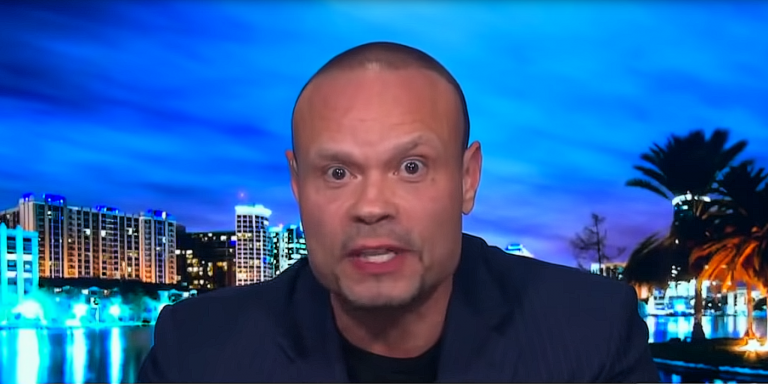
(Luis Cornelio, Headline USA) The new FBI deputy director said the bureau will reopen several high-profile investigations the Biden administration had neglected in what critics say was a bid to shield itself from scrutiny.
The cases cover the leak of the Supreme Court’s draft Dobbs opinion, the discovery of cocaine in the Biden White House and the Jan. 6 pipe bomb.
FBI Deputy Director Dan Bongino wrote on X Monday that “shortly after swearing in, the Director and I evaluated a number of cases of potential public corruption that, understandably, have garnered public interest.”
He said that FBI leadership decided to “either re-open, or push additional resources and investigative attention, to these cases.”
He added, “I receive requested briefings on these cases weekly and we are making progress. If you have any investigative tips on these matters that may assist us then please contact the FBI.”
Thanks for following this account and allowing us to update you about what we’re doing at your FBI. A few updates:
-The Director and I will have most of our incoming reform teams in place by next week. The hiring process can take a little bit of time, but we are approaching that…
These reopened cases come amid widespread criticism of the Biden administration, particularly as they failed to deliver decisive answers on key controversies.
On Jan. 6, 2021, law enforcement found two pipe bombs near the Republican and Democratic national headquarters, where then-Vice President-elect Kamala Harris had been earlier in the day. Secret Service inexplicably missed one of the bombs while sweeping the DNC ahead of Harris’s visit.
The FBI had a suspect identified within days, but never made any arrests. A top FBI official later said that a cell phone company provided “corrupt” data that could have identified the bomber, but the company has denied that allegation.
Over a year later, in May 2022, Politico published a leaked draft opinion of Supreme Court Justice Samuel Alito overturning Roe v. Wade and Planned Parenthood v. Casey, but investigations never identified the leaker.
And in 2023, Secret Service agents found cocaine in the White House yet never determined who brought it in.
(Luis Cornelio, Headline USA) David Hogg, the influencer-turned-DNC co-chair, and former Biden aide Deterrian Jones were caught on hidden camera confessing that Jill Biden’s chief of staff, Anthony Bernal, may have been the real boss at the Biden White House.
The interview, conducted covertly and released Wednesday by Project Veritas, features Hogg and Jones saying that Bernal “wielded an enormous amount of power,” nearly like a “Wizard of Oz-type figure.”
BREAKING: Undercover Meeting with DNC Leader @davidhogg111 Reveals who REALLY ran the Biden White House
“He wielded an enormous amount of power… I can’t stress to you enough how much power he had at the White House.”
Asked about corruption at the DNC, Hogg appeared to point to the Biden cabinet. “The bigger issue was like the inner circle that was around Biden. That’s it,” he said. “Like, Jill Biden’s chief of staff had an enormous amount of power.”
“Jill Biden?” the reporter asked.
“Jill Biden’s chief of staff,” Hogg reiterated.
Jones, who served as an aide at the Office of Digital Strategy at the White House, said that Bernal’s real power was “an open secret,” adding, “I would avoid him. He was scary.”
After Jones identified Bernal by name, the reporter admitted he’d never heard of him.
“Exactly,” Jones replied.
Pressed for details, he continued: “He’s just a shadowy, Wizard of Oz-type figure. That’s what made him so… I knew how he looked, but the general public wouldn’t know how this man looked. But he wielded an enormous amount of power. And I can’t stress to you how much power he had at the White House.”
Project Veritas released the video just days after Jake Tapper’s bombshell book confirmed what conservative outlets like Headline USA had warned for years: Biden wasn’t really in charge.
Project Veritas says this video is only part one of its series on unelected power in the Biden White House.
Tapper’s Original Sin allegedly contains a quote from a Biden cabinet official saying that the presidency consisted of a board, with Biden being just a board member.
“Five people were running the country,” the cabinet official said. “And Joe Biden was at best a senior member of the board.”
(Peter C. Earle, Money Metals News Service) In a remarkable feat of modern physics, scientists at the Large Hadron Collider have managed to recreate one of humanity’s oldest fantasies: turning lead into gold.
By smashing lead atoms together at near-light speeds, the resulting collisions generate immense heat and energy — conditions so extreme that they momentarily produce a flurry of exotic particles and even atoms with the same number of protons as gold.
Could it be that the alchemists’ long-elusive dream — transmuting the worthless into the sublime — has at last been realized?
And not in cluttered stone laboratories thick with incense and delusion, but in the sleek, humming vacuum tubes of a particle collider hidden miles under the Swiss Alps?
But there’s a catch: these gold-like nuclei exist for only the tiniest sliver of time — less than a millionth of a second — before they decay or transform into something else. They don’t last long enough to form stable atoms, much less shiny gold bars.
That’s because what’s being created in these collisions isn’t ordinary, stable gold. Instead, these are unstable isotopes — nuclei that may contain 79 protons (which defines gold) but often the wrong number of neutrons, or too much internal energy to hold themselves together.
Lacking the necessary stability and with no time to capture electrons and form full atoms, these proto-gold particles quickly disintegrate into other elements or radiation. It’s an awe-inspiring display of physics at the edge of possibility, but it’s a far cry from the practical transformation of lead into gold dreamed of by ancient alchemists.
But what if that limitation could somehow be overcome?
What if science unlocked a way to create gold that didn’t vanish — gold that was stable, persistent, and reproducible?
Thousands of years of mystical yearning, from Egyptian priests to Renaissance alchemists, might suddenly be realized in a laboratory.
Let’s conduct a gedankenexperiment — a thought experiment — to explore what might happen if the ancient dream finally came true.
The Physical Limitations
The first step in our thought experiment must be a sober look at the costs and logistics of artificial gold creation.
Producing an ounce of gold through nuclear transmutation — whether in particle accelerators or hypothetical future reactors — would currently require astronomical energy input. High-speed collisions between heavy nuclei demand immense power, cryogenic cooling systems, rare materials, and highly specialized infrastructure.
Even if science finds a way to stabilize the gold nuclei created in such collisions, the process remains incredibly inefficient: billions of collisions might yield only a few atoms of usable gold.
Time is another factor — each collision and its byproducts must be precisely controlled and monitored, which means even producing milligrams of gold could take days or weeks under constant operation.
In contrast, modern gold mining — while environmentally and socially fraught — is relatively cheap per ounce when spread over large-scale operations.
Open-pit mines and chemical leaching processes can yield ounces of gold at a cost ranging from hundreds to low thousands of dollars, depending on geology and location. Artificial synthesis, by comparison, could run into the tens of millions of dollars per ounce at current technology levels.
Additionally, there are safety considerations: working with high-energy particle beams, radioactive decay products, and precision instrumentation carries serious physical and radiological risks.
Before the fantasy of lab-made gold can be treated as a practical alternative to mining, these profound differences in cost, time, energy, and danger must be reconciled — or radically improved.
A critical challenge in our thought experiment is scalability. Even if stable gold could be produced artificially, the infrastructure needed to do so at meaningful volumes would be staggering.
Unlike mining operations — which have evolved over centuries to exploit rich deposits efficiently — nuclear synthesis requires highly specialized facilities, vast amounts of energy, and delicate precision.
Producing even a few ounces would likely involve multiple synchronized particle accelerators or advanced reactors, none of which currently exist for that purpose, and whose construction and maintenance would carry prohibitive costs.
Equally important is the issue of purity and isotopic composition.
Naturally occurring gold is made almost entirely of one stable isotope, Au-197, prized for its inertness and consistency. Lab-synthesized gold, on the other hand, might contain unstable isotopes or trace levels of radiation, making it unsuitable for use in jewelry, electronics, or central bank reserves without extensive and expensive purification.
If artificial gold couldn’t meet the same metallurgical standards as mined gold, it would remain a scientific novelty rather than an economic competitor.
Taken together, these tradeoffs suggest that while artificial gold creation might be scientifically fascinating, it is currently far from commercially viable. The promise of alchemical transformation still faces massive practical, technical, and economic barriers before it could rival — or even supplement — the ancient practice of pulling gold from the earth.
Clues from the Past
With those parameters in place, let’s now turn our attention to historical analogies that might provide a template for this sort of change. There are a few past examples where commodities once considered precious, strategic, or culturally essential became suddenly abundant, obsolete, or economically irrelevant due to scientific or technological breakthroughs.
These cases help build a mental model for the potential disruption of gold — but they also come with limitations. Most lacked the deep monetary, psychological, and geopolitical entrenchment that gold possesses today.
Whale Oil → Kerosene & Petroleum
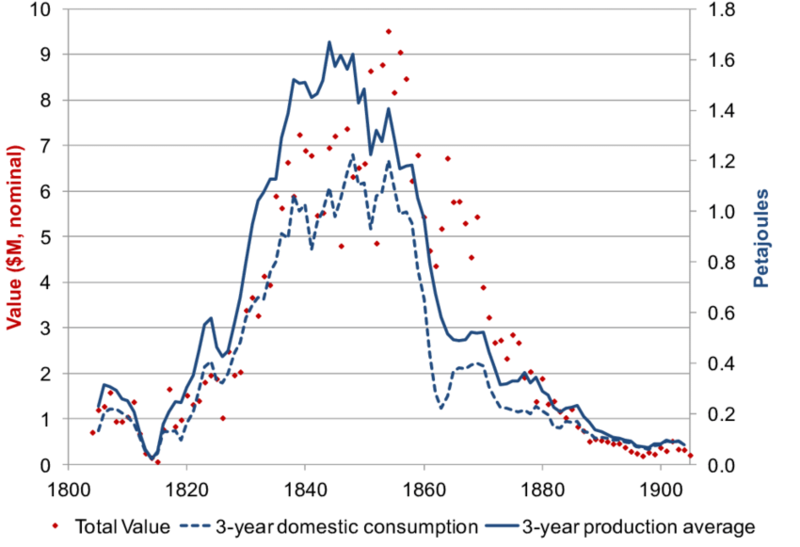
In the 18th and early 19th centuries, whale oil was a prized commodity, used primarily for lighting. Entire coastal economies, particularly in New England, depended on the dangerous and labor-intensive whaling industry. This changed rapidly with the invention of kerosene and the discovery of petroleum in Pennsylvania in 1859.
These alternatives were cheaper, more scalable, and didn’t rely on dwindling whale populations. As demand plummeted, the whaling industry collapsed, leading to economic decline in towns that had thrived on maritime oil.
Meanwhile, petroleum-rich regions saw a surge in economic activity, and artificial lighting became vastly more accessible, democratizing productivity after dark.
Natural rubber was once a strategic resource, essential to industrialization and modern warfare. It came almost exclusively from Amazonian and Southeast Asian plantations, giving colonial powers immense leverage.
During World War II, synthetic rubber was developed using petrochemicals to meet military demands when access to natural rubber was cut off.
Postwar, synthetic rubber production continued to expand, gradually displacing natural rubber in many uses.
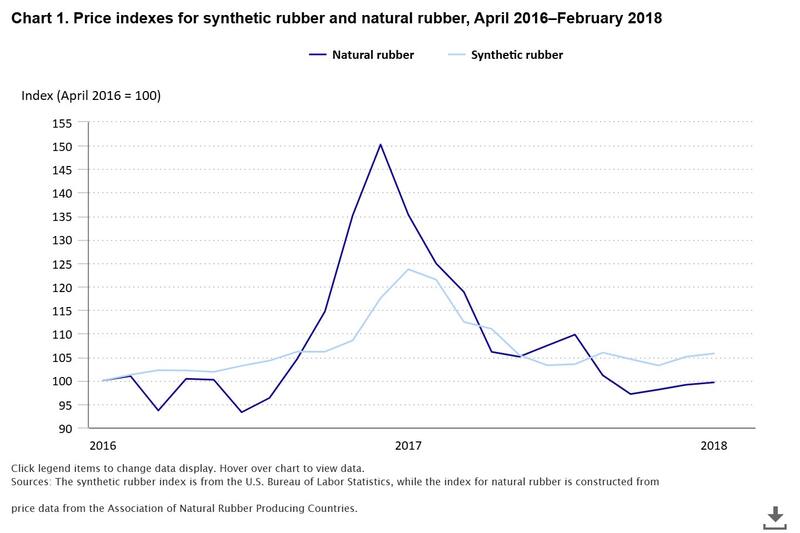
While not rendered obsolete, natural rubber lost its monopoly and strategic cachet. Its pricing and geopolitical significance diminished, replaced by flexible global production chains centered around chemistry, not trees.
Both, however, are still in use, with the price of synthetic rubber more closely correlated with world oil prices than the natural variety.
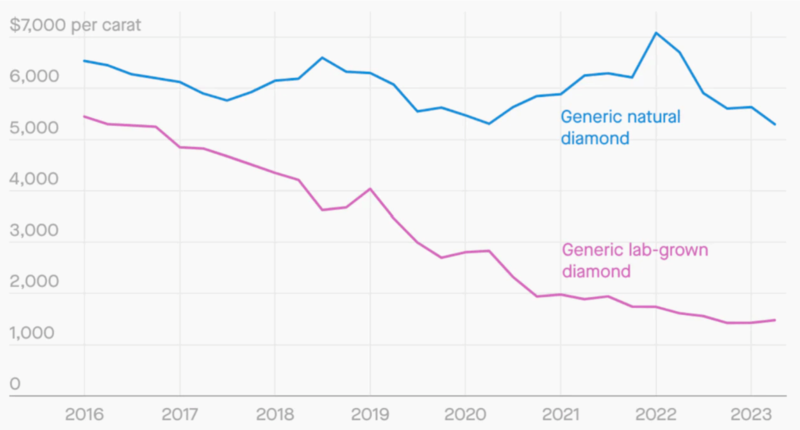
Though diamonds were never a standardized monetary asset like gold, they carried immense cultural, emotional, and sometimes financial weight. The commercialization of lab-grown diamonds through HPHT and CVD processes has led to a sharp divergence in price: lab-created stones have dropped 60–90% in value since 2016.
Traditional players like De Beers initially resisted but now sell lab diamonds at lower prices to preserve the premium of natural stones.
Gen Z consumers increasingly favor lab-grown options for their affordability and ethical advantages, undermining the mystique of “real” diamonds.
Industrially, lab-grown diamonds dominate — over 99% of the market — due to cost and versatility. As a result, investment demand has nearly vanished, and resale value is highly uncertain. In contrast to gold, diamonds had no universal standard or role in reserves, but their fate suggests that once scarcity is replicable, long-term value erodes — especially if emotional or cultural ties are weak.
Let’s assume all the economic hurdles are overcome — and yes, pun gently set aside, atom-smashing gold pans out: Let’s further suppose that our historical paradigms are generally representative.
What would some of the knock-on effects be if stable, abundant lab-made gold became a reality?
Short-Term Implications (0–6 months)
If stable, artificially created gold were suddenly viable, the immediate impact would be financial chaos. Gold prices would collapse almost overnight — possibly falling 50 to 80 percent — as investors and institutions dumped physical holdings and gold-backed ETFs in a panic.
The psychological shock alone would trigger a rush for alternative stores of value, briefly sending silver, platinum, and palladium soaring.
However, those rallies would be volatile and short-lived: if gold can be synthesized in a hadron collider, then silver, platinum, and palladium — each just a handful of protons and neutrons away in atomic mass — are well within striking distance in the nuclear transmutation landscape.
Exchange rates would shift as well: gold-exporting countries like Ghana and Russia would see their currencies depreciate sharply, while commodities priced in gold would become erratic.
Cryptocurrencies — particularly Bitcoin — might rally as narratives of engineered scarcity and digital permanence gained new urgency.
Central banks with large gold reserves would suffer paper losses and balance sheet distress, while economies reliant on gold exports would experience swift and painful current account shocks.
Medium-Term Implications (6 months–2 years)
Within a year or two, the gold price would stabilize at a new, dramatically lower level — likely just above the marginal cost of artificial production unless its output were somehow tightly regulated. Gold’s historic monetary premium would vanish, and it would lose much of its investment allure.
Meanwhile, industrial and luxury demand would shift: if synthetic gold proved unsuitable for high-end jewelry or electronics, demand for purer natural metals like platinum or rhodium might recover.
The broader monetary landscape would begin to change, with central banks rethinking reserve strategies and looking beyond gold for hedging purposes.
Assets like real estate, art, or crypto would likely absorb capital formerly allocated to gold.
The mining sector would be reshaped: gold mining operations would collapse, equities in major gold producers would plummet, and investment would flood into other extractive industries with growth potential, such as lithium and rare earths.
Long-Term Implications (2 years and beyond)
Over time, gold would be reclassified as an industrial or luxury commodity rather than a monetary asset. Like copper or nickel, it would be valued for its physical properties, but no longer serve as a hedge or store of value.
Its role in central bank vaults would fade, replaced by alternative assets — potentially crypto, digital commodities, or even algorithmically scarce instruments designed for monetary roles.
Countries that had hoarded gold, like China or Germany, would lose strategic leverage, while those pioneering and controlling synthetic gold technologies could rapidly see geopolitical ascendance.
More broadly, the event would force a philosophical and economic reckoning: scarcity, once tied to the natural world, would become a question of code, governance, and confidence.
Trust in tangible wealth would erode, prompting a shift toward engineered forms of scarcity, permanently altering how value and stability are perceived in global finance.
Other Effects Over Varying Time Frames
Beyond financial markets and central bank policies, the artificial creation of stable gold would ripple outward into nearly every corner of the global economic and geopolitical order. Gold-backed monetary frameworks — including symbolic or partially collateralized systems promoted by BRICS or envisioned in alternative trade settlements — would unravel overnight.
Even proposals for gold-linked stablecoins or a new Bretton Woods-style regime would become instantly obsolete, stripping credibility from monetary systems premised on natural scarcity.
The psychological blow would be just as profound: gold has long symbolized permanence and intrinsic value. If it suddenly became synthetic and plentiful, it could shake confidence not only in gold but in other physical stores of value, prompting a cultural pivot toward digital assets, intellectual capital, or algorithmically enforced scarcity.
The political and societal consequences would be no less destabilizing. Many developing nations depend heavily on gold exports to fund government budgets and maintain social cohesion. A collapse in gold’s value could drive unemployment, fiscal crises, and even regime change in politically fragile states.
Meanwhile, cultural norms would be disrupted: in countries like India, where gold is deeply tied to weddings, dowries, and social status, abundant synthetic gold could democratize jewelry access but also undermine centuries-old traditions.
At the same time, nations that control or lead in artificial gold production would gain a new kind of strategic leverage — akin to mastering uranium enrichment or dominating semiconductor supply chains.
Industries that revolve around gold’s physicality — vaulting, bullion transport, and gold-backed lending — would face obsolescence or radical transformation.
And inevitably, such a paradigm shift would provoke a wave of conspiracy theories and populist backlash, with claims that global elites orchestrated the disruption to destroy sovereignty, wealth preservation, or traditional monetary values.
Although we’ve taken a small step closer, true alchemy — whether in the historical sense of chemical transmutation or the Star Trek-style replicator fantasy — is still a long way off. Yet as history shows, when scarcity collapses, so too can the systems built upon it — economic, political, and cultural alike.
From whale oil to diamonds, once-prized commodities have been dethroned by technological advances, often with far-reaching consequences.
If gold is next, the ripple effects could redefine our concepts of value, trust, and stability.
Whether this transformation brings prosperity or disruption will depend not just on science, but on how wisely we respond.
As with all Schumpeterian creative destruction, disruption at the elemental level in the world of commodities will bring both upheaval and opportunity.
Peter C. Earle is an economist who joined AIER in 2018. Prior to that he spent over 20 years as a trader and analyst at a number of securities firms and hedge funds in the New York metropolitan area. His research focuses on financial markets, monetary policy, and problems in economic measurement. He has been quoted by the Wall Street Journal, Bloomberg, Reuters, CNBC, Grant’s Interest Rate Observer, NPR, and in numerous other media outlets and publications. Pete holds an MA in Applied Economics from American University, an MBA (Finance), and a BS in Engineering from the United States Military Academy at West Point.