Trump Pardons Rapper NBA Youngboy, Who was Sentenced for Gun-Related Charges

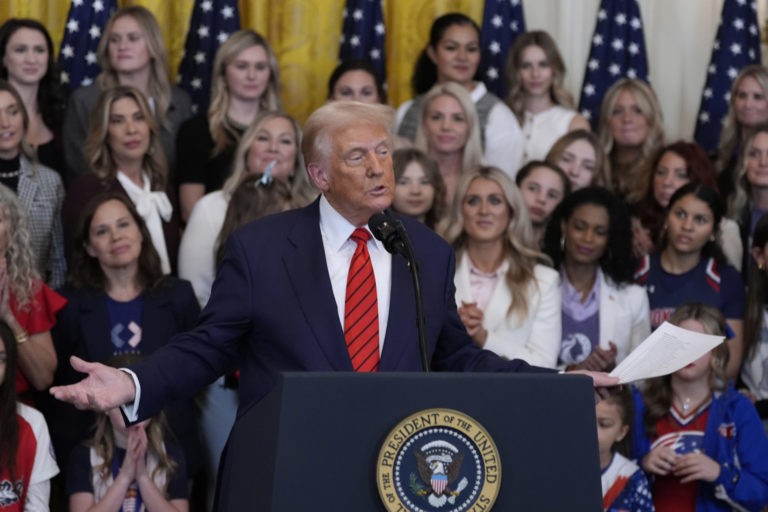
(Headline USA) Louisiana rap artist NBA YoungBoy, who was sentenced to just under two years in prison on gun-related charges, was pardoned by President Donald Trump on Wednesday.

The rapper is among a number of high-profile people Trump pardoned this week, including a former New York congressman, a labor union leader and a reality TV star couple.

“I want to thank President Trump for granting me a pardon and giving me the opportunity to keep building — as a man, as a father, and as an artist,” NBA YoungBoy, whose real name is Kentrell Gaulden, said in a statement posted online.

Gaulden’s pardon was confirmed Wednesday evening by two White House officials who spoke on condition of anonymity to detail actions that had not yet been formally made public.

In 2024, Gaulden was sentenced by a federal judge in Utah after he acknowledged possessing weapons despite being a convicted felon. 

He reached an agreement that resolved Utah state charges against him and settled two sets of federal charges against him — one carried a 23-month sentence and the other ordered five years of probation and a $200,000 fine.

Gaulden was released from federal prison in March and sent to home confinement after receiving credit for time served, according to his attorney Drew Findling. With home confinement finished last month, the pardon means he won’t have to follow the terms of his probation, including drug testing, he said.

Findling said he was thrilled Gaulden’s legal saga had reached an end.

“From Louisiana to Utah the battles have been endless, and now he can concentrate on first and foremost his family, and then, of course, his amazing career,” Findling said in a statement.

The rapper has acknowledged that he possessed a Glock 21 .45-caliber pistol and a Masterpiece Arms MPA30T 9mm handgun while filming a rap video in Baton Rouge. He has also said he had a Sig Sauer 9mm semi-automatic pistol at his home in Huntsville, Utah. He had agreed to give up the guns.

Gaulden had previously been convicted in Louisiana of aggravated assault with a firearm, according to his statement released in advance of the plea agreement.

He had also pleaded guilty in November to his role in a prescription drug fraud ring that operated out of his home in Utah. He had to pay a $25,000 fine and was given no prison time.

The rapper, whose stage moniker stands for “Never Broke Again,” is preparing to set out on a major U.S. tour in September.

He has achieved four No. 1 albums on the Billboard 200 and one Top 10 hit on the Billboard Hot 100. His music includes “38 Baby,” “Outside Today” and Tyler, The Creator’s song, “Wusyaname,” on which he is featured with Ty Dolla $ign. That collaboration earned them a Grammy nomination in 2022 for Best Melodic Rap Performance.

Adapted from reporting by the Associated Press.
Border Patrol’s Increased Ops Nets Record Arrests in Maine

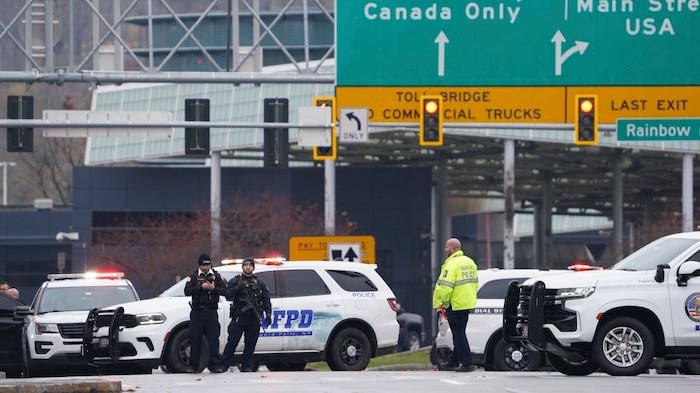
(Chris Wade, The Center Square) The number of arrests by Border Patrol in Maine reached its highest level in more than two decades last month, according to newly released federal immigration data.

The U.S. Customs and Border Protection said 113 “illegal aliens” from 16 countries were arrested in Maine by agents in April, the highest in a single month in nearly 24 years. The Houlton Sector coordinated air transport with U.S. Immigration and Customs Enforcement on Sunday to transport 29 apprehended subjects to other parts of the country for further processing, the agency said.

The agency said the uptick in apprehensions were not the result of more people illegally crossing the border into Maine, but stepped up enforcement operations across the largely rural state.

“If you attempt to cross the border illegally, you will be apprehended,” Maine’s Houlton Sector Acting Chief Patrol Agent Craig Shepley said in a statement. “If you are present in the United States without a legal status, you will be detained and removed in accordance with all applicable immigration laws.”

The Houlton Sector coordinated air transport with U.S. Immigration and Customs Enforcement to transport apprehended subjects to other parts of the country for further processing, the agency said.

Shepley said illegal entries from Canada along the Maine border are decreasing, which he attributed to stronger law enforcement partnerships and a “back-to-basics approach balancing personnel, technology” and increased infrastructure to secure the northern border.

The uptick in arrests along the northern border come as encounters by Border Patrol agents on the southwest border plummeted by 93% in April, compared to a year ago. That included just 1,342 arrests in the Rio Grande Valley of South Texas – an 84% drop from the same month last year, according to the federal agency.

Maine lawmakers are considering a pair of bills that would limit cooperation with the Trump administration’s immigration crackdowns, but the move is opposed by state and county law enforcement officials who say it would force them to violate federal law. This is the seventh consecutive year Maine has had a Democratic trifecta in state government, meaning Democrats in the office of governor and majorities in the Senate and House of Representatives.

Backers of the proposals say allowing local police to cooperate with ICE actions makes communities less safe because it dissuades people from reporting crime for fear of deportation. They say it wouldn’t restrict ICE from apprehending dangerous criminals in the state.

Law enforcement officials are urging lawmakers to reject the plans, arguing they would hamper communication between local, county, and state law enforcement and our federal immigration officials.

Maine isn’t considered a “sanctuary” state, such as by the Center for Immigration Studies. Several communities have local laws aimed at preventing local police from acting as immigration agents or enforcing federal immigration laws, which are both civil and criminal in nature.

The Wells Police Department in York County has signed a memorandum of understanding with the Department of Homeland Security to join the 287(g) program, allowing local police to arrest and detain immigration suspects sought by federal immigration officials.

SCOOP: Alleged Trump Shooter’s College Emails Revealed, Including the Last One He Ever Sent

(Ken Silva, Headline USA) Headline USA has obtained hundreds of emails that belonged to Thomas Crooks the man accused of nearly assassinating Donald Trump last July in Butler, Pennsylvania. Read them here for the first time.

CBS News first reported last Friday that it obtained the emails and other records. However, the news outlet’s article only included a screenshot of a single email from Jan. 31, 2024, when Crooks inquired about two gallons of nitromethane he ordered two weeks earlier from the company Hyperfuels. That fuel may have been part of his plot to build the explosives allegedly found in his vehicle after the July 13 shooting.

What CBS didn’t release, among other emails, was Hyperfuel’s response: “Hello your order will be shipped out today,” the company responded hours later.

CBS also didn’t release what appears to be the final email Crooks sent on his college account. On June 14, he asked about the status of his diploma—a bizarre request for someone allegedly plotting to almost certainly die or spend life in prison by attempting to assassinate Trump within a month.

“Hello, I recently graduated from CCAC this previous Spring semester. I have received confirmation that I received my Degree however I have not yet had the Diploma mailed to my address. When can I expect the diploma to be mailed,” Crooks asked. “I have verified that my address is correct on my graduation application. Thank you.”

Other emails of interest, which CBS didn’t release, include Crooks telling his teacher that he wouldn’t be in class on Jan. 22, 2024, because he had jury duty.

“I do expect to be in class on Tuesday and Wednesday, though this could change,” Crooks added. “I will keep you informed on any changes. Have a great weekend.”

He also wrote an email in January 2024 about his favorite season, fall, saying that “summer is too hot and it is often uncomfortable to be outside for long.” CBS didn’t release this email, either, though the outlet did report on its contents.

Headline USA is still reviewing the emails, which can be downloaded here.

Ken Silva is the editor of Headline USA. Follow him at x.com/jd_cashless.

Netanyahu Threatening To Upend US-Iran Talks By Attacking Iran

(Dave DeCamp, Antiwar.com) The New York Times reported on Wednesday that Israeli Prime Minister Benjamin Netanyahu is threatening to upend negotiations between the US and Iran by potentially attacking Iranian nuclear facilities.

The report said that the threat from Israel led to a recent tense phone call between Netanyahu and President Trump and a series of meetings between senior US and Israeli officials in recent days.

Trump was asked by reporters on Wednesday if he warned Netanyahu against attacking Iran during a phone call last week, and said, “Well, I’d like to be honest. Yes, I did.”

“It’s not a warning. I said I don’t think it’s appropriate. We were having very good discussions with Iran, and I don’t think it’s appropriate right now,” the president said.

“If we can settle it with a very strong document, inspections and no trust – I don’t trust anybody – so no trust,” Trump said. He added that he believed the US and Iran are “very close to a solution” but warned that it could “change at any moment.”

Trump has been threatening to bomb Iran if a deal isn’t reached, even though US intelligence agencies have recently reaffirmed there’s no evidence Iran is building a nuclear weapon.

The US has been demanding that Iran eliminate its nuclear enrichment program altogether as part of any deal, a condition that’s a non-starter for Tehran. While the two sides appear to be far apart, reports suggest that an interim deal could be reached to buy time for further negotiations to reach a long-term agreement.

Netanyahu has also been demanding that any deal must dismantle Iran’s nuclear enrichment program, and it’s unlikely he would be happy with any sort of interim agreement. The Times report said Israel could launch an attack on Iran on its own, even though it’s unlikely Israel could do any significant damage to Iranian nuclear facilities without US support.

US officials are concerned that Israel could strike Iran with little notice, and a unilateral attack could still get the US involved. The Times report said that Israeli officials “close to Mr. Netanyahu believe the US would have no choice but to assist Israel militarily if Iran counterattacked.”

There are signs that the US and Israel could be considering a covert attack on Iranian nuclear facilities. CIA Director John Ratcliffe recently visited Israel to discuss covert options, according to the report. Israel has a history of conducting attacks on Iranian soil, including assassinations and sabotage of nuclear facilities.

This article originally appeared at Antiwar.com.


Trump Rejects Paramount’s $15M Settlement Offer over Doctored Kamala Interview

(Headline USA) President Donald Trump suffered “mental anguish” from CBS News‘ editing of a “60 Minutes” interview with Democratic opponent Kamala Harris last fall, his lawyers are arguing in court papers.

Trump’s status as a “content creator” was also damaged by attention given to the interview, lawyers said. It was part of their argument opposing CBS parent Paramount Global’s effort to dismiss the president’s $20 billion lawsuit against the company, filed Wednesday in U.S. District Court in Amarillo, Texas

Trump has claimed the editing was done to advantage Harris, which CBS rejects.

Even with the effort to dismiss the case, Paramount is engaged in settlement discussions with Trump. 

Trump, who did not agree to be interviewed by “60 Minutes” during the campaign, has protested editing where Harris is seen giving two different answers to a question by the show’s Bill Whitaker in separate clips aired on “60 Minutes” and “Face the Nation” earlier in the day. CBS said each reply came within Harris’ long-winded answer to Whitaker, but was edited to be more succinct.

Trump’s lawyer, Edward Andrew Paltzik, said that “this led to widespread confusion and mental anguish of consumers, including plaintiffs, regarding a household name of the legacy media apparently deceptively distorting its broadcasts, and then resisting attempts to clear the public record.”

Because they were misled, voters withheld attention from Trump and his Truth Social platform, Paltzik argued.

Trump, described as a “media icon” by his lawyers, was “forced to redirect significant time, money and effort to correcting the public record,” he said.

Paramount and controlling shareholder Shari Redstone are seeking the settlement with Trump, whose administration must approve the company’s proposed merger with Skydance Media. CBS News’ president and CEO, Wendy McMahon, and “60 Minutes” executive producer Bill Owens, who both opposed a settlement, have resigned in recent weeks.

Meanwhile, the Freedom of the Press Foundation, a media advocacy group that says it is a Paramount shareholder, said that it would file a lawsuit in protest if a settlement is reached.

Seth Stern, the foundation’s advocacy director, said a settlement of Trump’s “meritless” lawsuit “may well be a thinly veiled effort to launder bribes through the court system.” 

The Wall Street Journal reported on Thursday that Paramount has offered $15 million to settle but that Trump wants more money — and an apology. A company representative would not comment on the report.

Adapted from reporting by the Associated Press.
FBI Visits Reporter’s Home for Publishing Israeli Embassy Shooter’s Manifesto

(José Niño, Headline USA) The FBI paid a surprise visit to journalist Ken Klippenstein following his release of a controversial manifesto linked to the recent Israeli Embassy shooting in Washington, D.C.

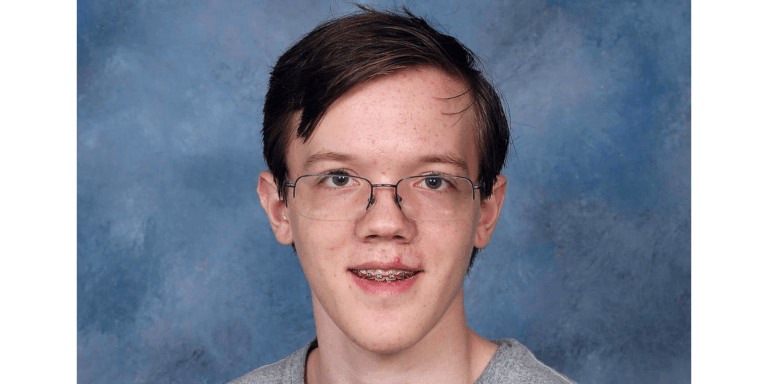
Last Thursday, FBI agents visited Klippenstein at his Wisconsin home after publishing the alleged manifesto of Elias Rodriguez, the suspect in the killing of two Israeli Embassy staffers in Washington, D.C.

The incident follows a similar pattern to an FBI visit in 2024 over Klippenstein’s publication of the JD Vance dossier. 

On Wednesday, Rodriguez, a 30-year-old far-left activist from Chicago, fatally shot Yaron Lischinsky, 30, and Sarah Lynn Milgrim, 26, as they exited an event at the Capital Jewish Museum. 

The couple, both Israeli Embassy employees, were reportedly on the verge of engagement

Rodriguez, who chanted “Free Palestine” during his arrest, left behind a 900-word manifesto justifying his actions as a response to Israel’s military operations in Gaza. 

The document, authored before the attack, claimed Israel had “obliterated the capacity to even continue counting the dead” in Gaza and asserted that “the action will be highly legible and, in some funny way, the only sane thing to do.”  

Klippenstein, known for publishing leaked materials mainstream outlets often avoid, obtained the manifesto through an anonymous source. He verified its authenticity via timestamps and internal consistency before publishing it on his Substack newsletter. 

Two FBI special agents arrived at Klippenstein’s home unannounced, repeatedly stated, “You’re not in trouble,” while pressing him to disclose his sources and whether he had prior knowledge of the attack.”

Klippenstein recalled that the FBI agents asked him:  “We want to know about the timeline: how you knew about the manifesto before anyone else, and if you were in touch with the shooter beforehand.”

The FBI later emailed Klippenstein’s lawyer Beth Bourdon 11 questions, including:  

  1. When did he first encounter the manifesto?
  2. How did he first encounter the manifesto?
  3. Did he receive any instruction from the source of the manifesto about how to disseminate it?
  4. Does the system or platform from which he received the manifesto capture metadata concerning the transfer of the manifesto?
  5. Did he make any edits or changes to the manifesto?
  6. Was this his first and only interaction with whomever submitted the manifesto?
  7. Has anyone else submitted any other documentation regarding this incident?
  8. Did his receipt of the manifesto predate the attack?
  9. Where else, if anywhere, did he disseminate the manifesto?
  10. Does he have any knowledge of where else the manifesto was published or shared?
  11. Why does he think he was the one who received the manifesto?

Klippenstein interpreted several questions as implying a conspiracy theory linking him to Rodriguez. 

The FBI’s tactics align with the Trump administration’s broader framing of dissent as terrorism, Klippenstein argued. Since 2024, federal officials have repeatedly warned of “shadowy, unseen forces” allegedly funding protests, Tesla vandalism, and college demonstrations. “That tone from the top, labeling seemingly everything terrorism, tells personnel that the gloves are off and more aggressive work in the field is now permissible,” Klippenstein wrote.  

The case highlights vulnerabilities for transparency-focused journalists. Klippenstein, who left outlets like “The Intercept” and “The Young Turks” to pursue independent reporting, has built a reputation for publishing documents others withhold—from Pentagon pandemic warnings to DHS disinformation strategies. Each disclosure, however, risks retaliation.  

As of now, Rodriguez remains in custody, facing two counts of first-degree murder. 

The outcome of this confrontation may set important precedents for how journalists and federal agencies interact in the years ahead.

José Niño is the deputy editor of Headline USA. Follow him at x.com/JoseAlNino 

Florida Governor Charts Course to End Sales Taxes on Gold and Silver

(Sound Money Defense League, Money Metals News Service) For the second time in recent years, new sound money legislation has become law in Florida.

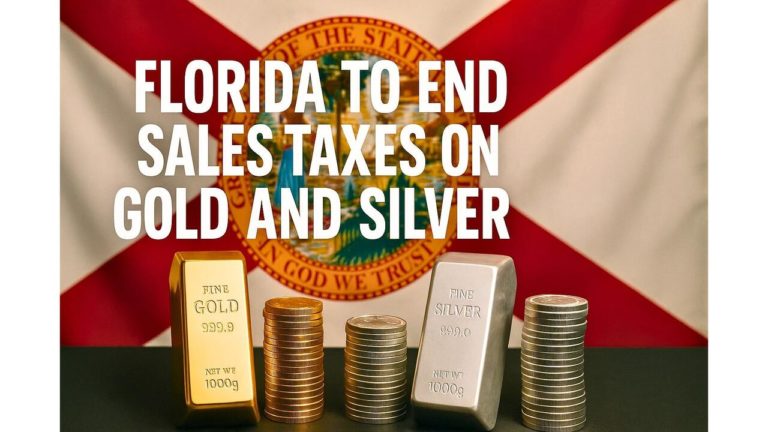
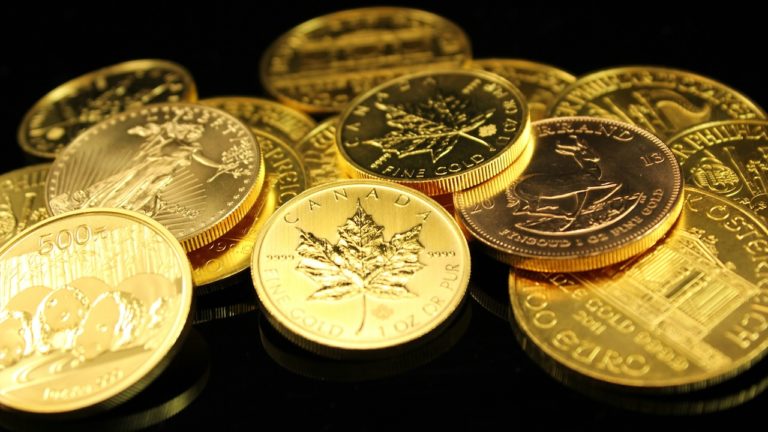
Governor Ron DeSantis signed H 999 this week, paving the way for the elimination of the Sunshine State’s remaining sales taxes on purchases of gold and silver coins, bars, and rounds.

At present, Florida imposes sales taxes on smaller purchases involving most forms of physical gold and silver. If a purchase is above $500, it is exempt from sales taxes. On the other hand, purchases under $500 (unless they are U.S. minted coins) are subject to at least 7% in state and local sales taxes — a regressive tax policy disproportionately harming Florida’s small-time savers and investors.

Taxation on precious metals is the greatest impediment to citizens adopting their own personal gold standard. As of today, though, 46 states have either partially or fully exempted gold and silver purchases from sales taxes — and 14 states have exempted gold and silver sales from income tax.

Before the new sales tax exemption can become official in Florida, however, government bureaucrats must promulgate new regulations — and those regulations must be approved by the legislature before July 1, 2026. Failing that, H 999 will be automatically repealed.

H 999 also affirms that gold or silver coin and bullion should be considered legal tender.

This concept is consistent with Article 1 Section 10 of the U.S. Constitution, which reads: “No state shall…coin Money; emit Bills of Credit; [or] make any Thing but gold and silver Coin a Tender in Payment of Debts…”

This is not the first time Governor Ron DeSantis has signed a sound money bill. In 2023, he signed H 737, which passed the legislation with the backing of the Sound Money Defense League and Money Metals Exchange.

H 737 eliminated onerous regulations on precious metals dealers in Florida, including mandates for long holding periods on acquired inventory and requirements to make burdensome, privacy-destroying government filings.

America’s 54-year experiment in a purely fiat currency system has gone poorly. Without backing of gold or silver, the Federal Reserve note “dollar” has continuously declined in purchasing power. The nation has faced a series of Fed-created booms caused by interest-rate manipulation, followed by busts as well as an explosive growth in government spending and debt.

When savers, wage earners, and investors seek ways to protect their savings from the ravages of inflation, they often choose precious metals over fiat currency because precious metals have preserved purchasing power over time.

By paving the way for a full Florida sales tax exemption on purchases of precious metals and a formal reaffirmation that gold and silver are money, H 999 could ultimately provide both functional and symbolic support to Florida citizens who choose to protect their savings using the monetary metals.


Sound Money Defense League is a non-partisan public policy group working nationally since 2014 to restore gold and silver as sound money – America’s constitutional money. The League, in partnership with Money Metals, also publishes the annual Sound Money Index.

FBI Denies Request for Records on Trump Shooting, Even Though Director Says Case is Closed

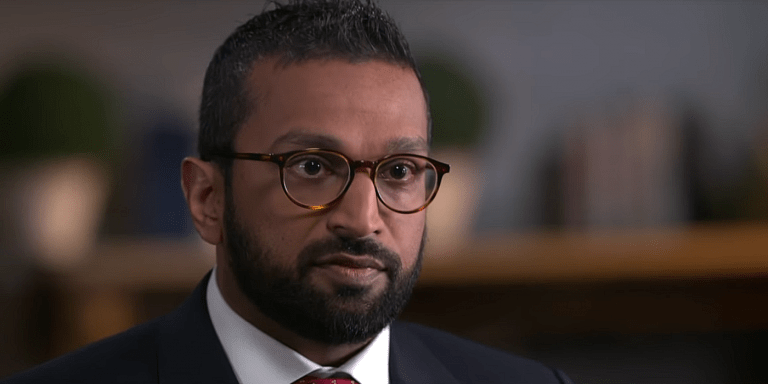
(Ken Silva, Headline USA) Last week, FBI Director Kash Patel told Fox News that the bureau’s investigation into the July 13 Trump assassination attempt was closed.

“Two of the investigations are obviously closed because the individuals are dead,” Patel said, answering Maria Bartiromo’s question about the Butler, Pennsylvania, and Palm Beach, Florida, incidents. FBI Deputy Director Dan Bongino further told Bartiromo that there’s no “there there” when it comes to conspiracies surrounding the attempts—meaning that the bureau thinks would-be assassins Thomas Crooks and Ryan Routh both acted alone.

Upon hearing Patel’s announcement, Headline USA filed a Freedom of Information Act request for all of the 1,000-plus interview reports the FBI created while investigating the Butler case. But on Thursday, this publication was denied that request on the grounds that the Butler case is still open—an assertion that directly contradicts what Patel told Fox News.

“The material you requested is located in an investigative file which is exempt from disclosure,” the FBI said, citing a FOIA provision that allows the bureau to withhold investigatory records.

“The records responsive to your request are law enforcement records; there is a pending or prospective law enforcement proceeding relevant to these responsive records, and release of the information could reasonably be expected to interfere with enforcement proceedings,” the FBI added. “Therefore, your request is being administratively closed.”

The FBI’s denial comes nearly a year after a federal grand jury was empaneled to investigate Butler. At the time, it was thought by many that Crooks’s parents might be facing charges. Explosives components were found in the gunman’s bedroom, and investigators questioned whether the parents knew that the son was making bombs.

It’s unknown whether the grand jury investigation is still open. But Patel further downplayed the notion that there’s more to know about the Butler case in yet another Fox News appearance with Bret Baier.

“I don’t know that there’s more to know, but you’re going to know everything we know,” Patel told Baier on “Special Report.”

According to last December’s House Task Force report, the FBI generated over 1,000, witness interview reports—known as 302s. Along with denying Headline USA’s FOIA for these reports, the bureau has also reportedly provided only 81 of them to Congress.

Ken Silva is the editor of Headline USA. Follow him at x.com/jd_cashless.

Economist Thorsten Polliet: Gold Is an Asset Investors Need to Own

(Mike Maharrey, Money Metals News Service) Trade policy and tariff news are driving the markets daily, but economist Thorsten Polliet says there are deeper economic risks in play that investors should consider.

“In this environment, as risks build, gold is an asset investors need to own.”

Polliet serves as an Honorary Professor of Economics at the University of Bayreuth and publisher of the Boom & Bust Report. He argues that the effects of decades of easy money are still playing out in the economy. It has incentivized reckless spending and an upward spiral of debt, along with waves of price inflation.

This has put the Federal Reserve between a rock and a hard place. Polliet notes that if the central bank holds interest rates steady to keep inflation at bay, it risks plunging the economy into a recession. If the Fed cuts rates in an effort to ease borrower pain, it elevates inflation risks.

Polliet compared it to a circus clown juggling balls.

“He starts with two, then someone throws him another. He manages that, and then another. Maybe he can juggle six balls, but at some point, one will come that he can’t handle—and everything will come crashing down.”

Polliet said investors need to hold gold to hedge against risk in this environment.

Since setting a record of $3,500 per ounce last month, gold has seen some selling pressure in recent weeks. Positive news on the trade war front has boosted investor risk sentiment.

Polliet noted the possibility of further price consolidation but emphasized that the upside potential remains firmly intact, and any dip in the gold price should be viewed as a buying opportunity. He specifically noted that central bank gold buying should continue to support the price and will likely keep a firm floor at $3,000 an ounce.

Central banks have been gobbling up gold in recent months as de-dollarization has accelerated. The weaponization of the dollar as a foreign policy tool and the weaponization of tariffs in trade negotiations have made many countries wary of holding dollar-denominated assets.

Official central bank gold demand topped 1,000 tonnes for the third straight year in 2024. To put that into perspective, central bank gold reserves increased by an average of just 473 tonnes annually between 2010 and 2021.

The deteriorating fiscal situation in the U.S. has increased wariness about holding U.S. debt. Moody’s recently put the national debt back in the headlines when it lowered the U.S. credit rating. Rising yields and a disappointing 20-year bond auction last week reflect growing investor unease about U.S. government debt.

Some people think the Federal Reserve can intervene with rate cuts and mitigate Uncle Sam’s interest problem. But the fact is, the Fed has little control over the long end of the yield curve. This was apparent when Treasury yields spiked even after the Fed cut rates last year.

The only thing the Fed can do is run quantitative easing (QE). In QE operations, the central bank buys U.S. Treasuries on the open market, creating additional demand. This typically drives yields lower. However, there is a downside. When running QE programs, the Fed buys bonds with money created out of thin air. This is, by definition, inflation.

Polliet noted that there is still plenty of room on the gold bandwagon. Asian investors have been the primary drivers of the recent gold rally, with many Americans still sitting on the sidelines.

“The narrative in this environment is that gold is trending up, and investors have an opportunity to optimize their portfolios to determine how gold could play a role.”


Mike Maharrey is a journalist and market analyst for Money Metals with over a decade of experience in precious metals. He holds a BS in accounting from the University of Kentucky and a BA in journalism from the University of South Florida.

Bank of America Eyeballs $4,000 Gold and $40 Silver

(Mike Maharrey, Money Metals News Service) Bank of America is eyeballing $4,000 gold and $40 silver by the end of the year or early 2026.

Last October, the big bank projected $3,000 in 2025.

BoA analysts said trade-induced geopolitical uncertainty would continue to support the metals, with growing concern about the U.S. government’s fiscal situation possibly catalyzing the next leg up.

“So far, trade disputes have predominantly affected the economy by disrupting supply chains and weakening confidence. Incidentally, the USD has also declined alongside these developments. We still believe that gold could end up being a less risky investment than Treasuries.”

Treasury yields spiked after Moody’s downgraded the U.S. credit rating, indicating investors are becoming more wary of holding U.S. debt.

Bank of America’s head of global commodity and derivatives research, Francisco Branch, told CNBC, gold appears to be correcting right now, but the long-term outlook remains bullish.

“We think longer term, maybe into the second half or into 2026, we’ll breach $4,000 per ounce, but we’re going through a correction because some of the extreme uncertainty that we’ve witnessed in recent months seems to be fading.”

He said this consolidation phase could last “a few months.”

BoA analysts said that to drive gold higher, investment demand will need to increase, with jewelry demand stabilizing.

“To provide some context: investment would need to increase by 18% year-over-year for gold to hit $4,000/oz. That may sound like a lot, but purchases exceeded that tally in 2016 and 2020—twice in the past decade—highlighting that it’s possible.”

To their point, there is plenty of untapped investment potential in the U.S., as American investors have largely remained on the sidelines during the recent bull run while Asian investors have done the heavy lifting.

As for silver, Branch called it “one of the better investments.”

“Remember, silver is half precious, half industrial. The precious aspect of silver has been driving it higher, the industrial side has been taking a back seat, but this will eventually change. Of course, tariffs mean weaker trade conditions, and we had a pretty strong trade window between the fourth quarter of last year and the first quarter of this year, where investors were buying in anticipation of tariffs. Now we have the tariffs, so we’re going to go into a slower period which will last for a quarter or two, and eventually we will see another pickup in industrial activity.”

Industrial demand for silver set a record in 2024, driving the silver market to its fourth straight structural deficit. Industrial demand is expected to remain robust in 2025, despite some headwinds from tariff worries and supply chain disruptions.

Branch noted that silver generally tracks with gold over time, but uncertainty about the trajectory of the global economy is creating headwinds.

“If you are to model silver, the main drivers are of course the price of gold, because silver is largely a precious metal, but also what’s going on with industrial activity. Right now, industrial activity is going to be weaker, so that’s one of the reasons silver has lagged on the large upward lift in gold prices; it’s really that weaker industrial factor we’re seeing today.”

Branch said he thinks the squeeze on industrial demand will be short-lived and that it is strongly supported by growth in the green energy sector — particularly solar power.

“We still expect enormous investment in solar panels and in the electrification of everything, and we think silver plays a critical role. Remember, silver is the best electricity conductor in the world, so it’s going to play a very important role, and we think going forward, once we go back into a more stable industrial activity environment, silver will shine again.”


Mike Maharrey is a journalist and market analyst for Money Metals with over a decade of experience in precious metals. He holds a BS in accounting from the University of Kentucky and a BA in journalism from the University of South Florida.