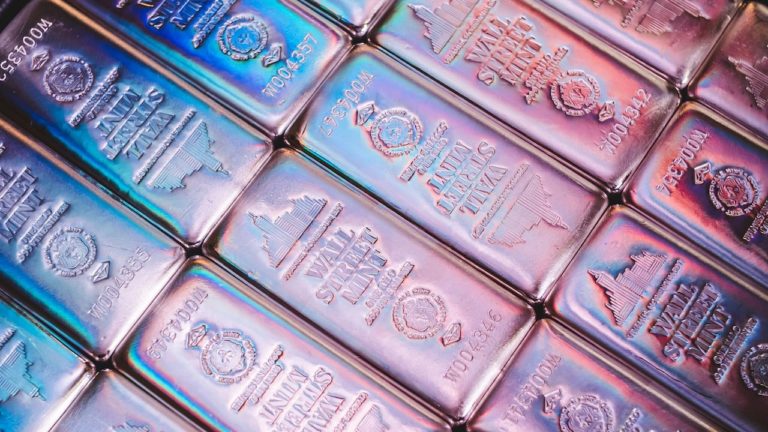
Indians are known for stockpiling gold, but they are increasingly turning to silver as the price has pushed to 14-year highs.
In rupee terms, silver set a record of ₹114,875 per kilogram (around $41/ounce). A silver production shortfall in India has sent the price to a significant premium locally.
In 2024, gold was king, with the price soaring 34 percent in rupee terms as silver charted a 23 percent gain. The script has flipped in recent months, with the local silver price up 21 percent over the last three months. That compares to a 5 percent rise in the gold price through the same period.
Unsurprisingly, Indian investors are hoping to cash in on silver’s bullish run.
Silver has traditionally been the choice for poor, budget-conscious rural consumers, but it has increasingly grabbed the attention of urban investors.
Umesh Agarwal told Reuters he frequently buys gold coins, but he recently purchased his first 1-kilo silver bar.
“Gold’s done pretty well for me over the last couple of years. Now I’m hoping silver follows the same path and gives similar returns.”
Chirag Thakkar heads up one of India’s largest silver importers. He says investor behavior has been different during this recent bull rally.
“Usually, investors cash in when prices hit record highs, offloading coins and bars or pulling out of exchange-traded funds (ETFs). However, this time, even at record highs, people are investing, rather than selling.”
Silver ETFs reported inflows of ₹39.25 billion in Q2. That compares to ₹23.67 billion flowing into gold ETFs. June inflows set a record at ₹20.04 billion.
According to the Silver Institute, retail demand for silver in India rose 7 percent through H1 2025.
Meanwhile, silver imports exploded by 431 percent year-over-year through the first five months of 2025, totaling 544.1 tonnes.
Indian interest in silver isn’t new. It’s just being revived by record prices. Over the last decade, investors have accumulated over 17,500 tons of silver in the form of coins and bars. The country ranks as the world’s largest consumer of silver jewelry and silverware.
For instance, the gold-silver ratio is hovering right around 87-to-1. In the modern era, that ratio has averaged closer to 60-to-1. In other words, even with the recent rally, silver is underpriced compared to gold. Historically, when the ratio has gotten wide like this, it has eventually snapped back to the mean with a surge in the price of silver. This has often happened in the midst of a gold bull rally, with silver outperforming gold.
Mike Maharrey is a journalist and market analyst for Money Metals with over a decade of experience in precious metals. He holds a BS in accounting from the University of Kentucky and a BA in journalism from the University of South Florida.
(Clint Siegner, Money Metals News Service) Gold and silver prices outperformed nearly every asset class in the first half of the year. Geopolitical uncertainty, a weaker U.S. dollar, the threat of tariffs, central bank gold buying, and silver inventory scarcity all contributed to stellar performance.
Since mid-April, however, prices have been range-bound. The question is whether there is still some fuel in the tank to power a strong second half of the year.
Let’s take a look at some of the bullish factors as well as some of the risks, starting with gold.
Bullish Gold Factors:
Ongoing geopolitical risks and potential trade disruptions from U.S. tariffs could sustain safe-haven demand. For example, the war in Ukraine is ongoing, with the potential to escalate. Likewise, plenty of uncertainty remains around tariffs. Last week, the markets were roiled by the announcement of a 50% tariff on imported copper, commencing in August.
Central banks are expected to continue to stockpile gold. This, along with investment demand from institutional buyers around the world, suggests global demand will remain strong.
Inflation remains persistent. The political pressure on Federal Reserve Chair Jerome Powell is mounting. Some speculate that Powell may not survive til the end of his term next year and will be replaced by someone ready to meet the president’s demand for lower interest rates.
Gold is getting some buzz on Wall Street with major banks forecasting higher gold. Bank of America is anticipating $4,000 gold by early next year, while JPMorgan Chase has told clients to expect $3,675/oz by the 4th Quarter.
Bearish Gold Risks:
A stronger U.S. dollar could pressure gold prices. So far this year, the U.S. dollar has had its worst performance in 52 years relative to other major currencies. Some say the sell-off in the dollar may be overdone.
Bitcoin and U.S. stocks are also performing well, though gains in the S&P 500 are lagging those of gold. If the buzz currently surrounding gold shifts to other assets and institutional money decides to go fully risk-on, the gold market could encounter headwinds.
Geopolitical uncertainty is always a big driver in gold markets. Developments such as a peace deal in Ukraine or trade deals which put an end to questions over tariff policy could put a damper on safe-haven buying.
Now let’s take a look at silver…
Bullish Silver Factors:
Silver buying, including demand from industrial users, is projected to remain strong.
Supply is going to fall short of demand, once again in 2025. Exchange of Futures for Physical (EFP) premiums for deliverable bars in the COMEX began surging again last week. People are paying well above the published price to get immediate delivery of 1000-ounce bars.
A 50% tariff on copper imported to the U.S. could hurt copper production in places like Mexico, Canada, and South America. That would mean less supply of silver, which is produced in large quantities as a byproduct of copper mining.
Relative to gold, silver still has plenty of catching up to do. The gold/silver ratio ended last week at 87. This is way above the long-term average, which is closer to 50.
The set-up for silver based on technical analysis is epic. Traders are looking at a cup and handle formation 45 years in the making;
The potential for a short-squeeze is significant. As an example, it appears some traders sold hundreds of millions of ounces of paper COMEX silver on Thursday and Friday before a big rally higher. To the extent those trades are unhedged, they have a problem.
Bearish Silver Risks:
A resolution on trade tariffs for copper could cap gains.
A global economic downturn which hits manufacturing hard could reduce industrial demand for silver as well as catch silver in an initial wave of selling.
A Key Consideration for Both Metals:
Confidence in U.S. institutions remains on thin ice. The election of Trump last fall was a comfort to many. Conservatives, at least, felt Trump and DOGE would be able to control spending and clean up corruption.
That rise in confidence is now being tested. The Big Beautiful Bill included a $5 trillion raise in the debt ceiling. And the Trump Department of Justice just walked back a promise to release documents related to Jeffrey Epstein. Some Trump supporters aren’t happy with recent developments.
Much of the retail buying in gold and silver seems to come from people who skew a bit conservative, so their overall confidence level impacts U.S. retail bullion demand.
Gold and silver prices have risen thus far in 2025 without bullion investors doing any real heavy lifting. If this crowd loses confidence and jumps back into the markets, it will bolster demand from other sources.
Clint Siegner is a Director at Money Metals Exchange, a precious metals dealer recently named “Best in the USA” by an independent global ratings group. A graduate of Linfield College in Oregon, Siegner puts his experience in business management along with his passion for personal liberty, limited government, and honest money into the development of Money Metals’ brand and reach. This includes writing extensively on the bullion markets and their intersection with policy and world affairs.
(Mike Maharrey, Money Metals News Service) The federal government ran a surprise budget surplus in June. However, calendar effects papered over the continued spending problem in Washington, D.C.
The Treasury Department reported a surplus of $27 billion. A surge in tariff receipts drove revenue significantly higher, and the fact that June 1 fell on a non-business day pushed some of last month’s spending back into May.
According to the Treasury Department, there was a $70 billion deficit when you factor out the adjustment for calendar effects.
Even with the modest surplus, the deficit for fiscal 2025 stands at $1.34 trillion, up 5 percent over the same period last year. Three months remain in fiscal 2025.
Federal revenues have gotten a boost from tariffs. Overall receipts came in at $526.5 billion, a 13 percent increase over June 2024. To date, the federal government has collected $4 trillion, 7 percent more than through the same period last year.
The U.S. collected $27 billion in customs duties last month, up from $23 billion in May. That was 301 percent higher than June 2024. For the year, the U.S. has brought in $113 billion in customs duties, an 86 percent year-on-year increase.
While the influx of tariff revenue has helped narrow the budget deficit, it won’t likely remain at this elevated level. Trump’s strategy seems to be to use high tariffs to drive negotiations that will eventually lower their levels.
On the spending side of the ledger, it’s business as usual.
The Trump administration spent $499.4 billion in June. That was down 7 percent compared to June ’24, but as already noted, some of June’s spending was pushed back into May, making the June number look better than it was.
So far in fiscal 2025, the federal government has spent $5.35 trillion, a 6 percent increase over the same period last year.
There is no indication that spending will slow down any time soon. The Big Beautiful Bill “cut” some spending but increased it in other areas. Furthermore, those “cuts” were from projected spending increases. Actual spending will still go up, just not as fast as originally planned. The bottom line is that even with the Big Beautiful Bill, spending will increase on an absolute basis.
This is par for the course.
You might recall that President Biden promised that the [pretend] spending cuts would save “hundreds of billions” with the debt ceiling deal (aka the [misnamed] Fiscal Responsibility Act).
The ugly truth is the government isn’t committed to cutting spending in any meaningful way, and it always finds new reasons to spend even more, whether for “crises” at home or wars overseas.
Interest on the national debt cost $144.6 billion in June. That brought the total interest expense for the fiscal year to $921 billion, up 6 percent over the same period in 2024.
Net interest (interest expense – interest receipts) stands at $749 billion so far this fiscal year.
So far, in fiscal 2025, the federal government has spent more on interest on the debt than it has on national defense ($682 billion) or Medicare ($723 billion). The only higher spending category is Social Security ($1.18 trillion).
Uncle Sam paid $1.13 trillion in interest expenses in fiscal 2024. It was the first time interest expense had ever eclipsed $1 trillion. Projections are for interest expense to break that record in fiscal 2025.
Much of the debt currently on the books was financed at very low rates before the Federal Reserve started its hiking cycle. Every month, some of that super-low-yielding paper matures and has to be replaced by bonds yielding much higher rates. And even after the Federal Reserve cut rates, Treasury yields have pushed upward as demand for U.S. debt sags.
The Big Picture
These big deficits pile onto a national debt that officially topped $36 trillion in November. The debt level is rapidly increasing with the debt ceiling raised and the federal government able to borrow again. As of July 10, the debt stood at $36.6 trillion.
Some people claim that borrowing, spending, and big national debts don’t matter.
According to the national debt clock, the current debt level represents 123.13 percent of the GDP. Studies have shown a debt-to-GDP ratio of over 90 percent retards economic growth by about 30 percent.
“Confidence in U.S. creditworthiness may be undermined by a rapidly deteriorating fiscal situation, an increasing concern with federal debt set to grow substantially in the coming years.”
This could lead to lower economic growth, higher unemployment, and less investment wealth.
Lack of confidence in the U.S. fiscal situation could also lower demand for U.S. debt. This would force interest rates on U.S. Treasuries even higher to attract investors, exacerbating the interest payment problem. As already mentioned, we saw a big spike in Treasury yields despite Fed rate cuts. Yields increased again in the wake of the trade war. There is growing evidence that Treasuries are already losing their safe-haven appeal.
Biden ran the debt higher at a dizzying pace, but to be fair, this isn’t just a Biden problem. Every president since Calvin Coolidge has left the U.S. with a bigger national debt than when he took office.
It’s going to take more than DOGE rooting out waste to get the borrowing and spending under control. Even if the Trump administration manages to slash discretionary outlays as promised, that only accounts for 27 percent of total spending. The vast majority is for entitlements, and there is little political will to take the scissors to Social Security or Medicare.
And the sad fact is that, given the political incentives, people in power will always kick the debt can down the road. It is a long-term problem that will require painful measures to fix. Politicians don’t want to create pain. That’s a quick path out of office. So, they will punt the debt problem and spend more to make constituents happy.
This is all well and good, but the problem with playing kick the can down the road is that you eventually run out of road.
Mike Maharrey is a journalist and market analyst for Money Metals with over a decade of experience in precious metals. He holds a BS in accounting from the University of Kentucky and a BA in journalism from the University of South Florida.
(Mike Maharrey, Money Metals News Service) Through the first half of 2025, inflows of silver into ETFs eclipsed the total for the entirety of 2024, reflecting a surge of silver investment demand.
Through the first six months of the year, 95 million ounces of silver flowed into ETFs globally. That pushed total fund holdings to 1.13 billion ounces, according to data compiled by the Silver Institute. That’s about 7 percent below the all-time high of 1.2 billion ounces hit in February 2021.
With the rising price of silver, the value of ETF holdings hit a series of all-time highs in June, exceeding $40 billion for the first time.
ETF inflows were relatively constant through the first five months of the year, and then surged in June, with more than half the gains coming in the final month of H1. It was the most significant monthly increase since the Reddit silver squeeze in early 2021.
It’s important to consider the impact of this ETF on a market that is already operating at a supply deficit. Silver demand outstripped new supply for the fourth straight year in 2024 as industrial demand set another record.
A supply deficit means the surging industrial demand must pull from the existing above-ground supply. With investment demand increasing, the two sectors will have to bid against each other, potentially driving the price higher.
ETFs are relatively liquid. You can buy or sell an ETF with a couple of mouse clicks. You don’t have to worry about transporting or storing metal. In a nutshell, it allows investors to play the silver market without buying full ounces of metal at the spot price.
Since you are just buying a number in a computer, you can easily trade your ETF shares for another stock or cash whenever you want, even multiple times on the same day. Many speculative investors take advantage of this liquidity.
But while a silver ETF is a convenient way to play the price of silver on the market, you don’t actually possess any metal. You have paper. And you don’t know for sure that the fund has all the silver either, especially when the fund sees inflows. In such a scenario, there have sometimes been difficulties or delays in obtaining physical metal.
Retail investment was strong in Europe and Asia, but tepid in the U.S.
Retail silver investment in Europe began to rebound last year, and the momentum continued through the first half of 2025. However, the growth comes off a relatively low base, and investment volume still lags the elevated levels seen during the pandemic era.
According to the Silver Institute, the European silver market has benefited from a slowdown in secondary market liquidation, and this has lifted demand for newly minted bars and coins.
India was the primary driver behind strong silver investment in Asia. The Indian retail market posted a strong 7 percent year-over-year gain in H1. According to the Silver Institute, this reflects “strong price expectations.”
In contrast, investors in the U.S. have taken advantage of higher prices to sell silver. According to the Silver Institute, retail demand in the U.S. fell around 30 percent through the first six months of 2024.
“This dynamic [selling], along with weak retail purchases, has weighed heavily on new bar and coin sales as some U.S. investors have been encouraged by multi-year high prices to book profits. Furthermore, the absence of a crisis in the U.S. (like the collapse of Silicon Valley Bank in 2023) has reduced safe-haven purchases.”
On the futures market, net longs on the CME were up 163 percent in H1. According to the Silver Institute, “Institutional investors have demonstrated a strong commitment to silver as a store of value for much of this year. This is reflected in the average net longs over the first six months of 2025, which achieved their highest level since the first half of 2021.”
The Silver Institute projects strong “two-way activity” in the silver coin and bar market as we move into the second half of 2025.
“One area of uncertainty, however, is how investors will react should the silver price eclipse US$40. The market could see a mixture of profit-taking by some, while other investors jump in, expecting further price gains.”
Based on both the technicals and the supply and demand dynamics, silver remains underpriced with significant upside. If U.S. investors hop on the bandwagon, it could drive another significant leg up.
Mike Maharrey is a journalist and market analyst for Money Metals with over a decade of experience in precious metals. He holds a BS in accounting from the University of Kentucky and a BA in journalism from the University of South Florida.
(Dave DeCamp, Antiwar.com) President Trump on Monday met with NATO Secretary-General Mark Rutte at the White House and announced a plan to provide Ukraine with “billions of dollars” worth of US military equipment by selling US weapons to NATO countries that will be then transferred to the war-torn nation. The president also said that if a peace deal isn’t reached within 50 days, he will impose tariffs on Russia.
A source told Axios that the US is expected to sell $10 billion worth of military equipment to NATO countries in the first wave. Explaining the weapons plan to reporters, Rutte said the idea was to ensure that the US, which he described as the “police agent” of the world, is able to maintain its military stockpiles while also providing a “massive” amount of weapons to Ukraine.
“The US needs to make sure it can keep its hands on what the US needs to keep the whole world safe, because, in the end, you are the police agent of the whole world … but given that, the US has decided to indeed to massively supply Ukraine with what is necessary through NATO. Europeans [will be] 100% paying for that,” Rutte said.
Trump and Rutte said that they’d gotten commitments from European countries to purchase US weapons for Ukraine. “I will say that I spoke with Germany, spoke with most of the larger countries, and they are really enthusiastic about this, and they’re willing to go really far,” Trump said.
Trump and Rute didn’t elaborate on the type of arms that would be sent, except to mention that more US-made Patriot air defense systems would be supplied to Ukraine. Sources told Axios that the weapons will also include long-range weapons that can strike deep inside Russia.
Regarding tariffs, Trump threatened to impose 100% tariffs on Russia and “secondary tariffs” that would target Moscow’s trading partners, which include China and India. “We’re going to be doing very severe tariffs if we don’t have a deal in 50 days,” he said.
While announcing measures to continue the proxy war, Trump is still trying to distance himself from the conflict, calling it a “Biden war” and a “Democrat war.” The president insisted that he still wants to bring the conflict to an end and that he hopes the new military aid and tariff threat will do that. “This is not Trump’s war. We’re here to get it finished and stopped,” he said.
Trump also expressed frustration with Putin, saying that he has nice conversations with the leader, but that missiles keep targeting Ukrainian cities. “My conversations with him are very pleasant, and then the missiles go off at night,” he said.
Russia has made clear that it won’t back down on its core demands for a peace deal: Ukrainian neutrality and the recognition of the four oblasts Moscow annexed in 2022 as Russian territory, which would require a Ukrainian withdrawal from the territory it still controls in those areas.
Ukrainian President Volodymyr Zelensky has refused to give up the territory and is unlikely to make concessions as long as the US and NATO continue to support his war effort. In the meantime, Russia continues to make gains on the battlefield and launch heavy missile and drone attacks across Ukraine.
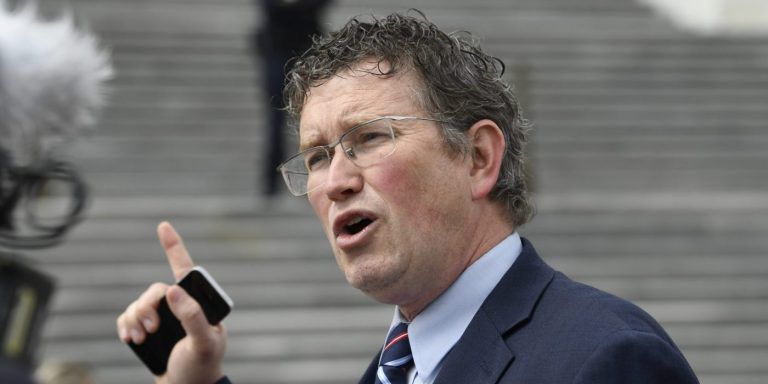
(Headline USA) Rep. Thomas Massie has stockpiled more than $1.7 million for his re-election bid as the Kentucky Republican gears up to face President Donald Trump’s vaunted political operation, Massie’s campaign announced Monday.
Massie was one of two House Republicans to vote against Trump’s massive tax bill and he said Trump lacked authority to bomb nuclear sites in Iran without congressional approval.
Trump aides launched a super PAC devoted to defeating Massie in his 2026 primary, the first concerted effort by the president’s team to unseat a sitting member of Congress.
Trump’s challenge to Massie sent a clear signal to other Republicans that they cross the president at their peril. But Massie’s formidable fundraising will help him fight back. His sprawling district covers three television markets, making it an expensive place to campaign.
Massie raised just over $584,000 between April and June, bringing his total fundraising since the last election above $1 million, his campaign reported. The $1.7 million in his campaign bank account includes money left over from his successful 2024 re-election campaign.
The new PAC, Kentucky MAGA, will be run by two of Trump’s top political lieutenants, his former co-campaign manager Chris LaCivita and longtime pollster Tony Fabrizio. They have not yet announced a challenger they will support but hope to unify Massie’s Republican critics behind one person to avoid splitting the anti-Massie vote.
Elon Musk, a billionaire and one-time Trump ally, suggested he’ll support Massie.
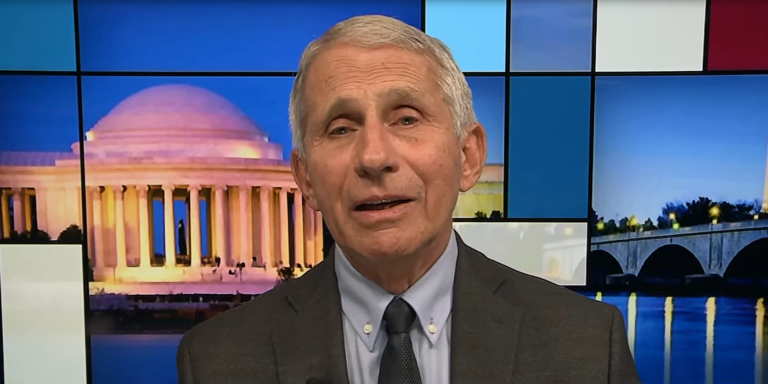
(Ken Silva, Headline USA) The New York Times published a bombshell interview with former President Joe Biden on Monday, confirming that his aides signed pardons with an autopen. Republicans are renewing calls for criminal prosecutions against former COVID czar Anthony Fauci, the Jan. 6th Committee and others who received a pardon under the Biden administration.
According to the Times, Biden said he would orally grant pardons and sentence commutations, and then his aides would use the autopen to sign for him.
The Biden administration claims to have paperwork to prove its claim. According to the Times, Biden officials said they had a “process to establish that Mr. Biden had orally made decisions in meetings before the staff secretary, Stefanie Feldman, who managed use of the autopen, would have clemency records put through the signing device.”
Republicans aren’t buying it.
“I guarantee he knew nothing about what he was singing,” President Donald Trump said Monday, reacting to the Times’ report.
Trump added that it was unfortunate that Biden got to use the Resolute Desk in the Oval Office just like he does.
And he noted that, while the use of the autopen is legal, it is “not supposed to be for signing major legislation” and things like presidential pardons.
Sen. Rand Paul, R-Ky., also renewed a criminal referral for Fauci.
In July 2023, I referred Dr. Anthony Fauci to the Department of Justice for lying under oath to Congress. His own emails directly contradicted his sworn testimony.@NYT reports Fauci was quietly pardoned by an autopen, operated by Biden’s staff. If the President didn’t authorize… pic.twitter.com/j0wrt6QdoJ
“In July 2023, I referred Dr. Anthony Fauci to the Department of Justice for lying under oath to Congress. His own emails directly contradicted his sworn testimony,” Dr. Paul said on Twitter/X.
“NYT reports Fauci was quietly pardoned by an autopen, operated by Biden’s staff. If the President didn’t authorize this pardon personally, then the Department has a duty to investigate and prosecute as it would any ordinary citizen. Fauci has been sainted by the extremist Left, but it doesn’t erase his lying before Congress.”
The House continues to investigate the autopen matter, too.
Earlier this month, Biden’s physician, Dr. Kevin O’Connor, invoked his rights under the Fifth Amendment during a closed-door interview with the House Oversight Committee.
Republicans on the Oversight Committee had subpoenaed O’Connor last month as part of a their sweeping investigation into Biden’s health and his mental fitness as president. They claim some policies carried out during Biden’s term through the use of the White House autopen may be illegitimate if it’s proven the Democrat was mentally incapacitated for some of his term.
The Associated Press contributed to this report.
Ken Silva is the editor of Headline USA. Follow him at x.com/jd_cashless.
(José Niño, Headline USA) Newly uncovered classified evidence may reveal a coordinated effort to interfere in multiple U.S. elections for the benefit of Democrats.
According to a report by Just The News, the “grand conspiracy” case began several weeks ago after Kash Patel assumed the role of FBI Director. Insiders suggest the investigation could gain momentum if Trump decides to declassify two sets of secret evidence that may pinpoint the alleged conspiracy’s origins to the summer of 2016.
The first is a classified annex from a years-old inspector general investigation into Hillary Clinton’s private email server, pursued by Senate Judiciary Committee Chairman Chuck Grassley, R-Iowa. This annex reportedly shows that credible evidence of possible misconduct was deliberately overlooked by the FBI.
The second is the so-called “Clinton plan intelligence,” identified by former Special Counsel John Durham and detailed in his final report. This evidence, also in a classified annex, was kept from the public and many members of Congress.
Public excerpts from Durham’s unclassified report suggest that U.S. intelligence agencies were aware Clinton’s 2016 campaign was orchestrating a false Russia collusion narrative to damage Trump’s election prospects—even before the FBI launched its now-discredited Crossfire Hurricane probe, partly using information from Clinton’s campaign or associates.
Both sets of evidence have remained sealed for nearly a decade due to their sensitive nature.
CIA Director John Ratcliffe recently published a harsh review of the intelligence community’s assessment of Russian influence in the 2016 election. Ratcliffe criticized then-CIA Director John Brennan for advocating the inclusion of Christopher Steele’s “baseless anti-Trump dossier,” concluding Brennan “showed a preference for narrative consistency over analytical soundness.”
Ratcliffe later described the anti-Trump campaign as an “atypical & corrupt process under the politically charged environments of former Dir. Brennan & former FBI Dir. Comey.”
Should Trump declassify the Grassley and Durham documents, prosecutors could present them to a grand jury to illustrate a pattern of the FBI and intelligence agencies ignoring evidence harmful to Democrats while aggressively pursuing Trump with questionable evidence.
John Solomon provides an update to the massive news he broke over the weekend that the FBI has been investigating “grand conspiracy” charges against the Russiagate hoaxers.
Kash Patel apparently needs President Trump to declassify a couple “tranches of evidence” – both related… pic.twitter.com/JJWwmH1HUp
Trump officials have also considered appointing a special prosecutor to investigate reports that the FBI received intelligence suggesting China attempted to create fake mail-in ballots in 2020 to support Joe Biden. The FBI reportedly failed to investigate and even recalled the intelligence, instructing other agencies to destroy it. However, the five-year statute of limitations for this inquiry is close to expiring.
Patel’s FBI’s broader conspiracy case would allow a special prosecutor more time to connect recent alleged crimes to older events, treating them as part of a continuing conspiracy or racketeering operation. The probe could also enable the empaneling of a grand jury outside Washington, D.C., where Trump has historically faced unfavorable juries. Florida, where overt acts of the alleged conspiracy occurred, is being considered as an alternative venue.
A former federal prosecutor noted, “Florida is an intriguing option because overt acts of the alleged conspiracy occurred there and are still inside the statute of limitations.”
Republican investigators argue that the federal government may have engaged in a planned effort to shield political allies. They claim this began when the government exonerated Hillary Clinton despite her mishandling of classified information via a private email server.
They also allege the government ignored foreign intelligence suggesting wrongdoing in that case. In addition, investigators assert that authorities failed to look into reports that China attempted to interfere in the 2020 election using fake driver’s licenses tied to mail-in ballots. They further contend that government officials labeled Hunter Biden’s laptop as “Russian disinformation,” even though forensic evidence later confirmed its authenticity.
According to these Republicans, investigators also obstructed probes into Hunter Biden’s alleged tax and gun-related offenses. Finally, they accuse the government of hiding concerns about President Joe Biden’s cognitive fitness in the lead-up to the 2024 election.
Similarly, efforts to pursue Trump—often with unsubstantiated evidence—may be reviewed as attempts to deprive him and his supporters of civil liberties and to sway elections.
The Trump administration faces obstacles, such as a shortage of Senate-confirmed DOJ attorneys eligible to serve as special counsel and the challenge of declassifying sensitive intelligence from 2016. Notably, both the decision not to charge Clinton and the initiation of the Russia collusion probe occurred on July 5, 2016.
Grassley has long sought the release of the classified annex from the Clinton email probe, arguing it reveals the FBI had grounds not to clear Clinton and that further investigation was warranted. In a letter to Attorney General William Barr, Grassley wrote, “The FBI even drafted a memorandum in May 2016 stating that access to the information was ‘necessary to complete the investigation.’ However, that memorandum was never completed.”
Durham’s final report also details how the Clinton plan intelligence was received and handled, noting, “The Intelligence Community received the Clinton Plan intelligence in late July 2016. The official who initially received the information immediately recognized its importance including its relevance to the U.S. presidential election—and acted quickly to make CIA leadership aware of it.”
José Niño is the deputy editor of Headline USA. Follow him at x.com/JoseAlNino
(Ken Silva, Headline USA) The Justice Department recently caused an uproar by issuing a memo declaring that notorious sex trafficker Jeffrey Epstein had no clients, he didn’t blackmail anyone, and his mysterious prison death was a suicide.
The Trump administration continues to take heat over the memo, which came after years of calls for the FBI to release thousands of Epstein records, including the purported “client list.” But receiving less attention was another bombshell detail in the memo: Epstein apparently had over 1,000 victims.
That would mean that we have at least roughly 750 Epstein victims who are unaccounted for. https://t.co/hzhk2ndzwy
The revelation about the number of Epstein victims is a big deal because it contradicts earlier figures. In February, Attorney General Pam Bondi said there were just 250 Epstein victims, while just 36 girls were cited in the 2019 indictment against Epstein. Furthermore, various civil lawsuits against Epstein’s estate list around 200 plaintiffs.
In other words, there could be 800 or more Epstein victims that are unaccounted for.
Many of the women in the civil lawsuits are American, and were molested in their late teens. The missing victims could be younger. For instance, Epstein’s acquaintance Jean-Luc Brunel, a model scout, allegedly sent Epstein three 12-year-old French girls, according to Virginia Giuffre, who allegedly committed suicide in April. Epstein also reportedly imported a 14-year-old from the Balkans.
The FBI reportedly declined to comment about the number of Epstein victims when contacted by investigative journalist Ken Klippenstein.
Epstein’s death was ruled a suicide by hanging after he was found dead in his jail cell on August 10, 2019. But his lawyers contested that claim. Skeptics point to malfunctioning surveillance cameras, sleeping guards, and broken bones in Epstein’s neck as indications that his death was something other than suicide.
Because of Epstein’s extensive fraternization with high-profile politicians and celebrities such as Bill Clinton, former Israeli PM Ehud Barak, Prince Andrew and Bill Gates and many more, some claim that Epstein’s death was actually a hit job to silence him. Proponents of that theory include Maxwell, who’s serving a 20-year prison sentence for sex trafficking.
“I believe that he was murdered. I was shocked, and I wondered, ‘How did this happen?’ Because I was sure he was going to appeal, and I was sure he was covered by the non-prosecution agreement,” Maxwell told British reporter Jeremy Kyle of TalkTV in 2023.
The non-prosecution agreement referenced by Maxwell was a sweetheart deal Epstein signed with the Department of Justice in 2008, in which he pleaded guilty to a state charge of procuring for prostitution a girl below the age of 18. Epstein was housed in a private wing of the Palm Beach County Stockade, and was reportedly allowed to leave the jail on “work release” for up to 12 hours a day.
After the Miami Herald published an expose on Epstein and his non-prosecution agreement in late 2018, Epstein was arrested again on July 6, 2019, on federal charges for the sex trafficking of minors in Florida and New York.
Ken Silva is the editor of Headline USA. Follow him at x.com/jd_cashless.
Foreigners bought $56 billion worth of existing U.S. homes from April 2024 through March 2025, according to the National Association of Realtors 2025 International Transactions in U.S. Residential Real Estate report.
That’s a 33.2% increase over the previous year. International buyers bought 78,100 properties, up 44% from the prior year and the first year-over-year increase since 2017. The median purchase price for foreign buyers was $494,400, a record high, according to the report.
“International interest in buying U.S. real estate increased following the global economic recovery from several years of pandemic-related disruptions. However, elevated home prices and interest rates continue to dampen overall potential sales activity and remain well below pre-pandemic levels,” NAR Chief Economist Lawrence Yun said.
Chinese buyers led the pack, accounting for 15% of the total foreign buyers, followed by Canada with 14% and Mexico with 8%. India (6%) and the United Kingdom (4%) rounded out the top five nations.
Most foreign buyers flocked to Florida, which accounted for 21% of all purchases, followed by California at 15%. Texas (10%), New York (7%) and Arizona (5%) rounded out the top five U.S. destinations for international buyers, according to the report.
“Boosted by a significant increase in the state’s housing inventory, Florida remained the top destination for foreign home buyers, extending a streak of at least 15 years,” Yun said.
Most of the buyers lived in the U.S. Foreign buyers who resided in the U.S. as recent immigrants or who were holding visas that allowed them to live in the U.S. bought 43,700 homes (56% of all foreign purchases) with a total dollar volume of $26.9 billion. Foreign buyers who lived abroad purchased 34,400 homes (44% of all foreign purchases) with a total dollar volume of $29.1 billion.
“To some degree, due to stubbornly high mortgage rates, a greater share of international home buyers paid cash – 47% compared to 28% among all buyers – and they were more likely to purchase homes priced in the upper end of the market,” Yun said. “Foreign buyers are drawn to investing in American real estate, in part, by our country’s strong protection of private property rights.”