U.S. Government Proposes Adding Silver to List of Critical Minerals

(Mike Maharrey, Money Metals News Service) The U.S. Department of the Interior has proposed adding silver to its list of critical minerals. The list, established in 2017, guides federal strategy, investment, and mine permitting decisions.

According to a Department of the Interior press release, “The List of Critical Minerals informs direct investments in mining and resource recovery from mine waste; stockpiles; tax incentives for U.S. mineral processing; and streamlined mining permitting.

According to the Bipartisan Policy Center, inclusion on the list can make projects eligible for federal funding, subject to a streamlined permitting process, or more competitive due to fees placed on imports.

The draft notice includes 54 minerals, recommending the addition of potash, silicon, copper, silver, rhenium, and lead, along with the removal of arsenic and tellurium.

The Department of the Interior analyzes supply chain vulnerabilities as part of the list creation process. U.S. Geological Survey acting director Sarah Ryker said the new list reflects advances in forecasting potential mineral supply chain disruptions.

“Minerals-based industries contributed over $4 trillion to the U.S. economy in 2024, and with this methodology, we can pinpoint which industries may feel the greatest impacts of supply disruptions and understand where strategic domestic investments or international trade relationships may help mitigate risk to individual supply chains. This is a next-generation risk assessment that can be used to prioritize securing the nation’s mineral supply chains.”

Interior Secretary Doug Burgum reiterated the point, saying, “This draft list of critical minerals provides a clear, science-based roadmap to reduce our dependence on foreign adversaries, expand domestic production, and unleash American innovation.

The draft notice has been posted for a 30-day public comment period, after which the draft will be approved or rejected. Once a draft reaches this stage, it generally receives approval.

Why Silver?

The inclusion of silver on the list of critical minerals underscores the growing importance of the metal and could signal worries about the lack of domestic supply.

Adding silver to the list could benefit domestic silver miners by streamlining permitting and easing some of the regulatory burden.

Silver conducts electricity better than any metal at room temperature. That makes it a vital input in the electronics and computing sectors. For instance, silver is an important component in solar panels. Demand for silver in the solar sector accounted for nearly half of the total silver demand in the electronics industry.

Silver is also crucial in defense applications. The world’s militaries use a substantial amount of the metal, although exact numbers are difficult to pinpoint due to the secretive nature of the military-industrial complex.

About 60 percent of global silver offtake is for industrial purposes. Industrial demand for silver set a record last year, and it continues to grow.

Meanwhile, the silver supply has become increasingly tight. Demand outstripped the silver supply for the fourth consecutive year in 2024. The structural market deficit came in at 148.9 million ounces. That drove the four-year market shortfall to 678 million ounces, the equivalent of 10 months of mining supply in 2024.

Analysts forecast another supply deficit in 2025.

Sagging supply is likely one of the factors driving the decision to include silver on the list of critical minerals.

U.S. silver mine output was up by about 6 percent in 2024. The U.S. produced about 1,100 tonnes of metal. However, output has generally been flat over the last five years.

Globally, mine output has sagged since peaking in 2016.

Metals Focus forecasts that while we will see record silver prices over the next five years, “mine supply growth is likely to remain modest, with only minimal increases globally.”

Why won’t silver production ramp up to meet the demand and take advantage of these higher prices?

Metals Focus blames the price inelasticity on the fact that more than half of silver is mined as a byproduct of base metal operations.

“Although silver can be a significant revenue stream, the economics and production plans of these mines are primarily driven by the markets for copper, lead and zinc. Consequently, even significant increases in silver prices are unlikely to influence production plans that are dependent on other metals.” 

About 28 percent of the silver supply is derived from primary silver mines, where production is more tightly tied to price. But silver mines face their own challenges, including declining ore grades and rapidly rising mining costs.

Domestic silver miners could get a boost from the classification of silver as a critical mineral, but it won’t necessarily alleviate the fundamental issue in the silver market — rapidly increasing demand and structurally tight supply.


Mike Maharrey is a journalist and market analyst for Money Metals with over a decade of experience in precious metals. He holds a BS in accounting from the University of Kentucky and a BA in journalism from the University of South Florida.


Trans Catholic Killer Thought He Was Being Monitored by the FBI

(Ken Silva, Headline USA) The transgender killer who shot up a Catholic church on Wednesday—killing two and injuring 17—thought he was being monitored by the FBI, according to writings he left behind.

“A gun would be cheap and easy to get, I think. Depends on how deep I am under investigation by FBI,” said the killer, Robin Westman, according to a translation of his writings. “I am for sure at least somewhat on their radar.”

The FBI hasn’t commented on whether Westman—who attended the Catholic school and whose mother worked there—was on its radar. The gunman’s online activity has yet to be revealed, and his belief that he was under surveillance may have been a sign of his mental illness and paranoia. However, the FBI has been known to have contact with numerous mass shooters before their attacks.

Prominent examples of mass shooters who were on the FBI’s “radar” include Sandy Hook shooter Adam Lanza, Orlando Pulse nightclub shooter Omar Mateen and Parkland shooter Nikolas Cruz.

One of the more disturbing cases was that of Payton Gendron, a white supremacist who killed 10 black people at a Buffalo supermarket in 2022. In that case, Gendron may have been chatting on Discord with a “retired federal agent” moments before he killed 10 people at a Buffalo supermarket.

The Buffalo News first reported in May 2022 that the retired federal agent may have been one of at least six individuals who regularly communicated with Gendron online. Gendron reportedly invited them to a Discord chatroom to read about his plans roughly 30 minutes before his shooting.

More recently, a teenager who had been plotting to assassinate President Donald Trump was revealed to have been previously visited by the FBI.

According to court filings from the would-be assassin Nikita Casap’s case, the FBI visited his home in 2023 to investigate “unrelated IP internet activity.”

“The FBI interviewed the Casap family in November of 2023 for unrelated internet IP activity. All members of the family denied the IP activity and Agents were allowed to view devices and internet history and found no corroboration of the alleged internet activity,” states a March 18 search warrant for Casap’s electronic devices.

Casap allegedly killed his parents in February 2025 as part of his purported plot against Trump.

Ken Silva is the editor of Headline USA. Follow him at x.com/jd_cashless.

Trump Admin Seizes Control of DC’s Union Station, Citing Need to Restore Order

(Luis Cornelio, Headline USA) President Donald Trump’s Department of Transportation will take control of Union Station, the main ground transportation hub in Washington, D.C., which has been marred by years of mismanagement and lawlessness.

Transportation Secretary Sean Duffy announced the move Wednesday morning at an event inaugurating the new, high-speed Acela trains.

“With these new Acela trainsets, Amtrak will provide more reliable service and lower prices for the American people – all while increasing the organization’s profitability,” Duffy said. “But we’re not stopping there. Instead of being a point of pride, Washington’s Union Station has fallen into disrepair. By reclaiming station management, we will help make this city safe and beautiful at a fraction of the cost.”

Union Station has been a federal asset since the 1980s but is managed by the Union Station Redevelopment Corp., with Amtrak leasing space for its national routes. Like much of D.C., however, the station has been plagued by crime and vagrancy.

Earlier this year, a man was shot dead in the station’s garage. In 2024, another individual faced federal charges after allegedly assaulting two police officers there. These are just a few examples of the rampant crime at Union Station.

According to the Trump administration, the station’s valuable commercial real estate will be leveraged to fund reinvestment. Planned renovations include new elevators, lighting and security, and major roof and system repairs.

“USDOT anticipates that reinvestment and improved security will dramatically improve the income from the station, which should unlock opportunities for private investment as part of potential expansion of the station,” the Transportation Department wrote in a press statement.

Formal action is expected by September.

The U.S. Debt Bubble: Why It Matters and How to Protect Yourself

(Money Metals News Service) Mike Maharrey begins this episode of the Money Metals Midweek Memo by pointing out a paradox. Rising consumer debt is often reported as good news, framed as a sign of economic confidence. Analysts cheer when people borrow more, saying it means households are optimistic enough to spend.

But Maharrey notes the reality is far less rosy.

America’s Borrow-and-Spend Economy

The United States has built an economy on consumption before production. Instead of producing first and then consuming, Americans rely on borrowing to buy goods—many of them imported—and then use credit to finance the spending.

This model may keep things moving in the short term, but it is not sustainable forever. Every economy, like every household, eventually reaches its credit limit. Maharrey argues that the United States is approaching that breaking point, and when it comes, the consequences will be severe.

National Debt Surpasses $37 Trillion

In August 2025, the national debt quietly crossed $37 trillion. The number is so large that it can feel meaningless, but the speed of growth makes the problem clear. It took just 265 days to move from $36 trillion to $37 trillion, even with a six-month pause during the debt ceiling standoff.

Since Congress suspended the debt ceiling in June 2023, the Biden administration has added $4.54 trillion in only 18 months. Federal spending continues at a pace of $500 to $600 billion every month. Maharrey stresses that debt expansion is baked into the system and shows no sign of slowing.

If the bill ever came due, each U.S. citizen would owe $108,000, and every taxpayer would owe $323,000. The debt is now larger than the combined GDP of China, Germany, India, Japan, and the United Kingdom. Numbers on this scale, Maharrey says, reveal just how unsustainable the current trajectory has become.

The Cost of Debt Service

Paying interest on the debt has already become one of the federal government’s biggest expenses. In July 2025 alone, the Treasury spent $91.9 billion just on interest payments.

For the current fiscal year, those interest costs have already surpassed $1.01 trillion. That is more than the government has spent on defense or Medicare. Only Social Security costs more.

The debt-to-GDP ratio now stands at 123.3 percent. Economists have long warned that when debt exceeds 90 percent of GDP, growth slows by roughly 30 percent. Maharrey argues this means the debt is not only unsustainable, but actively dragging the economy down.

Corporate Bankruptcies Surge

The private sector is also buckling under the weight of leverage. In the first seven months of 2025, 446 companies filed for bankruptcy. That marks the worst stretch since 2010, in the aftermath of the Great Recession.

July alone saw 71 bankruptcies, the highest monthly total since the pandemic shutdowns of 2020. Years of cheap borrowing left many companies heavily indebted. Now that interest rates are higher, the weaknesses are being exposed.

Maharrey warns that the rise in bankruptcies is not just a business story—it signals cracks spreading across the entire economy. The so-called boom many claim to see is in fact being undermined by excessive debt.

Consumers Under Pressure

Households are also drowning in red ink. Americans now carry $1.3 trillion in revolving debt, most of it in credit cards.

The average annual interest rate on those balances is 20.13 percent, with some cards charging as much as 28 percent. Subprime borrowers are struggling the most, with 90-day delinquencies up 109 percent from last year.

But even prime borrowers—those with excellent credit—are beginning to stumble. Late payments in that group are up 47 percent. Auto loans and mortgages are showing more delinquencies as well, adding to the financial strain.

Maharrey notes that even the most creditworthy consumers are starting to feel the pinch, a troubling signal for an economy that relies so heavily on spending.

Stagflation on the Horizon

The Federal Reserve faces a dilemma. Cutting rates might provide short-term relief for debtors, but it would also fuel inflation. Holding rates higher could help restrain prices, but it risks triggering defaults and recession.

Inflation is still running above 3 percent, well above the Fed’s 2 percent target. At the same time, growth is slowing. Maharrey argues that this combination points to stagflation—a period of low growth coupled with persistent inflation.

The roots of the problem stretch back more than a decade. After the 2008 financial crisis, the Fed held rates near zero for years and engaged in repeated rounds of quantitative easing. Those policies encouraged massive borrowing and created today’s debt bubble. Now the bill is coming due, and policymakers are cornered.

Why It Matters for Investors

Maharrey insists this is not just a matter of government bookkeeping. The debt directly affects investors and savers.

As demand for U.S. treasuries weakens, interest rates rise. That makes it more expensive for the government to borrow. Eventually, the Federal Reserve will be forced to resume quantitative easing, buying bonds with newly created money to push yields down.

That process is inherently inflationary. For ordinary people, it means their dollars will continue to lose purchasing power. For investors, Maharrey argues, the clear implication is that gold and silver remain the most reliable way to preserve wealth in such an environment.

A Call to Prepare

The debt bubble will not last forever. At some point, it will burst, and when it does, inflation will surge again. Maharrey warns that there is no political solution. Every president since Calvin Coolidge has increased the debt, regardless of party or promises.

That leaves individuals with one option: prepare. Gold and silver provide the shield that sound money offers. Precious metals remain the only proven protection against currency debasement and financial instability.

Maharrey closes by urging listeners to act now, before the crisis fully unfolds. The debt bubble will eventually pop, and when it does, only those holding real money will be ready.

Beverly Hills School Board Votes to Display Israeli Flags

(Esther Wickham, The Center Square)  The Beverly Hills Unified School District voted this week to display Israeli flags on all its campuses.

After the recent incidents of antisemitism on campuses, BHUSD approved a proposal to fight antisemitism by displaying Israel’s flag around schools and other district facilities.

“This is a time right now that Jews are being killed and slaughtered on the street, and threats are happening,” said Sigalie Sabag, a BHUSD board member.

The resolution passed 3-2, which had backlash from members of the public. Opponents of the flags say that displaying the Israeli flag in a public school setting blurs the line between supporting the Jewish community and endorsing the Israeli government.

Others say the resolution does not protect all students within the district, which could lead to some students feeling excluded.

“Jewish communities have suffered sharp increases in hate crimes, but other groups are not immune to these attacks either,” said Gay Abrams, in opposition to the proposal.

The school district says its decision was made to support the Jewish community during this time of increasing antisemitism, not an endorsement of the Israeli government.

“It does not mean that the flag display equals that it’s against anyone,” said BHUSD board member Russell Stewart. “It is in support of our Jewish students and the Jewish community.”

With the recent rise of antisemitism on campuses around the country, the school district wanted to create an environment for Jewish students to feel safe and supported.

“This should be a no-brainer for a school district that represents one of the only Jewish-majority communities outside of Israel,” said Beverly Hills Vice Mayor John Mirisch while speaking to the crowd ahead of the vote.

The Anti-Defamation League reported that antisemitic incidents in the country are at a record high, “893% increase over the past 10 years.”

BHUSD said the flags would not be on flagpoles and would showcase the Israeli flag in other ways around the schools and district.

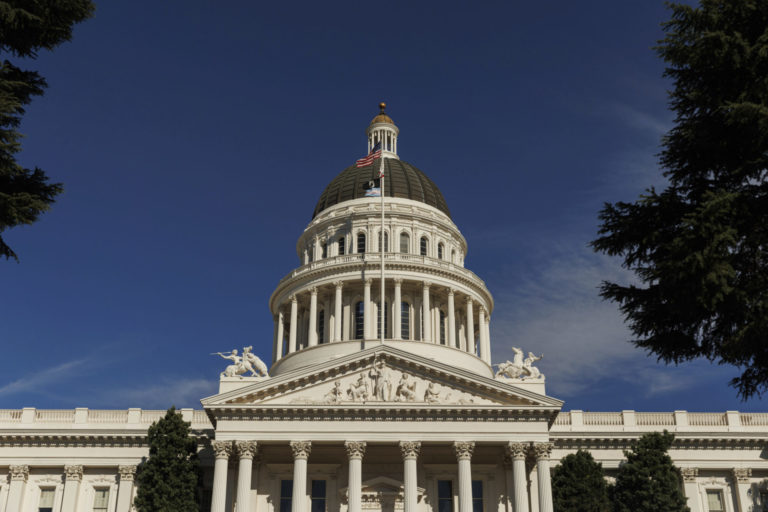
GOP Legislators Propose Creating New State from CA Counties

(Dave Mason, The Center Square) Republicans are calling for 35 inland counties to secede from California and create a new state.

The GOP announced the plan Wednesday as their response to Democrats’ congressional redistricting efforts.

“I want to take a step back from all of the chaos we had and talk about the forgotten people of California,” Assembly Minority Leader James Gallagher said, presenting a map during a news conference in Sacramento.

Gallagher and his co-authors are proposing Assembly Joint Resolution 23, also known as “The Two State Solution.” It would allow the creation of the state under Article, Section 3, of the U.S. Constitution and would require approval by the state Assembly and Senate as well as Congress. Democrats hold supermajorities in both houses of the Legislature, meaning Republicans would have to sway a number of Democrats to back it.

Gallagher said a new state would benefit inland residents who feel they’re victims of the policies of the Democrats controlling the state legislative and executive branches.

“I think this is about the trucker in the Inland Empire who is told he has to get rid of his truck because of the regulations in this state,” the minority leader said.

“I think of the single mom who’s trying to get by when the rent’s too high and gets her PG&E (Pacific Gas & Electric) bill, which once again is increased, and struggles to get into that first house because costs are way too high,” Gallager said.

He said he was thinking of ranchers whose cattle are killed “because some genius thought it was a good idea to reintroduce the gray wolf in Northern California.”

It’s time to secede from California because of a Legislature that has done nothing to make the state more affordable, Gallagher said, accusing the Democratic supermajorities in the two houses of not caring about Californians.

Proposition 50, which would draw new congressional district boundaries to give Democrats five more U.S. House seats to counter five Republican seats being gained by Texas redistricting, would completely strip people in inland counties of their representation, Gallager said. The Senate and Assembly voted last week to put the proposition on the Nov. 4 ballot in a special election.

“Whether you are from the North State, Central Valley or the Inland Empire, life has become harder and completely unaffordable,” Gallagher said. “We have been overlooked for far too long, and now they are trying to rip away what little representation we have left.”

The new state would consist of 10 million people, according to Gallagher’s office. It would cover most of Northern California, the Sierra Nevada, the Central Valley and the Inland Empire.

The proposal would leave counties along the coast in California. The new state would consist of a big north-to-south block of Inland counties, varying from Siskiyou, Modoc and Del Norte along the Oregon border to Kern, San Bernardino, Riverside and Imperial in Southern California.

Gallagher said he realizes there are people in heavily Republican Orange County, which would remain in California under the current proposal, who would like to be a new state.

“Orange County, I hear you,” Gallagher said, stressing the map isn’t set in a stone and that some communities in the current proposal might not want to be in a new state.

Gallagher’s proposed resolution noted there have been “difficulties in achieving equitable political representation” and that efforts to divide California go back to 1859 when voters overwhelmingly supported splitting the state into two. “However, Congress did not act on this proposal due to the Civil War.”

The resolution said several Northern California counties, along with voters from other counties, have expressed a desire to form a new state. It said residents in Northern California and Inland areas have long felt frustration over laws and regulations imposed on them by the more populous coastal regions.

Republican co-authors of Gallagher’s resolution are Assemblymembers Leticia Castillo, Heather Hadwick, Tom Lackey, Alexandra Macedo, Joe Patterson and Kate Sanchez. Sen. Megan Dahle is the co-author in the Senate.

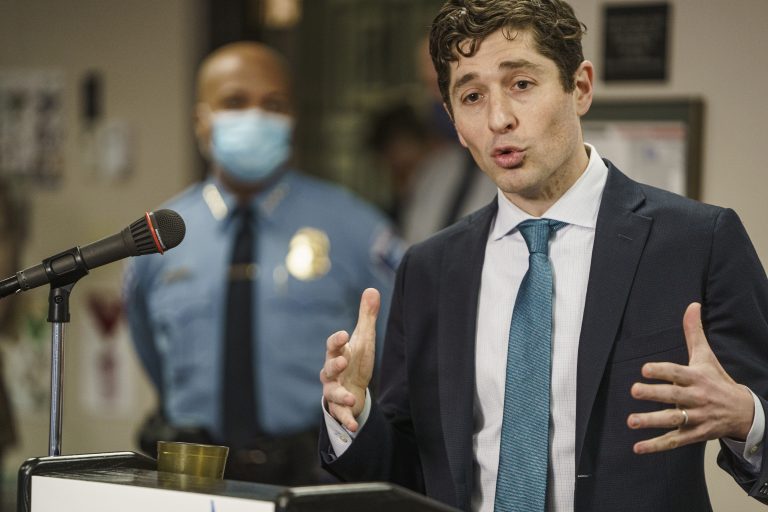
Minneapolis Mayor Cautions Against Transphobia Following Mass Shooting

(Luis Cornelio, Headline USA) Minneapolis Mayor Jacob Frey has cautioned residents against attacks targeting transgender individuals after authorities said a self-identifying transgender carried out a mass shooting against children at a Catholic mass.

“I have heard about a whole lot of hate that’s being directed at our trans community,” Frey claimed during a press conference. “Anybody who is using this as an opportunity to villainize our trans community or any other community out there has lost their sense of common humanity.”

“Kids died,” he added. “This needs to be about them.”

Frey made the remarks after Robin Westman, born Robert Westman and identifying as a woman, opened fire at Annunciation School during a mass blessing children returning for the school year.

Two children, ages 8 and 10, were killed in the gunfire. Seventeen others were wounded.

Westman, the adult son of a former Annunciation School staff member, changed his name at the age 17.

Minneapolis Police Chief Brian O’Hara said the shooting began shortly before 8:30 a.m., when Westman fired a rifle through a window into the pews.

The incident is under federal investigation as a hate crime against Catholics.

“The shooter has been identified as Robin Westman, a male born as Robert Westman,” FBI Director Kash Patel wrote. “The FBI will continue to provide updates on our ongoing investigation with the public as we are able.”

US Sends More Warships Near Venezuela

(Kyle Anzalone, Libertarian Institute) The US has deployed two additional warships to the South Caribbean Sea, in the waters near Venezuela. The Trump administration says the move is part of its efforts to target cartels. Venezuela has responded by mobilizing millions of troops and deploying some near the border with US ally Colombia

Reuters reported on Monday that the US will move a guided missile cruiser and a nuclear-powered fast attack submarine to the South Caribbean. Early this month, the Pentagon deployed three guided missile destroyers, an attack submarine, and spy planes to the region. 

The sources say the military buildup is to target cartels that are designated as terror organizations by the US. The State Department claims the Venezuelan government is operated by one of the terror cartels, and President Maduro is the leader of the Cartel de los Soles. 

However, Cartel de los Soles may not exist, and Maduro is unlikely to be the leader of the crime organization. The cartel operates more like a loose-knit partnership of corrupt mid-level officials, opportunistic soldiers, and organized criminals – an arrangement tolerated, but not orchestrated, by the central government in Caracas.

Maduro has interpreted the deployment of warships as preparation for a war in Venezuela. He has ordered the mobilization of 4.5 million militia troops. “This week I will activate a special plan to guarantee coverage with more than 4.5 million militia members throughout the national territory, militias trained, activated, and armed,” he said. “We defend our seas, our skies, and our lands. We liberated them. We guard and patrol them. No empire will touch the sacred soil of Venezuela, nor should it touch the sacred soil of South America.”

Additionally, Maduro has ordered 15,000 troops to Venezuela’s border with Colombia. Bogota is a major non-NATO US ally. Caracas said the soldiers would crack down on drug traffickers. “Here, we do fight drug trafficking; here, we do fight drug cartels on all fronts,” Venezuelan Minister of the Popular Power for Interior Diosdado Cabello said. 


This article originally appeared at The Libertarian Institute.

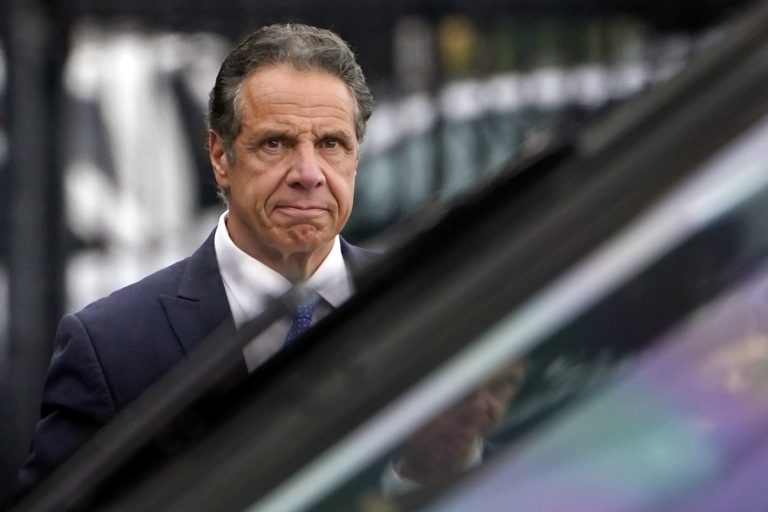
Judge Says Cuomo Can’t Prolong Court Battle with Accuser to ‘Resurrect His Public Image’

(Headline USA) A judge rejected former New York Gov. Andrew Cuomo’s attempt to prolong a taxpayer-funded court battle with a woman who accused him of sexual assault, saying it wasn’t in the public’s interest to keep litigating for the purpose of repairing the Democrat’s reputation as he runs for mayor.

“Cuomo has not advanced any viable argument for why the taxpayers of this state should continue to foot the bill for his continued use of civil litigation discovery devices to further his efforts to resurrect his public image,” state Supreme Court Justice Denise Hartman wrote in a decision posted online Monday.

The decision comes more than a month after New York agreed to pay $450,000 to settle a lawsuit from Brittany Commisso, an ex-aide who alleged Cuomo sexually harassed and groped her while he was in office. Cuomo, who has denied the allegations, resigned as governor in 2021 after a report from the state attorney general determined that he had sexually harassed at least 11 women.

Cuomo, a co-defendant with the state, opposed Commisso’s request to discontinue the lawsuit. Relatedly, he sought to make public text messages produced under discovery he claims refute Commisso’s allegations. Cuomo attorney Rita Glavin had told a judge that potentially ending the case is a matter of “enormous public interest” as Cuomo runs for mayor.

Hartman allowed Commisso to drop the civil suit and denied Cuomo’s motion on the texts.

Cuomo is running for mayor as a independent after losing the Democratic primary to Zohran Mamdani by more than 12 percentage points.

With the race heating up this summer, Republican candidate Curtis Sliwa has needled Cuomo over the sexual harassment allegations. And incumbent Mayor Eric Adams, who also is running as an independent, recently placed whistles on reporters’ chairs at a news conference. Adams explained they were for female reporters interviewing Cuomo, in case they needed to call for help.

A spokesman for Cuomo said Tuesday that the public deserves to see what is in the texts.

“Governor Cuomo will continue to fight for the release of all the evidence because it shows he didn’t sexually harass anyone and further discredits the AG’s political report. Release the evidence and let the public decide,” Rich Azzopardi said in a written statement.

Commisso filed her lawsuit in late 2023, just before the expiration of the Adult Survivors Act, a law that created a yearlong suspension of the usual time limit to sue over an alleged sexual assault. She later filed a criminal complaint accusing Cuomo of groping her but a local district attorney declined to prosecute, citing lack of sufficient evidence.

Adapted from reporting by the Associated Press.

Christian Priests and Nuns Refuse To Leave Gaza City Despite Israel’s Planned Offensive

(Dave DeCamp, Antiwar.com) Christian priests and nuns based in Gaza City will remain to help displaced people sheltering at two churches despite the Israeli military’s plans to conquer the city, the Latin Patriarchate of Jerusalem and the Greek Orthodox Patriarchate of Jerusalem said in a joint statement on Tuesday.

“At the time of this statement, evacuation orders were already in place for several neighborhoods in Gaza City. Reports of heavy bombardment continue to be received. There is more destruction and death in a situation that was already dramatic before this operation. 

It seems that the Israeli government’s announcement that ‘the gates of hell will open’ is indeed taking on tragic forms,” the Patriarchates said.

Hundreds of civilians have been sheltering at the Holy Family Catholic Church in Gaza City and the nearby Saint Porphyrius Orthodox Church. Both churches have come under Israeli attack, including the recent IDF tank shelling of the Holy Family Church, which killed three Christians and injured Father Gabriel Romanelli, a Catholic priest from Argentina.

Nuns with the Missionaries of Charity, a congregation founded by Mother Teresa, have had a presence in Gaza since the 1970s and have taken care of disabled Palestinians at the church since well before October 7, 2023.

“Like other residents of Gaza City, the refugees living in the facilities will have to decide according to their conscience what they will do. Among those who have sought shelter within the walls of the compounds, many are weakened and malnourished due to the hardships of the last months,” the Patriarchates said.

“Leaving Gaza City and trying to flee to the south would be nothing less than a death sentence. For this reason, the clergy and nuns have decided to remain and continue to care for all those who will be in the compounds,” they added.

Israel’s plans for the takeover of Gaza City involve the forced displacement of more than one million Palestinians sheltering there. The idea is to push them into southern Gaza, and from there, the Israeli government wants to pressure them to leave Gaza altogether, as Israeli Prime Minister Benjamin Netanyahu and other Israeli officials have made clear their ultimate goal is the ethnic cleansing of the Palestinian territory.

According to numbers from the UN, at least 11,600 Palestinians have been displaced from north Gaza to southern Gaza since the Israeli military announced its plans to take over Gaza City and ramped up airstrikes and shelling of the city.

“This is not the right way. There is no reason to justify the deliberate and forcible mass displacement of civilians,” the Patriarchates said. “It is time to end this spiral of violence, to put an end to war and to prioritize the common good of the people. There has been enough devastation, in the territories and in people’s lives. There is no reason to justify keeping civilians as prisoners and hostages in dramatic conditions.It is now time for the healing of the long-suffering families on all sides.”

This article originally appeared at Antiwar.com.