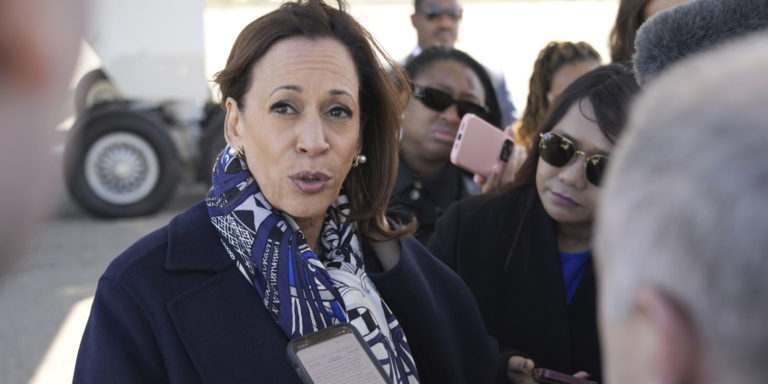
(Luis Cornelio, Headline USA) Embattled former Vice President Kamala Harris recently boasted that she was once called the “most qualified” presidential candidate in U.S. history.
Speaking at an event promoting her new book, Harris told podcast host Kara Swisher that “some people” had made the puzzling comparison.
“Well, some people have actually said I’m, I was the most qualified candidate ever to run for president,” Harris said amid a broad conversation about the 2024 election.
Swisher replied, “I like your … ‘some people say.’ Very nice, but go ahead.”
“I’m just speaking facts,” Harris responded.
Kamala: “Some people have said I was the most qualified candidate ever to run for president."
Harris didn’t name who supposedly made the claim, but the comment echoed a talking point Democrats pushed before her 2024 defeat.
Among the Democrats parroting that claim were Michigan Gov. Gretchen Whitmer, Minnesota Gov. Tim Walz, former First Lady Michelle Obama, and former presidents Joe Biden and Barack Obama.
Still, Harris’s boast implied she considered herself more qualified than past giants of American history, including George Washington, who led the Continental Army in the Revolution, Thomas Jefferson, author of the Declaration of Independence, and Dwight D. Eisenhower, the five-star general who commanded Allied forces in World War II.
Despite what Harris viewed as an impressive résumé, her political career has long been plagued by questions about competence and credibility.
When she was first elected San Francisco district attorney, critics credited Willie Brown, her former lover and influential politician, for jump-starting her political career.
Her 2010 race for California attorney general was one of the closest in the state’s history, with Harris barely defeating Republican Steve Cooley by less than one percentage point.
She later won a Senate seat but quickly launched a failed presidential campaign in 2019, dropping out before early voting began.
She was later tapped as Joe Biden’s running mate after he pledged to choose a woman of color.
Harris’s tenure was vice president was also marred by plummeting approval ratings, gaffes and scandals.
Her political career came to an end when she was defeated by President Donald Trump in the 2024 election despite Trump facing multiple indictments, GOP opposition and relentless attacks from the media.
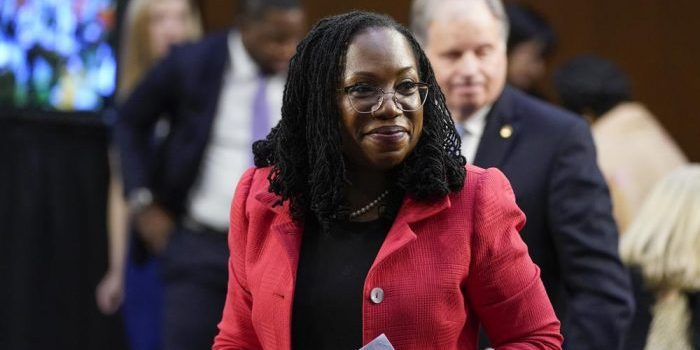
(Luis Cornelio, Headline USA) Supreme Court Justice Ketanji Brown Jackson on Wednesday made an odd analogy between black voters and disabled Americans to argue in favor of creating majority-black congressional districts.
Jackson, a Biden appointee, made the comparison during oral arguments in Louisiana v. Callais, a case over the constitutionality of court-ordered, black-majority districts in the Pelican State.
Leftists support the districts, while conservatives argue that race should not be a determining factor in redistricting. To make what she called “a pragmatic example,” Jackson invoked the Americans with Disabilities Act (ADA) to defend race-conscious mapmaking.
“My kind of pragmatic example of this is something like the ADA,” Jackson claimed. “Congress passed the Americans with Disabilities Act against the backdrop of a world that was generally not accessible to people with disabilities.”
Justice Jackson just compared black people not being able to create majority black congressional districts to disabled people not being able to enter a building before the ADA.
She continued, “It was discriminatory in effect because these folks were not able to access these buildings. And it didn’t matter whether the person who built the building or the person who owned the building intended for them to be exclusionary. That’s irrelevant.”
Jackson argued that the same rationale should be applied to race and redistricting, as she claimed unequal outcomes warrant government intervention.
“The idea in Section 2 [of the Voting Rights Act of 1965] is that we are responding to current-day manifestations of past and present decisions that disadvantage minorities and make it so that they don’t have equal access to the voting system,” she said. “Right? They’re disabled. In fact, we use the word ‘disabled’ in Milligan.”
She went on to question why intent should matter in determining whether a system is discriminatory.
“I don’t understand why it matters whether or not the state intended to do that?” Jackson asked. “What Congress is saying is if it is happening — which Section 2 gives us the tools to determine — you’ve got to fix it. The difference is that the remedy under the ADA and other anti-discrimination laws is not stereotyping. We don’t, then it’s not race-based.”
Jackson’s analogy appeared at odds with the Court’s conservative majority, which signaled a willingness to further limit the use of race in redistricting.
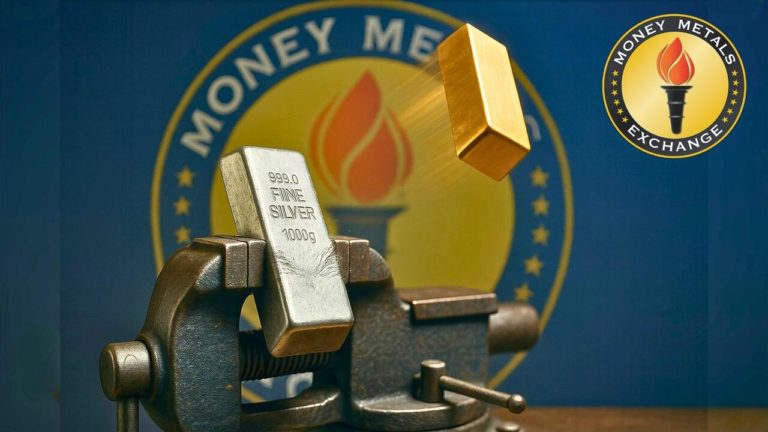
(Money Metals News Service) In this Money Metals Midweek Memo, host Mike Maharrey cautions listeners against confusing market symptoms with the underlying illness. A headline-grabbing price spike seldom tells the whole story.
The recent, rapid climb in both gold and silver is better understood as the result of a debt-burdened economy, a Federal Reserve signaling more easing despite persistent inflation, and—most crucially for silver—a shortage of deliverable metal that has intensified into a short squeeze and exposed fragile links across the global trading system.
This perspective situates the week’s moves within a longer trend. Gold’s bull market has been underway for well over 18 months.
Policy choices that prioritize debt accommodation over price stability, together with tight physical markets, are not episodic catalysts but chronic forces.
Investors who focus on each day’s tape risk treating heartburn when the patient is showing signs of a cardiac event.
Gold’s Momentum and the Policy Backdrop
Gold showed how swiftly sentiment can flip in a structurally bullish environment.
After dipping below $4,000 per ounce last Friday, it rebounded above $4,000 on Monday and, by showtime, was trading just over $4,200 per ounce. December futures printed $4,235. The speed of the rebound implies that $4,000 is behaving as near-term support within a trend that has advanced for more than a year and a half.
Maharrey underscores the macro driver.
Federal Reserve Chair Jerome Powell has effectively teed up another rate cut this month. The stance is striking given ongoing inflation, but it makes sense in a “debt-riddled” economy that cannot function in a normal-rate regime.
Prioritizing growth and debt service over price discipline compresses real yields and lowers the opportunity cost of holding non-yielding monetary assets. That setup historically supports gold.
Institutional targets reflect this shift. Goldman Sachs raised its 2026 gold target to $4,900 per ounce, while Bank of America moved to $5,000.
Wheaton Precious Metals CEO Randy Smallwood told Bloomberg he is confident gold will top $5,000 within the next year and could reach $10,000 by 2030.
Not long ago, such numbers were derided as fringe.
Today, they appear in mainstream models.
Silver’s Breakout: Technicals Meet Tightness
Silver’s move is even more revealing.
At recording, it traded at $52.83 per ounce, threatening $53. On the charts, silver has broken out of a classic cup-and-handle formation on a secular timeframe. Historically, that pattern often marks the beginning of a sustained advance rather than its conclusion.
Corrections will come—they always do—but within this configuration, the dominant impulse remains higher.
Relative valuation reinforces the message.
The gold–silver ratio sits near 80:1 versus a modern-era average around 60:1, implying silver remains inexpensive relative to gold. In past cycles, the ratio has snapped back toward the mean quickly, especially late in gold bull markets.
Maharrey stresses that markets never move in straight lines and that down days can be violent. In a structure-driven market, however, pullbacks tend to be opportunities rather than verdicts.
London’s Stress Test and the Price of Scarcity
The most telling evidence for silver is not on a chart but in the market’s plumbing.
London spot surged to roughly a $3-per-ounce premium over New York futures, an inversion that appears to invite arbitrage but instead reveals how thin deliverable inventory has become. Overnight borrowing costs for silver spiked to well over 100 percent annualized, and London’s bid–ask widened from roughly three cents to well over twenty cents per ounce.
Those are not the hallmarks of a well-lubricated market; they are flares of illiquidity.
The scramble to relieve pressure has been dramatic.
Traders reportedly booked cargo ships to move bars from New York to London to capture the premium—a tactic common with gold but unusual for bulky silver due to cost. The urgency reflects a deeper constraint.
Much metal in London vaults is already encumbered by ETFs and other obligations. The uncommitted “free float” has shrunk from a peak near 850 million ounces to roughly 200 million ounces, a 75 percent decline.
With buffers that thin, small shifts in demand or logistics can produce outsized price effects.
Long linked with gold, India is nevertheless the world’s top silver consumer, and demand has turned frenetic. Shelves are empty, mints run overtime, and refiners in Canada, Australia, and Vietnam report backlogs. Investment vehicles have at times halted new inflows, citing a lack of metal, while others continue to accept funds, raising obvious sourcing questions.
Pressure intensified as Indian buyers shifted from Hong Kong to London during China’s Golden Week in early October, adding stress to an already creaking hub.
The most unsettling signal is the gap between India’s MCX silver futures and the street price. Futures have traded as much as ₹20,000 per kilogram below on-the-ground prices. That is not routine backwardation; it is a stress event indicating that someone cannot deliver metal.
Stocks in MCX vaults are thin enough that even a fraction of contract holders standing for delivery could strain supply.
To illustrate the scramble, Money Metals Exchange arranged a large shipment of 1,000-ounce bars from the U.S. to India via Dubai, and CEO Stefan Gleason suggested such shipments might occur daily for a time.
Structural Deficits and the Long Arc
This is not merely an Indian drama or a London logistics story. It is the latest expression of a multi-year global imbalance.
The silver market posted a 148.9-million-ounce structural deficit in 2024, its fourth consecutive shortfall. Over four years, the cumulative deficit reached 678 million ounces, roughly the equivalent of 10 months of 2024 mine supply.
The Silver Institute projects a fifth straight deficit this year.
When miners cannot produce enough to satisfy industrial users and investors, the gap is bridged by drawing down above-ground stocks—bars in vaults, coins in safes, inventory on someone else’s balance sheet.
Prices must rise to coax those ounces back into circulation.
Maharrey’s diagnosis counsels steadiness on down days and respect for structure on up days.
Dips remain buying opportunities in both metals, particularly where premiums are favorable.
He also notes growing interest in portfolio frameworks that allocate meaningfully to gold—referencing commentary that contemplated a 60/20 mix with 20 percent in gold—as investors reconsider how to hedge a world defined by high debt and activist policy.
In that light, institutional forecasts of $4,900 and $5,000 for 2026, and Smallwood’s confidence in $5,000 within a year and even $10,000 by 2030, look less like provocation and more like plausible waypoints on a path the market may already be walking.
(Headline USA) A sheriff said his deputies are methodically investigating a weekend mass shooting that killed four people and injured 16 more at a bar on a South Carolina island but haven’t gotten the kind of help they need from the hundreds of people partying before the shooting.
No arrests have been made yet as investigators test DNA, analyze weapons and bullets, and enhance video from the crime scene of the early Sunday shooting at Willie’s Bar and Grill on St. Helena Island, Beaufort County Sheriff P.J. Tanner said Wednesday.
Investigators think the shooting started as a dispute between two or three people who grew up together in Beaufort County and started firing at each other.
“We had 700 people at this party. And we have yet to get a witness that can tell us who the shooters are. It’s ridiculous,” Tanner said.
The sheriff said he thinks people want to cooperate but fear retribution. He said they can report what they know anonymously through Crimestoppers.
Tanner took questions from reporters and the community Wednesday about the shooting that happened near last call for drinks at a party celebrating the 25th anniversary of the class of 2000 at Battery Creek High School in Beaufort.
Tanner called the scene horrific but not surprising considering the shots were fired indiscriminately in such a large crowd of about 300 people inside the bar itself and 400 outside.
“When that many shots are fired in a crowd with the volume of people we had — multiple people get injured. Multiple people died,” Tanner said at Wednesday’s briefing.
Building a case based on evidence as opposed to eyewitnesses takes time, Tanner said.
Shell casing and bullets, some taken from inside the victims, were being sent to state agents on Wednesday. The FBI was trying to enhance and analyze video from inside and outside the bar. And Beaufort County deputies were testing DNA, Tanner said.
The goal is to make sure whatever charges are filed stick, the sheriff said.
“What I’m not going to do is victimize these families a second time,” Tanner said.
Tanner refused to say exactly how many people may have fired or give any identifying information about possible suspects.
The sheriff also clarified that 16 people were wounded in the shooting. Initial reports said at least 20 were hurt by gunfire.
Kashawn Glaze, 22; Chiraad Smalls, 33; Amos Gary, 54; and A’shan’tek Milledge, 22, were killed in the shooting.
Willie’s Bar serves Gullah-inspired cuisine and describes itself on its website as “not just a restaurant but a community pillar committed to giving back, especially to our youth.”
An estimated 5,000 or more Gullah people living on St. Helena Island trace their ancestry back to enslaved West Africans who once worked rice plantations in the area before being eventually freed by the Civil War.
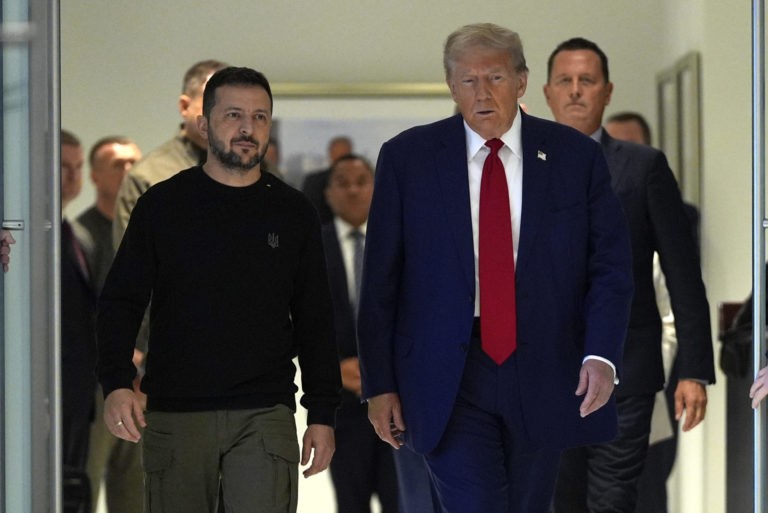
(Dave DeCamp, Antiwar.com) President Trump said on Wednesday that he will make a “determination” on whether Ukraine can launch an offensive, something he will discuss with Ukrainian President Volodymyr Zelensky at the White House on Friday.
“We’ll be talking about the war with him. They want to go offensive. I’ll make a determination on that. But they would like to go offensive, you know that, and we’ll have to make a determination,” the president told reporters in the Oval Office.
A report published in The Wall Street Journal last month said that President Trump was made aware of Ukrainian plans for an offensive that would require US intelligence support. He learned of the plans before writing a post on Truth Social, where he claimed Ukraine could retake all of the territory Russia has captured since the invasion.
Trump admits his proxy war in Ukraine and that Zelensky is proxy: Trump says that Zelensky wants to launch offensive, and that Trump would determine if Zelensky would go on offensive after their talks. pic.twitter.com/mGa9IvHFAH
US War Secretary Pete Hegseth warned on Wednesday that the US would “impose costs” on Russia if it doesn’t end the war. “If there is no path to peace in the short term, then the United States, along with our allies, will take steps necessary to impose costs on Russia for its continued aggression,” he said.
The rhetoric from Trump and Hegseth suggests the Trump administration is preparing to abandon its efforts at reaching a peace deal and continue the proxy war indefinitely. The administration is also considering providing Ukraine with Tomahawk missiles, which are nuclear-capable and have a range of over 1,000 miles, which would make a significant escalation and increase the chances of the war turning into a direct confrontation between Russia and NATO.
Trump and Zelensky are expected to discuss Tomahawks on Friday, and a Ukrainian delegation is currently in the US meeting with officials about potential weapons deals. Zelensky has previously touted the possibility of a “mega deal” for US weapons that could be worth up to $90 billion and would be funded by the US’s NATO allies.
President Trump later confirmed that he authorized the covert action and said the US was considering attacks on Venezuelan territory. “We are certainly looking at land now, because we’ve got the sea very well under control,” he said.
US officials told the Times that the authority allows the CIA to take action against Venezuelan President Nicolas Maduro or his government, either unilaterally or in conjunction with the US military. The report said it is not known whether the CIA is currently planning operations inside Venezuela or if the authority will be used for future plans.
The US military has been drawing up plans to launch strikes on Venezuelan territory and potentially capture strategic ports and airfields, actions that would almost certainly lead to a full-blown war. The US military campaign in the region has so far involved a buildup of warships and about 10,000 US troops in the Caribbean and strikes on five boats that the US has claimed, without providing evidence, were running drugs.
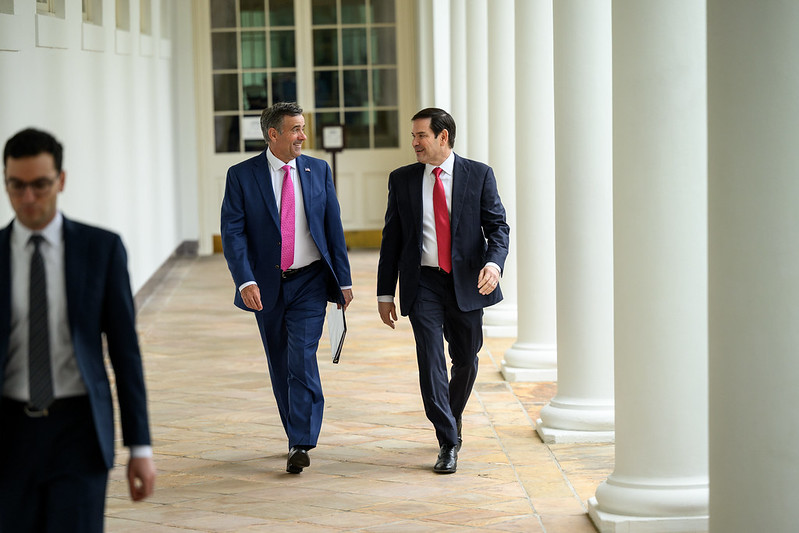
CIA Director John Ratcliffe and Secretary of State Marco Rubio walk on the West Colonnade at the White House on August 18. 2025 (Official White House Photo by Molly Riley)
While combating drug trafficking is the pretext for the US military operations, US officials have made clear that the real goal is regime change. Officials are hoping that Maduro steps down voluntarily or that someone in his inner circle turns on him due to the $50 million US bounty on his head, and the deluge of leaks and reports about potential US military action is likely part of the pressure.
But it’s unlikely that Maduro, who was targeted by a failed regime change effort during the first Trump administration, will be unseated, and the Trump administration appears determined to keep escalating the pressure on him. Maduro has made clear he’s willing to reach a deal with the US and has cooperated on US deportation flights, but it hasn’t stopped the US pressure on him.
The Times report noted that the policy toward Venezuela is being driven by Secretary of State Marco Rubio, who also serves as Trump’s national security advisor, and CIA Director John Ratcliffe. Other officials who preferred diplomacy, including US special envoy Ric Grenell, who held direct talks with Maduro, have been pushed aside as Trump has cut off diplomatic efforts with the Venezuelan government.
(Luis Cornelio, Headline USA) Former House Speaker Nancy Pelosi lashed out Wednesday at a journalist who pressed her on whether a new investigation into the Jan. 6 protests could find her “liable” for the violence that day.
The journalist, Alison Steinberg of LindellTV, was referring to a new Republican-led subcommittee tasked with investigating the events of Jan. 6, including why the National Guard was not present that day.
“Are you at all concerned that the new January 6 committee will find you liable for that day?” Steinberg asked Pelosi outside the U.S. Capitol. “Why did you refuse the National Guard on January 6?”
Pelosi, 85, initially ignored Steinberg, limping away with the assistance of an individual. She then turned, aggressively pointing her finger at Steinberg and snapping:
“Shut up! I did not refuse the National Guard. The president didn’t send it! Why are you coming up with Republican talking points as if you’re a serious journalist?”
BREAKING: Nancy Pelosi SNAPS at OUR Reporter – Points in Her Face and Hurls Insults
When our reporter pressed @SpeakerPelosi on why she refused National Guard support on January 6th, she lost it – pointing in her face, yelling “Shut up,” and accusing her of pushing “Republican… pic.twitter.com/nXxKJaq6Gz
In response, Steinberg said that “American people want to know” and that questions about Jan. 6 remained unanswered.
Pelosi’s fiery retort quickly went viral, largely due to her aggressive demeanor and the inaccuracy of her statement.
Democrats insist Pelosi bears no responsibility for the National Guard’s deployment. But the reality is more complicated.
The Capitol Police Board oversees the deployment of guardsmen, and at the time, the board included the House Sergeant at Arms, who worked directly for Pelosi. Former Capitol Police Chief Steven Sund said the Sergeant at Arms wouldn’t allow him to accept the Pentagon’s offer for National Guardsmen.
Her Sergeant at Arms denied my requests for National Guard support numerous times before and on J6! Pentagon offered support and I had to decline because her SAA wouldn’t grant me the legal authority.
Additionally, footage released by HBO shows Pelosi acknowledging responsibility for the failure to secure the Capitol:
“We’re calling the National Guard now. They should have been here to start… We have totally failed. We need to take some responsibility for not moving to secure the Capitol,” she said.
“Why weren’t the National Guard there to begin with? … They don’t know. They clearly didn’t know. And I take responsibility for not having them prepare for more,” she added.
🚨 Since January 6, 2021, Nancy Pelosi spent 3+ years and nearly $20 million creating a narrative to blame Donald Trump.
— Oversight Subcommittee (@OversightAdmn) June 10, 2024
Documents and later investigations reveal that then-President Donald Trump had proposed deploying 10,000 National Guardsmen to protect the Capitol. Evidence of this plan was reportedly suppressed by the Democrat-led Jan. 6 committee in 2022.
That could soon change. Led by Rep. Barry Loudermilk, R-Ga., the new subcommittee will also examine the actions and decisions of the anti-Trump Jan. 6 panel.
(Headline USA) President Donald Trump said Wednesday that Indian Prime Minister Narendra Modi personally assured him that his country would stop buying Russian oil.
The change, which has not been confirmed by the Indian government, would boost Trump’s efforts to pressure Moscow to negotiate an end to the war in Ukraine.
“There will be no oil. He’s not buying oil,” Trump said. The change won’t take immediately, he said, but “within a short period of time.”
The Indian embassy in Washington did not immediately respond to a request for comment.
Trump has been frustrated by his inability to force an end to the war in Ukraine, which began with Russia’s invasion almost four years ago. He’s expressed dissatisfaction with Russian President Vladimir Putin, whom he increasingly describes as the primary obstacle to a resolution, and he’s scheduled to meet with Ukrainian President Volodymyr Zelenskyy on Friday.
India is the second biggest purchaser of Russian oil, after China, and Trump punished India with higher tariffs in August.
(Dave DeCamp, Antiwar.com) US Central Command on Wednesday issued a statement urging Hamas to stop executing Palestinians in Gaza, contradicting earlier comments from President Trump.
Hamas has carried out executions of alleged criminals and collaborators with Israel, which Trump expressed support for on Tuesday, saying the group was taking out gang members. “That’s OK, it’s a couple of very bad gangs,” the president said.
Adm. Brad Cooper, commander of CENTCOM, said that the US military command was urging “Hamas to immediately suspend violence and shooting at innocent Palestinian civilians in Gaza – in both Hamas-held parts of Gaza and those secured by the IDF behind the yellow line.”
According to Israeli media, Hamas has not carried out executions behind the so-called “yellow line,” the term being used for the line that IDF troops withdrew to when the ceasefire went into effect. The Israeli military has killed several Palestinians who the IDF claimed crossed the line, but that was not mentioned in Cooper’s statement.
“This is an historic opportunity for peace. Hamas should seize it by fully standing down, strictly adhering to President Trump’s 20-point peace plan, and disarming without delay,” Cooper said. “We have conveyed our concerns to the mediators who agreed to work with us to enforce the peace and protect innocent Gaza civilians. We remain highly optimistic for the future of peace in the region.”
While Trump has expressed support for Hamas’s current armed activity in Gaza, he has also warned that if the group doesn’t disarm itself voluntarily, it will be forced to, “perhaps violently.”
The Gaza ceasefire outline released by the White House called for the “demilitarization” of Gaza, but Hamas officials have maintained they won’t give up their weapons until there is the establishment of a Palestinian state and a Palestinian force that can replace its armed wing.
(Dave DeCamp, Antiwar.com) Israeli forces continued to kill Palestinians in Gaza on Wednesday despite the ceasefire deal that was signed last week, as Israel has issued warnings against approaching the “yellow line,” referring to the line that Israeli troops withdrew to when the truce went into effect on Friday.
At least one person was killed by an Israeli attack in Khan Younis, southern Gaza, on Wednesday, Al Jazeera reported, citing sources at the Nasser Hospital.
According to the Palestinian news agency WAFA, at least two Palestinians were killed by an Israeli drone in Gaza City’s eastern Shujaiya neighborhood. A day earlier, at least five Palestinians were killed in the same neighborhood while inspecting their homes, according to Gaza’s Civil Defense. The IDF claimed they crossed the “yellow line” and posed a “threat,” but it did not allege they were armed.
Israeli Defense Minister Israel Katz issued a threat related to the “yellow line” in a post on X on Wednesday. “The IDF operates in accordance with directives and enforces a clear policy of preparedness along the yellow line – which includes over 50% of Gaza’s territory,” he wrote.
“The enforcement policy is unequivocal: for every violation, an immediate response. Yesterday, terrorists who attempted to approach and cross were thwarted – and so it will be in the future as well,” he added.
WAFA reported that at least 14 bodies were brought to Gaza hospitals on Wednesday, including eight that were recovered from the rubble, suggesting a total of six Palestinians could have been killed.
Hamas has also clashed with militias since the ceasefire went into effect, and has carried out summary executions of alleged criminals and collaborators. As part of its strategy against Hamas, Israel had been arming some militias and gangs in the Strip. President Trump expressed support for Hamas’s executions on Tuesday, saying they took out “a couple of gangs that were very bad.”